Ep 46: Consolidation and Reflection For K-2 after Math Tasks and Problem Solving Sessions
Making Number Sense Make Sense: A Math Podcast for Early Elementary Teachers
Transforming your classroom into a Building Thinking Classroom is an exciting journey—but when it comes to consolidating learning and reflecting on problem-solving tasks, it can feel tricky with younger students. Between stamina struggles, time constraints, and building those metacognitive skills, what’s a teacher to do?
In this episode, we’re tackling those challenges with fun and effective strategies to wrap up your thinking tasks:
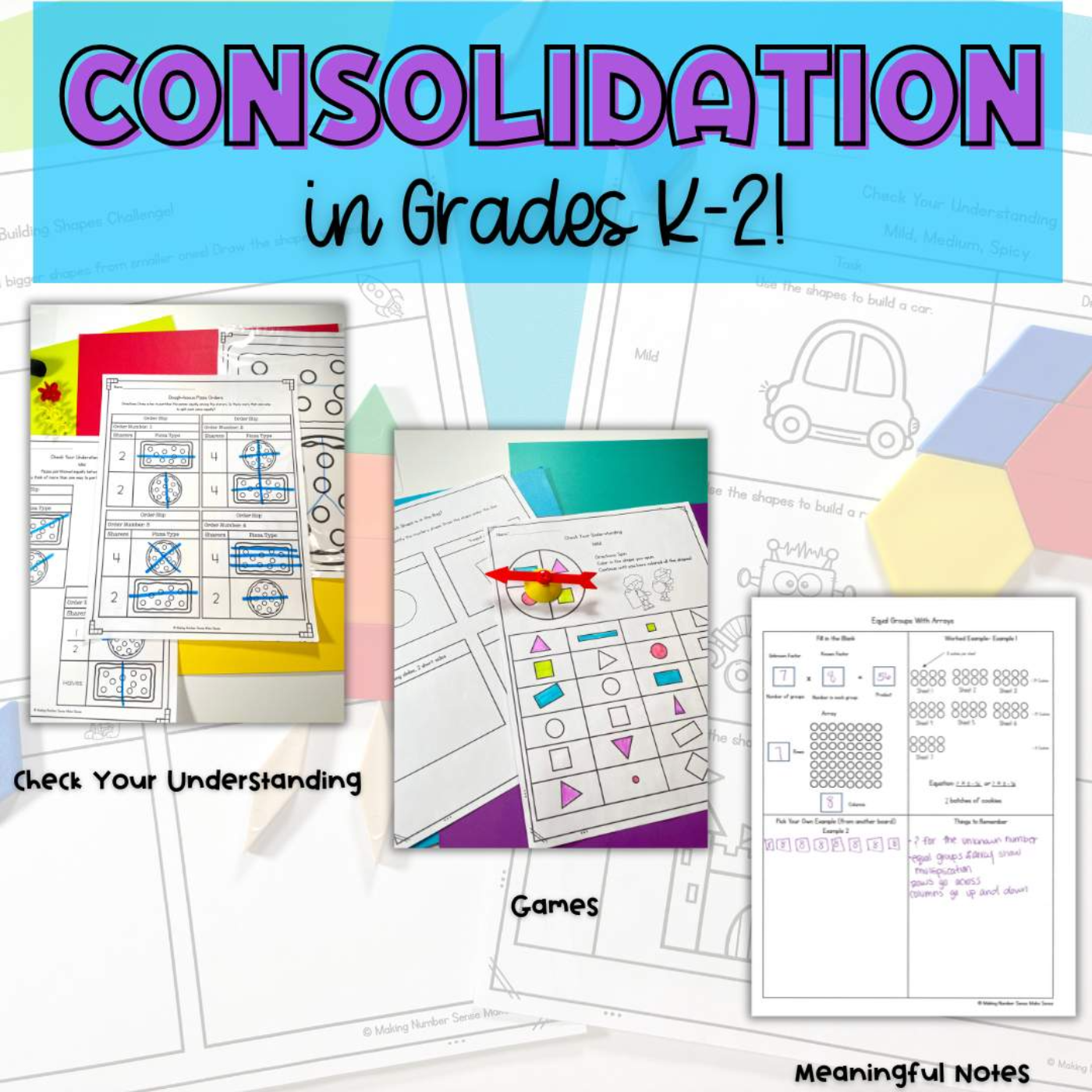
🌶️ Check Your Understanding Questions Use “mild,” “medium,” and “spicy” extension questions to give students a choice and push their thinking a little further.
🎲 Games for Consolidation Turn reflection time into play with quick, themed games that tie into your tasks and can double as math centers later!
📝 Meaningful Notes Help students record their learning in creative ways—like fill-in-the-blanks, circling items, or drawing—so they can revisit important strategies and takeaways later.
💡 The 4-Quadrant Method Break down strategies and reflections into bite-sized pieces for young learners to understand and remember.
Whether it’s through playful games, choice-driven questions, or creative note-taking, these approaches will keep your students engaged and make math reflection meaningful and manageable.
Links & Resources:
👉 Blog Post
👉 Grab Kindergarten, 1st Grade, or 2nd Grade Thinking Task Bundles here!
Let's Connect!
Let’s make consolidation time just as exciting as problem-solving! 🎉
Available Results
Generated results are saved to the knowledge database for reuse and search.
Extract Knowledge
Pick what you want extracted first. Model, scope, and chapter options appear after a template is selected.
Transcript
1
00:00:00,000 --> 00:00:07,840
Reflection, consolidation can always be tricky timewise for anybody, making sure you have the time to do it.

2
00:00:07,840 --> 00:00:13,920
Also for younger kids, sometimes they just don't have the stamina or attention to get to it.

3
00:00:13,920 --> 00:00:18,480
Today we're going to talk about three different ways you can use consolidation in your classroom

4
00:00:18,480 --> 00:00:22,000
with younger grades after you've completed a problem-solving session.

5
00:00:22,000 --> 00:00:34,640
Hello and welcome to Making Number Sense Make Sense, a podcast for elementary teachers,

6
00:00:34,640 --> 00:00:40,960
specifically early elementary teachers, looking to really make an impact in the number sense of their students.

7
00:00:40,960 --> 00:00:48,960
When first starting a building thinking classroom style makeover, I guess, to your classroom and the way that you teach problem-solving,

8
00:00:48,960 --> 00:00:52,160
you're really just trying to get through the first toolkit.

9
00:00:52,160 --> 00:00:58,320
Something I was never really sure about was the whole consolidation piece, reflection piece, however you want to call it.

10
00:00:58,320 --> 00:01:05,600
Just because I know myself, time runs out sometimes and sometimes after your kids have been doing something for so long,

11
00:01:05,600 --> 00:01:08,080
it can be hard to kind of pull them back.

12
00:01:08,080 --> 00:01:14,560
So I've tried several different ways to kind of make this work for my students and I'd like to share those with you today.

13
00:01:14,560 --> 00:01:22,080
The first is the good old check your understanding question, so the mild, medium and spicy questions that I present to the students

14
00:01:22,080 --> 00:01:24,800
and they can choose the one that they want to do.

15
00:01:24,800 --> 00:01:31,920
This is great because it really gives your students an opportunity to kind of pick the difficulty of what they want to work on,

16
00:01:31,920 --> 00:01:37,440
what they feel comfortable with, and you can really see like what is really sticking for them and clicking for them

17
00:01:37,440 --> 00:01:43,040
and what might you need to work a little bit harder on or come back to at a later date

18
00:01:43,040 --> 00:01:46,880
if you're noticing the same kind of errors in your students.

19
00:01:46,880 --> 00:01:51,600
So that's always a good go-to, just three different problems that you can have for the kids.

20
00:01:51,600 --> 00:01:56,880
For younger students specifically, it can be a little challenging because oftentimes if it's a word problem,

21
00:01:56,880 --> 00:01:59,120
they wouldn't necessarily be able to read it.

22
00:01:59,120 --> 00:02:04,720
So having visuals there or a sheet that they can kind of refer back to can be helpful.

23
00:02:04,720 --> 00:02:10,640
If that's something you want to try but you're kind of running into the but they can't read what's on the board situation,

24
00:02:10,640 --> 00:02:12,480
that might be something you want to try.

25
00:02:12,480 --> 00:02:21,600
Kind of along the same vein, some tasks I found just don't necessarily lend themselves to check your understanding questions,

26
00:02:21,600 --> 00:02:29,120
but I still want them to practice and reinforce the things that they have been working on at their boards.

27
00:02:29,120 --> 00:02:35,760
So that's when I like to throw in a game that goes with what we're doing, maybe a little more challenging,

28
00:02:35,760 --> 00:02:42,800
maybe just as a review, maybe it's style to kind of go with whatever the theme of the question was.

29
00:02:42,800 --> 00:02:48,160
So it kind of feels like it's a continuation, but it's something that might be a little more hands-on,

30
00:02:48,160 --> 00:02:55,440
a little more game-like, so it feels a little different, but they're still practicing the skills that you had been working on.

31
00:02:55,440 --> 00:03:03,040
I like this a lot and it bonus doubles as a math center that you can use the next day

32
00:03:03,040 --> 00:03:09,680
because your students already know how to play, it's making a connection, building connections to what they had worked on previously,

33
00:03:09,680 --> 00:03:15,360
and who doesn't love center time? It's one of my students' favorite times being in stations, being in centers,

34
00:03:15,360 --> 00:03:18,880
so anything I can do to kind of bridge the gap works for me.

35
00:03:18,880 --> 00:03:26,080
And the final consolidation, which I wouldn't necessarily use too often for kindergarten because writing can be its own challenge,

36
00:03:26,080 --> 00:03:30,880
but you can definitely use the notes, creating notes, meaningful notes strategy,

37
00:03:30,880 --> 00:03:39,360
where your students will have a fill-in-the-blank section and have examples of different strategies that they saw that they liked,

38
00:03:39,360 --> 00:03:43,360
or that made sense to them as well as their own strategy that they used,

39
00:03:43,360 --> 00:03:47,440
and kind of reflecting on what strategy might they like to use in the future,

40
00:03:47,440 --> 00:03:53,920
and kind of an overall reflection of different things that might be helpful when they're using this skill,

41
00:03:53,920 --> 00:03:59,040
or things that their forgetful self might need to remember if they're doing a similar problem,

42
00:03:59,040 --> 00:04:02,400
so their future self has a little reminder or cheat sheet.

43
00:04:02,400 --> 00:04:07,280
The example that comes to mind is if I'm doing a task where students have to measure things twice

44
00:04:07,280 --> 00:04:15,440
with a smaller object and a longer object, kind of like the cube queen and the popsicle stick king task that I talked about previously,

45
00:04:15,440 --> 00:04:20,720
there's a time when using cubes might be better for measuring if you're measuring something small,

46
00:04:20,720 --> 00:04:24,560
whereas using popsicle sticks would be better if you're measuring larger things,

47
00:04:24,560 --> 00:04:31,760
so that kind of knowledge can help them reflect on what they did and when it might be best to do something different in the future,

48
00:04:31,760 --> 00:04:37,120
and even though it doesn't necessarily have too much to do with numbers in a literal sense,

49
00:04:37,120 --> 00:04:41,760
that kind of thinking can also help them when they're doing other kinds of problem solving,

50
00:04:41,760 --> 00:04:47,840
like when is it best to use a counting on strategy versus a double 10 strategy or a jump strategy,

51
00:04:47,840 --> 00:04:53,840
kind of creating that flexibility, metacognition about the way that they are going about problem solving,

52
00:04:53,840 --> 00:04:57,520
so none of these ways are perfect, they all have their time and place,

53
00:04:57,520 --> 00:05:03,200
but these might be things that you might want to try if you're looking to change up the way that you consolidate

54
00:05:03,200 --> 00:05:09,120
or be purposeful, questions that are related to what you just did, so check your understanding questions,

55
00:05:09,120 --> 00:05:13,760
a game that might be something a little bit different, exciting that you can use in a different day,

56
00:05:13,760 --> 00:05:18,480
or creating meaningful notes that don't have to be giant, especially in the younger grades,

57
00:05:18,480 --> 00:05:22,800
they're not going to be writing a ton, just something simple that they can do.

58
00:05:22,800 --> 00:05:27,040
Also remember you don't have to do every single section of every single thing,

59
00:05:27,040 --> 00:05:32,000
maybe for notes they're just doing a fill in the blank, or they're just picking one example

60
00:05:32,000 --> 00:05:38,320
that somebody else did that makes sense to them, just little bits here and there as they build up

61
00:05:38,320 --> 00:05:43,680
their stamina and as they get used to reflecting on the work that they've done. Let me know if you

62
00:05:43,680 --> 00:05:53,360
try any of these consolidation types with your kids and which one worked best for you.