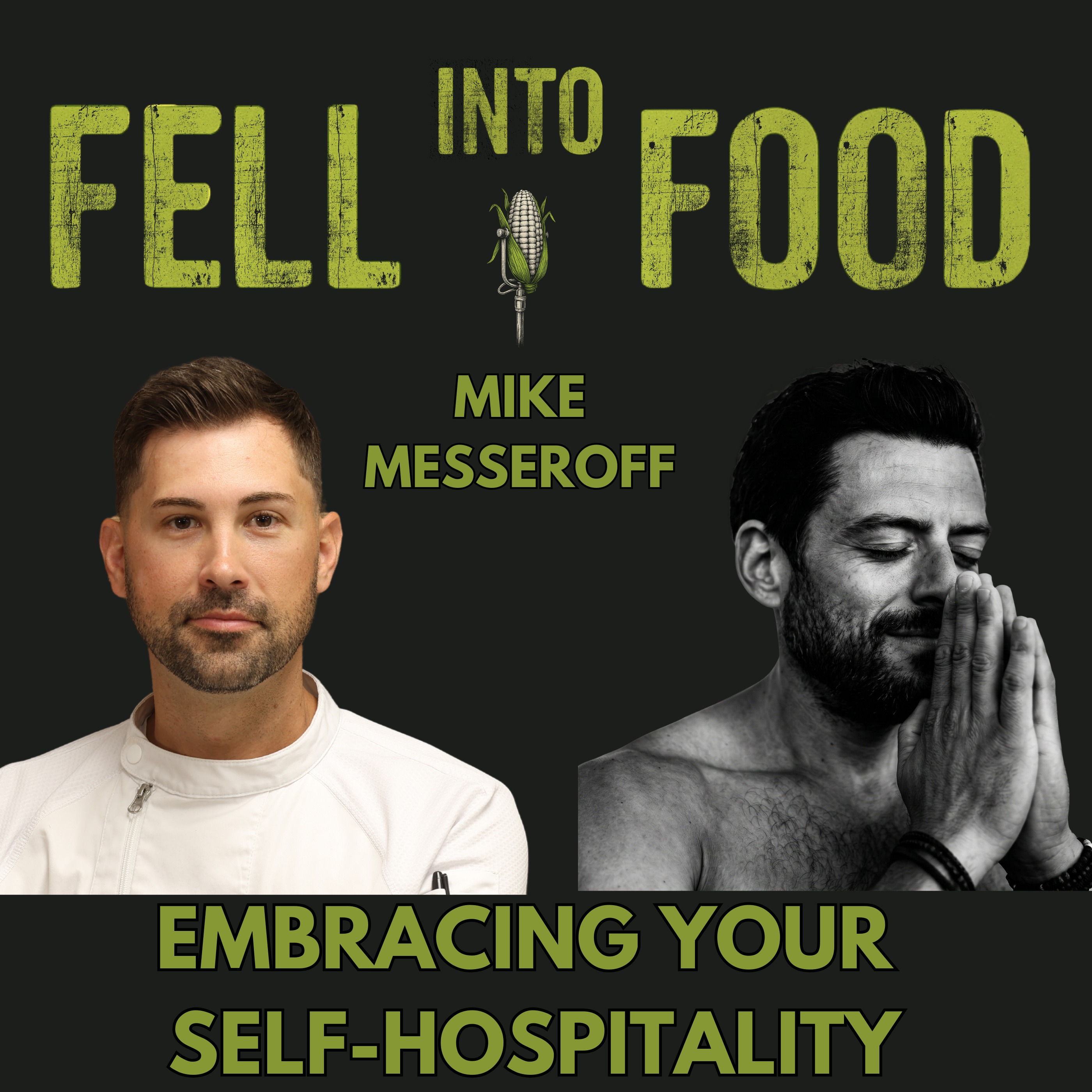
MIKE MESSEROFF: EMBRACING YOUR SELF-HOSPITALITY
In the demanding world of the food industry, many professionals struggle with mental health and self-care. If you’re feeling overwhelmed or burned out, you’re not alone. The food industry is known for its high stress and long hours, often leading to burnout among professionals.
This week I welcome back Mike Messerroff. Mike is a 30-year hospitality industry veteran turned Personal Freedom Coach and mindfulness advocate. After a high-octane career that saw him go from being JetBlue’s first-ever intern to bartending across the globe—from the Caribbean to New Zealand—Mike reached a breaking point. Despite a life that "looked perfect on Facebook," he hit a wall of deep burnout and depression while living in Breckenridge, Colorado. That "rock bottom" became the foundation for his current mission. Mike realized that the hospitality industry is expert at taking care of everyone except its own people. He now helps high-achieving leaders, chefs, and operators "unwind from the grind" and rediscover presence, clarity, and joy. Check out Episode 35 to hear all about Mikes full story.
The conversation dives deep into how leaders and young culinarians can set boundaries, overcome the "burnout as a badge of honor" stigma, and use simple mindfulness practices—like 10-minute meditations—to shift from being reactive to being present. Mike also shares a powerful story about how a lost bag at an airport became a lesson in the real-world power of remaining calm and kind under pressure.
This episode is for anyone who’s ever felt the weight of perfection, the pressure to push through, or the fear of opening up. Your mental health isn’t a luxury — it’s the foundation. Lead with authenticity, set boundaries, and learn the art of self-care. The change starts now.
🔗 Mike’s Website: mikemesseroff.com
📖 Join Now: The Self-Hospitality Collective
📲 Follow Mike: @MikeMesseroff, Linkedin
Resources Mentioned
Chapters
00:00 The Launch of the Self-Hospitality Collective
02:48 Keynote Insights on Leadership and Vulnerability
05:45 Breaking the Stigma: Vulnerability in the Food Industry
08:27 Setting Boundaries in High-Pressure Environments
11:14 Finding a Healthy Work Environment
14:13 Practical Steps to Self-Love and Mental Health
16:45 Cultivating Non-Reactivity in High-Stress Situations
19:28 Leadership Through Vulnerability and Accountability
21:30 The Power of Non-Reactivity
21:52 Meditation: A Path to Presence
24:10 Practical Mindfulness for Busy Chefs
25:33 Preparing for Chaos: Personal Pre-Shift Rituals
28:35 Embracing the Journey in the Hospitality Industry
30:26 Addiction to Intensity: Finding Balance
32:08 Self-Care and Mental Health in Hospitality
35:09 The Ripple Effect of Kindness
41:22 Building a Community of Self-Hospitality
Listen to the full episode and more! It would mean the world to me if you could leave a 5 star review on your listening platform to help grow and expand the Podcast.
YouTube - https://lnkd.in/gQM3S5mr
Spotify - https://lnkd.in/g_5kFXie
Apple Podcast - https://apple.co/41RoTm4
Pandora - https://lnkd.in/gS-wu_YJ
YouTube: https://youtube.com/@FellIntoFood
Linkedin: linkedin.com/company/fell-into-food
Instagram: http://instagram.com/fell_into_food
Facebook: https://facebook.com/fellintofood
Advertising Inquiries: https://redcircle.com/brands
Privacy & Opt-Out: https://redcircle.com/privacy
Available Results
Generated results are saved to the knowledge database for reuse and search.
Extract Knowledge
Pick what you want extracted first. Model, scope, and chapter options appear after a template is selected.
Transcript
[SPEAKER_01]: How are you doing?
[SPEAKER_01]: No, really.
[SPEAKER_01]: How are you actually doing?
[SPEAKER_01]: Oh, wait.
[SPEAKER_01]: We should be asking ourselves that question every single day, but we don't.
[SPEAKER_01]: And why?
[SPEAKER_01]: In this industry, we're the masters of I'm good.
[SPEAKER_01]: We say it when we're in the weeds.
[SPEAKER_01]: We say it when we're understaffed.
[SPEAKER_01]: We say it when we're burning out.
[SPEAKER_01]: But we are experts, hospitality for everybody else.
[SPEAKER_01]: But we're failing hospitality for ourselves.
[SPEAKER_01]: You might remember Mike Mezzaroff from episode 35.
[SPEAKER_01]: He's back today for a massive update.
[SPEAKER_01]: He just went to Massey and did a keynote presentation.
[SPEAKER_01]: And he has a deep dive into the self-hospitality collective.
[SPEAKER_01]: He's going to give us a practical, gritty reality of the mental health space here in 2026.
[SPEAKER_01]: So pull up a milk crate and let's get into this.
[SPEAKER_01]: Mike, so good to see you, my friend.
[SPEAKER_01]: We have so much to catch up on.
[SPEAKER_01]: Thanks for hopping on again.
[SPEAKER_01]: I need to hear about, man, tell me about Mafsi, how that was, how the self-hospitality collective is going.
[SPEAKER_01]: There's just so many things.
[SPEAKER_01]: So just start giving it to me, my friend.
[SPEAKER_00]: Jeff, great to be back, great to be here.
[SPEAKER_00]: I love your energy.
[SPEAKER_00]: I feel it.
[SPEAKER_00]: Yeah, man, I mean, so many good things.
[SPEAKER_00]: Launch the self-hospitality collective in November of last year, 2025.
[SPEAKER_00]: And we have just amazing leaders in it, learning, sharing, supporting each other.
[SPEAKER_00]: We have monthly events.
[SPEAKER_00]: It's just amazing.
[SPEAKER_00]: It's amazing.
[SPEAKER_00]: It's like,
[SPEAKER_00]: it's just feels so special and the things that people are sharing, that's what I wanted.
[SPEAKER_00]: I wanted to create a space where leaders, especially leaders who have trouble feeling safe to be vulnerable and to share, can share, you know, things like, you know, that only other leaders would understand and that they can get support and just feel like
[SPEAKER_00]: just to know that they're not alone.
[SPEAKER_00]: So that's been amazing.
[SPEAKER_00]: Yeah, I had a keynote at Moff see a few weeks ago.
[SPEAKER_00]: It was unbelievable.
[SPEAKER_01]: Like, yeah, digging into that.
[SPEAKER_01]: Like, what was the topic?
[SPEAKER_01]: Obviously, it's mental health and awareness.
[SPEAKER_01]: But like, what did you dig in when you spoke at Moffsy?
[SPEAKER_00]: Yeah, so my keynote was the one thing most leaders miss and why it changes everything.
[SPEAKER_00]: Yeah, and it was a full house and you could hear a pin drop.
[SPEAKER_00]: I mean, it was like, for me, it was just so heartwarming because the reception of this crowd, which is
[SPEAKER_00]: You know, you could look at it as a pretty conservative group of leaders, a lot of them are generational and have been in those roles and those companies for a really long time.
[SPEAKER_00]: And they were all receptive like they were just like, yeah, this is what I need.
[SPEAKER_00]: I don't need more processes.
[SPEAKER_00]: I don't need more optimization.
[SPEAKER_00]: I don't need more.
[SPEAKER_00]: Doomsday AI, you know, like AI is taking over everything.
[SPEAKER_00]: I need some humanity.
[SPEAKER_00]: I need to come back to who I am because I don't want to leave the industry.
[SPEAKER_00]: I love this industry.
[SPEAKER_00]: I love my work.
[SPEAKER_00]: I love my people, but I feel like I'm going to explode or implode.
[SPEAKER_00]: And that's what I shared about, you know, the concept of self-hospitality and treating yourself like your best guest.
[SPEAKER_00]: and I share some practical ways to do that, of course, I invited everyone into the collective, but it was just like the people like the responses from the executive committee of Moffsi but also from the people who were there just coming up to me and thanking me for sharing because I shared some vulnerable stuff and things about my own life and my uncle who died before 60 who was a restaurant guy himself and how that really changed my life.
[SPEAKER_00]: Um, so yeah, it was amazing.
[SPEAKER_00]: Things are going amazing.
[SPEAKER_00]: Um, I'm working with some really great people in terms of like one on one coaching and just really focused on on kind of the community and speaking more and just just sharing that, you know, people you're not alone.
[SPEAKER_00]: This isn't about leaving the industry.
[SPEAKER_00]: It's about learning how to feel alive inside of it.
[SPEAKER_01]: What do you think the steps are for people to actually like open up about their vulnerability?
[SPEAKER_01]: Like you did in front of a whole lot of people and if you're listening and you don't know what Massey is that's manufacturers association, food service, something something along those life.
[SPEAKER_00]: For the food service industry, I believe.
[SPEAKER_01]: Yeah, so basically it's folks who represent equipment and equipment manufacturers.
[SPEAKER_01]: So that's that's the group he was talking about.
[SPEAKER_01]: But what
[SPEAKER_01]: do you think it's that you've you've come to peace with yourself or what do you think is kind of the turning point when people actually open up or vulnerable like you said with the self-hospitality collective you've you've created a space where people who normally don't want to say those vulnerabilities the things that they're afraid that they kept inside for so long what is it that allows you to kind of just get that out and let people see who you really are.
[SPEAKER_00]: Oh, you know, I think it's like the permission factor of just like seeing someone else do it and hearing someone else do it and realizing that, you know, your world doesn't actually crumble when that happens, but opportunities come to you.
[SPEAKER_00]: Someone will say, oh, I've been feeling the same thing or hey, I read this book that helped me.
[SPEAKER_00]: Like you actually get the help that you need when you share the things aren't going so great.
[SPEAKER_00]: And it's not easy to do that in a normal everyday high pressure environment where your whole team is looking up to you, you know, you do have to kind of put on a happy face, but imagine that it wasn't fake.
[SPEAKER_00]: Like imagine that you actually really believe that no matter what happens, we're going to be fine because we always are, um, no matter how bad the seemingly fuck up is
[SPEAKER_00]: It's like, it's the permission piece.
[SPEAKER_00]: It's also sometimes, it has to get so bad that people are like, I'm just at a breaking point.
[SPEAKER_00]: And a lot of my message, like, to anyone who's listening is like, does it have to get worse than it already is?
[SPEAKER_00]: Like, is the way you're feeling?
[SPEAKER_00]: because truly, and I want to get your opinion too, because you know so many industry people and leaders, but I feel like so many people wear this pressure and this intensity and this almost like wearing burnout as a badge of honor, and it's like it's so,
[SPEAKER_00]: Accepted that like this is just the industry.
[SPEAKER_00]: This is just how it is.
[SPEAKER_00]: So suck it up.
[SPEAKER_00]: Man up.
[SPEAKER_00]: Don't show your vulnerabilities.
[SPEAKER_00]: Put on a happy face even if you feel like you're dying on the inside and just get through the shift and after weeks years decades of that
[SPEAKER_00]: you just start to realize like it's not working.
[SPEAKER_00]: It's not working.
[SPEAKER_00]: And there are leaders in the industry running amazing kitchens and running amazing businesses that are doing it.
[SPEAKER_00]: So it's like, well, what are they doing?
[SPEAKER_00]: They're probably just taking a little better care of themselves and replenishing and refilling their cup instead of always just charging through.
[SPEAKER_01]: Well, that's what I was gonna, I was gonna bring it up about boundaries and someone new coming in the industry.
[SPEAKER_01]: It's like, when do you set up your boundaries with the establishment you're at, right?
[SPEAKER_01]: You may pick a place because you're stagging or you want to learn from a place.
[SPEAKER_01]: And I'm talking more in the Cookside world.
[SPEAKER_01]: There's obviously a thousand, thousand ways you can go.
[SPEAKER_01]: But how do you effectively put up boundaries or and or find out quickly that the kitchen that you're at isn't for you because maybe they don't have systems like that set up and it's still the old school brigade.
[SPEAKER_01]: And I don't want it to sound,
[SPEAKER_01]: wrong or right of what you should do and how you should run a kitchen.
[SPEAKER_01]: I do think that there should be hard work in that there should be some discipline when you're trying to hone a craft.
[SPEAKER_01]: But there's obviously a level of respect that you should have for people.
[SPEAKER_01]: So how do you set up a boundary when you're just getting into it and trying to figure things out what all you want to do is impress or not look like a fuck up to the people you're working with so that way you can continue to grow and learn.
[SPEAKER_00]: Well, you know, I think it kind of comes down to the fact that anyone who's worked in a kitchen or a high pressure environment knows that stress and dysregulation like it spreads negativity spreads quicker than fire quicker than anything, but so does like a calm nervous system like that's that's what if you're going into a new job.
[SPEAKER_00]: just look around like like it's almost like you could just sense it to people actually enjoy their jobs.
[SPEAKER_00]: Do they have a scowl on their face?
[SPEAKER_00]: Do they or is there a sense of teamwork?
[SPEAKER_00]: Really look at the leaders and ask them, you know, how do you how do you treat your people like like how how do you show up because a nervous
[SPEAKER_00]: like a, a leader with a disregulated nervous system means that the whole operation is going to have a disregulated nervous system.
[SPEAKER_00]: Yeah.
[SPEAKER_00]: And you can kind of pick up on that.
[SPEAKER_00]: So, you know, for someone who's just kind of looking for how it works, like, go sit at the bar and have a meal and just like observe, like, or take yourself out to dinner there.
[SPEAKER_00]: Really,
[SPEAKER_00]: that feels like as a guest, that would be a cool thing to do, I think, and then just just be honest, just say, hey, I'm here for the long term.
[SPEAKER_00]: I want to, I want to job that I could stay at, that I'm not going to burn out it.
[SPEAKER_00]: So I want to make sure that this fits me and my rhythm and, you know, what do you guys have in place?
[SPEAKER_00]: Like, what do you do to build morale and to build teamwork and does it go beyond the shift drink?
[SPEAKER_00]: Because there's nothing wrong with the shift drink and it really does build camaraderie.
[SPEAKER_00]: But if that's the only thing, then that's a red flag as well.
[SPEAKER_01]: Yeah.
[SPEAKER_01]: Well, it's, but it's also scary for somebody, right?
[SPEAKER_01]: A lot of these people of their teenagers, 18, 19, you know, and they're just looking for a job.
[SPEAKER_01]: And then it feels like the animals get kind of coaxed into that culture if they get into one of those bad cultures.
[SPEAKER_01]: And that's all they know.
[SPEAKER_01]: They think that's normal or that's what they hear about the food industry, right?
[SPEAKER_01]: And I know that's where.
[SPEAKER_01]: people like yourself and the burnt chef project are trying to get the stigma out so that way we don't have young colonarians and people getting into the industry being like, oh, I have to put in 80, 90 hours to be successful.
[SPEAKER_01]: It's the only way to be successful because it's not to your point if it
[SPEAKER_01]: If you can set your boundaries and find the right place to learn and grow, then you can have a pretty successful career in this and it is it's all about your health and your mental health because how we we've seen how many how many chefs go down, you know, right behind me, I was just going to say that.
[SPEAKER_00]: They go down and say that and people say that we look up that we look up to is like the icons and and he is an icon, Bourdain is amazing, but it's also a great example of you don't know what's going on underneath the surface.
[SPEAKER_00]: You know, I really, I just appreciate your line of questioning because I typically focus on leadership and I coach leaders and it's actually kind of forcing me to think a little differently around the, you know, it's my first job in a restaurant, what do I look for and and I really think it's it's it's just such a, it's a powerful thing to just go in there and just say, hey, I care about how I show up,
[SPEAKER_00]: And I'm curious as to, like, how do you maintain a harmonious work environment in a high pressure work environment, you know, and I think that's the thing that so many people don't realize like it's always going to be high pressure.
[SPEAKER_00]: That's not the point.
[SPEAKER_00]: The point is not of all this self-hospitality and treating yourself like your best guests and even practical things like spending a few minutes in the morning meditating or practicing gratitude, filling your own cup, doing things to bring you joy.
[SPEAKER_00]: It is, it's just,
[SPEAKER_00]: infectious like it it it changes everything about how you show up in that high pressure environment it doesn't mean the Friday nights aren't going to be crazy or chaotic but you're going to enjoy it and then you're going to rest up and rejuvenate and replenish and you're going to get excited to do it again instead of like
[SPEAKER_00]: how my best friend, who was the GM at the restaurant I worked at for five years, he would always describe the work as I'm knitting a sweater and at the bottom it's unraveling.
[SPEAKER_00]: So I never get it done and there's a lot of truth to that.
[SPEAKER_00]: That is the industry.
[SPEAKER_00]: You just have to do things every day.
[SPEAKER_00]: that are never going to get done.
[SPEAKER_00]: There's no finish line.
[SPEAKER_00]: So you have to kind of figure out how to enjoy the ride of it.
[SPEAKER_00]: So yeah, I mean, I hope that helps for like the younger guys, but I really would just say younger guys, younger girls, younger, anyone in the industry is go into it and just feel the energy.
[SPEAKER_00]: Do you feel that there's teamwork?
[SPEAKER_00]: Can you ask them, hey, can I shadow in the kitchen?
[SPEAKER_00]: Can I just see like before I start?
[SPEAKER_00]: Can I kind of just observe and see how things run around here?
[SPEAKER_00]: I mean, I think as a leader, that'd be like, wow, this, this guy's on the ball.
[SPEAKER_00]: Like he really wants to make sure this is a good fit, not just I need a job.
[SPEAKER_01]: Yeah, because it goes both ways.
[SPEAKER_01]: Now, I'm really digging in and when you said, is it's, yes, it starts with the top, and there has to be a sense of clarity because that's how Kichens run or establishens run.
[SPEAKER_01]: But inversely, from the bottom up, if they don't know any better, and they get themselves in these environments, and they don't know what a healthy work environment, what?
[SPEAKER_01]: being mentally healthy means they're they're almost set up for failure because they don't even know what to look for to your point They don't know the questions to ask they don't know the environment that they should be looking for again.
[SPEAKER_01]: It's just the What you hear the rumors of the industry is no that's that's that's normal
[SPEAKER_01]: It's okay.
[SPEAKER_01]: Yeah, you're going to get yelled at.
[SPEAKER_01]: Yes, you're going to have stuff thrown at you.
[SPEAKER_01]: Like, it's so normalized still, even with all the work that people are doing, it's just the natural stigma of, you know, tell me the war stories.
[SPEAKER_01]: That's all you ever hear from, you know, chef to chef or cook to cook.
[SPEAKER_01]: Like, oh, this happened to me and this happened to me.
[SPEAKER_01]: So I think if some, to me, the younger's getting into this kind of
[SPEAKER_01]: Listen to these different projects and different people that are in the industry.
[SPEAKER_01]: I think it would go a long way and close the gap faster, right?
[SPEAKER_01]: Because you're going to close from the top, down to the bottom versus just trying to get it from the top, all the way down.
[SPEAKER_01]: Because it does need to happen both ways, but I think there's definitely room for...
[SPEAKER_01]: for the younger generation to also start to figure out how, how to do these practices.
[SPEAKER_01]: Let's talk about some practicality, right?
[SPEAKER_01]: How does, how does one start loving themselves?
[SPEAKER_01]: How do you actually, what's the beginning steps?
[SPEAKER_01]: What can someone right now listening to day that says, you know what, I want to do this, but I don't want to have to go online and search for this.
[SPEAKER_01]: What can they do right now to start loving themselves and start taking care of their
[SPEAKER_00]: I think first is like acknowledging that you might not love yourself, you know, like to really be honest about it and say, like, if, if I did, let's just play a game, if I truly loved myself, would I be doing the things that I'm doing, would I be as I was for a bartender
[SPEAKER_00]: and then have in a shift drink and then starting my night because I earned it, you know, I worked hard now.
[SPEAKER_00]: I'm going to go out.
[SPEAKER_00]: That goes to two, three in the morning and then I would sleep a lot, maybe do something in the morning, but then go back to work.
[SPEAKER_00]: Is that actually loving yourself or is that trying to get to the end or get to the next vacation or get to a promotion or whatever it is?
[SPEAKER_00]: So a lot of it is just like radical honesty.
[SPEAKER_00]: Like, is this truly being kind to myself?
[SPEAKER_00]: I would say, like, really practical, too.
[SPEAKER_00]: Like, one of the first things, because to go from my head's going to explode, I'm super stressed.
[SPEAKER_00]: I feel like I'm not going to make it.
[SPEAKER_00]: I'm not going to make it through the shift or the week or or that feeling of just empty depletion, is just being willing to say, like,
[SPEAKER_00]: If I can't do it for me, who am I doing it for?
[SPEAKER_00]: Like, really, like think about, do you have a pet that deserves more of your love?
[SPEAKER_00]: Do you have a partner?
[SPEAKER_00]: Think of your friends, think of your family.
[SPEAKER_00]: And just say, well,
[SPEAKER_00]: if I start showing myself a little more kindness and you don't jump from self-loathing to self-love, it's just like a little bit of kindness will that allow me to be a little less reactive around the people that I care about because I know when I was at the lowest point and I almost ruined literally destroyed the most important relationship, well I would say one of the most important relationships because it was with my wife, you know, the most
[SPEAKER_00]: But I almost ruined the relationship with my wife because I was just not being present.
[SPEAKER_00]: I was super reactive.
[SPEAKER_00]: And I was kind of bringing all the stress from work that I couldn't unleash on my guests because I was a bartender in the service industry.
[SPEAKER_00]: And I would unleash it on the person who I love the most like my wife.
[SPEAKER_00]: So for me, that kind of got me into the practical side of like, I'm not going to do it for me because I don't like myself.
[SPEAKER_00]: Like, you don't just kind of start liking yourself.
[SPEAKER_00]: But if you could say, well, they deserve a better version of me.
[SPEAKER_00]: then you might be able to do some of the practical things.
[SPEAKER_00]: And then the practical things I've already mentioned is always for me as a meditation.
[SPEAKER_00]: And I know it sounds scary if you've never meditated.
[SPEAKER_00]: Most of the people I work with have never meditated.
[SPEAKER_00]: And their lives start changing like mine did in a few days.
[SPEAKER_00]: and it's not sitting in the in style with your hands in a position and then lighting in sense.
[SPEAKER_00]: I mean, you can't have a diffuser back there.
[SPEAKER_00]: You can do things that make the environment nice.
[SPEAKER_00]: But really, the whole concept is just to realize like holy shit, it's a really noisy world and it's really noisy in my head.
[SPEAKER_00]: And if I don't take a break and just find a little bit of peace that how am I ever gonna feel peace?
[SPEAKER_00]: So that's like the, the first practical thing is always just cultivating a little bit of inner peace and really just non-reactivity, you know, and that's what I see in, I've worked with so many chefs and a little bit kitchen work, I did some expo work, but most of my work was front of house bartending serving hosting things like that, but I've worked with so many chefs and you could just like,
[SPEAKER_00]: you could feel the tension and the stress kind of coming off of them.
[SPEAKER_00]: And it's just
[SPEAKER_00]: It takes that cultivating non-reactivity to not be a reactive person, you know, when a state comes back and they say it was overcooked and you're like, no, I cooked it perfectly.
[SPEAKER_00]: It's like, it doesn't matter.
[SPEAKER_00]: You've got to do it again and you've got to get them what they want.
[SPEAKER_00]: or instead of like.
[SPEAKER_00]: that happens.
[SPEAKER_00]: It happens.
[SPEAKER_00]: It happens.
[SPEAKER_00]: It happens.
[SPEAKER_00]: You know, I really think I did a great job on that cut of me, but let's just make up another one and get on with the night.
[SPEAKER_00]: Like it's not like I feel like you feel that it's such a different feeling from fuck them.
[SPEAKER_00]: They're the worst.
[SPEAKER_00]: They don't know what they're doing.
[SPEAKER_00]: You know, they probably put ketchup on it too.
[SPEAKER_00]: You know, and then you
[SPEAKER_01]: Oh yeah.
[SPEAKER_00]: Yeah.
[SPEAKER_01]: I don't know if I told you this story last time, but it's coming to light.
[SPEAKER_01]: Like it's it's almost like the PTSD of like some of the operations and I will never forget it and it was when I started to like things started to click a little bit.
[SPEAKER_01]: It was.
[SPEAKER_01]: The executive chef, I was the GM, the executive chef, and the catering chef, I had asked them maybe the specific cooler where they would leave their leftovers or things from events that we were going to try and use in burnout.
[SPEAKER_01]: I was like, try and keep this clean.
[SPEAKER_01]: We don't want to clutter up this this cooler, this area.
[SPEAKER_01]: And every day I go in and just do an assessment of like, how much was in there?
[SPEAKER_01]: What did they clean out?
[SPEAKER_01]: What did they clear?
[SPEAKER_01]: And there was one that it'd been like two weeks, and I'd monitor it, and there was still stuff in there from two weeks prior.
[SPEAKER_01]: I pulled it all out and I just started to stack and hotel pants just like Chris Cross.
[SPEAKER_01]: There was like 30 pans of food because even the cooks are like, hey, we're running at a hotel pans.
[SPEAKER_01]: What's going on?
[SPEAKER_01]: I was like, I bet I know exactly where they are.
[SPEAKER_01]: I stacked up and you could hear the whole kitchen.
[SPEAKER_01]: I'm slamming these pans down and I hauler them and like get over here and they come here and I go, what the fuck do you think you're doing?
[SPEAKER_01]: I told you to clean this up.
[SPEAKER_01]: How many times?
[SPEAKER_01]: I just explode just straight exploded and I walked off.
[SPEAKER_01]: And I sat down and I started doing something and it took not even like two or three minutes and I go, oh, you fucked up, you messed up real big because you could tell the energy and the kitchen just was like, who's like someone sucked all the air out of the out of the environment that I went back instantly.
[SPEAKER_01]: and I apologize.
[SPEAKER_01]: I was like, I completely overreacted.
[SPEAKER_01]: I'm sorry.
[SPEAKER_01]: I should have never exploded on on either view.
[SPEAKER_01]: That's a poor reflection.
[SPEAKER_01]: I mean, I put it on me.
[SPEAKER_01]: I think I just read the book, stream ownership by Jack Willing and just like, it was like, no, like, that's on me.
[SPEAKER_01]: I love that.
[SPEAKER_01]: To train and teach you better.
[SPEAKER_01]: and I apologize and told the kitchen like, this is what you don't do.
[SPEAKER_01]: If you want your team to do thing and I think it was one of those moments, it was like, all right, I can take the hit and say that I'm not proud of this moment and that was one of those times, it just resonated with me just now and I was like, man, I should probably tell that story because it's just a moment of being able to show that you're vulnerable and that you can make mistakes, but a lot of the
[SPEAKER_00]: That's true leadership is just being able to stand in a mistake.
[SPEAKER_00]: But I also think you were on to something which was like, you know, hindsight's 2020 and we're supposed to learn from our mistakes.
[SPEAKER_00]: So it's like, well, what would you have done differently?
[SPEAKER_00]: You know, like, because I think the whole act of what you did was really powerful, minus the slamming down, and minus though you fucked up.
[SPEAKER_00]: But if you just piled it up and just let it sit there,
[SPEAKER_00]: We're even put a little note, I'm saying, what's all this?
[SPEAKER_00]: Question mark.
[SPEAKER_00]: Like that's actually like so much more powerful because then they have to be like, I fucked up.
[SPEAKER_00]: I need to learn a lesson.
[SPEAKER_00]: You know, it's just it's not reactivity.
[SPEAKER_00]: It's like you're you're you're doing the same thing, but the impact is so much greater.
[SPEAKER_01]: Yeah, it truly is.
[SPEAKER_01]: And I told you, man, that I've actually started really, since our last conversation, I was like, you know, I'm going to meditate, I'm going to do it.
[SPEAKER_01]: You say all the things, and I just, I didn't put in practice.
[SPEAKER_01]: And it was about two months ago that I, like, was like, no.
[SPEAKER_01]: We're going to take 10 minutes.
[SPEAKER_01]: 10 minutes.
[SPEAKER_01]: It's all it takes people is 10 minutes.
[SPEAKER_01]: Not even that.
[SPEAKER_01]: You can take two minutes.
[SPEAKER_01]: You're right.
[SPEAKER_01]: I do a guided and I do use an app.
[SPEAKER_01]: It's called the way by I think Henry Schigman or Henry, Henry something, but it just he's teaching and guiding through like,
[SPEAKER_01]: you know, sound and vision and atmosphere and how to like put words, it's really helped to me like bring back and any says, forgive yourself when you go off into that lot of landplace and you're think about things you've never thought would think you'd think of or you imagine things.
[SPEAKER_01]: And then, but then you acknowledge it, you think yourself for it, and then you bring yourself back to the present, and that 10 minutes is almost like now it's getting to a point because it's been like two months where it's like the Zen type state where it's like almost
[SPEAKER_01]: I don't even know how to describe the feeling of it, of like you get out of it and you're like, no, I want that to be longer.
[SPEAKER_01]: And there are longer ones, but I'm just like, right now, I don't have any more time outside of that, that 10 minutes, but it's just you fork for 10 minutes of just like focusing and being present.
[SPEAKER_01]: And he's like, we're not thinking about anything.
[SPEAKER_01]: He's like, we're just being present with now and nothing else matters.
[SPEAKER_01]: And it's been phenomenal.
[SPEAKER_00]: I love that.
[SPEAKER_00]: And that's super practical advice like you went there, you know, that's,
[SPEAKER_00]: leading by example.
[SPEAKER_00]: I'm so happy that you're doing that.
[SPEAKER_00]: And I always recommend, um, well, there's meditations in the collective, but also headspace is what changed my life.
[SPEAKER_00]: All my clients use headspace.
[SPEAKER_00]: And YouTube, you know, you could just type in like two-minute meditation, five-minute meditation and just, and just do it.
[SPEAKER_00]: Because really, and I know we talked about this last time,
[SPEAKER_00]: focus if you've never practiced responsiveness.
[SPEAKER_00]: How the fuck do you think you're going to be good at it?
[SPEAKER_00]: You actually have to practice it for a few minutes a day.
[SPEAKER_00]: Yeah.
[SPEAKER_00]: And the whole point of meditation truly is to actually live your life like a meditation where you're present as you flow through your day.
[SPEAKER_00]: And mostly you're just going to catch yourself when you're not being present.
[SPEAKER_00]: And then you bring it back.
[SPEAKER_00]: And there's, you know, you could take a breath.
[SPEAKER_00]: You could remind yourself, I always say set mindful reminders just to say, like, am I being present right now?
[SPEAKER_00]: What, you know, am I at ease right now?
[SPEAKER_00]: Is a great question to ask yourself.
[SPEAKER_00]: Most of the time, we're not.
[SPEAKER_00]: We're caught up in our head, we're worrying about something.
[SPEAKER_00]: You could say, am I at ease right now?
[SPEAKER_00]: And almost like pulls you into a state of ease.
[SPEAKER_00]: It gets you out of here and into here.
[SPEAKER_00]: And we need as many reminders as we can.
[SPEAKER_00]: It could be a piece of jewelry.
[SPEAKER_00]: It could be a pop up on your phone.
[SPEAKER_00]: It could be a sign on the walking cooler, or it could be a sign on your station in the kitchen.
[SPEAKER_00]: That just says, take a deep breath.
[SPEAKER_00]: Everything's going to be OK. You expected this.
[SPEAKER_00]: You signed up for this.
[SPEAKER_00]: This is part of the work.
[SPEAKER_00]: Whatever resonates with you, but it just gets easier when you go to the gym in the morning, the gym, meaning,
[SPEAKER_00]: Sitting and shutting your eyes for two, five, 10 minutes and just training in being more responsive and thus reactive.
[SPEAKER_01]: Yeah, given those, getting those mental reps in, because it's definitely necessary.
[SPEAKER_01]: What do you think?
[SPEAKER_01]: What do you tell someone, GM, chef, it's leading a place busy Friday night, but you've got like two call-offs you're in complete disarray, like give some practical practice of like, before walking into that shift, like what can they do to kind of set themselves to be ready to handle something like that?
[SPEAKER_00]: kind of like a pre-shift, you know, for them, like, well, yeah, yeah, yeah, yeah, yeah.
[SPEAKER_01]: Yeah, it's exactly like your personal, like you're there, you're doing this in that, and then all of a sudden, you're the phone rings a couple times, and you're two main line cooks, call out, and you're going to be down those people, and you know, services is not going to be what you want it to be because of their rock stars, right?
[SPEAKER_01]: How does one actually like get themselves to get one get through at what practical advice would you give those leaders?
[SPEAKER_00]: And it's kind of similar to what we've been talking about, but it's actually reminding yourself, you know, it's taking a deep breath, it's visualizing, visualize a perfect shift, you know, you could visualize, but focus on how you want to show up, because with the unraveling sweater analogy, there are going to be fires to put out, like it's almost just like if you could
[SPEAKER_00]: I'm gonna be great no matter what happens tonight.
[SPEAKER_00]: Then when something unexpected happens, you're like, fuck, this sucks.
[SPEAKER_00]: It's like, no, wait, wait, I told myself, like I was gonna be calm, cool, collected no matter what because my freaking out doesn't bring those two people back in.
[SPEAKER_00]: It actually makes life so much harder.
[SPEAKER_00]: So then you can go into your actual pre-shift with your team, it's a guys.
[SPEAKER_00]: everyone's got a, you know, get a good meal in.
[SPEAKER_00]: Maybe that's a night if you don't give a misshift meal to be like, I'm gonna feed everyone.
[SPEAKER_00]: I mean, actually, you could do some practical stuff like that and say, make sure you have your stomachs full, you're ready to work because we need to be a team tonight or down to people.
[SPEAKER_00]: You could also as a leader say, I'm jumping in, I'm going to take over X, Y, and Z roll.
[SPEAKER_00]: So I need all of you.
[SPEAKER_00]: I need the host to be a little more on the game because I'm not going to be at the front as much.
[SPEAKER_00]: I'm going to be on the floor or I'm in the kitchen.
[SPEAKER_00]: And then imagine, imagine the team.
[SPEAKER_00]: Like if you show up like that, like guys were fucked.
[SPEAKER_00]: We lost, we're out, we're down two people.
[SPEAKER_00]: This is going to suck, but just do a good job.
[SPEAKER_00]: Okay, see you later.
[SPEAKER_00]: It'll be worth it when we have a shift drink together.
[SPEAKER_00]: Get through it versus showing up in like guys.
[SPEAKER_00]: I got some good news and some bad news.
[SPEAKER_00]: Bad news is we're down to people.
[SPEAKER_00]: The good news is we're all awesome.
[SPEAKER_00]: We all have each other's back.
[SPEAKER_00]: We've been through this before.
[SPEAKER_00]: This is part of the industry.
[SPEAKER_00]: This is what we all signed up for.
[SPEAKER_00]: Does what feels better?
[SPEAKER_01]: Yeah, I love it.
[SPEAKER_01]: I love that.
[SPEAKER_01]: Take care of yourself first, remind, and then project that to the team, you know, going into it.
[SPEAKER_01]: Because you can't, you can't fix it.
[SPEAKER_01]: Like you said, you can't change the people are not going to end.
[SPEAKER_00]: And the, the personal pre-shift is almost impossible.
[SPEAKER_00]: If you just woke up, you're hungover, you're strung out, stressed out, burnt out, because
[SPEAKER_00]: you've been burning it up both ends, you haven't been meditating, you haven't been practicing some gratitude, you haven't been feeling your own cup and doing things that bring you joy.
[SPEAKER_00]: And then you're like, uh, got to get to work and show up for this.
[SPEAKER_00]: You think you're going to be non-reactive and full of positive energy.
[SPEAKER_00]: So that's why it is this, it's momentum that starts when you wake up.
[SPEAKER_00]: and you go have a great day, and then you're like, let's go.
[SPEAKER_00]: We're gonna have a great time no matter what.
[SPEAKER_00]: I'm not, I'm done with trying to get through the shift.
[SPEAKER_00]: I don't live my life that way.
[SPEAKER_00]: I live to be here.
[SPEAKER_00]: This is why I signed up.
[SPEAKER_00]: This is why I love this industry, and this job is for the busy Friday nights, the Saturday nights peak season, if you're in a tourist town.
[SPEAKER_00]: let's go, you know, being down one person putting out a fire, the dishwasher breaks during a shift, something like that.
[SPEAKER_00]: It's like, all right, rolling up my sleeves.
[SPEAKER_00]: Let's go.
[SPEAKER_00]: Let's go.
[SPEAKER_00]: This is what we signed up for.
[SPEAKER_00]: It's never going to be perfect.
[SPEAKER_00]: And that's not true.
[SPEAKER_00]: Like sometimes it is perfect.
[SPEAKER_00]: And you truly get to appreciate it.
[SPEAKER_00]: It's like, wow, that was like a flawless shift.
[SPEAKER_00]: No one called out.
[SPEAKER_00]: Everyone's happy.
[SPEAKER_00]: Everything went out.
[SPEAKER_00]: Like on time.
[SPEAKER_00]: and everyone's in a good mood, but come on, like that rarely happens.
[SPEAKER_01]: It's like those moments because you're going through it.
[SPEAKER_01]: It's like the whole like you appreciate the journey more than the end goal, right?
[SPEAKER_01]: Because you get there and it's like what now, but the whole journey.
[SPEAKER_01]: It's like you've had all these nights and these shifts.
[SPEAKER_01]: And it's like, oh my God, we're getting killed.
[SPEAKER_01]: And then all of a sudden you for your happens, right?
[SPEAKER_01]: And you're just like, oh my God.
[SPEAKER_01]: There wasn't any issues everyone showed up.
[SPEAKER_01]: There was no refires.
[SPEAKER_01]: Nothing.
[SPEAKER_01]: Like everything just goes perfectly.
[SPEAKER_01]: And then you're just like, oh, what do I?
[SPEAKER_01]: It's almost like, what do I do?
[SPEAKER_01]: Because you don't know, because you, but you've been preparing for that.
[SPEAKER_01]: Your whole, your whole moment, you, if you really stop and think about it and look back, you're like, wow.
[SPEAKER_01]: It was the whole time of me preparing to get ready to have one of these type of nights.
[SPEAKER_01]: That's what I'm here for, not just for everything to go perfectly every single night.
[SPEAKER_01]: And if you kind of come to a self realization of that, I think it makes it just that much easier.
[SPEAKER_00]: Well, you touched on something amazing, which is like we talk about addictions a lot in the industry.
[SPEAKER_00]: And I think one of the biggest addictions is just that addiction to
[SPEAKER_00]: intensity, like that addiction to high stress, and then when it's not like that, you almost feel uncomfortable because your baseline is like up here, and when you do things like self-care practices and self-hospitality practices and meditation, gratitude, filling your cup, all those things.
[SPEAKER_00]: All of a sudden, your baseline is like,
[SPEAKER_00]: I'm a more peaceful person, and that's what you start to expect.
[SPEAKER_00]: That's what radiates out around you when you have a fire to put out.
[SPEAKER_00]: It's just like, okay, I'll do it.
[SPEAKER_00]: When something spills on the floor, you're like, let's clean it up.
[SPEAKER_00]: You know, and you just move on.
[SPEAKER_00]: And actually, when you get to the end of one of those shifts, it almost feels, I think, more rewarding.
[SPEAKER_00]: Where it's like that thing broke that person called out.
[SPEAKER_00]: We had, you know, two reservations show up at the wrong times.
[SPEAKER_00]: didn't seem like a big deal like we did it.
[SPEAKER_00]: We did it guys like let's go like congratulations.
[SPEAKER_00]: We're awesome.
[SPEAKER_00]: See you again tomorrow.
[SPEAKER_00]: Make sure you get a good night's sleep and go have some fun because you all deserve it.
[SPEAKER_00]: And then yeah that perpetuates.
[SPEAKER_01]: Yeah and and back to I think like mental health.
[SPEAKER_01]: I think you do have to be physically taken care of yourself.
[SPEAKER_01]: It doesn't I I feel like there's a bit of a connection right?
[SPEAKER_01]: You could
[SPEAKER_01]: self love yourself, but if you're still going out every night until the drink of, you know, oblivion, and then waking up and putting in, you know, 16 hours, I'm not saying you can't.
[SPEAKER_01]: I'm just saying it's probably going to be much harder because you're going to be so physically run down that you kind of let them mental piece go.
[SPEAKER_00]: I mean, would you agree with that?
[SPEAKER_00]: Or, well, I'll just share my own story of, you know, I really explained I used to party a lot and
[SPEAKER_00]: When I started meditating first, not when I was like ready to meditate, let me get everything ready in my life and I'll start meditating.
[SPEAKER_00]: And I'm telling you, like in the first week or two, Jeff, I was like, I can't keep going out like this.
[SPEAKER_00]: I just don't want to be hung over.
[SPEAKER_00]: I want to be able to have a clear head when I meditate.
[SPEAKER_00]: So I was meditating hung over.
[SPEAKER_00]: and it I was basically getting more sensitive to what my body was telling me, which was like, this just doesn't work for you anymore.
[SPEAKER_00]: So I don't want to tell anyone you have to have this curfew where you can't go drink or you can't go out ever.
[SPEAKER_00]: It's literally just
[SPEAKER_00]: Know your self.
[SPEAKER_00]: Know what actually works for you.
[SPEAKER_00]: Because life is about a balance.
[SPEAKER_00]: And we should be able to go out and have fun.
[SPEAKER_00]: I definitely don't live in a set of life, you know, where I'm like a monk.
[SPEAKER_00]: I still drink.
[SPEAKER_00]: I still smoke weed.
[SPEAKER_00]: I have fun in that regard.
[SPEAKER_00]: But to me, fun is also waking up early and getting out to the beach and walking my dog and having a clear head and having a great conversation with a friend like this.
[SPEAKER_00]: And I can't do those things if I'm burning it at both ends all the time.
[SPEAKER_00]: Like sometimes sure, sure.
[SPEAKER_00]: Like again, it's not about like one way or the other.
[SPEAKER_00]: As Alan Watts, my favorite philosopher, always said, you need a little salt in the stew.
[SPEAKER_00]: You need some riskality, you need to, you know, feed a little bit of that carnal urge.
[SPEAKER_00]: We need to party and have fun and have relationships and be social, but you temper that with I'm also a present person who cultivates peace because that's what I want to bring to the world.
[SPEAKER_00]: I'm tired of expecting to get it from the world.
[SPEAKER_00]: It's never gonna happen.
[SPEAKER_01]: Um, love it.
[SPEAKER_01]: I will slowly love that man.
[SPEAKER_01]: I'm so glad I got a chance to re rehash because I feel like we should be chatting like once a quarter twice multiple times just to bring out these type of things because I think it's repetition of people hearing what these conversations actually sound like in practicality.
[SPEAKER_01]: I mean, again, yes, there's groups and things like that, but sometimes
[SPEAKER_01]: megaphone it out to the world of like hey listen there are other ways of doing things if you don't feel like things are going your way there are ways to get right with yourself and get right with the world and make things feel more natural to your point.
[SPEAKER_00]: Well I'm the same way if I
[SPEAKER_00]: you and I are just normal guys who are industry guys like it's not you know I I'd never trained to be a monk or a meditation teacher I just was tired of being burnt out and unhappy and being an asshole to everyone around me and it turns out I I thought I would have to leave the industry I'm still serving the industry it's just in different way now most of the people who I work with don't leave their jobs they just start enjoying them
[SPEAKER_00]: You know, and if I could share just one one story, because it's actually from the Moff see trip.
[SPEAKER_00]: And it's not directly tied to kitchen and restaurants, but I think like from a practical standpoint, it shows the power of self hospitality, like the power of self care and just treating self with a little more kindness.
[SPEAKER_00]: So I got to Palm Springs, California, after about 19 hours of travel.
[SPEAKER_01]: And for people that don't know you're you're down in Costa Rica, right?
[SPEAKER_00]: I am and I'm not complaining about that.
[SPEAKER_00]: It was actually a great day of travel.
[SPEAKER_00]: I had a couple different flights.
[SPEAKER_00]: I had a long layover in San Francisco and I'm finally getting to Palm Springs get to get my bag get in an Uber and have a great night's sleep and the conference was basically starting the next morning.
[SPEAKER_00]: As I'm walking to baggage claim, I had a perfect day of travel.
[SPEAKER_00]: I get an alert.
[SPEAKER_00]: Basically your bag's not here.
[SPEAKER_00]: Your bag was put on a different flight, and that flight was canceled.
[SPEAKER_00]: So, I'm start walking up to the baggage claim office, and I could feel the old New York mic coming out about to give this guy an earful.
[SPEAKER_00]: Like, how could you do this to me?
[SPEAKER_00]: You know, don't you know, this is such an important conference, it starts tomorrow, everything I have is in that bag.
[SPEAKER_00]: I had a four hour layover, what do you mean it's on a different flight?
[SPEAKER_00]: You had four hours to get it on the flight.
[SPEAKER_00]: All this shit for like a split second is going through my head.
[SPEAKER_00]: You're not an asshole man.
[SPEAKER_00]: Take a deep breath.
[SPEAKER_00]: I took a deep breath.
[SPEAKER_00]: I remember in this guy has a really tough job working at a baggage claim office.
[SPEAKER_00]: He has nothing to do with the fact that my bag got lost and losing my head won't do anything except ruin his night, ruin my night and ruin my chances of getting my bag which I wasn't necessarily thinking about that but it's true.
[SPEAKER_00]: So I get up to the counter, and there's a woman in front of me, and I overhear her.
[SPEAKER_00]: She had the same issue.
[SPEAKER_00]: And then she says, don't worry about it.
[SPEAKER_00]: I live down the block.
[SPEAKER_00]: I work from home.
[SPEAKER_00]: You can give me my bag whenever it shows up.
[SPEAKER_00]: They fill out the paperwork, she leaves.
[SPEAKER_00]: I go up to the counter, I see.
[SPEAKER_00]: Hey, how's it going?
[SPEAKER_00]: I have a slightly different story than her.
[SPEAKER_00]: We're in the same position, but I need my bag tomorrow morning.
[SPEAKER_00]: And I unexplained.
[SPEAKER_00]: I'm delivering a keynote.
[SPEAKER_00]: Everything I have is in that bag.
[SPEAKER_00]: And he was so friendly because I was so friendly.
[SPEAKER_00]: Phil that's in paperwork.
[SPEAKER_00]: He's like, look, he's like, you can probably get it on a shuttle tomorrow between like 12 and 3.
[SPEAKER_00]: And like, doesn't really help me any chance I can get it earlier.
[SPEAKER_00]: He's like, you can come to the airport at 9 in the morning.
[SPEAKER_00]: I said, done, I'll come to the airport.
[SPEAKER_00]: I'll take a new one.
[SPEAKER_00]: I'll come to the airport.
[SPEAKER_00]: I go home, I'm lying in bed and I am checking like the status of you could track the bag.
[SPEAKER_00]: And it says your bag is on a flight right now.
[SPEAKER_00]: So instead of waiting for the morning, they actually put it on a flight that night.
[SPEAKER_00]: So immediately I was like, sweet, the bag's gonna get there.
[SPEAKER_00]: Big sigh relief and then I'm in the app and I see that I have a flight booked from Costa Rickots to Denver in April and I have no trips planned and I'm like, what the hell?
[SPEAKER_00]: Whenever you fly to Costa Rica you have to book a return trip, it's just the law.
[SPEAKER_00]: I forgot to cancel it the last time.
[SPEAKER_00]: So because of all of this shit happening, I basically hit the button cancel, got a refund for several hundred bucks.
[SPEAKER_00]: and didn't waste all my time and energy and money.
[SPEAKER_00]: So that was another win that came out of this.
[SPEAKER_00]: I wake up, I'm like, all right, let's call the Uber.
[SPEAKER_00]: Go to the airport, get my bag.
[SPEAKER_00]: As I'm pulling up my phone, it rings.
[SPEAKER_00]: Hey, this is Tom.
[SPEAKER_00]: I'm in the Uber, I got your bag.
[SPEAKER_00]: I'll be there in 20 minutes.
[SPEAKER_00]: What?
[SPEAKER_00]: Like, like I was almost in tears of like,
[SPEAKER_00]: how things could have gone, if it was the old Mike showing up at that counter.
[SPEAKER_00]: And I know that it was because I was friendly, I was calm, I explained the situation.
[SPEAKER_00]: I gave him a good experience instead of ruining his night.
[SPEAKER_00]: Somehow he got it on a private Uber, by bag had an Uber.
[SPEAKER_00]: And it's just showed up and it gave me like so much joy instead of ruining my night, ruining the day, ruining the next day, ruining his day.
[SPEAKER_00]: It also gave me a story that I shared at a breakout session at Moffsy.
[SPEAKER_00]: It gave me a story I'm sharing with you and all the people listening here.
[SPEAKER_00]: Like, I'm telling you when you start living a different way, life gets easier, everything gets easier.
[SPEAKER_00]: And it's just so much more fun, like it's more fun to live that way.
[SPEAKER_01]: Yeah.
[SPEAKER_01]: Wow.
[SPEAKER_01]: I think it's two things.
[SPEAKER_01]: One, I believe in like a karma type state where, you know, what should give comes back to you.
[SPEAKER_01]: And into your point, that guy, he probably gets shit on 99 times out of 100 because you lost someone's bags or lost into your point.
[SPEAKER_01]: He doesn't, he's not the guy putting a bag on the plane.
[SPEAKER_01]: He just works in the office and takes the claim and takes the brunt of it from people.
[SPEAKER_01]: I remember back in my customer service days where that would happen all the time.
[SPEAKER_01]: People come in, their install got f-dupped, something it didn't get delivered, whatever it was.
[SPEAKER_01]: And I'm just like, I absorbed it.
[SPEAKER_01]: They just needed somebody to really just soundboard off of half the time.
[SPEAKER_01]: And once they got out of the system, they're like,
[SPEAKER_01]: it's not your fault like you have nothing to do with this you physically can't control it I just needed to someone to listen to me and it was just like a sound being a sounding word for people and you kind of like when you're in customer service you just kind of get used to that you're just like all right if you can be upset but I know that I have nothing to do with it and I'll do everything I can to fix it or make it right and I will bet you the deck I said this is the one guy out of a hundred that treated me with respect I could tell how important it was to him
[SPEAKER_01]: I'm going to do everything I can to make sure that in my power and you know he did he did everything you probably made every phone call it as soon as happened he peep I guarantee he took extra extra on the plane that night he got it on the Uber the next day I called up the office and I thanked him and I I didn't talk to him but I said you know
[SPEAKER_00]: It was an amazing experience and then I was like, how many calls do they get telling them it's an amazing experience?
[SPEAKER_00]: I want to be someone who spreads joy to the world, but that means that I have to cultivate it within myself first.
[SPEAKER_01]: Yeah.
[SPEAKER_01]: Man, Mike, this has been an amazing conversation.
[SPEAKER_01]: Again, I want to do more of these on a more regular basis.
[SPEAKER_01]: Give me a chance to be able to tell more stories because I think when people hear it in practicality and the actual stories of this, they can apply it to their own life.
[SPEAKER_01]: Where's everyone go?
[SPEAKER_01]: They want to check out the self-hospitality collective, check out what you're doing, hit them up with all that information.
[SPEAKER_00]: Well, if someone knows, they're like, I want to be a part of this community.
[SPEAKER_00]: It's free.
[SPEAKER_00]: It is for leaders in the industry.
[SPEAKER_00]: It's the self-hospitalitycollective.com.
[SPEAKER_00]: But something I'm starting to do is I'm hosting something called unshakable.
[SPEAKER_00]: It's an experience for hospitality leaders.
[SPEAKER_00]: It's 30 minutes.
[SPEAKER_00]: It's every.
[SPEAKER_00]: It's twice a month, basically, is what I'm doing it as.
[SPEAKER_00]: And you just come, you know, you don't have to join the community.
[SPEAKER_00]: You can just see what it feels like.
[SPEAKER_00]: to experience a little self-care, a little self-hospitality.
[SPEAKER_00]: So if you go to unshakablehospitality.com, you'll see all the upcoming events.
[SPEAKER_00]: You could RSVT, it's obviously it's free.
[SPEAKER_00]: And it's 30 minutes, it's like, just come.
[SPEAKER_00]: There's no expectations.
[SPEAKER_00]: You can leave your camera off if you don't feel comfortable.
[SPEAKER_00]: And just feel what it feels like to do some of these practices that we're talking about.
[SPEAKER_00]: And then of course, you know, if anyone wants to be a part of the collective, that's amazing.
[SPEAKER_00]: But I just want to share how it feels like to actually kind of do some of these exercises and start showing up in your life a little bit differently.
[SPEAKER_00]: So unshakable hospitality.com
[SPEAKER_01]: Awesome, fantastic.
[SPEAKER_01]: If you like this episode, wanna see more.
[SPEAKER_01]: You can also check out episode 35 where Mike and I talking to his background and we talk all sorts of other stories.
[SPEAKER_01]: But you can check that episode to hear his full background story.
[SPEAKER_01]: It's one, you should listen to because it's quite interesting to say the lead.
[SPEAKER_01]: So Mike, again, thank you so much for everything and everybody watching.
[SPEAKER_01]: Be sure to like, comment, subscribe, all those great things on your favorite podcast platform.
[SPEAKER_01]: And until next time, we'll catch you on the Sunday side.
[SPEAKER_01]: Thanks, Jeff.