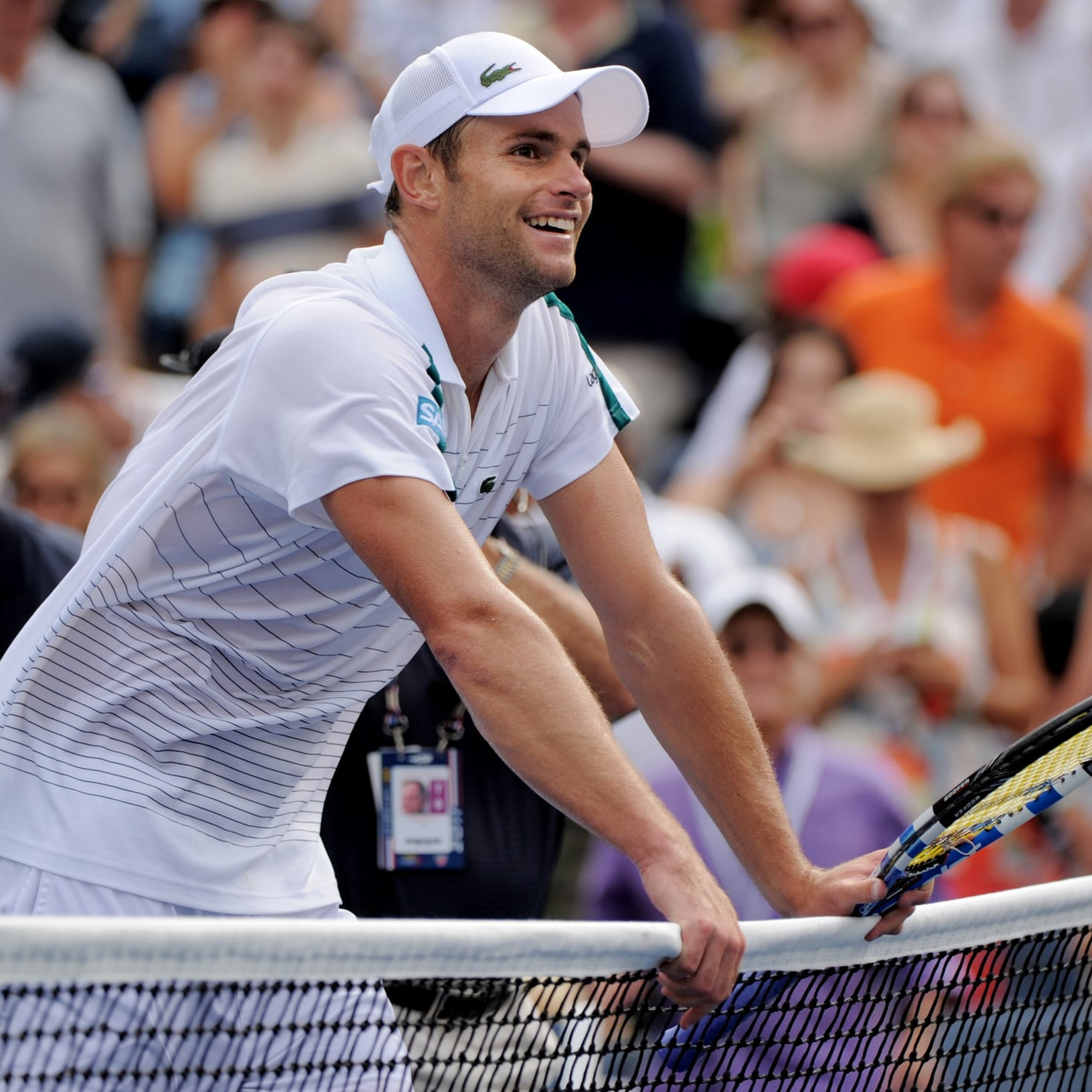
Andy Roddick
One of the tour's most beloved—and outspoken—players and ambassadors joins Rennae to talk systemic reform, tips for being a good spouse and yes, that Wimbledon final.
Hosted on Acast. See acast.com/privacy for more information.
See omnystudio.com/listener for privacy information.
2020-04-27
56 min
Transcript
Available Results
Generated results are saved to the knowledge database for reuse and search.
No generated results are available for this episode yet.
Extract Knowledge
Pick what you want extracted first. Model, scope, and chapter options appear after a template is selected.
Generated results for public episodes are saved to the knowledge database so they can be reused and searched later.
Transcript
00:00:04
Speaker 1: This episode of the Racket Magazine podcast is brought to you by Sergio Chucchini, offering iconic tracksuits, classic polos, and the new Young Line sneaker. Originally designed in the mid nineteen eighties, It's our favorite spring silhouette and it's back. You can get it now at Sergiotucchini dot com and follow them on Instagram at Sergio Chucchini Underscore Official For updates. Enter the promo code racket Bag at checkout and you'll get thirty percent off your order.

00:00:33
Speaker 2: I'm bad enough to have a career winning percentage of I think sixty five percent.

00:00:48
Speaker 3: Started it me too. Well, I'm two cocktails in.

00:00:52
Speaker 4: Well, I am drinking water because I'm being sensible.

00:00:56
Speaker 3: What New Yorker? No, I'm not. I'm joking. You're drinking tequila trae tequila. Yeah, thank you. I'm not drinking straight tequila.

00:01:02
Speaker 1: I was like, have I met you before?

00:01:03
Speaker 3: You're drinking water?

00:01:04
Speaker 4: I am drinking tequila with soda and a splash of lime.

00:01:08
Speaker 3: Fresh line A classy lady. I am a classy lady.

00:01:11
Speaker 4: Now, for people out there that don't realize, tequila and soda is the best alcohol that you can drink because A, it's not fattening. B.

00:01:20
Speaker 3: It does not give you a hangover because it is. It is not a depressant. It is an actual bit of an upper. It's a stimulant.

00:01:28
Speaker 1: Tequila is a stimulant.

00:01:29
Speaker 3: It's the only alcohol. It's plant based.

00:01:31
Speaker 4: So what happens is it's why a lot of people say that they tend to end up taking their clothes off after drinking a lot of tequila.

00:01:38
Speaker 1: Well, this is a good reminder for me to get out of here before you get nude.

00:01:41
Speaker 3: After we take with Sindra, you and I friends came on.

00:01:44
Speaker 1: It's true. I'm drinking a whisky soda cheers.

00:01:47
Speaker 4: You are drinking a drink that will definitely take you down a rabbit hole of hell.

00:01:52
Speaker 1: I mean, it wouldn't be the first time, but you know, I'm I'm happy to do it. I'm happy to see your face. We're socially distance. We're across the room for each other, but I.

00:01:59
Speaker 4: Know we are socially distanced, even in WHI apartment.

00:02:03
Speaker 3: True, it's been a crazy month. It's been a month.

00:02:06
Speaker 1: It's been more than a month than six weeks since we started this podcast. Now three seasons going, so more than two years. We have talked about getting Andy Rottick on the show. Andy Rotick is funny, Andy Rottick is intelligent. Andy Rottick is charismatic. Andy Rottick is a Grand Slam winner.

00:02:23
Speaker 3: And Hall of Famer.

00:02:26
Speaker 1: He happens to be a fantastic talker. There really is no excuse for us waiting this long to get Andy Rottick on the podcast except what an incredible time that we got him on the podcast. He's home with his children, his wife, and he can react to some of this insane news that's going on in the tennis world because we got Andy Rottick sort of talking about the topicality of tennis as it's sort of rediscovering itself, for reinventing itself during this incredible time.

00:02:52
Speaker 4: I know, and you know, for a lot of people that remember obviously Andy when he played, he was at times a little controversial with certain things that he would say in the preyer or he wouldn't give the press anything at all like they would ask him. Because you know, listen, you and I have our issues with sometimes with the questions that are asked in press consciences, including myself, and I've been in those situations where you're like, do you even watch tennis?

00:03:13
Speaker 3: But he pushed the envelope a lot.

00:03:16
Speaker 4: He didn't stand for sort of stupid. Yeah right, And rather than like dumb himself down to answer the questions, he would just kind of throw it.

00:03:24
Speaker 3: Back at them.

00:03:24
Speaker 1: He would school journalists on the regular, which they deserve. Tennis journalists are almost entirely terrible, and Andy Roddick made them out to be the boobs that they almost always are.

00:03:34
Speaker 4: Totally so. But the thing that about him now is that he's actually he's never like that. He's actually very serious about talking about whatever it is, you know, and you always kind of think he's going to joke about it, because I also know him in a personal sense, and he is a jokester, and he does like to jab people and whatever. If you bring up something, he'll jab back. But he's so much more. I think he's a lot different person now. He's obviously a dad and you know, married and you know, certainly matured a lot, and he's gone through a bit in his own life, losing his father quite young. So I think that his outlook on everything now is very different to what it was maybe twenty years ago, because I think he realizes that he is quite an important voice in the world of tennis, so he takes himself seriously with the things that he says.

00:04:21
Speaker 3: And I just think it's great.

00:04:22
Speaker 4: Like he actually has He's not a guy that just says it.

00:04:26
Speaker 3: He actually has.

00:04:27
Speaker 4: He says it knowing if you want to ask him a question in return, he has an answer for it. And that is a guy that's actually done research. He's actually thought about what he's going to say. And I was kind of taken back a little bit a bit of how he answered certain questions. Is how he's really thoughtful on these things now, And it's so nice to see.

00:04:45
Speaker 3: Yeah, completely great.

00:04:46
Speaker 1: I think everybody who is about to listen to this, knowing what they know about Andrew Addick, will not be surprised that he's funny, will not be surprised that he's well spoken, will not be surprised that he has quick comebacks. But what was really striking to me about your chat with him is just he's such He's got incredible tennis IQ. The way he pays attention to the details, understanding the game, the mechanics.

00:05:07
Speaker 3: I mean, he could be a coach.

00:05:09
Speaker 1: From what you guys talked about very easily, just given how in depth his knowledge is. But also he I think has emerged as an elder statesman of the game, and the game is in need of leaders like him.

00:05:22
Speaker 3: And you know, I think they're in need of leaders like him.

00:05:25
Speaker 4: They are actually really thoughtful in the big picture, not just that me picture, right, And I think a lot of times tennis players tend to be in the me picture. Well, how's this going to affect me? Even the top players, even though they're trying to do the right thing, they're still thinking a little bit about themselves. But also in the fact that look, they're happy, they're healthy, they're rich, yep, really rich, so they don't really have to put a lot of thought into it. But he goes a little bit deeper. And I think that's because of his foundation and everything that he's just put into his life. He realizes he's not the center of attention.

00:05:55
Speaker 3: But yeah, he's just he's a good guy, and.

00:06:01
Speaker 1: Well, listen, I always respect a man who marries well and knows that he should listen to a very intelligent woman, which he does. He also has a humility to him, and look, this is one of the best tennis players who's ever picked up a racket, and the fact that he spent a lot of his career in second place to you know, arguably the greatest player of all time is to take nothing away from his incredible accomplishments the Finals, the Grand Slam, and the fact that he is one of the game's most thoughtful and refreshing voices. So I'm really happy we finally got him on the show.

00:06:33
Speaker 4: Yeah, I mean, and you know, to his credit, he says that, you know, he has said yes to the podcast for a long time. It was more about us getting our shit together, which is one hundred percent true. But he I don't know, and he's just yeah, he's just he's just the guy that you always want to have around.

00:06:53
Speaker 1: Well, we have to definitely get him back on the show.

00:06:55
Speaker 3: To do I have to do a part two.

00:06:56
Speaker 4: Here's the thing about him, and he's the only issue that I had, and you and I spoke about it, is that I had, like I always write down a few questions that I really want to talk about or subjects that I really want to get into with certain players, and I knew that there would not be short enough answers to the questions because he's so thoughtful in his answers that he gives, And there were so many questions that I wanted to ask him about. I wanted to ask him so many more things, but because he's so eloquent with the way he actually thinks about the answer, I was like, God, damn it, I had to leave like ten or fifteen things out. So Andy, if you do listen to this, we want you back because we have to do There's so many more.

00:07:35
Speaker 1: Things we have to I'll tell you what. Let's leave it here. We should do a live event with Andy Raddick. Very few people, as anyone who has seen one of his press conferences knows, is as quick on their feet, as self aware, as funny, as humble, but also as prescient as Andy Ratdick. So I think we should plan on doing a live event at some point whenever we're allowed to hang out with each other again and get Andy back on the show.

00:07:57
Speaker 3: Maybe we'll go to Texas for you, Andy, how.

00:07:59
Speaker 4: About that We'll go to Texas or no, North Carolina. He spends a lot of time down there with his wife and her family as well, because they have a house.

00:08:07
Speaker 3: We go to your brook place overha Nebraska. Wherever you need us to be. We'll go to wherever you need us to go because we love you.

00:08:19
Speaker 4: Thank my friend Andy Erotic for joining me on the Racket Magazine podcast. I've been begging you to do this for a while, and now you're stuck in quarantine, so there's no getting away from it.

00:08:29
Speaker 2: That's not true. I feel like you've canceled this as often as I have.

00:08:34
Speaker 4: Oh, that's true. I just wanted to make, you know, make myself feel better about fun now. That is true. You've always been willing to do it, and it's just catching you at time, which is a good time. So I guess I have to ask you. You know, what's what's been going on in the the Erootick household with the pandemic, with the kids. It's kind of crazy for both of you and Brooke because you're not traveling.

00:08:56
Speaker 2: Yeah, so we we've kind of talked about it, you know, in so to you, I'm guessing I don't know that there's been a month since I was thirteen where I haven't gotten on an airplane, right, So it's uh, it's it's strange, but we're great. You know. This is the most time we've ever spent together, and we've kind of noticed that the opposite of most couples. When we spend more time together, it's actually better for us. I have a lot of buddies who are like, I got to get out, and for us, it's great because we're not juggling. We've taken out like kind of the logistical challenges of our marriage and kids and everything else for five weeks, and so, you know, it's it's it's tough, but we certainly really, you know, we realize we have it, you know, easier than than most. You're sitting in New York City right now, and so it's it's been, it's been. It's been good for us, it's been. It's been a fun experience, even though it's also frustrating and everyone's kind of dealing with with it.

00:09:52
Speaker 4: What you're saying is that you still actually still like.

00:09:55
Speaker 2: Each other, yeah, most of the time, which is better than you know. Listen, she should be give a medal. What is it eleven years eleven? Well, we've been married eleven years, have been together probably thirteen years now, so that's she's it shows her level of patients in general.

00:10:12
Speaker 4: I think that deserves a golf clap. And what people don't understand is that I'm actually interviewing you on zoom and recording it, and in the background of what I see of your head is like looks like the eighteenth hole of a golf course. So that's kind of why that reference came out. But Okay, so a lot of people, I mean obviously people that follow you know, but you were originally a Nebraska boy. I want to know how the kid from Nebraska ended up playing tennis, Like what was that all about? And I know obviously your older brother John was very involved in tennis. How did that come about?

00:10:47
Speaker 2: So my parents were kind of big on one individual sport at least one team sport, just because they thought that they taught different things. Right, There's like the self reliance of tennis and the value, you know, not being a little to pass it off when it's basically they thought it taught a little bit of responsibility, and they thought there was some social equity in team sports. And so honestly, it was as simple as the closest thing to us was like this old Rundown indoor tennis center down the street in Omaha. So my brother would go there and I was only four, so I didn't really play, but I would go like through tennis balls and like snoopy cutouts, and that was it and then we left there. We went to Texas when I was about four years old, so my experience there was limited. So I don't know, is the first answer. The second answer was my parents' proximity one on their kind of thing of wanting us to have an individual sport in the team sport.

00:11:41
Speaker 4: Okay, So I got to know your brother pretty well at some stage, and he told me a funny story. And I don't know if this is true or he's just it could be bullshit. As you know, John could do a lot a little bit of that. But he told me, I don't know how your serve came about, but he said, you know how andy came about with that service motion because it is an unusual service emotion. It was really quick stuff, right. He said he was dicking around because he was giving you a hard time because you were a bit of a scrawny kid. You really couldn't hit the ball hard. And he said that you sort of dicked around and threw the ball up really fast and like just tried to pound the serve down as hard as you could. Jokingly, Yeah, uh, do that? Again, is that true?

00:12:19
Speaker 2: Yeah, that's that's pretty accurate. I think the context was I was actually playing. I think I was practicing with Marty Fish when we were in high school, and I was getting drummed like I normally did with Marty in high school, and uh yes, but but I threw it up, just hit it as hard as I could, it went in, and that was that was kind of it.

00:12:37
Speaker 4: So the motion got quicker and.

00:12:40
Speaker 2: And well, it used to be. It used to be kind of like what you would consider like a standard motion where you take everything down together. You know, you get into the trophy position your feet, you know, you you you, you slide your back foot up and the whole thing, and then it just became this little, short, violent move, which for me was easier to repeat.

00:12:58
Speaker 4: I mean when he told me that, I was just kind of crazy, because I mean it obviously was your signature shot. So I think that I don't know what that says as far as like taking a kid onto tennis court and coaching him, I mean, what does that say to you?

00:13:10
Speaker 2: Well, I think there's there's this like fascination with trying to and you see more tennis than I do nowadays, so you'd probably know better, but I think there's this fascination with trying to turn people into a certain someone as far as technique goes right. So if someone had micro managed Johnny Matt, would he have played the way he did? If someone had tried to make Rafa finish every foehand over his shoulder instead of the buggy whip where it finishes behind his ear, you know what would that look like? For me? It's it's can you repeat it? Will it hold up under pressure? And do you have the footwork to actually put you in position to repeat it? If you can kind of answer those three questions, I could actually care less how you hit as long as it's repeatable, you know. So you can have people who have great technique but just fall to pieces, you know, under a certain thing, and you have people who kind of look uglier. But it's I think of like a Jim Furick and golf, where it's the ugliest swing you've ever seen, but he can repeat it over and over and over and over and he knows exactly what it is. He's not going to be the longest hitter, but he basically found a way to be effective. And so I actually this is going to be a terrible thing to say, and I'm sure ninety nine percent of the tennis community will disagree with me. I actually think the technique is overrated being set and all the things surrounding it given technique are probably underrated.

00:14:31
Speaker 4: Yeah, I think I think what could be said about that? I don't disagree with you. I think it's probably more along the lines of can you repeat it? And is it going in? You know what I mean? Is it going in and now you're getting results? And if you're not getting results, and as you said, if it's breaking down under pressures. Yeah, Billy gene King always says bad technique breaks down under pressure. But if you have the repeatability under pressure and it works, then fuck that goes out the door, doesn't it.

00:14:57
Speaker 2: Yeah. I mean to expand on what you do said. I think if you have something ugly but on your bad days you can find the media right and put it in play kind of like what you're saying, that's probably more beneficial than someone flashy on good days hitting winners. And I think I think the trade off with coaches isn't there. I'd rather have someone who can kind of find the court on gross ugly days where you're not feeling great.

00:15:19
Speaker 4: Yeah, well, I kind of jumble around. I have so many questions I want to ask you, because you know, I just I know you're such a great tennis brain, but you're also funny as hell. But you know, one of the things I read about you doing a little preparation for this, I can't believe I actually said that, like I need to prep for you.

00:15:34
Speaker 2: But yeah, that's more than I thought you'd give me.

00:15:37
Speaker 4: Well, actually, to be honest with you, think you might be the first one I've ever prepped for because you have such a great story and there's so many like fun stories about you. But one of the things you said, you wish you'd had Larry Stefanki coach, you'd coach you a lot more.

00:15:48
Speaker 2: Why, well, he was. It's weird, like I picked different things from and I got to be around a lot of amazing tennis brains. I would say he was probably the most complete right and he had the he was the best at seeing trying to see what he was willing to coach through your eyes and with what you had. So he's one of the only guys who you know, you see, I love Paul Anacom, but he he is great with a player like a Pete or or like a Roger or, but he's the best at that kind of skill set. Larry has kind of coached Rios, who is temperamental, moody, bitchy, but unbelievably talented, lefty short. He's coached Tim Henman, who is the opposite personality from Rios, super polished, you know, super courteous, opposite game, opposite hand Johnny Max saying the personality. So, Fernando Gonzalez plays different than than all of them, you know. So for me it was it was an attractive quality when I was looking for a coach later on in my career. Basically, how can I take what I have and how can we mold that but all the while not losing an identity. I feel like most coaches take their skill set and the way they see it and apply it towards the player.

00:17:05
Speaker 4: Yeah, yeah, I agree. I think that and also Larry to me, because I know Larry played team tennis with Larry, yeah, is that he's a good listener as well. He's able to take in what you're saying to him and be able to put it back out on the court. I want to go through your career a little bit obviously.

00:17:25
Speaker 2: No.

00:17:25
Speaker 4: Three. Okay, so you win the US Open and O three we'll get to that. But I want to know leading up to the US Open because I wanted us to jab our friend here a little bit. I think confidence came from you winning Cincinnati and beating someone, particularly in the final.

00:17:43
Speaker 2: Well, I mean I it was I think it was maybe even before that, but I had switched and Brad Gilbert started coaching me, and it was it was a great fit. It was confidence right away. It felt like it was very rush but I got kind of club up in that relationship and it was like a downhill snowball one Queen's semi wimby. I think I won four to five events before the Open and then and then the Open. It was it was just kind of rush of blood. But the specific match against Marty that was tough because that was basically just that I had been playing well for two months coming in because I thought he played a lot better than I did for that entire match. If you had to ask him about it, he would reference there was a I think I was down match point and he knew I was going t big. I was on the ad side. You know, he was just convinced he'd seen it since we were fourteen years old.

00:18:39
Speaker 4: Well, from going to his weakness, I mean, let's.

00:18:41
Speaker 2: Be honest, well I was going to his weakness, but it's also the serve that I wanted to hit at that moment. So he just sold out that way and I aced him with about an eighty seven mile an hour kicker out wide to the back end, and we kind of had this We kind of had this look afterwards where he was like, I didn't think you. I didn't think you had the balls to hit that serve right there, you know. So it was that that's probably the moment that I remember, and I'd be guessing that that was would be the one that you remember too. I don't know if it was an ace er, if he just like shanked it back in out of complete shock that I had actually gone there with a net ball.

00:19:10
Speaker 4: It's funny, isn't it. I Mean, this is a lot of people that realize, like, standing up there to hit a serve, this is some major calculations going on in your head prior to hitting a serf. You know. It's like you're like, is he going to know I'm doing this? Okay? He knows that like that. So the end you sort of like, like you said, he probably didn't think he had the balls to go to his strength.

00:19:28
Speaker 2: Yeah. And the thing with great returners too is I think people when I was serving well people want they're like, oh, mix it up. I'm like, for what if I'm hitting big and the guy can't. But like great returners like Mary, I think Marty on the back end side is a great return When you were against guys like Leyton or Andre, you had to throw like you couldn't mix it up at like one point fifteen, Like you had to mix it up at like eighty seven for it to be effective, Like you had to throw an absolute shocker in there. And so I threw that in against Marty, and I don't I still to this day, I don't. I don't think its that I actually hit that syruve to him at that moment. It's probably a bad decision.

00:20:01
Speaker 4: Well well technically, no, there's no bad decision if you win the point. That's what I say. So you know us open, you you know you're this kid. You go in there, You've got all this confidence. Take me through a little bit of that the open and just a couple of the really important moments that you particularly remember, because there's always one or two moments in a tournament, like shit that made the difference.

00:20:22
Speaker 2: So there's three. There's three things, and a couple of them happened before the tournament started. I remember I'd come in, I was on the street. That was probably the only time I went into a slam in my entire career where I actually thought that I was the guy to beat at that slam, right, even if I was ranked one or two. You know, there was always Roger where it's like, if you had to put money on it, he would probably be the guy, and I was just trying to steal them from him, right, So that was like the nature of the relationship for a decade. But that that tournament, I actually felt like I was better than anyone going inund beating Roger in Canada. But the only person I had lost to the entire summer was was ten Henman. His ranking was down. I think he'd missed some time, but I lost to him. I had match points and lost him in DC, and so draw comes out. At the US Open, Henman ranked thirty three in the world, unseated first round, I draw Tim Henman. No who who I like hated playing against, because like the guys who could hit my my surf back and get to neutral. I didn't like playing those guys. They didn't like playing tim Or or Roger, guys that I liked actually playing the returners that took big swings, you know, and they were great returners. But I hated the guys who could get it down in my back. And and all of a sudden I was using my shovel. So so I first round I draw Henman. So I was like, it made the practice week of what should be like, Okay, I'm coming into this. I'm confident. I had a great summer. I did have a leader. Yeah yeah. And then the draw comes out. I'm like, Henman, I'm like, you gotta be kidding that. There's literally one guy who I don't want a piece of in the quarter is much less first round and so got through him in straight set somehow, and then second round I had to play Lubiticic. So it was like like for me, I'm seeing I'm going, wait a minute, this is brutal, you know. So I'm like this I won't like, you know, this is my moment. I don't want to lose in the first second round, so there's a lot of pressure, and then from there I kind of, you know, it opened up a little bit. I think I played I'll get this wrong. I thought I played Siretta, Malise Shalkan, guys that I had like beaten, you know, kind of comfortably before that, and then being down, I hear a lot. I'm kind of the narrative looking back in my careers, maybe I should have won, you know, a slammer or two more. I'm like, okay, so maybe I shouldn't have won that I did, you know, I shouldn't. Maybe I shouldn't have won the Open. I was down two sets in match point the third set breaker against Melvinion and again hit a serve that he wasn't. I hit big out white like one thirty eight and he was covering tea again and that turned and I got some momentum. And I remember those matches. I hardly remember the final at all. I don't I hardly remember the day of I hardly remember I was kind of locked in and it was I kind of came and just started taking upper cuts in the final, and you know, I kind of had a little bit of a downhill snowball situation. But I specifically remember that that private week being so stressful because I knew I had him in and Lubach it's the first two rounds.

00:23:18
Speaker 4: Yeah, it was one question I was going to ask you, is that you know, because I get asked this question about a few players, and some people sometimes give shit to certain players. Oh, she should have been better, he should have been better. I was thinking, from your perspective, do you think that you do? You think you overachieved or underachieved? And that's you know, it's so relative, right, So.

00:23:39
Speaker 2: I don't know how to answer that. I know that I don't know that I could have squeezed anything more out of what I had. My strengths were really obvious, so they probably got the attention over you know. I Here, here's the way I break it down. I served great my entire career. I never had the best serve on earth. I would say my backhand was pointed to as a weakness. It got way better over the course of my career to where I could I wouldn't miss it, and I could keep it low and I could keep myself out of trouble with it, and my slice was actually really good. My forehand was overrated after the first four or five years. My shoulder it's missues, so I couldn't actually go after a forehand like post eight. Maybe I moved probably a little bit better and obviously had terrible hands in no transition game. So if you bundle all that up, it shouldn't equate to someone who was really good for a long time. I don't think. I think there were massive deficiencies. So I look back and I don't know if I overachieved or underachieved. I'm not sure I could have squeezed anything else out. I'm not sure that I could have worked harder, you know, So wherever, wherever it falls, you know, it's it's it's fine by me. But there there, when I was trying to beat the guys that would have had to beat to win more, not one was a like I'm I always felt like I was at a talent deficit, as it supposed to the other way up. I thought I did a really good job of beating guys that I was I was supposed to be.

00:25:10
Speaker 4: So I guess inevitably, you know people you get to hear you sort of talk a little bit openly, but that that o nine final before we get to that, like, what did you learn from the previous matches that you've played there against Roger and lost? Because you know, you always played him really tight in the finals. It wasn't like you ever really were blown out and you're settle, I think in every single final, Like, what did you learn from the previous matches before you went into nine? What you needed to do differently? Or can I put this a different way? Like I always say that your subconscious and your conscious mind are two different things in tennis, like the little guy in the back of your shoulder, Like I always talk about this, like he's going yeah, and I think you're good enough, I don't know, blah, and then the front of you is going, come on, man, I can do this. But there, like in when you won the US Open, I would you would say that your subconscious and your conscious were fucking yes, we're doing.

00:26:05
Speaker 2: This to get Yeah. I think so. I think there's different episodes. Oh oh, three or four or five finals. I was excited, Oh four, I was actually like beating him right, Like I was through the first you know, we got through, we were set all. I was up big in the maybe I was up big in the I don't know what we got. We had a randolate, but I was like he was hanging on I was actually kind of blowing him off the court a little bit. At that point. My power was kind of there. In ran came he switched it up. I was a little shell shocked, and he just kind of to his credit, he took the break, switched it up, wasn't staying back, started coming in a lot more and kind of took the racket out of my hands a little bit. One of shorter points was a great for all the talent. I don't think Roger gets enough credit for his actual tennis I Q because people think it's easy for him. Oh five it was kind of wet and not way but like cold, and so that wasn't good for me. I needed the ball to shoot through. I need I needed to run it. So he actually ran me out on the straight to that one oh nine. It was it basically was. I was less concerned with the result, right, so four oh five was like, I have to win otherwise it's it's busted. Oh nine I was. I was so committed to Basically, I knew I had to be able to stick my back into deep parts of the court, and I wasn't just going to come in on crap. So for a decade, he would hit that little chip down to my back end. I'd have to be two or three feet inside the baseline. So I had two options. I could either bunt it back because I actually can't hit back in. I can't tell someone back and still to this day. And or I had to hit a chip and he was going to have a look at a pass and I was hoping he would miss the pass or I would hit a great you know whatever. So I basically said I'm not gonna come in from a compromise position. But that required me sticking my back in, whether it was middle or whatever. I basically just wanted to stick it firm all day and at least keep him back on that ball, which the margin of air comes down, because I'm not just flipping it over in that and trying to come back. I actually had to commit to stick at it, and I actually did it. I think that was probably probably the main difference on why I had a maybe a better look at the basket that day. But I just wasn't going to come in from compromised positions.

00:28:23
Speaker 4: Yeah, I actually tortured myself last night because I watched that match. I was obviously I played the Dub's Final that year, and so I was still there. And I watched that match, and you and I, you know, good friends, and I've never wanted someone to win a match so much as I wanted you to win that match. But its like, I remember, you know, I thought, I haven't watched that match since that year, and so I watched a little bit of it last night. I watched particularly the second set tiebreak, and I was like, what happened in that tiebreak, you know, And I sort of went through it a little bit, and I guess the one thing, I mean, everybody remembers the volley, you know that you missed. I want to do you think it was going out or was that just a total?

00:29:05
Speaker 2: So it wasn't. It was a choke on decision making, not execution. So there was a there was a kind of a I haven't really talked about it much just because I don't feel the need to prey Rah or validate it. Yeah, but there was there was a pretty significant crosswind.

00:29:22
Speaker 4: So about that because I didn't realize it.

00:29:25
Speaker 2: Was floated from one side of the court, and I kind of thought it would fade, and then there was you know, wind kind of so I was like, oh my god, if I leave this and it kind of floats in and sits, it's just the worst feeling ever. I was like better last second, I'm like better to hit it, and obviously just flagged it. But I think it was more of a choke on the decision making side than the actual execution side. I've watched that breaker back once because it came on and I was on a bicycle and I was flipped in the channels and it randomly was on like in a thing, and the shot that I was shocked that. I'm not sure if it was before one point, before one point after the volley, but I unloaded a I think it was a return, and I put it on his shoe tops, maybe behind him, and I think at that point it was it might have been sixty to one or something in the breaker and he flipped it off that and stuck a half volley from the baseline cross court. I had no recollection of that shot, like in my like because I hadn't watched it. I watched that shot, I go, how are people not talking about? That shot? Is one of the best of all time to like save a Wimbledon potentially like it was, and it wasn't even like he was trying to make it. I almost feel like he was over the set and just like like like flung it. You know, It's like, okay, if I don't think he hits that type of aggressive shot at six y five as opposed to way down.

00:30:43
Speaker 4: I'll tell you what it was, because I watched it last night and I thought the same thing.

00:30:46
Speaker 1: It was.

00:30:47
Speaker 4: It was about the third shot of the rally. You were sort of in that position of having to rip aforehand because you're kind of out of position.

00:30:54
Speaker 2: Yeah.

00:30:55
Speaker 4: I did to go big down the line and he was inside the baseline by about three feet, and you hit it right at his feet and he just casually just flicks a little half folly back end cross court into the open hook, and I was like, oh my god. And actually the commentator said, I don't think people realize how good a shot that was.

00:31:15
Speaker 3: Just then.

00:31:15
Speaker 4: Maybe six all he maybe doesn't make that so easy. Yeah, but you were so far off the court it wasn't. But one of the things I wanted to ask you about the tiebreak was because you had served so well in that tie break and you got big a lot to his back end and you decide, and the first set serve you hit on your match point, you went body, you went hard body match point, Yeah, and you missed it, and you missed it was the first serve you missed in a long time. So I'm just wonried, Like, can you even explain to people with all the noise that happens too? And you know, because all the crescendo of crowd noise at six ' five, does that change your pulse rate? Does that make it rather than just oh it's another serve, no big deal, you know, explain to people like the difference that feels like when you're all of a sudden it's on your racket.

00:32:05
Speaker 2: I can't remember the reasoning or or if I actually I don't remember that choice really, but you know, Roger, it's a strange one because you want to pound the back end on the return because his forehand return is one of the more underrated shots, like he can just kind of stick it. He never is. Rush to the back end is great too, but you can overpower the backhand. Sometimes not all the time. He's great. If he's leading that way, it's hard, but you know that that's where you're gonna win the most first surf three points. I don't know if I just missed it. But the other thing is when he's really extended, When he gets his arms extended, it's this thing where you want to go body, but you're you're playing into his pocket. If he gets extended, he's really good.

00:32:45
Speaker 1: Yeah.

00:32:45
Speaker 2: Yeah, So I'm assuming that I probably thought he was going to guess either way. So like Virtue of his movie, this way or that way, I probably just wanted to play against this movement on the serve.

00:32:54
Speaker 4: Here's the thing he got two says to love. There's no guarantees you're still going to win the match any no, no, no, That's why.

00:33:00
Speaker 2: The thing with that is, like you'll see to the crowd point, you'll see John Isner in practice, he can't. He doesn't serve over one twenty five, and then all of a sudden he gets into a match where there's some atmosphere and he's touching one forty Yeah yea wait. So to your point, it absolutely affects decision making, It effects adrenaline, It affects million things on that line for sure.

00:33:20
Speaker 4: The one thing that I know for sure after that match is how great your wife is in a playerbox, Because I swear to you, even when you were winning or losing any of those points, she was just sitting there like, okay, great job. Like there was no movement from her. When you went and went six al in the type rack, she was like, it's okay, plus just like I'd be dying. She like she should be a poker player.

00:33:54
Speaker 1: This episode of the Racket Magazine podcast is brought to you by Sergio Tacchini, revitalizing and disrupting the status quo since nineteen sixty six. Follow them on Instagram at Sergio Tichini Underscore Official and go to Sergio Tichini dot com for more. Enter the promo code Racket mag at checkout and you'll get thirty percent off your order.

00:34:19
Speaker 4: Another question I wanted to ask you, I just want to know, do you realize, like how bad you were on clay?

00:34:25
Speaker 3: What the hell?

00:34:26
Speaker 2: Man like? So, yes, and I'm bad enough to have a career winning percentage of I think sixty five matches, one huh five titles, three semis and masters series events on talking about the French. Yeah, so I will tell you something that and I talked about it last week or two weeks ago, so when it was a the consistency and I'm curious to hear your thoughts on this, the consistency of clay in Rome Hartrue not so much Madrid, but like it was gritty and it felt like if you would rub it between your fingers, it felt like salt, right, if you pour it salt on your hand, you rub it. And at rolling garrels it felt like baking powder or baking you know where it's like it's slippery. And I hated it. I absolutely hated it. I could not like as much as I couldn't move on clay in the first place. Once I got to rolling garrels, it was like I'd hit a serve and then I would basically try to find my feet for the next three seconds. So I didn't because I was kind of a heavy physical mover. I didn't mind the gritty stuff. I wasn't great on it, but at least I felt like I could find my footing I was. I was lost like that slippery crap. I hated it. I hated it, all.

00:35:43
Speaker 4: Right, Well you know it's okay, it's okay. You want you want a lot, as you said you did.

00:35:47
Speaker 2: Okay in your career, I was definitely so I say that, but I was a good fifty. That was pretty bad. It was the great neutralizer I just had.

00:35:56
Speaker 4: I had a losing record, the only losing record at Grand Slam, said the French.

00:36:00
Speaker 2: Well that was yeah, that just means I should have skipped it more.

00:36:04
Speaker 4: Yeah, I was wondering why you used to in tank it and like do the old Roger play and not play the French Open at all or any clay.

00:36:10
Speaker 2: All of my sponsors were French.

00:36:13
Speaker 4: Got it, uh huh la cost babbylat and I see, I see it. Okay, then you're forgiving. But hey, then you must have you tried hard, you did your best.

00:36:24
Speaker 2: I yes, points for paints, points for effort, we know that, we know everyone gets points for effort and pro sports. Yeah.

00:36:31
Speaker 4: The only thing I really loved about Rolling Garris was actually the sliding. I mean, that's that's all I can do on clay as well. So so I'm with you.

00:36:38
Speaker 2: The best day at my the best day every year was when you left Rolling Garrols. You got on the train, you went underwater, and you you popped up out of the water and you were in London and the grass was waiting for you and.

00:36:50
Speaker 4: You're undross Yeah exactly. How how important was it for you, like starting your foundation, Like what what are you doing with it now? Because it's kind of changed a little bit.

00:37:01
Speaker 2: Right, Yeah, it's brutal. So when we started it, it was it was like you needed a name, you needed a name for a foundation to do an event, right, I thought it was we did a tennis clinic in a parking lot. So yeah, yeah, I don't know. I think you're just caught up and you try to do something well and I think we raised five thousand dollars or something, and you give it away and you feel good, you know, now to what it's become where we you know, run around programs, we have direct services, we have you know, a roster of full time employees. It's a you know, proper organization. We serve seven thousand kids daily in the Austin area and we expect the number to grow to forty thousand within the next three years. It's it's just come a long way. But I always I always say that if I travel around and speak it various non profit inventions or whatever, it's I was in the right vacuum and I don't think tennis gets enough credit for whether it's we have absolute icons of our sport that have actually done more outside of the sport or for social justice causes than they actually did on the court. And that's saying a lot when you're talking about people like Arthur Ash and Billy Jean King and Martina. I don't think Martina gets enough credit and how challenging is coming out in the eighties as the number one player in the world after having to make a decision to defect when you're seventeen or eighteen. So I mean, these are a decisions that most people who are seventy couldn't make without high levels of stress and handle the responsibility. And she's doing it at you know, an age where you're still trying to figure everything out. So you know, then you go to Andre and what he's done in Vegas, and you know, Roger being a unise of ambassador then saying, you know what, I can actually do this myself, and I'm going to build my own schools Venus and Serena with literacy programs in South Florida. So the list goes on and on and on, and as you well know, it's it's just the culture of tennis. You know, I'm sure you get calls to either MC or play in charity events. People in tennis to show up, They just do, you know, more so than than other sports.

00:39:04
Speaker 4: So I think, what is event every year I go down?

00:39:07
Speaker 2: Yeah, So I think I think what my foundation has become now and and and something we're very proud of is you know, I think it's just you give a tip of the cap to the culture of tennis. Really and and our foundation has nothing to do with tennis. Like we we focus on out of school education, so after school summer programs, and you know, we all go to the best best summer program in the country last year. But it's just the culture that's instilled. It. When you see people that are better than you on the court, that are better people than you off the court, and they're spending their time doing these things, you know, you feel like an absolute loser if you don't actually commit and make something that's sustainable and important.

00:39:51
Speaker 4: Do you feel a need to talk to the younger American guys to do that or do they come to you and ask you for advice in doing that and how to do it?

00:40:01
Speaker 2: No, I I have it's I would say that I'm probably not hard to find, and I would say that I don't really get any phone.

00:40:10
Speaker 4: Calls, you know, So is that does that make it say? Is that sad for you? Or do you think that's a little bit of the you know, their management team are sort of taking over what they're doing or I.

00:40:22
Speaker 2: Don't know, but I'm it's It's a weird thing for me because I I I obviously think there's there's value to add, But at the same time, I think every former player thinks they know everything, and I always want to be cautious of of not being like, well, I know you do this, and this is the way we used to. I want to be the guy who walked up hill both ways to school back in the day. Does that make sense? Yep?

00:40:43
Speaker 4: So you know, hard way, my friend, learning.

00:40:45
Speaker 2: That the last thing I want to do is is kind of force my belief system or anything else on on players in any space. I'm certainly always available, but honestly that my life is busy enough now not to have to beg to talk to someone.

00:41:05
Speaker 4: Yeah, and it also helps that you have, you know, Elton pops in every now and again and sings a few songs.

00:41:11
Speaker 2: Yeah, I anyway. I mean, he built our foundation, he really did. He played every other year for a decade. Yeah. I don't know how you repay that, but we became a financially viable organization because of him.

00:41:26
Speaker 4: Yeah, a little bit on modern day tennis right now, I kind of get into these wars every now and again. I mean, I know you find that hard to believe. But on Twitter about the thought process of this a little controversial right now. I mean, Roger just tweeted out the other day about it's time to join the tourists. What are your thoughts on that? And on top of that question, what do you think about men being best of five going to best of three and Grand Slams? I want both your answers to them, no pressure.

00:41:58
Speaker 2: So no, it's fine. I'm not I'm not scared of give an opinion. But the mergers is I think it's great in theory. I think as long as you can as long as it creates an asset that is way more valuable than two separate tours, then it makes a lot of sense. If if you can double your TV deal because you've joined content and you have the ability that you have the flexibility to give, uh, give the TV people what they want more often, and you kind of head your bets with which who are the stars now versus who will be the stars in five years?

00:42:36
Speaker 4: Right?

00:42:36
Speaker 2: So you know, I know I kind of asked a run and I know the two biggest ratings that tennis channel got last year, and obviously they're not carrying uh, you know, Wimbledon finals or whatever, right, so you take that out of it. But we're we're for Cocoa golf, So you know, we point to Roger Rafa Novak as huge ratings makers, right, but what does it look like in four years?

00:42:58
Speaker 1: You know?

00:42:58
Speaker 2: So I think it's a hedge on on who your stars will be, right, So before Roger came through an O three, you know, Venus and Serena, we're what everything everyone was pointing to. And then all of a sudden Roger came and it shifted a little bit. But it's a safe hedge as long as the asset together is uh is a win for everyone. And also it's just you don't want to hear it. But in the conversation of combining men's and women's tours, one thing that cannot be undersold is that if the w E Tour is more financially viable than the ATV tour coming into the marriage. Then they need that there needs to be some sort of prenup and there needs to be some sort of drawdown of This is what our books look like financially. These are the TV contracts we have in place. You know, if we if the w t A Tour has a great year end finals package in place for the next seven years, can we come in and poach profits off of that. That's a very complicated conversation. My personal belief is you can't. So there almost needs to be a an expiration date on current contracts of which you can combine the organization. Now you can have standalone contract entities. But then as far as like merchandising and everything else, which I think is completely undersold or non existent in the tennis space, then it makes a lot. Then it makes a lot of sense, But it's not just as easy as an idea of hashtag better together. That's fine, but our books need to work too, because we all are just participants in the business of tennis in some way, shape or form.

00:44:31
Speaker 4: Yeah, yeah, I think that's great. I think I think you're you'd be perfect CEO. You ready nothing else.

00:44:38
Speaker 3: Come on.

00:44:39
Speaker 2: Yeah, I'm real good about traveling these days, as you can see because you see me once a year. Sorry, my wife.

00:44:45
Speaker 4: Just turn on the radio in this room, damn brook.

00:44:49
Speaker 2: The other the other thing, the other thing that I want to add to that is everyone's saying, oh, unified, unified, unified, And I see you know last week the conversation was or Monday, Actually the conversation was the ATP relief fund, okay, and it was it was four and a half million dollars. It was there was a draw down the rankings to pay, yeah, rank which I thought it should have been based on active prize money leaders, not rankings, but so anyway, but whatever, there was a drawdown. It added up to four and a half million dollars for four hundred and fifty players. Okay, I can do the.

00:45:20
Speaker 4: Math on that.

00:45:20
Speaker 2: It's ten k a player. Then and then WTTA comes in, slams come in, itf comes in. It gets boosted up to six million dollars in the proposal, but we lose one hundred players on the ATP side, So the actual price per person came way down by adding all of these different ensites, right, So it shook out to eighty six hundred dollars a player, and we lost one hundred players on the ATB side. It went from the new proposals for I think one fifty to five hundred, so it was own was subtraction by addition, not necessarily from an ATP to WTA side. But you're bringing in the ITF who actually has no value to really anyone in tennis. And it's a controversial statement kind of until you actually think about it. Yeah, their main asset is tens of millions of dollars underwater. It might not be financially viable in three years. And then someone was like, okay, but they're the voice of the Slams, and so I said, I asked a simple question. I said, okay, but what does that mean? And they go, I don't know, yeah, And I go, if they're the voice of the Slams, do you run into and they're supposed to kind of be the go between between everything Slams versus other I go, shouldn't we have heard from them when Roland Garris made their march to that date? Were they in the dark? And they go, oh, well, they didn't know about it. I go, well, then they're not in a very good voice of the Slams, but they don't know what's going on.

00:46:38
Speaker 4: Yeah, oh well, I mean you and I were, and everyone that's mostly involved in tennis can say that the different entities in tennis are completely fucked up. I mean, there's just no uniformity to anything when it comes to tennis, and I think that's a huge problem and we are seeing it in all its glory right now. There's no question.

00:47:00
Speaker 2: Yeah, I just I just don't like, if we're gonna if there's a merger, I don't think it's I think you have to have assets to become part of the merger. Right, So the w t A obviously has assets. The businesses are generally run the same they're in the same state, so that all makes a lot of sense. You're not dealing with different LLCs in different states with this different taxation policies and all of that. That's very complicated also, but like why why are we allowing people to have an opinion who don't actually add any value? Right, So, and then you're running into some complications where actually yesterday on Tenni Channel says, okay, we're gonna merge, who's the CEO, Who's who's gonna who's gonna negotiate this deal in order to lose their job as CEO?

00:47:41
Speaker 4: Yeah, exactly, that's what I was thinking. Yeah, here's the powerplay of powerplays.

00:47:46
Speaker 2: Yeah, so, like I in theory, it's great on Twitter, it's a great SoundBite, but the complexities I I would actually I'm for it, but I just need to I think it's gonna need a little bit of time to be organized because if you rush this process and it's not written down the right way, Yeah, I think it's going to be anarchy. So I think you have to I think you have to say, who do we need at the table? Who can have the most value? You trim the fat. It's like you're not if you're Apple, you're not going to ask Blockbuster for business advice. So get rid of Blockbuster and let's actually build a company together. All right.

00:48:21
Speaker 4: I recommend that you're on the on the future board, right, nothing else, so you can be on the board, right.

00:48:28
Speaker 2: All right.

00:48:30
Speaker 4: I've had you a long time, but I still want to ask you, do you remember what was one of the things that you remember on two That's probably one of the funniest things that's ever happened to you.

00:48:41
Speaker 2: I can't really say it.

00:48:43
Speaker 4: Oh yeah you can. This is the part I mean, Darren Cahill tell the story how he got a chubby getting massage. I mean, this is like we're opening form here.

00:48:51
Speaker 2: Yeah, I would say I had a lot of fun messing with our practice partners on the Davis Cup squad. We probably did things that now you couldn't get away with it there. Well, we used to. We used to give them words that they would have to So there's a formal speech every every every week during the Davis Cup where we all put on suits and ties and it was it was the worst, but but we had to go. We get the practice partners, you know, very juvenile things like they had to say like reach around or chubby or you know whatever it was you Every single week I would fall down laughing. We did a really terrible thing that isner one time do it his hotel room. It was disgusting me, Marty and James did it. I'm not going to repeat it. But then he came down everyone's waiting for him. We all die laughing in a lobby like Probably the best times were the pranks uh at David cuff I enjoyed them. The completely juvenile completely immature, and I was all in.

00:49:47
Speaker 4: Is that you think why you played so well at Davis Cup as well? I mean, you have one of the great records at Davis Cup, is that you would just you just felt like you had your boys there, you had your you just you felt like truly you as a person, because you're a people.

00:50:02
Speaker 2: I enjoyed the responsibility of it. I took it seriously. I knew that there was a culture. I don't know why I played great at it. I was always decent on the road. I had a hard time playing at home for a whiles because I was too amped up. But I'm not sure. I'm sure that's all part of it. I just actually enjoyed the responsibility and knowing that I had to execute. Yeah, And it was this nice thing of it not being completely selfishly motivated for a given week, right, And I enjoyed that part of it. I didn't get to play college tennis. You were obviously amazing at double so you actually know what teamwork looks like. To that point in my career, I had no idea what teamwork looked like. So it's something I gravitated towards and I really embraced and I enjoyed it.

00:50:50
Speaker 4: And lastly the Hall of Fame speech, which is pretty epic. I mean, look, we all know that you can talk, and that's the pot calling Kett also, But like that moment was that like because you know, you were a little testy in press conferences and you like to jab the you know, journalists, and you'd give the umpire shit and you kind of had this people either loved you or hated you. But ye did you feel like, all right, today's the day to step up and actually let everybody know how much I appreciate everything about what this sport has done for me or was it just you being you?

00:51:29
Speaker 2: I don't know that it was that calculated. So the thing that I struggled with is I didn't want it to be a regurgitation of results of my career, right. I didn't want any mention of winning a USL when I didn't want any mention of Wimbledon finals. I just felt like that was redundant. I wanted to something. The idea that kind of stuck with me that probably meant the most to me was connecting the eight year old version of myself who watched all of these people to the reality of those people actually sitting behind you while you're giving speech, right, So that meant the most to me, and kind of thanking the people along the way. So the hardest thing for me was giving people the respect that they deserved for helping me along the way, and all the while I wanted to point out the Hall of famers and the matches, the things that I saw that I appreciated, and I guess it just came out that way. But it was as simple as I just wrote a bunch of sentences down in a notebook and it was probably seven minutes of writing, and it was I didn't also want it to be programmed, so I would just write seven words that would get me into a thought and then kind of just tell the story, which is much easier for anyone speaking in public. It's a lot easier just to kind of so you don't get lost, to have some sort of order or someblance of order, and then kind of just storytellers. I think that resonates maybe a little bit better. But it was fun. I was shocked they got through without it. So every time I practiced reading it out loud, I broke down. I was a mess. And that was actually a pretty clean run through. Surprisingly, so when the people were there ask you the cleanestron, I didn't think I was gonna through it.

00:53:05
Speaker 4: Yeah, it was a big day. It was great and it was totally well deserved. So I guess what's next for you?

00:53:12
Speaker 2: What do you?

00:53:12
Speaker 4: I mean the kids, marriage, Nettle, going your foundation, doing a bit of TV right now with Tennis Channel because you're bored as f like, what what do you see yourself? Like twenty years round? Would you remember if someone came to you and said, would you coach me for a year now?

00:53:30
Speaker 2: So one one of the things that I'm pretty steadfast on is not I don't want to give up my geography again. You know, I don't want to play an away game eighty percent of the year, and so that's just something I'm really not going to compromise, especially our kids are young, and I just I just want to be present, you know.

00:53:53
Speaker 1: I don't know.

00:53:53
Speaker 2: Every day is a little different than you know, the foundation obviously is there's something to be done every day with that. I started a realistic company during my career, which is the most boring thing you'll ever talk about. But ten years later and you know, fifteen twenty year contracts, ever buildings you bought during you know, when you add capitals, that's fun. The angel investment side is fun. So it's great because I have enough to do every day, but every day is still a little bit different.

00:54:23
Speaker 4: So basically saying you've got a lot of shit on your plate and you're all good.

00:54:26
Speaker 2: So that's yeah, I think that's right. And you know, making sure my wife doesn't leave me anytime soon. That takes work also, So that's that.

00:54:38
Speaker 1: Well.

00:54:40
Speaker 4: I think that you guys are pretty fucking perfect together. So I think as long as you, I don't know, as long as you keep like putting the toilet seat down.

00:54:49
Speaker 2: So advice that you didn't ask for, Like we've had separate toilets since the word gone so smart, you don't see the worst parts of each other, Like just just leave it separate.

00:55:00
Speaker 4: So that's your that's your advice to every couple.

00:55:04
Speaker 2: If you can't even if it even it means you got to call DIBs on the one down the hallway. I believe in separation of.

00:55:11
Speaker 4: Never one hundred percent agree with that. I was. I had a choice a couple of years ago getting an apartment with my girlfriend at the time, and I paid. We paid like one thousand dollars extra a month on rent just to have an extra toilet, because I was like, I don't need to deal with this, Like it's just so. Some people are just messier and men tend to be disgusting. I think that's a great parental I.

00:55:36
Speaker 2: Think that's a great Yeah, that's all. That's all true.

00:55:40
Speaker 4: That's great, right, all right, that's perfect then, on Andy, thanks so much. I miss you, I miss Brooke, I miss the kids. I know you're in North Carolina right now, but once this pandemic is over. You were gracious enough one time to invite me into Austin to show me the city, and I'd love to come back again, and I'll make you guys a lot.

00:56:01
Speaker 2: Well let's do it. Stay safe, don't go lock at any doorknobs or anything. You know.

00:56:06
Speaker 4: Yeah, I've managed to like pull that out of my uh my, all right, Stubsy, thank you, all right, mate, see us a.

00:56:15
Speaker 3: Hi to the gang.

00:56:16
Speaker 1: Bye, And that's it for this episode of the Racket Magazine podcast.

00:56:21
Speaker 3: Thanks for listening. Our host is Renee Stubbs.

00:56:24
Speaker 1: Our co host and producer is me Caitlin Thompson. Music by internationally renown DJ Stretch Armstrong thanks to Tim Or Jerry and the team at acast. Find us at racketmag dot com, slash podcast, and subscribe to us at any of your favorite podcatchers.
Chapters
No chapters available.