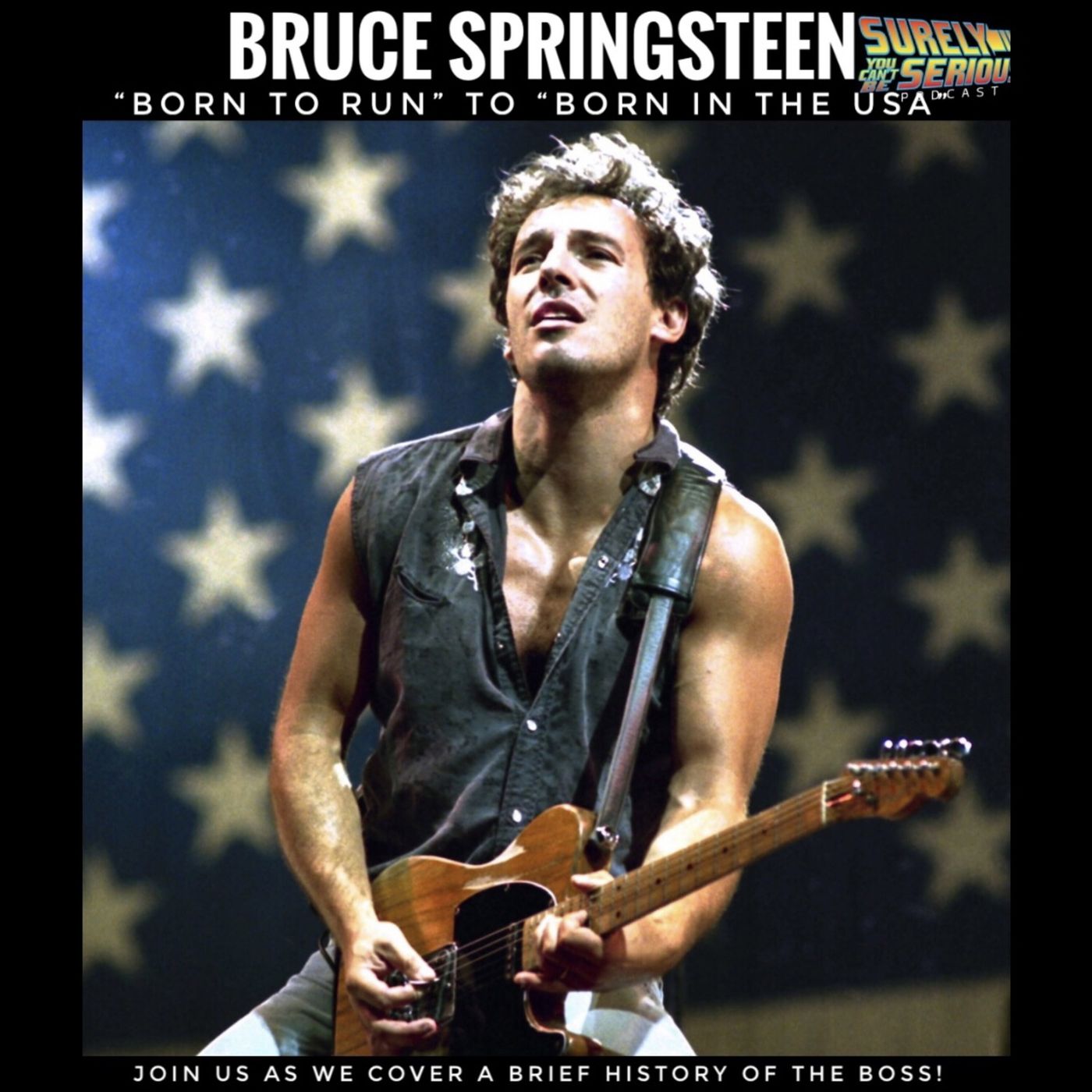
Bruce Springsteen: "Born to Run" to "Born in the USA"
We kick off our deep dive into the Summer of 1984 with the Boss, Bruce Springsteen and the E Street Band. That summer started a global sensation of what became known as "Bossmania". "Born in the USA" was a commercial and critical success, but it was a long (thunder) road to get there. Join us as we take a brief look at the history of Bruce and the band and what it took to get there. It takes more than just a "hngry heart"!
2021-05-17
33 min
Transcript
Available Results
Generated results are saved to the knowledge database for reuse and search.
No generated results are available for this episode yet.
Extract Knowledge
Pick what you want extracted first. Model, scope, and chapter options appear after a template is selected.
Generated results for public episodes are saved to the knowledge database so they can be reused and searched later.
Transcript
<v Speaker 1>All right, everybody, welcome back to the Shirley You Can't
<v Speaker 1>Be Serious podcast. We have just ended our series on
<v Speaker 1>the best golf Comedies of all time, and now we
<v Speaker 1>are about to begin a new series.
<v Speaker 2>We are starting one of the coolest six week deep
<v Speaker 2>dives that I can think of. It's going to be
<v Speaker 2>all about the summer of nineteen eighty four.
<v Speaker 1>We have frequently talked about what year is the most
<v Speaker 1>eighties year of all eighties years, and Jason, I think
<v Speaker 1>you have said nineteen eighty four.
<v Speaker 2>I am spiking the football. It's nineteen eighty four.
<v Speaker 1>Okay, So if we go back in times in nineteen
<v Speaker 1>eighty four, from a kid in nineteen eighty four, I
<v Speaker 1>could have gone to the movie theater and watched Sixteen Candles,
<v Speaker 1>h Grimlins, Top Secret, Romancing the Stone, Red Dawn, Revenge
<v Speaker 1>of the Nerds, Beverly Hills, Cop Police Academy. I mean
<v Speaker 1>these are the most iconic of iconic Terminator, the Last Starfighter,
<v Speaker 1>I mean Last Last. I mean, it's the most iconic
<v Speaker 1>eighties movies.
<v Speaker 2>Yeah, and you're talking music wise, You're talking about When
<v Speaker 2>Doves Cry by Prince, You've got what's love got to
<v Speaker 2>do with it? From Tina Turner. You've got Footloose, You've
<v Speaker 2>got Against a Lodge, You've got the Van Halen albums.
<v Speaker 2>I mean, you've got Huey Lewis Sports. That whole summer
<v Speaker 2>was amazing.
<v Speaker 1>So our attempt today will be to take you back
<v Speaker 1>to that time as we begin by comparing two albums
<v Speaker 1>that were at the top of the charts in the
<v Speaker 1>summer of nineteen eighty four, Huey Lewis and The News Sports.
<v Speaker 2>And Bruce Springsteen's Born in the USA.
<v Speaker 1>Two super iconic albums. Yeah, so here we are. We're
<v Speaker 1>comparing these two incredible albums of two guys whose names
<v Speaker 1>are followed with and the band. Right, you've got Huey
<v Speaker 1>Lewis and The News, and you've got Bruce Springsteen and
<v Speaker 1>the East Street Band. Yes, right, they both got sexophone players.
<v Speaker 1>They're both gravelly voiced, not traditional of the time sounding guys,
<v Speaker 1>but they were killing it at the time.
<v Speaker 2>That's exactly right.
<v Speaker 1>And these albums were their biggest success of their recording
<v Speaker 1>career up until that point.
<v Speaker 2>Yeah, biggest sellers for sure.
<v Speaker 1>Okay, this episode, our executive producers are Chris and Jeanie Alexander.
<v Speaker 2>Yeah, Chris and Jeannie are some of my oldest friends
<v Speaker 2>in the world. Chris was the best man at my wedding,
<v Speaker 2>he was in the nursery with me at my church.
<v Speaker 2>And Jeanie is one of my wife's oldest friends, her
<v Speaker 2>college roommate, and so we ran around together at ou
<v Speaker 2>and some of my dearest friends in the world. Chris
<v Speaker 2>and Jennie, thank you so much for being Patreon and
<v Speaker 2>just supporting our podcast. We love you, guys and are
<v Speaker 2>very very thankful.
<v Speaker 1>Genie came up in the youtubo episode, right.
<v Speaker 2>She knows her stuff, man, she knows her stuff. She
<v Speaker 2>is a big YouTube fan.
<v Speaker 1>Well, if you want to be an executive producer of
<v Speaker 1>our podcast, be sure and visit our Patreon page. It's
<v Speaker 1>as cheap as a cup of coffee a month to
<v Speaker 1>become an executive producer of one of our episodes. To
<v Speaker 1>be sure and go check that out. All right, We're
<v Speaker 1>going to start off this comparison by talking about Bruce
<v Speaker 1>Springsteen and Born in the USA, and the next we'll
<v Speaker 1>talk about Huey Lewis and the news in sports.
<v Speaker 2>I can't wait.
<v Speaker 1>Okay, do you have any personal feelings about Born in
<v Speaker 1>the USA?
<v Speaker 2>So I was one of those kids who thought originally
<v Speaker 2>that Born in the USA is like this big fist
<v Speaker 2>pumping patriotic I love America songs.
<v Speaker 1>Wrong, I know, I know, right. Yeah, Well, it's not
<v Speaker 1>like they were. I mean, they did everything they could
<v Speaker 1>to fool you about the content of the song. But yeah,
<v Speaker 1>that's I was in revisiting. I'm like, oh, well, big
<v Speaker 1>misunderstanding here.
<v Speaker 2>Yeah, and so I definitely knew this album. I was familiar,
<v Speaker 2>especially with the videos.
<v Speaker 1>Huh.
<v Speaker 2>So for me, I grew up a baseball player. I
<v Speaker 2>love Glory Days. I love that video. The idea of
<v Speaker 2>being a rock star baseball player is very appealing.
<v Speaker 1>Yeah, I mean, talk about reaching your target audience by
<v Speaker 1>being the guy who's just throwing some balls at a
<v Speaker 1>board at the local park. He nailed it. He nailed
<v Speaker 1>his blue collar demographic.
<v Speaker 3>Yeah.
<v Speaker 1>Before we get going, I just want to point something out.
<v Speaker 1>We have been talking to each other now for a
<v Speaker 1>couple of years, face to face, and one of the
<v Speaker 1>reasons that I can do that is because you don't
<v Speaker 1>have nose hair. Have you been talking to people and
<v Speaker 1>like you can't even concentrate on what they're saying because
<v Speaker 1>of their nose hair.
<v Speaker 2>Absolutely, they like tucked you.
<v Speaker 4>It dangles, yes, it wiggles, it's it's a total distraction. Absolutely,
<v Speaker 4>And so let me let me say, if you are
<v Speaker 4>one of those guys, we have a product that is
<v Speaker 4>supporting the podcast that you need to check out. Is
<v Speaker 4>called the weed Whacker, and it is from Manscape.
<v Speaker 2>It is an amazing product. It trims your nose hair.
<v Speaker 2>It's not embarrassing. You just stick it up there. It
<v Speaker 2>takes care of it.
<v Speaker 1>You're not gonna look at people and bother them, right,
<v Speaker 1>And I'm one of those guys who's self conscious about
<v Speaker 1>my nose hair. So somebody that you're gonna see me
<v Speaker 1>and I'm gonna be like yanking them out and wincing
<v Speaker 1>in pain, don't do that. There is a special thing
<v Speaker 1>that they make and they've also just released. In addition
<v Speaker 1>to the weed Whacker, they have just something called the lawnmower.
<v Speaker 1>If you have other areas of your body that you're
<v Speaker 1>looking to trim up. And I'd like to point out
<v Speaker 1>that a giraffe is easier to see in the planes
<v Speaker 1>than it is in the forest. So that's that's wonderful. Yes,
<v Speaker 1>yes it is.
<v Speaker 2>So it's very it's very good around sensitive areas if
<v Speaker 2>you know what I'm saying.
<v Speaker 1>Yeah, they have also an entire shavekit called the Ultra
<v Speaker 1>Smooth Package package. You get the idea.
<v Speaker 2>So who doesn't want their package Ultra Smooth?
<v Speaker 1>Right? Right? So don't forget to go to manscapes dot
<v Speaker 1>com and use the promo code fan sided twenty to
<v Speaker 1>get twenty percent off your order and free shipping.
<v Speaker 2>Whack it.
<v Speaker 1>Perfect time. So let's talk history of mister Springsteen, shall we?
<v Speaker 2>Yes, let's go.
<v Speaker 1>Okay. So September twenty third, nineteen forty nine, Young Bruce
<v Speaker 1>Springsteen is born in Long Beach, New Jersey. His family
<v Speaker 1>is a blue collar family, scraping by. His dad goes
<v Speaker 1>through multiple jobs. He's a prison worker, he's a bus driver,
<v Speaker 1>he works at a factory. And knowing this kind of history,
<v Speaker 1>to say that Bruce is kind of political in his
<v Speaker 1>songs might be a bit of an understatement. Yeah, he
<v Speaker 1>definitely is, and we don't get political on this podcast,
<v Speaker 1>but you can certainly tell that his upbringing formed his politics,
<v Speaker 1>which then formed the stories behind a lot of these songs.
<v Speaker 1>But interestingly, Bruce himself never worked in a factory, never
<v Speaker 1>worked on a highway, never had a real job in
<v Speaker 1>his life. He was always a musician, yeah, and he
<v Speaker 1>was inspired to do that back in nineteen fifty five
<v Speaker 1>ish six, maybe when he saw a guy on TV
<v Speaker 1>swinging his hips and girls screaming their heads off, mister
<v Speaker 1>Elvis Presley. Yes, yeah, So he decides at that moment,
<v Speaker 1>I've got to be a rock and roll star, and
<v Speaker 1>he convinces his mom to rent him a guitar. They
<v Speaker 1>do not have enough money to buy a guitar, so
<v Speaker 1>she rents him a guitar for something like twenty five
<v Speaker 1>bucks a week. And he's terrible. I mean, he's just
<v Speaker 1>a little kid. He's like he's six seven years old
<v Speaker 1>at this point, and so she rents him this kind
<v Speaker 1>of crappy guitar, and it quickly becomes a parent that
<v Speaker 1>he needs to get rid of the guitar, like there's
<v Speaker 1>that he's not learning to play it. And so he
<v Speaker 1>knows at some point that he's got a part with
<v Speaker 1>this thing that he's treasured for these two weeks, right,
<v Speaker 1>and so he goes out in the backyard and does
<v Speaker 1>a concert for his you know, nine and ten year
<v Speaker 1>old friends and swings his hips and shakes his booty
<v Speaker 1>and plays not chords and everybody's laughing and loving it,
<v Speaker 1>and he's like, someday, someday nice. So someday comes. A
<v Speaker 1>few years later, at the age of sixteen, he tells
<v Speaker 1>his mom this, by the way, we've hit the British
<v Speaker 1>invasion at this point. Okay, you got the Beatles, you
<v Speaker 1>get the Stones. Yeah, And so he tells his mom,
<v Speaker 1>if you can get me an electric guitar, I can
<v Speaker 1>get a job. He and his dad didn't really get
<v Speaker 1>along very well. He and his mom got along much better,
<v Speaker 1>and Christmas Day she ends up buying him a cheap Japanese,
<v Speaker 1>fairly tunable, one pickup electric guitar a Kent. Yeah, I've
<v Speaker 1>never heard of it either.
<v Speaker 2>I'm sorry, Kmarts something like that.
<v Speaker 1>And it is the greatest Christmas present he has ever got.
<v Speaker 2>I heard him talk about this. He said, the immense
<v Speaker 2>investment that it took to buy this guitar. He said
<v Speaker 2>it cost sixty dollars and he had never seen sixty
<v Speaker 2>dollars in one place at one time.
<v Speaker 1>Yeah, it blew his mind, right, and so he's determined
<v Speaker 1>to make this a success. He immediately joins up with
<v Speaker 1>a band called the Castiles, and they pretty quickly record
<v Speaker 1>a forty five couple of songs. Okay, he and one
<v Speaker 1>of the other band members right as they're driving to
<v Speaker 1>the recording studio.
<v Speaker 2>Nothing like pressure.
<v Speaker 1>Yeah, well, you know, hey work for any excess, right Yeah.
<v Speaker 1>And by the time he's eighteen, the Vietnam War is
<v Speaker 1>in full bloom and he gets his draft card, right,
<v Speaker 1>and so he has to go to the local doctor,
<v Speaker 1>and his dad in his past when they would have
<v Speaker 1>their fights, he's like, boy, I can't wait till the
<v Speaker 1>army gets a hold of you. They're going to make
<v Speaker 1>a man out of you. And that was kind of
<v Speaker 1>before all of Vietnam was happening. And so he comes
<v Speaker 1>back from his doctor visit. His dad's like, well, hot
<v Speaker 1>to go, and he says, well, I'm afore F, which
<v Speaker 1>means he failed it, like he deliberately gave him answers
<v Speaker 1>that he knew would cause him not to be draftable.
<v Speaker 1>His dad's response is, well, I think that's probably good. Yeah.
<v Speaker 1>So a year later, his family decides to move out
<v Speaker 1>to California for better job prospects, and Bruce stays in
<v Speaker 1>New Jersey. He thinks, if I can play at these
<v Speaker 1>clubs in Asbury Park, I can make a name for myself,
<v Speaker 1>and so he stays. Unfortunately, at that time, the clubs
<v Speaker 1>in Asbury Park only wanted bands that were playing top
<v Speaker 1>forty music, and Bruce is trying to write original stuff.
<v Speaker 1>They weren't really interested in original work. The exception to
<v Speaker 1>this rule was this place called the Upstage Club, and
<v Speaker 1>it's this place that welcome musicians playing original music. And
<v Speaker 1>so you could go in start playing at nine, probably
<v Speaker 1>not get done play until five am, and you'd get
<v Speaker 1>a whopping five dollars.
<v Speaker 2>See per hour. That would be yeah, not very much.
<v Speaker 1>Not very much, right, And I don't know what it
<v Speaker 1>was back then. I don't know what minimum wage was
<v Speaker 1>back then, but that's not even an hour of minimum
<v Speaker 1>wage now, right. And so if you happen, though, to
<v Speaker 1>get a job there as a club musician, then one
<v Speaker 1>night of play could get you fifteen dollars woo. Yeah.
<v Speaker 1>So one of the club musicians was this kid named
<v Speaker 1>Steve van zandt little Stevie van Zant. He managed to
<v Speaker 1>get a job as a club musician there, and that's
<v Speaker 1>where he and Bruce ultimately cross paths. So Bruce has
<v Speaker 1>several bands during this time, one called Earth, one called Child,
<v Speaker 1>one called Steel meal one called the Doctor Zoom and
<v Speaker 1>the Sonic Boom, and so that's how he and Steve
<v Speaker 1>crosspaths in nineteen seventy two. So just a couple of
<v Speaker 1>years later he's been playing the music scene. This guy
<v Speaker 1>named Mike Appel notices him and thinks he's got potential,
<v Speaker 1>and Mike has him sign in like parking lot sign
<v Speaker 1>on the hood of a car, a management agreement. Mike's
<v Speaker 1>claim to fame up to that point is that he
<v Speaker 1>had written a song for the Partridge Family. That was
<v Speaker 1>his big connection with the music industry. But it's bigger
<v Speaker 1>than anybody else had that. Bruce knew, so he was like,
<v Speaker 1>you know, why not. So he's a twenty one to
<v Speaker 1>twenty two year old kid signing this multipage agreement with
<v Speaker 1>this guy. Yep. But Mike Appel does get Bruce an
<v Speaker 1>audition with John Hammond, who's one of the key management
<v Speaker 1>at Columbia Records. Bruce goes in and sings Mary Queen
<v Speaker 1>of Arkansas.
<v Speaker 2>Bruce Springsteen Columbia Pop Audition job number seven nine eight two,
<v Speaker 2>Mary Queen of Walkin Saw Take.
<v Speaker 3>One, Mary Queen margin song, It's not Tooly Dream.
<v Speaker 1>And John says you belong on Columbia Records. So they
<v Speaker 1>go through this and at some point John Hammond pulls
<v Speaker 1>Bruce aside and he says, listen, this deal that you've
<v Speaker 1>got with Michaeppel is not a good deal. You need
<v Speaker 1>to try to get out of it. But out of loyalty,
<v Speaker 1>Bruce stuck with Mike. He would regret that decision. Yeah, yeah,
<v Speaker 1>So Columbia thought that Bruce was kind of a folk singer.
<v Speaker 1>He has very Bob Dylan style. I mean, if we
<v Speaker 1>want to talk about word smith ory, if that's a word,
<v Speaker 1>he's got it right. I mean, he has an amazing
<v Speaker 1>way to find those words that trigger nostalgia, emotion, just
<v Speaker 1>an amazing ability with words. But he wanted to record
<v Speaker 1>a rock record. He didn't want to be a folks singer.
<v Speaker 1>He want to be a rock singer. Right.
<v Speaker 2>I can see where people would be like, hey, this
<v Speaker 2>guy reminds me about Dylan. Yeah, there are similarities there.
<v Speaker 2>I'm glad that he decided to go, let's make a
<v Speaker 2>rock and roll record.
<v Speaker 1>Right. So what he decides to do is go back
<v Speaker 1>to Asbury Park, pick up some friends from Jersey that
<v Speaker 1>included Vinnie mad Dog Lopez, Gary Tallent Danny Federici and
<v Speaker 1>Dave Sanchez and future most Important person in the World Clarence.
<v Speaker 2>Clemens Flashback Bill and Ted episode.
<v Speaker 1>Yeah, so here's the story on Clarence Clemens, right, Yeah,
<v Speaker 1>So Clarence Clemens had been playing in the same area
<v Speaker 1>of town that Bruce had been playing in Kay for
<v Speaker 1>a while. He had gotten easy jobs as soul musician
<v Speaker 1>and it was you know, black and white were very
<v Speaker 1>separate at that time, and he didn't really want to
<v Speaker 1>play that. He was a rocker. He wanted to play
<v Speaker 1>rock music. He ended up with this other band and
<v Speaker 1>was playing rock music covers with them, and a girl
<v Speaker 1>in the band was like, you've got to meet my
<v Speaker 1>friend Bruce. You guys would get along so well and
<v Speaker 1>you need to play together. And so he'd heard that
<v Speaker 1>for several months, but they were always playing at the
<v Speaker 1>same time, never got a chance to meet each other.
<v Speaker 1>And one night, this big storm happens. I think it
<v Speaker 1>knocks out the power at the club that Clarence is
<v Speaker 1>playing at, and he thinks, Okay, I'm going to go
<v Speaker 1>down and see if I can meet this Bruce guy.
<v Speaker 1>So it's pouring down rain, lightning, wind is horrible. He
<v Speaker 1>walks the few blocks down to the club. He opens
<v Speaker 1>the door, and as he opens the door, the wind
<v Speaker 1>like blows the door. Okay, so that's his perspective on it.
<v Speaker 1>But I can imagine the perspective of everybody inside the
<v Speaker 1>bar when this six foot four giant black man at
<v Speaker 1>this white club opens the door to thunder and lightning
<v Speaker 1>blasting behind him, and it looks as like he's ripping
<v Speaker 1>the door off, throwing it down the street. And so
<v Speaker 1>he comes in and he's like, I want to sit in,
<v Speaker 1>and Bruce says okay, and they fall in love with
<v Speaker 1>each other.
<v Speaker 2>That's fantastic. Let's talk about how they got the band name,
<v Speaker 2>the EA Street Band. Okay, one of the guys in
<v Speaker 2>the band lived on Eas Street.
<v Speaker 1>Yes, I don't remember who it was. It was Dave Santius,
<v Speaker 1>but I don't really, I'm not sure one of those
<v Speaker 1>guys lived on East Street. So why not call it
<v Speaker 1>the East Street Fan.
<v Speaker 2>I'm just here to pass on knowledge. It's a great
<v Speaker 2>band name, the Eas Street Band. Yeah, I mean, as
<v Speaker 2>long as there's somebody before it. Huey Lewis and the
<v Speaker 2>East Street Band. Hey, I grew up in a town
<v Speaker 2>where he had a street b Street, C Street, I
<v Speaker 2>swear yeah, D Street, so I understand.
<v Speaker 1>There you go. And their first album was appropriately called
<v Speaker 1>Greetings from Asbury Park, New Jersey. Of course, immediately comparisons
<v Speaker 1>start getting made between Bruce and Bob Dylan and music
<v Speaker 1>reviews right, but the critics kind of tear it up
<v Speaker 1>and it's not a big commercial success. Later that year
<v Speaker 1>they come out with their second album, which is called
<v Speaker 1>The Wild, the Innocent, and the East Street Shuffle. And
<v Speaker 1>this one actually got rave reviews by the critics, so
<v Speaker 1>they really loved it. But it's long and not remotely commercial. Yeah,
<v Speaker 1>nothing is going to be getting played on the radio,
<v Speaker 1>which means you're not going to have a lot of
<v Speaker 1>album sales. Yes, so record company of course starting to
<v Speaker 1>scratch their head a little bit and tap their fingers. Fortunately,
<v Speaker 1>Bruce has the ability to put on an incredible live show.
<v Speaker 1>He is notorious even still for doing like three hour
<v Speaker 1>long shows that are full energy the whole time. He
<v Speaker 1>would do these live shows and his fan base keeps
<v Speaker 1>on growing and growing, and at some point, this music
<v Speaker 1>critic from Rolling Stone magazine named John Landau comes in
<v Speaker 1>to see one of his shows, and after seeing his show,
<v Speaker 1>he writes and Rolling Stone. I've seen the future of
<v Speaker 1>rock and roll and it is Bruce Springsteen.
<v Speaker 2>That's fantastic. I think we need to put a pin
<v Speaker 2>in that guy's name because he's going to show up later.
<v Speaker 1>Yeah, yes, he is, importantly Yes, So at that point,
<v Speaker 1>Bruce is really struggling, but he writes and records this
<v Speaker 1>song called Torn to Run. Everyone sees the potential for
<v Speaker 1>this to be an incredible hit, Like it's his style
<v Speaker 1>is not one that's radio friendly, but this song definitely is.
<v Speaker 1>And Micah Pell even like sneaks copies of this song
<v Speaker 1>to pro Bruce Springsteen radio stations there in New Jersey.
<v Speaker 1>And the following continues to grow and grow, but he
<v Speaker 1>doesn't have an album to go along with it, and
<v Speaker 1>then his team starts to fall apart. Mad Dog leaves,
<v Speaker 1>he's replaced by this guy named boom Carter, but then
<v Speaker 1>Dave Sanchez, who is probably the best musician in the group,
<v Speaker 1>leaves and he takes boom Carter with him. So he's
<v Speaker 1>lost two drummers and his best musician in a span
<v Speaker 1>of just a few months. And then he runs across
<v Speaker 1>this guy who I think is a key to the
<v Speaker 1>album that we're going to talk about in just a bit.
<v Speaker 1>His name is Max Weinberger. Okay, so you've heard the
<v Speaker 1>name Max Weinberger before, Yeah, because you probably have seen
<v Speaker 1>him on Conan O'Brien, right, right, So that guy was
<v Speaker 1>the replacement drummer that ended up being the drummer for
<v Speaker 1>the East Street Band. He had been playing with this group.
<v Speaker 1>He's just in college at the time and still living
<v Speaker 1>at home, but he had been playing for this group
<v Speaker 1>called the Jim Morino Band that was a support for
<v Speaker 1>Springsteen's band at Seaton Hall. So when Bruce puts out
<v Speaker 1>an ad of hey, we need a new drummer, he's
<v Speaker 1>all about it, right, And this is what it says
<v Speaker 1>in the newspaper ads. It says no junior Ginger Bakers.
<v Speaker 1>So Ginger Baker was the drummer for Cream and he
<v Speaker 1>was notorious for like these really long drawn out, big, nice,
<v Speaker 1>blamey solos. And they were like, we don't want that guy.
<v Speaker 1>We want straight and narrow drumming. Max is a guy
<v Speaker 1>who likes simplistic and ordered drumming. Right. He is in
<v Speaker 1>a big show. Vote. By the way, I sent you
<v Speaker 1>a video where it's Max Weinberg in a drum off
<v Speaker 1>with his son, Jay Weinberg, and Jay's the he's the
<v Speaker 1>drummer for Slipknot. That's not Max Weinberg kind of drumming.
<v Speaker 1>That's that's big, big, showy drumming. Yes, And they do
<v Speaker 1>a swing song in this drum off and it is fantastic. Yeah, yeah,
<v Speaker 1>you should check it out anyway, So he answers the
<v Speaker 1>Village Voice ad he knows he's going to keep his
<v Speaker 1>drumming condensed contained, and Bruce offers them the job at
<v Speaker 1>one hundred and ten dollars a week, and so he
<v Speaker 1>quits college just a few credit shy of degree and
<v Speaker 1>joins the eas Street band.
<v Speaker 2>Good choice.
<v Speaker 1>So they go to the studio. They start trying to
<v Speaker 1>put the album together to go with this song Born
<v Speaker 1>to Run, and Michapel insists on producing, but they can't
<v Speaker 1>make it sound like it is in Bruce's head, and
<v Speaker 1>Bruce is starting to doubt Mike's abilities. So at some
<v Speaker 1>point Bruce has his old friend Steve van Zant come
<v Speaker 1>by and he's like, hey, you want to work with us,
<v Speaker 1>and you know, they're just hanging out initially, it's like, hey,
<v Speaker 1>do you want to help us put this album together?
<v Speaker 1>And it's like sure, and that becomes him becoming a
<v Speaker 1>member of the East Street Band. As time goes on,
<v Speaker 1>right right, he also brings in put a Pen in It,
<v Speaker 1>John Landau, who had said that he was going to
<v Speaker 1>be the future of rock and roll, to help them
<v Speaker 1>get the right sound because they're just struggling. And Landau
<v Speaker 1>ends up breaking down a lot of the barriers that
<v Speaker 1>were slowing down the progress of the album, and Bruce
<v Speaker 1>makes him a co producer with him and Bruce and
<v Speaker 1>Mike Appel, and Mike is pissed.
<v Speaker 2>He is not pleased.
<v Speaker 1>Right, he thinks he's being replaced, and as it turned out,
<v Speaker 1>he was right about that. Yep. The record company starts
<v Speaker 1>putting pressure on them because they've been working on this
<v Speaker 1>for months. They've already put out promotions and advertisements and books,
<v Speaker 1>tour and so ultimately they forced this album out. July twentieth,
<v Speaker 1>nineteen seventy five, finished recording Born to Run.
<v Speaker 2>Okay, So, one of the things I found interesting about
<v Speaker 2>the story behind Born to Run. So Bruce is out
<v Speaker 2>to make this great rock song and he wants something
<v Speaker 2>radio friendly, something to please the record company, and so
<v Speaker 2>he comes up with Born to Run. He thinks, man,
<v Speaker 2>I've knocked it out of the park with this one.
<v Speaker 2>This is a great song, and when he puts it out,
<v Speaker 2>it doesn't really catch fire like he wanted it to. Now,
<v Speaker 2>if you are a long distance runner like you and
<v Speaker 2>I have been in there past, yeah, Born to Run
<v Speaker 2>is a part of your playlist. That's just how it
<v Speaker 2>is if you're a runner, right, and it gives you
<v Speaker 2>extra legs and it's a great song. But at the
<v Speaker 2>time when it came out, it wasn't really.
<v Speaker 1>That big of a hit. Yeah, it wasn't as big
<v Speaker 1>as he wanted it was. Still it was a career
<v Speaker 1>maker for him.
<v Speaker 2>It was he thought it would be like the best.
<v Speaker 1>Song, number one song. Yeah, it didn't even crack the
<v Speaker 1>top ten. It's crazy. Yeah, so it's a success. I mean,
<v Speaker 1>he does have a great deal of success because of
<v Speaker 1>this album Born to Run. A few weeks after it
<v Speaker 1>gets released, they play a sold out show in New
<v Speaker 1>York at this club called the bottom Line Line. There
<v Speaker 1>were reporters there, music critics there, new fan base there,
<v Speaker 1>and he dazzles them all and within a few weeks
<v Speaker 1>he becomes a superstar. He's on the cover of Newsweek
<v Speaker 1>and Time, magazine in the same week. Same week, calls
<v Speaker 1>up his dad. He's like, I'm gonna be on the
<v Speaker 1>cover of Newsweek and Time at the same time, Dad,
<v Speaker 1>and he's like says, like, well, it's better than another
<v Speaker 1>picture of the president.
<v Speaker 2>I guess I heard him talk about this. He said
<v Speaker 2>that when he called, he was like, basically it was
<v Speaker 2>the equivalent of telling his dad that he had taken
<v Speaker 2>Santa Claus's job at the North Pole.
<v Speaker 1>So the album reaches number three, but Bruce realizes he
<v Speaker 1>is not making very much money.
<v Speaker 2>Yes, this is a problem, curious.
<v Speaker 1>So he hires an attorney in an accountant to check
<v Speaker 1>the books, and he finds out that he doesn't really
<v Speaker 1>own the rights to his own songs. Michappel, his company
<v Speaker 1>owns those and Mike is taking a majority of the
<v Speaker 1>profits for his company. So Bruce sues Mike yep, and
<v Speaker 1>then Mike counter sues Bruce, and Bruce does not record
<v Speaker 1>another album for about three more years. And I mean
<v Speaker 1>he's shooting up like a rocket. Yeah, cover of two
<v Speaker 1>Pinnacle magazines and then Crickets, and then the magazines start
<v Speaker 1>to publish whatever happened to Bruce Springsteen articles, Yeah, that
<v Speaker 1>must be very hard, but he wasn't willing to give
<v Speaker 1>up control of his music, and so they just continued
<v Speaker 1>to fight and he refused to record. Michappel stopped him
<v Speaker 1>from recording with John Landau through the lawsuit, and so
<v Speaker 1>finally on May twenty eighth, nineteen seventy seven, at three
<v Speaker 1>o'clock in the morning, Bruce and Mike settled their lawsuit.
<v Speaker 1>Bruce gives up a lot of money, Mike gives up
<v Speaker 1>control of the music. Bruce makes John Landau his new manager,
<v Speaker 1>and they quickly produced an album, and this album details
<v Speaker 1>the difficulties and lessons from that point in life. And
<v Speaker 1>that album was called Darkness on the Edge of Top.
<v Speaker 1>So he plays countless shows and the three hour long shows,
<v Speaker 1>and a mass is an incredible fan base. He graduates
<v Speaker 1>from theaters into playing arenas, and then he goes and
<v Speaker 1>he plays the No Nuke's Benefit with some giants from
<v Speaker 1>the seventies like Crosby, Stills and Nash and Carly Simon,
<v Speaker 1>but he is the one that steals the show. So
<v Speaker 1>he manages to revive his struggling career. Then, in nineteen
<v Speaker 1>eighty records the album The River that has a song
<v Speaker 1>called The River which was inspired by his sister's planned pregnancy.
<v Speaker 1>Good song, but it also interestingly, up to this point,
<v Speaker 1>as we said, he hasn't cracked the top ten, but
<v Speaker 1>there's a song on this album that breaks that streak.
<v Speaker 2>He's got a great top forty song that's called Hungry Heart.
<v Speaker 1>I mean, so good, so great song. So here's it's interesting.
<v Speaker 1>You listen to that song, you're like, man, he sounds younger.
<v Speaker 1>He's a voice a little bit higher. Yeah. Yeah, they
<v Speaker 1>sped up a song. They actually sped up the tempo,
<v Speaker 1>like not just the temple, like, they sped the recording
<v Speaker 1>up so that his pitch actually increased. He's saying it lower.
<v Speaker 1>They sped it up to be higher, faster, and it worked.
<v Speaker 1>Sound great. Yeah. So then we've got some time where
<v Speaker 1>it's very prolific songwriting time for him. But he's like
<v Speaker 1>he's recording with a cheap tape recorder and a guitar
<v Speaker 1>and his garage and like he'll keep these tapes in
<v Speaker 1>his pockets for weeks at a time, and then he
<v Speaker 1>meets this producer named Chuck Plutkin, and he's like, here
<v Speaker 1>are my tapes, and so Chuck pluckin incredibly I mean
<v Speaker 1>he hasn't really done much of until this point. He
<v Speaker 1>engineers these pocket tape kruddy recorder in the garage songs
<v Speaker 1>into professional sounding produced songs for the Vinyl LP. And
<v Speaker 1>that is what you get on the album Nebraska.
<v Speaker 2>Wow, that's incredible. I've not ever heard this story.
<v Speaker 1>Yeah. So he goes on a songwriting spree. Yeah, he does,
<v Speaker 1>and puts together something like eighty songs, and they whittle
<v Speaker 1>it down to eleven songs, and he presents those songs
<v Speaker 1>to John Landau and John Lando says, you don't have
<v Speaker 1>a hit, right, right, right? How many times have we
<v Speaker 1>said the same story over and over right? And I
<v Speaker 1>mean eighty songs that he's whittled down to eleven, And
<v Speaker 1>the guy that you've trusted with everything, your manager, your
<v Speaker 1>go to guy, says you don't have a hit. You
<v Speaker 1>to write another song. They have a bit of a battle.
<v Speaker 2>Yeah, he gets mad at him. He says, look, dude,
<v Speaker 2>I've written seventy songs. If you want to hit, you
<v Speaker 2>write the hit.
<v Speaker 1>Yeah, And so Lando gets pissed and he walks out. Yep,
<v Speaker 1>Bruce is pissed and he's walking around blowing off steam.
<v Speaker 1>But of course, as all musicians do. He ends up
<v Speaker 1>sitting down with the guitar, strums out a chord, strums
<v Speaker 1>out another chord, and sings and get up in the
<v Speaker 1>evening and I ain't got nothing to say. And to
<v Speaker 1>hear that story behind that song. It elevated that song
<v Speaker 1>on my I Love this Song list because if you
<v Speaker 1>know the story behind a song that he's been working
<v Speaker 1>and working and beat down and has made himself a
<v Speaker 1>prisoner of the career that he longed for and loved,
<v Speaker 1>and these are the words that come out from that song.
<v Speaker 2>Oh man, so powerful, that's right, it is, It absolutely is.
<v Speaker 2>And the fact that this creativity can come out of
<v Speaker 2>a I mean, he had a two year battle with
<v Speaker 2>his former manager, plus he just had a fight with
<v Speaker 2>his new manager, and he's done all this work and
<v Speaker 2>he had written like Prince levels of songwriting, right.
<v Speaker 1>Yeah, songs. He'd even considered doing a double album on
<v Speaker 1>the deal, Yeah, with Nebraska and Born in the USA,
<v Speaker 1>all those songs that they were putting together. He had
<v Speaker 1>thought about doing a double album.
<v Speaker 2>Yes, so most of the songs from the Born in
<v Speaker 2>the USA album were written and recorded in nineteen eighty two.
<v Speaker 1>Yeah, Yes, like seven of the seven of the twelve, yeah,
<v Speaker 1>were recorded together at the same place, and then they
<v Speaker 1>recorded the other four and then finally ended up recording
<v Speaker 1>the Dancing in the Dark class.
<v Speaker 2>Yes, yes, I thought it was interesting. The name for
<v Speaker 2>the album that he had in mind, Murder Incorporated.
<v Speaker 1>Yeah. Interesting. Interesting. I don't know what that means, but
<v Speaker 1>right there you go. Okay, and so now he's got
<v Speaker 1>these songs. He feels like they've got a hit, potential
<v Speaker 1>hit on their hand. Little they know what's about to come,
<v Speaker 1>and so they need a cover for the album, right right, yep.
<v Speaker 1>So you know the photographer Ann Leebowitz, Annie Leebowitz, Okay,
<v Speaker 1>she is a world famous photographer of musicians, and the
<v Speaker 1>picture of Bruce's butt comes from her pictures of him
<v Speaker 1>and in front of this flag. Yes, some people thought
<v Speaker 1>that the cover was depicting Bruce urinating on the flag,
<v Speaker 1>but he said, no, that was unintentional. We took a
<v Speaker 1>lot of different types of pictures and in the end,
<v Speaker 1>the picture of my ass looked better than the picture
<v Speaker 1>of my face, and so that's what we went with
<v Speaker 1>on the cover. I didn't have any secret message. I
<v Speaker 1>didn't do that very much.
<v Speaker 2>Now here's the rumor, right right, Actually this is an
<v Speaker 2>unconfirmed rumor that when she showed in the picture, he said, no, no, no,
<v Speaker 2>see I want to change my clothes, my hair, my face,
<v Speaker 2>and she said, okay, let's take a picture of your butt.
<v Speaker 2>That is not true.
<v Speaker 1>That's jo Okay, all right, So I'm gonna talk about
<v Speaker 1>James Buckley. James Buckley is one of our top top fans, right.
<v Speaker 2>James Buckley has become a friend of ours.
<v Speaker 1>Yes, he's one of our Patreons executive producer. By the way,
<v Speaker 1>check out Patreon if you want to be an executive
<v Speaker 1>producer of an episode. But James is an attorney and
<v Speaker 1>also a drummer, and so I just threw out to him,
<v Speaker 1>I'm like, hey, we're comparing Hue Lewis and Bruce Springsteen.
<v Speaker 1>What are your thoughts? And he gave his opinion on it.
<v Speaker 1>But we started talking about Max Weinberg, right, because he's
<v Speaker 1>a drummer, and he notes, you know, not only does
<v Speaker 1>he gives up the legal career in order to become
<v Speaker 1>a rock musician and then you know, go on to
<v Speaker 1>be the musician for a couple of different late night shows.
<v Speaker 1>But in listening to the album again, I think Max
<v Speaker 1>Weinberg is the key to the success of this album
<v Speaker 1>because you have this loud, popping, hooky drum beat that
<v Speaker 1>goes along with all of Bruce's somber, dark, deep lyrics,
<v Speaker 1>and together you have a balance that strikes a chord
<v Speaker 1>with a swath of people around the country.
<v Speaker 2>Nice like it a swath a swath. Wow. All right,
<v Speaker 2>before we do track by track, I've got a couple
<v Speaker 2>more things I just want to throw out there while
<v Speaker 2>we're talking about it. Okay, So in the mid eighties,
<v Speaker 2>you had this thing called boss Mania, like people went
<v Speaker 2>crazy for Bruce Springsteen. Yep, Okay, I sent you a
<v Speaker 2>video of a clip from Growing Paints.
<v Speaker 1>Oh yeah, do.
<v Speaker 2>You remember this?
<v Speaker 1>Yes? Okay, So just and I remember the episode is
<v Speaker 1>really Oh yeah, I totally remember the episode. I was
<v Speaker 1>a Growing Pains fanatic. So yes, I remember.
<v Speaker 2>So Mike Seaver and his dad Jason Seaver, huh, go
<v Speaker 2>to a Bruce Springsteen concert together and they it's funny
<v Speaker 2>because they're both really into it. And then on national TV,
<v Speaker 2>Jason Seaver gives Mike a big hug and like this
<v Speaker 2>is my guy and gives him a kiss.
<v Speaker 1>And it embarrasses.
<v Speaker 2>Yeah, but they're having such a good time at the
<v Speaker 2>Bruce Springsteen concert. I thought that was really fun.
<v Speaker 1>Yeah, okay, now I will say this. They have a
<v Speaker 1>big discussion about this and how his dad has embarrassed him,
<v Speaker 1>and he's like, what I thought, we're just having a
<v Speaker 1>good time. There's a big converse that you could that
<v Speaker 1>I could have with my kid at this sure, sure,
<v Speaker 1>And so you kind of get the idea. And then
<v Speaker 1>at the end of the episode, Mike is in this
<v Speaker 1>room with all of his friends and they're listened to
<v Speaker 1>the stereo pretty loud, and Jason comes in and is like,
<v Speaker 1>you guys need to turn it down. We're in the
<v Speaker 1>next room. You know, there's a reasonable level. And it
<v Speaker 1>kind of gives him a wink and walks out the
<v Speaker 1>door and he starts dancing in the kitchen with Maggie.
<v Speaker 1>And the funny thing is is the song that they're
<v Speaker 1>playing on the radio sounds exactly like Footloose, which we
<v Speaker 1>will be covering in our Summer of nineteen eighty four.
<v Speaker 2>Can't wait for that.
<v Speaker 1>Yeah, okay.
<v Speaker 2>So one of the things I wanted to throw out
<v Speaker 2>here this is this is a tidbit that I learned
<v Speaker 2>that was like, WHOA, I can't believe this Okay, Born
<v Speaker 2>in the USA became the first compact disc manufactured in
<v Speaker 2>the United States for commercial release.
<v Speaker 1>Crazy.
<v Speaker 2>It was manufactured in Tera Hoode, Indiana, in September of
<v Speaker 2>nineteen eighty four. Before that, CDs had been imported from Japan. Wow,
<v Speaker 2>first CD manufacturers in the US. It was literally born
<v Speaker 2>in the USA.
<v Speaker 1>Wow. Good one, man, good one. Thank you. So tune
<v Speaker 1>in next week we will cover Born in the USA
<v Speaker 1>track by track as we plow into our Summer of
<v Speaker 1>nineteen eighty four series.
<v Speaker 2>It's going to be amazing comeback with This.
<v Speaker 3>Was a big baseball where.
<v Speaker 1>That scene ball by Boom, but the critics kind of
<v Speaker 1>tore it up. It was not a big commercial success either. Okay,
<v Speaker 1>you want to say it with Obsberg? Yeah, uh, save
<v Speaker 1>that for the outtakes. The okay,
Chapters
No chapters available.