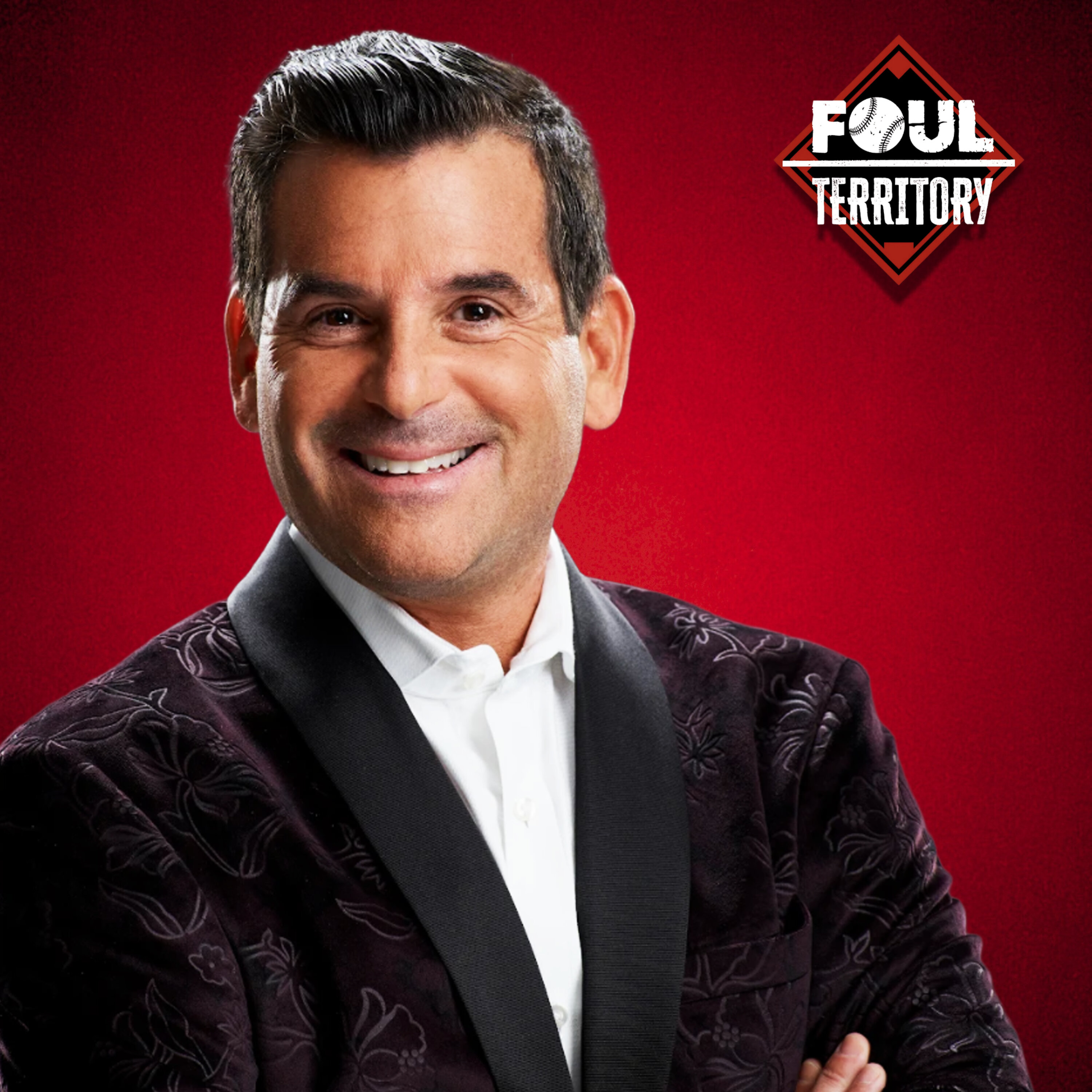
David Samson on Clase/Ortiz case, Manfred’s mole, Expos extinction
Former Marlins President David Samson examines the pitch rigging indictment charges for Emmanuel Clase and Luis Ortiz, including whether they’ll strike a deal with the feds.
Get Huel for 15% off for New Customers only with code FOUL at Huel.com/FOUL (Minimum $75 purchase)
Samson also talks about the new Expos documentary, the Rockies hiring Paul DePodesta and he discusses agent Jim Murray’s turncoat dealings with MLB.
Hosts: AJ Pierzynski, Erik Kratz, Scott Braun
Check out square.com/go/FOUL and go support your favorite neighborhood spot to see what Square has been up to in your neck of the woods.
See omnystudio.com/listener for privacy information.
Available Results
Generated results are saved to the knowledge database for reuse and search.
Extract Knowledge
Pick what you want extracted first. Model, scope, and chapter options appear after a template is selected.
Transcript
00:00:03
Speaker 1: It's nothing personal. It's David Sampson joining us right now. David, great to see you again. You can check out his show, great logo behind him. I listen to it almost every day, especially on the business front, sports biz, legal news, the whole deal. So very timely to have you on today, David. How you doing and your thoughts on the weekend explosion of details related to Emmanuel Class and Luis Ortiz, who likely will never be in Major League baseball again.

00:00:30
Speaker 2: Oh, good morning. I think it's more than likely. I think it's a guarantee they will never throw another pitch. I think that Baseball is doing what they always do, which is they're going to continue their investigation, but they're going to wait and wait and wait to see what happens with this indictment. And the lawyers for the two players did not waste any time in ridiculous statements decrying their innocence and that they love the game of baseball and would never do anything to harm it. And my view is that the reason I think they're finished when the Feds when they put down an indictment. The way it works is the US District, the Southern District, the Eastern District, let's just say the prosecutors they don't like indictments for cases they can't win, and so when they allow for an indictment, it's because they've got stuff, and whether it's the smoking gun or not, they have enough to show beyond a reasonable doubt to a jury of those men's peers that they did this. And so it's not that they are guilty until proven innocent. They are innocent until proven guilty. But all of these prosecutors keep a scorecard, I promise you that, and they don't like losing.

00:01:41
Speaker 3: So it is my understanding.

00:01:43
Speaker 2: We'll see how it plays out, but as far as their baseball careers finished, and it really is too bad.

00:01:49
Speaker 4: Hey, I've seen billions. Okay, David, I've seen billions, so I know how what's the name Paul gma Volvolo? He handles the prosecutor the body. Yes, okay, they don't miss. If if this gets public and they're arresting people, they don't miss usually. So my question is is can they plete this down? I know they're saying they're innocent, and we're assuming they're innocent because you're innocent, do proven guilty, but is there a way to plete this down? If they have all this innocent, all this evidence against you saying hey, you threw this bitch, and you threw this bitch, and we have texts and we have calls, or do they just say, you know what, We're gonna fight this till the end.

00:02:27
Speaker 2: Oh No, they'd much rather not have to go to trial because it's a win when you if they're gonna plea, you generally plead guilty, and it's a deal. You get a deal, whether it's whatever time, if it's gonna be probation, if it's going to be a year, if it's gonna be six months.

00:02:41
Speaker 3: There was someone who wrote.

00:02:42
Speaker 2: That it's possible to get sixty five years, because it's true with all the counts. What you do is you add up the maximum prison time for each count, and they add up to sixty five years.

00:02:54
Speaker 3: Well, i'll give it to you here, so you have the scoop.

00:02:57
Speaker 2: It's a guarantee they will not be in prison for sixty five years each. There will be some sort of even if they are convicted, when they're sentenced, it still won't be sixty five years.

00:03:06
Speaker 3: But you're right.

00:03:07
Speaker 2: What the lawyers do is they meet with the prosecutors and they talk about what kind of deal can be done, because really there's incentive for both sides. It's very costly for Class A and or ties to defend themselves in court, and it's also costly for the people in terms of time that it takes to go all the way up through trial up to sentencing. So every case, actually both sides generally are looking to do a deal.

00:03:34
Speaker 5: Players past and present players are their visceral hate for gambling in the game because the integrity that we lose, integrity of the game. Do we need to change I'm sure you remember the you know the rule, whether it rule sixty one or whatever, it's read twenty one, twenty one, thank you, it's red. In spring training, everybody reads it. AJ and I always talk about this. Oh, we heard it all the time, and it was something that kind of just went through the motions. Does Major League Baseball need to up their responsibility in making sure the players understand this or is this just a one off? And then the one last year with some minor leaguers was a one off? Like do they need to do a better job?

00:04:18
Speaker 2: I think your point is a very interesting one. And what I would say is when rule twenty one is read to you. Here's what happens. Glazed dies doesn't apply to me, don't care about it. And then we have to read it in Spanish, no less, and then it's really glazed eyes for the players who don't speak Spanish. We all know right from wrong inside that clubhouse. The rule is we have to read it because we want the players never to say, oh, I didn't know that. I couldn't do that to me. The fact that gambling is legalized now and there are apps, and there are partnerships that have accrued to the benefit of players because teams have more money and salaries are going up, et cetera. There is no excuse that your head is in the sand, you know, oh, when you're doing something wrong. Class A cannot say, oh, it's one pitch. I still love baseball. I still want to win. What's the difference between a ball and a strike. I'm just helping someone get a couple grand The integrity the game happens when Class A then loses money or someone pressures him into saying, it's not a pitch I'm interested in. It's the total. It's not the total, it's the game score. It's who wins, who loses. That's when you get into third rail integrity type stuff. And so the hope is that players and everyone involved in sports realizes that as a deterrent. When you are punished for life, that ought to be enough to tell you to stop doing this. But people continue to be stupid, and so I don't know how that changes. But I promise you guys, they're not going to take away gambling. They're not going to make it illegal. The apps aren't going to go away. That partnerships aren't going to go away. There's too much money at stake.

00:05:58
Speaker 1: Kratz pop quiz. What has three grams of protein, six grams of fiber, twenty seven essential vitamins and minerals. Comes in excellent flavors like of course chocolate, vanilla, but chocolate, peanut butter, my favorite, no added sugar, gluten free, under five dollars per meal, and is ready to drink.

00:06:16
Speaker 5: Go out of the house, get yourself a shuel Look at you. You even have one right there, ready to smack that John h Chocolate, peanut butter, chocolate and vanilla deliciosas.

00:06:27
Speaker 1: Also, there is a new Daily Greens ready to drink forty two vitamins minerals and superfoods only twenty five calories on that one four grams of fiber. There's flavors like blueberry, apple, peach. Huel makes healthy eating simple. They also just launched into Target stores nationwide. Try both products today with fifteen percent off your purchase for new customers with the codefoul at huel dot com slash foul. Use that code foul and fill out the post checkout survey to help support FT.

00:07:00
Speaker 4: All right, I gotta go here. I'm sorry, but I watched the Expos documentary. Okay, I'm just gonna go here. David, listen. I'm not saying you killed the Expos, but I was on the Twins at the same time, okay, and every week I had to have go on a phone call about, oh, contraction and the Expos. Did you know at the time that you had a backdoor deal to get the Marlins, because I was on a phone call every week saying, oh, man, the Expos and the Twins are gonna get contracted. Da da da da da. The owners don't really I don't know if they don't want the team, but they were just like, oh, you know, it's a better deal for MLB if we lose two teams. So can you talk about why I wasn't that talked about in the documentary because contraction was a real thing and I was on one of the teams that had to listen to that bull crap every week.

00:07:44
Speaker 2: Well, you know, the final vote was twenty eight to two in favor of contraction, and the two teams get voted against it were your Twins and my expos.

00:07:52
Speaker 3: Yeah.

00:07:52
Speaker 5: No, no, I mean.

00:07:53
Speaker 2: Back then, the owner of your team was the richest owner in all of baseball, Carl Polos. And still there was no direct correlation to payroll because the team was losing money, etc. But back then, my interest was in protecting our space in the game. When I found out the contraction and I thought it was real that they wanted to go to twenty eight teams until I discovered hold on. It's being used as leverage in a collective bargaining negotiation. The players need to be told that, hey, you could lose fifty jobs here. It's really more than fifty because of minor league systems, etc. But just start at fifty. There's fifty jobs at stake. How do you feel about that. We need to change the economics of Baseball right now.

00:08:38
Speaker 3: But after that vote was.

00:08:39
Speaker 2: Taken, I stood up in an owner's meeting and I read a statement saying, hey, no contraction.

00:08:45
Speaker 3: We do not want to be.

00:08:47
Speaker 2: Contracted, even though the vote said that contraction was going to happen. And then at the time you may not remember this, it wasn't the Red Sox. It was the California Angels who were being sold. That was the third team in the franchise swap. John Henry was going to sell the Marlins to Jeffrey Lauria and buy the Angels from the gene Autry family Trust. But he couldn't get a deal done for the Angels, so he pivoted to the Red Sox, who were for sale. Because it was the Yackey Trust selling, and it was a whole auction for the Red Sox, but it was fixed so that John Henry would win that auction, get the Red Sox, we'd get the Marlins, and Baseball would get the Expos but not contract him, just move them to Washington three years later. That's how that deal went down and why they didn't cover in the documentary. I wasn't the director of the producer. I was simply interviewed for it, but there's a whole movie inside that franchise swap.

00:09:45
Speaker 1: David, I've followed you for a long time. I will say on the doc, my favorite line was when you talked about the minority owners in the Expos and how they couldn't find money anywhere to help with the team, yet they had lots of money for lawyers, lots of money for lawyer lawyers. For me, that was eye opening for real because I'm trying to really lunch site.

00:10:06
Speaker 5: Man.

00:10:06
Speaker 1: That was a time for me when I was young, and I was like, yeah, that is funny. They paid millions of dollars for lawyers that they couldn't help their own city and their franchise.

00:10:14
Speaker 6: So thank you for that line. That definitely helped a lot.

00:10:17
Speaker 2: Let me just remind the audience that when the Expos were sold, the price was eighteen million Canadian dollars and that sounds like a lot of money to ninety nine point nine nine percent of the people, and I get it. But to the people who were the limited partners of the Expos, their wealth and their prominence and their view of Montreal, I never would have been in the game. Jeffrey Lourian never would have been in the game because the goal was to sell to a Canadian anybody who could fog up a mirror, and there were a lot of people who could, and all they had to come up with was eighteen million, and it was crickets.

00:10:54
Speaker 3: I'm talking about nobody.

00:10:57
Speaker 2: That's how Jeffrey Laurie got the Expos because it was the final, Final, Final. Nobody else wanted them. Side notes. No one wanted the Martlins either. John Henry wanted out, and we said, well, what do you got and Larry Lakeino was sent to Florida buy Bud Sealid and Larry Lekeno said, Hey, the Marlins can't make it in Miami. No one can get a stadium done. Haizinga tried, Henry tried, and so they came up to us and said, hey, do you want to upgrade from the Expos to the Marlins, But it's not really an upgrade, and we said, well, we'll try it, and the rest is history.

00:11:33
Speaker 4: The next thing, you know, David, you guys could have owned the Yankees if you guys would have just kept going down the line, down the line rightly. You guys could have been Yankees or Dodgers owners. If you just you guys gave up too quick. You put that statue out there in left field, which I liked, and then you guys gave up. But what I want to know is cam Baseball work in Montreal? Because you know, you watch this documentary. Everyone says, oh, we love the Expos. There's this span Basis says, we love the Expos. But can it work if they get a new stadium because expansion? Rob Manford wants expansion, But is Montreal a viable alternative, because I don't think that it is. After watching the documentary and hearing the stories you've told, I don't know that it's a viable option.

00:12:12
Speaker 2: So first, you need a deep pocketed Quebuqua. You need someone a French Canadian or anyone who lives in Montreal to want to be the general partner, want to be the owner of the team. Then you need a publicly financed ballpark. And the reason you need that is Major League Baseball wants to charge a really high expansion fee to any ownership group who gets a team, And from an ownership group standpoint, they don't care where the money goes. If they're going to spend two billion dollars to get a franchise. If one point six billion goes to Major League Baseball and four hundred million goes to the stadium, to them, it's still two billion dollars. But from baseball standpoint, they want all two billion going into Baseball. And so all of these expansion cities and they're going to keep them all live until they're going to have a negotiation against each other. It's going to be a bake off one city against another. So you're never going to hear Rob Manford say, oh, that city's been eliminated. No one's going to get eliminated until a deal is done and it's in the best interest of the owners to have a fully funded stadium. Cad Montreal do that. To me, it just seems unlikely because the government has never been willing to do a public private partnership. But that to me is the number one requirement. Well one a one is to find an owner who's local. Two is to have a fully funded ballpark.

00:13:34
Speaker 1: This episode of FT is brought to you by Square. Your favorite neighborhood spots run on Square. Give me an example in pennsylvaniacrats.

00:13:43
Speaker 5: Right down the street from my house, the tap house. Not only is it an awesome place to hang out, get your beers, get your drinks, whatever it is. But you know what the company has the simplicity of Square and they give back to the community with ten percent of all the proceeds that they bring in to community projects.

00:14:01
Speaker 6: I love it.

00:14:01
Speaker 1: Sports and sports bars are so good at bringing together local communities and you can actually take this ad as an excuse to go support your local spot and have yourself a day or weekend in the neighborhood. Square is a proud partner of more than four million neighborhood businesses around the world. These businesses are what make the neighborhood the neighborhood. So visit Square dot com, slash go, slash foul to learn more. But before you do, go support your favorite neighborhood spot. You'll be happy you did. Square see you in the neighborhood again. That's Square dot Com, slash go, slash foul to learn more. David, next up for you, I want to get to Jim Murray, agent who had dealings with MLB and a pretty explosive story and your thoughts on how I mean he was essentially a mole for MLB during their conversations during what was like a mini CBA, basically to get baseball back in twenty twenty.

00:14:55
Speaker 6: I'm assuming you saw the story.

00:14:57
Speaker 1: What are your thoughts and the MLBS, I was like, oh, people always talk back and forth. That seems like a little more than just a friendly conversation.

00:15:05
Speaker 3: Well, he just got caught, is what happened.

00:15:08
Speaker 2: But during the course of negotiations and in between bargaining agreements, there's a rule that owners aren't supposed to talk to the press, owners aren't supposed to talk to players. We were all talking to everyone always because you're trying to help, you're trying to get information. I shocked that there was a double agent, double entendre pun required and meant no, not at all. There's people from both sides using the media. There's people from both sides looking for ways through the executive Council to speak to players, to get messages out there. Scott Forres, is doing stuff all the time, trying to make his presence felt, So all of that is very normal. I think what the reason why you saw the hammer fall so hard on Murray is they're entering into a negotiation now and it is critical that Tony Clark and Bruce Meyer look like they've got the ship contained because there was a coup attempt and they were able to withstand it. They're still in charge, but it's a huge negotiation that's starting, so they want at least the appearance of control. Same thing for the commission and the Commissioner's office. You're gonna see owners much quieter now. You're gonna see rules put into place, but you're gonna see backchanneling all the time when you look at which owners are on the negotiating committee and will actually be in the room where it happens. They're chosen for a reason, their ability to negotiate, their ability to communicate. It is a big dance that goes on between management and players every time, and I think you guys know that, and that dance is starting right now.

00:16:39
Speaker 4: All right, David, I'm gonna show you a video and then we're gonna talk. Okay, So we're gonna run a video here and then we're gonna have a conversation. So we're gonna run this video.

00:16:47
Speaker 2: I figured the union had to strategize how they'd respond, and I must tell you I did not think that their response would be Bruce Mayer going on foul territory now, of course you know that Foul Territory is is a show that is funded by the Union, and I love Foul Territory. They're my friends, been on it, and I want them on my show. But let's be clear, those are players, and that is a Union show which is totally important and needed, and their point of view is critical, and it's a popular show.

00:17:19
Speaker 3: You had me at foul.

00:17:22
Speaker 4: Okay, two things. First of all, but trying to copy my beard, but trying to copy my beard with the gray in the bottom, Okay, like it, It's cool, I get it. But the second thing is we are not funded by the Players Association. So I want you to understand that we are not funded at all. We are in the middle, are we players and do we lean towards players one hundred percent? But we are not funded at all by the Players Association or have we ever been. So I want to make that clear. And I appreciate your show on this out. And I also appreciate the fact that Bruce Meyer came on here because at least he got to talk somewhere, because my biggest beef with the Player Association. They never say anything, They never stand up for what they need to stand up for it's Rob Manford and his media conglomerate of boom boom. We're gonna throw all this stuff out there in the player associations like, oh, we can't talk about that. We can't talk about that. At least Bruce Meyer came on here and talked about something.

00:18:16
Speaker 2: So ajay, let me first say that thank you, and I'm wrong, so the funding that was a bridge too far. I think the better way to have framed it is the same way people view Nothing Personal is that, Wow, he's carrying the water for the owners and for the commissioner. I think if people were looking at our two shows, the reason why they're both so important is that between us we pretty much cover everything and want our audience, and we respect our audience and want them to not be led to a conclusion. We want them to be led to an education. And I think that you guys have done an amazing job of that, and I think Nothing Personal does that as well.

00:18:53
Speaker 3: I think, though, when.

00:18:54
Speaker 2: Rob Manford is choosing what he does, just like when Bruce Meyer is choosing what he does, those choices are purposeful and and I don't blame him for choosing you. He should choose you it's smart of him to have chosen you, But can I get you to at least degree that if you sent out an invite to the commissioner to come on the show, or to Tony Clark or Bruce Meyer to come on the show, that it's more likely that you'll get people from the Players Association.

00:19:23
Speaker 4: Okay, I'm just gonna say this, David. We've had Tony Clark on, We've had Bruce Meyron. I have gone through all the hoops to get Rob Manford on. I have jumped through hoop after whop after whop, had zoom calls with him, talked to Pack Cortney, talked to his secretary, and you know what, they cancel at the last second. I've text Rob Manford you don't respond. So the answer to your question is yes, we've tried both. We tried to have Rob Manford on. He canceled. Last time. It was January of last year. I was in New York. I was ready to go and I got a text from Pac Cortney's saying, you know what, he's too busy. Okay, well, then why the hell did I jump through? Who have a zoom call? Have this call, this call, this call this call to get to a point whereas Tony Clarks has been on and Bruce Meyer f I techs Bruce Myers right now. You might not come on, but at least he'll give me someone that can talk about issues.

00:20:13
Speaker 2: So ag I think it's going to be a little different this negotiation. It would not shock me if you get someone from the Commissioner's office. A, you have an important show, and B you have an important audience. And see you're cool, all of you guys. So I think that the strategy for the Commissioner's side is going to be a little different this time. I think they're going to want to get the word out because podcasts have become and it wasn't always this way, and we've been going, I've been going for six years. It's really changed. Think about the way political candidates use podcasts now in a way that they never did before. I think the world has changed, and I think you have to be willing to go on quote unquote both kinds of shows, both sides, with players, with management.

00:20:53
Speaker 3: So keep going.

00:20:54
Speaker 2: I think you're going to succeed during this bargaining sort of time frame.

00:20:59
Speaker 1: Yeah that's good, then that's true. That's the point is like we want people to know neutral. We talked about players way and that whole story, just like you did the other day, and that investigation that's going on right now.

00:21:10
Speaker 6: We had Evandralic on. We literally said, hey, we've got two stories.

00:21:13
Speaker 1: One makes one side not look good, one makes the other side not look good.

00:21:16
Speaker 6: Let's get into it.

00:21:17
Speaker 1: So we are trying our best to be as neutral as possible on my part and the team behind the scenes.

00:21:23
Speaker 6: We can only ask which will continue to do.

00:21:25
Speaker 1: Hey, we would love to have you on, but it's also not our obligation to not allow one side to come on our show. If the other side doesn't come on, both sides should come on our show and talk to us. Yeah, I mean the invites have been out there, so I'm with you. We will definitely keep trying and there shouldn't be anything to hide. And I give Rob credit. I mean, he's done more interviews over the past couple of years. I have no idea why he won't come on our show. We definitely cover topics that they don't love, but he went on barstool. They're not going to get this nitty gritty on some of the stuff that we're asking. But I agree, it would do a lot of good pr if he came on here and actually went on a place where he feels like you're going to get neutral questions and not one sided questions, and listen.

00:22:04
Speaker 3: Rob is good enough.

00:22:04
Speaker 2: He's been around the block enough that anyone who you interview, if they're good, they can bridge to whatever it is they want to say. They can respond however they want to respond to any question, even if it's not a direct answer to your question. I think people in the media have that experience. When I'm interviewed, if I don't want to, I never create a headline that I don't know i'm creating. I always have my mouth behind my brain, so I know what I'm saying. And so when you're being interviewed, it's your choice what you're going to give, what you're not going to give, what you're going to say.

00:22:36
Speaker 3: So I think you're right. I think keep asking and you're going to get them.

00:22:40
Speaker 1: Thank you, and yeah, just again for clarification, they don't neither side owns a penny. We're independent as how we love it just like you because then we want.

00:22:50
Speaker 2: Yeah I had it wrong, and I don't remember that. I don't know if that was last year. Whenever that was, I had it wrong, and I'd use corrections. I'd make mistakes. I'm live every day two hours. Boy do I make mistakes and I try to correct them, and I get a calls from people on both sides. I get plenty of calls from ownership and plenty of calls from the player's side and on the business side, and I'll make the correction because, as you know, with the microphone, you can't be right one hundred percent of the time.

00:23:16
Speaker 3: It's impossible.

00:23:17
Speaker 6: No, exactly same here.

00:23:19
Speaker 1: I talk to people way more now than I did when I did work for the league, agents, people calling hey, can you clarify this whatever?

00:23:25
Speaker 6: So anyway, all right, two more things to hit with you.

00:23:27
Speaker 1: One is the Braves are the only team that we really get a full fledged look at finances. So my question for you, and I know you've talked about this recently on your show, is every team trying to be the Raids, the Braves or a little bit of both. And it depends which kind of owner you are.

00:23:43
Speaker 2: I've never met an owner in my eighteen years who was writing himself dividend checks so he could fund a vacation to Europe, or buy a painting or buy a yacht. I just never saw it, and we saw the numbers. And by the way, the Union has the numbers too, I should say, and you know that. So who would I rather be? Rather be the team that has a chance to win every year and that wins rings. Now, I'd rather do it at a profit, I'd rather do it. I think MLB is starting get ready. They're releasing the fact that teams are getting crushed. They're losing money left right and center, and so there's gonna be a lot of this back and forth. So you're asking me what I'd rather be. I'm not a five to one C three. I want to make money and I want to win. And I too many years I put winning at the expense where I would sign players or bring players in that would add to our losses, thinking we're one player away, and every year but one it didn't work. And so at the end, what would I prefer? I prefer to win and make money. But maybe that's too much toask.

00:24:43
Speaker 4: You're funny, David. You know what, you can't get the owner out of you. I just can't get the owner out of you losing money. Who's losing money the game. All you hear is about the game is growing, and their ratings are up, and this and that. Yeah, so you're such an owner, David, I love it.

00:24:57
Speaker 6: Aj I love you too.

00:25:00
Speaker 2: I love you too. But I'm talking about operationally. It is true that no team has ever been sold at a loss. It's also true that no team has ever been sold where all of the money that was lost year over year was not recouped by the person who's sold. All of that is true, but it doesn't change the fact that operationally the teams lose money. So we can both be right, and I give this example to you and your family. Your house may be worth more today than it was when you bought it, but that increase in value doesn't help pay your property taxes. You need to have the cash from somewhere and baseball. Some owners have a cash problem.

00:25:39
Speaker 4: True because they don't know what they're doing, but that's a whole we you don't have enough time. I got a quick question for you. The Cleveland Browns lost their GM to the Colorado Rockies. Paul deep Ajust No.

00:25:54
Speaker 3: No, he's strategy officer.

00:25:56
Speaker 4: Yes, sorry, sorry, Like, what are we in Cleveland? Brown lump fans cheered their asses off when they lost his guys, Is this the right move for the Rockies?

00:26:05
Speaker 3: Boy?

00:26:06
Speaker 2: You know the Rockies. You both do on this call, We all do on this call. They're a different kind of organization from top to bottom.

00:26:13
Speaker 3: And Paul D.

00:26:14
Speaker 2: Podesta, he certainly was a shiny nickel once upon a time, way before Jonah Hill played him on Moneyball. And the question is does he have any sort of advantage anymore because in the old days he did, but everyone's caught up to him. Everyone's caught up to what was going on. It's thirty teams doing it. And as you know, like with the infield shift, when only one team's doing it, it's really cool. When thirty teams do it, you lose sort of the incremental advantage.

00:26:40
Speaker 3: Paul D.

00:26:40
Speaker 2: Podesta was not running the Browns the way he will have to with the Rockies. And the question is, I mean he's used to losing.

00:26:48
Speaker 3: We know that.

00:26:49
Speaker 2: The question is can he take the Rockies and work with the Montforts, who never go outside their organization. This is like the first time in decades that they're going with someone outside the organization, and will that person Deepodesta have the power to do something and who is going to be around him to do it, because, as you also know, it's not the president Baseball Operations, who's on the front line doing the scouting, who's inside the analytics department, they're just the decision maker on the top.

00:27:17
Speaker 3: They're not really doing much.

00:27:18
Speaker 2: So he's got to have an organization and the resources to really do stuff and then be right. And I think that's going to take some time, if at all.

00:27:27
Speaker 6: Yeah, I'm with you, I'm skeptical. I agree.

00:27:30
Speaker 1: I'm happy that it's at least somebody outside the organ to be like this is a little bit dated, but we'll see. We'll follow it and bring you back on to talk about it. Great catch up, David. Good to see you, and we'll catch you soon.

00:27:40
Speaker 3: Okay, thank you guys.

00:27:41
Speaker 2: I appreciate your your well wishes and everything else you've done for me.

00:27:45
Speaker 3: Have a great time.

00:27:46
Speaker 4: By the way, David, I'm being South Florida soon, so you feel free to buy me dinner.

00:27:50
Speaker 2: I live in New York, but I'm in Thank you. AJ there you go.

00:27:56
Speaker 6: Thank you, David.