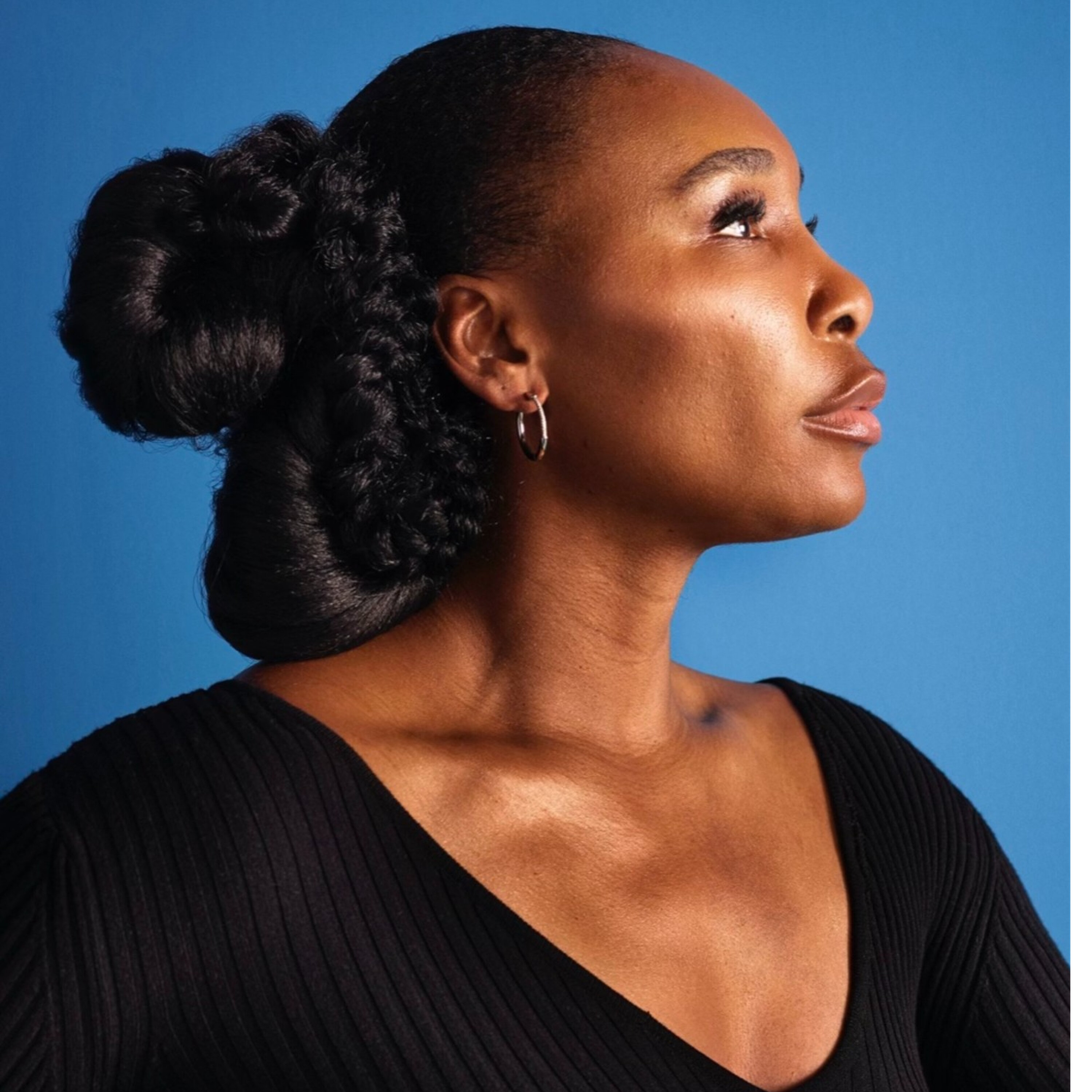
Venus Williams
The great—and unbothered—Venus Williams sits down with Rennae to talk about everything you'd hope she would.
Hosted on Acast. See acast.com/privacy for more information.
See omnystudio.com/listener for privacy information.
2021-04-09
59 min
Transcript
Available Results
Generated results are saved to the knowledge database for reuse and search.
No generated results are available for this episode yet.
Extract Knowledge
Pick what you want extracted first. Model, scope, and chapter options appear after a template is selected.
Generated results for public episodes are saved to the knowledge database so they can be reused and searched later.
Transcript
00:00:00
Speaker 1: But especially after seeing Olympia, like you can tell like it really was too against what.

00:00:15
Speaker 2: Renee. What a great day, a day I've been waiting for for years, a day I've been asking you to facilitate since we started this. My number one guest that I could possibly imagine having has finally sat down with you in Florida to chat. It's Venus Williams.

00:00:31
Speaker 3: Yes, it is Venus Williams. Yes. We do talk about the fact that we've been trying to get this done. She has you know, she has spoken to me many times about being willing to do it and it was just finding the time and she explains why, etcetera, etcetera. But yeah, we finally finally get Venus Williams on the pod, and I'm so excited for everybody to take a listen.

00:00:54
Speaker 2: I think what struck me about this conversation is, you know, you've known her since she was a child, and you talk about that at length, and obviously how she's grown and changed and what you've seen and everything that you've told me about who she is as a person, setting aside a champion on the court, setting aside, a crusader for gender equality, setting aside all the stuff that we know about her, but who she is as a person really really came through. And listening to this, and I'm not going to give too much of it away because people are going to dive in shortly. Parts of her are a little quiet and thoughtful and pensive, and a lot of her doesn't give a single fuck. And I thought that she was so cool. Like I wrote for Eurosport in a new column I'm doing last week, that Venus Williams has largely been unbothered. She's had so much to deal with, but she's been unbothered, and that unbothered sense really came through. She cares about the things she cares about deeply and passionately. But for everything else, she's so good at tuning things out.

00:01:47
Speaker 3: She's always been a person Caitline.

00:01:49
Speaker 1: No matter how many times I've had.

00:01:50
Speaker 3: Conversations with her about you know whatever, she just when she doesn't want to give something any energy, she doesn't, and and in such a positive way, Like it could be about gossiping about something or wanting to know X or y, She's just like, I'm not going to waste my energy on that, because I have so much more energy to give in another way, And it comes through obviously in the pod. It's always come through to me in life, like I always want to jabble with something like, oh, come on, you know, give me something more, and she's like, no, actually, I'm just it's just how I feel. So she just is such a positive I don't even know how to describe it any better than she's just the most incredibly positive human being literally that I've ever been around. There's never a negative that comes out of her mouth or from her body language or anything. She just is a consistently positive, grateful human being.

00:02:45
Speaker 2: Yeah, I can't wait for people to listen because everything you've said about her, everything that we know about her, all shows up here. You talk about the film that's coming out about her dad, you talk about obviously her early life, some of her activism, her design. It's wide ranging, which is what I was hoping it would be. And it's just funny because some of the moments in this interview are quiet. You know, I had to pull up the volume on her as opposed to you, which I never have to pull up the volume on as you made about it, largely because she she goes to this like really introspective, quiet place. She says, something really impactful, and then she just keeps moving forward, and it's so interesting to hear her literally do that in the turne of her voice.

00:03:21
Speaker 3: Yeah, thanks for that. I think it was because the mic was a little closer to me, and she kept kind of like, she kept kind of like slinking more and more back into the couch, so she kept getting further and further away from the mic sometimes. But you know, to be honest with you, Caitlin, I could have sat there for ten hours. We could have sat there for ten hours talking about so many things about her life. I could have brought up a million matches that I've watched. I could have brought up a lot more controversial things like you know, when I walk away from interviews often I'm like, oh, I wish I'd discussed this, or I wish I'd talked about that, And you know, I could have gone into a nauseum about her career and some even you know, difficult stuff that's happened in her life. And you know, she's had deaths in her family, she's had massive controversy. But you know, when you around Venus, you just know she doesn't and you will figure that out. That's what we've just talked about. She doesn't want to go to the negative. She doesn't want to go back. She's never a person that goes back. So I just felt, you know, as the interview was going on, it was just let's just always stay in the positive. And she made me stay in the positive throughout this pod, and I just I cannot wait for people just to hear a little bit of her and just a little sidebar. She didn't write me the next day of text and said that was the funnest, best interview that she's been involved in. I think because she was just being nice. But to be honest with you, it was so nice to sit with her for forty five minutes to an hour, and we spoke for about half an hour even before I pushed record, just talking. And I hope everybody enjoys it because I constantly and will always say this, I love her so much. I will continue to love her. She's been an amazing ambassador for the sport of tennis, and I just hope everybody enjoys a little bit of little slice of what you going to hit.

00:05:00
Speaker 2: It by, all right, let's let them enjoy it.

00:05:02
Speaker 3: Thanks for now, we have been trying to do this for a number of years, and I just want to say to everybody out there listening, we have a great, wonderful Venus Williams on the Racket Magazine pod. The first of all, I'm in your house and I just want to say it's beautiful and thank you for joining me.

00:05:24
Speaker 1: Thank you. I know it's been a year, mostly my fault, but I do have a job.

00:05:29
Speaker 3: So do you. But you have several jobs. You have many jobs, and I get overwhelmed and tired, to be honest, so well, and there was no excuse on this one because you realize that I was actually staying with friends. About it's about a three minute drive away, So if we were, did you drive or walk? I drove.

00:05:44
Speaker 1: Don't give me a hard time. It's walking distance.

00:05:48
Speaker 3: It's about a thirty minute walk.

00:05:50
Speaker 1: Oh come on, yeah is it? How do you work slowly?

00:05:55
Speaker 3: I'm old. I'm old. I'm fifty now. Anyway, one of the fun things I always talk about. And you probably have completely forgotten about this because you claim that you don't remember much about anything half the time, but I think that's selective memory. Do you remember the first time I met you at Pam's event? No, see this is what I'm talking about. What I didn't even know where I was. I was like thirteen. I think you were twelve or thirteen. Yeah, yeah, I was a giant you were. It was like five or eleven, yeah, thirteen years old. And I hit with you and I hit with Serena at Pam's event, and I remember Pam said.

00:06:34
Speaker 1: To me, what do you think?

00:06:35
Speaker 3: I'm like, yeah, pretty well, it's hard to know. At that age. It's really hard to know. I don't remember if I was good or not. I got good a little bit later, like at least a year later.

00:06:44
Speaker 1: I guess I got a lot better.

00:06:45
Speaker 3: I think you got a lot better. Yeah. I I were like twelve, so it wasn't that difficult. It wasn't even good to get much better after being thirteen. I want to know when you first came out, because you didn't play obviously junior played, you know, hitting with kids at your age, but when you came on to a like, how I opening was that for you?

00:07:09
Speaker 1: How eye opening was that for me? I didn't even know where I was, so like, That's why I don't remember. I didn't know where I was. I didn't even know how draw worked. I just knew that I did what I did in practice, and it was pretty simple for me.

00:07:21
Speaker 3: I'm so oblivious, so.

00:07:23
Speaker 1: I think that made it easy. Like in way, like for example, I played Indian Wells one year and this is I didn't really play when I turned pro. You know, I don't played much. But I finally played it. You well, I was a few years later and amber chand Rubin asked me, where are you in the draw? And I said, I'm in the middle. I didn't understand there was up, a top and a bottom, you know, So those things like my parents didn't teach me.

00:07:47
Speaker 3: It was more.

00:07:47
Speaker 1: About like learning to play, developing your game, making the right place so that way you could be great one day. So there was like no emphasis on winning or anything, even though we played to win.

00:07:58
Speaker 3: It's hard to describe. Wow, that's so fascinating. So it wasn't about so.

00:08:03
Speaker 1: It was about doing the right thing and being execute the right thing. If you do that, you will win. So it wasn't about winning. It was about I guess the process and maybe they were a process driven. Wow, you just realized this. I didn't think about it. They're just mom and dad. I don't think about mom and dad are a process driven and they believe in design thing.

00:08:20
Speaker 3: Wow, that's so fascinating. I always say that to people that I talk to now that have kids about that are about twelve, thirteen, fourteen, and I always say to them, don't worry about the wins and losses now, you won't even remember them back then. What you will remember is that they developed their game. So yeah, So that was one of the questions that I was going to ask you later on. But now that we're on the subject, what were the most important things that both of your parents taught you.

00:08:49
Speaker 1: Individually on the cord. Yeah, on and off the court. My dad really insisted on a big game because unbeknownst of Minister it was like a slicer and dicer kana and she was little. She wanted to drop shot and slice and serve and volley and my dad said, no, hit the ball. So I'm glad he told her that because she can hit the ball now. But her nature was like completely different. But it makes sense with her personality, right, telling slice, dice, drop.

00:09:18
Speaker 3: Shot about slice and dice and drops, but I don't know about the drop shot. Although she does like to still do like to drop shot.

00:09:25
Speaker 1: She was a different player so my dad like kind of you know, created this new game of like power, and you know, we only played offense. We could play defense, but it wasn't we were playing offense even when someone playing defense, So it was you know, it was like this whole new thing. So yeah, my parents never put pressure on us to win and like I had to win for them or anything. So I think that in itself was great because it even free to just be and in the and then you got better because of that. But off of the court, definitely just really ground it because you know, you know, we just have like a very strong spiritual faith and background. So that's the most important thing my parents gave to me. But I mean so many things. Just as Olympya is here, it's like, oh my god, Like my parents were so smart, Like how do I impart some of that knowledge onto them? And you can't do it all in one day. So now now I really appreciate how that she's here.

00:10:22
Speaker 4: I'm like, okay, yeah, well, I mean this is why I love doing this honestly, because I've known you for Yeah, but we don't chat about like one of the best lessons.

00:10:32
Speaker 3: We're like, yeah, so did you hear about someone so well, that's true. Let's not tell people what we really talk about. Oh right, no, But I'm always so fascinated by what develops a person as a human as well as a tennis player, and what makes him a great tennis player.

00:10:48
Speaker 1: But you, yeah, you did say.

00:10:52
Speaker 3: I mean you and story and are so different personality wise. How did that? That's so interesting because everyone says that.

00:10:58
Speaker 1: But I'm like, all I see is you know, you see that. That's all I see is how we're the same, you know, And I know that I guess we're different.

00:11:07
Speaker 3: But I think what the only because the personality that people see is on.

00:11:12
Speaker 1: The court, right, I see you go farf the court, and then I see.

00:11:15
Speaker 3: The similarities between the two of you. You're both so fun loving and funny and joke around and your kids and I mean, one of the most remarkable moments for me was before the last final that you played in the Grand Slam, and I was in the same locker room as you two, and you were in the front of the mirror and you're both doing your hair and you like making yourself look good before you go on the court, and you're chatting away, and I'm like, you're about to go and play a Grand Slam final.

00:11:38
Speaker 1: It was so Yeah. I think people still like are waiting for like what do you the ball to draft or whatever like each other, you know, like they're like still waiting. It's like, actually, keep me further from the opposite, you know, Can you take.

00:11:52
Speaker 3: Me back to that final actually, because I remember I was courtside for that match, and I remember one of the most distinct things that I remember about that was doing the coin toss and you were smiling and you were so just you were so happy to like have this moment again and give it everything. And Serena was so stoic like and I remember the photo that was taken at the net and you had the biggest smile on your face and you had your arm around Serena and she had both her arms next to her side. It was like you're just another person. You're just another person and you are standing there with this like very open, loving arm around her as.

00:12:30
Speaker 1: The big sister caretaker. Is that like a feeling that you get when you go on the court with her be I mean, it's a Grand Slam final, so I am focused regardless of if I'm.

00:12:44
Speaker 3: Spoiling or not.

00:12:45
Speaker 1: I am there yeah, so and then other stuff is the other stuff.

00:12:51
Speaker 3: Oh, explain to me how hard that is though, to actually play in such an incredibly important career moment to you, but have to actually plague in someone you love more than anybody in the whole world.

00:13:04
Speaker 1: Yeah. I mean I want to win, but I obviously want the best for her too, because she's a big sister. So it's a moment and you just got to realize it is a moment and years from now, and you want to just know that you gave your best, regardless of it's your sister or not, because you don't get those moments all the time. Even as many times as I've had that moment and she's had that moment, those moments are still special every time, so.

00:13:29
Speaker 3: You have to treat it that way.

00:13:30
Speaker 1: No matter who it is. You can just see it as a game.

00:13:33
Speaker 3: And in that match, obviously we all found out later on that she was pregnant, and I would like to say it was unfair two against one. Yes, I'm still trying to get that you know trophy, I know where you can find it, especially after seeing Olympia, like you could tell like it really was two against what her little body is like the best athletic body I've ever seen in my life. Like she puts to United shame. It's insane. Yeah, so yeah, I feel that you would tell me you're justifiable and feeling.

00:14:10
Speaker 1: Like you got robbed there. Yes, I agree, thank you, that's not fair.

00:14:14
Speaker 3: But but I thought that you knew she was pregnant.

00:14:20
Speaker 1: I mean, well, she didn't tell me, but I knew. So how.

00:14:26
Speaker 3: Do you know?

00:14:26
Speaker 1: I met my sister and she would say she said something here and there and Jess, but I'm like, it's going so even though she didn't tell me, well, I remember after the match when she or did she tell me?

00:14:38
Speaker 3: No, I thought she told you.

00:14:39
Speaker 1: Maybe she did she did, Maybe I can't remember. Yeah, anyway, maybe it was because before she told me, I knew.

00:14:46
Speaker 3: I know that.

00:14:46
Speaker 1: Before she told me, I kind of like it was like, okay, it makes sense. So I don't remember. Actually, now, like four years later, what the time I.

00:14:54
Speaker 3: Thought she was being a good girl because I said, actually, yeah, I did know. I think I knew you whatever. I mean, it was your lost. Damn it. If you're standing up there at the trophy going, oh my god, like she's holding this trophy up and I know in like nine months time, she's gonna have.

00:15:10
Speaker 1: A little baby. I must it must have been, I am, I don't remember. I don't know what I was thinking of that. I love that.

00:15:18
Speaker 3: I know that you didn't You've said to me in the past, so you don't really necessarily love kids. But is that changed now?

00:15:24
Speaker 1: Because it's definitely softened me up because I was definitely like a I don't know, wicked step mother, you know, horrible. So it's definitely softened me.

00:15:34
Speaker 3: Up a time.

00:15:35
Speaker 1: But you know, am I ready to have my own kids? No, I'm just so.

00:15:40
Speaker 3: I barely can take care of me.

00:15:42
Speaker 1: My coach brings me water, brings.

00:15:44
Speaker 3: Me extra shoes in case I forget something. So yeah, if I have all right, Because that was something that you know, people were writing on Twitter wanted to know about you and having kids. Just just it's a lot of work. It's the most important job.

00:16:00
Speaker 1: I'm still so even though I'm not a selfish person, but as an athlete or a self center, yes.

00:16:06
Speaker 3: I say it all the time. Tennis plays are very selfish, very very.

00:16:12
Speaker 1: I'm the best of the worst.

00:16:14
Speaker 3: You're pretty good. You're pretty good, pretty good. How important was it for you, like going through your entire cres and still going, Oh my god, do you remember you guys used to give me so much ship that I was still playing tennis, And well.

00:16:26
Speaker 1: Actually I encourage you to keep going. I said, don't give it up.

00:16:30
Speaker 3: I remember being in the training room and you saw me in the training.

00:16:33
Speaker 1: Room, like you're still playing come on joking, yes, but I was like, don't stop because you were thinking about stuff, and I was like.

00:16:41
Speaker 3: No, keep going. I know, well I keep having to play you guys in the season, but I think though, like you were injured and then like after.

00:16:48
Speaker 1: You retire, you're like, yeah, I feel better.

00:16:50
Speaker 3: Yeah. It's always like that. It doesn't know, it goes downhill quickly. Actually your body starts falling.

00:16:55
Speaker 1: I'm gonna like just keep seriously lifting after I I like weights, but you know, when you're when you're playing tennis, it's very difficult because you like, you can train and you train those six weeks, and then you go on tour and you can't be lifting weights and you're on tour for six weeks and so you can never really keep that those games or you can't let it then go back and lift the same as you were. So yeah, I'm actually like I don't like cardio. I love weights, and.

00:17:22
Speaker 3: So I'm like, I'll definitely be lifting a lot more weight. I'm with you on that I don't like. I'd rather like. But if you do it correctly, you can get your hot right up.

00:17:32
Speaker 1: It's true.

00:17:34
Speaker 3: Take me back to the match with lindsay that you want at Wimbledon two.

00:17:38
Speaker 1: Thousand and five, she played better than I did.

00:17:42
Speaker 3: I will say that. Yeah, that was not the question I was gonna ask. But why do you Why do you say that?

00:17:48
Speaker 1: Because I saw the match later on, Every time that match is on, my dad calls me. He says, your match is on. I don't know how you know this, Like you have a radar to when that match comes on, and I'm like, Dad, okay, And sometimes it'll show it like a few days in the rona. You call me every day and so I watch it and I'm like, crap, she played better than I did. But I was just scrappy that day. I wasn't playing that great. Looking back, and I just wouldn't die. I was like that cat with nine lives. I was like the zombie just wouldn't go away. And somehow, so I feel like she deserved to win that match. That's tough though, because when you feel like and.

00:18:22
Speaker 3: I just realized that, I guess she got a little hurt at the end, or something happen to her back. I guess. I don't know. I don't, Yeah, I can't. I don't know for sure.

00:18:30
Speaker 1: I didn't even see that when I was playing. Yeah, it looked like maybe she tweaked.

00:18:33
Speaker 3: Something, maybe her s I went on, I don't know. Yeah, she definitely she had a knee or back prolong so throughout her it was kind of towards very end of the Yeah, maybe she still played well, but it was it was one of the great ideal, yeah, absolute great matches of Wimblin's history. But you also were like, was that the EU you were fighting for equal prize money as well, that's when it kind of started. So how tough was that period of time for you as well? Like having to put that extra as you know, we just said tennis players are selfish.

00:19:02
Speaker 1: Tennis players ourselves.

00:19:03
Speaker 3: Why do this very unselfish thing?

00:19:09
Speaker 1: I think it was no, No, it was no extrovert, to be honest.

00:19:15
Speaker 3: I mean, what are you gonna do?

00:19:16
Speaker 1: Say, Well, I got to play my match, so we just still sit here, not getting paid the same, So it didn't feel like any extrovert. It was the right thing, honestly, the great opportunity for me to be a part of something. You think, Okay, I'm going to grow up and play tennis and maybe we'll wimble then.

00:19:38
Speaker 3: But you don't think that you're going to be able to grow up and do something like that.

00:19:41
Speaker 1: You know, so have a legacy. Yeah, I mean legacy is great, but that's like serious.

00:19:48
Speaker 3: You're making a change for the betterment of fuel future. Yeah and everyone else.

00:19:54
Speaker 1: I don't think you are thinking about.

00:19:55
Speaker 3: That at the time.

00:19:56
Speaker 1: It's just like, yeah, this is not right. I don't know, I hated, let's do something about it. You're not thinking about this will be my legacy, Yeah, you know, to get an award or something.

00:20:07
Speaker 3: Yeah, so I guess what's iron about that is winning the title and knowing that every time this happened, Jane, you're thinking, at least I'm getting the same as those Yeah. I planned it that way.

00:20:24
Speaker 1: It was a great moment, and Billy Jean was in the audience, and it was it was just a great harmonious moment for everyone, probably except Marian who won a few years later.

00:20:33
Speaker 3: But like when you lose it, You're.

00:20:34
Speaker 1: Like, it's not a great moment. So everyone was happy, and it was. It was definitely full circle and happened a lot. So yeah, after like forty years of rejection, Yeah.

00:20:49
Speaker 3: Well and then you've got to read those benefits going forward, right.

00:20:52
Speaker 1: Yes, And I just feel like I want to collect a percentage on everyone's check after that. I'm in a petition for that. There should have been like the closet there, like, yeah, everybody.

00:21:05
Speaker 3: Is a lot.

00:21:06
Speaker 1: Let's go with two.

00:21:07
Speaker 3: Let's start well, you know, well, so it's funny because someone asked, you know, I teld you know, a couple of people that I really respected that I was getting the privilege of talking to you today for this, and someone said to me, you know, I want to know beyond the tennis player, is there a moment or a decision that you felt like you had that empowered you as a female, as a as an African American woman, where you were like really stepping out and being this empowering figure outside of just tennis. Was there a moment where you're like, I understand now that I'm actually.

00:21:44
Speaker 1: More than just a tennis bier.

00:21:48
Speaker 3: I think that moment.

00:21:52
Speaker 1: Maybe you still I mean, I don't know. I mean, as a tennis player, you got to earn your keep every single time, just with any other worker job, and so you have to stay in the moment. If you start basking in some sort of you know, tending world that's doesn't exist. That was a past, like you want, but it's over, so let's get with today. And so I'm super focused on that moment. But I think, if anything, just the empowerment for me came from my parents growing up.

00:22:23
Speaker 3: You know, there was no option that wasn't to be confidence, to be strong, and.

00:22:27
Speaker 1: All those different things. So I think they'll value yourself.

00:22:31
Speaker 3: Yeah, hell yeah, absolutely.

00:22:34
Speaker 1: I don't understand any other way, or I get it that there's a lot of realities out there when you don't but and and sometimes you don't value yourself in ways.

00:22:44
Speaker 3: That you should.

00:22:45
Speaker 1: And when you're trying something new or maybe you failed and you figured, you know, value yourself the same. But yeah, those moments came as a child, So I guess you know it's a twofold answer. Yeah, yeah, because it's weird to me, like the whole famely, I'm not I don't I don't chase it at all. So masks are the best things that ever happened to me. Like I actually can engage with people and have conversations on a human level, you know, And whenever one's gonna mask, when I have a mask on, you know, nobody knows anything about me.

00:23:16
Speaker 3: And I love that.

00:23:17
Speaker 1: I'm never not gonna wear the mask. So I'm gonna always be like They're like, there's probably gonna be still many people who wear the mask, you know for sure, And I'm gonna.

00:23:25
Speaker 3: Wear a mask wherever I go. Celebrities are loving the mask because they can actually walk around in public and not really be as noticed. And it's yeah, and no actually talk to people, yeah, or just talk, you know, and disconnect.

00:23:42
Speaker 2: And you know that.

00:23:46
Speaker 1: I'm great obviously, but it's you know, no.

00:23:49
Speaker 3: I don't not because I'm not famous. Well, I mean, you know, you like to talk with people, connect with people very easily.

00:23:55
Speaker 1: So just imagine never actually being able to do that ever because of yeah, always wondering what people want. Even though people are connecting to you because of this thing, but you're kind of like, you know, you know, you don't get to connect back in a way because you're not actually that thing that they think you are even though you know what I mean, you're just the person. Yeah, so yeah, it's really cool to just be up and home goods, just chat with somebody, you know what I mean. Well that's kind of where it first started. In Quarantine. I had my mask on, I went out, and I.

00:24:30
Speaker 3: Was like, well, it must be hot for you too, because you're not exactly this little person that can just walk in instead.

00:24:39
Speaker 1: Of kind of I'm a giant.

00:24:41
Speaker 3: I mean, you're African American woman.

00:24:45
Speaker 1: It's not like it's.

00:24:46
Speaker 3: Not like you.

00:24:50
Speaker 1: I mean, you're you.

00:24:52
Speaker 3: And I have been out a few times in general just to have fun.

00:24:56
Speaker 1: And if you're like, you know, I don't want.

00:24:58
Speaker 3: To talk to me, I'm like, because you're very intimidating and you're not exactly someone that people can't recognize. I mean it's like you walk into a room and it's like oh boom, Venus Williams, you know, and I can't imagine, like I can't imagine going through life having to just what you talked about. Like it's that fame is great, but it's there they are down.

00:25:22
Speaker 1: So's yeah, I definitely am not one of those people, know where we can't even function anymore, definitely not that, but it's not something I pursue. It's just part of So how do you win the match? Yeah, of course, how do you use.

00:25:38
Speaker 3: That and in regular life to say, Okay, it is what it is, and I'm going to embrace it and I'm going to use it for the good.

00:25:44
Speaker 1: I would definitely say on dinner reservations, it definitely helps. But I never call myself. I'll ask someone else to call because it's just cringe worthy for me to calm and be like, well, it's for me and it's just that I'll be like you. So I would say that's where I really benefited them, was dinner reservations. So every now and then, like I wanted to see this dermatologists. She's African American, like the only one that kind of specialized in Florida, and you know.

00:26:14
Speaker 3: Called the office Heather Woolery indeed, and I just had a dm R. I was like I need to come in like my skin's going crazy, and.

00:26:25
Speaker 1: Like that was like, you know, so every now and then there's moments like that, but I don't really like you drop. I'm not out there every days or whatever. Someone did that to them, not you, but she she because she got to like, yeah, no, do you want to play with you?

00:26:45
Speaker 3: She didn't. I was like fifteen years old, and did you ask her to play? She comes up to me and she says, hey, how are you want to play doubles with me?

00:26:53
Speaker 1: I was like no, no, thank you, Like do you know who I am? One of my biggest regrets. I was a kid today, I would have been like, no, refresh me. But I was fifteen and I was like no. I was like, yeah I did.

00:27:04
Speaker 3: It's like the time when she don't go back to that moment, not any other, just that one. You don't want to disclose it. No, but you probably know who it was.

00:27:14
Speaker 1: I'm going to take a guess.

00:27:15
Speaker 3: Oh I do it now, I'll do it later. Then I get people tweeting me she doesn't.

00:27:20
Speaker 1: Want to play with me, like looking back, like she had a partner. I'm sure she's at the tournament already. Like, so she had a partner, And at the time, I didn't know that you don't come to terminent without a partner, and you know, you're just like hoping to get in. So She'm sure she had a partner.

00:27:36
Speaker 3: She was highly ranked.

00:27:36
Speaker 1: They probably haven't played together for years. I don't know what funny story.

00:27:42
Speaker 3: Oh my god, that's well. Then you just had to play with right now and you know, went fourteen.

00:27:46
Speaker 1: I wasn't qualifying truly hilar that year I got through qualifying, the lost around. It seems like the toughest match whatever. Later a few years later and you crushed crush. We probably, Oh my god, you hilarious. I think that's great.

00:28:07
Speaker 3: Well, then you ended up just having to sign up with Serena and hip for the best, right well. I remember we played our first tournament and everyone was saying, oh, good luck, have fun, and we're looking at each other like we're about to win. You know what I mean. They're like, you have a good time.

00:28:23
Speaker 1: We played Martinez and ter Bed in the first round. They were like seedde remember Indian Wells, long dramatical match.

00:28:32
Speaker 3: And somehow we end up winning. We feel like we lost to you, didn't you?

00:28:38
Speaker 1: No, I don't know, but we got to the quarters. I feel like then we lost to.

00:28:44
Speaker 3: I don't know it was.

00:28:46
Speaker 1: I don't know it was somebody.

00:28:49
Speaker 3: I'll look it up. I'll try and find it out. I'll put it out with someone. You lost to Lisa and I.

00:28:55
Speaker 1: And stood gut when we were there.

00:28:57
Speaker 3: We played you in fielder start. Remember yeah, yeah, it was my only win against you, and I went down every time after that. You took full revenge one after the other after the other after that.

00:29:13
Speaker 1: And I was like, let it go. It's ruinly, it's.

00:29:18
Speaker 3: Not talk to me about the shogrins when you discovered that, Like how first of all, how crazy it was and how did you even know to say I'm tired or what was going on? I just basically had to get, you know, to the point where I couldn't play anymore, to diagnosis, which is I think pretty typical for most people, some sort of disease.

00:29:43
Speaker 1: Typical diagnosis about seven years.

00:29:45
Speaker 3: So yeah, that was my journey and I never look back or.

00:29:50
Speaker 1: Whatever it is, just.

00:29:53
Speaker 3: And how did the like you had to change your diet and everything like that, Like a lot of people ask me, you know, how did that affect you?

00:30:00
Speaker 1: At it sometimes? So whatever I'm trying, I'm a human. I'm a human that loves junk food, and so I don't know how to unless I just moved to Antarctica or something, and apparently there's.

00:30:13
Speaker 3: No I'm you're enguin.

00:30:18
Speaker 5: So yeah, did that give you a little bit of I don't know impudence to when you discovered that and started trying to get control of it, to.

00:30:35
Speaker 1: Play as long as you have. Do you think it actually helped or actually I think so.

00:30:41
Speaker 3: I think so would not played as well had that not happened. But anyway, it's a good job. So yeah, I mean one of the questions, there's really good insurance in the Oh my god, I can't believe it's so good. It's good for players. You're like in an MRI every other month and like you don't get a bill.

00:31:01
Speaker 1: It's like, it's great.

00:31:03
Speaker 3: I tell that to everybody one. You have free physiotherapy, you have free massage, and you have great health insurance.

00:31:10
Speaker 1: Keep playing.

00:31:12
Speaker 3: That's what aplayed till I was forty as well. I mean, I know, and then I to find my.

00:31:15
Speaker 1: Day that, like you, that we can extend that too, isn't it? Is it how it works in other associations health insurance they extended to their retired players and there's benefits for them.

00:31:25
Speaker 3: That'd be great if they did that, But no, I've search for my own health insurance over the last five years. I can't retire because I got to keep that insurance card. Here's the things that we don't realize at that to a life, what was the toughest if there was one.

00:31:43
Speaker 1: Match that you could go back to, you can't go back, go forward? Yeah, I think jay Z said that my song last One, my favorite j Z song randomly, so you can't go back, got to go forward.

00:32:00
Speaker 3: And it's funny that you say that because some people I would say, come on, this has to be one match, but I actually really believe that with you.

00:32:07
Speaker 1: Yeah, I don't dwell.

00:32:09
Speaker 3: I think that's would you say that's your greatest asset?

00:32:14
Speaker 1: Maybe, yeah, I'm kind of nothing really ruffles my feathers. So I think that definitely helps in life as an athlete and just life with COVID and life as you know, an entrepreneur. You got to be able to not get too ruffled. So yeah, definitely.

00:32:34
Speaker 3: I mean I think sarn is pretty soon. Yeah.

00:32:37
Speaker 1: I think like when when she was getting married and you know, most people are stressed out and it's like, yeah, kind of played in Grand Flame Final, I've been down. You know, like this is nothing compared to that.

00:32:49
Speaker 3: So yeah, how does that affect you with your businesses? Because I mean, you have a lot of hats a lot. You know, you have eleven your clothing line, you have Vista Designs. Do I get that right? Yeah? We started to Yeah, like how do you manage all of that? I have a great team and I really love them. I literally, yeah, it's a romance.

00:33:14
Speaker 1: And I hope they never leave me, but if they do, hopefully they've left stronger and better and more skills. That's what I like to be able to do that. And yeah, it's just really that great team. I think it's just love for what you do. Definitely, being able to win a little bit helps to fuel you if you're losing non stop got a business, and also it's exhausting, so being able to do that it's also helpful. I literally love design. So yeah, there you go. Is that here we are? Yes?

00:33:48
Speaker 3: We are, And it's beautiful home.

00:33:50
Speaker 1: My style is very weird. My mom hates everything in here. She cannot understand why, Like this chandelier. She was like, what does that mean? Why is everything the same color? And I was like, that's what I want. I inherited this all else.

00:34:05
Speaker 3: I just try to work with it, that fight against it, like let's just go retro. I don't know if you inherited it I think you bought it about it, but it's like, oh, you know, yes so, but it's beautiful, it's you. It's very calm. Thank you. I think that's the one thing that I want people to understand about you the most is that, well, everybody knows how much I love you because I pretty much say it all the time, no matter what. I'm always like, if there's somebody that I want good for all the time, it's you, because you just constantly are giving it out. You know, obviously people think they know you, but they don't really know you. You know, what would be the one thing that you would want them to know about you? Is it one? Somebody asked me on Twitter. I'm sure that Venus gets asked. She's been asked every question in the world. What would be one question that someone could ask you where?

00:34:52
Speaker 1: Well, I think people only get to see one side of me, which is a very competitive side, and not's all like a very calm and chill side. But I'm eat fool, so like I mean and like it's just crazy. I'm just crazy. And on court yesterday I was saying to my coach, I said I should just be like this in my match, like people would be shocked and he's like you should and I was like, oh maybe.

00:35:15
Speaker 3: And what is that? What is that? Like?

00:35:19
Speaker 1: What were you doing? In practice? I just fooling around, like I'm actually much closer to a monthy, Like I'm crazy. I've seen him when you're joking around. Not that it's crazy, but I'm just like very very much in the moment and just very much alive and like whatever I feel like doing at that moment, I just do. But I'm not really like that in tennis. I'm you know, I'm just kind of a machine. But you know, I've been thinking about like letting that side come out, but also I don't want I don't ever want that side to be misconstrued as like unsportsmanlike either, because like if you get a winner and you just want to like have fun, I think that's great, but a lot of people will be so it's like celebrate like yeah, but like you know, if you lose a point, you know, let it out, or if you win a point, you're like or like have a smile and look across the net and like you know whatever, it doesn't mean anything. It's just like you know, you enjoying a moment and competing and just like letting the emotions come out. Can I give you full permission to beat this?

00:36:20
Speaker 3: Yeah? When you play like, wow, now she's a j I'm not a jer I'm just alive, you know. So you're basically saying, if you could allow yourself to play in the spirit of you.

00:36:32
Speaker 1: As a twelve year old, you would love that.

00:36:36
Speaker 3: I am a twelve year old, That's what I mean. Yeah, sure, I said to you before we started this interview. I'm gonna I want anybody out there that hears this podcast that is in media or is a player, votes for you for the Karen Kranski Award because I'm so sick and tired of the fact that you've played for twenty plus years on tour and you've never got the Karen Kranski Award.

00:36:55
Speaker 1: And for people out there that don't.

00:36:56
Speaker 3: Know this, this is the Sportsmanship Award for the WTA that's given out.

00:37:00
Speaker 1: And I was like, well, how do you even get it? You didn't even know.

00:37:03
Speaker 3: You're like, what is that? You have no idea because you don't pursue those things because it's important. It's not I shouldn't say it's not important. No, it's just gonna get worse from here on. I just want you to get I mean, there's the things that you've been through on the tennis court, and you are always like even if it's just like challenging Paul, I'm like, well she's challenging, and she's right because you just are such a good sport, you know. I mean, so I want you to get that awards. I'm putting that out there, and if she died.

00:37:31
Speaker 1: I'm going to make my own award for you, thank you. I'm going to call it the racket. He's only the best construction paper.

00:37:36
Speaker 3: I mean. And then there was me who was completely the opposite of you on the court. So I know, a good sport. I was a good sport.

00:37:43
Speaker 1: I was just crazy. I just remember you like blowing up once once.

00:37:47
Speaker 3: Well I don't remember you got like a wild card if you're playing Marianna Lucic, did you have that matches? You were crazy.

00:37:57
Speaker 1: I was like, I'm looking at it, like what is wrong with her? But also it was also with the respect too, like she really expressed lot of herself, you know what I mean, Like that you weren't there just to see you always turned everything into you were like there to like you had this intensity and you were there to like, you know, it was like both.

00:38:16
Speaker 3: Like it was mesmerizing on both ends. You know what was funny about that? It was that was that whole situation when Maranda Lichit she made the finals of Austraina as Semis when she plays Arena Yeah, and when she won her quarterfinal to make the semi, I went out there to do the postmatch interview and she had told me the week before after she won her first round, which was an incredible win for her in three sets against Wang Chung and I said well done yesterday and she's like, yeah, thanks. You know, that's the first match I won here in nineteen years. I'm like, no, wait. I'm like, first of all, I'm like, what, how do you not want a match in that time?

00:38:51
Speaker 1: You know, because she's a great player.

00:38:53
Speaker 3: And she's like yeah, you know, and obviously we know all of her trials and tribulations with her life.

00:38:57
Speaker 1: But she goes, yeah, and you know who I beat.

00:38:58
Speaker 3: And I was like, no, who, Thinking she was gonna play Stepan and say stepfy or like Martina or she goes you. I was like, oh my god, so the last match you played here in one.

00:39:08
Speaker 1: Was against me nineteen year and that.

00:39:09
Speaker 3: Was that match unbelievable. Yeah, so that's why she cried in that because it was such a I was hungover doing that interview. Oh yeah, that sounds about right, I know. Can we actually talk about postmatching pre match interviews? Can you tell me why? Because I want to know this for myself? Why are you the worst pre match interviewer?

00:39:28
Speaker 1: Because I'm in a zone I don't really care about that question, and I'm going to say that next time I get a rematch interviews like, I just want to be I don't care about this question. Is I got to play a match now? This question is a softball question.

00:39:42
Speaker 3: It don't make sense and it's stupid and you're wasting my time. You know.

00:39:50
Speaker 1: It's like the speech of the Indshaw Shank when Morgan Freeman says, fill out your paper whatever. Frankly, I don't. I don't know what he says or what's in scarlettle hair. Frankly, I don't give it. In all those moments, it's gonna be all those rolled up into.

00:40:02
Speaker 3: Oh my god, I love you so much because I'm Mari.

00:40:05
Speaker 1: I'm already on the court by the time question. I'm already playing the match.

00:40:09
Speaker 3: You're already in the fall, and you don't care even though even though it's me, it's okay, all right. The best part about it is that.

00:40:18
Speaker 1: That you're next time, I'm gonna give you a hard punch on the shoulder like REDEEO.

00:40:25
Speaker 3: Can I go now? No, next time, I'm just gonna have you when you walk up to me, I'm just gonna go on.

00:40:31
Speaker 1: You go on, you guy, just go just keep walking.

00:40:35
Speaker 3: I'm gonna yeah. Yeah, that's great. So thanks for that. That's good to know, because you and Serena definitely take the cake for the worst pre match interviews. When we get the roster for the day and they's like, have it have me down doing pre match for you or Serena, I'm like, oh god, here we go and we're friends.

00:40:54
Speaker 1: I'm glad we're able to communicate.

00:40:58
Speaker 3: I can breath now. It's just not about me, that's right. Could you imagine that this is like ended up being your life if you go.

00:41:07
Speaker 1: Back and yeah, you saw this, well, I'm very grateful.

00:41:13
Speaker 3: First of all, I think it was what I was meant to do. I really do.

00:41:19
Speaker 1: I don't know if you feel that way too. What I was meant to do, and then I'm grateful for my parents and the opportunity. But at the same time, you know, you slog it for a million years doing other stuff, and as a tennis player you're like a machine. There's moments like you know, yesterday I went out and I had a dream with a friend, and at those moments you just feel like, man, this is nice, and then you know months later you may not have another one. So even though I feel grateful, it's also like, yeah, hell yeah, I earned this, like I deserve to be here, and this is not by chance. It's just by chance that I was born in a home where I had an opportunity to do so. But the rest is not my chance.

00:42:00
Speaker 3: So can you So you know one thing about your parents and particularly your dad, is there something that you feel like your dad didn't get.

00:42:09
Speaker 1: Enough to do for I don't think he's got enough doe for changing the game. Like Smed and I went out there and we played, but it was really him who had all these big ideas and why we played the way we played and why everyone else is playing the way they played play right now, is you know, because of us. So, I mean I think we were like the first ones hitting men or women's too, are like full time, open stance, backhands like in any position, you know. Yeah, so yeah, that's all my dad.

00:42:38
Speaker 3: How do you feel about the movie they made Will Smithing your dad? I actually haven't seen the did you guys have anything?

00:42:45
Speaker 1: I haven't seen my sister went out to see it, my older sister last week.

00:42:49
Speaker 3: I think, So, how do you guys feel about it? Like did you have any like say in it? Or do you feel like it's presenting you and him?

00:43:01
Speaker 1: And I mean I haven't seen it. Yeah, I got to go this set twice. I've read the script. When I read the script, it was moments I forgot about that I was laughing at like this is so I was literally like laughing in the mother moments like I was actually like I don't remember, you know, I don't remember. But I think one example is like my dad would tell people and you know, I'm not raising no dumb athlete, and my girl's gonna be here about you while we're dead gone and I'm not. And it was just like and I was like, shoot, like it was just like so funny, but he was like right, but it was in such an extreme way. Do you think, Yeah, so that those moments and that I don't remember like the rest, but like some of those moments I just had forgotten about.

00:43:54
Speaker 3: Do you think that if you look back on the way you came into this tennis world, because obviously I was there front and center. I saw it all. I mean, I was on tour and your dad was so adamant. He was so vibrant and so very matter of fact and at times a little crazy, you know, I mean the scene of him like jumping on to the Wembledon, Like if you as an adult now, also not as a mom, but certainly as you know, an aunt. Now you know you've seen how parents can and want for their children, Like, do you go back to that and go, I wish my dad hadn't been so outspoken and that or you so happy? I know that's a hard question asked because you've turned into this amazing you both, your whole family. It's just so remarkable.

00:44:44
Speaker 1: But yeah, I didn't really care. He got to do whatever he wanted to do. Yeah, to be honest, at the time, I didn't I didn't care. Do you feel like that though, like when because it was such a it was.

00:44:58
Speaker 3: Such a change for the tennis world to have these two incredible athletic, incredible tennis flight as black women come out light the world on fire on the tennis world, and it was not what that we used to do.

00:45:14
Speaker 1: Yeah, actually I was. I never saw it that way, but I actually kind of got a glimpse into that because I'm just me, and you know, regardless of who I am or where it came from a color, that's just me. I didn't see me the other way. But I was on YouTube the other day and this match came up Sugg justin because I.

00:45:37
Speaker 3: Swear the phone is it's listening to right.

00:45:40
Speaker 1: I was talking to my coach about the ninety nine French Open finals. I got say, a nice first final, and I'd written a post about it on Instagram, so of course it comes up on YouTube, so I click on it and then I end up getting to like me playing in the finals in Miami in nineteen ninety eight, And then I.

00:46:02
Speaker 3: Actually saw it.

00:46:02
Speaker 1: I was like this, you know, black woman child with beads, and I was just so different and like I actually saw it for the first time and then I thought, oh my god, I'm so glad. I didn't know I was so different than maybe that would have I wouldn't have cared knowing me. But at the same time, you know, maybe it would have been.

00:46:21
Speaker 3: You know, overwhelming, not overwhelming, but it was more self conscious.

00:46:27
Speaker 1: Maybe I don't know, but I'm just glad I didn't realize it. Yeah, you know, the me that I am, I didn't care. I didn't care then and I don't care now.

00:46:36
Speaker 3: But and I'm sure Arena probably felt the same way.

00:46:39
Speaker 1: But what I never asked her?

00:46:41
Speaker 3: How did you?

00:46:42
Speaker 1: We just think we were like, oh my god, our style was just awful but really horrible. But thankfully we've matured well.

00:46:52
Speaker 3: And realized that that's actually not sexually fantastic.

00:46:54
Speaker 1: No, at the time, I had terrible style, Like I was awful, and like I think I was like, why did my mom? But then yeah, my mom was probably struggling a little too. The haircut at the time it was challenged, so we were all struggling. Yeah, but like, you know, maybe you should like tell your kids, like not do that. I guess part of it is just letting them be who they are at the time, even if it's awful.

00:47:21
Speaker 3: I remember that moment at the straight open when the beads are on the court, and I have seen I don't know where I saw that recently as well, and you were so apparently it's you you got a warning for it or something and then you're like what I and you were so upset And I remember that moment, and you were like really upset, upset, like you felt like there was such an injustice going on in the tennis court because you had these things that were falling out of your hair. But for you were like, I'm not trying to do anything. You think about that. You were so young, It's like, why would you think that anyone would do anything to hurt anyone?

00:47:55
Speaker 1: Well, I'm glad I stood up for myself. I mean, to do is just like freaking take the people's hairs. Yeah, but yeah, yeah, I stood up for myself. It was a moment.

00:48:12
Speaker 3: Yeah. How do you how do you feel about being such? I mean, I mean I've asked I asked you this quite often in postmatch interviews because I'm always I'm so proud of like you guys in everything in general, But like, how awesome is it for you to see all these young black girls and you think about someone like Coco. I mean, that match, even though it didn't go your way is so it was so beautiful to see that moment where she shook her hand and see I am. But it was the moment of the shaking at the hand when she's like, I just like.

00:48:48
Speaker 1: You know that that that moment.

00:48:49
Speaker 3: Was so poignantly beautiful in some respects because this kid who has looked up to you so much in her life and modeled a lot of her game after you. I mean, her backhand, say on the run, It's like you can see the whole thing, right, And her dad would have watched you and Serena and watched why your father took you two to being the best two players in the world. I mean, is that a legacy that you can actually at least look at and go I hope that was part of what we've done. Yeah.

00:49:19
Speaker 1: I love seeing people doing positive things with their lives and just see, you know, even at all sorts of levels, just sometimes in a junior town the other day, you know, there's so many African American young boys and girls playing collegiate level, and that's great too, but of course you know, there's lots of people have impacted and I definitely am African American, but also at the same time, you know, there's so many other people I've impacted too, and that's more than what you think about as a kid. You're just trying to get out there and get something for you, you know.

00:49:53
Speaker 3: So that's great.

00:49:55
Speaker 1: And also what's really interesting is the phenomena phenomena of all the people, all the dads that want to be like Richard Williams.

00:50:03
Speaker 3: So it's like all these people out there.

00:50:05
Speaker 1: Like try to be, you know, the next Richard Williams, which is impossible unless you're really niggy, be you know, crazy as a fox. And I think those people just don't have the guys. But frankly, my dad didn't give a damn, so in that instance, you know, so I have kind of that same attitude, but we don't care.

00:50:22
Speaker 3: You'll do us. So yeah, I kind of love seeing that, you know. Yeah, that's really cool. That's the that's one of the many legacies that you're all going to lay behind. You're still playing. Getting to the end of this now interview, and what's one goal that you want to achieve this year? Stay healthy? It's just tough. Yeah.

00:50:45
Speaker 1: I think as long as I can pull that together, I'll be playing good teams. I had fun in my last match, I had moments of brilliance, but I just couldn't pull it together.

00:50:55
Speaker 3: I was having so much fun that it was over well. And also you were coming back from a pretty able ankle injury that I asked you this before, but I do want people to know, like you play through such pain at the strain open and everyone's like, why is she doing this? I'm like, because it's Venus, Like she just won't doesn't want to give up if she thinks it's a chance.

00:51:16
Speaker 1: Yeah, in my head, I think I can win this match, and I don't want to ever look back with any regrets. But those Mike, even my lost lady six. Oh, I didn't even realize it was kind of six. So in my head, I'm like, Okay, your next game, and then you know I'm close. It's thirty yards, so I have chances. And you know how I would have never been able to play the next match, but I was out there at that moment.

00:51:42
Speaker 3: You know, it was.

00:51:44
Speaker 1: It was pretty epic.

00:51:45
Speaker 3: You had so many admirers though, because they were just like, God, she's just she just won't let it go. She just gotta keep trying till till the last ball is hit. To the bad ladies. Well, you're you're an inspiration. There's so many I want to I want to give me one answer to some of your best rivals.

00:52:04
Speaker 1: Lindsay Davenpoint. Oh, I just loved watching her play, you know, and just just a pure game, just even outside of playing her, which was always just a battle.

00:52:15
Speaker 3: Royale, which it was very different she did. She didn't match up.

00:52:18
Speaker 1: That well against Serena, but somehow against me it was like her best tennis. But outside I just loved watching her play.

00:52:24
Speaker 3: You know.

00:52:25
Speaker 1: It was just fun to watch her hit the ball hingus man. It's just like total opposites, just total opposites in terms of you know, game style, you know. But I think that's what made an interesting exciting is.

00:52:42
Speaker 3: That very different, very different.

00:52:47
Speaker 1: She was fun to watch play too, even when she was just playing doubles. It was just fun to watch her somehow win these points. So I don't think you know, really appreciate the person until you know you're much older. I think as a kid, though, you know, I had like my sister and stuff, but she was out there by herself, and I think I think she valued friendships with other players, and I think she wanted to like, even though you were playing against each other, she probably wanted to like connect in.

00:53:15
Speaker 3: A way as well. You know. Yeah, so I think it was like I want to beat you, but I also kind of want to be your friend.

00:53:20
Speaker 2: You know.

00:53:20
Speaker 3: I've always got that vibe from her from hngus, Yeah, yeah, I mean I had already had a friend to herself.

00:53:26
Speaker 1: Was like I didn't actually need it.

00:53:27
Speaker 3: You had you had Serena. Yeah, and so you're like, I'm good, I'm good with I think we ever talked, but yeah, I.

00:53:33
Speaker 1: Think she would have enjoyed that.

00:53:35
Speaker 3: But that was that's just my opinion that she was a kid, and so, yeah, of course you want to have friends, you knows. I don't think we played that often, did we?

00:53:46
Speaker 5: I don't know.

00:53:47
Speaker 3: I think we played a lot. I didn't play her often either, I mean I played her maybe like five times. What do you think of the game today in comparison to that period of time where it was like Preoti, you know yourself, Serena or Resmo, I mean, Hennahan and classicism in the top ten was pool. It was pretty bloody impressive. It was impressive, especially when the USA had like four or five people that taught it. I was like, it was like me, Serena con.

00:54:17
Speaker 1: Yeah, Lindsay, it was like the.

00:54:20
Speaker 3: Flag was waving. It was awesome. But like now, like like comparative to the tennis now, the depth of tennis now, it's definitely much deeper. But I think in the sense that.

00:54:34
Speaker 1: More that people are much more determined, and you know, at the time, I think people didn't have a self confidence, so they would just say, oh, I'm supposed to lose the X Y Z player And now they're like they probably still think that, but they're still trying, like yeah, so hard. That's I think that's the biggest difference in the course of change. You know, it's a lot slower. So if you're not as athletic.

00:55:00
Speaker 3: Can still get to the balls and things like that.

00:55:02
Speaker 1: So the course were faster than so if you were a real athlete and had more power, and then you were going to most likely wipe off white people up the face of the planet. And now like Miami opened and I was slow because I was, you know, still recovering.

00:55:17
Speaker 3: I was like, I'm not going to get this ball. I got to the ball. The ball, you know, I'm like, what's happened? The court was so freaking slow.

00:55:25
Speaker 1: So if you're not a super athlete right now, you're still like in the equation that's so interesting.

00:55:31
Speaker 3: But if you fit, you can hang in there. You can run every ball. I think people are a lot fitter too, hence the reason you still got to do to Caadio and not the whites. Oh yeah, definitely alright, fed Cup. Would you ever consider being the coach? No?

00:55:46
Speaker 1: Would you have a coach? I like working with young people. I think I'll you know, I think maybe if I have a separation from tennis wurpear, maybe it'll be refreshing and come back on to it. I have no desire to win on a rendel. I don't care if it's your coach or whatever.

00:56:02
Speaker 3: I just am done.

00:56:03
Speaker 1: I don't want to be there, and I already don't want to be there, you know, sitting on site for ten hours now.

00:56:09
Speaker 3: So.

00:56:11
Speaker 1: I'll need a separation from that, I think. But I love being able to young and young people. Actually, I like working with beginners, so I think i'd probably just do like grassroots stuff at home.

00:56:25
Speaker 3: And you just wrote that auticle in Vogue British blog British about fighting continually fighting for women getting I mean is that a passion. Is there going to be a passion for you until Yeah.

00:56:39
Speaker 1: Absolutely, And that's just something that we started with the Privileged Tax and fighting for equality for women, especially in the workplace and of course all platforms. But yeah, absolutely, And it's not just something we're going to do in March with something we started and it's just gone really well. People have really been excited about it and gravitated toward it and wanted to partner with us on it. So it's definitely something we'll do throughout the years, and you know, doing a bigger way the next March. And I'm definitely very passionate about equality and about kids. You know, not everyone has a chance and even a quality on the smallest levels, you know, most minute levels.

00:57:24
Speaker 3: Are extremely important. You don't have clean water, then you're going to be sick. You're sick, camp up to school, came up to school, you can't get educations a domino eff Just having the opportunity for clean water is so important. So yeah, just.

00:57:38
Speaker 1: Being able to fight for equality on all levels, it's definitely something I'm passionate about and want to do more in and wish.

00:57:46
Speaker 3: I even had more time to do.

00:57:48
Speaker 1: All in good time, all in good time, all in good time.

00:57:52
Speaker 3: I guess until out here getting this insurance, so you know that's going to be that's going to be the basis for this. Well, maybe you should be a politician, maybe you should start thanks getting I don't play games too well, really, just going to keep it real and keep it real. You've kept it real for the thirty thirty years that I've known you. Oh my god, that's really how long I've known you. So it's been a minute. It's been a pleasure. I without question loved and hated playing against you, but I think more than anything, I've loved getting to know you more and more as we've gotten older as a human being. And for everybody at home that knows me and knows when I commentate your matches or and I talk about you and write on Twitter or whatever it is, I always just tell everyone that you are truly one of my favorite people in the whole world. So of course she's a little behind you. I don't think happy to hear that.

00:59:00
Speaker 1: You're first.

00:59:00
Speaker 3: You know, you're the eldest, You're closer than my age, not by mine anyway. I just I love you to death, and thanks for joining me on.

00:59:13
Speaker 2: And that's it for this episode of.

00:59:15
Speaker 3: The Racket Magazine Podcast.

00:59:16
Speaker 2: Thanks for listening. Our host is Renee Stoves. Our co host and producer is me Caitlin Thompson. Music by internationally renowned DJ Stretch Armstrong. Thanks to Tim or Jerry, then the team at ACAST. Find us at racketmag dot com, slash podcast, and subscribe to us at any of your favorite podcasters
Chapters
No chapters available.