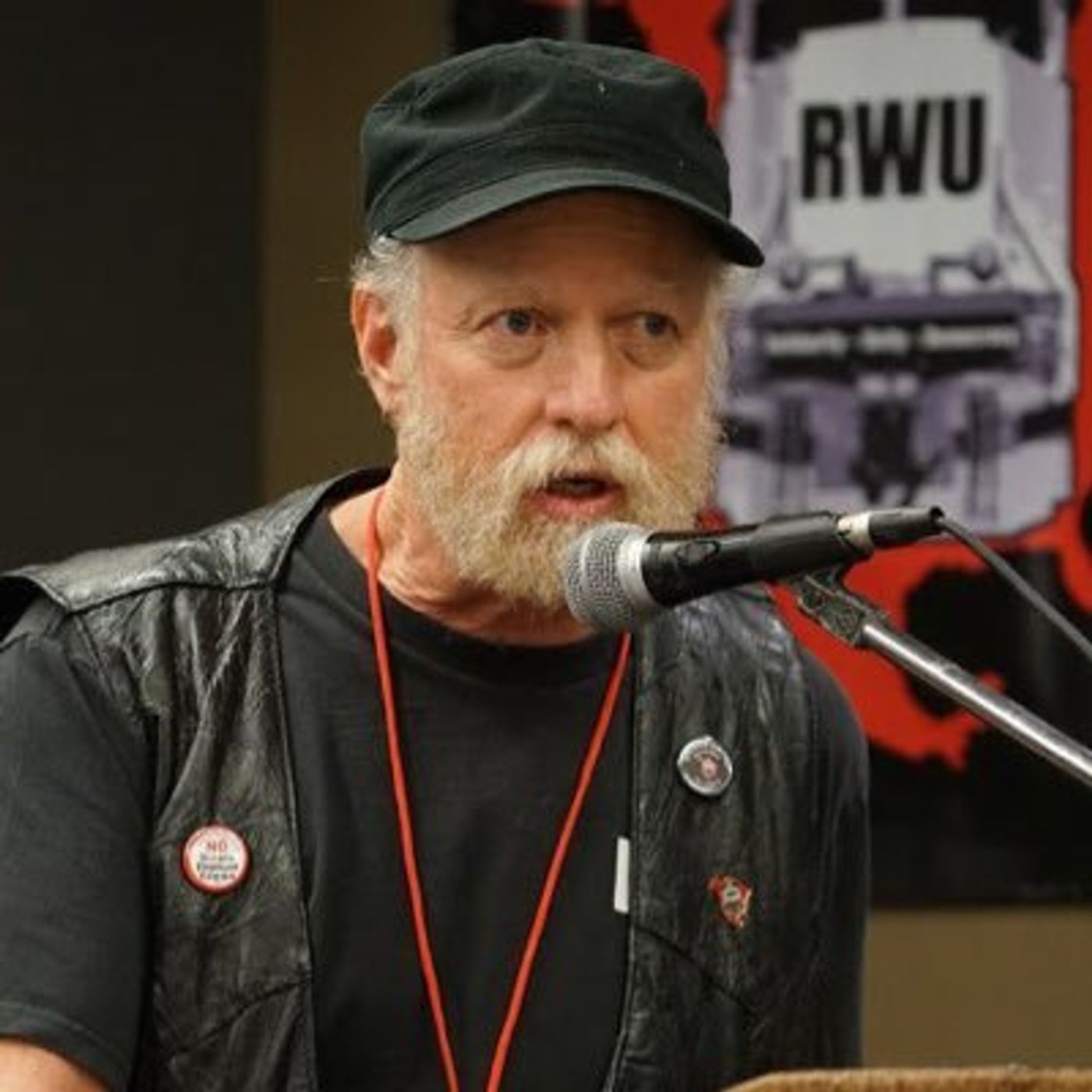
What the @&#! is Going On With North American Railroads
In this episode we talk with my friend Ron Kaminkow, founding member of Railroad Workers United (www.railroadworkersunited.org) about just what the he11 has happened with North American Railroad Companies in the past five years and what effect it has had on railroad workers, shippers, and more importantly, the general public. We also discuss how the business policy known as "precision scheduled railroading" has given us a glimpse of a very deranged philosophy regarding American business practices and what this could possibly mean for other areas of the American economy.
Check out www.railroadworkersunited.org for updates and more information.
Check out www.railroadworkersunited.org for updates and more information.
2023-02-24
84 min
Transcript
Available Results
Generated results are saved to the knowledge database for reuse and search.
No generated results are available for this episode yet.
Extract Knowledge
Pick what you want extracted first. Model, scope, and chapter options appear after a template is selected.
Generated results for public episodes are saved to the knowledge database so they can be reused and searched later.
Transcript
Do what do thre what my work trying to get roll? Let nobody trying
to get ahead? Come on, do my telling him trying to get from
the telling. Yeah, welcome to another episode of Crypa Body doesn't Podcast.
That's a that's a fucking great form of music right there. It's New Orleans
brass band. Shit. I've been listening to that for a long time.
That was Little Rascal's brass band. Knock with Me or is it rock with
Me? I think it's both of them, and I think you should.
Baby could look it up on a cold look it up on YouTube music,
or you can. Maybe it's on Spotify too. This it's like some pretty
judging from the graphics on the cover, it seems like some pretty locally produced
stuff, so they're probably I'm likely to have any licensing issues, which is
good for me because then I can share with you and it's fucking it's fucking
great music, though, man, like you put that, you put that
on Spotify or YouTube music, and then you'll get a whole bunch of other
recommendations of this, like wonderful New Orleans street brass band music like it's I
mean, remember I figured when I first heard a little Rask, but I
think it was like six years ago. I hadn't listened to it a long
time, but being in New Orleans, you know, the whole one in
Rome thing, it reminded me because we you know, you'd be walking down
the street there'd be a couple of brass bands. We were hearing from Marty
Grow film and shooting the last few episodes of Kill You Lawn. I don't
know why they picked Marty Gray. I think it's just because they're trying to
They had a deadline they get and so they just they didn't know it was
Marty Grow. The producers they just you know, they just booked it when
they could book it, and it happened to be, you know, during
the week of Marty Gros, which was like you know, I mean,
I'm fucking silver, I don't And this is like a party town, but
well it's not a party town, but there's a lot of booze involved.
I think a lot of that ship comes from out of towners too, especially
coming here to you know, postion themselves with alcohol, etc. And I've
had so many friends die in this city to murder, suicide, overdose,
you name it. Um. So there's definitely a darkness here, but it's
also such a fucking beautiful city. Man. I love New Orleans, I
really do, you know, despite the many cons despite the many negative things
you could say about it, but also you know, the people, all
that all the party shit I think comes mostly from people who didn't grow up
here and aren't from here. And then now having a couple friends, you
know of different ages, in different cultural backgrounds who are actually from here,
and then friends who've moved here, you know, that have been here like
twenty years now, I can say that, you know, that is not
that That kind of tourist party vibe is not what this city is, not
what this now, not what's the you know, the true the true form
of the city is. So anyway, whatever it's, it's a fucking lovely
time. I was hanging out on the West Bank last night looking at the
Mississippi River watching these giant barges go by, like you know, we're talking
like almost Edmund Fitzgerald's size. Is that? Is that correct? How big
was the Edmund Fitzgerald I don't fucking know. There was a there was a
house, there was a stuff you should Know podcast on the Edmund Fitzgerald like
two months ago, which I highly recommend, very interesting, great lake shipwreck
and the whole story behind it. You know, not to mention a Gordon
Lightfoot song and Gordon Lightfoot grow. I mean, I didn't like him at
first. I made fun of it a little bit, you know, the
whole folk thing, but uh, folk music, but it's you know,
it's he's I actually like Gordon Lightfoot, but he wrote that song about the
fucking Edmund Fitzgerald. And anyway, well, in typical uh crime pace podcast
fashion, I'm all over the place and uh, anyway, today I've got
a really good conversation with you that I was hoping would go longer, but
we were both kind of pressed for time. So this is a conversation with
my friend ran Ron camon Cow, who's one of the founding members of railroad
Workers United, which is not a union, it's more just a solidarity or
for railroad workers from various different crafts. Some of you might this is some
of the ship might fly over your head. Some of the terminology and this
might fly over your head. Railroading is a whole other language. But basically
you have different crafts, right like trainmen is one craft. Locomotive engineers is
another craft. Maintenance of way is another craft like track workers. Carmen aka
car knockers is another craft. And you've got all these different unions, but
specifically the transportation area, namely the conductors, the trainmen, conduct trainman is
like conductors, switchman, brakeman, and the locomotive engineers. On the other
end of the table are the two main unions in UH in the transportation division
of North American Railroads, you know, US and Canada. And I don't
think I'm not sure the deal is with with Mexico. Mexico seems to have
a different from riding trains there and from traveling there, it seems a little
bit different like the you know, the the Mexican railroad companies are a little
bit more lax on how they mess with their employees. But you know,
Canadian and American railroads have the railroad companies have historically had a very antagonistic relationship
with their employees, especially the last twenty or thirty years. When I hired
out on the railroad. Um, the you know the old heads as we
call them, who are all mostly dead or retired now, but these were
people that hired out in seventies in mostly men, occasional woman. I interviewed
my friend Lynda Nieman, who was a woman brakeman for Southern Pacific in the
Bay Area. I did that interview like two years ago. It's a great
interview if you can find it in the backlog. I don't know, I
think. I guess Spotify deleted some of the old episodes of this podcast,
which is probably fine for me, because who once I don't have to you
know, I know, some of that old shit's embarrassing. I mean,
people like it, people like the old episodes, but to me, it's
kind of embarrassing, you know, I'd prefer not to hear it again,
just like it, you know, just like it is reading old fucking journal
entries or something, you know what I mean. But anyway, so the
old heads were mostly these guys that hired out in the seventies, and I
was it was a privilege to work with them, you know, I'm grateful
that I got that chance to see that. You know that these were some
of the last vestigies of the American working class from a period when you could
actually, you know, decent union working class jobs were still available on any
sort of large level to the populace. You know, now they're kind of
hard to come by. We don't really make things anymore. There's not really
I mean working class now this primarily means working in retail or service. I
guess, you know, I don't know what the fuck I mean. It's
you know, I don't need to really get into the nuances of what's happened
to the American economy of the last thirty or forty years. But anyway,
these you know, these guys were hilarious. Some of them were just the
grouchiest old fucks. Some of them were, I mean, most of them
were kind of grouchy old fox but they were grizzled, and they also had
a really good sense of humor. And a lot of them had really that
I encountered, especially you know, out in California in the Bay Area,
had a lot of good you know, they were progressives, but they weren't.
I don't know, they were just good old you know, but it
was it was I guess what I'm saying is it was this was from a
time when the working class was still pretty tied to uh left leading politics,
Unlike now, where you get a lot of you get a lot of I
guess the right wing kind of hijacked the working class, kind of took it
over, you know, swooped in his leftism got further taken over by you
know, uh, bourgeois college kids and members of the professional and managerial class,
you know, the kind of a band of the working class, and
the fucking right wing kind of moved in. Now this is these are all,
of course generalizations. There's a lot of nuance to this. Um you
know, take it with a grain of salt, but largely that's my opinion
of what happened. But either way, the point is working when some of
these guys was fucking hilarious. They were, they were they were really funny.
They had a really anti company attitude. They used to always tell us,
don't fuck each other, fuck the company, and uh, they really
made the railroad a fun place to work. And they used to talk about
back in the day in the seventies and eighties and even the early nineties,
at least on Southern Pacific, which was bought out by Union Pacific, which
was seen as a much more just you know, shitty, a much shittier
company to work for, a much more you know, Union Pacific was formed
in Nebraska that was just different, just a different company culture than than Southern
Pacific, you know, for its employees. Southern Pacific was brought out by
Union Pacific in nineteen ninety six, and then Union Pacific changed the whole company
culture. A lot of these old sp guys hated up. They used to
always joke about how you know, those Union Pacific guys whenever you'd work with
them, they don't talk. You know, they're just kind of so hammered
down and can be such company men and you know, just a way more
strict and less fun company culture. And that's how they treated their employees too.
You know, Southern Pacific used to always those those old heads used always
tell us, oh yeah, the managers back in the day, they weren't
that bad. The company officials you know that were in the yard. They'd
be sitting at a table playing cards with the everyone, you know, smoking
cigarettes and blah blah. And also back in the day, a lot of
these guys were alcoholics. There was a huge problem with booze on the railroad,
and some of them were doing fucking coke on the conduct. I mean,
there's a whole ugly side to it too. Of course, but anyway,
the point is it was it was great to encounter some of these people
and uh and get a chance to work with them. And they really knew
the machinery and they knew their jobs, and they were just this is such
a bygone era of both America and the American working class and the American economy
and just a caliber of person I feel like you rarely encounter anymore. Anyway,
all that aside, this conversation with my friend Ron is about something called
precision schedule railroading, which is sounds like such a vague ass nonsensical term,
Like what does that mean? Like it sounds good, what does it really
mean? What it really means is a company policy, a business policy adopted
by the railroads in the last I don't know, five to ten years and
originally kind of dreamt up manufactured by a single human being named E. Hunter
Harrison. And if you look this guy up, he really looks like the
just iconic sweaty ceo pig, you know, dressed in a you know,
thousand dollars suit. He's such a cartoon character. Anyway, the guy's dead
now, but he was a CEO of a couple of different companies, back
in the day he came up with this idea called precision schedule railroading and what
it basically translates to now me and Ronn talk about us in the podcast.
It's just a way to maximize profit at the expense of customers and employees.
It means lots of cost cutting, it means lots of job cutting. It
means, you know, basically cutting any business expense, even necessary ones that
you need, you know, like maintaining the quality of track, maintaining defect
detectors, which played defect detectors played a huge role in this wreck in East
Palestine, Ohio. You know, it's it's like a it's if there could
not be a more grotesque form of capitalism on steroids than precision scheduled railroading and
and all the all the negativity that comes with that. And so you know,
the railroad strike that was about to happen before Biden denied it and shut
it down in November, that was a result of precision scheduled railroading. This
wreck was a result of precision scheduled railroading. It's just basically looting, looting
the company for the benefit of shareholders. It's it's completely counterintuitive. It's so
fucking deranged. But this is of course where I feel like, uh,
you know, all these business policies and more so business ideologies the last forty
or fifty years end up, you know, I mean this kind of like
Reaganesque free market privatize everything, shit ends up. I mean, of course,
it goes a lot deeper than that. But you know, I don't
know, I'm not I'm not a fucking I don't I don't study this shit.
I didn't go to school to talk about you know, social theory and
business, business ideologies and economics, obviously because I'm not very eloquent at talking
about it. But regardless, this is a really good conversation, and uh,
I enjoyed having it, and I think it'll probably be illuminating for a
lot of people that are just wondering how the fuck things like East Palestine happened
and what the railroad strike was about. You know, like the railroad strike
that was about to happen wasn't even about pay really, it was about just
getting time off. It was about quality of life, and why did that
become such a issue because so many jobs have been cut and the railroad is
trying to hire as few people as possible. That they really started just cracking
down on attendance or sick days. I mean, it used to be you
could just call in sick. We call it laying off. You know,
I'm gonna lay off today. That basically means I'm gonna take the day off.
You know, I've worked the last six days because I was on the
extra board. I was going to work, you know, one day at
three pm, the next day at three am. I haven't had any time
with my family. I'm fucking overworked. That was the worst thing about working
there, too, is like if you weren't on a yard job, which
gave you a s actual schedule, then you were on call all the time,
especially if you're working pool freight. There's yard jobs and there's pool frey.
Pool freight means taking a train from point A to point B, staying
in a shitty motel much like the one I'm in now, the nice view
of a suburban strip mall parking lot, and then taking a train back from
point B to point A. No schedule to it. You're just at the
mercy of call time times of you're at the mercy of how these trains move.
Which now is very slow because they've you know, made the train so
long and so heavy, and they've underpowered them so they don't have to spend
as much money on fuel or maintaining locomotives. So like a train might have
four locomotives twenty years ago and be you know powered, you know, powered
sufficiently so that it could run on time, whereas now it's only got two
locomotives and it's longer, so it can only it can't even maintain track speed.
It's just you know, it's just just got just enough to make it
over the road. But that means the company gets to save money on fuel
and locomotive mantance, you know, so anyway you'd be you'd be getting called
to work. It was just got It's just it's not like you were tired,
but it wasn't because you actually were physically exhausted. You were just mentally
exhausted, like you had just been sitting down in a fucking cab all day,
the cab of a locomotive, but you were still just so tired,
and so it got it was so bad for your health too, because you
were just mentally exhausted, but you didn't really expend any calories, so you
just got fucking fatter, and you're eating you know, all this shitty gas
station food, this road food, you know, all American, you know,
no fucking healthy, nothing healthy in sight. You know, it was
it was such a brutal form of living, you know, much like truck
driving, as I imagine, where you're just you're sitting down all the time,
but you're still just so tired because you've been up for you know,
thirty hours and you just you can't sleep. You're getting off work at nine
in the morning, you can't go to bed when the sun's out. It's
just it's fucking brutal, man. And so that's why a lot of these
guys become alcoholics. Uh, you know there's women too, of course.
Now it's it's it's not as much of a sausage party as it used to
be in the seventies and eighties. But it's just it's a really horrible form
of exhaustion. And I don't know whatever, I'm just rambling now, but
the point is it's it's a shitty line of work when you know they're just
working you to death, and they're working you to death because they don't want
to have more people employed because that means more health insurance policies they got to
pay. So they're trying to cut jobs, and they're cutting jobs, but
then the work that's left over is just piled on the existing jobs. And
so all this plays into precision schedule rail running. We get we get into
talking about that. But anyway, regardless, I hope you enjoyed this conversation.
I hope it shed some light on things for you and I obviously if
you're not, if you're here for the botany that's not mentioned at all in
this podcast, but I will mention that I just learned what those glands at
the center of Malpiggiac flowers for, you know, flowers on you know genera
and species in the malpiggi Ac family, that they've always got these kind of
like luminous, you know, shiny glands at the base of a flower,
and I guess it's for oil collecting bees, which are one of their primary
pollinators, so like oil collecting bees in the genus Centrists, which also pollinate
the Crimaria flowers. So that was interesting for me. So there's a little
piece of botany for you to make this fucking podcast relevant. Otherwise we're talking
about railroads the entire time, So enjoy and if you have any questions,
make it brief and you can email me at the crime pace of BOONDI doesn't
at gmail dot com, and I will respond and also make it brief because
otherwise I just I'm just so fucking add and rarely have time to respond in
depth. But um, you know, easy shit like plant I D questions
or other questions, I'm more than happy to get back in anyway. That's
all I got for you this afternoon. Have a good rest of your day.
Enjoy this podcast from Ron cam and Kyle Railroad Workers United about precision schedule
railroad roading and how a disaster like the East Palastine wreck happens and how you
actually can blame the you know, it's entirely on the blame of the fucking
company and basically all the Class one railroads what is it five or seven that
they got in North America now they're all kind of the same. They've all
adopted this precision scheduled railroading ship, which is uh, which is just such
a fucking disaster for railroad customers and railroad employees and especially for the American public.
That's all I got go fucking up by Well, I'm gonna show you
what it's like where I'm not sure you body section you know. I mean,
I think they're shop They got nice shocking each other, quash come out.
You know. I've seen a couple of nice things in their room.
Fourth get a bunch of hippies to each other who come with lge party to
get put down thirty nine for any of these they're about to go bad,
but they're not paid. All right, Welcome to another episode of the Crime
Pigs of Botany. Doesn't podcast little change up today. It's nothing Botany related,
but it's something that still pertains to my life and you know, my
general political leadings. I've got my friend Ron Cameron cow a locomotive engineer for
Amtrak. We've been friends. How long we've been friends, man, like
twenty years almost, I think, so, yeah, yeah, it's been
a while. I remember talking to you before you even had a job with
the Union Civic. Yeah, yeah, so a little bit less than twenty
years. So yeah. He's a locomotive engineer and he's one of the founders
of railroad Workers United. Ron, you want to tell everybody about RWU and
what it is. Yeah, i'd love to Joey. So Railroad Workers United
came about at a founding convention in Chicago, or rather endearable in Michigan in
two thousand and eight, and all of us who work for the railroad are
kind of disgusted by the fact that we're divided up by craft into these archaic
unions that really should have passed out of existence almost a hundred years ago with
the advent of the industrial union uprising in the thirties with the Congress of Industrial
Organizations CIO. But unfortunately, railroad workers had gotten organized really early on,
and that was because railroading was one of the most dangerous industries in the country,
considered more dangerous than coal mining. So we organized early. But we've
got ossified into this old craft union system and that was even further sort of
institutionalized by the Railway Labor Act in nineteen twenty six, and it prevents unity
and solidarity between the different unions. And then as our numbers had diminished through
technology and cuts and actually abandonment of trackage, were down to fewer and fewer
railroad workers, these unions become even more and more impotent. Because we're scattered
a few thousand in this union, a few thousand and that all across the
country, making for sort of dysfunctional organizations, and they don't stick together,
and they curry favor with the rail carriers, and they scab on each other
basically. And so ur W came about as the most recent effort of railroad
workers to build an organization of built upon our slogan and solidarity, unity and
democracy. And so we get involved in all sorts of issues that are of
concerned to railroad workers. And most recently, of course, we're very,
very heavily involved in this huge train wreck in Tobacco in East Palestine, Ohio.
So that's just a brief summary there for you enjoy. Let's let's let's
give people just because because a lot of people don't understand you. You know,
typical freight crew, right, you've got a conductor, maybe a switchman
if you're in a yard job. You know, so maybe a three person
crew in a yard job. That's that's diminishing too, or a two person
crew if you're on the road, right, like pool freight going from point
A to point B. And so when we say different crafts, not united
we're talking about locomotive engineers being in one union and conductors, switchman, brakeman,
et cetera being in an entirely different year. Incorrect, exactly. And
these these people are like our best friends and comrades, the people that we've
work closest with and that we know the best. And ironically those two unions
historically have been in each other's throats. We have managed to push them in
a corner and shame them to the point where now they are standing in solidarity.
But at any time, in this kind of crazy craft union system,
they could once again attempt to sell one another out. But yeah, we
have a standard two person group. It used to be five or even six.
It's been littled away over the years, and now the rail carriers want
to get rid of one of those people. And ultimately they make no bones
about the fact they want to run the trains with nobody on them. They're
not doing a very good job with two people. I would end right now
with all the key railments, you kind of you know, hold your breath
and just imagine what it would be like if they actually got their way.
So we've been fighting that fight now since before ourw was even organized. We
had a predecessor group called Railroad Operating Craft United, and that came about.
Remember that we were trying, Yeah, we were trying to get the Conductors
Union Engineers Union to stick together, whereas they were literally trying to destroy one
another. And you know, be the union that represents quote unquote the last
man quote unquote standing of the idea of you know, you can't stop technology
or progress or whatever the jingoistic where they want to use. And so therefore
it better be us, be the union that represents, ie, collects the
dudes from that last member standing, rather than had your bets create unity and
solidarity and fight together to preserve both jobs and both positions, as they're both
very very important to the safe operation of trains in this country. So let's
stop by to see this other one man crew thing coming a long time ago,
like ten fifteen years ago, probably longer than that. I mean,
they eventually, of course want to get rid of all crews, which seems
fucking insane. But let's talk about something called PSR Precision Scheduled Railroading, which
just sounds like a dirty term. It sounds like some shit that some phonies
came up with. You know, in a fucking boardroom somewhere. What does
it even mean? It's kind of vague, but I mean what it means
to us now having known it, it's some really dirty shit. Let's talk
about that. What is BSR? Yeah, And so you know, there's
as many different views of what PSR is as about there is of like what
socialism is or what freedom means. It's just a phrase. It has absolutely
no meaning whatsoever in terms of like theory or ideology. But on the ground
what it means. Let's look at the hallmarks. I mean, you know,
a lot of times like the Missourians, right, show me, like
I don't want to hear all the bullshit, just shown me the numbers.
Well, here's the numbers. What PSR has done in North America to the
railroad system is decimate the workforce. And just in the last four years alone,
the big Class one carriers that have all adopted this model, including BNSF,
who pretends not to be part of the PSR club, but they've adopted
many, if not most, if not all, of the same techniques,
and one of them is get more work out of the workforce and and cut
that workforce to the bone. Signal maintainers, track inspectors, car inspectors.
As we talked about train and engine crews, maintenance away no, no position,
no position is too essential, No position is too essential to completely wipe
off the board in order to save money. Right, exactly exactly, And
it's sort of like this, you know, like you say across the board.
There's no sense of, well, these people are absolutely essential or necessary
or to do the job correctly. So one example that stands out right now
is that trains aren't given an initial terminal test. And Joey, of course
you remember all this stuff from your day's working as a great conductor, and
every car is inspected, and the general wisdom used to be about three minutes
per car on average to inspect a train. So if you had a hundred
car train leaving the initial terminal like I used to work at a Healthcard Indiana
to Robert M. Young Yard, one of the biggest railroad yards, in
fact, the biggest yard when it was built in the world nineteen fifty eight,
still there, and a car inspector or a Carmen member of the Brotherhood
Railway cartman would inspect that train to make sure that every car had proper breaks,
setting and releasing, that the load wasn't listing, that the brake shoes
were up against the wheels, that all of the parts of that car.
You get a guy on an a TV coming by with a hard hat right
before the train's about to depart, and you know, checking everything, doing
an air test. All that right, exactly. Well, that ninety minutes
somehow magically was reduced to a minute and a half or even sixty seconds.
This didn't happen over the course of a decade, or this didn't happen,
you know, gradually, and any kind of like new technology that enabled the
railroad simply said noah, we only need a minute now a minute and a
half. And so that facilitated the removal of thirty to thirty five percent of
the car inspectors in this country. And so that's a hallmark of PSR.
So this is the hallmarks of PSR. It just gets sleazy, or doesn't
it. I mean it's already sounding pretty sleazy. It sounds like capitalism on
steroids, null regulations. Just cut as much as you can. So yeah,
keep going, what else? What else? What else do we have
with this? So coming down the pipe with PSR so they're running these big,
giant long trains and the tendency of course the railroad, I mean a
long train one hundred and fifty years ago was fifteen cars. Well, then
you employ some technology like the Jenny coupler or Westinghouse air brake, et cetera,
et cetera, and you can actually run a train much much longer.
And when I entered the industry, you know, trains are about one hundred
cars long. You have unit trains of coal and grain ninety one hundred hundred
and ten cars, pretty standard stuff. So you're looking at a mile.
A long train was seven eight nine thousand feet. That was a really long
train. Today a really long train is sixteen seventeen thousand feet long. And
they're often just simply two trains and one they literally put them together. That's
three miles man. And so this is and it's all about one us again
cutting staff. So if you run two trains, you have to have twice
as many employees. And if you run one train, theoretically, but that
one train has a greater propensity to break down to de rail if it does
derail, it has a much better propensity to be severe. As we just
saw up in East Palestine, Ohio. And guess what, I just got
a text ten minutes before you called me, Joey. They put thirty one
cold cars on the ground downtown Galeburg, Illinois. The train was twelve thousand
and five hundred feet long, So what's that. That's two and I'm maybe
a third miles long. The thing probably weighed in somewhere around thirty thousand tons.
I mean, I'm laughing. But just because it's so it's so fucking
it's so dark, like it's so sleazy. And you know, because I
basically left in twenty nineteen and I you know, I still say in touch
with some friends there and they just tell me, you wouldn't believe how bad
it's got. It Just every time I talk to them, they're like,
oh, yeah, I'm just here. I'm just eating it out like a
bunch of people have left. I mean, they got rid of the fucking
yardmasters in Oakland. I can't think of a more essential position than the person
who directs where all the cars going is kind of the choreographer for the entire
fucking yard for trains that are coming into a trains that are leaving. And
they got rid of it, you know, and so people just you know,
and then morale is just it's never been lower. What do you think
so this this this insistence on cost cutting, where does it come from.
Are the railroads having a hard time Are they just having a hard time cutting
it in this world making money? Or what's going on? Well, great
question, and that's that's the irony of this whole goddamn ball of wax.
Is you would think in that environment, oh, well, you know,
the trucking industry is putting them out of business, or the barge toes that
you see up and down the Mississippi River they having a hard time competing.
Well, it's nothing good. Be further from the truth. These are far
more profitable corporations than any trucking firm or any barged hoe company that I know
of. They have reduced what's called they're operating ratio, and this is basically
a fancy smokescreen way of saying their profit percentage, and so they're shooting for
a point five operating ratio, which what that means is they're going to make
fifty cents on the dollar. So imagine that every dollar you invest you get
fifty cents back. So they've turned the railroads into these cash cows. And
there's no excuse whatsoever for this behavior, of all these deep cuts and maintenance
of running these super long, dangerous heavy trains, of cutting the staff to
the bone. And this past summer there was hundreds of trains all over the
country that were held for rested crews because, thank goodness, we had this
thing called hours of service law that limits our ability to work as a conductor
engineered to twelve hours max. Well, if there's nobody who's quote rested,
the train simply sits there. And there were hundreds of them all across the
country tied down. And this of course contributes to inflationary pressures that jacks up
the price of goods, etc. Etc. And in many cases shippers are
lead in the industry. We're moving less freight than we did almost a generation
ago. Get your head around that idea. Seeventeen years ago we were moving
more freight than today. And we can't even handle the freight that we got
today because they have eliminated so many goddamn positions from the railroad. But yet,
and here's the kicker. Fourth quarter of twenty twenty two, despite the
threat of the strike despite all of the tie ups and the inability to properly
staff the trains because they don't have enough people, they made beckered profits all
of them in the fourth quarter, and there is no end in sight.
So here's the contradiction less freight less service. Every shipping group in this country
is complained vociferously to the Surface Transportation Board that the rail industry is hurting their
business. In some cases, the rail industry is damn they're driving them out
of business. The workforce isn't happy. They're screwing the hell out of Amtrak
trains on turn performances in the toilet for Amtrak because you get stuck behind these
long to sable freight train. All of these metrics, but yet, surprise,
surprise, the rail industry record profits. And how is that? Uh?
We talked about some of the stuff, I mean a long, heavy
trains that take fewer personnel to staff it, just cutting back on the car
inspectors and then just general maintenance. I talked to a guy who's a sickle
maintainer in eastern Ohio and what he told me was that district of North of
Southern used to have five specialists that were experts in hot box detectors. They've
all been eliminated. There was no specialists now who deal with hot boxes.
And these are the track sides. These are the track side detectors that trains
have to go over every twenty to thirty miles that let you know, they
basically detect heat from the axles to see if there's a stuck break or you
know, something's fucked up, something that could really derail the train and cause
something like what happened in East Palestine. But I mean this, you know,
the cost cutting, I mean it was going on. It started.
I basically left two years after PSR started, and yeah, I just saw
them cutting all costs, like more than was needed. And it seemed like
they were doing fine, alrighty, I mean they were what they were reporting
financially. You know, it was not a business that was hurting. But
it just seemed like rampant greed. It seemed like this kind of like feending,
you know, like like a crackhead or something, just feedding for more,
and then you know, coming to the point of just shirking any responsibilities
that they had as a business, you know, like running trains and responsibilities
to the fucking general public, to the people that work for them to the
It's really it's a really bizarre business strategy. And I've kind of and it
seems like they're all all the Class one railroads are doing this, Norfolk,
Southern, CSX, b nsfup. They just don't give a fuck. I
don't understand how like where they think it's going to go. It's just this
kind of short term game, long term loss mentality. I saw a train
in West Texas a month or two ago. The crew looked fucking pissed off.
They were going like ten miles per hour in what was like a fifty
mile per hour zone because they only had one engine pulling like a two mile
long stack train. They had one engine in front and maybe a DPU in
the back, like a second engine being remote controlled from the front pushing you
know, the rest of the train. But it was it was drastically underpowered.
I assume them, of course, to save money on how many locomotives
they have to use, how much fuel, et cetera. But it just
seems, you know, they're at the point where they don't want to run
a road anymore. They're just trying to make as much money as possible.
Well exactly And I just read an article a few days ago, and I
put it in our weekly bulletin to all of our followers, and the article
basically said, can society We can no longer afford corporations that really are only
in business to make money, and that includes the rail industry, because,
like I said earlier, it's become a cash cow for Wall Street hedge funds
who see that. Hey, and and let's go to Warren Buffett because about
it. Nine years ago he bought the BNSF, really the biggest railroad in
the country. He bought it outright, and about four years into it,
he said, I have made more money in a shorter period of time than
even I expected. I knew my investment was going to be like I couldn't
fail, but it's even better than I expected. And that statement was made
about five years ago. And that railroad has gone on to make record profits
year year after year after year. And so you know what is a foot
here? Are they acting like a transportation industry. Now, if you're a
transportation industry, your goal is to move stuff, But yet all the metrics
are down, number of carload shipped down, customer satisfaction down, do all
time in yards, meaning it's not going anywhere and just sitting there up.
Oh, your employees, you average average train velocity you know down. And
we could go on and on and on about all of these metrics. And
before PSR sort of, you know, reached that point of quote unquote consensus,
you did have CEOs of railroads and boards of directors who actually disagreed,
people like Matt Rose, long time professional CEO of BNSF. And believe me,
I have no love for any CEO of any business practically, especially a
railroad. But Matt Rose, when he retired just about the time PSR was
taken hold of North American railroad scene, he said, I disagree with just
about of all of this stuff. And the reason he disagreed is because he
was still looking at railroading. Oh I mean, like how like archaic now,
Like he was still looking at railroading as a railroader, Like, what's
going to be good for the industry in five, ten, twenty thirty years.
Well, we need to improve infrastructure, we need to add track capacity,
we need to upgrade signals, we need to double track and lengthen sidings,
maybe even electrify. And I'm not saying Matt Rose went this far.
But at least Matt Rose and people like him understood that the railroad is something
that it has to expand you have to move more free that's your business.
But PSR turns it on its head and says, hell, no, move
less freight, because you can get rid of workers, you can cut back
on maintenance, you can provide really shitty customer service and make more money for
your stockholders. But this bottle is not sustainable. So eventually it's all going
to unravel. And so it's such a like bloated big form of capitalism too.
Man, It's just like it's so fucking unrepentantly gross and just god man,
like the fucking cartoons. I wish I was still drawing cartoons at work
because the fucking things I got that there's just so much material there. It's
just that disgusting, or it really is. But anyway, so listen,
okay, well moving forward, so we we know what's going on with ps
are we touching a little bit? What actually do you know much about what
actually happened in Palestine, Ohio with this this big ass derailment? I mean,
what was I guess it was dragging for a while there were sparks.
I mean I saw like security camera footage on a building adjacent to the tracks
that it got put on the news, and basically that security camera caught the
fucking train going by with you know, one or two entire you know cars,
So like, what is that eight four axles you know, dragging and
sparking along the tracks? Do you know what happened? You don't need details
there or what. Well, there's a lot that we don't know yet,
and it's a shame, but the Natural Transportation Safety Board will probably not issue
its preliminary statement for another two weeks, and it probably will not be done
with this whole thing for another couple of years, when nobody's really paying attention
or even gives it damn anymore, because we've moved on to the latest or
overseas or whatever the case might be. But what we do know is a
few things. All this stuff that I've just spewed out about short staffing,
lack of maintenance, long and heavy trains, blah blah blah, the hallmarks
of PSR are creating a more dangerous environment on the US railroad system. So
we know this, now, how does that if it does translate into what
happened in East Palestine. So the detector at Salem, nineteen miles before the
detector at East Palestine didn't give an audible alarum to the crew. Now,
interestingly, the video that you just referenced, Joey, that video apparently was
one mile west of the detector at Salem. So what you and I know
about railroading is that if there's a wheel that that that we saw in that
video that looked hot enough to trip a detector, why did that detector not
give an audible to the crew learning them to stop and inspect the train?
Okay, so this is a west of eastbound train. Salem is west of
Palestine, right, correct, So this train is headed for Conway, Pennsylvania,
I believe. And this thing was picked up out of fucking security cameras
with sparking wheels west of the detector, so before it hit this detector that
didn't give him an audience. Jesus, that's fucking nut. That's bad man.
That's a long way to go. So there's a couple of things that
we're all speculating about. Was the detector misfunctioning and if so, why was
it? Well, we do know that those five detector specialists that used to
work that district are gone now the railroad got rid of them. Could that
have been related to this whole question? We don't know. Yet another question
about that detector, and this one is really somewhat cloak and daggery. But
and I don't know if you ever experienced this, Joey. This is a
recent phenomenon on the railroad. Normally, a detector will talk and say no
defects, or it tells you you got a defect. Well, now things
there's a gray area. The detector doesn't talk to you as the crew on
the radio, but the dispatcher will call you quite a few miles down past
the detector and tell you you've got a bearing that's trending hot. I don't
really know what trending hot means, but it means you might have a hot
bearing in your train. Now, I don't understand this kind of railroading because
to me, it's like going back into the nineteenth century. We want things
to be automatic, we want things to be failsafe. So why are we
having detectors that are sensing hot bearings not telling the crew. Somehow, the
dispatcher is alerted to the fact, and at some point in the dispatcher's dealings
with all of the other stuff he's got to do, he then has to
remember to call you and say, by the way, you have an axle
at dislocation in your train that's trending hot. A number of us have all
mystified about this. My train had one of these about six weeks ago,
so they got set me thinking what the hell is this all about. So
the crew didn't hear anything, and they're not obligated if they don't. I
mean, they're not obligated because you're supposed to get an exit message, you
know, saying it's okay when you go over these detectors. At least we
would on up. But they didn't hear anything. Well more and more of
the detectors around the country do not talk to you at all, and that
there's no easy if there's no alarm. I mean, they used to give
you a lot of useful information, like how many axles right in your train
right and tell you what the temperature was, which could be actually very very
important, totally railroad bruce, for all kinds of obvious reasons. Well,
now they don't say anything, and I don't know how universal this is around
the country. That's fucking crazy, man, because that's all that shit is
important information. And that of course, at one point, the detector at
one point was a job. You know, there were people that would be
in these you know, depots and stations along the railroad to let you know,
highball, right, I mean, that's what highball means. It means
you're all good, you know, that's what you're just doing. Another train
goes by, give them a highball, given them an inspection, you know,
make sure nothing is fucked up on the train exactly. Well. You
know, historically we had two million railroad workers one hundred years ago, and
now we're down to including passenger and commuter and short lines and regionals as well
as the class once we've probably got about two hundred and left, so we've
we've lost ninety percent of the workforce over one hundred years, and much of
that is due to implementation of new technology. And I'm not going to sound
like a lot I hear a lot of this technology has been incredibly valuable,
incredibly useful, and a lot of those jobs, you know, like a
telegrapher for example, is not needed in the age of you know, internet
and cell phones and so you know, those jobs are just simply going to
vanish into history. But Joey's absolutely You're absolutely right. We used to have
people along the railroad. The railroad is largely void of people now, and
so you know, here we are, ironically, we're relying on some warehouse
that had one of these doorbell cameras that was activated by the train or something,
and then they happened to see it and put it up on the internet.
I mean, I mean, it's ironic, is as well. There's
nobody out there to see this fucking wheel for nineteen miles apparently all the way
from Salem, yeah, into East Palestine, where the East Palestine detector does
go off, does alert the crew before the crew can even start to slow
the train, I think within a half a mile. And someone told me
that the train was still on the detector when it started to pile up.
Yeah, yeah, I mean, so the more it sounds, and of
course we all knew this is that this wasn't really this wasn't just a random
event. This was a result of overall a business policy of of just neglect
of company fuck ups of I mean, the idea that these these hot box
detectors, because that's one of the jobs of the conductor is to notate what
they hear, you know, after each detector goes off. It was a
big thing. We'd we'd be bullshitting in the cab of the locomotive going down
the track fifty miles per hour, shooting shit. You know, Oh wait,
everyone stops, you know, everyone in me, the fireman, the
FU engineer. Fireman's a student engineer. Uh and you know, oh wait,
we got to catch that detector. We have to hear it. You
know, everyone would stop talking to listen to what the detector says. Now
it doesn't even have to talk. You're just relying on a fucking dispatcher supposedly
to get I mean or four. It just seems nice. And if it
didn't talk, that would be a reason, you know, you to notify
the dispatcher like that was a that was kind of a big deal if it
didn't talk, you know, note that down. Yeah, and this is
all part I can see how this fits into the scheme of colt cutting.
So on my subdivision we got like seventeen detectors, and so if the detector
is fine, but let's say the automatic voice broke down or you know,
certain aspects of the diet. Yeah, like you say, oh, hey,
you know, I'm on past your service. I call back to my
conductor. Hey, do you hear that detector go off? No? I
didn't either, Okay. I toned up the dispatcher and I tell him,
hey, detector at mom post three ten zero didn't go off. Okay,
I'll get back to you, and then he'll go look and see if he
picks anything up on his end, because it sends a message to him too,
you know, exactly exactly. And so then he goes, now,
yeah, you know, forty axles, no defects, good to go.
So, okay, thank you. Well now, because it hasn't spoken to
me, they got to send a maintainer out there to fix the voice.
That costs money, they thanks away from the bottom line exactly. So why
have the damn thing have a voice that But that's the irony. The idea
was that here you've got workers in the field on the trains going over seventeen
detectors. They all work every time the train hits a detector. It's kind
of like an inspection. The thing is working, the thing is working well.
It doesn't talk to you. You don't know if it's working or not.
You don't know. So then you're in a situation where you were lying
on the dispatcher, who might be on his break, who might be dealing
with a difficult situation with other trains, and on the radio and issuing form
ass. Yeah, not only that, but the dispatcher. Every single position
after PSR, every position on the railroad that wasn't cut certainly has more work
piled onto it because of all the jobs that haven't been cut, you know,
And you could see this when you would call crew management, you'd have
they had less people working. The person you talked to every year, they
sounded more stressed out, the crew caller you'd talk to, and they would
complain actively about how they cut jobs over there. And you know, now
we've got to do and now they have us doing all this stuff. They
fired the fucking van drivers in the yard and made the crews drive themselves around
and ship you know, I mean, just like just crazy shit. I
mean, just like cutting fucking everything, like basically no longer wanting to run
a business because it costs money. It just just really just concerned about one
fucking thing and that was what the numbers were at the end of the year.
How much you're making exactly. Well, that's funny. I'll give you
a really funny story. Joey so talking about the crew vans, which is
really tragic. It's just tragic because Union Pacific used to contract with you know
how Kohn I think was Rnsenburger before that. You know Armadillo. There's all
these livery services and you know they were at the ready to take crewis where
needed. Well, here we are amtrack. We only got one train,
you know here o us through Nevada, and when we need to be driven
to our train for a recrew, usually because a Union Pacific freight train is
broken down in front of us and caused hell of it delays and so our
train crew outlaws. As I was referencing early, after twelve hours, you
can't work. So now I get called off the extra board to go recruit
that train, and it's way to hell out in the middle of nowhere,
somewhere in East Nevada, and there's no way to get us there. I
mean, this is twenty first century public transportation America, where a train might
sit for hours and hours waiting for a relief crew that can't get there because
there's not a goddamn ride because there's no one available to take us. And
so the railroad then spends thousands of dollars on an uber or lift. And
so here's the story. This is fucking comical, man like, thus costing
hundreds more dollars than it already would if they had just had someone on staff.
Of course, it's ridiculous. And of course these wants were all union
jobs, and they were often clerks, and they were paid good wages and
benefits and had railroad retirement and they were professional drivers. And even the contract
outfits were too much for the railroad to spend their money on, even though
they were paying them crap wages and often hired you know x cons and people
who are like so fatigued, we went off and drive the van when I
was in freight service because we were too scared they were going to run off
the road and we were going to get killed. Yeah, that's sad,
man. I think about some of the some of the Ransenburger drivers we had
in Oakland, you know, people like uh oh, I wasn't named Jimmy
John. This one guy like they were like wing nuts. But they were
fun fucking people. They were cool, you know, And now I think
about like what they do, like what they just got fighter basically just got
laid off. Fuck them, you know, theminishing them. So hey,
so we get a lift and then they got to take us to Lovelock and
that's where we're going to meet our train. And so the lift driver,
he's a new lift driver, and he's driving a Tesla and so he doesn't
he doesn't know that he's not taking us around town. He picks us up.
He goes, well, where are we going? And we said Lovelock.
He says, where's that? We said, it's about one hundred miles
east here he is, I'll never make it. So we have to go
to the charge station. So we get a charge and it's trickle charging in
and taking forever. So it goes, well, hell, I'm gonna go.
We'll pull into the high tech charger. That charge is quicker, and
so now we disconnect, go over there. And then finally he's like,
yeah, we got we got enough, and I see that there's a charging
station in love Lock. So all I need is enough to get us there.
We got plenty, say he's driving of course, like a bat out
of hell. And all of a sudden, we're about thirty miles from love
Lock, and he goes, oh my god, I don't know if we're
gonna make it. It is showing me that the battery is been depleted.
So he drops down to sixty and then fifty and we're crawling into love Lock
in the hopes. And it was a holiday. What the hell holiday was
it? Anyway, we got a hole tree. It was just a Sunday
and you're going through a passenger train. I mean this is a train with
people on it. Oh yeah, the people are just sitting there, you
know, their figure up, are just sitting there for hours waiting for this.
And this is the modern railroad in this country today, and it's just
it's like a comical joke. You know, Are we gonna have to push
this thing the last five hundred yards? Are we gonna have to go?
If it had broke down one mile from the charging station in downtown love Lot,
we'd have had to call for a toe. It's unlikely there would have
been a toe available at love Lock at eleven in the morning on a Sunday.
Maybe that toe would have came from Winnemucca. I mean, you know,
it's this is the nonsense that we put up with. But we did.
We all just about coasted to the goddamn thing at the gas station.
Uh. And then and then we were good to go. Oh that's that's
right. We won't we cooling it a love lot. We were cooling up
at MLA. I don't know if you remember the territory when you used to
run it back in all those years ago. Uh, that's that's where we
actually had to think two to meet the train. But you know, this
is this is a you know, the railroads held together. They're by chewing
gum and thread these days, but they're conscious to cities. Are these are
the results of policies that are conscious decisions made by people in the higher echelons.
These companies, these fucking pigs. I mean that's the thing is like,
you know, these are traceable problems, all of this stuff. I
mean, would you say or exactly exactly? You know, you hear people
come back from France or Spain, or Germany or Japan, China, even
India, you name it, they come back and they go. Man,
the trains were magnificent. They were so awesome. Why don't we have trains
like that? And it's like, well, we don't because they have put
in a lot of money to make their train system that way, and our
railroad system is private. And guess what. Two hundred and billion dollars that
was extracted from the industry went into stock buybacks to line the pockets of the
wealthy investors who own the railroads. And so this is killing us because imagine,
imagine for a minute if that two hundred and fifty billion in stock barbacks
over the last twenty years or so had gone into infrastructure. Even running out
here where I live on gradient that was built by Chinese laborers in the eighteen
sixties with black powder and pick and shovel. It's twenty five thirty mile an
hour track in many cases due to the curvature and the gradient. I just
read an article. They're building this huge tunnel, the biggest in the world
between Italy and Switzerland, I think it is. It's like thirty five miles
long, and you know, all of this kind of stuff could be done.
Now why is this important? Well, because guess who the rail industry's
big competitor is. Theoretically, the highways and trucking firms. So how are
you going to ultimately compete with that, Well, you've got to increase the
speed of your trains. You've got to increase the frequency of them. And
to do that, you have to increase track capacity. That means double tracking,
electrification, increasing the length of sidings, and other infrastructural improvements. But
the payoff ain't gonna come for five, ten, fifteen, twenty years down
the road. So the rail industry, like most industries traded on Wall Street,
are focused on immediate short term profit and so therefore they are not interested
in those kind of investments. But it's killing us. And when I say
us, not just the railroad workforce and not just the rail industry, but
it's killing us as a goddamn country and as a planet because it's literally to
people too. I mean, it is Oh yeah, I mean, and
Joey, I know, I know you're a lot of your audience here.
I'm assuming their botanists and biologists, and therefore they're environmentally oriented. Many of
them may or may not know this, but the rail industry and the idea
of a train running on a steel wheel on a steel rail is the most
efficient means of transportation of the humanity. It's way more ecologically friendly, it
uses far less land space. A double track railroad can handle the traffic of
a four lane interstate highway and use about ten percent of the land space.
Now you can also electrify a railroad. Now I'm not talking batteries here in
lithium and all that crap. I'm talking overhead catenary. That electricity can be
generated by solar, by wind, by geothermal, title you name it,
whatever a renewable source you want, and we can literally power trains in this
country carbon neutral footprint. And then it gets even better going over the Sierra
Nevada here where I live. Just use it as an example, because the
railroad are most familiar with. At seven thousand feet above sea level, the
trains drop from Donner Pass all the way down to Roseville, California, and
when they do, they can be in what's called regenerative breaking. And if
we had electric overhead catenary, every train going down the mountain ten fifteen thousand
tons, or even my little Amtrak train generates electricity because of the weight.
Dropping down seven thousand feet, you generate a huge amount electricity using gravity.
Basically turn a wheel and generates or turn gears and generate electricity back right,
yep. The electric motors that propel the locomotive are transformed into generators when you
go into dynamic braking. Unfortunately, the diesel locomotives we have now, you
go into dynamic braking and you just create a helm a lot of electricity that's
burned off its heat like a giant toaster, and yeah, and the fans
in the back back right, and it's just dissipated off into the air.
But if we had electricatinary, we'd be capturing that energy. So that I
don't know what the map is, but five ten, fifteen percent of the
energy used by the next train coming up the mountain, it's actually being generated
by the train that passes going down the mountain. So these are all sorts
of things that trains can do to act as a huge solution to so many
of our modern problems, including climate change, pollution, and so forth.
But it's the rail industry going to do them. Hell no, they have
no interest in electrification. What I think is kind of symbolic about all that's
in using the rail industry as a poster job for so many other industries in
this country. Is you know, basically you're not running a business anymore.
You're just there to make money. You've you know, look at like the
health insurance industry. You've redirected your focus, you know, from maintaining even
essential services for your business, and you've just got your eye on one fucking
prize and that's generating as much money as possible. It's like such a fucking
just lowest common denominator primate compulsion, I mean, just to shirk any responsibility,
to shirk any any sense of like for sounds corny as fun, but
any sense of duty, you know. I mean, it's and it's a
policy that not to no pun intended, trickles down throughout the whole fucking company,
and I would say eventually the society at large. So you end up,
I mean, where does it end up? Then? Like idiocracy,
Like just this fucking like lowest common denominator moron society where it's just there's a
small amount of people at the top make as much money as possible and we're
just all kind of being farmed or what you know. I mean, that's
where I go with it. I mean, if I know, we're just
talking about railroads, but I just it's just still so unfathomable and counterintuitive to
me, the way that the railroads in this country operate, and from seeing
it firsthand, you know, working for them for fifteen years. Yeah,
well, I mean it's a it's a textbook case and in it's a microcosm
of the way the capitalist system works. And you know, people hear me
use that permanent might think, ah, obviously he's a comedy or something like
that. But listen, any businessman will tell you the business of business is
to make money and return investment or return on the investment of your shareholders,
the people that own the company. Right. The business of business is business.
That's nothing providing jobs, I mean, you know, responsibility, community
now providing you know, none of that shit. It's just business. It's
exactly and and and so if we take the whole moral question out of the
equation, a CEO is doing his job. The CEOs of the big class
one railroads are doing their job, and they're actually doing it spectacularly. They
are getting paid to do what they are supposed to do. Right, So,
if I was a stockholder and owned a few million dollars worth a stock
and Union Pacific and at the end of the year. I found I was
going to get paid a big dividend, and I found that my stock had
gone up in price twenty five percent. Would I be upset? I sorry,
folks, you're doing You're doing great, right, you're doing great.
We're doing great now, my you know, because I'm a liberal investor.
Let's say, my sensibilities might be slightly offended that the corporation that I'm making
money to send my kids to elite college and to build a big indoor or
a swimming pool and then buy my second yacht. I might have some you
know, moral compunction that, oh well, it's a shame that those war
workers don't have. Hey, you worry about how it looks a little bit,
but you just hire a pr firm or something, you know, well
exactly. And then they read the corporate propaganda, which, as you know,
we are the best railroad in the world, and that rail is so
efficient and rail is so safe and the only reason, and I love this,
the only reason the rail industry has struggled in the last few years is
a the pandemic B China, C. The West Coast longshoreman. I love
that one. D you know, the trucking industry and blah blah blah,
and you know, there might be some truth to all of those, but
they never point the finger at themselves that the reason that the rail industry has
all these problems is because they're self inflicted. And the reason that they can't
admit that they have these problems that are self inflicted is because they did them
intentionally and they will continue to do them intentionally because they just made record profits
as a result of doing them. And so ridiculos uh sweaty pig. Yeah,
it is absurd, you know, Yeah, just this bloated, sweaty
pig that's gonna fuck all your holes and take what he can and then just
leave, you know, like just it's just so fucking simplistic. Um.
What I remember, you know, I used to I used to subscribe to
that magazine Railway Age. You know, it's where I and I would and
you could get it if you worked for the railroad for free. They'd send
it to you and I would. Uh. There was a lot of good
drawing material in there too, by the way, you know, but uh
remember pictures of these guys. But I remember there was one column I write
in there, and it was like an entry column, like one of the
intro column and they saw this shit Like there was a guy kind of raising
his hand and being like, wait a minute, guys, this is kind
of this is kind of fucked up. Like he what he was saying was
like, this may not be the best precision scheduled railroading. And he mentioned
it directly may not be the best. You know, I'm sure it makes
money, but it may not make the most sense from a long term standpoint,
and kind of calling attention to it. And this is not like this
guy was not like a liberal progressive, you know, he was like one
of the pigs. But he was just just from a purely logistical standpoint.
He was like, this can only work so far, Like he did the
math and he realized this isn't really gonna pan out. Where's this gonna go?
You know? And that was the last I heard of him. I'm
sure he probably got shipped for it. I'm sure the magazine got shipped for
even having that column in there, but uh, you know, I'd really
be curious to just see I mean, because you know, they have to
know. I mean, where does it end up? Right? I mean,
how far does this go? It's especially this kind of shit like East
Palestine. It's really bad pr form, and there's gonna be more, you
know, there's gonna be more of those. Yeah. Well, the good
news is that for the first time in my lifetime and definitely the first time
in my twenty seven years of working on the railroad, we have the carriers
all in the defensive. They are up against it. There's one two punch
first contract struggle in the fall. And for all of the folks that aren't
familiar with that, it largely came down at the end of the day to
the fact that railroad workers, most of us about eighty percent, traditionally have
had no sick time pay. Now, that never used to be an issue
because we could take time off whenever we wanted unpaid. But what a benefit.
Just hey, I'm taking off for a week, and you could do
that because he had the extra board, right, they just call someone off
the extra board. That's what it's for. It's the cover people. Boom,
there you go, exactly. But then in recent years, while actually
starting about the time I entered the industry thirty years ago, Wall Street wants
less and less and less employees on the payroll. If you publicly called a
press conference and announced that you just laid off ten thousand workers, your stock
is going to go up. And so that's the basic rule of thumb.
So what's the railroad do They start to institute draconian attendant policies that keep people
from taking time off work. Well, it's one thing to not pay you
when you're sick and give you no sick time if you're going to give your
workers time off when they want time off, but to now say no,
you're not going to have any goddamn sick leave. We're not going to pay
you, and in fact, you have to come to work or we're going
to penalize you, discipline you up to an including terminating. Right, And
they made a point system. They made a fucking point system. How condescending
is that? A fucking point system, Like you're in high school or junior
high And that's what the strike was about, right, Like the potential strike
almost happened two months ago. Exactly. It came down to the wire where
basically, you know, in the midst of the negotiations that railroad workers wanted
seven paid days of sick leave, and the rail industry completely balked, said
hell no, brought us to the drink of a national railroad shutdown and all
of the inconveniences et cetera, et cetera that that might have caused, and
the rail industry was willing to risk that rather than pay its employees a handful
of sick days. Since the unions were largely asking for seven days, you
would have thought they could have offered three or four and settled for five,
you know, but they weren't even willing to give that. And this is
given the industry a black eye in the view of many, many, many
people and organizations in this country. And now they just have gotten past that,
and before the dusk can even settle, they have this massive Rankoneese Palestine
ecological disaster, the lakes of which we haven't seen you for quite some time,
and it's once again drawing attention to the irresponsibility, the short staffing along
and heavy train the lack of maintenance, and all of the other issues that
Railroad Workers United has been bringing to the forefront the last fifteen years. And
so I do believe that there is a chance that we might actually get some
things to change. I mean, even Pete Booty Jedge, as worthless as
he is as the Department of Transportation secretary has finally been shamed into issuing some
statements about some things that need to be done. But I'll be honest with
you, Joey. You know as well as I do, the rail industry
gets its way. They were Robert Baron's back in the nineteenth century. They
helped the country hostage. They basically owned the state of California, the Southern
Pacific in particular. And they're not going to go away with their tail between
their legs, just agreeing to government regulation and safety and they don't give a
fucking But more importantly, the people who could, who are in positions of
power, could inflict some kind of policy change, you know, or take
a harder tone with them, are too afraid to do it now. You
know, I don't know if they're you know, they really it's all about
power and money, right, and so you just see more in action.
You know. There's an article just came out yesterday morning that the governor of
Ohio has you know, who's been all over the place. He's just he's
trying to figure out how he can politically benefit from this crisis rather than dealing
with it. He's contradicting it's so over man, this country is still he's
a regular wing nut, but he's taken like forty thousand dollars or something and
maybe twenty eight thousand dollars from Norfolk Southern for his campaign runs in recent years.
So you know, he's not gonna come out swinging against Norfolk Southern.
He's gonna blame everybody but the railroad for this, for this accident, right
of course. Not No, I mean I don't. I just I look
at kind of what's happened to this guy. I mean, there's no one
that's just face it. I mean, there's no one speaking up for the
little guy in America anymore, and there hasn't been for a long time,
and I don't you know, if there was, they would probably get shot.
So I don't know. I mean, I know that's kind of like
a simplistic, cynical take, but I just, um, But I think
a lot of people feel that way too. They look at the people who
are supposed to be the quote unquote good ones historically, you know, the
more the liberals the fucking vote bleue whatever, and it's they're not as bad
as the fucking demons on the other side. But they're still not doing shit,
and they still don't really give a fuck about the people on the bottom.
And so yeah, we were at you know as usual under the Trump
administration, a lot of potential rules and regulations to rain in some of the
worst successes and the most dangerous operating practices of the railroads, you know,
get the dust. And then we had Rombertory at Trump appointee. He was
a CEO of el Roads his whole life. He became the FRA administrator,
and so stuff was rolled back. Now the Democrats come to power with a
majority in the Senate and the House is anything done. No. And I've
watched this not just in this country, but in places like England and France
and elsewhere where all sorts of things were rolled back. And then the liberal
or the quote labor or the quote left party comes to power. They don't
go to reverse what the conservatives have just done. They don't try to amend
what the reactionary force is, what the pro corporate forces have done. And
guess what, it bites them in the ass. And so now you have
a train wreck in Ohio and people are trying to make political Hey that the
Democrats don't give a shit that Democrats created this, and the Democrats haven't done
a damn thing to make the railroad safe in this country. And how do
you argue that they haven't. But it's not that they were the ones that
you know, objected to ECP breaking. It's not that they were the ones
that classified you know, the main chemical that was the culprit in this disaster.
They didn't classify that out of the category of highly dangerous materials that needed
to be operated trains with ECP brakes and all the rest. But they're reaping
the quote benefits of it. And so you know, both political parties seem
to be incapable of coming to the defense of railroad workers and safety. And
there's somewhat held hostage by big rich corporations to do their bidding. That's just
the nature of our politics. It's all painted basically, so okay, well,
we'll wrap it up soon. But I guess basically, tell me about
what you've seen in your organization and in terms of uniting the crafts. Are
people starting to finally get it now? Are they starting? Is it just
gotten that bad that people are realizing it's kind of might be time to come
together, what can we do as workers, etc. Well, I think
railroad workers are more class conscious and more feeling some sense of confidence than they
have in the last two or three decades. Hopefully this doesn't just blow over,
and hopefully we don't just become more and more demoralized. But there is
a key window of opportunity here. Like I say, we have the rail
carriers on ropes. They're facing a huge public relations black eye, and there's
moves a foot in both political parties, even characters like Lindsey Graham and Mark
Rubio calling for all sorts of reforms in this nat. Whether they're blowing smoke
or not remains to be seen. But the fact is there's a lot of
upset, a lot of discontent, and we do have this window of opportunity
and we shouldn't blow it now. How can all of your listeners get involved
that they're interested, They can always go to the Railroad Workers United website at
www dot railroad Workers United dot org. There's a wealth of information there about
what we do, all our different campaigns, what we stand for. We
are currently running a go fund meat campaign. If folks just can't help but
part with their money, you've got some nice merch too. You still got
the merch. Yeah, we got tons of merch people who are interested in
hats, t shirts, the trinkets, patches, buttons, stickers, all
sorts of stuff with our logo and our slogan, and lots of stuff about
what we stand for, yard signs, all kinds of stuff on the web
site for that. And we're doing this film series Joey. After ten years
of discussion, railroad Workers United has come out and says there's no alternative.
We need to publicly own the railroads. We own the highways, we own
the airports, the seaports, and we own the inland waterways of this country
where millions of tons of freight are moved up and down the Mississippi, Ohio
and the Missouri every year. Why do we tolerate a private infrastructure of the
railroads. No other country in the world really has a massive public infrastructure like
ours. Ours is actually the biggest railroad network in the world still, but
yet it's privately owned, so we don't have a say in what's done with
it. And that's why we have a horrible pass through train system. That's
why we don't electrify, we don't double track, and more and more freight
is moving down the highways, beaten the hell out of them, creating dangerous
conditions and guests. Who pays for that? The taxpayers direct subsidy to the
rail industry. So we have come out in favor of public ownership. Anybody
who out there, who's out there, if you're a member of the Center
for Biological Diversity or the Sierra Club, Sunrise Movement, or these various environmental
groups that we've had content with and have worked closely with over the years,
if you want your organization to sign onto the idea of public ownership of the
railroads by all means, go to our website, check it out, and
you can call us as well. There's a contact form with a phone number
or an email, and yeah, we'll hook you up because we're all in
this together. It's not just a fight of railroad workers. It's a fight
of railroad workers together with passengers, track site communities, environmental interested intation justice.
It really is. I mean, even shippers, for God's sake,
I mean, the railroad is making enemies of just about everybody right now,
and so what what we need to do is to unite and we might stand
a chance of actually raining this stuff in and building the rail of the network
that the American people deserve. You guys got it. You guys got a
social media too, right, Likes on Instagram page and uh yeah, I'm
not involved in that part of it, but we do. We tweet out
lots of stuff. We have a Facebook page. I'm not sure if we're
doing the Instagram thing. I think there was. Yeah, I figured you
weren't doing that. Probably it doesn't seem like your style. But no,
no, that's that's for some of the other younger bucks to get involved in
that, and it's very successful. I would just if you'd like to do
the Facebook, then go to Facebook and search for a railroad work whose United
and you'll find all that stuff. Nice. All right, man, Well,
thanks a lot for your time. Take care of that baker cypress I
plan in your yard. Send me a picture after we have the phone,
and uh, I will. It's blown in the wind right now. Oh
god, she's up to about fifteen twenty foot tall. Now let's see you.
Damn. I bet it's most so good. That's one of the most
fragrant hesperal sipper species. Man, fucking it's it's our favorite tree here in
the desert. And how the hell you've got it to survive, I'll never
know, because I remember when you planted it, when you were working uh
here from here to Elko, right, yeah. And I came home one
day and I said, what's that tree? And you told me? And
I thought that tree ain't gonna live, like I just I think I asked.
I might not have, but either way, I was like, yeah,
and I'm glad that it's a glad it's yeah, it's a great species
that was fucking twelve years ago. Man, I can't remember. I know
it's crazy. And your cactuses are all doing well. And the little mountain
Mahogany that's right next to the stars. What a little what a little pleasant,
what a little pleasant piece of paradise? Said it was there? Man?
All right, well yeah, yeah, yeah, I got some big
news for you too, but I'll save that to when you come and visit,
because you got to look at and must talk about here in the yard.
Okay, yeah, cool. Hopefully I'll see you. Hopefully i'll see
you early spring, sometime before me or something. I'll let you know.
All right, let me take care. Thanks again, your two brothers take care by
Chapters
No chapters available.