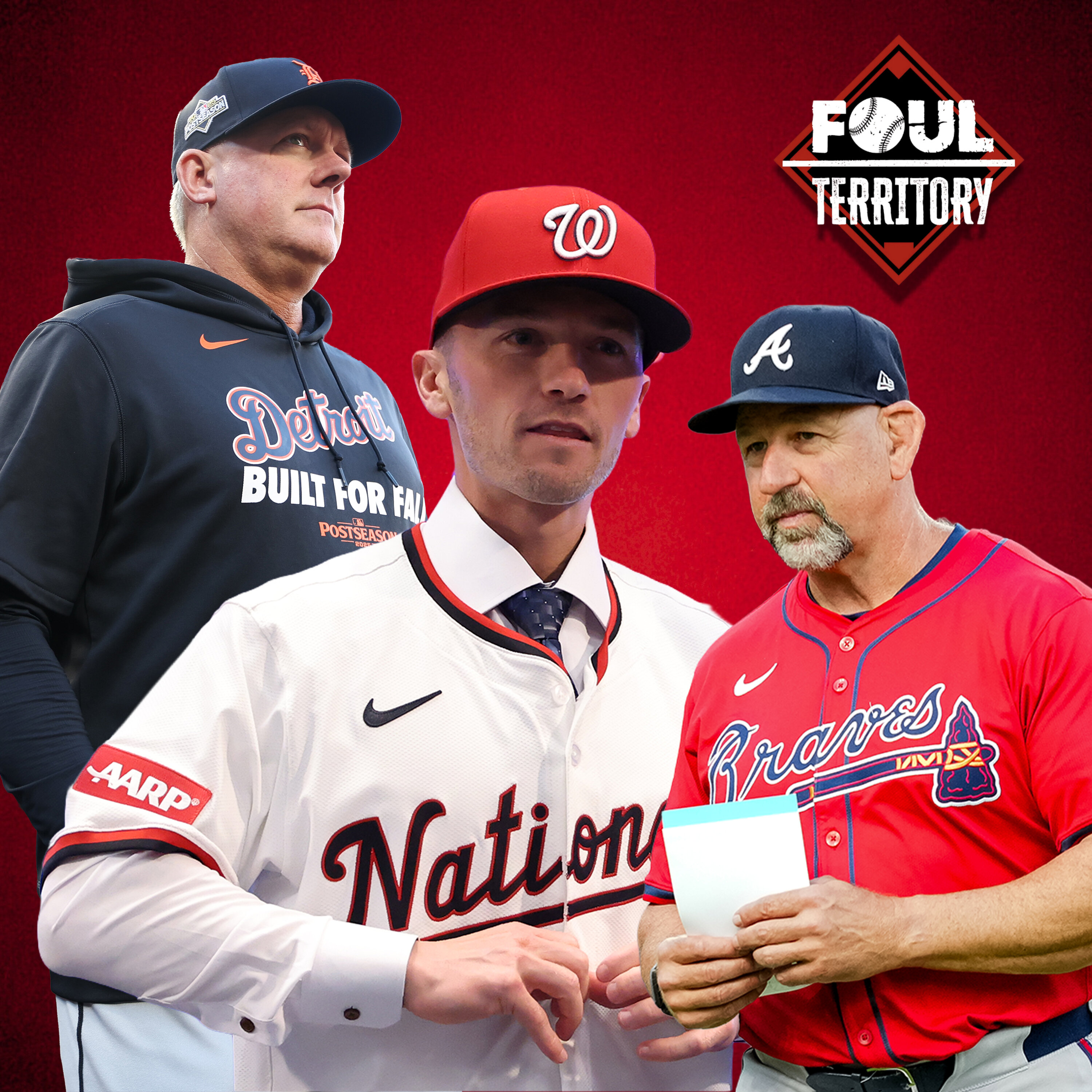
Managers AJ Hinch, Walt Weiss and Blake Butera join FT
Tigers manager AJ Hinch covers Tarik Skubal trade rumors, Detroit's young core, and his decision to take out Skubal in Game 5 of the ALDS.
Check out Tiger Territory on the FT Network here!
(21:35) New Braves manager Walt Weiss talks about what working with Alex Anthopoulos is like, his managing style, and what he learned from Brian Snitker.
Hammer Territory has the latest on the Braves.
(27:13) New Nationals manager Blake Butera joins FT to talk about player development, the youth of his staff and some of the young core that is currently involved in trade talks.
Hosts: AJ Pierzynski, Erik Kratz, Scott Braun
See omnystudio.com/listener for privacy information.
Available Results
Generated results are saved to the knowledge database for reuse and search.
Extract Knowledge
Pick what you want extracted first. Model, scope, and chapter options appear after a template is selected.
Transcript
00:00:04
Speaker 1: A. J.

00:00:04
Speaker 2: Hinchtager's manager with us right now, Ajinski, why don't you tell him what's been going on at the winter meetings so far?

00:00:12
Speaker 3: Did you hear him? No, you can't hear him. He wants to know.

00:00:16
Speaker 4: I want you to tell him what's been going on, like you want me want to tell him?

00:00:21
Speaker 5: Well, I said that the Guardians traded for show, Hey, Mookie and Freddie in the last hour, and schoobl went to the Dodgers, and then Carpenter, green Dingler Torkelsen went to the Royals.

00:00:35
Speaker 6: I don't like any part of I don't like any part of your fantasy.

00:00:38
Speaker 5: The other thing I'll say about Hinch, all the managers we've had on and all the managers we talked to, I think you're the one.

00:00:44
Speaker 3: Guy that enjoys us.

00:00:46
Speaker 6: It's which part to all the media and all the people your people?

00:00:50
Speaker 7: Ah not when not when you're gonna trade like all my whole team, and like everybody wants to ask me questions about about Schoobl, But I I I do like the industry togetherness at an event, like it's like my favorite times at this event is like last night with like eight managers, you know, around a round table, just kind of catching up and small fraternity of of guys who have the same job, And I like that part of it. Walking through the lobby of this place is a is an experience in itself. But I guess I've been in the game long enough to be connected to a lot of different people. The quick hello is is great. The camaraderie with the managers is great. You come on shows like this and you trade my entire roster, I'm not great at all.

00:01:40
Speaker 4: We have a nicer person than to ask you a question.

00:01:43
Speaker 8: Did you invite Blake Terra to that little roundtable or is he not? Does he not count yet because he's not a big league manager.

00:01:52
Speaker 7: You know, I haven't met him yet. He wasn't there last night. We we will definitely see him. We have some some a manager meeting tomorrow where we're gonna sort of unveil everybody around the around the table. But if I see him, I'd love to talk to him. Don't backgnize if he looks like one of the kids looking for a job.

00:02:09
Speaker 6: And you know what's funny is feel in these jobs. And I know you guys probably feel old as the players get younger.

00:02:15
Speaker 7: Is is I was that guy like fifteen years ago with no experience, kind of rolling into the winter meetings and it's like Bobby Cox, Tito Gaston, Tony LaRussa, uh, Dusty Baker, and I'm like, I look twelve compared to these dudes.

00:02:31
Speaker 3: We just had Torion.

00:02:33
Speaker 5: Oh yeah, and he he asked us about Utera and I'm sitting here talking to him and I'm like, he could be my son.

00:02:41
Speaker 3: I don't feel that old, but when I look at him, I'm like my kid.

00:02:44
Speaker 7: Yeah, No, it's I mean, he's got a challenge ahead of himself, just in terms of, like, you know, the the knowing what to do. The baseball part will be really easy. It's all this extra stuff that I think you learn over the years, the communication up to the to the front off as the the media is the the challenges ahead. But if if they didn't believe in him, they wouldn't have picked them. And I think he's I'm curious to get to know him because I want to learn like what he and others. I mean, I'm I'm looking forward to Albi in this role. Albi's never done it, He's been in baseball forever. I think that's gonna be That's gonna be awesome, and we have a new a new group joining this small fraternity. And once you're in, you're in, and I and I think you'll have a lot of support around them.

00:03:31
Speaker 3: Oh, go ahead, Kratzy.

00:03:33
Speaker 8: Oh no, I was just gonna say, do you think teams need to stay away from hiring guys who they feel like they can control? When you can see a young manager, you say, oh, I can control. And I remember hearing some of your stories that you told me about when you were first managing, and you're like, ah, crap, shouldn't have done that. Learn from it, and you've become the manager that you are now. But do you think teams need to stay away from that because they're setting themselves in the organization back or do you think there is a value in that if you're at a certain spot in an organization.

00:04:07
Speaker 7: Yeah, I think I think the value is separating support with directives that they're very different. Like you need support around you as a young manager in a in a in a very isolated job in your office, right, so, like you're trying to to execute everything you can to win that day's game, or win that series, or win that month or when that that that record and and you're trying to combine that with a lot of things. If you're getting directives that you that that you're getting too much things that you have to do, you're going to lose your instincts. And managing is still is still about instincts, and it's still about feel for players and feel for humans and feel for moments. And you combine that with all the data that we get, like those are the best run organizations. In my opinion is you can have support from above and be perfectly fine. You start getting directives and it gets to be a make a tough job even tougher.

00:05:03
Speaker 5: Okay, we're just going right into it. I did your series against Seattle. We're standing in the clubhouse in Seattle with Scott Harris, me and you. Scott Harris, I think we you know, standing there, Trek Scuobel walks by. And what I say to What did I ask Scott Harris when.

00:05:18
Speaker 6: School you basically tried to broker a deal?

00:05:20
Speaker 3: Yes? I said, when are you going to sign this guy?

00:05:23
Speaker 1: So when is the.

00:05:25
Speaker 3: Deal going to get done? Oh?

00:05:26
Speaker 4: Man?

00:05:26
Speaker 1: That is that mean?

00:05:27
Speaker 6: That's the beauty of man.

00:05:28
Speaker 7: It's not my job, but I I I don't know what's going to happen. I know that I have the easiest job in baseball, Like I pitched this dude, like it's super simple for me, and so I want to support Terrek in his prep to to three peat. I mean, think about that, he's got a chance to three peat as the cy Young Award winner that you're not gonna hardly see ever in your baseball career, and he's got a chance to do it. This all this other noise is it is really hard on players, and so I get to stay out of that. I get to stay out of that fray obviously, you know, as his manager, I want to make sure he's doing the right thing to prepare himself for the season and control what he can in that moment. You know, I'm notn't sure if you were ex player, a broadcaster, a GM, a manager, or a president.

00:06:20
Speaker 6: But it's it's a it again. It's it's a good problem, you know why.

00:06:24
Speaker 7: You know why all this noise is around tered Schooble. He's the best, Like, he is the best guy that you could possibly have on your team, and he's a free agent after this season. Murph's all over me.

00:06:37
Speaker 2: I know, Well, Murph's like commentating on our show from the side while a.

00:06:43
Speaker 6: Murph's just pissed that we beat.

00:06:45
Speaker 7: We used to beat them all over the field at Arizona State and then we beat Now we're all of a sudden trying to take out Milwaukee, which is a more difficult challenge than it was at Arizona State.

00:06:54
Speaker 6: Stanford, Arizona State. Super simple, just go in, go beat.

00:06:58
Speaker 7: Their brains in and leave, go back to the farm. A little more difficult now that he's he's got to rank. We're an acc powerhouse right now.

00:07:07
Speaker 2: You can ask you a question, so you've Yeah, you're an experienced manager. I think that you probably have more of a say than a lot of the managers we're talking about right now.

00:07:14
Speaker 4: There's like ten new managers or something.

00:07:16
Speaker 2: Right, They're not going to barge into the front office and be like, Hey, this is what I think we should do, Like, you know your players really well, you know the league really well. If s google's being kept, are there conversations like hey, how are we building around what could be the last year that we have the best pitcher in the sport?

00:07:31
Speaker 6: Yeah, so I think it's simple.

00:07:32
Speaker 7: I think we're trying to win the World Series, like we do everything we can to try to win, and we've worked hard to go from like ten plus years of not making the playoffs to back to back playoff seasons. And so for me, like keep it super simple, of like with Terrek, like come prepared to win the World Series and do everything you can to add to that.

00:07:53
Speaker 1: Right.

00:07:54
Speaker 7: I have some experience in this of of big platform years or big free agent years. Garrett Cole had in twenty nineteen, right before he signed his mega deal with the Yankees, he was in this exactlyas on top of the sport. I think he finished second Cy Young that year to Justin Verlander, and I had both of them, which was great position to.

00:08:12
Speaker 6: His position to be in.

00:08:13
Speaker 7: But they those like that what Garrett did, and the advice that I'm that I'm giving Terrek is just go prepared to be the best possible pitcher you can. And then obviously as the manager, like if you were the manager of this team, who would you want to pitch in San Diego on opening day? Derek Schouler of course, right, And so you just stay positive along that way until something you know could possibly change. I just for me like trying to stay grounded in what you're responsible for. Is way more important than getting caught up in like what if or oh my god, this rumor or oh my god, this team wants him.

00:08:48
Speaker 6: Every team wants him, Every team should want him.

00:08:51
Speaker 7: He's the best pitcher in baseball, and there there are great pitchers around the game, but nobody's on top of the sport the way Terrek is.

00:08:58
Speaker 8: But you have him right now. So what piece are you short? Why do you if you had this ex piece? What pushes you to that to that World Series? This year?

00:09:09
Speaker 7: So, we had a top ten offense in baseball for the majority of the season and then things went really south at the end of the year.

00:09:16
Speaker 6: We struggled. I think we finished eleventh, So I.

00:09:18
Speaker 7: Think part of that is the growth of our young players is going to be super important. We have some emerging young players you guys are gonna have on your show, and you guys are going to love these guys. They're not quite here yet. Nobody generally knows exactly how the transition is going to go, but we're super excited about it on the mound, and obviously we just we have a rotation feel really good about. We had a couple All stars in school in mys. Obviously, Jack Flaherty comes back, Risulsen is there. Troy Melton's going to go from throwing a bazillion in the bullpen to go into the rotation.

00:09:50
Speaker 6: Super excited about that.

00:09:52
Speaker 7: Obviously, the bullpen is always a work in progress, because bullpen's are always a work in progress in the winner, So I, you know, will vest Tyler Holton see very entrenched at the back or near the back of the bullpen. We're going to continue to try to keep firing in a good player when we can, in every spot that we that we can. The growth of these players is real. Droyley Green back to back All Stars Torque, had a nice season last year. Dylan Dingler, we probably weren't talking about him at this point last year, but now all of a sudden goal glove winner and doing an incredible job behind the plate. So I think part of this is, like I don't know the exact piece, Crassey, I want. I want to say that just keep making sure your roster has fewer and fewer holes. As you move forward and keep firing in good players, you end up winning a lot of games. We need to win the division, like that's our first goal, and we were pretty close last year until a few too many losses down the stretch cossed us the division, but it didn't cost us the wild card series.

00:10:52
Speaker 5: You brought up your young players McGonagall, Max Clark, Maultain. By the way, it was unbelievable in the playoffs for you guys.

00:11:01
Speaker 3: Does he job? Who's job back?

00:11:03
Speaker 6: He's gonna pitch in twenty six, I just don't know when.

00:11:06
Speaker 3: So you kind of have a new nucleus of guys that can fill spots.

00:11:10
Speaker 5: But if Scooball does go, you still have flairty, you still have my eyes.

00:11:16
Speaker 3: How good can this new group be of young kids?

00:11:18
Speaker 5: Because when I talked to Scott Harris, he was raving about McGonagall, about Max Clark, about.

00:11:23
Speaker 3: All these guys. So how good can this?

00:11:26
Speaker 5: And I don't want to put you guys out to the pastor because you guys are still a really good team that can win the Central and go deep. But how good is the next wave of Tiger?

00:11:33
Speaker 8: Yeah?

00:11:33
Speaker 7: No, it's it's a talented system. And I think again, I think we're trying to figure out the transition from the from Triple A to the big leagues, and if we have any sort of perfect potion that you can like rub on these guys to make that transition easier, we would do it. I mean, we we love these players. They have they have a lot of challenges ahead to intel the players that they can be. But but they're super talented, you know. I I think the thing that that I keep need to hammer home is we're trying to win. We're trying to win this year. We've been trying to win last year and trying to win the year before. We're going to try to win every year moving forward. And that that to me, like that that identity, like that, that try that that expectation, that that push is super important for our players to know when you show up in Lakeland, the expectation expectations have changed the view of you that when you guys come down to Lakeland and you look at our team, you guys are going to look at us as that formidable team in the American League with some expectations.

00:12:30
Speaker 6: We're going to.

00:12:30
Speaker 7: Embrace that and love that. And that's changed over my time in Detroit. When you first started coming down, there wasn't a lot of talk of how good this can team be. It's like, how do we keep developing? Now we're talking about developing and winning, and we've done it, and I think it's important that our identity changes that that no matter you know, injuries, performance, you know, transactions, no matter what, our identity and our expectation internally is not going to change trying to win development.

00:13:03
Speaker 8: You can always use some extra people helping these guys develop at the big, bigue level. No better way than a young man who has won a World Series or two. Alex Bregman. You talked to him last year about trying, what you know, your pitch to try to get him to sign with you guys. What was that pitch like last year when you when you tried to talk to him because you kind of saw what he did in Boston this past year with all their young guys and Campbell and Meyer and you know Duran, all those guys. Wouldn't that be nice for him to help you guys grow those guys on your on your on your staff, on your position player roster.

00:13:46
Speaker 7: Yeah, when you chase something for an entire offseason and you end up like second or third, I don't I mean, he didn't really rank anybody.

00:13:54
Speaker 6: He only picks his favorite.

00:13:56
Speaker 7: You know, you get asked a lot of questions about like what was that like, And it was like, we're trying to we're trying to be elite. We're trying to do the best we can to surround our players with the with the environment to be better. And so, you know, I think the curiousity when we came out of twenty four, I felt like we were a little bit more of a curiosity, right, Like, we we didn't have a terrific season, we had a terrific second half, Like we pushed really hard to make the playoffs, and I think there were a lot of people in that offseason that we're curious of, like what is this?

00:14:28
Speaker 8: What do you mean?

00:14:29
Speaker 4: What do you minute?

00:14:29
Speaker 6: What Trek scoobl is I young? What like?

00:14:31
Speaker 7: Like winning whatever thirty plus games in the last forty what like, there was a lot of curiosity as to like what we were all about. And then we jump out to that that start last year, and I just think there's more and more believers that we are a stable teams, you know, that are trying to win, expected to win, and and doing everything we can to you know, to develop these young players that we love while while maintaining a high standard of of what this game is all about which is postseason baseball. I have a frost full of players who who went from no experience to playoff tested, playoff tested, to entire season of expectations where everybody thought we were the best team in baseball and then everybody thought we were going to be one of the stories of failing at the end of the season and then to the playoffs again. So we have young players who have more playoff at bats than a lot of players.

00:15:23
Speaker 6: In the big leagues.

00:15:24
Speaker 7: That's valuable and that that experience should pay dividends when when hopefully we pushed to win the division this year.

00:15:30
Speaker 5: Okay, so I have two quite quick questions for you. One, how long did it take you to get over the Seattle series? Because I haven't talked to you since, but the fifteen in in Game five was one of the greatest games I've ever seen from an emotion standpoint, from a holy shit that just happened. No way this is going to happen. We're bringing this guy in, They're bringing this guy. You know chances, but all that, how long does it take you as a manager to get over there?

00:15:55
Speaker 6: Well, there's a great assumption that I'm over it as we sit here right.

00:16:00
Speaker 3: I'm not.

00:16:01
Speaker 7: I haven't seen Dan Wilson yet, but I don't even want to look at Dan Wilson right now. You know, I think it stays with you a while, especially when it's an epic game like that and they're I guess the good part of those games is there's not a lot of what ifs, just because there was so much craziness, Like there were so many times we were going to lose the game and then we pull off the double play. You know, are there so many times like we're running out of pitching and there goes Jack Flaherty, Spike's on twenty four hours rest, going out pumping ninety five and doing his thing. You know, I never thought we were going to lose that game, even when we were whatever, bases loaded and no outs and and and until we did, and and you know, I watched the rest of the playoffs for the rest of the of the rest of the postseason completely jealous of the of Toronto and Seattle continuing to get to play, even though that was an epic game to get eliminated on and all the all the information, I mean, all the people that tell me about that is like that was one of the best games I've ever seen, and then the Dodgers and Blue Jays pull that off in Game seven of the World Series and we're not even the best game that played in great playoffs?

00:17:12
Speaker 8: Did you did you see what Doc did with Yamamoto to end the World Series, the fact that he brought him out after he threw ninety pitches the night before. We asked Trek Scooble. I asked Terrek Scouble if he would have done that, and he hesitated a little bit, but he also said, I've never been in that moment. Would you ask that of your Yamamoto, who is Trek Scuoble, Would you have asked him of that to do that ninety pitches come out to save your game, save your season?

00:17:44
Speaker 1: Yes, you would.

00:17:45
Speaker 8: You would.

00:17:45
Speaker 7: You would look at your guys and have a full conversation with all of your guys onto where they are physically, where they are emotionally, can they handle it? And you know your guys, I mean there are some guys that have been through a car crash, you know the next day, and they just can't physically respond the way that the Yamamo. It's not a one size fits all, but you definitely have the conversation. I remember, you know, back in seventeen when we won the World Series in La Kykele and Verlander were on the mound when Charlie Morton got the last out of the twenty seventeen World Series, and when I was looking at the screen in the dugout of like the guy's warming up, I'm like, think about what that looks like. I have justin Verlander, Dallas Kykele just warming up just in case with Charlie Morton on the mound. And so guys are willing to do everything they can physically. As a manager, my job is also to make sure that if they can't do it, I protect the player both physically and I think, you know, just reputation wise. Not everybody's built to pull off what Yamamoto did. The one thing that I think I know about Yamamoto is like this dude's sect day after he pitches. There's an incredible amount of throwing, which is definitely different than some of the other guys.

00:18:57
Speaker 3: And so good good can we put you? Can we at the end?

00:19:00
Speaker 5: How many people have asked me why Schoogle came out after ninety nine pitches?

00:19:03
Speaker 3: Can we put that?

00:19:04
Speaker 5: Because we had a conversation before the game, and you said you will see an emotional dump from him. And he got the last out in the sixth inning and he had the emotional dump.

00:19:12
Speaker 3: Everyone's like, he could have gone twenty more pitches.

00:19:14
Speaker 5: But what they don't know is you know him better, Like you just said, yeah, when he has that dump, that's it. And he had it when he got the last out, and he came off roaring, and you were like, all right, and then.

00:19:24
Speaker 7: Yeah, we had talked about it prior to that inning and prior to the inning before that, because I was checking in with where where he was. Listen, in this job, you'll never take out the picture at the right time. You either leave him in too long or you take him out too early. No one ever really pats you on the back as a manager that you took him out at the right time.

00:19:41
Speaker 6: Agreed, it's all relative to what happens after that.

00:19:44
Speaker 3: But I can't say that on the air.

00:19:45
Speaker 7: No, I know, but I just say that's just that's the nature of the job. That's the part of the job that I don't even I'm numb to it now because no matter what, I've.

00:19:53
Speaker 5: Never seen a manager and I've told you is give me more answers for every scenario before the Game's like when you have the manager meeting, he explains everything, and no, you can't use it on the air, but he gives you stuff and you're like, man, he just dude has thought about things that I would never think about crafts, Like he's thinking about if alien lands and the right field, how he's gonna make him be the right fielder and we're gonna Revilely green his center and we're gonna do this, And I'm like, what that never happens, But at least he thought about it.

00:20:21
Speaker 7: The thing that's interesting about those decisions is I don't know how much how impactful it was for him knowing going into that last inning, did that help him punch out everybody? Like, Hey, I know I'm done and I'm emptying my tank emotionally and physically. I don't know, And I don't know what would have happened if we send him back out, you know, I mean, I think the questions would have been, you know, if he leaves with the guys on base and somebody cashes in his runs, It's like Hejay, he had the emotional outburst. He was gassed, he was done, he's pissed all these in you didn't protect your horse, Like that's just the nature of managing man That's what all these the new managers are going to learn, Like it doesn't matter. Are really what your process did. The results are really what a lot of judgment comes by. I have to work on a lot, a lot more information than than the emotion of wanting more.

00:21:12
Speaker 6: From a picture.

00:21:12
Speaker 3: And it's tough.

00:21:13
Speaker 7: I mean, that's that's that's why we you know, that's why we get shown on your broadcast. Like every time something stressful happens, you guys turn right to me.

00:21:21
Speaker 6: Well, of course, look at that face. It's made for television.

00:21:24
Speaker 2: It's what the people want. It's just what the people want. But hey, we can go all day and this good to see you, dude. You really appreciate the time. As always, we'll talk there in the season. Enjoy the holidays. Hey, manager's meeting. He's coming in hot right now. Mark's chasing the Sorry, we're gonna talk to Walt Wise, who I love. We were, you know, talking about the move when it happened, when you were announced as manager. We're super pumped about it, as I know you're looking forward to get back getting back in that seat, and you would have just wrote it out with with snip for a while. But you're like, hey, I'm ready, So congratulations, great to see you.

00:21:57
Speaker 4: What do you got for us?

00:22:01
Speaker 9: You know, process to move fast, and you know, Alex called me, told me I got the job, and you know, twenty four hours later, less than that, I was I was at a press conference in Atlanta. So you know, it's it slowed down a little bit. Now we're just trying to make our team better. You know, when Alex never stops trying to do that. So he's doing it as we speak. But uh, and I'm excited, man, excited to get a chance to do it with this club, you know, and for the people I work with.

00:22:33
Speaker 2: Did you say, why did it take so long? It took him like a month at public? Oh, you know what, we just want to make sure we got it right. I'm like, you had the right guy.

00:22:41
Speaker 9: But it'll be honest, it probably it works better for me. You know, if they didn't just hand me the job. The first time we lose the series, they're going to say, why the hell did they do it? A manager search? You know, so you know what the process worked out? Well, I mean, yeah, you're in limbo for a little while, and but uh, but in the end, I think it was it was the best best case.

00:23:01
Speaker 8: Well, you're still happy he took the job. I mean, all these meetings, you haven't.

00:23:05
Speaker 3: Even had a hard time to get cratsy.

00:23:07
Speaker 5: I don't think he wants You're still happy you took the job because you got all these meetings and you're the guy in charge.

00:23:12
Speaker 3: Basically what he's asking.

00:23:13
Speaker 9: Yeah, I hear you, cratsy. No, it's all good, man, That's what you sign up for, you know. That's what I keep telling myself anytimes something annoys me. I say, hey, man, you signed up for this, so it's all good.

00:23:25
Speaker 3: But how do how does Alex keep everything so quiet?

00:23:28
Speaker 9: Yeah, it's unbelievable.

00:23:30
Speaker 5: Nobody even knows who the cares.

00:23:34
Speaker 1: I don't even know. I don't even know who interviewed.

00:23:36
Speaker 5: You got the tightest ship he does, and all of a sudden, everyone's like, what yeah, which is awesome, But oh yeah, he he operates underground.

00:23:44
Speaker 9: Man, you got a really really small inner circle, you know, and so he doesn't share a lot of information and he likes it that way and he's good at it.

00:23:53
Speaker 3: But uh, he's.

00:23:54
Speaker 9: Pretty relentless, you know, you just never see him working. Yeah, he's you know, he's underground.

00:24:01
Speaker 8: Isn't that? Isn't that who you Isn't that who you want to work for? Though? Isn't that? Isn't that who you want to work for? Is that somebody that you're sitting there going, you know what?

00:24:11
Speaker 3: I don't think you can hear you keep going, crats I'll tell them.

00:24:14
Speaker 8: Okay, just that it's somebody that you want to work for, somebody that's tight knit and only puts people around them that are trustworthy, people that are keeping I know everyone's seeing it as keeping secrets, but it's Isn't that who you want to work for? Not somebody who's like, oh look who I'm interviewing? Look at us?

00:24:34
Speaker 9: Yeah, I know you're you're right, cratsy. I mean there's something to be said about it. And you got to earn his trust too, you know, when here he shares information with you. Of course, I'm the manager. I mean that's that's that's a partnership now. But typically you know, with Alex, you got to earn his trust man for him to share information with you, And yeah, you don't want your stuff floating around to you know the world, I mean, all all your information some sad media folk.

00:25:01
Speaker 1: Yeah yeah, yeah.

00:25:03
Speaker 9: Yeah, exactly right for you guys, it's not great, but well you know, he he he uh. I like the way he operates, man, and he never stops working.

00:25:12
Speaker 3: All right.

00:25:12
Speaker 5: I got two questions for you before you before we let you go, so we know you got to go somewhere else. One have you threatened to beat up a player yet a bench? People that don't know this man is like a seventeen time black belder.

00:25:23
Speaker 9: And all kinds of I'm an old man, a j oh, stop it these players.

00:25:27
Speaker 3: True, that's true, that's true. That's why it's strong, and he will beat your ass. But my other thing is this is one of the things that I want to know.

00:25:35
Speaker 5: Everyone Braves fans will say, oh, it's just snicker It's just Snicker Park two right now.

00:25:40
Speaker 3: I love Brian Sticker. I was there when he took over. What's your difference in managing?

00:25:44
Speaker 9: Yeah?

00:25:45
Speaker 1: And look, I get it.

00:25:46
Speaker 9: I've had to answer this question a lot, and I I understand it. I'll ask people, you know, are you just like the people you work with?

00:25:55
Speaker 3: You know?

00:25:55
Speaker 9: I mean, and when you when you when you think about it, I mean, it's it's kind of absurd.

00:25:59
Speaker 3: Now.

00:26:00
Speaker 9: I love Snitt and I'm I'm so grateful to Snit. I wouldn't be here without him. He brought me back into a Braves uniform. I learned a lot from him, just like I learned from all the other managers I've been around. You know, I started with LaRussa and ending with Bobby Cox and and the managers in between and and ending up with Snit. But my personality is different. My leadership style is going to be different. You know, it's a different voice. So yeah, it's kind of a lazy take you to be honest with you, you know, but I get it, you know, because I've been there for the last eight years. What's going to change. But I haven't been in that leadership uh position in the last eight years, so it's been a very different role. I've been in a supporting role, So you know, I love Snitt, But yeah, if if if he was, if he was taking over from me, I would expect him to say the same things.

00:26:48
Speaker 2: Well said, wow, great to see you, and congratulations, appreciate it, bro, thank you guys.

00:26:56
Speaker 4: Talk in the season. Actually, we'll see in spring. Training.

00:26:58
Speaker 3: Yeah, okay, you need a backup bullpen coach. You can call me.

00:27:00
Speaker 9: You ready man, back up bread day. You don't want to do You're having fun doing this, but you know what, you.

00:27:05
Speaker 1: Don't want to go training and then he's out.

00:27:09
Speaker 3: Especially, just think training was a disney where it used to be that great. I could just travel over.

00:27:13
Speaker 2: New Nationals manager Blake Viutera is here with us at the winter meetings. Blake, great to meet you in person. Congratulations on the gig. How's life lately?

00:27:21
Speaker 1: Thank you? Life's good. Life's good. Uh, sleep not so much, but other than that, everything's good.

00:27:25
Speaker 4: What are you doing?

00:27:26
Speaker 2: What are you up to when you first just get a role like this and it's with an organization that now is a new front office, what's your day to day?

00:27:33
Speaker 5: Like?

00:27:34
Speaker 1: A lot of the day to day lately has been trying to take care of the five week old baby, So that's that's a little different. No, but it's been good. Just I mean hiring the staff obviously first and foremost, which you know, is a beast of a process when you're hiring a twelve person staff and interviewing a lot of different people, and yeah, trying to get everybody get to know everybody in the organization. A lot of that.

00:27:56
Speaker 3: What what what do you have? What's your uh role in the high process? I know you're in the interviews.

00:28:01
Speaker 5: Do you go to Paul Tivoni, who we had on yesterday and say I like this person or I want this person, or I want I like this guy, or does he come to you and say, hey, I've got a guy that I really like?

00:28:14
Speaker 3: So how does that process work?

00:28:16
Speaker 5: And how do you do you have like a roll a decks of people that you go through or your contact on your phone and say, oh, this person this person was a combination.

00:28:24
Speaker 1: Of yeah, it's a little bit of both. So it was Paul and then our AGM group basically the five of us involved in in the interview process, and a lot of it was like they might have a few names. I had a few names, Paul had a couple of names, like and we kind of like start from there and then when we narrated it down to a certain amount, we'd all talk to the person and at the end we'd get together and if they really like somebody, they'd be like, hey, Blake, like, what do you go with this one?

00:28:49
Speaker 8: Yeah?

00:28:49
Speaker 1: One hundred percent. If I really like somebody I'd go to them. Hey, you guys feel good about it. So it's just a collaborative process.

00:28:55
Speaker 8: What are you looking for? What's the what are the character traits or experience level the whole year it's going to be talked about for you, is experience When you bring in a guy like Randy Nor tons of big league experience, is that something that is intimidating, Okay, he's got a lot of big lead experience. Or is it like I'm leaning on a guy like that, and is that the character traits that you're looking for in guys that are gonna fill out your staff.

00:29:22
Speaker 1: Yeah. I think what we're looking for first and foremost, just like you hear Paul talk a lot about it in terms of relationships alignment, I want to make sure we're bringing in people first that that care about player development. We have a young roster, really young roster, and I think one thing that stood out the most when talking to every single one of our players individually was just like they just feel like there's another gear they can get to. They're like, we're not finished products by any means. Yes, we're in the big leagues, but it's not like roll the balls out there and go get them. They're like, we have another another gear we need to get to. We want to be pushed. We want a staff that is gonna is gonna, you know, bring us out early every day and show us where we can be better and how we're gonna get there and things of that nature. So when you're looking at building out of staff, that was that was first and foremost, making sure somebody with a player development background, and then obviously, you know, hiring and Michael John's our bench coach, Like I wanted to hire somebody I could fill my blind spots. Guy that's he's been in the minor leagues a long time, in the big leagues of the race for the last couple of years. So not really a recipe in terms of age old versus young, just more about getting good people.

00:30:24
Speaker 2: And they cracked the code to a j. Do you know what it was for hitting coaches specifically, hire someone coming from the Twins, Dave hitting whisper.

00:30:36
Speaker 3: And trying to figure where you're going with this guy.

00:30:38
Speaker 2: Yeah, that's where I'm going, So you just hide around, let you pronounce his name because I'm still learning it.

00:30:43
Speaker 4: But tell us about how that all went down.

00:30:45
Speaker 1: Yeah, Matt BORGSCHALTI Yeah, had known Mat a little bit back when he was with Baltimore. So he originally started with the Twins, worked up their minor league system, and then joined the Orioles right at the time where a lot of that young group was coming up with you know, with Adlee and Jackson and a lot of a lot of those young guys that are now more established guys with the Orioles and did a really good job over there and then went to Minnesota. Uh, Rocko hired him this past year, and then obviously, you know, things changed to Minnesota and they kind of started from trash with the with the new staff. But yeah, to your point, if we get another one like that, we'd be pretty happy.

00:31:22
Speaker 8: You talked about early work. Big leaguers like aj Perzinski do not want to see their name on early work list because he has a routine. Guys have routines. How do you guys have a young staff teach them, hey, you got to work, but make it that it's their routine and not okay up to ten. I'm in early work with Michael John. I'm in. I'm in you know, outfield, I'm I'm in base running. How do you make it their routine because if you're told to do something, you don't learn Jack, if you're asked to do something, you excel. And guys like James would they're they're sponges. They want this, they want to get all this information.

00:32:09
Speaker 1: Yeah, Eric, you're spot on, You're one hundred percent right. A lot of it's gonna be leaning on the players and showing them kind of like where we see them right now, where we think they can get to and letting them kind of lead the process. Like if they want to buy into this, they want to they want to do it, Like it's gonna have to be driven by them at the end of the day. Like as a staff, we can't tell players what to do every day. Like they need to be self motivated to an extent, and they need to be the ones, Hey, let's go out there for earlier. Let's just let's get some ground balls. Then let's go hit a little bit extra, let's do this, let's do that. Like hopefully we're creating a culture where where that kind of becomes the norm. And just in a lot of these conversations with the players so far, it seems like that's what they want.

00:32:48
Speaker 5: What do the Rays do so well because everybody wants to be the Rais and you came through the We've been in with the Raids for a long time, and now here you are, you get to build your own staff.

00:32:57
Speaker 3: You kind of get to build your own team. What do the Rays do?

00:33:00
Speaker 5: Because because every Marlin's Peter Bendix raised even the Dodgers. Friedman came from the Rays. Heinin bloom is now the Cardinals from the Rays, right everyone. Derek Shelton was a raised guy. Right now he's a manager of the Twins. Rocco was a raised guy. He's a manager of the Twins. What did the Rays do that's so special? Please tell me their secret?

00:33:17
Speaker 1: I personally think it's the culture. I think like just it's an unbelievable place to work, like you come into.

00:33:23
Speaker 5: Starting from where from Stu Sternberg is no longer the owner to Ander to Kevin Cash all the way down.

00:33:30
Speaker 1: Yeah, So Stu started that and then obviously, you know, Andrew Friedman is now with the Dodgers, and then Eric Neander were fully bought into it, and you know, you know Stu was like his saying was, uh, you know, break windows, just don't burn the house down. So he's like he wanted us to try things, he wanted us to fail, he wanted us to be innovative. He was like, look like, you're only gonna get better if you If you try some things and learn what doesn't work, you're probably gonna fail more often than you than you don't. But try some things and don't be afraid to do so it's just it. It made it a really fun culture to be a part of, and staff loved coming to work every day, and it kind of bled into the players where they were like, this is awesome, Like they enjoyed coming to work every day, they knew the staff cared about them as people. And I think when you create an environment where like just players and staff love to be there, like you get your best work. And I think we were able to tap into some pretty cool things with different players and obviously different staff members too, that you see with other organizations throughout the game.

00:34:26
Speaker 8: I was, I was part of fourteen different organizations, nine in the big leagues, just bounced around everywhere. I saw the Rays for about six weeks, and I completely agree with what you said. But because I heard Kevin Cash say we're gonna try this, like somebody from the front office said this. One of our coaches said this, We're gonna try it, but they have a lot more leeway. Do you feel like you're the same leeway in Washington. I'm not saying you're going to a huge market, but I'm saying, do you have that same leeway where it's like, Blake, that was a dumb idea, but we're okay with it. We tried it, move on or is it Blake putered? Did that get him out of here? You know what I mean? Because you see Washington and the ownership firing a lot of people year in and year out, from a staff to managers, to pitching coaches to all that stuff.

00:35:15
Speaker 1: Yeah, no, Yeah, you're exactly right. And I think that was one thing that's probably the first thing I brought up during the interview process with with Altibony. It was just like, hey, like, the Raised culture is unbelievable. My wife and I just really enjoyed our time there. It felt like family. It was a place we love to be. So I told Paul, I'm like, hey, if I'm like that's something that's really important to me and if I want to make this change to a new organization, to the race for eleven years and a lot of people are there, are there a long time because of that, and Paul, you know, he made sure to let me know that, hey, you're gonna be able to do that here. That's that's part of what the reason why he wanted to come over there is just the people and the culture ownership made him feel like this was something that they're they're buying into and they're believing in. And Paul reiterated the same, that's just to myself. So we'll see when we get when we get there and the season gets rolling, But as far as I'm aware, like that's kind of how we're gonna run.

00:36:06
Speaker 5: When you and Paul sat down, did you say everybody has to be under the age of forty every every person that works in the organization has to be under forty years old.

00:36:14
Speaker 1: That was the rule, wasn't I think?

00:36:16
Speaker 3: I mean that's when you look at your stuff.

00:36:18
Speaker 5: I guess Randy Nor is older than forty, but everyone else is like thirty, You're thirty three, yeah, yeah, and Paul is thirty five, thirty five. So did you guys really have a conversation about we want just the youngest staff ever assembled? And we're gonna have so much energy that no one can stop us.

00:36:35
Speaker 1: No, you're probably think online, but we didn't. No, it's it just ended up happening that way. And I really it was like every higher it was. You know, we had a handful of names for each each role, and we talked to each of them, and it was at the end of the day it was like, yeah, another young guy. Like we didn't plan on it, but we understand kind of what we're walking into and we wanted to make one hundred percent certain that, like this was the best person for the job, regardless of age. But yeah, it's it's been a the young staff that's coming together, all right.

00:37:03
Speaker 8: I asked Paul Taboni about not knowing people because he wasn't with the ORG and all that stuff, and how you move forward CJ. Abrams, we've seen, you know, maybe some disciplinary things from the old staff from that with when he since he's been with the Nationals. You know, a young guy who has a lot of potential, how do you approach that without being like, well, actually I was reading because he doesn't you don't know him, he doesn't know you. How do you approach a guy like that who clearly has to be a huge corner piece of your team and is completely different than James Wood, who is this lockstep, super locked in kind of player, and CJ. Abrams is a little bit different than that. And you can't come to the table with a predisposed idea. So how do you handle that situation?

00:37:53
Speaker 1: Yeah, I mean CJ. I think first off, like just reaching out to CJ as soon as I got the job, that was something he told me he is super appreciative of. And you know he's in Atlanta training right now, and and he he knows he's a big part of this and telling him that, like, hey, man, like you're gonna be a leader on this team. You're gonna be a big part of the success we have a lot of it's gonna be based off of of how you go about your business, how you how you help us win, how you help our younger players continue to get better. I mean there's a lot of players on this team that look up the CJ Abrams and want to be c J Abrams. And I went to launch a Mackenzie last week and you know, he told me he's, like CJ is one of the leaders of this team. You know, obviously, you know, you know what you mentioned. But he's young, and he's a really really good player, and he's somebody that we see being a huge piece of this thing going forward. And I've enjoyed getting to know the person first and foremost, and it sounds like he he is really excited about what we're building.

00:38:46
Speaker 5: Okay, does I mean Mackenzie Gordon, c J Rims are getting traded then if he's gonna be a big part of going.

00:38:55
Speaker 3: It's crazy.

00:38:57
Speaker 1: No, I think Paul told you guys like Paul called MC and told him about the rumors.

00:39:01
Speaker 3: He was great conversation.

00:39:03
Speaker 1: But Kenzie brought that up in lunch. I just wanted to get to know Mackenzie. I wanted to get to know kind of how we can do a better job, what he doesn't like about the Nationals, like what we can fix. I'm trying to kind of understand. I get a look under the hood from all these players and get their perspective of like what we need to do better. But no, he mentioned he was like dude, first off, like Paul called me and told me this, and he was like that was unbelievable. I just appreciate he's like he didn't tell me I'm getting traded, but he you know, he mentioned what was going on. He's like, I just appreciate the him being up front about it.

00:39:30
Speaker 3: I love that.

00:39:31
Speaker 5: I love that you're pointing our meeting when telling all the players, because that doesn't mean a lot to the players when the new managers.

00:39:37
Speaker 3: The front office weak except him.

00:39:38
Speaker 5: But you got a new catcher for Yeah, you have a catcher in Kiber Ruiz who signed to a long term deal. Now with one of them gonna get you're not trading for Are you gonna do a time.

00:39:50
Speaker 3: Split deep kind of thing?

00:39:53
Speaker 5: Yeah, I mean I'm gonna, you know, because that's gonna I don't know if that if it's Paul or you that's gonna have to make that decision. But you know, Ruiz, when he's health, he's used to playing. Andy Ford wants to come over and play. And Harry Ford I called him Henry Ford.

00:40:05
Speaker 3: Harry Harry Ford.

00:40:06
Speaker 4: Yeah, and this is his favorite player.

00:40:09
Speaker 3: But I know, I but how do you manage that? How do you manage a young guy who you need to play to get better?

00:40:16
Speaker 5: Because he was mind cal Rawley in Seattle and he's like, well, he just signed a long term, Bill had sixty homers. I'm never gonna play and then he gets traded to a team, your team. Then how does it catch already signed to a long term deal, how do you manage the playing time?

00:40:27
Speaker 1: Yeah, I think with a catching position, as you know, it's a good problem to have, but you really can't have a fine right, you can't have enough, and it's really hard to find good catching. So it's it's a good problem that we're looking forward to solving together as a group. And I think coming into spring training, I mean, we we love Keebert, we love we love Harry, obviously, we love our catching group. I've got a chance to talk to each of them, and we're gonna have a good competition in spring training. These guys are gonna come in and and come in and compete against one another and work and kind of show what this thing's gonna look like based off their own their own thing.

00:40:59
Speaker 4: Go for Scotti might follow up, I got I gotta follow up on this.

00:41:05
Speaker 2: So with Ruiz, public metrics not good for him on defense?

00:41:10
Speaker 4: Have you spoken to him about it? Like, have you connected with him yet?

00:41:13
Speaker 2: And if not, is that something that you can talk to a player about over an offseason.

00:41:17
Speaker 4: Hey, this is a new regime coming in.

00:41:19
Speaker 2: How can we provide, like you said, better resources for you to thrive on that side.

00:41:24
Speaker 1: Yeah, you nailed it. That's exactly right. And you know, we hired Bobby Wilson as our catching coach, who comes over from Texas, did a heck of a job with Jonaheim amongst others, Very highly respected in terms of what he can do helping defensive catchers. And you know, he already has like a page long of each of our catchers and what he's gonna do to help each of them and what they can do better at and it's pretty in depth. It blew me away. And he's already met with some of our catchers in West Palm Beach and he's talked to Keeper on the phone. He's reached out to Harry, like all these guys, Riley Drew likes, he's talked to each one of them, so have I. And Yeah, I'm just really happy that we're able to get Bobby.

00:42:01
Speaker 8: What are you most nervous about when you got the big league job? When they said besides the fact that you had a baby on the way, that probably made you more nervous than anything, but when you when they said you're gonna be the manager of the Washington Nationals, did you sit there and go, Holy crap, I've never been what. I don't even know where the manager's offices are. I don't even like know where anything is in these big league state Like, is there one thing that you were like, this might be a little bit of a learning curve.

00:42:33
Speaker 1: I don't think there was one thing. But I mean i'd be lying if I told you like, oh, yeah, here you go, this is gonna be a cake walk.

00:42:40
Speaker 3: Just don't do this. I'm gonna give you this advice.

00:42:42
Speaker 5: Don't walk out and ask for the lefty with your right arm, because it's happened to guys and they get so just if you have to put like rn L on your arm so when you walk out to the mound you know which one to to call it.

00:42:54
Speaker 3: Just don't do that and everything else will take care of it.

00:42:55
Speaker 1: So that might be the one thing I didn't think about that. Oh no, I think yeah. I mean to your point, like it's all gonna be new, right, It's something that I haven't done before. I haven't managed the big leagues before. And you know, I'd be lying if I told you like this is all it's all figured out, Like, No, we're gonna learn along the way and surround myself with the staff that's gonna help me along the way and cover my blind spots was the biggest thing. And just looking forward to the new challenge and working with all these guys.

00:43:25
Speaker 2: All right, I want to finish with scenario here. I work with AJ every day. He is a presence. He can be a ballbuster. I know how he was as a player too, Right, if you had an AJ, right, and there's got to be somebody on the squad that at least has a semblance of an AJ trait? What do you do to kind of talk him into saying, Hey, I know I haven't done this yet. I see the age number on the resume, But here's why I'm the guy, and I need you to trust me and work with me here.

00:43:54
Speaker 8: Yeah.

00:43:55
Speaker 1: I think goes back to building a relationship first, like meeting them where they're at, Like understanding who they are as a person, Understanding like what they want right, Like what do they see? Like is it they want to, you know, make sure they get better? Is it how much they want to win, how much they want their teammates to get better, like understand like what's most important to them, kind of what has not been good in their eyes the last couple of years. And make sure they understand, like, hey, like you're being heard, like you're a big piece of this thing if we're gonna go forward, like you need to be a big piece of this clubhouse, a peak piece of this culture. Yeah, make sure they understand, like, hey, you're gonna be a big part of this thing moving forward.

00:44:28
Speaker 3: Okay, I have to ask this, what are the Gnats gonna sign somebody?

00:44:33
Speaker 1: Because you didn't ask Paul.

00:44:34
Speaker 3: I never give me an answer.

00:44:36
Speaker 4: So they're doing trades.

00:44:38
Speaker 3: But but my thing.

00:44:39
Speaker 5: Is like, so I go back because I was with my last years with the Braves fifteen sixteen.

00:44:43
Speaker 3: They bring in Jason Worth and then they go on and win the World Series in.

00:44:46
Speaker 5: Nineteen right, And I for two years, two off seasons, I've been saying, this is the year where the Nats are gonna sign somebody to start the Jason Worris cycle again. Because you had Gore, and you have Abrams, and you have Wood and you have we haven't even talked about.

00:45:01
Speaker 3: Dylan Cruz, right, but you have all these guys. So I'm like they need some help, So when are they gonna do that? And then every off season I'm like, oh, they didn't do it.

00:45:08
Speaker 5: Well, now here's your chance. So maybe you need to ask the ownership. He's can I have some money to sign some Paul money, you know, because like I think, I know how good the Washington Nationals fan base and the organization and NAT's Park can be when they're.

00:45:23
Speaker 3: Good, and I want to see that again.

00:45:25
Speaker 1: Yeah, that place is awesome. I was blown away behind nice the area is, how much, how nice the stadium is, and then.

00:45:30
Speaker 3: When they're good, they are good.

00:45:31
Speaker 1: Yeah, I'm excited about that. And no, I can't speak to pass off seasons. I can only speak to this one. And it's something that Paul and I have talked a lot about and continue to talk through, and you know, we'll be we'll be open minded to what's out there and kind of talk through like what this vision looks like the next next few years. And yeah, I.

00:45:50
Speaker 5: Asked Paul, because I said, Paul, are you a one year guy? You look out so how many years do you try to look out in the future.

00:45:56
Speaker 1: I'm just trying to get to tomorrow. First.

00:45:58
Speaker 3: You do through this, you have a five week old, so I understand that's fair. That's fair.

00:46:03
Speaker 1: No, I think when you look at it, like, you know, just talking with our staff, we got the Squeaky wagon.

00:46:09
Speaker 3: Going, so we'll get that forty.

00:46:14
Speaker 1: Obviously.

00:46:14
Speaker 4: You know, the Squeakies.

00:46:16
Speaker 8: Really happy with the group we.

00:46:17
Speaker 1: Have right now, like our I really like our lineup. I like our pitching led by McKenzie, and I think we're building something that we hopefully is sustainable for a long time. We're not just talking about twenty twenty six or the twenty twenty seven year being our best one, Like we want to be really good for you know, five, seven, eight, nine years down down the road.

00:46:34
Speaker 4: Hey, well, awesome to have you on here. Okay, you got one work ahead.

00:46:39
Speaker 8: What is the over under on amount of games before you get thrown out? Because your temperament on here, your temperament is you know, you seem like you're real chill, cool and everything. You got to get in somebody's face, but you gotta do it for real. Is it gonna be in the first month? Are you gonna wait it out a little bit? How's it gonna how's it gonna work? Do you want to set the line? I want you to set the line, all right, I.

00:47:05
Speaker 1: Think it kind of depends on how it goes.

00:47:07
Speaker 3: What can you argue about these days?

00:47:09
Speaker 5: You can't argument I was gonna say that, Yeah, there's not much. You were in the minor league, so you had a BS.

00:47:13
Speaker 3: Right.

00:47:14
Speaker 5: You can't even argue balls and strikes anymore? Right, so what can you argue? Let's see boring? Now she is boring.

00:47:22
Speaker 3: I need fights. I need managers kicking dirt with Loopanella style.

00:47:26
Speaker 1: Yeah, I mean, because everything's challenged too. What's the first manager ejection gonna be.

00:47:33
Speaker 4: The line?

00:47:33
Speaker 1: Next year?

00:47:34
Speaker 4: Lines? Those are still not reviewable, right.

00:47:38
Speaker 3: The line like the far and FEWL line.

00:47:40
Speaker 4: I guess I'm just trying to come up with something.

00:47:42
Speaker 3: Yeah, I don't know.

00:47:43
Speaker 1: Yeah, I don't know why balls and strikes no, because the players.

00:47:47
Speaker 3: Well I guess if you're out of challenges.

00:47:49
Speaker 5: Yeah, I guess if someone your nine hole hitter, goes like this and James Wood comes up and goes.

00:47:54
Speaker 1: Hey, I'm fucking go back, like watch the challenge once.

00:47:56
Speaker 4: Before, Right, he's got a good comeback like I've been right.

00:48:00
Speaker 3: Yeah, that's true.

00:48:01
Speaker 1: I don't know that would be interesting.

00:48:02
Speaker 3: I don't know. Yeah, I'm putting it pretty high.

00:48:06
Speaker 8: Never getting thrown out, that's boring.

00:48:09
Speaker 4: That's not gonna happen. He will get thrown out. He will find a way.

00:48:11
Speaker 1: I prom I'm gonna happen for you, Chrassy.

00:48:13
Speaker 2: Thank you well, Blake, great to have you here.

00:48:18
Speaker 4: Congrats on the gig.

00:48:19
Speaker 2: We're excited to see what she brings to the table for the NATSI season.

00:48:24
Speaker 4: It will be there exactly, guys,