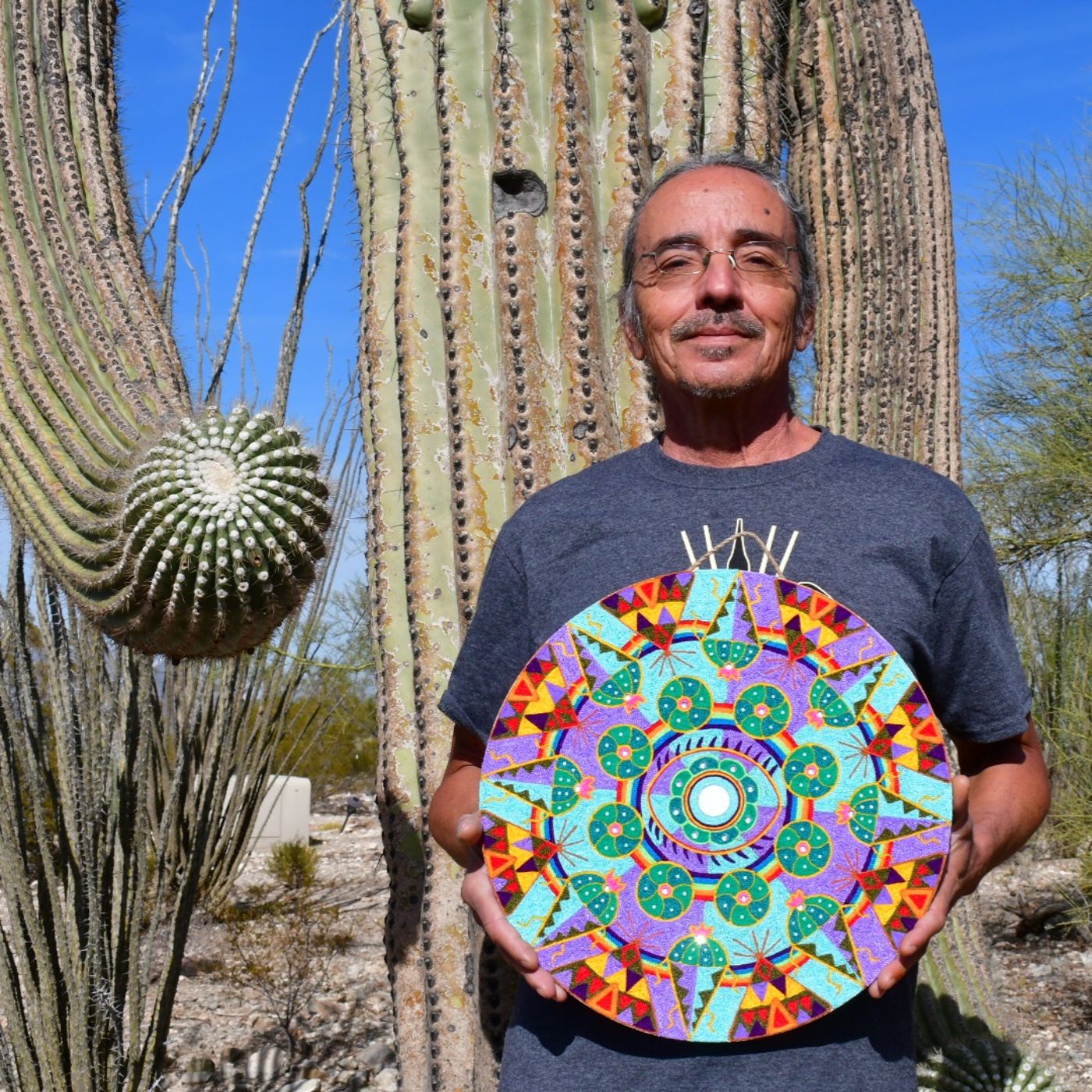
A Conversation About Peyote with Leo Mercado
A discussion about Peyote conservation being done by Morningstar Conservancy in Tucson, Arizona and the ethnobotany of the Peyote Meeting, as well as what it means to "listen to the plant".
2023-11-26
80 min
Transcript
Available Results
Generated results are saved to the knowledge database for reuse and search.
No generated results are available for this episode yet.
Extract Knowledge
Pick what you want extracted first. Model, scope, and chapter options appear after a template is selected.
Generated results for public episodes are saved to the knowledge database so they can be reused and searched later.
Transcript
Okay, welcome to another episode of the Crime Placement. But Bideny doesn't podcasts
anyway. It's nine thirty on a Sunday morning, it's like ten, and
I got to dip out. So but I wanted to have a conversation with
my friend Leo because we had a pretty wonderful experience and it's just nice to
see his whole setup down here in southern Arizona. And I don't know,
Leo, you want to tell everybody what we what we put up to tell
him what we did. All what I did was have a lot of fun
hanging out with somebody who's kind of as dorky as I am. It's nice.
I don't feel like I'm a weirdo when i'm with you Joy well,
you know, because you're in like company. Yeah, we're both nuts in
our own way, in our own special way. But I yeah, that
hike was cool. We you know, checked out some cool limestone, which
is rare because southern Arizona's mostly Arizona, but or southern Arizona's mostly volcanic.
Excuse me, but I am really messing up the fucking worst today. But
uh, but that that meeting we went to was really special. That was
a really that was a treat man. I and I going into it,
I like did not want to do it, which and you know, and
you made the point to which I thought was funny, like if you wanted
to do it, I wouldn't lay you. The fact that you don't want
to is what you know, It's just what made me, you know,
know you needed to. So it's kind of like saying, hey, buddy,
I have an idea. Let's go do a thirty mile death height to
the desert. You know, it's gonna be tough. We're gonna be sorry
that we started it when we're halfway through it, but we're gonna get to
the other side of it. We're gonna be glad we did. To me,
that's what a teepee ceremony is. Always like there's the physical aspect for
sure, And even when I was young, you know, I was like
exhausted in the morning, but but healthy. Yeah, you gain a lot
from it. For me, it's always the discomfort, the sitting still,
and then you know, when you actually have some of the the it's at
least if it's that that ground up powder, you know, it's it's it
sits in my stomach weird. It was like I thought I was gonna yard
for a minute there, you know, but it's it's I will. I
like the uh. I like the comparison to an AA meeting almost it's much
different, obviously, but in the same way, like he would talk to
old drunks. Shit, they're like, I never want to go to an
AA meeting, you know, but I know I got to. I know
I have to get the message. I have to have it reinstilled in me,
you know. And that's that's really what it's. It's like, you
know, I almost don't even want to do a podcast about this because it's
like letting the not letting the count of the bag. But you know,
but I think there's just good you know, it's it's there's good stuff to
get there. The same way that like old drunks go to AA meetings and
they call themselves drunks even though they've been sober thirty fucking years. You know,
you got to go to these meetings to get a sense of humility and
and just shut up and listen. And that's really what it was about for
me. It's shut the fuck up and just listen. You know, it'll
come well, I think of it like, you've been here about a week,
and I kind of wanted to just be with my friends, you and
Curtis in the Snoring desert because I love it so much and it's so scenic
and it's kind of like good for the head to be out in it,
and we're just like surrounded by sowaras and all kinds of interesting plant life,
and it's nice to be with friends who appreciate that. But that's kind of
like the ice cream cone, and then us going to the ceremony was like
the ice cream in it because it's almost like a hierarchy of needs that people
have, Like, yeah, you want to bop around and do stuff and
be active, and you know, depending on who you are, maybe learn
things. And most people like to have fun. They like to feel good.
You want to have a body that supports that, you know, which
it's important to feel good. But you can also get lost in the activities.
You can be like, oh, well, I've got dinner tomorrow with
my friend here, we're going to something something, going to a show.
Then I got to travel to wherever and we get caught up. So the
fact that you decide you're going to sit down and really not move for twelve
hours to focus on the other part of our needs, you know, in
that hierarchy of needs, which is where's my life going? How am I
doing it? Am I the person that I want to be? So it's
the fact that people actually segregate time to do that that I find fascinating.
Like, I respect that because I'm kind of like a numskull. I'll just
go on doing my thing. I don't really even take that good care of
myself in a lot of circumstances because I'm busy just doing things. And so
to focus on you know, am I living a good life in spite of
like not paying attention to it. You need about twelve hours to figure that
out. That's not like a right away thing, and culturally, I don't
think we have a lot of space for that. Hopefully, you know,
somebody finds a group, like you know, a fishing club, a church.
You know a lot of people find it in their local bar. Like
the ideal of that is the TV show Friends or something, which I've never
seen, but it's like where people have a place that they can popularies showed
it, you know, and I had a bunch of yuppies living in an
apartment, and they would drink basically to hang out and to talk and discuss
their lives and say, hey, what's really going on with me? Yeah,
And we don't have a lot of room for that in our culture,
I think. So when I felt like I wanted to learn about the peyoti
plant, like it's habitat, it's it's it's needs, how it grows,
what it looks like, and that you find there's a culture around it every
time. It's almost like every time it's there, there's the people know it's
uses, but its uses tend to be that kind of I hate to say
introspective aspect, but it is. It's like a more artistic view of your
life. Maybe it's like a more right branching about your life. It's introspective
for sure. And it was incredibly weird in a really good way. I
mean, there was again I almost don't want you want to go on the
record saying this, but there were moments in there, you know, when
it really I was really feeling it and I was just you know, I
was like this, Okay, I get it. You know, It's like
it's it's similar. I guess in some ways to the other psychedelic experiences.
I don't even want to use that word for it, but you know,
we're like, if you're fucking up, you're gonna find out. It's going
to tell you you're doing something incorrect and it's not healthy for yourself and those
around you. It'll tell you. You know, it really does. And
that's a weird fucking part too, is there was a moment in there where
I was people were, you know, saying the name of the plant or
whatever and repeating it, and it was like, again I almost hasn't to
go on the record, but it was when I heard the name of the
plant, it was like hearing the name of a friend. I can't describe
it. It was like there was a personification in this thing, like the
same way I'd mentioned a friend, Like I hear a friend's name, you
know, Javier, whatever, how whoever the and it's like, oh,
yeah, like there's a person. It's not just a word. There's like
a personification in that word. That's what it felt like me. And it
was a really like warm friendly It felt like a friend. Yeah, that
was the thing. Again, this is the only time you're going to hear
it from me. In any kind of public format. But it was a
really beautiful Such a stupid word that describes not even it's so much more than
that, such a simple word, but there was. Yeah, I just
felt. And then you know, as it wears off, it's like it's
gone, that you're out of that zone. But I just remember feeling that
when I was in there, you know, And there's the music too.
That was when I felt, was feeling that when it was really going.
The music goes with right, and it goes with yeah, the music is
so Mike, I asked myself this, why is it that every time a
person, a culture, is a tribe, let's say, is involved with
this plant, that art leaks out of it. It's because peoty personifies itself
not just as a physical thing apparently when you get in relationship with it,
but also is like a beauty way thing. So not only are you feeling
these things we're discussing, but but like you're inspired maybe by the the attention
enhancing effects of the plant to like pay more attention to beauty, and myself,
I pay more attention to art. I am a collector of paeoty art
because I just love the idea that it inspired something in somebody to do to
make something beautiful, And so I'm like, what were they feeling? What
what's their like relationship with this peoty. There's beadwork, there's ceramics, there's
paintings, there's yarn art, stream art, there's uh music. So so
when we're hearing the music in there, it's the people that are singing,
playing that drum and shaking that Gordon singing and then group singing. They all
have that spirit in them and it's almost like the pauty itself is making the
music. And then I like to think that the pauty likes to hear the
music. So it's like a complete cycle. And it created a community in
the process, and then all these things come out of there, including children
are born, you know, relationships are made. Yeah, there was a
one and a half year old in the Sure families. Basically not only that,
but they were sons with their mothers, and sons and daughters with their
dads. Yes, so child was especially well behaved, being in a twelve
hour you know, was more so than most of us. Yeah, you
just passed out behind her parents. It was great. And then yeah,
her dad was singing really really good singer. And then uh, and then
there was the roadman and his wife. And then who is the other gentleman
that came with the roadman who was sitting to his right. That was his
grandson. Whether genetic or not. We make relations in there, so you
gain brothers, uncles, aunties. But really beautiful guy guy that was he
was saying prayers and today yeah, and then the gentleman to his right would
just kind of ye like it was just a struck. It's a support group,
right, and that's why a lot of people with substance abuse issues,
uh, they ask for or are offered a ceremony to be put up for
them, because it's not just like here, eat this and you're gonna have
less desire to go back to drugs or whatever it is. It's the collective
every support the support, right. Because that's the thing that I noticed too,
is that it's not it's not a selfish experience. You're not going in
there just to gain for yourself. You're going in there to be like for
me when I wasn't like sitting there and discomfort. It's like, you know,
it's important that I'm here to give you know, positive prayers, blessings
energy, however the fuck you want to put it for other people? You
know, and you have witnesses. You have witnesses to attest to the fact
that you decided to make a positive change in your life if you're if you're
asking for the prayer for that kind of reason, and then thirty days you
run into them, Hey, how's it going. Are you holding up to
your deal? Because I hold up to my deal to lose a night to
sleep and suffer around because you said you wanted to. So I'm just wondering
if my investment is paying off here. It's a little bit like that,
also because you have witnesses who had tested to the fact that you're saying,
Creator, God help me out here. You know, I need some help.
The ceremony we went to was about an individual's health Issuho's in needs in
her life. And that's real stuff. That's not like you don't play around
with that. This is a person's intention who's a dear friend of ours and
also a parent to my nephew because I really am his uncle. I really
am. He's known me forever, you know, and I like having that
relationship with that young man. I can't wait to see what he does with
himself, because it's all good, but that little family is not going to
get to where they want to be without that kind of support. Is the
sense that I get, and that's why I go. You know, I
care enough to go. You know, you're really asking for this, and
you're really asking for people to sit up with you all night and pray and
express themselves and ask for help and then hang out the next day together,
do a sweat lodge together. I should be there. What kind of person
my if I can't give that much, you know for a beautiful thing of
somebody's life. Everybody there was was really friendly and cool and warm, and
that was that was cool too. It was on that we should mention to
autumn southern Arizona right down and really through the border of Mexico. I think
they have like trans border crossing rights, you know, as a people.
So yeah, they're the people of the Sawaro. They inhabit wherever the swarow
is pretty much, and they're there too. They're related to the we told
people, the Peuty people of Mexico in terms of language for sure, so
they can't quite understand each other straight up, but it is what they call
the Utah steccin dialect. So you and I end up outside the teepee at
the same time one time the other night, right, you know, we
had to go out do our business real quick, and I remember mentioning to
you, you know, this is the hardest thing I do, but it's
my only social life too, so you know it's worth it. And I
know I'm gonna have to suffer around to really hang out with people in a
I think edifying way. It's edifying and I feel better today, even though
quite good enough recovery sleep from losing a night. Yeah, I don't know
what time I went to bed, must be seven or something. I stayed
up till like nine, So that's a long day. I'm going to rack
it up something into the thirty six hour zone or something without sleep. That
was, but we should also mention it too. I mean, what I
thought was cool after the meeting was getting a chance to go to the elder's
house and see this extreme you know, he had said that. You know,
I've got a couple of plants Leo gave me twenty seven years ago,
and I figured it was going to be a clump. I think there was
a huge garden. I mean there were to plants, you know, many
receding, and very most of them, I mean, all of them quite
healthy. There were a couple that were in the shade that he had brought
out. Then you could see where thrashers or some had pecked at a few
like they do. But they were all really, really healthy looking, and
it was cool to me to see that too, because they're planted under kreoso
and a completely different soil from what they're used to. You know, the
parent material here being volcanic as opposed to limestone and uh, you know,
basically basically weathered volcanic dust with probably some organic material. It's almost like DG
mixed with desert mulch, right, granite, isn't that what d is?
Yeah, so you composed granite, but mixed with like that, you could
tell there was organic material in there, just from like leaf to tried decaying
over however many years or whatever. So it's like a pumicy mix without being
volcanic. Well, I guess it is volcanic, but it's not like pummice.
You know, it's not a silica Yeah, because it's a volcanic rock
really is for the most part, silica and some feldspar. But and it's
alkaline, so it's not like you're dealing with an acidic uh rich organic.
There's normally a little bit of well I think of the desert soils as generally
alkaline in nature. So just around because right, yeah, it's it's got
salts in it. So it's up us up the slope here a little way
to the Heale River valley from where we are now, there's lots of gypsum.
There's actually gypsum mines, and you can find places where the limestone outcroppings
are sloped up. So what happens is the the crystallized what is it mica?
Uh, it's kind of like see through, it's translucent. Uh,
is like coating these gypsum slides, you know, just like degrading gypsum from
the selenite. Then yeah, okay, right yeah, and then the gypsum
kind of sorts itself as materials, do you know, as it slides on
down, So you'll have like whole areas of really fine gypsum just comes sliding
down. Then you have little pebble like areas, and that eventually becomes the
desert soil. So there are places where you can walk around and it's definitely
old ocean bed under the crease open. It's it's cool to see, uh,
I mean, it was just cool to see that that garden because it's
it's such a good example too, like anybody could do this, Like you
can grow these and many probably many other rare caca you know species in the
ground. And that elder is not out there nursing him. No, he's
just sticking him. He's not babying them. No. I mean they watch,
sure, they water and stuff occasionally they need well when they're getting established.
But you don't need the water, right they got that giant once they're
going grapefruit sized plants, you know, just oh yeah, I mean you
untouched by any you know, morning freeze that you guys might get out here.
And it was like being at a art gallery. And it's like a
I kind of think of it as a Southwestern Easter egg hunt because you know
they're out under the bushes kind of slightly hiding around. You poke in there
and you see one, you see another one, you're like, oh my
god, oh my god. And these were so large. Okay, so
the peoty dealers in South Texas, Uh, the few that are left,
but pretty much all of them that used to work it. They all had
little gardens so that when Native people would come to buy their medicine, they
could see like a little patch of peyoty growing around their place, and they'd
leave coins and make a prayer roll a tobacco that that is a very common
thing. So I've been to these little dealers gardens down there over the years,
and I never saw one of them that looked like this one we saw
in south southern Arizona yesterday. I just haven't seen a garden that healthy and
just a raw garden, like I say, not cared for in any particular
way, just thriving. They were all under the crease under. It's not
that hard to figure out either because when you go I don't think there's that
much creaso in like, for example, Star County, right, But when
you go down to Mexico, go where the medicine grows, there's a lot
of creas So if you get to sign and Luis both, I see that
it resembles that area in terms of like the slight mounds that creasoa makes under
itself, you know, because doesn't seem to give a shit either whether it's
a volcanic or limestone, and you put you put that medicine right up under
the crease out in that little mound of soil around its base. It's it's
always like slightly more elevated than the other that they were growing. They were
growing flat. You know, they had more of an in very flat,
you know, almost sunk and half sunken in to the soil, right,
Yeah, yeah, definitely very broad. But god, some of the multiple
lobes and ribs just spirals. Yeah, the spirals there. It's always such
a gorgeous plan. We were so happy. We were like little kids crawling
around under the bushes. Yeah. It was really cool to him to be
so friendly and welcoming and show us that. I mean, that was such
a such a gift, you know. So this is a person that I
happened to run into at a teepee ceremony on the East coast, and in
the morning he said, you know, I haven't invited you back out to
see my garden since we planted those first ones out there so many years ago.
So I started doing the math. I was like, you know,
that was about twenty seven years and he says, you you should come visit.
You saw him and they were having a ceremony in the York, like
upstate or something. Yeah, it was upstate. Yeah, god, that
must have been cool. It was beautiful, the fireflies in the evening and
yeah yeah yeah. Man. Well so anyway, well, yeah, thanks
for having me by it. If you don't have to see your whole operation
here and what you guys are doing, do you want to talk about morning
Star at all or yeah, Well it's a pretty simple concept. We wanted
to do something to help there be a viable future for the peoty, because
I mean, that's one thing that is kind of understated. It's kind of
strange that a threatened species has a commercial trade that is completely it's regulated,
but it's not controlled. There's a difference. So anybody who wants to make
some beer money, let's say that can cut a fence and find payoty growing,
can get in there and cut it, take it a couple of miles
away and get paid for it. Yeah to the head. Yeah, And
there's supposed to be a certain amount of controls in terms of a little bit
of paperwork that you might want to carry with you to prove that you're paying
to lease. They kind of just do a hunting lease on the land and
they'll lease a place for three months and hope that there's enough on there to
pick it. That would be the legal, proper way to do it,
and it'd be nice if it worked that way, but it's really hard to
get a lease where there's still payoty growing if not impossible. At a lot
of times I hear them kind of moan about it over the years. They're
like, well, there might be a place opening up, still has some
pody on it that the guy is willing to lease, but they get outbid
by deer leases as well. So it's a thing where morning Star Conservancy was
formed hoping to preserve some native land down there, some reasonable amount of acreage,
and it's kind of hard to do. There's a lot of cost and
other issues involved in including regulatory somebody would have to live down there too also,
but Texas has kind of liked the most nonsensical regulations as to well.
I like to call it a legal bias towards extinction, because not only is
there not any way to provide for its security because of the legal trade partially,
but there's also no way to legally collect the seeds from the ones that
you are cutting and selling and do anything with them or salvage any that are
being destroyed. By right, there's no conservation. Well, there's prohibitions against
conservations. There's certainly no state funding towards conservation. They'll they'll talk about it
with astrophy them maybe towards you know it being an endangered state. Bonus will
study and stuff. And no one, no one touches payote, and no
one wants to touch payer. I wants to study payote down there, and
there's no legal avenue to do so, by the way, since it is
a schedule and substance, right, and so even the license built ETOs that
are licensed to either cut or pay cutters and then sell it keep their little
receipts and whatnot. But I'm saying, even by their allowances to do this,
they can't even collect seeds I legally, they can't replant legally. Technically,
they can't even eat a payote legally. They're just a non federally registered
person. They're always mechicanos stejanos, you know. And they can't legally do
anything with the pavity to conserve it. All they can do is cut it
and sell it. I mean, think about that for a second. This
is a sixty year old system that has done nothing but deplete. It's what
the kids call an extract of monetization. Yeah, for sure. So that
is a legal and financial bias towards So basically, you guys were trying to
buy land, and so what happened with the land, Like, why do
you guys, Well, we didn't have the millions of dollars that it was
going to require to first of all, get any tract of any reasonable size
that's not just performative basically, Yeah, and then provide the security system including
the permanent caretaker, the fencing and whatnot, and plus the regulations. So
I just assumed that a certain amount of money has to go into lawyers at
that point as well. So over the years, you know, we were
all kind of busy as well. We all had kids that we were raising
and whatnot, and time slipped spy a little bit. So it had probably
been about seven years or so since we had last actually walked any land to
try to figure out if it might be possible to do something here. When
I started thinking, we just need to go somewhere that's safer with less security
issues, and start producing seed stock for somebody that's hopefully going to figure out
how to get it back to habitat. I mean, really, this happens
when you turn on to the other side of sixty years old. Maybe where
I started thinking, there's not a lot of time left for me to say
anything get started. So we went to kind of plan B. Plan A
was, let's stop doing this to the to the thorn scrub. Let's stop
scraping it and putting in wind farms that just have these big footprints and whatever
all else it is that's ripping out the natural habitat. It's almost like too
big of a monster for any small organization or individual to stop. So I
know that we can get seeds. Maybe I'm not being responsible and I'm not
focusing correctly right now by not just getting the seeds that I can and starting
them now, and we'll keep figuring this thing out as it goes, but
at least during that time the ceilings will be growing, so you're not doing
nothing. I think I was tired of just like not doing anything. Also,
I keep attending ceremonies because it's in my family. All my children raise
that way. We have ceremonies for our own children depending on what's going on.
And so you keep benefiting from this plant, you keep seeing it in
people's lives being a positive factor, and I get invited to ceremonies, and
I'm like, where's all this coming from? So there's almost like a little
guilt complex too. So here I am, yeah, I'm getting older and
everything. And guess what, the peeties are getting smaller every time we are
able to get more paoty for our ceremonies. The people are seeing all different
people all over the country that have to order it. It went from silver
dollar size, let's say, to what dime size you've seen it. There
were a lot that were just recently purchased that were less than dime size,
if you can even believe it. And the reason is is way too small,
way too The plant that they're cut from is going to take a long
time to rerector they weren't even cut, they were dug up, so the
plant is gone. They're not being sliced as tops that small really, that's
all because they use kind of like a short handled hoe to get in there,
rather than always being on all fours trying to cut each one way back
in the thorny scrubs. As an individual. They yeah, And so they
have this tool that they try to slice the tops of when it's like less
reachable in the scrub. But what that does is that's just going to bring
up all the little ones. Even if there was a big one you were
going after with the tool, you're gonna get all the little side babes too.
And so they come up with good portions of underground stem right, which
most people would think is the root itself, but it's not. It's just
that stem that sinks into the ground and then shoots roots out down. Yeah,
well they that all comes up. So we get these bagfulls of dime
size I think the biggest well, let's just say the average top size in
some of these sacks. A pauity that comes for ceremony is not even a
quarter size. If it's over a quarter size, you're kind of happy with
it. That's nothing. So this has happened progressive with the recress historically,
Like in that seventies, how big were they They were big, like almost
not quite what we were seeing at this local garden. But you'd get those,
you'd get like almost coffee saucer, well bigger than silver dollar size.
Yeah, like the inner ring of a coffee sauce. Oh yeah, yeah,
yeah, okay, like that you see anymore like the top of a
coffee cup size mug? Yeah, even a nac guy, I though,
who was buying cut buttons to reroot you can reroot those cuts. Well,
that's what we've been doing, right, and that's what he would. He
never got any big ones, and there were a couple that were that he
bought, you know, with all the paperwork and everything that were that were
holed dug up too. I think if it was the same person who was
getting out, well, it's the same people because there's not that many people
willing to be the picker. So they kind of work for any licensed dealer
or unlicensed dealer, let's just be honest. So over the years, well
I used to travel down there a lot. I still get down there,
but i'd go. We'd be collecting peote to bring back. We didn't actually
collect, it was collected for us. You find it on the racks when
you get to the dealer and you're counted out in thousands. So what they
would let me do is go through and get the little babies that came out
with those hoe like tools to just separate them out, bring them home and
plant them. And that's where a lot of these mother plants that we have
here came from many years ago. I just bring home these ones that shouldn't
have been cut. What am I gonna do walk back out in the desert
and try to replant them somewhere? You know, so die anyway. So
I bring them home. And but now what I'm saying is you go down
there and you'll find the whole rack is those you don't. You don't need
to sort him out anymore. There's no replanting him anyway, because it's I
mean, they've had all the roots cut anywhere, and they haven't flowered even
one time. And so to put them back it's a gamble. Maybe half
would survive, half wouldn't. But they've basically got to use what little energy
they have in that little, you know, double a sized battery of a
stem to grow new roots too. It'd be immensely taxing on them. It's
like I'm trying to think of like some kind of metaphor for how it makes
me feel. It makes me feel like we're trying to save a baby seal
here, and like, there's not even any seals left that are of reproductive
maturity. How are you going to save the baby seals? All you have
left is babies? Yeah, I don't know. It's kind of weird,
all the big clumps, the mother plants, the old seating plants. Do
you think more people Do you think more natives are becoming aware of this?
Yes, because if nothing else, they're becoming aware every time they managed to
be able to buy some, because the price keeps going up and the numbers
stay the same. If you're paying let's say seven hundred dollars per sack of
a thousand right now, and they're small, and the sack of a thousand
fits in less than half of a paper grocery bag in this little box or
this little bag that you bought. Well, only twenty five years ago,
maybe we were still getting that same number one thousand plants that was more like
an onion bag, you know, two feet long, two and a half
feet long, and wide and heavy. I remember carrying sacks of thousands to
our car when they'd bag them up for you down there, and they were
heavy. You'd be like, oh, one sack at a time, bro
and they go, no, they're fresh. That's what I'm saying, the
mass on them. So, yes, Native people are noticing because you're just
seeing that the mass went down to nothing. Yeah, you're still buying a
thousand, but that thousand actually amounts to what would have been one hundred and
fifty in terms of mass. So this is another bias towards extinction that has
to do with that system. Every angle of the current distribution system is like
in conspiracy to make sure that there's less every year. It's crazy. And
guess how many they have records for when they produce records of it went from
nearly two million a few years ago when you could find that, to now
just bumping a million most years. Yeah, I don't even think they collect
data anymore. Well, right, they changed the system Department of Public Safety.
When it was the FEDS, they used to collect data for sure,
but I think now that it's Texas Department of Public Safety, it's less clear
if they are collecting data. I can't quite remember how that's working lately,
but I do know that the numbers are kind of unknown. But if they
can find a million, they sell a million. So what does that do
to like, Well, like we're saying the average size that reduces the average
size of all payote because there's less payota available. So we are noticing in
that way, and there is growing concern, and morning Star is just one
of several organizations that are either formed or trying to be formed as we speak
to do something about it. I think it needs to be habitat preservation.
Like I said, cultivation is planned. B someone down there and get buys
a fucking ranch, puts it in a land trust. So that because that's
what happens all the time down there. It's all private. The grandfather's cool,
the kids aren't. The kids want to sell it, the by muscle
cars and all the stupid shit. That's so because it's a really big,
true materialism down in South Texas. I know, I live there. Like
it's it's I mean, it's everywhere in the US, but down there there's
a very small community of people that seem to care in a very huge community
of people that just want the shiny shit. You know, Can I be
an idiot for a second with you? Sure? Are you okay with that?
Yeah? Yeah, right. Sometimes I think in the extreme to see
what the reality is. So I think to myself. So I just read
this news story about how some moth is being protected. So it's habitat is
being protected because it pollinates a certain milkweed. La la la. That's good,
all right. I'm not against them. I'm just saying this is a
hypothetical. I'm just saying, Okay, we find this species, they preserve
some habitat, that's awesome. But often it's just like what I would there's
the idiot part, like it's just some random species of something, like it's
a lizard, it's a certain thing, it's it's a new uh, it's
they're important stuff, right, I'm not trying to minimize it, but I'm
saying it's KaiA rando to me, it's just like you just got a plant
that's massively important to a culture, to a culture, yeah, right,
exactly, So it's cultural preservation and a cultural preservation. You would mention too,
that that some of that land clearance needs to be viewed as cultural theft,
because it is at this point, just when you're destroying huge populations of
a plant that's that are center to a religious spirit, to the spirituality of
a culture, you're stealing from that culture. I have more idiotic friends than
myself who for years have been saying this is a conspiracy. Man. They
set it up this way to get rid of the beauty because they didn't want
the Native people having their you know, their their their backwards ways carrying on,
you know, into the modern age. And so this was the plan
that eventually there'd be no pauty la a lot. I don't think it's like
that. What's that one thing, Handling's razor? Where never a tribute to
conspiracy? What you can better ascribe to, uh incompetence. So it's your
basic government program. Like the best way to get rid of this paety was
maybe act like you're trying to preserve it for the culture. Guess what You're
going to figure out a systet on Native groups that are against decriminalization, which
that can you can argue left and right to the you know, back and
forth till the fucking cows come home. But at the end of the day,
like there's already people going out to cut it, it's already being harvested,
it's done so legally, and the habitat is being cleared. At the
same time. If you if you maybe don't decriminalize it, where it's wild
like in Texas. But if you decriminalize it in other states so that people
can grow it, or you at least decriminalize growing it, not using it,
but decriminalized growing it, you can then have people if you see,
like some fucking trust fund kids like I want to grow. Well, that
is the complaint is that these people are not sincere enough to be holding something
that's sacred to them. That's really the complaint. That's honestly, what if
it's just someone who wants to grow I know plenty of well grow it,
and wouldn't you know what I mean? We love this plant, and I
kind of identify with that on a if I want to look at it in
kind of a hyper sensitive way, I'm like, yeah, I get that.
You know, it's really important to you and everything. I have my
own species that I feel that way with. By the way, I was
raised here in southern Arizona, the home of the buff wal various. I
think they renamed it to Incilius genus. So this snorm desert toad I grew
up with quite actually I told you the story. I've been swimming in pond
water with it since I was five because I made a toadpond. Had my
dad make me a towpond so I could breed the tadpoles from the drying desert
pools of rain water, you know, because most of the tadpoles during the
monsoons, but there'll be a little area where they get the three weeks they
need to develop a little tail and be able to handle the water drying up,
and they piece out of there and go become a toad. But most
tadpoles die. So we were kids, we'd ride our bikes around the desert.
I grew up in the desert, just every day, all day in
the desert. That was my childhood. So we'd collect with the old milk
jugs, bring them home on our bikes, the mud that was dying,
drying up in the desert, little tadpoles flopping around on top of it,
ready to die. Bring them home to our pond, let let them grow.
So we created thousands of new toadlets in our lives when we were kids.
And I love that species. It wasn't until twenty one or so years
old that I found out that it has this spider methoxy dimethyl trip to mean
and it's little partoid glands or something something, And so now there's people like,
oh how to raise boof wall various at home for purpose and the people
charging for like toad ceremonies and having like medicine journey. Okay, but that's
what I'm saying. You could make a law against that. Well, don't
screw the law because that never helped. Like, if if the law could
save paote, there'd be plenty of it. Now it's been illegal since nineteen
Seventy's part of what's killing. So my point is, like when people are
against legalization of Rando's growing it and stuff, you know, I kind of
get that, But that's not the point because the government is not going to
fix that anyway. Any Anybody willing to break the law is not going to
all of a sudden follow the law because the law changed. Oh now I
can't grow payote. You know, it's not a good control system. But
I could see, you know, we're legalized. I could see, you
know, nauseating, you know, fucking shaman honkys. You know, well,
I don't think making the toad illegal is going to help anybody. As
a matter of fact, I think it's going to make it worse. It's
gonna make it worse on the top. That's what I'm saying. I'm with
with a plant, at least you could, you know, like you could
make it like I think with Tricho Sirius. Right, it's it's illegal to
have tricho serious ceremonies. Probably it doesn't stop doing it, but plenty of
it's leest. It is still illegal to alter your consciousness unless you use the
proper drug. Yes, but no, but you know, I can see,
like I can see some horrific things popping up where it's like these,
yeah, the white shot, the hanky shamans, like we're gonna have the
therremony and you know, and charging an arm and a leg for it,
just like it happens with the ayahuasca. But whatever, I mean, I
don't care. Say there's cultural sensitivity, and I get it because I have
it with this toutalely and there should be. But people should I think people
should be if you are. The fact is if people are allowed to grow
it, there's gonna be more plants. Yes, the math works out right
exactly. It's a pretty simple equation. It's like if you're but not only
that, if you don't use a fucking drug law as a means, you
know, as a back door to prevent people from growing it. You know,
make a separate law that specifically addresses cultural heritage, you know, digenous
autonomy. Those Well, let me tell you this. So I talk to
a lot of people. I go around and talk to a lot of people
about this. Sometimes I get like shade thrown on me for even you know,
trying to you know. But the the scenario that was shared with me
by many people, because there are things like Native American Church and North America
Conventions, and you know, there are like semi organized political organizations within the
Native American Church, many of them. They don't all hold a monolithic view
on anything. The only common factor is they all have a respect for paety
and ceremonial use. So the scenario I was told by many different people,
so it's been discussed, is that if you decriminalize payote cultivation or possession or
use. In Lancing, Michigan, for example, which is a true story,
the city council held hearings. I actually appeared on a zoom meeting with
them at one point, you know, trying to make some sense of this
thing. So the idea is that if you do that and all of a
sudden, you're in Lancing, you go, hey, I can grow payot
now legally that they're going to somehow travel to South Texas and poach because they
can and possess it in Lancing, Michigan. It doesn't make sense because it's
still illegal in South Texas. You're still not going to find it, and
even if somehow you did find it, you're still breaking the law. And
so I don't say that, but you're trespassing in an area where ninety five
percent of land is private and everyone's armed to the fuck and you're stupid because
just because it's legal in Lancing, Michigan, but it's still illegal for you
to go poach in Texas, it doesn't make sense that making it legal over
here, all of a sudden, a good moral person who would never think
about breaking the law is going to go break the law down here to not
break the law back at home. You know, I'm just saying, there
is no logic. There's no logic, but it's it's not legal in Lancing,
Michigan. Well it is. If the decriminalization law passed without what I
call the boiler plate peyote prohibition appendix to it, because this is actually what's
happening, So it's not legal in most jurisdictions over the last couple of years,
at least that I've understood to be the case, there is an exemption
or an inclusion, whatever you want to call it, that this includes every
darn plant and chemical or whatever except for peyote. Yeah, and I know
in Santa Cruz. Santa Cruz is like is like a city of like self
flagellating ways. Well that that boiler plate addition to all the decrim laws seems
to be going around. I can't quite remember what happening in Lancing. I
kind of lost track of all that because it's almost too disheartening. At some
point, when I was trying to make presentations to groups, including uh,
you know, like the decrim nature people you know, nationally and also in
the state of Arizona, uh, I kind of got demoralized. I was
just like, I'm really tired of trying to make sense out of something that
doesn't make sense because I can explain how oh yeah, this and that and
the math doesn't work, but then you've got the cultural sensitivity and somebody's always
going to complain on either side. So I was just like, you know
what, I don't know. All I can do is just be germinating seeds,
because that's one thing that makes sense. Yeah, yeah, and in
a positive way, because at least that way you have an example. I
I kind of think of it as a prototype. There's a lack of prototype.
What I think everyone should do. Just ignore it and just you go
there, you go, you know, and guess what, here's what I'm
going to say, publicly, leave the freaking toad alone, all right,
bro. Like, Like, if there's you happen to be in the Arizona
in the monsoon season and you're out enjoying the nature and stuff, and you
see a toad and it presents itself to you, and you can be kind
and gentle and harvest and toad venom from it, you know, and maybe
in the chill of your own little desert camping spot some evening, maybe by
accident, light yourself up with the venom. Then I don't really have a
problem with that. But to be impinging on the toad and then growing it
in, you know, and keep it Thundercluster, Alaska, so that,
yes, exactly, I just can't it's so hard to believe. That's the
things I mean, and I know it is, but it's still weird.
Like how much of a bored Instagram drug? Bro? Do you have to
be well so to like, you know, just anything you get your hands
on that's mildly antheogenic you need to have and grow. So people will say
that I'm doing that with peod you maybe let's just go there. You know,
I'm like, okay, not doing it. I'm talking about you know
that. But what I'm saying is people, it's it's just a very myopic
view. And you also know all the other plants here you love and plant
always having Latin names of a lot of these plants, well, plants in
the desert. You just enjoy being around them. I'm talking about people who
only view things through the lens of ken. It get me in an altered
state, and that's all I care about, you know, right. But
let's say this, Okay, I'm very close to the airs on a snore
desert museums just a few miles you know from where I live. Uh,
They've got a Buffo Alvarius or two in captivity and they're a little reptile exhibit
in there, and you know, I go in there I'm just sad for
it, that's all. I'm sad. And I'm not the kind of guy
who's going to go in there and glue myself to the display, you know,
and with a sign and shout and everything. But it does make me
sad. So so back to the PAETI, I'm like, guess what,
I'm sadder that it's almost gone in South Texas and it's getting really hit on
in Mexico. Then I am seeing it in a seed flat, growing from
seed, looking really happy. I don't feel like it's in captivity. I
don't feel like it's not happy. That garden we saw seed thousand, that
garden we saw the other day. That made me happy. I didn't feel
sad for the plant, like it was being, you know, weirded out
by being in some place it's not supposed to be. No, those plants
were clearly thriving, and we saw babies right from seeds. They were so
blue that they saw the ones that it was really cool. We should mention
that too. It was. There's so much bluer here. They've got so
much of that, so much more of that cuticle, that white material.
I would love to look at that cross section under a microscope. Some time
a friend of mine who's a professor Emirettus, he's a retired plant biology teacher
at UT Austin showed me slices that he had cut of peyoti and he said
something about it once having growth rings of some kind. I don't know if
they were annual growth rings or just places where you know, you get the
market market, you could market the discern between where it stopped growing and then
you know, got a boom in moisture and then grew again, had a
spurt or what. But but I would love to see that cuticle on her
microscope because it's so like the ones you've got out here are so blue and
white. They've just they're they're adapted, they've they've phenotypically adapted or you know,
to a a hotter, drier environment, well not hotter, but more
intense sun probably here. Also, I think that the the possibly increased UV
angulation of the sun less humidity might do like a little UV effect where the
extra UV hitting them, huh, changes the pigmentation the proanthocyanidins you know,
well beta leanes, Yes, because that's what happens in the fall with leaves
or something you can't see as much. I just think they adjust. You
know. It's obviously if you've got a plant in shade, you put in
sun, it's gonna burn if it puts in full sun. But the new
growth that's created out of the applical marastone where the cells are actively dividing,
is going to be produced with more cuticle. Right, So the effect is
they look great, you're bluish. Yeah, but you're saying these actually get
a few hours of full sun in the summer, which to me is just
But if you don't do that, they go back to that darker green.
They go back to a darker green, and they'll plump up right right,
the whole form of the plant changes. Yeah, but that was really that
was really cool to see. I mean that massive, that old one you've
got the you know, however many heads is gone that Grandpa is like,
I don't know that. I mean, that's probably presumably a South Texas PLANTAG
definitely South Texas from Star County. Action. Yeah, I only imagine.
I think that people believe there may be some swarrows or some giant cat guy
that are close to two hundred years old. It's commonly accepted that these larger
suarrows germinated back. I don't know one hundred and fifty years, one hundred
and sixty years the older ones. So when I look at these old peody
clusters, I start imagining, well, if you did the math and each
large head maybe took thirty five years to grow in the wild, and then
you start multiplying by how many heads are on this cluster route, If you
start multiplying, like let's say even thirty years by a thirty five headed plant,
you can't really do the math and come out with a number that's reasonable.
Right, So at some point when they get big and have a large
tap root, I think they can grow new big heads a lot faster.
Oh yeah, they've got all that. They've got so much more mass.
I'm thinking those clusters, though, might still be getting into swallow years,
like like like one hundred and some. We've got to when those plants where
they were where they were actively destroying plants for the border wall, I mean,
the sea peote crushed it like in a bulldozer tread was fucking unbelievable.
I was like, why this is like this is criminal. Yeah, but
some of those plants we saw, I'm sure had to be one hundred years
old at least, and you could see where they had been cut. But
the stem where they the part of the stem where they had been cut,
you know, and then they'd sprouted side pups. The part of the stem
where they'd been cut was still like two inches below the ground level, like
where the side pups right came out. It was fucking wild. It's like
this thing was cut in like nineteen forty. Probably that's wild. Man.
When I've been in Texas roaming around, you find a nice old cut one,
you know, it's rare anymore. But when I was younger, you
could find those things. I would think to myself, you know, probably
some peuty chief from Oklahoma, way back in the day before the turn of
the century, came down here and prayed, made a prayer, and then
cut this one and took it home. Maybe they dried it up and used
it as the ceremonial chief on the altar, or maybe it was consumed by
their one. What the ceremonial chief is, it's the one that doesn't get
eaten. It's an old cut button, some of which are one hundred The
oldest one you saw was one hundred years old. I saw one that was
one hundred and ten years old, recently used in ceremony. They are ornamental,
I guess you would say. But you know how you were talking about
the idea of it being a friend. Well, that's what this ceremonial dried
chief becomes to the family. They're they're they're carried on, you know,
from one generation to the next. In many cases, like you'll hear people
say this was my father's my grandfather, and what happens to the chief when
they get to old like there wasn't you say there was? Occasionally they can
kind of deior deteriorate maybe, but you people get these new ceremonial chiefs from
the time to time. It's a lot harder to find now because you want
to go down and pray and make the offering and harvest it yourself correctly,
ideally, and somebody fixes it up for you, as they say, you
fix it up to dry in a certain shape, like a almost like a
teepee shape, a little volcano shape with the fuzzy top at the top.
You know, they're very cute, but we we use one in the ceremonies
right in the middle of the sand altar in that teepee and it just sits
here all night long. So like as a friend, it's become this friend
to this person who carries it with them to run ceremonies in the box.
In a little box very well taken care of. Fans pulled out for ceremony
and there's their friend. And so we have that almost I guess as a
meditation device, a visual aid what you're doing in there. But also the
belief is that chief is a friend, and so it's kind of like checking
everybody out. It's like y'all doing all right, okay. But then there's
sage brush too. There's sage brush used it. It goes along with the
staff. It was being passed around with the staff. There's a singing staff.
Yeah, we hold the sage brush when the staff comes around in a
hand. As we were discussing yesterday, you and I, it's a whole
system of apply death no botany, the way that you need certain elements,
A lot of them are botanical elements to have a pod ceremony. And peoty
is one of those plants that you need. Right from the tpe, the
cut and tpee to the dug fur pulls the wood you're burning. That was
That was I'll say too, that was really cool to see how the TV's
are set up. Yeah, yeah, because you helped set it up.
You got it from the inside. Yeah, Like just the three initial ones
the tripod held in place with the foot butted up against and then pulled up
with the rope. Once you get those three up, you pull the one
of the one leg each leg of the tripod out and the stark forms is
the base for what other poles are like, and you start racking them and
it's a community effort. So here's the thing also about poti ceremonies that is
kind of overlooked up because this part is not the sexy stuff. The sexy
thing is like, oh you eat peoty. Yeah, But you know what,
it's almost like incidental at that point. Yeah, because guess what somebody
had to days or weeks ahead of time collect all the wood and clean it
up that you're gonna burn. Because it's not just random wood. You notice,
it's all been clean. It's been debarked because that bark will produce extra
smoke in the tee that you don't want that, right, So some individual
or group of people had to collect like one hundred and sixty nice pieces of
wood, get all the bark off, straighten them out, no sharp ends,
all the same length, same thickness. Basically, that's a whole thing
that started way before anybody even raised that tpie. Then it comes to putting
up the tepee. You need you know, hopefully at least a couple of
dudes. There's there's some people that know how to put a TP up by
themselves. I am, yeah, my dad used to do all that.
So get a brick or you get a stone, a couple of bricks to
like boot boot those first two poles and pull them your way with a rope
to make the tripod. Yeah yeah, and then you put the canvas up
by yourself, also using a rope system. Yeah, but it is so.
But we had a nice group of fellas who were there in the morning
to do it when the sun's rising, So you point the door towards that
sunrise, you draw the circle out the course. So the ceremony is already
happening, is what I'm saying. And the person who asked for that ceremony
has already been kind of like nervous about it, getting the food together that
they're gonna need, you know, getting a hold of the people. They're
going to help you. You you ask a roadman to come and help you
with this need that you have, and so they're going to travel from wherever.
You know. They're called the roadman because they're on the road. Well,
because they're on the peote road. That's what you call it. A
figurative not literal, okay, because it's not. It's not just because they're
the one traveling. No. Uh, there's that line in the sand when
we went in there for that earth and altar. It's like a half moon
altar and the line in the top that's the peety road. It just goes
along and they say that's your lifetime and where that chief sets in the middle
of that half moon, that's your fifty year mark and hopefully you're going to
keep going even on past that and make it one hundred years. But they
also say that that's only half of the moon. The other half is outside
the teepee. It's where you're living your life. How you live your life,
you live exactly. So you come in here and tune yourself up,
decide what you really want to be the thing that I can share it because
I find it difficult to share insights or you know, anything like that from
TP ceremonies. It's just not you know, it's part of you. It's
not necessarily for anybody else, right, But there is something that happened to
me one time which I felt was like generic enough to like tell other people.
And I've written it down a couple of times, and that is that
this one night, I was sitting it was quiet, there was no singing
going on at the moment. You know, there's a lot of these spaces
in the ceremony where really it seems like nothing is happening, but stuff is
happening. I was sitting with myself and the question came up, like,
are you the kind of person that you wouldn't mind spending the rest of your
life with? Because you're going to so I need to be that kind of
person that I don't mind living with. It just you know, it's kind
of a silly, but it was like it was all my mind. I
was like, so the question here is self. Am I the kind of
person I want to be? Am I? And if I'm not? How
would I change that? And it became clear as soon as I got to
that point in my little you know, ruminations. The answer was very easy
but difficult to pull off, which is, in order to be the person
you want to be, be the person you want to be. And I'm
like, wait, you mean it's up to me. I just need to
do that, and then I will be that individual that I don't mind spending
the rest of my life with. That's the only answer. And that's a
hard thing when you get out there into the world. And then it will
also because it forces you to think about who is that person whom? And
the person by the guy that flips out over a little shit and the guy
that holds a grudge. Am I the guy that's all pissed off about something
ten years ago? So yeah, man, And that self examination is the
crux of it. When we think of altering your consciousness with an external substance,
that's like, let's say pharmacological. Our template is too much like getting
screwed up on alcohol or getting wasted on whatever. Yeah, and it's not
an examination of conscience. And I think that's like one of the side effects
of pauity. But guess what the side effects are also the art the marriages
that end up happening. Hey, maybe some divorces, but the kids that
come into the world, the songs, the stories, there's beautiful stories.
One real quick one before we're out of here. You know how I said,
we don't have a lot of format for that in our culture. What
do you do if you want to like abide with people in an edifying way
that makes you all feel like better people at the end and like you help
somebody, where do we go for that? So the Weechel tribe, their
name for themselves is Weirotica. You know, they're the people of the Peote
in Centralish Mexico. They don't actually live where the paoty grows, so they
have a pilgrimage. They have a pilgrimage and back in the day they would
just actually just head out on foot with some tortillas and their little bulls other
payot woven bag and go harvest and bring back to the tribe. You know,
now you got to do the public transport, but they still provide a
ceremonial way of doing that. They do take consideration to the steps in this
pilgrimage and then getting to where the paoty grows and getting all clear with each
other out there. So the reason that pilgrimage is important to them on an
annual basis is because it recounts their creation story. So their creation story is
like this. They were spiritual people. They were like like what Danay people
call holy people. You know, they weren't yet humanly incarnated, you know,
into the specify. And you spent time with these You spent a lot
of time with these people. You were in prison for two months in Mexico.
And I'll be with him again in a couple of days a little bit.
So the idea of this trickster, who is the deer, the blue
deer, he's the teacher trickster. So blue deer is a we Chol thing
that wasn't really the northern tribes. That wasn't Quanta Parker. And no,
he's a got you Maudi to them is his personal name? Really quick,
Starry to keep it interrupting this, I just want to get this down.
Quanta Parker was laid eighteen hundreds, kind of recreated. The nac As exists
today and the and the last Commanche warrior really yeah, yeah, because he
was a warrior for the first half of his life, right, And that's
different from the Wichol, which is that's is that kind of an older tradition
in a way or what is it they were? It's an older pay tradition
because when Kwanta Parker came around, he kind of put together the Native American
Church ceremony in at least in a legislative way, you know, made sure
along with James Mooney, who was why did they support them? Yeah?
Working with who? What institution was it? We should mention anyone interested in
reading what us can read the book Paroti Religion by Omer Stewart too. That's
Omer, not Homer m e Er and James Mooney was like an anthropologist guy
from a museum of I can't remember. But they got it together so that
on a federal level, Kwana and his people didn't keep getting arrested for using
parody and put he and the idea was mora l less put together at that
time, right at the end of the eighteen hundreds into the nineteen hundreds,
that the Native American Church was a thing. They they formalized the ceremony of
the tp way, whereas the Weechel just have like this pilgrimage that they mostly
partake of payote out there in the desert while they're hunting it because they consider
it to be the incarnation of this trickster deer. So this trickster deer he
leads them. They follow the deer into this world through a portal. They
have a word for it, ni Rica. It's symbolized by the shiny objects
in the center of many of these offerings that are made with yarn and wax
and string. I kind of call that back by putting mirrors in the middle
of my arm paintings to recall that Niuka, that the spirit people came from
into this physical world. So the deer leads them here. But they get
here and they like, whoa, look at that mountains. There's like a
foresto here, there's a waterfall, there's places to swim, there's hot springs,
there's foods abounding, there's pleasures of the earth, there's beautiful women's you
know, all these things that make us into humans, you know, in
our physical world. They became mesmer and forgetful through it. But this deer
kept on tricking around and where he was walking, running through the desert,
prancing through the desert, leading these people into their forgetfulness. He left these
flowers in his tracks, and those flowers are the peoty flowers. So when
you follow that little deer in this world, his footprints the peotes, you
hunt them like it's the deer, and they show you back to your source.
That's the general cycle of the Weechuel creation myth that peoty was put here
so that we could remember that we're not even actually from here. We're just
enjoying this physical world right now. But the deer tricked us into getting here,
but he left like a gift, which is this one plant that will
guide you back to who you really are. So there's that examination of conscience
thing, you know, like a meditative col that is ascribed to the ingestionate
peoty. So I'd just like, because you know what I'm saying, the
ingestion of paeoty is almost like the least interesting thing about poty to me.
So, but but it does. It is involved in the overall culture that,
hey, when you do get around to eating this beautiful plant that we're
always sitting around making art from and having these songs from and getting ready for
a ceremony for when you end up and you do actually ingest it, then
it reminds you while you're why you're living this kind of life. Why you
set yourself up so you would have a peoty ceremony community that you could go
to and partake with. Why you have all this crazy art on your walls.
Why when you're driving to work in the morning and you're you're remembering that
beautiful peoty song and humming it to yourself, you know, because it does
have a culture. And yeah, there's eating peoty, but it's what they
call here in North America the Peoty way. There's away, it's that pauty
road that you're just living. You're just living your life. That doesn't mean
that you have to be out like save the peauty. You know, Hey,
come to our ceremony because you're gonna find something really good. No,
it's just like a low key it's kind of a low key thing, you
know. Where that gentleman that invited us to his gardens. After the ceremony,
I just remembered something, you know, I mean, I know it,
but I hadn't thought of it for a while. Actually, the first
time I met him, I was I was young, I was a lot
younger than I am now, and I was invited to a TP ceremony on
the reservation and I stopped for something in the little off res circle k for
something I think of chewing gum or something for the morning. I go in
there to pay, and I'm behind this guy and when he turns around,
I see, like he's a charming looking guy, and he's well dressed,
and he's got this lapel pin which is the Paeuty bird on his shirt and
he just says, oh, hi, and he turns around and leaves yeah,
And so I'm like, wow, cool dude. And he had like
a little party thing on him. And then I get to the ceremony a
few miles away, and of course he's one of the guys there, and
I just thought it's so cool, Like, you know, maybe every time
I go to a circle k there's somebody who's into that. They just don't
happen to have like the jewelry on because they're about to go into the tepee,
you know. So they're just like a regular dude, you know,
or like they're they're at work or wherever they are. It's like a low
key embedded in our local society here here in southern Arizona. Cool. Yeah,
it's a culture. There's one of those it's not. The plant is
a native here. There's a whole culture, there's a whole ethos here around,
and people are very aware of it. Yeah. Yeah, that's beautiful.
I know, that's really cool. That's why it feels really homy.
You know how it was feeling down there at my sister's place. You know,
we get there and it's just like everything's just okay. Everyboddy was so
cool, even the cat. The dogs aren't chasing the cat somehow, I
don't know, people hanging out talking chasing. Yeah. And the humans were
okay too, you know, these humans were all right. The uh that
morning rain was so nice. Oh man, I had so much fun with
you, Joe. That was beautiful. Man. That thank you, man,
I'm so grateful, thank you for inviting me to that. Well,
I guess we should go. I wanted to ask you about doing two months
in prison over bogus charges with the weak show, but you should Well what
would I guess get into that really quick? When did that happened? It
was early nineties and it was just better. It was nineteen ninety, the
summer of nineteen ninety, and you see, I happen to have which nobody
just listening here can see. But I've got a poster on the wall,
which is the promo for a art gallery showing opening in New York City,
and the name of the gallery was A Psychedelic Solution. It's a fairly legendary
place, you know. It's not operative right now, I don't think,
but it's in the West Village. I knew the owner. I loved the
place, used to hang out there a bit, and we became friends over
the years. And at some point it was kind of obvious because I was
going back and forth from the weech Old people in Mexico coming back to the
States regularly bringing their art. I was trying to help some villagers have some
income, and a lot of the art was the yarn paintings. And I
guess the gallery owner at some point saw some of the yarn paintings I had,
and he's like, well, let's do a show. Let's just go
ahead and do a show. So we did, and I had a couple
of gathering trips to collect the yarn paintings for the showing, and on the
final gathering trip, the owner went with me. My pregnant wife was with
us, and we had a schedule where we had to get to New York
and do this thing. My father in law was with me, and mostly
we chold families. While we were gathering the yarn paintings from these people,
to well buying them from them, they asked us, we're going to to
go pray, did you guys come along. We made it so that we
could. And it's a very simple thing. It's not like some sanctimonious like
where're going you know to pray? You know, It's just like, hey,
however, we can get there, you know, and then we'll camp
out here. We'll spend two nights in the desert, bring ourselves home.
We'll have a little medicine for the village. Well, it's in Mexico.
So in the local bus station on our return, most of us were already
off the buses in a taxi or something to get out to where we needed
to go that night, get home and rest. But some of us were
missing, and one of them was my father in law. And so I
said to my wife, honey, hang on, oh, I gotta go
see what's up. Where are these guys? So I go back into the
bus terminal, and sure enough, because there were a couple of Americans running
around with traditional Indian people. You see in Mexico, being a native is
not like so much of a cool thing as it might be here in some
ways, you know, just in terms of a little bit of cultural respect
for oh, he's down there, it's like, what are you doing here?
Get you know, grow up, put on some normal clothes, bro,
For Christ's sake, you're making us look bad here, you know,
run around looking dirt poor, you know. Yeah, it's much more classes
towards. Yeah. So even just the site of like non Indians with Indians
in a Mexican bus station to a federally who's all high on coke and you
know, just like crazy in many ways for some action, they're like,
oh here, this could be a little action. These people actually look like
they have money somewhere and they're hanging out with people who have nothing. So
let's see what's up. So they're getting checked out. When I walk back
in there, I'm like, hey, it's going on like everything. Good
officers, you know, but they're Federals, They're not like it's not like
you're actually dealing with you know, honorable Starsky and hutch types here. It's
more like cartel adjacent dudes. If not actual cops are just federales. Dude,
come on, especially more, you know, they're on the take,
right, So they smell a little money or whatever. And it turns out
that a couple of these weech old guys have some coyotes in their little bags
that they're carrying because they've been on pilgrimage and they're trying to get home.
They didn't even know what it was. These guys are like that, you
know, what the hell is this, right, It's like, oh my
god, So here I am. I'm the guy who is willing to play
intermediary between people who barely speak Spanish because they're native and people who barely speak
Spanish because they're American. So I'm like that that that well, long story
short, it took two months to get out of a Mexican prison, just
a time to have our baby. Like many of you guys were in there.
Well, in the prison total, there were like sixteen hundred men,
and of your crew, of our crew, we started with probably seven people
all together in the jail. In the actual jail, some of the people
had already gotten home, you know, thankfully they didn't stick around the bus
station. They're like what where are you guys in jail? So we had
like a week in jail and then a couple of months in prison afterwards.
Where was it in Tapete Nayari? Hey, you know, I'm not complaining.
I learned a lot. I know it sounds weird, but like I
got a lot out of that experience. It was tough. It was like
a maze of you know, what do we call fuckery? On every level?
What do we call it? So it finally happened. You finally come
up with a negotiation that works for both parties and basically a certain amount of
money and you're out of there. So Mexican law is Napoleonic, and I
guess their constitution is or whatever. So I think as I recall, if
you're a foreigner, they have a year to charge you, but they can
hold you for a year while they're investigating. If you're a Mexican native,
I believe it's three years. So these prisons oftentimes run just like a well
it's a financial system. Hey, we're investigating you for three years for growing
weed and not paying us off. So guess what the father and the elder
son are going to be in prison for three years you're gonna make sure that
you get the crop in to pay us on more to the ether. You
know, you're gonna have to take them food and stuff because you can't just
live with no money down here. So get the crop in. Three years
later, we'll probably drop the investigation. Those guys will be out, but
next time, don't forget to pay your taxes. To put it roughly,
a lot of that is a business that works just like that. So if
you're a foreigner, they're like, yeah, we're thinking about just you know,
charging you with drug trafficking. You probably get twenty seven years, but
it's to take us a year to figure that out. Hey, maybe by
the end of the year, we'll come up with some kind of like terms
to where you know, you're very sorry, so you give us this many
thousand dollars and we let you go home, maybe not even a year later.
Yeah, Jesus. So one of us was pregnant and I'm like,
no, dude, it's not gonna be a year. We're having a baby
in two and a half months. Your wife was in there with you.
Yeah, Jesus. They have a women's site. So sixteen hundred guys on
this side and I think there were about three hundred ladies and they get to
come over and hang out for two nights and days a week. If your
wife is not a prisoner, she could be there with with the kids four
days and nights a week. So a Mexican prison is more like a town
that most of the population can't leave. But like I say, if your
wife is also incarcerated, she could still be over at my place two nights
a week, hang out my cell with my nine Brews. You know.
So it took a while to negotiate. We got out just in time.
I am to go ahead and have our baby in the States, you know,
with our midwife, as we wanted to. It's quite I learned a
lot. I learned a lot about humans. I kind of liked to think
that I learned how to be more forgiving of people. They're just on this
track with their lives that hasn't been really examined that much, not that much
examination of consciousness. Maybe happen in their lives. Maybe they got drinking problems,
they got home issues, and they're employed at this prison as your captor.
I'm like, sorry, bro, like eventually I'm gonna leave. I
don't know about you. So much. Check this out a few months before
because this was a summer, so it was just a few months before.
On Christmas, I believe that was the time. I was at my mom
and dad's place for Christmas and they had the CNN US on the TV in
the living room, and I saw that there had been a Christmas Mexican prison
riot and the army had landed the helicopters and shot into the yard, shot
out like about thirty three of those boys in the prison yard. And you
know, guess what quelled the violence, right, They quelled the violence by
shooting up the place. I remember, retook the prison and the director of
the prison had been shot and a couple of other guards had been shot.
I saw this on the news. I'm like, oh, Christmas, Wow,
hard times down there, man. I didn't know that I would be
in that prison just a little bit later. So we were in there and
there were like still pock marks on the walls that they just kind of like
painted over, you know, and stuff guys with the scars and them that
had been wounded but not killed. When they would call me in the director's
office, there were two pock marks in the director's office wall behind his desk
where they had just painted over how would you like to have that job?
And go like, oh, last dude had a sudden retirement, you know,
and now I'm him. So it was just a weird vibe because you're
like, well, we're all in here, but everything's legal in there except
for handguns and hard liquor. So if you had a little money, you
were okay. And I just learned so much about you know, this is
a micro society in here. You just got to learn to get along with
people. You can't be too much of a dick because you know somebody's gonna
come after you. You want to just kind of like be okay in here.
Man. It was something important that I learned. It was the only
time I ever actually kept a journal. I'm not good with that. But
while I was in there, I was like, well might as well start.
Yeah, you were doing yard paintings in there too. That's where I
started because I was in with some of my wee cheld friends or like,
you know, you might have a little time on your hands, so,
like I said, you could buy anything. So these boys went and paid
for me to have like a knife a shive, because everybody needs a prison
shive, like you gotta have one anyway. So they fashioned mind so it
had like a little curve blade so I could use it for my string and
cut. And they bought me wood, and they bought me the beeswax that
I needed and the string, and brought me a box to my prison cell.
We had big yard, we could be loose all day long. But
they brought it to my cell and said, here, get going. We'll
find you a little chair where you can work maybe, and they did so
I started working on it. Oddly enough, I was trying so hard to
get out of that prison and have our baby and everything. But when it
came right down to it, I was starting to get into the arm painting
making groove. They were like helping me out how to do it. And
this this one day one of the prison guards stopped by the cell and said,
hey, hippie, you know what, get your crap together because I
think we're gonna be cutting you loose tonight. I was like, I can't
leave tonight. Man. I got like about eight hours of work on this
here yarn painting and the guy was just like, you freak oid, Like
he just looked at me. He just walked off like I was crazy,
and we did manage to spend that night and have one more little like social
session with our friends that we had made in there before they and I think
I did finish that yarn painty before they cut us loose the next day.
Right, Well, thanks a lot for your time and I appreciate it.
Thanks for having me as a guest. Yeah, next week, I hope
you come back, but you know, you could leave the dogs. I'd
be okay with that. They love you, man, they really do.
Yeah, yeah, I'll be back. I'll be back. I'll be back
four years over for sure. Okay, we'll go to another TP, maybe
check ourselves out again to a year is Max. I know you've done like
mine, but hell, all right, that's all I got. Everybody,
have a good rest of your day. Go up by
Chapters
No chapters available.