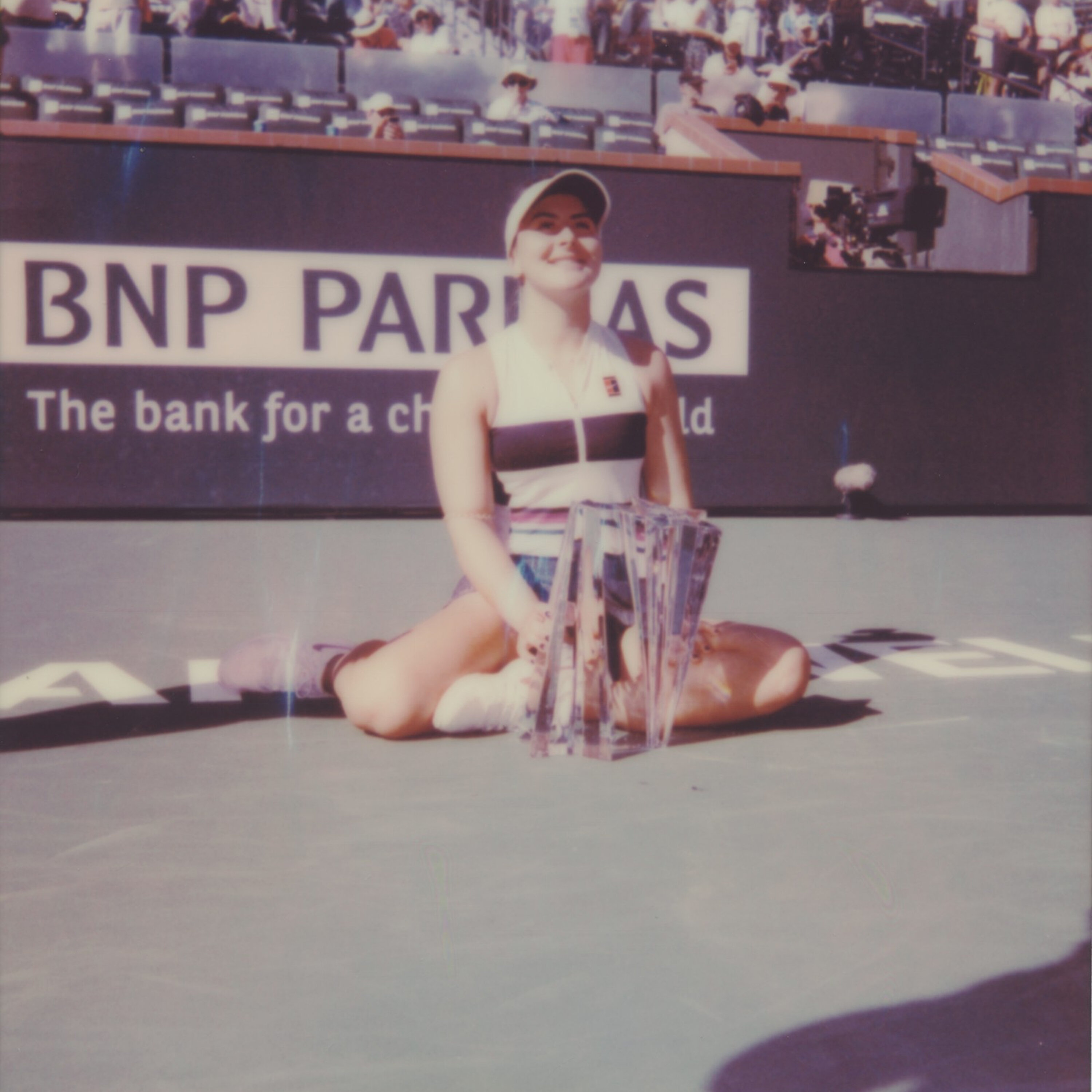
Bianca Andreescu
The US Open champ gets philosophical with Rennae to talk about her upbringing, how meditation and mindset help not only her tennis but also her life.
Hosted on Acast. See acast.com/privacy for more information.
See omnystudio.com/listener for privacy information.
2020-04-20
37 min
Transcript
Available Results
Generated results are saved to the knowledge database for reuse and search.
No generated results are available for this episode yet.
Extract Knowledge
Pick what you want extracted first. Model, scope, and chapter options appear after a template is selected.
Generated results for public episodes are saved to the knowledge database so they can be reused and searched later.
Transcript
00:00:04
Speaker 1: This episode of the Racket Magazine Podcast is brought to you by Sergio Chucchini, offering iconic tracksuits, classic Folos and the new Young Line sneaker. Originally designed in the mid nineteen eighties. It's our favorite spring silhouette and it's back. You can get it now at Sergiotucchini dot com and follow them on Instagram at Sergio Tacchini Underscore Official. For updates, Enter the promo code racket MAAG at checkout and you'll get thirty percent.

00:00:27
Speaker 2: Off your order.

00:00:50
Speaker 3: Hey guys, welcome to another edition of the Racket Magazine Podcast.

00:00:54
Speaker 4: Okay, this week is a good one.

00:00:57
Speaker 3: Not that the last couple of weeks haven't been great, and thank you for listening, but this is a podcast that I walked away from for the first time and thought, man, old, man, did I learn a lot from somebody today? And I wished so much that I had had her brain when I was playing, And I told her, Man, I could go back and actually playing again. Having listened to her philosophies on meditation, on mindfulness, on projections of what her ability can do, the things that she would write down. I mean, I learned so much about Bianca and rescue in this podcast, and I also learned why why this young woman is not only super successful already, but why she's going to continue to be successful in her future career. Obviously, we're all in you know, basically quarantine. We're all at home, we're all dealing with our own issues right now, and so I'm sending out all my best Caitlin and I my buddy. We all want you to be safe and be healthy. But one thing you can do if you want, you can meditate. And if you don't meditate after listening to this edition of The Racket Magazine, then you didn't really listen. Because this young woman is so exceptional. I enjoyed every second of it. I could have talked to her for hours and hours and hours, and hopefully maybe one day we'll get to talk to her again. Excuse the audio. She was in Canada, I'm in New York. We were calling through a conference line. It was not the best, but you know, really try your best to listen. As you know, it's been a little tough with COVID nineteen and trying to get players and get great audio, but we're doing our best for you. You will love this episode. If you don't love Banka Undresscue already you will after this. She is an incredible young woman.

00:03:02
Speaker 4: Here we go, Tennis fans and people in general are desperate, are desperate for tennis content enter here and from their favorite kind of players, and believe it or not, the Uncer you are one of them. Thank you, Thank you for joining me, Thank you for joining me, Thank you for joining us for the Record Magazine podcast. We really appreciate it. I know you're up in Canada right now. So the one of the things that I want to talk to you about is obviously how in God's Green or if you got started obviously being in tennis.

00:03:45
Speaker 2: Well, I did not start off with tennis. I stayed tennis that are fairly older age then, I would say most at the age of seven and know from the but I actually started off with ballet and skating. So I continued that for like three years, and then my parents threw me into swimming and then into soccer. So I was kind of all over the place, and they basically just wanted me to stay active and find a sport that I really enjoyed playing and continue doing that. They didn't think I was going to go professional or anything. They kind of just wanted me to be an active person and hopefully get a scholarship. It's still a good school with that sport, but it kind of turned out into something else which seems pretty good too. And yeah, after a couple of years of playing good sports, they also threw me into tennis. And I would say that I didn't particularly enjoyed it at first. I would say that I grew to love it. And once I grew to love it, I saw that I was better at tennis than every other sport. So I kind of just quit everything else. And I would say, at the age of ten is when I really play tennis solely, just tennis, and that's when I got to the tiest Canada program.

00:05:36
Speaker 4: So I want to go back to the pot. Well kind of just spending kind of email that your parents throw you in the pool to get you to swim, So that in itself is a lesson for all term. If you want your kids do a sport, just just have them survive.

00:05:48
Speaker 5: Oh yeah having Yeah, knowing how to swim is a survival survival thing, and everybody should know how to just in case you never know what can happen at the end of the day.

00:06:01
Speaker 4: I'm just kidding. I actually I actually do know, but you're Yeah, I think it's really important. But I think it's really important that most parents understand that it is important to give it a child a well rounded youth, right especially before the age of like ten and eleven. And I think that was an important ingredient for you because then you discovered that tennis was really the thing that you loved the most and you felt that you were just at.

00:06:27
Speaker 2: Yeah, exactly. It's not like they wanted me to play just supports because they enjoy that sport very much. They actually gave me the freedom to choose, and I think that's a valuable thing that we all desire. So I'm very grateful to that.

00:06:50
Speaker 4: I want you to like talk about in those early years, like your parents are very well rounded people. I mean, they're very smart. They have jobs of sech Dad's obviously you know, an engineer, clients officer in the financial bank, like regular normal people. That one are the things that both of them installed in you. Because your mom is very unique in a lot of wives as well.

00:07:18
Speaker 2: Yeah, she's definitely something else. But they didn't they didn't start off as that. Obviously, they did study, uh, in Romania, but then they wanted to have a better life, so they came to Canada. But they came with nothing basically, and they didn't speak a word of English, so they had to start from scratch. And what they've done up until this point is truly incredible because they, like I said, they had to start from scratch, they didn't know the language, and they have achieved what they've achieved, which it's very inspiring to me. And I don't take any second on the court for granted, because I know they've done everything in their power for me to chase my dreams and that's something no one can take away from me. So I definitely have seen what it is like to be at the bottom. And I would say that the most valuable thing that I've learned from my parents is definitely the determination and strength you need to have in order to accomplish what you want to accomplish, basically, and I think that's the most valuable thing that they've showed me through throughout the years. But obviously they have different traits they've also showed me, Like my mom is very outgoing, she puts herself out there. She doesn't give a shit excuse my language of what other people think.

00:09:05
Speaker 4: You swear this is the podcast to say whatever you want perfect, I can truly be myself.

00:09:16
Speaker 2: Perfect, and I think I have some of those qualities in me. And my dad obviously has taught me so much. I've always been active, I would say, with him, meaning he also he always showed me how to build things with my hands and think very logically. And my mom really taught me the spiritual side of things. So I have a good balance of both.

00:09:53
Speaker 4: Yeah, I mean I want to get into a little bit of that mindset with you certainly going forward and obviously the US Open match and sort of how you used a lot of what you learn from your parents in that moment. But we'll get into that a little bit later. But one of the things that I did notice, and it's something that I've only done in the last couple of years myself, and I wish I've done it when I played, But medicating, I think it's something would you suggest it's something that you would tell parents or young kids or players that are in sports in general or just in general terms, like to meditate and to take that time to sort of get into the now and try and alleviate some of the stress from your body by just doing meditation.

00:10:34
Speaker 2: Yeah, I think it should be a daily practice for literally anyone, not only in sport, because you see everybody working their body, but never their mind. And that's also because people don't necessarily talk about meditation. I think we're still in that stage to where it's kind of hippie to do so. But you see so much benefit from it, and there are so many studies that shows that it improves overall quality of life. If you can control your mind, you can control basically every aspect in your life. The main reason that I use it though, is obviously for my sport, but also for just my quality of life in general, which translate to on court things. And for me, I believe that it really put you in the present moment, because at the end of the day, that's all we have. We don't know what's going to happen in the future. We can't control what happens in the past because it's already left us. So what we can't control is the present moment. And if you can control that, then you have complete power over yourself and over what happens in your life.

00:12:12
Speaker 4: Okay, so again we're going to get into like how much also that your parents, particularly your mom Maria, and the things that she's told them. Well, you've both your parents are filled in you. After that, he was open. But I want to go back to the start of twenty nineteen when you had the incredible run, right you win Auckland. Can just briefly touch on like Auckland and going through qualifying and sort of what your goals were at the start of twenty nineteen when you're literally in qualifying of Auckland and sort of what your goals were this.

00:12:43
Speaker 2: Yeah, going back and thinking about everything that happened, I can't really explain to you everything in a way that makes sense. Even for me, it doesn't really make sense. I think though that I've worked just super hard but in a smart way throughout my whole life in order to get this point. Obviously, I've had a lot of stetbacks and there were moments where I just I just wanted to quit. I was going through really rough periods. Oh it was back in twenty seventeen. I had a really bad back injury. I was on and off with my recovery and competing, and I had a lot of other areas in my life like relationships that weren't going well, friensists that weren't going well, and just my tennis overall. I literally felt like I forgot how to play tennis. I used to have nightmares of me not knowing how to play tennis anymore. It was bad, and I felt like that controlled a lot of my daily life, and I just really tried to It's just to explain, I would say, I really tried to not let that affect me, where I would just not think about it. But I think that's the worst way to look at things. When you are going through a tough time, you really have to sit down with yourself and really recognize and look through another perspective of what's going what's really going on in your life. And that took me a while to actually do, but I think from that moment on, I really I really realized what the purpose of my life was and what I really enjoyed doing. And I just found a lot of things about myself that ended up contributing to my success. And I really devote a lot of that to what happened in twenty nineteen, and that also came from my amazing preseason that I had. I remember I didn't lose one set in all the matches that I played, all the all the practice matches that I played, So going into twenty nineteen, I just felt really, really confident. I didn't think all of that was gonna happen, not at all. I didn't think I was gonna step on the court and beat Caroline Wozniaki in straight sets. I didn't know that I was actually gonna go to qualifying because in the second round I think it was or third round, Yeah, I thought, oh yeah, her, Yeah, that match is crazy. Like I I remember in the second set, I'm like, Okay, if I lose the set or I don't, I don't remember which set it was. If I lose the set, it was gonna lose.

00:16:36
Speaker 4: You lost, you want sixth grade, sixth straight?

00:16:43
Speaker 2: Okay, Okay. Maybe I think it was the match against to Me at Babosh. No, no, no, it was the second set. I think I won the second set seven to six, and I'm like, if I lose the set, I'm like, definitely gonna lose this match. I remember telling myself that and I remember not losing it, And from that day on, I made a promise with myself that I'm never going to talk negatively to myself like I did in that match. Ever again, well and I never did. I honestly, well, I never did. I know, but it took like it took ten years for me to actually accomplish No, nine years for me to actually accomplish that. And it's not like I've never said, oh, you suck like sometimes that obviously slips my head, but it's a learning process at the end of the day. But I think just switching that negative mindset and just accepting what is and not identifying anything as good or bad really changed my way of competing, and that was the main I would say that was the main thing to my success in twenty nineteen.

00:18:12
Speaker 4: Well, I can tell you won the first set six four, You won the second set seven six, eight six in the breaker, So if you want to refer back to one match, and that was it, and you actually after that you beat Carolina straight and you actually lost to two first sets in the next matches against Venus and Gogus in the final where you lost the first sets. So it's important for people to understand that that was a huge learning curve for you and moving forward, then you went on to win a smaller tournament and you put the beach and then of course the big the biggest tournament of your career at that point was Indian Welsh and coming through there, Yeah, I mean the excitement level for you there, I mean you won your first round there in the round in the round of one twenty eight, so the first round six to three in the third to get to Begou and then you obviously went on to have an incredible tournament being Wang Xiong, Middle, Rutha, Swit, Selena and Turber in the final. I mean, those are crazy moments in your life. Can you describe what that meant to you? After the tournament was done and what the hell was going on with you? You were just like what I mean?

00:19:18
Speaker 6: Oh yeah, I was.

00:19:20
Speaker 2: Telling myself after literally every match, I'm like, is this really happening? Like can someone please pinch me? Because as a little girl like I remember watching Fetter, watching Selena, watching Kim Kleiser's play in these tournaments and for me actually being there and doing the same thing was so surreal. For me, I never thought that it would have come so soon. But I'm not complaining, I'm not.

00:20:00
Speaker 4: I wasn't complaining that.

00:20:01
Speaker 2: Yeah, I want to.

00:20:02
Speaker 4: I want to get to I want to get to you know, after that, you obviously known Miami and you've talked at nauseum. I would suspect in the last twelve months about your injuries. You know, I don't want to get into that part of it, would you, because it's like, this is what happens with tunnels plays. You get injured, you have to deal with it, you have to rehab. It's a very difficult situation. I think, what the hottest you been there?

00:20:35
Speaker 1: This episode of the Racket Magazine podcast is brought to you by Sergio Tucchini, vitalizing and disrupting the status quos, and it's nineteen sixty six. Follow them on Instagram at Sergio Tacchini Underscore Official and go to Sergio Tucchini dot com for more. Enter the promo code Racket mag at checkout and you'll get thirty percent off your order.

00:21:02
Speaker 4: The injuries are one thing, the rehabs the worst, and then it's coming back. And the difficult thing about coming back from an injury is reacclimating yourself to playing matches. Well, you decided to play literally one match in between that Mammy to Canada, all right, where you're again dealing with more injuries, shoulder, You've got all kinds of issues going on, and then you come back and you have to play Bouchard in the first round of Canada. But prior to that, b I want to know, as hard as injuries are and hard as they are to deal with, was it kind of a small silver lining for you because of all the exposure that you had had after winning Indian Wells and Canada's like, oh my god, you let this huge new prospect for them. Was it kind of a little bit of a silver lining or a blessing a bad blessing, but a blessing that you actually were able to extricate yourself away from the spotlight a little bit why to what you did in Canada? And then we know what the use of.

00:22:05
Speaker 2: Yeah, I know what you mean.

00:22:07
Speaker 6: Yeah, you either have a choice of.

00:22:11
Speaker 2: Looking at it as a negative or a positive. And for me, like, I've dealt with injuries already so much in my short career, so going into that shoulder injury, I was kind of prepared because I already knew what to do and what to expect. Obviously, different circumstances, different environments, blah blah, blah, because now I'm whatever top thirty or something and I'm playing all a WTA for I'm getting all this exposure, so it was different, but I knew what I was expecting, and in the sense of yeah, I did it allow me to take a little break because all this is new for me. I was getting so much exposure. I would say yes in a way because after all that exposure, I kind of had some downtime for myself which allowed me to look back at things that had happened in my life and are happening in my life. So I I would say that if I did continue playing, then then the spotlight would probably continue, and maybe I wouldn't have one Rogers cup, I wouldn't have one us open, but at the end of the day we could all think about what could have happened. All I know, though, is that during that time I didn't stop competing. I was always competing in my head with m visualization, and a lot of athletes have spoken about that and it's worked for me, and I think, give me up thing literally me competing like I would pretend like I was playing like Roome and Madrid, like all the tournaments I was supposed to play, you know, and I she ses journal with me where I write down, I write down, uh sorry, Coco, fem into the room.

00:24:44
Speaker 4: I write down, talk to the dog if everybody doesn't know the doggy.

00:24:50
Speaker 2: The one and only. I write down sentences of tournaments I want to win. And I knew that Rogers Cup would be my comeback tournament, so I would always write I won Rogers Cup twenty twenty. I won Roger's Cup twenty twenty, and then after that I did the same thing with us Open. And I think just having that in mind and having that visual goal gets you one step closer to that. I always say that if you come prepared, then you've won half the battle. And for me being injured, I just had so much to prepare for, you know, So I had that time to reflect and it's got me where I am right now.

00:25:44
Speaker 4: Does that come from your mom's influence on you in that respect with the visualization part of your career.

00:25:52
Speaker 2: Yeah, she's definitely one of those hippie people, as people would call it.

00:26:01
Speaker 4: But no, I would think that is so waking up, man.

00:26:03
Speaker 2: This is the new world they're used to it. This is.

00:26:11
Speaker 4: Your dad is an engineer, So would your dad be like Okay, Maria whatever whatever. Yeah.

00:26:16
Speaker 2: Would he be like yes, yeah, no, no, he's definitely yeah, like yeah, okay, Maria, Let's let's see if this works. Blah blah blah blah blah.

00:26:27
Speaker 4: Well did he have to.

00:26:32
Speaker 2: He'll never admit it, but he knows it works.

00:26:37
Speaker 1: Okay.

00:26:37
Speaker 4: So you go and play Bouchard, you know, first round. Okay. So it's kind of the two darlings of women's Canadian sports over the last like five years, right, and you get through an unbelievably tough match. I mean mentally, was that as hard to match an emotional match as you've ever had to get through? And did that sort of like will leave you going forward?

00:27:02
Speaker 2: It's yeah, I would say that it was definitely, uh, one of the tougher matches I had to play in my career because it was my first match after injury. I was playing a Canadian tennis player at a Canadian tournament, So there's definitely a lot of pressure, external, internal, whatever pressure. But in the back of my mind, I knew I had nothing to lose. I know, I just won Indian Wells, but that was like five months ago, and I knew that I came spared obviously it's different than actually playing matches, but I don't know. There's so many studies show that it is like the visualizing and actually playing can be quite the same thing. So I kind of have that in the back of my mind. And even in practice I was feeling confident, but there's always going to be that pressure, and for me, I actually live off the pressure, like I love it. I'm a perfectionist. I want to do my best, and so I kind of just channel it on the court with my shots, like when there's a little bit more pressure, like I can feel like my balls heavier and I can feel that I just want it a little bit more than the other person.

00:28:44
Speaker 4: Oh well, you're inspiring me. I want to get back on the court right now, but you know, you foust forward.

00:28:51
Speaker 2: To the US I can.

00:28:52
Speaker 4: And I have a bit of a funny story that I told people after the USA then I don't know if you remember it because you know, and then a lot to me because I remember what you said. And you won your first round, okay, at the US Open. So you win the Rogers Cup, it's the biggest moment of your life. You go now into the US Open. Now a lot of eyes are on you because this is not no fluke right. You've just won two of the biggest tournaments on the tour, okay, in Indian Wells and the Rogers Cup. You go into the US Open. You win your first round out the US Open against Volnuts from the US Today, okay, which you know for you was a fairly good first round to have against not a player with a lot of experience. But you walk up the court. I walked past you as you were walking into the underground area at the US Open with the bodyguards around you and everything, and I said, hey, well done.

00:29:43
Speaker 6: I said.

00:29:45
Speaker 4: Six more to go, and you said yeah, I.

00:29:52
Speaker 2: And you said and I said a word, and you.

00:29:55
Speaker 4: Said yeah, six more to go. And I remember turning around beyond yeah, and I've sweary on my life, I went, holy shit, like she fully like you felt that. I felt that. Do you remember that?

00:30:13
Speaker 2: I do remember you saying that obviously there was a lot going on, but now that you mentioned it again, yeah, I do remember it. And after I wouldn't say that after that match, I knew it was gonna happen. But I do have this mindset of fake it till you make it, And that's kind of what I had throughout the whole tournament, because I had a lot of tough matches and oh yeah, it's not like I didn't have any doubt in my mind that maybe I would have lost a match or who knows what could have happened, you know, because you don't know what exactly can happen. So I kind of had that had that mindset, and that comes from just believe in yourself, and believing in yourself is a really important tool to have. And it also came from the year that I've had as well, because that believing in yourself comes with confidence, and I would say I dared feel very confident during the US.

00:31:24
Speaker 4: Yeah, so the last couple of quess So I'm so thankful for you for joining us. I'll tell you what you're telling people today is going to teach kids so much of the importance of like self belief. But the biggest moment of self belief had to come in the final against Serena, and I was courtside for that match, and I remember the moment where Serena came back and the crowd was going the Nana's okay, And I've never heard a crowd like that, Obviously, the uscond with the roof the way it is, it really sucks in the noise a lot more than any other slam. But you, I believe when it went even at five all you put your fingers to your ears to block out the noise. How much and what were you telling yourself at that very moment when it got back to even and how much did like the meditation part and the visualization part come into play right at that month to you?

00:32:22
Speaker 6: So I just make you nervous, No, it gets me what excited is because I never I never think about.

00:32:35
Speaker 2: What has had happened in my career. I'm not that type of person to just dwell on the past. I kind of just like to keep a present mindset. So when people start talking about the US Open again, it just gets me excited because that was like the best moment of my.

00:32:58
Speaker 5: Life, you know.

00:32:59
Speaker 2: And if I could like pinpoint a moment in that match, it would definitely have to be the crowd. But in that specific moment, I legit told myself, I'm like, I'm gonna win as many points as possible, so the crowd would stop cheering for Serena because it was getting way too freaking loud. For me. So in that moment, I literally gave like one hundred and fifty more than any other match, and more than I have that entire match already, you know, because obviously that comeback got the crowd going, and I've told myself and I don't know, something quicked in my mind. That probably comes from all the meditating I do and being able to like recenter myself in that moment, I literally like I got into the zone where even if I did lose a point, I wouldn't even hear the crowd as much because everything kind of slows down for me and I kind of just become one with myself and I literally just go out there and do my thing. I trust myself, I trust my shots, and I don't even pay attention on who's on the other side. And fuck like that took me a couple of years to be able to get into that state, but damn it really helped me conquer that moment because Serena's has a history of comeback, like she's the comeback Queen, so being able to kind of get that away from her was just like an incredible moment in my life.

00:34:56
Speaker 4: Well, I would say it back to that which is one of the most intimidating matches that I've ever sat in a crowd for or watched, And I think the way that you handle that is a lesson for every young player that you if you just take a breath sometimes and try and enjoy it and use it to your advantage rather than theater as a burden, I think that's an incredible thing for anybody to witness. But the difficult times we are actually doing this pod in the middle of us all being self quarantined basically at home during the coronavirus. Hopefully when we release this, we'll have a little bit of an idea what the rest of the year looks like for tennis fans and for you. And you know, you coming back from yet another injury, and I suspect that when you do come back, you're going to be one player that everyone's going to have to absolutely watch out for, because if anyone can take six months off and come back, it is you. So we're really grateful be for coming on the show, for talking about but I think you've gone through over the last twelve months. We love your mom so much, we love your dad, but he's just not quite as talkative as your Mom.

00:36:09
Speaker 2: He's just there.

00:36:12
Speaker 4: We can't wait to see her and Toto in the crowd again. We can't wait to have tennis back again. But more importantly, we can't wait to see you continue to win because you're such a great fun player to watch, creativity, but that Romanian craziness in you with the shop selections, and so we just want to really say thanks so much for Johnny us today.

00:36:32
Speaker 2: You are so sweet. Thank you, And I hope my life experiences can give insights to other people. And I really think that we should keep that after first match when routine, like when you say that one down, things more to go, I think we should just keep that going.

00:36:57
Speaker 6: Who knows, ye, who knows?

00:37:00
Speaker 4: Hey, listen, if you're bumming me, I promise you, no matter what and how many mutches, you've got the gard to win the tournament.

00:37:07
Speaker 2: Perfect. Thank you so much.

00:37:12
Speaker 4: To your family.

00:37:16
Speaker 1: Okay, bye, and that's it for this episode of the Racket Magazine podcast. Thanks for listening. Our host is Renee Stubs. Our co host and producer is me Caitlin Thompson thick By internationally renowned DJ Stretch Armstrong. Thanks to tim Or Jerry and then the team at Acast find us at racketmag dot com, slash podcast, and subscribe to us at any of your favorite podcasters
Chapters
No chapters available.