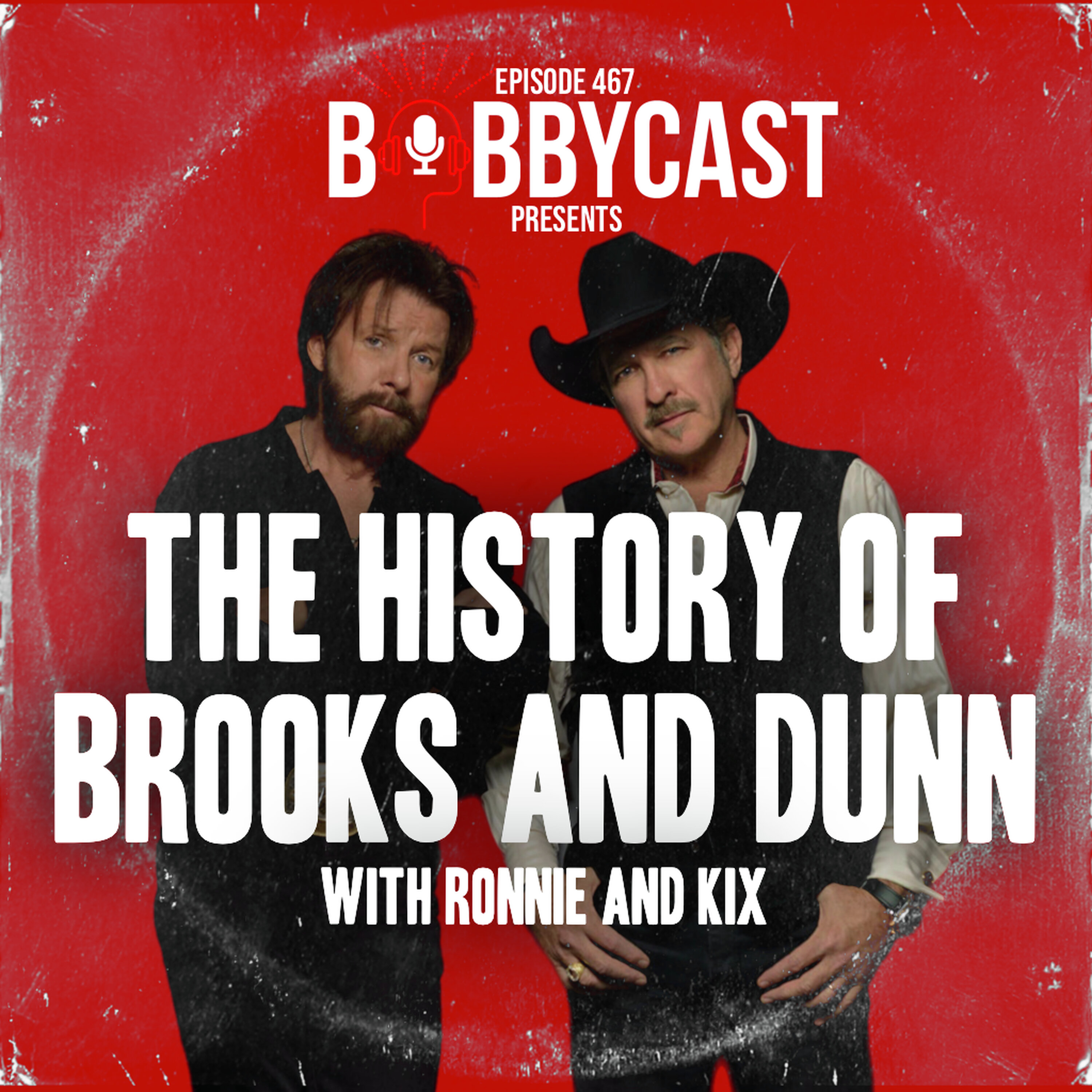
#467 - BobbyCast Presents: The History of Brooks and Dunn with Ronnie and Kix
Over the years, Bobby has sat down with Ronnie Dunn and Kix Brooks both separately AND together for the BobbyCast, so we have compiled the highlights into one episode. In this unique look at the history of Brooks and Dunn, Ronnie and Kix each share their sides of the story on life before fame, what prompted them to move to Nashville, getting discovered, how their record deal as a duo came about and the meaning behind some of their songs. They also talk about their friendship with Reba, why they think they have had so much success and Ronnie details the crazy story of meeting Johnny Cash!
Follow on Instagram: @TheBobbyCast
Follow on TikTok: @TheBobbyCast
Watch this Episode on Youtube
See omnystudio.com/listener for privacy information.
Available Results
Generated results are saved to the knowledge database for reuse and search.
Extract Knowledge
Pick what you want extracted first. Model, scope, and chapter options appear after a template is selected.
Transcript
00:00:01
Speaker 1: Ladies and gentlemen, we are experiencing technical difficulties.

00:00:07
Speaker 2: This is the Bobby Cast. Hey, welcome to a special edition. You're gonna love this Bobby Cast. It's about one of the best duos of all time, at least according to me and well everybody else, Brooks and Done.

00:00:19
Speaker 3: It's the story of how they came together.

00:00:21
Speaker 2: It's so fascinating because Ronnie and Kicks are so different in so many ways, but when they became Brooks and Done, magic happened, or at least that's how we look at it now. And what's been super cool is they've both done the Bobby Cast separately. I know them both separately. Actually I'm really good friends with Ronnie Dunn, which is crazy. And so what I wanted to do and what Mike Dee thought would be good, is to hear both of their versions of the same story, because both are true, it's just each of the version. I think you're gonna like this. So my favorite personal memory of Kicks. I played the Opry. This is one of the very first times ever played the Grand Ole Opry, and he just came over and walked in the door of the opry room. Because those doors are always open. It's kind of the rule. Unless you're naked, you leave the door open, and so unless you change, the doors open and anybody walks in and out backstage at the Opry.

00:01:15
Speaker 3: It's really cool because.

00:01:16
Speaker 2: It doesn't matter how big it's a massive star or if it's somebody like me, everybody just walks in and says hi. So, first time playing, I guess it was second time because the first time they have you in the room with all of the people's quotes from their first time. It was the second time I played, and Kicks comes up and it's just like how to go the first time, and I was like, it was great, But in my head, I'm thinking that's Kicksbrooks. I wants Pete beside him. He didn't know that.

00:01:40
Speaker 3: I thought that was gonna be your best memory.

00:01:41
Speaker 2: Well, the p and one was like an interesting one, and he was just like, man, you're gonna love it. You're gonna love being a part of the family here, and you're gonna love you know how.

00:01:50
Speaker 3: People look out for each other at the Opry and people are gonna send you mail.

00:01:53
Speaker 2: And he was just kind of giving me a talk when I didn't even know Kicks yet except for the intimate way. I knew him at the Journal, but I thought that was so cool. And then Ronnie lead singer Ronnie Done, and I'm not sure how the relationship became as like sticky as it is now. I was a fan they came in together. But before that, the first time I ever met them was at the Kennedy Center Honors, which is a big show on CBS, which is a big award where they give it to like five or six people that have made a difference in culture in America. And Reba was getting that award and Riba had asked me to come out and introduce her and do a few jokes and set up another act who came on after.

00:02:40
Speaker 4: Part of Meek.

00:02:41
Speaker 2: Because Reba had like eight people there performing. It's weird to say I was one of them, but I was the first one. It was me, and then Brooks and Dunn came out, Kelly Clarkson came out, Kristin Chenowi came out, but I was the first one up.

00:02:51
Speaker 3: I'm telling a.

00:02:51
Speaker 2: Couple jokes, but before I went up, I was out in the crowd and Ronnie was like hey, And Ronnie was known to be tough, like doesn't take any crap, doesn't care about your crap. Is a nice guy, but isn't gonna be friendly just for the sake of being fake and friendly. And Ronnie was like, yeah, my wife watchean dancing with the stars. And I was like, that's crazy. Ronnie done talking to me right now. And so that was my first time meeting him. I just remember the heads up everybody gave me about him, like of all of them, like kicks us very friendly and Ronnie's an acquired taste. I've told him that a hundred times now and it's now it's true. I love it about him. And so at this point, like every few months, every six months or so, maybe my wife and I will go to dinner with him and his wife and I don't know, we're friends.

00:03:40
Speaker 3: It's pretty cool.

00:03:41
Speaker 2: And we're gonna go back and forth with each of these guys and their stories on each of these guys. I mean they started out, they broke up for a while. I mean Ronnie had this whole thing where he just hated radio. This is before we got here with like fight with like corporate radio people, and looking back.

00:03:55
Speaker 3: Pretty hilarious.

00:03:56
Speaker 2: Glad I wasn't here because I'd probably taken some strays too, but yeah, it's a really cool relationship that I'm now lucky to have with the greatest duo and country music ever.

00:04:06
Speaker 3: And so let's get started.

00:04:08
Speaker 2: Ronnie and Kicks both went to college but eventually learned that what they studied wasn't something that they actually wanted to pursue. Here's Ronnie done, Ronnie the lead singer, talking about going to school to be a preacher and realizing that wasn't for him.

00:04:25
Speaker 1: Well, my mother's parents lived a block away, so I'd go down there and they were super religious. My grandfather was the big main deacon in the Emmanuel Baptist Church and el Red, Arkansas, and you know, their deal was his big thing was I was the oldest of sixteen grandkids. He just goes, I want one of my one of my grandson's place to be a minister. And I think that's where I picked that up.

00:04:50
Speaker 3: Later on, it sounds like you picked up both just at different times.

00:04:53
Speaker 4: Yeah.

00:04:54
Speaker 1: Yeah, And I was trying to you know, you're young and your impression, your sort of you know that stuff. So I went off to you know the next thing, you know, the lit and behold, I go off to Abilene, Texas to to like study, you know, Bible and the ministry.

00:05:10
Speaker 3: What does your dad say about that?

00:05:11
Speaker 1: Yes, anything, he was a church guy. He didn't say any anything about that. It was just like, you know, to him, for us to even think about college was something that wasn't on the on the radar.

00:05:29
Speaker 2: Was your dad resentful at all that he'd never got a fair shot because he had to work in oil and he felt like he was I think so I got hurt a bit.

00:05:36
Speaker 1: Yes, And that was one thing I was afraid of in I sensed, uhh extremely competitive, you know, uh for for numerous reasons that we were going into but uh yeah, it was and and he died before he died at the age of sixty two, before I really got a gotta handle or hold in professional music.

00:06:02
Speaker 2: What'd your mom think about you going to be a pastor?

00:06:05
Speaker 1: Harden Simmons ably and Christian all that. Yeah, she was all all for it, all for it.

00:06:10
Speaker 3: Is that because she thought it would make you a good dude.

00:06:13
Speaker 1: Yeah, yeah, it's just a better influence. You know, you're not getting out there in the real world. So when I told her, I was always taught by her. She was very conservative couldn't dance anyth that couldn't stuff, We couldn't go to the school sack hops back then?

00:06:25
Speaker 3: Was she Baptist?

00:06:25
Speaker 5: You said that?

00:06:26
Speaker 4: Yeah, because I grew up.

00:06:27
Speaker 2: In a Baptist church and the other Baptist churches couldn't dance, but they never really told us not to.

00:06:32
Speaker 3: But I knew that was the Baptist thing.

00:06:34
Speaker 4: That was almost a Methodist then.

00:06:35
Speaker 3: Yeah. Yeah, so she never never saw a dance.

00:06:38
Speaker 1: No, no, no, she felt like that if you danced, it led to sex and that was evil.

00:06:43
Speaker 3: I can tell you firsthand it didn't.

00:06:47
Speaker 1: I can tell you just to prove it until later in life.

00:06:53
Speaker 4: Yeah, you make it work with a little tequila. I don't know.

00:06:57
Speaker 2: You go to school, and what's it like, your first day of going to school to spend the rest of your life preaching the word of God?

00:07:06
Speaker 1: Uh? Yeah, I don't know if I would be specifically a preacher. I thought, you know, I could be like a you know, spiritual or religious counselor or or psychologists.

00:07:21
Speaker 4: Uh.

00:07:23
Speaker 1: And I learned real quick that that the second that I had to step up and speak in front of a crowd, that that wasn't for me.

00:07:30
Speaker 3: You know.

00:07:30
Speaker 2: So you didn't even have the performance like bug whenever it was time to.

00:07:35
Speaker 3: Speak, what you think you're going to do with the rest of your life?

00:07:37
Speaker 4: No, No, you had to do it to get to get licensed.

00:07:39
Speaker 1: This is so weird. I didn't know this. I'm too young to know this. To get licensed as a minister that you get licensed and then you get ordained. So, uh, if you're licensed, you have to you have to go up and preach a sermon.

00:07:52
Speaker 4: So this.

00:07:54
Speaker 1: Pastor we had in South Texas Port Isabel had me go up and to a sermon, which was the biggest nightmare.

00:08:03
Speaker 5: Of my life.

00:08:03
Speaker 3: Yeah, how to go?

00:08:04
Speaker 4: What do you remember? Horrible?

00:08:05
Speaker 3: Horrible?

00:08:05
Speaker 4: I remember thinking thirty minutes, thirty minutes? What you know? No, I mean it was awful.

00:08:11
Speaker 1: You know how you know how the is standing up as a comedian in front of people, period and trying to hold that crowd. Yeah, what you have to do? And it's the same same concept, you know.

00:08:20
Speaker 3: Do you remember what it was on?

00:08:22
Speaker 4: No? No, no, I was wrong, I don't know. You know.

00:08:29
Speaker 2: So you decide through experience you don't want to do this? No, so that both then what do you do? You do you just quit? Or do you have to call your folks. No, no, no, no, I tried to.

00:08:38
Speaker 1: I tried to like like ink my way over a little bit, so I changed the psychology and then I really got into that and enjoyed it and did it for But at the same time I was involved in music.

00:08:49
Speaker 4: We would go out and play at BMW's.

00:08:54
Speaker 3: Are you playing bass? Yeah, so you're not you're not even singing in the band that you're in.

00:08:58
Speaker 1: Well I would sing a few songs, yeah, But I got to where I was a good bass player and I could play by ear. That's another thing because if you're going out with with like pickup bands on the weekends, you kind of have to pretty much know how to go how to wing it because you're not going to know all those songs.

00:09:14
Speaker 4: So I could play by ear.

00:09:15
Speaker 3: Were you comfortable performing as a singer?

00:09:17
Speaker 4: Not at first?

00:09:18
Speaker 5: No.

00:09:19
Speaker 1: In fact, I wasn't comfortable performing as a singer even with Brooks and done it.

00:09:23
Speaker 4: You know.

00:09:23
Speaker 1: Well, after Neon Moon came along, that's the first time that I like they told me to hold a mic and just stand there and sing, or go go to one side of the stage, go to the other if without like shaken and did that.

00:09:39
Speaker 2: So you're playing bass, you're singing some Yeah, you're going to school. Yeah, I mean you didn't. You're not a preacher, you're not a Christian psychologist.

00:09:49
Speaker 6: I know.

00:09:50
Speaker 4: College was not for me. I hated it.

00:09:51
Speaker 3: How far did you go a seven years?

00:09:54
Speaker 1: I mean seven hours from graduating abnormal psych and statistics?

00:09:58
Speaker 3: You got that close?

00:09:59
Speaker 4: Yeah? Yeah. I was going to come home for the summer, work.

00:10:03
Speaker 1: On the pipeline with my dad, and then go back and finish up. And I never never finished up. I just I got involved with bands. They had moved to Tulsa, Oklahoma about then from South South Texas, and I got involved with all these cool bands. Eric Clapner's band was there, She's Bonnie Ray, JJ Cale. Joe Cocker Shelter Records was working out there in LA at the same time.

00:10:32
Speaker 2: So yeah, now here's kicks sharing how he grew up with a musical family and what inspired him to start playing music. I've spent a lot of time in report from Arkansas. So we go down to the boats. We drive down first place you could gamble, so that's where we went. And so by doing that, I also played a lot of ball and Report bans markets all I played Baseball Tree reports closest Louisiana big town, well as a city, but big town and Streeport like childhood home?

00:11:02
Speaker 3: What's home as a kid?

00:11:04
Speaker 4: For you?

00:11:04
Speaker 3: What town? Treeport is literal the streetport? What's school?

00:11:08
Speaker 5: I went to Riverside Elementary and literally he might have heard me tell this story, but two blocks away over on Autubun, Billy Jean Horton lived and she was the last wife of Hank Williams. They got married in Treeport, and they got married down in Baton Ridge. I think got married twice and one day was kind of unheard of at the time. After after Hank got divorced from Audrey, so he died, and then she married Johnny Horton and their daughter, Nina Horton, was my age and we were in grade schools together at Riverside. We still stay in touch. I mean Billy Jeans she was a number I mean for a kid in grade school. When she pulled up in that white convertible Cadillac and those leopard skin pants, It's just like, wow, hello, missus Horton. But Nina hired us Billy Jane actually five bucks, you know, we got a dollar a piece. Theres five of us in the band, but we like saying five bucks at the playground. That was our first gig in their driveway and their little white house is just like we had. I mean to think Johnny Horton and Hank Williams, this is I mean, this is a little white house. You know, it's probably a three bedroom on just a plain, old, you know, suburban Shreeport Street, just like us. It seems so average, you know, but going inside and seeing those gold records and those guitars and portraits of Johnny Horton and over the fireplace and all that stuff, it was real special and real cool, and it really, it really it set something inside of me going that's for sure.

00:12:48
Speaker 3: Did it you being able to see those did it actually let you know that it was possible to do that?

00:12:54
Speaker 5: That's what I mean. It seemed like something that it wasn't just some pie in the sky starring the sky, you know, it was it was something that people did, you know, regular people like my dad. You know, they just lived down the street. But they were playing music. And I mean, from the time I can remember, our family sang as much as we talked. You know, you get in the car, you start singing, songs. It was just a thing, so that really, you know, and we always had bands, you know, and from grade school on.

00:13:20
Speaker 3: Who buy your first guitar? My dad did.

00:13:24
Speaker 5: But my grandmother bought me a ukulele when I was like six years old because my mom died when I was like four, so I spent a lot of time with her, and they were She was real musical and my cousins were too. And I remember that came from Sears and Roebuck. It was nine to ninety five. I'll never forget. It's white and had red stripes on it. Really cool, and I had a songbook and I just learned to play chords and sing songs with that ukulele. I learned how that worked. But I really wasn't strong enough to play a guitar. My dad got me a still string guitar when I was ten or eleven.

00:13:58
Speaker 6: Hey, Ty, the Bobby Cat will be right back. Wow, and we're back on the Bobby Cast.

00:14:08
Speaker 2: Here's Ronnie talking about how he never really wanted to be a performer, that this was actually his dad's dream. Do you think that moving around a lot affected your desire to perform?

00:14:19
Speaker 1: No, I never I never wanted to be I never wanted to perform. I was good playing bass in the background and my dad played guitar. His dream was to become a country singer period. I mean everything else was second nature.

00:14:32
Speaker 4: Was he good? Uh yeah, he was good enough. He was good enough. He did he try, he did try. Yeah.

00:14:37
Speaker 1: He had a radio station, a radio show on a radio station in the fifties when I was born.

00:14:42
Speaker 4: Uh in Aberdeen, Texas. It was called that.

00:14:48
Speaker 1: The band was called the Fox four seven. I think it's KRBC, And so.

00:14:52
Speaker 2: He did a show and also had a band that performed on the show. Uh huh And how far did he get? Like what was his well, the.

00:14:57
Speaker 1: Big thing back then there was a DJ out of four worth of Dallas called Bill Mack, and he was kind of like, you know your name of the.

00:15:05
Speaker 4: Name of b j U.

00:15:07
Speaker 3: In the day, it's like man Jack, Well.

00:15:11
Speaker 4: Yeah, yeah, I'll be bones mean, I'm.

00:15:14
Speaker 3: Not a DJ.

00:15:15
Speaker 1: No, what what are you? You're more than that. But they're always more than that, program directors.

00:15:19
Speaker 4: All that stuff.

00:15:20
Speaker 2: No, no, don't compare me to other They're always I'm not a DJ, I don't I might play three songs in an hour and I don't even pick them. I perform wherever I am, I say things. I'm a personality. Okay, I'll go with that.

00:15:32
Speaker 4: No you're not. You're definitely not limited to to this. Uh you know, dynamic in space. No you're not.

00:15:39
Speaker 1: I see, I see like doing comedy. Uh, you know, out playing with the band on all kinds.

00:15:46
Speaker 4: Of TV shows. Now listen, climbing mountains.

00:15:49
Speaker 3: Let's go back to the let's go back to your dad.

00:15:52
Speaker 2: So he's he's got a radio show, and he's also a singer in a band, and so can he play his own music on on that show? Uh?

00:16:00
Speaker 4: Huh?

00:16:01
Speaker 3: So and he's playing Are they playing live?

00:16:02
Speaker 4: Yeah?

00:16:02
Speaker 5: He was right.

00:16:03
Speaker 4: Yeah, yeah.

00:16:03
Speaker 1: They had to play a live back then, so they would do all that crazy stuff.

00:16:07
Speaker 2: So I'm assuming that he toured some at least regionally with the band.

00:16:12
Speaker 1: He did, yes, when I was young, and then then all that stuff. You know, he had to move with his job to keep you.

00:16:17
Speaker 3: Know, he was still doing oil at en music.

00:16:20
Speaker 1: Yeah yeah, and I still had had to go with that, and then he had to feed his family. So do you think they were getting transferred a lot? You know, the pipeline business is in theory, you know.

00:16:29
Speaker 3: Did he always hold onto the dream even as he was doing well.

00:16:32
Speaker 1: Yes, I never ever showed any real interest in pursuing music at all. I can remember my grandmother, his mother, uh like, talking to me as a young kid. I never understood. I thought it was random. There was a guy next door who was in a band that they traveled all the time. She goes, Oh, you don't ever want to be involved with that. You're gone all the time. There's so much downside of whatever it is, and just they would play it these little, you know, subtle subconscious seeds and you know about that's just something you don't want to do. Now.

00:17:07
Speaker 2: I want to play this at kicks, sharing his story of what brought him to Nashville in the first place. Explain this winery to me, because I've never take a wine, uh huh, but it seems to be a pretty popular thing. Wine and coffee two things I think are catching on nowadays. It's pretty coffeeah too, too popular. But I drive by your place if I go play golf over at Troubador, and I see people out there sometimes not even drinking wine, is hanging out, sitting out there on blankets and stuff. Yeah, so what the heck's happening over there, becuse I've never actually been there except driving by.

00:17:37
Speaker 4: Yeah.

00:17:37
Speaker 5: Well, it was never a goal of mine to have a bar. That's a lie, that's a lot, because that's how I got to Nashville. Honestly, when I graduated from college, a good friend of mine the most popular bar in Shreeport where I played all the time. It's really cool club, about a three hundred seedar and on the weekends it was blowing up. But he was losing money on the weekdays because he was trying to hire some people. You know, don't go out to bars, not in a lot of towns during the you know, keeping a bar, going a big entertainment bar, it's hard. But he wanted to sell it five thousand dollars. So my dad and I were like best friends, and I called a meeting with him, though, because I wanted to borrow this money. Didn't have any money, but I had this idea. I was going to be the house band. You know, we could tell it wouldn't cost anything during the week weekends were blowing it out. Can make a lot of money. This is kind of working. So I went in there and said, hey, Dad, here's my plan. He said, I die, I gave him the whole rundown and whatever like that. And he's sitting there behind his desk smoking his cigar, nod in his head and said, you know what I need five thousand dollars. I said, I was hoping maybe you could co sign for it. Okay, So well, at first that that's not going to happen. He said, Really, two things here, he goes. The first one is I think he got a lot of talent. He goes, I believe in you, he said, But you don't want to be a big fish in a small pond here in Nashville. I mean, in shreport there's not a handful of bands doing any good. And really, if you want to prove to yourself and everybody that you really got what it takes, you need to go to Nashville or New York or Los Angeles and see if you can really make it in the music business. Okay, Oh see, I mean it makes sense.

00:19:23
Speaker 4: Okay.

00:19:24
Speaker 5: And the second thing, you don't know a damn thing about the bar business.

00:19:31
Speaker 3: So yeah, that.

00:19:33
Speaker 5: Got me out and going.

00:19:35
Speaker 2: Okay, here's Ronnie talking about when he realized he could actually be the lead singer of a band. When he was playing shows in Oklahoma. So you your guys are in Tulsa. Now, is that when Oklahoma comes into play for you at that stage of your life?

00:19:50
Speaker 4: Yep?

00:19:52
Speaker 2: So am I think of you? I mean I just think of Oklahoma first and foremost. I don't know, I guess probably because that's all you and my wife talked about for twenty minutes for we even did this, and you wouldn't stop talking and acknowledge.

00:20:02
Speaker 3: That I existed. But other than plays, yeah, other than that.

00:20:06
Speaker 2: So usual girls you move up to you move up to Oklahoma at age twenty two, twenty three.

00:20:10
Speaker 1: Uh yeah, yeah yeah, And I fell right in with these guys who were involved with Leon Russell and one it was an architect, buddy Steve Bush was his name.

00:20:22
Speaker 3: Are you playing bass with these guys?

00:20:24
Speaker 4: Not with them?

00:20:24
Speaker 1: No, But but I was playing with based with local bands, A bunch of good local bands, and tons of places to play, you know, like like like here. When we first moved to Nashville, there was no place to play. Now is Broadway as rocking? So it was kind of that deal. We would that people would club hob you know, and go go hear bands, but not not many of those guys from that group were involved in country at all, but told us I had a big country scene or Johnny Lee Wills and a bunch of other people.

00:20:52
Speaker 3: So are you singing more?

00:20:53
Speaker 2: I'm trying to find whenever you started to realize you're actually better than most vocally? You know? Are you you singing more than you were? Are you still just singing a few playing the bass on most?

00:21:04
Speaker 1: I'll tell you the thing that that really broke it. Urban cowboy thing kicked off like started and we were hitting up to then like little, you know, little regional clubs and just beer joints really, but that's I mean, where else do you go if you want to be a football player. I mean, if it's a canda, you have to go to the gym, you have to you have to play football, high school, junior high and all that stuff, you know, So you go to these beer joints and you do it.

00:21:29
Speaker 4: Uh.

00:21:30
Speaker 1: There was a lady here, Mary John Wilkins, who had work with Christmas Jofferson, that I visited with at one point before it all started. Don't let me get you too far off track, but uh, she called them skull orchards. She said, She's I love the way he's seeing me. He said, says, you're going to have to go get some some experience in these skull orchards.

00:21:47
Speaker 3: And I was like, what the what what just reps? She just wanted to go do reps. And it's not a.

00:21:52
Speaker 4: Pretty picture, right yeah, yeah, yeah, some day one.

00:21:55
Speaker 1: So anyway, I actually went to Oklahoma and did that. You know, I would call these places up and go book for you know, three hundred dollars a night, two hundred and fifty dollars a night if they had it, and then played for the door in Texas now at like I said, vfw's, we played for that and try to build the crowds up over a few weeks or a month and two and.

00:22:15
Speaker 4: Whatever. Work.

00:22:15
Speaker 1: We'd stayed as long as we could. And it's just working out playing.

00:22:19
Speaker 2: Yeah, but even singing, training that muscle. Yeah right, I mean you see, four nights a week.

00:22:24
Speaker 1: So I'm in Tulsa and the urban cowboy movement thing happens and they start building this massive club called Duke's Country, and I mean huge it was. It was a converted furniture factory and I mean there's nothing for three thousand and thirty five hundred people on a night to be there on the weekends Friday, Saturday, Sunday, sometimes Thursdays. A guy from a steel player ball thing from a Gatemouth Brown's band who's a blues player, came to a door on one day and he said, I'm putting together a band. He said, would you be the lead singer for it? For our house band at Dukes. I'm like, no, yes, I guess yes. So we put together a band and kept a job for two or three years, several years. This was a good run for a club stock.

00:23:17
Speaker 2: Was that your first spot at being just I mean you're the leadst Yeah?

00:23:21
Speaker 3: Did you find he liked it more than you thought?

00:23:24
Speaker 4: Yeah? I loved it?

00:23:25
Speaker 3: Did make you think of your dad?

00:23:27
Speaker 4: Always? Always?

00:23:28
Speaker 1: I always do anytime. I mean he's always you know, that's always the image and you know the motive back there that I think, you know, I just think that it's like, why do I end up cosmically living my father's.

00:23:43
Speaker 2: Dreams Kicksbrooks shared the story of how he was actually discovered while playing out in Nashville. When you move here to Nashville, how soon after that, after he has that talk with you, like, wa ain't doing a bar but you got to You got to.

00:23:58
Speaker 3: Go because you're good enough to go. You just got to go. You chose Nashville, obviously.

00:24:03
Speaker 2: How long until you get here and actually feel like this is home or that you can actually thrive.

00:24:10
Speaker 5: Well, it took a minute, because not like it did for a lot of people. I was fortunate. Jody Williams and I were roommates in military school, and Jody was running Charlie Daniels publishing company. His sister was married to Charlie's guitar player, so he kind of got it in there.

00:24:25
Speaker 3: Me and I could.

00:24:26
Speaker 5: It was the first place I'd ever been, because I've worked in New Orleans for seventy two nights before I came here, that I couldn't take my guitar and a handful of newspaper articles that I'd gotten and at least let somebody I could play for somebody and get a gig making some kind of money, like in the airport kind of thing here now. But when I got to town, this was the first place I'd ever been where I couldn't make a living playing my guitar. I mean it was everybody. Everybody was trying to do it. Yeah, it was just there weren't any and there's not enough places. Yeah, if there's a cover band or something, but everybody played for free. Everybody's trying to get noticed, you know. I mean I auditioned and played at the Bluebird all the time. It's actually where, you know, like in the movies, I got discovered. Bob Dole, who wound up managing Garth Brooks, was working at ass Cap, saw me playing at the Bluebird, invited me to his office the next day, introduced me to Don Ghenton. Don got me, you know, my first couple of cuts and gave me a publishing deal.

00:25:20
Speaker 2: I mean, that's the Nashville story here the Bluebird. I know somebody sees you. Did you were you like a picture? Who was being scouted? Were you knew the scouts were in the stands that night?

00:25:30
Speaker 3: No?

00:25:31
Speaker 5: No, I really I didn't have really didn't have anything going. And what I learned was my songs weren't that good. I'd written a lot of songs. But and me and David Lee Murphy were sweeping floors for Charlie Daniels. We got thirty bucks a night for sweep sweeping the War Memorial for the whole for the musicians Hall of Fame is right now, I'm not kidding. And we worked security. We worked at the barricade, behind the barricade to keep people from jumping on the stage, and then we'd work the dressing room, you know, when after the show was over, making sure nobody got in there or anything, and then we sweep the floors.

00:26:05
Speaker 3: Did you ever almost give up? No, I shouldn't say that.

00:26:10
Speaker 5: I mean there were probably times, you know, if you're a songwriter, and I had you know, like four number ones and quite a few cuts and had some you know, good years. But it was ten years before I met Ronnie, and there's there was valleys in there where I went, I'm not making that much money. I got a couple of kids. Now is this you know, where does this go from here? You know, I'm not really hot right now. I've got a publishing deal. But you know, three or four hundred bucks a week whatever I was making, you start looking around going, you know, that's what people do, a lot of people throwing the towel. I never did. Fortunately, you know, every time I just start to get a little discouraged, something good would happen, and just enough to enough to keep you in the game. You know, it always I was fortunate that, you know, people believed on Emmy here or there, even people that were doing advertising jingles and that kind of stuff. I always had some singing going on to and and I you know, I had a couple of record deals that was on Capitol. You know, didn't pan out, but people were aware. And I guess that's how eventually, you know, Tim Duboi felt like, you know, it's a good enough singer that me and Ronnie Dunn might make some noise.

00:27:22
Speaker 2: Here's Ronnie sharing the crazy story of how he ended up moving to Nashville and recording his first album with his band. You're singing in Tulis that you're regionally playing, But when when do you go? I got to go to Nashville or did someone say you got to go to Nashville My opportunity?

00:27:37
Speaker 1: She said, you know, for the for you to make this happen, you're going to have to just you're gonna have to jump out of the plane.

00:27:43
Speaker 4: And he says, you're gonna get.

00:27:44
Speaker 3: Af Did you not want to jump out of the plane.

00:27:46
Speaker 4: I was afraid. Nashville scared me to death.

00:27:50
Speaker 1: There's it's a feast or famine environment, you know, there's no there's no middle ground here, and I did not want to be get involved in the dark in the dark side.

00:28:01
Speaker 3: You pack up, you're throwing a car, you get a trailer? What what's what's okay?

00:28:06
Speaker 1: So Janine uh had had had been with her for five years and uh a friend introduced us and uh she and her ex husband are.

00:28:20
Speaker 4: Not ex husband but past husband. Uh what do you call it? Help me have any die? Yeah? Late late.

00:28:28
Speaker 1: Said dead hell anyway, Uh uh she she was come to find out, didn't know going in that she was friends with June car Cash and Johnny Cash, that they were best friends. Well he her husband, her late husband had made the car one piece of time that John's saying about. Okay, So she goes, I'm going to take you to Nashville, and she said, that's that's somewhere are gonna be able to do it? And and and introduce you to John June he said, we'sco up their friends. I'm not going to say much of anything except that Eric Clapton's drummer back and upper step here. Eric Clapton' drummer Jamie Oldecker, as a joke one night had entered my name in the Marlborough Talent Roundup contest. Okay, so you have to submit a tape.

00:29:18
Speaker 4: You know, they get it. They called it back. She says.

00:29:21
Speaker 1: I was a convenience store one night. I said, I ripped one of the interest forms up and I sent it in to him, and I'm like, oh, dude, this is so uncool. We thought we were cool. Even at the eleven we weren't. Weren't playing beard joints and starving it down. So he goes, I did it.

00:29:38
Speaker 4: I did it.

00:29:39
Speaker 1: We're going anyway. So sure enough we get it. We get into the regional part of the contest. Then you go to whatever the next event, and it's bands fifty five hundred bands all over the country, and then you end up here in Nashville doing the final for that and we want it. And I remember Ricky Skaggs was it was a guest, I mean a judge. I can't remember who else was.

00:30:07
Speaker 3: You want it?

00:30:08
Speaker 4: We want it?

00:30:09
Speaker 1: Yeah, and uh, you get like thirty three thousand dollars and uh recording session with Barry Beckett at the time and Scott Hendrix and we cut Bootscoot and Neon Moon and one more hold up in some Honky Tom Dean Dylon.

00:30:28
Speaker 4: Who is we?

00:30:29
Speaker 3: The band had a band? Right, yeah, yeah, I'm sorry, what's the name of the band.

00:30:33
Speaker 1: They eventually became the Tractors and wow yeah yeah really yeah. So it's just Bonnie Rae's piano player, I got clapses drummer.

00:30:42
Speaker 4: We're all like, that's all We're in a band. Yeah yeah, yeah.

00:30:46
Speaker 3: So you took that band originally cut a couple of those songs, uh huh, but.

00:30:50
Speaker 1: They weren't that band at the time. They were just were just were just mean. Yeah, you brought them together.

00:30:54
Speaker 5: Yeah. Wow.

00:30:55
Speaker 2: So you make that record on thirty three thousand dollars basically, yeah, three or four songs.

00:30:59
Speaker 3: That's not a record, but songs.

00:31:00
Speaker 4: Yeah right yeah.

00:31:01
Speaker 3: What do you do with it?

00:31:02
Speaker 4: Though? What do we do?

00:31:03
Speaker 3: Yeah? What do you do with the record?

00:31:04
Speaker 1: Well? That shows uh no, I mean we thought we thought, okay, well, at least we get a good, good foothold and uh, you know, getting to do some some stuff around it. And we did the Marlboro put Us on tour, a military tour, which was actually a blast.

00:31:21
Speaker 4: It was massive stages.

00:31:23
Speaker 1: George Straight, uh Godlye, Ricky Skaggs, Alan Jackson, everybody I mean, we got to open the shows for for all those people, and uh, we thought, well, this is the beginning of it. We'll get a record down the way we go. Well that ended, and then you know, three years later, I'm out weed eating, you know, the fence at the at the farm.

00:31:47
Speaker 4: So what the hell am I doing here?

00:31:49
Speaker 1: I thought, I thought, this is my way to into it. The same principle that works with you know the other shows that we watched today. The voice that is not that's not the ticket to the big time.

00:32:00
Speaker 2: Right Kicks talked about what Nashville was like when he first moved to town.

00:32:06
Speaker 3: What was it like when you moved What was this town like when you moved here?

00:32:09
Speaker 5: I'll tell you the For me, I just wanted to be a songwriter in this town.

00:32:14
Speaker 3: That's really.

00:32:15
Speaker 5: I mean all most sol songwriters have some dreams, and you know, they play their songs. We've gotten some recognition. There's exceptions to that, but most songwriters like to think of themselves as artists. I mean I did, and I had a couple of record deals before Ronnie and I got together, but not because I was that great. I don't know. But I started singing a lot of demos, you know.

00:32:36
Speaker 4: For stuff like that.

00:32:38
Speaker 5: But the town the ability to My first publisher is a guy named Don Gant, and man, he would hold court every day. We'd write songs all day. But he had been at Tree Publishing and was responsible for some of the great careers from Roger Miller and Mickey Newbery, got Sonny Throckmorton, people you may not be familiar with, but people that Harlan Howard Horse, they were all at Tree. I mean they owned independent publishing, but there were still great publishing company companies like Combine where Christopferson and you know Whalen and all those guys were too, a little smaller company. But when we were done at the end of the day, people would start polling in that door and Don would always send out for a few cases of beer. We just packing his office and start passing the guitar around. Would really make you want to write something special, because if that guitar came your way, r Don said, did you write anything today? But at the same time, even if I written something that wasn't that good, he would find that one line in a song and go, man, wait a second second verse, what was it you said you? Because y'all hear that, it's like and all of a sudden, he wouldn't make you feel like he might not tell you it was a great song, because it wasn't, but he would also make sure you knew that's what you need to be. That's that's a great line. Give me a whole song full of that kind of stuff. You know, it's a great teacher. But also by the end of by the end of the night, we're all well oiled. Then then you know, Mickey Newberry or Ray Van Hoy or some of those guys that Throckmorton who are just writing this brilliance. They get the guitar, and then you got the opportunity. Man, it was it was all up and down the street and where is it happening kind of thing, and I just I don't, you know, there's so so much you know, I don't sound like an old guy, but there's so much concrete where there were little houses all the way down Music Row, and you just wander up and down. You could hear it a lot of times, up and down.

00:34:36
Speaker 3: People just do it.

00:34:38
Speaker 5: Yeah, you know it's going or somebody come running down to your publishing company and go man calling down to combine. You know, whaling's down there and they're singing, you know, and Dad, that kind of stuff is going on.

00:34:52
Speaker 6: The Bobby Cast will be right back. Welcome back to the Bobby Cast.

00:35:01
Speaker 2: Ronnie told us the amazing and wild story about meeting Johnny Cash when he first moved to Nashville.

00:35:08
Speaker 3: Did you ever go meet Johnny Cash?

00:35:09
Speaker 4: Yes, he drove. Yes, she brought me in to meet him. Where to his house in Hendersonville?

00:35:16
Speaker 3: Are you nervous?

00:35:17
Speaker 4: Yeah? I'm scared to death. I don't want to meet them.

00:35:19
Speaker 1: And I know they're thinking, hey, you know she's bringing you know, I want to be singer into my house. It's just like what I would do with one of my daughters, just like, ah please right. So June takes her out, and you know just uh johnn had just given June a blue on blue rolls Royce for her birthday.

00:35:40
Speaker 2: You know.

00:35:40
Speaker 1: So we rolled up to their house and all this austin tatious stuff is outside and uh go in.

00:35:46
Speaker 3: Nervous, Yes, more nervous that you walk closer? Yeah, okay, good.

00:35:50
Speaker 4: It gets worse.

00:35:52
Speaker 1: So the girls after after day one, you know, we all stop and eat and all this stuff and John's real quiet.

00:35:57
Speaker 4: He's quiet at first, you.

00:35:58
Speaker 1: Know, and she's intimida anywhere, right, And then under those circumstances, I'm going, you know, I don't I don't want to, you know, I don't want.

00:36:06
Speaker 4: To be here like this.

00:36:08
Speaker 1: So the next day, June and Janine go shopping and leave me and John alone at the house. Well, there were two big black recliners in front of this TV like that on the wall, and he's sitting there watching CNN. And I just sat down with a cover coffee and I sat there. I said something going on in the news, and he goes, I always watch it, always watch it. He says, I'm an addict. And he says, I'll watch the TV until the loop changes. He says, you know that the CNN and all that stuff are on loops and I'm like no, and he goes, I just watch it to loops whatever.

00:36:52
Speaker 3: You know.

00:36:54
Speaker 1: That was kind of the only thing I remember. He just kind of didn't say much. He's like, you want to go fishing, or you and you want to be in music, nothing like that. So Janine gets back and she's kind of pale. She's kind of like down, and that's not like her because she's a chatter and uh, finally we we went back to the bedroom and she she I said, how did it go? And she goes, well, June just gave she read me the Riot Act.

00:37:18
Speaker 5: You know.

00:37:18
Speaker 1: She goes, look, you know, because Rodney and Roseanne had been been married, and the girls, Carlen and all of them, and Junior had her struggles with John too, and she said, uh, it's it's it's not a not a pretty business. She goes, you know, these these boys, she says, they're going to act up on you. You know, they're going to get out there and you know, theoretically do whatever. And she says, you know, it's just not it's not a good life. Even if he does make it. She said, the chances are, you know, wanted one hundred million that they even if they make it, will they last. She says, you don't, you don't. You don't want that life. You don't have to have that life. So Janie said, I'm you know, that's just kind of bummed me out. And I said, well, okay, let's let's go.

00:38:03
Speaker 4: But we didn't.

00:38:04
Speaker 1: We stayed and had a good time, but that was just kind of what we were left with there. But at the same time, June was kind enough to do whatever they could to help, and they did. And half the time, more than half the time, I would go go up to take the rent or play the rent six hundred bucks or something like that.

00:38:23
Speaker 4: This house looked like something.

00:38:24
Speaker 2: To Johnny's house. You would take the rent to Johnny Cash's house. Yeah, and just drop it.

00:38:27
Speaker 3: You have like a hole for the man.

00:38:29
Speaker 1: They wouldn't take it. No, Junior, I said, jun Number, run over and leave the rent. And she goes, Honey, don't do that. She said, don't do that yet. You know, there's no need for you to do that. We don't worry about that anyway. So they wouldn't take it.

00:38:41
Speaker 3: Did they ever take your rent?

00:38:43
Speaker 1: No?

00:38:43
Speaker 2: No?

00:38:44
Speaker 3: How long did you live there?

00:38:45
Speaker 4: A year and a half? Two years? No, two years?

00:38:50
Speaker 2: You know. At this point, Ronnie and Kicks were both doing their own things as artists songwriters, both living in Nashville, trying to make it. Little do they know that behind the scenes there was something going on, meaning some people had some ideas about them. Ronnie shared the story of getting a record deal as a duo with Kicks. I get a record deal with Arista as a solo artist.

00:39:12
Speaker 1: Well, I'm thinking as a solo artist and I'm still writing, and Tim says one day, he goes, come over here. He says, we're going to spend the day and I'm going to take you to every publishing company in town. And I had written, like I said, neon moon boots cooot, hardworking man. She's going that kind of stuff. No one actually super excited. And he goes, but I'm waiting to take you to to Sony ATV for to Donna Hilly and he said, that's where I want you. He said that's in his period, but the best place in town. So sure enough, she calls one day and says, hey, I'm I'm going to give you a deal. She said, I've been how does like you know, twelve hundred dollars a month sound. I was like, I'll take it now. And so I was set up as a writer in a great spot. And Tim put me and Tim Kicks together and I'm thinking, you've heard this story, but a lot of people have. But Kicks is thinking, well, he's writing songs with me for my solo deal. Unbeknownst to me, he had been working on another duo deal.

00:40:22
Speaker 4: At arist for him.

00:40:24
Speaker 1: Yes, him and someone else, Yes, Tim, Tim Nichols, it was who the first one was. And I heard that had I not worked out, it was going to be Leroy Parnell.

00:40:33
Speaker 3: That's funny.

00:40:34
Speaker 2: How about they were shopping Kicks to a lot of really great so it was like, Kicks, you're half of something great.

00:40:39
Speaker 4: You're going to be Yeah, you're going to be buddy.

00:40:41
Speaker 3: You know, I don't you want to be in a duo. It sounds like he had three duos all.

00:40:48
Speaker 1: I don't know.

00:40:49
Speaker 4: You have to ask Kicks. I don't know. But he'll tell the same story. He said.

00:40:52
Speaker 1: Man, I thought, you know, he was writing for me and I'm writing for him. So Tim comes in one day and he has everything in his office lined up, yuh, and uh plays plays all of our music together, you know, and he goes, I think. I think with the first song that we that we had written together was a brand new man. Uh and working on my next broken Heart.

00:41:16
Speaker 4: And uh what else?

00:41:19
Speaker 2: You wrote that in a day or in a week, like a couple of days together, but you stay together, right for a couple of days.

00:41:24
Speaker 4: Yeah.

00:41:24
Speaker 1: I had never co written before, so I didn't know, you know, what the protocol was, and uh, we did that put the records together, and did you know some work on them individually ourselves.

00:41:35
Speaker 2: Was there a creative chemistry that you felt then, or was it did you just sound good? Or did you compliment each other in a way that you hadn't before?

00:41:41
Speaker 4: It just it felt good. I liked I liked what he had brought to the table.

00:41:45
Speaker 1: It was lost and found in a couple of songs that were like almost Eagles progressive, and I liked that that kind of I was really, you know, in my creative in place, thinking if we were going to market ourselves as kind of a southwestern east west of the Mississippi, you know, desert kind of and that's southwest deal.

00:42:13
Speaker 2: I asked them both when they came to the studio what their first impression was of each other after being put together as a duo. Okay, so you guys got together like thirty one years ago. I looked it up, like exactly thirty one years ago. So you get put together, right, Like it suggested that you guys should meet each other, right, So who makes that suggestion?

00:42:33
Speaker 3: And what's the first impression you guys have each other when you meet?

00:42:37
Speaker 4: Take it? KB?

00:42:38
Speaker 5: Well, Jim Dubois called us both up.

00:42:41
Speaker 1: He was starting the label Arister at the time Nashville with Clive Davis.

00:42:47
Speaker 5: He'd already signed Alan Jackson, so he didn't want another boys singer. He was trying to get one of everything. Yeah, and he'd signed Diamond Rio, he'd sign Pam Tillis was his girl, total formula, Yeah, and the Jugs were breaking up, so he was determined to get a do it.

00:43:00
Speaker 3: He needed a new due exactly. And so you know, he just said.

00:43:06
Speaker 5: We literally met at lunch over a bad enchilada, and he pretty more or less offered us a record deal if you know, if it worked out, if we could work together.

00:43:16
Speaker 4: He didn't really say that. He said to go away and write some songs.

00:43:18
Speaker 5: And we did and he came that same week. We wrote a brand New Man in the next Broken Heart.

00:43:23
Speaker 3: That was Tuesday.

00:43:24
Speaker 5: We wrote those songs on Thursday and Friday, demoed them and took him back and he jumped up and down, and then he offered us a record deal.

00:43:31
Speaker 2: But when okay, you're right, brand New Man, do you go, oh, we had this is something like we didn't even know each other, you know, three days ago, but we wrote brand New Man.

00:43:38
Speaker 3: This is something we didn't know.

00:43:39
Speaker 4: You we never know. You never know when you write him, and until they you know, they're become hits. I guess I thought it was pretty good.

00:43:46
Speaker 5: Yeah, I really did, because you know, and Ronnie had that idea, I'm a changed man and and it's my near miss on what if we changed that? But he already had the I saw the light and I was baptized, you know. And Ronnie came from Oklahoma. He hadn't been hanging out in Nashville for ten years like me, so he had a lot of fresh ideas that I think we get bogged down and formula writing sometimes when you're doing that for a living. So it was for me as a writer, it was really a breath of fresh air, honestly, to have some new ideas that you weren't just sitting in a room and everybody passed around twenty times already, and it was kind of it was fun. We wrote a lot of stuff early that I thought it had some good energy to it.

00:44:28
Speaker 2: Whenever Boots Scooting Boogie happens and the dance blows up and everybody's that's you know what I actually learned two step to Bootschoot and Boggie like a big part of my life was being in Arkansas, and this girl named Carrie Carter had the biggest crush on was like, I'm a teacher had a two step and electric slide. By the way, both of them, I learned a boot scoot and Boggie the same song. And so when the boot scooting boogie starts to be a thing, did you guys come up with a dance?

00:44:51
Speaker 3: Did you guys know it's going to be a thing? Like, how does that whole thing happen? I wrote?

00:44:56
Speaker 1: In Oklahoma, we played a big club there called Tulsa City Limits, and uh, we had to do cover songs, and you play club you know, bars and stuff or they're one original stuff, and these people kept coming up and asking us to play it again. So I kind of thought, well, maybe there's something there. So we'd sneak into the set late at night. But they were doing those dances, and you know, the dance, all the line dancing and all that stuff was already up and going, you know, strong in Oklahoma, Texas. But down there, if you if you play a song or dude or play in any of the clubs and they don't dance, then you're you know, you're out. So we had to had to write songs that that kept people moving to write and turn sold beer.

00:45:36
Speaker 4: Now yeah, right, So.

00:45:39
Speaker 3: I asked Kicks if he remembers the first song that he ever wrote, and was like, wow, that's a hit. Do you remember when you moved here?

00:45:46
Speaker 2: Like and again, you're in the majors now because you have all the great songwriters around you, which elevates at least hopefully you to to get to their level. Do you remember the first like song you wrote where you were like, man, this is special, Like I have now reached a new peak. I've I've learned, and I've written this song. Do you remember the first great song you feel like you wrote?

00:46:04
Speaker 5: Honestly, I had quite a few number ones at that point, but I think I think Red Dirt Road was was a time when I really put the period on that song. Wik it's a freaking hit and it's it's really saying you know, Ronnie and I did that together and he actually we had it was just a place where we talked about really got real with each other, talked about where we came from, Like, you know, he was telling me about Elder Aid, I was telling me about where my grandparents was that's where it is, And somehow I was telling about driving those roads with my grandfather looking, you know, looking at at timber, you know what he was going to cut. And I said, man, that dirt was just so because I know it was up. That'd be a good name for an album. So now we got to write a song. And we kind of puttered around at it three or four times and never really got more than a line or two. And he got off the plane we were we had a gig and Sacramento and we flew to San Francisco and got off the plane and he handed me a cocktail napkin and it had those lines about you know, drank my first beer and you know, wrecked my first car toward all the pieces, something about Jesus and you know, life ain't just for high achievers. And he said, what do you think. I think it's freaking great, man. This is exactly what we were talking about. And I jumped on a bus, and you know, I wrote the pretty much the music and the verses. He had already told me about Rule Route three. You know, that's kind of when we kicked around where he came from, and he came and knocked on my bus at Terry McBride and said, man, let's go get a steak. And I said, you got to hear this song though, and we both just kind of slapped it up in here and and I couldn't wait to record it. It was it was. It was really fun to put it down too.

00:47:54
Speaker 6: Hey, Ty the Bobby Cast, We'll be right back. Wow, And we're back on the Bobby Cast.

00:48:04
Speaker 2: I asked Ronnie and Kicks why they think they had so much success and if they thought that they would be where they are today, because it's a really big place. Did they ever have this actual dream? Do they think it would come to permission? And here's what Kicks had to say.

00:48:19
Speaker 1: Did you ever just go.

00:48:20
Speaker 3: Dang, I'm famous and rich and then got lots of songs and it's cool.

00:48:25
Speaker 5: I quit doing that a while ago.

00:48:28
Speaker 3: You wake up months like, oh, good morning, up, babe. Is this pretty cool? I feel like I would if that was awesome?

00:48:35
Speaker 5: No, I mean, you know, you'd expect me to say all the humble things that you would expect me to say. And that's really the only answers that I have, because I'm really not that impressed with myself Honestly, the one thing you learn in Nashville. Whatever whatever your dream was here, whatever you hope to accomplish, which for me has been, has really exceeded any reality dreams that I had, you know. I mean, you've got to dream in your heart, you know, but that's kind of keeps you going. But to think that, you know, all that stuff would really kind of come true. What I realized that all the things that I do, play guitar, sing, you know, there's people that are so much better at it than me in this town. And if you there's not many people I think that are real with themselves that don't feel that way unless they are really the best singers here, the very best singers here, which I don't think that's necessarily my talent. I am. Really, I do feel real fortunate that my scene was so bad in the first five years of our career, just because I had just been playing and screaming and bars, you know, and you get on a big stage and I just had no control over over my air basically. And I really think talking on the radio for the last seventeen years has really helped me, especially when you're doing a four hour show and you know this forever. You can't just be huffing and puffing the whole time. You got to find your air somewhere else in order to have any quality of voice. And that started translating into my singing, and it's really made being on stage a lot more fun because I can kind of go through a whole show and feel like, you know, saying pretty good tonight, you know, which I wasn't feeling that way early in our career. Fortunately I had a great singer standing next to me, so you know, he pulled most of the weight, and in the studio I could do it. But getting on stage bouncing around and start huffing and puffing, it just wasn't very good. So I guess a long answer to a short question is I feel blessed, but I'm very humbled by the success that I've had with I guess what actual ability I do have? I think probably, if anything, I like to think that I've got a good ability to communicate and I'm not intimidated.

00:51:16
Speaker 3: By the stage at all.

00:51:18
Speaker 5: I'm not that great at it, but I got a lot of confidence.

00:51:24
Speaker 2: Here's Ronnie sharing his thoughts on why Brooks and Dunn had such a long and successful career. When you're doing these shows and they're selling out, and you guys are all crossing over even a bit into not just country music. We got so big, Yeah, at its most absurd time. Do you can you look back and appreciate it or was it all such a blur? No?

00:51:42
Speaker 4: We can look back and appreciate it, you know. No, No, you appreciate what you have.

00:51:49
Speaker 1: And just just from seeing other acts come along, you know, countless acts come along. It's like, here's the hardest thing in town. These guys are going to be monsters and all that stuff, and just like boom boom gone. It's like, why are we not boom boom gone? I don't know, that's unspoken. Yeah.

00:52:05
Speaker 2: Did you ever have what they call, Mike, what is it called positive imposter syndrome where you felt like, you know what, we're not as good as some of these guys, yet we continue to climb places that they're not, like, we don't really deserve to be here.

00:52:21
Speaker 3: Do you ever feel like that?

00:52:22
Speaker 4: Yes? Yeah, sincerely?

00:52:25
Speaker 3: Yeah, why do you think that? What do you think the element was about?

00:52:29
Speaker 4: You two?

00:52:29
Speaker 3: What do you think it was?

00:52:30
Speaker 4: I don't know, I don't thought. We thought about it a million times I say me, we be and kicks. I mean when we've talked about it, I don't know.

00:52:38
Speaker 1: I don't know if you know, I mean I do. Sometimes I said, I lay in bed by myself and just go it's just I mean, was it because we were involved with Clive Davis and Tim? I've asked him why, I said, what what made this thing work? And he goes, mister, I don't have a clue.

00:52:56
Speaker 3: What about the songs?

00:52:57
Speaker 1: Right?

00:52:58
Speaker 2: Do you ever just fall back and go, yeah, I think, yes, this could be the song.

00:53:01
Speaker 4: Well they say it starts there, so it could be just what those songs were.

00:53:06
Speaker 2: And there's obviously other things that go into the stew. But if the songs are your meat.

00:53:11
Speaker 4: That's a that's a foundation of it all. That's that's a bar nutt.

00:53:17
Speaker 2: When I had them both in the studio together, I asked them about being friends of the Riba and what they thought their biggest song was now they're together, and if they ever felt like they were too big? And you guys have a longer relationship with Riba than I do. I'm again a huge Riva fan and she's been great to me. But how did you guys become friends of Riba.

00:53:36
Speaker 5: Gosh, she hired us in.

00:53:39
Speaker 1: Three I guess she was the first tour that we actually got hooked up with and hired us. I think back then there were like four or five major tours straight Alabama.

00:53:49
Speaker 5: Who else since I think.

00:53:50
Speaker 4: Yeah, and then Riba. So she had a spot and gave us the opening spot.

00:53:54
Speaker 5: She gave us ten feet of stage in ten minutes and one hundred dollars a night.

00:53:57
Speaker 4: Yeah, we took a hundred bucks.

00:54:01
Speaker 6: Crazy.

00:54:01
Speaker 5: But a few years later we both kind of kind of got a good, good wave going and hooked up. I think in ninety six and maybe ninety seven we uh, we did some co headlining together. We had twenty one trucks and nineteen buses out on that tour. So for for.

00:54:22
Speaker 4: Looked good.

00:54:23
Speaker 5: Wow?

00:54:24
Speaker 3: What song is it? What gets the biggest reaction when you play it? Like? What song?

00:54:27
Speaker 2: Because you have so many hits, people albab react definitely everywhere you go. What's the one where you get people go boom, first lick they got it.

00:54:33
Speaker 5: I'd probably say, mam Marie, oh, come.

00:54:35
Speaker 3: On, that's a dance.

00:54:37
Speaker 2: JOm gotta be kidding me. Red Dough Road, you both wrote that, right, I heard kicks did the heavy lifting? Does that mean you come in on most of the article?

00:54:48
Speaker 1: Mus saw the bus one night after a show and he said, and he said, let's I've got this idea.

00:54:53
Speaker 4: And then did you have the title or whatever?

00:54:55
Speaker 1: And we started talking about and I said, well, I grew up like on a rule Route three and el Red or Arkansas kind of, you know, and uh, we talked about a lot of that stuff. And I'm not sure we didn't have the chorus well.

00:55:08
Speaker 5: On its way, so finding how we remember this stuff?

00:55:11
Speaker 4: Yeah, everybody writes song, right, we have a different story.

00:55:15
Speaker 5: I'll tell you what really happened after he so this is my life and I'm.

00:55:20
Speaker 4: Sticking to it.

00:55:22
Speaker 5: Uh.

00:55:22
Speaker 1: And then I remember having to like take off and go, and we were it was a long long drive, like from somewhere like somewhere to Oregon.

00:55:29
Speaker 5: We landed in San Francisco and we had a show in Sacramento at our.

00:55:32
Speaker 4: See I'm in Oregon. You're on the other coach.

00:55:35
Speaker 3: You're on the right coaster. Okay, they're both over there, all right.

00:55:38
Speaker 4: So anyway there I am in Beijing.

00:55:43
Speaker 3: The buses take off.

00:55:44
Speaker 1: We got the next morning and kicks his buses parked out in front of us, and I see him get out and his hair is like it looks like he's been through a breaking World War three or something. Stumbles up on the bus with his guitar and he plays plays the song. The verses was like, good god man, Bingo, you hit it, boom, you can tell done.

00:56:04
Speaker 5: So what really happened? Ronnie wrote down the primarily those great lines from the chorus on the airplane flying to San Francisco. Had Terry McBride with you, and he hands it to me and goes, what do you think of this? I'm like, shit, that is great. And we had had this discussion about where we grew up in the red dirt roads, and we decided to name our album that. But we said we got to write a song that goes with it. So I jumped on my bus, he jumps on his, and we head for Sacramento and I just grabbed my guitar, went to work. We get there, him and Terry go knock on my door and go let's go get a steak. And I said, cool, but you got to hear this first, so I made him listen, and as rare Ronnie done for him, he went I love it. That's freaking great. I went, what's wrong with you? Let's go let's see the steak, drink of beer, all that kind of stuff.

00:56:57
Speaker 2: What was the one head that you guys had twenty three number I think you have twenty three number one or looked earlier. What's the one where you wrote and you went, that's the one, like you could tell immediately because I'm asking you the flip side of this in the second what's the one where you went, that's a hit?

00:57:11
Speaker 5: Red Dirt?

00:57:12
Speaker 4: Red Dirt was pretty close.

00:57:13
Speaker 1: I mean, I think that was a moment where we were all sitting around and he played it for the first time and went, ooh, I think I think we've got it. They went in the studio and then it you know, here comes that lick noo and then it just turned into a like boom.

00:57:28
Speaker 5: I couldn't wait to get home and play that for Mark, right because we had we had started gathering up some songs, but we needed that anchor and to go with the title, you know, and that's it's just that moment where you go, how we did it?

00:57:39
Speaker 1: So many variables, you know, if you contribute to that aha moment, and then a lot of times, it's just when you sit down in the studio not knowing where it's going to go, and the guitar player. Usually if the guitar player sit down and hit hit that lick, and he hit that intro lick.

00:57:54
Speaker 4: Pop up bump bump bump, bump bump bum, they're just turned into like a kind of an anthem, the kind of thing the way we went on.

00:58:00
Speaker 2: The other side of that, what major song, what big hit you guys had? It took forever and you're like, oh, let's think took forever to write. We didn't get it right and producing it the first couple of times, we didn't put it like what's the struggle song?

00:58:12
Speaker 1: They're all struggling. It's like having to go do your homework. It's fun to sing, fun fun to play.

00:58:19
Speaker 5: I think He'll Billy Deluxe was one that was a totally different song than Believe, but it was a song that never you know, barely got in the top ten. It might have made it, it might not even made top ten. But I watched our sales double and and it's some of those songs, just like Believe, people to this day go that song changed my life. Those songs that have the impact and that really make a difference in whatever. They're not always those ditties that slam up to number one on radio or something like that, but you feel a connection to your fans and and to your career that you're like, man, that's that one. That one got down there, that one.

00:59:00
Speaker 4: Did some good.

00:59:01
Speaker 2: You know the song that and I've often referenced on this show. We talk about songs that actually make you, like physically cry or feel something like cowgirls don't cry?

00:59:10
Speaker 3: Are you kidding me? Are you still if that thing comes?

00:59:13
Speaker 1: I've heard that man.

00:59:16
Speaker 4: Look out the big cowboy, just like, oh, man, start wiping tears or what?

00:59:21
Speaker 2: That song still get I've heard the song ten thousand times and I hear it again and I don't I don't know if it's Riba being into two that pushes me over the edge, but are you kidding me? Then she sings it backed after her dad dies, I'm like.

00:59:34
Speaker 3: Are you kidding me?

00:59:36
Speaker 1: There were a lot of Redheads that had had a part in that. Terry McBride has a Redhead daughter. I have two daughters in the red Heads, and then the Riba factor in there as well that song, and they're all into horses.

00:59:50
Speaker 2: Even after thirty years, Brooks and Dunn still going strong, playing shows in Vegas with Riba.

00:59:55
Speaker 3: They've been out on the twenty twenty four reboot tour.

00:59:58
Speaker 2: The Summer Kicks has got a crazy beautiful vineyard Nashville that's very popular.

01:00:02
Speaker 3: It's so popular.

01:00:03
Speaker 2: I wish that I drink wine. I asked him how he got into wine and how he knew he wanted to open a venue. How did wine did it be in your thing?

01:00:10
Speaker 5: Though? Well, from Louisiana, so I started drinking at a very early age.

01:00:18
Speaker 4: I like wine.

01:00:18
Speaker 5: It's great. You know, it's great with food. That's a big deal with wine is pairing. If you you know, start doing that. There's certain because of the acidity and red wines and white ones, and you know, a great cabernet if you really like steak, it pairs great. One thing that wine does like good ones, nice ones. You know what makes a great wine. Well, one thing is what's called a long finish. And if wine has a you know, especially a Cabernet or a more lower great steak ones, if they have a long finish, you like to taste of that wine. You take a big sip of that and you cut your steak, you taste that wine with that steak, and it's just a great pairing of food and drink. And that's all part of it. You know, you really learn to pair. You know, some like send you Vassi, a wine we may call red Fox. Red is a great what I call a table wine, and there's a lot of great Italian table wines which are just great with cheese and crackers. You know, it's just it's a great pairing that you know, just drink a little wine. And it's also something fun with your friends. You know, you cap cop a little buzz, you start talking about some stuff you might not have been talking about before, and just you know, it's it's nonsense, but it's it's fun.

01:01:28
Speaker 3: That as you do wine sell wine. But people go out there and just to hang out too, rightther just sit in the field.

01:01:34
Speaker 5: Most people are drinking. They are, yeah, most of their children are. You know, at least I do see kids at five and six year olds. You don't sell wine to the kids. That's we don't sell wine to the kids. And it's it's hysterical online.

01:01:45
Speaker 1: You know.

01:01:46
Speaker 5: The rare complaints that we get are because you know, there's not enough things for their children to do.

01:01:51
Speaker 3: At the winery.

01:01:52
Speaker 5: Yeah, you know, we're trying to drink here, you know, could you please set up a bouncy you know, house or something for the kids so you know, we can drink in peace.

01:02:06
Speaker 3: There you have it.

01:02:07
Speaker 2: Hopefully you learned a few things about Brooks and Done that you did not know. Their story is not typical of how duos usually form. One from Texas, the other from Louisiana. One had no desire to perform, the other was planted at a young age. They each landed in Nashville in their own.

01:02:22
Speaker 3: Way, and the rest is history. Thank you for listening to this episode. Like, if they do awards for this crap, we should win one for this one. I've never said that before.

01:02:30
Speaker 2: This is like a great piece of us over the years with the greatest country duo of all time, separately and together and just retelling this.

01:02:39
Speaker 3: This is like some filmmaker stuff. It was an Oscar and Emmy, all of them.

01:02:43
Speaker 2: And I say this, Yes, every award a potty is that a thing can make it. I did not put this together, obviously. I did the interviews, Mike did the booking and setting up, but I didn't put all this together. I've put the voice and the vo in the middle of it. But so Mike, who gets the credit. If there's a technical award for this one, that would be Abby Anderson, Abby Anderson, Classic Abby Anderson. Good job, Abby, really awesome. I hope you love the episode. We love doing it, we love living it. And share it with your friends if you don't mind. If you did like it, I'm pretty proud of this one. Be sure to subscribe to the Bobby Cast wherever you're listening to this now. If you don't mind, rate it five stars. We'll be back next week with a brand new episode.