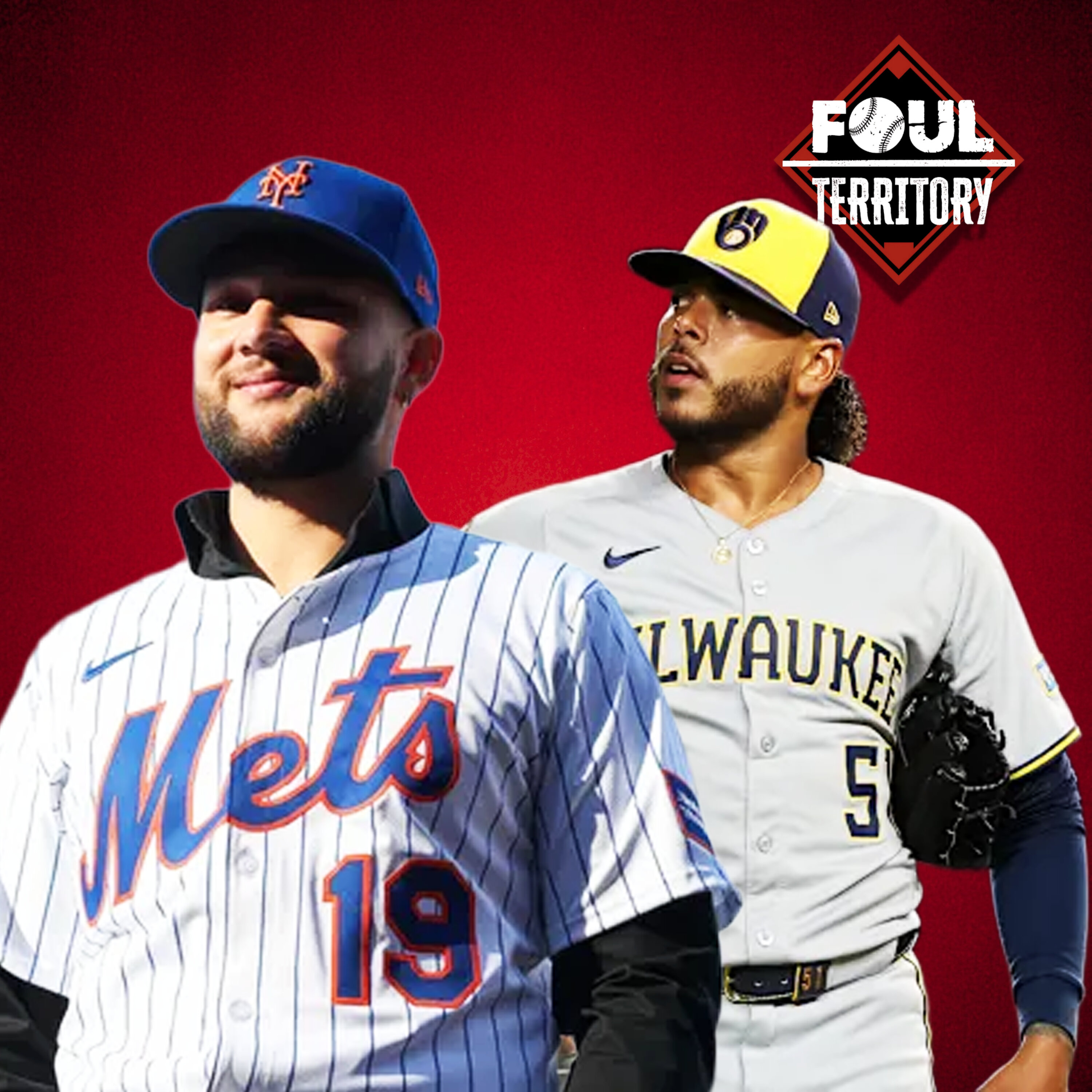
Mets manager Carlos Mendoza joins FT + Bo Bichette drama in Toronto?
After a crazy week of additions, Mets manager Carlos Mendoza jumps on to take us inside all of the moves and how he plans to line up the new roster. He also tells us what it was like losing key players like Pete Alonso and Edwin Díaz in free agency, as well as members of his coaching staff.
(26:17) Did Bo Bichette have a strained relationship with the front office in Toronto? We discuss Whit Merrifield’s comments about the new Mets third baseman.
Hosts: Todd Frazier, Erik Kratz, Scott Braun
FT is Live Monday-Friday from 1-3pm ET on YouTube. Be there :)
See omnystudio.com/listener for privacy information.
Available Results
Generated results are saved to the knowledge database for reuse and search.
Extract Knowledge
Pick what you want extracted first. Model, scope, and chapter options appear after a template is selected.
Transcript
00:00:09
Speaker 1: Matt's manager, Carlos Mendoza is back. Mandy, What a week do you just have? Endless champagne bottle popping right now?

00:00:17
Speaker 2: Going on?

00:00:18
Speaker 3: What a fun week this is?

00:00:19
Speaker 1: Are you enjoying watching this and getting the phone calls with Bashette, Luis Robert and Freddie Peralta in a one week span?

00:00:26
Speaker 4: I know, right, especially after what we went through so the first part of the off season, right when.

00:00:33
Speaker 5: I see Cratsy laughing there, But yeah, it's exciting, man. And everything happened so fast, you know, it was one move after another one I could getting.

00:00:44
Speaker 4: I kept getting text from David or call from our front office members about the move that we were making. And it was just exciting, you know because, like I said, they wait, the off season started it and the fact that we got to this point.

00:00:57
Speaker 3: He's excited.

00:01:00
Speaker 6: To me a little bit about I'm sure you've thought about this. People are wondering too this infield now, talk to me. Have you thought about you know, where guys are going to be You know, I haven't heard anything. That's why I'm asking, like, have you thought is there like any specific positions that Bo's going to be at? And you know everybody else. I mean, so, I mean, like, talk to me about where guys are going to be in this infield er. Is he going to just try and move people around?

00:01:23
Speaker 7: Yeah?

00:01:23
Speaker 3: No, I mean we're pretty much set with bo. We were pretty honest from the beginning and he was all in. I remember the.

00:01:31
Speaker 4: Suit call that we had with him. He was clear that the position that he was going to play was third base, and he was all in. So we'll have bow up there. Lian Bore obviously a sure mark is second base. And then you know, we got Polanco that we signed to play first base, another former middle infielder, a guy that moves around, uh that for the first time.

00:01:53
Speaker 3: In his career is going to be playing first base. Bred Batty will get some reps there.

00:01:57
Speaker 4: Mark Viento's is going to get an opportunity to earn from a bat's there as well. So, like I said, we feel pretty good with the way our infhill is set right now.

00:02:08
Speaker 7: Mandy, have you ever seen the movie Moneyball?

00:02:12
Speaker 3: Of course?

00:02:14
Speaker 7: Okay, Ron Washington in that movie is quoted is saying, it's not that easy. Do you believe first base is that easy? And because you you kind of tiered, you kind of tiered the athleticism from Jorge Polonco to Brett Bady to Viento's. But it's experience, it's angles, it's are you going to have them go to their right because you're gonna have Marcus Simeon controlling that area? You know? Do they only go to the bag afterwards? Like how easy do you think this transition is going to be? So do you have a lower level of expectation if you don't think it's that easy?

00:02:52
Speaker 3: Expectations are there? They're going to be able to handle. Especially I gotta like Polanco, He's not that easy. He's not that easy.

00:02:58
Speaker 4: People just think that, how we'll put him at first base and he'll figure it out.

00:03:03
Speaker 3: There's so much that goes into it when you're making that type.

00:03:06
Speaker 4: Of transition, whether it's you know, not to mention fundamentals right cuts and relay, is bunt plays, getting familiar with your pitching staff, who gets off the man well, having the awareness with the second basement is playing. So you got to get on a habit to pick to you right, especially the guys that are used to playing up the middle that as soon as the balls hit, their first reaction is go get the baseball in this case, when you're playing first base, you gotta be familiar, you know, with how far the second basement is.

00:03:35
Speaker 3: Do I need to go for that ball? Do I need to just go straight to the base.

00:03:40
Speaker 4: And that's almost some of the players that only by playing the position, that's how you're gonna get better. So our job is to get him as many as game reps as possible, because it's not so much about catching a ground ball. They know how to catch a ground ball, they're gonna get to baseballs. And then on top of that, it's the footwork at first base, you know, making sure they're not stretching too soon, the balls in the dirt, their ability to use the whole back like.

00:04:06
Speaker 3: It's going to be a process.

00:04:08
Speaker 4: I'm glad that we started early, but again, until we see it in games, we just got to stay on top of it.

00:04:17
Speaker 7: I think I'll be playing more games. Are those guys gonna be playing more games at first base? Not to like only key on one position? More games at spring training than they ever have, Like, are they going to be going down to the B game in the minor league side to get reps because you have three guys for one position and there's only one big league game. I think you played twenty six of them during spring and they can't play.

00:04:38
Speaker 2: All of them.

00:04:39
Speaker 4: Yeah, we're gonna have to get creative here in making sure we're giving these guys game reps.

00:04:43
Speaker 3: So, like you mentioned, whether it's a big game, backfield action, minor league games.

00:04:50
Speaker 4: You know, not to mention that Bret Baide is going to be getting some reps in the alphiel as well. So the communication is going to be huge here making sure that when we are putting together their their plans and you know, you know, like the progression and where are they going to be potential to be playing, they have a pretty good idea in a heads up so they can get ready. But again, creating as many as game opportunities as possible is going.

00:05:15
Speaker 3: To be the key.

00:05:17
Speaker 7: All right, let's take it back to that time where the beginning of the off season that you alluded to when you first came on. What did those conversations sound like, Because people don't know, Mandy, you are one of the best, most connected, most communicative managers in the game, and that is you know, that's a superpower for you, and that's what helps drive your team when you see that you're going to lose or you lose a guy like Pete Edwin traded Nemo. What are those conversations like, did you have conversations with all three of those guys and how hard were they if you did have those conversations.

00:05:53
Speaker 4: Yeah, I mean I talked to them after day's fine, you know, only happened back to bad days.

00:05:58
Speaker 3: I think it was Edwin.

00:05:59
Speaker 4: Men, so he seems like he was he's being forever, but I think it was ed when the first guy and then I called him and you know, as much as you hate seeing him leave, you know you're happy for him in his sauel. And you create those relationship with those guys and you just have to appreciate what they did for us.

00:06:21
Speaker 3: And then the same thing happened with p You know, I call him and then I.

00:06:26
Speaker 4: Saw him down here went to Vesta the player UH, and then he was there and and we had a long conversation. Again, you create this relationship with these players that he means a lot, you know, but you wish them well, you thank them because they posted and they were a huge part of this organization.

00:06:47
Speaker 3: Same thing with the UH trade with Brandon he wasn't easy.

00:06:51
Speaker 4: And then getting on the phone with him and after the trade went down, you just appreciation.

00:06:58
Speaker 3: A lot of respect for this guy.

00:07:00
Speaker 4: Same thing with Jeff McNeil after the trade, you know, uh, the conversations with him and uh, just like I said, I appreciate what they did for us.

00:07:10
Speaker 2: All Right.

00:07:11
Speaker 6: You talked a little about hitters that you lost there, a little bit talk. I want to go back to Bobbashev for a second. Where do you see him hitting in the lineup? And you know, talk about that situation too, because you can put him anywhere.

00:07:23
Speaker 2: Uh, he's a guy that can bat too. He can bat four.

00:07:26
Speaker 6: Talk to me about like if you thought about that, and where do you see him hitting starting, you know, first day of the year.

00:07:32
Speaker 4: Yeah, I mean he's early and I'm not gonna lie. When the transaction went down, has some time the following day just kind of start envisioning.

00:07:44
Speaker 3: Where I could potentially be hitting.

00:07:45
Speaker 4: But like you said, he's so versatile that this is a guy that could lead off to hit take and who hit ther who hit fourth? But if you're asking me right now, and I mean we're so far away from opening day, I could see a combination of when door to shit right away, you know. But again, I gotta have these conversations with the players. But the fact that Bo he's such a good hitter.

00:08:09
Speaker 3: You know, you can put him in from a soda. You can put it behind him, you can put me more.

00:08:13
Speaker 4: Whether take him out of the leadle spot and put him third, Like, there's so many different ways I could go here, all right.

00:08:19
Speaker 7: One of the things that was said, because we didn't hear a lot about Bobashet and it was said on this show, not by me, not by aj, not by Scott or Todd, somebody said the bow signing was a panic pivot. Do you feel like it was more of a surprise for you than if you had gotten Tucker, if that had gone all the way through and had been Tucker, Or was it something that we had this coming down the lane the whole time? It is just you stupid media people didn't know about it.

00:08:52
Speaker 3: Pratz. I know you're gonna tell me if you said it, you will tell me.

00:08:55
Speaker 2: Hey I said it.

00:08:56
Speaker 7: Oh, I would tell you, you know that.

00:08:59
Speaker 4: No, Listen, I don't see it as a panic because we laid down that foundation, like we were prepared. You know, we had some calls with him, you know, so we had conversations with him. This wasn't all talker went somewhere else, and then the very next day here we are signing both.

00:09:15
Speaker 3: We have meetings with him.

00:09:16
Speaker 4: Like I said, you gotta get credit to David Stearns in the front office because they lay down that foundation that you know, they we had an idea in case, you know, this guy goes here, we can always go there.

00:09:28
Speaker 3: But I wouldn't say it was a panic move.

00:09:31
Speaker 7: All right. Does it feel a little bit better signing Bow that the Phillies thought they had Bow? Just a little bit, just a little rivalry. Does it feel a little bit better? Yeah?

00:09:42
Speaker 4: I mean there's so much out there that I don't know that you get caught up on all the noise and all that. But I saw those reports where like the Phillies are getting close to getting both.

00:09:52
Speaker 3: I think you just getting an an elite player period.

00:09:54
Speaker 4: Regardless whether we got them or they didn't get them, they're still a pretty good team.

00:09:59
Speaker 2: You know.

00:10:00
Speaker 4: But the way I see it is just that we got better as the team as an organization as soon as we sign them.

00:10:06
Speaker 7: Okay, it was confirmed by Dombrowski, so it wasn't just a rumor. But I won't let you. I won't. I won't belabor the point because my next one's a little bit tougher. There's not not report, not reports, but there's things coming out about, Hey, they wanted you guys wanted to change the culture. When you see the moves that were made on a team that didn't pitch well, and yet it was position player, position player, position player, position player that weren't signed back, maybe it to me it kind of confirms that. And or was it a shift of what type of team you want to be and not necessarily the culture of a team that needed to be shifted.

00:10:49
Speaker 3: Yeah, look, I know there was a lot of noise as well about that.

00:10:54
Speaker 4: For me, I think it was just some of the personality and the way we want to construct a roster.

00:11:00
Speaker 3: We had a really good culture. You know. The truth was that we didn't play well. You know, we didn't get results. I thought that at the beginning of the year.

00:11:09
Speaker 4: For the first two and a half months, you know, nobody said anything about, you know, what was going on in.

00:11:14
Speaker 3: Our locker room. It was a professional.

00:11:16
Speaker 4: Look now, if we're comparing twenty twenty five to twenty twenty four, then maybe we could there's a case there, you know, but that was something magical that will happened in twenty twenty four.

00:11:28
Speaker 8: I feel like the guys got along well. They respected each other. But when you're not winning games, you know, like you're trying to keep it fun. You're trying to push guys. But we just didn't get the job done on the field.

00:11:41
Speaker 4: But I think we hear David and how much we wanted to improve our defense, and some of this move will reflect that.

00:11:51
Speaker 6: I want to go on another guy. You guys just picked up Lewis Robert. Have you won Have you had any conversation with him? And two, we know him, we know he's got the and we know he can hit the ball a long way, big in stature. You're looking for him just to get it, be healthy and bring back that Oldthouis Robert and Wold Junior.

00:12:09
Speaker 4: Yeah, I mean we're looking at a very toolsy player. When he's healthy, he's he's one of the best. You know, we know the defense, we know the power, his ability to steal. Basis is our job to keep him on the field. Now I spoke with him. I know the trainers are already with their hands on him.

00:12:30
Speaker 3: Again. We got to get to know the player. We got to get.

00:12:34
Speaker 4: To know his routines and the way he prepares, and then we're going to have to make some adjustments in communication with him because that's going.

00:12:42
Speaker 3: To be the goal. We need this guy on the field.

00:12:45
Speaker 4: So I feel good where he's at in talking to him. And like I said, our group, our medical group is already in communication with him, and I'm pretty sure they're gonna put a plan moving forward so he allows him to be on the field as much as po awesome.

00:13:04
Speaker 7: Quanta temple blah blah, Coln Luis, how many times have you talked to Luis? Because you have a little different connection than you know, say Will Venable did last year. I get it. You know the previous manager, he was Pedro, had had the Spanish connection. That means a lot to Cuban guys, I think more than some guys who come up through the minor leagues and spend a lot of time in the minor leagues. He was in the minor leagues for a little bit and then bang in the big leagues. So how many times have you talked to him to make that connection as much as you can in these you know, previous few days that you've had him now as a player.

00:13:40
Speaker 4: Yeah, no, I only talked to him once, but I'm planning on uh visit him, uh so I can see him in person and watching work out. I know he's down here in Florida, but I know our trainers already in contact with him. But as far as like my first conversation, I mean, he happens so fast, right, uh, just more like introduction. But again, it's good to have a player that you know, with that calibor and that potential. And my job now as the manager and our coaches is to build that relationship with him so he can trust us.

00:14:16
Speaker 7: All right, Freddie P my guy, one of my favorite teammates of all time. You see, yeah, how how how much? How much is this first conversation that you're gonna have with him if you haven't had it yet or you already had it, Does it mean to set out a standard of you need to be our number one or you don't need to be our number one. You just need to be you, right?

00:14:44
Speaker 3: Uh?

00:14:45
Speaker 4: And that's it, grat See, he needs to be himself. I spoke with him as soon as the transaction went down. I got on the phone and I had a.

00:14:53
Speaker 3: Very good conversation. He was super excited.

00:14:56
Speaker 4: Uh, and everything that I'm hearing, we all know the quality of the picture and the competitor that he is on him out, but everybody keeps telling me the quality of the person. And you could feel it right away with my first conversation with him, and how excited he was. And he's willing to report a porson Lucy earlier. So he started meeting people, and that for me goes a long way again. He was a he was a productive and a really good conversation. But at the end of the day, he's got to be Freddie Peralta. Go out there, compete and give us a chance to win every time you take the base.

00:15:35
Speaker 7: Did you make him laugh the first time you talked to him on the phone or were you serious, Mendy.

00:15:41
Speaker 9: I was, I was, Mandy. You know, it's just maybe maybe they laugh. He's not like, Hey, how are you now telling him about the organization? Who we are, what we are all about? And you just appreciated that.

00:15:59
Speaker 7: And did you tell tell him that it's extension time? Have you guys in an organization said we're gonna make this We're gonna make this guy a permanent met because your other guy, Boba Schett said nothing when asked about playing for a one year contract or was it going to be a little bit longer.

00:16:17
Speaker 3: Yeah, we'll let them get comfortable here.

00:16:20
Speaker 4: We'll let Freddy get his feet wet here and go out there and do himself and the rest will take care of itself.

00:16:26
Speaker 3: Same thing with both.

00:16:28
Speaker 4: You know, we need those guys to go out and have a huge year and then the rest will take care of itself.

00:16:37
Speaker 7: All right, The end of the season didn't go well, then you had some coaches changes, all that stuff. How did you handle that? Now that you look back on it, You've had Christmas, in New Year's and some hopefully some time. People need to know managers are very busy. They're on zoom calls and flights for people that are signed. How did you looking back on those weeks, the end of the season, through the play off, the coaching changes, how did you handle it? And how tough was it or did you know it was tough in the moment and then when you're looking back on it, Ah, you know what, I handled it as well as I could.

00:17:12
Speaker 3: Yeah, I mean, look, I'm not gonna lie.

00:17:15
Speaker 4: They were probably the toughest days of my professional career, whether it.

00:17:20
Speaker 3: Was a player, coach, manager at any level. You know, because you developed this relationship with these coaches. You know, we work together for a couple.

00:17:29
Speaker 4: Of years, and you know, when you know, you know you're gonna have to make some tough decisions. And man, I'm telling you, you know, not only get close with them, because you spend so much time with them. You know, you spend more time with them than what you do with your family. They become your family. And when you're making those phone calls, uh, it just breaks your breaks your heart, you know, but it's the business. Obviously everybody understands. Uh. But to answer that question, Pratzy, very difficult few days, a few weeks to be on this with you to kind of get over the hump. But I'm happy that pretty much all of them found home, which I'm not surprised because again, not only they were really good coaches, they were great people. But we need to make some tough decisions.

00:18:15
Speaker 6: Talk about your starting rotation pitching wise, if everybody's healthy, you know, Singer coming back from his injury, do you see a six man rotation through this?

00:18:24
Speaker 2: I feel like Sanger, you know, I'm not a manager. Yeah, it's tough, but don't go there to man. I don't know. I feel like.

00:18:33
Speaker 3: Like here's doing me a topic with Kode. I. Well, you guys gonna go five man, you guys gonna go six man.

00:18:38
Speaker 4: I remember last year when we were rolling right and all of these starters were throwing the ball extremely well, and somebody asked me, hey, you got Manaya coming back.

00:18:46
Speaker 3: You got Frankie Montez coming back. That same day goes down.

00:18:51
Speaker 4: Three days later, I think Griffin Canning blows hiss Achilles.

00:18:56
Speaker 3: Then Tyler mcgeel goes down.

00:18:58
Speaker 4: Here we are now, you know now a days aygo, people were asking me what do you guys want to do with ten starters?

00:19:07
Speaker 3: And now we're down like two of them. Oh, and here you are now to ask me.

00:19:12
Speaker 2: I'm saying it now, so the injuries are done. Now, we'll do it now.

00:19:16
Speaker 6: So when the season comes, the question was already yes, so nobody's gonna get injured.

00:19:20
Speaker 2: You're good.

00:19:21
Speaker 3: I'll blame you well, but.

00:19:25
Speaker 4: You know, the goal obviously is to keep these guys healthy and then hopefully we're making those tough decisions and you know, whether off days, how many you know, do you want to go six, man, you just gotta wait, so wait and see.

00:19:41
Speaker 2: Yep.

00:19:42
Speaker 7: Do you feel like do you feel like Stearns and Stevie Cohen are done? Do you feel like if you added another starting pitcher? This is this is always a touchy subject for me when you're on a roster, you're the manager. If I say yes, we want another starting pitcher, then it sounds like, well, which of these six is it? Me? It's important at me, Mandy doesn't like me. I understand that part of it is there a Is there a world where you guys continue to talk about adding a big frontline starter that you can continue to add in and add to this ten man rotation that you had last year and now this this year you're starting with a few less. Yeah.

00:20:27
Speaker 4: I mean, look, man, I know Davey is going to continue to stay active with Stevie, like you just ask the manager.

00:20:36
Speaker 5: You appreciate having an owner you know and Steven Alex that are.

00:20:41
Speaker 4: Willing to put all the resources right. That's a really good feeling. So for me to sit here and say, ah, I don't know. I know we will continue to be active. I know David will continue to look for ways to continue to improve our roster. But we do feel really good with where we are as a team, you know, from the pitch inside, from the position players side, the death or minor league system, like, we feel really good where we're headed as an organization.

00:21:09
Speaker 7: All right, No one wan claim. You know he's gonna be pitching in some kind of big games at the beginning of the season. How nervous does that make your hand? Does it make your hands sweat? Does that make your that he's going to play for WBC? Yes?

00:21:22
Speaker 8: And no.

00:21:24
Speaker 4: Again, you know, it could happen anyway, you know, whether it's in the WBC, you know, but you hate to just even think about. But for them to go through that type of experience, you know, I had the opportunity to be with Team Venezuela the.

00:21:39
Speaker 10: Past WBC, and what an experience, you know, Like for me, the fact that he's going to be able to experience that play with it against some of the best players in the world in that type of environment, those settings, is just going to continue to help his development.

00:21:56
Speaker 4: So I'm excited about it, and I know he is super he's getting ready, he's ready, he's getting after and I'm just looking forward to watching pitch.

00:22:07
Speaker 7: All right, last one for me. I've already had a lot of them, Mendy, So I used up all my questions and I need to put another quarter in the system. Your ABS, your ABS strategy. I know you've thought about it because you're constantly thinking about stuff like this. How are you going to deploy it? And is there going to be an onus on who has a little bit more leeway than other people? And will you slap somebody that's hitting ninth on the wrist for a bad challenge When Juan Soda comes up in the ninth and doesn't have a challenge, Yeah.

00:22:39
Speaker 4: I think he's just creating that awareness, you know. I think people are making way too much out of it. The strategy part of this. At the end of the day, they got to hit. They gotta go be a hit. You know, that's hard to do. You guys know what ta CRAF team like, He's hard. Like the last thing I won from them is like thinking where this is a high leverage, a media leverage, like go ahead, you know, and then we'll add jus like I said, it will be fluid.

00:23:07
Speaker 3: I'm gonna tell no not to challenge on the first inning. He knows his spikes so better than anybody.

00:23:14
Speaker 4: If he knows a ball, he's gonna challenge regardless of the leverage of the game, right, But I think we're just gonna let it play out, uh, and then make some adjustments us we move forward here.

00:23:26
Speaker 1: Hey, last one from me, Mandy Carson Bench, so a name that we're learning more about even during the offseason, because it sounds like he could be a part of the mix early in the season if things go right for him in spring training. It doesn't hurt that he's already down in Port Saint Lucy, which we heard about. So what are the chances that we see him early on cracking the team, maybe out of camp if he has a big spring training.

00:23:48
Speaker 4: Yeah, and he is going to get an opportunity to make the team.

00:23:52
Speaker 3: He's Uh, he's got a legit chance to do it.

00:23:56
Speaker 4: And like you mentioned, credit to him, he's already worked out in Ports On Lucy, uh, and he's planning on staying there until officially he has to report. So we got a lot of our coaches already working with him. But again, I'm excited, Uh, and he's going to get an opportunity to make make the ball club.

00:24:16
Speaker 3: Auto Swing training I love it all right, Well, good stuff.

00:24:19
Speaker 1: It's great to catch up, especially after a week like this, right, you know, we we like to chat with you here and there and figure out the time they're going to do.

00:24:27
Speaker 4: We didn't catch up right after the winter meetings when we we both be us and uh we tried.

00:24:33
Speaker 7: We tried. We like try, just like Stern.

00:24:37
Speaker 1: Said, wait, patience, patience.

00:24:39
Speaker 7: Patience yet Mandy, Mandy, last one. Now, somebody that gets me. I get ripped very heavily on Twitter by Mets fans, by Yankee whoever I'm talking about at the time. They're one of the things they always say, besides the fact that I sucked as a player, you buffoon. Turn your hat around. So when people get get on you, they're gonna be like, oh, what's our manager having his hat backwards for? So just know there's some visceral hate coming your way. Okay. I hope you have the broad shoulders to be able to handle that.

00:25:12
Speaker 3: All right, Yeah, live your life.

00:25:16
Speaker 1: Yeah, touch some grass to whoever's concerned about the way that you're wearing your hat. On January twenty third, I think everyone's good there.

00:25:24
Speaker 2: It is good stuff.

00:25:26
Speaker 3: Yeah, nice, nice. I'm getting gready to go to the ballfield with my boys.

00:25:30
Speaker 7: So love that. That's right, love that for them.

00:25:33
Speaker 1: This is a backwards hat show. We're gonna be with Ken Griffy Junior. I think a little bit tomorrow too, and I think he he says that backwards hats are just okay with everyone. So I'll take his blessing and anyone would take his career. Mendy, good stuff. Great to catch up. Appreciate the time, fun times. Right now, we'll see it. We're booking our day actually right now with Matt's pr so we'll see in spring training.

00:25:55
Speaker 3: All right, good seeing you guys.

00:25:57
Speaker 1: You too, cheers. That's Carlos Mendoza, New York Mets manager on Foul Territory. We also have our Mets show, Mets Up, part of the FT network. Of course they talk and they're talking all about the big week. We had a lot of fans commenting the last few days like, hey, we're getting a ton of Mets coverage on FT right now, Yes we are. Have you seen what they're up to? So with Meryfield is a little part of the FT fan. He's hosted the show here before and he spoke the other day about Bobaschet's relationship with the Blue Jays. This is coming straight from our boy Witt, who is a straight shooter. He said, I know for a fact Bo loves Toronto, loves the Jays, loves the city, loves the fans there. I also know that there was some stuff along the way that happened with Bo and the coaching staff, so he thinks that there was a little bit of a strained relationship with the front office. He said, there was some stuff that went on with Bo and the Jays as far as the front office and coaching staff that maybe tainted that relationship a little bit. We didn't further details. I don't know if we ever will. Bo is not one to do a ton of interviews like the in depth staff, right, It'll be on the field doing It's not like he's not accessible, but he's not a big, big talker.

00:27:13
Speaker 3: I don't think it would have much here. Yeah, I mean that's true.

00:27:17
Speaker 1: You guys know, you guys both played in New York. You know Bo is gonna get a lot more attention from the media. He's not the only one. But yeah, in Queens you're gonna get tons. So what do you think here? And I guess we should start here. The Blue Jays didn't seem like they were fully in on pursuing him. Bo mentioned how they were conversations. I mean, crats just because you're on every day you can start. Ken's been on this show twice a week and then on Fair Territory twice a week since we started, right, Ken said every time we'd ask him in the off season, I don't think the Blue Jays are in on him.

00:27:54
Speaker 2: Ken was right.

00:27:55
Speaker 1: They I mean, sure, conversation, parameters of a deal, whatever, but it didn't seem like they were in the running to a serious extent for a guy that played really well there for a while. Do you think that there's any connection with what Wit said and why that happened.

00:28:14
Speaker 7: I mean, I think I think what Witt said is spot on, because I don't see why Witt would say something that like he's not just gonna come out and say something that is not true just to get some clicks, like that's not how, that's not how. That's very few player ex players are gonna play in the media like it's just a straight shooter and he knows from experience, and he was he was trying to be a little measured about how he said it, So you know there was something there. But just look at the look at the situation. Look how everything went down. Bow and Vladdie and Calvin Biggio all came up. Calvin Bigio was you know, didn't didn't pan out the way that Bow and Vladdie did. And so then it's Bow and Vlattie up there and they're you know, they're both having good careers. Even some would say Bo. A few Bo's years, he was a little more consistent. Then all of a sudden he fell off the two years ago, not this past season, but two years ago. Was he playing through injuries? Was you know, was that part of it? No idea, But you see Vladdy gets the extension. There could be some hard feelings if you both were like the golden child, the next era of Blue Jay baseball. And maybe Vladdie doesn't get maybe Laddy gets a little bit more extension talks, because you know they talk. It's not like Laddy's like, nope, haven't heard anything, and then bang extension talk. And at some point does that mean Bo never got extension talks? Does that mean during his injury season, maybe they could have come to him with a Bobo extension that they're like, well, we think this is fair. You're not having a great year, and he's like, wh what, I've been there. There's a lot of positives about being in one organization, one play for a long time. There's also negatives because when you hurt somebody's feelings, whether it's through not calling them up when you think they should be called up, whether it's through the arbitration process. Players remember that stuff, and how you're treated in families, how you're treated compared to the other stars or people around you. It's it all goes into it and where that is until Bo comes out and says something we don't really.

00:30:27
Speaker 6: Know and we might not know, like Scott said, And I think that's you know, I don't think it's an issue. I mean, I would love to hear, you know, what ensued and all that stuff, but I don't think that's for Wit and Merrifield to come out and say.

00:30:40
Speaker 2: But yeah, maybe there was friction. Maybe there was.

00:30:43
Speaker 6: An instance in an example, something happened that really went to Bow and Bo was inside He's like, man, I'll never forget this. And they didn't come to a conclusion about it. He just went about his every day. The dude came back from injury when he was as posed to. He went out hit a big three run. Homer made some plays didn't look the same, but he was a factor. This guy is a factor. He's going to be a factor playing this game until he's done playing.

00:31:07
Speaker 2: He's a stud. He comes from family lore and kind of move on. But yes, yeah, there's there's probably something to it.

00:31:16
Speaker 6: But you know, short and spring training, those questions will come up again and sweeping on the rug and they'll move on from what happened last year.

00:31:25
Speaker 1: Yeah, we never really heard, Oh, the Jays are throwing a big number at bow and he's turning it down. We didn't get the report like we did the other day. Hey, the Reds are trying to throw a bunch of money at Elie de la Cruz.

00:31:37
Speaker 7: We never heard that.

00:31:38
Speaker 2: Oh yeah, That'salonzo. Like we knew that, we didn't hear. We didn't hear anything really about.

00:31:43
Speaker 7: That, And that hurts. That hurts as a player, That hurts, especially when you know what you've done.

00:31:47
Speaker 2: In your career, what you've done for that organization.

00:31:49
Speaker 7: There's only one way of knowing your true value to an organization or to major League Baseball. And that's cage. Yeah, somebody's pushing cash at you. They think you're a good player. It's not just because you got a cool smile.

00:32:01
Speaker 6: The one that hurt me with the Yankees after the year never, I never got an off or anything I knew, And after seventeen, yeah, I was like, that was the one team. I'm like, please make me an offer. I'll probably take it. Even if it was undervalue, I probably wouldn't taken it.

00:32:15
Speaker 7: They had a lot of turnover that year, so there was a lot going on. It wasn't just you that they you know, they didn't didn't resign. I got I got resigned by the Yankees. But but I'm you're just saying.

00:32:25
Speaker 2: Your nickname back in the day was mister turnover. Yeah it was yeah in basketball?

00:32:30
Speaker 7: From basketball, Yeah, definitely definitely.

00:32:32
Speaker 1: There you go, m No, that hurts. Yeah, I mean right, you play your whole career for a squad. He's been in the organization for what a decade now if you include the minor leagues, and then you're like, hey, are you gonna seriously chat here?

00:32:46
Speaker 7: No? What about me?

00:32:49
Speaker 2: What about us? What about all you?

00:32:52
Speaker 3: Never?

00:32:52
Speaker 2: After two for two today?

00:32:55
Speaker 6: Stay hot, I've got a hip hop competition later.

00:32:59
Speaker 2: What I'm trying to