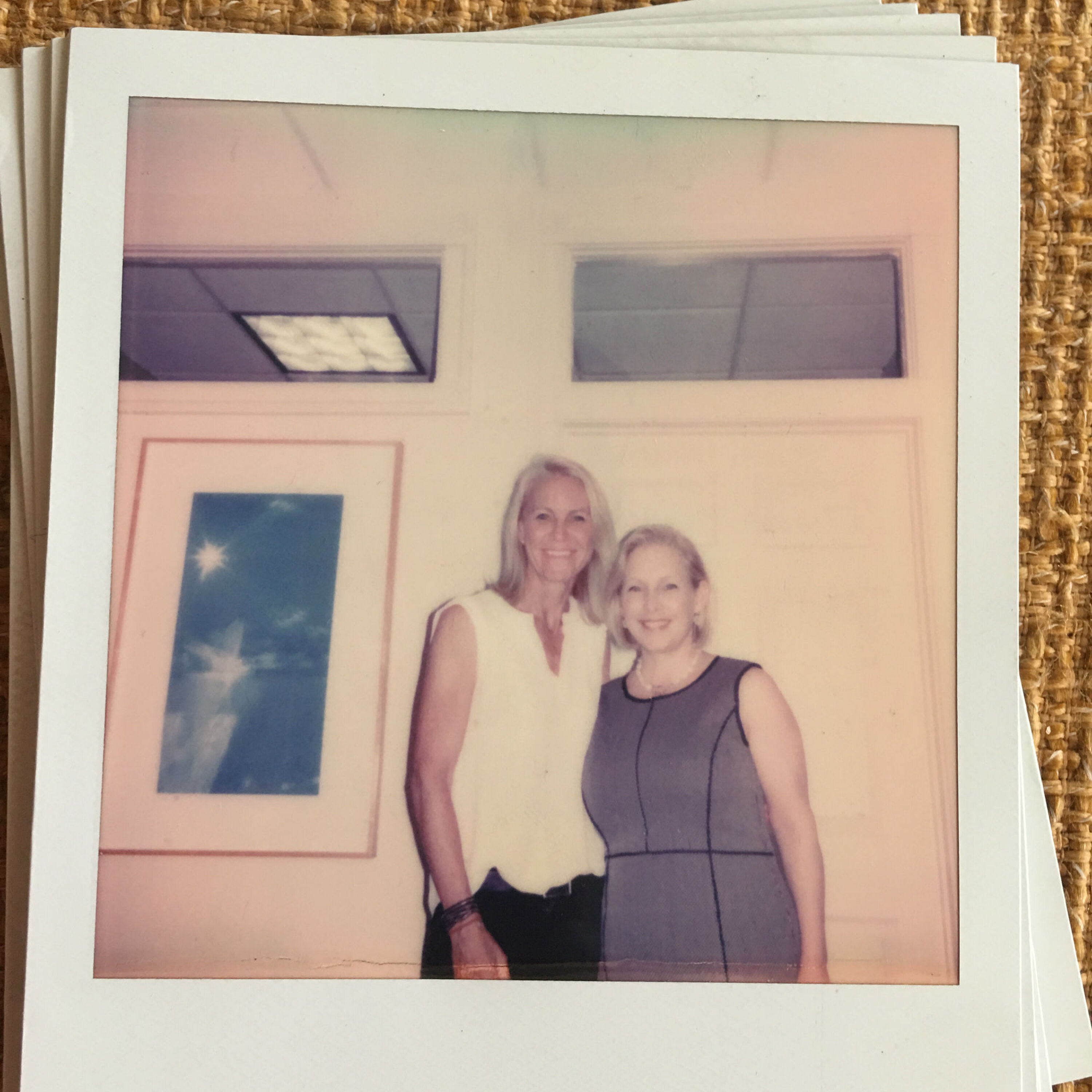
Kirsten Gillibrand
We sit down with New York's junior senator—and collegiate tennis and squash player—to talk about her journey with racquet sports, getting women off the sidelines, and how athletes make great leaders.
Hosted on Acast. See acast.com/privacy for more information.
See omnystudio.com/listener for privacy information.
2018-09-21
42 min
Transcript
Available Results
Generated results are saved to the knowledge database for reuse and search.
No generated results are available for this episode yet.
Extract Knowledge
Pick what you want extracted first. Model, scope, and chapter options appear after a template is selected.
Generated results for public episodes are saved to the knowledge database so they can be reused and searched later.
Transcript
00:00:14
Speaker 1: Hayne, Hey, Caitlin.

00:00:16
Speaker 2: We went on a road trip.

00:00:18
Speaker 3: We did.

00:00:18
Speaker 1: We drove down to d C. Yeah, I Drissi's Capital.

00:00:21
Speaker 4: I drove and you sat comfortably.

00:00:24
Speaker 1: I DJed, let's let's not minimized my role. We went to go see one of your friends and one of the nation's most amazing I would say, female leaders, Kirsten joel Brand.

00:00:34
Speaker 4: We did Senator Kisten Gillibrand from New York. It's one of my friends that I've known for about five to six years now. I met Kiston when I was playing World Team Tennis down in Washington, d C. For the Castles, and I went and played tennis with her, and she's just an incredible person. We've remain friends. She is a bit of a yenter to me. We didn't even get into this into the in our story of talking to her was did she actually set me up on a blind date one time?

00:01:01
Speaker 1: Yeah, she's a bit of trash maker.

00:01:02
Speaker 4: Within three weeks, I kind of laughed when she said, I'm a bit of yenta. I'm gonna set you up, and I said, oh, yeah, okay, Senator, and she really did so. And since then the story begins that we don't need to get into. But I always laugh when I see her or meet her or talk to her because it's always hard for me to say senator because I always think about the line in Silence of the Lambs, you know, when Anthony Hopkins says, hey, Senator, love your suit. So I always get a little bit weird calling a senator because I think about that.

00:01:32
Speaker 1: But she did when we interviewed her. She did wear a power suit.

00:01:35
Speaker 4: She did.

00:01:35
Speaker 1: She had us in her dress. Actually, she had a power dress with a jacket.

00:01:40
Speaker 2: We talked about.

00:01:41
Speaker 1: Her were we met her in DC in her election campaign office. She was wearing a power dress when we met her at her campaign office in DC, and we talked a little bit about her re election efforts. She's running for reelection in November. She is her tennis career, she played high school and a little bit of college tennis and squash, which I love.

00:02:01
Speaker 4: Yeah, and there's a few things that I don't want to say now because I was so surprised when she said them in the podcast about her tennis you know past. But also she's an incredible fighter for equality, women's rights, in particular, getting women off the sidelines is her name of her super Pact, and she raises money purely to get women candidates elected to Congress to the Senate into politics. She wants women off the sidelines. Don't talk about it, don't say you wish you could change. Here's here's what I'm going to be able to do for you. I'm going to raise money for you. I'm going to give money to you to get you off the sidelines and into the actual political system to make changes as women.

00:02:46
Speaker 1: And what I liked about our conversation was linking the experience that women have playing sports and their ability to lead and then you know, eventually get off the sidelines. And so I think, you know, it was really cool to me, curious, and I thought she was amazing. I mean, one day, could you imagine her being elected the higher office. Well, she's already a senator.

00:03:04
Speaker 4: I mean, it wouldn't it be great. Obviously, she's going to go for re election in November. Hopefully she will get elected, and I don't know, maybe one day, wouldn't it be great if we could say she might maybe run for the first female president. I mean we were close a couple of years ago, but you never know. She'll be certainly one of those I know that she's definitely high up in the Democratic Party as far as one of the lumine voices. She is absolutely the voice of the me too movement. Long before we had the hashtag me too, she was fighting for women's for sexual abuse in the military and getting it taken out of the change chain of command with her bill We're There, and also on college campuses. And now she's a leading voice for it in Congress. So she's truly a fighter for women's equality, women's rights, and for sexual abuse victims. She's let me just say, she's a great person. He personally and she's wonderful. What you see is what you get, and she really does truly fight for what she believes in.

00:04:05
Speaker 1: All right, well, let's listen up to our really really great interview.

00:04:08
Speaker 4: I think she's a great little tennis player. I can tell you that she's like a human backboard.

00:04:12
Speaker 1: A human backboard. All right, listen up for the human backboard we're talking to, of course, Senator Kirsten Joe Brand.

00:04:24
Speaker 2: Easy softball question again. You were competitive squash player.

00:04:28
Speaker 3: Yes, I played squash at Dartmouth all four years and I was a tennis player going to Dartmouth. But during my first tennis season, the squash coach, Aggie Kurtz approached me and said, would you.

00:04:40
Speaker 2: Like to learn how to play squash? And I said, of course, I'd like to learn how to play squash, and.

00:04:44
Speaker 3: She taught me how to play and I loved it, and so I played that season and then I played well enough that she said, you know, you're really on the varsity team, so would you like to do preseason? But it means you have to choose between tennis and squash, and so I chose squash.

00:04:59
Speaker 4: But I have tried to bring her back to tennis. So that brings us to how we met.

00:05:04
Speaker 3: Well, Tennis is my first love, so I really loved tennis and I love playing tennis, and I've had a really fun time playing as an adult and socially it's been great.

00:05:14
Speaker 4: So I played World Team Tennis here for the Washington Castles, which was a very inn team for about three weeks and Mark Iron now owner co owner of WTT, forced me to come and play tennis. Was forcing because I was really sick. Remember how I had laryen Ji's pretty much what I found now, And he mentioned who I was going to play with, and I said, well, that's ironic because I'd never given money to any political anybody my whole time of living here. But I had a green card, but I couldn't vote, so I didn't see the point of it. But i'd actually only ever written a check to a senator from New York who was actually Kirsten. So it was kind of crazy that I went and played. And that's how we met on the tennis clot that first day.

00:05:58
Speaker 1: That first day, So you have played squash, but your first love was tennis.

00:06:02
Speaker 3: And then you I played JV at Dartmouth my first year, so JV. I never was on the varsity level in tennis.

00:06:08
Speaker 2: We won't hold that against you. I've for the purposes of this podcast.

00:06:10
Speaker 3: But if I played today, I was in school today, maybe I could have. Yeah.

00:06:14
Speaker 2: Do you regret making the choice of squash?

00:06:16
Speaker 3: No?

00:06:16
Speaker 2: I love squash at a great time.

00:06:18
Speaker 3: It was really fun, really competitive, and did your squash sort of hies outpace your tennis highs?

00:06:24
Speaker 2: Like did you Now, I'm a better tennis player than a squash player, but you just were sort of flexible enough that you could. I lay bracket sports.

00:06:32
Speaker 4: She likes individual sports too, so I always do this thing Karsten where I have evaluated somebody when I played tennis with them, because it's a little bit confronting sometimes when they play with good players. And my observation of you as just a human being in general after that was that every second of every hour, because usually you have only an hour, you're very limited with your time because you're so busy, But every second of that hour is it must be utilized at the utmost is how you are in real life.

00:07:02
Speaker 3: Maybe but not necessarily. I'm busy, but I'm busy doing all sorts of things. You know. I'm either working for the Senate for my colleagues, with my colleagues, for my constituents and really trying to bring their stories out so that I can make a difference and change things. Or I'm making breakfast in lunch for my boys or dinner when I get home, or cleaning the house or doing the laundry or doing thees. Yeah, I mean I'm busy all the time, so I do use my time as efficiently as I can.

00:07:33
Speaker 4: Yeah, what is a normal day for you, like here in DC literally that people have no idea about.

00:07:40
Speaker 2: Well, it usually starts with some exercise.

00:07:43
Speaker 3: I like to get up early, and work out and do something at five thirty or six in the morning, and then I go home and I make breakfast for the boys. They're getting up at seven, so I make them breakfast. I make their lunches. While I'm making their breakfast, I will shower and go to work. I'll drop the kids off on the way. This morning, had a Bible study with a bunch of Republicans, which was very nice human meeting.

00:08:12
Speaker 2: Reaching across the reaching across the aisle.

00:08:14
Speaker 3: A very interesting passage from James about that it's really hard to be a good person if you're super wealthy, and that you have to actually focus on doing good for others, not on philanthropy, not on your richest here on earth, and so that was a very instructive discussion this morning.

00:08:31
Speaker 2: I enjoyed it.

00:08:32
Speaker 3: And so then I typically will go to hearings. One committee I serve on a lot is the Armed Services Committee, and they typically have hearings at nine thirty most days, and we didn't have this morning, but that would be normal. So I'm here instead and then we'll have votes usually around eleven. At lunchtime, I'm going to meet with all the members of the Democratic Caucus to talk about what we're doing and what schedules like, and this.

00:08:58
Speaker 2: Afternoon might have some other hearings.

00:09:00
Speaker 3: I'm on the Aging Committee, so we've been spending a lot of time focused on senior fraud, when these criminals take care of seniors. It even happened to my aunt where she got the fake IRS call and say this is the I R S.

00:09:13
Speaker 2: And you haven't paid your taxes and if you.

00:09:14
Speaker 3: Don't send money right now, the FBI is coming to your door and we'll arrest you.

00:09:18
Speaker 4: Doesn't she know that you're nace.

00:09:21
Speaker 2: For a lot of seniors. It scares them.

00:09:23
Speaker 3: They think, oh, maybe I didn't pay enough, maybe I got it wrong, and unfortunately they typically send the money and it's gone forever. So we elevate that issue. We also elevate the issue of drugs, drug pricing, price gouging, really trying to manipulate seniors or not, you know, really not provide the.

00:09:45
Speaker 2: Healthcare they need.

00:09:45
Speaker 3: So drug pricing is a big issue, and addiction is a big issue, so we focus on that. I might have a hearing on the Agriculture Committee. I do a lot of food stamps on that committee. I might have a hearing on the Environment Public Works Committee, and that's about clean air, clean water, and keeping our great lakes clean, keeping the lakes and rivers and streams in New York clean. It's amazing work and it's really fascinating, and I feel really privileged that I get to represent the people in New York.

00:10:10
Speaker 4: Well, that's pretty much every day, like saying, and then.

00:10:12
Speaker 3: On Friday, when we don't have votes, I typically go somewhere in New York State. So this Friday, I'll go to three different cities around the state and do community meetings. And our issue that we're going to focus on is drug pricing that the people really feel price gouged and can't afford basic healthcare because of it.

00:10:32
Speaker 2: So we'll talk about that in three different places in New York on Friday.

00:10:35
Speaker 3: Okay.

00:10:35
Speaker 1: One of the things I think a lot of people who are going to be listening to this if they're similar to me anyway, and they were a collegiate athlete whose scholarship was paid.

00:10:44
Speaker 2: For Title nine. A lot of the work you do centers around women on campus.

00:10:50
Speaker 1: That's something I really wanted to ask you about, especially because having been a female athlete on campus, you know, sexual assault, the military and obviously you're super packed. Off the sidelines really focuses on getting women in leadership positions.

00:11:02
Speaker 2: Can you kind of take us through how that sort of became a pillar of the work that you do every day, hear?

00:11:07
Speaker 3: So, I'll start with all the sidelines, because that kind of started first when I was a young woman in New York City working, I was a lawyer.

00:11:16
Speaker 2: I was really inspired by our.

00:11:18
Speaker 3: Then first Lady Hillary Clinton because she went to China and she gave that really profound speech about women's rights being human rights, and it motivated mediate off the sidelines and dart getting involved in politics. And I just remember going to my first event and when I joined a women's group called the Women's Leadership Form Forum.

00:11:32
Speaker 2: Hillary was the speaker.

00:11:33
Speaker 3: She looked out into the room and said, decisions are being made every day in Washington, and if you are not part of those decisions and you don't like what they decide, you have no one to blame but yourself. Well, and for whatever reason, I thought she was talking to me, and I started to sweat and got very anxious and thought, she's telling me I have to run for office and I'm not ready. But it was my wake up call that I really do want to get involved in politics. It took me ten years from that moment to actually run for office, but during those ten years.

00:11:58
Speaker 2: I got really active in getting involved in politics.

00:12:01
Speaker 3: And one of the things I worked on was helping women run for office, not only recruiting women to run, but funding their campaigns, raising money for them, and that really stuck with me.

00:12:12
Speaker 2: I really thought.

00:12:12
Speaker 3: I did it through a group called the Eleanor Roosevelt Legacy, which trains state candidates and raises money for them, and I build the pipeline YEP, and I did their candidate training class when I was deciding whether I want to run Sunday, and it really stuck with me that women's voices do need to be heard. And the fact that we don't have fifty one percent of women in Congress means things like getting a national paid leave plan is much harder than it should be. It means ending sexual violence in the military around college campuses is much harder than it should be.

00:12:39
Speaker 2: It means that we still are debating whether.

00:12:41
Speaker 3: Women should have access to contraception and basic reproductive rights in this country. And so I really want more women elected, which is why I found it off the sidelines I wanted to create a call to action to ask women to participate on whatever level they want to participate, whether it's running, whether it's becoming advocates, whether it's donating, whether it's supporting candidates.

00:13:01
Speaker 2: That was what I created as that call to.

00:13:04
Speaker 3: Action until over the past six years, we've raised over six million dollars for women candidates and over a million just for women of color candidates because we need more diversity as well, which is really really important to me. And so that's what I do with some of my free times. I really focus on yeah, exactly my free time and I'm not doing laundry.

00:13:23
Speaker 2: Yeah, So I work on that.

00:13:26
Speaker 3: And with regard to these issues that overwhelmingly affect women, what I've learned in my few years in Washington is that I hear these stories and they affect me deeply and it propels me to action. And one of the reasons why we need more women in Congress is those stories affect us all differently.

00:13:43
Speaker 2: And so when I was on the Armed.

00:13:46
Speaker 3: Services Committee, a friend you know, asked me a couple of times to look into this issue. I never really got into it until she handed me a documentary and said, watch this.

00:13:54
Speaker 2: It was the invisible War.

00:13:55
Speaker 3: When I heard those stories of the men and women who were brutally raped not only then disbelieved, but then retaliated against for reporting, it made me so angry and frustrated that these men and women who will sacrifice everything their lives for this country were being so disregarded and so disrespected and so devalued.

00:14:14
Speaker 2: And so that really set.

00:14:15
Speaker 3: Me on a path looking at this issue of sexual violence and where it happens, and the institutional bias against victims in favor of the typically powerful who are often the predators. And so that got me involved in the military.

00:14:30
Speaker 2: And then two college students.

00:14:33
Speaker 3: Came to my office and said, we want to meet with Kirsten and they happened to both have gone to Chapel Hill and they were both raped, and they both were not only disbelieved, but also retaliated against. And institutional harm created when these institutions that we love, whether it's the military or our college, don't believe us and don't support us, creates a secondary harm.

00:14:51
Speaker 2: And so they really opened my eyes to what.

00:14:54
Speaker 3: Was actually happening on every college campus today, and so I started looking into that issue. The same filmmakers that did The Invisible War also hearing the same thing. When they were taking The Invisible War around college campuses to show kids this documentary, they would come up overwhelmingly after every.

00:15:10
Speaker 2: Showing and say, this happened to us here.

00:15:12
Speaker 3: And so they did a second documentary and it's called The Hunting Grounds and it's all about sexual assault on campus in that film as well, and it highlight these two young women came to my office, Andrea and Annie and two amazing advocates who are transforming how young women and men can take their own stories and really hold these campuses accountable more effectively by filing tiled mine complaints matters.

00:15:37
Speaker 2: I mean, there's been no sea change.

00:15:39
Speaker 1: And I think kind of getting back to some of the leadership stuff because I want to get your sort of extemporaneous thoughts. Having both been somebody who felt so powerfully moved to start a movement essentially, but also having had the experience of being an athlete, there's a lot of studies for women that link performance high performance in sports in college with leadership capabilities and learnerships opportunities.

00:16:02
Speaker 2: And do you feel like you know, for.

00:16:04
Speaker 1: Me again, having sat and played on a college tennis team, the potential, the way you understand team you know, team dynamics, and how to get your boys friend, and also how to function in a collaborative way with other people.

00:16:16
Speaker 2: Do you see a lot of links there?

00:16:18
Speaker 3: There's a lot and one study that I really thought was interesting.

00:16:22
Speaker 2: They were trying to assess, you know, why women run.

00:16:25
Speaker 3: For office less often, and also what people's general dispositions are about running frost and I think that's all changed in.

00:16:32
Speaker 2: The era of Trump.

00:16:33
Speaker 3: So I think you're having women taking these risks and running off as an overwhelming numbers, which just really inspiring. And I'll talk about that a second. But typically you ask, you know, ten young men, can you imagine being mayor someday? Can you imagine being a congressman, senator, president?

00:16:48
Speaker 2: Nearly all of them.

00:16:48
Speaker 3: I don't know what the statistic is you look up the study, but they say things like, oh, yeah, I imagine, of course I can do that.

00:16:53
Speaker 2: I can do that, Yeah I can do that. Well, women they don't.

00:16:56
Speaker 3: They don't imagine themselves doing those jobs because they'll say, well, I'm not really qualify for those jobs, and not really I don't have the right qualifications. But the one group of women who were more likely to say yes, I can imagine myself running were women athletes, and it was something like a twenty five percent increase if you happen to play college sports or I think it might have been college in high school sports, and I attribute that reason too. Is one of the challenges of running for offices. A lot of times there's fear. There's fear of losing. There's fear of getting beat up, there's fear of the nasty campaign, there's fear of the competition itself.

00:17:29
Speaker 2: If you've played as sports on any level, you know how to win and you know how to lose. You've been beat up before.

00:17:34
Speaker 3: You know what it's like to try and put your whole self out there, whole self on the court, and still lose.

00:17:40
Speaker 2: And it's not that frightening anymore because you've lost a bunch and you've won a bunch.

00:17:43
Speaker 4: So would you say that you are the fear of losing.

00:17:46
Speaker 3: Doesn't exist so when I ran, or doesn't exist as much. When I ran the first time in two thousand and six, I ran in a two to one Republican district, and you know, everyone except my mother did not think I had a snowball chance of actually winning race.

00:18:00
Speaker 2: My mother believed in me, and I believed in me.

00:18:03
Speaker 3: But I knew that win or lose, it was worth the fight, in the same way you play a game, win or lose, it's worth playing the match because you want to put yourself out there and you have to win.

00:18:14
Speaker 4: You lost and how you lost, and how do you get better?

00:18:16
Speaker 2: And then you get better.

00:18:16
Speaker 3: And so I wasn't afraid to run because I wasn't afraid to lose. And I knew that even if I didn't win, I could at least elevate the debate.

00:18:25
Speaker 2: I could talk about issues that matter to me and my constituents.

00:18:28
Speaker 3: I could show my interest in dedication to serving others and maybe find a different path. If I couldn't get there electively, maybe I would find it different, not for profit opportunity or public service opportunity. And so I just knew I wanted to be in that space, and I think how to be. I wanted to be in the game, so off sidelines, off the sidelines, into the game, because I just knew I was built for it. I knew that I didn't mind the rough and tumble of a campaign. I didn't mind when your opponent says nasty things about you, because it's really the same as someone just hitting the her to serve they can at you. Their job is to make sure you lose that point. My opponent's job is to make sure I somehow stumble or you.

00:19:08
Speaker 2: Know, get off message.

00:19:09
Speaker 3: And so it's just the rules of that particular contest are unique to politics, but they're no different than any set of rules in any sport you play.

00:19:17
Speaker 4: I think, no, I've had a lot of people tell me exactly how they feel about me on the court and.

00:19:22
Speaker 2: Look at you know.

00:19:23
Speaker 1: I think also the idea that tennis is an individual sport really probably.

00:19:26
Speaker 4: Does you prepare and squash and.

00:19:30
Speaker 3: It's on your shoulders and it's on your shoulders and it's okay, Yeah, it's okay.

00:19:35
Speaker 4: So we had Chrissy on one of our podcasts and one of the things interestingly from her is that she talked about the Me Too movement was really important to her as well. But one thing that she had mentioned is that we're forgetting about the little boys. And she has three grown sons. Now you have, interestingly, have two boys, So how what do you tell them and how what's important for you? Because really Chrissy was like we need to talk to the little boy and teach them empathy and teach them to love, and teach them to be open with their feelings. And that is also part of the problem with the Me too movement. It's not teaching young boys how to treat young girls.

00:20:11
Speaker 3: Well, no, it's probably one of the good things about the Me too movement because it's creating the conversation to have those conversations.

00:20:16
Speaker 2: And so my children, you know, they certainly the.

00:20:20
Speaker 3: Fourteen year old has already had a lot of discussion about what is consent, what does consent look like, what does it feel like?

00:20:27
Speaker 2: You know, what is a healthy relationship?

00:20:29
Speaker 3: And they're teaching that in grade school, like fifth, sixth, seventh, eighth grade is part of human development, it's part of health. And so the best schools will try to create a curriculum at least around what does consent look like, and hopefully all of our schools around the country will begin to talk about that appropriately for age appropriateness, but talk about what is a healthy relationship. But you also have to recognize boys are also going to be targeted and will be.

00:20:58
Speaker 2: Assaulted as well, so you have.

00:21:00
Speaker 3: To make sure they understand that it's not okay for someone to grab you, push you, touch you in a.

00:21:06
Speaker 2: Way that you are not consenting to.

00:21:09
Speaker 3: And so they have the same self confidence that you want to give any young girl, Yeah that she she she can define her limits herself in the same way a young man should be able to find his limits himself.

00:21:21
Speaker 1: I have to think for my son anyway, who's four and yours are a little mine or ten and fourteen. Yeah, and so thinking about how to you know, just raise somebody who's expressive in terms of their emotions and being able to sort of navigate the world.

00:21:32
Speaker 2: You know, men and women obviously, but especially men. I think you're you're right to reap to fact to me too, is giving us a.

00:21:37
Speaker 1: Chance to sort of reset the dialogue so that men's so that everybody can have a conversation.

00:21:42
Speaker 2: Yeah, they don't have to feel like they've have to participate in that's sort of well.

00:21:45
Speaker 3: One of the best videos I've ever seen was about whether she wants a cup of tea?

00:21:50
Speaker 2: And it's have you ever seen it?

00:21:52
Speaker 3: So you'll have to look it up, but it's basically making the comparison.

00:21:57
Speaker 2: You know, if a woman, you know, weather one wants.

00:22:01
Speaker 3: To have sex is going to be very similar to whether one wants a cup of tea in this respect. So if she's asleep, she doesn't want the tea, you can't pour the tea down her throat. If she's passed out because she drank too much, she doesn't really want that cup of tea, and it doesn't matter that she told you yesterday she really wanted the tea, so don't don't pour it down her throat. So like, if you it's really funny because like it just goes into all these examples that you know she wanted a cup of tea earlier in the evening, but she just told you she doesn't want the cup of tea.

00:22:31
Speaker 4: When she was falling down the stairs, I thought it was not appropriate to give her a cup of tea. I love the fact that you're trying so hard to not drop the F bomb as well, because I know you so well and that does come out from time to time.

00:22:43
Speaker 3: Very hard not to say it publicly anymore, And I also try really hard never to swear about my kids because they.

00:22:49
Speaker 2: Are sponges and they will repeat everything that you say.

00:22:51
Speaker 4: Clearly, you don't think I'm a sponge because you know, no, you pensity sometimes sometimes, but that's you know.

00:23:07
Speaker 2: I have played Tonys with Renee. Jason Biggs has play tons with Renee. Chris Everard obviously in Petco. You have also played tennis with Renee.

00:23:16
Speaker 1: First of all, I want to hear what that is like, because I can tell you what it's like for me, and I'm decently good at tennis.

00:23:20
Speaker 2: For me, it's an experience where somebody hits.

00:23:23
Speaker 1: The ball within a foot of the lines every time you're locked in, and you're like, I'm doing pretty well in the second start thinking that.

00:23:28
Speaker 2: Ten seconds later you know he'll over and you hit the ball ten feet down.

00:23:31
Speaker 3: So I think playing Renee is pure joy because she hits the ball back to every single time. She's not only a human backboard, but she also knows your limits. So you know she's not gonna go to the line to the line to line because she knows, well, I won't get to the second one.

00:23:47
Speaker 2: I get to the first one, but I won't make the second one.

00:23:50
Speaker 3: So she's she's very cognizant of whoever she's playing with and what our abilities are, I think, and she's very kind and the way she plays, yeah, she's very patient and does she coach you. Yeah, anytime I'm getting something fundamentally wrong, She'll just say, yeah, I just watched it two seconds longer. I was like, oh, yeah, that's all I need to do. So she's very perceptive. She can see, you know, whether your weight's on the right foot, she can see how you're you know, she sees everything. She's a real player.

00:24:13
Speaker 1: Here's the second part of this question, because Renee is dying to talk.

00:24:17
Speaker 4: No, No, I just want to let everybody know that consensus of patience my my tennis skills. But that is not one of my patients. Is not my skill.

00:24:26
Speaker 3: Yeah, but if she's playing just with somebody she likes and it's not a match, just delighted to be patients with those.

00:24:36
Speaker 2: She's great to play with, and she has beautiful strokes.

00:24:39
Speaker 3: And I also like playing with her because I watch her hit the ball and I try to emulate it. So anytime I'm getting my motion a little wrong on the forehand or my server volleys out quite right, I can just watch how and I'll ask her, I like, can you just do that three more times? And I'll watch her and I'll watch her and I'll watch her. I was like, okay, I can try to copy that. So it's like it's a it's a built in lesson and it's so oh.

00:25:00
Speaker 2: I know, I feel like people would be paying for the privilege that I get to just have totally. I mean, you're lucky that I ever got to play with her ever. So okay, So here's the second part of the question.

00:25:08
Speaker 1: And Renee's dying to jump in, but I'm not gonna let her yet because she has a philosophy that she can see into people's souls when she plays with them, and I think that's true. Sheagns me in the second what do you think she will say about you in terms of your personality, your soul having played with you before we let her.

00:25:26
Speaker 3: Think, I think she would see that I try really hard and that I never give up, and I don't my working hard.

00:25:32
Speaker 2: I think those are probably three things you would see.

00:25:35
Speaker 4: Doggedly determined, Yes, dogged lyad doggedly determined. She's a bit of a backboard. Actually, I try hard. There's no question that there's the ball. We Usually when I play with people that are okay, I usually have to bring a lot of balls. But I dine with the Senator. It's like it's like three or four balls and then we're good. And she said she likes to make a lot of shots, So I'm thinking like she's the opposite of you, actually, Caitlyn. Caitlyn gets in about three ball rallies and then decides she's going to charge the net and try and hit a winner, whereas you are, you are absolutely trying to hit the fifty balls in a row, Whereas Caitlyn knows that she can't hit fifty in a row, so she just thinks she's going to hit a winner on everything.

00:26:17
Speaker 3: I like to hit fifty in the row because if i only play for like forty five minutes, I'm trying to get a good workout and I want to get my form down, so and hitting the ball right means you not only have to swing properly.

00:26:28
Speaker 2: But you got at your footwork goods.

00:26:29
Speaker 3: So a huge if you can hit fifty balls in a row, like you've just crushed that workout, like there's there's literally.

00:26:35
Speaker 2: You're probably dripping from top toe head to taut. You're totally right, that is completely right everything that everyone just said. I do not play that way at all.

00:26:43
Speaker 1: I'm like a Maverick lunatic, like here's but you liked it a winner, of course I do.

00:26:47
Speaker 2: Oh yeah, I'll be flashing out particularly the net. Yeah, I want to finish.

00:26:50
Speaker 1: Then I'm a certain value or just unfortunately is a bid you know, Retriever's body. But that makes me feel like your favorite players in history, and tell me if I'm right wrong, Borg around, just Sanchez, Amanda Kutzer.

00:27:04
Speaker 2: Like where when you watched tennis.

00:27:06
Speaker 3: Maybe as a kid, maybe when you were so as a kid, so I'm fifty one, So as a kid, I wanted to be Chrissy ever like that. She was the epitome of women's tennis when I was starting, And so a lot of my shots are just like hers, like because that was the training at.

00:27:21
Speaker 4: The time, true to.

00:27:23
Speaker 3: Like you know today's forehands. You do this and you end up way up here. Chrissy Evert was sideways.

00:27:30
Speaker 4: And here every time, I'm just I'm just noting that that she's off out of her chair demonstrating her full hand.

00:27:37
Speaker 2: The senator has given us a demo.

00:27:38
Speaker 4: Can we have the back end up with?

00:27:40
Speaker 3: Yeah, so I did the shoehander and I'm just way down and I do that just like Christy. It was so that was how you And also that was the state of the art teaching at the time. You have to recognize that's how we were taught. Many tennis camp you went to at that age, you were taught those swings.

00:27:56
Speaker 2: And I was an instructor, So I how did we miss this up until now?

00:28:00
Speaker 3: So I did as Yeah, yeah, I did tennis camps as a kid, So I was an instructor. So I was a kid going to camp. And then when I was in college, I became a camp counselor. So I worked at the ADIDASP tennis camp at Dartmouth College before I started at Dartmouth, and that was a blast. And I was an assistant pro at the local tennis club near my house today and so I ran the kids program. So I taught tennis, but we only taught in the way Chrissy played. And so now that I when I find a coach now as an adult, they helped improve my swings by making a little more dynamic and fall through more and and I do that, but she will remind me like fall through more, and I was like, oh, yeah, right, because I was taught the Christie Ever.

00:28:43
Speaker 4: And how do you like as a coach?

00:28:45
Speaker 3: What was your sort of discipline fun patient. Don't tolerate terrible swings, make them do it again. Like I can't stand coaches who let you swing poorly, Like when I watched my little.

00:28:55
Speaker 4: Yes, I can't. You need to have a conversation with coaches about that.

00:28:59
Speaker 2: I know because so so I watched Henry take his tennis lessons.

00:29:02
Speaker 3: He's only ten, and when his coach doesn't correct his swing, I literally get up to say, Henry, come.

00:29:07
Speaker 2: Over here, I correct a swing for him.

00:29:10
Speaker 3: I just pulled him off because there's like eight kids on the court, So like I just say, Henry, I give a little guys. But we had a really good time this Florida. There's a public court right near us when we go visit my mom in Fort Lauderdale, and it had an amazing kids program and it's literally just a public park near where her condo is in Florida. And so there was terrific coach there this year when we went down, and Henry was taking lessons and THEO is taking lessons and you know her advice when she goes because there's one secret to tennis. And so the kids took a couple lessons before I was able to join them because I had work, I had votes or something, and I come down and they're like, don't tell mommy the secret.

00:29:47
Speaker 2: Don't tell me the secret, because they wanted to have this advantage over me.

00:29:51
Speaker 4: I was like to be here.

00:29:52
Speaker 3: Yeah, so the secret courses watched the ball, and so to tell it to as a secret to a ten year old a fourteen year old, it really helps because when they do mess up their strokes, it's almost always because.

00:30:05
Speaker 2: They're literally not watching the ball.

00:30:07
Speaker 3: And so this one obvious coaching tool was fantastic for my children.

00:30:13
Speaker 2: And so she would only ask did you watch them all that time?

00:30:15
Speaker 3: No?

00:30:16
Speaker 2: I didn't see it. Did you see the ball this time?

00:30:18
Speaker 3: Oh?

00:30:18
Speaker 2: Yeah I did. That's why it was so good.

00:30:19
Speaker 3: So it was a really good fundamental and she was just really good at the fundamental. So I then the next day took a lesson with her so she could work on my fundamentals a little bit, which was a blast.

00:30:28
Speaker 4: Now, sadly you've now you're injured currently because.

00:30:32
Speaker 2: We plant fascia tear.

00:30:36
Speaker 3: Yes, I'm supposed to wear this book boot for six weeks.

00:30:39
Speaker 2: You're not ideal. Well, I'm not walking im Okay, we're trying to get well, because you know I only need to wear when I'm walking.

00:30:47
Speaker 3: Oh that's true, you did text me, and so I'm quiet on it, so sadly, here tell it.

00:30:54
Speaker 4: You can tell the story.

00:30:55
Speaker 2: So I was so excited.

00:30:57
Speaker 3: I found a coach that that was really good, and we were having our first lesson me the coach and a friend who was about my level, and I'm playing as hard as I possibly can, as well as I possibly can, and within an hour, I'm like, my both my feet are screaming at me, but one foot is screaming more, and so I stopped playing. I was like, I need to I'll do some serves, but I can't do any more running. And I just thought I pulled it, and so I rested for two weeks and I just didn't I didn't run on it, and I just took it easy. But I went to pilates and I went to softball practice, and I played tennis two weeks later, and it was sore, but it wasn't as screaming, but I thought, oh, it's it's just still sore. Continued with the flies and softball and not getting better. Four weeks later, and then I went to a pediatrist and I said, we need an.

00:31:42
Speaker 4: MRI and wait, wait you bet I was your pediatrists.

00:31:48
Speaker 3: Me in a minute over She's like, yeah, you pulled your plant or fashion doctor stoves.

00:31:53
Speaker 2: Yes, And I said, Renee.

00:31:54
Speaker 4: What is this? That was your christ tonight. What is this?

00:31:59
Speaker 2: Yes, my foot It was the muscle right under the heel.

00:32:02
Speaker 3: Then I got a picture and she sent me the planter by shitest picture I did.

00:32:06
Speaker 4: Send her it's under your heels like a.

00:32:11
Speaker 3: Ball, yes, in and not it and so she said ice, which I did. And so all the stuff I was doing because she told me to really helped. So I was elevating, I was icing, I wasn't running or walking. I was had you walk, but I wasn't running, and I just was assuming it was a poll.

00:32:27
Speaker 2: But unfortunately I got the a marine.

00:32:29
Speaker 3: It was a tear. So now I'm told I've got to be in this boot for six weeks. So, but when you recover playing, she's coming back.

00:32:37
Speaker 4: She's going to come and play with me, coming back here.

00:32:39
Speaker 2: And I'll start playing with that coach again.

00:32:41
Speaker 3: Great, because I really loved playing tennis and clearly it's it's one of the best workouts you could ever have.

00:32:47
Speaker 2: And you're giving the gift of tennis to your kids. Well, so Henry likes that THEO is now a squash player.

00:32:53
Speaker 3: So they've both been exposed to tennis's Henry's not been exposed to squash yet, but we I THEO took lots of tennis lessons in tennis camp every summer is whatever you can do. But I exposed him to squash about four years ago, and he's it's always about the coach. Squash so much good. He just loved the coach. So he loved the sport. And we've not found a great coach for them in DC.

00:33:16
Speaker 4: It's about the coach.

00:33:17
Speaker 3: I mean, when we're upstate, we have, you know, the local coaches, but they're not as they haven't they haven't and there's been no you find one coach a lifetime. And so what I had in Aggie Kurtz was that coach of a lifetime. She was just such an inspiring coach that she made me want to play squash because she was the squash coach.

00:33:35
Speaker 4: It's so true because I tell that to people that ask me often about well how do I get my kid interested or what's really important? I said, well, you know you're young. It's really important to have a coach who's super enthusiastic as well, because I have.

00:33:47
Speaker 2: And she's you in the right way. Like you need a coach that inspires you to leave it all in the court.

00:33:52
Speaker 4: Yep, and takes and makes it fun, especially when they're young. Yeah, it's really important. And my coach was super disciplined, great was strokes, but he was really fun and he was funny, and he used to drive us to like country tournaments, coach country tournaments.

00:34:08
Speaker 3: Yeah. Fun. So well, when I was young, our coach when I was in Albany, one of our coaches. In the summer, he would take us on trips in my mother's station wagon. So we'd not only play the other teams around the Capitol region, but we'd take a day trip to Boston or something. And so he made it really fun. And so all summer all I would do is play tennis because my coach was fun.

00:34:32
Speaker 2: So you are running for re election this year?

00:34:35
Speaker 1: This is a this is an election your are you going to be taking your rackets on the campaign?

00:34:41
Speaker 3: Drip? Like?

00:34:41
Speaker 2: Is this part of your can you do that now?

00:34:44
Speaker 3: But I can play, you know when I'm home, Like you're in Oneana and then here's yeah, and then like a little hit with a pro. Yeah.

00:34:53
Speaker 4: It's actually because you've got zero time in the day when you're doing this.

00:34:56
Speaker 3: It's yeah, and you have to find a player to play with you at six am, and I like next to zero players want to play.

00:35:01
Speaker 4: With That's actually what happens to us when I'm ever in a city or a town or something with the Senator. I want to play tennis, she goes, I'd love to, but you can.

00:35:11
Speaker 3: Have to play six She's like Stephan grow Sometimes I can play after I bring the kids to school. So it's really got to be be a four after and that's the most awkward time for everybody.

00:35:19
Speaker 2: Sixam's too early, and eight thirty am is too late. You're throwing the needle there. Yes, thirty for me, So you and I played eight thirty. That's when we played. When I don't when I don't have a hearing, that's too early. My hearing is a ten I could do an eight thirty tennis. So I've got a great idea. Why don't we send Renee on the road on the campaign trail like Hunter s Thompson just play tests. Yeah, yeah, instead of she does have his day job. But I know that she.

00:35:42
Speaker 4: Depends on the time of the year because I could fit it into my schedule.

00:35:45
Speaker 2: Yeah, so just saying she's available, Okay, it's good to know.

00:35:48
Speaker 3: When's the election one time, No, November, first week November, all.

00:35:51
Speaker 4: Right, so I'm pretty available. Off to September. I'm usually off to pretty good after the USI and soon.

00:35:57
Speaker 1: Yeah.

00:35:58
Speaker 2: Okay, you've got to coach trade with if you want to. Oh my gosh.

00:36:00
Speaker 4: But but so I'm gonna be really it's six am. Might be a little tough for me, but I'll do it for you.

00:36:06
Speaker 1: Okay.

00:36:08
Speaker 3: Well, it can also play at the end of the day, but that's like eight thirty or nine.

00:36:11
Speaker 4: That's usually when I like to have a glass of wine, yeah, or tequila if we're honest. Let's keep that to myself.

00:36:19
Speaker 2: Senator. We're gonna lose you soon to a vote.

00:36:21
Speaker 3: Yeah, I've got a couple more minutes. They're gonna call at eleven, but it lasts for fifteen minutes. So so you like just wondering there you can just you just you don't. You just need to be there within the first actually twenty because they hold it open but with your boot.

00:36:35
Speaker 2: Yeah. So I'll leave it. I can leave in five minutes. We can have a few more minutes. We're I'm done with all the questions only unless you have any more.

00:36:41
Speaker 1: And the only thing I want to get is a shot of you both with a polarid for love and you can keep it.

00:36:48
Speaker 2: Yeah, I can think picture of Oh that's so cool. Yeah, should we do it?

00:36:51
Speaker 4: We don't have to wait to like like look it out? Fine, No, you have.

00:36:54
Speaker 2: A physical tangible. You can put it on a little next to what I assume as a child's illustration of it.

00:36:59
Speaker 3: Yeah, these are old pieces of Henry, but I'll get more. So he's he he used to be.

00:37:03
Speaker 4: A very artist, is quite the honest. He could maybe do some day New York.

00:37:09
Speaker 2: Will be an art intern for Yeah, exactly when older.

00:37:12
Speaker 4: Before before we're done, who's your favorite plan?

00:37:15
Speaker 2: Now? Are you watching any anybody resident?

00:37:18
Speaker 4: And that's a little tough for you because you're a little busy.

00:37:20
Speaker 2: Yeah, but if you had to people.

00:37:22
Speaker 3: Serena is pretty amazing. So just watching Serena and she's issue in New York or she's a New Yorker?

00:37:26
Speaker 4: Isn't she know she's born in California? You're rotten?

00:37:32
Speaker 2: Correct?

00:37:33
Speaker 3: Grew up in l A and now lives in Florida, so is great to watch. I love watching him, but I don't follow it as well, So I don't know a lot of up and coming players at all. Because I might catch like a few matches during Wimbledon, maybe one match during the French joke and if I happened to be watching TV when it's on.

00:37:52
Speaker 2: So I just don't.

00:37:53
Speaker 3: I don't. I don't have enough time to watch real tennis as often as I like.

00:37:59
Speaker 2: I'll definitely try to make it at.

00:38:01
Speaker 3: Least one US Open when when the World Team Tennis travels around the country, that's kind of fun.

00:38:07
Speaker 2: You can sometimes grab a match here there. Yeah, you've got a good local team now, the New York Empire, Yeah, getting I'm going to try to catch one of the matches this summer.

00:38:14
Speaker 4: Yet of the Washington Castle swhich is even closer.

00:38:18
Speaker 3: Well, if it's a vote day, I can uh. I can see New York Empire already.

00:38:22
Speaker 2: Check their schedule.

00:38:23
Speaker 3: They're going to be in Washington twice and one of them is a vote day that I'm here, so I might be able to actually watch it.

00:38:28
Speaker 2: Look at you, I checked. I I love watching tennis. I just don't have a great deal of time. But that team tennis is really fun for someoneh's busy.

00:38:38
Speaker 1: Is the fact that you're working on your stroke and checking schedules of its pretty good, she told me last.

00:38:42
Speaker 3: Time, one of the last he's at the local public course, the local public courts, and he's really nice and he's just as he's got a day job.

00:38:50
Speaker 2: He's he's in government.

00:38:52
Speaker 3: I think he works at Social Security, like he's a real job. But on the weekend he's a former college player, and so on the weekends he teaches three five to four point zero practice group. And so I'm trying to get good enough so I could be in that group and feel like I'm not slacking.

00:39:08
Speaker 4: Well, I highly doubt that you'll be slacking, Yeah, because you will be slacking.

00:39:11
Speaker 3: Yeah, but I got injured right when I was supposed to go. I was supposed to I had a spot in the clinic and everything, she.

00:39:17
Speaker 4: Said, Victor victory. I'm hoping that the foot will be better. We'll play in July and then we take it on the road.

00:39:24
Speaker 2: Yeah, take it on the road.

00:39:25
Speaker 1: Get you reelected, and then you're gonna be ready for that three five clinic.

00:39:29
Speaker 2: Yeah, good plan.

00:39:29
Speaker 4: Yeah, I'm trying to get you to the four.

00:39:31
Speaker 2: I'm I am.

00:39:32
Speaker 3: It's three point five four, so it's perfect.

00:39:36
Speaker 2: I've watched the four point oh to four point.

00:39:39
Speaker 3: Five try to know I would need to improve to really play their level.

00:39:42
Speaker 4: Oh wait, but let's get this on the record. I you the best female center.

00:39:47
Speaker 2: I don't know.

00:39:47
Speaker 3: There is one other that's quite good, and that's Shelley Moore Capito. She's quite good, and I don't know if we actually played a match, she might beat me.

00:39:57
Speaker 2: I don't score that well. I'm really great practice, so terrific.

00:40:03
Speaker 3: Down to well now because she's on my softball team and so she is my third baseman.

00:40:07
Speaker 2: I need her to.

00:40:08
Speaker 3: Be And what's your play at the best at all times, I'm pitcher and left fielder, so I do two positions.

00:40:15
Speaker 2: We have two pictures, which.

00:40:16
Speaker 3: Is awesome, and so I usually pitch a few innings and then I do outfield a few innings and we all feel very good about it.

00:40:22
Speaker 4: Amazing.

00:40:23
Speaker 3: So the softball is fun, and this softball match we do play raises awareness for young survivors of breast cancer. And so if you're under forty and you're listening to this just know that you two can get breast cancer. So not only self exam is really important, but just making sure you're really aware that you are vulnerable, and so we raise awareness. We play for survivors. I'm playing, I'm playing for my girlfriend. You just survived breast cancer. You going to Alexander Rand one of my best friends from high school, and she she has survived, so we're very I'm very proud.

00:40:56
Speaker 2: Of her, and so it's really fun.

00:40:59
Speaker 3: And so the game, if anybody wants to come, it's gonna be June twenty first. It's in Washington, DC at Watkins Elementary School, and we play the DC Press Score and they're all typically ten to twenty to thirty years younger than us, so they are faster, but we tend to be more competitive.

00:41:16
Speaker 4: Do you think that there's any pot of than that wants to maybe let you have a little bit.

00:41:19
Speaker 2: Of ano may beat us last time?

00:41:22
Speaker 3: Like if we've played ten games, this is the tenth. I think we've only won three times all at of the nine that we've had, this will be our tenth, so we don't win.

00:41:31
Speaker 4: Very people like you she would have been playing, but last.

00:41:34
Speaker 3: Last year it was only one. Oh so it's not like we got crushed. I mean it was close and.

00:41:40
Speaker 4: There was absolutely no offense from real team. That's a yes.

00:41:46
Speaker 3: That's not true. I hit the zero very far zero, I know zero. But we had a good offense. We just didn't score, so there's not no offense.

00:41:55
Speaker 4: It's about scoring, it's about winning.

00:41:59
Speaker 1: And that's it for this EPISO of the Racket Magazine podcast.

00:42:01
Speaker 2: Thanks for listening. Our host is Renee Stubbs.

00:42:04
Speaker 1: Our co host and producer is me Caitlin Thompson. Music by internationally renowned DJ Stretch Armstrong. Thanks to Tim Or, Jerry, Taylor Dalton and the team at ACAST. Find us at racketmag dot com, slash podcast, and subscribe to us at any of your favorite podcatchers.
Chapters
No chapters available.