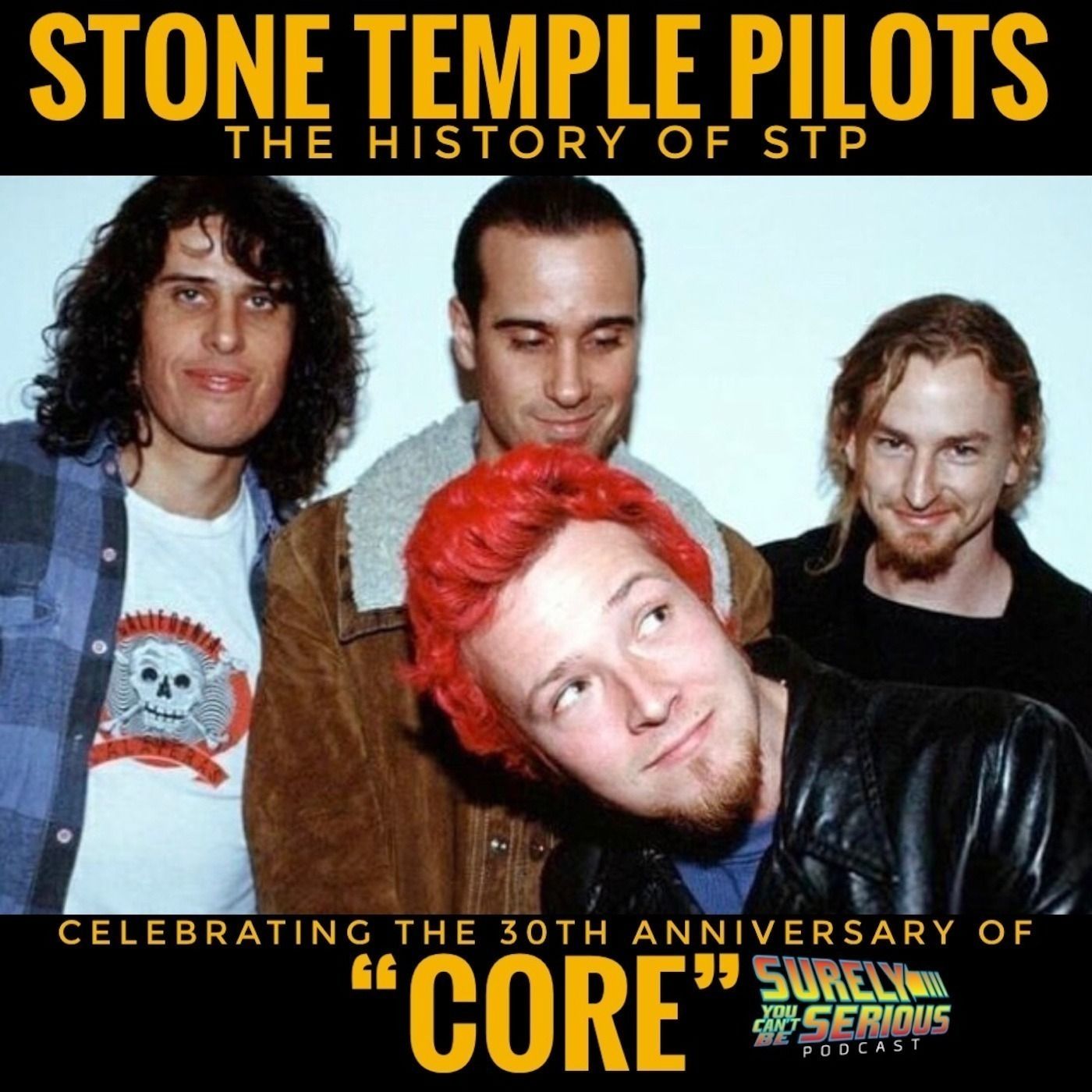
Stone Temple Pilots: The History of STP
On September 29, 1992 Stone Temple Pilots released their best seller, "Core". With tons of hits and great songs it became a favorite for a new generation. Four guys from different parts of the country came together to make some of the most memorable songs of the 90s. In this episode we will explore the history of the band leading up to that album in 1992. Are you smelling like a rose?
2022-09-20
31 min
Transcript
Available Results
Generated results are saved to the knowledge database for reuse and search.
No generated results are available for this episode yet.
Extract Knowledge
Pick what you want extracted first. Model, scope, and chapter options appear after a template is selected.
Generated results for public episodes are saved to the knowledge database so they can be reused and searched later.
Transcript
<v Speaker 1>Hello everybody, and welcome back to the Shirley You Can't
<v Speaker 1>Be Serious Podcast d This week we are going back
<v Speaker 1>into nineties grunge and tackling Stone Temple Pilots say.
<v Speaker 2>I am standing like a loan at somebody gave me
<v Speaker 2>because I needed a house. I don't know, it just
<v Speaker 2>came out.
<v Speaker 1>That's terrible.
<v Speaker 3>We're gonna need a drug test on mile three.
<v Speaker 2>Welcome everybody to the Shirley You Can't Be Serious Podcast.
<v Speaker 2>We are here to compare Stone Temple Pilot's Core to
<v Speaker 2>Allison Chain's Dirt. If you missed our last two episodes,
<v Speaker 2>we covered the history of Alison Chain's beginning to Bitter
<v Speaker 2>Bitter End, then we went through Dirt track by track,
<v Speaker 2>and today we are here to talk about the history
<v Speaker 2>of Stone Timple Pilots and we will be covering Core
<v Speaker 2>track by track with our dear friend and longtime supporter
<v Speaker 2>Brad Moore.
<v Speaker 1>I know I'm excited to meet Brad and he's a
<v Speaker 1>big Stone Table Pilots guy. I know you're a big
<v Speaker 1>Stone Table Pilots guy. Everybody it seems like in the
<v Speaker 1>nineties was like handed a copy of Core and said
<v Speaker 1>you must have this to enter college.
<v Speaker 2>Yes, I wasn't in college yet at that point, but
<v Speaker 2>I was definitely loving Core before we get rolling. I
<v Speaker 2>want to say thank you to our executive producer for
<v Speaker 2>this episode, my good friend mister Kevin Davis, who have
<v Speaker 2>mentioned just two episodes ago as a guy who's been
<v Speaker 2>a long time follower over us. He hit our Patreon
<v Speaker 2>page joined in the support. Thank you so much, Kevin,
<v Speaker 2>you are the executive producer sure of this episode. Guys,
<v Speaker 2>if you want to be an executive producer of our episodes,
<v Speaker 2>it's so easy. You just go to patreon dot com,
<v Speaker 2>backslash Surely podcast that's s U r e l Y Podcast,
<v Speaker 2>and you can, for as little as five dollars a
<v Speaker 2>month join in our Patreon family. You become an executive producer.
<v Speaker 2>If you go higher on our tiers, you might get
<v Speaker 2>some special gifts which are coming to Kevin at this point,
<v Speaker 2>and most importantly, you get access to our super secret,
<v Speaker 2>super fun special episodes for Patreon members only. I don't
<v Speaker 2>even know if there's anything you can buy for five
<v Speaker 2>dollars anymore. No, there's literally nothing you can buy for
<v Speaker 2>five dollars anymore. Everything costs more.
<v Speaker 1>I'll tell you what you can get for five dollars.
<v Speaker 1>You can get extra episodes one bonus episode a month,
<v Speaker 1>and we're covering one hit wonders from the eighties and nineties.
<v Speaker 1>We're bouncing all around where. We've got kind of a
<v Speaker 1>library going now. It's pretty cool.
<v Speaker 2>Yeah. The next one we haven't coming up is Simple Minds.
<v Speaker 2>Don't you forget about me? That one's going to be epic.
<v Speaker 2>I can't wait to cover that one. If you want
<v Speaker 2>to hear it, be sure and go visit our Patreon
<v Speaker 2>page and sign up for membership. If it's too much
<v Speaker 2>for you right now, no problem. Just hit that follow
<v Speaker 2>button or hit that subscribe button on your podcast app,
<v Speaker 2>and if you are so inclined, give us a five
<v Speaker 2>star review. And if you're not inclined to give us
<v Speaker 2>this five star review anyway, if you want to throw
<v Speaker 2>in a cool review in there, you'll be entered into
<v Speaker 2>a contest to win one of our special custom engraved
<v Speaker 2>Ozarka tumbler cups. If you like what you hear, tell
<v Speaker 2>somebody exactly, love it. Love you guys, Thank you for
<v Speaker 2>all the support that you've given us. Jason, tell me
<v Speaker 2>the first time you remember hearing something about STP.
<v Speaker 1>My first time was when Plush went next level the
<v Speaker 1>summer of ninety three. Right, yeah, so I know Sex
<v Speaker 1>Type Thing was their first single and their first video,
<v Speaker 1>but it just, I mean, I just kind of bypassed me.
<v Speaker 1>I wasn't that familiar with it. But then every time
<v Speaker 1>I turned on the radio the summer of ninety three,
<v Speaker 1>it was Plush, Plush, Plush, Lush.
<v Speaker 2>I talked to my brother this weekend, just kind of
<v Speaker 2>called out of the blue, and I said, hey, you know,
<v Speaker 2>we're going to be covering STP. And I can remember
<v Speaker 2>the first time that I heard anything about STP. I
<v Speaker 2>was riding in the car with my brother and he said,
<v Speaker 2>I heard this pearl Jam sounding band and I was like,
<v Speaker 2>was it Pearl Jam And he said no, it was
<v Speaker 2>a Pearl Jam sounding band and I was like, okay, yea.
<v Speaker 2>And within the week I had heard whatever the song was,
<v Speaker 2>whether it was Plush or Sex Type Thing, I don't remember,
<v Speaker 2>but I was like, oh, this is the band, this
<v Speaker 2>is the band that he is referring to. But it
<v Speaker 2>wasn't long before I was at Hastings picking out my own.
<v Speaker 2>Actually I think this might have been a BMI.
<v Speaker 1>I might have gotten Columbia House Yeah, that's funny because
<v Speaker 1>I had Columbia House and it could have easily been
<v Speaker 1>that for me as well.
<v Speaker 2>For all I know, I might have gotten Core and
<v Speaker 2>Dirt on the same one CD for one penny order.
<v Speaker 1>That's a heck of an order right there. Yeah, these
<v Speaker 1>guys rolled through Tulsa, Oklahoma. I remember they played the
<v Speaker 1>Zoo Amphitheater. I didn't go, but I remember wanting to go.
<v Speaker 2>Yeah. I never saw these guys in concert. That was
<v Speaker 2>not a big concert goer when I was a kid,
<v Speaker 2>but I would have loved to have seen them back
<v Speaker 2>in the heyday.
<v Speaker 1>Yeah, okayde This is Stone Temple Pilot's Core versus Alis
<v Speaker 1>and Chain's Dirt. Core is Stone Tumble Pilot's first album,
<v Speaker 1>Dirt is Alison Chain's second album, but they both came
<v Speaker 1>out on the same day in nineteen ninety two.
<v Speaker 2>Thirty years ago this month these albums were released. Did
<v Speaker 2>these albums sound thirty years old to you?
<v Speaker 1>Well?
<v Speaker 2>No, no, But it's interesting having listened to interviews that
<v Speaker 2>Scott Wiland gave with Howard Stern, it gave me an
<v Speaker 2>appreciation for what we had in the nineties that basically,
<v Speaker 2>after about early two thousands, you didn't have anymore, and
<v Speaker 2>that was that you went to Hastings and you bought
<v Speaker 2>an album, or you ordered BMI CDs or tapes or whatever.
<v Speaker 2>Columbia House was a cheap and beautiful thing that doesn't
<v Speaker 2>exist anymore because people don't buy albums anymore, I know.
<v Speaker 2>And so not only are people not buying records, that's
<v Speaker 2>a thing, but because of that, record companies have lost money,
<v Speaker 2>which means we have a decrease in quality of music
<v Speaker 2>that's being produced because you don't have the money to
<v Speaker 2>create a big production, so you use cheaper ways to
<v Speaker 2>do things, computers and such. And because of that, those
<v Speaker 2>artists of that time, like Scott Wiland and like some
<v Speaker 2>of those other guys, in order to maintain that lifestyle
<v Speaker 2>that they had grown to appreciate in the nineties, when
<v Speaker 2>all of a sudden the two thousands rolls along and
<v Speaker 2>nobody's buying music anymore. We're all downloading it and napstering
<v Speaker 2>it or whatever, then suddenly you have to go tour
<v Speaker 2>substantially more than you did before just to maintain your
<v Speaker 2>standard of living. And if like Scott Wiland, you've been
<v Speaker 2>through a couple of divorces, you've got to do it
<v Speaker 2>just to be able to pay your child support, which
<v Speaker 2>he did not do. Well, yeah, it was troubling.
<v Speaker 1>His money went elsewhere sadly. Well, yeah, hey, you know
<v Speaker 1>you mentioned Napster and you mentioned Pearl Jam. I thought
<v Speaker 1>this was funny. The song Creep by Stone Tiple Pilots.
<v Speaker 1>There's some sort of problem with the naming of the songs.
<v Speaker 1>They can ever pick the right title because every time
<v Speaker 1>they choose the title, it's not really in the song.
<v Speaker 1>But I thought it was funny on Napster. The song
<v Speaker 1>Creep is most commonly referred to as half the Man
<v Speaker 1>I Used to be by Nirvana.
<v Speaker 2>Which is funny because Radiohead we mentioned last time. Radiohead
<v Speaker 2>had a song called Creep as well, which was Lane
<v Speaker 2>Staley's favorite song of that time period. They said, mate,
<v Speaker 2>you know, this is the best song that I've heard
<v Speaker 2>in three years when it first came out. Its song,
<v Speaker 2>and it was a constant source of confusion for me
<v Speaker 2>of which Creeper were we about to listen to? Is
<v Speaker 2>the Radiohead version or is it the stone Tiple Pilots.
<v Speaker 1>Uh? Yeah, yeah, Well at least they say creep in
<v Speaker 1>the song, right, right, yes, put it in there, right okay,
<v Speaker 1>so my history starts in nineteen fifty three.
<v Speaker 2>What In nineteen fifty three, a company called Chemical Compounds
<v Speaker 2>was founded by three businessmen, Charles Dwight Liggett, Jim Hill,
<v Speaker 2>and Robert Deehart with three thousand dollars startup capital in
<v Speaker 2>Saint Joseph, Missouri. They started the company Chemical Compounds Now.
<v Speaker 2>The next year, actor Scott Marlowe made his acting debut.
<v Speaker 2>Nineteen fifty four, made his acting debut in a movie
<v Speaker 2>called Attila, starring mister Anthony Quinn and Miss Sophia la Writt.
<v Speaker 2>By nineteen sixty, he was in a movie called The
<v Speaker 2>Subterraneans with actor Roddy McDowell. Fright Night, There you Go
<v Speaker 2>throw back to our Fright Night episode Very good. He
<v Speaker 2>was also in many episodes of Have Gun, We'll Travel.
<v Speaker 2>I'm not going to sing the song for you today.
<v Speaker 2>Go listen to stand by Me if you want to
<v Speaker 2>hear it. So after nineteen sixty, The next year, Scott
<v Speaker 2>Marlowe had his first little brother, whose name was Dean.
<v Speaker 2>Because Scott Marlow's given name was Ronald Richard Delio Wow.
<v Speaker 2>His very much younger half brother, Dean, was born in
<v Speaker 2>nineteen sixty one. Five years later, he had another half
<v Speaker 2>brother who they named Robert. That's Robert and Dean de Leo.
<v Speaker 2>A little later on that year, a guy named Eric
<v Speaker 2>Kretz was born, and the following year we saw the
<v Speaker 2>birth of mister Scott Wiland.
<v Speaker 1>That's fantastic. I thought you were going all the way
<v Speaker 1>back to like the birth of Heroin or something like this.
<v Speaker 1>I was like, nineteen fifty three, what are we talking
<v Speaker 1>about here?
<v Speaker 2>Well, the Chemical Compound Company. It's going to come up later,
<v Speaker 2>but not now. Just save it, put a pin in it,
<v Speaker 2>think about it, and you know where it's going to go,
<v Speaker 2>but you may not. Listener, You'll have to hold on
<v Speaker 2>and see where it comes back up again. Okay, I
<v Speaker 2>am at your feet.
<v Speaker 1>Do you lead us down this trail to where we're going?
<v Speaker 2>Okay? So Scott Wiland was not born Scott Wiland. He
<v Speaker 2>was born Scott Klein. His parents ultimately got divorced, his
<v Speaker 2>mother remarried. He was adopted by his father, whose last
<v Speaker 2>name was Wyland, and that's how he became Scott Wiland. Yes,
<v Speaker 2>he lived in Ohio. The DeLillo brothers grew up in
<v Speaker 2>New Jersey. Eric Kretz grew up in California. But ultimately
<v Speaker 2>Scott decided to go out to California and Robert decided
<v Speaker 2>to go out to California and they started, you know,
<v Speaker 2>seeing girls going to concerts. Well, sure, and they go
<v Speaker 2>to a Black Flag concert and they run into each
<v Speaker 2>other and they're like, oh, hey, how's it going. Yeah? Good,
<v Speaker 2>And they start talking about their girlfriend and it turns
<v Speaker 2>out it's the same girl I hated.
<v Speaker 1>Hi. When that happens, well, it ends up.
<v Speaker 2>That I think they liked each other better than they
<v Speaker 2>really liked her. She moves back to Texas and so
<v Speaker 2>they roommate together in her old apartment. Well really, yes, wow,
<v Speaker 2>And since Scott's a singer and Robert is a guitarist
<v Speaker 2>and a bass player, they decide they're going to put
<v Speaker 2>together a band.
<v Speaker 1>Hey, before you get there, Before you get there, I
<v Speaker 1>just want to mention this really quick. I found this fascinating.
<v Speaker 1>Scott Wiland in high school was an athlete.
<v Speaker 2>Oh yeah, you sent me a picture of him, like
<v Speaker 2>he's a quarterback, and I.
<v Speaker 1>Sent you his football picture.
<v Speaker 2>Yes, it's fantastic.
<v Speaker 1>It's he wasn't like the last guy off the bench.
<v Speaker 1>He was the quarterback. Yeah, he played football. He played soccer. Yeah,
<v Speaker 1>he wrestled, Yeah, played volleyball.
<v Speaker 2>You sent a picture of him in the group text
<v Speaker 2>that we share with James Buckley and David Wright, right,
<v Speaker 2>and you're like, who's this guy? And David Wright said,
<v Speaker 2>is it Jack Wagner? And I thought, yeah, he's right,
<v Speaker 2>that's Jack Wagner. Like he looks like a soap opera star,
<v Speaker 2>very young. Scott Weiland looks like a young James Wagner.
<v Speaker 1>Flashback to Our Girls Girls, The Girls episode Jack Wagner.
<v Speaker 2>Yeah, but he does.
<v Speaker 1>I mean he looks athletic, he's bustled up, and he
<v Speaker 1>looks like a football player.
<v Speaker 2>Yeah, he changes that look. He changes his look over
<v Speaker 2>and over again. As his career progressive. He does. He
<v Speaker 2>does so.
<v Speaker 1>When he's a young man, he's an athlete. He's going
<v Speaker 1>here and there, and on the weekends he's starting to
<v Speaker 1>go to parties. High scholers do that, they binge drink
<v Speaker 1>on the weekends. Except for Scott. It starts to have
<v Speaker 1>an obsessive pull on him to where he thinks about Monday,
<v Speaker 1>thinks about it Tuesday, thinks about it Wednesday and has
<v Speaker 1>to kind of make it to Friday. Yeah, that leads
<v Speaker 1>to weed and then cocaine, and his parents find those
<v Speaker 1>little white bundles in his bedroom one day and he's
<v Speaker 1>off to rehab for the first time, age sixteen.
<v Speaker 2>Sixteen. Yeah, so I learned in this process a very
<v Speaker 2>tragic story. Apparently, and possibly he was dealing with a
<v Speaker 2>prior event that had occurred about four years before, right
<v Speaker 2>that he had, according to him in his book, suppressed
<v Speaker 2>this memory until he's in rehab and was going through therapy.
<v Speaker 2>But apparently twelve years old again, gets invited to a
<v Speaker 2>barn to you know, hang out like you do out
<v Speaker 2>in Ohio, and it's play spin the bottle with some
<v Speaker 2>girls and a mason jar full of liquor. And this older,
<v Speaker 2>you know, high school senior who's twenty at the time,
<v Speaker 2>shows up and starts having relations with one of the
<v Speaker 2>girls right there in front of everyone, and then just
<v Speaker 2>within the week says, hey, you want to come hang out.
<v Speaker 2>Scott goes with him over to his house and he
<v Speaker 2>is raped by this twenty year old high school senior.
<v Speaker 2>That is tragic. I could see myself becoming a drinker
<v Speaker 2>and a drugger if that had happened to me, and.
<v Speaker 1>A violent, angry young man. Yeah, okay, when to bring
<v Speaker 1>it down. Actually I did hear him describe it as
<v Speaker 1>quick and unpleasant.
<v Speaker 2>At least it was quick, I guess at the very least. Yes.
<v Speaker 2>So Robert and Scott are living together. They've decided to
<v Speaker 2>put a band together. They get a couple of childhood
<v Speaker 2>friends to join the band, a guy named Corey Hickock
<v Speaker 2>and a guy named David Allen. Yep, but they don't
<v Speaker 2>live up to snuff. And while Robert and Scott are
<v Speaker 2>at a concert, they are listening to this band and
<v Speaker 2>they're like, man, I can't hear anything but the drums.
<v Speaker 2>This guy is incredible, right. That guy was Eric Kretz.
<v Speaker 2>They said we need to get him. They got him,
<v Speaker 2>kicked out the other two guys and said, okay, we
<v Speaker 2>need a guitar player. And Robert says, you know what,
<v Speaker 2>let's give my brother Dean a call.
<v Speaker 1>You mentioned the fact that Scott Wiland's childhood friends are
<v Speaker 1>in this band. They're just not quite as good as
<v Speaker 1>they need to be. And so one of the songs
<v Speaker 1>that they had been working on very early on in
<v Speaker 1>their days as a band was Piece of Pie. So
<v Speaker 1>they had been working on it and it had guitars
<v Speaker 1>and Corey Hickock was playing the guitar wasn't a great
<v Speaker 1>guitar player, so Dean actually came to help out on
<v Speaker 1>that song in particular, and when he showed up to help,
<v Speaker 1>it became obvious that Dean is much better. And so
<v Speaker 1>when Dean showed up, he inadvertently kicked him out of
<v Speaker 1>the band. And he said that he has since forgiven
<v Speaker 1>him and that he's a sweet guy.
<v Speaker 2>So well, that's nice. It seems to me that Robert
<v Speaker 2>is probably the most driven of the group, right. I
<v Speaker 2>heard Scott talk about it. Robert would have a beer,
<v Speaker 2>you know, once or twice a month maybe, but he
<v Speaker 2>said that while he was doing drugs and STP Dean
<v Speaker 2>was doing them with them. Dean was a heavy drug
<v Speaker 2>addict as well. Wow. But as they pointed out, it's
<v Speaker 2>a little different to play the guitar than it is
<v Speaker 2>to sing. You've got a human instrument when you're the singer,
<v Speaker 2>and if you're off, you can't tune it. You know,
<v Speaker 2>there's no key to change, so it's a little bit difficult,
<v Speaker 2>which is probably why he ultimately had more pressure from
<v Speaker 2>the rest of the band and why ultimately he got
<v Speaker 2>the bit right.
<v Speaker 1>So Originally they weren't even called Stone Temple Pilots. Really,
<v Speaker 1>this blew me away. All right, tell me about that. Okay,
<v Speaker 1>So their original name was called Mighty Joe Young.
<v Speaker 2>Like the old Giant Gorilla movie. Yeah, okay, all right,
<v Speaker 2>you see that one, Bill Paxton. I did not. I
<v Speaker 2>saw the old black and white one though. Okay.
<v Speaker 1>So, like weeks before Coors come out, they realize that
<v Speaker 1>there's this guy in Chicago who's got the copyright to
<v Speaker 1>this name.
<v Speaker 2>He has the rights to the name Mighty Joe Young. Yes,
<v Speaker 2>blues musician, yes, yes, So they have to come up
<v Speaker 2>with a new name.
<v Speaker 1>So they do that.
<v Speaker 2>My friend brings me to the Chemical Compound Company that
<v Speaker 2>started back in nineteen fifty three.
<v Speaker 1>Okay, this is great, so good job.
<v Speaker 2>The Chemical Compound Company's sole product was an oil treatment
<v Speaker 2>simply called STP. The name was derived from scientifically Treated Petroleum.
<v Speaker 2>In nineteen sixty one, same year that Dean was born,
<v Speaker 2>the company was acquired by the Studebaker Packard Corporation and
<v Speaker 2>they changed the meaning of STP to Studebaker Tested products.
<v Speaker 2>But the CEO of Studebaker at the time said, you
<v Speaker 2>know what, I think this product could outpace Studebaker, and
<v Speaker 2>so he recruited this guy named Andy Granatelli and he
<v Speaker 2>made him the CEO of the STP company to help
<v Speaker 2>raise the product's image. The way that he did that
<v Speaker 2>is he became the public face of STP and he
<v Speaker 2>would go to races with a white suit emblazoned with
<v Speaker 2>a red oval with the logo STP. That STP logo
<v Speaker 2>became a fashion go to for skaters and bmxer's and
<v Speaker 2>other guys my age in the late eighties early nineties. Absolutely,
<v Speaker 2>And so when these guys find out they can't be
<v Speaker 2>Mighty Joe Young, they say, we love STP. Let's just
<v Speaker 2>come up with three words that give us the initials
<v Speaker 2>S t P.
<v Speaker 1>That's a fascinating story, right, right, So here's what they
<v Speaker 1>come up with.
<v Speaker 2>Shirley Temple's po.
<v Speaker 1>Once again, a name you can't use at Walmart.
<v Speaker 2>Yeah, they also thought of sticky toilet paper. Ultimately they
<v Speaker 2>got really close. They said, how about Stereo Temple Pirates? Yes,
<v Speaker 2>and it was very close, but the record company was
<v Speaker 2>like pirates with the music I don't know. And so
<v Speaker 2>they said, well what about pilots And someone else said,
<v Speaker 2>I like the idea of stone better than Stereo, So
<v Speaker 2>there you go.
<v Speaker 1>Stone Temple Pilots once again grabbed this name at the
<v Speaker 1>last second before the album came out.
<v Speaker 2>All because of Micole compound company stp Oil.
<v Speaker 1>I like this name better than Mighty Joe Young.
<v Speaker 2>Oh yeah, you know it doesn't I mean, m Jay
<v Speaker 2>Y doesn't roll off the tongue quite as well as
<v Speaker 2>that's true. That's true. So these guys started playing together
<v Speaker 2>as Mighty Joe Young for the longest time in San
<v Speaker 2>Diego and they would go up and down the coast.
<v Speaker 2>They ended up playing at the Whiskey in La Yep,
<v Speaker 2>And very quickly we're discovered. And this is about nineteen
<v Speaker 2>ninety two, when we've had Nirvana's Nevermind has come out,
<v Speaker 2>Pearl Jams ten has come out, and the record company
<v Speaker 2>is seeing these guys on stage and saying, these guys
<v Speaker 2>are obviously well within this new alternative music that's happening,
<v Speaker 2>even though they were not a Seattle band. They're like,
<v Speaker 2>we can see the dollar signs here, good look, and
<v Speaker 2>lead singer Rough Grungey sound, let's sign these guys up.
<v Speaker 1>This is what I didn't know, or at least didn't
<v Speaker 1>realize at the time. I was well aware of the
<v Speaker 1>Seattle sound. Yeah, but the flavor of the month kind
<v Speaker 1>of in the early nineties was San Diego. So record
<v Speaker 1>companies went like flocked to San Diego to find the
<v Speaker 1>next big thing. And even though these guys, it's kind
<v Speaker 1>of misnomed that they were from San Diego. They are
<v Speaker 1>actually an LA band, but record companies were hot on
<v Speaker 1>the trail of San Diego bands. I've never even heard
<v Speaker 1>of that before.
<v Speaker 2>Yeah, So ultimately they signed with Atlantic Records on April first,
<v Speaker 2>nineteen ninety two. Yep, Dean has a day job still,
<v Speaker 2>you know. I mean, they're not making it enough as
<v Speaker 2>musicians to live, so he's got a day job. He
<v Speaker 2>goes to tell them, He's like, hey, guys, I gotta leave.
<v Speaker 2>I'm signed a record deal. And they didn't believe him
<v Speaker 2>because it was April first.
<v Speaker 1>They're like, hilarious, back to where.
<v Speaker 2>No, really, guys, really okay, guys, see you later.
<v Speaker 1>Yeah, that's crazy, man.
<v Speaker 2>You know.
<v Speaker 1>During this time, Robert worked at a guitar store.
<v Speaker 2>Yeah, he worked with Schechter Guitar Research, which was it
<v Speaker 2>started off as a repair shop back in the seventies,
<v Speaker 2>got bought by a Texas company in the mid eighties,
<v Speaker 2>went to Texas for a while and then a Japanese
<v Speaker 2>company bought him moved him back out to California. That's
<v Speaker 2>when Robert started working with him, and he built the
<v Speaker 2>prototype of what would later become his signature model when
<v Speaker 2>he was working there. It was the Scheckter Model T
<v Speaker 2>and it was his primary live instrument while he was
<v Speaker 2>with Stone Table Pilots.
<v Speaker 1>Wow, so he worked at this guitar store.
<v Speaker 2>Yeah, sorry to give you a little bit more there.
<v Speaker 1>So anyway, that's great, that's great. That's way more than
<v Speaker 1>I had. So he would work at the guitar store
<v Speaker 1>and across the street Scott was working at like parking
<v Speaker 1>cars and driving people around models.
<v Speaker 2>Yeah, he drove the models around, right, Yes, he did.
<v Speaker 1>Not a bad gig if you can get it. And
<v Speaker 1>so apparently Scott would have these little downtimes and he
<v Speaker 1>would come across the street and he would tell Robert,
<v Speaker 1>he say, hey, got this idea. What do you think
<v Speaker 1>I am smelling like a road? You know, what do
<v Speaker 1>you think about that? Okay? And he said In fact,
<v Speaker 1>they wrote the song Creep in Robert's back seat while
<v Speaker 1>parked at the guitar store.
<v Speaker 2>Yeah, he was thinking about how he was rejected a
<v Speaker 2>lot as a youth and felt like he was a
<v Speaker 2>Greef a lot of the time.
<v Speaker 1>By the way, the guy that they opened for at
<v Speaker 1>the Whiskey was Henry Rawlins. You know what band he
<v Speaker 1>was in prior to the Henry Rowlins band, tell Me
<v Speaker 1>Black Flac.
<v Speaker 2>There you go.
<v Speaker 1>How about that?
<v Speaker 2>Yeah, it comes full circle, it sure does. And as
<v Speaker 2>a matter of fact, another band that they opened for
<v Speaker 2>was Electric Love Hawks. The guitarist for Electric Love Hoggs
<v Speaker 2>was Dave Kushner, who was the founder of Velvet Revolver,
<v Speaker 2>where Scott Wiland would go after leaving stp.
<v Speaker 1>And where he was eventually fired from. It's all part
<v Speaker 1>of the same story.
<v Speaker 2>Okay. So it's summer of nineteen ninety two. They have
<v Speaker 2>got to come out with a debut album. We know
<v Speaker 2>that it comes out September of that year, but they've
<v Speaker 2>got to get started recording. So what do you do
<v Speaker 2>when you have to record an album. You hire a producer.
<v Speaker 2>Let me tell you about mister Brendan O'Brien. Okay, yeah,
<v Speaker 2>So Brendan O'Brien started off playing in bands in Atlanta.
<v Speaker 2>One band was called the Pranks. The other one was
<v Speaker 2>called Samurai.
<v Speaker 1>Catfish, Samurai cash.
<v Speaker 2>Samurai catfish with a fantastic name, right, And so he
<v Speaker 2>had a bit of success. He was a good musician,
<v Speaker 2>but he had a kid early on, so he was
<v Speaker 2>a dad who needed to take care of a family.
<v Speaker 2>So he needed paying gig, right, And so he was
<v Speaker 2>always kind of fascinated by the name that would show
<v Speaker 2>on producer lines on his albums that he loved, like
<v Speaker 2>the Beatles or led Zeppelin. You know, he sees Jimmy
<v Speaker 2>Page's producer, He's like, how did he make that sound?
<v Speaker 2>So he kind of becomes fascinated with this idea of
<v Speaker 2>being a producer and an engineer. And because he needs money,
<v Speaker 2>he works cheap and he became known as the guy
<v Speaker 2>who if you were with a small record company and
<v Speaker 2>you need an album for fifteen hundred bucks, he was
<v Speaker 2>your guy to go to interesting. Okay, So he does
<v Speaker 2>some engineering, does some mixing, and in nineteen eighty nine
<v Speaker 2>he gets together with this kind of unknown band to
<v Speaker 2>do engineering for them. Their name was the Black Crows
<v Speaker 2>and the album was Shake Your Money Maker.
<v Speaker 1>Whoa.
<v Speaker 2>And he goes from mister guy you need cheap to
<v Speaker 2>a guy in demand.
<v Speaker 1>I love that album. Of course, we gotta cover that
<v Speaker 1>the album, right, there is not a bad song on
<v Speaker 1>that album.
<v Speaker 2>Let me just touch on some of the some of
<v Speaker 2>the albums that this guy has been involved with. Right, So,
<v Speaker 2>he did Black Crows, He was an engineer for Black Crows,
<v Speaker 2>Shake Your Money Maker. He mixed Pearl Jams ten. Yeah,
<v Speaker 2>he was the mixer for Temple of the Dog by
<v Speaker 2>Temple of the Dog. You ready for this. Yes, he
<v Speaker 2>was the engineer for Red Hot Chili Peppers, Blood Sugar,
<v Speaker 2>Sex Magic, which we know came out the same time
<v Speaker 2>as Nevermind and ten Huge. He did the Black Crows
<v Speaker 2>follow up album, and then he does Stone Tipple Pilots.
<v Speaker 1>You know when you said that there is a song
<v Speaker 1>on Core that reminds me of Remedy by the Black Crows. Yeah,
<v Speaker 1>we'll talk about it when we get there.
<v Speaker 2>So on the song wet My Bad, Yes, at the
<v Speaker 2>very end, you hear a voice come in. Yes, Okay,
<v Speaker 2>what are we gonna do?
<v Speaker 1>Now?
<v Speaker 2>That's him Brendan O'Brien. If you you know, you've got
<v Speaker 2>probably no image in your head you but you probably
<v Speaker 2>have seen him if you saw the Bob Dylan Unplugged
<v Speaker 2>on MTV. He's the guy playing the him in organ okay.
<v Speaker 2>He also played keyboards for Pearl Jam and Neil Young
<v Speaker 2>on their Mirror Ball tour in Europe. More recently, like
<v Speaker 2>twenty years ago, he won the Grammy for the Rising
<v Speaker 2>by Bruce Springsteen throw back to Bruce Springs Yes Bruce
<v Speaker 2>Springsteen episode. In twenty fifteen, he produced Higher Truth, which
<v Speaker 2>was Chris Cornell's final album before his death, Interesting Intending,
<v Speaker 2>and most recently he's done Power Up by ac DC,
<v Speaker 2>came out in twenty twenty, same year that we did
<v Speaker 2>our ac DC versus Guns n' Roses Appetite for Destruction.
<v Speaker 1>Hey back you black versus Appetite for Destruction. Come on,
<v Speaker 1>that's that's a really good matchup.
<v Speaker 2>So this is the guy who was primarily responsible for
<v Speaker 2>the sound of the music of the nineties. And the
<v Speaker 2>thing that all of these songs seemed to share is
<v Speaker 2>this piccolo snare. It's this really and I can remember
<v Speaker 2>I can remember early nineties is when I was in
<v Speaker 2>high school band talking to my drummer about stuff, and
<v Speaker 2>I'm like, can you can you make the drum sound
<v Speaker 2>more high pitch and more poppy. It's that piccolo snare
<v Speaker 2>that has that high pitched kind of echoe sound, and
<v Speaker 2>Brendan O'Brien is the guy who's responsible for us. As
<v Speaker 2>I mentioned at the beginning of the episode, everybody including
<v Speaker 2>my brother, thought one of these guys sound like Pearl Jam. Well,
<v Speaker 2>Brendan O'Brien produced all of the Pearl Jam albums except
<v Speaker 2>for ten, and he produced Core, so he's the one
<v Speaker 2>tie between these two bands. It's just interesting because this
<v Speaker 2>is a guy who until we did the research on this,
<v Speaker 2>I had no idea who he was. But he's the
<v Speaker 2>guy who gave us the sound of the nineties, and
<v Speaker 2>he talked about how in the eighties things had gotten
<v Speaker 2>so hi fi and people were done with that, and
<v Speaker 2>so the nineties he was the perfect guy to come
<v Speaker 2>in and do low fi sound.
<v Speaker 1>You know who else thought they sounded like Pearl Jim,
<v Speaker 1>I hate to keep bringing this up. David Spade on
<v Speaker 1>Saturday Night Live.
<v Speaker 2>I've heard the episode, let's listen to it here.
<v Speaker 1>And in Music Stone Temple Pilots were on tour. They
<v Speaker 1>were great the first time I saw him when they
<v Speaker 1>were called Pearl Jam, David Spade, hilarious.
<v Speaker 2>Yeah, but Beavis's buttead two.
<v Speaker 1>Yeah. Scott Wiland really bristled at that. I'm sure, I
<v Speaker 1>mean really bristled at it.
<v Speaker 2>Yeah.
<v Speaker 1>So the guy from the Butthole Surfers who they toured
<v Speaker 1>with the last date of this concert was when Scott
<v Speaker 1>Wiland started Heroin for the very first time. But the
<v Speaker 1>guy for Butthole Surfers was on with Ricky Rackman on
<v Speaker 1>MTV and the guy for Butthole Servers said, you know
<v Speaker 1>who they sound like, don't you? And Ricky Rackman said,
<v Speaker 1>who don't they sound like? And because of that state,
<v Speaker 1>Scott Wiland was super pissed at MTV. Yeah, whend come
<v Speaker 1>on any of their stuff. They came to rick your
<v Speaker 1>reckman and they're like, you have got to go and
<v Speaker 1>apologize to him.
<v Speaker 2>Yeah. And it's interesting because Headbanger's Ball is where you
<v Speaker 2>get the live version of Plush, which I mean, that's
<v Speaker 2>my favorite version of the song.
<v Speaker 1>Yeah, I love that. Well, that got as much radio
<v Speaker 1>play as anything I know, because it's fantastic. It's fantastic. Yeah,
<v Speaker 1>although I like the I like the.
<v Speaker 2>Real one better. I know you do. Okay, so we
<v Speaker 2>need to do our Shirley showcase. Now we have our
<v Speaker 2>dear friend and fellow podcaster mister Jeff Johnson, who is
<v Speaker 2>going to give us his thoughts on this matchup. And
<v Speaker 2>Jeff is a little younger than us, so this was
<v Speaker 2>more like right in his sweet spot.
<v Speaker 4>I think.
<v Speaker 1>Yeah, I can't wait to hear what Jeff has to say.
<v Speaker 1>Jeff has knocked it out of the park and all
<v Speaker 1>the Shirley showcases so far, So Jeff, no pressure. Here
<v Speaker 1>you go.
<v Speaker 4>Hello Shirley fans. This is Jeff Johnson from a film
<v Speaker 4>by podcast and I'm here to do a quick set
<v Speaker 4>before d and Jason take the stage. In nineteen ninety two,
<v Speaker 4>Alison Chains and Stone Timble Pilots both put out albums
<v Speaker 4>that would ultimately become their highest selling I want to
<v Speaker 4>offer a final judgment on what I feel is the
<v Speaker 4>best album though, the first time I heard Sex Type
<v Speaker 4>Thing on my local radio station, I knew two things.
<v Speaker 4>I wanted to hear it again and I wanted to
<v Speaker 4>hear what else did these guys got With their debut
<v Speaker 4>album Core, The Stone Tible Pilots deliver a message about
<v Speaker 4>social injustice with songs like Naked Sunday and Wicked Garden.
<v Speaker 4>They shed some light on the hypocrisies of our values
<v Speaker 4>and some of our beliefs. Meanwhile, hard hitting tracks like
<v Speaker 4>Dead and Bloated gave you an idea of what kind
<v Speaker 4>of attitude this band had, while Where the River Goes
<v Speaker 4>ensures that they know how to close an album out
<v Speaker 4>the right way. As for Alison Chains, we knew what
<v Speaker 4>to expect and we wanted more of it, and they
<v Speaker 4>provide with their follow up Dirt. Songs like Wood and
<v Speaker 4>Down in a Hole have a way of just pulling
<v Speaker 4>you in. Your eyes are closed and you're kind of
<v Speaker 4>swaying with the music. Plaine's vocals are more like a lullaby,
<v Speaker 4>beckoning meat to come with him on a journey, but
<v Speaker 4>it's a dark journey into the depths of addiction, self
<v Speaker 4>harm with little reconciliation. Ultimately, choosing the best album is
<v Speaker 4>very difficult, but not impossible. As for myself, I'm gonna
<v Speaker 4>go with the one I feel I can play from
<v Speaker 4>start to finish and more importantly sing along with. And
<v Speaker 4>that is why I'm gonna go with Core. Jason d
<v Speaker 4>roll out of that birthday deathbed, have a piece of pie,
<v Speaker 4>and find out Where the River Goes. I'm Jeff Johnson
<v Speaker 4>from a film by podcast Thank You, Good Night.
<v Speaker 2>Hey knocked it out of the park again. That's fantastic
<v Speaker 2>it so obviously he is a big STP.
<v Speaker 1>Fan right coming strong with Core Yeah, Jeff, Thank you
<v Speaker 1>so much. Jeff is a great friend of ours. Go
<v Speaker 1>check out his podcast, A film by Podcast.
<v Speaker 2>Well, I think it's time to jump into the album.
<v Speaker 1>That brings us to September twenty ninth, nineteen ninety two,
<v Speaker 1>the release of Core and Dirt. But next week we're
<v Speaker 1>gonna go track by track through each one of these
<v Speaker 1>songs off Core.
<v Speaker 2>Yeah, with our good friend and supporter Brad More. Thank
<v Speaker 2>you guys for listening to the whole episode. We look
<v Speaker 2>forward to seeing you again when we go through this
<v Speaker 2>album track by track and give you our final judgment
<v Speaker 2>as to which of these two albums, in our opinion,
<v Speaker 2>is the best. Is it Dirt? Is it Core? Tune
<v Speaker 2>in next week to.
<v Speaker 1>Find out sounds good. We'll see you guys then
Chapters
No chapters available.