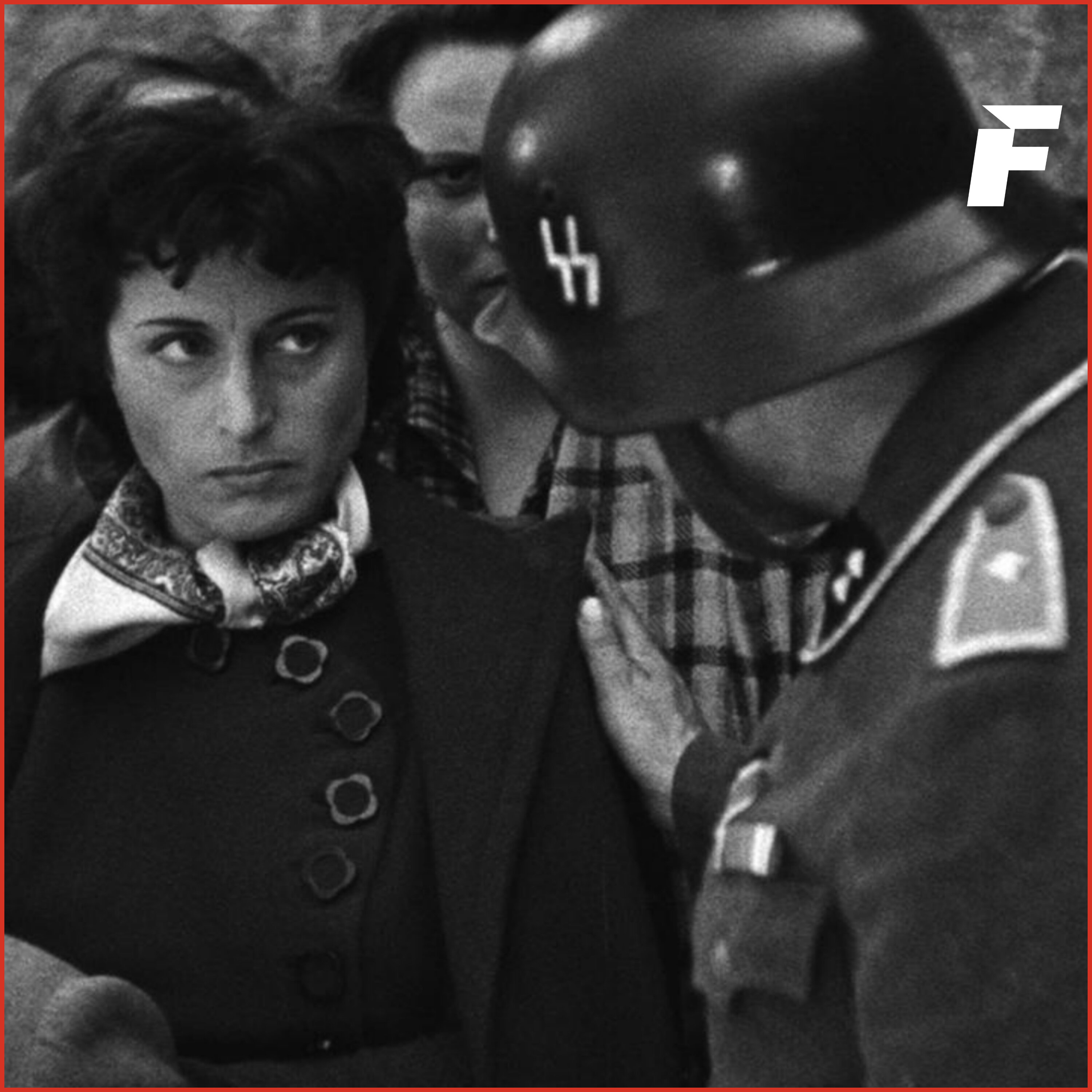
Rome, Open City: The Blueprint for Revolutionary Cinema | Dissident Cinema
Adam and Josh continue Filmspotting’s Dissident Cinema Marathon with its second entry, Roberto Rossellini’s Rome, Open City. Made in the immediate aftermath of Nazi occupation and against the backdrop of a country still in crisis, the film merges neorealist observation with the tension and structure of a spy thriller. The conversation explores how the movie captures resistance not as myth but as lived experience, examining its radical immediacy and why the film stands as a blueprint for what revolutionary cinema could become.
See omnystudio.com/listener for privacy information.
Available Results
Generated results are saved to the knowledge database for reuse and search.
Extract Knowledge
Pick what you want extracted first. Model, scope, and chapter options appear after a template is selected.
Transcript
00:00:21
Speaker 1: Film Spotting is presented by Regal Unlimited, the all you can watch movie subscription pass that pays for itself in just two visits. See any standard two D movie anytime with no blackoutdates or restrictions. Sign up now on the Regal app or at the link in our description and use code film spot twenty six to receive fifteen percent off.

00:00:45
Speaker 2: What kind of a show you guys putting on here today?

00:00:48
Speaker 3: We're not interested in art now, No, Look, we're going to do this thing. We're going to have a conversation.

00:00:55
Speaker 1: Hey, film spotters Adam and Josh. Here for the second film in our Dissident Cinema Marathon. We go from pre World War to Charlie Chaplin that was the great Dictator, to post World War two Italian neo realism. We're going to talk about nineteen forty five's Rome Open City from Roberto Rossellini.

00:01:26
Speaker 2: Jis Finish shame on.

00:01:35
Speaker 4: The Dissident Cinema Marathon is comprised of films that critically depict or fight openly fight fascism. Six movies in all. You can find the full lineup at film spotting dot net Slash marathons. This film, Josh was released in forty five, but set in nineteen forty four during the Nazi occupation of Rome. Not surprisingly, context with this marathon really matters, just as we discussed with The Great Dictator, the time in which it was made, the time in which it was filmed, and in this case, Rome had been liberated, but the war was still going on. It was only Rome that had been liberated by the Americans, and so this was this was very in fact, that's not even really doing it justice. It's it's an open wound at this point for Italy. Maybe we start there, start by considering Rossolini's film in contrast to Chaplain's, which we discussed last week. That movie lampooned Hitler and Nazism, The son.

00:02:42
Speaker 2: Cut he and too many of me.

00:02:50
Speaker 4: Hey, this film is serious and serious, verging on though melodrama at times in a way that actually contradicts its neorealism roots.

00:03:08
Speaker 2: What did you make of Rome Open City?

00:03:10
Speaker 3: Yeah, I think that's a fair description.

00:03:12
Speaker 1: It was the freshness of it that shocked me in looking at that timeline you described after actually watching the film, you know, wondering while I was watching it, exactly when did this come out? And yeah, raw, the Rawness of the lives it's exploring in this movie. The realism, those aspects of it you feel must have been almost out of necessity more than I know there are roots to neorealism. Then go back before this, right, I mean, it's considered one of the early films, but you can trace its development in earlier pictures. At the same time, just trying to put something together in the aftermath of Rome being liberated, there were restrictions, and I think you can feel that while at the same time you can see the live nerve of it that gives it its power and gives it its neorealistic qualities are largely because of the context of its filmmaking.

00:04:19
Speaker 3: But at the same time.

00:04:21
Speaker 1: Time, as you point out, melodrama I think is appropriate. I experienced much of this Adam as an espionage thriller, like a straight up spy thriller, And do those things sometimes jut up against each other a little awkwardly? Maybe we can talk about that. But I think if you take into account again the context of the filmmaking and its production, you can only admire what ross Leni was able to accomplish here technically. And I want to get to this philosophically. Because there is a movie version of this that could have been all about revenge. And I think where this film arrives and lands at is somewhere remarkable at any time, and quadruplely remarkable given that the movie arrives here so freshly after the suffer it depicts.

00:05:23
Speaker 3: So yeah, well.

00:05:25
Speaker 1: We'll come back to that maybe, but but yeah, it was again, this is one for the first time. This was a blind spot for me, you know, in shame I say that, and a real reason for doing this marathon. And yeah, I knew I was getting the neorealism. I didn't know I was getting the espionage thriller basically was one of my main takeaways.

00:05:46
Speaker 4: I really love that take, and I know we'll get to it later, But you're right, considering how raw those wounds are, how the war is still going on, how visceral the hatred of the Nazis was, surely had to be for Rosselini to make such an inquisitive picture in a lot of ways, certainly spiritually, which of this movie definitely is and not just be, as you put it, a revenge film, a hate filled movie that is remarkable. It truly is. The neorealist aspect of this film. You understand why this film is thought of that way and why it's one of these films that post war broke out because of its performance. It can, its reception, it can and it put Italian cinema, this group of films, and this movement on the map. But as you noted, there were neorealist films coming out before this, and movies like latera Trema. I would say to just name one that are more traditional neorealist films that has similarities to this film, but there are also stark differences. Where they have things in common is that this is obviously a movie that is very much about the working class. It's about the struggling class. It is depicting people in Italy just trying to get by. It's about people being oppressed. It is showing it even with this sheen of espionage and melodrama. And when I say melodrama, I mean let's let's not mistake it. There's a subplot involving a woman who works at a nightclub and she's got a drug habit that's being exploited by the Nazis and by this woman who works for the Nazis. There's aspects of that that you would never see. There's plotting like that that you would never find and what's typically considered a neorealist right, Okay, So with that in mind, it doesn't check those boxes. Where it does check the boxes is, like I said, being about the everyday Italian people, the struggling and the oppressed, and.

00:08:09
Speaker 1: Also the non professional actors portrayed. Some of the non professional actors.

00:08:14
Speaker 4: Certainly, yes, absolutely, of course we have Annamanyani, who's who's making really her debut, her breakout film role, and there are some professionals including we have although Fabreezi as Don Pietro, who I think is is pretty incredible, despite the fact that he comes to be known as much more of a comic performer not a dramatic actor, and he's he's really good here in a very tragic role. But it also in its style. I'm going to talk in a moment, Josh about how it it isn't neorealist in some of it's aesthetic but obviously with the the handheld camera, the grittiness of it, just the fact that what it's showing it's shot. Yes, it's shot in a lot of internal locations, in a lot of in a lot of sets, which is also different than than you would expect from Hollywood. For example, right neorealist is going to shoot Neo realist films are going to shoot on location, but they're also going to shoot outside using natural light, like a lot of this film is and and the bombed out building are the actual, of course bond out buildings. That's where this film is is shot, and that's the struggle that it is depicting. I wanted to read this to you though, because I wonder if you had a similar reaction to a moment in this film that I did, if you made a certain connection, or if you're going to tell me I'm crazy. I'm pushing this too far, but I want to read you a quick quote. I'll tell you who the quote's from, and then we'll take it from there. As filmmaking, this is Paul Thomas Anderson. As filmmaking, it is tremendously accomplished, and its pseudo documentary style has influenced many directors seeking to create an aura of authenticity and immediacy when depicting recent historical events. The heightened contrast and grain in the black and white film stock and the handheld camera work are indeed supposed to suggest documentary newsreel footage. Okay, here's the point. He's talking about the Battle of Algiers, but he could be talking about Rome Open City. I think everything I just read to you applies to Rome Open City. And that's not surprising because I took those quotes from a transcript of what Paul Thomas Anderson said when he was introducing films on Turner Classic Movies. Remember I referenced that during our original review of One Battle after Another that he was a guest programmer and he programmed four films that influenced one Battle, and one of them was The Battle of Algiers, which obvious it's name checked in the movie too, but he programmed the Battle of Algiers. He calls it out in his setup, but he also calls out in that setup, not surprisingly, Rome Open City. He talks about how Rome Open City was the original influence on the Battle of Algiers, and I, unless you're gonna disagree with me, everything I just read about Algiers that he's saying applies to this film. This film is the blueprint for what we get in the Battle of Algiers. And the moment where I knew it all came full circle or all the points on the Triangle Connected One Battle Algiers Rome Open City. This is one of the two exhilarating moments that underscored for me why this film is so exhilarating, but also why it doesn't fit the textbook definition of a neorealist film. Is what occurs at the thirty six minute mark. It's when a bomb explodes. And right there, no bomb is ever going to explode in a neorealist movie. But a bomb explodes, and Manyani and the other two male characters, men Manfredi and the man she's supposed to marry, Francesco, They they look out the window. They don't know what has happened. They go to the window and they look out, and what did they see? And there's this wonderful shot of a fire in the distance, and who emerges what emerges from that fire, but this gang of rebel boys out of the smoke, out of the fire, and they run down a path, and then the cut is to them running through a little tunnel, and then they run from that tunnel and they jump through an opening. And it feels like you could have lifted that, And if you just put it in color, you could have lifted that and put it straight into one battle after another during the entire protest sequence from that gap, the skateboarders leaping are those boys who detonated that German truck or whatever it was they that they set off. When that movie, that's when Rome Open City really comes alive, when those boys who have just been little neighborhood boys, who the priest Don Piedro is telling them what to do and go home, when you realize that they're fighting back, and when you see them run. It had to be whether it was conscious whether Pta looked at that movie again, or whether it's just that that that DNA, the DNA from from this movie, from Rossalini to the Battle of Algiers to Pta.

00:13:53
Speaker 2: It's there. It's all there.

00:13:55
Speaker 1: Yeah, And there's a moral through line two, especially for Rome Open City and Battle of Algiers, exploring what counts as terrorism, what counts as resistance, what counts as murder, what you know it's it's These are all difficult questions that I think are maybe more at the forefront for Algiers than here, but definitely at play and to a degree in one battle after another. Also, I think Battelevil Jeers is maybe purely the sort of thing that Anderson described in that quote, yes, whereas Rome Open City is intermittently that sort of thing. And whether or not you regard that at meaning it's lesser or or not, you know, is probably up to each individual viewer.

00:14:41
Speaker 3: But I think it's a worthy.

00:14:42
Speaker 1: Distinction a sequence, not even a sequence, because it's actually a motif that Rossolinia returns to that is connected to that docu drama Gritty. It's it kind of is where the neorealism and the thriller elements converge anytime his camera finds itself in the stairwell of the central building where Pina Megnanni's character lives and is a you know, location for a lot of the actions. So Menyanni's pena. She she along with Fabrizi's priest there they're sort of surreptitiously aiding the resistance movement, you know, they're not directly involved, but they help out as they can. And she lives in this big building, high rise, maybe eight stories or so, and it has this central staircase and the camera there has an itchy nervousness. Two sequences come to mind, and one is directly after Adam the moment you just talked about the boys brigade having set this bomb. They're coming home. They've been out late, curfuse in place they should have been home, And so they're running up these stairs, and as each boy hits their door on the landing and has to go home, their father opens and screams threatens violence. It's very unnerving and yanks them in. And then we go up the next round of stairs to the next door where the next boy gets pulled in, and the camera there just you know, turning those corners of the staircase is just so jostling and destabilizing. We get this staircase and other shots too, though in other sequences where we're just looking up all the way up the building and seeing it, or we're looking down from the top and all together it has this itchy nervousness, but also captures the sense of disorientation that you think must have dominated daily life, not just in that building but everywhere for the people trying to just live their daily lives right in the midst of all this chaos. And so I think that is a technique. Now you've got me thinking about sequences in one battle and where we might have seen similar camera work, but definitely here that stood out to me in Rome Open City, a technique that again blurs that line between near realism, handheld and expertly choreographed thriller filmmaking.

00:17:17
Speaker 3: Hey lady, welcome to Cultivating her Space.

00:17:21
Speaker 5: Join us every Friday as we create space for black women to just be. Take a listen to a few of our favorite moments. There just slowed me down. It was like, wait, let's sit with this now, this is uncomfortable. So that's when I really began to feel the feelings and not just push them down. Listen to the Cultivating her Space podcast on America's number one podcast network, iHeart. Follow Cultivating her Space and start listening on the free iHeartRadio app today.

00:17:48
Speaker 4: Now that I'm thinking about it, as you went back to one battle, I don't want to push this part too far because clearly there are disconnects.

00:17:56
Speaker 2: But I wonder how far.

00:17:57
Speaker 4: We could push the connection between Don Pietro and sense, for example, just as as civic leaders trying to do their part surreptitiously, right, he's there.

00:18:13
Speaker 1: The secular Don Pietro, and in a lot of ways.

00:18:17
Speaker 2: He really is.

00:18:18
Speaker 4: And I just want to go back to your to your point before and make sure I underline this, and I think you would agree with this, But it really is for me, not whether or not you fall on one side or another thinking Algiers is a better film or Rome Open City is a better film. Either way, it's not really for me a matter of lesser or more.

00:18:41
Speaker 2: It's just that.

00:18:41
Speaker 4: Obviously, going back to context, Rossolini as a filmmaker, and this touches on the spiritual and secular aspect as a filmmaker, has other concerns than Pontakorvo. And also he has other concerns as an Italian resisting the Germans in nineteen forty five than Pontakorvo. Sure shooting in Algiers resisting the French government in the nineteen sixties has So you have very different films, but you don't get Algiers. You don't get the Battle of Algiers without Romo a City, Right, you just don't the other Right, The other shot is the shot, and I'd love to hear your your take on it. It's what I was alluding to our in our Friday show about the memorable shots in in movie history, Josh, filmmakers who manage and there's no way they can know when they're when they're doing it. There's certainly no way Rosselini could have known when he's making this movie, when he's hustling to make this movie with no money, barely any film stock, pulling it together from loose ends, whatever he can get to get this movie made. There's no way he's thinking, I am going to make a film that anyone's going to consider a masterpiece. But he's certainly never thinking I'm gonna I'm going to make a movie that's going to contain a shot that sixty eighty one hundred years from now people will still be talking about. And it's the shot that everybody associates with this film that even if you had never seen this film, you the Anna Manyani image of her. If it was a still photo, it was probably at a little bit of a distance and her running after the truck of Francesco being taken away, or if it was a moving image, right, it was that moving image of her at a distance as the truck is taking him away, and her arms outstretched and she's yelling it. It is just captured. It is somehow captured our imagination forever. I've seen it in montage after montage, not about films like this, just about cinema. It comes up over and over again, and that shot, I guess I was trying to understand what is it about it? Because even on I watched this on the Criterion channel, and right next to it Spike Lee there's just a two minute video, I think, where Spike Lee is talking to a scholar and he's talking about the influence this film had on him when he watched it for the first time at NYU as a film student, him and Ernest Dickerson both and how they saw themselves similarly when he's making his early films to Rossolini and his cinematographer, just hustling, trying to get whatever film they could, getting scraps, trying to get a film made with no money, and he talks specifically about that image, and he doesn't dissect it, but he just talks about how much it moved him or how much he felt it. And so I was watching it again today and the camera starts still. It's on a tripod. It starts still as she's running out of the frame, she's peeling herself away from Don Pietro. And then the next shot is the camera is clearly handheld. It's on the truck that Francesco is on and it's pulling away while she's running forward towards it, and then we cut to a profile shot of her running. We're now on the side and it's it's still again. The camera is steady as she's running past us, and then there are two shots in between, and we go back to the shot from the truck as she gets the handheld shaky shot with the camera pulling away as she's running and her Maniani getting gunned down, And it's just something about the combination the cutting between the stillness and the movement and the urgency of it, the handheld the urgency, the visceral quality. I feel like I've said visceral more times in these past couple of shows that I've said in two years. But that's what it is. There's something that just is unnerving about it, and that handheld shot, but then pulling away from her too, the fact that the truck is we feel as viewers because it's the camera eye, we feel us pulling away, but she's also getting closer but not really right. So there's a desperation that she's also expressed with our arms as she's reaching out. We know that this is futile, and that's expressed in the fact that the camera's moving away and she's not really getting closer to it.

00:23:35
Speaker 2: What is it about?

00:23:35
Speaker 4: I mean, I'm trying my best to explain it, but what is it about that shot that Rossolini pulls off and makes it so unforgettable for me?

00:23:44
Speaker 1: It's the helplessness. And so I'll say two things about this, and the first is it's connected. I would argue it's connected to why we're doing this marathon. He captures in the rawness, the docudrama, sensibility, and the helplessness, a reality that people throughout history, when oppressed by occupying forces or abusive forces of their own government, reach a point where they can't just stay still anymore, and yet they can't do anything about it because to do something will cost their lives. And so we're seeing a historical recreation of that happening in Germany occupied Nazi occupied Rome. We're seeing mobile phone footage of that happening in the United States, not by an occupying force, but unarmed citizens being killed by government agents when it comes to ice protests and the like that's happening now, and the exact sort of helplessness that we see in that footage shared from mobile phone people with their phones is the helplessness that Rossolini captures in this sequence. So it's in the technique you've described, and it's also in the unfortunate universality of this being a recurring human experience. I think that's why it lasts. That's the one thing. The second thing I would say connects back to our discussion of neorealism and the non pre professional performers in the background, actors who are very you know, very effective, the use of them. I think a key to Rome Open City is that Manyani and Fabrizi both had extensive acting experience before coming to this part, and so Manyani in particular, and what was the what was the Brando film we talked about that she was in, you know, a decade.

00:25:45
Speaker 2: Or more legative kind thank you, and she like.

00:25:47
Speaker 1: Went toe to toe to Brando, right of course, of course, and you see it here. You see just the force she brings to this part without playing it too far. She's really not any different than any of the other women in that building, except that she's when pushed, she had to a point, she's going to push back, maybe more than they would. So I say that in connection with this scene is that we already know from what we've seen of a Pina that she's just not going to be able to take it anymore, and that's what happens. And so I think it is also a performance element that lends to the sequence's power. You're talking about now the specific moment she is just running, right, she's a figure. But go back, you know, thirty seconds to before that, when she's with the crowd and being held back and the Nazi.

00:26:51
Speaker 3: Trooper's looking at her. Doesn't he say something to her about her eyes?

00:26:55
Speaker 2: Yeah? Yeah, he says.

00:26:57
Speaker 1: Like, you have pretty eyes, and those eyes flash and you kind of know when they flash, she's not going to survive because she's just hit that breaking point, even though we know she's also helpless in this situation. So there's just so many factors that they're to go into those images sticking with us. Some of them are historical and some of them are very very topical.

00:27:25
Speaker 4: Yeah, it is. I mean it's everything you said. You expressed that so eloquently, and and it is. It's not just the technique that makes it feel like it's a newsreel, but what makes it last is that it gives it a timelessness. We feel almost when we watch it now, like it really happened. We feel when we watch it like we're watching history.

00:27:52
Speaker 3: And because it.

00:27:55
Speaker 2: Has that's it. That's it.

00:27:57
Speaker 4: Yeah, And I appreciate for a film that does have some of those melodramatic plot elements that we mentioned, not melo drama in a Douglas Circuay, but some of those plot elements. I appreciated the degree to which we don't then dwell on her death, that in this environment, life just has to move on, moves on. It doesn't spend any more time on the fact that now pina Is is gone, and how's everyone going to pick up the pieces? They simply have to pick up the pieces. I thought that was an interesting I'm not surprised based on the film and the material, but I thought that was interesting that everyone does just move.

00:28:39
Speaker 1: On, and that's true, but it does still register the loss in her son Marcello. What a performance by that kid. Veto and it Chia Rico and I'm sure and at Chio Rico, he's just great. And we see him now without his mother, and you know the scenes with him and Francesco being reunited. Francesco, I know, Grand Jacat plays that part. So yeah, you're right that she does disappear. Everyone has to keep going. But it's not like the movie completely forgets her either. It's very new you can't.

00:29:09
Speaker 4: And how about that final shot of her Don Pietro holding her body. It's too intentional, The positioning of her body and the way he's holding her and the way it's shot is too intentional. And having been to Saint Peter's not that long ago, on a trip to Italy, it's the Pieta. It's the exact same position that now you know Roles reversed if you will a little bit, but he's he's holding her in that exact same way. And that's some of that imagery that he is constantly evoking. And one of the things one thing I saw somewhere is that Rossellini was someone who said his entire life he said, non believer, non believer, non believer. And yet so many of his films, including this one, deal with explore, investigate religion and do it in a way that would seem to show more than just curiosity, would almost seem to betray the mind of someone who seems to believe more than he may actually let on.

00:30:18
Speaker 3: Yeah, it's fascinating.

00:30:19
Speaker 1: I haven't seen these movies, but just reviewing his filmography, like towards the end of his career, he made a biography of the life of Christ. He did biopics about various saints. Yes, yeah, so at some point I'd love to dig into all that. But it does bring us to that aspect I was alluding to at the beginning there about where this movie ends up, not in a place of a vengeance necessarily, and it's very much connected to Fabrizi's performances Don Pietro. You know, I think for all the there's a sturdiness to to its moral vision amidst all of the intentional chaos of its filmmaking and what's happening. And you know, this movie does emphasize and I want to be clear about this, it doesn't. It emphasizes justice and the need for justice, and there's a lot of talk about that and holding people accountable for crimes they've committed. This is not a movie that calls for easy forgiveness in any sense, but it does pretty much land with we need to get to forgiveness or we're lost, and I think it does that honorably and with an eye towards justice, because this is something that even Don Pietro struggles with. There's the crucial scene where he's being forced to witness the torture of the figure, the character and resistance who's been in hiding and he's been trying to protect. He's forced to witness this and he yells out at the end of it when Ferrari dies, curse you all. And then the second later, Lord, what have I said?

00:32:03
Speaker 2: And so truth to God.

00:32:05
Speaker 3: Yeah, that's the struggle that.

00:32:07
Speaker 1: I think this movie is trying to reconcile with. Is justice, the vengeance, the forgiveness? How do we how do we handle all of those? And I do think even in that excruciating climactic moment that Don Pietro is holding trying to hold to forgiveness as the only path toward healing, while recognizing justice does still need to come first.

00:32:33
Speaker 4: Yeah, And if you were a filmmaker who was more inclined to not imbue religion with any kind of power, even if you were sympathetic to characters like Don Piedro, and a lot of these people in this movie are based on real characters who were resistors. Maybe he was, but even if you were basing this character off a real priest. If you were less inclined towards religion, I don't think you could shoot a scene. And ultimately it's not important to me, Josh, whether or not Rosselini believes in God or not. My larger point is about the movie itself and that scene and the way the way he shoots, the way he gives reverence to that moment. He not only shows Don Pietro responding to the torture and cursing God and then wrestling with himself, but when he does curse the Nazis, what do the Nazis do?

00:33:37
Speaker 2: They recoil.

00:33:38
Speaker 4: It's almost like Indiana Jones and Raiders of the Lost Arc when the when the Arc opens, like they stand back, like they are actually scared by the power that he is invoking. And if as a priest he didn't have any power or these were just empty words, a filmmaker could depict that in a very different way, in a way that was a lot more hollow.

00:34:03
Speaker 2: That surprised me.

00:34:04
Speaker 1: I think that's true, and I think it also speaks to the nuancing of the role of religion in times like this, where you know, I think the Nazis recoil because many would claim they were doing the work of God right and were religion used for horrible purposes today as well political purposes the same religion, And then you have figures who are representing that religion, offering a different vision, let's say, as Don Piatre does. And sometimes when that one vision is put forward to people holding another.

00:34:42
Speaker 3: They they're exposed.

00:34:44
Speaker 1: And I think that's what Don Pietro is doing, is even though he's rustling the things on his own and doesn't mean to do it, his exclamation exposes them.

00:34:55
Speaker 4: A scene that you'd have to analyze in conjunction with that is after the night after Pena has been murdered and Manfredi tucked the sun into bed, he's finally fallen asleep. The time that Rossolini gives to Manfredi, he's in bed, the kid is in bed. Manfreddi is now turned away. He's about to leave the room to go out and talk to Francesco. But what does he do first? He turns and the lighting here this here again totally not neorealist, because the lighting is very intentional and very dramatic and very gorgeous. Dark the shadows, but they're pointed right at Christ on the Cross above a dresser, and he turns to walk away, except he gets stopped in his tracks. The camera is showing the back of Manfreddi as we see him looking at pausing looking at Christ on the Cross, And the movie doesn't tell us what Manfreddie is thinking. We have to for ourselves consider. Is he thinking, perhaps where is Jesus now as we're all suffering, as this child is suffering and now doesn't have a mother. Or is this a moment and or is this a moment where he's thinking the person we learn later if we trust what Don Pietro is saying in that moment, this character, man Freddie supposedly doesn't believe in God at all. Is this a point where I think you were getting at, Josh. Is this a point whereas he turns and sees that cross, is he actually stopped in his tracks by the image? And is he tempted for a second to look to it for comfort and then he has to he has to turn and leave the room.

00:36:50
Speaker 1: Yeah, there are complications there too, because, as you said, and I think the you know, the Nazi commander who is doing the interrogating, Major Bergmann played by Harry feist. He pulls this out on Don Pietro and says, you know, these guys you're with, they're atheists, They're they're not on your side, like there's communists. And this was all part of the dynamic at play with the you know, the various factions in Italy at the time, right the Partisans who had certain ideal, logical standings and positions which were opposed to the Church. Within the church itself, there were different ideological positions than you had the Nazis. I mean for the movie to encompass a lot of those perspectives within again going back to this essential spy thriller plot, is really an incredible work of dexterity.

00:37:43
Speaker 4: I also, just in closing here, I appreciate, even though it was hard to watch, I appreciate the level to which we see the torture.

00:37:51
Speaker 3: Oh, it is really rough.

00:37:53
Speaker 4: It's tough to watch, but it has to be. If this movie is going to be unflinching, we have to see that. It can't just be something I think that we're using our imagination. We're hearing some screams from the room we're watching it. On Don Pietro's face, I know that that often could be a very compelling technique the old horror movie adage about using our imagination, and it can be worse. I think in this case, for a film that is trading in neorealism, that needed some realism and we got it.

00:38:22
Speaker 3: Yeah, it's for a movie this age.

00:38:26
Speaker 1: I was shocked at how graphic that actually was, and I did wonder and I haven't wrapped my mind around this yet, but there is so much emphasis placed on this character being tortured Ferrari and Freddi goes by both names, played by Marcello Pagliero, not saying anything, not spilling anything, And I almost wonder if it's sort of romanticizing standing up to torture, as if that's an.

00:38:52
Speaker 3: Ideal you should have to meet.

00:38:55
Speaker 1: It definitely does, it does right, And part of me is like, well, does that mean any person who suffered that and actually spilled something as any less. I mean, I don't know. It's just one element in the movie. I'm it almost held up as this spiritual ideal when you know a lot of the Christianity of the movie seems to be learning on is like it is is more about where you fail, there's someone else who will pick you up. From that point, sure that you know that that's like that, that's the Jesus that the movie is is, you know, in a lot of ways present. And then you have this character who is it's all about if he can just hold out under the torture, and.

00:39:43
Speaker 4: You'll never break him, You'll never never break I have reached No, that's there, and there's also there's also a little bit of that outdated today, hopefully, that outdated religious approach of what does he say to Manyani don Pietro about nobody ever questions whether or not we deserve to suffer.

00:40:03
Speaker 1: Yeah, I wasn't. I wasn't quite with Don Pietro's theology there.

00:40:08
Speaker 2: Now I have to go, yeah, I think you have to.

00:40:10
Speaker 4: You have to question that my last thing, because this has been a love fest, and deservedly so. But the moment too that I think you really have to wonder about where Rose Selini was going with this, whether or not it matches. It speaks to the intentions that you're articulating about the impulse to forgive in a way, the impulse to at least lighten the idea of revenge, anyway, to portray to portray these Nazis as evil and terrible, as we see with Major Bergmann that he's completely capable of this kind of torture. And you know, not to dig on Casablanca, but one of my issues with Casablanca is that the Nazis are They might as well be in a Marx Brothers film, They're so incompetent, and here we actually have Nazis who are scary as they should be. But he also he has a Nazi in this film articulating that maybe we aren't the master race and all we do is commit violence, and having a Nazi be self aware in this movie is an odd choice.

00:41:18
Speaker 1: That came a little out of nowhere. I'm how disturbing is this? Right next to the torture room, you open another door and they have a faux nightclub where they have their parting, right yeah, yeah, and Hartman, this is the German captain played by Yup Van Holzen. All were really good at is killing killing killing.

00:41:37
Speaker 2: Yes, And he's talking, he's he's remorseful about it, and.

00:41:42
Speaker 1: He's talking about Germans there not necessarily Nazis, And I felt like that was a bit like, if you want to say, this movie is trying to get digs in understandably at the time of it being made that felt like a very on the.

00:41:58
Speaker 3: Nose dig Yeah it did.

00:42:01
Speaker 4: And isn't he then, isn't Hartman the one at the end that has to step in?

00:42:08
Speaker 2: It's him.

00:42:09
Speaker 4: It's him who the dramatic irony. It's him who steps in at the end and takes the shot.

00:42:17
Speaker 3: I didn't catch that.

00:42:18
Speaker 2: It's Hartman.

00:42:25
Speaker 4: Yeah, it's Hartman who when the Italians won't the firing spot, won't carry out the order. He he now sober in the light of day, doesn't seem to have any problem.

00:42:35
Speaker 2: That kind of hits him.

00:42:37
Speaker 1: That kind of reclaims the earl for me. It Yeah, wow, I miss it.

00:42:43
Speaker 2: Yeah, it is it is him. Well.

00:42:45
Speaker 4: Rome Open City is currently available on the Criterion Channel and HBO Max and VOD next week post War World War Two Japan for Akira Kurasawa's No Regrets for Our Youth that's also available on the Criterion Channel. We remind you that you can check out the full lineup over at filmspotting dot Net. Just click on marathons right at the top of the page for Film Spotting.

00:43:11
Speaker 2: I'm Adam Kempenar.

00:43:12
Speaker 3: And I'm Josh Larson.

00:43:13
Speaker 4: Thanks for listening this conversation can serve no purpose anymore. The burn, the passa