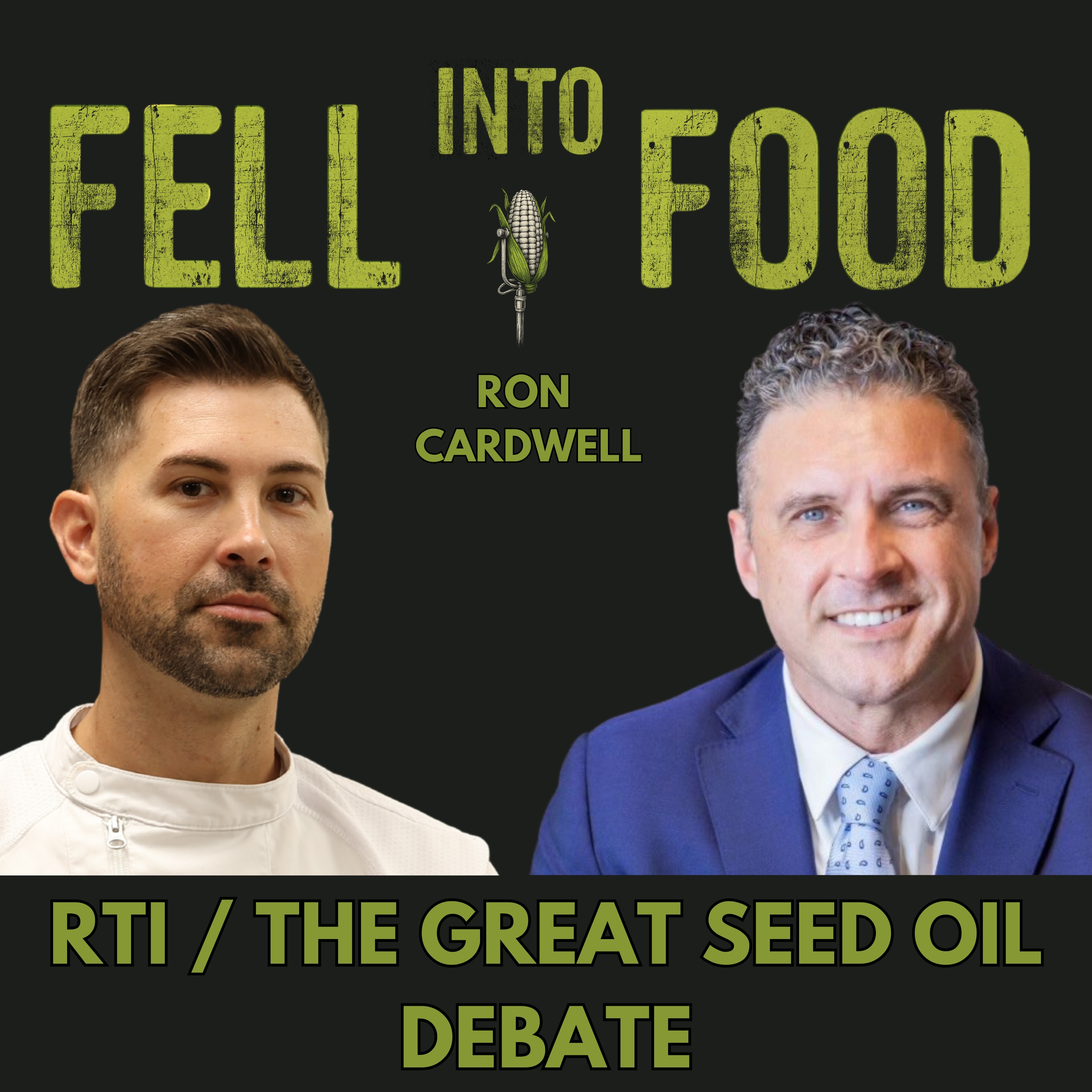
RON CARDWELL: RTI / THE GREAT SEED OIL DEBATE
Ron Cardwell, Director of Commodity Strategy at Restaurant Technologies (RTI), runs point on cooking oil for the company that pioneered automated oil management — the closed-loop system that delivers fresh oil and pulls used oil out of more than 40,000 restaurants. We get into the seed oil debate, allergen myths, beef tallow's comeback, and what actually happens to the used oil in your fryer.
Ron's nickname is "The Oil Nerd." He earned it. He started in soybean processing out of college, fell in love with how oil touches every corner of food and energy, and has been deep in commodity strategy ever since. RTI moves more than 700 million pounds of fresh oil into restaurants every year and pulls hundreds of millions of pounds of used oil back out — and almost all of it ends up as renewable diesel, biodiesel, or sustainable aviation fuel.
We dig into how operators should actually think about oil — flavor, function, and price, in that order, not the other way around. Why "buy the cheapest" is a trap that costs you more in turnover and bad food. The seed oil vs. beef tallow debate — what's signal and what's noise, what the real trade-offs are on flavor, supply, and price when you switch. The allergen question that comes up at every front-of-house every week — and why a fully refined and deodorized oil doesn't carry the allergen at all (Ron settles this one on tape). What pourable beef tallow actually is and why it exists. Why high-oleic crop breeding is changing what "stable frying oil" even means. The full-circle history — beef tallow → saturated fat fear → trans fats → seed oil blends → consumers asking for tallow back. And the part of Ron's job he loves most: turning used fryer oil into renewable diesel at roughly 20% the carbon intensity of conventional diesel.
Socials and Links:
Website: www.rti-inc.com
RTI 2025 Impact Report: https://www.rti-inc.com/blog/restaurant-technologies-recycled-more-than-390-million-lbs-of-uco-in-2025/
Ron Cardwell Linkedin: https://www.linkedin.com/in/ronald-cardwell-21a7531a6/
CHAPTERS / TIMESTAMPS
00:00 — Intro and welcome: Ron Cardwell, Director of Commodity Strategy at Restaurant Technologies
01:31 — How Ron earned the nickname "The Oil Nerd"
02:44 — Why oil is one of three core nutrition components — and the most functional
03:49 — What "Director of Commodity Strategy" actually means day-to-day
05:09 — Quick recap of RTI's closed-loop oil system (referencing Ep 17 with Diana)
05:24 — The most dangerous job in a kitchen — and why bulk delivery eliminates it
07:12 — Jeff's experience as a former RTI customer
08:32 — RTI's 2025 Impact Report — released Earth Day, recycling stats
09:36 — Choosing oil: the three variables operators actually need to weigh
11:24 — The trap of buying the cheapest oil
12:13 — Flavor profiles by oil type — neutral vs. flavored oils
14:39 — The allergen question — settled on tape
16:15 — How operators (and customers) can verify allergen status — the supplier statement
18:32 — The seed oil vs. beef tallow debate — what's signal, what's noise
21:03 — Switching to tallow — flavor, supply, and price reality
24:58 — Why beef tallow is a byproduct, not a planned crop — supply ceiling
27:13 — Beef tallow handling — the solid block, the cleanup, the pourable version
29:23 — Glass vs. plastic and why dark storage matters more than the bottle
30:30 — Sustainability: where the used oil actually goes
32:58 — Where the oil category goes next — high-oleic, crop breeding, consumer demand
35:59 — The full circle: tallow → saturated fat fear → trans fats → blends → tallow comeback
37:20 — The one thing every operator should change Monday morning
37:55 — How to actually monitor oil quality day-to-day — smell, taste, look
38:55 — Where to find Ron and RTI — NRA Show, rti-inc.com
39:35 — Wrap up
Listen to the full episode and more! It would mean the world to me if you could leave a 5 star review on your listening platform to help grow and expand the Podcast.
YouTube - https://lnkd.in/gQM3S5mr
Spotify - https://lnkd.in/g_5kFXie
Apple Podcast - https://apple.co/41RoTm4
Pandora - https://lnkd.in/gS-wu_YJ
YouTube: https://youtube.com/@FellIntoFood
Linkedin: linkedin.com/company/fell-into-food
Instagram: http://instagram.com/fell_into_food
Facebook: https://facebook.com/fellintofood
Advertising Inquiries: https://redcircle.com/brands
Privacy & Opt-Out: https://redcircle.com/privacy
Available Results
Generated results are saved to the knowledge database for reuse and search.
Extract Knowledge
Pick what you want extracted first. Model, scope, and chapter options appear after a template is selected.
Transcript
[SPEAKER_01]: Welcome back folks to another episode of the fell into food podcasts.
[SPEAKER_01]: I am your host chef Jeff Fell joining me today as Ron Cardwell director of commodity strategy at restaurant technologies a friend of the pod, the company that pioneered automated cooking oil management and now moves more than 700 million pounds of fresh oil a year through its closed-loop systems, Ron sits at the intersection of the global oil markets and what actually shows up in your fryer.
[SPEAKER_01]: which has earned him the nickname the oil nerd and made him the go-to voice on cooking oil in the food service industry so Ron, welcome to the show.
[SPEAKER_01]: Thank you very much, Chef's pleasure to be here.
[SPEAKER_01]: I got to ask first, you know, you've been called the oil nerd, how did that name come about?
[SPEAKER_00]: Well, I mean, I guess you could say, I earned it.
[SPEAKER_00]: So my entire career, you know, sometimes you find yourself in a career when you're out of college, you have no idea how you got there.
[SPEAKER_00]: And I guess that's how it is here.
[SPEAKER_00]: I went to work for an agricultural company and you know, worked on the soybean side and things like that and found my way into the oil processing side and just
[SPEAKER_00]: fell in love with it, right?
[SPEAKER_00]: So I just fell in love and became fascinated with how food interacts with all areas of society, how the economics of food around the world really is so important, but it also gets down to the little granule level of just you and I and your families eating out.
[SPEAKER_00]: So I just fell in love with the overall aspect of how oil touches that.
[SPEAKER_00]: It's nutritionally important, but it's vital to communities, it's vital to restaurants,
[SPEAKER_00]: Um, I don't know, I could just go on and on.
[SPEAKER_00]: So I think I think just because I dove so much into it and really found just the appreciation for it, probably helped me kind of secure that little moniker.
[SPEAKER_00]: And I, and I do go on and on about it when I talk to people.
[SPEAKER_00]: So something like, well, that's a little, little much, but, you know, what can I do?
[SPEAKER_01]: Yeah, it truly does touch every piece of the food industry and people don't realize how much if you're sauteing something you're even if you're baking something you're usually coding and some sort of oil to some degree to help those seasoning sticks to get some some color.
[SPEAKER_01]: So it truly does touch almost everything that we eat these days.
[SPEAKER_00]: Well, yeah, and let's, I try to remind everybody, there's really only three components to nutrition anyway, right?
[SPEAKER_00]: It's protein carbohydrates and fat.
[SPEAKER_00]: And oil is fat, and it's just a vital part of our nutritional makeup, but it has such functionality that you really get this nutritionally and like vital component
[SPEAKER_00]: that serves a real function in the kitchen as well too and getting that function correct while also looking at the nutritional importance of it.
[SPEAKER_00]: I think those two really are what combines make it kind of kind of magical versus, you know, things like carbohydrates, the proteins are great, but oil just have so much more functionality throughout the kitchen and there's so many different ways to use it and so many different types and it just it just goes on and on.
[SPEAKER_01]: Yeah, in your rural director of commodity strategy, what does that actually mean on on a day-to-day basis?
[SPEAKER_00]: Yeah, so really it's just kind of taking a broad perspective of where oil is working into the restaurant and food industry as well as where it works and to the renewable fuel industry, which is kind of the second half of my job but it's just basically taking a very 30,000 foot view or very macro view
[SPEAKER_00]: to say, you know, what is A, the availability of specific oils in the marketplace, and how does that affect our supply to restaurants, meaning price and availability, right?
[SPEAKER_00]: And so I have to look at that portion first.
[SPEAKER_00]: And of course, then the email it down to which specific type of oils are we looking at.
[SPEAKER_00]: Soybean oil is one that's really,
[SPEAKER_00]: widely available, but then you get down to canola oils and corn oils and peanut oils and specialty oils and they all kind of narrow in focus.
[SPEAKER_00]: So my job is really just help our entire, well, help our customers for sure.
[SPEAKER_00]: And of course our entire staff understand the relationship between those macro items and how it affects our customers and the marketplace in general.
[SPEAKER_00]: So I
[SPEAKER_00]: I always take a big picture view, so we can narrow it down onto what in particular matters to a customer at any given time.
[SPEAKER_01]: Great.
[SPEAKER_01]: Maybe for those listening that have never heard of total management systems or like what restaurant technology does.
[SPEAKER_01]: I know I had an episode 17 you can refer back to with Diana, but maybe just paint kind of the quick picture of what you guys do with the full system.
[SPEAKER_00]: Yeah, I'd love to really make it simple, we just want to eliminate the kitchen managers from worrying about what's the messiest and nastiest and probably most dangerous job in the kitchen we're just handling the frying well.
[SPEAKER_00]: So what we do is we deliver bulk oil to a restaurant and put it into some sort of a bulk container that's there at the restaurant, whether that be a tank or an outside storage tank, something of that matter.
[SPEAKER_00]: But we put it in, we put these tanks in,
[SPEAKER_00]: run lines to the friars back and forth because there's a second tank that we put in as well too that takes all the used oil.
[SPEAKER_00]: So the functionality is truck delivers bulk load to the kitchen, never touched those gyms and those portable things.
[SPEAKER_00]: It just turns a valve and
[SPEAKER_00]: fills a fryer, turns another valve empties the fryer, and that's all the restaurant has to do with moving oil around, right?
[SPEAKER_00]: So you don't have to empty hot oil out of the out of a fryer and put it into a tank and risk slips and falls and burns, which by the way is the most dangerous part of being a take-fiction, is holding that oil around and, and uh,
[SPEAKER_00]: The risks of falls and burns is huge.
[SPEAKER_00]: So we eliminate that, but we also eliminate the worry of running out of oil or making sure your oils being used properly by By saying, hey, there's the right way to monitor the quality and right way to make sure you're turning it over and changing it properly.
[SPEAKER_00]: So the entire spectrum of cooking oil.
[SPEAKER_00]: We really just want to make it easy and and pain free as possible.
[SPEAKER_00]: and improve the quality of what's being served in the kitchen to where you can just move on to something else when you're running your kitchen.
[SPEAKER_00]: Don't worry about it, we got it covered for you.
[SPEAKER_01]: Yeah, and full disclosure, I used to be a customer and it was, it was like, the light bulb, I think it was, I feel like five minutes.
[SPEAKER_01]: I was like, shut up, stop talking.
[SPEAKER_01]: How do I put it in because it does it eliminates so much, there's so much, there's so much you have to worry about and especially just having the tanks there, it comes in overnight and just plugs right into the wall.
[SPEAKER_01]: It's almost like if you run a restaurant and you think about your CO2 a lot of places that, you know, the big CO2 containers, you don't even know when it's coming, it just comes in it fills because it's being monitored and the next thing, you know, you're like, oh,
[SPEAKER_01]: I'm not out of oil.
[SPEAKER_01]: I don't have to worry about anything.
[SPEAKER_01]: And then same thing, especially if you have self-filtration, friars being able for it to just shoot back up through and into an empty tank, it just made everyone's life so much easier.
[SPEAKER_00]: Yeah, couldn't agree more.
[SPEAKER_00]: And I think oil is one of those things you, you're likely don't ever think about until problem comes up, right?
[SPEAKER_00]: And that problem is usually
[SPEAKER_00]: Why aren't, why aren't, why's my food taste off?
[SPEAKER_00]: And then, oh, the quality's gone or hey, how can we're out of oil?
[SPEAKER_00]: Nobody ordered it.
[SPEAKER_00]: Oh, no, you know, which we went through faster than we needed to like it's always problems that arise before you think about it and we we understand that.
[SPEAKER_00]: So we want to eliminate all those problems and make sure you have exactly what you need.
[SPEAKER_00]: So hey, there's lots of other things going on a kitchen that deserve your attention.
[SPEAKER_00]: We can at least get that part out of the way and make sure you have good quality total service all the way through it.
[SPEAKER_01]: Awesome.
[SPEAKER_01]: Before we dig into some of the specific of oil because that's really what I want that the bulk of this to be have the 25 25 25 impact report come out yet.
[SPEAKER_01]: I think I saw little glimpse of that, but I wasn't sure if the numbers are out.
[SPEAKER_00]: Yes, I believe it was just last week.
[SPEAKER_00]: We released it on our day.
[SPEAKER_00]: So we didn't release the impact report.
[SPEAKER_00]: Yes.
[SPEAKER_01]: Okay, so make sure I'll link it to the notes, but make sure everyone if you're listening to go check that out.
[SPEAKER_01]: Really talks about how much is being saved and what these systems are doing, you know, on a global impact.
[SPEAKER_01]: It's pretty impressive, especially if you look year over year, what is actually happening.
[SPEAKER_01]: So I'll link that to the notes, but I wasn't 100% sure if it came out yet.
[SPEAKER_00]: Yeah, it absolutely did, and it is good information to see what kind of impact the recycling of the oil has done and how we've eliminated waste all the way through a system from landfill ways to making sure that everything that's used is recycled in the fuel.
[SPEAKER_00]: It's the impact report is really great, so I encourage everybody to take a look at it.
[SPEAKER_01]: All right.
[SPEAKER_01]: Let's dig in oil, right?
[SPEAKER_01]: Operators, they're choosing oil.
[SPEAKER_01]: Let's start there.
[SPEAKER_01]: Like you said, they're soybean, canola, haiolec, palm, talo, like what are three or four variables?
[SPEAKER_01]: Like they need to really be weighing when they're actually selecting what type of oil they should be using.
[SPEAKER_00]: Um, believe it or not, the first thing I always look at is hey, what makes it work for your menu, right?
[SPEAKER_00]: So the first thing that everybody thinks about when they're, or when they're making their menu or a shadow, then they're looking at oil is what's going to make my food taste like, no?
[SPEAKER_00]: So I, if you have a menu that's specific on flavor, make sure you have oil that a does it impact the flavor or a lens the right flavor you want to your oil.
[SPEAKER_00]: So I think that's the first thing to do.
[SPEAKER_00]: Secondly is what function is that oil going to is going to play in your in your kitchen.
[SPEAKER_00]: If you have a kitchen that just has light frying, you're not doing a whole lot of deep frying, just very like then you can pay more attention to the quality of that oil and the flavor and things like that because you're not going to be turning over high volumes to where the cost is so impactful, right?
[SPEAKER_00]: But if you run a high-fry kitchen where you're talking about constantly turning out wings and fries and appetizers So that fryer's moving all over the place you really have to look at how stable of an oil do we need to make sure we're not just burning cash You know because oil gets expensive when you're trying it over You know just day after day multiple times changing the fryer it adds up and if you put a really expensive oil
[SPEAKER_00]: into that fryer it adds up faster, right?
[SPEAKER_00]: So you got to look at what's the flavor impact, what's the functionality that you need in your oil?
[SPEAKER_00]: So that's what I think the top two, and then you get down to things like price because the price matters as well too, right?
[SPEAKER_00]: So you weigh those first two and you just see how does price factor into it?
[SPEAKER_00]: And as I said, if you're not
[SPEAKER_00]: running a high fry operation, maybe price isn't as impactful, but if you are, you still need it to function.
[SPEAKER_00]: You still need it to flavor right, but you don't want to overspend, right?
[SPEAKER_00]: So you always have to take those into consideration.
[SPEAKER_00]: And that's what we're here to do.
[SPEAKER_00]: Help to do is our function as a company is to get you the oil you need and want and try to match up that price functionality too.
[SPEAKER_00]: But I think too often,
[SPEAKER_00]: It's very easy to fall under the trap of just buying the cheapest oil, right?
[SPEAKER_00]: It's very easy to trap and I think you don't know you're paying too much for it until your food starts the food quality starts turning over or you're burning through it faster than you really should.
[SPEAKER_00]: If you're paying half the price but using twice as much, are you really saving money, right?
[SPEAKER_00]: Those are things that we don't have to consider, but really it is flavor, functionality, and price are the main considerations we're looking at well.
[SPEAKER_01]: And what kind of flavors are we talking about?
[SPEAKER_01]: Because it's a very daunting thing to look at it, the little list.
[SPEAKER_01]: There's, again, there's the pears, then there's blends and it gets so overwhelming trying to, again, talking about what you're trying to achieve.
[SPEAKER_01]: And I hate to say a lot of operators are first looking at price.
[SPEAKER_01]: But back to your point, if you're blowing through twice as much as if you were using a higher quality,
[SPEAKER_01]: then it defeats the purpose and it's one of those like hidden costs that people don't really understand because they're just looking at a spreadsheet and a cost per pound.
[SPEAKER_01]: So what what are we looking at from a flavor standpoint?
[SPEAKER_01]: I mean maybe break some of that down.
[SPEAKER_01]: So yeah, if listening kind of understand which of these oils and like what kind of flavoring is actually being imparted into their food?
[SPEAKER_00]: Yeah, so the I should say the standard of oil is to not impart any flavor at all.
[SPEAKER_00]: That should be the functionality of most oils, especially if you're frying or sauteing, you really want that oil to just function as something and what the flavor of the food come through.
[SPEAKER_00]: Okay, so your normal canola oil, soybean oil is what we call the clear oils, soybean oil in particular, they tend to have zero flavor impact, and that's great because if you want your menu items to taste like they're supposed to taste, you don't want the oil impact on there, okay?
[SPEAKER_00]: So you refined vegetable oil will do that.
[SPEAKER_00]: However, there's lots of menus that need the flavor of the oil.
[SPEAKER_00]: So some vegetable oils like peanut oil, for instance, or cotton seed oil, they lend a very specific flavor because the oil has flavor.
[SPEAKER_00]: And so you go down the list of saying, well, oh man, I'd love to use peanut oil to great frying oil because it is, but it's going to change the flavor of your food because it has flavor.
[SPEAKER_00]: So some oils in part flavor and some oils are just neutral.
[SPEAKER_00]: So that's really the question you have to get to and then when you get to you know in parting flavor, well, they have mentioned peanut oil and cotton seed oil, corn oil and things like beef tallow, they all have very different flavor profiles.
[SPEAKER_00]: So you have to see if it's giving flavor, is it the kind that you want?
[SPEAKER_00]: Right, and so that's why I always say you have to look at that first because if you bypass functionality or bypass flavor and just get to function, your menu will taste completely different based on which one of those choose right.
[SPEAKER_01]: Okay, so you said this is something it's always as a question I get asked all the time being in the industry is what about allergens and all your peanut oil people with peanut allergies like I can't have it or they're like oh my gosh, I have a soy soy allergy I can't have soybean oil will give the people you are the oil guy the what they can and can't have when it comes to oil and allergies the general statement is you don't have to worry about allergies oils as long as it is a refined and theorized oil.
[SPEAKER_00]: allergens are carried in protein structures.
[SPEAKER_00]: And so if you're getting a fully refined and deodorized oil, there are no protein structures that are present in that oil, so they do not contain allergens.
[SPEAKER_00]: That's why soybean oil is not considered in allergens, even peanut oil is not considered in allergens.
[SPEAKER_00]: So the oils generally do not have an allergen impact.
[SPEAKER_00]: I'll say, however, you've got to make sure you're getting good cardio from a reliable supplier, especially when things like peanut will come up because it wouldn't look it's a real concern.
[SPEAKER_00]: And I wouldn't want anybody to be overly concerned and saying, sure we got the peanut will from a good supplier, did they really fully deodorize it?
[SPEAKER_00]: Is it there?
[SPEAKER_00]: I'd get that.
[SPEAKER_00]: But if you're worried about labeling concerns, things like that, look, you just tell people what it is.
[SPEAKER_00]: But the real concern is does it cause a problem and the answer is no, it doesn't happen in the oil.
[SPEAKER_00]: So it's usually some other factor that hits the outer inside.
[SPEAKER_01]: Yes, thank you.
[SPEAKER_01]: And if someone calls and asks, is there a way for an operator?
[SPEAKER_01]: I mean, I would assume, and again, forget me for assuming, but like the big players in the game, they're probably using what you're talking about.
[SPEAKER_01]: That's not going to affect people because they have that on the radar.
[SPEAKER_01]: They keep that in mind.
[SPEAKER_01]: But if you're just hauling into a restaurant to ask, you know, what questions should one ask?
[SPEAKER_01]: And then for an operator, what should they be looking for?
[SPEAKER_01]: What can they tell a customer?
[SPEAKER_01]: Because I think it plays both ways that many times call a restaurant.
[SPEAKER_01]: And they're like, oh yeah, we use soybean oil, but then someone here says, this conversation says, well, is it refined and deodorize?
[SPEAKER_01]: And then like, hey, I don't know.
[SPEAKER_01]: Like, I just cook with it.
[SPEAKER_01]: So on both sides, what should a customer ask?
[SPEAKER_01]: And then how could an operator find the information and then get that back to the customer?
[SPEAKER_00]: Well, essentially it's the same answer to both.
[SPEAKER_00]: Any supplier should be able to give you an allergen statement for the oil they're supplying you, which is a statement from the actual producer saying there is not an allergen present.
[SPEAKER_00]: And that's done through chemical analysis through every testing procedure they have.
[SPEAKER_00]: So when a supplier sends that out, that batch is proven and tested and has a certificate saying it's not an allergen.
[SPEAKER_00]: To provide it to us when we when we source bulk oil in we provide it to our customers to show that pay various that and so our customers the restaurants in in general have access to those same allergen statements.
[SPEAKER_00]: So if I was a customer calling in, worrying about a analogy, I would ask, do you have an allergen statement from your supplier saying that it's okay?
[SPEAKER_00]: And if the restaurant doesn't have it particularly their supplier of oil should be able to get it to them immediately.
[SPEAKER_00]: It really should not be a very much more than a conversation in a phone call on your to your oil distributor or your oil supplier and you should have it in minutes.
[SPEAKER_00]: It shouldn't take that long.
[SPEAKER_01]: There we go.
[SPEAKER_01]: We have settled the debate.
[SPEAKER_01]: I am if anyone asked me, I'm literally going to clip this and I'm going to literally just send it to them and say, yeah, go watch this clip because here's the breakdown of it.
[SPEAKER_01]: Love it.
[SPEAKER_01]: Okay.
[SPEAKER_01]: Okay.
[SPEAKER_01]: The great seed oil debate.
[SPEAKER_01]: It's mainstream, you know, stake in shakes moving to beef, talo, maha conversation.
[SPEAKER_01]: Social media takes, you know, it's the oil changing like what signal and what's noise here in this topic of question.
[SPEAKER_00]: Uh, I think the first thing to look at is really, um, there's no enemy in the oil side, okay.
[SPEAKER_00]: So, uh, seed oil versus, uh, versus animal fats, basically talo, or it's simple.
[SPEAKER_00]: Things like that fruit oils.
[SPEAKER_00]: Um, it's going to be a preference sign.
[SPEAKER_00]: And I think that kind of ebbs and flows.
[SPEAKER_00]: Let's just get to see what I mentioned in the early part of our conversation.
[SPEAKER_00]: The fats are important.
[SPEAKER_00]: It's an absolutely mandatory part of your nutritional breakdown.
[SPEAKER_00]: So, seed oils provide the same fat value as something like the beef teller.
[SPEAKER_00]: So, there's nutritionally, they're not equivalent, but they're both, they both fill that nutritional again.
[SPEAKER_00]: really what we're talking about is I should say the origin of this seed oil debate has been around whether Omega 6 fatty acids are too prevalent in a diet versus things like beef talent.
[SPEAKER_00]: And I think there's, you know, there's talking about inflammation and things of that nature as really marginal whether there's anything behind that.
[SPEAKER_00]: Now, some people could have since
[SPEAKER_00]: But that's been the crux of people moving away from seed oil and into things like talo has been a worry about inflammation.
[SPEAKER_00]: Now, the reality is, if inflammation has been shown, it's in such a great quantities that you likely aren't getting it from just the oil that you're using to fry your food.
[SPEAKER_00]: In general, most of the times those oils are
[SPEAKER_00]: ingredients that are included into the processed food that you're getting, and so that's why it's only marginal relationship on whether their inflammation is coming from the oil, or if it's coming from other things in the processed food side.
[SPEAKER_00]: So really it's the processed food that probably contributes more to it than just the oil in it.
[SPEAKER_00]: Kind of thrown the baby out with the bathwater, right?
[SPEAKER_00]: But again, it's a concern, and ours is not to tell you whether you're
[SPEAKER_00]: But there's real world implications in moving away from seed oil to talo.
[SPEAKER_00]: But we're perfectly fine.
[SPEAKER_00]: If you prefer talo for your menu and you think that's what you like.
[SPEAKER_00]: Great.
[SPEAKER_00]: I think it's there.
[SPEAKER_00]: There's just not anything that says, you know, seed oil is a poison.
[SPEAKER_00]: Works for some people.
[SPEAKER_00]: Some people prefer not to have it.
[SPEAKER_00]: It's fine.
[SPEAKER_00]: It's functional and nutritional.
[SPEAKER_00]: It's really more of a preference than I think anything else.
[SPEAKER_01]: What are some of those changes?
[SPEAKER_01]: Someone says I want out of seed oils and I want to go to an animal fat.
[SPEAKER_01]: What does that conversation look like?
[SPEAKER_01]: Because there's obviously pros and cons on both sides of course.
[SPEAKER_00]: Yeah, of course.
[SPEAKER_00]: I think it goes back to what our original conversation was and hey, do you want your food to change flavor?
[SPEAKER_00]: Because if you're using a soybean oil or a canola oil and you switch to a towel, you're going to have a different flavor in your menu.
[SPEAKER_00]: It could be good, it could be very good.
[SPEAKER_00]: I mean, I love, you mentioned the state and shake a look.
[SPEAKER_00]: Their fries are great and things cooked and beef tell a taste great.
[SPEAKER_00]: But some things don't taste so great in the battle, right?
[SPEAKER_00]: So you just gotta make sure it works for your menu, whether you have that or not.
[SPEAKER_00]: So it's the first conversation we have with it.
[SPEAKER_00]: And then there's just real implications on, is it available?
[SPEAKER_00]: And if it's available at what price?
[SPEAKER_00]: And those are the things that are swinging people kind of the other direction.
[SPEAKER_00]: Beef tallos and beef tallos.
[SPEAKER_00]: It's, it's always been around and it supplies fine, but it just takes like one or two big buyers to really disrupt the market in the entire country because there's just so much beeftallow available in general pricing isn't available more than two or three months out.
[SPEAKER_00]: So you just don't know when that price is going to be when you try to go six months or a year out like you can with things like soybean oil or canola oil.
[SPEAKER_00]: There's lots of forward pricing mechanisms you can do that.
[SPEAKER_00]: So it's very volatile with appricing.
[SPEAKER_00]: So it's a supply side issue and in kind of direct relationship to the ship to that pricing issue that you'll have to face if you move over a teller.
[SPEAKER_00]: Now, if we can walk that down, if you say, you know, I don't care.
[SPEAKER_00]: I'm my customers.
[SPEAKER_00]: They want to get, want us to stop using C. E. E. E. E. E. E. E. E. E. E. E. E. E. E. E. E. E. E. E. E. E. E. E. E. E. E. E. E. E. E. E. E. E. E. E. E. E. E. E. E. E. E. E. E. E. E. E. E. E. E. E. E. E. E. E. E. E. E. E. E. E. E. E. E. E. E. E. E
[SPEAKER_00]: I mean, I think that's fine.
[SPEAKER_00]: I think you, nobody knows their customer base better than the restaurant themselves, so we will never tell you, now that's a bad idea.
[SPEAKER_00]: Just have to be fully informed on it, but you're really facing some price and availability issues beyond just flavor changes.
[SPEAKER_01]: Yeah, and for people listening again, beef tallow that's the the the act of taking fat that's left over from an animal and then rendering that down in a heat source.
[SPEAKER_01]: So again, it still takes a lot to to render that down a lot of suppliers again.
[SPEAKER_01]: They'll they'll use some of that fat into their grinds and things like that when you hear an 80 20 blend right they're taking certain cuts and adding extra fat because fat is flavor right and it's a main component that that's what makes food taste good.
[SPEAKER_01]: But it, like you said, it's a process to to render that down and then get that out.
[SPEAKER_01]: And there's only so much that that comes out per, like you said per per month per week.
[SPEAKER_00]: And if you think about just the economics of beef talent, this is the case with all fats, but beef talent in particular.
[SPEAKER_00]: Rangers are not raising cattle for the fat in the cattle, right?
[SPEAKER_00]: And they're definitely not slaughtering the cattle just to get to the render fat.
[SPEAKER_00]: That render fat is a byproduct of the need for protein, right?
[SPEAKER_00]: You that use what you raise in slaughter cattle for the meat.
[SPEAKER_00]: And what meat isn't usable,
[SPEAKER_00]: That's what goes into the beef-tallow industry.
[SPEAKER_00]: So it doesn't matter how much demand there is for tallow.
[SPEAKER_00]: It just won't get to the point where the prices will dictate raising a cow for the fat that it contains.
[SPEAKER_00]: So you're just limited in the supply that there is.
[SPEAKER_00]: North American particular, we import a lot of beef-tallow from all over the world because there's no way we can supply what's just what the normal demand is.
[SPEAKER_00]: So any increase in demand obviously just means prices go up and more imports have to come in.
[SPEAKER_00]: And that's where that supply line as I mentioned can get disrupted is because if there's not enough coming in, whether it be shipping reasons or demand elsewhere, we just don't supply enough of the U.S. to be able to meet all the demand as it is at anyway.
[SPEAKER_00]: what about handling right when it's when it's it it's natural room temp state it's it's semi solid right I mean it's playable but yeah it's not a full on liquid no no it's it's basically solid it's like a big big block of jello is kind of the best consistency I can say and and I think we if you think about it you've probably seen it before somebody kind of wax paper unwrapping
[SPEAKER_00]: a square of beef tallow and it goes into the fryer and until it gets up to temperature it just looks solid and it has to be heated to get liquid.
[SPEAKER_00]: So the handling of beef tallow is significantly different than just pouring oil into a fryer.
[SPEAKER_00]: Now I'll I'll
[SPEAKER_00]: refer back to what we provide because we do provide beef talo and some of our markets.
[SPEAKER_00]: It's a very different kind of beef talo.
[SPEAKER_00]: We call it poorable talo.
[SPEAKER_00]: So it's been a fractionated, essentially we've kind of spun out the liquid portions of that.
[SPEAKER_00]: So it is poorable at that room temperature.
[SPEAKER_00]: It's a different talo.
[SPEAKER_00]: It's beef talo, but it's just kind of refined one extra step to be able to be portable and every temperature to where it's not solid.
[SPEAKER_00]: So if you go by beef talo, just a general distributor, they're going to deliver a solid block to you, but you've got to handle and obviously, you know, it gets a little messy.
[SPEAKER_00]: Especially when you empty the fryer and put it at room temperature.
[SPEAKER_00]: It's gonna coat everything in that in that It's just gonna be everywhere So there's a lot of cleaning up and a lot of handling that's different just different because it just function different But that solid factor or the fact that it gets more solid at room temperature
[SPEAKER_00]: That's one of those performance things that's really great about Talon is you fry your food and when it cools down it's not liquid seeping out of the bread and chicken for instance, right?
[SPEAKER_00]: It cools down.
[SPEAKER_00]: It stays in the product.
[SPEAKER_00]: It's there.
[SPEAKER_00]: That solid fact is really a matter of nutritionally.
[SPEAKER_00]: It's way higher in saturated fats.
[SPEAKER_00]: That's why it's so stable in frying conditions, right?
[SPEAKER_00]: So Talo is a nutritionally different and it handles different than what liquid vegetables are what it looks like.
[SPEAKER_00]: Or as our, but that's why you choose it because it has both of those things differently.
[SPEAKER_01]: Yeah, and again, for someone's at home listening, I keep multiple oils, right?
[SPEAKER_01]: They have different smoke points.
[SPEAKER_01]: It depends on like you said, what you're cooking?
[SPEAKER_01]: What are you trying to impart flavor to a product versus just keeping it neutral because you just want crispy skin on something, but you don't really want that flavor being seeded into that product.
[SPEAKER_01]: You know, we're going to use something that's going to hire a smoke point.
[SPEAKER_01]: You know, so if you look at my cabinet, there's beef towel there's
[SPEAKER_01]: EVO, oh, regular olive oil, there's avocado oil, there's a grape seed oil, and there's canola oil.
[SPEAKER_01]: It's like, why the hell do you so much oil in your house?
[SPEAKER_01]: It depends on what I'm doing because that's going to determine what oil I need to use for, right?
[SPEAKER_01]: Again, people assume and think, you know, I'll just have one oil in my house and I would say at least have a high smoke point and have like, again, everyone wants to use
[SPEAKER_01]: olive oil and it's like well know what you're getting single source origin and again, is it extra virgin or is it regular olive oil because it does make a difference and you probably should be cooking with regular olive oil versus the extra virgin because of that smoke point and you're going to end up burning it and and yes you're unless you're slow cooking something again it's these type of things that people don't understand they just threw it in my pan and just started smoking and my food tasted like crap and it's like well because you use it incorrectly.
[SPEAKER_00]: Now, you're saying all the things which I think I think the average listener who cooks at home kind of can relate to everything you're saying, it's that well, I just want this bottle of oil that I can use for everything and that'd be way more easier and you're right, it would be.
[SPEAKER_00]: But if you use that same bottle of oil to saute something and then you try to deep fry and you're going to get a different different outcome and if you use that all of oil,
[SPEAKER_00]: to saute and you get great flavor or dip your bread in it as awesome, but you surely don't want to bake a cake with it, right?
[SPEAKER_00]: I mean, so you're going to be pinning on what you do.
[SPEAKER_00]: I mean, all of oils fantastic, but do not include it as an ingredient in baking a sponge cake, right?
[SPEAKER_00]: It's just just not going to come out, you know, tasting it, right?
[SPEAKER_00]: So yeah, everybody can relate to those those instances at home where you've cooked with something and something like, we're going to
[SPEAKER_00]: all around the kitchen.
[SPEAKER_01]: Quick thoughts on glass bottle versus being kept in plastic for people listening, you always hear, oh, make sure you go glass.
[SPEAKER_01]: Have you seen or heard anything on transformation of microplastics in the product or longevity going from glass to plastic?
[SPEAKER_00]: I think the only thing, no, I don't think there's any difference as long as you're storing it in a dark environment where it's not exposed to light and heat.
[SPEAKER_00]: It's the heat transfer that probably that does more and light degradation that degrades the oil faster, but which incidentally, when you talk about, you know, most people are familiar with the jugs in a box, the plastic jugs in a box, the entire reason they're in that box.
[SPEAKER_00]: is to keep the light out, right?
[SPEAKER_00]: Because it's the light that degrades everything, not the, not anything else.
[SPEAKER_00]: And then storing it in a cool place.
[SPEAKER_00]: So glass or, or plastic, personal choice, really.
[SPEAKER_00]: I like glass just because I like the W reuse it for a lot of things, you know?
[SPEAKER_00]: But I think you unless you're putting it under intense heat or light, then neither one is gonna be really bad for you.
[SPEAKER_01]: That story oil in a dark place.
[SPEAKER_01]: I'm going to do what I do to enter the cabinet next door.
[SPEAKER_01]: I'm going to pull it up.
[SPEAKER_01]: Yep.
[SPEAKER_01]: Yeah.
[SPEAKER_01]: Yeah.
[SPEAKER_01]: Let's talk sustainability a little bit.
[SPEAKER_01]: Again, I don't have the 2026 numbers, but in 2025, you guys recycled over 393 million pounds of used oil and nearly 100% of that was converted into renewable diesel, biodiesible or sustainable aviation fuel.
[SPEAKER_01]: How does that happen?
[SPEAKER_01]: Like, walk people through, they think that the oil gets thrown away and then it just gets dumped out into landfill.
[SPEAKER_01]: What actually happens with all that oil when you guys come suck it all out of that tank?
[SPEAKER_01]: What happens to it?
[SPEAKER_00]: This, this is the beauty of my job as much as I love oil and the kitchen.
[SPEAKER_00]: I'm equally in love with the idea of using that waste for something just fantastic.
[SPEAKER_00]: So the best way to understand is that used oil is it's energy.
[SPEAKER_00]: Oil is fat and oils are energy for our body.
[SPEAKER_00]: Well, we can change that energy into actual energy for a car and turn it into diesel fuel.
[SPEAKER_00]: We just clean it up a little bit, change a little bit of molecular structure, and you burn it into a car just like you would diesel fuel.
[SPEAKER_00]: So what we're doing is we capture all of that used oil from the restaurants.
[SPEAKER_00]: It's got no more flavor.
[SPEAKER_00]: It's been burned out.
[SPEAKER_00]: It's just not fit for human consumption anymore, but guess what?
[SPEAKER_00]: They're still energy stored into it.
[SPEAKER_00]: And so we take that to fuel processors who do some quick conversion.
[SPEAKER_00]: There's a lot more involved in quick conversion, but molecularly it's just a quick conversion and they turn it into fuel and it becomes way lower in carbon intensity, significantly lower and it in some instances is only about 20% of the carbon intensity of regular diesel fuel.
[SPEAKER_00]: and the feedstock is what's considered waste.
[SPEAKER_00]: So the carbon impact is just incredibly low.
[SPEAKER_00]: And that's where really super proud of, right?
[SPEAKER_00]: Is that we make sure from the moment that oil is taken from the processors as fresh?
[SPEAKER_00]: to go into the restaurant, to going to a fuel producer when it's all done, we make sure we get full use out of nature's supply of that energy.
[SPEAKER_00]: We're getting all the human energy we can use out of it and then transferring it over and getting all the mechanical energy energy that we need for our life.
[SPEAKER_00]: So we do that full circle supply side and a super proud of it, to super proud of it.
[SPEAKER_01]: Where does this category next?
[SPEAKER_01]: It's such a staple thing that really, I mean, outside of like new oils being developed and things of that.
[SPEAKER_01]: But where does this category next, you know, AI's touched everything, technology's touching everything.
[SPEAKER_01]: You know, where is it going for you guys in this space?
[SPEAKER_00]: Well, I think we're constantly looking at consumer desires, right?
[SPEAKER_00]: It's always shifting.
[SPEAKER_00]: If you've been around for any period of time, you know that flavors change, that dietary demands change.
[SPEAKER_00]: I mean, the seed oil versus talo conversation is new.
[SPEAKER_00]: But you know, it wasn't that long ago where we were looking at saturated fats, versus unsaturated fats.
[SPEAKER_00]: We look back and we say, hey, trans fats, the trans-fat revolution and getting out of trans fats.
[SPEAKER_00]: that wasn't that long ago and you're talking 20 years ago.
[SPEAKER_00]: But before that, we were looking to try to get out of saturated fats and we moved towards trans fats.
[SPEAKER_00]: So really, we're constantly watching the marketplace watching scientific research and making sure we're there to supply everything.
[SPEAKER_00]: Who knows where it's going to go?
[SPEAKER_00]: Honestly, it's because it's just you're talking about human desires and you're talking about always changing health care needs and and science around health of fats and oils.
[SPEAKER_00]: It changes and shifts
[SPEAKER_00]: It's, it's never the same.
[SPEAKER_00]: It's never steady.
[SPEAKER_00]: I think probably what's going forward next is you have good crop research that says these desirable traits that we have in oils.
[SPEAKER_00]: We want to try to make sure they're there and the crops we raise, look at things like high layer content in canola or soybean oil.
[SPEAKER_00]: Just a traditional crop breeding and I'm not even gonna get into crop genetics but just traditional crop breeding.
[SPEAKER_00]: specific seeds that grow that are higher in volume of a higher leg or a high stability oil in that oil seed, right?
[SPEAKER_00]: So those things move all the time where there could come a time where the most stable oils out there are actually just a liquid oil that isn't even processed anymore.
[SPEAKER_00]: It always moves around.
[SPEAKER_00]: So I think that's why that's one other reason why I like this so much is it is never boring.
[SPEAKER_00]: But when you're dealing with human interaction there where we just want something different or we just kind of we can receive something different the shift just becomes so fast you have to stay on top of everything so we're going to go next I guess that I was a long answer to really really simple question right.
[SPEAKER_00]: It's hard to say.
[SPEAKER_01]: Sounds like it's a consumer driven type.
[SPEAKER_01]: It's a change, change, change, change.
[SPEAKER_00]: Absolutely, it's absolutely, it really is one of the real examples of not being a supply driven conversation.
[SPEAKER_00]: It is a demand driven conversation.
[SPEAKER_00]: It's, it's a consumers want something.
[SPEAKER_00]: The market shifts and puts it to where it's needed.
[SPEAKER_00]: So yeah, it absolutely is consumer driven.
[SPEAKER_01]: Yeah, I mean, everything was beef tollo back in the day.
[SPEAKER_01]: You know, McDonald's, right, et cetera.
[SPEAKER_01]: Then it went over to more affordability and then now it's starting to make us shift back again.
[SPEAKER_01]: It's almost just history repeating itself over and over again.
[SPEAKER_01]: And you guys just having to adapt with what's happening in real time.
[SPEAKER_00]: Yeah, yeah, that your McDonald's example is great and it's really for a lot of other restaurants suppliers, but you know, there was a time where Talah was what every what a restaurant used to fry in.
[SPEAKER_00]: Then the idea became those saturated fats that are bad, so you had to find something to substitute it, but you love the flavor.
[SPEAKER_00]: So you find some sort of vegetable oil that you can add a flavor to.
[SPEAKER_00]: Well, then that was had trans fats in it to be a stable is what those that tell a was well, then you get the trans fat out so you have to get all kinds of blends of oil you're still trying to flavor it you're still trying to mimic it.
[SPEAKER_00]: It's a great success.
[SPEAKER_00]: The industry has really flex to what customers want.
[SPEAKER_00]: And then we kind of come full circle where customers say, hey, can we get some fries with talent again?
[SPEAKER_00]: So that it really has come full circle.
[SPEAKER_00]: But again, if the customer wants it, if they're society and dehumbs, that it's proper to have this thing, fine, we'll supply it.
[SPEAKER_01]: Ron, if an operator listens to this episode and the only change one thing on Monday when they come in, like what should that one thing be when they're oil ecosystem?
[SPEAKER_00]: I think if you change nothing else, you just need to make sure you're really monitoring your oil quality throughout the day.
[SPEAKER_00]: Don't assume that oil will just last till tomorrow.
[SPEAKER_00]: Don't assume that it's okay.
[SPEAKER_00]: You don't want one batch of fat bad food going out and giving it a wrong impression to your customers.
[SPEAKER_00]: Really just monitor the oil quality if you change nothing else.
[SPEAKER_01]: And how do they do that?
[SPEAKER_01]: You know, I know there's a lot to different methods that I've seen little droppers and strips like what do you recommend something else.
[SPEAKER_00]: Yeah, I mean, there's you said like you said there's lots of strips and drops and you can look at the colors and you can The best way to do it is really just number one trust the smell because you'll smell when those off orders start happening.
[SPEAKER_00]: It'll start smelling fishy almost or kind of an off and taste your food.
[SPEAKER_00]: I mean, when everything comes out, you got to taste the food periodically.
[SPEAKER_00]: I think those are the, there's lots more in-depth scientific ways to do it, but just trust, trust how it tastes and how it smells and make sure.
[SPEAKER_00]: And of course, it looks bad.
[SPEAKER_00]: That's a big sign too.
[SPEAKER_01]: Yeah, that's what we always did, as we'd always like drops up that in.
[SPEAKER_01]: And if it came out in the normal cook time, we didn't change the timing, the product didn't change, and all of a sudden it looks a bit darker than normal.
[SPEAKER_01]: We're like, up.
[SPEAKER_01]: It's probably time to filter the oil and or change it out.
[SPEAKER_00]: Yeah, I mean, low tech ways still work, right?
[SPEAKER_00]: They really do just trust your knowledge of your work in that fryer all day every day.
[SPEAKER_00]: You know when something doesn't look or smell or taste right.
[SPEAKER_01]: All right, Juan, where do people go to find you find RTI in our race coming up?
[SPEAKER_01]: You guys going to be there as well?
[SPEAKER_00]: Yeah, I've have a big presence at NRA for sure, but anytime you can just go on to our website RTI-iNC.com,
[SPEAKER_00]: I'll show you where everywhere we're located around the country, it'll connect you with all of our sales folks, it'll connect you with any inquiries you might have about new or existing customers, anything like that at all, it'll be there.
[SPEAKER_00]: And you can find me the same way.
[SPEAKER_00]: I'm really connected there if you have oil quality questions or just questions about market stuff.
[SPEAKER_00]: If you're an RTI customer, talk to your sales rep, I'm happy to get on the phone with anybody to talk about those things, whether it be quality or market stuff or always there.
[SPEAKER_01]: Ron, you are amazing.
[SPEAKER_01]: I love getting nerds and financing every so often in certain subjects.
[SPEAKER_01]: And this was great to really kind of put the Kabash on a few subjects that we've, that always came up to me.
[SPEAKER_01]: So I wanted to just say, thank you so much for taking the time to jump on today.
[SPEAKER_01]: And again, as a former customer,
[SPEAKER_01]: They're phenomenal.
[SPEAKER_01]: I'm not just saying that because they're on.
[SPEAKER_01]: They truly take care of their customer.
[SPEAKER_01]: They truly have your your needs best at hand.
[SPEAKER_01]: And I want to give you the solution that's going to help your operation.
[SPEAKER_01]: And I know it that dramatically helped me in my prior life.
[SPEAKER_01]: So again, Ron, thank you.
[SPEAKER_01]: We'll link everything into the show notes.
[SPEAKER_01]: If you like this, be sure to like, subscribe, comment on your favorite podcast and platform, or you can watch a video on YouTube.
[SPEAKER_01]: And