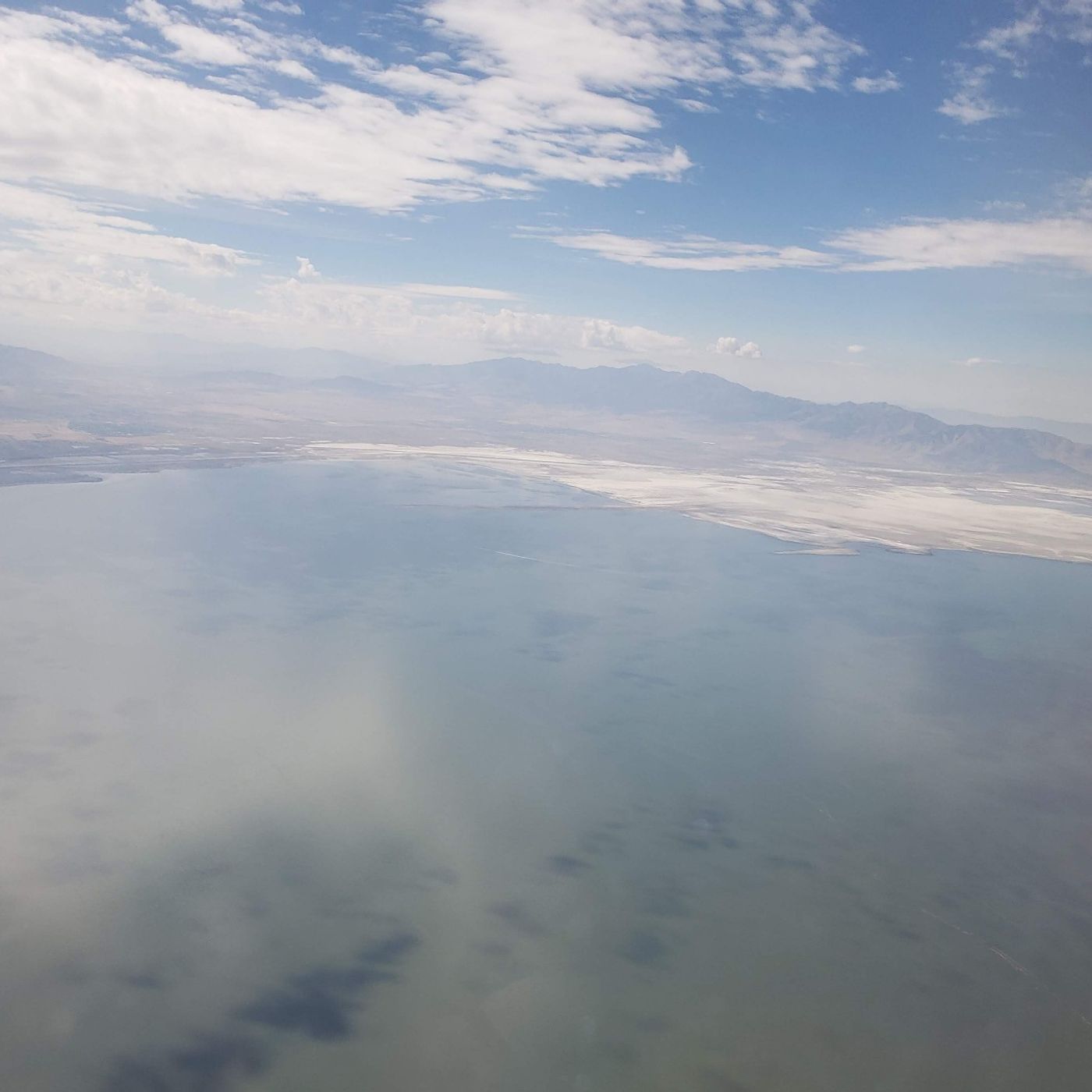
The Conspiracy to Drain The Great Salt Lake
In this episode we talk with Zach Frankl from www Utahrivers.org about the (intentional ) crisis afflicting the Great Salt Lake and why one of the largest inland bodies of water in the world may soon cease to exist, all to enrich lobbyists and feed a sprawling mass of suburban lawns and Alfalfa.
More info at :
www.4200GSL.org
and
www.UtahRivers.org
More info at :
www.4200GSL.org
and
www.UtahRivers.org
2023-11-13
97 min
Transcript
Available Results
Generated results are saved to the knowledge database for reuse and search.
No generated results are available for this episode yet.
Extract Knowledge
Pick what you want extracted first. Model, scope, and chapter options appear after a template is selected.
Generated results for public episodes are saved to the knowledge database so they can be reused and searched later.
Transcript
What's going on. Welcome to another episode of the Crime Page. But Bodany
doesn't podcast do a little intro today, because today it's kind of just out
of the blue, out of left field, or it might seem that way.
I interview a gentleman from the Utah Rivers Organization about the what I did
not know was the intentional, seemingly intentional drainage of the Great Salt Lake.
And I this is important to me because I spent a lot of time,
you know, probably around twenty sixteen to twenty twenty, doing botany in Utah,
in the Great Salt Lake area, in the Salt Lake region, all
the way down into southern Utah, San Rafael Swell. Just these fucking beautiful
places. I mean, Utah is incredibly rich and diverse, not only floristically
but geologically as well. You've got the Great Basin to the west, You've
got the Rocky Mountains to the east, and you've got out the Mojave Desert
to the southwest. And uh and then of course all those cool canyon lands
and that Navajo Sandstone to the southeast part of the state. Tons of endemic
plants. I still uh still remember what was that genius. It was a
fucking member of Polomoniac that was just totally endemic to that Navajo sandstone Aliiciela,
say Spatosa. That was it. It was a member of the the Flox
family. Just the fucking banger of a plant too. God. So it
just grows on these you know, bright pink flowers, grows on this escarpment
of just almost pure white rock. Just really fucking cool habitat too. And
uh endemic to just a small area of Utah near Uh near Teesdale, Utah
in the southern part of the state, near Bicknell. And it was like
south central part of the state. Yeah, but you know, I did
a lot of botany in Utah and I love it. And you know,
I got a lot of friends that grew up there. I've got friends that
still live there. And when I heard about the prospect of the Great Salt
Lake ceasing to exist, that just blew my fucking mind. I couldn't believe
it. I mean, this is one of the largest inland bodies of water
in the world, and the largest inland body of water after the Great Lakes,
and it would just be gone. And that just seems like a fucking
travesty, and it's for really silly, stupid reasons that it would be gone,
and I later found out it's for actually seemingly some pretty nefarious reasons,
like not only is it disappearing, but there's special interests have an intent to
have it disappear because that opens up the land for real estate. So it's
an intentional, somewhat conspiratorial idea to drain this lake because the Great Salt Lake,
all that water once it flows into the Great Salt Lake, it's just
it's briny. It can't be used for anything. It's just sitting there doing
nothing right. That's what the fucking value system there, which is so disconnected
use it as So why not drain it, get rid of it, and
then open up all that land for real estate. You can build some more
suburban sprawl there. You a couple fucking you know, thousand square miles of
parking lot for all the strip malls and be great. Right. Seems totally
deranged and disconnected, but it seems like that might actually be what's going on.
So that's what this podcast is about. It starts off kind of slow,
takes a minute to warm up. We talk about a lot of the
political stuff for maybe the first thirty forty minutes. Then we start getting into
the biology of the Great Salt Lake, and then we just talk about,
you know, the modern American value system as a whole, and how it
needs to change, and how you can do something about it, just done
your own local level, just by having it, you know, educating yourself
about the stuff, learning about it, and then speaking up when you're giving
the chance, voicing your fucking opinion about it. And of course, as
we always advocate, killing your lawn, you know, putting in some native
plants. Start small if you need to, but if anything, that'll start
the conversation and maybe get other people thinking about it. Maybe you neighbor,
maybe not next door neighbor, maybe not the guy you had some beef with.
Maybe the guy three or four houses down, who sees, what the
fuck are they doing? That's cure. Why are they ripping up their lawn?
Oh? What's this shit they got going in there? That's kind of
that's kind of cool. I see a lot of birds hanging out there.
That's how it starts. So it's really a process of changing the culture and
most importantly, changing the value system. Because this value system that so many
of us are still living under that values. All the fancy shit and the
mc mansions and the fucking gleaming cars. I mean, you can even have
all that too if you want. It seems kind of lame to me,
But we got to start embracing where we live and embracing the rest of the
biosphere that supports us, and not just seeing not just seeing it is this,
you know, this kind of frivolous, not really important shit that that
surrounds us, that just hit the plants, the background scenery that just happens
to be there. Uh. And we got to really start working on the
cult of the lawn and taking it down. You know, you need a
lawn. Maybe you gonna go go do many golf you have a lawn.
Maybe even I'll give it to the fucking golfers. I hate golf, but
there's people that like it. You give them a golf course once in a
while, all right, But but get rid of most of them. You
know, you gotta fucking you need to field to place some you know,
sports on or some shit. Yeah, take that. But this thing of
normalizing turf grass is fucking insane. Uh, And it needs to change.
And it's just talk about land that's sitting there doing nothing. Holy shit,
gets some native plants. Learn about that shit, have a little rich your
life. You know, it makes life more fun. It'll make your front
yard more fun, It'll make your public parks more fun. Start. You
know, you don't got a house, as many people don't because they can't
afford it. This fucking this day of age where speculators have driven up the
price of real estate. You know, go plant some shit, you know,
and go look for places to get some plant some shit, gets some
seeds in to grow stuff in pots. Whatever the fuck I mean. There's
there's lots of ways to to quote, get in touch with the native plants
that grow in your region. And so you know, it's not hopeless.
There's a lot of shit you can do. And I'm still kind of a
nihilist at heart, but I think there's a lot of shit you can do,
and only that it's it's it's fun. It's fun shit to do.
It's fun to fucking grow things. It's fun to engage with them. It's
you know, you start looking at the world in a completely different way and
in getting a context for everything, whether it's evolutionarily or phytochemically, learning about
the compounds some of these plants produced, learning about the relationships they have with
pollinators and fucking birds, learning about what else they're related to that you know,
other species in the same genus or genera, in the same family,
et cetera. It's fucking fascinating. Shit, go look at some of them
cladograms, those those taxonomic treats. But anyway, Yeah, it's a good
conversation. Uh. And that's about our twenty minutes long. So that's all
I got. I'm selling shirts still. If you want help me out,
buy a fucking shirt that's been screen printed into sanctity at a garage. It'll
come with some stickers. You can email me crime pays a body doesn't a
Gmail. And yeah, I'll fucking draw a little something on the back,
like little golf ball sized Payoti buttoners. So I don't know what the fuck
you want. You want to suck, I'll do whatever you want a little
drawing. I draw you something simple though, all right. And and then
I'm working on this book that should be out in April on Abram's Press,
which I'm excited about. It's gonna be a compendium of over four hundred photos
of plants from all around the world, a little bit of autobiographical shit,
a little bit of crash course in botany and plant identification, and uh,
it's gonna be hard cover and pretty thick, you know, heavy enough to
beam someone in the head with them potentially you know, knock them unconscious for
for a number of minutes. I don't know, we'll see, I'll try
it out anyway. Uh, yeah, I enjoy this podcast with Zach Frankel
from Utah Rivers and Uh, I don't know. I guess, Uh,
it's the next podcast I can go on. I think I should have another
one out, but a week anyway. That's all like God, have you
go see up by Okay, welcome to the crime Pace of Botany doesn't podcast.
I'm here with Zach Frankel from Utah Rivers uh AN organization. And I
reached out to him because I've spent many many days, weeks, months over
I don't know Christ when I lived out west, like the last five or
six years before I moved to Texas botanizing in Utah and love Salt Lake.
They love the Salt Lake region, love southern Utah, and uh, when
I heard what's going on there with the Salt Lake. It just kind of
blew my mind. And so that's why we're here today. I guess I
just it's starling to me. What's going on over so Zach you there,
I am here, Joe. AM's great to be here today. So tell
us what's going on? Because I heard you mentioned. First off, you're
with Utah Rivers, right, And what is Utah Rivers? Yeah? So,
Utah Rivers Council is a five oh one c three nonprofit organization that we
started way back in nineteen ninety four to work on implementing a sustainable water policy
here in Utah, the land of water waste. This is one of the
worst water wasters really the United States. It's mind blowing out there, it
is. Yeah. Yeah. So as a nonprofit, we're an advocacy organization.
We work to try and implement new policies on the local and state level
to rain in our waste for water use and to achieve real aquatic ecosystem protection
for Utah's rivers and lakes. Yeah, it's a big challenge because of course,
Utah's one of the most conservative states in the United States and it has
a very anti environmental profile. When it comes to land and water resource policy,
right, and that alone is nuts because this shouldn't be a political thing.
Like taking care of the land and the biosphere that surrounds you, like,
this shouldn't be you know, you hear the tree hugger thing all the
time. And of course, Utah, that's where the sage brush rebellion started,
right, Like that was like the kind of centered in for anyone that
doesn't know about it. I mean, the sage brush Rebellion is a I
think I started mostly in the eighties, but it was, you know,
a bunch of rural citizens, really angry, right leaning citizens, really angry
that you know, convinced the federal government owns too much land. They don't
want to be told what to do they whatever anyway, but it was this
really kind of you know backlash against really it was a backlash against policies that
were well intentioned and protected you know, the commons for everybody, especially you
know, also for the organisms that live there. And so this shouldn't be
a political thing, but of course in the United States, everything's a fucking
political thing, especially now. So so it is so like caring about the
environment is it makes you a tree hugger or a liberal or a great whatever.
So I mean it's the same here in Texas. But either way,
they shouldn't be political things. So what's going on over there? Because I
understand the Great Lake, the Great Salt Lake. This sounds fucking insane to
say the Great Salt Lake is in danger of drying up, of actually ceasing
to exist. Is that correct? Yeah? So so just let's step back
and just focus on what we're talking about here. So, the Great Salt
Lake is the largest lake outside of the Great Lakes in the United States,
so it's basically our second largest lake outside of the Great Lakes system, and
the Great Salt Lake. You know, every map of North America that has
water on it shows this massive water body inside Utah on the Great Salt Lake.
And it's the largest wetland ecosystem in the American West. And what it
is so important for a variety of reasons, but most notably because there's three
hundred and thirty migratory bird species that are traveling from every country's excuse me,
every country in the Americas as far south as Tierra del Fuego, the tip
of South America, and there's some eight to ten million individual birds that stop
over in their migrations across the globe at the Great Salt Lake, with some
species gathering in larger population numbers than anywhere else on the planet. And for
the last twenty years, what's been happening is, you know, Utah is
such an anti environmental state in many regards, at least when it comes to
state government, that they have just an approving water diversion after water diversion after
water diversion upstream, and because of their imbalanced, one sided perspective on nature,
they've effectively dried up the Great Salt Lake and di by diverting the tributaries
that come into the lake. And so for the last two decades it has
been shrinking, and it's set two record lows in a twelve month period in
twenty twenty one and twenty twenty two, and it's just the reason that it's
still here today, largely is because we just had the biggest snowpack in forty
years last winter, and so all this water entered the lake. But it's
dropping rapidly and the clock has started ticking now on the next record low at
the Great Salt Lake. So it's all this, all this and where does
most of the water come from. It comes from the mountains to the northeast
and the north or where exactly. Yeah, So the water it comes from
snow melt runoff. You know here in the American West, most of the
rivers that you know full of water are coming from snow mount runoff. So
outside the Southwest where you have these monsoons and you have these big rain events
that come in in the molin and all of a sudden, these dry creek
beds turn into floods. You know, most of the American West, the
river water that you see, I mean during days driven by snow mountains runoff.
So that so we have two sets of mountains that Washitch Mountains and the
Winna Mountains are slowly melting snow throughout the course of spring and summer and into
the Great Salt Lake. And the biggest source of water is the Bear River
which comes off the north of the Ininta Mountains, which we'll want to explore
a little bit as a watershed because that river is one of the most important
rivers in the American West. M Okay, So you got you got the
winters to the east right the it's the big front that's just east of Salt
Lake City, those mountains that just tower above Salt Lake City. Correct.
Yeah, that's the home to the largest, the highest mountain in Utah.
And the Wind Mountains are pretty interesting mountains because they run east west. Most
of the mountain chains in the America west run north south the Cascades. The
Rockies in the Washttch Mountains here in Utah also have the west slope. The
west slope of the washt Edch Mountains dumps water from snow melt into the Great
Salt Lake as well. But the Uinnas have a very large because they run
east west, they have a very large north slope where there's a lot of
snow pack protected from sun and sunlight during the winter. And so the north
slope of the Yuanna Mountains a mass is a lot of snow and when that
snow melts in the spring, it goes into the Bear River, which provides
sixty percent of the surface water entering Great Salt Lake. And that's really important
to note because the Griz Salt Lake is completely dependent on these tributaries that are
running into it and the Bear River. I keep mentioning because the state of
Utah is actually advancing. One of the largest new water projects in the United
States being proposed anywhere is on the Bear River. And the State of Utah
wants to divert the Bear River upstream of the Great Salt Lake to provide more
water for citizens. And if they are allowed to approve that water diversion,
it will be the nail in the coffin of the Great Salt Lake. So
say that again, they're trying to they have a diversion, a huge diversion
on this and what is that diversion For the diversion I only laugh because it's
so ridiculous to say the proposed diversion of the Bear River is for the lawns
of the municipal wash sets front the cities from Salt Lake to Ogden, and
so our metropolitan Court or along Interstate fifteen is populated by suburbs and cities.
They are using tons and tons of water for grass and proposed Bear River development
would divert almost half the Bear River's annual flow upstream of the Great Salt Lake
to provide yet more lawn waters for a residents' fucking it's fucking madness, that's
crazy. I mean, not only is designing you know, designing landscapes and
cities like that. I mean, those aren't cities there. It's just sprawl.
It's cardependent sprawl, and it's gonna be a shitty place to grow up.
You're gonna be stuck in a car. I mean, that's what I
feel bad for kids that have to grow up in places like this, because
it's just there's nothing there. I mean the single use zoning. You have
to the nearest stores two miles away. You can't walk anywhere. There's no
walking trails in any of these places. They you know, they look like
little cancer so when you fly over them, but the lawns especially, it's
this idea that we have in America, this phenomenon of pretending that you live
somewhere else, if not embracing where you live and trying to make everything look
like the fucking English countryside. It's just it's madness, man, especially when
you know I've got a One of my friends is a botanist there, Blake
Wellard h in Utah, and he's he's just in love with all the native
plants. He grows a ton of native plants at the University of Greenhouse there
because he's a he's a teacher, and so, I mean, the Utah
has some incredible native flora like stuff that's really well adapted there, and it's
just you know, having that in a in a yard or a park would
benefit pollinators and benefit the surrounding biosphere. You're creating habitat and you know,
from what's been taken. And then just to have the lawns, and that
was one thing I noticed. I mean, even down in Washington County,
which is at the other end of the state, down there by Saint George,
I mean, there's fucking lawns everywhere. It's like, what do you
guys doing. You guys are in a desert. You're You're like, you're
in a high desert. It's just doesn't make sense. It's just from just
a practical perspective, regardless of your political beliefs, this is pretty shit for
brand. It's just bigbles of mind. How disconnected from reality people seem to
be with the lawns and the water use out there. I mean, is
there any talk of water conservation in Utah that you see or what? Well?
Yes, I mean, okay, so it is insane. Let me
give you some data to fully demonstrate that it is objectively nuts. So Utah
is the second driest state in the United States, which means we are the
second driest part we have the least amount of pre second least amount of precipitation,
and that is a surprise to people because they think of Utah and they
might think of our epic skiing, which is certainly true. We get almost
all of our precipitation in the winter, we have this great snowfall, but
we're still the second driest state in the country. So we have these high
mountains that collect snow, but most of the state doesn't get at near as
much precipitation as the rest of the country. And we have the highest per
person municipal water use in the United States. We are the number one highest
per person user of water in our cities in the United States, and a
couple of things about that that's pretty insane. So firstly, the United States
is one of the biggest per person municipal water users in the world, and
so therefore we inside Utah are some of the biggest water users on the entire
planet for water in our cities, and so we are using this much water
because we have the cheapest water, the least expensive municipal water rates in the
United States. We have very very cheap water. And if first, you
know, listeners might hear that and go, well, you know, jesuz,
that's good, you're taking care of low income households. But we're not.
Because the reason we have this cheap water, again in a landscape where
water should be priced in a precious way, as if it is valued highly.
The reason that we have these very very cheap water rates is because Utah
legislators have created a tax system that collects property taxes on all of our housing,
on all of our business businesses, and even on our motorcycles and automobiles.
And those property taxes go directly to water suppliers to lower the price of
water. So it's not uncommon. For example, Utah's largest water supplier,
the Center the Water District, receives more than sixty percent of its annual revenues
from the collection of these taxes on houses, businesses, and automobiles. And
so that's why we have the cheapest water rates in the country and the highest
per person. So you're still pink for it, you're just paying a different
tax, that's right. And so when the consumer opens the bill, they
go, oh, this is really cheap, you know, I might as
well. You know, instead of using a broom to clean my driveway,
I'm just going to turn on my hose and hose down the driveway to get
rid of the leaves. And it's an Italian American tradition. In the Chicago
area. You see some some fat guy in a Daego tea in Berwin out
hosing his driveway. Now, but yeah, I get it. No,
which is fine in Chicago where you know you all this water out of the
sky, right, we don't get that. We don't have major rainstorms.
You know between May and October, virtually no water all coming out of the
sky all summer long. And so you know most of our presip is in
the winter months between you know, December and March, and that's it.
So when you drive across the city, any city in Utah, you know
in the summer you're going to see sprinklers, watering sidewalks and gutter I've seen
it. It's obsesting you're going to see you know, you see rivers,
creaks of water in our canals literally because there's no enforcement. So do they
talk about water conservation, Well, obviously, you know there's a ton of
Utahs that care about water, that are worried about the Great Salt Lake and
are clamoring and begging and pleading for water conservation. But what the State of
Utah is doing is playing a game of catch me if you can, so
they issue propaganda that they're really serious about water conservation. But we work a
lot in the Utah Statehouse. We've been up there for twenty nine years,
running our own legislation and trying to get good legislation passed and stopp being bad
legislation. And what the State of Utah's water lobbyists are doing is just issuing
propaganda about how important water conservation is while failing to address the core problems this
isdemic encouragement of water waste, like this property tax. And the State of
Utah is also trying to hide the fact that is proposed in one of the
largest new water projects anywhere in the United States, which would divert a wopping
four hundred thousand acre feet of water upstream of the Great Salt Lake, which
is a gigantic amount of water. I mean, if you multiply by eight,
that's the equivalent annual population water use for how much that is, Meaning
if you the proposed Bear River development is the equivalent amount of water as a
city of three point two million people use in a year. Yeah, that's
that's nuts. And so the state of Utah has an active plan to dry
up and destroy the Great Salt Lake, even though the majority of you,
Thompson, and probably the majority of Americans do not want to see that happen.
So what the state of Utah is doing is a game of catch me
if you can, and it's our job at Utah Rivers Council catch them.
Okay. So it's okay. So it sounds like it's with most things in
the world, the United States and the world. There's a void of leadership
at the top. The people who could do something and are in power don't
give a shit or are corrupted by special interests. What are some of the
special interests that might be working against water conservation and you know, helping to
push the Great Salt Lake closer to the precipice. Oh, I'm so glad
you asked me that question, because Joey, that's that's probably the most important
question. So this proposed water project, Bearerver development, is a three plus
billion dollar water project, which would be of course paid for by ute taxpayers.
And so you know, anytime an entity proposes to spend three billion dollars,
there's obviously a long list of contractors that want that money. And so
there's every manner of private consultant and contracting company with lobbyists up at the Statehouse
that wants to convince Utah legislators, the public, and the media that Utah
is in a water crisis and needs this water project. And so you just
got to long list everything from gravel companies to pipeline companies. Contractors of all
kinds are interested in advancing this wire project. And the water conservancy districts are
probably the worst players that have been immensely dishonest with the public. And so
a water conservancy district, at least in Utah is what's called a quasi governmental
entity. So it's the entity that collects all these property taxes on housing,
businesses and automobiles to lower the price of water. So they are the ones
that actually get that proper tax money into their tax rolls, into their bank
accounts. And that's why refused to phase out this property tax or even lower
it. They won't even consider it. So they have all these lobbyists It's
not uncommon for us at Utah Rivers Council for us to be outnumbered in the
State House by forty or fifty lobbyists from these water districts that work together in
the hallways to convince legislators that we need this water project. And I mean,
I don't know what else to say about that. It's corrupt. People
often ask me, you know, Zach jobs so interesting. What do you
do for a living? And I tell them, well, I fight corruption,
and they look at me. I don't understand. I thought, you're
in the water space. Why are you fighting corruption? And these water districts
are so dishonest with the people of Utail, where the country's number one highest
municipal water user, wasting vast quantities of water, and yet they're working to
convince the public that we're on the verge of running out of water. I
mean literally have pictures standing in rubber boots in gutters in Salt Lake City,
and I have to be careful when I get in these canals because some of
them are five feet deep. Yeah, and they're diverting Great Salt Lake water
upstream of the Great Salt Lake. While these water districts are running around saying,
oh gosh, we're running on the water and where is that going?
Where is all that water go to? I mean these extensive canals. Yeah,
so what's happened. So it's a little bit of a look back in
history. So, you know, one hundred years ago, about one in
every four Americans was a farmer. Back in the nineteen twenties, we were
in agricultural history, you know, obviously we had a much much smaller population,
and we were farmers. That's what these cities in the American West were
settled. While they were selected as locations is because there was really big water
sources there. Salta Valley had a bunch of water in it. So the
farmers were critical to establishing these Western towns. And so, of course,
over the many decades, over the last hundred years, we've seen all this
municipal growth, especially after World War Two, we have all these suburbs,
and the suburbs built their new subdivisions and strip malls and parking lots and all
of that. Next to these canals, these irrigation canals that diverted surface water
tributaries that used to flow in the graaz of the lake and instead of you
know, there being farmland crisscrossing all these canals. They were replaced by these
subdivision landscapes, these subdivisions, but the canal stayed there in Utah. Most
of the American West they converted their irrigation canals to municipal systems, but here
in Utah they did not. They just let these canals coexist, and eventually,
of course, all the farmland was gone. You know, the reason
they didn't convert the canals is because they're you know, it took time to
convert all that farmland, and there was always a farmer at the end of
the canal, and they just keep let that farmer keep irrigating as the subdivision
lapped closer and closer to the farm. Eventually, almost all the farmland is
now gone, but the canals are still there because the state of Utah has
not converted those canals. So the canals are diverting, your dirt canals.
They're not lined with concrete, they're not in pipes. They're just opened.
They're just shut them off, just shut them off. Well, but so
again coming back to that special interest. If your job is to convince legislators
to spend three billion dollars of tax money so that you can advance your contracting
company. Then you don't want to convert that water, and you don't want
to conserve. This is like that be Chinatown, exactly, exactly, A
man, it is exactly. I just want to ask what I just want
to ask you. I I would love to just and I know this will
not right, but I would love to just see some of these lobbyists,
these fucking pig lobbyists, because I you know, I used to I'm an
artist. I'd draw. I would draw these fucking sleeves bag politicians all the
time, with all their jowls and the stink lines coming off them of money
grubbing corruption. I would just love to see them, just for my own
sake, just to get an idea of like who these people are. You
know, the world they live in is so just gross and and distorted and
deranged and so far removed from the common interests of like working class people or
or the greater good. It's just it's just sickening to hear. I mean,
forty or fifty lobbyists, really, yeah, forty or fifty lobbists,
you know, And I mean it's the number one special interest in the Utah
legislature, and you know, it's it's crazy because you wouldn't think, you
know, the average person would not think of lobbyists inside the water industry.
They just think, oh, well, you know, I think that we
as Americans really are naive when it comes to water. We really don't understand
how much money there is behind it. I mean there's a number of phrases,
uh you know Mark Reisner and Cadillac Desert, really famous bible on Western
world. Yeah, yeah, you know, right, water flows uphill the
money. And you know, that is a really true statement that Americans really
need to embrace because these lobbyists are immensely powerful. I mean, they're fucking
people out of there. Man. We need to change our government so that
ship is not I think about I think of these fucking people taking ships as
I think I think of like these like rich old farts, like passing a
really constipated ship from the steak they you know, the sirloin steak they ate
the night before that was funded by some fucking you know what I mean.
I like, I go deep with my hatred for these people because we get
the same shit in Texas, like Texas State Government's incredibly corrupt, like our
our attorney general just beat an impeachment by his own party. Like this guy
was so fucking dirty his own party impeached. I've read and when they were
building the border wall here and there was an endangered milkweed species, the sleepiest
prostrata, and it got he as soon as it got federally listed endangered.
Ken Paxton, that pig fuck pardon my language, you know, than anyone.
But he came in and he was like, we gotta you know,
we got to build this wall. Like within a week or two of the
wall in that area, on that certain property where it was listed as growing
commenced, you know, like just incredibly dirty. Imagine the same in Utah.
I mean, it's just you know, the the concerns of common citizens
and people who want to live like, you know, decent lives and enjoyed
joy quote unquote nature. And you know, the the no let alone the
idea of propping up the biosphere around you and supporting it because it supports you.
All that shit gets thrown out the window and it's just money, and
it's this short sighted, you know, view of of this deranged hyper capitalism.
You know, like just yeah, short long term loss it's fucking nuts
man. You know, I heard a phrase that I've adopted in my lexicon,
which is that the only form of government worse than democracy is everything else.
Yeah, And the reason I say it is because these water concertancy districts
in Utah they have taxation power propery tax on housing, cars and businesses.
But they're pointed into office. So the board of directors never asked to run
for office, and so they're appointed, and they're appointed at the recommendations of
the staff members and those are the lobbyists. So the lobbyists basically get uppoint
their own bosses. And you know, water's complex, and so what we
have is cities, and we have counties, and we of state legislators and
those three sets of elected officials. As you might imagine, there's constant turnover.
And the reason there's constant turnover, right, is because voters are either
putting pressure on bad office holders or flatman, are good office holders to leave.
But that means that there's a constant new crop of elected officials that don't
know anything about water and don't really want to devote that much time and energy
to learning water policy in Utah, and so they're just taking what the lobbyists
say at face value. When the lobbist say we're running out of water,
and when a water crush, I guess that must be true. So I
guess I better do whatever I know. Okay, I better keep this property
tax. And so what's happening is because these water conservancy districts enjoy unrivaled,
unregulated power. Unrivaled, I mean, they're city and counties and state government.
At least we can vote bad people out of office when they're found to
be having their hands in the cookie jar. But these water districts just stay
there forever and ever and ever. And that's how they are able to build
this corrupt set of policies in Utah. And what makes it even more difficult
is that because Utah is a monocrop of Republicans, there is a super majority
of Republicans in our Steakhouse, so there's no debate. The minority party doesn't
have enough seats in either the House or the Senate of the Utah Legislature of
filibuster, they can't stop anything, so they don't get the chance to hold
up bad bills. And so we really have corruption problems here in our Utah
Statehouse and we have all these stories of corruption that permeate other aspects of Utah
government or transportation agency was investigated by the f the I and there were found
to be all of these problems and they went to court, but the US
Attorney couldn't ultimately convince a judge that and the jury that the agency was was
corrupt. But it was pretty obvious to everyone in the media and the public
that you know, it was just more corruption. And so we really have
major problems here in Utah. And and I think what I just want to
emphasize to those folks listening to this outside of Utah is that we need Americans
to help us save the Great Salt Lake because we can't rely on Utah.
Yeah, it doesn't it doesn't sound like it's going to happen at the state
level. What so really quickly. These lobbyists, of course, they're paying
to get time with these politicians, right, is that how it works if
I understand that correctly, Well, they don't even really have to pay.
I mean, they certainly are working to connect act you know, accesses of
power to these legislators to get re elected. The legislators themselves. Many of
the legislators are well, meeting, but they don't. They're not water experts.
I mean to learn about water you have to devote a lot of your
time. Oh yeah, of course. Yeah. And a few politicians are
scientists or have any scientific literacy I know, But how are these lobbyist?
I mean, what does the how does the system work with these lobbyists get
how do they get time to talk with them? Like? Oh they're doing
It's so much worse than that, Joey. So this afternoon at four pm
is a legislative subcommittee, and the committee members are actually who are appointed to
make decisions. They are the lobbyists. So the lobbyists are appointed to legislative
committees and then they draft water policies. To today, they're unveiling a forty
five page bill to advance the diversions of stream of the Great Salt Lake.
This sounds they so fucking They unbailed this bill to the public three days ago,
and they'll consider it in committee today and they won't have a second of
public comment. They won't allow it because the water lobbyists running the committee,
of course, are not gonna let critics like me show up and say,
wait, you're drying up the Great salt. I can see why no one
cool is in politics because it just sounds so mind numbing and just boring and
whack, like God, a forty five page bill? Who the fuck wrote
it? You know, just like, ah, what does their world consist
of? That's what I'm I just it sounds so I'd rather go hang out
at the DMV for it. They you know, well, well, I
mean I will definitely agree that. You know, and my friends or my
neighbors get together, they're not like, Wow, the legislature looks like so
much fun. I want to show up. But unfortunately, because of that,
that's why, you know, we're not as a public holding our elected
officials accountable for saving the greats a leak because they just have to make these
legislative committees awful, and they do. I mean, you know, if
I try and show up and speak, they act like I'm a heretic because
I'm saying, wait a minute, let's just conserve water. Let's value water
appropriately. Let's try and value water like the rest of America does outside of
Utah. And let's raise the price so that people that use one hundred thousand
gallons of water in a month are not paying a buck fifty or two dollars
per thousand gallons or fuck just I don't know. Maybe maybe start a campaign
about like, you know, planting native plants, getting rid of lawns,
not wasting money on irrigating fucking turf and a desert and maybe not growing So
I don't know, maybe there could be a push to change. Maybe you
don't want to raise cattle in a desert because that's where a lot of the
water goes too, right, is growing alfalfa for cattle, and massive amounts
about It's been estimated that between fifty and sixty percent of all the water used
in Utah is to grow alf alpha. Hey, that's fucking nuts to feed
livestock, Like, why don't I don't know, maybe livestock, don't don't
raise livestock in a fucking desert. That might be a good idea to start.
I don't know, find a different So the challenge, you know,
I mean, Okay, So here's a silver line. There's a lot we
could do to save the greats of Lake. It's not that hard to save
the greats of the Lake. There's a whole range of water policies in our
cities and on our farms, that we could implement to raise the Great Salt
Lake. But the reality is that the Utah water lobbyists don't want that to
happen. They want to dry it up. I think their aim is to
allow the Great Salt Lake to dry up, just like the other saline water
bodies across the globe, and then they can honestly develop the lake bed as
new real estate because once the lake's gone, they can move on and make
more money. Even though what you know, we where's the water going to
come from? Pretty fucking people did they think about the study? Well,
the irony is that there's plenty of water, right because we waste so much.
Right, we'resing two to three times as much water per person in our
cities as the rest of the United States. I mean, we have communities
inside Utah that use more than three hundred gallons per person per day. The
national average is one forty two. So it's very very easy. We found
communities that are using five hundred gallons per person per day for just city water
use. So and if we're paving our farms, you know, our farms
are using about eighty percent of the water in Utah. So if we pave
all our farms. When it comes to city water use, we have a
ton of water even with our stupid lines, So we're not really running out
of water. In that fear that we are running out of water. This
misnomer inside Utah that we're in a water crisis and we're going to someday run
out of water in our cities. You know, that's ludicrous. We talk
about it's really important that we talk about the difference between water use and water
need. You know, in Sub Saharan Africa, when you need water,
you know, in many parts of that continent, you know, you grab
a five gallon water jug and you walk two, three, four or five
miles to a water hole, a place where you can, you know,
get clean water, and you walk it back to where you live. That's
a water need. When we take one hundred thousand gallons of water in Utah
and we apply it on our grass outside our homes and for that matter,
our streets, our parking lots and our driveways, that's not a water need.
That's the water use. And seventy percent of the water we use in
Utah cities is on grass. It gross man, They need to kill your
lawn movement in the Salt Lake area, and there are sort of nominal movements
around that. But the problem is we're not going to voluntarily convince everybody in
our cities of Utah that they should abandon their grass. Because as long as
I mean the price of water in Los Angeles is at forty thousand gallons in
a month, that price is fifteen dollars per thousand gallons. There's many communities
in Utah that are using water to flood irrigate grass and they're paying ten cents
per thousand gallons. Yeah, that's crazy, that's crazy. So yeah,
I do think what we should have more campaigns to convince people to voluntarily get
rid of their grass, But that's not in and out of itself going to
solve the problem. We need to price water like it matters. And that's
what Utah refuses to do because doing so would mean taking this tax away from
the water lobbyists. And the problem that we've got is our legislator has done
out the ethical courage to stand up to these water lobbyists. Wo and so
how do you say, what do you mean take that? How to take
the tax away from the water lobby's? Explain it that everybody so so this
property tax that is being collected on housing, automobiles, and businesses, that
is a property tax that has been conferred at the authority the Utah legislature.
It's just a state law. And we at Utah Riverse Council I've written five
different bills, different legislation to lower that property tax. So you know,
we've and we've also done the research to demonstrate that phasing on that tax can
be done. We studied the audited financial statements of three hundred water suppliers outside
of Utah in the American West, and we found that they collect a tiny,
tiny, need little property tax. And you know, it's not uncommon
to collect the tax by local government when it comes to build a bridge or
a road or a dam, you know, something that's really big and expensive.
So they'll issue a property tax and then they'll issue bonds and that property
tax will repay bond investers. So that's commonly done. What we find is
unique is that here in Utah we collect three times the amount of the tax,
and it's not being collected to pay off bonds. It's just going to
the general salaries and general bank accounts of these water lobby agencies. The water
districts, these wholesale water suppliers that are these quasi governmental entities, these appointed
boards. That's crazy ceexation without representation. So how it works is that the
low water cost is not actually benefiting. It doesn't benefit low income people because
everyone is subsidizing the water used for the most egregious exactly exactly. And that's
that's worth pointing out because it's it's especially unjust for that reason. Because so
a property tax is what's considered regressive, meaning low income households that you know,
on their homes or are paying rent, they have a property tax on
the value of that house. And that property tax is a higher impact.
It's a higher percentage of a low income household than it is of a high
income household. Right because you know, if you're making if your if your
family of four is making twenty thousand dollars an annual income a year, a
property tax has a much bigger hit than a family of four with a household
income. Yeah, and you're paying You're paying for someone to make mansion the
water they're fucking long. You're paying for large lot landowners, people that have
half an acre or three quarters of an acre an acre or more to have
lower prices than water, and especially what you're paying for are all of the
large landowners that are exempt from paying any property taxes. So we're talking about
schools, churches, and universities that don't pay one cent of property taxes because
they're nonprofit energies, and yet they have vast acreages. So let me give
you an example of that here in Salt Lake City. The University of Utah
uses fifteen to almost twenty percent of the water that's used on an annual basis
in Salt Lake City, and they don't pay one cent in property taxes because
they're nonprofit. And you know, anybody, I went to the University of
Utah, I graduated there, and any student that goes there, nos,
there are creaks of water flowing across the sidewalks of the University of Utah.
And so they're not paying their full cost. They're paying ridiculously cheap prices for
water. And then we all turn around in Utah and go, gosh,
why is the Great Salt Lak declining? And it's because we don't value water.
We don't Denver, Las Vegas, Los Angeles, No, that's not
Albut we have the cheapest water rates in the unity we listen were scratching our
head and going, gosh, why is the Great Salt Lak declining? No,
it's insane, it's it's it's I mean, that's yeah, it needs
So that's a big thing things to change is the price needs to go up,
because that's that water is sacred. But I want to talk about I
don't want to talk about all this tax stuff too much because it's no,
no, it's good, I get it. But but let's talk about about
what's going on. Well, I would like to talk about the actual like
natural history of the Great Salt Lake. But also before we get into that,
let's talk about the toxic dust. Right Because even if you're one of
these conservative politicians who doesn't give a shit about you know, migratory birds being
extra paid from an area, maybe not being able to stop over anymore,
you know, those cool white pelic not being there anymore, any of that,
you might care about all this toxic as dust blowing into your city and
increasing cancer rates because the water that used to hold it down is no longer
there, right, So what's going on with that? So the toxicity of
the lakebed is a big problem. It's very similar to what happened at Owens
Lake when Los Angeles came along at the beginning of the twentieth century and diverted
the largest water source to Owens Lake, the Owens River. And what happens
is Owens Lake effectively disappeared. In that lakebed dust during windstorms gets airborne.
So just so we understand, right, So what rivers do, of course,
is the water moves downstream, is it carries the sediment load. That's
what rivers do is the work of moving the sediment through the floodplain. And
when the water in the river enters a lake obviously stops moving to physics of
moving water, it drops its load, right, So the work is done,
and so the load stays there. Well when the water receeds. That
silt is very very fine particulate matter, and so when the wind blows,
it gets airborne. So you get some as winds in that area. So
I mean it's you get really strong winds. And so this particulate matter here
in the Great Salt Lake is very fine dust. It's called particulate matter of
ten microns in diameter or smaller. But some of it's very toxic too,
right, like there's well, so there's a couple problems with this particular matter.
So firstly, it's full of you know, just all the sediments that
are in our air column from all of our human activities, surface mining and
that ad just the wind of us, and also from what's being carried across
the watershed. For these rivers, they are carrying sediments, so have oursenic
and lead and other carcinogens. The second problem is because it is so small,
this particulate matter is tiny. What happens is when we have these wind
events and we have these dust storms, and you can see these dust events
happening in time labs. You'll come out to your car the next day and
it's covered and fine dust and the window and that dust is so if the
dust were larger, your body could get rid of it. But the problem
is when people breathe it into their lungs, it stays there a long time
because you know, our scillia is the system in our lungs we use to
get rid of to tried us in our lungs that we breathe in. But
this particulate matter is so tiny our individual sillia have difficulty getting it out.
And so what's happened. They've studied these populations exposed to these wind events across
the world, and they suffer all kinds of pulmonary diseases. There was a
paper that was recently done that found that utons are being exposed to fifteen of
these dest events every year, and the number is increasing as the lake continues
to recede. So the best policy to deal with it is to obviously cover
the lake bed with water, which we can do again, like there was
right, We could raise Great Salt Lake water levels if our elected officials had
the ethical courage to stand up to these water lobbyists that are profiteering from these
upstream water diversions. But they don't because they want to get re elected and
they want to be popular, and they don't understand what they're doing is they're
robbing current and future generations of good health in addition to the decline in migratory
bird Sure. Yeah, so let's talk about the actual biology of the sol
Lake because you are a biologist, and this is that's mainly what this podcast
is only about is the biology stuff. So the Great Salt Lake, for
anyone else to know, it's a very high I mean very high salt content.
It's remnants of Lake Bonnaville, correct, which was a Pleisisne lake that
was I mean it used to be what a twenty thousand years ago was like
double the size. It was massive, right, yeah, Lake Bonaville.
Lake Bonaville was the remains of the Mini Ice Age from about fifteen twenty thousand
years ago, and Lake Bonnaville covered most of Utah and Nevada. That's how
big this lake was. And then what's really interesting is the water at the
lake Blue and Natural Levee in the north end, and the water dumped into
the Snake River, a tributary of the Columbia in southeastern Idaho. And what
happened is Lake Bonaville drained into the Snake River and it was estimated to be
about a million cfs this flood event, and it caused this created the Snake
River Canyon, which is really gorgeous thousand foot deep canyon on the Snake River
in southern Idaho. As this Lake bonafall water emptied into the Pacific Ocean and
then you know, obviously you know, eventually the water level declined and that's
the Great Salt Lake is is the ancient remnants of Lake Bonahill. Right,
but the whole I mean, the Great Basin is called the Great Basin because
it doesn't drain to any ocean. It's you got you know, roughly Reno
on the west and the Great Salt Lake on the east. They're moving away
from each other seismically. You know, the mountains are coming up. Uh
they look like you know, I've heard it described looking at a satellite terrain
map or something as you know, an army of caterpillars marching south towards Mexico,
all those cool mountain fronts. Incredible fucking habit that the gray. The
Great Basin is one of my favorite regions in the world, probably just so
beautiful and just endless sky and endless land and and so uh you know.
The but the Great Salt Lake, I mean, since since none of these
does drained to any ocean, water runs in, you get a lot of
these these salty deposits, these salty areas. Water runs in. You know,
that water reacts chemically with the mountains and the rocks, brings all those
salutes down into a basin area. Like in the case of the Great Salt
Lake, it's just like a washtub, you know, and then the water
can't go anywhere or it evaporates and it just leaves all those salutes, precipitates
all those solutes out. So that's why it's so briny. But in the
Great Salt Lake, it's not actually that deep, right, it's what twelve
foot deep at most, and often not even that. So that's why it's
so easy to It's it's incredible surface area for a comparably low volume of water.
So, yes, the average depth of the lake's about twelve feet at
least it was before the last twenty years, right, So it's like a
tom began draining it. And because I mean it's it's a very wide and
relatively shallow lake like a pen, A pen, not a bucket, a
pan not a bucket, I always say that, yes, its salinity because
of why I say. It doesn't drain as you as you mentioned, just
to be clear what I was saying earlier, it does. It no longer
drains into the Snake River, so that's it. So it doesn't have an
end. It doesn't it doesn't drain anywhere. It's what's called the terminal saline
Lake. And it's saline because as you just pointed out, the water evaporates
and the salts that the tributaries have been carrying in just concentrate, so it's
five times the salinity the ocean. And so it has a very unique ecosystem
these saline lakes. There's a lot of salt of brine, shrimp and brine
flies that do thrive in this salt water. And because it is such a
massive ecosystem, it used to be about four hundred thousand acres of wetlands.
Back you know, back at the dawn of the Western settlement era in the
nineteenth century, there were three great ecosystems in the American West. Where the
Colorado River entered the Pacific, it was the Sea of Cortes, I believe,
and that's where Elder Leopold visited and wrote a Sand County Almanac, because
there were a thousand species of fish and wildlife there in this wonderful estuary.
Of course, we dried up the Colorado River in the American West, so
that's mostly gone. And then the second grade ecosystem was the San Francisco Bay.
Before San Francisco was really constructed and expanded, they were estimated to be
about a million acres of wetlands there which of course have been channelized and shrunken
down as a function of real estate development. And so now the greats That
Lake is the last remaining wetland ecosystem in the American West, and because it's
the largest wetland remaining, it attracts migratory birds in their travels and their biology
is amazing. I mean, you imagine getting in your car to go on
a road trip and you try for fifty five hours straight and you get to
your destination, you open your car door and you stand up and your pants
fall down because you lost forty percent of your body weight. Yeah, and
that's what these migratory birds experience. And so they just drop and in the
gray cell like to rest and refuel themselves on these brine shrimp ye brindfliesp.
I want to talk about that really quickly. First off, these birds are
coming from way the fuck far away, correct, I mean all across South
and Central America. They're birs going coming from South America, Aria, from
Siuria. Okay, there's a ton of birds. We're talking three hundred and
thirty species migratory birds, totaling between eight and ten million individuals. Okay,
and the brine shrimp I mean these obviously evolution being what it is, you've
got this extreme environment, this hypersaline lake. Something is going to evolve,
you know. And when it does, when something evolves to occupy that niche,
it just explodes and so they cume the dominant. So the in the
Brian flies, let's talk about those. What's the biology knows what's going on
there. Well, the brine strump and brine flies are the base of the
ecosystem, and birds are feeding on them, and they're also you know,
forming the base of an ecosystem. There's a number of raptors that are coming,
you know, predatory birds that are flying, golden egle, bald eagle
that are northern harrier that are coming to prey on the birds. And so
there's just an elaborate ecosystem. And then there's these rivers that are coming into
the Great Salt Lake. The bear, the weaver, and the Jordan that
each one of them have their own estuary, a place where the river is
carrying all of these nutrients and dumping it into the saline body. And so
there are fish that are coming in and we have for example, American white
pelican is the second largest bird species in North America in terms of body size,
and the Grizzilt Lake hosts to fifteen percent of the North American population because
the pelicans are eating the fish that are coming in from these tributary streams.
Yeah, whoa god, those are cool fucking birds. So I remember I
used to when I was working for the railroad, we would do runs between
Dunsimir and Klamath Falls. And Klamath Falls it's somewhat similar. It's very salty
soil, you know, it's there's a lot of like there's hot springs up
there too, tons of geothermal activity. But you would see these and extensive
wetlands, a lot of which have been drained, but there's still wetlands there.
And you would see white pelicans. I remember coming in bringing the train
in to Klamath Falls just south of there. You go through these just beautiful.
I mean it's incredible. I mean you'd see pronghorn, you'd see bald
eagles, you would see these massive pelicans and coots and all these cool birds
alongside. And you know, I remember this old engineer used to work with
It always be like, yep, this used to be the you'd always tell
me about. It was in the birds. He'd be like, this used
to be the largest wetland system, you know, west of the Everglade,
which I don't know if that was true, but it was fucking big,
I think was his point. So, yeah, it's nut so so and
these so but the brine shrimp and the the fro the flies obviously they can
occupy these hyper salient areas and then their populations explode, and then there's tons
of other birds and other animals that prey on them, and so they are
a huge food source for for the stopover point. Right. Yeah, So
one of the short birds, the American Aviset, is a wonderful bird stop
silver as the Great Salt Lake. It's just really gorgeous shore bird with very
long legs, long, very very very long beak yet and it's got this
gorgeous sort of a white body with black wings, but it has this brown,
gorgeous neck and it's two hundred and fifty thousand individual. American Aviset comes
the Great Salt Lake and they use their long beaks to filter these crustaceans,
these these insects to filter amount of the water cumps. So they just eat
and eat and eat, and they're trying to regain their body weight in an
attempt to start the next wing in their migration. And that's one of you
know, literally hundreds of birds that stop over at the Great Salt Lake.
Unfortunately. I mean, I'm happy to talk about the biology, but it's
important to understand that as the Great Salt Lake is shrinking, these birds are
being impacted. So the American white pelican used to grow excuse me, used
to raise its young on an island. Yeah. I was going to ask
you about this too, because this is a phenomenon that I heard you talk
about on that podcast. Right. Yeah, So Gunnison Island, this island
where the American white pelican raises it's young, was a wonderful place to raise
this young because it's an island, and so none of the predators, none
of the land predators could get to the island, obviously because it was an
island in the north arm of the Great Salt Lake. But as the Great
Salt Lake has dropped in water levels, the land bridge has formed, allowing
coyotes and foxes to access the pelican breeding ground, the Rookery, and so
you know, you could go, I mean, you have to get permission
from the state and they would do trips over there by boat and we would
go over there and film and you can see pelican skeletons all over the place
that are just littering this island. And Gunnisan Island was abandoned by the American
White Pelican because of predation, again because of Utah's failure to deal with these
rampant upstream water diversions. And so again, this is the second largest bird
pop birth size in the US. And we are effectively as Americans, just
letting Utah dry it up. And that's got to stop. We've got to
stop trusting Utah to keep issuing this propaganda hogwash that they intend to say the
lake. They don't. They want to dry up the Great Salt Lake and
they are actively working on doing so. But we don't have enough effective media
investigating what the state of Utah is doing. We have this local media that's
been just plaquing politicians and not questioning or investigating the claims of Utah politicians because
they're focused on feel good reports. So this is not this is not this
is beyond just being idiotic and shortsighted and neglect well, this is intentional.
This is this is like a spirit sign. This is a plan to dry
up the Great Fell Lake. And you see that in legislation passed by the
USA State House in seven less seven years. We fought and fought, We
lost in committee by one vote, and we lost, and a bill is
now collecting sixty million dollars in sales tax money, obviously in addition to property
taxes. Just start a construction fund for Bearer development billion dollars. I just
want to understand. So these these developed I mean that these interests think that
they're going to build suburbs and sprawl once that water has gone and all that
real new real estate's opened up. Yeah, yeah, that seems crazy.
Like it's an old lake bed. They's gonna shift, It's not going to
be stable. So twenty five years ago I had an argument with a former
US Senator from Utah that was really illustrative of what the problem is. And
we're in a committee, it's like a public citizen committee about water, and
I said, you know, public las I said, you know, we
have to understand that the public thinks water entering the Gray Salt Lake is valuable
and priceless and we need to save the lake. And he stood up,
but he was very friendly, but he said, he says, Sonny,
you're totally out of it. The public think the public thinks the water entering
the Gray Salt Lake is wasted. And I was like, no, no,
no, you're wrong. And we had this argument, and you know,
we started arguing. There were probably thirty other people in this committee,
and he and I were the last people in the room because I refuse to
conceive this and he did as well, and we argued in arget. And
so there is a value system of a lot of Utah politicians that believe that
water entering the greats That Lake is wasted because it is not used by man.
Obviously, once water goes into the hyper sailing grades that lake, it
can no longer be used for graphs or for human consumption. And so so
his perspective is that if it's not being used by man, it's just being
used by nature, it's quote unquote wasted. And obviously, yeah, and
so it's a value system in conflict here people that support this idea of manifest
destiny and job, you know, we should just dry it up, because
boy, humans are the only species on the planet that matter versus those of
us that have a more enlightened view about our fellow critters. It's like sitting
on a fucking Jenga tower, on top of the Jenga tower and like taking
out bricks just randomly, you know, and being like this doesn't matter,
this doesn't matter, and it just so fucking ignorant. And it's not just
like oh that's bad, it's evil. It's like it's just ignorant. Like
you're so disconnected. I'm glad you brought up a value system because another thing
I heard on that podcast on I think it was it was NPR, right,
yeah, it was they They had a Native American dude, digit indigenous
guy. What what was this? What was this tribe? I forget what
Perry is? Yeah, Northwest ban Yeah, and he taught he talked about
growing up. He's like, we were taught that water is sacred and to
be respected, you know. And I was like, and that's I see
that so much. I mean, I hate bringing this up because so many,
especially people on the progressive left, always like, oh, they they
fetishize indigenous people in a way that I feel like is sometimes unhealthy, Like
they forget the ideology and they talk about they focus on like the the deditarian
aspects. But the but the ideology there is really fucking important because I feel
like that ideology is all that's going to save us and get us back on
the rails as a civilization because I fully agree, I fully agree, and
that's why. So that so the thing about the money is really important.
I mean, what you're talking about is value and value systems. What you're
talking about just as mister Perry, as Bruce Perry said, you know,
we need to value water. We need to understand is sacredness. But you
know, we we can't turn a blind eye to the fact that we're not
valuing water. In Utah and in America, we value water like it doesn't
matter. And it's not just the I mean, it's certainly, you know,
I'd like to talk about the economics and the price of water, but
it's also the fact that we're not valuing our fresh water ecosystems. We're not
valuing rivers. They largely have no legal right to exist. And the way
that especially Utah thinks about rivers as plumbing systems to get to our tap,
and when people walk over to the tap and they turn on the faucet,
they just expect clean water to come out, and they don't. Most people
have no idea how much they pay for water. Now, if you say
it's water important, they say, oh yeah, yeah. But when you
say great, how much does it pay? How much do you pay for
it? No one can deem it. I mean, look, everybody knows
the price of gas. It gets headlines on a weekly, if not monthly
basis. We know what the price of gas is doing. Can any American
tell me how much they pay in dollars for the price of water. They
cannot do it, And so we can't. We can't just give lip service
to value and water. We gotta know because when I say that people in
Saint George, Utah, are paying a dollar fifty per thousand gallons, I
mean, and that's per thousand gallons. I mean, imagine a thousand gallons
in the room you're sitting in right now. If it's a small room,
you're gonna drown. Well, that's less than a big gulp at seven to
eleven. Yeah, that's madest. And I think about it too. I
mean, coming to think of it, whenever I've been to Utah, at
least, the the more you know, the not in the wilderness like not
like San rafel Swell or fucking moeb or Grand Staircase. I've never been to
like Washington County, you know, the developed areas, the cities, Saint
George, Salt Lake, Like it's pretty fucking green, Like it's it's disturbingly
green. And I don't realize, like I realized now, like wait a
minute, why is it so fucking green? This is a desert like this
Saint George. I was doing a lot of body there because there are some
incredible plants that grow on those gypsum flats out there, Incredible fucking plants don't
grow anywhere else in the world. I did a couple of videos on them.
You got this really cool you know, arctomicon humulus, the bear poppy.
You got a really cool cactus species that grows on these just incredible fucking
gypsum outcrops. And right north of where that pediocact this grows, there's fucking
there's suburban lawns, there's you know, it looks like Walter White's neighborhood and
breaking bad with all the cult di section shit, but it's got grass everywhere.
It's fucking insane. And I knowing that landscape and the plants that grow
there. I'm like, how the fuck this is obscene? Like this shouldn't
be here. There's a fucking golf course there, Like why is that?
How is that legal? It's just such a fucking waste of resources and it
doesn't need to be like that. And you guys are, at least in
Sant George, are sitting on top of some of the coolest plants in the
world. That is basically the eastern extent of the Mohave Desert, and they're
growing fucking grass. And that's true. You know, it's not just water
itself. We're talking about water itself. So the rivers of Utah provide habitat
for eighty percent of Utah's wildlife species. Right, So if you were here
in the Salty Valley and I gave you a backpack, Joey, and I
said, Okay, I want you to walk eighty miles west to this this
border city in Nevada, and you start walking and you quickly realize, whoa,
this is a desert. I'm a second drive state in the U States.
I need to find a river. I need to find a water source
to walk along because eighty miles is not going to I'm not going to get
that done in a day. It's going to take me multiple days. And
the reason I mentioned that is because that is also true of our wildlife species,
our deer, elk, and moose, and for that matter, that
the cougars that prey upon them, for the migratory birds that are traveling often
stop along our rivers to nest and rest in the riparian zones. The vegetation
along the river and so percent of Utah's wildlife species also depends on our rivers
to coexist for a portion of their life cycles. And so it's really important
to understand that it's not just a theoretical construct of how and whether we value
water. We are actually taking water away from native sounds, these rivers and
streams to put it on a mono crop of Kentucky bluegrass that really our first
virtually no ecosystem benefit whatsoever. Yeah, it's insanity just because someone whimsically thinks
that's what looks good and what a what a neighborhoods supposed to be. Like,
it's just madness, Man, I can't do you do you think?
I mean, that's the thing that right that I think needs to change.
Is this this this value system, and you're right, it is two competing
world views between you know, like the way that like uh that guy Perry
you know views views these resources and in all life really versus you know how
like some someone like the water lobbyists or that that Utah you know state politician
you were talking to, views things. I mean, it's I hope that
that's what can one day change, because you know I would guy man,
I could you put me in a in a in a neighborhood with all the
McMansions, and you know if I like won the lottery and had a bunch
of money, like and I would not spend it on that lifestyle. I
don't value those things. I wouldn't want like the fucking oversized truck that's all
shiny. I wouldn't want the lawn. I wouldn't want to make mansion with
all the tacky shit I want. Like, that's not what makes my life
rich. What makes my life rich is having a place like the Great so
like to go you know, check out birds, to go on a fucking
walk to clear my head, having the you know, the mountains, to
go look at plants in uh, you know, having the gypsum deserts in
Washington County, Utah, to go look at and look at cool plants.
I mean, the fucking lichens that grow on the ground. There are just
this incredible mosaic of all these different colors and tones and just there's gotta be
like twelve different liking species growing in a fucking square foot. That's what makes
my life valuable. That's what I want to look back I when I'm on
my death pat and be like, that was I lived a pretty good life.
I had a good run. I saw some cool shit, you know.
Versus if you live in one of these these you know, suburban areas
with the mcmachin and all this shit, and you're gone, and it's like,
what do you have to look back on in your life? You may
you accumulate all this dumb shit that you can't take with you. You don't
have any memories from it. I mean, it just it's just that the
value system is what needs to change. And that's what pains me the most,
too, is because I think a lot of people could even be converted
once they see how enriching one you know, the one, the former one
I mentioned is over over the ladder. You know, you know, it's
interesting too because we and we live in Superbia and we zero escaped, so
we removed our grass and we kind of have a lasiz fair attitude about landscapes.
We've planted a lot of native vegetation and it's a really wonderful landscape because
what we see we've planted yucca in yeah, with some rabbit brush, we
have some stage. We have a native vegetation. And what we see is
that you know, obviously our neighbors, many of them have grass landscapes,
and you know, it may be the picture perfect cookie cutter home, but
our landscape is, by contrast, full of birds that stop over and want
to hang out and watch really cool ground wildlife. Yeah, and it's really
wonderful to see. It's fun. Everybody loves it that quail come and they
raise their young in our landscape, and we love it, and the neighbors
love it. But of course they have grass, and so I just think
that it's important. You know, I was lobbying a legislator at Utel legislator
at some point and I said, look, here is the data of this
new report demonstrating that we don't need this new water project bearer development and he
said, well, but you know, we got to develop the water.
And I said, why do. I'm telling you right here and now that
we can still have growth and we don't need this water project. And he
looked at me and he said, we can't just have sage brush in the
desert. And I said, I go, wait a minute. I don't
understand. You're a Republican and you claim to embrace fiscal conservatism, and I'm
telling you, I can say we can save billions of dollars the taxpayer spending
and still you know, have a vibrant economy. And you're telling me that
you want to spend three billion dollars of my tax money for grass. That's
that's madness. I mean, it's just the thing is to convince people is
that that water that's going into the Salt Lake is not just quote sitting there
doing nothing. It's it's providing a valuable service, which is not only keeping
that toxic dust down and all the fine particular matter, but also you know
that those that having an intact ecosism, there's a value in that. You
know, it brings up quality of life. I mean, fuck, even
just bring up like the tourist thing, like the burning, Like when on
Live South Texas, burning is a huge thing. You get all these winter
Texans because it's mostly Hispanic area where I love, you get, you know,
the only time you see Caucasians here in the winter, and they're mostly
from Minnesota and Canada and they're burders and coming down to you know, enjoy
the warmer temperatures and go birding. Do it. I mean, birding is
huge here. I mean there's so many benefits. It's convincing them that it's
not just sitting there doing nothing. That land is not just sitting there doing
nothing. It's it's there's there's actually a you know, priceless benefit in having
that there. And I think, how do you how do you convince people
that that's valuable? I think it's, man, it's start when, you
know, start when they're young. Like, how do you treat people to
value you know, wild lands and nature and all these things. It's I
don't know, it's it's hard. It's you know, it's tough. You
know, us Westerners, you know, we use economics and you know that's
the system of value. We have to work with it. I mean,
that creates a lake economy. Estimate it to be a one point three billion
dollar economy, and that's what the traditionally white world views value as. So
it's a billion dollars. So you know, that's ten billion a decade and
one hundred billion a century, assuming no inflation and counter for inflation. The
greats a legacy trillion dollar value that we do not place a scent of value
on. And that's the problem in how we manage our aquatic ecosystems in the
United States. We're not using the language of value. And so you cited
I believe I got his first name wrong. Garren Perry. Bruce Perry is
the former chief of the Chairman of the Northwest Spanish Showing Nation, and I
mean Garan Perry is very, very articulate and talks about the priceless value of
water and how it's sacred. That's a word that indigenous populations use because it
is the ultimate value work for their cultures about what matters, and we don't
is you know, white cultures don't use the word sacred very often. What
we talk about, right is money, and we value economics, and yet
we place no value on freshwater ecosystems, and consequently we place no value on
water. I mean we value it and we price it. And then there's
definitely wonderful communities outside of Utah, and there's a handful inside of Utah that
are certainly leading their constituents in trying to do water education and trying to value
water and tique the value of native ecosystems and fresh water ecosystems. You know,
we really do have to ask ourselves if our intention on this planet is
to coexist with other fishing wildlife species or not. And if the answer is
yes, we intend to coexist with other critters, other fishing wild life species,
then we need to implement policies that do so. So. Even though
we spent a lot of time talking about some of the negative aspects of the
Great of the Lake, I would be remiss if I didn't emphasize some of
the optimism, which is that when Americans show up to the decision making table,
we can win, and we do win. When we fail to implement
meaningful environmental policies is because we're failing to show up. We show up at
the last second. Maybe we have a protest, but we're not voting out
problem elected officials and voting in better elected officials. And it might not be
the best. But at least we've got to control the menu of who's on
the menu for the politicians we choose, right, And it's getting people to
show up and you know, stopping not having the fucking lobbyist be the end
word on these decisions, you know, not having you know, I mean,
I think just even talking about it with people is good. Talking to
people, you know, having it be out there like in the just in
the ether, you know, of conversation about why this ship's I mean,
you know, I don't know. I just just getting more people to care
about it and focus on it. So I know so many people outside of
Utah would be so fucking bummed. Like every every biologist and bondist I know,
you know, loves Utah. Man. It's a major fucking tourist destination
for other people too. Just didn't for you know, hiking whatever. I
mean to the idea to just let that dry up and be okay with it,
it's just fucking bonkers, man. It's insane, you know, And
it's especially devious because the state is pretending like they've implemented policies to save the
lake and unfortunately allow to the Utah media are willing to echo that false claim
as real. And so that's the problem that we have. I mean,
you know, honestly, if we could implement the same kinds of policies that
more progressive communities have implemented outside of Utah when it comes to their water policies,
we could easily save the Great Salt Lake. You know, if we
were to embrace what's happened in pricing in southern California, if we can embrace
what's happened with instream flows in Oregon and Washington in giving rivers and lakes the
legal right to exist, for individuals to use their water that they used to
grow crops with and instead use that water and keep their water rights in the
lake permanently. We could raise billions of dollars of capital over time to buy
water for the Great Salt Lake. And so there's a myriad of policies we
could implement a couple examples. There's so many programs we can implement to save
water. But everybody that's in the water space outside of Utah that stumbles upon
Utah's failed water policies always remarks to me, why is Utah decades behind the
rest of the West, and it's because of these special interests. So that's
a governance failure. You know. The good news is that technology exists,
the policies exists. All we have to do is bring them and implement them
inside Utah. The question is whether Americans will help us implement a new paradigm
im here in Utah to value the Great Sultate. But the underline here is
that there is there's an actual effort they, you know, among special interests
to actually drain the leg Like it's not a concern that it's going away.
They want it to go away because that opens up new land for real estate.
And there's also this three billion dollar deal that's going through to take water
out of the Bear River. I mean, that's I think if more people,
if more people knew about that, they would be fucking piste. Yeah,
I mean that's what. You know, we really need some meaningful investigative
reporting to get Americans to to notice, to pay attention, you know.
But what's happening is there's just a lot of Oh, I'm just going to
quote a Utah politician saying it's great. So so we have state sponsored propaganda
inside Utah on all these levels, and we're not getting the real investigative reporters
to come set up shop and pointed out, now there have been some really
notable, wonderful works. Pro Publica did a really good story. I think
it's entitled why America's most second most wasteful or most wasteful water user is fighting
water conservation. And there's a really wonderful pole pro Publica story by Mark Alaldi,
and he spent six months investigating and was came to Utah. I took
it to her and I left because he came to a legislative committee meeting that
was just so shockingly brazen about their efforts to deny basic maths science. And
he was like, Wow, that's amazing, what just happened. I was
like, yeah, that's the typical committee meeting day here. And he's a
you know, we are an anti environmental state. And even though we have
this glorious landscape and we have these five national parks that are wonderful, we
are just trailing. We're on the back end of just environmental policies. We're
one of the most anti environmental states in the US. That's crazy because it's
such a it seems like it'd be such a huge boon of tourist money too,
Like, why would you want to fuck that up? You know what
I mean? Yeah, no, totally. I mean, you know,
obviously investing in our in the preservation of our natural resource, investment in future
generations not just of human beings, but of fish and wildlife as well.
But you know, there's a lot of people that have a different value system
that get elected, and those people are going to mislead utahns into pretending like
they're elected officials that care about our natural world in the environment, but in
reality, what they're doing is they are befriending the lobbyists in the hallways,
the special interest that you know that we as Americans, we know that special
interests and lobbyists often rule the ruth. So it's not like Americans are surprised
about the role of special interests when it comes to anty policy making, including
natural resource policies. What we as Americans need to really cure is our disinterest
in doing anything about it. This idea that well, I'm just gonna not
be involved in what happens in politics. Look, you know, if we
went out on that stream and we said, hey, I'm going to buy
you lunch, and we just went out to one hundred people and we said,
give me, give me ten bucks and I'm gonna buy you lunch or
fifteen bucks. I'm cana bte lunch. And we went and then we didn't
let those people choose what we bought them for lunch. Chances are they're going
to be really dissatisfied by whatever we purchase, right, and it's just basic
choices. Well, that's what we're doing in American politics. We are not
voting, we are not registering to vote, we are not tuned in.
We can't name who our elected officials are. And so how would we expect
that if we have no say in what is on the menu and what is
purchase for us to eat, that we're going to be happy about it?
Of course we're not going to be happy. Well, I think a lot
of people just don't have time to do that. So that's why it takes
change. They don't have time to analyze all this stuff. It's got to
be something that when they're just asked randomly about it, their default opinion is
that opinion. And that's because their whole value system is changed. So that's
where we need to get to, you know, that's where like you know,
I talk about I talk about kill your lawn all the time myself,
fucking T shirts I screen fit in my garage that say that, and that's
just to get it out there, get it into the popular lexicon. It's
you know, it's far. I think most young people especially hate lawns.
They hate the ideology of them. Granted, my messages and for everyone,
I've got kind of a you know, my audience is mostly degenerates like myself,
who are already on my side. But you know, there's also other
people that are the work for the other side. Like you know, my
friend Kyle who's on who Runs. He's out of Alabama, runs like a
native habitat project. You know, he's a Southern dude, works a lot
of hunters. Pretty sure he's like right leaning, but I don't give a
shit whatever, you know, I don't care what someone's politics are if they're
on the right side of like you know, you know, environmental shit.
For lack of a better right, I'm like using that word environmental because it
turns off some of the right leaning people. But either way, you know,
but he's reaching out to people and you know, basically advocating kill your
lung. But he says it in a different way, in a different you
know, because my style is not for everybody. My style is certainly not
for everybody. My style is not for probably not for the people that need
to hear it in Utah, and it's not for the people that need to
hear it in Texas. It's it's you know, for it's coming from where
I come from, which is like, you know, just fucking degenerate artists,
semi criminal background in Chicago. But you know there's people out there doing
that. I think that's how you change, is you you start making this
these ideas become more popular in culture, you know, valuing putting value on
these things that our society at present doesn't value. Because our society at present
values the mini malls and the parking lots and the driving lifestyle, and you
know what, our native plants. I don't even understand the concept, you
know, native habitat. It's just sitting there doing nothing. It could be
generating income. It's changing that value system from one that you know only values
money and material goods and all this, you know, futureless, cultureless,
you know, soul death as I call it, to one that actually values,
you know, having diverse native plant communities around and you know, good
friendships. You know people that will friends that will tell you when you got
shit in your face, art, creativity, being able to take a hike
out in nature, you know those things. I think it's that's you got
to change the value system so that when then when people are asked their immediate
go to you know, how do you feel about this referenduments being voted on
their immediate their immediate as responses like, oh, I want to you know,
I like native plants, I like native habitat. I want to preserve
the Great Salt Lake. It's a you know, it's a I like to
go hiking there, that kind of thing you'd be in. It'd be a
terrible loss to the region if this disappeared. You know, yeah, I
think, you know. I think one one thing to point out is there's
a lot of hope. I mean, I think it's hard to hear all
of this information, facts and data and not feel depressed, not feel like,
whoa, it's hopeless. But the reality is a couple of things are
really on our site. So firstly, most Americans accrue with us. Most
Americans want to see our fish and wildlife legacy coexist. They want to see
it continue. There's very very few Americans, I mean exceptionally few that want
to embrace extinction of species on the planet. I mean, we're all in
the same regard that way. So there's a lot of optimism there. Then
the other thing is that it definitely is a bit of an in time to
get involved in policies to help with ecosystems of any kind, native ecosystems especially.
But the reality is that it's very very empowering for people because when they
get educated and they get engaged and they apply themselves, they actually find wait
a minute, we can win, I can succeed yea, And that is
very wonderful and very exciting. And I think it's important for people to understand
that, you know, you don't have to be sad, you don't have
to be depressed about it. Yeah, this is a challenge, but we
as human beings are hardwired to solve problems in crises. Totally. I don't
think it's hopeless at all, man, I think there's so much. I
mean, you can you know, you can do something just by like what
you did. You got rid of your lawn, you put in a native
plant garden, there's cool. You seek all this cool stuff show up,
maybe your neighbor. They're slow, they don't get it at first, but
eventually they see it. They ask you about it. They're like, oh,
what do you do? Why do you do this? You talk to
them, They're like, huh, that's got cool, and they start,
you know that, it starts becoming a trend that picks up. I think
that can happen on so many different levels, with so many different things.
I think there's I'm very hopeful about about it. You know, I see
people changing. I see people realizing how enriching having that stuff around can make
their lives. Yeah, and they're like, wow, I get it now,
Like this is really this is what makes life worth living. And I
get off work and I come hang out in this garden. It cools me
down. It's you know, it makes me feel better and increase my mental
health. I fucking enjoyed. I got there with my kids, look at
cool lizards or birds that show up. It's this is what makes life good.
You know, this is the good values. This is the way,
you know, Whereas like if I just come home, drink a beer and
watch Netflix, it's leaves me feeling a little more empty, you know.
Yeah, yeah, I agree. I agree anyway, Man, well I'll
let you go. I really appreciate I really appreciate you coming on the podcast.
Tell me tell everybody you know how they can read more about you.
Give us, give us a website, that kind of thing. Yeah,
So we have two websites. So if they want to learn about the Great
Salt Lake, they should go to forty two hundred GSL dot com. It's
four to two zero zero g as in Great s is in Salt and l
as in lake dot org or dot com. That is our website that summarizes
the measures we can implement to raise the Great Salt Lake to four two hundred
feet above sea level. That's the that's the level at which every map of
the United States with the Great Salt Lake on it shows the lake size that's
at four thousand hundred feet. And then if they want to learn more about
our organization as well, they can go to our website, which is just
Utah Rivers dot o rg okay Utah Rivers dot org. I remember taking a
look at that. There's a ton of good information there. So I don't
know, man, I guess you know what going from here out? What
do you just to finish off? I guess what do you think is you
think this project going to go through? When is it supposed to? When's
the final vote? They're going to start permitting on the Bear River Development diversion
in twenty twenty eight, and we really need Americans to come to the table
and keep that from happening. They can, they can start working now to
educate themselves and they're elected officials in Congress that the Great Salt Lake should continue
to exist for future generations. So that's really what we need to make sure
that the three hundred and thirty migratory bird species that are traveling across the American
West in this region continue to exist. Yeah, twenty twenty eight, and
that would be that would basically be a death now for the lake. Yeah,
that would end the Great Salt Lake. That will that will try it
up completely? Oh god, that's crazy. Well we got time. Well
man, I'm Zach. Thank you so much, appreciate your time, and
yeah, I don't know. I'll be in touch all right, Joey.
I think it was wonderful talking to you and I look forward to talking to
you again in the future. Yeah, you too. Man. All right,
everybody, that's all I got for you today. I have a grocery
dago fu up. Alright, let me pause
Chapters
No chapters available.