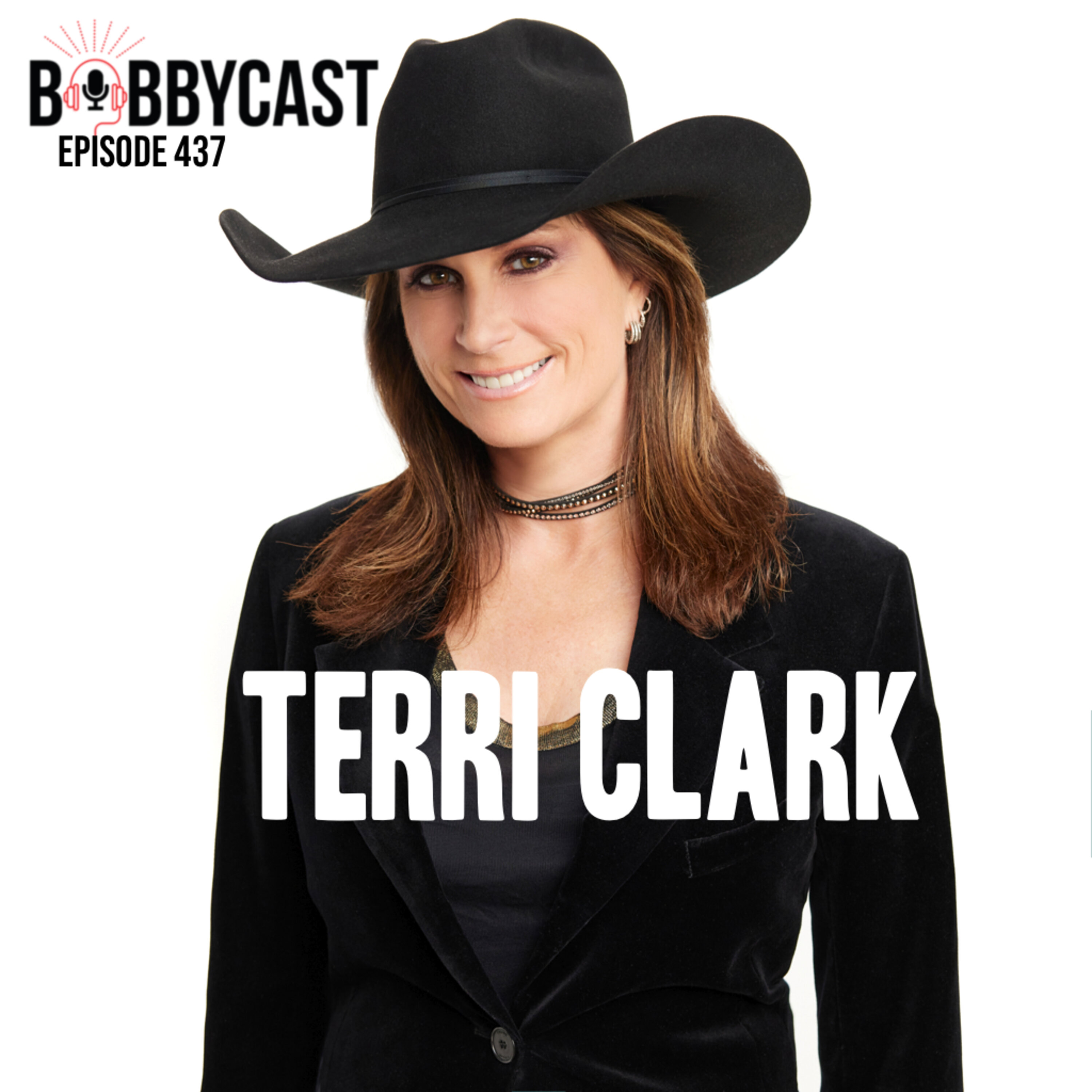
#437 - Terri Clark on People Not Recognizing Her Without Her Cowboy Hat + Driving From Canada to Move to Nashville + Touring and Partying with Toby Keith
Terri Clark (@Terriclarkmusic) sits down with Bobby Bones and gets real about her 20 plus years in country music. She reflects on moving from Canada after high school to launch her career in Nashville and how she only made $15 a day from her first singing gig. She also shares the struggles she went through while it took 8 years to get her first record deal. Terry is known for her signature cowboy hat and confessed people do not recognize her without it on and that she can go incognito in public. She also remembers Toby Keith and shares stories from their time touring and partying together and more!
Follow on Instagram: @TheBobbyCast
Follow on TikTok: @TheBobbyCast
Watch this Episode on Youtube
See omnystudio.com/listener for privacy information.
Available Results
Generated results are saved to the knowledge database for reuse and search.
Extract Knowledge
Pick what you want extracted first. Model, scope, and chapter options appear after a template is selected.
Transcript
00:00:06
Speaker 1: I'm still wondering if I'm just gonna absolutely.

00:00:08
Speaker 2: Fall awork one day because I just stayed so, you know, you keep pushing and stay so distracted.

00:00:15
Speaker 3: Welcome Episode four thirty seven Terry Clark. I don't think i'd ever met Terry. I feel like I had known Terry. You know what's funny too. When Terry left, Eddie was over at the house and so is Ben because we work out usually in that spot every day, and Eddie goes competition. Huh. I was like what and he was like, you have a little beef competition? I was like, what are you talking about? And she did a morning show years ago at a station across the street with Blair Garner, and I didn't even think about that. So now I'm angry. So now we're not putting it out. No, no, no, But I guess, you know, I've just heard such wonderful things about her, and I know her music obviously that I don't even associate her with that because I don't think I wanted to, because then I would wanted to, you know, end it. But she's awesome. I mean, it was so cool to have her over and we could have probably gone another thirty minutes or so, one of the longer ones we've done recently. It was one of those where I started to feel guilty I was keeping her too long, But I just like hanging out and I liked hearing her story, and I think she felt pretty comfortable. We got into a groove there where she got pretty comfortable too. But Terry Clark's awesome. She's had, you know, six number ones over twenty singles. We talked about she grew up in Medicine Hat Alberta, Canada. One of the coolest towns I've ever heard of. Medicine hat. Is there a medicine hat? Like, what's the medicine hat named after? Was there a medicine hat a guy who came to town wearing a hat that had medicine in it? Maybe? Yeah, I know. She's in the Canadian Music Hall of Fame. She's also been a member of the Grandel Lobry for twenty years, which this year she goes back and does her twenty year like a big, big party. But I'm just gonna let you get to it because I've been a fan for a long time. She was super cool. We talk about her new music and her tour, and we only can somewhat get into some of it, because apparently we'll go to country music jail if we share too much of it. But I think we said enough where people know what's up at Terry Clark music on Instagram. Had a really good time here she is Terry Clark. Were you wearing your hat when you drove in? Because I felt like I saw a silhouette of you and your hat when you came to the gate. Were you wear in that heavy car?

00:02:31
Speaker 2: I think I was wearing it?

00:02:32
Speaker 3: Yeah, Yeah, it's a pretty uh intimidating silhouette because you weren't driving, if I'm right right, And I saw you drive through because I beat the gate open, and I was like, ah, there she is.

00:02:44
Speaker 2: It could have been Beyonce, you know, it could have been.

00:02:49
Speaker 3: But you have what I can pull off at times too, is I have such a signature like extra party, which is my glasses that if I take them off, even if I put on clear ones, I've had people not know who I am.

00:03:03
Speaker 2: Oh fully, yeah, it's I can. I can walk through the crowd that I just played a show in front of and take the hat off and some of the makeup off and just puir a shorts and a T shirt and walk right into the audience at a festival. I just played literally half an hour before, and nobody even looks at me.

00:03:21
Speaker 3: It is such a part of your performance identity. The same way my glasses are trademark, Yeah, where people just know me because of it. Do you ever regret because I I like that I can peel them off and I can have a little bit of anonymity. Do you ever regret people and wearing the cowboy hat or no?

00:03:43
Speaker 2: I don't. I feel like, especially at a time when no women were wearing them at all, it was all the guys wearing them. It set me apart and it gave me a brand. And like I just said, a trademark that nobody else had, and it you know, it's it's something that I'm from Alberta, Canada. You know, it's the prairies of Canada is very country. It's very ranchy, it's very you know. I grew up wearing hats, you know, singing around my hometown and stuff. So and then when I moved to Nashville, I sold Western apparel up in Hendersonville at a Western store for a while. So it all felt like a very natural thing for me, and musically, you know what I've done musically, it all, it all fit together. But I do feel like it does it. Riba told me one time, smartest thing he ever did. You don't have to do your hair, you know, She's like, wish at it on that, But yeah, no, it does it kind of. It's a very it does pigeonhole honestly to me, now that everybody's wearing these western hats with whatever goes from the neck down, but I always felt like, you know that the upstairs had to you know, match the downstairs a little bit, so it kind of limited also what I felt I could wear, you know, for the rest of the stuff.

00:04:54
Speaker 1: But it does.

00:04:55
Speaker 2: It sets me apart, and I'm grateful for it, in fact, so much so that I think there have been people that actually don't know my name.

00:05:01
Speaker 1: But if somebody said, oh, she's the girl that wears a cowboy hat.

00:05:03
Speaker 2: Oh that's who sings that song, Oh, it's for sure.

00:05:05
Speaker 3: I mean, I know you're still I could identify you at your silhouette, which is a compliment, thank you, and that it is like the terror. It's just you were on my in the driveway and you're in your hat and I just saw your shadow and I was like, holy crap, there she is coming through anyway, that was that was just me. That's not even a real thing.

00:05:24
Speaker 2: Thank you.

00:05:25
Speaker 3: We'll keep this saying. But did you do the typical Nashville get in the car and drive down and move down like from Alberta, did you pack up a car or yeah, how far is that drive?

00:05:36
Speaker 2: Well, from from Alberta to Nashville is probably in the two thousand plus mile range. But I had I had gone to live with my grandparents in Ontario for about six months before I moved to Nashville. Long story there, but I ended up. My mom flew from Alberta to Ontario and her and her one of her very best friends who had known me since I was a little baby. Basically they we all decided it was just time for me to go to Nashville. I had been waiting on a legal way to move here. I didn't have a known card.

00:06:08
Speaker 3: I know a lot of people didn't wait for that part of it. They just they did it, yeah, the non super legal way.

00:06:13
Speaker 2: Well I did it the non super legal way, and we just said, you know what, I was eighteen years old and I was getting depressed because this was my destiny and I had to be here, and so moved in a Honda Civic with a guitar in the back seat and everything I own, And man, the days of life being so simple that everything you own can fit in the back seat of a car. Sometimes I miss that that simplicity in life. But we crossed the border. Of the border agents looking in the back seat, he sees these two women with this teenager in the back and.

00:06:44
Speaker 1: He's like, where are you ladies headed?

00:06:46
Speaker 3: Who is with you?

00:06:47
Speaker 2: My mom, Linda and her friend Pat. Pat was driving.

00:06:51
Speaker 3: Pat's a solid friend.

00:06:52
Speaker 2: Then she's solid until we found out she had pot in the car after we got across the border, a whole other story.

00:06:59
Speaker 3: Oh my gosh, kind of derailed the whole thing.

00:07:04
Speaker 2: I don't think I've told anybody that yet, but I don't think Pat would care.

00:07:07
Speaker 1: It's legal in Canada, no anyway.

00:07:08
Speaker 2: So we crossed the border, and the border agents looking at the backseat, at the guitar, and we're thinking, we're thinking we're going to be in trouble because we know we're we have no intention of actually bringing me back to Canada. We're just leaving me there and you don't say that, right, No, No, we're going shopping, totally shopping.

00:07:25
Speaker 3: Just with your guitar, totally to play songs. Why you chopped turtle necks going to?

00:07:29
Speaker 2: Well?

00:07:29
Speaker 1: He said, where are you going?

00:07:31
Speaker 2: And so Pat's like the grand ol Opry.

00:07:33
Speaker 1: We're going to go see the grand Ole Opry.

00:07:35
Speaker 2: So they thought these three broads are on the way to Nashville to do with the Nashville touristy thing. The guitar didn't.

00:07:42
Speaker 1: They didn't. He didn't know that there were only two coming back.

00:07:45
Speaker 3: So when you're moving down, is that you're such a teenager? Right? You're eighteen or nineteen years old? And where did you learn about Nashville? Was it the opry? But for me, I lived closer on from Arkansas, so it wasn't that Nashville was thousands of miles away or five hundred miles depending where you're coming from. It was the state next door. But I really learned about it through watching tinn Yes mostly right at that and watching the opera when it was on then with the operator move around a lot too. My grandma was a big, big country music fan. How did you learn about it and know that you wanted to come here.

00:08:22
Speaker 2: Well, my grandparents on my mom's side were professional country music musicians. They played in local bands around Montreal, where I was born, and they pretty much quit by the time I came around, but it was they were always had guitars laying around the house, so I got a lot of it from them they were listening to. My mom taught me guitar she played. She liked kind of more in the folk scene, but I became absolutely obsessed with it when the Barber Vandrell Show came on and I started to really do the deep dive and go into that rabbit hole. And then I.

00:08:55
Speaker 1: Discovered Ricky Skaggs.

00:08:57
Speaker 2: I was in Heartaches Record and reabam Mcin and then I went and got into all the Patsy Cline and Loretta Lynn and the Juds. Oh jeez, the Judgs. I can't even tell you. Just obsessed with the Juds. So I was really really into it. And Crook and Chase used to have This Week in Country Music was a show TV show, Right's the TV show?

00:09:15
Speaker 3: Watch it?

00:09:16
Speaker 2: It aired at Oh my gosh, you don't look old enough to remember that show.

00:09:19
Speaker 3: I'm sixty one.

00:09:21
Speaker 1: You're aging very well.

00:09:22
Speaker 3: Thank you.

00:09:22
Speaker 2: Yeah, Crick and Chase this week in country music you're familiar with I'm grateful that you know what I'm talking about, because a lot of people don't. But it aired. It aired through the American affiliate in Medicine Hat Alberta, where I grew up at like two thirty in the morning and I would set my alarm and I was in school in junior high and I'd set my alarm to wake me up at two twenty five so I could watch the little black and white TV downstairs. I had a basement bedroom, and I would go sit by that little black and white TV and watch that show really and then i'd go back to sleep. The days where I could just go back to sleep saying those.

00:10:00
Speaker 3: Right as you do that with David Letterman at midnight, I'd wake up watch Letterman. Didn't even really get it. I was like eight, but I was like, that guy looks kind of awkward and he's funny like me, and if he can do it, I can do it. But I wouldn't really get it, but I knew that that was kind of what I wanted to do, and then I would just go back to sleep.

00:10:16
Speaker 2: I think there's a thing that like in your brain. You wake yourself up to watch something that is helping shape who you're going to be and what you're going to do. Then you go back to sleep. I wonder if that just has some sort of it sinks in like a sponge into your subconscious like in a different way doing something. I don't know, I've never thought of it that way, but maybe we both kind of it just it got more ingrained or something, did.

00:10:37
Speaker 3: You Because I when I finally met Crook and Chase and I now met him a few times, but I had them and I did this with him for an hour. It is really one of the coolest experiences.

00:10:45
Speaker 2: Oh yeah, they're they're great, great and.

00:10:48
Speaker 3: You know, people that I looked up to when I was a kid. Still today, those are the coolest people to meet because a lot of my peers now they've made it and they're famous and they're rich, you know, and you start to see it's it's just a game, right, Like you got to get lucky, you got to have a skill, you do something that's oddly celebrated, Like you've been lucky enough to do something that's oddly celebrated by our culture when it probably should be. Like brain science but instead it's but but this like Mark Chestnut came into my studio one day and I was like, oh my god. Or Crook and Chase were in my house and I was like, this is the craziest thing ever. Like that to me was like if you mong is still to have them when you were finally able to meet them, I would imagine because that was your taste of American country music in such a way, Like was that super cool?

00:11:37
Speaker 2: I still get goofy around people like Crook and Chase. Why now a Reba Ricky Skaggs like all those I don't know, it's just when you're forming.

00:11:46
Speaker 3: Yeah, maybe let's say you're forming, it's.

00:11:49
Speaker 2: Just they become part of your DNA moms and so then it's it's it's like there's a reverence for.

00:11:54
Speaker 1: Those people that.

00:11:56
Speaker 2: That you don't necessarily have for the more modern day. Uh And and it's nothing to be old curmudgeonly about it. It's that's your, that's your touchstone, that's your that's your.

00:12:07
Speaker 3: It's more romantic then it is. Like when I was twelve, things were larger than live and it motivated me to make big steps and what I wanted. Now it's like I'll just use Luke as an example. Luke Bryan, Okay, what do drop off castrole? Who cares? Yeah? I worked with Luke for like four years every day on idol. You know what you're talking about? Yes, and he's like the best, but it's like that's that's just my friend. But like Crook and Chase that that was really one of those for me that when they came over and I was able to just spend an hour with them, but I would tell them I remember when you guys, you know, I did a lot of I remember when and didn't ask a question.

00:12:46
Speaker 2: Well, because you're a fan like it's it's a it's and it helped shape who you became and and everything that you are now and that you've achieved is you have to find inspiration. There are people that you're inspiring right now doing what you do that are going to.

00:13:02
Speaker 1: Be doing the same thing.

00:13:04
Speaker 3: Do not do this like Ralph Emery.

00:13:07
Speaker 2: I was going to ask you, have you met Ralph Emery?

00:13:09
Speaker 3: No, I've never met him. I watched him constantly.

00:13:12
Speaker 1: Yeah, me too.

00:13:12
Speaker 2: I love TNN, the Nashville Network. Y was also I can see both of us look very very influential and very integral and information gathering like it was as a culture that I knew.

00:13:26
Speaker 3: Listen to listen to the radio and I would hear, but until you could see it with your eye, you could see the people come on his show. You could see what Nashville. It was really the first. It really made Nashville like three dimensional to me and my again, my grandma was such a country music fan. That made me. But Ralph Emery was like the Letterman, but the Nashville.

00:13:47
Speaker 2: Yeah. And you know, I find that when TNN went away, there was I got to actually do that show before it all went away. That's how all my career is at this point. But I got to do that show. And there was a span of time between TNN and when country became so hot. Now that it's a given everybody's getting the late night shows and everybody's getting the big network looks and all of that kind of stuff, whereas there was a span of time where TNN wasn't there, and there was a span of time where country acts were kind of going into the abyss with as far as television and media and exposure goes, because we were missing that element and that entity that TNN gave us back then, and it's only been I think, you know from in my mind the last ten years or so, that country has become such a driving format sure and everything that country acts are getting on all this stuff where it was such a hard sell for so long to get a David Letterman or to get the Tonight Show if you were a country act, and now everybody's on.

00:14:46
Speaker 3: When you moved to town, did you take a job at First Selling Western where or did you start playing like toutsi's or like what was the I couldn't get a job? What was the order of how you made a living?

00:14:58
Speaker 2: Well? One needs a Social Security number green card to get a job, and I did not have either of those things, nor a car.

00:15:03
Speaker 3: But you have one though now so we can air this right I do? Okay, just speak.

00:15:07
Speaker 1: Now.

00:15:08
Speaker 2: I moved. I moved down and my mom. I have a little I had a little brother who was five years old. My mom could only come down to help me get set up. We had to find an apartment, we had to find a living situation. We had to find a cash paying job for me because I couldn't get work legally, so it was uh and then she had to leave, so it was a lot of.

00:15:30
Speaker 1: Very fast, you know, and this.

00:15:33
Speaker 2: Is before the Internet, and we were looking at classified ads in the newspaper to try and find a room for rent. Found a situation with this woman who was working a shift at a factory. She was separated from her husband at that time. There's more to that story, but I rented a room from her at a place in Tusculum, which is Bell Road and I still use GPS here, so right, so it's south, it's it's Antioch basically. So I rented a room from her. In exchange for a break in the rent. I would look after her two year old son when she worked for the graveyard shift at the factory.

00:16:11
Speaker 1: So I had a bus pass.

00:16:13
Speaker 2: We found that situation, and then before my mom and Pat left, we got me a bus pass because I didn't have a car, so I had to take you know, Nashville transit, and we went to Tutsy's Orchid Lounge. We did. We went to the Grand Old Opery and saw the opry, which was awesome. Of course, we went to Tutsy's Orchid Lounge. Did the Lower Broadway thing. Half of it was boarded up. There were people sleeping in the streets.

00:16:34
Speaker 3: It's before they made Nashville downtown functioning again, right.

00:16:39
Speaker 2: Even functioning, it was skid row at the cops where everwhere there were hookers, there was drug deals going down. There was blood on the sidewalks. It was dangerous and the only people who went into Tootsies were usually the greyhound buses full of the elderly folks that were on tours and stuff, and they would go in the mid days.

00:16:54
Speaker 3: Who didn't a better, right, but they wouldn't.

00:16:55
Speaker 2: They would have a tour. You know, this is Toutsy's Orchid Lounge, and there's the rhyman and then they he's through there for thirty minutes and leave. But it was dangerous and so my mom and Pat and I I had to see it. We went down during the day and we went in and because I was this country music historian, I was reading all the books and I'd seen Tootsies and coal Miner's Daughter, you know, all the scenes with everybody hanging out there. So we went in and there was a guy singing. Of course, my mom and patter a like ask him as you can sing, and they're trying to get me up there to singing. The place is completely empty. It's a thousand degrees in there, which I'm not used to at all.

00:17:29
Speaker 3: I'm still not and not large, by the way. For the people just listening, they don't know.

00:17:32
Speaker 2: Very small.

00:17:33
Speaker 3: Yeah, it's tight. It's like a trailer, but a bar like the size of that. It's like a shotgun.

00:17:37
Speaker 2: Yeah, doors open anyway, I get up, and this guy's name was Bo. He let me take the guitar, and he was glad to let someone take over his shift. So I started singing, and soly but surely the place starts, you know, people start filtering in and all of a sudden it's full. And the owner, who was Robert at the time, who became Robert's Western World next door, he owned Tootsies that time, and he said to the music director, who was starting his next shift, he said, see if you can hire her.

00:18:06
Speaker 1: So my mom and Pat and I are sitting there from right there.

00:18:09
Speaker 2: Yeah. So they offered me a job playing for fifteen one five dollars a day plus whatever tips I made. And all these little local Yokal guys you know that were musicians trying to make it in town, and there was all of this, I'll make you a start, kid. It was just look, what's that kind of character, grimey character, These characters that could have been in a movie somewhere. They're living in their cars and in the alley and telling me they're going to help me make it big. And one of them came up to my mom and said, ma'am, whatever you do, don't let her play down here at night.

00:18:42
Speaker 1: You'll find her dead in the dumpster.

00:18:43
Speaker 3: Wow, oh god, your mom's got to go back to leave her teenage daughter.

00:18:49
Speaker 2: So Pat, my mom's friend, Pat, who drove us down, kind of convinced my mother that we needed to get me to Nashville because she had seen me and she's like Terry Terre's depressed. She needs to be following her. Now, let's take her. Now, get on a plane. She did not speak to Pat all the way back to Nashville, like it was a two day silent drive, because she was scared absolutely shitless. Can I say that? You can't say she was scared shitless like it terrified that something was going to happen.

00:19:15
Speaker 3: So, yeah, that's not what you want to hear.

00:19:16
Speaker 2: It's awkward. Yeah, So I promised her I would not play a lower Broadway at night. Can you imagine me standing at a bus stop and at midnight trying to get back to ten miles down there the bus it took an hour and twenty minutes one way to get down to Tutsi's from where I was living, because it stops every five seconds. So I wasn't allowed to play down there at night. And there was an odd time that they asked me to take a night shift because somebody didn't show up and I didn't tell her. I said, I can only do this if somebody drives me and drops me off at home, like you have to come get me. So they did. Yeah, the bouncer would come get me. I can't remember his name. Very nice man.

00:19:56
Speaker 4: Hang ty the Bobby Cast. We'll be right back. Wow, and we're back on the Bobby Cast.

00:20:11
Speaker 3: How long the shifts? Did you play?

00:20:12
Speaker 2: Four hours? And I would take you know, I would take a break every hour for ten minutes or something.

00:20:18
Speaker 3: Did you feel like that was such an integral part of your musical journey in that you had to play four hours, even if it's covers you know you'd read about. I think the famous example is the Beatles when they were playing in like Hamburg, Germany, and they played for seven hours a night and they were like, listen all the things that we did, but we really became the artist that we are. Was having to grind out seven hours because we're having to play covers. We're having to quickly learn doing that for four hours. Did you just learn how to be a bit more improvisational?

00:20:51
Speaker 2: Yes? And because I was solo, like, this is just me and a guitar, right, this was but Tutsi's didn't have a lot of bands back then. It was all solo artists. A they didn't want to pay for band and it wasn't this big loud party scene that it is now. It was. It was a lot of tourists coming in, but you know, country didn't have the young college crowd like they did like they do now. So it was and the guy who let me sit in on his set, it was just him and his guitar. So I would sit and I get a lot of requests for Patsy Klein and the Rett Lynn and whatever was hot on the radio at the time, and I was playing Tennessee Flat Top Box, Roseanne cash Version and Randy Travis. This is this is before Alan Jackson or Garth or Clint or any of that. So it was very much the juds and the early Reba stuff and classic country.

00:21:40
Speaker 3: Did you kind I did of know what people were going to request, like because even though there were different people, usually it was the same same group of songs, right.

00:21:48
Speaker 2: And I had sat, you know, in my kitchen and in my bedroom and Alberta playing everybody's songs so much and learning so much. I was prepared. I had a plastic binder just full of lyrics and songs that I had been already singing, so I pretty much had a pretty good handle on it when I got that job.

00:22:04
Speaker 3: When did you start creating instead of playing and performing? Because you're here now it's time to be your own. When did that start?

00:22:15
Speaker 2: I was starting that back in Alberta. I was really, you know, dabbling in songwriting. I mean, and of course it doesn't have the creative community that Nashville does, so I was writing by myself and you know, essentially, so I was. I wrote a couple of decent songs when I was a teenager, and then when I got to Nashville, I hooked up with a guy named Woody Bowles who was a manager. He was one of the Judds first managers with ken Stilts and he heard me sing, and he kind of directed me towards a couple of publishers that helped me put me with some co writers and stuff, and helped groom me as a songwriter a little bit. And I wrote a few songs that were actually wound up on my first album for Mercury from from that time, and I had gotten married and I was able to actually I got my green card and I was able to actually start working real jobs. And I worked at Applebee's over at I twenty four and whatever that road is over there. I'm all turned around. Nashal's changed so much, I don't know where I am half the time. So I worked at Applebee's and bartended and had day jobs and worked at a bootstore for a while, and he and I just kind of were trying to eke out a living, and I was I would go after my waitressing shift and I'd go down to Music Row in my car. That was I now had a car. Blue smoke everywhere, but I had a car and go down and I would write until about ten o'clock at night. So I'd go wait tables during the day and then i'd go down to Music Row and do some writing and co writing, and wouldn't get home sometimes till ten or eleven o'clock.

00:23:44
Speaker 3: So you're if you're playing anywhere, like you're doing covers or where you're tootsies or so you're doing that, were you riding at the same time, Cause again that it's two versions of music, right, You're having to learn songs from other people so you can pay your rent if you don't get to watch the two year old or whatever, however old the kid is now three or four. But then at the same time you have to go and then you have to write. Yeah, and again different muscle. Yeah, they're very close to each other. But were you able to do that? We're able to play and do a bunch of covers to make a living and then write at the same time or did you have to separate them a bed? Oh?

00:24:19
Speaker 2: Absolutely, And because a lot of the covers and a lot of the artists I were covering were inspiring what I was writing, because they were influencing me and that music and I kind of found my wheelhouse there and what kind of things I wanted to say, and musically, musical range and melodies that really resonated with me. I'm not saying you know, we all copy a little bit from this and that, but I call it more like finding inspiration. So yeah, there were two minds. But I would throw some original stuff in the TUTSI set from time to time.

00:24:48
Speaker 3: Would they like you to do that or were they like just play the hits kids?

00:24:51
Speaker 2: They would they liked it because I would also set it up. And I wrote this song, you know, and I'm an eighteen year old drinking diet coke because I'm not supposed to be drinking. And you know, it was in a way that they also, I think, were enamored by this kid sitting down on skid row with a guitar. And I had a lot of protectors and people also, you know, kind of looking out for me that would sit down there. And this one guy, his name was Sir Lawrence was his nickname, and he's passed on recently, but he was this great, big tattooed guy with an eight ball tattooed on the top of his head, and he looked like he would just rip you apart. He would. He came in one day and he was sitting at the bar and he was like one of very few people there, and I'm singing right to him and he's just got I start singing Patsy Klein and he just started bawling and tears are rolling down his face and he just became he was a fan, and he became a protector, and he said, you need to go and be singing at Gillies up on Music Row. There was a Gillies up on Music Row where all the statue of all the naked people ares right right there on that corner, and they had a beer garden and they had people singing for tips in there. So he had me go meet the owner of that the music guy of that place. So I went and played up there for a while too, my very first set playing.

00:26:04
Speaker 3: He made that introduction.

00:26:05
Speaker 1: He made that introduction.

00:26:07
Speaker 2: He used to drive me. He started taking me home so I wouldn't have to take the bus here and there, because he had a car or a van that he was actually living in. He would drive me home in the van.

00:26:15
Speaker 3: Wow, I know, and like like awesome and also at the same time.

00:26:19
Speaker 1: Oh yeah it was I could.

00:26:21
Speaker 2: Yeah. There were characters at Gillies, and they had an actual parking lot there, so a lot of their entertainers were also living in the parking lot in their cars and stuff, Elvis impersonators like, I'm not kidding you, Bobby, it's it's the one guy. Yeah. His name was Sonny, and he sounded exactly like Elvis, but swore that was his voice.

00:26:42
Speaker 3: That wasn't an effect, That's how he really talked.

00:26:44
Speaker 1: No, he said he was trying to be.

00:26:45
Speaker 3: All yeah, but I'm saying he was like saying that that was really him.

00:26:48
Speaker 2: He was trying to make like that was really him. And so my first gig there at Gillies, I went to try it out and they only paid me seven dollars a day, but they swore the tips would be better, which they were.

00:26:58
Speaker 3: Not, so he made half the money in the time were money.

00:27:01
Speaker 2: But I just thought I'd try a different experience. And my first day there, this this guy comes in and I'm in the middle of a Patsy Klein song and he drops dead of a heart attack right in the mid of me singing like just.

00:27:16
Speaker 3: Like physically physically saw him down.

00:27:18
Speaker 2: Yes, he just and I just kept going. I didn't know what happened. I'm eighteen. I'm like, the show must go on, right, And the song ends and the ambulances show up, and I'm like anytime anybody says just go out there and kill him, I'm like, you, she really shouldn't tell me that actually happened one time. It's not funny, but it was just the experiences during that time. You couldn't make you couldn't make this shit up that was going on, and the town was so different. There was a spaghetti deli upstairs above a wax museum.

00:27:50
Speaker 3: It's weird to you talk about back in the day because you don't you're like and the hope this is a compliment too. You're like legendary, but you're not old. It's like a weird cue. You're like this, this weird because you're like back in the eighteen hundreds in Nashville, and it's like, you can't you don't even look you're it's a people admire you, and obviously with this duet's project, you got to ask people to sing with you, and I'm sure people were just sprinting toward it because you know, you're so revered in this community. But also you're not a hundred. It's crazy to hear you talk about old Nashville. But it makes sense if you were.

00:28:25
Speaker 2: Eighteen right, oh yeah, because you.

00:28:28
Speaker 3: Were you were doing that when times were completely different here, but you were, you were a kid too, Yeah, that would.

00:28:34
Speaker 2: Be crazy for your I go to music row now and I stand there and I look around, and I'm like, this just isn't Even if you were to take eighteen year old me and stick me down on the Mumbrian right now and take the bag off my head and say look around and tell me where you are, I wouldn't be able to tell you where I was.

00:28:52
Speaker 3: What do you like about eighteen year old you? Oh?

00:28:56
Speaker 2: The hunger, the passion, the create, the creative sponge that I was, the drive and I still have that, but it's never the same as it is when you're just Yeah, that that determination that I want to I just want to just want a chance to show people what I can do.

00:29:17
Speaker 3: Why do you think you were so passionate about it? Who were you trying to and maybe impress isn't the word. Who were you trying to make proud? Was it yourself? Was it somebody back home? Like? Who was it for you?

00:29:29
Speaker 2: Question? Nobody's ever asked me that.

00:29:33
Speaker 3: Because that hunger just doesn't come out at that air, right.

00:29:36
Speaker 1: It doesn't.

00:29:38
Speaker 2: I I moved around a lot as a kid, and I had a i'd say a challenging relationship with my stepfather, not a super close relationship with my biological father. I mean, we're fine in everything, but I had some I had some tougher times growing up, and I think music was the one thing that anchored me in a way and gave me that security and that confidence that I didn't have anywhere else. And I became so obsessed with it, and there was also a burning desire I'll show you.

00:30:17
Speaker 3: Yeah. No, I don't know my real dad. I met him once a few years ago, So I definitely understand that because that was a driver for me too. It was like, wait, I'll show you why you really missed out on not being my dad like that. That was a part of it for me too.

00:30:33
Speaker 2: I think a lot of us have something driving us other than just a love for what we do, that that that sparks, that that starts that fire.

00:30:42
Speaker 3: Yeah, I would agree. The consistency that you know you said music was just there. You know, whenever you have a really inconsistent life childhood like I did, like you did, when you do have that one or two thing, like my grandma was so consistent with me when she was with my grandma adopted me for a while too, when you know my mom was gone and or my dad was. But anything that had consistency, like I still hold on to Like I'm the biggest Arkansas Razorback sports fan. But it's because I knew every Saturday that it didn't matter where I was living, there was going to be a game and I could look forward to it. It's going to be on for it's on free television. So that was consistent for me. Uh, there was music that was consistent for me because my life wasn't hot. There was no consistency about it at all, and so that why it's why today I still like hold on to those things. It's even like the people we were talking about indygo that we felt like we're famous when we were kids, while we still, yeah, feel like it's so cool.

00:31:41
Speaker 2: There's a comfort in that, in the consistency of something like that. And I said earlier in another situation something that really kind of struck me because it you know, your career ebbs and flows, and you have ups and downs, and you have some doubt, and even with success comes that well, I'm not I'm not the top of everybody's mind. Anymore, and you have to you know, with that comes a little of that, you know, and you have to kind of navigate that emotionally.

00:32:15
Speaker 1: And it's not as easy as people would think it is.

00:32:17
Speaker 2: But you know, and I think a lot of artists go through this period of do I matter enough to keep doing this anymore?

00:32:23
Speaker 3: Oh? For doing relevancy issues?

00:32:25
Speaker 2: Relevance, Yes, we can have a whole therapy.

00:32:28
Speaker 3: I live in relevancy landwork. It's like me too, I'm not relevant anymore. This is totally How do you deal with that?

00:32:35
Speaker 2: I'll tell you how I deal with that. This year, it kind of it was. It was an epiphany that came to me, and I started thinking back, and I started going way back and remembering that hunger, that kid that woke up to watch This Week in Country Music and sat for hours and hours in her bedroom, singing and learning new songs, dreaming about Nashville, crying because she wanted to be in Nashville, just wanted a shot, wanted to be on the radio so bad I could taste it. And I'm like, I can't give up on that kid. I would feel like I was betraying her if I just did that.

00:33:12
Speaker 3: What's wild? About you saying this is that me ten thousand feet up looking at you and your career. I would see you and go, man, everybody loves her massive success. You would just think, but I think this is common right around the room with whomever. I would just think, that's the one person that doesn't deal with imposter syndrome or relevancy. But it just shows you it almost doesn't matter. It's like the screw loose that got us here is still the screw loose now that affects us in a slightly different way.

00:33:50
Speaker 1: And I think the danger zone to that is playing the comparison.

00:33:56
Speaker 3: Game too big time, because you can never win.

00:33:58
Speaker 2: Because relevancy is only relevant compared to who's doing something more like, and there's always going to be somebody doing something or getting more opportunities than you're getting, or or being recognized more than you are. And you know, sometimes you feel like you're spending your reels because you're working your ass off and you're just like, does anybody care?

00:34:17
Speaker 3: Right? Does anybody care at all? Will they ever care? Again?

00:34:20
Speaker 2: And then if you if you express that to somebody, they're like, they don't understand that, sin, how could you? Yeah, Yeah, it's just yeah, it's part of being human. It's that affliction, well, the human affliction.

00:34:30
Speaker 3: And even as that creative, it's you know, if I have friends at work and most of my friends aren't creatives, which I think is a big deal. It's good for me because they can kind of give me a bit of a realistic view on what's really important in life. And you know, with those I can't really go, well, here's the thing, here's why I'm I'm upset. You know this show, the stand up show I did you know? I did. I did announce the tour twelve shows and it only sold eighty percent, And they're like, are you how is that upsetting to you? And I'm like, we don't understand. Like last time, I sold every theater and now I'm sorry and so at At the same as trivial as it is, you'd still like to have someone that can relate to it and go, I get it same but instead of just but yeah, you know, because a lot of my friends are in the industry, like why are you whining? Your theaters are almost sold, and it's like, nobody don't understand. Like I do a big time with imposters, but when I do, I finally have a couple of friends too now in the industry. One of my closest friends and is a guy named Ben Rector. Who do you know Ben is?

00:35:38
Speaker 1: Can I tell him this?

00:35:40
Speaker 3: Is he doing your Is he doing your project? Yeah, he'll be over in like thirty minutes and.

00:35:44
Speaker 2: Like, but we can't really get into the project too much.

00:35:47
Speaker 3: But I know I don't know him, it's all. Ben is one of my best friends. We work out here at the house three times a week, but is appslutely and I think I get anxious. We have like an anxious three. We could be like a wrestling me Brett Eldridge and Ben Rector. I get.

00:36:12
Speaker 1: I can see you all being.

00:36:13
Speaker 3: Oh, exactly. Yeah. We just call like if it's on like ticket a release day or something. It's like, you're doing all right? Man, I don't know, Man, I'm watching it. It's they go on someone in six minutes. Don't watch, don't watch live, just check back in at night. Don't worry about it. But we all have to have those friends that could rely. They can relate. It's really important, yes, And it's also important have friends it can't relate at all, And there's got to be about like that has to be my wife, not in the business. That is what to me helped the haye am I still relevant because she just doesn't care in the best way. And it drives me crazy sometimes too, because I'm like, don't you care? If she's like, I know you care, so I care, But that's not that important. Like you're doing what you love. It's gonna be sometimes, gonna be great, sometimes it's not going to be great. Is going to keep going, and so that's very valuable too. Who is that for you?

00:37:05
Speaker 2: Oh gosh? I have Okay, So I have friends that I have had my entire life since I was twelve from home. Yeah, from home, and we're still very very close. And then I have a few friends that I made in Nashville right after I moved here, like in nineteen ninety, who are also my other very best friends. None of them are in the business.

00:37:23
Speaker 3: The Originals too, Originals.

00:37:25
Speaker 1: I went to school with them.

00:37:26
Speaker 2: They are they have businesses, they're school teachers, they're social workers, supporting it's very important. And then and then I have the Pam Tillis, the Susie Bougus, period, Riba and Trisha. Let we all get together and we can we can kind of bounce these insecurities off of each other.

00:37:42
Speaker 1: We more so me, I think.

00:37:45
Speaker 2: But I look to them, especially like Riba and Susie, I would say, because I look at them like big sisters who have been through it all. And it doesn't matter how big the star is. Everybody has had their moments I think where they've experienced something that they can go, hey, you know, and I can go, what did you do in this instance, or like like, you've got to have some of that too. But I think the balance is I'm glad you have that too. I live that you have your history, friends that have nothing to do with any of it, and then you have the people who have been there who can help help you kind of navigate the complicated emotional waters that we live in.

00:38:29
Speaker 3: Yeah, or just like swim beside me, even if it's not navigating yeah, because there are times where Bin's like I don't know either, and we're just like, okay, well we don't know together, you know, because it is it's a weird to get into a business where you are going to make a living creating something that you think is good enough for people to pay their money to watch. Because at the same time, you could be the most humble person, but if you don't have a bit of confidence, even an ego about what And it is a weird juxtaposition of at times I have no confidence at all, and at the same time, I'd have all the confidence in the world to create something, to do, a stage show, to do, a radio show, to do and expect people to give me their time and money for what I'm creating.

00:39:13
Speaker 2: The most complicated part about it is it's all appear like and that sometimes will will be the one factor that defines whether you go out there and kill it or don't, because it's all in your mind.

00:39:27
Speaker 3: You ever get it's all sad at seats that weren't sold.

00:39:30
Speaker 2: Oh yeah, of course, I think everybody does. And I got to tell you, every single night I walk out there, it's not a given in my brain that there's going to be anybody out there.

00:39:39
Speaker 1: I swear to God, it's.

00:39:41
Speaker 3: It's just crazy for me to hear you say that. By the way, it's crazy for me to hear you say that but it's true, not even saying it's not true, but it's crazy for me to hear that, because again, I see you, Trek Clark. I mean that that is. That's my perception, you Clark, but in reality you're Darry.

00:40:00
Speaker 2: Yeah, and I have all the same insecurities and that anybody has it. I find that hard to believe that you have that. I mean, I walked in and your drove into your house, and I'm like, damn, Bobby bones, Bobby bones.

00:40:13
Speaker 3: Well, mine's like secret though you know people don't know. They do now, yeah, well they know from this, but it's like, yeah, yeah, I think we had Again, we had to have something a little off for us to pursue a career in an industry where we want people to pay us for we're creating with our minds, and that doesn't mean that that's something off. Doesn't also like kick us.

00:40:35
Speaker 2: At the same time, do you feel like the confidence was greater when you were younger and you were going after it than it is after you've gotten it, when you stop, when you start questioning yourself constantly, because then you're is there a shift that happens.

00:40:48
Speaker 3: I think I was naive. I think I was brave, had nothing to lose, and I was naive because I didn't know good or bad what was out there. I just knew I wanted it and I knew I didn't want to be where I was too. That was a big part of it, right, I didn't want to wasn't the greatest where I come from, and so I had big dreams. And you know, if I had known everything, would I have still? I don't know. I think so, but I don't know.

00:41:14
Speaker 2: It was simplified. Yeah, it's just it was cooked down into this and you didn't overthink it.

00:41:20
Speaker 3: I just wanted to get out of that situation. I knew I could work harder than everybody else. I don't and didn't think I was the most talented, but I knew that I could probably strategize as good as anybody else. There's strategy is to live for a lot of growing up. But I do think that I the more success I had, the higher my therapy bills got. Totally because I started really questioning do I deserve it? What am I doing my fate? I have imposter syndrome, like crazy, can I repeat? Then you're like, well, I don't want to not try as hard in fear of losing it. But then I start to question, well, why am I not going as hard because I'm gonna lose it? Well, then I will lose it. So, yeah, it's that I am.

00:41:58
Speaker 1: I getting thrown out of the club. When are they going to find out?

00:42:01
Speaker 3: For sure? I feel like I've been robbing seven eleven's for twenty years and they haven't caught me yet and I'm on the run. That's that's that's what it feels like.

00:42:09
Speaker 2: Oh man, well I I it's thank you for being so vulnerable. I didn't know that about you.

00:42:16
Speaker 3: I just always assumed that you were just look like a model, built like a bodybuilder. Yeah, I get that a lot. Yeah, exactly, that's it.

00:42:25
Speaker 4: The Bobby Cast will be right back. This is the Bobby Cast.

00:42:38
Speaker 3: When did you not have to work service industry and you could just pay your bills by music?

00:42:45
Speaker 2: Oh my goodness. You don't really start making real money until about a year after your first hit. So I was waiting tables.

00:42:54
Speaker 3: But a publishing deal, your first publishing deal.

00:42:57
Speaker 1: Yeah, I got a publishing deal with Sony Tree.

00:42:59
Speaker 3: Were you able to quit working in all the other jobs or is your publishing deal just like partial of what you were making.

00:43:05
Speaker 2: I made three hundred and fifty dollars a week from Sony Tree, and I was able to quit my waitressing job and focus on writing.

00:43:12
Speaker 3: That's such a big deal. That's such a even if like you're making less money, it's still such a big.

00:43:16
Speaker 2: Yeah, it was a big deal. And I think that was like nineteen ninety three. It was about a year and a half, two years before I got my record deal, and I was writing and writing and writing a lot. I was going down to the firehouse, the fire hall there on music Row next to Sony Publishing and writing every single day.

00:43:32
Speaker 3: So how long until from when you move here to you got a publishing deal?

00:43:39
Speaker 2: About six years? Wow? Really five to six years? Yeah?

00:43:43
Speaker 3: Did you ever doubt two three years into it? Maybe? Man, you had this dream, but it may not work.

00:43:51
Speaker 2: Yeah, it took eight years to get the record deal. So I was writing songs for a couple of years before that. But during that whole time, yeah, I was. It was I was all of you know, twenty two to twenty three, going well, if I don't get a record deal. By the time I had this little deal, I was making in my head, if I'm twenty eight and I don't have a deal yet, I'm going to go and become a dental hygienist because it's a trade and it's sensible and I'll make money doing that. But I I don't know if I ever truly believed that, because you can't. It was just a little game I was playing with myself too, because I'm Canadian. We're very frugal and very conservative about things, and everything has to be very practical, Like I can't just you know, I've got to have some kind of a career if this other career doesn't pan out.

00:44:33
Speaker 1: And as a kid, I was going to go into.

00:44:35
Speaker 2: Law enforcement enforcement really before I was going to come to Nashville and chase the dream.

00:44:39
Speaker 1: So I was starting to go back to.

00:44:40
Speaker 3: That, Like what's specifically like cop or like a really MARCMP. Know what that is?

00:44:46
Speaker 1: It's a Royal Canadian Mounted Police.

00:44:47
Speaker 3: I do know what that is when you say that eral police.

00:44:49
Speaker 2: Yeah, the ones on the mountains mountain.

00:44:50
Speaker 3: The cartoons in the red ride the horses. Yeah, and they wear the red Yeah.

00:44:56
Speaker 2: Is that not it blame Canada?

00:44:58
Speaker 3: No, that's them, Okay, yeah, yeah, the Mounties. Why law enforcement? Was there anyone in your family?

00:45:03
Speaker 2: No? I just wanted to. I wanted to make a difference in people's lives. I wanted to. I loved uniforms. I just something looked what I wear. I liked dressing up.

00:45:13
Speaker 1: So no I wanted.

00:45:15
Speaker 2: And also I wasn't super academically gifted. I had to work really hard to get b's and c's in school because we moved so much. I was moving to different schools all the time. It was hard for me to cut a groove in a school, and really.

00:45:27
Speaker 3: You know, hard to get comfortable with people, much less.

00:45:29
Speaker 2: To get making new friends and losing friends. And we just moved, and we moved back and forth across the country a couple of times, and that part was difficult, but so academically, I think my grades suffered for that. And you have to have, you know, decent grades to get into university in college and be able to do that, and I knew I probably wasn't going to get there, so I started and I was passionate about it. I wanted to be a cop and I thought it would be a great career, something I could do and retire and be able to retire a decent age and have a good pension and all those.

00:46:02
Speaker 1: Sensible practical things.

00:46:04
Speaker 3: Very sensible.

00:46:04
Speaker 2: Yeah. Yeah, So but that all went by the wayside after Barbara Mandrel came on TV. I was like, Okay, that.

00:46:11
Speaker 3: Was really the flash for you, Like you always loved it, but until when you saw the Barbara Mandrel Show or Barbara Mandrell herself, that was what really told you, oh, I have to do this.

00:46:21
Speaker 2: It started, It started the wheels turning.

00:46:23
Speaker 3: Yeah, that's how David Letterman was for me.

00:46:25
Speaker 2: Yeah, it started that that path and then the deeper the rabbit hole got. I was just I was just never coming out.

00:46:33
Speaker 3: How many times you watch coal Miner's Daughter.

00:46:36
Speaker 2: I've probably seen Coal Miner's Daughter upwards of fifty times.

00:46:40
Speaker 3: Have you met Sissy Space I've never.

00:46:43
Speaker 1: Oh, actually I'm lying.

00:46:44
Speaker 2: I met Sissy Spacek at Mary Chapin Carpenter's wedding.

00:46:48
Speaker 3: That's a whole I know, right.

00:46:50
Speaker 2: And Dave Matthews was there too. Wow, I know, I just remembered that. I totally had forgotten about that. Yes, I did meet her, Boy, that was a surreal moment.

00:46:57
Speaker 3: Did you tell her I watched you fifty times?

00:46:58
Speaker 2: Yes? Yeah, yeah I did. I did. But I was still in talk because we almost died in a plane crash all the way to that wedding. We were stuck in I flew with some people on this puddle jumper with props and Blake Chancey and I were like holding onto each other for dear life. It was bad weather. I'm just yeah, that was not a good flying experience. But it was a lovely wedding and I got to meet Sissy SPACEK.

00:47:20
Speaker 3: Did you meet Dave?

00:47:21
Speaker 2: I did in the parking lot.

00:47:23
Speaker 3: Yeah, I'll tea so much to say.

00:47:28
Speaker 1: He was very nice.

00:47:29
Speaker 2: Yeah.

00:47:29
Speaker 1: Yeah, he didn't crash into me, but he was.

00:47:32
Speaker 3: Yeah. So I know when i'm it's still again, we're not talking about a lot of it, but because it's there's telling me it's a lot of this is them bargoed, whatever the heck that is.

00:47:44
Speaker 2: We've already let the cat out.

00:47:45
Speaker 3: Of well and we won't cat out of the whole bag. But again, they're.

00:47:49
Speaker 2: They're giving, they're grimming me the pr people are going, you're a bad girl.

00:47:53
Speaker 3: No, this is what I'll say then, and I'll also cut this if you'd like. When I mentioned earlier that people really look to you as inspiration, I think this unnamed project that may be happening is an example of that.

00:48:10
Speaker 2: Thank you, thank you, because.

00:48:14
Speaker 3: That wouldn't happen, or you wouldn't get yeses, or you wouldn't get it just wouldn't happen if that wasn't the case.

00:48:24
Speaker 1: I that all is wonderful to hear.

00:48:27
Speaker 2: Thank you.

00:48:27
Speaker 3: Do you believe it? Though?

00:48:28
Speaker 1: When I say I don't know that I ever believe it, I know you know what I mean?

00:48:33
Speaker 3: Could you logically though? Could you pull yourself out of you? And if let's say it were me and I was like, Hey, I'm doing this comedy big comedy special, and I've got like this person who said he's going to do it with me and this and she said she's going to do it. Could you see that they're only doing it because they find some value in doing it with me, because they like what I do? Could you see that if it were me?

00:48:55
Speaker 2: Yes?

00:48:55
Speaker 3: Yeah, okay, that's all definitely. So that's what I see with this. I'm not even saying what it.

00:49:00
Speaker 2: Is, right, but I hope we can actually come back and talk about for sure. Yeah, because this is I love talking to you. I'm saying things I've never said to anybody, Like what's with the vulnerability today? Oh my gosh.

00:49:12
Speaker 3: Well, it's like vegas retrospect. You know how they pump oxygen in, right, we have xanax are and it kind of takes you down a little bit. So six years until you're publishing deal, and then a couple of years after that until you got your record deal. Did you ever get into the mindset of I'm just going to be a writer, Because a lot of my friends start to think that, they're like, you know what, the artist thing is not going to work, but I have gotten pretty good writing songs. And then later their artist career does happen, but for a bit they go, I think, maybe I just write. Did you ever just settle maybe I'll just be a writer, or did you keep grinding towards them?

00:49:49
Speaker 2: No, I really wanted to be an artist. I really wanted to sing for people and perform. And it wasn't as much about being as star as it was about connect and performing and delivering these songs.

00:50:03
Speaker 3: I was writing, why'd you like to perform?

00:50:05
Speaker 2: It's a connection and it's a it's an approval, it's an approve and an instant approval rating. And it's that goes back to that I think that wanting to.

00:50:16
Speaker 3: Be loved and like, exactly what mine is? It's love. It's me trying to find love. Even being funny as a kid was me trying to find love in a way in a place that I couldn't.

00:50:26
Speaker 2: Yeah, in a safe place, and people are if you're good, they're not gonna throw eggs at you. You're gonna find that love. And I knew I was good enough for that. But I've just yeah, just being a writer was never it wasn't. I wasn't as passionate about writing as I am about performing. Writing for me has always been a vehicle to performing. I needed the songs to go make the records to be able to go out. And I've always been a very project oriented songwriter. I'm not somebody who just writes all the time.

00:50:56
Speaker 3: Do you have a mentor here? Did you when you moved to town that you could just call on your landline?

00:51:03
Speaker 2: Mm? The My mom was my mentor. I got to say, you know she was. She was my biggest champion, She was my inspiration. She I was closer to her than any humans. No. She passed away how long ago?

00:51:18
Speaker 1: Thirteen years ago.

00:51:19
Speaker 2: She was sixty and she died of a very very rare form of cancer that just killed me. And that, thank you, that that changed. I had to really sit down and take stock and like, what would my mom want me to do? Because I felt like I'd kind of lost half of half of this team that we were up until that point.

00:51:36
Speaker 3: You mean, after she had passed, you had to kind of read, yeah.

00:51:39
Speaker 2: Like do I And I just went right back into doing what I do. And I'm like, I'm honoring her by doing what we what we both sacrificed. She let her eighteen year old kid go to Nashville. Like the sleepless nights that woman must have had. Oh man, But you know, she didn't say you have to come home. I would call her, you know, collect I'd call her a lot. And one time I got off at the wrong bus stop on my way back from Tootsies and it was blazing heat in the summer, and I was, you know, head to toe and cowgirl clothes and boots and standing there holding a guitar at the Hearties at Harding Place and Nolansville Road. And I got off at the wrong stop and I kept waving the buses that would come by down. They wouldn't stop. They would there wasn't there stopped, There wasn't that. Finally one stopped and I said, I don't know where I am. And I was sweating, and I was in tears, and he finally said, you have to wait three more buses and then this bus will come by, you know, And he's just opening the door and looking at me, and I'm standing there with a guitar. And I got home from that and I said, I called her and I said, I don't know if I can do this. I was just absolutely hysterical and in tears. And she said, you can come home anytime you want to come home, but I just want you to think about when you're fifty years old and you remember coming home and not taking this shot. I want you to be okay with that decision. And I didn't go home. I like she had to. She was devil's ad. She never told me I couldn't come home, but she she also knew how badly I wanted it, and that when a moment might have just been an emotional, temporary thing.

00:53:21
Speaker 3: Which was a very selfless thing for her, because you know, she'd have loved to have had you home.

00:53:24
Speaker 2: Yeah, like that.

00:53:25
Speaker 3: I'd have been the best thing in the whole world for you to be at home. Yet she still said, hey, think about this, because she knew what you wanted. She wanted to stay in Nashville, yeah, And she didn't say you should stay, she said think of I mean, yeah, it sounds awesome. What was your mom like?

00:53:40
Speaker 2: Oh? She was. My mom was very focused. When she made up her mind about something, she would just do it, like very focused, very determined, very strong, but also very kind and very sweet, supportive, encouraging.

00:54:01
Speaker 1: She was my very biggest cheerleader.

00:54:03
Speaker 2: And when she died, there was there was It was you know, I went right back to work pretty quick, and I think I needed to because I don't. It was either I'm gonna I'm gonna keep I'm going to keep pushing and I'm just gonna do what I do, or I'm just gonna I may never get up again. So I just kept pushing through.

00:54:20
Speaker 3: Do you feel when my mom died? Because my mom was forty six or forty seven when she died, So sorry, Oh yeah, But you know I also can sit here and talk with you about it from a place of empathy more than sympathy, which I would rather talk from a place of understanding, right because we get to relate. But I probably jump back in way too quick. I don't think I allowed myself to mourn at all. And then I think over like the next five to seven years. It kind of trickled out in weird ways, just like something would trigger it.

00:54:52
Speaker 2: Did your mom get sicker? Did she die suddenly and unexpected?

00:54:55
Speaker 3: My mom was a drug addict and she died just from years and years of like meth and sech Did.

00:55:00
Speaker 2: You have any idea it was gonna take her life?

00:55:03
Speaker 3: She had been in an out of rehab a bunch, But I mean I never thought she would die. But she wasn't super healthy. I mean she got pregnant fifteen, so it wasn't like the easiest life for her. So I don't know that I was shocked, but yeah, I was surprised because it wasn't that she was super sick. I think it was just a partial like probably too much at that time, like and then partially her body just not being able to hold on. But I remember I was working, I was on the air, and I got a call from my sister. Nobody ever calls me during the show because they know I'm pretty locked in and focused, and she was like, moms died. And I was like, wait what she said, Yeah, Mom died, And I said, okay, let me call you back. And I just finished the show because I don't know what to do. So I stayed for like two hours and just finished the show, and I told Amy, who's my co host? Still to this day, those are all my same people twenty years ago, and I was like, hey, I'm gonna keep going. My mom died, and I remember Amy crying the whole time. I mean I didn't because the only thing I knew was to push. I wasn't partnalized, for sure, had to learn as a kid. Even so, it wasn't because I was strong or cool. Yeah, if anything, I kind of wish I could have felt, but you know, did the funeral arrange, it went right back to work, and then it was I could feel it like the next seven or eight years probably just trickling out of me. Where I wish I had taken a little time to mourn, Holy where I don't know.

00:56:39
Speaker 2: I don't know.

00:56:39
Speaker 3: I don't know looking back that I made the right decision doing that. You you how quickly until you went back to work.

00:56:47
Speaker 2: My mom died in April and I was back at work in June. And my brother, who works on oil rigs, he's an oil oil guy. He's younger, he was only he was so young when she passed. He was only twenty seven, and he went to Brazil to work on an oil rig, and he actually he processed more than any of us. He really mourned and he had a very hard time with it. But my process was, you know, I mourned. We had things to arrange, things had to you know, I'm a distraction, no scene, Like, I just did the same thing. Yeah, then went back to work, and then you know, and then I'm moving again, and then I'm renovating another house. Then I'm making another album, and then I'm back on the road again. Then I'm writing songs for this next album, and then I got to put that. It's been like, you know, I'm still wondering if I'm just going to absolutely fall apart one day because I just stayed so as just you know, you keep pushing and stay so distracted, you know, with whatever it is, relationships or moving or projects, and you know, do you ever And I'm like, well, what does what does that look like? If I just sit and go I have to be sad about mom and just lose my shit here for you know, yeah, God knows how long. And I did mourn, but some of my friends who've known me my whole life and my mom and knew my mom were like, we were actually thinking that this was going to take you down like big time for a long time. And they've told me that they were actually surprised, or I guess, I don't know what the word is, surprised that it didn't as much as I thought it would. But she was also very sick for three years in battling this thing.

00:58:29
Speaker 3: Were you in Canada a lot while she was there?

00:58:31
Speaker 2: Yeah? Yeah, I spent a lot of time flying back and forth. And I actually I had bought a house near my parents that had bought a house on Vancouver Island so that they could retire there and because it's just a beautiful place to be, and I bought a place just to be near them when they were growing old because I love my mom so much, and you know, so I had a place there and I was able to be there quite a bit. Took quite a bit of time to go back and forth and be with her.

00:59:00
Speaker 3: But yeah, my favorite part of this, my favorite story here is you being at that bus stop calling your mom. Your mom would have love to have had your home, but she loved you more than she would have loved having you home. Yeah, and she made you go, Okay, think about this. It just would have been so easy for her to go, yeah, you need to come home.

00:59:20
Speaker 1: Because, believe me, she it was.

00:59:22
Speaker 3: Yeah, that would be awesome for her to have her daughter home, right, who she loved more than anything in the whole world.

00:59:26
Speaker 2: Yeah.

00:59:27
Speaker 3: Yet she's still a selfless enough to say, I don't think in her own way, I don't think you should come home to not want me to have She made you get there yourself. Yeah, and you did. That's awesome, sounds awesome.

00:59:42
Speaker 2: Yeah, And there's been so many things that have happened that she should be there for. My brother got married. I burst into tears that night. I've had my moments. I had one the other day. Carly Simon album comes on and I'm chopping onions and it's not because of the onions. I'm just bawling and I'm like, oh, it just you know, just moments where it just comes up to.

01:00:00
Speaker 3: Know where small odd triggers still get me to like the random Home Depot commercial.

01:00:05
Speaker 2: Yeah, and a song on the radio like it's.

01:00:07
Speaker 3: Yeah, Canada is to me the nicest place in the whole world. So I'm on like thirty or something radio stations up there, and if I go, everybody's so nice that it feels like they're going to murder me. Huh, I'm I'm not kidding. I was scared the first time that I went into even Toronto, which is a massive city.

01:00:29
Speaker 2: Oh, there are a lot of not nice people in Toronto, Bobby. That's why you've been to the airport.

01:00:34
Speaker 3: That's why. Well, they held mic in the airport. They held for a few hours, but I think there was another mic with his name that was like a killer or something there. Yeah, but people were so kind that I was scared. They were like setting me up for something, and I think that's just the nature. I'm suspicious of your kind of Yeah, of Canadians where you grew up though, that was like that was like West United, that's right, like above like.

01:01:01
Speaker 1: Yes, above Montana.

01:01:02
Speaker 2: So I was born in Montreal, which is kind of like above New York, and then moved to Alberta, which was above Montana, and then moved back to above New York, and then moved back to Alberta. We zigzaged across the country a couple of times when I was younger, but I spent the majority of my formative years. I guess from ten, nine years old to eighteen in Alberta, in Calgary and in medicine.

01:01:31
Speaker 3: Hat Medison has a cool name for it.

01:01:34
Speaker 2: It is, isn't it?

01:01:35
Speaker 3: Yeah? It is. I have a lot of friends and even family that are that lived near Native Americans, and my wife's in Oklahoma and so she's partially Native American too, and her some of her friends back I have the coolest names, like Medicine had John, Medisine had Oh.

01:01:50
Speaker 2: All the towns up there, I mean there's Moose Jaw, there's Medicine Hat, there's Pincher Creek, There's there's all kinds of Fort this and Fort that, and.

01:01:57
Speaker 3: The town Regina makes me laugh out loud.

01:01:59
Speaker 2: Well, you know what the city that rhymes with fun they call it.

01:02:02
Speaker 3: And I told people that's what was on a sign there, and nobody believe me.

01:02:08
Speaker 2: Well, I don't know that I can even tell some of these stories on the air, because I'm sure Regina gets so mad about it, because it's it's just like it's every time I play there, my band's American, my crew, everybody, it's the jokes leading up and leaving. I'm just like, okay, we got to get off this train. It's just come on, how many how many Regina jokes do you guys have in you?

01:02:29
Speaker 3: It never end see that itself. It's just funny, right, I know, how many do I have in me?

01:02:36
Speaker 2: You fly in and out of there?

01:02:37
Speaker 3: Very odd, I know. Yeah, I'm not even gonna do it because it sounds pery when I do, it does sound pervy.

01:02:44
Speaker 2: Bobby Bone's the pervy guy.

01:02:47
Speaker 4: Let's take a quick pause for a message from our sponsor.

01:02:58
Speaker 3: Welcome back to Thebby Cast. Twenty years its Opry.

01:03:03
Speaker 2: Yeah, and that's crazy.

01:03:04
Speaker 3: That's awesome.

01:03:05
Speaker 2: It is. It is awesome, and it's it's so funny because Tricia yearwould celebrating twenty five years this year, Pam Tillis is celebrating twenty five this year, and I'm celebrating twenty and like, we're all Opry members and we're all friends, and it's just it's bizarre that I get to have friends that are Opry members, and then I'm celebrating an anniversary.

01:03:25
Speaker 1: I get to be an.

01:03:26
Speaker 3: Opry memory of years Rember the Oprary. That's so cool.

01:03:28
Speaker 2: I can't even I can't even believe I am an Opry member.

01:03:31
Speaker 3: Did you talk about it. Did you know they were gonna invite you?

01:03:34
Speaker 2: Uh huh No, I had no idea. I had no idea, and my and they had. My mom had just been in Nashville. She would come down and stay.

01:03:41
Speaker 3: For a month.

01:03:41
Speaker 2: My nieces were here and you know, all the visit family and and she would come stay for usually a month, and then she would fly home. And she had just done her months, but she does once a year, and she'd been she'd flown home, and two weeks later, I'm studying on the stage and she comes walking out with this sign and I just turned around it what are you doing here? Wow?

01:04:02
Speaker 3: Your mom get They flew her that and she didn't say anything about it.

01:04:05
Speaker 2: Her and Steve Warner came out with the sign that had the date that they were going to.

01:04:09
Speaker 3: Oh my god, that is awesome.

01:04:11
Speaker 2: So something big was happening, and I was in shock.

01:04:14
Speaker 1: I think it was just I just can't I can't even believe I get to play.

01:04:18
Speaker 2: The Offry, let alone be a member and walk on the stage. I get so nervous, Bobby, every time I swear to God and not really, you don't, oh I do, No, you have no idea. It has another level of nerves for me, And I don't know if it's because the audience is usually very quiet, especially that audience during COVID when you were hosting and we were up on stage and nobody was in no audience.

01:04:36
Speaker 3: That was a very quiet audience that was extremely tough.

01:04:40
Speaker 2: A lot of people disguised as seats there.

01:04:42
Speaker 3: Wow, that's so cool that they flew your mom and her state warner came out.

01:04:46
Speaker 2: They were hiding her in a broom closet backstage because they didn't want me to see her before she walked out. So she said, I could hear you walking up and down the hallway and talking, and I couldn't come out and say they were telling me to just stay in this this janitor's closet at the Offrey.

01:05:01
Speaker 3: That's so cool. And they must have obviously known how much she.

01:05:04
Speaker 2: Meant to you, oh, of course, which is why they made My mom was around a lot of that stuff, and she even acted as like a little bit of a personal assistant for me for a while. And every manager I hired back then, I made sure they met my mom because I wanted to get She was a good judge of character, She had a good intuition about people and trustworthiness. And I think my current manager even had to meet her. Poor Clarence.

01:05:25
Speaker 3: I never say poor Clarence. For the record, poor Clarence, I do yes, Okay, So I tell so what are you going to do on the road? Are you doing? Are you doing a bunch of a.

01:05:33
Speaker 1: Bunch of shows this year?

01:05:34
Speaker 2: Yeah?

01:05:35
Speaker 1: It's I took last summer off.

01:05:36
Speaker 2: I toured with Reba McIntyre last year, which was fantastic.

01:05:39
Speaker 3: What did you think about her anthem?

01:05:41
Speaker 2: Oh?

01:05:42
Speaker 1: She killed it, she kept it true.

01:05:43
Speaker 2: I think the national anthem should unless you're Whitney Houston, you know, and can actually land on the mat every note you hit like but Riba just did. She did it the way she would do it, not trying to be somebody else doing it right. And so she nailed it. And the poison confidence under pressures she's always had that. I want half the confidence she has.

01:06:02
Speaker 3: Does she have it though? Or does she make us think she has it? Because she is awesome? Well I wonder if she goes home.

01:06:08
Speaker 2: And she's a great actress too, But I mean when she said when when when she said she told me she was going to get to do the national anthem? Two weeks before they announced it, because I was at a chili cook off at her house and I said, oh my god, I would just piss my pants and she said make two.

01:06:26
Speaker 1: And I'm like, you will not.

01:06:28
Speaker 2: She was just She's just like, are you just trying to make me feel about better about my lack of confidence by saying that? But she got up there. It was just like it was just amazing seeing how the grace under pressure that like, we all hold ourselves to the Dolly and Reba gold standard. I don't know the situations they've I mean, Dolly, that that thing, the cheerleader thing, I mean, my god, that's just that's confidence. I want just I want to bottle just a hair of it.

01:06:55
Speaker 3: And you tore with Reva, and so you did a bunch of those shows.

01:06:57
Speaker 2: Yeah, I did, Like I think we did third, and then I took the summer off and then just planned on working really hard in twenty twenty four and with some things going on and around that, so we have a very busy year coming up, and this is probably going to be one of my best and biggest touring years since the nineties and nineties. Country is so hot right now too, and I think that that plays into some of it too. And just the fact that I think more younger people want to see us, you know, they want us to play our hits in there. The artists that are hot right now that are talking about their influences. This makes me feel our the nineties act. You know, there's calling it the new classic format, which is like, it doesn't seem that long ago to me, but I guess it was.

01:07:42
Speaker 3: You know me either, but I guess it was. It was same except pays. You know, nineties pay awesome now. I mean if your nineties like you buy shoes, clothes, anything from the nineties artists and hip hop creed although that's two thousand, like all the stuff where we were, Like, now all of our people have money and they get to pay and actually come and watch us now, which is cool because they can actually not ask a mom for money.

01:08:09
Speaker 2: Well exactly, it's and and bring their kids.

01:08:11
Speaker 1: The generation.

01:08:12
Speaker 2: Yeah, the generational thing is really cool. You see I see people in meet and greets with their with their kids and grandkids if they were you know, you know, of a certain age at that time, and it's just uh, you know, the and and then the eighteen year old girls singing every word the Better Things to Do in the front row, wearing their mom's vintaged T shirt that they got at the George Straight Show I opened in nineteen ninety six.

01:08:37
Speaker 1: It's just like, yeah, this came from my mom. She was going to throw it out and I'm looking. I tore the shit out of it and.

01:08:41
Speaker 2: It's cool now.

01:08:44
Speaker 1: I put some dazzles on it.

01:08:46
Speaker 2: They tie it and they put well, they decorate it.

01:08:49
Speaker 3: Finished with I'm gonna ask you about Toby to kind of wrap this up, you you know, with Toby a bunch too, Like, what give me a Toby story memory.

01:08:59
Speaker 1: Well, it's not just one memory.

01:09:00
Speaker 2: I mean I toured with him and he kinda I kind of looked at him like a big brother. You know. We talked a lot. He gave a lot of advice. He was always very honest, brutally honest and told the truth. I would ask him questions that I think some people were like, wow, I can't believe she just asked him that question. And we would after the after the shows, you know, go to his bus and I would just get to be a part of like a Toby Keith buss party. Everybody's the bus is bouncing up and down. Brian O'Connell's on there, DJing from his computer, and I'm just like I felt like I was just got to be in the cool kids club. And Toby played basketball with the crew and the bands every single day. And I have a radio show, and I interviewed him for this radio show.

01:09:50
Speaker 3: Yact like I don't know that.

01:09:51
Speaker 2: By the way, well I don't know.

01:09:53
Speaker 3: I know. By the way, when you went all the when you win the awards, I'm like, all right, whatever, and then then it makes you feel lesser.

01:10:00
Speaker 2: Than But oh, I'm not winning awards. I'm winning only women. I want a Gracie Award. You don't qualify for that because you're a boy. And congratulations on you all your awards, by the way, You've got a lot of them. I'm still saying I can still get a CMA award as a radio host. I never got one as an artist, and it was my childhood dream to get a CMA award. So I'm like, man, if Bobby Bones would just, you know, retire.

01:10:22
Speaker 3: Well they ever, well, please God, I can't retire. I don't I'm not going to retire. I have no work. If I'm doing this, that's that's funny.

01:10:31
Speaker 2: But yeah, But back to Toby, he was, he was great. We would always like dip together back then, I was I would dip skull and I know, I'd walk on the bus and he'd hand me a solo cup with a napkin in it, and he'd borrow one from me, and I'd borrow one from him and just stand there talking just about everything.

01:10:50
Speaker 1: And I remember getting really hammered with Dean.

01:10:52
Speaker 2: Dylan on his bus and I don't even remember getting back to my bus, and Toby said, I watched you walk back to your bus to make sure you were all right. How are you feeling it day? And then I, you know, he just like always so cool, so respectful. And when I remember one thing he said when he was doing press for that tour, and they said, well, Terry clarkshre coming out of your opening act, and he said, he said, Derrek Clark is one of the most underrated artists out there. And that to me just like he's not he's not somebody just throw stuff out there like that, because he's so honest. It meant the world to me that that he said that. And then I interviewed him for the radio show and I think this was right before he got diagnosed with cancer or right around the time, because it was it was right around two years ago, a little over two years ago. And the first thing he said was, you know, I'm all, you know, getting ready to interview, and I'm like, okay, okay, Toby, you're ready radio. He goes, you want to dip. I'm like, did you hear me that?

01:11:49
Speaker 3: You?

01:11:51
Speaker 1: But no, it's just he's just always great.

01:11:54
Speaker 2: We talked a bit after the interview and he said, call me, We'll go to lunch because I was frustrated with create stuff, and you know, I'm like, I don't I could really stand to talk to you right now and get your advice on a few things. And he has he had a record label and stuff, and he said, call me, We'll go to lunch, and the whole COVID thing was going on. It was just, yeah, I didn't get to get to I wish I'd gotten to get together with him one more time, you know, but it's a tremendous loss. I think he is has He was one of the greatest songwriters of all time in country music and a great entertainer, a great guy and didn't bother him to disagree with you and didn't care if he didn't care if you agreed or disagreed, He just said what he felt.

01:12:37
Speaker 3: Well, I'm excited for you. What a day.

01:12:39
Speaker 2: Well we talked about a lot.

01:12:41
Speaker 3: Yeah, we covered a lot. Oh yeah, a lot about you. But I'm just saying, you have such cool stuff coming up. It's like you said, it's gonna be a big year for.

01:12:46
Speaker 1: You to be Well, it's going to be fun.

01:12:47
Speaker 2: It's going to be something new and not new, nostalgic with a new flare.

01:12:53
Speaker 1: And I think that it's going to be fun.

01:12:54
Speaker 3: Well, when we can announce it, let's let's do something again. I would love to awesome. I'm a big I'm a big fan of yours.

01:12:59
Speaker 2: I'm a big fan you or something. I appreciate what you do because I know it's not always easy, and you do your congratulations on all your success. You think you've you deserve it.

01:13:10
Speaker 1: You're you're like a You're you're a mogul.

01:13:13
Speaker 3: I am consistent here.

01:13:16
Speaker 2: I show up comfortably consistently.

01:13:17
Speaker 3: I show up maybe, like I tell my guys, just show up and be pretty good all the time, and occasionally be great, because you can't be great all the time. But if you're just consistent, like that's what I try to do.

01:13:28
Speaker 1: Consistency is key.

01:13:29
Speaker 3: Absolutely. On Instagram Terry Clark Music on TikTok at Terry Clark, you have a big TikTok following I do, Yeah, you do. I guess I do.

01:13:38
Speaker 2: Well, that's awesome. You know I have I have some social media people that.

01:13:41
Speaker 3: Help me with Hey, whatever, very good, whatever, that's awesome, very much. Well, it's been a real treat. We did over hours, so don't want keep you a longer, but it's been This has been really fun for me. And then when we can talk about the cool stuff. Let's talk about the cool stuff, all right. We talked about us, both of us.

01:13:53
Speaker 1: Yes, but it was a great free therapy session.

01:13:55
Speaker 3: How about this. We talked backward a lot. Well, let's look forward next time.

01:13:59
Speaker 2: Okay, we'll do that.

01:14:00
Speaker 3: Terry, good to see you.

01:14:03
Speaker 4: Thanks for listening to a Bobby Cast production.

01:14:09
Speaker 2: Mm hmm.