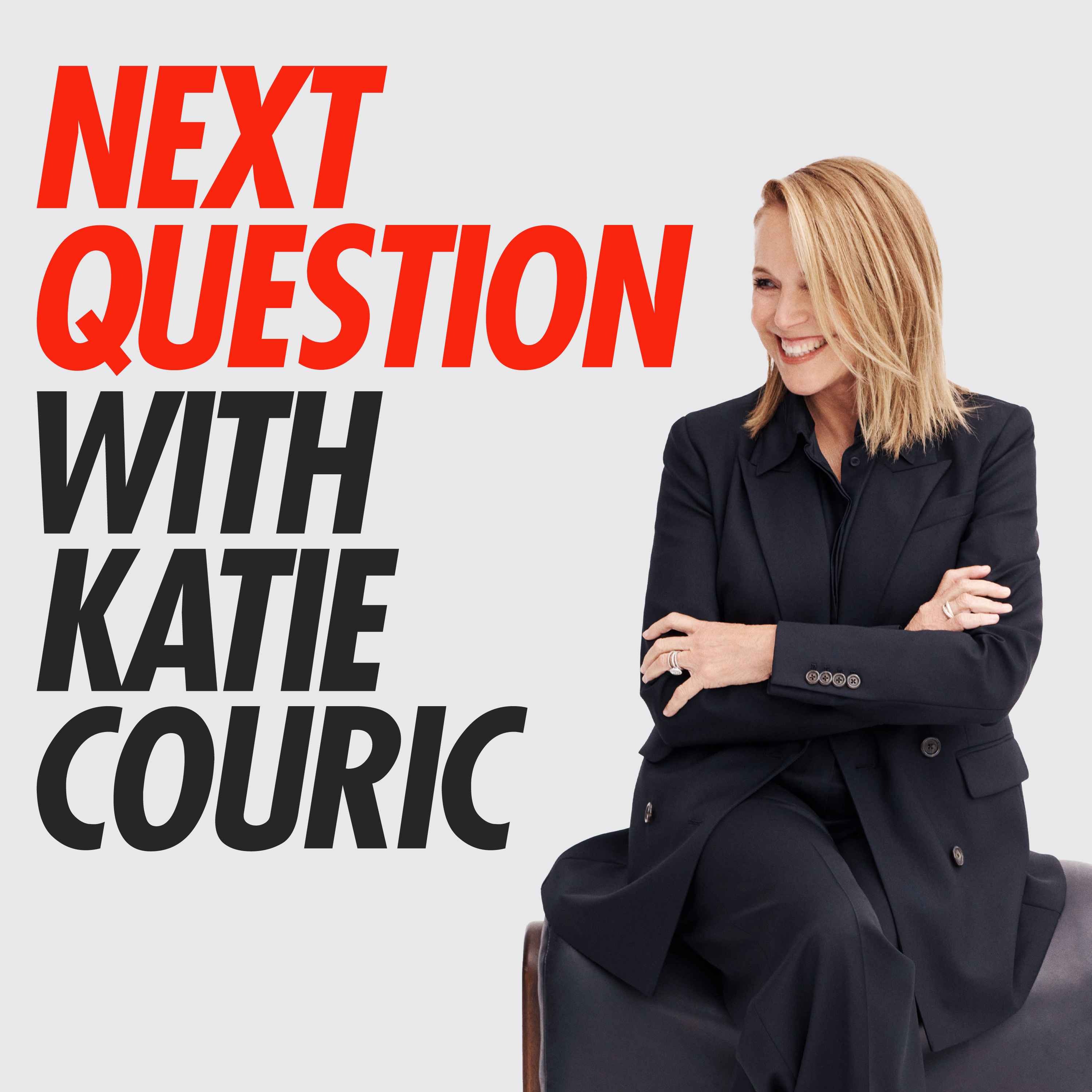
Kate Winslet on the media bullies, Hollywood’s new sisterhood and her own reckoning with Woody Allen
Twenty-six years ago, Kate Winslet sat down for her first nationally televised, American interview with none other than Katie Couric when she was co-host of the Today Show. Kate was promoting “Sense and Sensibility” and was a nervous wreck. “I was very self-conscious,” she reminisces with Katie. “I remember being physically and just very self conscious in those days.” Katie, who was pregnant at the time, admits to feeling endeared to the 20-year-old star, “It was one of my favorite interviews,” she tells Kate, “I felt very protective of you because you were so young.” In this new, wide sweeping interview, Katie and Kate reunite to talk about her pandemic life, her new murder mystery series on HBO, the delightful audio book she narrated, the upcoming Avatar films, and the toxic business of Hollywood, from Woody to Harvey, and what has and hasn’t changed.
Find out more about:
“The Weirdies,” an Audible Original written by New York Time Bestseller Michael Buckley and narrated by Kate Winslet
Mare of Easttown, coming to HBO on April 18, 2021
Learn more about your ad-choices at https://www.iheartpodcastnetwork.com
Hosted on Acast. See acast.com/privacy for more information.
Available Results
Generated results are saved to the knowledge database for reuse and search.
Extract Knowledge
Pick what you want extracted first. Model, scope, and chapter options appear after a template is selected.
Transcript
00:00:00
Speaker 1: Hi everyone, I'm Katie Curic and welcome to Next Question. This week, I got the chance to sit down with the very talented and beautiful inside and out Kate Winslet can you hear me? I can't hear Katie. And while we were getting settled in perfect pandemic fashion, I got the chance to meet her musician husband Ned you might know him as Ned rock and Roll, who was acting as Kate's super sweet and helpful I T guy, if you close this window close and then this will be here. Just click on that to stop it and then I will send. I'll just click on stop. Yeah, that's what I know you could BUYE. Thank you, m This was one of my favorite interviews ever. We covered so much ground because Kate has got a lot going on a new audio book, the upcoming Avatar films, a new Edge of your Seat murder mystery series coming out on HBO in April. But we also dive into the toxic business of Hollywood, the body shaming. She endured her experiences working with Harvey Weinstein and Woody Allen and so much more. But enough babbling, I'll just let you hear it for yourself. I hope you all enjoy Kate Winslett as much as I did. I'm trying to think when we last saw each other. Actually, I mean, it really has got to be a quite a long time. It's been a long time, but I was remembering with everyone on this call, I was remembering how I think I did your first American interview, Kate for Sense and Sensibility. Do you remember, Yes? I do, Kate once like, good morning, welcome, thank you, so nice to meet your comedy manners. Would you describe Sense and Sensibility as that, um, a comedy of manners? Well, there's certainly a lot of humor in it, which I think is good and also very important. I remember it so well. I do. I do remember, and yeah, I mean, I just remember in those days being completely terrified, because of course, the whole concept of being on a talk show is so it's it's really very very strange, and of course you don't have as much time to say all the things you think you want to say. And you know when I talk a lot anyway, I still do to this day. So I had no concept of censoring my words or tightening things up or I was just so and I was very self conscious. I remember being physically and just very self conscious in those days. Maryanne Dashwood is your character. She is absolutely the juiciest role in the movie. Don't you think She's so impestuous and passionate. She's obviously the sensibility in Sense and Sensibility. Why else were you so drawn to her? I really, I really don't know. I don't know what it was. I think it was. It's it's funny when I, well, you were so young. How old were you when you were in Sense and Sensibility? I was nineteen when I was in Sense and Sensibility, but the time by the time we spoke, I probably would have been twenty, which is my daughter's age. Isn't that crazy? Well, I have to tell you, from my perspective, you were I just fell in love with you. First of all, you were extraordinary in the movie. I was so captivated by your performance, and of course I was a huge fan of Emma Thompson's already, and I remember just thinking how wonderful you were, and it was. It was one of my favorite interviews actually, because I also felt very I think I felt protective of you too because you were so young. But it's just m I hope you'll remember it in a good way because you came off really really well. Um, But I do remember how nervous you were, and of course it's nerve wracking twenty years old, you're going on national television. But I just loved you in the film, and I've really loved you, Kate, and almost everything, well, no almost, and everything you've done the reader. I've been so thrilled to see your career unfold. And you know, when you hurt, I hurt. You know when you went through some of the garbage during the Titanic, I was enraged and incensed. Uh, you know about your body, which was beautiful, ps and it just Um, anyway, I've just followed you so long, for so long. It's such a it's so wonderful for me to just actually be with you again after all these years. Always thank you so much for I guess we've both both sort of lived to tell the tales, haven't we really? Yes, we have, we have. We're survivors and we are and it's so nice to see that you're busy as ever. Um. And so let's talk about some of your projects, because I'm excited about those. But I want to talk quickly about your life, your wonderful husband, ned. You have three kids. Now, you have a son who's eight years old named Bear? Is that Bear? Is that his real name? Bear? Yeah? Be yes? Bear yeah, Bear, yes exactly. It's so funny because when we say when we say, you just said in a very American way, because when we when we say when, when people will say in America, oh, what's your son's name? And so it was Bear? When to an American era, it just that sounds just like a kind of they say that that then that it sounds like a sort of a black noise. But it sounds like it sounds like it sounds like what a sheep does. It does a bit. So when so when I actually then say Bear, you know, it's I don't know, there's more, there's more. I don't know. It sounds like a fully rounded name I suppose to an American. But yes, that's his name. His name is, his name is Bear. And and he's seven actually just he just turned seven in December. Yeah. And then Joe he's seven yeah. And my middle one, Joe, he's seventeen now. And and Mia, my daughter is twenty yeah. And we'll talk about me in a moment because I know mea wants to follow in your footsteps. So yes, that does that terrify you, by the way, Well no, I mean given the fact that just today actually she's on a plane on her way to Prague to start shooting a TV series. So the fact that she has work is extraordinary and m and you know, she's she's she's very very very good, and I am very proud and and she has her own style. You know, she's very different to me, um, but she's I think she's better than I was when I was her rage and I really do. I'm always so impressed by her. And she's you know, she's got the right she's got the right amount of hunger for it. She's she's got the right amount of nerves around it, and she just you know, she just wants to try and learn and do well and keep growing. And you know, it's it's really it's exciting. It's exciting seeing her go through it all and you know, work on trying to get a part time job as well, and you know, all that stuff. She's it's it's it's like it is a little bit like history repeating itself a tiny bit, just because how she is, how she's sort of processing it all in her mind and had drive and how hunger for it is that is identical to what I had, and it's just sort of happening. So it's some Yeah, it's it's it's a very exciting time for her. Well, you know, started acting when you were seven years old and commercials, so I mean it was very much ingrained in you at an early age. On the other hand, Kate, I've been living in Los Angeles for two months just to escape New York, and since we're all working virtually, and I was thinking the other day, acting must be the most difficult profession for your self esteem because the constant rejection, the constant sort of external affirmation for who you are and you're worth. I don't think I could have tolerated being an actor. I just don't think I could. The kind of fear of, like you know, like from chorus line, am I going to get it? And that, you know, all those kind of worries about getting a role and then you get a role and then you have to worry about getting the next role and other people liking you. I think it would make me completely insane. Well, it is a pretty crazy job to choose, I have to say. And it's you know, it's not just that, you know, the anxiety of will I get a role, and then if you do actually then get the role, then you've got the anxiety of actually playing the role, and you know, and bringing it home and and and making it work. And my dad always says to me, you're only as good as your last gig. And he's always said it, and I still believe it to this day. You know, you really are only as good as the last job that you did. And um, and that's it's it's it's stuck with me and I yeah, I still you know, I love this job. I really do love it, but I absolutely do have times when I when I when I don't like doing it because it's sometimes can be incredibly painful, and as you say, it does call on extraordinary levels of resilience and um and a sense of it doesn't even necessarily need to be self worth, but at least having enough confidence to be able to go onto that set and know that you're the only person who can play that part in that way. You know, some somehow you have to. You know you have to. It's it's a trick of the mind. Sometimes because self doubt does definitely creep in um. But for me, you know, getting rid of that self doubt doubt thing, you know, comes with I think preparing for the part and really sort of anchoring myself in the role and and getting myself to a place where I absolutely almost it become that that character a little bit um you really do. That happened with me, particularly on Mayor of East Town, the HBO um series that is coming out soon. Um, just because I was playing her for such a long time and it was such a wonderful and difficult, complicated part. I want to talk about Mayor of East Town because they sent me two episodes and I absolutely loved it. But I want to get a couple of things about your personal life. And I keep going off on these crazy tangents, but how have you been weathering the pandemic? Kate? I mean, you're in in the UK, You're in London or in US. I don't know Hampshire no, So we loos. Actually we don't live too far from Hampshire, but we're about two hours two hours when there's no traffic south of London, so we live on the We do live on the coast. Um so we do have the ocean right right close by, um, and that has been amazing. You know, we've been you know, look, we have outside space, we're not in a town those things. You know. We have a we have a dog, we have some chickens. You know, we have we grow vegetables. You know, it's by no means a small holding or even a farm, but we, you know, like a lot of people I think in the UK, just kind of going okay, let's absolutely make the best of this time and what we have. And because my older two are seventeen and twenty, you know, they're getting ready to kind of leave a little bit, you know, those that time is coming, and actually to be able to really value the time together has been something we've all been able to do. It's been absolutely has been rough on them. I think from a social standpoint, they found it really hard not being with their friends and not seeing their peers. But again they've they've made the best of it. Um. But we've been We've we've been okay, you know, we have this this last lockdown now because when we are still in it at the very beginning in January, I have to confess I'm myself found it really hard, and I'm I'm I'm I'm very resilient. I can always pretty much find something positive in very negative situations. But I a little bit did bottom out in January. I was like, Wow, this is okay, this is rough, and I think, I think for me, it wasn't just about not being able to see friends, not being able to see family and you know, my my sisters and their kids, and it wasn't so much even about that, Funny enough, it was a lack of sort of cultural stimulation, but also a lack of just access to diversity, just access to diversity in our world when you walk down the street, especially when my son Bear is seven and he's of an age where I want him to grow up with diversity and inclusivity as a part of the fabric of the breath that he breathes. And when you're when you go without it, and I find myself thinking, gosh, we've got to do I have to do I have to teach this. Do I have to actively teach diversity and inclusivity. Because of course, for MEA and Joe, my my older ones, they grew they grew up in New York City, in Manhattan, went to school in Manhattan and left there when they were seven and ten, respectively, and so so they had that in abundance. That was just part of their every day. And so it's that's one of the things with lockdown and not being able to access all corners of our world. I have and not I don't mean literally, I mean just you know, figuraty figuratively with how we live our lives. Not having access to that side of of our of our world I have. I have really missed that. However, you made up for it. Have you tried to expose Bear too, you know? I mean that's top of mind for you, So have you tried to do it in in a in a smaller way within the confines of your home kind of But I think, yeah, a little bit. I think just making sure that he is part of those conversations that we do have all the time, because with my older two, those are conversations that are part of They're just part of you know, chit chat over dinner, and just making sure that there is part of that um um, I mean, I mean there has been a very fortunate child in terms of how much he has traveled and has seen the world and and possibly has been exposed to inclusivity and diversity, perhaps perhaps more than the majority of six seven year old um. Um, just because of that, that's the way our life is. And I'm proud that I can say that. But yeah, I think we've just you know, just keeping conversation going really and and and not doing that thing that I think you sometimes do as an adult, of of of sort of censoring. M Are they ready to have to hear this? Are they ready to process that kind of information? Um? And just I think stop stopping censoring quite so much and maybe not being so perhaps timid around bigger topics. Um. And that's actually been great. I mean he's a very articulate kid, so he absorbs all of it and actually low and behold. He's like, yeah, yeah, I get it, I know all of that. You know, my my mom, my friend then well, my friends, my friends, my friends, and my friend's son proposed to his boyfriend the other day and and he was all excited and he was calling up to tell me, and Bear was in the room and I had him on allowed to speak, and I said Bear, Jack and Matt are getting married, and he just looked at me, went yeah, high five. Wait, can I come to the wedding, because I feel like all his concern was that he was going to get to come to the wedding, but fully, fully absorbed and acknowledged the fact that of course two men can marry, and I was quite proud of that. He just didn't miss a beat that app So I was like, okay, okay, okay, it's in there. It's in there, it's in there. We're all going. We're going in the right direction. We're going in the right direction. Has he been home schooled or is he back at school? Now? He's just back at school, But was was homeschooled a lot, Yes, and actually more than the majority of children back in England, because when I was shooting mayor of Eastown, he was of course with me in Philadelphia with my husband, and my husband was homeschooling him already. So actually for us, we just kind of carried on as we were when lockdown happened. Um, so yeah, he was really really ready to go back to school and see his friends. Kate. I did the weirdest thing at the beginning of the pandemic. I watched contagion. So many people did that it's gonna hovers wrong with me. I don't know, but what that is wrong with most people who did that. I can't think of anything worse because it's it's it's it's alarmingly it's alarmingly accurate. And that's yeah. That that I think is what has scared people the most. I mean, I mean our virus are virus in contagion um was um you know what what was it was invented It wasn't invented virus. But still you know the parallels you can draw from hand Washington mask wearing too. You know, so fho mites and are nots and you know all of these things that that are in that film. We've all been suddenly living that for the last for the last twelve times. And it's believe me, I worried, you know, when the vaccine became available or you know people, you know, complete chaos erupting around. Uh, you know, violence on the streets, people killing each other for you know, medication, etcetera, etcetera. I'm really happy it didn't come to that. And maybe I had to. I had to see the worst case scenario in order to feel better. Who knows. But it was such a great film. I saw it when it came out and then watching it again. UM. I don't know why people gravitate to that kind of stuff, But let's talk about happier topics, because you've got a lot of projects you're doing. You are the voice and the voices, and you do a spectacular job in the Weirdies. It's a written It's written by New York Time bestselling Arthur Michael Buckley. It's an audio only book, which I think must be wonderful for parents and kids to listen to. It reminds me of kind of the radio days. UM, tell me how you got involved in that project. Well, I had been talking to Audible about finding some some pieces to do for them. Um. And I love doing audio books anyway I've done. I've done a lot in the past. I did the Enchanted Wood series by Enid Blyton actually when I was pregnant with my daughter me Is the twenty five years ago, and I did Um. I did roll das Matilda about ten eleven years ago, and I just I just enjoy it so much. And I used to listen to what we call them tapes because they work set tapes. Back in the day, we used to listen to story tapes a lot as children particularly on car journeys, because my parents really did not have very much money, and so vacations for us were absolutely never getting on a plane and flying to some far flung hot climate. They were always getting in a car and taking a very early morning ferry, perhaps driving through France and camping totally wonderful. So to keep us some newsed, we would endlessly have story tapes in the cars, and and I loved them. I loved them. And I think when I was when I was pregnant with my daughter and then had her and had my son Joe, you know, I realized that there were going to be times in their little life when I might not make it home for bedtime if I would be filming, and so I wanted to find ways of being able to give them things to listen to. So I would record stories just myself into my in those days, into my black brier or whatever it was, maybe even a little dictaphone. Actually, I would just record things for them. And then as time went by, I thought, well, I would just want to do more of this. And my son Bear loves listening to the audiobooks I've done in the past, and it just felt like a lovely time last year to be telling stories to children at a time when you know, it's really hard for for grown ups and parents to dedicate as much time as children have truly needed through the pandemic globally, I think it's been incredibly hard on families, and just to do something that helps a parent to sort of just walk away and maybe start cooking dinner and say, okay, listen to this and just hit play on something. Just the concept of that, and I use it. We we use it all the time. You know, I'll stick an audiobook on for bear At the moment, we're listening to Danny the Champion of the World. But but it's it's it's it's been a it's been a constant part of my childhood and of of my kids childhood's as well, and so to contribute to that medium of of audible stories, it's it's wonderful. It's just lovely to take part. Miss Emily's trying very hard, Melancholy told her siblings while they lay in bed that night. Perhaps a little too hard. I'm not sure why she cares. Barnacle said, it is very weird. I am starting to feel something for her. Garlic said, I looked up in the dictionary it is called sympathy. It's very uncomfortable. If we cooperate with her, I believe it will go away. It was agreed they would try harder to get adopted. And the voices were so distinctive. I mean, did you have and you switch so quickly from one to another from like so and so said. Was that hard to do? Well? You do get you know, I mean you have to sort of prepare for it. So so so my you know, my pages that I'd printed out of the book to read when I was recording. Of course, it was all color coded, you know, the you know, Garlic, Melancholy and Barnacle, they all had a different color coded you know, pen for their for when their dialogue with That's hard, isn't it. I mean, oh, shep, here's comes garlic? Yeah, you know. And I would often if I was recording, if you know, I would be reading a line that would be convinced was garlics and like, oh no, that was melancholy. So sorry, So I got to go back and go back and don't realize and I'd been doing the wrong voice for the wrong character. Um, yeah, lots of silly overlap. But but it's it's it's it's great fun. I mean, I really do love doing them, and just you know, just that thing of traveling and being able to listen to books. You know, so much of a journey is is about the journey as much as it is about the destination when you get there. And to be able to listen to a story in a car for children, for families and not have their child miss the surroundings outside because their face down looking at a screen. That to me is is really really important. You know. I think I think children, children are on screens too much these days, and it does make me sad, actually it really does, because I think it's, first of all, it's not good for their eyes, but also it just stops them from being up and open and thinking for themselves and drifting off into imagined world, you know. Um, I mean, I mean I can stay here right now and try and picture what, you know, the crazy mansion that Melancholy, Garlic and Barnacle live in. I mean, it's you know, it's wonderful sort of concoct images for yourself and it can be anything that you want for it to be, and and that's quite liberating, I think for a child's mind. Um, yeah, I agree. You know, I I worry about the screens too, and I I did an hour on technology and and I learned so much. And you know, when you're not uh, adults too are completely dependent on their devices and screens. And if there's a moment of boredom, a moment of free time, you immediately default to your phone and scrolling, and half the time you miss your surroundings. And furthermore, I read that the part of your brain that's responsible for creativity, it only ignites when you're bored, when your brain is at rest, and that's when I don't know if it's like the prefrontal cortex or this cerebellum. I can't remember what part it is. But it made me think there's a real purpose for daydreaming. It's why all your thoughts, like your aha moments often come in the shower or when you're taking a walk and you're totally free of distraction. So that's another thing, another really important reason to not be just consumed by your screen. That's right. That's why I completely completely agree with you. And you know, I mean, I'm no, I'm no exception to this conversation when it comes to over using phones. I mean, I try very hard not to. I don't have any social media in terms of Instagram, will snapchat. I can't imagine what that must be like to be drawn by yet another thing that sucks you into vortex. But but I, you know, I certainly do try. If I'm taking the dog for a walk, for example, we'll go for these lovely two and a half hour long walks, and we'll go as a family, I will absolutely leave my phone at home. And we're all starting to do that more and more, my older kids as well, doing that more and more. I guess, no, my goodness, absolutely no, no, no, but but but but but I will say though that you know that it does make us all as a household much more conscious because he essentially lives with four adults, given that me or in Joe a seventeen and twenty, you know, And so there are times when we're all in I'll be responding to an email or even looking up a recipe, one thing I've taken to doing. Actually, for anyone who has is lucky enough to have a printer, I often will look for a quick like you know, chocolate chip cookie recipe or you know, carrot soup or whatever it might be, and rather than follow that recipe on my phone in the kitchen, I quickly press print and I'll print it out so that Bear will actually see, he'll see, he'll be able to see what it is that I'm doing. Because if you're on your screen the hot time, of course, your children, your child can't see what you're doing or even understand what you're doing. And half the time they just don't like it, which is understandable. So I've taken to doing that and just and also just just really reconnecting with my books. Have loads of cooking books. Some of them are behind me actually in the in this video here that we're doing. But um, but yeah, just just picking up the books again and going okay, what do I want to make and going to a store and getting the ingredients for that one thing you want to make that evening, you know. Um, And it can be easy, it can be easier said than done, and best lay plans of mice and men. But you know, I think just leaving phones at home when you take the dog for a walk, for example. Um, it's it's it's a small, small thing to do, but very very helpful when we come back, Kate and I talk about her gripping news series on HBO, Mayor of Easttown. That's right after this. Starting April eighteenth, Bunny HBO, you'll have the pleasure of watching Kate Winslett occupy an incredible character in a new series called Mayor of East Town. She plays a tough, empathetic and complicated detective who's investigating a brutal murder in her close knit hometown. I'm Richard. What's your name? Mayor? From this lady hawk herself? Why did you call your lady hawk? I made a shot in a basketball game twenty five years ago. I think you're a hero. Well, love and look at that must have been some shot most places, No around here? Yeah, why do you do? I'm insective detective. You don't have any bodies hidden under your porch? Do you yet? I was sent the scripts way back in uh in twenty eight actually the end of twenty and I and I read episodes one and two, and of course was was hooked immediately, but couldn't believe this, this rich, complicated um character who was sort of was was functioning so well, sort of on paper in the real world, but but but quietly in the depths of an absolutely terrible personal crisis and grief that she was, you know, feeling more keenly every day, but not dealing with at all. And yet this level of grief that she is experiencing is something that affects everything she does. It affects all of her family relationships and even her working ones. And to play someone who I think is so held up in such high regard within the community of East Town where she lives and where she was born and has lived all of her life, to be so looked up to by so many people, that kind of pressure to be something and to count for something all the time, I I identified with that. I understood that side of her. She's obviously nothing like me. She's a sergeant detective in this small town um, like I said before, in Delaware County outside of Philadelphia, UM. And I am obviously not that and that's not my world at all. But the one thing I was able to really connect with them that resonated with me more than anything about this role is how important family is to her and community. And for me, family and community are It's in It's in my DNA, and so it's definitely something for me. In lockdown. Like most of us, I have found really hard going without that. Um, but Mayre it was. It was such a rich, complex part, and the writing was so outstanding. And I hadn't explored the possibility of television for a really long time. And I did Mildred Pierce with HBO back in two thousand and ten, and it had been a wonderful, incredible experience, and um, and and and and the greatest art of all with television is that you just get to tell so much more story. You know, often people think more films must be really really hard, and television, by comparison, must be a little bit easier. Oh my goodness, it's not. It's about five times as as tough, because, first of all, the length of your television shoot is always considerably longer. Mayor of Eastown in total COVID came in the middle, but in total was a hundred and sixteen days of shooting. You know, a typical film shoot can be around forty five days maybe fifty of shooting. So it's a it's a it's it's a lot, you know. And it's seven hours of television. You know, a film is an hour and forty minutes, so so it's a very very challenging immersive experience. And for me playing Mayor, you know, she's she's lovable, she's loathsome, she's sort of disgraceful as well as glorious. She's disgusting as well as pulled together. She's vulnerable, she's strong, she's tough, she's soft, she's just so many things that I think we all are. But at the end of the day, she's a mother trying to keep it all together and really trying to do her absolute best by everyone every single day, and that I really really respect and really connected with um. And it's a story, it's a murder, and murder takes place at the end of episode one. It's a local girl. She's a teenager. She is a teenage she's a teenage mother of one small child. And it's deeply sad because we all as a community know this young girl very well, and because it's set in a small town. It becomes pretty clear that actually the person who killed her it's probably somewhere in our midst and it falls to Mayor to solve the crime. And of course that's very complicated because she's questioning and interrogating people. She knows and people she sees every day and people she's known for a very long time. I think that's one of the really interesting aspects of the show. And I've only seen two episodes, but this this intersection of community and crime, and you know, it is everybody knows everybody, and so for her to be detached and her to to move in the world in a certain way that you would expect and maybe a bigger metropolitan area as a as a detective, it it all overlaps. And I know that when the when the detective comes to help you, I think he's put off by that because it's just a very unique situation where she, as you said, knows everybody and and I think it it really complicates it not only for her, but for the for the viewer too, because you're like trying to to square these relationships and wait, how do they know each other? And how does this fit together? And one of the things, you know, it's I think that's really great about this series is that it takes place in sort of a town America. In these towns and I've just done a fair amount of reporting on this that are really hurting, you know, manufacturing left the opioid crisis. They have poverty, they have people just you know, economic struggles, and uh, you know, in many ways, I think it's it's it's Trump country. Honestly, this this small town and you think, wow, uh, this is this is a tough place to live, right right, That's absolutely right. And one thing that really did strike me about Delaware County, Um, you know, the socioeconomic differences are so are so varied, you know, within a matter of miles um. And I suppose that's the same the whole world over. You often find that in pockets of England as well. Um. But but that was really startling to me. And as you say, you know, groups, communities of people who really are suffering, really are in crisis, and it was actually staggering to me how there aren't better systems in place to care for those vulnerable people. I I it made me angry and made me very upset. Um. And I did spend a lot of time in those opioid districts when I was preparing for the role, um, and it's I mean, there are things I saw there that I can you know, you can never unsee and and it's it's it's that's life for some of those people and it's desperate and devastating. UM. And so playing this part and being UM and being a sort of a member of a of a community like that, you know, we very much had to absolutely absorb a lot of that quite personal stuff in terms of how people live and the struggles that they experience. UM and our crew and our cast were remarkable people. I mean, we became a little community, actually quite big community, UM. And that was one of the things, I'll be honest that kind of did get me through lockdown was that I always, you know, even though I came back to the UK and we had to shut down for a while, I was playing Mayor in my mind and and and to the extent that when we did finish shooting in December, so I feel like I've only just stopped playing her. In a funny way, you know, I realized that she almost had become a little bit of an alter ego for me, because she was my escape through all of it. She was my emotional and mental escape. And it wasn't a very nice place emotionally and mentally to always be escaping too. But there is there is something very lovable about Mayor. She and the character and and I miss her for sure, Like I'm having a hard time really unraveling myself and letting go of her. I kept one of I kept her coat, the coat that she wears in the show. The whole time. It's like it's just an old barn jacket, but but I kept it, and every now and then I'll just put it on. I love the and you you again, you. That's so funny. And I love these female characters, especially who are complex. You know, I loved Olive Kittridge when when HBO did that because I loved the fact that frances McDormand first of all, I I worshiped Francis McDorman too, And the fact that these characters are are multidimensional and not there there. I love watching someone who's flawed but lovable at the same time. You know, these complicated like all of us. You know that that that they elicit so many different emotions, and I think Mayor Is is like exhibit A for that kind of character. And you also had to perfect an accent that is called what it's called a dover What what is that? It's it's a very distinct Pennsylvania. Explain how you were able to do that the Delco dialect is um. I mean it's it's Delco. When you say Delco, what does that mean? Detay County sound delo Um. So it's a it's a it's a very um, it's a very it's a very difficult dialect. I don't know how else to kind of describe it to you. You know that that that oh sound is is you know? They they say they don't say Delco. They said, they say Delko, Delko. They say, don't say open, they'll say open open, And they don't say water they say woulder no would no would when they don't and they don't say daughter, what would? Yeah, well done, you got it. You got it. And they don't say they don't say daughter, they say daughter daughter. It's very odd. It's very odd. So and the it's kind of it's it's a different it's a different set of muscles quite honestly, than a than a generic American dialect. And you know, and I love doing dialects, I really do, but they do drive me completely crazy sometimes and this was one of the ones that drove me totally nuts and was convinced that I just wasn't going to be able to do it. And that people would say, oh, that's bad. You know, well they may even still say that. I have absolutely no idea. People are titles to their own opinions. But I tried every day and so so um so yeah, a lot of training, work with a dialect coach, and listened to lots of you know, lots of local sample tapes of people talking and just really spending time in that community. Plus I had an amazing, amazing sort of right hand woman, a great sergeant detective named Christine Blayla, who is She worked in Chester County, and she was brilliant. She was my proper go to help her um and she was She would sort of knock it out of me if I ever did anything, not just in terms of how I spoke, but if there was anything I would do in terms of how I held my gun, how I moved, how I had approached a situation, you know, just anything that looked fake phony or like they do it on TV. She was like, no, that's how they do it on TV. No, not doing that. So she she would say no, you know, so she'd be like, sometimes you know it's a clusterfuck, you know, sometimes it is you know, you want to get the handcuffs on, just swap them on. You know, it's not going to go perfect every time, so I think, okay, okay, great, okay, great, I don't have to be so perfect at these things. She no, you know, it happens, man. She was brilliant. So I spent a lot of time with her and actually and her her dialect, her her her delca dialect is very very strong. So um, sometimes it was almost a little bit too strong for the character, so I would have to be almost careful not to listen to her too much. But yeah, I just I just had. You know, I had an extraordinary time playing this role. I've got to tell you. And you know, it's very rare for me to be comfortable watching myself in anything. And because I was also an executive producer on Mayor, I'm having to watch each episode as they're editing it and give my own notes, and you know, we we still collapse and talk about things. I'm absolutely loving it. I'm loving it. But yeah, but I'll tell you why I'm loving it. It's because I truly love this show. I love it, and I will say this, it is fantastic. It is gripping. The performances are are just extraordinary. The cast is brilliant. We were as tight as we look, we as though we were on screen, and it's it's you know, it's got a it's got a heartbeat that is very specific to Delco and very specific to East Town. And I feel tremendously, tremendously proud of everyone. It was an extraordinary time. And I can say that really is a terrific show. And I would never say that about anything I'm in that hasn't come out yet, but I do feel I do feel that that please with it so um so, which is which is new for me. I gotta tell you, this is like you've never heard ever. Yeah, I would never say that publicly. I don't think I'd never say I love it. I'm really proud of it. I mean I don't really you know, I'm British, British people, you know, I wouldn't class myself as typically British, But we don't tend to kind of like express real like you know, celebration in in in our own stuff, I suppose, And and I do feel just thrilled with it, really thrilled it was. It was a tough old shoot and you know a lot of tricky things were thrown at us. But but it's it's fantastic. It's really fantastic. We're all really excited. But I can't wait to see more episodes. So maybe I'll get a sneak peek before the rest of the world, because after after episode two, we're like, no, we couldn't believe that. We couldn't keep watching to find out what happens episode really exciting episode three. I tell you, at the end of episode three, you actually can't believe what happens at the end of episode three, and then you can't believe what happens at the end of four, and then the end of five flattens you. The end of six, you are just breathless, and I can't take that. Okay, So yeah, tell me about Avatar. So you you're doing this and then you're doing Avatar, I mean talk about like, well, well, actually Avatar happened ages ago. I shot that at the beginning of eighteen. It's amazing, how you know, because they're still filming it. Um you know, it hasn't come out yet, so it sort of seems like it's just happened. But but yeah, I filmed at the beginning of eighteen. I had a couple of months on the shoot, and yeah, it was an amazing experience. I had to learn how to breath hold and free dive and it was incredible. I loved it. I really loved it. And working with Jim Cameron again was fantastic. I mean, yeah from Titanic days I got about that. Yeah, yeah, so that was that was just it was just terrific, you know. And there's such an amazing group of people, um and the world of Pandora. You know, it's like it really is like drinking the kool aid. You fully get sucked into this experience, and it was it was just lovely, you know. Working with Sigourney Weaver, my goodness, I had a lot to do with her actually, and and the two of us, you know, acting out a scene together in a twenty two ft deep tank, you know, holding our breath for three or four minutes on end. It's totally amazing. That's my worst nightmare. That's my worst nightmare. I'm afraid really, So the idea of yeah, wasn't that wasn't that wasn't that hard? Or I mean that must have been it is hard. I'm meant to learn how to do that. It is hard. But luckily I love the water. I mean I truly I love the water, and I you know, I love to scuba dive and swim and all of those things. So um uh, I was thrilled to have the opportunity actually to to learn to breath hold and do all of that. And um, it's you know, it's it's it's great. It's great to learn something new. You know. The training was was was such such an experience, so eye opening. Um, and also learning that your body is capable of doing things that you just thought it never would be able to do, you know, like hold your breath for seven minutes, I mean crazy, completely insane after a lot of training. I mean it's not something I could just sit here right now, take a deep breath and hold it for seven minutes. No, no, absolutely no. You have to completely sort of you know, you have to prepare your body properly and go through a breathing sequence. I mean, it's yeah, it's a it's it's a big deal thing. But but I loved it. I loved it. When we come back, Harvey Woody and is Hollywood really changing? I'm just curious about how you feel things have changed for women in Hollywood and in film and television and and sort of every medium since you started. And and I sense a real palpable change. And I know you have said it's great to see women become more muscular, but you know, I think you also can see that there they're still miles to go before we sleep, as they say. And I'm curious your overall impressions of of how me too and time's up and this reckoning with with sexual harassment, etcetera has has had real world impact on on your industry. Well, I mean this, you know, we wish we need to have a podcast for just this subject. I mean, look, I think you know you touched on something earlier actually in the interview that really sort of stopped and made me think, which is you know, you're right like around the time of Titanic, I was subjected to the most extraordinary level of bullying from the media about how I looked. And you know, I think so social media now is the bigger worry when it comes to all of that kind of stuff. But mainstream media at least now have stopped doing that. You know, they don't seem to single out someone and just absolutely attack them for being for being thin, for being I mean, is it was. It's it's incredible when I look back on how how how how badly I was treated and that it was. Yeah, it was scarring. It definitely was scarring. And you know, I'm quite good at seeing, you know, things as being a blessing in disguise, and I had to try and find you a positive out of it, and the only thing I could find was that it made me think, right, well, if that's what they're going to do, I'm not going to Hollywood then, because clearly I'm not cut out for this world. That's not who I That's not me. I don't want that level of scrutiny. Um. But also I think the thing about it that was very, very cruel was that, you know, my body was shifting and changing. Hormones play a huge part in your physical makeup when you're young, and it was extraordinary to me how the press could be that unkind to a young, vulnerable woman who was still figuring out who heck she was. It's terrible. So so that kind of thing has always made me incredibly angry and upset. But I not to mention Keith that you were beautiful and and by the way, I think this is the thing, Katie, you know, I was, you know, I mean, I don't want to ever even talk about specifics of weight because that seems like a very bad thing to do. But but I look back on that time and I and I even look at images sometimes and I I was very average. I was a very average shape and size. I was what they would call now call, you know, curvy, you know, but then they would say voluptuous, you know, weighty, She's she's clearly gained twenty pounds. I mean, how dare people do that to a young person? Absolutely terrible, terrible. It's amazing that I got through it really without severe scars, you know, um, somehow I did. I think that's just because I've got a good family and I've always understood what's important in life, which is obviously not listening to what the media has to say. But in terms of to your question, how things have changed, I think we're still experiencing this seismic shift, and I think that there's more to come. I mean, I definitely think that hopefully the next voices will hear will be from the LGBTQ community in terms of in terms of how they are heard, perceived represented in films and television in the mainstream, because I still feel very strongly that we don't have enough lgbt Q roles available for actors in our mainstream. You know, That's why we so often we'll talk about the lgbt Q character, and we'll compare that character to the few characters who are lgbt Q that do exist, rather than than just being absolutely present and an integral part of of every single story that we're telling. So I think that that's the next thing that's coming. I would hope that it is um but women's voices being heard. I think what is the most exciting thing for me at this time. It's not just that we are feeling a new level of confidence in terms of how we can speak for ourselves and for one another, but the sense of women standing together, you know, a sense of sisterhood, a lack of judgment, I think, a sort of a shoulder to shoulder, even arms around one another, sense of solidarity in moving forward is truly truly magnificent, and is is taking my breath away. And I'm finding that very moving and also feeling that women's voices are being we're really being heard in a new way, in a different way, and that I'm appreciating as well, because I don't think we're I mean, yes, we're still We're still loud and proud, and we're still yelling and screaming in certain areas, but I feel that our voices are just beginning to become a steady, strong, collaborative heartbeat rather than having to yell and scream to get ourselves hurt. And I think there's much more of an acceptance the space is being held for us in a different way, and I think that we're all stepping into that space in absolute unity and that is wonderful. That's wonderful and new. I would say, yes, right. I never during different periods of my career, I never felt the support of other women in a way that I really missed, uh, where they would come together and say, wait a second, you can't criticize Katie's makeup when she is anchoring the evening news. That's wrong, Like, whoever's doing that, cut it out. I felt very alone in the world and the idea I think I still think women some of it is. I think still women are competitive, and I think that's okay. By the way, you know, men are competitive too. But I do sense that there's much more support for women and for each other, and a much more a much more active celebration of women other women when they do well. Yes, I think I think you're right. Less resentment. I think that's absolutely true. You're right, there's the less resentment thing is definitely a really big deal because when I was you know, when I was a successful actress in my early twenties, Oh yeah, I mean, there's you know, there's bitterness, there's finger pointing, there's backstabbing, there's other people trying to sort of do you down or compete with you, and this is a sort of a crazy way to exist, you know. And I definitely feel that that's I definitely feel that that's really really changing. Um And I think that we can we can rely on our friends and our peers to to call out others for saying things that might be offensive or snyde in some way, or less than supportive. You know, I think it's okay now to say, hang on a second, you know, you don't need to say that that's there's definitely a different way of of seeing this moment and maybe actually that's your stuff. Let's not bring that stuff to this person because they're they're doing something really cool. You know, maybe you could notice that, you know. So there's definitely there's a different rhythm to the language that we're using now that I'm finding enormously gratifying, especially the mother of a of a young woman myself, you know, and and seeing the impact I think that this is already having certainly on her, on my daughter Mia most definitely, And I'm sure a lot of women are feeling the same way, you know, we're definitely because it's not it's not this generation. It's not our generation that are going to change the world. It's that generation. It's the younger generation, and by god, they're actually going to change the world, you know. So I think to be passing along language and and and compassion to that younger generation and teaching them how to use their words sensibly, mindfully, kindly and wisely, you know, that's going to make a difference to a really big difference. Um, it's it's it's a really interesting it's a really interesting time that you think I do. I'm going to get killed by your publicist, but I can't help but ask you one other question, Kate. I just watched the documentary about Woody Allen and Mia Farrow, which was absolutely devastating. And I know that one thing that these very top positions, these decision making uh positions, these directors, etcetera, that that really ruled the world when you were sort of in the early stages of your career and even later. Um, there has been a major reckoning about that. And UM, it's it's fascinating for me to see this about face that so many people are doing when it comes to their association with different directors. That I know that you feel that way about Woody Allen and Roman Polanski as well, Like if you knew then what you know now, you would have real reservations. And and why do you think that that you didn't have reservations back then? It was just because it had been sort of sublimated by the culture. Is that well, you know, I think, I think, I think what I do want to say, and I say this not to in any way defend my choices, because that would not be the right thing for me to do. Um. But these men, these men had very you know and still have, you know, very successful careers in movies, you know, and one can't deny that, you know, we've watched Woody Allen films or Polanski films. You know, I know a lot of people in my world who say, oh my god, but you know, Manhattan inspired me so much, or you know, Bitter Moon was one of the most incredible films I've ever seen. I mean, you know, actors, writers, directors, we had all we had all gotten used to these individuals being part of our wider film community. And trust me, spots in those directors films were heavily coveted and and fought for you by the actors themselves and sometimes the agents on their behalf. So that's why it was always it was always suggested that it was okay, it was okay to work with these men. It was an honor to work with these men, because look, everybody, they're still working, their films are still getting finance, and their films are still making money. So it's that that I think we need to start questioning UM. But yeah, I mean I think I think I think what I said um earlier last year is true, which is just that you know, yeah, I definitely regret having made those decisions. You know, Um, I haven't seen the documentary that you're referring to. But um, but I but but I do have someone sending it to me because we don't have it over in the UK yet, and I'm obviously dying to see it. Um. But yeah, I mean I think I think we have to you know, I think we have to sort of not fingerpoint anymore when it comes to this is part of what we were saying before, of being able to, you know, sort of stand shoulders and shoulder with people and and and and and not judge. You know. I think there's been a lot of finger pointing that has gone on in terms of people's opinions, and you shouldn't you shouldn't have done that. But I think that what's important too is to be able to say, you know what, Yes, I hold myself accountable and this is how I feel about it, and evolve, learn and move on, you know, um, and continue to talk about it when when when asked to, when required to inappropriate ways. Um. Yeah. There's a lot of things that people don't like saying, you know, there's a lot of things that people will try and shy away from. And I just don't think I really want to live my life like that anymore. Yeah. Yeah, And I do think that part of it is that we see the world thankfully through a very different lens now. And I think you're right. I think a lot of us have learned and been made aware and uh, with the benefit of hindsight, things look very different. But at the time sometimes it's it's it's it's impossible to evaluate and judge your behavior given the circumstances you were in. So, um, you know, I think you're right. You learn, you you realize, and you move forward and you behave differently or you have different standards moving on. I think that's true for everyone, honestly. Um and uh. But but but we can't necessarily judge ourselves. You know. I have my own issues with that, uh, you know, with with my with my colleague Matt Lauer, and that you know is required a lot of soul searching on my part. And um, yeah. So so I think we all we all have our stuff that we might have done differently or you know, look back and analyze. But I think the most important thing is to learn and move forward. So I hear you're I think you're absolutely right, And you know, I mean one thing that I one thing that I can I can say that that I that I always did do was to side step all of the the I'm going to use the word sorry. You can cut out if you want, but I would side step all of Harvey Weinstein's bullshit. You know. I never pandered to any of his crap. Um. And he was a very very difficult man to work with, always and extremely up unpleasant, mean and tactical and um and and and just brutal to people, um and And I do remember, I do remember because he had been a part of the reader. And I do remember before the Academy Awards that year that there are a couple of people in my in my life who said, narkate. Listen, you know, if you do win this Academy award, you know, um, just do the right thing, you know, just make sure that you mentioned Harvey. And I looked those people right in the eye, and I said, over my dead body, and I won the Academy Award. And I'm very pleased and proud to say that I did not thank Harvey Weinstein. Did you hear from him? No? Thank god? Um no. It was made clear to me through other parties that that hadn't necessarily gone down particularly well. But you know, so what I mean, he was really he was a monster. He was an absolute monster. Um and and and everybody knows that, you know, everybody knows that now, and and I think that's a relief for that's a relief for you know, many many people in our industry, most importantly of all the people who suffered the most at his ghastly hands. Okay, let's move on. And it's also put put put scarred wrails on the behavior of powerful people in general in the future. You know, suddenly people realize, you know, you cann't you know that the gig is up right, that you can only behave that way for a certain amount of time. Well, I have taken way too much of your time, Kate. And I just love talking to you. Um you big fan, Kate Winslett, big fan. Well likewise, I mean, I just think you're amazing. You just you know, look at you. You look so glorious and you look happy, and you know, it's just such a pleasure to talk to you. And and you know, I just can't believe we've known each other so long. Really, it's that crazy. Were those people We've become those people, Katie, We've become those people who we can say, my god, how long has it been with those people? Now? Thanks again to the totally delightful Kate Winslett, I had so much fun catching up with her after all these years. You can check Kate out in The Fantastic Mayor of Eastown, premiering April eighteen, HBO. You can also find her on Audible as the voice of the new book The Weirdies by Michael Buckley. Next Question with Kati Kurik is a production of iHeartMedia and Katie Couric Media. The executive producers Army, Katie Kuric, and Courtney Litz. The supervising producer is Lauren Hansen. Associate producers Derek Clements, Adriana Fasio, and Emily Pinto. The show is edited and mixed by Derrek Clements. For more information about today's episode, or to sign up for my morning newsletter, wake Up Call, go to Katie Currek dot com. You can also find me at Katie Curic on Instagram and all my social media channels. For more podcasts from I heart Radio, visit the I heart Radio app, Apple Podcast, or wherever you listen to your favorite shows.