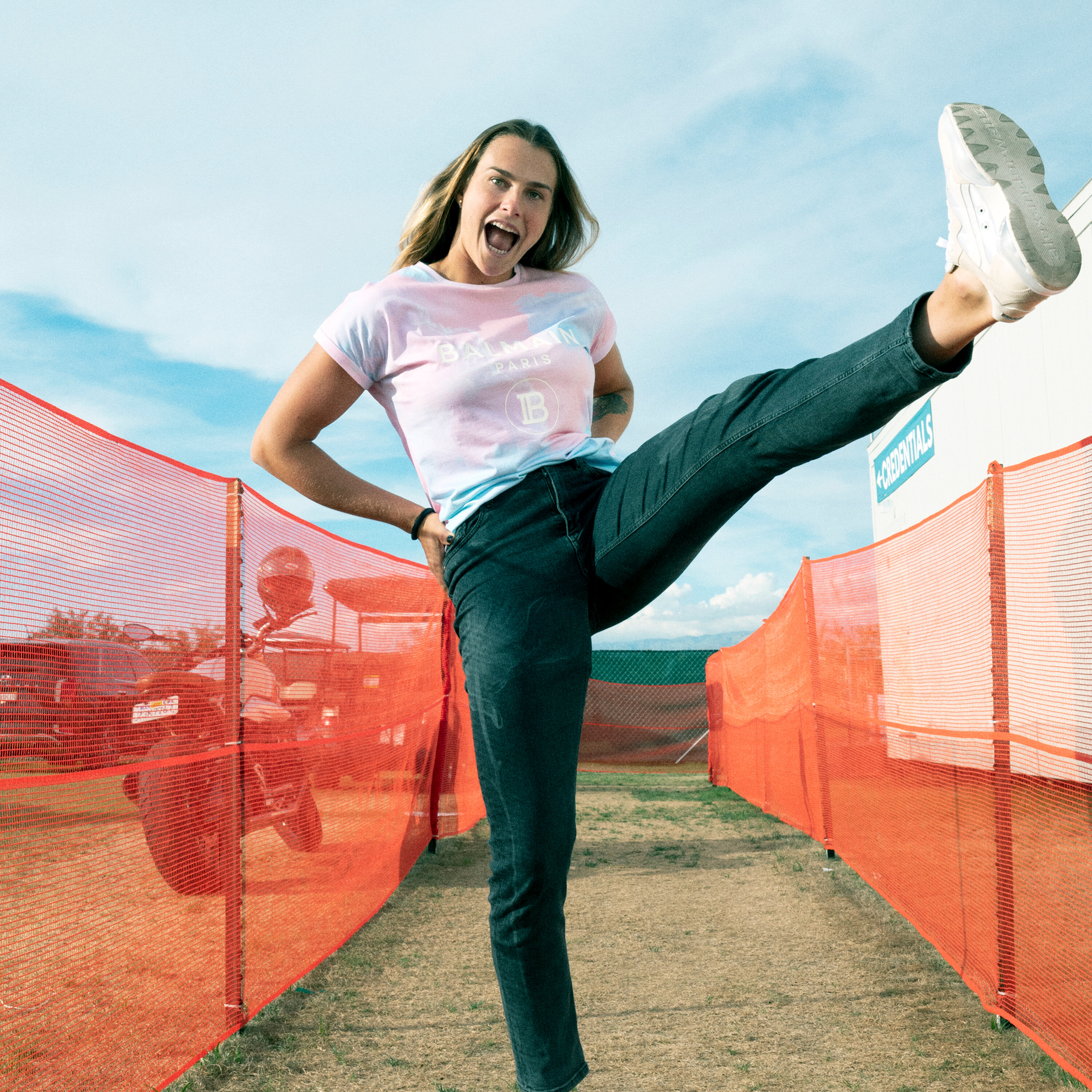
Aryna Sabalenka
Put on your helmets—the Belarusian dynamo joins Rennae to talk tattoos, what she's learned from her biggest losses, and no, she doesn't think she hits that hard.
Hosted on Acast. See acast.com/privacy for more information.
See omnystudio.com/listener for privacy information.
2020-03-30
44 min
Transcript
Available Results
Generated results are saved to the knowledge database for reuse and search.
No generated results are available for this episode yet.
Extract Knowledge
Pick what you want extracted first. Model, scope, and chapter options appear after a template is selected.
Generated results for public episodes are saved to the knowledge database so they can be reused and searched later.
Transcript
00:00:04
Speaker 1: This episode of the Racket Magazine podcast is brought to you by Sergio Chucchini, offering iconic tracksuits, classic polos, and the new Young Line sneaker. Originally designed in the mid nineteen eighties.

00:00:15
Speaker 2: It's our favorite spring silhouette and it's back.

00:00:17
Speaker 1: You can get it now at Sergiotuccini dot com and follow them on Instagram at Sergio Tacchini Underscore Official.

00:00:23
Speaker 2: For updates.

00:00:24
Speaker 1: Enter the promo code racket Bag at checkout and you'll get thirty percent off your order.

00:00:35
Speaker 2: You're twelve years old than you'll ready broke likes six rikats, I'm freaking crazy.

00:00:50
Speaker 1: Welcome back to the Racket Magazine podcast. This is episode number three of our third season. Day Can you believe we've been doing this for three years?

00:00:57
Speaker 2: No?

00:00:57
Speaker 1: I know, I met you half I met you, but it's our third season that I met you.

00:01:03
Speaker 2: Three years ago at Indian Wells. Yeah, three years ago, two years you, It doesn't matter.

00:01:07
Speaker 3: This was out third time in any and Well, so right, I don't know, don't confuse me.

00:01:11
Speaker 2: This coronavirus is still going around. Anything is possible.

00:01:15
Speaker 1: We had the sort of strange experience of being the only people with microphones after the border closed. When we were at Indian Wells a few weeks ago, we got some great interviews, one that you got to do without me that I was so jealous about because I absolutely adore, adore this player. Yeah, the way she plays with fearlessness and she's just so badass. Is Arena Sabalanca.

00:01:37
Speaker 3: Yeah, there's a lot of players on too. I mean, obviously I have spent a lot of time on tour and I'm still around quite a bit, and I just there's certain players that are just always smile every time I see them, or thankfully they smile every time they see me. And it's just like that always that great vibe, and that's Arena Sablanca. Like she just I just think she's a special player. I think she's got a special attitude. She obviously has gone through a lot in the last couple of years. We get into that in the podcast. I didn't really want to get into talking about her father, who just passed away, right, I didn't really want to get into it too much at all because I wanted to talk about but she actually.

00:02:20
Speaker 2: Brought him up in the podcast, and that's.

00:02:24
Speaker 3: Where I sort of start delving into, you know, how she is managing that. So yeah, I didn't want to sensationalize that and make it a tough interview because I wanted to bring out who she really is, which is thoughtful and funny and engaging and badass kind of person. But you know, when she brought his name up in the conversation, I thought, okay, maybe I'll open the door a little bit about how that affected her and her tennis this year.

00:02:51
Speaker 2: But she's a great kid. I just I love her.

00:02:54
Speaker 1: I use her as an example a lot for friends of mine who don't watch tennis, and if they asked me like, oh, well, whose match should I watch? And I usually say, try to watch one of Arena Sablanca's matches because they're always filled with such energy and ferocity. They're exciting because it shows you the best of creative tennis, for strike tennis, you know, really aggressive tennis. But also you get the sense that she's just kind of like, you know, you've got to put your helmet on before you watch her, which makes me so excited.

00:03:17
Speaker 2: Well, the funny thing is, so she mentions that she doesn't.

00:03:19
Speaker 3: Hit the ball that hot, so it's kind of like, yar bluff, Right, Yeah, she's pretty yeah, pretty much.

00:03:25
Speaker 2: But she's like this amazon of a woman and you just think she comes so she's like, I'm not really hitting it.

00:03:30
Speaker 1: Then.

00:03:30
Speaker 2: Yeah, she's also quite friendly. I mean, she's super nice, so unbelievably friendly.

00:03:36
Speaker 1: I love when they're just like total warriors on the court, but then they're smiling and kicking some balls around off the court. So, without further ado, let's get to Arena Sablanca again. Super jealous you get to do this without me. Yeah, I'm hoping the tour comes back because she got off also to a blazing start, and I think she's in good form this year if we have more tennis.

00:03:55
Speaker 3: Yeah, let's how I put She's a personality we need on the tour and certainly one.

00:03:58
Speaker 2: That we need doing well. But we get into a lot of stuff.

00:04:01
Speaker 3: Her obviously very complicated relationship with her coach, Dimitri person Off, which is funny in itself.

00:04:08
Speaker 2: We have some great stories that she tells.

00:04:10
Speaker 3: He's been obviously an incredible influence in her life, I would say, she would say positively and negatively and overall though, he's really one.

00:04:20
Speaker 2: Of the reasons she's done so well. So, without further ado, it's the warrior woman Arena Sablenca.

00:04:36
Speaker 3: Okay, great, easy, all right, Well, we are actually here in Indian Wells, California, still and I'm joined by the illustrious Arena Savlenka for the Racket Magazine podcast. Thanks Arena for joining us. Yes, thank you for following me for it's amazing.

00:04:58
Speaker 2: Arena.

00:04:59
Speaker 3: First of all, Okay, because we are here in Indie Wells and this interview will could go anywhere, could go anywhere in the year. But I have to get your opinion on like just what the hell I mean this is a crazy weird moment right for everybody.

00:05:14
Speaker 2: Yeah, I mean I think, like, of course, I was disappointed when they announced this that they're not going to play in your walls and I feel like, why you're not going to play like with no public? Just like, let us play. It's still like the season is on and anyway, they will figure out this problem. I know they care about our health and all this stuff, but still, I mean, I think it's not a dangerous like the people are trying to make it look like. So yeah, I'm like a little bit like what just like let us play? And I mean, what do you do though? What do you do now?

00:05:50
Speaker 3: Like because this is there is a possibility that it might not play for maybe six weeks, So it's the speculation.

00:05:56
Speaker 2: Obviously, when this.

00:05:57
Speaker 3: Podcast goes out, we would have known what's happened. But what do you do in moments like this is a player? I mean, how do you prepare for something like this because it's never happened before.

00:06:06
Speaker 2: Yeah, I mean for me, it's like it's something crazy because honestly, I just just finished out a pre season and I was like so happy, like, oh, yes, this ship is done and let's just like go and play some my chest. It could explain explain why, because pre season it's so fucking weird shit, like you're just practicing for like forever, and like it's it feels like it's never never gonna finish, and you're like, well, keep going for like forever, and yeah, it stopped practicing and like it's so you feel like now you're going into another preseason. I feel like wow, and it's like in a short period, like just finished and like again for six weeks of training, Like the good part that we can have one week off and then yeah, start to practicing because like for six weeks weeks of practicing, you're gonna kill you yourself inside because it's a lot mentioned it's mentally tough as right, it's tough, and I mean you can't prepare yourself for this moment. I mean it's never happened before, I guess, right, And that was the first time in a sport in the not in the planet. But like for sports people, and yeah, it's been yes, and you you like you don't know when it's gonna stop. You know, yeah it's for now, it's six weeks. But for them it's gonna be like two more, two more, two more, and like til the end of this season. You're just like procticeing. I mean, you can give a birth and then like come back. I mean you could a moment aid, yeah, this is a good moment because nobody is playing and you're not losing your points, and yeah, maybe this was the time to get an injury. This is what I said.

00:07:39
Speaker 3: Roger Federick is the greatest player of all time because he even knows when to take an injury.

00:07:43
Speaker 2: That's true. I mean, how good is all?

00:07:46
Speaker 1: Right?

00:07:46
Speaker 3: I want to go back a little bit though, to the start of your life a little bit, like how did you get involved in tennis?

00:07:53
Speaker 2: I mean, where did you grow up? And why why tennis? Okay, well I'm from It's from Dollarius. And one day my dad was trying to find me and like any sport I can do, Like they want me to be active, they want me to like move and have some goals in the lives and not just like studying. So yeah, and he just was like driving on the car and he just finally like, oh, it's Senny Square, let's maybe try And I was like a baby, I said like yeah, whatever old? How old? I was six six? Yeah? So yeah, and then I started playing and I loved it, and yeah, it was go why did you love it? Like what was the first thing that you just I don't know. It just was running around. I was just like throwing the ball, trying to do something with the kids and like bounce in it. And I don't know, for me, it was fun. It wasn't that crazy practice. It was like more more about just like keep moving, keep just like throwing the balls or have fun.

00:08:50
Speaker 3: There was a lot of kids like and was that it was at the time that like and ended up Natasha's where But maybe I'm always like coming doing well when you were like six seven years of age because she was probably one of the first Resa Chenko.

00:09:06
Speaker 2: I'm trying to think who was from. It was very, very over the best one I think on that period.

00:09:12
Speaker 3: And then as a ranker came along, and then so and then and then you what, what.

00:09:17
Speaker 2: What is it about like such a small country that can produce that.

00:09:20
Speaker 3: I mean, do you think that seeing people before you do something helped you? Or were you very individually you didn't think about anybody about you?

00:09:28
Speaker 2: Honestly, yeah, I was just like you've gone, You're like you've grown up, Like keep doing my things. It was a lot of you know, usually kids are fighting each other like I'm the best, Like I'm like having this conversation because you know, this like small country, a few people, a few like a few players playing actually and they all playing against each other. They're friendly them or like good with each other. And I was like I didn't really care about this. I was just like, okay, well just do you think.

00:09:55
Speaker 3: Aldo, I think, would you consider yourself to be friendly then back then?

00:10:00
Speaker 2: Or were you just really worrying about me? I was friendly. I think I was just like, you know, like open person like I am right now, and like very open. I didn't care about anything else. I was just like, if I speak with somebody, I was like, really like like who I am? Like I never tried to show something different, like you know, like kids are trying to be like trying to be better than another one's but it's not. And like I was just like, did you see a lot of tennis on TV when you were at that age? Or not?

00:10:33
Speaker 3: Really?

00:10:33
Speaker 2: Not really? No, I remember there. I watched watch final uh Selena, but I don't I don't remember against whom she was playing, like, but I was like nine years old or maybe so. Serena was kind of the first person you saw, were you. I just liked that nobody could beat her, Like I just love this. I mean I can say that she was my idol, like I like I told before that I didn't have idols, but for I say, don't don't care about anything else.

00:11:04
Speaker 3: And yeah, she was somebody you liked to emulate as far as her personality.

00:11:10
Speaker 2: Yes, yes, to be honest, yes, and they just I still face off her opens and I was like, oh, I want I want I want.

00:11:18
Speaker 3: You want them to you want your opponents to look like that when they plays.

00:11:24
Speaker 2: You want them to be shitting themselves. Yes, yes, yes, you know, like exactly everything.

00:11:30
Speaker 3: So yeah, I look back on like a couple of years ago when I will be honest with you.

00:11:36
Speaker 2: Like the Americans played you guys.

00:11:38
Speaker 3: In the finals and Fedco and Lisa Raymer is one of my old doubles partners and one of my best friends, and I said, oh my god, you guys are going to win so easily.

00:11:46
Speaker 2: Who's from from Belarus? Literally?

00:11:50
Speaker 3: And she said to me, oh, no, you don't understand. These guys are really good because I hadn't watched you as much because they had sort of taken an interest because they had to exactly and and your Sassinovich.

00:12:05
Speaker 2: And I was like, I don't know, these guys, have never heard of them. You've got to kill them.

00:12:08
Speaker 3: And she goes, oh, no, they're really good because they had taken an interest in watching you guys leading into the final. And she said, no, no, no, you wait, these girls are good.

00:12:18
Speaker 2: They're going to be really good. And I was like, okay, whatever, And then of course she played and you beat Slome. Yeah I bet her. But it doesn't matter. That's shall last like twelve twelve much. It doesn't girl, but it doesn't like mentally, but I just thought it was for me. It was deep in that moment. It was like and the final and it was a really important important point for us.

00:12:40
Speaker 3: And okay, that was the moment I watched and said, oh, Lisa was right, this girl is really good, like really good. And so I think that was the first time that I saw you. How important was that for you?

00:12:53
Speaker 2: That moment? It was really important. It was a final and so many people watching us, and for Villeries is something huge. Yeah, like everyone expects something big from us, like even our president, like everyone wanted us to win, especially at home. So yeah, and I think we we were down like one laugh and it was the second match, Yeah, yeah, for sure. So it was really important because on the next day we play against like, uh number one, and so that's what she was playing against Stuns. So we were like, so it was important. And the match was like like always, like up and downs, and I was like, well, I need to I need to somehow, I need to be I need to beat here like somehow, just like I don't know. I was so I was so focused on that, on that match.

00:13:46
Speaker 3: And how much did that change you as a player in your belief?

00:13:51
Speaker 2: Well, honestly, the first match on the Fat Cup changed me a lot. Like against KICKI Berdons when I had the match point and I played a really great level, and you know, like everyone was thinking like, well, it's a big crowd, she's playing against top three in the world, and she'll get like, you know, like titan and scared and whatever. And and actually I thought the same because on the opening ceremony, my kniece was shaking. I was shaking. I was like, I never been like that and never been in this situation. I was like, oh my god, how I will play this? Yeah, I don't know what to do. And then as soon as they step in on the court and we start playing the first the first point was like in the in the game, it's that quick for you. You knew, okay, I'm okay. Yeah. I was just like, yeah, let's go, let's go for it. And then the people were supporting me, and I was like, okay, let's go. It's just I start love playing on the big crowd on the stadiums, and yeah, it was amazing. And after that much, I was like my dad was driving me and I was like, wow, this is that meant that I can be top player? And he's like fuck you. I was telling you that like a few years ago. You're like you just realize it, Like what you what he was doing it for.

00:15:04
Speaker 3: I was like, so your dad was telling you that you were going to be great, and then you realized maybe I can be.

00:15:10
Speaker 1: Yeah.

00:15:10
Speaker 2: We were just like driving, like no words at all. He just said like, you did well, and he was just like so he was a positive influence. Yeah. He was just like I'm really proud of you. He was fighting. You was there. He was just like like we could like we could see that you you really wanted wanted to win. And then I just like, well, like is it me that they can win it? And he's just fuck yes, yes, and yeah. It was a big moment. And then like so the much against Tinns, I was less nervous. I mean, like, I mean I knew that I could do it, but still, you know, like she won the you was soben and like you, I know she lost twelve matches before me, but like one point is she stopped? Yeah, so one one point? Yeah, And yeah, but still I was nervous, but not that Machen I mean, but it was a huge moment. Yeah.

00:16:04
Speaker 3: And then the next biggest moment for me before we get into like you having like tons of success.

00:16:09
Speaker 2: Was the Strain Open match against Ashbardy.

00:16:12
Speaker 3: Yeah, that match to me was a little bit of a coming out of you letting everyone in the world know because a lot of people would not have watched that cup, would not have known you to say, hey, I'm not afraid of anyone. You lost the match, and there was a little bit of it was tough for you, you know, because you had the grunt. Was like your grunt was loud and everyone was like, who is this chicken? Ash was like beloved in Australia and but what did you learn from that match? Because it was a tough one for you.

00:16:42
Speaker 2: I think it was probably a little bit confronting, like world because it didn't spend the crowd like doing all this shit. Yeah it was doing it was rough. I was like because never even in Villain, whose people are they? You know, like for that it was big event in Larious like the Fed Cup and it's like the first time they like that much people watching tennis, like and like from Belarus, and they were really nice. They knew what to do, like if it double folded and not popping if you like winner, They're just like yeah, let's go if some means they just like wait a little bit and then support. Like so they was really good and I didn't expect like in Australia where it's like every year since I don't know when they're just like they know they should know rules. So and even even if it's like a shy so I mean I understand it, like it's Australia and they won't want her to win, but still so they're learned. Just like yeah, they was just like fucking trying to kill me, like inside, but I just know from that much that like like I don't have to hear them, you know, like I have to be like really focused and like like drown them out. Yeah, like it's okay, they can do whatever they want, but they can they can control me, so like okay, they can scream whatever, but like how how how do you react to that? You know going forward here?

00:18:05
Speaker 3: And that's what you learned is that you have to the noise.

00:18:09
Speaker 2: Yes, I now have to react on this. Yes I have to be like a little bit higher.

00:18:14
Speaker 3: So when you started to have like that amazing summer and that year in the US Open Series and you had some incredible matches and had to coach against you on one and match point against against you so many times, and you came through all those matches.

00:18:28
Speaker 2: Yes, I know, I remember, did you?

00:18:33
Speaker 3: Is that the part of the of you that you started going, yeah, I'm really I can really do this.

00:18:37
Speaker 2: And the match in particular.

00:18:38
Speaker 3: That we talk about against Osaka that you lost at the US Open, do you feel like that that was a match And a lot of us say this, I'm not the only one that the winner of that match we felt could win the US Open.

00:18:49
Speaker 2: Did you feel like did you feel like you missed an opportunity there? I filed this. I fouled this way after like after she won. Yeah, after sure one, because before I knew like the next round it's not the top players, so like I might go to semi final and then you know, like when you're in the semifinal, you turn like you start to be fireless and you're just like, okay, fuck it, I'll just go for it, you know. So it's easier for me, Like it's easier to play semifinals than like there's much on the tournament. So yeah, but like, yeah, I felt I felt this way, like like did that make you there? And it makes me much stronger. And I was like, okay, so it's meant that again I can do it. So just the next step just to learn maybe have to how to not to spend that much energy on another ship happening around, you know, because okay, I won the tournament before you soaper, but you like every match was so nervous, Like every much was something like going up and down? Is my emotion? At the US Open? Yes, at the US Open and that lunch against Osaka again it was like up and downs and maybe I have to like and then what that At that point I was thinking like I have to be like like more consistent with my mental emotions.

00:20:08
Speaker 3: Yeah, like mental game, do you feel like we'll get to we'll get to where you think that has gone to?

00:20:15
Speaker 2: I want to bring in like Dimitri tossing off, who's your coach?

00:20:18
Speaker 3: And the ups and downs that you guys have had and how did that relationship come about?

00:20:22
Speaker 2: Like how did you even start working with him? Ah? Like one day I just called him and ask like if if you want to work with me, how did you know him? Ah? Like in two or three years ago here in Indian Wells stage, I met him. He was working with uh, this is okay. And I just spoke with him for a little bit and I kind of think like, wow, this guy, he's he's smart. He know you know the game. So yeah, and then like I knew that they started working with this and just called him like well what I think if you want to work with me and just try and started working and they realize that you know me, you can film it like because he's been the same, He understands you. He understands all my emotions, like every single them thinking and yeah, you know what, like what I have to improve on the quote and they feel like while it's really helping me. So yeah, Can I ask you about one situation.

00:21:22
Speaker 3: That I believe it was here prior to a match that you played, and he came out into the court and he didn't say a word to you.

00:21:29
Speaker 2: Do you remember the speech? Okay? Can you explain to everyone what happened?

00:21:33
Speaker 3: Because it's one of the funniest, Like it's it's not only one of the funniest moments that we've ever seen, but also it shows your relationship with him, and it also shows you how important it is the coach relationship with the player. And also, like you said, understanding you as a person and also getting the best out of you. And a good coach is also somebody that will take a hit, you know what I mean, Like they'll they'll say something and they'll take it like it's my fault.

00:22:01
Speaker 2: But then there's always the ones to go. Do you want to explain that situation? Well, yeah, before the match he was I just always tell him, like, well I need to know like tactic and all all things about the march day before. I don't want to hear anything about the march like in the day of like they were playing when we were playing, and like, well, what do you want to hear? What do you want to hear the day of What do I mean like on the day the day off, what do you want to hear even day before the day of the match. Then what do you want from him?

00:22:33
Speaker 4: Just hey, let's just go, let's do this, just like I like, give me some drills which gonna prepare me for.

00:22:40
Speaker 2: The match, and that's it, Like like some you don't want to be complicated on the day of your match, Yes, I mean not tactics, Like yeah, you can say anything about like well my behavior or about them like more mental things, not about like tac tactics. So I'm like, right before the match, she came to me and starts saying like, well, here she's doing this. Sorry, here she's doing this like on that point, she's doing this like blah blah blah blah blah. And I'm like I was like already shaken and just like don't don't touch me right now, just lend me arm up, you know what. And he's like okay, whatever. And after that on the match, I already just saw his face.

00:23:22
Speaker 4: Like like this, he was seeing like no emotion, no emotions at all.

00:23:28
Speaker 3: And I was like, so you're you're getting the thumbs out. You're pissed at him. Then he called him out right, yeah, told him out.

00:23:34
Speaker 2: I'm like, oh, what should I do? Because I was like one six dollars or like it's a one tour or something like. So I was like, she's getting it.

00:23:44
Speaker 1: Yes.

00:23:44
Speaker 2: I was just like she was killing me that much. And he just like comes out and sits there and say yes, yes.

00:23:52
Speaker 4: He didn't say anything, yeah what happened after the because I'm assuming you lost the match?

00:23:58
Speaker 2: I love that much. I was screaming him like it's all your fault, like if I call you that that means that I need you and you just you should tell me something like just like what's wrong with you? Man?

00:24:10
Speaker 3: And then like then he said his speech about well it was trying to tell you what to do before the match, and then you're like, I don't want to hear.

00:24:18
Speaker 2: During the match. But okay, so that was like Indian walls, Like what two years ago, three years ago, one one, one year ago, last year.

00:24:34
Speaker 1: This episode of the Racket Magazine podcast is brought to you by Sergio Tucchini, revitalizing and disrupting the status quo since nineteen sixty six. Follow them on Instagram at Sergio Tichini Underscore Official and go to Sergio Tucchini dot com for more. Entered the promo code Racket mag at checkout and you'll get thirty percent off your order.

00:24:59
Speaker 2: That I was like a try.

00:25:01
Speaker 3: There was a period of time from then on, like for the rest of the year that you struggled.

00:25:04
Speaker 2: To bed, right, I mean there was on and off moments, yeah, because like yeah, because before I couldn't say anything to him. I was just like listening to here, whatever he's saying. Whenever he's saying whatever. And at one point, like I realized like, okay, I had to play here, you know, and like I started to be a little bit like everybody a dia something like that.

00:25:27
Speaker 3: So you went through a period of time then towards the end of last year, before the year, soaper one was a tough one for you because you'd had this amazing twelve months and everyone's expecting you to be Osaka winning Grand Slams.

00:25:40
Speaker 2: There's nothing to lose in only was much easier.

00:25:42
Speaker 3: Yeah, And then I don't think people understand how hard it is to come back a one year later though, have a it's all a sophomore slump, you know, like your second year when everybody knows you, they know your strengths and your weaknesses.

00:25:52
Speaker 2: Like how hard was that? Almost to keep being positive? I wasn't positive all that. We had that small conversation. It is so fun. Yeah, So I wasn't positive, but I was still practicing, still working, like because on the practice, I couldn't think about all this ship happened. I was just like keep going, keep going. Then of the court, I was like thinking, like whoa, what's what's wrong? What's gonna happen? Like you fell? Was this point, like and all these things going through my mind, and yeah.

00:26:26
Speaker 3: You stop being the warrior. You started being a warrior. Yes, that's right exactly that happened.

00:26:32
Speaker 2: Like your reputation is a warrior, Like you're like that check.

00:26:36
Speaker 3: I think you put a sword in your arms and you're like in a slave someone's head off and run through fire, and that's your personality.

00:26:43
Speaker 2: But that's how you. I felt like, yeah, I felt I was needed to go through this spirit just to realize why. I'm really like like what should I do? How how should they think on the court? On the like all the court, and like what should I be care about?

00:26:58
Speaker 3: You know?

00:26:59
Speaker 2: Yeah, because I do.

00:27:01
Speaker 3: The little backstory for everybody is that I did see you at the US Open in the locker room and you'd had a bit of a rough couple of months in singles and then was it before you won the US Open or after you won the USAP and doubles? I think it was before before, and you kind of had that lost look of a puppy dog, like I don't know what I'm doing out here anymore. And I see the whole arena, I go, this is such a long life that you have ahead of you. Like their apperiods in tennis world where you have downs and you've.

00:27:26
Speaker 2: Got so much.

00:27:27
Speaker 3: No, I understand when I was spoking about yeah, well but it's that's what it is, right, It's.

00:27:32
Speaker 2: Maturity and its experience. And then you had a phenomenal end.

00:27:36
Speaker 3: Of the year, right you won the US Oven doubles, which you probably never thought in your whole life.

00:27:40
Speaker 2: You were in a Grand slamon doubles. Yeah, I mean, but how much did that help?

00:27:44
Speaker 3: Playing doubles and having the success with the lease during the time where you were not having the success in singles that you were expecting to have.

00:27:51
Speaker 2: Honestly, I found myself through after doubles, you know, like we've been playing a lot of marches and uh, you hit the ball and it's much nervous going through, and I just found consistency. Consistency. Yeahlish is amazing, by the way it is. It's I know, it's okay.

00:28:13
Speaker 3: No, no, You're English is amazing, seriously, So go on, okay, thank.

00:28:17
Speaker 2: You, thank you for supporting, Thank you going with your amazing English. Okay. So, yeah, I found my consistency in the game through not through well through after doubles, on the doubles, and yeah, would you would you just yeah. I was like really, you know, like believe in my shirts, filled my shots, and like like after your so open, I knew like, well, okay, I'm playing really well. Okay it was doubles. We're not moving a little, but I feel my shots feel like you know, like, well you still have to hit the right shot at the right time under pressure. Yeah, And it was like the last three matches the USA was really that one and I need to push myself really really hard to win it, so like focus and it still was like like, m just trust me. That's how I made my living. But so yeah, I just found my game, like the U.

00:29:17
Speaker 3: Soap and doubles, Yeah, and the doubles and kick started you into this fantastic end of the year run and you won.

00:29:24
Speaker 2: And let's self care about the points. I just follow myself like okay, fuck it, Okay, I'll drop in the ranking, but okay I dropped and then now I'll go back on it. Yeah it's okay.

00:29:35
Speaker 3: Do you say to yourself, like I think one of the important things is to say what am I going to get better at today?

00:29:39
Speaker 2: Not what what happened that was terrible today? Are you a glass half full of glass empty person.

00:29:47
Speaker 3: Ah for good that comes from your your dad, I think yes, yes, because I mean from what I you have even told me today, like your dad was an incredibly stive influence for you, which is not necessarily something you hear a lot from Russian Belarusine.

00:30:06
Speaker 2: Yeah, parents are pretty like straightforward. Now say it was really smart, Like during my career he was he wasn't pushing me. He was pushing me, like stop throwing the right kids, stop like this fucking like you you're twelve years old. I remember this speech. You're twelve, twelve years old than you already broke like six rkets are freaking crazy or what like. He was just like so like busy that he was just like how like what the movie is you? Do you feel like that was just like pushing me?

00:30:37
Speaker 3: So it was more your behavior, which seems to be a common thing I'm hearing from your dad, your coach.

00:30:43
Speaker 2: Yeah.

00:30:44
Speaker 3: Do you feel like that is one area that is definitely getting better for you right now? Yes?

00:30:50
Speaker 2: Yeah, for sure, I feel like I'm more calm on the court, like and especially after my dad realized that it's so many things in life where you can feel that emmorphens and likes it's not that. Yeah, how did that? How did that affect you and make things real? Well, it's changed me, shanged me a lot. Like where were you when it happened? Yea? So how much did that emotionally change you? When that happened to your father? Completely? Like everything inside of me changed? I like nothing, I mean, like how to say, that's that happened? I realized that nothing is there's important in life, Like there are a lot worse things than losing a tennis match. Yes, all right, yeah I'm old.

00:31:48
Speaker 3: I've seen a lot. No, but I mean do you think do you think about him? Like when you're playing in the difficult moments, It's like to be honest.

00:31:58
Speaker 2: Like what would he say to you know? No, I wasn't thinking like that, but like yeah maybe like after the matches, I was always almost crying because I never get the message from him. And yeah, and that was like in Doha every day I was almost crying. I couldn't cry because I didn't want to, you know, like expand the energy. Yes, I was just like okay, I'll keep it. And then after the tournament, I was trying of like I like on the on the way back I wasn't fucking cry.

00:32:31
Speaker 3: So how much did Dmitry health in that time because he knew you so well done?

00:32:36
Speaker 2: Honestly, we had a big fight when it's happened in MNSK and I just said, like, fuckle from here, I don't want to see you anymore. And then later on the season I realized that it wasn't like a smart decision.

00:32:47
Speaker 3: I was so much emotional confusion, probably like yeah, I.

00:32:53
Speaker 2: Was just like saying off to everybody who was was saying anything me on that period, Like I know I did something strong for him and he was upsetted them and he like, you couldn't think about me in the moment. So yeah, that's why I just said off. And then there was and when was that? When was that? When did you tell him that moment? Like like uh uh this on the beginning of December? Yeah, of last year? Yeah, yeah, last year ago. Yeah.

00:33:27
Speaker 3: And so when you went then to China and you played shin Zen, which you won, Like what was you won? No?

00:33:34
Speaker 2: No, no, it's happened this.

00:33:36
Speaker 3: Last December, just recently, like four months ago. Which tournament did you win at the start of the year did you win?

00:33:41
Speaker 2: Oh? That was last year? Right, yeah it was last year. Last year.

00:33:44
Speaker 3: Yeah, yeah, I'm getting my years mixed up, which happens too when you get older.

00:33:48
Speaker 2: But no, but like when you came to Australia then with everything that had happened, Like how difficult was it to start there?

00:33:56
Speaker 3: You know, everyone's like it's the happy swam and you're like, funk off, I'm not right now or or were you ready to start?

00:34:04
Speaker 2: You know that things hurt your later, so on them and that they said didn't realize what happened. I was just like, yeah, just keep going for him. And still I just keep going for him. And uh. And like in the Australia Open, the already was on the phone is Dmitri, so he was helping me a little bit. So yeah, I was a little bit like less like less stress and you know yeah, and then of course you went in the Middle East. You had a great waight there and he was there to Maitri was there obviously Yeah for me as much you when he was there. I don't know why. You know, like it's like it's a calming influence for you.

00:34:40
Speaker 3: He's very calming at times, yes, and then sometimes you want to kill him.

00:34:44
Speaker 2: Yeah, but he wants to kill you too. So yes, it's old. I mean the problem is the fear the same as him. Yeah, so we're like I've ever seen it's okay, okay, and then one moment like bomb and then again okay. So yeah, this is the problem. If it could be like more gold and more and cooler something, but would make would that make you you? Like that wouldn't make you the player that you are. I mean the thing that I maybe the thing about you that is so difficult to play against or coach against, is that.

00:35:10
Speaker 3: You never know, like you could be down or you could be ahead, and then you're unbelievable when you're down. It's like this, you don't change the way you play. You hit and you hit and you hit and you keep coming and you keep coming. Is that what you're telling yourself all the time, like just keep fighting, keep pushing, keep.

00:35:28
Speaker 2: Hitting, like, don't call I'm not saying like to myself, I keep hitting because honestly, I don't feel that they hit the ball that hard. I feel like it's sometimes it's too slow that sometimes I hit like or hit it yeah, because for me, it feels like I'm like playing too soft and it's really comfortable to my opening. That's just like a little bit yeah push, So I don't feel that they hit the ball, and I don't know. I'm too strong and like for me, it's just like m natural, you know, so I don't try to hit the ball, just like you're very intimidating. You're very intimidating, and that's a good thing. Okay, okay.

00:36:02
Speaker 3: I want to ask you about the tattoos because I wouldn't be remiss if I didn't ask you about your tattoos, because my podcast partner Caitlin has like seven tattoos as well, and she wanted to compare her tattoos to you, but she wasn't here.

00:36:14
Speaker 2: How many do you have? Well, you just have that one, just the big I just tiger. Yeah. Do you want anymore? I yeah. I wanted to make something which can to remind me of my father, but then my mom told me, you can do some other thinks, so like remember your father, Yeah, to remember your father. And I was like, okay, so but for now I have this though, Why don't you make a double bet?

00:36:37
Speaker 3: Why don't you make a bet with your mom that you win a Grand Slam for your father and then you get the tattoo.

00:36:44
Speaker 2: I mean she can control me. If she can control can she cannot control you? Yes, you can. Nobody can control me since since I was fifteen years old. Fifteen fifteen, Well that's pretty old. Yes, that's pretty good. What do you what do you see? Like what?

00:37:02
Speaker 3: Everybody wants to win a Grand Slam, everybody wants to be number one in the world. I guess my question to you is you know if there was one Slam that you feel.

00:37:11
Speaker 2: Like, yeah, that's I can do this or are they all there for you? Yeah? I can feel that they can do well on all of them, even from the clack cord. I mean I kind of finding my game on the click cord. Stuff like it. I don't know, like at some point but I don't know why, but I always was dreaming like my father coming come on the French Open and they wring it. So yeah, for me, it's like I really want to do in French Open first. Oh there, I'll pick all all of them. I think you should make Demetri get a tattoo as well. When you want a Slam. It will never make it. Know he was Is he scared of the needle? No, it's just like this is his personality. He thinks it's stupid and it's like what for all right, last couple of questions, because you've been amazing to join me.

00:38:06
Speaker 3: What if there's one match that you could redo again?

00:38:11
Speaker 2: Which one would it be? Against those I will? I will tell you that. But what would you do differently other than win? Yeah? Of course I would be more like I'll try to because I had to break up. I think so, And that would be more calm and not like rash the situational myself time, like take more time, right, don't you think that though? That's the thing that I will let her play and let her win that point then like every time, go for the winners and like try to finish, finish the point or too quick, too quick?

00:38:58
Speaker 3: Yeah, but don't you think Also because I've spoken, we spoke to s Atlanta because nets of a couple of days ago, and she said every loss for me was a building block basically like a lego to learn what I need to do.

00:39:11
Speaker 2: That's true. Yeah, and like all my teams said, like you need it, it's it's you needed. That moment is a good lesson, Like you have to learn a lot of things from this, Marge. But I feel like not that much, yeah whatever, like but that much I wanted doing?

00:39:30
Speaker 3: And what after tennis? Like do you have any things like that you really love to do? Like once you know, because I mean obviously we all know the tennis finishes at some stages, there's something that you would you want to do, like outside, I want to have.

00:39:42
Speaker 2: Kids as much as I can. I want to have three or four, and I don't have that much start half for career soul just keep going. Yeah, but like also like like some shorting for the show photography, yeah, photography, but I don't know of everything like me be like you want to know you want to take the photos or you want to be the mode. I want to be the Oh damn, okay, all right, I don't know. I do love your Instagram.

00:40:11
Speaker 3: I loved the photo of you in China when you did the Samurai post with the kick.

00:40:18
Speaker 2: That was so cool. It was Yes, it was really cool.

00:40:21
Speaker 3: Maybe we can have an arena Saberlenka calendar. You do some like crazy ship like photos like hanging upside.

00:40:31
Speaker 2: Down from like a bungee cord or something like doing you ship like that?

00:40:37
Speaker 3: Do you do you do any study or anything like that? Because like some players they do they like to keep their minds busy, or you when you stop.

00:40:44
Speaker 2: I hate I hate studying. We love honesty. You hate study. I hate his study too. Reading. Do you like to read? Yeah? I like to read, but I don't know what I would do length we're still so young.

00:41:02
Speaker 3: Can you believe though, like when you look back on like where you were ten years ago, can you believe like the opportunities that you have now?

00:41:08
Speaker 2: Is it crazy to you in some respects like the money you make or the expression like I was just you know when I was even right now, I'm not thinking like that far. I'm just like you're going. And then if somebody could ask me on that time, like, well, you know, like in five or whatever, how many years you'll be here where I am right now? I would say, like, oh, maybe we'll see. Yeah.

00:41:40
Speaker 3: But it's unique because a lot of people don't realize, like how not insecure that's not the right word, but how there are one or two places that were always like they were.

00:41:51
Speaker 2: Born in a Serena. It is just like her dad telling you she was going to be number one in the world. When she says the press, I want to be number one in the world when.

00:41:56
Speaker 3: I'm ten and it's just a unique, very unique and beans and then ninety eight percent of everybody else on the tour is like, fuck me, am I really doing this?

00:42:07
Speaker 2: Like this is crazy? This is amazing, great, I'm working hard. Yes, I deserve it. But you don't wake up going yeah, I'm amazing, I'm gonna be amazing, Like that doesn't happen. Yeah, it's you find yourself. Like I feel like even Serene Man couldn't know that she will be No, she is like, okay, everybody can like keep sending me on that like you'll be number one, You'll be number one, Okay, but how could you How can you know that? I mean, it's gonna be and at the same time it can not happen.

00:42:37
Speaker 3: Yeah, So if it does happen, then you go, wow, this ship, this just happened.

00:42:43
Speaker 2: This is amazing. But I just everybody in home makes it special. It makes you special? Is that your goal? Yes, to be special? And number one, I'm just kidding special. I think number one, Well, I'm gonna you want to be a special.

00:42:59
Speaker 3: Number one, Well, I can say on behalf of me and Caitlin and all our tennis fans and Racket pod.

00:43:08
Speaker 2: Fans and everybody. You are absolutely one of my favorite people. You are one of my.

00:43:14
Speaker 3: Favorite people on the road. You're one of my favorite people to commentate. You're not because it's all definitely not one of my favorite people to coach against. But you always have a smile on your face. You're often not always, but most of the time, you're always in a positive like just you love the people around you. Sometimes you're tough on them, but overall you're like, there's not many like you. So when you get to number one, not if when I will change, You won't change, and.

00:43:46
Speaker 2: You'll definitely be a special number one. Certainly. Thanks for joining them. Yeah, thank your phone through who wasn't Yeah, okay, that's always what's going for? Yeah, thank you, Thanks.

00:43:59
Speaker 1: And what's it for this episode of the Racket Magazine podcast.

00:44:02
Speaker 2: Thanks for listening.

00:44:03
Speaker 1: Our host is Renee Stubbs. Our co host and producer is me Caitlin Thompson. Music by internationally renowned DJ Stretch Armstrong.

00:44:11
Speaker 2: Thanks to tim or Jerring and the team at ACAST.

00:44:14
Speaker 1: Find us at racketmag dot com, slash podcast, and subscribe to us at any of your favorite podcasters
Chapters
No chapters available.