Your Body Already Knows: Ayurveda, Healing, and Reclaiming Energy
We spend so much of our lives searching for answers outside ourselves — diets, supplements, quick fixes. But what if your body already knew what it needed?
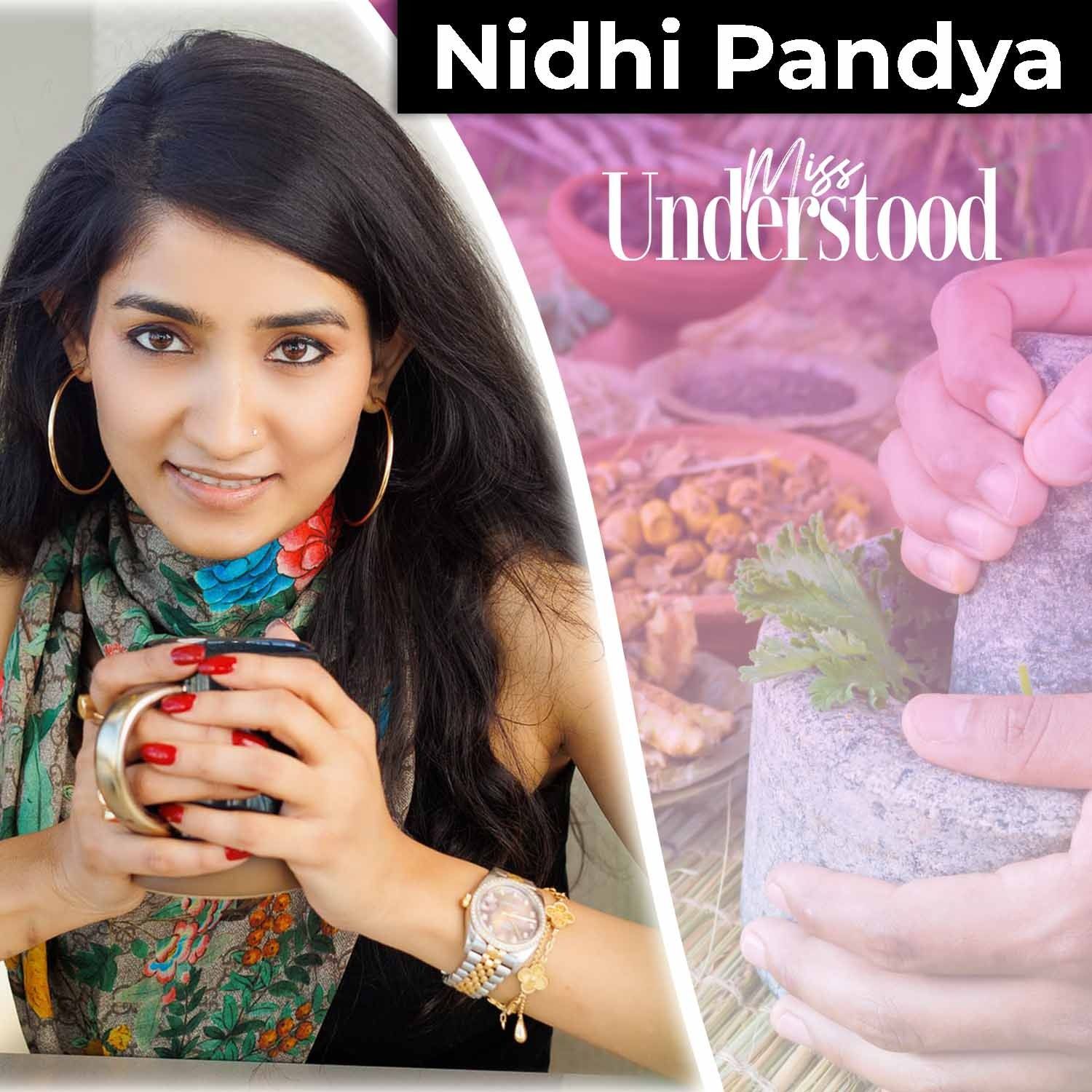
In this episode of Miss Understood, I sit down with Ayurvedic practitioner, writer, and speaker Nidhi Pandya, whose debut book Your Body Already Knows: A 21-Day Plan to Decode Your Cravings, Reclaim Your Energy, and Feel at Home in Your Body is transforming the way people see health. Nidhi grew up immersed in Ayurveda as a living language, and now she’s on a mission to make this ancient wisdom accessible in a modern world that’s desperate for balance.
What you’ll take away from this episode:
• What Ayurveda really is — beyond the stereotypes and misunderstandings
• How to understand your body’s signals and cravings as intelligent communication
• Simple daily practices that bring energy, clarity, and resilience
• How emotional health and digestion are deeply connected in Ayurvedic tradition
• A look inside Nidhi’s 21-day plan and what results you can expect
Whether you’re struggling with low energy, gut issues, or just a sense of disconnection from yourself, this conversation is an invitation to slow down, tune in, and remember that your body already knows the way.
🔗 Follow Nidhi Pandya and get her book Your Body Already Knows https://www.nidhi.me/
✨ If this episode resonated with you, please subscribe, rate, and share Miss Understood with a friend.
--- --- ---
PLEASE LIKE, SHARE, SUBSCRIBE, AND GIVE US A 5-STAR REVIEW!: ratethispodcast.com/missunderstood
Become a Patreon Member: https://www.patreon.com/c/MissUnderstoodwithRachelUchitel
Shop Miss Understood Merch https://missumerch.com/
Follow Rachel on Instagram! https://www.instagram.com/racheluchitelnyc/?hl=en
Follow Rachel on TikTok! https://www.tiktok.com/@itsracheluchitel
Executive Producer: George Carmona
Do you have show ideas, media requests or sponsorship opportunities? Email the show at: ru@missumedia.com
Listen on Apple, Spotify or wherever you get your podcasts.
YouTube: https://www.youtube.com/channel/UCw13NrSKD-nD_8E0vBHt5hA
Rumble: https://rumble.com/c/RachelUchitel
Website: https://missunderstoodpodcast.com/
Hosted by Simplecast, an AdsWizz company. See pcm.adswizz.com for information about our collection and use of personal data for advertising.
Available Results
Generated results are saved to the knowledge database for reuse and search.
Extract Knowledge
Pick what you want extracted first. Model, scope, and chapter options appear after a template is selected.
Transcript
[SPEAKER_01]: Today, on misunderstood with Rachel, you could tell.
[SPEAKER_00]: I moved to the West, I realized that there was a lot of fear around wellness.
[SPEAKER_00]: To me, health was the freedom of being well, rather than the fear of disease.
[SPEAKER_01]: I love having you here because there are so many things that are misunderstood about Arabic medicine.
[SPEAKER_00]: So I'm going to break down a little bit of the term, Ayurveda.
[SPEAKER_00]: Okay, you who means life and Veda means science.
[SPEAKER_00]: So it's the original science of life.
[SPEAKER_00]: Now, the science of life needs everything that has to do with life and enhance our experience on this planet.
[SPEAKER_00]: The first principle that you would start on is understanding the circadian rhythms.
[SPEAKER_00]: Our bodies have certain neurotransmitters that are very connected to the cycle of the sun.
[SPEAKER_01]: What is the most misunderstood Ayurvedic practice?
[SPEAKER_00]: consuming turmeric shots, turmeric is never meant to be a shot that's going to burn your mucosa lining, don't do it.
[SPEAKER_01]: What if your body already held every answer you've been chasing?
[SPEAKER_01]: We live in a world where the first sign of discomfort sends us searching outside of ourselves to Google to the pharmacy to the next trendy wellness hack.
[SPEAKER_01]: What if the key wasn't out there?
[SPEAKER_01]: It was in here waiting for us to listen.
[SPEAKER_01]: That's what aerovatic this ancient.
[SPEAKER_01]: often misunderstood science is really about.
[SPEAKER_01]: Not quick fixes, or exotic teas, but a way of remembering that our bodies are intelligent, responsive, and always speaking to us.
[SPEAKER_01]: The problem is most of us have forgotten the language and most of it is very misunderstood.
[SPEAKER_01]: Today, we're diving into a conversation with Needy, Pangeuk, an aerovated practitioner, writer and speaker who grew up with this wisdom woven into her daily life.
[SPEAKER_01]: Her new book, Your Body, already knows a 21 day plan to decode in your cravings, reclaim your energy and feel at home and your body is not about following rules.
[SPEAKER_01]: It's about learning to trust yourself again.
[SPEAKER_01]: If you've ever felt disconnected from your body, if you've ignored the signals because life told you to push through.
[SPEAKER_01]: If you're exhausted by this endless search for balance, this is the episode for you, because maybe the most radical act of healing isn't adding more, but finally listening to what's been there all along.
[SPEAKER_01]: So sit back and please enjoy my episode where we get to the bottom of Arovedic Medicine.
[SPEAKER_01]: Thank you so much for joining me today and misunderstood all the way from New York.
[SPEAKER_01]: How are you today?
[SPEAKER_00]: Very well.
[SPEAKER_00]: Thank you for having me, Rachel.
[SPEAKER_00]: I'm excited for this conversation and to see what we can uncover.
[SPEAKER_01]: Exactly.
[SPEAKER_01]: Well, I'm so excited for it too because who doesn't want to look better, feel better.
[SPEAKER_01]: There are so many TikTok trends and everybody is into all sorts of new.
[SPEAKER_01]: You know, health wellness, things that they can try and everyone's trying it from like 13 years old to 75.
[SPEAKER_01]: So I love having you here because there are so many things that are misunderstood about aerovatic medicine and and all the wisdom that goes along with it.
[SPEAKER_01]: So before we get into it, I want to hear about you.
[SPEAKER_01]: Can you tell us your background where you came from and how you found this to be your path.
[SPEAKER_00]: Yeah, so we're just like Rwap in Mumbai, India.
[SPEAKER_00]: I grew up in a joint family, and my grandfather was an younger brother, Hila.
[SPEAKER_00]: So I often joke that it's my first language.
[SPEAKER_00]: So when you're raised with 15 people living in the same house hold and the backbone of our lifestyle, what we eat, how we interact, being a your weather, you don't even know that you're learning a your weather.
[SPEAKER_00]: So to say, to somebody who doesn't understand what a your weather is, it is a system of life, of medicine, of prevention of treatment, all of that that comes from India.
[SPEAKER_00]: But what I really understand is the rhythms and patterns that really make us human and make any living species on the planet living, right?
[SPEAKER_00]: The difference between me and my Vax statue would be that I have breath, I have a heartbeat, I have a pulse.
[SPEAKER_00]: And similarly, everything outside has a rhythm, like the earth has rotation, revolution, which kind of leads to life.
[SPEAKER_00]: So I would rather really understand these rhythms and patterns.
[SPEAKER_00]: Today we call them circadian rhythms, seasonal rhythms, daytime rhythms, all of that.
[SPEAKER_00]: So I grew up understanding all of this.
[SPEAKER_00]: A racial I grew up with all of this gifted to me.
[SPEAKER_00]: And being a very sensitive child, I, my the running joke is, I always was curious about what makes people sick and what makes people tick.
[SPEAKER_00]: And when you're going up with 14 people in a family, there you have your plating out and you also have your research laboratory.
[SPEAKER_00]: Same stimulus, respond differently.
[SPEAKER_00]: I was doing this.
[SPEAKER_00]: I was preoccupied with this my entire life and I didn't realize it till I became an adult.
[SPEAKER_00]: And I didn't have a choice.
[SPEAKER_00]: I mean, this I rather pulled me into it.
[SPEAKER_00]: I was drawn sucked into wanting to do this even at a time back then 20 plus years.
[SPEAKER_00]: Nobody understood.
[SPEAKER_00]: Nobody even knew the word one out of.
[SPEAKER_00]: 20 people that I spoke to in the US may have understood or even heard of the word Ayurveda.
[SPEAKER_00]: Did I safely say that at least in a place like New York or LA, seven out of 10 people understand Ayurveda or have heard of Ayurveda?
[SPEAKER_00]: Even then back then I was like, I don't have a choice.
[SPEAKER_00]: This is my calling.
[SPEAKER_00]: Especially I had some experience with pharmaceuticals doing some marketing for
[SPEAKER_00]: and I realized that the one list system that I had been given at birth that I was indoctrinated into was really what needs to be brought back.
[SPEAKER_00]: So I was just pulled into Ayurveda.
[SPEAKER_00]: I got a formal education.
[SPEAKER_00]: I studied from the Sanskrit text, Sanskrit is the ancient language of India.
[SPEAKER_00]: So I really went back right to the source.
[SPEAKER_00]: I got that education for six, seven years.
[SPEAKER_00]: And that's it.
[SPEAKER_00]: This is what I
[SPEAKER_01]: So, oh my god, so much information there.
[SPEAKER_01]: First of all, you said it was like your language that you learned when you were younger.
[SPEAKER_01]: So, explain that to me.
[SPEAKER_01]: Like, what does that look like when your family is different than our American family's growing up with that as your language?
[SPEAKER_00]: That's such a beautiful question, Rachel.
[SPEAKER_00]: So, to give you an example, right?
[SPEAKER_00]: Like, there's certain meals.
[SPEAKER_00]: Everybody has a large lunch that's offered.
[SPEAKER_00]: Anything that's an indulgence, it's a treat, is offered at lunch.
[SPEAKER_00]: But let's say, Rachel, I was supposed to, like, I would to ask my mom that,
[SPEAKER_00]: Then, for example, the response that I would usually get is like, um, why don't you eat it for lunchtime tomorrow if you want to eat cheese.
[SPEAKER_00]: Now here as a young girl, you're making so many connections.
[SPEAKER_00]: You're learning that your digestion is probably not the best.
[SPEAKER_00]: You're learning that cheese is heavy.
[SPEAKER_00]: And you're also learning that that meals that large meals or heavy meals can be eaten at lunchtime because probably that's when your digestion is more forgiving.
[SPEAKER_00]: So, don't realize that you're learning all of this as a young child or to give you another example, right?
[SPEAKER_00]: Like, when I would go down to play and Mom would say that Nidhi come back before you see bats weaving through the sky.
[SPEAKER_00]: I mean, those are the days you actually saw bats in the sky.
[SPEAKER_00]: Now, to be here as a young child, what I don't realize, which I didn't realize from my conscious mind is I'm making a connection that oh, human beings are slowing down their activity.
[SPEAKER_00]: Because it's a dark eye, I can't see it as well, but look at these other species, other creatures, they actually come out at night.
[SPEAKER_00]: This is their time to hunt.
[SPEAKER_00]: So you're understanding the iron and nocturnal right there and then.
[SPEAKER_00]: Right.
[SPEAKER_00]: We were like five girls in the house, you know, cousins and sisters, and when you would go out, my grandfather would, for example, specifically say to one of my cousins, that hey, Ruchi, you want to be careful when you guys are out in the sun, make sure you're drinking coconut water.
[SPEAKER_00]: Now, just in that statement, I have understood that yes, whenever we go out to the son, Ruchi gets all read on her cheek, she gets a headache, and probably coconut water is cooling and hydrating.
[SPEAKER_00]: So I was never told that
[SPEAKER_00]: According to Ayurveda, you should drink coconut water because it's hydrating.
[SPEAKER_00]: I just understood that everything you're doing is making a connection, you're offsetting something that people exhibit patterns and you live in a manner to offset those patterns.
[SPEAKER_00]: Even the daytime rhythms are just simply patterns and everywhere in the world, whether it's seasons, whether it's your own body, you exhibit these patterns and just knowing these patterns allow you then to understand how to live in balance.
[SPEAKER_01]: Wow.
[SPEAKER_01]: Okay.
[SPEAKER_01]: That's fascinating.
[SPEAKER_01]: I don't think it's an American.
[SPEAKER_01]: We grow up with any of that information at all.
[SPEAKER_01]: Um, so a lot of what you're talking about is almost like what people hire nutritionists later on in life when they've struggled with some issues with either their gut or their weight or whatever to understand you said you went to school for six or seven years.
[SPEAKER_01]: So you're obviously learning about patterns.
[SPEAKER_01]: I'm assuming you're learning about nutrition.
[SPEAKER_01]: You're learning about skin or beauty like explain what you're learning in those six or seven years.
[SPEAKER_00]: I love it, you know, yeah, I'm just going to take a moment and say, I love that you're getting into this organically, you know, it's just it's one conversation into another because a lot of times people go directly to what is on your mother and then it's hard to understand.
[SPEAKER_00]: So you're right.
[SPEAKER_00]: So I'm going to break down a little bit of the term, I your weather.
[SPEAKER_00]: Okay, you who means life and Veda means science.
[SPEAKER_00]: So it's the original science of life.
[SPEAKER_00]: Now the science of life meets everything that has to do with life and enhance our experience on this planet.
[SPEAKER_00]: So what are some other things that we learn, right?
[SPEAKER_00]: So Ayurveda, which is often known for only its treatment and prevention of disease.
[SPEAKER_00]: But the next one, what it's all about, it actually goes further nutrition, lifestyle,
[SPEAKER_00]: Or, of course, fertility, child care, social conduct, mental health, every single system in the body, digestive system, your respiratory system, your reproductive system, you learn about each of these systems in tremendous detail.
[SPEAKER_00]: So everything that has to do with human life, like, how do you choose a partner, how do you set up for your profession?
[SPEAKER_00]: I mean, these decks are
[SPEAKER_00]: are vast.
[SPEAKER_00]: They are so much information and they're so much wonder and you know it's a very precise tube, by the way.
[SPEAKER_00]: So it's not like good that you have to figure out everything is just stated very clearly, very deeply understood.
[SPEAKER_00]: So it's a vast science and you basically learn all of this or including longevity and biohacking, there's a whole module, like there's a whole set of textbooks on that.
[SPEAKER_00]: So you basically learn about anything that has to do with enhancing
[SPEAKER_00]: on this planet.
[SPEAKER_01]: When did you learn that this wasn't just like a cultural tradition, but this is something that you wanted to be your life's purpose?
[SPEAKER_00]: So I realized when I moved to the West Rachel more than 20 years ago, I realized that the way I had treated health like a value system.
[SPEAKER_00]: And it brought me tremendous freedom.
[SPEAKER_00]: So it just helped me, and understanding these rhythms meant to me that, wow, I can eat my junk food, I know, went to eat it.
[SPEAKER_00]: I can live my life, however I want and I know how to balance it.
[SPEAKER_00]: I have the secret relationship with the rhythms and the patterns in the world and my body.
[SPEAKER_00]: and it just feels like a very romantic relationship, you know.
[SPEAKER_00]: It just felt really like, like, how does the family member, you're like, you give a reverence, you know?
[SPEAKER_01]: Yeah.
[SPEAKER_00]: And when I moved to the West, I realized that there was a lot of fear around wellness.
[SPEAKER_00]: There was a lot of fear.
[SPEAKER_00]: It was not like, my joke is that to me, health was the freedom of being well, rather than the fear of disease.
[SPEAKER_00]: And when I moved to the West, I realized that health was the fear of disease.
[SPEAKER_00]: And then I had to look back and say, how did I learn this kind of paradigm of, well, of, of, of health?
[SPEAKER_00]: I realized that it was just ingrained.
[SPEAKER_00]: We were, I was just raised like that.
[SPEAKER_00]: And it can be transported to others the same way.
[SPEAKER_00]: It can be taught that way.
[SPEAKER_00]: Then when I, you know, that's what I'm, I mean, I was thinking about having children in my early 20s.
[SPEAKER_00]: And, of course, it was before I had children, but I knew that I was going to have kids.
[SPEAKER_00]: I mean, I always meant to be a mother.
[SPEAKER_00]: And I said, I cannot bring my children into this world without this wisdom.
[SPEAKER_00]: And the only way to be this wisdom is to embody it, is to stand for it, is to teach it.
[SPEAKER_00]: and I did all of that and today I have two young teenage daughters and I can tell you they understand these patterns and rhythms.
[SPEAKER_00]: 11 New York City they live completely modern lives, but they're very much in touch and they understand these rhythms and patterns really really well.
[SPEAKER_00]: So I think that became my really deep calling, the contrast that I found in the West made me want to go back to my roots much more.
[SPEAKER_00]: Right.
[SPEAKER_01]: Okay, so you've explained Arabic, I'm sorry that I don't pronounce it the same way you do.
[SPEAKER_01]: It sounds so pretty when you say it.
[SPEAKER_01]: But when, so you've explained it sort of in broad terms, are there sort of like core principles or tenants that people need to know about it so that they can really identify what it is that you're talking about.
[SPEAKER_00]: Yeah, you know, I want to give you two ways of doing this.
[SPEAKER_00]: So firstly, when you talk about like for people who are just wondering what in the world that's Ayurveda, if you've heard of turmeric and you heard of Ashwaganta and you've heard of oil pulling or dry brushing or bullet coffee or even intermittent fasting, all of these practices have their roots in Ayurveda.
[SPEAKER_00]: So,
[SPEAKER_00]: Just to give you context of like, hey, this is that parent science, where these practices have emerged from.
[SPEAKER_00]: But if I have to point out a few tenets and say, hey, you know, you wake up today and you say I want to start living automatically.
[SPEAKER_00]: What does this mean?
[SPEAKER_00]: And I'd say of course like it's a life-long journey and it's a very full-filling journey It's not like oh my god this work never ends.
[SPEAKER_00]: You almost feel like I want more of this because it allows me to feel whole But where would you start and I think the first principle that you would start on is understanding
[SPEAKER_00]: The circadian rhythms, like circadian rhythms is a very new concept here in the West.
[SPEAKER_00]: But if you look at the Ayurvedic text and in the detail, the detail in which they explain, it's not just day and night, it's six phases off the day.
[SPEAKER_00]: And if you want, we can go into those six phases, or I can just start by saying,
[SPEAKER_00]: keep your lunch heavy, keep your dinner light.
[SPEAKER_00]: Know that we are dire no mammals, right?
[SPEAKER_00]: Which means that we are not tigers, we are not bats, we are not owls, we don't have nighttime vision.
[SPEAKER_00]: And before electricity came into our world's 1930s, that's so recent, 1930s, we did not have these big, dime-night dinners so much later than sunset, because we were not liking all these oil lamps and saying, oh, let's have dinner parties.
[SPEAKER_00]: We were, we were, we were, we were, what's an oil that would have been night-free,
[SPEAKER_00]: So, it's basically going back to understanding that our bodies have certain neurotransmitters that are very connected to the cycle of the sun.
[SPEAKER_00]: And so you want to eat your heaviest lunch, heaviest meal for lunch, lightest meal for dinner as early as possible.
[SPEAKER_00]: And start honoring your sleep cycles, and if you've started doing that, you've already set a great baseline because that one rhythm will correct many other rhythms, your bowel movements, your menstrual cycles, many other rhythms will be corrected when you start doing that.
[SPEAKER_00]: But if you have to bring in a second tenet, you know, just go to start very simple and easy, a second tenet would be.
[SPEAKER_00]: That you want to look back into the evolution of mankind and realize, and when you do some research, just even on simple search function on your computer, you realize that when humans started when we started using fire to cook our foods is when we became humans.
[SPEAKER_00]: and evolutionary biologists have actually studied that and they've realized that, oh, we were at different species.
[SPEAKER_00]: The reason why we became these styling on your legs using our brain into intellectual species is because when we started cooking our foods, our gut became smaller, our brain became bigger.
[SPEAKER_00]: So I would start cooking your foods using good fats and good spices.
[SPEAKER_00]: And if you just did these two things, that's it.
[SPEAKER_00]: You did nothing else.
[SPEAKER_00]: Cook your foods, good spices, good fats, heavy lunch, light dinner, and you did this for just three weeks.
[SPEAKER_00]: I can tell you for sure you will notice a drastic difference in how you sleep, how you wake up, how you feel your energy levels, your skin and your bowel movements.
[SPEAKER_00]: Wow.
[SPEAKER_01]: Okay, wait, I have so many questions.
[SPEAKER_01]: So you talked about the sleep cycle.
[SPEAKER_01]: What is the right sleep cycle?
[SPEAKER_01]: Are there certain amount of hours that you're supposed to get?
[SPEAKER_01]: Or is it about the sun and what, like tell me about that?
[SPEAKER_00]: Yeah, so I will say that some people need sleep a little bit a little more a little less.
[SPEAKER_00]: Those who think that they need the most sleep who feel very sluggish in the morning, they actually need the, they actually need lesser sleep because their body can get into a slug very, very quickly when they're sleeping.
[SPEAKER_00]: All their fluids and their body that send over fluids of their joints, their mucus lining, everything thickens very quickly.
[SPEAKER_00]: Anyways, right?
[SPEAKER_00]: So basically what happens?
[SPEAKER_00]: Two and a half hours after sunset, about two and a half three hours after sunset.
[SPEAKER_00]: And given that sunset is at 6, 6, 13, and I'll tell you how this looks different in the winter and now this looks different in the summer.
[SPEAKER_00]: But let's say you're living in a day, you're living in a place and time where days and nights are about equal.
[SPEAKER_00]: Amen.
[SPEAKER_00]: You know, two and a half three hours after sunset, your neurotransmitters in your body start looking drastically different.
[SPEAKER_00]: Now, in the daytime, we have something called excitatory mediators, which means you're serotonin, you're stimulated, you can have you more and more energy.
[SPEAKER_00]: And then over those two and a half three hours, they kind of shift completely.
[SPEAKER_00]: So chemically, we're different beings.
[SPEAKER_00]: You know, we have a more melatonin, a body is trying to produce GABA, and you know, other neurotransmitters, which are to do with deep rest and repair.
[SPEAKER_00]: And now, you want to be in bed as many nights as possible by 10 o'clock, because between 10 and 2, and I rather understood this by the way, we were a before-mode and scientist that exactly these four hours, 10 to 2, is when magic happens in your body.
[SPEAKER_00]: You're basically sitting and you're basically chilling in your bed, like not giving a damn about the world.
[SPEAKER_00]: And you're basically doing the deepest level of free bear in your digestion, in your hormones.
[SPEAKER_00]: It's, you know, letting go of all cells that don't serve you anymore.
[SPEAKER_00]: It's regenerating new cells shortly after two.
[SPEAKER_00]: You're liver is doing it to detox, but more than anything, taught generates debris.
[SPEAKER_00]: Even thinking generates debris in your nervous system that can actually be seen under a microscope.
[SPEAKER_00]: So the animals don't have that.
[SPEAKER_00]: They're not thinking, but human beings are all the time.
[SPEAKER_00]: and your glimfatic, not your lymphatic, your glimfatic system activates during those four hours.
[SPEAKER_00]: So, those four hours are critical for everybody.
[SPEAKER_00]: Now, very often, Rachel, when I say this, very often, you'll see people waking up to urinate or in a sweat around two o'clock.
[SPEAKER_00]: It always happens between 130 and 230.
[SPEAKER_00]: That usually is kind of the end of the cycle.
[SPEAKER_00]: It's not super healthy for that to happen, but if it does happen to you, it's also a little bit of a signal that maybe your liver is too heavy, like liver is too hot, not heavy, liver is a little bit hot, but it usually is the end of the cycle.
[SPEAKER_00]: And your body really needs to actively detox, so you'll sweat out or you'll need to urinate.
[SPEAKER_00]: after two between two and six thirty, between two and four thirty more, new cells start to regenerate.
[SPEAKER_00]: Your growth hormone has a surge, and like it's next level of creation.
[SPEAKER_00]: The building happens.
[SPEAKER_00]: Repair is done.
[SPEAKER_00]: Building happens.
[SPEAKER_00]: After four thirty, people enter into a lighter realm of sleep.
[SPEAKER_00]: For women, they should ideally stay asleep during this time.
[SPEAKER_00]: Men can wake up for a spiritual practice after 5, 5, 30.
[SPEAKER_00]: Women should ideally sleep till they're, you know, till about 6.
[SPEAKER_00]: Now in the winter, we need a little bit more sleep, because we're kind of hibernating, but we're not hibernating like bears too.
[SPEAKER_00]: We hibernate from like, you know, we sleep a little bit, we need a little bit extra sleep to preserve your energy.
[SPEAKER_00]: That's why you eat more fatty foods in the daytime, in the winter months, and you would sleep a little bit earlier.
[SPEAKER_00]: I'm not, not like a 3 p.m.
[SPEAKER_00]: if you're an Iceland because your body also has an internal blood body clock that is built that is designed to adjust to these changing seasons.
[SPEAKER_00]: So then the body clock called the endogenous clock we're actually remembers behavior and that allows you to still sleep at that later time, maybe 930-10 but you would sleep a little bit more in the winter.
[SPEAKER_00]: Now if you're in a place which is really hot and
[SPEAKER_00]: and like Morocco in the summer, really, really hot.
[SPEAKER_00]: And it's very, very dry, hot and dry.
[SPEAKER_00]: You would ideally stick an app in the afternoon.
[SPEAKER_00]: So the CSAT is legit for those months, only, not throughout the year, for those really hot months.
[SPEAKER_00]: And then you could actually stay up until much a little bit later.
[SPEAKER_00]: So in set is at 9pm, you can stay up for another two and a half, three hours after that.
[SPEAKER_01]: Okay, so it's important that you're sleeping during those periods, like just laying in bed from 10 until 2 is not going to do anything for you.
[SPEAKER_01]: You have to turn off your mind.
[SPEAKER_01]: Is that what you're saying?
[SPEAKER_00]: Yeah, so if you're not in a full sleep right, but let's say you're meditating like I have clients Rachel, they're like, oh, I cannot fall asleep.
[SPEAKER_00]: I'd say, okay, that's fine.
[SPEAKER_00]: You do something called a yoga needra or do an active relaxation.
[SPEAKER_00]: So you've conscious mind, you're prefrontal cortex and your, you know, your frontal cortex is all shut down.
[SPEAKER_00]: It will activate some of that tree bear.
[SPEAKER_00]: So even if you're not sleepy, don't watch a crime thriller on Netflix.
[SPEAKER_01]: My favorite thing to do.
[SPEAKER_01]: So I'm probably not doing the right part of this.
[SPEAKER_01]: Wait, so why has it been so misunderstood or diluted in Western culture?
[SPEAKER_01]: The things that you're talking about?
[SPEAKER_01]: I mean, I've definitely heard of intermittent fasting.
[SPEAKER_01]: I've definitely heard, I've been disposed where they do the drive brushing.
[SPEAKER_01]: But you know, they kind of just say, Oh, this is good to prepare your skin for a lotion or so you don't have cellulite or I don't even know what it's for and I always end up buying it because it all sounds good, but I don't really feel like I see any results.
[SPEAKER_01]: So tell me about those things.
[SPEAKER_00]: Yeah, I love it.
[SPEAKER_00]: So I will say that the reason why Rachel, these are so misunderstood because, you know, we are so hungry for information.
[SPEAKER_00]: We don't care about wisdom anymore.
[SPEAKER_00]: We don't care about knowledge anymore.
[SPEAKER_00]: Like knowledge is annoying.
[SPEAKER_00]: Wisdom is a deeper knowing.
[SPEAKER_00]: But give us information.
[SPEAKER_00]: Tell me what's good for me.
[SPEAKER_00]: Once somebody asks me what's good for my digestion, my answer is it depends on what where your digestion is.
[SPEAKER_00]: Like somebody says, tell me what's good for the weather.
[SPEAKER_00]: It depends on what the weather is.
[SPEAKER_00]: You know, like you can't wear a winter jacket to like some a weather so similarly our body has its climates and but we are so used to asking this question like give me anything that's good for me we want a quick hat we want a prescription we don't want to go deeper and one of the reasons why these are so misunderstood is because we are not asking the why.
[SPEAKER_00]: We are in this crazy rush to try the next trend and I think you get all to me.
[SPEAKER_00]: We are in this formal fear of missing out that, oh, if it's good for me and if I don't do it, I'm going to die.
[SPEAKER_00]: But I feel like blue zones that you look at those places where people live for over a hundred years in a healthy manner.
[SPEAKER_00]: They actually had very few practices.
[SPEAKER_00]: They had limited foods.
[SPEAKER_00]: They didn't even know what was happening in the world out there.
[SPEAKER_00]: Like they just lived with their limited animals.
[SPEAKER_00]: They had minimalist lifestyles.
[SPEAKER_00]: they live so well, you know.
[SPEAKER_00]: So we are just, we've become obsessed in the modern world of, you know, with prescriptions, with the next new thing and the next fad.
[SPEAKER_00]: And because we don't ask the question and we adopt some of these practices in an extreme manner and then we suffer and then now, like for example, intermittent fasting ritual, intermittent fasting was so good.
[SPEAKER_00]: And now it's become so bad, because we've not understood what it does.
[SPEAKER_00]: So we've not understood how to do it correctly.
[SPEAKER_00]: The truth is intermittent fasting is brilliant for some people.
[SPEAKER_00]: The truth is intermittent fasting.
[SPEAKER_00]: If it's done just like the day and the night cycles where you don't eat after dinner is good for almost everybody.
[SPEAKER_00]: If you do an intermittent fast off 16 hours, not eating during the day,
[SPEAKER_00]: It can actually really damage some people.
[SPEAKER_00]: It can really affect your microbiome.
[SPEAKER_00]: So any of these practices, there needs to be a deep understanding of how they are to be practiced and only then taken up.
[SPEAKER_00]: If you want to do it right and get the correct results out of them.
[SPEAKER_01]: Okay.
[SPEAKER_01]: So, and while we have you on that subject, what would you suggest for people?
[SPEAKER_01]: Because I've had people on the show that have said, when they wake up, they only drink coffee, they try and go as long as they can, to not eat, then they have one meal, then they don't eat again.
[SPEAKER_01]: It sounds like that's very harsh on the body, but what do I know?
[SPEAKER_01]: So tell me what the right way to intermittent fastest.
[SPEAKER_00]: Yeah.
[SPEAKER_00]: So as human beings, we are intermittent fasters to begin with, right?
[SPEAKER_00]: Because I mean, our ancestors, like I've seen the 1800s, they didn't really eat after dark, right?
[SPEAKER_00]: Like, they didn't really do much after dark, because they really didn't like to go in lands and say, hey, let's do this all over again.
[SPEAKER_00]: So that period, right?
[SPEAKER_00]: Where you kind of stop eating a few hours after sunset or like really at sunset, depending on when sunset is for you.
[SPEAKER_00]: And then you start eating again after sunset.
[SPEAKER_00]: Yeah, ideally 48 minutes after sunset.
[SPEAKER_00]: So after sunrise, you should wait 40 minutes because that's when the microbiome adjusts itself.
[SPEAKER_00]: That's when your neurotransmitters have changed hands and the morning, daytime, neurotransmitters.
[SPEAKER_00]: So your body is not working on this changing guard.
[SPEAKER_00]: Think about it as changing guard.
[SPEAKER_00]: So the change of guard has happened in those 48 minutes.
[SPEAKER_00]: And then you start to eat great.
[SPEAKER_00]: If that is the intermittent fast in you're doing, everyone can do it.
[SPEAKER_00]: I feel like you have a question.
[SPEAKER_01]: Yeah, yeah, I was going to say, so essentially intermittent fasting.
[SPEAKER_01]: I mean, it sounds like
[SPEAKER_01]: work to me but if you say okay no snacking after you dinner until you wake up the next morning essentially that's what we're talking about but are you talking about eating earlier like close to when the sun sets as opposed to having these nine o'clock dinners eat earlier do not snack after make that your lighter meal as you already said and then you go until the sun rises 48 minutes after you have breakfast so you are of the beliefs of breakfast is important there's a lot of people that say do not eat breakfast what are your thoughts there?
[SPEAKER_00]: I will tell you what is important, right?
[SPEAKER_00]: Breakfast is not sure biggest meal.
[SPEAKER_00]: That's for sure, right?
[SPEAKER_00]: Because we are a diurnal mammals, the sun is just coming out.
[SPEAKER_00]: And so our gastric juices, they're just about the bodies just preparing for digestion.
[SPEAKER_00]: It's not really ripe for digestion, okay?
[SPEAKER_00]: Now that does not mean you don't stoke your fire, you know.
[SPEAKER_00]: If you're making a bonfire, you would like to start it slow, you would stoke your fire.
[SPEAKER_00]: And there are a few ways to do it, like there's an body oiling practice that, Rachel, you're going to have one day somebody's going to be on your podcast talking about this body oiling practice because it's going to be like the next
[SPEAKER_00]: You know, so you oil your body in the morning and that kind of really helps your microbiome promotes lymphatic drainage, regulates the nervous system, promotes the synthesis of vitamin D. I mean, it does a lot of things for get that.
[SPEAKER_00]: But I'll say, so that is your first breakfast is oil.
[SPEAKER_00]: Skin is the channel of consumption.
[SPEAKER_01]: Okay, before you go further, is there a certain kind of oil?
[SPEAKER_01]: And what do you mean?
[SPEAKER_01]: You just rub oil on your body like a lotion?
[SPEAKER_00]: Yeah, so I'll say what the practice is called.
[SPEAKER_00]: It's called abshanga.
[SPEAKER_00]: That's okay.
[SPEAKER_00]: You never have to know the name of the practice because of the abshanga.
[SPEAKER_00]: It's a complicated name.
[SPEAKER_00]: But it's an it's an Ayurvedic body-oiling practice.
[SPEAKER_00]: And what it means is before you exercise or even before you shower if that's uncomfortable for you to exercise with some oil on your body, I get it.
[SPEAKER_00]: Or you shower.
[SPEAKER_00]: Yeah, I know I know I think that love because it is you can feel like that But if you see wrestlers in India, you'd see they have all oil on their body.
[SPEAKER_00]: It protects your joints.
[SPEAKER_00]: It really gives you helps you for to recover after you exercise really really well.
[SPEAKER_00]: Great recovery tool.
[SPEAKER_00]: But as just as you put moisturizer on your body, you would take sesame oil.
[SPEAKER_00]: And if sesame oil is not for you, take any body oil.
[SPEAKER_00]: As long as it's a clean oil and that's not have anything added, no other fragrances, no other palates, nothing, you massage your body with it, but they're doing it for five minutes or 15 minutes.
[SPEAKER_00]: It does not, it matters, but it's not that important.
[SPEAKER_00]: But do it even for five.
[SPEAKER_00]: Then you can wipe down your body with a towel, with a dirty towel, a towel that you can use for this, put on your workout clothes.
[SPEAKER_00]: go workout and then come back and shower.
[SPEAKER_00]: Now your body will be nourished and detoxed and you'll have quicker recovery.
[SPEAKER_00]: And that also becomes the first way to kind of give your body strength.
[SPEAKER_00]: Just skin as a channel of consumption.
[SPEAKER_00]: It's your first, it's your pre-breath fist.
[SPEAKER_01]: Right.
[SPEAKER_00]: To your shower, it is important to do it's a warm, my recommendation is a small warm beverage but something really little.
[SPEAKER_00]: Like for me, my breakfast everyday is a hot cup of milk, spice to milk.
[SPEAKER_00]: with 20 soaked, I soak my almonds overnight, and I peel them in the morning, and I have my 20 almonds.
[SPEAKER_01]: Do you have regular milk, or you have almond milk?
[SPEAKER_00]: I have regular E2 organic grass-fed milk.
[SPEAKER_00]: Okay, that's what I had.
[SPEAKER_00]: And I know that's a whole other, like, misunderstood conversation.
[SPEAKER_00]: But that's what I have personally.
[SPEAKER_01]: But some people could have hot tea with lemon, or is it, are you saying it just needs to be something warm?
[SPEAKER_01]: Or do you believe that milk is the thing they should start today?
[SPEAKER_00]: The thing is that you have high coat all in the morning, right?
[SPEAKER_00]: We like, we bake up with high coat as well.
[SPEAKER_00]: And a little bit of higher sugar, because you, of course, like your body, use this coat as well, adrenaline sugar to keep you awake.
[SPEAKER_00]: Otherwise, you'd be sleeping.
[SPEAKER_00]: All of us would be inspired for life.
[SPEAKER_00]: So your body, it's to inspire you for life.
[SPEAKER_00]: And you want to bring that down.
[SPEAKER_00]: You want to settle that in the morning.
[SPEAKER_00]: And magnesium is known to do that.
[SPEAKER_00]: I mean, I rather than you a long time ago that the best foods in the morning are milk and almonds.
[SPEAKER_00]: And certain other foods.
[SPEAKER_00]: So you'd definitely, if you're not doing dairy, you want to do some kind of food, which has magnesium, which is warm.
[SPEAKER_00]: You want it always warm because your body is metabolic.
[SPEAKER_00]: activities warm, right?
[SPEAKER_00]: And I think it'd be metabolized unless it's warm.
[SPEAKER_00]: Unless I'm how can it transform?
[SPEAKER_00]: You don't want to refrigerate your gut in the morning.
[SPEAKER_00]: You're putting the refrigerator only when you want it to not break down.
[SPEAKER_01]: Right, right, right, right, right.
[SPEAKER_01]: But a lot of people will say, oh, I start today with coffee.
[SPEAKER_01]: Is that good enough?
[SPEAKER_00]: I would say that coffee can feel like a little bit of a nuclear storm if it's a black coffee to your system, right?
[SPEAKER_00]: I mean, we feel it right away.
[SPEAKER_00]: You feel the nuclear storm.
[SPEAKER_00]: Don't believe me.
[SPEAKER_00]: I tell people don't believe me.
[SPEAKER_00]: Use your logical brain, like never, ever believe me.
[SPEAKER_00]: But just when you think about black coffee, for example, right, it feels it's hot in your system.
[SPEAKER_00]: What is this stimulating?
[SPEAKER_00]: It's dehydrating.
[SPEAKER_00]: And the word dehydrating is hot and dry.
[SPEAKER_00]: and here you are, trying to warm it up, give it some fuel, hold your fire, and here you're like, it's like a mastic, it goes on, the fire comes on, and it goes off.
[SPEAKER_00]: And that's nice, it stimulates you, and then you're like completely, you've lost it.
[SPEAKER_00]: You're so tiny, that you need another boost of caffeine.
[SPEAKER_00]: If you want to do coffee in the morning, I'd say, make it a cappuccino.
[SPEAKER_00]: bulleture, bullet it.
[SPEAKER_00]: So give it some dairy, give it some butter, give it some key, give it some coconut oil, but have a bullet coffee in the morning.
[SPEAKER_00]: So you're bracing for that impact, you know, you're okay.
[SPEAKER_00]: So I personally thought people listen for the most part, I like to work with what people want to do, but just say, how do I balance this in the morning?
[SPEAKER_00]: So Brennan is not the biggest meal for sure.
[SPEAKER_00]: Like breakfast like a king was a 19th century nutritionist who said that.
[SPEAKER_00]: It's not an old concept
[SPEAKER_01]: And then do you then from there your biggest meal becomes lunch or you have something else in between?
[SPEAKER_00]: So if it's fruit season, I'll pick up fruit every now and then.
[SPEAKER_00]: If I've had a good workout, then I'll have something.
[SPEAKER_00]: Again, it'll always be warm, but I'll have like a warm moon lentil, you know, moon lentils.
[SPEAKER_00]: I'll have a warm moon lentil crepe, sometimes I'll have like a little bowl of oatmeal or another type of porridge.
[SPEAKER_00]: Okay.
[SPEAKER_00]: And it'll be very little.
[SPEAKER_00]: And then I will, you know, everything in your body is set up for a bigger lunch because your crelein, which is your hunger hormone, has risen, your body is very sensitive to insulin, which means like you're like breaking sugars down like anything.
[SPEAKER_01]: Yeah.
[SPEAKER_00]: Yes, Trin, which is, you know, one of the key players for digestion is high.
[SPEAKER_00]: And this happens literally only in that afternoon period.
[SPEAKER_00]: like all of this comes together.
[SPEAKER_00]: Like it's perfectly designed for digestion.
[SPEAKER_00]: So you're being a snail between anything I want to eat.
[SPEAKER_00]: Anything I've dreamt about fantasized about for food is always for lunch.
[SPEAKER_01]: So do you have a belief of what people of diets for people?
[SPEAKER_01]: I mean, I know you studied a lot about nutrition, as you said.
[SPEAKER_01]: So do you believe in this keto only or high protein or no carbohydrate?
[SPEAKER_01]: So what is good for us?
[SPEAKER_00]: Rachel, I 100%
[SPEAKER_00]: I can say, I believe, but I actually know, right?
[SPEAKER_00]: I've studied so many diets all over the world.
[SPEAKER_00]: And I'll say every macro nutrient is important in your body, right?
[SPEAKER_00]: Like carbohydrate is important, proteins are important, fats are important.
[SPEAKER_00]: Every micro nutrient which our ancestors did by fermenting their foods by adding seeds and spices, every traditional culture you go back and did all of this.
[SPEAKER_00]: They've invented a few things, they like add its spices, they add its seeds, all of those they give us are micronutrients and they've kept our foods whole and our body is whole and it responds to whole foods, especially when consumed together.
[SPEAKER_00]: It's not enough to say I'm going to head carbs, I'm going to eat my proteins and I'm going to eat you do it whole and your body knows that system so well.
[SPEAKER_00]: So when people, I have dealt with people who said I did keto, I have many clients, right, right, for example, they can say they said,
[SPEAKER_00]: They will confess that listen I felt really good when I was doing keto for like I recently I woke up and we could eat a few different ten years and then I said so why are you coming to me if you felt good?
[SPEAKER_00]: She says because after those first five six years
[SPEAKER_00]: It, I had severe dyspiosis of the gut.
[SPEAKER_00]: And now for the last four years, I just nothing is working for me, right?
[SPEAKER_00]: Because eventually, I see the first function of food is not to nourish you.
[SPEAKER_00]: The first function of food is not even to give you nutrients.
[SPEAKER_00]: The first function of food is to protect the environment of your gut.
[SPEAKER_00]: You may say this is the biggest superfood in the world, but if it is going to hurt the climate of your gut,
[SPEAKER_00]: Nothing else can actually thrive in there.
[SPEAKER_00]: So it's like this, if you think of a backyard, right?
[SPEAKER_00]: And you're saying, I'm going to plant this seed, which is actually going to, this tree is going to actually have gold coins on the tree.
[SPEAKER_00]: But if it's going to damage the entire soil, it's only a matter of time that the tree, very tree that you've planted is also not going to be able to live.
[SPEAKER_01]: Right.
[SPEAKER_00]: So the soil, the fluorine found out the microbiome of your gut is the most important.
[SPEAKER_00]: So the first function of food is to protect the environment of the gut so that you can get the most out of the subsequent foods you eat.
[SPEAKER_00]: And doing these harsh diets, you may give you support like weight loss sometimes or muscle building at some point, but they're absolutely going to hurt the environment of the gut.
[SPEAKER_00]: Right.
[SPEAKER_01]: It's interesting.
[SPEAKER_01]: When I wake up, I don't really, I'm not really a big breakfast person, and maybe like 10, 30, 11, I might have like an egg or something.
[SPEAKER_01]: But yeah, there, there will come a point that if I don't eat, I'm super nauseous.
[SPEAKER_01]: Out of nowhere, I get...
[SPEAKER_01]: like overwhelmingly nauseous and I have to stick something in my mouth which obviously makes it difficult because then I haven't planned for this and so it's like a piece of string cheese or a nectarine and I don't know anything about nutrition so I don't know how one thing that's affecting me versus the other all I know is it takes away my nausea so to me I feel like that makes me
[SPEAKER_01]: healthier, better, whatever the word is, although maybe that's not doing the right thing, it's just taking away the nausea, but it's changing my gut around and not preparing me for whatever it's healthy going forward in the day.
[SPEAKER_01]: Do you know what I mean?
[SPEAKER_01]: Like the point is, as I feel like the more knowledge you have and what you put in your body, probably sets me up for a better day than just sticking something in my body, so I'm not gagging.
[SPEAKER_00]: I love that, right?
[SPEAKER_00]: Rachel, so well said, because what you're doing is treating a symptom.
[SPEAKER_00]: And now that your symptom is treated and you're feeling like, hey, now I feel balanced and that's good for me because I'm balanced, you're right.
[SPEAKER_00]: But the truth is that the symptom did arise, that the body gave you a reaction, that the acid came up because when your fire was starting and burning out in the day, like I said, you know, it's a fire starting time and you, it had nothing to eat.
[SPEAKER_00]: You didn't give it any food to eat, so when I didn't have anything to eat, it's like it's like this asking for help, but if you had eaten before that right and that it wouldn't it would not have it wouldn't it wouldn't be aggravated.
[SPEAKER_00]: Yeah.
[SPEAKER_01]: Yeah.
[SPEAKER_01]: I also think Americans, especially, have a very distorted sense of healthy.
[SPEAKER_01]: They think thin is healthy.
[SPEAKER_01]: They think overly thin is even more healthy.
[SPEAKER_01]: You know, and I think that's a a really terrible way to have our minds wrap around what we're eating because all we're looking at is health in we are on this scale.
[SPEAKER_01]: And that doesn't probably ring true for what you're talking about as
[SPEAKER_00]: You know, that is so true.
[SPEAKER_00]: We've only started using our eyes as like this primary sense, right?
[SPEAKER_00]: But the truth is like, all our ancestors and the reason why they were more into it and more connected, more fertile, more, you know?
[SPEAKER_00]: Even more sexy in like the literal sense was because they were using the sense of their nose and their ears and touch so much more.
[SPEAKER_00]: they gave those senses, which are basically more feminine senses, the year is a more feminine sense, the touches and more feminine sense.
[SPEAKER_00]: And here we've become obsessed with just what we see, visuals, aesthetics.
[SPEAKER_01]: Right.
[SPEAKER_00]: And being thin is actually very drying inside the body, being excessively skinny, right?
[SPEAKER_00]: When you look at some people, unfortunately, they have a problem putting on weight.
[SPEAKER_00]: And, you know, I personally, you walk away in practices, et cetera.
[SPEAKER_00]: But otherwise, to do it, you know, to actually drive yourself to that place, because we think it's aesthetically,
[SPEAKER_00]: appealing is very dangerous for the body and in fact even like by a lot like like even even when you look at like attraction a male female attraction like they've done studies to prove that men are not attracted to that right like because because really what what we did as
[SPEAKER_00]: The reason why we're here on the planet is to, for life to exceed on the planet, for procreation, and evolution happened that way.
[SPEAKER_00]: Then, more of the more delicious you are, the more flesh you have, you know, the better your body is designed.
[SPEAKER_00]: In fact, the better your fertility is, and it doesn't mean that you have to have excessive tissue that doesn't suit you, that doesn't, but it doesn't moderate somewhere in between.
[SPEAKER_00]: And that moderate actually even makes you more fertile because we need those excessive,
[SPEAKER_00]: to for the sperm to survive and for the egg to do what it needs to do.
[SPEAKER_01]: Right.
[SPEAKER_01]: Right.
[SPEAKER_01]: Okay.
[SPEAKER_01]: Let's get to your book.
[SPEAKER_01]: Your book is called, your body already knows.
[SPEAKER_01]: What does that mean to you?
[SPEAKER_00]: What does that mean to me that you're that deer know that they need to wake up in the morning?
[SPEAKER_00]: No alarm clock needed.
[SPEAKER_00]: Because when they graze on the same patch of grass without complaining with perfect joy.
[SPEAKER_00]: Tigers are nocturnal.
[SPEAKER_00]: They will never get carried away to wake up at 5 a.m.
[SPEAKER_00]: in practice yoga.
[SPEAKER_00]: and nursing mammals will select certain plants, they will sniff and select certain foods and plants that are galactic gogs so that they can nurse better.
[SPEAKER_00]: And if you ever have a better dog and if they're wounded in the wild, they will go and find the sulfuric soil and they'll roll their bodies in the sulfuric soil.
[SPEAKER_00]: Every species in the plant on the planet.
[SPEAKER_00]: knows what they need to live and thrive.
[SPEAKER_00]: As babies, we were born using our mouth, which we had never used before.
[SPEAKER_00]: We didn't know what this organ was, but we knew that this is what we used to get nourishment from our mother's breast.
[SPEAKER_00]: We already knew that.
[SPEAKER_00]: We never seen the breast before, never used our mouth before, but we knew to do that.
[SPEAKER_00]: Somewhere along the way, we become so overly intellectual that we've lost our instinct.
[SPEAKER_00]: We've had so much information that we've lost our insight.
[SPEAKER_00]: So my book is a framework to take you back, right?
[SPEAKER_00]: It's not enough for me to say, oh, your body already knows, listen, listen to your body.
[SPEAKER_00]: because I would mean that all my body wants three bags of chips, so my body wants to eat like there's big ice cream, no, because we're so far away from the intelligence of the body that we need a framework to get back into it.
[SPEAKER_00]: And the book here about you already knows is the promise that your body knows, because every species knows, but it's a framework that allows you to go back into that deep intelligence.
[SPEAKER_01]: It's so interesting that you say it and you put it that way because you're right, animals do know all this stuff.
[SPEAKER_01]: And if you dropped me naked in Ghana and I had to figure out something how to save myself, I would have no clue.
[SPEAKER_01]: You know what I mean?
[SPEAKER_01]: But these animals that have far less intelligence than we do to figure things out.
[SPEAKER_01]: seemed to figure it out, seemed to get through life in a healthy way and manage aches and pains and all sorts of things and it's astounding how they do that and how they know and there's so much instinct.
[SPEAKER_01]: We have forgotten instinct in modern day completely and we're just fascinated with what science tells us and what TikTok tells us and
[SPEAKER_01]: So, in you saying that I've forgotten that it's true.
[SPEAKER_01]: Like, we do not go off of instinct at all.
[SPEAKER_01]: The only thing I can think of is, you're right, when you're a baby, there's instinctual things, or like when you're pregnant.
[SPEAKER_01]: And this baby's coming, no matter what you're trying to do, and your body knows how to have that baby.
[SPEAKER_01]: You probably don't even need the doctors there.
[SPEAKER_01]: It would happen with or without them.
[SPEAKER_01]: But that's the only thing I can really think of.
[SPEAKER_01]: And death, I guess.
[SPEAKER_01]: It's these natural things that happen.
[SPEAKER_01]: Otherwise our minds get involved, and we take over and probably ruin it all.
[SPEAKER_00]: that is so correct.
[SPEAKER_00]: Our mind will commit as you when I intellect is what is making us subhuman today.
[SPEAKER_00]: It's really what got us here is also what's causing our peril.
[SPEAKER_01]: Right.
[SPEAKER_01]: All right, you talk about a 21-day plan.
[SPEAKER_01]: Can you talk about, can you give us a little bit of the hacks or whatever?
[SPEAKER_01]: Do people actually follow a 21-day plan while reading your book?
[SPEAKER_00]: Yes, Rachel, and I also teach the 21-day program.
[SPEAKER_00]: And I cannot even tell you, it's my most satisfying work of my life is doing this.
[SPEAKER_00]: The 21 days are very simply simple, doable actions.
[SPEAKER_00]: You keep stacking them one after the other.
[SPEAKER_00]: Like for example, I said, one day, I take you to this place where you kind of eat up.
[SPEAKER_00]: have your lunch later dinner, but I teach you how to do it.
[SPEAKER_00]: I teach you what problems you might face.
[SPEAKER_00]: I teach you that, hey, this is how you might feel in the evening.
[SPEAKER_00]: So it really sets you up for success day by day by day.
[SPEAKER_00]: Just reconfigures.
[SPEAKER_00]: I don't need you to add extra hours to your day.
[SPEAKER_00]: I don't need you to kind of move to the Himalayas.
[SPEAKER_00]: I live in New York City with two teenage daughters, and I can do it, and I can work with hundreds and hundreds of clients to do the same.
[SPEAKER_00]: So those 21 days allow you to make sustainable shifts in a manner that's going to change and transform your life.
[SPEAKER_00]: What we found, Rachel, we've gotten, I cannot tell you the number of emails and letters and messages that I get on a daily basis of people telling me that so many treatments they tried, you know, but that it was a full-punch of karma, Ayurotic experience in India, or like a full-allopathic treatment, going to modern medicine doctors, doing acupuncture, but what they found doing this 21-day, the baseline shift that happened.
[SPEAKER_00]: One of the few things you notice is that your weight will become our optimum.
[SPEAKER_00]: So, you know, you will never, if you think you have access to shown, you're not trying to get it off, it'll just get off.
[SPEAKER_00]: It's not, you know, it's not your choice.
[SPEAKER_00]: You're going to come back to an optimum weight.
[SPEAKER_00]: You are going to notice better sleep, better skin, better menstrual cycles, better bowel movements.
[SPEAKER_00]: And some point, somewhere in your, like, when you're in your 21-day, somebody in your equal system, or even sooner, I will tell you, are you looking different?
[SPEAKER_00]: Like something's going on with you.
[SPEAKER_00]: And like, this is what I even tell my clients.
[SPEAKER_00]: I said, don't tell anybody that you're doing a program, like just keep it yourself.
[SPEAKER_00]: And see the feedback that you get, because the changes are so internalized and sustainable, that you don't really feel like you've shifted anything.
[SPEAKER_00]: It has to feel natural.
[SPEAKER_00]: And so people are like, yeah, so they don't feel like they've done a lot.
[SPEAKER_00]: It's not a lot of effort.
[SPEAKER_00]: But once they get the feedback, they realize the big shifts that they've made.
[SPEAKER_01]: So it's a lot that has to do with nutrition.
[SPEAKER_01]: It sounds like, are there?
[SPEAKER_01]: Tell me more of, are there?
[SPEAKER_01]: By the way, whenever I go to a spot, there's always like an aerovated side to it, or some different things you can do.
[SPEAKER_01]: Is lymphatic massage part of that?
[SPEAKER_00]: So it's not something part of the 21 days.
[SPEAKER_00]: I've only taken the biggest backlids.
[SPEAKER_00]: I am definitely Rachel for anti-gimmics, like no marketing gimmicks, right?
[SPEAKER_00]: Okay.
[SPEAKER_00]: Everything that you're seeing in the commercial world out there is how is those things from my mother that can be packaged and sold?
[SPEAKER_00]: But the biggest battles don't need to be bad Christian souls.
[SPEAKER_00]: They can happen for very reasonable amount in your kitchen.
[SPEAKER_00]: And you can live a really long, healthy life and enjoy everything that a human being should enjoy.
[SPEAKER_00]: And I am very much about that.
[SPEAKER_00]: That we see outside like I said.
[SPEAKER_00]: It's very prescriptive.
[SPEAKER_00]: So the massage, the dry scrubbing is not a bad thing.
[SPEAKER_00]: But it's not one of the biggest battles you want to fight.
[SPEAKER_01]: Okay.
[SPEAKER_00]: Okay, it's also not on nutrition.
[SPEAKER_00]: Yes, there are rituals.
[SPEAKER_00]: Yes, there's a way to exercise and I change that around as well for people.
[SPEAKER_00]: Because a lot of big mental component, mental and emotional component that comes into play.
[SPEAKER_00]: Because your mind is your driver, your body is just your car.
[SPEAKER_00]: If your driver is not doing good, matter of time he'll crush the car or do something.
[SPEAKER_01]: Right.
[SPEAKER_01]: Okay.
[SPEAKER_01]: So I'll let people read the book and not give away too many of your secrets of that they can get that and start that.
[SPEAKER_01]: It sounds really interesting.
[SPEAKER_01]: I want to try it.
[SPEAKER_01]: Are there things?
[SPEAKER_01]: Because you said that a lot of this stuff is packaged up and gimmicky.
[SPEAKER_01]: Are there things that you are like, oh, that's a good thing you should do?
[SPEAKER_01]: Like, is there certain facial?
[SPEAKER_01]: Or is there certain kind of oil that you really like for your skin?
[SPEAKER_01]: Or, I don't know.
[SPEAKER_01]: I always see these things where they're dropping oil on your forehead.
[SPEAKER_01]: I mean,
[SPEAKER_00]: I think of these four things that you've seen on TikTok or any of your social media channels that I think you should everybody should try and a very few instructions around is one is tongue scraping, oil cleansing, so don't you still want your face, especially if you're woman after 30 cleans with oil, so oil cleansing is a big trend again from my grandmother.
[SPEAKER_01]: So anyway, I don't get that, I've seen that and tell me that looks gross, why don't you
[SPEAKER_00]: you will see the difference it makes you use oil to take off your makeup and cleanse your face oil is the only substance which enters into your pores pulls grind mouth right?
[SPEAKER_00]: for example like Rachel if you dropped a little bit of oil on your table right after some time you come back you'll see like it almost looks dirty because what it's done it's picked up all the grime and the dirt it's detoxified that place and
[SPEAKER_00]: Look, how did this oil become dirty because it really does that, but also it goes into your skin and it nourishes It nourishes the pores and it takes detox as you like I can not tell you.
[SPEAKER_00]: I've started like doing more because I myself was like, oh, why should probably you so And I thought yours when I started using like doing just oil cleansing.
[SPEAKER_00]: I've not had one thing.
[SPEAKER_00]: I mean, I that's my that's my main maintenance for my skin I love it.
[SPEAKER_01]: Okay, so it's not going to make you break out this week
[SPEAKER_01]: You try to try for yourself.
[SPEAKER_00]: It's like, after 30s, right?
[SPEAKER_00]: If you're a woman who's 17 years old, like even though my 17 year old daughter does it and she loves it.
[SPEAKER_00]: But I'm saying, if you're 17, it's not for every 17 year old.
[SPEAKER_00]: But anybody who's about 30, I would give this a shot.
[SPEAKER_00]: Oil, pulling, which is oil, pulling for your teeth and your guns, for your cavities.
[SPEAKER_00]: I mean, if you don't like to visit the dentist, then you better oil pull.
[SPEAKER_01]: What is oil pulling?
[SPEAKER_01]: I don't even know what that is.
[SPEAKER_00]: Oh, I love that.
[SPEAKER_00]: You probably not on, like, I can tell the actual, like, Really, I'm not on tech time.
[SPEAKER_01]: If I have my daughter, she'd be like, duh, okay, whatever.
[SPEAKER_00]: Really, which I love, really, you're like, you're saving your brain.
[SPEAKER_00]: Rachel, so you basically take a spoonful or a mouthful.
[SPEAKER_00]: Look, the traditional means a mouthful of sesame oil, the modern, which is a spoonful of coconut oil.
[SPEAKER_00]: Okay, I'll be on, but you can take whatever, just start somewhere.
[SPEAKER_00]: But the traditional way is a mouthful of sesame oil and you'll take it like this or I do I take it into the shower with me and I'm switching it You swoosh it around and then you'll see that the consistency of the oil has changed and it's become a little bit watery and then you split it in the trash can Okay
[SPEAKER_00]: And they are at your next visit to the dentist.
[SPEAKER_00]: The dentist will ask you, are you cheating on me?
[SPEAKER_00]: Like, do you have a new dentist?
[SPEAKER_00]: Right?
[SPEAKER_00]: Because you'll have less plaque, your cavities, like, no cavities.
[SPEAKER_00]: If you have gum issues, you'll see a lot of them gets resolved.
[SPEAKER_00]: It's just,
[SPEAKER_01]: Okay, and this is something you're supposed to do every time you get in the shower every day or I don't do it every day.
[SPEAKER_00]: Look, it's a daily practice.
[SPEAKER_00]: I'll be honest, Rachel.
[SPEAKER_00]: I don't do it every day.
[SPEAKER_01]: Okay.
[SPEAKER_00]: I do it three times a week.
[SPEAKER_00]: And it matters what kind of oil you said sesame or sesame or coconut.
[SPEAKER_00]: Sesame or coconut.
[SPEAKER_00]: But I would try both.
[SPEAKER_00]: Okay.
[SPEAKER_00]: see which one works for you better.
[SPEAKER_00]: So I said, I said, the oil cleansing, the oil filling, the tongue scraping.
[SPEAKER_00]: Yeah, it's in the tongue scraping.
[SPEAKER_00]: It takes like five seconds.
[SPEAKER_00]: Everybody can do it.
[SPEAKER_00]: It stimulates your tongue, your taste buds, cleans up, you know, it's like dunk that comes as a residue of digestion.
[SPEAKER_01]: Yeah.
[SPEAKER_00]: Then the last practice that I would say you want to try is using face oils, you know, and like instead of my strizer, if you can switch to a face oil, which is a lot of face oils right now, because oils replenish the microbiome, the balance the pH on the face.
[SPEAKER_01]: OK, I think scrolling up we always thought you should never put oil on because it'll make you break out.
[SPEAKER_01]: But I mean, I've been seeing oils be sold everywhere.
[SPEAKER_01]: Like that's the new thing for sure.
[SPEAKER_00]: I'm at the love's oils for the last like 5,000 years.
[SPEAKER_00]: We love oil.
[SPEAKER_00]: That's just like we don't have it.
[SPEAKER_00]: There's no, there's nothing second that comes to oil.
[SPEAKER_00]: Look, oil is skin, right?
[SPEAKER_00]: And the reason I understand why people are so say oil is breaking out because when you're breaking out as a young teenager, you have oil is skin.
[SPEAKER_00]: Yes, you're breaking out.
[SPEAKER_00]: But the truth is, even that oil accumulation is hit when you use another oil that you help that can pull out excessive grain to the surface and then you wash it off with water.
[SPEAKER_01]: Right.
[SPEAKER_01]: OK, lastly, wrap up here.
[SPEAKER_01]: What do you hope this book gives people that no other wellness book can?
[SPEAKER_00]: And I absolutely feel the book is very, very different.
[SPEAKER_00]: It gives you the power back.
[SPEAKER_00]: It gives you access to your cellular intelligence and allows you to live with ease not feeling your wellness, just enjoying being well.
[SPEAKER_01]: Got it.
[SPEAKER_01]: And here's just like three rapid-fire questions.
[SPEAKER_01]: What is the most misunderstood Ayurvedic practice?
[SPEAKER_00]: I would say consuming turmeric, shots, turmeric is never meant to be a shot.
[SPEAKER_00]: That's going to burn your mucosa lining.
[SPEAKER_00]: Don't do it.
[SPEAKER_00]: Put it in your foods.
[SPEAKER_00]: Do it with dairy, not as a shot.
[SPEAKER_01]: OK, good to know.
[SPEAKER_01]: One thing you would never do based on your training.
[SPEAKER_00]: Wake up and drink a cold smoothie.
[SPEAKER_00]: Protein smoothie.
[SPEAKER_01]: Interesting.
[SPEAKER_01]: OK, and what is on your nightstand?
[SPEAKER_00]: Oh, a lot of oils.
[SPEAKER_00]: If it has my nose drops, it has my face oil, it has my magnesium, topical magnesium, probably file other types of oils.
[SPEAKER_01]: I love it.
[SPEAKER_01]: All right, your body already knows is out now, you can find it, tell people where they can find it.
[SPEAKER_01]: What bookstores?
[SPEAKER_00]: Anywhere that you can find books, barons and nobles, Amazon, hopefully any other bookstore that Gary's books should carry your body already now.
[SPEAKER_01]: Amazing.
[SPEAKER_01]: Where can people find you?
[SPEAKER_01]: Follow your work, all that stuff?
[SPEAKER_00]: People can find me on my website, which is nithi and my last name, pandya.com, nithipandya.com.
[SPEAKER_00]: They can also find me on Instagram, my underscore Ayurvedic underscore life, that that's a really long name.
[SPEAKER_00]: But if you just look for nithipandya, you go on my website for us, you'll find mine's Instagram from there.
[SPEAKER_00]: And I am offering an Ayurvedic Nutrition Course that starts in October 2025.
[SPEAKER_00]: If in case this podcast is released before that, and if you're interested, check it out.
[SPEAKER_01]: amazing we will put something in the show notes so people know that nitty thank you so much this has been so interesting so informative i'm definitely gonna get your book i'm gonna try it and i'm gonna keep in touch with you and let you know how it goes for me but i appreciate all of your advice i think it's amazing and i'm so excited to hear the feedback from our listeners so thank you thank you so much for having me
[SPEAKER_01]: Thank you so much for listening to Ms.
[SPEAKER_01]: Understood.
[SPEAKER_01]: I'm your host, Rachel, you could tell.
[SPEAKER_01]: Please be sure to subscribe to the show and give us a five-star rating and review.
[SPEAKER_01]: You can support the show by joining our Patreon at patreon.com slash Ms.
[SPEAKER_01]: Understood with Rachel, you could tell.
[SPEAKER_01]: Do you have ideas for the show or want to reach out email us at info, Ms.
[SPEAKER_01]: Understood podcast at gmail.com.
[SPEAKER_01]: That's spelled MISS understood.
[SPEAKER_01]: Thank you so much and I'll see you next time.