Songbirds Migrate Across the Gulf of Mexico
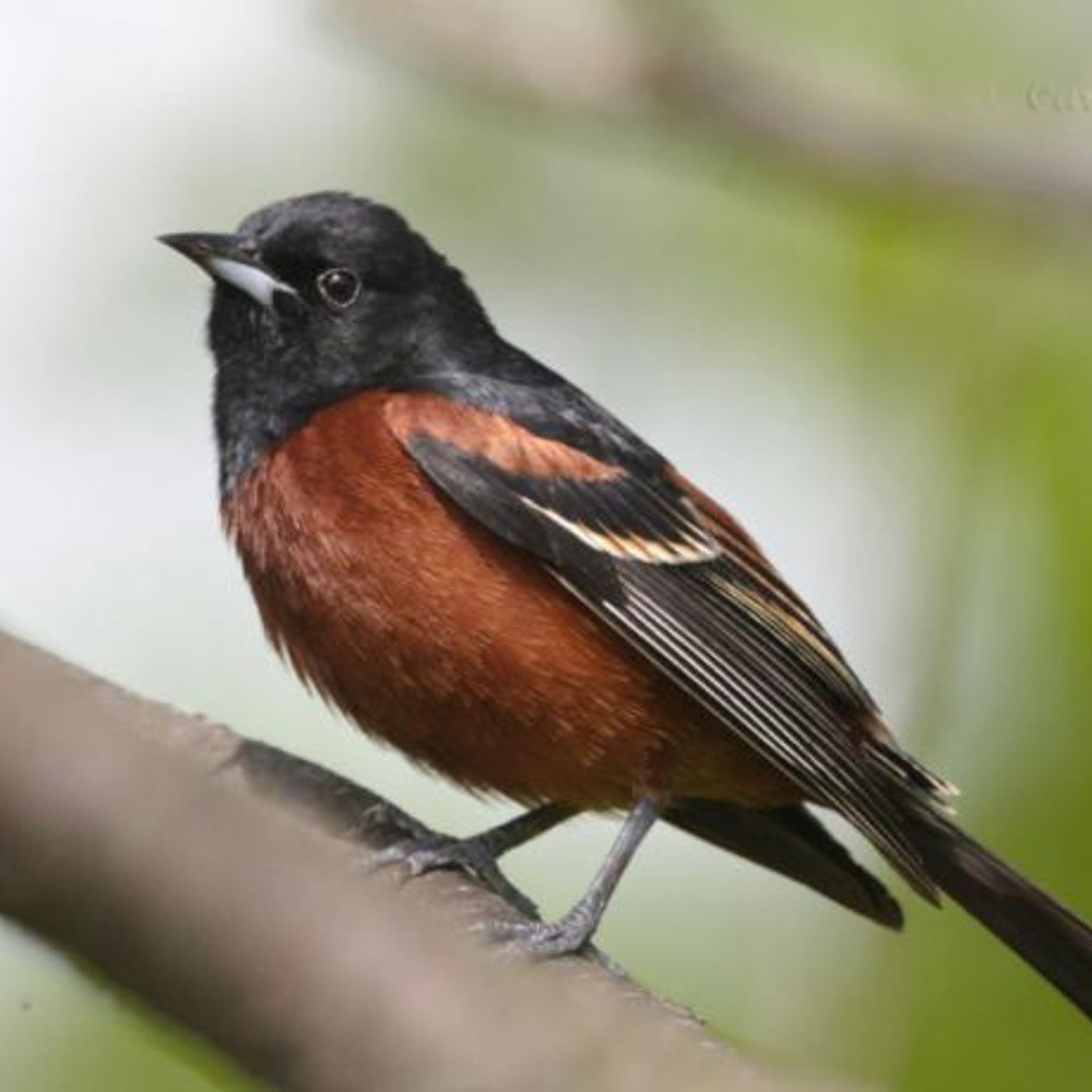
In spring, millions of songbirds — like the Orchard Oriole — migrate north across the Gulf of Mexico, from the Yucatan to the southeastern U.S. When birds encounter storms or headwinds, many may die. Why risk such an end, when they could migrate north along the length of Mexico? It's likely that many birds evolved to take the potentially perilous trans-Gulf route because it is direct and considerably faster, putting the birds on the best breeding territories more quickly.
¡Escuche este episodio en español!
More info and transcript at BirdNote.org.
Want more BirdNote? Subscribe to our weekly newsletter. Sign up for BirdNote+ to get ad-free listening and other perks.
BirdNote is a nonprofit. Your tax-deductible gift makes these shows possible.
Hosted by Simplecast, an AdsWizz company. See pcm.adswizz.com for information about our collection and use of personal data for advertising.
Available Results
Generated results are saved to the knowledge database for reuse and search.
Extract Knowledge
Pick what you want extracted first. Model, scope, and chapter options appear after a template is selected.
Transcript
Songbirds Migrate Across the Gulf of Mexico | BirdNote
Skip to main content
Skip to navigation
Your Donation Makes BirdNote Possible!
Give a Gift Today
Today's Show:
An App That Helps You Hear High-Pitched Bird Songs
Listen In
Menu
Your Donation Makes BirdNote Possible!
Give a Gift Today
Today's Show
Listen
Search All Shows
BirdNote Daily
Bring Birds Back
Threatened
BirdNote en Español
BirdNote Presents
Sound Escapes
How to Listen
Explore
Field Notes
BirdNote+
Sights & Sounds
Birdwatching
Resources for Educators
How to Help Birds
From Love to Action
Take the Survey
Resources: Take Action for Birds
About
Who We Are
The Team
Board Members
DEI/IDEA Commitment
Partners
Science Advisory Council
For Radio Stations
Work With Us
Contact Us
FAQs
Support BirdNote
Shop
Donate
Your Donation Makes BirdNote Possible!
Give a Gift Today
Search
Image:
Join BirdNote tomorrow, November 30th!
Illustrator David Sibley and actor H. Jon Benjamin will face off in the bird illustration battle of the century during BirdNote's Year-end Celebration and Auction!
RESERVE YOUR SPOT
Songbirds Migrate Across the Gulf of Mexico
April 26, 2026
Such a long trip for a tiny bird!
Listen Now
Subscribe to BirdNote Daily
Share This:
Share to Facebook
Share to Twitter
Share to Email
Expand Image
© Carl Sheely
In spring, millions of songbirds — like the Orchard Oriole — migrate north across the Gulf of Mexico, from the Yucatan to the southeastern U.S. When birds encounter storms or headwinds, many may die. Why risk such an end, when they could migrate north along the length of Mexico? It's likely that many birds evolved to take the potentially perilous trans-Gulf route because it is direct and considerably faster, putting the birds on the best breeding territories more quickly.
¡Escuche este episodio en
español
!
Full Transcript
Credits
BirdNote
®
Trans-Gulf Migration
Written by Bob Sundstrom
This is BirdNote.
[waves, coastal]
In spring, millions of songbirds migrate north across the Gulf of Mexico, from the Yucatan to the southeastern US. One author describes this crossing as “one of the greatest crapshoots in bird migration.” When the weather is fair and tailwinds strong, the flight — while metabolically taxing — is completed quite handily. But when birds encounter rainstorms or headwinds, they struggle mightily, and many may die.
[Strong wind and rain]
After fighting sustained bad weather, birds reaching the US coast are exhausted and famished. They drop into the nearest shrubs and trees by the thousands.
[Begin Tennessee Warblers calling]
Picture a shrub loaded with colorful tanagers and orioles, such as these Orchard Orioles.
[Orchard Oriole singing]
Or a tree full of brilliant warblers! These are Tennessee Warblers!
[Tennessee Warbler singing]
But why risk exhaustion or a watery demise, when birds could instead migrate north along the length of Mexico?
[Tennessee Warbler singing]
It’s likely that many birds evolved to take the potentially perilous trans-Gulf route because it is direct and considerably faster. The trans-Gulf flight saves nearly a week of travel time, putting birds on the best breeding territories more quickly, and thus increasing their chances of raising more young.
[Song of Orchard Oriole]
Find more about trans-Gulf migration at BirdNote.org. I’m Mary McCann.
###
Senior Producer: Mark Bramhill
Producer: Sam Johnson
Managing Producer: Jazzi Johnson
Managing Producer: Ariana Remmel
Content Director: Jonese Franklin
Bird sounds provided by The Macaulay Library of Natural Sounds at the Cornell Lab of Ornithology, Ithaca, New York. Orchard Oriole song recorded by G.F. Budney. Tennessee Warbler [calls recorded by B. Clock. Song of Tennessee Warbler by [136180] M. Medler. Wind #2 and rain #12 Nature SFX Essentials recorded by Gordon Hempton of QuietPlanet.com.
BirdNote’s theme music was composed and played by Nancy Rumbel and John Kessler.
© 2014 BirdNote   April 2014 / 2026   Narrator: Mary McCann.
ID# migration-06b-2014-04-30
Reference:
Weidensaul, Scott. Living on the Wind: Across the Hemisphere with Migratory Birds. New York: North Point Press, 1999, p. 252.
Bob Sundstrom
Writer
Mary McCann
Narrator
Tags:
Bird Abilities
,
North America
,
ocean
,
migration
,
shoreline
Related Resources
Orchard Oriole — More at All About Birds
Birds connect us with the joy and wonder of nature. By telling vivid, sound-rich stories about birds and the challenges they face, BirdNote inspires listeners to care about the natural world – and take steps to protect it.
Support BirdNote
About
Annual Report
Contact
Science Advisory Council
Pitch Page
Work With Us
Sign up for our newsletter!
Email
BirdNote on Instagram
BirdNote on Facebook
BirdNote on Youtube
BirdNote on Tiktok
BirdNote on Linkedin
Copyright 2025. All rights reserved.
Privacy Policy