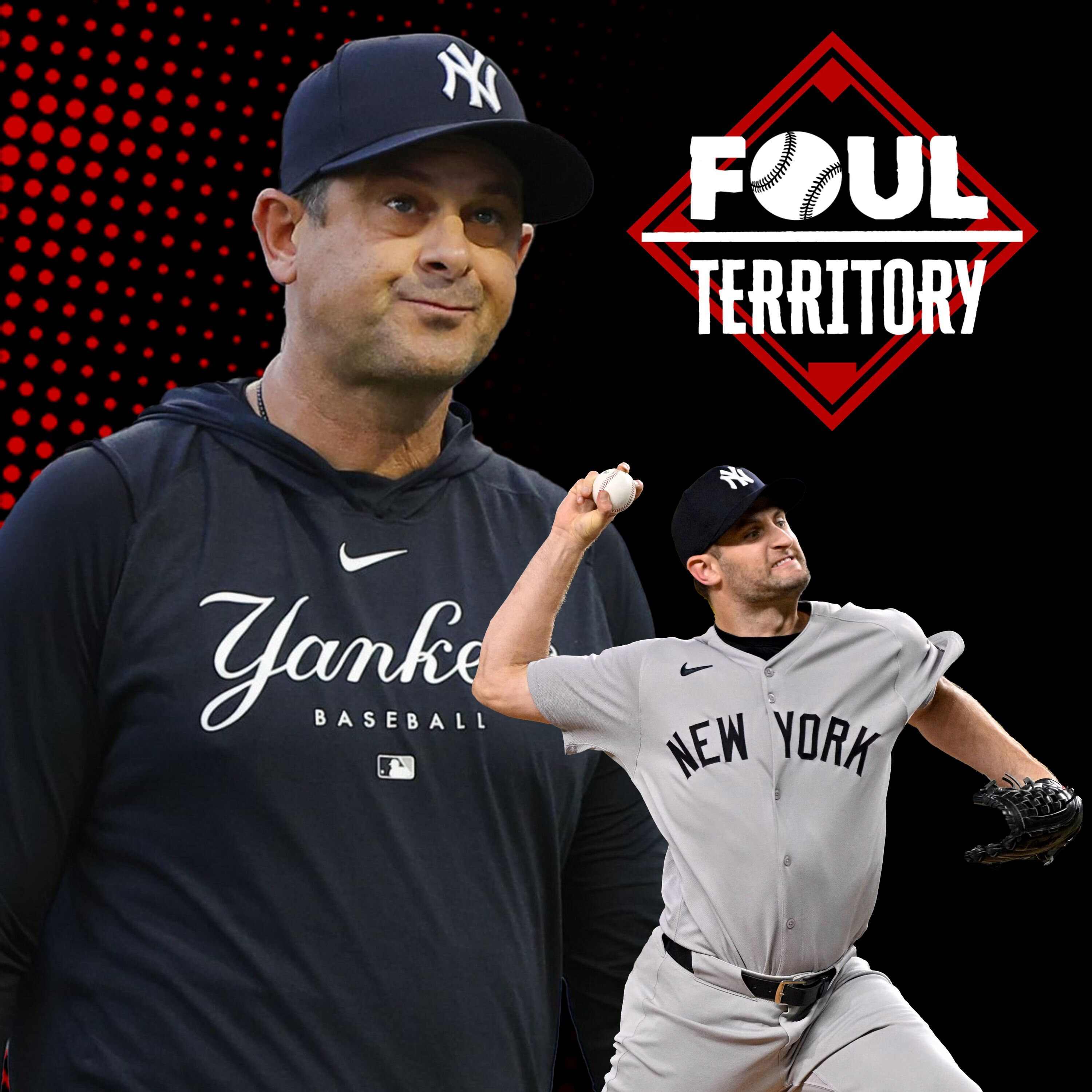
What is wrong with the Yankees?
Newsday Yankees beat writer Erik Boland dissects the top-to-bottom issues plaguing the Bronx Bombers right now. What is the clubhouse vibe during this downfall and why did the team option new addition Jake Bird so quickly?
Hosts: Todd Frazier, Cameron Maybin, Scott Braun
For 20% off your first purchase, head to FairHarborClothing.com/FOUL and use code FOUL
See omnystudio.com/listener for privacy information.
2025-08-06
19 min
Transcript
Available Results
Generated results are saved to the knowledge database for reuse and search.
No generated results are available for this episode yet.
Extract Knowledge
Pick what you want extracted first. Model, scope, and chapter options appear after a template is selected.
Generated results for public episodes are saved to the knowledge database so they can be reused and searched later.
Transcript
00:00:04
Speaker 1: News Day Yankees beat writer Eric Boland is here. Eric, thank you for joining us therapy session for many Yankee fans that tune into our show. So let's just start with a nice and simple how you doing and what is wrong with the Bronx Bombers right now?

00:00:19
Speaker 2: Well, first of all, Hi, Scott Todd Cameron covered two of you guys in your brief time with the Yankees, so good to see you in this context.

00:00:28
Speaker 3: And yeah, if.

00:00:29
Speaker 2: It's a therapy session, I'm not sure that I have much to offer in the way of silver lining. I guess there's a few things, but you know, they're they're they're an unmitigated mess. Right now, we can just start.

00:00:40
Speaker 1: There, Okay, elaborate for us on what you're seeing that is the biggest concern with the ball club. As I know, you know Judges making his way back. We'll see what he looks like. But I mean, let's start with what stands out on a national level. Sloppy play. You you watch them every day, you cover this team at day, do you feel that when you're seeing this team because sometimes statistically, I think this weekend it was pointed out how they don't run into that many outs on the basis compared to other teams, and I'm like, well, they're either getting a ton of attention or the ones that they are running into are really glaring and costing them.

00:01:16
Speaker 4: Well.

00:01:16
Speaker 2: I mean, the thing of it is, you know, the Yankees love to quote their internal numbers to you, and so they'll tell you that their internal numbers that they're really not that bad when it comes to some of that stuff. But I always feel with so many of those numbers, you can make them do for you exactly what you want them to do. I remember a few years ago when they had Isaiah Connor fileffa at shortstop and he was just having a terrible year there, and Isaiah, it would be the first one to tell you that he wasn't very good. And the Yankees kept telling us about their internal numbers showing that he was a top five, top to ten shortstop in the league. And I remember talking to analytics people with other teams and they said, yeah, we find that laughable.

00:01:55
Speaker 3: That's certainly not what our numbers show.

00:01:56
Speaker 2: But I do feel the Yankees, you know, excel in you know, quoting their own numbers. They don't show us those numbers, but say, you know, basically don't believe your your lion eyes.

00:02:08
Speaker 4: You know.

00:02:09
Speaker 2: Look, I think we can almost start with what Derek Jeter and Alex Rodriguez said over the weekend on the Fox pregame show before the Speedway Classic about, you know, the very little accountability sloppiness, and you've seen it repeatedly and it didn't start in the fifth inning, which of last year's Game five of the World Series. We saw that disastrous inning when the Yankees coughed up the five nothing lead.

00:02:33
Speaker 3: But look, the.

00:02:36
Speaker 2: Bottom line on this is the Yankees have been a poor fundamental team for a number of years now. And this is an organizational problem. It's not an Aaron Boone problem. And I've talked to scouts that are assigned to the Yankees minor league system for years about this, and they've talked about how from the bottom levels all the way up through Triple A, fundamentals are not stressed. It's all about exit velocity, spin rate, drive lined, you know, all of the things that have become a big part of the sport in the last decade.

00:03:05
Speaker 3: And there's a place for all of that.

00:03:07
Speaker 2: But what you're seeing is is there's not an emphasis on actually playing the game well. Playing the game instinctually, and you can't measure that stuff, but you know when you see it or when you don't see it. And I still remember when did grigoris guy player you guys are very familiar with, when he rehabbed for a couple of weeks back in twenty nineteen in the minor leagues, coming back for an injury, and he came back to the big league clubhouse and told several of his teammates, quote, you wouldn't believe some of the shit going on in our minor leagues. And he was talking about what I'm talking about, where all of the emphasis was on again exit velocity, hitting home runs, spin rate for pitchers, et cetera. And there wasn't a lot getting done in terms of making sure the guys actually play the game in a competent way. So I don't know why people are suddenly shocked there's gambling going on in the casino, if you will, when they you see at the big league level, it's the exact same thing. But again, Aaron Boone is the face man for a lot of this in terms of the slings and arrows coming from the from the fan base and a lot of the media but I'm telling you this is a top to bottom organizational issue, and it has been for.

00:04:20
Speaker 3: A while now.

00:04:22
Speaker 5: I love everything about I don't love it because you know, you want them to win. We all want them to win. But you've hit pretty much everything right right on the head there of all the question I had. But the other question I had, you're in the clubhouse pretty much every day. How is it in there? I mean, is there is there people?

00:04:39
Speaker 4: You know? Not?

00:04:40
Speaker 5: Is it one side here, one side there? I mean, there's gotta be some dissension in there. Something's going on because they don't look like they're loving the game of baseball as much. And when you're in the clubhouse, you've got to have that love, that energy. Is there anything going on in that clubhouse where you're like up, same day, here they go again, you know, like nobody seems to be, you know, either root for each other, wanting to be around each other.

00:05:02
Speaker 1: No.

00:05:02
Speaker 2: I mean, I think Todd, it's a relatively close, you know group, And I spend as much time as I can in the in the clubhouse just talking to guys, not usually with a notebook or a recorder, but just you know, talking about a variety of things. Sometimes baseball, a lot of times not baseball related, but you know, it's a professional clubhouse, and I can tell you that the preparation is the exact same, the desire to win is the exact same as it was when when this team in the middle of June had the second best record in the American League.

00:05:36
Speaker 3: I haven't picked up on.

00:05:37
Speaker 2: Any dissension or anything like that, but I don't think there's any question that the way things have been going, and this period of poor play has been going on for nearly two months now, that it is wearing on guys somewhat. And I believe that they're feeling the pressure. And you know, you guys put on the pinstripes and you can speak to this certainly better than I can. Reggie Jackson, legendary Yankee, always had a quote that the pin stripes are heavy, and he talked about not everybody can handle the pressure that comes with putting on a Yankee uniform, and they can excel elsewhere, but then they come here and it's a little bit more difficult because every single game gets treated. To quote Brian Cashman, the longtime general manager, every game is a one game season based the way that's treated by the media and the fan base, and not every player can handle that. We saw it with Sonny Gray when he was here, he was an all He's been an all Star, I think at every stop he's been other than New York. We saw the disastrous Joey Gallo trade from from a few years ago, and we don't know what the new.

00:06:40
Speaker 3: Guys exactly how they're going to handle it. It's too small of of a sample size.

00:06:44
Speaker 2: But in terms of the clubhouse and the professionalism and the preparation and guys getting along, the chemistry is fine in the in the clubhouse, and it's just it's not it's not translating into the field the way that it was the first two and a half months of the season.

00:07:01
Speaker 1: Obviously, it's summertime, it's bathing suit time, and it's time to get a better bathing suit liner. It's twenty twenty five crats. I would like to feel more comfortable, and I would like to thank Fair Harbor for doing that.

00:07:13
Speaker 2: It's super easy get the Fair Harbor Breezon it liner in your shorts.

00:07:17
Speaker 5: You can go play football on the beach, you can play paddle ball, and you don't got.

00:07:22
Speaker 4: To worry about that.

00:07:23
Speaker 3: Crappy liner that other bathing suits have.

00:07:26
Speaker 1: H it is so comfortable. You gotta check it out. I'm telling you, it's like butt but a baby. You gotta check out the Fair Harbor not only bathing suits, but they carry a full line of casual clothing shorts, shirts, hoodies. Go to the website Fairharbor Clothing dot com, slash foul and use code foul for twenty percent off your first purchase. That's fair ha R b o R Clothing dot com. Backslash foul for twenty percent off your first purchase, and make sure that you use the ft promo code so that they know we sent you and you get the discount.

00:08:02
Speaker 5: Foul.

00:08:03
Speaker 6: Okay, Eric, this is this, This is me ripped. This is me ripping up my questions. I don't thought all was out in the chain because you said some things.

00:08:10
Speaker 4: That that that worried me and I tweeted this the other day.

00:08:14
Speaker 6: You know, it's beautiful to start off how the yankee started off high, and this is why it's so imperative to start off really really well.

00:08:20
Speaker 4: Uh but you.

00:08:21
Speaker 6: Said something that that kind of that kind of bothers me or words me let me say when you say the routine hasn't changed.

00:08:29
Speaker 4: I was around Dave Winfield and San Diego, and one thing.

00:08:32
Speaker 6: That he really always talked to me about as a player was you can't be afraid to try something different. Well, you know, the Yankees have not played good baseball for the past few months, not consistent quality baseball. Do you in your opinion or you know or or is there anything that they're changing in the routine.

00:08:50
Speaker 4: Prior to the game, Because something has to change.

00:08:52
Speaker 6: You can't just continue to do play the same way and then continue to prepare the same way and expect to get different results. So I'm curious on on your and as you watch and foll these guys, do you think there's something that they need to concentrate more on and is there or also too, are the Yankees just who they're showing us that they are right now because you get to a certain point of season where you are who you are, I believe.

00:09:16
Speaker 2: Well, that's kind of a multi layered question, camera, and I let me turn that around the first part of your question to you, both you and Todd as former big leaguers, you know what is the line we all know about the grind of one hundred.

00:09:32
Speaker 3: And sixty two game season.

00:09:33
Speaker 2: You guys obviously went through it for a very long time in the big leagues when things aren't going well. What is the point where you suddenly change things up and what are those things?

00:09:48
Speaker 4: Yeah, for me, I'll answer it side. I'll go first.

00:09:51
Speaker 3: For me.

00:09:51
Speaker 4: You know, when I'm watching the games.

00:09:53
Speaker 6: I think guys, and we talked about Milwaukee Brewers, guys not understanding who they are, right.

00:09:58
Speaker 4: We could plain about Anthony Vopi.

00:10:00
Speaker 6: You know, he's gonna you're gonn struggle at times on defense, but offensively, you know. And I watch him and I watch Jazz, and I watch some of these guys that should be table setters. It's the same swing. It's a feaster famous swing. It's swinging for the defense, whether you're at home or you're on the road, where it's like, you know, the old school back through the middle, low line drives. Reggie Jackson told me, Hey, when I first came to the New York Yankees, Hey, Cam, collect your hits, like, get your hits first. Then once you start feeling good, then you could do a little bit more. For me, it's just what kind of conversations are they having with guys like Jazz, who I know you have seventeen eighteen homers, but you need to be getting on base. You need to be stealing. Jason Deminguez force the issue. Let's create some havoc on the basis. For me, those would be things and then that start to VP and ty can can follow up off this. Some of those guys say, let's shorten up. You know, I watch Aaron Judges Mike and excuse me not Mike stand.

00:10:48
Speaker 4: I still call him Big Mike. John Carlos stand.

00:10:51
Speaker 6: I watched these guys hit hard ground balls and line drives early in VP rounds. They're not trying to hit homers. So you know, understanding who you are at the big league levels and poor and I think you know that's a part of the changes that need to be made.

00:11:05
Speaker 5: What kind of role are you? What role player are you? I think that's the biggest adjustment some guys got to make. They come up there thinking, oh, I got to be somebody different. No, if you be you and control your controls, you're going to be just fine. If you're a leadoff guy, get on base. If you're one of those guys that are in a three to seven hole, time to bop some RBIs and forget about the paperwork in the TV. What is he throwing He had two seamers running in a little bit slider away, Like, you don't need any more else than that. Percentages throw them out the window. When you're struggling, come together as a unit and communicate. I do see the Yankees doing that a lot. But at the same time, how much are they taking that intake in and bringing it to the field.

00:11:43
Speaker 2: And Cameron, you know, to add on to that, I guess a little bit when you talk about changing things up. But one of the things that drives me nuts in this sport and actually all professional sports. You've heard this phrase more and more over the years, and the Yankees certainly will make you nauseous with it is they talk about, well, the process is sound, and if it's not working, then you've got to change the process. But you know, the Yankees internally in the organization and this is not one of my anti analytics screens. And I get so tired of arguing with people in the Yankees front office about this, or they say, well, when you criticize that, you're just anti analytics, and I'm like, well, some of mys sources are actually analytics guys with other teams. So I'm not anti analytics by any stretch, but sometimes you have to look inward and say and evaluate everything and say, you know, what we're doing is not working. It's not translating to the big league level. Maybe we need to simplify some things. Maybe we don't need to constantly have the iPads out and constantly looking at you know, again, you know all of the metric numbers. One person the organization that I was talking to a couple of days ago and said, yeah, you know, we're just the stat cast kings. That seems to be all that we that we care about. And I'm not saying that's necessarily what the play is first and foremost in their mind, but if you come up through the minor league system with that, then then maybe that's what you think is most important. I remember talking to a scout as a Yankees minor league system from another team about two weeks ago, and he had seen the system from the lower level low A ball all the way up to Triple A and he said, he said, it drives me crazy. He goes you watch batting practice. He said, it's like softball banning practice. It's just uppercut, swing as hard as you can and see how many balls go over the fence.

00:13:28
Speaker 4: Well, that's kind of not what.

00:13:29
Speaker 2: You guys are describing in terms of how big leaguers should prepare to hit. And you you mentioned Judge, and you mentioned Stanton, and they have their own routines, and those are routines that have been honed over, you know, many years in the major leagues. I just think that organizationally, and I said this two years ago when they won eighty two to eighty and missed the playoffs in the season, just careened into a ditch in the second half, is that when that season ended, that they needed to internally as an organization ask themselves some very difficult questions about their methodology and in their minds what they believe is unassailable methodology because they nobody's more sensitive than the analytics guys when you criticize them. I can tell you that from first hand experience over the years. You know, the pro scouts, they've got to sign their names to all of their reports and they have to live with that, good or bad. The analytics guys, I think a lot of times hide behind their computers and they say, well, you know, the process is there. It should have worked out, and you know, if it didn't work out, it's on somebody else, But it's not on us. That's a whole nother I guess tangent there. But Cameron, your second question is this who they are? I mean, it's been a jeckle in a high season. I mean they were seventeen games over five hundred after they swept the Royals on June twelfth in Kansas City, and then since then they got they went into Fenway Park, got swept by the Red Sox and they've been you know, I think it's now twenty eight out of forty six games since then that they've lost. So, you know, when they built the record to seventeen games over five hundred, they had one of the best starting rotations in the game, they had one of the best bullpens, and their offense was leading in pretty much every category. And almost none of those things have been the case the last almost two months now. And then you throw in the consistent sloppy play, bad base running, et cetera. Mental brain freezes physical mistakes all of the above, and you get you know, where they are? So who are they exactly? I think that's who they are. And when you look at the September schedule where they get a healthy dose of a couple of series against the Orioles, the Twins, who you know, since two thousand and two, I think they've won seventy five or eighty percent of their games against the Twins. And that's actually not you know, hyperbole, that's pretty accurate. And the White Sox are thrown in there. You know, this team certainly has the capabilities of getting hot in September, but they have not shown any indications that they're capable of doing that.

00:16:02
Speaker 5: Last question here.

00:16:05
Speaker 4: Ahead, go ahead ahead.

00:16:07
Speaker 5: Last question for me. Jake Bird to innings, seven runs is the guy they were looking for important innings coming in here and it just didn't have it coming from Colorado. Talk a little bit about that, and you know, just another another one to write off right now. He's got to he's got to find himself.

00:16:25
Speaker 2: Yeah, you know, And I don't know Jake well, and this is not a shot I got him by any stretch of imagination. But as as you guys know, there were probably twenty teams looking for bullpen help before the trade deadline. The Yankees certainly were pretty high on that list and talking to scouts from other teams that were looking for bullpen help and that had scouted Jake Bird. There was a lot of concern from those guys that Bird had been basically run into the ground first few months in Colorado. And you look at it, he had forty five appearances with the Yes at the time that the Yankees traded for him, and he had a really bad July, which obviously is the time leading up to the to the trade deadline, and there were quite a few teams that backed off of him for that reason. Uh. And I suspect just a suspicion, because I've seen this with with the Yankees and trade deadline acquisitions in the past. Started Joey Gallows a good example where uh, you know their analytics wings decided, well, we'll fix them. We've we've got all the answers, we've got our pitching lab, and uh, you know, nobody likes to pat themselves on the back more for being cutting edge, uh than that the Yankees do. And that that they ignored basically the fact that there were some concerns industry wide about Bird, not that he was injured or anything like that, but just basically that he might you know, have been you know, overused a bit with Colorado, and his numbers did show that in uh in July with with the Rockies before the deadline. I think he had five v R A or something like that in the month of July before the trades. So you know, look, I mean, he's certainly is a capable guy. He has shown that before. Maybe he gets himself right in a triple A. That move was made because Mark Lighter Junior is coming off the il before tonight's game, So you know, there's still a decent chance that we see Bird at some point back here in the big leagues, but again in the industry because there were so many teams looking for relievers. That's one thing that I heard from scouts from other teams about Bird that there was just a little bit of worry that maybe he had been overly text by the Rockies before the deadline.

00:18:37
Speaker 1: Well, now let's send him down to get a little break and we'll see what happens. They've done a nice job getting some bullpen guys together and obviously shining Luke Weavers a shiny story. But yes, I'm with you, they probably got a great deal because his stock was low and you know again run off.

00:18:51
Speaker 4: His loves that Eric, this was great.

00:18:53
Speaker 1: Thank you so much for the time. Appreciate you and everyone check out Eric's work both on Twitter and of course Newsday.

00:19:00
Speaker 4: Thank you, Eric, Scott, Todd Cameron.

00:19:03
Speaker 2: Look forward to seeing you guys down the road.
Chapters
No chapters available.