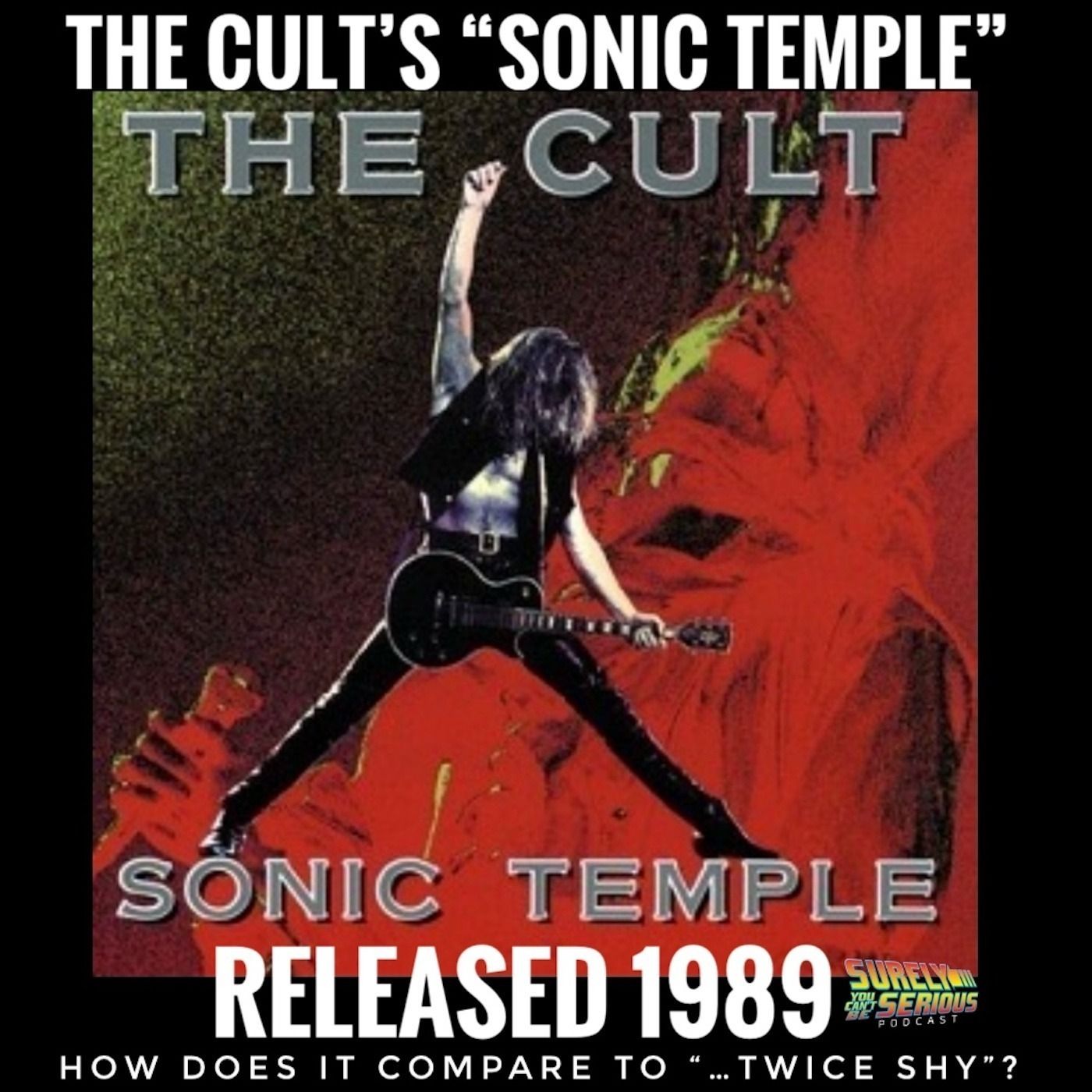
The Cult "Sonic Temple" (1989): Track by Track!
In this episode of the "Surely You Can't Be Serious" podcast, hosts Jason and Dee delve into the captivating history of the legendary band The Cult. They trace the band's evolution from their early days to their breakthrough in the 1980s rock scene. The focal point of the episode is an in-depth, track-by-track discussion of The Cult's iconic 1989 album "Sonic Temple," where they analyze the lyrics, musical style, and significance of each track. Additionally, Jason and Dee highlight the band's career highs, such as their hit songs and iconic performances, as well as the lows, including internal struggles and industry challenges. This episode offers a thorough and engaging exploration of The Cult's remarkable journey in the world of rock and roll.
2024-06-25
55 min
Transcript
Available Results
Generated results are saved to the knowledge database for reuse and search.
No generated results are available for this episode yet.
Extract Knowledge
Pick what you want extracted first. Model, scope, and chapter options appear after a template is selected.
Generated results for public episodes are saved to the knowledge database so they can be reused and searched later.
Transcript
<v Speaker 1>This is Chris.
<v Speaker 2>Go ahead, make my day by listening to the Shirley
<v Speaker 2>You Can't Be Serious Podcast as Jason and d make
<v Speaker 2>your day digging deep into classic movies and albums from
<v Speaker 2>the eighties and nineties. Hello everybody, and welcome back to
<v Speaker 2>the Shirley You Can't Be Serious Podcast today, as we
<v Speaker 2>dive into an album of nineteen eighty nine that was
<v Speaker 2>so big and so cool, the Cult's Sonic Temple. Today
<v Speaker 2>we've got James Buckley on drums, We've got d Graves
<v Speaker 2>with his pick held in the air high, and I,
<v Speaker 2>of course am wearing my furry stetson with the skull
<v Speaker 2>and crossbones on it. We are ready to discuss the
<v Speaker 2>Cult Sonic Temple.
<v Speaker 1>James, how you doing, man?
<v Speaker 3>Wonderful hot day in Louisiana, but that's pretty much every
<v Speaker 3>day in the summer.
<v Speaker 1>How you doing? Yeah? Amen? Over here in Oklahoma, it's
<v Speaker 1>hot up here too.
<v Speaker 3>You guys have put me in a tough position. After
<v Speaker 3>a great white last week, I went back and listened
<v Speaker 3>to that album over again, and I've been listening to
<v Speaker 3>Sonic Temple a lot. This is a tough call, man.
<v Speaker 3>Oh I don't put losers, It's right we don't think
<v Speaker 3>it was like vingeance for kil Welch or Salma Hayek.
<v Speaker 3>I mean, it's just where do you go?
<v Speaker 4>I mean, I gotta. I have to actually give it
<v Speaker 4>up to Jason on this one. This was completely his
<v Speaker 4>idea because number one, I wasn't a huge great white guy.
<v Speaker 4>I mean I knew a little bit of their stuff,
<v Speaker 4>but I literally didn't know who the Cult was when
<v Speaker 4>he was like, we should do the Cult and I'm like,
<v Speaker 4>who's that?
<v Speaker 1>I don't I didn't know him.
<v Speaker 4>And so this is a genuine forty eight year old
<v Speaker 4>man virgin experience with this album that you're about to
<v Speaker 4>hear my take on. So if you've never heard this
<v Speaker 4>album four, you're not alone in the room.
<v Speaker 1>I was.
<v Speaker 4>I was a brand newbie when I listened to it
<v Speaker 4>for the very first time to do this podcast.
<v Speaker 1>So I'm excited to talk about it.
<v Speaker 2>I'm excited to hear your your reaction. So, hey, I
<v Speaker 2>did want to shout out our buddy on Twitter, Adam Mushouski.
<v Speaker 2>He said, Hey, I wasn't a big great white fan.
<v Speaker 2>I don't really even remember Twice Shy that much, but
<v Speaker 2>he said along with several other albums, you guys made
<v Speaker 2>me re listen, rethink, and reappreciate basically, so and I
<v Speaker 2>told him, I said, man, that's that's a huge compliment
<v Speaker 2>for us. If we can we can get people to
<v Speaker 2>take a second look and a second opinion, that's big
<v Speaker 2>lead compliment.
<v Speaker 4>I'll take it absolutely. So all right, let's just jump
<v Speaker 4>in and start talking these tracks.
<v Speaker 1>I got to tell you.
<v Speaker 4>I will give you my take, you know, I will
<v Speaker 4>tell you my first experience with the album. I put
<v Speaker 4>the headphones on, I turned the volume up. I'm thinking, Okay, imagine,
<v Speaker 4>you know, imagine you're fourteen years old again and you've
<v Speaker 4>just bought this album, and I turned this song on,
<v Speaker 4>this very first song for the first time. It's the
<v Speaker 4>introduction that any album would be happy to have. And
<v Speaker 4>I was just like, holy crap, how did I miss this? So,
<v Speaker 4>song number one out of the gate, it's called some Team.
<v Speaker 4>So I can tell you this as a first time listener,
<v Speaker 4>I immediately I'm feeling doors vibes, which apparently was not.
<v Speaker 1>I'm not alone in that. Then the when the first
<v Speaker 1>thing that.
<v Speaker 4>He says at the beginning is this is the end, right,
<v Speaker 4>isn't that the doors?
<v Speaker 1>Right?
<v Speaker 3>Yeah? This is where it all ends.
<v Speaker 4>Yeah, I guess he paraphrased it a little bit, yes,
<v Speaker 4>but but I mean you start with the organ, which
<v Speaker 4>is classic Doors stuff. He sounds so Jim Morrison in
<v Speaker 4>his voice, but it's a completely different style of music
<v Speaker 4>in my opinion, except for maybe one of the songs
<v Speaker 4>on here. One of the songs is very strongly Doors,
<v Speaker 4>but you just get that vibe. But his voice is
<v Speaker 4>so solid, The guitar is rocking, the drums are rocking.
<v Speaker 4>This is a beautiful intro song. Blown my mind.
<v Speaker 3>The word that comes to minds when I hear this
<v Speaker 3>song is swagger, and that's just what this every pretty
<v Speaker 3>much every song on this album has it. But Iansberry
<v Speaker 3>said it was inspired by the decadence of Louis what
<v Speaker 3>the fourteenth do They call it the Sun King back
<v Speaker 3>in France.
<v Speaker 2>Louis the fourteenth. That's right, We need to talk about
<v Speaker 2>that really quick. So Louis the fourteenth became known as
<v Speaker 2>the Sun King when he was fifteen years old and
<v Speaker 2>believed himself to be the absolute ruler of France. He's
<v Speaker 2>one of these guys that believed everybody beneath him.
<v Speaker 1>He was like a god Ian.
<v Speaker 2>Ashbury said, he was known to crap on the floor
<v Speaker 2>and just the servants would just pick up after him.
<v Speaker 2>But he left France broken, busted in bankrupt.
<v Speaker 3>That's a good song title too, but there's definitely an
<v Speaker 3>element of a great interview with Ian Asbury where said
<v Speaker 3>it's very much a heat dog kind of song, and
<v Speaker 3>he said that's kind of person I am too. So
<v Speaker 3>I guess they were trying to start the album off
<v Speaker 3>with just a statement of intent that we are here
<v Speaker 3>to rock you and rock you hard.
<v Speaker 2>It's a great intro song, you know. But I think
<v Speaker 2>a lot of their songs feel like intro songs because
<v Speaker 2>they have that long sort of lead in, you know,
<v Speaker 2>building rock. They're really good at that building intro you know.
<v Speaker 3>Yeah, y'all mentioned last week the Great White Formula to
<v Speaker 3>some of those songs. Yeah, it's kind of on this
<v Speaker 3>album too. You'll notice there's basically two templates for songs
<v Speaker 3>on this album, but hey, they work. I mean the Ramones, AC, DC, Motorhead,
<v Speaker 3>they all released the same album over and over, but
<v Speaker 3>it worked, and I think it works here on this
<v Speaker 3>album as well.
<v Speaker 4>So these guys, they came into this album with Bob
<v Speaker 4>Rock and this is one of Bob Rock's first albums
<v Speaker 4>as producer, right, I mean, and we all know him
<v Speaker 4>now because he's iconic. But the album that they had
<v Speaker 4>heard and they had just come off an album with
<v Speaker 4>Rick Ruben. This album came out in April of eighty nine.
<v Speaker 2>That's right, April tenth, nineteen eighty nine, Sign Temple was
<v Speaker 2>released right.
<v Speaker 4>So before this there was an album in I believe
<v Speaker 4>eighty six or eighty seven, Kingdom Come, Kingdom Come and Again,
<v Speaker 4>a band that I was not familiar with.
<v Speaker 1>But this was kind of.
<v Speaker 4>Bob Rock's first jump into production instead of just being
<v Speaker 4>an engineer with Bruce Fairbairn, which I mean, we've talked
<v Speaker 4>about both of them multiple times because we've covered Doctor
<v Speaker 4>Feel Good and Slippery and Slippery Went.
<v Speaker 2>I mean, they're in the Black album, yeah.
<v Speaker 4>And so they come in having heard Kingdom Come, Kingdom Come,
<v Speaker 4>which I listened to a little bit today on the
<v Speaker 4>way over here, and I was like, this is another
<v Speaker 4>great album that.
<v Speaker 1>I got to check out.
<v Speaker 4>And then it was then this one, this album was
<v Speaker 4>what inspired Lars to call up Bob Rock to do
<v Speaker 4>the Black album. And so that's kind of his stare
<v Speaker 4>stepping is he goes from Kingdom, come to Sonic Temple
<v Speaker 4>to Doctor Feel Good, to the Black Album. I mean
<v Speaker 4>it's just like Bang Bang Bang, And then I think, yeah,
<v Speaker 4>obviously Bonjovi's in there somewhere, but it is a sound
<v Speaker 4>that they were looking for that they hadn't had before,
<v Speaker 4>like the Love album. Well, I guess to start off,
<v Speaker 4>they were punk Ian. Astbury grows up in England and
<v Speaker 4>his family was poor and he felt like he never
<v Speaker 4>fit in, got harassed by teachers at school, and then
<v Speaker 4>they moved to Ontario, Canada for a little while, and
<v Speaker 4>he befriends these Native Americans there and feels like somebody's
<v Speaker 4>finally accepted me.
<v Speaker 1>I finally belong, which is kind of ironic given.
<v Speaker 4>What happens with his Indian persona later on with some
<v Speaker 4>of the some of the guys who talk against him.
<v Speaker 1>But he eventually appears about.
<v Speaker 4>This new punk scene in England sixteen by himself, goes
<v Speaker 4>back to England and starts a punk band, and then
<v Speaker 4>while he's playing with these various punk bands, they ultimately
<v Speaker 4>come up with the band Southern Death Cult.
<v Speaker 3>Yeah, which was named after a group of mound building
<v Speaker 3>Native Americans that was part of an archaeological term for
<v Speaker 3>was it the Southwest Memorial Complex or something to that effect.
<v Speaker 3>So again you're already starting to see signs of Ian's
<v Speaker 3>fascination was Native American iconography culture and all that they
<v Speaker 3>were in the post punk era, which is basically where
<v Speaker 3>punk started slowing down, and hey, we can actually add
<v Speaker 3>melodies to songs, and you had one hands. You had
<v Speaker 3>bands like Joy Division, and then you had bands who
<v Speaker 3>went for a more sinister route like Fields of the Nephilum,
<v Speaker 3>and then you had guys who were like the swab
<v Speaker 3>of romantic types like Bauhaus and Southern Death Cult kind
<v Speaker 3>of fit right at the intersection of all of those guys.
<v Speaker 3>Lasted not very long. Those guys break up. Then he
<v Speaker 3>starts up another band a while later, called Just Death Cult,
<v Speaker 3>which is where I think eventually that's where he first
<v Speaker 3>met Billy Duffy, the guitar player, and.
<v Speaker 4>He and Billy Duffy had toured together when he was
<v Speaker 4>still with Southern Death Cult. Billy Duffy was in Theater
<v Speaker 4>of Hate, and so they toured together those two bands
<v Speaker 4>for a while, and then Southern Death Cult ended up
<v Speaker 4>signing with Baker's Banquet, an indie label, and they put
<v Speaker 4>out a song called fat Man and it does really well,
<v Speaker 4>and so then they get then they're starting to get
<v Speaker 4>interest from the major labels, and what does Ian Aspbery do.
<v Speaker 4>He's like, Okay, I'm dumping all this, like I'm dumping
<v Speaker 4>the band. I'm dumping it all. I got my little
<v Speaker 4>grocery bag full of my possessions. And he goes and
<v Speaker 4>finds Billy Duffy and he's like, how about we start
<v Speaker 4>a band. His goal was never to be a rock star,
<v Speaker 4>which is weird since he went to Billy Duffy, whose
<v Speaker 4>only goal was to.
<v Speaker 1>Be a rock star.
<v Speaker 2>Yeah, their rise to fame is pretty interesting. I think
<v Speaker 2>even Sonic Temple. Ian Astbury was like, Okay, it's time
<v Speaker 2>for us to make a platinum album, like you know,
<v Speaker 2>just checking off the list right.
<v Speaker 4>And apparently if you had any doubt about his leanings
<v Speaker 4>towards the Native American culture, if you happen to see
<v Speaker 4>any of the early stage performances, he would literally come
<v Speaker 4>out in Native American garb with his face painted like
<v Speaker 4>a Native warrior. Like it was there was no mistake
<v Speaker 4>about where his interest was. So James, you've already talked
<v Speaker 4>about this a little bit. You've heard more of their
<v Speaker 4>music than I have. I'm guessing probably more than Jason has.
<v Speaker 4>What do you think about the progression?
<v Speaker 3>Like I said, they started off more on the gothic
<v Speaker 3>end of things. They were kind of aligned with bands
<v Speaker 3>like the Mission UK, kind of the big anthemic sounds.
<v Speaker 3>Then to the next out. First there was dream Time,
<v Speaker 3>then there was Love, where they started stripping down their
<v Speaker 3>sound a bit more. But the time they got to
<v Speaker 3>an electric in nineteen eighty seven, they were kind of
<v Speaker 3>headed to where they really perfected the sound. On Sonic Temple,
<v Speaker 3>they were stripping away out the excess, getting down to
<v Speaker 3>just rifts and drums and loud vocals, which obviously worked
<v Speaker 3>for them.
<v Speaker 4>Well, speaking of rifts and drums and loud vocals, I
<v Speaker 4>think that brings us quite nicely into song number two.
<v Speaker 2>Song number two is called fire Woman.
<v Speaker 4>All right, And so the question that I posed to
<v Speaker 4>my co hosts today on our text chat was, Okay,
<v Speaker 4>which is the better stripper song, fire Woman from Sonic
<v Speaker 4>Temple or Mista Bone from Twice Shy.
<v Speaker 3>I think mister Bone is probably the song that launched
<v Speaker 3>a thousand g strings. There's something about that really snaky,
<v Speaker 3>sinuous groove. That seems to lend itself to a stripper's ball.
<v Speaker 3>I don't know. This song feels more like a bar
<v Speaker 3>fight song.
<v Speaker 2>I think they both work. I think I could see
<v Speaker 2>that happening. I'm not saying I did see anything, but
<v Speaker 2>I'm saying it could happen.
<v Speaker 1>Yeah, you can imagine it.
<v Speaker 2>I can, yes, Yeah.
<v Speaker 4>Well, it was definitely the imagining of it and fire
<v Speaker 4>Woman that inspired me to ask the question in the
<v Speaker 4>first place. Because in nineteen eighty nine, if you wanted
<v Speaker 4>to have platinum album, you wanted to check that box
<v Speaker 4>had to have a stripper song, and to me, this
<v Speaker 4>is that one on this album.
<v Speaker 3>Yeah.
<v Speaker 2>This is the first single released March thirteenth, nineteen eighty nine.
<v Speaker 2>This reaches number forty six on the Hot one hundred,
<v Speaker 2>which is not nearly high enough, especially in that time,
<v Speaker 2>but it did reach number two on the Modern Rock charts.
<v Speaker 4>So I can't spike the football with one song, but
<v Speaker 4>I will spike the football with these two first songs
<v Speaker 4>and say these are the two best songs on the album.
<v Speaker 3>Woh, it's a Mike Tyson one to two combination. Man,
<v Speaker 3>it really is same formula. You start off with the
<v Speaker 3>kind of dynamic vaguely ominous intro. It builds and builds
<v Speaker 3>and builds and then just explodes into a killer riff vocals.
<v Speaker 3>I mean it's a great formula. Whant to fix what's
<v Speaker 3>not broken?
<v Speaker 2>Okay, let me ask you, because the drummers here are
<v Speaker 2>really interesting and you're our resident drummer expert. So Eric
<v Speaker 2>Singer of Kiss plays drums on the demos for this album.
<v Speaker 1>One of the demos. One of the demos.
<v Speaker 4>Yeah, you had Chris. You've got two demos. You got
<v Speaker 4>Eric Singer on one and Chris Taylor on the other one.
<v Speaker 4>Chris Taylor of Pola. Is that what they were, the
<v Speaker 4>Bob Rock Band?
<v Speaker 2>Yeah, okay, Mickey Curry of the Brian Abs Band and
<v Speaker 2>Hallan Oates and Hallan oates and plays drums on the album. Yeah,
<v Speaker 2>And then on tour it's Matt Sore.
<v Speaker 3>They had their pick of the elites back at that time.
<v Speaker 3>I mean, Mickey was all over the place. If you
<v Speaker 3>rocked out to eighties rock radio at some point you
<v Speaker 3>were rocking out to Mickey Curry and Matt came on
<v Speaker 3>there at the end for the tour. Actually, I don't
<v Speaker 3>think Matt ever recorded with him, but he definitely did
<v Speaker 3>several tours with him, so and he's a powerhouse himself.
<v Speaker 4>I saw Matt sum talking about being a part of
<v Speaker 4>the band and he said, these guys had made a decision.
<v Speaker 1>They had a drummer.
<v Speaker 4>I don't remember who the drummer was that they had
<v Speaker 4>that was a bad heroin addict. But basically when they
<v Speaker 4>started touring with this album, they've got Matt Sorem on
<v Speaker 4>and they had made one rule, no drugs. Now they
<v Speaker 4>were drinking like fish, but no drugs, right, and the
<v Speaker 4>drinking was to say it was out of hand is
<v Speaker 4>a bit of an understatement. But everybody told Matt Sorem listen,
<v Speaker 4>Ian is the worst and if he comes knocking on
<v Speaker 4>your door in the middle of the night, don't answer
<v Speaker 4>the door. And Matt Sorrem was like, but I wanted
<v Speaker 4>to be friends with him. And so in the middle
<v Speaker 4>of the night he came knocking on my door and
<v Speaker 4>so I was like, okay, I'll open it for him.
<v Speaker 4>I'll be okay, opens the door and Ian Astbury, in
<v Speaker 4>a drunken psychotic episode, comes in and smashes lamps, pictures,
<v Speaker 4>furniture and then pulls down his pants to do something
<v Speaker 4>and before.
<v Speaker 1>He too whatever it is that he's going to do.
<v Speaker 4>Matt Sorm runs into the hallway, rakes the break in
<v Speaker 4>case of emergency, Glass pulls out the fire extinguisher, comes
<v Speaker 4>back in and hoses Ian Asbury down with a fire
<v Speaker 4>extinguisher before he can start or finish the deed as
<v Speaker 4>it is.
<v Speaker 2>A Matt Sorm had front row tickets to the craziest
<v Speaker 2>lead singer bs in the late eighties early nineties because
<v Speaker 2>he goes on to hang out with the Guns and
<v Speaker 2>Roses guys and it's Axl Rose all over the place,
<v Speaker 2>you know.
<v Speaker 3>So yeah, and then he has Scott Wiland for a while.
<v Speaker 2>That's right, he does have Skott Willer, that's right.
<v Speaker 4>He went on to play drums with like staying after this, right,
<v Speaker 4>I mean, he's one of those guys that's just everywhere.
<v Speaker 2>I love this. Bob Rock told Mickey Curry to play
<v Speaker 2>drums like Keith must I thought that was a great quote.
<v Speaker 3>Oh the big drum breakdown in the middle of Firewoman.
<v Speaker 3>That's total Keith communion, just toms and cymbals everywhere. I
<v Speaker 3>love it. I've tried to duplicate it with a band
<v Speaker 3>I played in a few years ago, and I can
<v Speaker 3>come close. But man, there's a reason people like nik
<v Speaker 3>Here on so many albums. They take everything up a level.
<v Speaker 2>Yeah, Bob Rock actually talked about making Curious, said he
<v Speaker 2>made the band better.
<v Speaker 1>And Bob Rock says, you know.
<v Speaker 2>When I hear Firewoman on the radio, I think to myself,
<v Speaker 2>that song's good.
<v Speaker 3>Quick story about this song. This was my first real
<v Speaker 3>exposure to the Cult. It was nineteen eighty nine. I
<v Speaker 3>was a freshman in college. I was working in a
<v Speaker 3>Walmart store. We closed one night and all the customers
<v Speaker 3>were out, and the assistant manager was a guy named Ross,
<v Speaker 3>who's such a couple of years younger than me. He
<v Speaker 3>goes to the back. We don't see Ross for a
<v Speaker 3>few minutes, and then this song just starts pouring over
<v Speaker 3>the loud speakers. He went back and put the a single, Yes,
<v Speaker 3>thek a single for fire Woman. A nice cloud speaker.
<v Speaker 3>You know. I may have heardard Love Removal Machine earlier
<v Speaker 3>on the local rock stations that it never really clicked
<v Speaker 3>with me. As soon as this song kicked in. I
<v Speaker 3>was a Sonic Temple fan.
<v Speaker 2>That's right, me too. Actually, this is the first time
<v Speaker 2>I heard the Cult. They were played this song on
<v Speaker 2>MTV all over the place. By the way, quick recap
<v Speaker 2>of nineteen eighty nine the Modern Rock yearly chart. This
<v Speaker 2>finished number twenty nine for the year, and the song
<v Speaker 2>right in front of it Sewing the Seeds of Love.
<v Speaker 4>Oh nice, here's for two Fears to throw back. Check
<v Speaker 4>out that episode earlier this season, sorright.
<v Speaker 2>My only complain about this song is the video. Okay,
<v Speaker 2>so I don't know if you guys seen the video lately.
<v Speaker 2>You do have the kick butt rock, You've got the
<v Speaker 2>skull hat, you know, the cowboy hat with the skull
<v Speaker 2>and crossbones. You got Billy Duffy going crazy, but there
<v Speaker 2>is no fire woman in the video. Seems like that
<v Speaker 2>would be a perfect place to put stripper something you
<v Speaker 2>know eighties mixen for us to enjoy. I can't say
<v Speaker 2>enough about this song. I love it. I think it's fantastic.
<v Speaker 2>It may be the best song.
<v Speaker 3>On either album, all time classic.
<v Speaker 2>Next song on the album is called American Horse. That
<v Speaker 2>is another killer song.
<v Speaker 3>This is another one of the you know I talked
<v Speaker 3>about the templates they used for this album. This is
<v Speaker 3>the one which the slower grinding the reof and I
<v Speaker 3>love it. This was Ian Astbury's Fascinations Native Americans coming
<v Speaker 3>through again. I read somewhere he said he had a
<v Speaker 3>dream about a black horse with an American flag over
<v Speaker 3>its back being whipped by some mysterious dark figure, and
<v Speaker 3>he assumed they had something to do with the treatment
<v Speaker 3>of Native Americans over here. And yes, later served as
<v Speaker 3>the basis for the song.
<v Speaker 2>Hell Definitely. We talked about how he was fascinated with
<v Speaker 2>the Native of American culture, said he spent some time
<v Speaker 2>on a reservation in Canada. You know, the cover of Ceremony,
<v Speaker 2>which came out in ninety one, which was the fall
<v Speaker 2>up to Sonic Temple, had the picture of a young
<v Speaker 2>Native American boy.
<v Speaker 1>I don't know if you guys know this, but they were.
<v Speaker 2>Sued for sixty one million dollars for that photo. It
<v Speaker 2>actually delayed the release of the album, and by that
<v Speaker 2>time grunge had kind of moved in and taken hold
<v Speaker 2>and cost them a ton of time and effort and money.
<v Speaker 2>The case was dismissed in February of ninety seven, and
<v Speaker 2>they're like, this was we purchased it. We're not exploiting anybody.
<v Speaker 2>But it took several years for them to clear that,
<v Speaker 2>and by that time the music landscape had changed.
<v Speaker 3>This was a very transitional period. I mean this year
<v Speaker 3>when eighty nine, when this came out, you had bands
<v Speaker 3>like skid Row and Motley Crue releasing classics, but you
<v Speaker 3>also had faith No Moore's the real Thing. You had
<v Speaker 3>the first Nirvana album coming out, sound Garden Sound to
<v Speaker 3>a major label. So the whole music industry was about
<v Speaker 3>to undergo a massive change, and I guess the Cult
<v Speaker 3>managed to balance themselves perfectly between the two eras.
<v Speaker 4>From what I understand, this album is kind of the
<v Speaker 4>was kind of the wedge that was really driven in
<v Speaker 4>between ian Asberry and Billy Duffy. Billy had really wanted
<v Speaker 4>a more commercial rock sound. You know, they had come
<v Speaker 4>with Electric, they had come out with with what's arguably
<v Speaker 4>a metal album after having been their post punk stuff,
<v Speaker 4>but this one was more of a pop metal album,
<v Speaker 4>and Ian Astbury was very unhappy with not only the sound,
<v Speaker 4>but the fame that came along with it because it
<v Speaker 4>was such a success. It's kind of interesting that this
<v Speaker 4>happens because hatt Ian Astbury had his way on the
<v Speaker 4>following albums and had more of the I mean, he
<v Speaker 4>did the Native American thing because he's more into the
<v Speaker 4>spiritual stuff and more into the deep side of things
<v Speaker 4>and doesn't care about this commercial success, which is right
<v Speaker 4>in line with what all of the grunge guys were doing.
<v Speaker 4>You know, they could have had an Allison Chained trend
<v Speaker 4>where they moved from metal into alt rock very successfully.
<v Speaker 4>But then ironically, the thing that keeps them from making
<v Speaker 4>that smooth transition is the use of this native American
<v Speaker 4>kid's photo that calls him into question of you know,
<v Speaker 4>what do you guys, what are you white English guys
<v Speaker 4>doing with this stuff, which of course is hugely upsetting
<v Speaker 4>to the guy who's so devoted to that culture.
<v Speaker 3>Yeah, speaking of Billy Duffie briefly, don't think we've said
<v Speaker 3>enough about him so far. This is this song. I
<v Speaker 3>love that riff and the solo he plays, particularly during
<v Speaker 3>the fade out. If the guy was a shredder, absolutely.
<v Speaker 2>Yeah, he's a beast quick cut note about the nineteen
<v Speaker 2>eighty seven album Electric So they got they talked Rick
<v Speaker 2>Rubin into producing that album. Rick Rubin, of course known
<v Speaker 2>for Run dmc Beastie Boys. But Ian Astbury heard Cookie
<v Speaker 2>Puss and was like, now that song is really awesome.
<v Speaker 2>Cookie Puss. We talked about that.
<v Speaker 1>On our Beasty Boys episode.
<v Speaker 2>But from that nineteen eighty seven album you get love
<v Speaker 2>Removal Machine, which I learned from guitar hero. I love
<v Speaker 2>what Rick Rubin told them when they sat down and said, Okay,
<v Speaker 2>what are we going to do here? Is this gonna
<v Speaker 2>be goth? Is this gonna be rock? Is this going
<v Speaker 2>to be commercial?
<v Speaker 1>What are we doing?
<v Speaker 2>And so Rick Rubin says, do you want to play
<v Speaker 2>pusty English music or do you want to rock? And
<v Speaker 2>they said we want to rock, and so here we go.
<v Speaker 3>I don't know if you ever ever heard their cover
<v Speaker 3>of Born to Be Wild off Electric, if you haven't
<v Speaker 3>turnonmous or anything, it's truly not a good cover.
<v Speaker 1>Well now we have to listen right, let's hear it
<v Speaker 1>right here, An shut His voice does not belong on
<v Speaker 1>that song. Nope. I love his voice, and it does
<v Speaker 1>not belong on that song.
<v Speaker 3>I mean, it's a got this perfect wolf like hal
<v Speaker 3>And you mentioned the Jim Morrison stuff. I think in
<v Speaker 3>the early two thousands, ray Man, Zurich and Dinsmore whoever,
<v Speaker 3>they started the Doors. I don't know what you call it,
<v Speaker 3>but Ian sang for a while for him, so he
<v Speaker 3>definitely lived up to the Morrison comparisons.
<v Speaker 2>See that's fascinating to me. So he almost got the
<v Speaker 2>lead role in the Oliver Stone movie The Doors. He
<v Speaker 2>actually turned down the role that eventually went to Val Kilmer.
<v Speaker 2>The reason why he turned it down is because he
<v Speaker 2>did not like the way Jim Morrison was portrayed. So
<v Speaker 2>think about I mean, Val Kilmer comes in and absolutely
<v Speaker 2>kills it. Which I heard that when Val Kilmer is
<v Speaker 2>trying to convince Oliver Stone that he was right for
<v Speaker 2>the part. You played him three songs and he said
<v Speaker 2>which was me and which was Jim Morrison and Oliver
<v Speaker 2>Stone couldn't tell the difference, and that's how he got
<v Speaker 2>the role. But Ian Askedberry. The guys from The Doors
<v Speaker 2>took notice that he was almost hired for that role.
<v Speaker 2>They called him up later and said, hey, do you
<v Speaker 2>want to sing with us as we do the Doors?
<v Speaker 2>They became the Doors of the twenty first century and
<v Speaker 2>performed a lot, except without their original drummer, so Stuart
<v Speaker 2>Copeland helped out.
<v Speaker 3>Pretty cool, OHI always bend the knee at the mention
<v Speaker 3>of Stuart Copeland.
<v Speaker 2>Next song on the album is called Edie Chow Baby, that's.
<v Speaker 3>You know that I love this song, man, I really did.
<v Speaker 4>So we come in with this beautiful twelve string guitar
<v Speaker 4>that was an absolute fad that I absolutely bought into
<v Speaker 4>one in nineteen eighty nine. We talked about it on
<v Speaker 4>the Twice Shy album. She Only starts off like that,
<v Speaker 4>which was still the kind of even throwback to their
<v Speaker 4>Savior Love, which I again spiking football the best great
<v Speaker 4>White song of all times.
<v Speaker 1>And they do a beautiful job with this.
<v Speaker 4>It is a different His voice is a different sound
<v Speaker 4>for this twelve string guitar though, and as much as
<v Speaker 4>I like this sound, I think I prefer Jack Russell's
<v Speaker 4>voice with a twelve string guitar. I still like this,
<v Speaker 4>but I think Jack Russell does a better, better job
<v Speaker 4>specifically with you know Babe, I'm Gonna leave you and
<v Speaker 4>save your love.
<v Speaker 2>They're both incredible vocalists. I think Ian Astbury's voice is
<v Speaker 2>so different, it's almost like his brand. It's comparable. I
<v Speaker 2>think only to like Axel Rose. Like you hear that,
<v Speaker 2>you know exactly who that is, and nobody can really
<v Speaker 2>fill those shoes, I would say. But yeah, this is
<v Speaker 2>a beautiful song. I find it fascinating on who this
<v Speaker 2>was written about, you know the story behind this. So
<v Speaker 2>this was written about Edie Sedgwick, who was this actress
<v Speaker 2>and model and socialite from the sixties. She was one
<v Speaker 2>of these stable girls for Andy Warhol. She was actually
<v Speaker 2>in a movie called Chow Manhattan. That's kind of where
<v Speaker 2>he gets the Chow Baby. Ian Astbury became fascinated with
<v Speaker 2>her while he was living in New York recording the
<v Speaker 2>Electric album. And this is a girl who she was
<v Speaker 2>very rich, but she was kind of the it girl.
<v Speaker 2>And so I think maybe the best comparison to her
<v Speaker 2>would be like Kim Kardassian or Paris Hilton or somebody
<v Speaker 2>like maybe Paris Hilton be the best comparison. So she's rich,
<v Speaker 2>she's famous, she's pretty, she's in movies. She had mental
<v Speaker 2>health issues and eventually died of a drug overdose in
<v Speaker 2>nineteen seventy one at age twenty eight. I think a
<v Speaker 2>lot of people suspect that it might be suicide. So
<v Speaker 2>it's just kind of sad story about success and drug
<v Speaker 2>abuse and mental health. She was actually played by Cianna
<v Speaker 2>Miller in the two thousand and six movie called Factory Girl.
<v Speaker 4>Okay, so I caught a little bit of the video
<v Speaker 4>on this and apparently the girl that's in this video
<v Speaker 4>playing the edy part is or was Ian Astberry's actual girlfriend,
<v Speaker 4>and from listening to it, she was kind of the
<v Speaker 4>Yoko Ono of the band. It was like he stopped
<v Speaker 4>spending time with the band and spent only time with her.
<v Speaker 4>She's a beautiful girl and sounded like she was an
<v Speaker 4>intelligent person as well. But he kind of infatuated with her,
<v Speaker 4>and that just added to the rift that was going
<v Speaker 4>on with this different desires of where to go and
<v Speaker 4>what to do with the music that was happening between
<v Speaker 4>Billy Duffy and Ian.
<v Speaker 2>You know in the video you talk about the video
<v Speaker 2>she looks like Edie Sedgwick and maybe that's the reason
<v Speaker 2>why he was so into her at that moment. Also
<v Speaker 2>in this music video, they have this it's shot in
<v Speaker 2>New York City. Clearly they have the eight cellists sitting
<v Speaker 2>at the corner of a major intersection.
<v Speaker 1>They're playing the cello.
<v Speaker 2>They're all playing the cello, which that was Bob Rock's
<v Speaker 2>idea to bring in the strings and it works. It's
<v Speaker 2>so cool. But there is a gigantic billboard that has
<v Speaker 2>the batman symbol and I'm like that was shot in
<v Speaker 2>the summer of nineteen eighty nine, without a doubt.
<v Speaker 1>Yeah, fun part.
<v Speaker 3>The composer was a Canadian named Bob Buckley, sadly no relation.
<v Speaker 3>The guy came up strings and cello port but he
<v Speaker 3>did an excellent job with that.
<v Speaker 2>This was the second single released June twenty sixth, nineteen
<v Speaker 2>eighty nine. I thought this was really cool. Bob Rock
<v Speaker 2>was approached by Little Steve Even of the East Street band.
<v Speaker 2>Bob Rock's like, this guy's my hero. He doesn't even
<v Speaker 2>really care about me or know who I am. Came over,
<v Speaker 2>put his hand on his shoulder and said, I just
<v Speaker 2>want to let you know. My favorite string arrangement of
<v Speaker 2>all time is what you guys did on Edie. And
<v Speaker 2>he said, my favorite ballad of all time is Eadie.
<v Speaker 1>Wow.
<v Speaker 2>Bob Rock said his jaw hit the floor.
<v Speaker 1>Sometimes you can't meet your heroes. I guess yep, there
<v Speaker 1>you go.
<v Speaker 2>By the way, I just I watched some videos, I
<v Speaker 2>listed some interviews. Ian Astbury was sort of similar to
<v Speaker 2>Nikky six that he would take journals, like tons of journaling,
<v Speaker 2>right down his thoughts, right down his feelings, write down
<v Speaker 2>what was going on. And Bob Rock said that that
<v Speaker 2>even rubbed off on him, and so that actually became
<v Speaker 2>a habit of Bob Rock's because of Ian Ashbery. He
<v Speaker 2>really says he changed his life. Pretty fascinating.
<v Speaker 1>Okay, next song on the album.
<v Speaker 2>Next song on the album is Sweet Soul. Sista barely
<v Speaker 2>say that without singing it.
<v Speaker 1>Dang, the song is freaking good.
<v Speaker 4>So I mentioned earlier there was one song on this
<v Speaker 4>album that was particularly doors Ish, and that to me
<v Speaker 4>is this song you come in with that organ. I
<v Speaker 4>mean it's a different sound organ, but it's still an
<v Speaker 4>organ and still got.
<v Speaker 1>That style of the Doors.
<v Speaker 4>I don't know, I do not have documentation of this,
<v Speaker 4>but I know that John Webster, who is like a
<v Speaker 4>go to keyboardist for Bob Rock, is on this album.
<v Speaker 4>My guess is this intro to this song is where
<v Speaker 4>he comes in. And then when you got Sweet Soul's sister,
<v Speaker 4>I mean that chorus is screaming.
<v Speaker 1>Jim Morrison.
<v Speaker 3>Yeah, that's the very definition of anthemic. It's very power,
<v Speaker 3>wonderful chorus.
<v Speaker 2>I love this song. This was the fourth single released
<v Speaker 2>February of nineteen ninety. Buddy on my baseball team had
<v Speaker 2>this because single and we used to thump it when
<v Speaker 2>you drove from the school to the baseball Diamond, and.
<v Speaker 1>So you had to be waving at the girls when
<v Speaker 1>you were doing this.
<v Speaker 2>Sweet Soul's Sister.
<v Speaker 4>Hop down, turn it up, waving at the girls. It's
<v Speaker 4>the Sweet Soul Sister chimes.
<v Speaker 2>That's it, Andy Milrett, You and me brother. So I
<v Speaker 2>want to talk just briefly about the bassist in the Cult.
<v Speaker 2>His name was Jamie Stewart, kind of a guy in
<v Speaker 2>the background. A rock gave him a lot of credit
<v Speaker 2>for kind of being a bridge guy. But I heard
<v Speaker 2>a story where he was They were sitting in and
<v Speaker 2>Jamie Stewart's like, Hey, I got this baseline and I
<v Speaker 2>want to play you guys, maybe we can do something
<v Speaker 2>with it. So he plays this baseline. He says, what
<v Speaker 2>do you guys think about this? And Billy Duffy looked
<v Speaker 2>him dead in the eye and said, Ian and I
<v Speaker 2>write the songs.
<v Speaker 1>And that's why this was the last album that he
<v Speaker 1>was on.
<v Speaker 2>Jami series like, see you guys, I'm out of here.
<v Speaker 2>So he actually quit after the tour, and Matt Soorm
<v Speaker 2>of course was standing over there too. Matt Soorm he
<v Speaker 2>was standing backstage when the tour manager for Aerosmith was
<v Speaker 2>telling Ian Aspberry kind of the rules for their show
<v Speaker 2>as they opened for Aerosmith. Now Aerosmith in eighty nine
<v Speaker 2>and ninety had re emerged from the dead and we're
<v Speaker 2>really one of the biggest bands in the world. And
<v Speaker 2>the tour manager for the Airsmith guy said, all right, listen,
<v Speaker 2>my only rule is don't go down this ramp. That's
<v Speaker 2>Steven Tyler's ramp and there's this sort of whatever special
<v Speaker 2>effect at the end of it. It don't want you
<v Speaker 2>to go through that, So don't touch the ramp, okay,
<v Speaker 2>And I guess there was like a hand at the
<v Speaker 2>end of it, So here we go. Show starts. Of course,
<v Speaker 2>Ian asked. Berry's like, oh yeah, we'll watch this runs
<v Speaker 2>down the ramp and like it's like stomping and kicking
<v Speaker 2>the whatever item it was the hand. And as soon
<v Speaker 2>as they got done, the tour manager was super pissed
<v Speaker 2>and they were like, you're fired. We don't We're not
<v Speaker 2>taking any more of this crap. We can get anybody
<v Speaker 2>to come on with Aerosmith with us. You guys are fired.
<v Speaker 2>And Matt Sorm went to him and he knew Steven
<v Speaker 2>Tyler personally, but he went to the tour manager and said, listen, listen,
<v Speaker 2>let me just talk to Steven see if I can
<v Speaker 2>smooth this thing over. Matt Sorem went to Steven Tyler
<v Speaker 2>and said, listen, Ian's English. He doesn't know what a
<v Speaker 2>ramp is. And so Steven Tyler's like, oh yeah, okay.
<v Speaker 2>So he got him to stay because he convinced them
<v Speaker 2>that Ian didn't know what a ramp was.
<v Speaker 5>It.
<v Speaker 2>Yes, I love this song. Ian Astbury said he wrote
<v Speaker 2>this about the americanization of the European culture.
<v Speaker 4>Before you leave, Jamie Stewart, I have to know the
<v Speaker 4>Coult stuck together despite the fact that they were, you know,
<v Speaker 4>falling apart of the Steams until nineteen ninety five. But
<v Speaker 4>by that time Jamie Stewart had retired from the music industry,
<v Speaker 4>went back to the UK and worked as a software
<v Speaker 4>and user interface designer and lives in Oxfordshire with his family.
<v Speaker 4>He went from being the bassist in the cult to
<v Speaker 4>software designs.
<v Speaker 2>Good for him, man, good for him. I bet nobody
<v Speaker 2>looks at him in the eye and says, I do
<v Speaker 2>the computer designs around here?
<v Speaker 1>All right?
<v Speaker 2>Hit stop on your tape player, kick it out, flip
<v Speaker 2>it over for side two. We start off this side
<v Speaker 2>with the song sol Asylum.
<v Speaker 1>I would describe this song as pulsing.
<v Speaker 3>It's a return to their goth roots. I feel like
<v Speaker 3>a lot of the riff feels like something has been
<v Speaker 3>at home and one of those bands from that era.
<v Speaker 2>Yeah, this is a slow pounding headbanger. Like in concert,
<v Speaker 2>I could see people like really getting into This is
<v Speaker 2>Bob Rock's favorite song and Billy Duffy's favorite song.
<v Speaker 3>A dark Horse contended for my favorite on this album
<v Speaker 3>as well.
<v Speaker 1>It's great.
<v Speaker 4>I love this and I love the slow pulse build.
<v Speaker 4>This is a getting dirty song.
<v Speaker 2>It's seven minutes long.
<v Speaker 1>Yeah, and it's not I was gonna say, it's not
<v Speaker 1>that I don't know it's on the Makeout List.
<v Speaker 4>It's like upgrade from the Makeout List's third base list.
<v Speaker 1>I don't know what you call it. That's what this
<v Speaker 1>song belongs on.
<v Speaker 2>The third Bass Playlist.
<v Speaker 3>I love the line who could break a Butterfly on
<v Speaker 3>a Wheel? And I think that there's another goth band
<v Speaker 3>called The Mission UK who's been next year would release
<v Speaker 3>a song called Butterfly on a Wheel, which I have
<v Speaker 3>to think was maybe inspired a little bit by this one.
<v Speaker 5>So many times, so many times.
<v Speaker 2>I've got a great story for you though, involving our
<v Speaker 2>man Dave Grohl.
<v Speaker 1>Okay.
<v Speaker 2>Apparently Dave Grol and the Cult had a feud.
<v Speaker 1>Do you know about this? Okay?
<v Speaker 2>So in two thousand and one, the Cult was recording
<v Speaker 2>their album Beyond Good and Evil, but they toyed with
<v Speaker 2>actually calling that album bring Me the Head of Dave Grohl.
<v Speaker 1>Okay.
<v Speaker 2>So all this came from comments that Dave made in
<v Speaker 2>a rock magazine where he said he went to a
<v Speaker 2>Cult show and wanted to put a gun to his head. Okay,
<v Speaker 2>And of course the guys from the Cult, who their
<v Speaker 2>popularity was waning in large part due to the success
<v Speaker 2>of Nirvana and bands like them, really took that personal
<v Speaker 2>and had a real grudge against Dave. Well, twenty seventeen
<v Speaker 2>rolls around and they're playing They're headlining the same music festival,
<v Speaker 2>so it's finally time the guy's to be kind of
<v Speaker 2>in the same room together, and Dave, to his credit,
<v Speaker 2>walked in and said, Hi, I've never met you before.
<v Speaker 2>My name's Dave Grohl, shook his hand and said, I'm
<v Speaker 2>sorry for everything I said. Can we just put this
<v Speaker 2>in the past, And they were gracious and said, yeah,
<v Speaker 2>let's do that.
<v Speaker 4>I'm glad that you at least I understand somewhat at
<v Speaker 4>this position, because, as I said, no experience with this
<v Speaker 4>band except for this album and this.
<v Speaker 1>I mean, they're awesome. They sound so good.
<v Speaker 2>They're awesome.
<v Speaker 4>I mean Ian Astbury his voice isn't just a voice,
<v Speaker 4>it's a musical instrument.
<v Speaker 1>Bye yea.
<v Speaker 4>I mean he doesn't just say fire, he says by yea.
<v Speaker 4>I mean he brings it with his voice right to
<v Speaker 4>one word chorus.
<v Speaker 1>I know.
<v Speaker 4>And I talked to Kevin Davis about this band, our
<v Speaker 4>Patreon good friend, Kevin Davis, and he was like, love
<v Speaker 4>love love. Listen to the album, saw them live twice.
<v Speaker 1>They're terrible.
<v Speaker 3>Oh.
<v Speaker 4>I was like, what he's like. I don't know what's
<v Speaker 4>going on with their singer. I think he must be
<v Speaker 4>just a studio guy or whatever. But he wouldn't sing
<v Speaker 4>half of the time. The other half of the time,
<v Speaker 4>he got the lyrics only half right. It didn't sound
<v Speaker 4>like him. It just wasn't It wasn't good.
<v Speaker 1>And I mean it.
<v Speaker 4>Could be that he's it could be that he is
<v Speaker 4>just better in the studio than he is live.
<v Speaker 1>That's possibility. I've seen several folks like that, of course.
<v Speaker 4>And it could also be that he's got a distaste
<v Speaker 4>for a lot of the music that is their most
<v Speaker 4>popular music, and so he's not really into it, doing
<v Speaker 4>his groovy kind of voice thing, which I think if
<v Speaker 4>I was a fan of the album and then I
<v Speaker 4>got there and listened to him kind of begrudgingly half
<v Speaker 4>built out these songs, I'd be disinterested as well. But
<v Speaker 4>of course, right after I texted you guys and asked
<v Speaker 4>which would be the better stripper song, I posed the
<v Speaker 4>same question to Kevin Davis and his response was, good question.
<v Speaker 4>I think live I would prefer Miss the Bone, But
<v Speaker 4>the studio version, it's.
<v Speaker 1>A toss up. Hey.
<v Speaker 2>I talked to Chris Weber and he sent me a
<v Speaker 2>story on the Cult as well. He saw them live
<v Speaker 2>like in the late eighties, and he said that they
<v Speaker 2>had this band that was opening for them who was
<v Speaker 2>really good and kind of upcoming.
<v Speaker 1>I guess maybe this was eighty seven, maybe eighty eight.
<v Speaker 2>Anyway, it was not unusual for the opening band to
<v Speaker 2>kind of prank the headliners, and so they came out
<v Speaker 2>on stage with nothing but towels on and the Cult
<v Speaker 2>guys thought it was hilarious and sort of managed to
<v Speaker 2>get their hands on a few of the towels and
<v Speaker 2>kind of ripped them off, and so they're running around
<v Speaker 2>stage and that band was Guns N' Roses. I thought
<v Speaker 2>that was a great story.
<v Speaker 1>Oh that's great. Okay, we done with this one.
<v Speaker 3>Yeah, I love it, man. I think it's one of
<v Speaker 3>the best on the album.
<v Speaker 1>It's a banger for sure. Okay.
<v Speaker 2>Next song on the album is called New York City Rambo.
<v Speaker 1>This is formula rock at its finest. Guys. I mean,
<v Speaker 1>you like it or you don't like it.
<v Speaker 4>I mean it's a good song, but I can tell
<v Speaker 4>that it is a cookie cutter mold.
<v Speaker 1>Okay, I like it. I think it's great. It's a bang.
<v Speaker 2>I'm sure in concert this is a great song.
<v Speaker 3>It's like Sarah whethers Billy Duffy said. It was inspired
<v Speaker 3>by the time they spent in New York recording the
<v Speaker 3>Electric album, just the whole general vibe of the city.
<v Speaker 3>And my favorite thing about this song is in the background,
<v Speaker 3>particularly during the little bridge, you can hear the vocals
<v Speaker 3>of the mister James Osterberg himself.
<v Speaker 1>Baby.
<v Speaker 2>Yeah, I was hoping to stun you with that information,
<v Speaker 2>but I see Dee've got it pulled up, you're right
<v Speaker 2>on top of it.
<v Speaker 4>So James even stole my idea of saying backup on
<v Speaker 4>the song is James Newell Osterberg Juniors.
<v Speaker 2>Did you hear how he got to the studio to
<v Speaker 2>sing vocals?
<v Speaker 5>No?
<v Speaker 2>Okay, he went straight from a gig ian Astberry went
<v Speaker 2>over to that gig, picked him up on his harley,
<v Speaker 2>drove him to the studio when he walked in, like
<v Speaker 2>other members of the band and the producer there like,
<v Speaker 2>let's say, you pop, what's he doing here?
<v Speaker 1>Showed up just to seeing vocals. Awesome.
<v Speaker 2>By the way, the second verse deals at least a
<v Speaker 2>little bit with the assassination of John Lennon.
<v Speaker 4>Okay, so we've had seven songs so far and not
<v Speaker 4>a loser in any one of them. No skippers, no skippers,
<v Speaker 4>and most of them solid turn it up songs.
<v Speaker 2>Hey, the first six are bangers, but next song is
<v Speaker 2>called automatic Blues.
<v Speaker 4>So, James, I know you are not a Led Zeppelin fan.
<v Speaker 4>I'm sorry for outing you here in front of God
<v Speaker 4>and everybody. So I don't know how you feel about
<v Speaker 4>this particular song. But if this is not a straight
<v Speaker 4>theft of black Dog, I don't know what it is.
<v Speaker 3>There's a port in the middle where Nicky Curry does
<v Speaker 3>his quick little flurries on his bass drum that straight
<v Speaker 3>out at good times bad times. So yeah, the zepplog
<v Speaker 3>was all over this song.
<v Speaker 1>So how do you feel about it? Given that that case.
<v Speaker 3>I'm not necessarily gonna skip it, but I may become
<v Speaker 3>distracted waiting for a chance to go back and listen
<v Speaker 3>to sun King again or Firewoman. It's not an automatic skipper,
<v Speaker 3>but it's not my favorite track on the album.
<v Speaker 2>Jason, this is not a great song.
<v Speaker 1>This one the first one that really didn't work for me.
<v Speaker 4>Yeah, I feel like they are they're a little too
<v Speaker 4>on their nose with the led Zeppelin love. And his
<v Speaker 4>voice is not Robert Plant's voice. It's it's a different style.
<v Speaker 4>It's not bad. It's maybe better for a whole lot
<v Speaker 4>of songs, but he shouldn't be singing this.
<v Speaker 2>You're saying Jack Russell is a better imitator of led Zeppelin, right.
<v Speaker 4>I'm saying Jack Russell is a better imitator of led
<v Speaker 4>Zeppelin than Robert Plaints.
<v Speaker 2>YESO nice in certain certain states, Yes, I agree.
<v Speaker 1>From a certain point of view.
<v Speaker 2>There's a time in nineteen ninety three where you had
<v Speaker 2>Metallica touring the Black Album and opening for them on
<v Speaker 2>certain dates, you had Alison Chains on other dates you
<v Speaker 2>had the Cult. That's a heck of a ticket right.
<v Speaker 1>There, man.
<v Speaker 2>Either one of those would have been awesome to see
<v Speaker 2>at that time.
<v Speaker 1>As I understand it, most of the Metallica froud was
<v Speaker 1>not very happy to see the car.
<v Speaker 2>They were super hard on them.
<v Speaker 1>Yeah, they boot them.
<v Speaker 2>I can't believe that. That seems crazy to me. I
<v Speaker 2>was going to tell you guys this, Bob Rock when
<v Speaker 2>he was gearing up to record Sonic Temple, he went
<v Speaker 2>to see the Cult open for Metallica on the Justice
<v Speaker 2>Tour and Justice for All, Justice for All. So he
<v Speaker 2>saw the Cult watch them, Yeah, I can produce their
<v Speaker 2>next album aid for Metallica, saw what they did on
<v Speaker 2>the end Justice for All tour and thought, these guys
<v Speaker 2>are really powerful. I think I can help them write
<v Speaker 2>some really great commercial songs. And that's how that partnership started.
<v Speaker 2>And basically he's been with them ever since.
<v Speaker 3>I saw Metallica on that tour. Dear God, they were
<v Speaker 3>in peak form. They saw Queens Reike open for him.
<v Speaker 3>They were great, but Metallica in that time on that tour,
<v Speaker 3>they were a machine, all right.
<v Speaker 2>Moving on to the next song on the album. This
<v Speaker 2>song is called Soldier Blue, So.
<v Speaker 4>Again he doesn't just say yeah, he says yeah. But
<v Speaker 4>to me, this one is this one's all kinds of
<v Speaker 4>Mickey Curry. I want to know James's opinion on the
<v Speaker 4>intro drums on this one, because they're freaking fire.
<v Speaker 3>Oh yeah, just that big bouncy shuffle feel. Mickey really
<v Speaker 3>kills it on that.
<v Speaker 2>This is the same guy who plays Summers, not Summer
<v Speaker 2>sixty nine.
<v Speaker 1>No, not Summer of sixty.
<v Speaker 2>Somebody in Heaven and all those great.
<v Speaker 4>Bryan Adams songs, yeah, and Private Eyes that's it, that's
<v Speaker 4>it and Eater.
<v Speaker 2>Yeah, all the notes. He gets his chance to rock
<v Speaker 2>out and he takes advantage of it.
<v Speaker 1>Yeah, this is a great song. I'm a fan.
<v Speaker 2>Feels like they're attempting to make something a little more commercial,
<v Speaker 2>a little more mainstream.
<v Speaker 1>I dig it.
<v Speaker 4>This one is on the on the lower half of
<v Speaker 4>the album. For me, I like the drums and I
<v Speaker 4>like the guitar, but I just don't feel like the
<v Speaker 4>I don't feel like the lyrics on this one, and
<v Speaker 4>the melody of the song is super enticing.
<v Speaker 3>No, it's not a bad song. It's not gonna it's
<v Speaker 3>not gonna rank in my top five or six. Off
<v Speaker 3>the album.
<v Speaker 2>There's not a lot of room in the top five
<v Speaker 2>because the first five songs.
<v Speaker 1>Are freaking amazing.
<v Speaker 3>Yeah, oh yeah.
<v Speaker 2>I did hear Bob Rock talk about this particular song
<v Speaker 2>and said that Ian Astbury is the same guy that
<v Speaker 2>you see on stage, that you see in the studio,
<v Speaker 2>that you see out to eat or whatever. So that
<v Speaker 2>a lot of guys that he's worked with, they've got
<v Speaker 2>their stage persona and then they got the guy who
<v Speaker 2>comes in and flip flops and shorts, you know. But
<v Speaker 2>Ian Asbury sees himself as a soldier and he has
<v Speaker 2>all these like old uniforms, like he's a collector.
<v Speaker 1>All right.
<v Speaker 2>Next song on the album is called wake Up Time
<v Speaker 2>for Freedom.
<v Speaker 4>Okay, I think that we've finally hit what I would
<v Speaker 4>describe as the first skipper on the album.
<v Speaker 2>Yeah, it's not great. It's kind of a hand clapper.
<v Speaker 2>I don't know what they're trying to do on this one.
<v Speaker 4>Yeah, there's a kind of weird juxtaposition in this song
<v Speaker 4>because the chorus is about wake Up Time for Freedom,
<v Speaker 4>wake Up time to fly. But it's all so when
<v Speaker 4>I open the door, there's a law man star and
<v Speaker 4>I'm getting dragged into a waiting car. So it's like
<v Speaker 4>he's wake up time for Freedom. I'm getting arrested. I'm
<v Speaker 4>gonna die.
<v Speaker 1>Well.
<v Speaker 2>This song was written by En Asbury about a reoccurring
<v Speaker 2>nightmare that he had about getting arrested.
<v Speaker 1>Oh there you go.
<v Speaker 4>So I don't know why that's wake Up Time for
<v Speaker 4>Freedom though, how does that come into play?
<v Speaker 2>I got to think that that comes from Blade Runner, honestly,
<v Speaker 2>Blade Runner, because the rudger Howard characters says, has that
<v Speaker 2>real famous quote where he says, wake up time to die.
<v Speaker 4>I got you, Okay, Yeah, I still don't know where
<v Speaker 4>wake up time for Freedom is there?
<v Speaker 1>Wake Up time to die?
<v Speaker 4>That makes sense in the in the context of the
<v Speaker 4>song wake Up Time for Freedom.
<v Speaker 1>I don't know. I don't know.
<v Speaker 4>It doesn't make any sense. It's it's not a good song.
<v Speaker 4>Let's get on, sorry, yeah, let's move on. We're moving
<v Speaker 4>on trying to get back to the beginning of Sun.
<v Speaker 2>King So exactly can we just go back to sun
<v Speaker 2>King Rise? So let's go to Bonus track. This was
<v Speaker 2>not on the tape. This was on the CD and vinyl,
<v Speaker 2>but not on the tape. This song is called Medicine Train.
<v Speaker 1>Okay.
<v Speaker 4>I I got a very bait and twitch kind of
<v Speaker 4>feeling on this one. I mean, I've got this fantastic
<v Speaker 4>blues harmonica harp coming in here, blowing me away, and
<v Speaker 4>then they just drop it and go ahead and go
<v Speaker 4>back to the just kind of standard rocking sound. I'm
<v Speaker 4>not really sure what a medicine train is, but here's
<v Speaker 4>here's some of the lyrics from the song. Says standing
<v Speaker 4>on a stage, the boy started shaking, lip curled back,
<v Speaker 4>started quaking. I'm getting a strong Elvis vibe on that one,
<v Speaker 4>Like this is this is very reminiscent of Elvis as
<v Speaker 4>a boy, but when he went to the revival and
<v Speaker 4>kind of was inspired to become a singer. And the
<v Speaker 4>lip curl that, I mean, it's just making me think Elvis.
<v Speaker 4>Elvis has got a song called Mystery Train, and medicine
<v Speaker 4>Train is a mystery So there you go. I don't know,
<v Speaker 4>it's all I could do in this one, Okay, love
<v Speaker 4>the harmonica at the beginning. The rest of the song
<v Speaker 4>is just kind of mad. I wish they would have
<v Speaker 4>kept up with the harmonica that they had.
<v Speaker 2>Okay, this is not a great song, but it does
<v Speaker 2>give us this lyric shooting from the hip in the
<v Speaker 2>Sonic Temple. Oh and that's how we get the title
<v Speaker 2>of the album.
<v Speaker 1>So they had to put it on. I ca'd on
<v Speaker 1>this track.
<v Speaker 3>I don't.
<v Speaker 4>Yeah, okay, yeah, So now good, we're back to son
<v Speaker 4>King again and I can start I can start off
<v Speaker 4>with the good music again, because once again, this is
<v Speaker 4>not a this is not one. I must stay and
<v Speaker 4>listen to the whole time.
<v Speaker 2>Hey, side A killer, Yeah, side B mid.
<v Speaker 4>Okay, you know, well, I think that means that we're
<v Speaker 4>I mean, we're done with the album now, yes, and
<v Speaker 4>so we've got time left. We've got to say. We've
<v Speaker 4>covered Great White. Why shy, We've covered the cult Sonic Temple.
<v Speaker 4>It's time for final judgment, Jason, what are your thoughts?
<v Speaker 1>Okay?
<v Speaker 2>So I love both of these albums. This matchup was
<v Speaker 2>my idea, and in the summer of nineteen eighty nine,
<v Speaker 2>I had both of these albums.
<v Speaker 1>I listened to them both.
<v Speaker 2>I love both. I love the bluesy blues of Great White.
<v Speaker 2>I'm a blues rock kind of guy. I'm not a
<v Speaker 2>big goth progressive post punk kind of guy, but this
<v Speaker 2>album really hits me because they lean into that rock.
<v Speaker 2>I think, so what is the better album? I think
<v Speaker 2>the best song on both of these albums is Firewoman.
<v Speaker 2>I can crank that up to eleven any day of
<v Speaker 2>the week. And although it's lopsided, it's very front heavy,
<v Speaker 2>Like the first six songs of Sonic Temple are amazing,
<v Speaker 2>and then it falls off pretty quickly after that. If
<v Speaker 2>I'm walking out the door and I only can grab
<v Speaker 2>one grabbing Sonic Temple by.
<v Speaker 4>The cult, Okay, now we need to hear from James.
<v Speaker 4>Let's see what James is taking.
<v Speaker 3>Tough call two of the top contenders of nineteen eighty nine.
<v Speaker 3>But after going back and listening to him over and
<v Speaker 3>over again, I think The Great White is the album
<v Speaker 3>I keep going back to. There are a lot of
<v Speaker 3>great moments in Sonic Temple, but some of it, you know,
<v Speaker 3>with the looking back over the years, feels a bit
<v Speaker 3>I don't know, almost like they were trying to cop
<v Speaker 3>onto the hard rock thing at the time. And so
<v Speaker 3>it's a fantastic album. I've love going back to listen
<v Speaker 3>to it, But if I had forced to choose a
<v Speaker 3>musical gunpoint, I'd have to go with Great White.
<v Speaker 1>Wow, awesome man.
<v Speaker 2>James is leaning twice shy. So the question, though, is
<v Speaker 2>that you know you weren't super familiar with Great White,
<v Speaker 2>you never even heard of the cult Nope. So I'm
<v Speaker 2>really anxious to hear how you come down on these
<v Speaker 2>two albums. See where are you?
<v Speaker 1>I'm going to be the tiebreaker. Here you are the time.
<v Speaker 4>I want to be the tye breaker. All right, Yeah,
<v Speaker 4>I'm excited about this. So I like you love the blues.
<v Speaker 4>I love the sound that Great White has. I think
<v Speaker 4>Jack Russell's voice is phenomenal. I would listen to it
<v Speaker 4>sing most any song. And Ian Astbury it's it's he
<v Speaker 4>was perfect for some songs and not right for other songs.
<v Speaker 4>And a couple of them we get on this album
<v Speaker 4>and I don't feel like on Why Shy there were
<v Speaker 4>any skippers, Like there are songs that are less good
<v Speaker 4>than others, but none that I would just be like
<v Speaker 4>not skipping that song. They are all very listenable songs.
<v Speaker 4>A House of Broken Dreams is one of the best
<v Speaker 4>blue songs that I was completely unfamiliar with that I
<v Speaker 4>now love but the first side of Sonic Temple is
<v Speaker 4>so powerful and so good. I can tell you, you know,
<v Speaker 4>there's something when you you know, when you see the
<v Speaker 4>girl for the first time and your eyes meet and
<v Speaker 4>the spark happens. I can tell you that that didn't
<v Speaker 4>happen for me. On twice, Shy enjoyed it. It was fine,
<v Speaker 4>she was cute, she was cute, and I would go
<v Speaker 4>out with her again.
<v Speaker 1>Right.
<v Speaker 4>But when I heard sun King for the first time,
<v Speaker 4>it was like the lights went up and the romantic
<v Speaker 4>music started playing, and I was moving across the floor
<v Speaker 4>to meet Sonic Temple face to face this album. I
<v Speaker 4>was so glad that you introduced me to this album
<v Speaker 4>because this is, without questions, Bike in the football, Sonic
<v Speaker 4>Temple is the better.
<v Speaker 1>Album of these two albums.
<v Speaker 4>All right, yeah, fantastic, I will it is now in
<v Speaker 4>the queue. Sun King, Firewoman, American Horse, all.
<v Speaker 1>Of them are going to be in my regular play rotation.
<v Speaker 2>I'm so glad to hear that. I'm so glad that
<v Speaker 2>you enjoyed it. We want to hear from you, guys,
<v Speaker 2>how did we do? Which one of these albums do
<v Speaker 2>you like better? We want to hear from you. You
<v Speaker 2>and I are available on email. Anybody's available to email
<v Speaker 2>us Shirleypodcast at gmail dot com. Reach out to us.
<v Speaker 1>We'd love to hear from you.
<v Speaker 4>Yeah, we love hearing it. By the way, guys, if
<v Speaker 4>you want to make a comment in our review, it's
<v Speaker 4>even better. Ops us up on other people's ratings, give
<v Speaker 4>us a little five star, give us a little take
<v Speaker 4>on this episode and any other episodes you want to
<v Speaker 4>chime in on.
<v Speaker 1>It helps us so much.
<v Speaker 4>It's absolutely free for you to do, so please do
<v Speaker 4>that and also check out our Patreon page.
<v Speaker 1>We've got some secret episodes over.
<v Speaker 4>There that are some of our best where we cover
<v Speaker 4>some one hit wonders and other novelty songs that are
<v Speaker 4>just too fun not to listen to. So go check
<v Speaker 4>us out on Patreon dot com slash Shirly Podcast James,
<v Speaker 4>thanks again for coming to hang out with us.
<v Speaker 1>Loved having you here.
<v Speaker 2>Next week is fourth of July. We're gonna put out
<v Speaker 2>one of our special edition episodes for you guys to
<v Speaker 2>enjoy in the week of the fourth July.
<v Speaker 4>Yeah, we've got in our in our Patreon episodes. We've
<v Speaker 4>started doing this little thing where it's like a little
<v Speaker 4>mystery track where it's you're trying to guess what the
<v Speaker 4>song is. I have a similar concept that I'm bringing
<v Speaker 4>to you guys for the fourth of July Special Edition.
<v Speaker 4>And then after that we're going to come back. What
<v Speaker 4>do we got after that?
<v Speaker 2>We got best of nineteen seventy nine.
<v Speaker 1>Oh, that's going to be socc right, yes.
<v Speaker 2>And then after that shortly we're gonna have Lethal Weapon
<v Speaker 2>to versus Indiana Jones and the Last Crusade. What is
<v Speaker 2>the best sequel of the Summer.
<v Speaker 1>Of nineteen eighty nine. That's a hard choice.
<v Speaker 2>It's gonna be amazing. Yeah, we will see you guys
<v Speaker 2>down the road.
<v Speaker 1>See you guys next week. Thank you.
<v Speaker 4>I think you'll have an easier time with your name.
<v Speaker 4>It's name if you just call him giggy Pop. Giggy
<v Speaker 4>Pop's gig gig give me, give me yeah, folks.
<v Speaker 2>Jeez, by the way, the second boar, sorry, I jinxed you.
<v Speaker 2>I geez
Chapters
No chapters available.