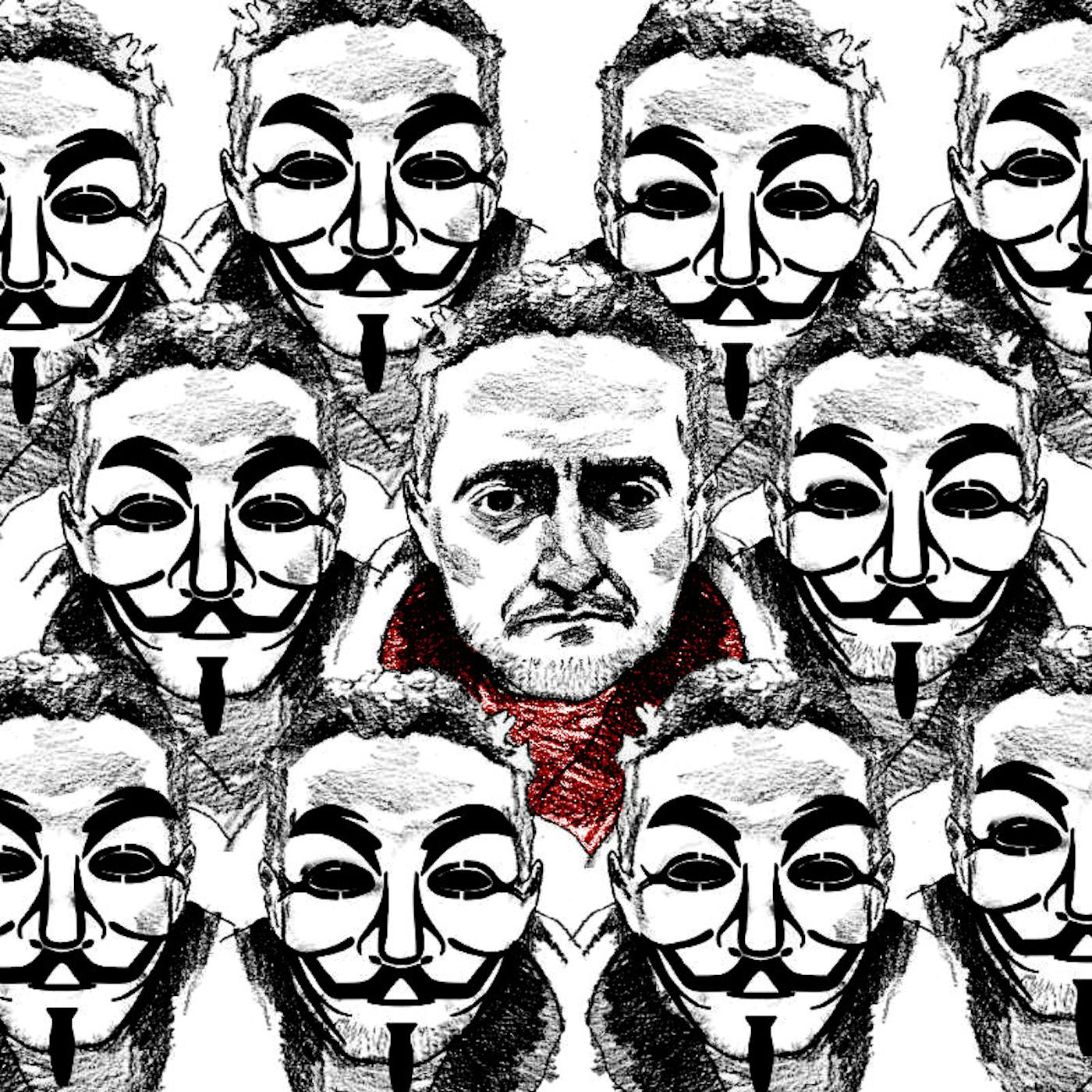
25: Alberto
Alberto Hill was sent to prison for a long time for hacking. For a crime he said he did not commit. Listen to his story and you be the judge on whether he's guilty or not.
2018-11-01
42 min
Transcript
Available Results
Generated results are saved to the knowledge database for reuse and search.
No generated results are available for this episode yet.
Extract Knowledge
Pick what you want extracted first. Model, scope, and chapter options appear after a template is selected.
Generated results for public episodes are saved to the knowledge database so they can be reused and searched later.
Transcript
JACK: [MUSIC] Put on your travel shoes. For this story we’re going south of the border. Actually,
much more south than you think. Go on past Mexico, past Panama, past the equator, even. Keep on going
past Brazil and there you’ll find Uruguay. It’s a small country about the size of the state of
Missouri. In February 2017 one of the top medical providers in the capital city of Montevideo got
hacked. [MUSIC] This medical provider has a whole network of clinics and healthcare facilities. The
hacker broke in through the provider’s website, accessed the database and took a ton of patient
records. A week later the hacker sent a ransom e-mail to the medical providers showing they had
confidential data and demanded they pay fifteen Bitcoin. If they didn’t get the Bitcoins they
said they would publically release the patient details of everyone who had HIV and cancer.
The note went on to say the price will go up by five Bitcoins every day they don’t pay.
It’s unclear if the medical provider paid the ransom or not. In some news articles it said they
did pay but someone close to this case told me the e-mail didn’t even have a Bitcoin address in it.
Either way the patient records never actually got leaked. The medical provider immediately
began investigating who this hacker was. [MUSIC] They worked with local police to
try to track down who was behind the extortion. After seven months they got their break. They
were able to track down the IP address of who sent the e-mail to an apartment in Montevideo.
The police raided the apartment and were totally stunned with what they found.
There were tons of electronic devices everywhere; laptops, cell phones, hard drives, crypto-wallets,
and thumb drives. The police felt like they hit the jackpot and thought this person probably
hacked many other places too. They arrested Alberto Hill, the guy that lived there and
owner of this stuff. They took him to jail and seized loads of equipment from his home.
Uruguayan police took from Alberto’s apartment the following items; 1,400 US dollars, 8,000 euros,
150 Brazilian dollars, and 3,000 Uruguayan pesos, six laptop computers,
five cell phones, a device used to clone credit cards, and 125 blank credit cards,
and an additional 30 normal credit cards. Thirteen hard drives, a drive duplicator, a few
routers, a flashlight, a magazine full of CDs, a whole stack of hardware Bitcoin wallets, two fake
toy coins that say Bitcoin on them, sixteen USB drives, two printers, a Guy Fawkes Anonymous mask,
and a guillotine. On the laptops they found hacking tools, programs, and viruses. Uruguayan
police presented all this to Alberto and he made a verbal confession saying he did in fact hack into
the medical provider and he did send the extortion e-mail. Alberto went to prison for a long time.
Case closed, right? End of story? ALBERTO: Hold on, hold on. My name is Alberto Hill
and I have something to say about this. JACK: Alberto says there’s one tiny detail
that isn’t right about this story. ALBERTO: I tell you Jack, I did not do it.
I didn’t do it and I am innocent. JACK (INTRO): [INTRO MUSIC]
These are true stories from the dark side of the internet.
I’m Jack Rhysider. This
is Darknet Diaries. [INTRO MUSIC ENDS] JACK:
Alberto Hill is a 41 year old Uruguayan. He was arrested and sentenced to prison for
hacking into a medical facility and conducting extortion. He’s actually the first hacker to
ever serve prison time in Uruguay but he says he didn’t do it. So why did he get arrested?
ALBERTO: Yeah, very good question. JACK: Alberto has a lot to say about this
story and I spent a few weeks with him exchanging dozens of e-mails and looking at tons of court
documentation, news reports, and articles. I even hired a translator to decode some of this stuff.
I talked with Alberto [00:05:00] for hours to fully understand his story.
It all started three years ago. [MUSIC] Alberto
was working for the Uruguayan government. ALBERTO: I was in charge of security of a company
of the government here in Uruguay. JACK: He’d been working for the government
for four years as a security consultant securing systems, investigating malware, and conducting
security audits. Before that Alberto was working with Interpol doing digital forensics.
He has an Associate’s Degree, an Engineering Degree, and a Master’s Degree all related to
computers. He’s also very knowledgeable about crypto-currencies and has written papers on them,
even given a few talks. ALBERTO: I was in a conference. I was
talking about security and Bitcoins. Then I was selected to go to Sao Paulo Brazil for the ICS2
Conference. I was talking about Bitcoins and security also.
JACK: He gave a few other talks as well, mostly talking about Bitcoins and crypto-currencies.
Alberto’s been studying and working in computer-related jobs for the last
twenty years and most of that time has been focused on security. He is a PMP,
or Project Management Professional, and this certification is not easy to get.
He’s even a certified ethical hacker. Yeah, that’s actually a certification which teaches you
all of the tools that a hacker uses to break into places. When you’re securing companies it’s good
to know exactly what tools the hackers are using to break into things. Taking the certified ethical
hacker exam is common in the InfoSec community. I’m actually a certified ethical hacker, too.
One of the most valuable assets to have if you’re doing security work is to be endlessly
curious and Alberto is always wondering how secure the websites are that he visits.
ALBERTO: It’s something that you just can’t control. It’s stronger than you.
I see a system and I just can’t help start looking at the source code. I start modifying things. It’s
stronger than me; I cannot – it’s like a drug. I think it’s the mind of a hacker that you have
the curiosity to be successful. JACK: When he visits a website he can’t
help himself but to poke at it a little. He’ll check if any strange ports are open
or glaring security problems. Alberto has found vulnerabilities in sites and reported
them so they can fix it. It’s just something he does sometimes. On Saturday morning in 2015
he stumbled upon something interesting. ALBERTO: I was in bed with a computer and my
girlfriend told me that she wanted access to the medical institute and she wanted to see
something about her health records. JACK: He was helping her use this medical
provider website to check her health information. While using it he decided to
poke at it a little bit and check if there were any obvious vulnerabilities. Now to be honest,
I’ve poked at my medical provider’s website before and I’ve found vulnerabilities and reported them.
This isn’t that crazy of an idea but Alberto found a massive vulnerability with this medical
provider’s website. Just for fun he tried to log in as the username admin with the password admin
and it worked. [MUSIC] He was logged in as the administrator to the medical facility.
ALBERTO: This couldn’t be so easy. I mean, admin/admin, and I had access to all the systems
that which – not only about medical information but it was about all the medical information,
the medication, the finances of the company. That was crazy. With admin/admin you could access to
all of that, you could create more users. You could see the information about every user,
not only their medical information but also personal information. That was crazy.
JACK: Alberto couldn’t believe what he was seeing. I looked this up and since 1970 computer companies
have been using admin/admin as the default login. That’s over 45 years that we’ve known not to use
this username/password combo yet it still exists on systems today. Alberto found it on a medical
provider’s system. In terms of severity of this vulnerability for the medical provider,
this is a solid ten out of ten. Critical, red alert; stop everything and fix it immediately.
That’s probably the most well-known vulnerability. It’s easy to execute. You can use it to exploit
from anywhere in the world and has the capability to do major damage to the company. In fact of all
vulnerabilities this one might be the most severe one in existence. Alberto knew he had to act
quickly and do something about this. ALBERTO: I immediately sent an
e-mail to the CERT of Uruguay. JACK: CERT, which stands for Computer Emergency
Readiness Team is a government-ran team that helps protect the government from cyber-attacks.
ALBERTO: But not also to the government, also to critical systems
such as the medical institutions. JACK: Right, the goal of CERT is not just
to protect governments but also to protect the nation from cyber-security threats. There are
CERTs ran by governments all over the world. So if you find a vulnerability in an important company
the right course of action is to report it to the CERT who can then contact that company and
sort it out. That’s just what Alberto did. He sent an e-mail to the Uruguayan CERT, telling
them exactly what vulnerability he found including his own IP address so they know which connection
was his that logged into the system. ALBERTO: In two hours they replied to me
and they say okay, [00:10:00] it is confirmed. They admitted the problem
is right. There is a big problem there. JACK: Alberto felt relieved that the CERT was
now working towards contacting the medical provider and resolving the issue but he had a
hunch the site had many more problems. ALBERTO: I noticed that the system was
very weak and I was sure that it had many other security issues. I don’t know. I
knew that it was easy to hack that system but I didn’t do anything else.
JACK: After that Alberto forgot about this. Once he reported it, it was no longer in his hands and
he went on with his life. [MUSIC] Two years pass. In February 2017 someone hacked into the same
medical facility and took the patient records. It’s unclear exactly what vulnerability was used.
The hacker sent an e-mail to the medical provider demanding fifteen Bitcoins or they’d release the
patient data they collected. The medical facility began an investigation. They contacted the police
who called this case Operation Bitcoins. ALBERTO: It took them seven months in order to
do something and what they did led them to issuing two search warrants to two people; one was me.
One was me in my house and the other was a person I do not know.
JACK: The police came to his house, knocked on his door, but he wasn’t home so they
left a note saying to come to the police station so they could talk to him.
ALBERTO: I was wondering why. I had no idea. I went to the police with my girlfriend,
a friend, and his girlfriend. The Interpol appeared. They told me
do you know why you’re here? I say no. JACK: Alberto’s head was racing with what this
was all about. Still he had no idea why the police wanted to talk to him. He was thinking
maybe it was because of a recent order of some computer parts that he got directly
from China. But then the police asked him if he knows about the medical provider he
reported the issues about two years ago. ALBERTO: I said huh, okay. I felt such a relief
because I felt nothing to care about that. I was, I mean, okay, they want to ask me questions about
how I got access to that. I was so relieved when they told me it was about this.
JACK: Alberto told them everything about how he was able to use admin/admin to access the
medical provider’s website and to see all kinds of information that he shouldn’t be allowed to see.
He told them exactly step-by-step how he was able to find the vulnerability and got access.
ALBERTO: At one point they showed me a paper with the e-mail asking for the – the extortion e-mail
and they asked me okay, you sent this? I said no, I did not. They asked me several times until
they told me well, I have here a paper from the internet company saying that your IP
– that this e-mail was sent from your IP. I said it’s impossible. I didn’t tell him that
you’re lying, but it was not possible. JACK: The police just heard Alberto explain how
years ago he was able to hack into the website so this caused a lot of suspicion.
To be safe the police held Alberto in jail that night. His girlfriend came to visit him.
ALBERTO: She brought me food to eat and some medication for my asthma because I was frozen.
It was a very bad situation for me but I was feeling that it was going to be – everything clear
and they were going to have the evidence that I didn’t do anything. The morning after that,
my girlfriend took me coffee and something to eat. She didn’t know anything. She
didn’t know anything, what’s going on. JACK: The police took Alberto out of the cell but
instead of letting him go they put him in the back of a police car and took him to his own apartment.
The police put on latex gloves and began going through his things, and Alberto had a lot of
things; electronics and computers everywhere. Here’s one of the police officers explaining what
they found in this search. [FOREIGN LANGUAGE] When we started to search in his laboratory we found
stickers, key chains, and books about Bitcoin. He told us that he was in Argentina on the 7th
of August buying and selling Bitcoin therefore we were not wrong in what we were doing. There was
also a lot of information about credit cards and machines that could clone chips and cards.
We found several electronic cards and chip cloners which he bought directly from China.
Then he had a lot of hard drives, computers, four or five monitors, and surveillance cameras with
remote access to them. This does seem like a lot of equipment for one guy to have in his apartment
and the police kept finding what looked like hacker paraphernalia and asked Alberto why he
had it. First they asked why had had so many hard drives and he said he had about fifty of
them and he was buying them broken, dirt cheap from eBay and he was doing research to try to
see what kind of data he could scrape off of a broken hard drive. Alberto was writing a research
paper about what data is left on hard drives when you sell them on eBay. Then there were
seven laptops. Alberto’s not a guy who throws out old computers that are no good. Instead he
keeps them around in case he needs them. [00:15:00] He likes to experiment with different
operating systems and applications and having multiple computers to do this is handy. Then he
had about ten cell phones but he simply goes on to say these are all phones that he’s used over
the years and he just didn’t throw any of them out. They just piled up in drawers over time.
[RUMMAGING] You know what, now that I think about it,
in my drawer here I’ve got three, four, five, six cell phones myself that’s just kind of piled
up over the years so I guess I do the same thing, too. [MUSIC] He also had a bunch of
thumb drives. Some of these were storage drives but many were hacking devices; rubber duckies,
Bash Bunnies, to name a few. While Alberto says yes, these are tools a
hacker would use you have to know what tools a hacker would use in order to protect yourself.
But he just had them around for learning purposes. He had a bunch of Ledger wallets.
These look like USB sticks but they’re actually hardware Bitcoin wallets. These are really handy
if you want to store your Bitcoins offline like for instance in a safe, but it is kind of strange
to have a whole stack of them, though. ALBERTO: There was a company in France and
I was the person that was the reseller of them here in this part of the world.
I’ve got a box full of Ledger wallets. JACK: You know, I have one of these Ledger wallets
myself and in fact up until this point, all the stuff he has I have about the same stuff in my
lab. It’s not uncommon to see a security engineer with a lab full of equipment but Alberto had some
stranger stuff that the police kept asking him about. For instance he had a credit card cloner
and a bunch of blank credit cards. [MUSIC] The first thing the police thought was that he was
buying stolen credit card numbers online and then printing his own credit cards but when the police
asked him why he had this he told them… ALBERTO: I was making a test of security with the
credit cards, especially with the chip. JACK: He goes onto explain that he’s using the
machine to conduct research on the chip and pin features of the cards. He explains that
that card writer was never used and every one of the cards were blank. He says the cloner itself
is easy to get and legal but it’s the software on the cloner that’s the hard part to obtain.
Even hotels have cloners to make room keys with but then there are thirty actual
credit cards with his name on them. ALBERTO: Actually, many of them are expired.
I have had them since 1995 so I was – I never got rid of credit cards. I was
always storing them after they expired so I was collecting them.
JACK: Besides credit cards there was a lot of cash found in his apartment. Specifically the
police found 1,400 US dollars, 8,000 euros, 150 Brazilian dollars, and 3,000 Uruguayan pesos.
Now think about how much cash you have stashed away at home and compare it to the roughly $13,000
the police found at Alberto’s. Would you say this is a suspiciously large amount of money to keep
at home? Well, the police did. The Uruguayan money makes sense because that’s where he lives and even
the Brazilian money makes sense because it’s the neighboring country and he was just there
to give a talk. But the police wanted to know why he had so many US dollars and euros.
ALBERTO: Why did I have that? Because of transaction with Bitcoins. While
the euros were because of a transaction that I made selling a couple of Bitcoins to tourists
here in Uruguay, the Bitcoin was, I don’t know, for probably 4,000 euros each.
It was a couple of Bitcoins so I got 8,000 euros from that. The US dollars, I think they say
less than $2,000. That was also from operations from Bitcoins.
JACK: According to the police report, they said they found a guillotine.
ALBERTO: Oh, that’s very funny, Jack. My mother really laughed a lot when you sent me an
e-mail asking me that question because I don’t have a device to cut heads in my house.
I have many things but not that. A guillotine is a device to cut paper in a perfect way,
in a flawless way, just cut paper. JACK: In fact, the maker of the paper-cutting
device actually does call it a guillotine, too. Lastly, he also
had an Anonymous mask hanging on the wall. ALBERTO: Yeah, well, the mask, why did I buy that
mask? Well, I just wanted to buy it because I like to collect all those kinds of things related to
hacking. I have many t-shirts also related to security and to hacking, to Anonymous,
and I have it in my house. Of course, when they saw that it was the final evidence
that I was a super criminal, of course. JACK: Alberto tried desperately to explain the
reason why he had all these things to the police but the evidence was just too much.
The police were blown away by the amount of hacker paraphernalia found.
They thought if he talked like a duck and looked like a duck, then he probably is a duck.
They had certainly thought they had captured a cyber-terrorist. Who else would have all
these computer parts? The police seize all his stuff including the guillotine and mask.
No matter how much Alberto explained the police simply didn’t listen and grew more excited
with each new device they found. [00:20:00] The police were making a big mess in his apartment,
taking things apart and leaving stuff all over the floor. Alberto grew more desperate,
trying to explain the reasons why he owned each and every thing in his apartment. This continued
all morning long for hours. Then around 1:00 p.m. a new police officer showed up. He had a
quick chat with the police in his apartment and then pulled Alberto aside for a talk.
Alberto could tell he had more authority and was more serious than the other policemen.
ALBERTO: He started to tell me that okay, I had to confess about the e-mail otherwise they would
go and do the same thing we’re doing in my house with my girlfriend and with my mother.
He kept on insisting on that and I was thinking to myself okay, if I admit that
I know I am certain that they do not have any evidence or IP that links me to that e-mail.
Of that, I’m sure. If I say okay, I sent the e-mail, later I said that I would be able to
prove that no, that there is no link between that mail and me. I will
avoid all the pressure, all the psychological pressure that they’re putting on me so
I decided to say okay, I sent the e-mail. JACK: [MUSIC]
When the police threatened to raid his mother’s house he confessed to writing the ransom e-mail
because he knew he could prove he was innocent in court and he wanted to save
the grief of his mother and girlfriend being questioned and searched.
ALBERTO: A few minutes after I admit that, I was surprised that my girlfriend appeared. They
had taken her to my house. JACK: She was surprised to see Alberto
handcuffed and being treated poorly. It was embarrassing to Alberto.
ALBERTO: At that point she was arrested. JACK: The police took Alberto and his girlfriend
to jail as well as many boxes of electronics. Alberto was able to
go directly to court that day. ALBERTO: It was a forsaken, long period
of time where they were asking me questions that were irrelevant because of the lack of knowledge
about computers that the judge and the prosecutor have. They were asking me irrelevant questions.
They didn’t know what to ask me. Well, it was very frustrating for me because I wanted to tell the
truth but I was unable to explain myself in order for them to understand because they didn’t have
the knowledge to understand the situation. They hardly know what an IP address was so
that’s for you to have an idea of how frustrating it was, the whole situation.
JACK: [MUSIC] That court day was over. Alberto was taken back to his jail cell and while walking
there he saw the boxes of stuff they took from his apartment and noticed something. One of the
items he had in his apartment was a thing called a USB Killer. This is a device that looks like
a regular USB drive but it’s got a very dangerous side to it. When you plug it in it charges a large
capacitor up and then discharges it quickly, zapping the port with a huge power surge.
This causes a massive electronic shock and usually kills whatever you plug
into it such as a laptop. It’s designed to test the search capabilities of USB ports
but usually it just destroys whatever you plug it into. Alberto saw they had taken this and was
trying to tell them not to plug it in. ALBERTO: I told them please, to be careful
with that because it could destroy any device that has a USB port. He said okay, okay.
JACK: They took him back to his cell for the night.
ALBERTO: My girlfriend also was arrested and she spent the night there in the Interpol
building. The interrogation for her was not nice. They told her, for example,
that I had admitted everything and that I told that she was the mind behind everything,
things like that they told her. They were playing with her mind. It was stupid.
She knew nothing. JACK: This took a major psychological toll
on his girlfriend. Her whole life was now flipped upside down. She couldn’t imagine how this could
have happened to her. She was really taking this terribly and couldn’t sleep at all while in jail,
worrying that she might not ever get out. Alberto was very worried also, realizing that all this
looks very bad to the courts and admitting to the e-mail made everything worse. His anxiety
was becoming very high and he was worried about what happened to his girlfriend.
ALBERTO: At that point you are in a cell that is very small. All you can do is think and that’s
what I did. I thought. JACK:
Alberto spent the night in the freezing jail with very little sleep.
When he woke up he was taken back into the court room to testify.
ALBERTO: At that point my mother was aware of [00:25:00] everything and she got me a lawyer.
During the interrogation the prosecutor asked me huh, in this pen drive you have twelve viruses.
How do you explain that? I was like oh my god, what? No, I don’t want to do that. I don’t
want to explain that, waste my time. JACK: It’s common for information security
professionals to play around with viruses. They’ll load them up on a thumb drive and see if they can
infect the lab device but the prosecutor had such little knowledge of computers that Alberto
didn’t think he would understand. ALBERTO: I just said okay, I’m sorry,
yeah, I have viruses. Well, I don’t know. The prosecutor got the file and said you have a
USB Kill. What’s a device that has a name of Kill? I thought to myself why the hell did I
tell about the USB Kill device? Oh my god. JACK: Things did not go well for Alberto during
court. Piles of evidence showed he was a very capable hacker and knew a great deal about Bitcoin
and admitted to hacking into the medical provider and admitted to sending the e-mail.
He only admitted to the e-mail because he wanted to save the grief of his girlfriend
and mother getting harassed by the police. ALBERTO: At the end of the day my lawyer called
me. He said I am so sorry but you are going to prison. I was charged with two things;
one was extortion and another thing was fraudulent access to secret information.
JACK: Alberto was found guilty and he was being sent to a long-term prison
where he would have to stay for years. ALBERTO: That day I really thought it was the
end of the world for me. I was really, really – I don’t know, my mind was blocked. I never thought
something like that would happen to me. JACK: A few days after court he was put on a
bus and sent to a prison very far away. He knew his life had changed forever and still
couldn’t believe it. After the court ruling, the news of this hit major news outlets. The
police lined up all the electronics they took from his house and put them on display for the media.
The equipment filled up a very large conference table. On the table you see his cell phones,
laptops, USB drives, blank credit cards, credit card cloner, routers, and the iconic Anonymous
mask, and so much more. This was the first time a hacker had gone to prison in Uruguay so it was a
big deal. The police may have hyped up the story too, thinking it was a great achievement for them
to have captured a dangerous hacker. The media really wasn’t kind either, because what kind of
jerk steals patient records and tries to use them for extortion? By the time Alberto arrived at the
prison he was already very popular. ALBERTO: The first day that I arrived the
people that were in my cell asked me what crime did I commit? I said no, I commit a computer crime
and well, I hacked a system. They say oh, you’re the hacker! Oh my god,
you’re my hero, I want to be like you! Can you hack the [inaudible] of my girlfriend? I was like
oh, my god. I cannot believe it. The other people that arrived after me in jail
told me that oh, you’re the hacker, oh my god. I want to be like you.
I was realizing the magnitude that this case has in the press. It was in every newspaper
in Uruguay. It was in every TV news in Uruguay, in every radio program. It was
everywhere. Everybody knew about this case. Prison is a word I have never
thought I could be in, where you’re surrounded by people that lived in a world of crime.
None of them were hackers. They were sexual offenders, killers, drug dealers, people that
commit very violent crimes, that – their profile was completely different than mine. I have never
imagined I would be with people like that. JACK: Prison warden made a strict rule announcing
that because Alberto was a convicted hacker, that he was not allowed to touch any computers
or electronics. But Alberto’s a nice guy, followed all the rules,
and people started to like him. ALBERTO: Three months after that I
was here teaching the inmates the basics of Word in a room with seven
computers connected to the internet. JACK: He had earned the trust of the prison
guards and had good behavior while in prison. This prison was actually not that bad; it had a little
more freedom than most prisons. For instance, if you had good behavior there was an option to get
out one or two days a week. This might sound weird to Americans but think of it like a combination of
probation and prison at the same time. When you have probation you’re very restricted on what you
can do. You may not be able to go out at night or with certain people and you may have to get
a specific job. In a way probation is kind of like prison but you get to go home. This prison Alberto
was in let some [00:30:00] inmates go free one day a week. The guards started telling Alberto
that well, because of his good behavior, in a month they may let him go home one day a week.
But then something strange happened. ALBERTO: At the end of February somebody went
to visit me to the jail and they called my name. I wasn’t expecting anyone. I went outside and I
met a person who I didn’t know and we started talking. He was a person who had many companies
and he wanted to know about my case because he was surprised about this and he said man, governments
should hire people like you, not send to jail. A few days after that I was granted – I could go
outside the jail for 72 hours a week. JACK: This is strange. At this prison,
usually when you get a free day it starts out with one and then you work your way up to two,
and you might get three days a week to be able to leave the prison. Also he was expecting it to take
another month before his first free day but only a few days after the strange visitor appeared he was
given the maximum free time off. Alberto didn’t know what to think of this and was very surprised
but he was happy to be getting out half the week now. He found a place to stay near the
prison on his free days. ALBERTO: The first time I
went outside this person who I met in prison came to my house and he started talking to me.
At one point he told me directly, I want you to hack this bank and steal money.
JACK: The stranger had an elaborate plan all sorted out. He knew exactly which bank to hack
into and which accounts to target and how much money to steal. He explained the plan thoroughly
to Alberto. This was becoming even stranger for Alberto. Normally someone asking him to hack into
something is a simple no but this one seemed more serious. Alberto said no to the man many times and
he finally left. This stressed Alberto out. ALBERTO: Imagine if that bank got hacked by
another person after this situation. They would point to me. I would be the person of interest.
If somebody was hiring me to hack a bank and I did it? No, no way. The funny thing is this bank
had several security issues. I thought to myself oh, no, oh no, oh my god.
JACK: This was really troubling Alberto so he reported it to the prison guards. He was able
to get some Xanax to deal with his anxiety but each week Alberto had free days out of
prison he would see this stranger. This guy was stalking him, following him home and around town,
each time asking Alberto if he was ready to help him hack into the bank.
Alberto started getting really distraught over this and his anxiety was growing more and more.
He had to take more Xanax to calm himself but his mind was racing. What if that bank gets
robbed and they blame me? What if I know too much and this guy wants to kill me?
What if he threatens me? Alberto became more agitated. The pills weren’t working. He took
more. He didn’t know what to do and he was scared. He took more pills. Finally this started to calm
him down. He started walking back to the prison where he knew he’d be safer but he was starting
to get drowsy along the way. ALBERTO: At one point I closed my eyes
and the next thing was a beep, beep, beep. [BEEPING] I opened my eyes and I was seeing
a light. They cut all my clothes. I had all kinds of devices in my body and they told me you
spent – you were two hours in coma. You were there for two hours. [MUSIC]
JACK: The intense anxiety caused Alberto to over-medicate on Xanax which made him overdose.
He was found and rushed to the hospital where they were able to revive him
in time to save his life. He had to spend some time to calm down and take it easy after that.
Meanwhile Alberto’s lawyer was endlessly trying to get him out of prison. He appealed the case
but it was not accepted so he appealed again. Again, it wasn’t accepted. Finally on the third
appeal the lawyer had some good news. ALBERTO: He phoned me and he told me Alberto,
they filed in your favor but there is only one thing they ask. They ask for $10,000 bail in
order to release you. I said okay, no problem. I started calling some people. I called my mother.
The next day she put that money in a bank account. She had to make a lot of – fill a lot of documents
and she gave a paper saying that the money was deposited and they sent a fax to the jail
saying that I had to be released. JACK: [MUSIC]
After spending nine months in prison Alberto was set free, was able to return home for the
first time to his apartment in Montevideo. ALBERTO: I ride to my house. I couldn’t believe it
when I opened the door and I went to my office. I started seeing hard disc drives. I said what’s
this? Oh my god, hard disc drives. JACK: He couldn’t believe that there was
so much stuff left behind [00:35:00] by the police.
He was totally shocked that they didn’t take every last device and examine it for evidence.
In his mind he was wondering if the investigators did anything right.
ALBERTO: I found 29 hard discs. They also left three laptops, three cellular phones. I also
found money, money from Uruguay, from Paraguay, and Argentina. I also found blank credit cards.
It was crazy. That explains that the process was – I don’t know if they were not prepared for this or
what the hell happened. It was all a show. JACK: To Alberto the investigation went wrong in
a million ways. The police weren’t knowledgeable enough on how to handle this case and didn’t take
all the evidence, and they handled the evidence poorly. Like, they didn’t clone the laptop’s hard
drives. Instead they just turned it on to take a look at it. In fact I talked to Alberto for
hours and a lot of what he had to say was just about how this case was handled so improperly
which is probably why in the end they caught the wrong guy.
He sometimes wonders if all this was just done to set him up and have him arrested for some other
reason. He’s got a few theories about this like maybe it was a big cover-up from something else
bigger and more shady going on at the medical facility and they needed to distract the media.
But these are just conspiracy theories cooked up in the mind of a guy who’s been sitting in prison
for months. After Alberto was convicted and sent to prison the police couldn’t find any evidence on
his girlfriend so they let her go after one night in jail and rough questioning.
ALBERTO: She had a very dramatic situation. She started taking a lot of medication to sleep. She
was having a very bad time. She has never taken any medication in her life for anxiety but she
started taking that because she couldn’t sleep at night. They told her so many lies about me so
she was thinking to herself I spent eight years with a person I didn’t know anything about. He was
a criminal. She was questioning everything because they were lying to her. They were telling her
all kinds of stupid things that destroyed her. Even the fact that I said that,
they told her I said that I admitted everything and that she was in charge of everything.
That was crazy. They played with her mind. The worst thing that they did was that they threat her
with losing her job. The most important thing that she has; if she loses her job she loses
everything. They called her company and they told the boss of the company about the situation so she
had a very difficult issue. She told me that until now she has nightmares, very recurrent nightmares,
that she is sleeping and she dreams that she’s being arrested, that the doors of her apartment
is open, that it’s the police. That she’s taken to a cell. I was pretty sad when I heard that because
it’s been more than a year and she’s still having the consequences of the traumatic interrogation
process that they applied on her. JACK: After eight years of being together this
incident caused Alberto to lose his girlfriend. This was simply too much of a bad experience for
her and she had to leave him to go help herself. As of right now Alberto has only been out of
prison for five months and is still working with his lawyer to collect the evidence of what they
took from his apartment. The police have kept most of it still, including some Bitcoin wallets
which have a lot of money in them. In fact life is very hard for him because most of his computers,
phones, money, and credit cards are still being kept from him. For instance all his
two-factor authentication tokens are in police custody making it impossible for him to log into
certain accounts. But there have been a few things that have gone his way since getting out.
ALBERTO: After I was released, it was incredible. I got job offers from an important security
company for a pen testing position in a security company. It was something that I lived; okay,
okay. Life goes on and is strong than ever. I could spend eight months in jail so if I
could do that I could do anything in life. That’s the way I see it.
Chapters
No chapters available.