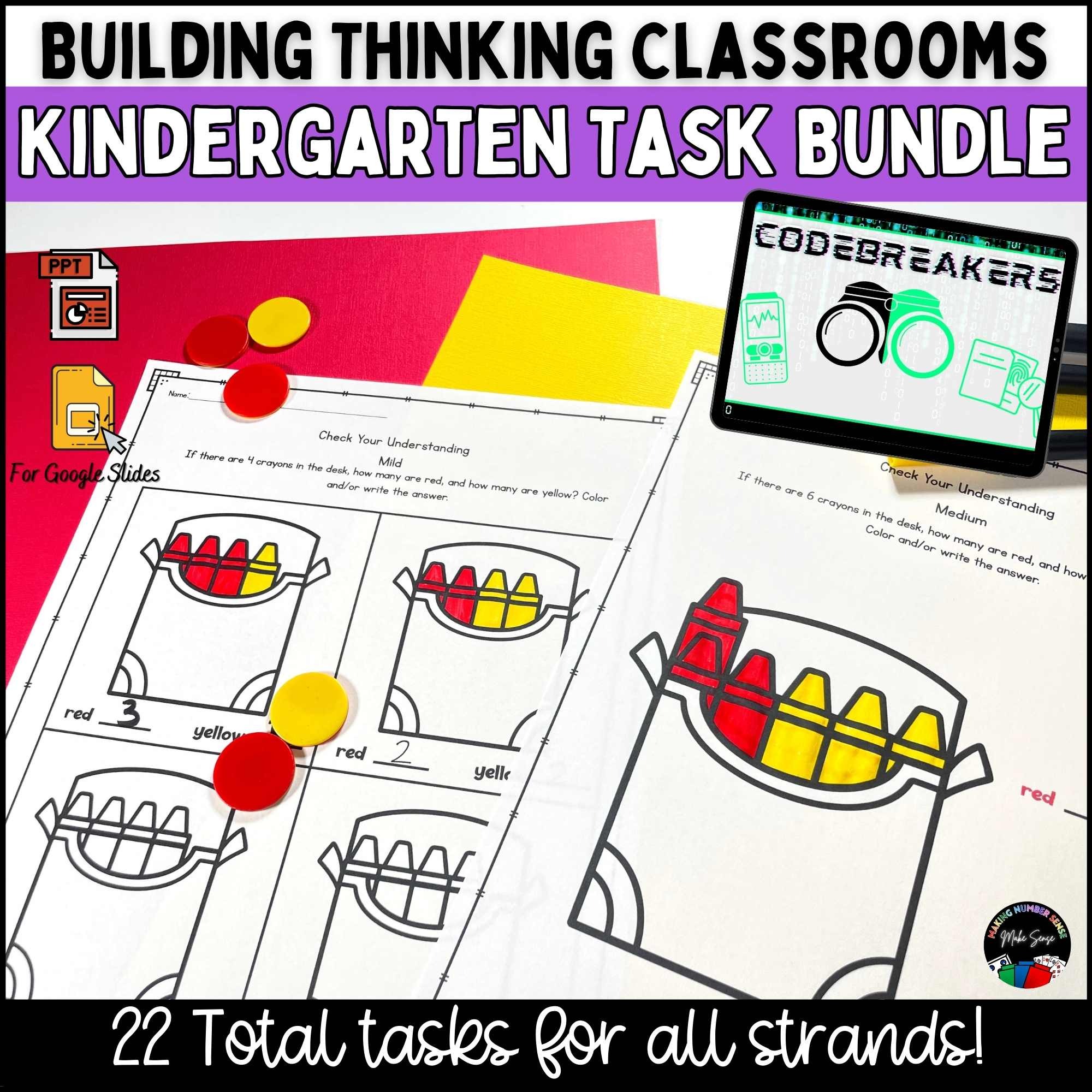
Ep 42: Kindergarten Building Thinking Classrooms Math Tasks
Making Number Sense Make Sense: A Math Podcast for Early Elementary Teachers
Sometimes coming up with a task for Kindergarten is the hardest part! In this episode, I share 7 tasks perfect for your kindergarten classroom in a building-thinking classrooms style! Dive into the world of playful, hands-on math tasks in this episode of Making Number Sense Make Sense! From counting and number writing with the mischievous dogs at Paw-some Pups Playhouse to solving addition problems with a broken cash register in "Cash Out," we’ll explore creative ways to engage young learners. Plus, hear how sorting toys, composing shapes, and comparing lengths bring math concepts to life through fun, story-driven activities. Whether you're teaching counting to 20, addition within 10 or 20, or tackling shape challenges, these tasks will have your students excited to learn and eager for more!
Have a topic you want me to discuss? Fill out the Google Form!
Helpful Links
Counting and Number Writing Task
Comparing Longer and Shorter Task
Let's Connect!
Available Results
Generated results are saved to the knowledge database for reuse and search.
Extract Knowledge
Pick what you want extracted first. Model, scope, and chapter options appear after a template is selected.
Transcript
1
00:00:00,000 --> 00:00:04,960
Today I'm going to talk about five building thinking classroom tasks that are perfect for kindergarten.

2
00:00:11,840 --> 00:00:17,360
Hello and welcome to Making Number Sense Make Sense, a podcast for elementary teachers,

3
00:00:17,360 --> 00:00:22,720
specifically early elementary teachers, looking to really make an impact in the number sense of their

4
00:00:22,720 --> 00:00:30,560
students. I have been working on developing tasks for kindergarten, which can be a bit of a challenge

5
00:00:30,560 --> 00:00:35,520
to find tasks that are appropriate for kindergarten, but also will keep them going. A lot of times,

6
00:00:36,240 --> 00:00:41,920
you know, problem solving or more simple problem solving is kind of like one student finishes or

7
00:00:41,920 --> 00:00:46,240
one group finishes and the rest are kind of like twiddling their thumbs like I'm not sure what to do,

8
00:00:46,240 --> 00:00:50,400
or you have half that finish, half that don't finish, and then you're managing kids who don't

9
00:00:50,400 --> 00:00:55,200
have anything to do and kids who are still working. So I feel like that's the balance, that's the

10
00:00:55,200 --> 00:01:01,120
challenge that I've been finding, but I think I have a solution for you. So I kind of broke off

11
00:01:01,120 --> 00:01:08,240
into two kind of categories of tasks. There was the story driven task and the more challenge-y

12
00:01:08,240 --> 00:01:12,240
driven tasks, because I don't know about your kindergartners, but if I told them it was a

13
00:01:12,240 --> 00:01:16,880
challenge, they were into it, they wanted to do it. Counting and number writing can be something

14
00:01:16,880 --> 00:01:22,720
that kids don't necessarily want to work on, but definitely need to work on to develop their number

15
00:01:22,720 --> 00:01:28,960
sense. So this kind of strand or this kind of goal is perfect for a storytelling task so that kids can

16
00:01:28,960 --> 00:01:35,920
really get into it and think of it as more of a story, more of a math adventure than just extra

17
00:01:35,920 --> 00:01:43,280
practice. So for this one, it kind of, they, for this task, they kind of go together. The background

18
00:01:43,280 --> 00:01:50,480
story is that the possum pups playhouse dogs knocked over the treats and the kids have to figure out

19
00:01:50,480 --> 00:01:57,200
how many treats were eaten by the dogs. So on their recording sheet, they'll have 10 frames that they

20
00:01:57,200 --> 00:02:03,760
have to count and figure out how many treats were eaten by each dog. So they have counting in and

21
00:02:03,760 --> 00:02:08,800
number writing in, because all of those dogs have names, so it's something to keep them going so

22
00:02:08,800 --> 00:02:13,600
it's not like they're just writing one number and then waiting for something to do. They have a whole

23
00:02:13,600 --> 00:02:20,320
set of dogs and dog treats that they're looking at and counting so that if groups finish, they have

24
00:02:20,320 --> 00:02:25,040
something else to do and if kids are taking a little longer to get started, that's absolutely

25
00:02:25,040 --> 00:02:30,240
fine too. They can look around the room, they can use their partner and really get the practice that

26
00:02:30,240 --> 00:02:35,360
they need and it's helpful to have someone else there to listen to the kids count because you

27
00:02:35,360 --> 00:02:42,080
can't be there all of the time. As far as the check your understanding piece, I kind of ping-pong back

28
00:02:42,080 --> 00:02:48,240
and forth between a traditional extra question or a game that kind of reinforces the learning that

29
00:02:48,240 --> 00:02:53,840
they've done depending on the topic. So this task, the possum pups playhouse task, would be one where

30
00:02:53,840 --> 00:02:59,280
they would have a game to go with it. So the game has a spinner on it and they would spin and figure

31
00:02:59,280 --> 00:03:03,920
out how many dog treats there are, so they would have to record that number on a 10 frame or vice

32
00:03:03,920 --> 00:03:08,560
versa. They would spin and see how many treats there are and have to write the number. So it works

33
00:03:08,560 --> 00:03:14,640
either way and that way kids are getting practice counting and number writing together with a theme

34
00:03:14,640 --> 00:03:21,360
to get a little more engagement and a little more student buying. The next task is called toy trouble.

35
00:03:21,360 --> 00:03:26,960
So in this one, the kids and their friends have just had a blast playing with all the toys but now

36
00:03:26,960 --> 00:03:32,720
it's time to clean them up and to clean them up they need to sort them. Sorting is another tricky

37
00:03:32,720 --> 00:03:38,400
one because ideally they would be sorting real things and get that practice but when that can't

38
00:03:38,400 --> 00:03:44,240
happen a task like this works really well. So in this one their recording sheet shows whichever

39
00:03:44,240 --> 00:03:50,800
toys they're trying to look at and they need to figure out how many of each toy there is and this

40
00:03:50,800 --> 00:03:57,280
is perfect for the idea of sorting, kind of putting like things together and eventually working on

41
00:03:57,280 --> 00:04:03,680
graphing or kind of the basis they need to be able to organize and graph data. The thin slicing for

42
00:04:03,680 --> 00:04:08,640
this task is once they finish the first one they'll have a different sheet that has more items so it

43
00:04:08,640 --> 00:04:13,280
starts with just two different toys that they're sorting moving to three and if they're really

44
00:04:13,280 --> 00:04:17,520
they're really on it they really want to keep going then they can practice sorting four different

45
00:04:17,520 --> 00:04:24,080
items. The next tasks don't necessarily have a story but get at skills that they need to be working

46
00:04:24,080 --> 00:04:29,840
on in a way that's a little bit different than a traditional math station or math center time. The

47
00:04:29,840 --> 00:04:37,920
first one is composing shapes. So in this one they have different challenges that they will create so

48
00:04:37,920 --> 00:04:44,240
composing larger shapes from smaller shapes using pattern blocks. So it might be something simple

49
00:04:44,240 --> 00:04:48,960
like create a hexagon and if they've played with pattern blocks a lot that might not be something

50
00:04:48,960 --> 00:04:53,760
that's too challenging for them to start off with and then it gets more complicated such as

51
00:04:53,760 --> 00:04:59,760
creating a house or creating a rocket ship something like that that they will be into and it's kind of

52
00:04:59,760 --> 00:05:04,720
something else for them to keep going with so it's not like one task they're done and then kind of

53
00:05:04,720 --> 00:05:11,200
twiddling their thumbs wondering what to do next. In a similar vein we have the longer and shorter

54
00:05:11,200 --> 00:05:16,640
tasks so some of these math standards are harder to find tasks for so this is kind of more mobile

55
00:05:16,640 --> 00:05:22,800
and moving around. So each student will have a pencil and they have to figure out which items in

56
00:05:22,800 --> 00:05:27,840
the classroom are longer or shorter than their pencil so this one might not necessarily be

57
00:05:28,640 --> 00:05:32,960
right at their whiteboard they could do it at their whiteboard and kind of go back and forth

58
00:05:32,960 --> 00:05:37,360
or they could use a clipboard and move around the room measuring different things with their

59
00:05:37,360 --> 00:05:42,960
partner to figure out which one is longer or shorter than their pencil and this one similar

60
00:05:42,960 --> 00:05:49,040
to a previous one kind of has a game as a wrap-up versus a check your understanding so it's kind of

61
00:05:49,040 --> 00:05:54,160
a different way to apply the skills that they're using so for this one they will have a spinner

62
00:05:54,160 --> 00:05:59,280
that tells them how many cubes they should make their tower and then each time they make a new

63
00:05:59,280 --> 00:06:05,280
tower they compare it to a marker that's on the page and then decide if it is longer or shorter

64
00:06:05,280 --> 00:06:10,720
so in a similar vein but they're using units it's getting a little bit more challenging and they can

65
00:06:10,720 --> 00:06:15,440
do it on their own with a partner or if they really like it you can add this to your math centers.

66
00:06:15,440 --> 00:06:22,960
The next one is called the mystery bag so in this task you tell your kids that there is a mystery bag

67
00:06:22,960 --> 00:06:30,480
that has one base 10 rod and an unknown amount of cubes so they have to figure out how many cubes

68
00:06:30,480 --> 00:06:35,520
could be in that mystery bag so they're starting to group their teen numbers thinking about 10

69
00:06:35,520 --> 00:06:39,600
and some more so this is definitely something that you would use more towards the end of the

70
00:06:39,600 --> 00:06:44,560
school year when they're working on teen numbers to understand that teen numbers are a group of 10

71
00:06:44,560 --> 00:06:51,360
and some more so similarly to the previous ones it's more of a challenge task to see how many

72
00:06:51,360 --> 00:07:01,360
different ways can you create a new number with a 10 rod and some extra cubes and again this check

73
00:07:01,360 --> 00:07:07,680
your understanding piece has three different versions of a similar game where they would spin

74
00:07:07,680 --> 00:07:13,920
figure out how many cubes there are and write the number that goes with it. I have not one but two

75
00:07:13,920 --> 00:07:20,640
bonus tasks for you to try. The next one is called cash out so this is another story-based task where

76
00:07:20,640 --> 00:07:27,680
your students are working at the grocery store but the cash registers are down so your students have

77
00:07:27,680 --> 00:07:33,520
to get the receipts of the customers which are on the recording sheet and figure out how much each

78
00:07:33,520 --> 00:07:38,320
customer owes because they don't have the cash registers anymore they're going to have to figure

79
00:07:38,320 --> 00:07:44,400
out how many there are and this opens up a great opportunity for your students to explore a lot of

80
00:07:44,400 --> 00:07:49,680
different addition strategies so they might be counting on they might use manipulative and more

81
00:07:49,680 --> 00:07:56,720
so that is a quick fun task that your students can do and the last bonus one is for decomposing

82
00:07:56,720 --> 00:08:01,600
numbers so again adding a little bit of mystery so it's not a story but something that's classroom

83
00:08:01,600 --> 00:08:08,240
related you'll tell your students that you have five crayons hidden inside your desk and some of

84
00:08:08,240 --> 00:08:13,520
them might be yellow and some of them might be red so for this one they're working on decomposing

85
00:08:13,520 --> 00:08:19,280
numbers to five and trying to figure out how many of the crayons in your desk could be red or could

86
00:08:19,280 --> 00:08:24,720
be yellow and at the end to really clinch the buy-in you can show them the crayons that you

87
00:08:24,720 --> 00:08:28,320
hit in your desk if you really want to hide some in your desk and then they can figure out if they

88
00:08:28,320 --> 00:08:33,680
were right or if they were wrong so there you have it seven different tasks that you might try with

89
00:08:33,680 --> 00:08:38,640
your students if you want more information you can always check the show notes down below i'll have

90
00:08:38,640 --> 00:08:44,640
a blog listed with pictures and so you can get a better idea of what these tasks will look like

91
00:08:44,640 --> 00:08:50,400
and if you try any make sure to let me know you can find my instagram handle also in the show notes

92
00:08:50,400 --> 00:08:55,280
i would love to hear how they went for your students and what other tasks you're looking for

93
00:08:55,280 --> 00:09:04,640
what standards are you trying to hit with more math tasks