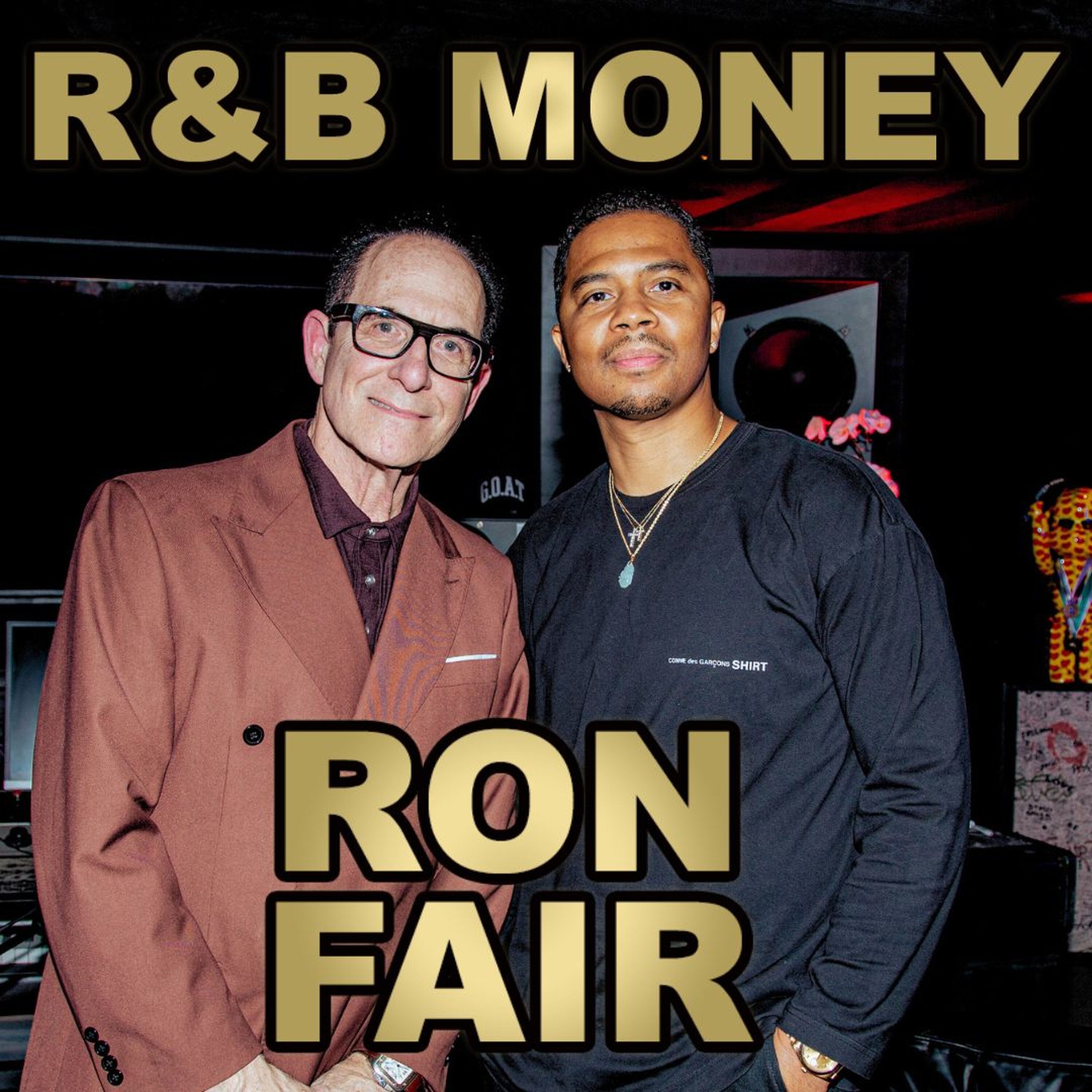
Ron Fair
Ron Fair—legendary music executive, producer, and A&R visionary—joins J. Valentine for a masterclass on artist development, hit records, and the business behind some of music’s biggest careers.
With a track record that includes working with artists like Christina Aguilera, The Black Eyed Peas, Mary J. Blige, Keyshia Cole, and more, Ron shares stories from inside the industry and breaks down what separates stars from everyone else. From discovering talent to shaping records in the studio, this episode is packed with insight from one of the most respected ears in music history.
See omnystudio.com/listener for privacy information.
Available Results
Generated results are saved to the knowledge database for reuse and search.
Extract Knowledge
Pick what you want extracted first. Model, scope, and chapter options appear after a template is selected.
Transcript
00:00:01
Speaker 1: R and B Money.

00:00:05
Speaker 2: We are thanks take volatility.

00:00:11
Speaker 1: We are the authority on all things R and B.

00:00:17
Speaker 3: I'm Jay Valentine and this is the R and B Money Podcast. You know what, I'm not about to go through the whole thing. I'm just gonna say, let's get it started. This interview right now. It's gonna change some things, and we're about to talk about the way.

00:00:35
Speaker 1: It is in this whole R and B thing.

00:00:38
Speaker 3: I have a legend of all legends, one of the greatest conductors of all time.

00:00:48
Speaker 1: Mister Ron fair.

00:00:54
Speaker 2: Roan.

00:00:54
Speaker 1: How you doing, man, I'm good now. Thank you for having me here, man. Thanks.

00:00:57
Speaker 4: Enough's a great honor to be to be affiliated and associated and to be here on the couch tonight.

00:01:04
Speaker 1: Now, this is great man.

00:01:05
Speaker 3: I you know, I've always admired your work, obviously, I'm sure you saw it on the show like I And I'm not one of those people. I'm not one of these people like yeah, yeah, I really respect it. I just won't speak on it. But if I got respect for somebody and I and I you know, have admiration for their work, I'm going to say that.

00:01:25
Speaker 4: Thank you for saying that, Like I mean for me to be here tonight and to talk through some of the highlights of my career. It's I really didn't want to make it like I did this and I did that, and and you know, me, me, me and the floss.

00:01:36
Speaker 1: So that's not what I'm here for. For me.

00:01:37
Speaker 4: This is like therapy and it's a chance to in some respects, to tell tell the stories and honor the people that put me in the position and relive a little bit of it. Yeah, and heal because because they're you know, through the through the forty five years of my major label career and the ups and downs of showbiz that come with it. In the bitch slashing that the universe can throw at you, you know, in between the highs and the great lows, there's the story that I wanted to tell. So I'm I'm hoping that we can, you know, go a little deeper other than you know, when I did this record with the baseline did I don't think people give a shit.

00:02:15
Speaker 3: What they do. I will say they do, but you know, let's let's start. Let's start from the beginning.

00:02:22
Speaker 1: Man. I know you from La.

00:02:23
Speaker 4: I'm around La born and raised, and I came from a kind of a theatrical family where you know, my father was an opera singer, my mother was a pianist. I there's something that would probably be the unknown that was called the Yiddish theater, which was the a theatrical tradition, like an entire thing with playwrights and shows and musicals that existed in the Eastern European Jewish community. That was basically the Jews from the Holocaust that were all wiped out. So they had a they had a theater and literature and and and in some in some respects movies and radio and and that was my grandparents. So we are we were a showbiz family.

00:03:02
Speaker 1: Are the beginning The first.

00:03:03
Speaker 4: Iteration of it was in a foreign language that isn't spoken anymore on the planet, which is called Yiddish. But some of the great expressions that we still have in English, like schmuck and putts, yeah, sugar na, those are those are all Yiddish words that have lasted the test of time. But not to dwell on that, I will, I'd like to go if it's okay to like, like, why am I here? Like what was the real beginning point? So I was, you know, I was a wedding singer. I was a musician. I was a doing jingles, I was scrambling.

00:03:31
Speaker 1: You were Adam Sandley.

00:03:32
Speaker 4: Yeah, I was real in real life, like these poor people who who got married to me singing God God bless them. But like the very first uh, I always wanted to be a record producer, and I was looking at record producers who were also label executives at the same time. And there was a tradition of them, like people like r If Martin or Jerry Wexler or or Ted Templeman or Lenny Waronker, like there were guys who were label executives and producers. And I thought, that's that's where I want to go. And I I could engineer a little bit, and I could play the piano a little bit, and I could arrange a little bit. And I stumbled into a situation in nineteen seventy seven. I'm seventy one years old, so nineteen seventy seven to twenty two year old me was working at a shitty studio as a like a gopher and tape op and it was called Hollywood Spectrum, and it was nowhere near Hollywood. It was just this little shitty studio and people would rent the studio for twenty dollars an hour. One of the clients of and I would engineer and it was like, you know, it was like an eight track studio and we had primitive, rudimentary microphones and it was very, very, very basic. But I learned how to engineer and make things sound good. And one of those early clients was a young film composer by the name of Bill Conti, and so we did a session like some little movie score thing whatever, and he took a liking to me, and he like brought me home for dinner and we started listening to jazz records. And I was very very much a jazz jazz at this point, trying to play jazz fusion and I could think unlimited, but my hands as a pianist were very limited, so the jazz was kind of off the table. If you can't play like Bill Evans or Oscar Peterson, don't bother you know what I mean. It was so the jazz thing, it was like it was my passion and the harmonics of jazz and the nutrition that comes from those those subdivisions of those chords. That was where I was musically. So Bill contienters my life and he says, to you know, Hey, I've got I want you to come with me on some of these movie score gigs. I have come over to my house on Wednesday and we'll go over the score.

00:05:39
Speaker 1: And on Thursday at three o'clock we're going.

00:05:41
Speaker 4: To go record this movie score. Is like, so I go over on Wednesday. It's like, okay, bar forty five, turn the harp mic on. Make sure the engineer turns the harp mic on because the harp is next to the trumpets and the trumpets are going to leak onto the harp. And so the session was on the Thursday at three o'clock in Hollywood, and it was Rocky. It was it was the original score of Rocky with Stallone and the director John Ablson and everybody in the room, and it was gonna fly now and.

00:06:12
Speaker 1: Bah blah blah blah blah blah blah Smith from Rocky.

00:06:17
Speaker 4: I was bro I was in the room for the entire recording, every single note that was recorded. I was standing next to Bill Conty in the room with the orchestra. Now, none of us knew, and I was the assistant. Yeah, none of us knew, including Bill, who were still we're still friends to this day. He is he is my mentor, and he is my lighthouse and my brother and my father and my everything and a burning jazz piano player. And literally nobody knew that Rocky and Stallone were going to take over the world and that it was going to change civilization, and that that music would to this day, fifty years later, would have this enduring quality in this when he ran up the steps, yeah went the distance like people screaming in the theaters, and you know the whole thing that happened.

00:07:07
Speaker 1: And then the.

00:07:07
Speaker 4: Instrumental of Gonna Fly Now with the vocals on the hook.

00:07:12
Speaker 1: Who's singing it?

00:07:13
Speaker 4: It's it was Bill's wife at the time, Shelby uh dieta little Nelson Pigford, probably Salon's brother.

00:07:22
Speaker 1: It was like a little background group like in the boot. Yeah, you guys are here stronger. It was like like, wasn't high budget shiit?

00:07:31
Speaker 4: So so the record, the single comes out and the origin from the from the and then the whole thing was done, recorded, mixed, leader finished in three hours. It was a movie score date, and we did the cue of Gonna Fly Now for the picture can Bill conducting to the picture, and then we did the record version. The longer version. So the longer version comes out on United Artists. It's is forty five and the ship goes to number one, and every marching band on the planet plays that song today. We have a lot to talk about tonight, but just starting at the beginning.

00:08:07
Speaker 3: So this is like your first I'm twenty two years old into the music business period.

00:08:12
Speaker 1: Well you know, I mean from I.

00:08:13
Speaker 4: Like literally wedding singer Jingles. Yeah, like it was a movie score that was like I'd done a lot of stuff with Bill. I was around for a lot of his stuff. Yeah, he you know, it was like a gig, like twenty bucks an hour, and you know, like, hey, Bill, you need me, If you need your briefcase.

00:08:26
Speaker 1: Let me run to the car and get it for you. Yeah, you do.

00:08:29
Speaker 4: So, so time passes, a little bit of time passes. This whole thing blows up. Bill is recognized, as you know, he went on to conduct the Academy Awards seventeen years won the Oscar not for Rocky he was nominated, but he won it for the next year for the right stuff. But anyway, so Bill shows up at my studio. Now I'm trying to be a jazz fusion artist and maybe I'll send you some of the pictures. But and I have a band and we're all like fucking stoned guys pretending to be Chick Korea but suck. And Bill shows up at the studio. It was called El Dorado. It's at the parking lot now across from Capitol. It's from the Capitol Tower. There was a building there with a studio that's been demolished. He shows up with this thing and he rips off the brown paper and he hands me my first gold album for Rocky with my name on it, a gold album, in front of my friends, and he says, you got a minute, And he pulls me aside and says, Ron, you're a half ass recording engineer. You're a half ass arranger. You're less than a half ass piano player. And this is why he's handing me the gold record. But if you put it all together, you're a producer. Wow, that's what you need to do. Stop doing everything yourself and.

00:09:52
Speaker 1: Get the people delegated. Yeah yeah, yeah, And I love this.

00:09:57
Speaker 4: Guy, and I instead of being insulted, you know, you're a half fast engineer, you're a half assed piano plet you know, I realize, Oh, this is that moment and I took that gold album. So at age twenty two, with the gold album for Rocky, it gave me something in my soul that allowed me to walk taller. And then, wanting to be a producer, I cold, of course couldn't get a job. I had no track record. All I did is bullshit demos and failure tapes of my friends that I recorded in that stupid studio. So I thought, hmm, I'm really good at talking, I'm good with words, and I look good in a suit. I should be a record executive and then I'll hire myself to produce the records.

00:10:42
Speaker 1: Oh this is great, yes, yes, So that was my plan.

00:10:45
Speaker 4: So I went to Music Connection.

00:10:49
Speaker 1: I started doing publishing demos.

00:10:50
Speaker 4: There was a guy named Danny Strick who was a young publishing executive and happened to be United Artists Music. It's like, hey, wrong, come over here and do with the demos. So I started doing publishing demos. And in those days, a publishing demo was not something with a sequencer and a laptop and a beat and you know, a top line.

00:11:06
Speaker 1: It was.

00:11:07
Speaker 4: It was a band and a real singer. It was all live and they had a little studio, and so I started producing these demos and little by little, everything I was producing was getting covered by all the artists of the day, and I was starting to get a track record. So I went to this local paper that we still have today called Music Connection, and I said, I'd like to write an article on the anatomy of a song demo, and I will tell everybody what a song demo should be because I've just done this and this and this and this song gud cut and this song gut cut. And they said, we love that idea, and we'll pay you for the article twenty five dollars. I said great. So I went around and I interviewed A and R people said Hey, I'm Ron Fair, I'm a correspondent for Music Connection, and i'd like to interview it. You know, all the people in LA were like, sure, I'll do an interview. And from that I met a guy whose name was Barry Lander. He was at RCA and he was an an R guy and I kind of knew him, and he gave me the opportunity to become an an R executive in nineteen eighty one at RCA Records on Hollywood on Sunset Boulevard, and that was the beginning of a forty five year NonStop ride through the major labels that ended in my last position, which was creative head of Virgin Records. But I made it all the way to president of A and M and chairman of Geffen and literally four and a half decades. And during that time, that's when I ran the table and started to hire myself to produce records.

00:12:38
Speaker 3: So let's let's talk about some of those records, because well, now I'm getting to the beginning, okay, okay, so let me get to the beginning, all right.

00:12:46
Speaker 4: So I got fired from RCA. I've been fired five times, Like I have that distinction, you know, and I and I am. I'm cool with it because because I was a very strong flavor and my advocacy for artists and my temperament was such that you either like a lot of people disliked me because of my intensity. But I was always for the music and always for the artists, and always seeing through the artist's eyes and fearless and not realizing like, oh shit, I'm gonna get my ass kicked out of here because I'm just too strong, Like I didn't know how to tone it down.

00:13:22
Speaker 1: And I wasn't about to you were never scared to be fired.

00:13:25
Speaker 4: I never added it up until I started getting fired consistently.

00:13:28
Speaker 1: So the first how'd the first firing feel?

00:13:31
Speaker 4: The first firing was interesting because because that particular job at RCA, they had already fired my boss four times.

00:13:37
Speaker 1: I had four different bosses.

00:13:38
Speaker 4: So the last boss who fired me, who passed away rest in peace, Paul Atkinson. After I gave him mister Mister's cassette which had which had broken wings on it, he signed it himself and fired me, and that went on to become a number one record, So I knew I was on it, and I've never said that before.

00:13:58
Speaker 1: Nobody knows that.

00:13:59
Speaker 4: But I I got a job at EMI Records, the guy who original signer of Whitney Houston, Jerry Griffith, who interestingly enough, was one of the few African American rayn rs that was head of the pop department, and he was a great man, a beautiful man, and he gave me a job to be an R guy. So I went from RCAA to EMI, and I stumbled into the soundtrack to Pretty Woman, which my buddy was working at Disney guy named Mitch Leeb he was working to say, hey, we we're doing this movie over here. You know, Richard, Gary's a little bit cold. But there's this new girl, Julia Roberts. And if you come down to the studio, like, we'll go to the set. And I happened to be there the day of the bathtub scene, if you remember a pretty Woman when she puts her toe into the faucet, And he said, let's do a soundtrack album, a fill with a bunch of records, and Gary Marshall will put all the records in the movie. And I said sure and signed the movie. And then the thing again, like another strike stroke of lightning, goes bananas and becomes a cultural phenomenon, and the Pretty Woman album sold twenty million copies.

00:15:09
Speaker 1: In the guy.

00:15:10
Speaker 4: So, but I'm not a soundtrack guy, remember what I am. I'm like half ass engineer, half ass producer, have ass ranger, wanting to be a jazz guy.

00:15:18
Speaker 1: First success on the sound straight.

00:15:19
Speaker 4: But I wasn't really the producer. I was the A and R guy who made the deal, and I broke at it. So they made me. Now they elevate me. I'm skipping through history very quickly. But it's okay, okay. Ron we're going to promote you now to senior vice president of the A and R for EMI Records, living.

00:15:36
Speaker 1: In New York.

00:15:37
Speaker 3: And how long does that take from when you first got the job for you for you to go from A and R to senior.

00:15:42
Speaker 1: Oh, I forgot Christalist. There was probably five years. I got Chris List.

00:15:46
Speaker 4: Yeah, I forgot Christmas. I forgot England, I forgot Go West. There's a lot of stuff in between. Let's go to em I now because this is what this is why I'm here, Okay, Jay, why I'm on R and B money So pretty mum goes crazy. I'm now the boss of A and R, the creative guy and my boss at the time, another guy passed away Rest in peace. Salacatta calls me into a meeting and he says, run, what do you know about the OJS? I said the OJS? Like, what do you mean? What do I know about the OJ's? Like they're the encyclopedia of every great song and he goes, they're signed to us, they owe us an album. They don't their an R guy is gone go to Cleveland and get involved and meet these guys and deliver their record. It's like, really, yeah, head of an r go, go fucking deal with it. So around this time I had stumbled on to I keep using that word a Bob Dylan song that I had to be in my bonnet for. This song was called Emotionally Yours and Bob Dylan to me like he's my generation blowing in the wind, like you know, Bob Dylan is like like a religious icon almost to somebody like me growing up in the Vietnam era, baby boomer and everything. So I had this idea that I wanted Huey Lewis, who was on our label, to cover the Bob Dylan song. Okay, so I pitch it to me and my boss went to Fan Francisco. We go up to see Huey Lewis here we lose in the news and they were hot, hot, hot. It's got this Bob Dylan song. I really want you to do it. And he listens to the song and he goes, wow, there's Bob Dylan version. He goes, this is great, Ron, I love this. I love Bob Dylan. I totally get what you're saying. I'm not going to do it. I said, wait a minute, what am I missing? You love the song? You get it. Huey Lewis covering Bob Dylan. That's a great thing. He goes, now, Nah, I can't, I can't do that. I can't. I can't do Bob Dylan. I'm just not going to do it. And I'm sitting here and I thought, well.

00:17:54
Speaker 1: What about wait? Wait? What about if?

00:17:56
Speaker 4: What about if I get the OJ's to sing the backgrounds on it, Huey Lewis and the old J's doing Bob Dylan? What could be better than that? Like I'm just searching off file, matching file, found oh j is singing the backgrounds.

00:18:07
Speaker 1: I had no idea.

00:18:07
Speaker 4: You know, we kind of bullshit? Is that?

00:18:10
Speaker 1: So? Yeah?

00:18:11
Speaker 4: Man, great idea. I love the OJ's man, there they're incredible.

00:18:14
Speaker 1: Like, I'm not gonna do it.

00:18:15
Speaker 4: So like meeting over, We're driving in the rented convertible across the Golden Gate Bridge, me and my boss, and I said, fuck that asshole, I'm gonna give it to the OJS. Fuck Huey Lewis. I'll just do it with the OJS. So great, when are you going to Cleveland next Thursday? So I send the song in advance and I've got this idea and that the OJ's are going to do this Bob Dylan song. I haven't heard any of their stuff, okay, And I send it in advance and the time comes on. I get to Cleveland and they had these guys Terry Stubbs and and Dwayne someone I can't remember his name, Terry, I can't remember the name. So it was so long ago, and they were like the beat guys from Cleveland who were working on the tracks for the OJS.

00:19:00
Speaker 1: So I get there like, hey, I'm out there. Yeah. The end house goes, Hey, nice to meet you guys. How y'all doing?

00:19:04
Speaker 4: And everything sounded like bell BIV Devaux okay, and I'm introducing myself. It's like, did you guys hear the Dolan tune? Talking to Eddie and Walt? Like the third guy in the OJS had passed away and it was Eddie LeVert and Walt Williams, Legends, Gamble and Huff Royalty, Like, doesn't get any deeper other than Barry Gordy. Okay, that's the level of the OJS. And I knew that.

00:19:28
Speaker 1: Guys.

00:19:28
Speaker 4: Did you hear the Bob Nolan song? He's like, no, man, you gotta listen to our shit. So I listened to their stuff and it's like, okay, now this is cool. This is cool, the great core changes and stuff. He said, what about the Dolan tune?

00:19:38
Speaker 1: Do you know it? Like? Oh man.

00:19:43
Speaker 4: Ah, I said, let me teach you to you. So I sit down at the piano and I start playing it. And you know, like I told you, it was a half aassed piano player, but I was pretty good. You get it off and I'm singing it to them. It's like Eddie Lavert right here, and it's like getting closer and I to feel his like sweat and his breath on my ear, and Walter Williams over here and they started. Walter's like Marvin Gay, He's ridiculous. Yes, these guys are fucking drilling me in my ears, right in my fucking head. And I started getting uncomfortable.

00:20:17
Speaker 1: I turned to.

00:20:17
Speaker 4: Eddie and I said, excuse me, but can I get one square inch to groove in? And they looked at each other and they burst into historical laughter. And right there when they laughed, because I was I wasn't it wasn't a joke. I wanted once were an inch to groove in. Right then and there, my life changed. It changed right there, because what started to happen was the shit that they learned from Gamble and Huff, And nobody knows this except for Eddie and Walter. I'm still friends with the ship that they learned from the Royalty of the sound of Philadelphia through Gamble and Huff, that they channeled and they drilled it into my brain and I'm I'm a jazz guy. So it's like the harmonic information. I was already subdividing in my mind, like what are these chords? What are these harmonies? What are these branches of background parts and trees and cascading ad libs?

00:21:16
Speaker 1: How do they relate?

00:21:18
Speaker 4: So I'm like music theory, vegimatic slicing and dicing this shit inhaling it and my life changed in front of me. So this album Emotionally Yours on EMI, which had three hits on it had it had Don't Let Me Down, which was a number one R and B record, It had Keep On Loving Me, which was a number one R and B record, and it had Emotionally Yours by Bob Dylan, which became the biggest Bob Dylan song by an R and B group in history.

00:21:45
Speaker 1: Wow.

00:21:46
Speaker 4: And what the album was called Emotionally yours and it was the only platinum album that the Ojy's made that Gamble and.

00:21:52
Speaker 3: Huff didn't make Congratulations amazing.

00:21:57
Speaker 4: Okay, And then it went on. It kept going on and on, and we did. When we toured it, I got paranoid because my version of it was.

00:22:04
Speaker 1: A gospel version. Yeah yeah.

00:22:05
Speaker 4: And I had Richard T, who passed away like the greatest gospel piano player ever, Victor Bailey, Omar Hakem. I had the fucking New York Royalty guys playing on this track and an orchestra that I arranged. Course I did my big strings, and the song was it was like an opera. It was so dramatic, this beautiful piano part that Richard T played. We recorded it at Marathon Studios in New York City, and then when we promoted it, I got nervous, like this is too gospel, this is to church, Like I went into this whole gospel thing. I literally when we did the choir session, I did it a power station in New York and I told thatdy. I said, let's make it into an event. And like, by the way, people were letting me go like I was just a mad man. So I put a choir session together that at the time for R and B people that are watching your show to wat Adgie, Martha Wash, Evelyn Champagneking, Ray Goodman and Brown. Gerald LeVert conducted the choir Keith Sweat. All these people showed up for the OJS to sing the choir part on the Bob Dylan song Emotionally Yours, and I filmed it and I got it on the local news. Then what happened was when I got paranoid that the gospel version wasn't going to be a hit, and I had spent so much money and it was so off my rocker that I told my boss I got to recut it, like as if that wasn't enough, because it's to church and I want to recut it, and I'm going to get nar to Michael Walden who was just coming off.

00:23:34
Speaker 1: Of Whitney Houston, and he cut it.

00:23:38
Speaker 4: So then I released it as a double A side and I made two videos. Oh shit, I was half a million dollars in on Emotionally Yours. But you know what happened. The shit worked and when they played Arsenio Hall and sang it, we did it as a piano vocal and I played the piano I played. I learned Richard T's part and I played it. I played it every place I could, because it was the wind beneath my wings. It was everything. And the kapper was when the Bob Dylan Tribute concert came to Madison Square Garden and it was Chris Christofferson and Jim Keltner and Duck Dunn and the original Sam and Daves and all that shit. The only black act on the Bob Dylan Tribute consert Madison Square Garden was the OJS. And that night I had Sissy Houston and Sheryl Crow and I can't even remember all the names of the people that were in.

00:24:32
Speaker 1: It, and.

00:24:36
Speaker 4: Took so much pride in it. But and then of course the moment passed, and that was emotionally Yours and Eddie and Walt were baked into my life as forever rabbis of R and B and what I learned musically from it. This is great because it's going to lead into all the rest of the stories. Was what gave me the balls and the authority to later on teach ojays to Christina aguilera little. Does she know that every background part that we made up was Gamble and Hough through the OJS, threw me to her and she just soaked it up. She had the chops. She's a descendant of the OJS through me without knowing it. And then later on after Christina, who was straight up R and B singing about on pop records, then it became Keisha Cole, Mary J. Blige, Fantasia, Macy Gray and the rest of it. And the whole time it was the OJS.

00:25:39
Speaker 3: So tell me this, do you think you could have pulled this off if you didn't have your senior position as as an executive.

00:25:47
Speaker 4: There's no question I would not have been able to pull any of it off. But I was just this mad, crazy guy with this energy. And you know, sometimes when you walk fast and talk loud, you steamroll through shit, and it's called it's also you know, it's passion, it's you know what I love, what I do, it's passion, it's vision. Later on, as as the story develops, the people along the way that that I met with, and we'll go through it. But like when I started cutting R and B records in my time at Interscope with Jimmy Jimmy Iovine, there were two guys in the backfield that were coaching me promotion, guys step Johnson.

00:26:34
Speaker 1: And Marsh Yeah, yeah, yeah, yeah, okay.

00:26:38
Speaker 4: And it was like Ron, like, we don't care if you're the white Jewish kid from the valley. Whatever you're doing is the ship. Keep doing it, give us these records. So step Johnson was the one to say, Ron, black music is the major food group of music. R and B, gospel, rhythm and blues, rock and roll, and reggae. It's all our shit. Those are the food groups, man, that's the nutrition. And it was like, you're right, you're right. And it was a feast of musicality coming from the tradition that because of this freaky thing that happened with the OJS, that got stamped into my soul.

00:27:26
Speaker 1: Yeah.

00:27:27
Speaker 4: So that later on, like I said, I could hold my own in a room with somebody like Mary J. Blige fearlessly and you knew what the fuck you were doing as an equal.

00:27:38
Speaker 1: Yes. Yes.

00:27:40
Speaker 3: So when you see a Christina aguilera big voice Mickey Mouse Club, and you see that and you meet her and you're like, she's an R and B artist, She's an R and B vocal, Right, obviously it's going to be pop and we're going to figure out how how to make this work. But she wasn't Britney Spears. She wasn't that type of pop arty. She was really an R and B voice trapped in a pop body.

00:28:04
Speaker 4: So Christina is a God given enormous talent.

00:28:10
Speaker 1: She has.

00:28:13
Speaker 4: Two things. She has an amazing three more than two. First of all, amazing chops. So her athletic ability too in the singing muscle was Michael Jordan. Her her tone that God gave her was a miracle and her ear yah was the jet fuel the whole time, because you could play a chord and she would just go. But I knew from the get go with Christina that that, you know, we could we could go up. We could go up and we could go down. We could do a Genina bottle. But she also sang with Andrea Bachelli and Herbie Hancock and doctor John. I had her doing all this highbrow shit. Yeah, while we were legitimizing that in that particular moment pre internet, Yeah, that Christina and Brittany who were by the way, It made for great magazine copy for sure, but that that Christina was the singer and she was like when she sang at last on Saturday Night Live the Oda James Tune, I was playing the piano. I was always trying to just express myself.

00:29:20
Speaker 3: And as a senior executive, though you know this is like that is ron.

00:29:25
Speaker 1: That is not normal, right.

00:29:27
Speaker 4: It's not normal, And I took there was a lot of hate and a lot of misunderstanding, and like I said, I.

00:29:32
Speaker 1: Was fired five times. Yeah.

00:29:34
Speaker 4: So that same fire that led me to be so passionate about the records, it is the same thing that took me down every time. And I think it's important that that you're following and what this podcast is all about, that they understand that I understand that now and that when I go back and talk and think about, like, well I could have done this, I could have that, like cause my thing always was I had you know, I was forty five years in the majors. Was always about the music and when that was the thing and that was convened, and that led to Vanessa Carlton and the Black Eyed Peas and the Pussy gat Dolls and you know everything else. It wasn't the the other piece of the puzzle, which is so important, which is the relationships and power and how music and relationships and power all conspire and work together in the record industry. I was just the dumb ass guy who was fighting for the music and fighting for the artist. And so now when I look back on it, and I was really I was talking to my wife today about thinking about to go back and take regret and turn it into knowledge and instead of being regrettaful for like I should on this show that or whatever, like over the forty five years to like, you know what, I fucking learned from it, and it's knowledge and it's power.

00:30:58
Speaker 1: Yeah.

00:30:58
Speaker 4: So it keeps me going every time I meet a new artist because I'm hopeful it's preposterous. Well we're going to start from nothing, nothing and put a song on TikTok and it's going to change the world. Well, guess what, I've been there so many fucking times when that's happened.

00:31:14
Speaker 1: I believe it. And that's what we need in our industry. We need hopeful people.

00:31:19
Speaker 3: Right, We have enough people who aren't hopeful because I have the conversations with them, not people even that I bring on the show, because just my friends in the industry, people I've seen do amazing things. Now that I have certain conversations. You're like, oh, this can't and that can I'm like, well why not? And I've said it many times. We make magic, we do. We pull out the sky somehow it funnels through us, through your higher powers, and now we have this thing that did not exist.

00:31:48
Speaker 4: Correct and like by the way, like right now, like something like miracles, like artists that get passed on a million times, like you know, there's a great tradition of the artists passed on, Choperon, Lady gag Got, Bruno, Mars fIF Macy Gray.

00:32:00
Speaker 1: All were dropped for sure right on the planet. Yeah.

00:32:05
Speaker 4: And then this miracles like ray that that needs to be discovered by Jay Irving, like a guy from not even from England who picks the best ask on the planet.

00:32:14
Speaker 1: Yeah, and just what it blows up?

00:32:17
Speaker 3: She is all the way there right, vision right, and and having a because this was something that I noticed that you a move you made with Christina. You brought in Eric Dawkins and I remember him going and I remember hearing about her first through him, and I'm like, don't, I don't. Okay, you're a grey singer, she's a great singer, but how do you get that call?

00:32:42
Speaker 1: You know, what I'm saying. And obviously from my understanding, you made that connection.

00:32:47
Speaker 4: So it's I mean to comprehend. How does Eric Dawkins fit in that world? Is because I learned the food groups from Eddie and Walt. They gave me the roadmap to the treasure. And and then because I want to delve back into like then with the other I look at all the R and B acts that I got lucky enough to work with, even though we have mass efits as teachers. Keisha Cole at the in her hottest period of her life, she had the hot hand. All I did was listen to her and and then she would bring music in and it would be like, oh, okay, I get it. You want to sing this, you want to sing that, but the lets't pick this chord and lets lea the be Let's polish this up like and and then or Mary, like when we redid the breakthrough like be without You was there's a whole other version of the song before we finished it where there was mistakes yeah on it and and uh and she not only was I used to think, I used to think with regards to Mary, which I do want to talk about. She was like my Elvis. She was like the fucking Elvis Presley, like this gigantic thing like Elvis, like you know, Barbara Judy Elvis. That's how Mary was to me, like the biggest of the big. But she was also gracious and a great teacher. Because they used to say shit to me, like, don't lose the hump. Whatever you're doing there, man, skinny too shiny, and it would be like, what do you mean? And it was the whole way the underneath of an R and B record had to move the bass, the bass drum, the beat, and then the other stuff on top, the orchestration, the vocals, the harmonic stuff, and how those two things lived together. Like I wasn't making hit records right away. It was by you know, it was people like Mary and Keisha. Just by listening to them.

00:34:42
Speaker 3: They taught me what is your first What was your first that you considered from a producers standpoint, your first hit record?

00:34:49
Speaker 4: The first number one record I produced was the reggae version of baby I Love Your Way by Big Mountain, and that has a great story to it also, you know, going back into the weeds. Big Mountain was a local San Bernardino group that had in these days of radio stations were programmed by humans, and they were getting they were getting overnight airplay on KSFM.

00:35:11
Speaker 1: Weight Yeah, and there's.

00:35:12
Speaker 4: A song called touch My Light and I kept hearing it and this guy sounded like Bob Marley and was like, this is fucking good. But I was doing the soundtrack to Reality Bites and Baby I Love Your Way was in the movie, and I thought, I want to do a reggae version of this.

00:35:26
Speaker 1: I had all this, you know, like Peter Frampton. Yeah.

00:35:30
Speaker 4: So basically they're like visions or delusions. I'm gonna do it reggae and then I'm gonna have a hit. And the hot group at the time was a group called Inner Circle.

00:35:39
Speaker 1: Yes, bad boys, Bad boys, what you're gonna do? Yeah?

00:35:42
Speaker 4: Right, So it's like I'm gonna go a Circle house out in Miami. So I'm gonna go to Intercircle and get them to do this song. So their manager at the time, Cock blocked that, and I couldn't get to Inner Circle. So I thought maybe that group that has that overnight fucking song, but they weren't anybody big Mountain. All they had was the overnights on KSFM, So I brought it to them and said why do we do baby, I love your way and it was like yeah, and we'll put it in reality bites.

00:36:11
Speaker 1: Yeah.

00:36:12
Speaker 4: So the heartbeat of that record is abe Laboreal Senior and junior bass and drums. Abe lea Boreal junior who everybody knows as Paul McCartney's drummer. Uh. It was in high school and his father, Abraham Li Boreal Senior is one of the legendary bass players to ever walk the planet. Okay, and you know Quincy Jones level he was on. Abe Le Boreal was on everything. So I had the idea in my head that shadows grow so long.

00:36:44
Speaker 1: Before my eyes.

00:36:44
Speaker 4: It is all coming from a musical place, that the bass would have a like a Mozart counterpoint to it the whole time. But bomb ba bump bump bo but bomb bob that I would create a counterpoint between the reggae bassline and the melody of the song, and that was going to be the gl Lou And that's how we recorded it. It started with bass, click track and lead vocal and the rest I filled in and that became my first number one single around the world and it was game on.

00:37:14
Speaker 1: But were you at the label as an executive by that. Yeah.

00:37:16
Speaker 4: Yeah, I was at a different label than Big Mountain, but you know, I was always running that, running that scam man I had.

00:37:22
Speaker 1: I had they weren't your artists, and.

00:37:25
Speaker 4: I borrowed them. Oh shit, I borrowed that. They were on Giant Records.

00:37:29
Speaker 1: Because you were doing that that that sounds right. Yeah, yeah, it was for R c A.

00:37:33
Speaker 4: But I started to hijack the ship and started to produce a lot of the records when I thought I was the right guy. Okay, so I was doing the two hat thing. I hope this is all making sense because we're jumping around a lot. I was doing the two hat thing where I'm gonna bring you back, I'm gonna keep I only wanted to produce the records where I really thought I was the right guy because as an an R guy, I had a I could do more. Yeah, but as a producer, I knew my shtick, you know, and I tried to stay stay in my lane. So I saw so mitigate failure. That way I could still win as an an R guy. Christina's first album, I didn't produce anything nothing. I produced the producers, and that trick producing the producers exactly what Jimmy Iven did through all of the successful years of Interscope, and it was his mantra. That's why he had will I am Ron Fair, Timbaland, Pharrell, Kwame, Kerry Hillson. He produced all of us and he had that winning lineup. Yeah, because he himself was a producer, but he was he was just making hands off, he make he was just making suggestions. Some of them would piss me off and some of them would lead to greater heights.

00:38:45
Speaker 1: Yeah.

00:38:53
Speaker 3: So when you so you said that, So when you get the first Christina album, you don't produce that, not a single note, and you're at at that time it's our Yeah.

00:39:00
Speaker 1: Yeah, how long are you there that particular run?

00:39:04
Speaker 4: Because I was at RCA twice.

00:39:07
Speaker 1: Oh you went back? I went back.

00:39:09
Speaker 4: That was probably I think it was. I'm going to say it was like four years.

00:39:13
Speaker 3: So if you get fired from a company and they bring you back, do you hold anything like now you got a faby devil.

00:39:19
Speaker 4: Actually, I want to say this, So Christina came second in my pursuit to recreate the OJS as a white pop thing. The first iteration of it was.

00:39:31
Speaker 1: Wild wild, Yes, Okay, I'm familiar and.

00:39:35
Speaker 4: That was Stacy Ferguson, who became Fergie, who I went back and re signed into the Black Eyed Peas with which we'll talk about. Stephanie Roydell, who is the mother of my four children. Is the angel in my life yea, but not at the time. And Renee Sanstrom and the ship that Wild Orchid was singing was the OJS. If you go back and listen to their album, it's all gamble and huff knockoff, all the harmonies, all the way the backgrounds work, and it was pre auto tune. We just had to sing the shit over and over over again, util it was in tune right. And so it didn't work as a three piece girl group because of management, because of luck, because of the circumstances at the time, because I didn't know enough. I was just an idiot kid record executive. I didn't know what I would later know which would allow me to not only make the records, would break acts. And so what I signing wasn't my first signing. My first signing was Armored Saint, the heavy metal band. That was the first first band I ever signed, but from all of the universe clobbering me and the failure of that, which was I spent when we turned in Wild Orchid. The head of the label was a guy named Strauss Zelnik. At the time, he was my boss's boss's boss. He was the head corporate guy. He said to me, this is going to sell millions and you're going to be David Foster because this album you have produced. Yeah, and I produced the Wild Work record, and I thought, like I bought a brand new Calvin Client suit that was like two thousand bucks.

00:41:09
Speaker 1: The shirt was seven hundred bucks because he told you used to be David Foster.

00:41:13
Speaker 4: And uh, it didn't happen, but I took Then I stumbled upon Christina and just took that the lessons. But she was not a group and she had the exquisite chops and so that's that's what led me to it. And you know, and the rest is history with Christina and that by then Christina became a cultural phenomenon and and she's still relevant to this day and she's a magnificent artist and singer, and you know, will always have my heart because she's my offspring in a way.

00:41:50
Speaker 1: Yeah. So when you go from RCA, do you go to Geffen directly from there?

00:41:57
Speaker 4: No?

00:41:57
Speaker 3: So here's what happened, because you got a thousand miles in between there.

00:42:02
Speaker 4: Now, that happened after after RCA, so so I had signed Christina. Her her single went to number one in four or five weeks, the album came in at number one. H Puff Daddy was number two. It was a miracle. And then I was king shit. Yeah okay, and my contract was up and I was two hundred and sixty five pounds one hundred pounds heavier than I am now. So I was a successful, fat an R guy and my with U thirteen million albums in my pocket from Christina, a bunch of number ones, yeah, and expiring contract. So I looked at myself with disgust, and I said one thing to myself, you can't make this ship up. And I've never said any of this before anywhere. I thought, Killiman Jarrow, I'm going to I'm Mount Kilimanjaro, and I'm gonna get my head straight. And so I started walking on Runyan Canyon and get rid of that weight. And then I started running on Runyan Canyon to get rid of that weight. And then I started running with weight on Runyan Canyon and I trained, and then I signed up and I went on an expedition and went to the top of Mount Kilimanjaro in Africa. Yeah yeah, I climbed it and came back and got my weight under control. And right around that time, I was doing Christina's Christmas album, which is really a great album. She's completely insane on the ad libs on that record, singing at the peak of her youthful powers, like with nobody checking it. Ad libs like you can't even I mean so many, like it was incredible what she was doing, and I loved every note of it because I'm a jazz guy. So there she is running and running and running and running and running, and I wasn't gonna stopp her. So we're in We're in uh, Winnipeg, the mosquito capital of the world, where the mosquitoes are like birds, and and uh doing a Christmas album and and I get a call like we're in the middle of doing like Holy Night or something. The star the bright lee shining. Christina's in there singing, and it's like Jimmy Iaven online too. I'm thinking like, oh yeah, somebody's fucking pranking me. Jimmy Ivey is not calling me in and I'm in Winnipeg fucking doing Holy Night? What do you mean? So? Uh, I pick up the phone and I thought, like I used to I have a friend Danny Strik who used to prank me and call up and say it's Clive Davis, and you know, he pranked me all the time. So I pick up the phone and I said to Christina, hang on it' sec I gotta take this. And it's like, yeah, this is Jimmy Ivan. I had met him. I had met him once before, I barely knew him. And he said, I'm reading Rolling Stone magazine right here, your girl Christina on the cover and it says in this it says in this article that you forced her to sing Genie in a bottle. This is Jimmy on the phone.

00:45:08
Speaker 1: Is that true? And I'm thinking to myself, this is some kind of weird setup, like yeah, yeah, the trick question is something trick question?

00:45:17
Speaker 4: And I said uh uh. And before I could answer, Jimmy said this to me, I need a guy who can force artists to sing number one records? Can I have a meeting with you? And I went and met with Jimmy and again I told you, like I'd lost all the weight, I'd climbed out kil Njaro, Christina had one best new artist. It was the change in my life had come. And I went and met with Jimmy and he said, I want to make you president of A and M Records and I'll give you great salary. And you know, I said, well, Jimmy, you know I'm a producer. I'm I got to have a studio. I got to be able to cut records without a budget, like I just need to be able to record. And he said, man, you want you want studio? You want two studiess you want three studios.

00:45:57
Speaker 1: How many engineers? You want to have? Five engineers? What do you want? Yeah?

00:46:01
Speaker 4: I was told if you take that job, you're gonna curl up in a ball and disappear by somebody at RCA.

00:46:10
Speaker 1: And I that's when I knew, like I'm out of here.

00:46:14
Speaker 4: And then I took the job. And ten weeks later, Lady Marmalade good. Ten weeks later. And this is a great story because Jimmy so I just got there. And when I signed my contract, Jimmy was so smart. I mean, he's he is the zeus of it all. And I had him for ten years in my face, giving me A tripled Harvard PhD. In this ship that I am a. I am a graduate of it. And he had made the deal for Mulin Rouge, the album from the movie, and they were gonna cut Lady Marmalade, the pointers of the song that that Alan Tu saint Row. I met with Baz Luhrman and they hired Bas wanted me, I see Elliott to do the record, which along with Missy comes Rock Wilder and her team.

00:47:06
Speaker 1: Yeah.

00:47:08
Speaker 4: So I go to Westlake Studios on like day one of Lady Marmelot. I'm on the way over there and Mona Scott calls me up and goes, hey, Ron, you.

00:47:18
Speaker 1: Know how are I? Like?

00:47:22
Speaker 4: I got bad news. Turn around. You're not gonna work on the song. Missy doesn't want to do it that way. She was managing Missy, so like, don't go to the studio. It's like, Okay, I called Jimmy. I said, I think I've just been fired off the song.

00:47:35
Speaker 1: Give me a minute.

00:47:37
Speaker 4: So I'm driving back to Santa Monica now, and then Mona calls back and goes, oh, okay, no, no, no, no, go to the studio and we had Rock Wilder's track and Rock Wilder had this miracle where he got his brand new core triton this new keyboard.

00:47:50
Speaker 1: At the time, this was the hot shit.

00:47:52
Speaker 4: And when you turn the keyboard on, the very first sound that comes up, bank a sound zero zero zero was called noise. He stabber, that was the name of the patch, and he put his hand on it and it was done.

00:48:09
Speaker 1: Bank a patch zero zero zero. Like you didn't even fish for the shit. It was right there.

00:48:14
Speaker 4: Magic, magic, magic. So we took the idea to Christina. Jimmy was smart because he let me continue to work with Christina on RCA even though I was now at Innerscope.

00:48:26
Speaker 1: I had a carve out ten weeks later.

00:48:29
Speaker 4: Okay, Christina jumps on the record. We put we get Pink to agree to come on it. Our home team girl was Maya, so you damn straight. I was gonna put somebody from the home team water and then little Kim came because of Missy and this magic thing happened. Was thirteen days, Lady Marmola was thirteen days. And I remember saying to Rock Wilder the whole time, am I making this shit too clean? It's like, no, man, I'll tell you if you go too far and he kept it all on track, and then we kept sending it to Missy.

00:49:06
Speaker 1: He says, okay, is this okay? Is this okay? Is this okay?

00:49:09
Speaker 4: And then when it came to the ad libs on Lady Marmalade, I realized they all have different schedules. They're not in the studio at the same time.

00:49:17
Speaker 1: How am I?

00:49:18
Speaker 4: How is this going to work where everybody, all four of them including Kim, are doing ad libs. By the way, I want to say this, the pocket for the hook on Lady Marmalade, Hey, Sister Soul, and the all that shit was Maya.

00:49:31
Speaker 1: Maya laid the original.

00:49:33
Speaker 4: Vocal down and and everybody, everybody jumped on her pocket. She's an unsung hero. And of course they went on to win the Grammy. But you know, Maya was an incredibly hard worker and she she like she kind of like doesn't get her her props, her flowers.

00:49:51
Speaker 1: Give her some flowers. Yeah, we love Maya.

00:49:53
Speaker 4: Yeah, that was her pocket. Everybody jumped on it. And then it became like a lot has been written about Lady Marmalade, where you know that there was friction and that I took Christina aside over pink and like, honestly, I think all that is is great to sell magazines. That the magic was there. They ouched. It was a like almost like a battle between them, but the ad lib technique was very much. It was an idea I had that if I because the song is modal, which means that all through it dun dun dun dun dun dun dunh there's a harmonic hitching post that everything springs off of, and that you could sing an ad lib through the entire three minute track, an ad lib pass without the chords changing.

00:50:35
Speaker 1: Yeah, as long.

00:50:37
Speaker 4: As you stuck to the base, you could add lib. So I took each girl in and I just said ad lib top to bottom, all the way through, five times.

00:50:48
Speaker 1: And find the hole.

00:50:49
Speaker 4: And then during the ad lib pass, I would say sing that again, sing what again? Yeah yeah yeah yeah, sing it again, yeah yeah yeah, sing it five times in a row, yeah yeah yeah yahkay another pass. And I had an archive of ad libs from each singer. Then I went through it and I learned them all and I cataloged them and I gave them all names. And I have two keyboards and an L shape, and I gave them all names. And they were color coded like Maya's ad libs were green, Christinas were red, Pinks were blue, and Little Kim was purple and even like that, yeah yeah, yeah, yeah, Like none of that was done where it is in the record. It was all just done randomly on the track somewhere, and I would name each ad lib like upswoop, ski jump, big nose, like some way to remember remember it what the ads were. And then I played them in and I had Q points where two three, four, yeah, yeah yeah, where would come in in the pocket based on the Q point And I played it in as a musical composition off keyboard, and I have pictures of this, and that's how the ad lib scheme came together, so that they all are going off each other yea, because I composed it off of their improvisation, so you get the best of both worlds.

00:52:00
Speaker 1: So you get the free spirit.

00:52:02
Speaker 4: Of an ad lib but in the right location geographically that they could never do unless they rehearsed it and practiced it and wrote it in advance, which was never gonna happen because they have different schedules and different lives, different shopping, you know all that. So lady Marmelwood comes out and it goes to number one.

00:52:20
Speaker 3: And you've been at the label for ten half months. Yeah, and and then.

00:52:27
Speaker 4: Another soundtrack, Yeah, the soundtrack, interestingly, and then it was it went on to win the Grammy and that was a beautiful thing. But right around then is when Damon Elliott.

00:52:39
Speaker 1: Yeah, the Legend was working.

00:52:41
Speaker 4: At Enterprise Studios, where so Dave pens Auto had like a salon and everybody was Beyonce. Everybody was going to Dave Pensado was mixing everything and a great mixer.

00:52:50
Speaker 1: Absolutely great. Listen, you're saying nothing but legend.

00:52:54
Speaker 4: So in the back room was Dion Warwick Kid who had like a little hundred dollars a month shithole studio, Damon Elliott. And Damon Elliott had an artist that he was developing named Keisha Cole Oakland and he knew them because of Smokey's twins.

00:53:12
Speaker 1: And Megan Lamaiyah. Yeah, all of them.

00:53:14
Speaker 4: Are around there, and young Keisha from Oakland, this rough girl, and and Greg Curtis and it was next to Dave Pinzato, like in the next room.

00:53:23
Speaker 1: It's like, hey man, you want to.

00:53:24
Speaker 3: Hear day there's no studio that we're into Yeah, because of Jason Josh that's right.

00:53:28
Speaker 1: Yeah, absolutely so all connected.

00:53:30
Speaker 4: I hope this is all interesting because it's like really in the woodwork. And I've never said a lot of this stuff, like I don't have a book because nobody reads.

00:53:37
Speaker 1: Isn't the point in writing it.

00:53:38
Speaker 3: That's why we have a podcast. That's why we have a podcasts why we're talking shit on here today. So we had Keisha Cole. Now, yeah, so Keisha Cole is this young kid. They had a whole album.

00:53:49
Speaker 4: There was a song called Snatch Your Weave out. There was this this whole thing. She had miraculously survived Oakland and had like shook night, put her up in a house for a while, like friend of Tupac, Like her story is absolutely incredible. And then they play me that song.

00:54:07
Speaker 1: Love yep and uh that was.

00:54:11
Speaker 4: A demo and I've found you that weird ad lib with a skip in it, And I thought to myself, this is the most authentic ship I've ever heard. This is this is authentic, this is this is the sound of authentic pain and it's beautiful. It was like, I want to sign you, and she's like suspicious and not understanding and I took her a couple of dinners and stuff, and there was we went to the Ivy and she had like some of the vegetables in the salad she never heard of and that.

00:54:50
Speaker 1: Yeah, and I hear this polish. Yeah, Ivy is a little weird, but.

00:54:54
Speaker 4: Like music professor guy who's talking to her and that would be me. And so at one point she just said, well, you just got a pinky swear that you're going to take care of me. And I said, what is that? I didn't know, you know, didn't know what it was. She put a pinky on, she goes, this is it?

00:55:12
Speaker 1: Right him out?

00:55:13
Speaker 4: When you pinky swear with me? That is that is blood?

00:55:17
Speaker 1: I mean we locked in and I.

00:55:19
Speaker 4: Said yeah, And I took her to Jimmy to his house in Holmbie Hills and I said, I want to sign Keisha Cole and he said great. So we signed her and started working on a record. And then there was this weird song that she had. Oh well, actually actually the first thing we did was a beautiful cover of Never Too Much, the Luther song that got on the barbershop soundtracks, like let's introduce you on this barber shop soundtrack. But there was heavy politics on the barbershopild.

00:55:57
Speaker 3: Hold on real quick, because as this is all happening, Keisha Cole is already my friend.

00:56:04
Speaker 1: Yeah, and I'm hearing about I just met with Ron Fair. Do you know him?

00:56:11
Speaker 3: I'm like, I know who he is, and you know he's he said he got these Oh he's the he's the head of an m Geffen and it's at it. I was like, yeah, interscope and you know the whole thing. And she's like, well, by this point, Keisha had probably been in LA maybe a year or two, a couple of years whatever, and I had probably met four or five different managers, yeah, in this span. And and she was asking me if I knew Damen Elliott.

00:56:40
Speaker 1: I was like, I know who all.

00:56:41
Speaker 3: He keeps asking me if I know people, and I'm like, I know who they are, but I don't know them personally. I was like, but I never heard anything but good about everybody your naming between yourself, Damon Elliott. And and she's like, all right, and I want you to meet Manny Haley. And I'm like, all right, And I meet Manny and he's like and got his voice too, right, everybody got the voices?

00:57:03
Speaker 1: Oh yeah, Yeah, we're gonna do it, Kischen, We're gonna it's gonna be great.

00:57:06
Speaker 3: And you guys are working on the project. I'm like, well, how's it going, and where's that song love? Because she had already played that record for me. Yeah, And I was like, I don't know about anything else. You played me that song whenever it sees the light of day. Because I had known Great Curtis too, I was like, whenever that song sees the light of day.

00:57:30
Speaker 1: You're out of here.

00:57:32
Speaker 4: You're absolutely took a long, long, securitiest path to get to it. Yes, so never too much comes out. Eve is on the record, and that's how she met Manny because Mannie was working for Troy Carter and Troy Carter was managing Eve, and that's how they all met and then we got we got The next record was this it's very strange beat. I couldn't make heads or tails of it. We were a record plant. It had this weird handclap. It was Kanye West and John Legend. Everybody was there and and me and I'm like, the sort of the music cup John played piano on it, and they had written this song. I changed my mind, yes, and like the first couple of nights working on it, I couldn't. It was like, there's a joke, where's one? Meaning I couldn't find that. I couldn't feel a downbeat, yeah, like I just yeah, I just couldn't feel it, and everybody else is feeling I couldn't feel. But then when I got it, it was like, oh, so it allowed me to put my hands on it on the rough mix in a way that it started to sound like something m h in the room. And if I'm not mistaken, the mix that not. No, I changed my mind. I think day mixed so so never too much comes out, doesn't get work really tanks. Next comes, I changed my mind. The song goes to number one in New York and nowhere else nowhere. It's not even a hit anywhere else, but in New York it's number one, which you cannot do that in your wildest dreams.

00:59:19
Speaker 1: You couldn't recreate that.

00:59:20
Speaker 4: Literally, jay z is number two.

00:59:22
Speaker 3: It's the biggest mart is number one in because even at home, right, Like I would argue with our DJs at home and I'm like, yeah, I gotta support this. She's from home from the Bay Area. You have to get behind this. And like, I don't really know if that record is it? You know what I mean, there's a weird record. It's okay, you know that's where I can And.

00:59:42
Speaker 4: Then the video, which which you have this little story to tell about that.

00:59:46
Speaker 1: Yeah, yeah, little story. Yeah.

00:59:50
Speaker 3: So every couple of months I get reminded about this, especially with this new age of the Internet, that no matter what I do in my life, I am forever a video ho.

01:00:02
Speaker 1: So you know, I changed my nub, I've changed my mind. I am I am the.

01:00:06
Speaker 3: Video ho or video guy or whatever you want to put it. But going back to that video and back to that song. So I go sit with Keisha and she's playing me the album and she's like, this is this is my first single, and I'd be very honest, I'm like, where's Love?

01:00:24
Speaker 1: Once again?

01:00:25
Speaker 3: I'm like, I know it's a ballot because the music industry we know how to go. You don't start with a ballot. You gotta go with a tempo record. And blah blah Blah's like, Yo, that record Love is a smash. Like She's like, no, I'm telling you, Jay, I'm like, well, they're the label, so I guess you gotta listen.

01:00:42
Speaker 1: I said, but I think love is your smash.

01:00:45
Speaker 3: And she's like, yeah, and one more thing, it's my single and I need you in the video. I'm like, well no, She's like, yes, you're in my video. I said, Keisha, I'm not in your video. Yes, you are going to play this other song. It's called Superstar and you're going to feature on it. We all know Keisha. When Keisha makes up her mind, she's going to figure out how to make these things happen. So within all of this stuff, I end up meeting first Michelle Thomas, who worked with you.

01:01:20
Speaker 1: I think she was the GM at the time. Yeah, she was my right hand person.

01:01:25
Speaker 4: Had of artists AVOUM, but I mean we had a little six man team, so she was yeah, it was just us.

01:01:30
Speaker 3: And so I go meet with Michelle and Michelle's like, oh, if he's going to sing on my on your song, sing for me.

01:01:38
Speaker 1: Now.

01:01:39
Speaker 3: Somehow I went from being possibly a video hole to now auditioning and just me being who I am and just my personality.

01:01:48
Speaker 1: I'm like, all right, fuck it, I'll sing.

01:01:49
Speaker 3: So I sing for Michelle and Michelle's like, oh my god, you're going to be great on the song. You need to meet Ron Fair. I'm like, this is all in the same day too. I'm just bouncing perfect right. And they're like, well, he's mixing something or producing something that some studio go see him.

01:02:04
Speaker 1: Me and Manny riding around because Keisha's somewhere else.

01:02:07
Speaker 3: At this point, many takes me to meet you.

01:02:10
Speaker 1: You say the same thing.

01:02:11
Speaker 3: You're like, oh, okay, Keisha's friend Kesha wants you on the record.

01:02:15
Speaker 1: I would make it happen.

01:02:17
Speaker 3: Oh and you're in the video, so I'm like, yo, had they talked about this shit.

01:02:21
Speaker 1: Before I got here?

01:02:23
Speaker 3: So long story short, video day happens, and I don't know if you remember this. During lunch at the video, you pulled me to the side and law and behold, I don't know how this ended up happening.

01:02:38
Speaker 1: I guess how the world works. You're like, Jay, you know Doug Mark.

01:02:42
Speaker 2: Yeah.

01:02:42
Speaker 1: I'm like yes, my lawyers like yeah, he's my lawyer too.

01:02:45
Speaker 3: And Doug comes and he pulls up and I'm like, all right, so this is a full setup. And you're like, well, I said, so okay, so why why is our lawyer here?

01:02:56
Speaker 4: Yeah?

01:02:57
Speaker 3: And you're like, well, our lawyer's here because we got to get a deal done. I'm like, what do you mean we got to get a deal done? I'm just I'm here to shoot a video. You're like, no, You're going to be on Superstar. And your words to me were, Keisha's a superstar. I'm gonna make her a superstar. And if I put you on the album with my superstar, you got to be my superstar too. And I'm like, and it's all calculating to me, and I'm like, he's making a lot of sense, I said, But I'm also caught off guard. Yeah right, because I think I had just hired Doug maybe a couple of months before.

01:03:34
Speaker 1: So I'm like, now I'm cautious, and I'm like, am.

01:03:40
Speaker 3: I being set up or at this point being completely honest and transparent. I did not want to be an artist. I had already went through a phase where I was signed to a Lecture Records, it didn't work out. I just wanted to focus on being a songwriter. And by this point I had already made a boatload of money as a songwriter because I've written for Tyrese when he was on RCA, written I like Them Girls, written for in Sync at this point, and I'm in full underdog mode. We're doing all of our underdog this is what two thousand and five, we're in full mode. We're just we're killing shit. And I'm like, I'm already in my mind at that age. I'm rich. I don't yeah, I don't want to do the artist things, and this is being thrown at me.

01:04:30
Speaker 1: Randomly.

01:04:31
Speaker 3: So I'm like, I don't know, and you tell me. You said, I can't put you on this song unless you're signed here. And a part of me was a little salty because I'm like, well, that's my homegirl and this is her album and she wants me on it.

01:04:48
Speaker 1: But the business side of it for me was he's actually right.

01:04:53
Speaker 4: So to play defense when you're in that position, working at a record company or whatever it. The reason why I took that position is because it happened to me where I put an artist on an album and did not have her signed, and the song went to number one on Billboard and it was a song from reality but it's called Stay by Lisa Loebe Okay, So I wanted to sign Lisa Lobe, but I failed to do that for a lot of circumstantial reasons. The rule of thumb was don't put people on records without having something. If you can cover, if you can cover yourself. It wasn't meant to be draconian.

01:05:38
Speaker 3: And like I said, I completely I completely understood. I wasn't you know. I never felt a way about it. I'm just like it was a it was a learning experience.

01:05:47
Speaker 1: I love that.

01:05:47
Speaker 3: I love all that, you know what I mean, especially as I grew with the business and started to understand that.

01:05:52
Speaker 4: Well, let me go back to the to the chronology. So so I changed my mind because go out and goes on to number one in New York but nowhere else, so we're kind of nowhere. We got this brick with Never too Much, which is a great record with Kish and then and then the Kanye John legend changed my mind. Was number one in Europe but nowhere else. And the next record was Over and Over, which was Alicia Keys. She wrote it, but Alicia Keys manager would not let us put Alicia Keys name on the name on it for whatever reason.

01:06:21
Speaker 1: You know, it's funny about that one. I'm also in that video too, are you you are the video it? Yes, it was the continuation You're now a running character.

01:06:32
Speaker 3: Because yes, in the first video I cheated on her, I get caught with the girl. I'm outside with a dow rag on coming out of bed with a fucking wife beater on it, the do rag looking ridiculous. And in the second video she sees me at the party, this is she kind of like, this is me.

01:06:48
Speaker 1: She looks like, yeah, whatever, he's whack.

01:06:51
Speaker 4: This is great trivia. So I guess I don't know. So over and over breaks the top forty on the urban radio chair, but it's yeah, now we got three bricks. Then Michelle Thomas, who we mentioned, who was my right hand person, said to me her quote from her great aunt from the stoop in somewhere in Louisiana, if you always do what you always did, you always get what you always got. It's like sorry, If you always do what you always did, you always get what you always got. Okay, what do you mean? Y'all are picking the wrong singles? Y'all a bunch of men picking the wrong singles. What do you think women are going to want to hear? You're picking the wrong singles? On Kisha Cole, the song should have cheated? Say what the song is?

01:07:36
Speaker 1: Should have cheated? Yeah, So we still.

01:07:39
Speaker 4: Had a budget and she made the call and I mixed that record.

01:07:46
Speaker 1: Well, hey, I finished it. I put strings on it.

01:07:48
Speaker 4: I put the spaghetti Western harmonica and the piano like it was.

01:07:51
Speaker 2: It was a.

01:07:52
Speaker 4: Collab, but it was a great record. And no one else had ever said that in the song, I might as well have cheated as much as you accuse me. That is the real shit that, that's the real thing where she was communicating to her to her people. Every girl could relate to that. I might as well have cheated as much as you accused me. I was like, wow, okay, no one ever said that in the song before. So so we put that out and what happens. Shit goes to number one changed everything, that record change. So I'm give you an anecdote. I go to Jimmy and then now we're at mister Chow's garnet, march the whole fucking urban staff. We're running up a gigantic bill, drinking crystal, eating crazy overpriced mister Chows, having parties. Yeah, extras, the bell of the ball, like furs and looking like a movie star.

01:08:46
Speaker 1: She was doing it up, doing it up.

01:08:48
Speaker 4: So I was filled with this is amazing what we've done, you know, giving her voice a place in the culture with this music. And I went to Jimmy and I said, you know, we really look good on the street because we stuck with it. We broke her on her fourth single. It's a great look for the label. It's a great thing to be proud of. And he said, what the fuck are you talking about? All that means is that you picked the wrong single three times? Now this with this much distance, in this many years. Of course, I love him for saying the truth and that's his form of tough love. And then we put out Love with the with the I make up running down her cheek wearing the white fur, and it went bananas.

01:09:44
Speaker 3: You put fucking Tyres in a video, and now he gets to be at Tyres and I've been to two duds.

01:09:50
Speaker 4: Well, he is my spirit guide and later on in my life when I was at a very very low point, Tyreese brought Eddie Lavert in and put me at a dinner to get my head screwed back on straight with my my spirit guy. Tyres is my spirit guide and my friend. I love him for that and I always will. We've never made music together, but you know, gentleman, were gentleman together. Yeah, Like he's the truth and he's a very underrated for everything he's done. He's a magnificent talent, absolutely, so with regards to Keisha. Like so, this was in the meantime I was working on Maya. I did the album mood Ring with her and we had My Love is like Whoe and Maya was, you know, really holding her own in a lot of ways. Around that time, Keisha was really showing up late to a lot of stuff and just kind of messing up and and it was a little bit of a train wreck. So my buddies Reggie, Reggie Hudlin and Byron Phillips, yeah BT.

01:10:51
Speaker 3: At the time it took over bet my sister was there. Oh cool y Yeah, my sister wasn't executive a BT.

01:10:57
Speaker 4: And so I had the idea that instead of doing another music video for three hundred grand is what we used to spend, that we could do a TV show and show the train wreck and like that that would be the thing that Keisha's honest way that she walked through life would be great TV. And Jimmy said, if you can get them to match, I'll put up some of the money, but you got to get them to match. So Manny Haley and Keisha Cole and I went into be Et in New York and Reggie and Byron had like they had just started, and they had a card table, like a collapsible card table, and folding chairs and a blank white erase board with a marker with nothing on it, and they were planning the network right then and there. And I said, let's do a reality show on Keisha and they said yes, and Jimmy honored it and we ended up with a giant hit TV show.

01:11:51
Speaker 1: Absolutely, James the boasted that he did.

01:11:55
Speaker 4: You know, all of it is God's blessing because we just kept trying shit and I had the and I had the backing of the corporation and a boss who who believed in my insanity. So around this time, working with Maya, we had done a flip of the far Side, Can't Keep running Away. It's like a record that got away. That's a magnificent song. You know that record, Can't Keep running Away? Okay, So Maya does a version of it, and it's got all my trademark stuff, crazy background vocals, big strings. Maya sounds like a million bucks. And I got a call out of the blue from Mary J. Blige I thought it was a pray, like, why is Mary J Blige calling me? Because Mary was on Geffen Keisha was on A and M, which was my unit. But Mary calls up and says, this maya shit is crazy? You did this? Yeah, thank you so much. It's great to talk to you, and and and she was a fan of the song. So later on down the road, Mary had turned in an album that had the very first version of Be Without You on it. Okay, and a guy basically a guy who who was a marketing guy who was Mary's marketing guy and named Paul Kremen and step Johnson sent me that first version of B Without You and said, you know, what do you think?

01:13:14
Speaker 1: And I said, it's not my problem. I'm A and M.

01:13:17
Speaker 4: You guys are Keeffen right, Like, this isn't my problem. Like I don't know what you what do you? Why do you? Why you asking me what I think when I mean it doesn't matter, like Mary's signed to you guys. I don't know what to say. Then Jimmy called and said, I don't care what you think. You you work for you work for me. Tell them what what do you think of the song? So I now I analyzed the song and it was like, Okay, there's some flaws here. The harmony in the chorus like it. Basically, the song's a G minor, so you have G, B, flatt and D. Those are the three notes that make the three part harmony. She's singing in C minor. Okay, she's singing the wrong chord change on the hook. She's singing him great, but that's not right. Yeah, So there was some other problems with it. So the next thing that happened was Jimmy called me back and he said, we're going to do Mary J. Blige's greatest hits. It's the it's the fourth quarter big record.

01:14:11
Speaker 1: We need it.

01:14:12
Speaker 4: You need to get in the studio with Mary and fix the song. So I went to New York and Mary showed up and it was a love fest and she showed me so much respect, and we did all the background vocals, all the lead vocals, and it came to life in front of my eyes and the whole time, what do you think I'm channeling the OJS? And there's Mary J Blige, you know, the singer of No More Drama and Family. Yes, And I had already made ten records with Keisha and Maya and like, and I had worked with Natalie Cole, like, this is Mary J Blige, this is fucking Elvis, right.

01:14:46
Speaker 1: This is this? Is it? Absolutely?

01:14:48
Speaker 4: And then I put a string arrangement on it and then Dave mixed it and everybody heard it. And then Jimmy said, it's not gonna be a greatest hits album. I need you to go through the whole album is shifted and fix it all in a month. And it was like it was like September and it's December is the release date?

01:15:13
Speaker 2: Right?

01:15:14
Speaker 4: By the way, here's this track of you two from a sound check. She can sing a duet of the song one Love put her on that and finish that, which became her first number one in England.

01:15:27
Speaker 3: And I'm sure you have as an executive, you have your things at A and M that you're still trying to finish as well.

01:15:31
Speaker 1: Yeah.

01:15:31
Speaker 4: Yeah, but but Mary took over my life and rightfully so, and every I learned so much from her because she used to say, like, it's all about what I'm talking about. It's all about what I'm talking about. It's like, what what what does that mean? It's all about what I'm talking It's like the words ron the words, that's what they're hearing, that's what they want to hear from me, what I'm talking about, all that other shit you're doing cool, And it was like, oh, I'm learning to see it through her eyes and to frame the vocal in a way that the message. So then it became can't keep a good woman down. Take me as I am enough crying, Take me as I am, Take me as I am as genius. So so let me tell you a little bit the story of that. So Erica Grayson used to do A and R for me. She found that song and it.

01:16:20
Speaker 3: Was if I yeah, Zeke Lewis, Yeah, who now he's running the table the label mohammed Yeah yeah.

01:16:30
Speaker 4: And so so she plays me the song and it's like the album is done. This is the album's rap, Like we're mastered. Where Mary's like in a limo somewhere going to an event in a in a gown.

01:16:43
Speaker 1: She hears the record.

01:16:44
Speaker 4: She literally turns the limo around and meets me in the studio in New York City and sings the record that night.

01:16:50
Speaker 1: Yeah, that's hype of record urgency.

01:16:52
Speaker 4: And again it's all about what I'm talking about, Like her words are burning in my head? And what is she saying on that song? Take me as I am or nothing, anything at all. It's like, Wow, this is what her audience wants to say to the people in their life, right, Take me as I am or nothing at all. So the whole framing of it, of the R and B and the community and by the way, songs can be dumb, they can be fun, they can be you know, woo there. It is like it doesn't matter. But the communication element of like what are we talking about? And then what is the music? What is the beat? What is the harmony? What is the whole thing? That's like that alchemy is everything to me, you know. And so I'm still at age seventy one, that same exact guy. Yeah, but in a changed landscape where things like TikTok can confuse the industry with believing that clicks and views.

01:17:53
Speaker 3: Means mean connection mean everything more so because they do mean something, they don't mean something. But I think it's one of those things where and I've said in a meetings and I've had those conversations where it becomes everything and it's that's not everything.

01:18:06
Speaker 4: Well, I sound like a hater because you know, I'm an old guy, and it came from a different period where it was just the music, music and the music. But it's a component, yes, And I'll tell you going forward in my life, and I hope to do so much more. I don't want to be defined by the wonderful things I was able to accomplish. Like you know, Vanessa Carlton's record is still so huge, but like that can't be my epitaph, Jay, that just can't be it. There has to be more chapters. But that same kid that I was, that was given that record by Bill Conti in front of his friends at age twenty two, this is who I am now. I'm just smarter and wiser. And the elements of the game make me think that the business that we're in today.

01:18:48
Speaker 1: Is not the music business.

01:18:50
Speaker 4: It's the star business, and that the people that are the the brightest lights. Ray Brunemar's, John Legend, Morgan Wallen, Jelly Roll, Money Long, name any of them, they're stars. Yeah, and the and the music and what we do, what I do is the fuel. It's the jet fuel. But you don't fly the fuel. You fly the plane, and the plane is the star. So Okay, what's next for you? And how do you see it in this phase? Truthfully, I don't have a snappy answer to that. I just hope that what's next for me is more. Yeah, you know, because my appetite, the thrill that comes from like the three part harmony or the dope rub in the in the background vocal or whatever, that same thrill that I get, it's like a drug. I gotta have more. So, you know, whether it's being able to be lucky enough to continue to work with some of the great artists I've worked with, or or find that next girl with a tear in her voice and an authentic thing that you know, I can bring my skills to help an artist elevate and learn to see through their eyes. Like it's still a fucking thrill, man. So I hope to die in the gig. That would be the perfect fitting at the perfect ending for me, Like saying on talkback, let's try that again this time a little bit acting out a little bit more, that would be the.

01:20:31
Speaker 3: Perfect Now, you're a real music guy, and that is to be honored and respected. From our beginning of our conversation when I told you, like, it's real admiration for what you've done and what you're doing, you.

01:20:44
Speaker 1: Know what I mean. And because it's for me.

01:20:47
Speaker 3: I light up when I sit with people like yourself, because I know it's from a pure place. This isn't about anything else for you but the music. And that's very important.

01:20:57
Speaker 4: You know. I was able to combine it with the corporate enrichment and and and and you definitely got all that, all that along the along the way, and and but it's changed now. You know, I'm a father, I've got four children. They're they're they're going off to college.

01:21:14
Speaker 1: Uh, it's different. You know.

01:21:24
Speaker 4: Recently, I I was able to somebody will I Am spoke at an AI conference and and gave me a lot of credit for what happened with the Black Eyed Peas, which was basically happened. I mean, I stumbled into that, Dave, And so to introduce me to will I Am.

01:21:40
Speaker 1: You do a lot of stuff.

01:21:42
Speaker 4: You keep yourself open, You come in with no preconceived notion like something great could happen today, Like you just just show up and have your your.

01:21:51
Speaker 1: Brain open and listen.

01:21:54
Speaker 4: And Uh, anyway, Dave introduced me to will I played vibraphone on a record. Like before Fergi was in the and it ended up with me being the an R guy for the Black Eyed Peas and Forgie joining in the group and where is the Love and adding the strings to it and making records with will you Know the But the master stroke of the Black Eyed Peas story is not the records that we made, which are wonderful, It was learning the value of counter intuition as a human. So when you're when you're dealing with this decision making, like a musical situation or any situation in life, and your your brain is a what would I do?

01:22:29
Speaker 1: What would I do?

01:22:29
Speaker 4: What's what's the solution?

01:22:30
Speaker 1: What's the solution?

01:22:31
Speaker 4: What would I do?

01:22:32
Speaker 1: How do I handle? What would I do?

01:22:33
Speaker 4: That's only half the picture. The other half is what wouldn't I do? What doesn't make sense? What am I going to avoid? So when it came to the Black Eyed Peas on the tour that broke the song, which was justin Timberlake, Christina Aguilera and the Black Eyed Peas, I was able to get them on the tour because of my relationship with Christina and her manager, But it was too late to print the name the Black Eyed Peas on the ticket or any of the promotional materials too late and it was going to cost a lot of money to do the tour, and Irving as Off, Christina's manager at the time, said, are you sure Ron that you want to do this knowing that you're not going to have any mention at all of the Black Eyed Peas at all as the opening act. And I thought to myself, Fuck, yeah, I'm sure because I knew. I knew that if it said justin to Lake Christina Aguilier are Black Eyed Peas eight o'clock, people are shown up at nine. No one wants to see the opener.

01:23:28
Speaker 1: They haven't heard, so's because of time thinking it's not opening.

01:23:31
Speaker 4: Exactly so because their name wasn't on the ticket at eight o'clock, thinking Christina was going to go on, the Black Eyed Peas went on and I and we had an understanding, me and will do Where's the Love last? Because we've got to make sure the most people that could possibly show up are there to hear the song. So I was building on radio, building on radio. It worked, and then because it was a giant hit that Justin co wrote, he brought them back out in his set at nine thirty again. So the intrusion of my friends, the Black Eyed Peas, and they came out people killing people dying, Yeah, and Justin sang it with them and we broke the group. And it was because their name was well the song was a hit, yeah, but because of the idea that that what wouldn't I do could be part of the reasoning changed my life to examine decision making prismatically, like the prism that you hold up to the light and it shows the rainbow that that's a part of the that's a part of the thought process, and it's a synapse. It's not just a contrivance. It's like a synapse, like a reflex. So it's always baked into me after that, like to just make sure I police myself, like, Okay.

01:24:44
Speaker 1: What would I do? What am I gonna do?

01:24:44
Speaker 4: When I going to one not gonna do?

01:24:46
Speaker 1: And weave it in and weave it in.

01:24:48
Speaker 3: Man, listen, your story or the journey is incredible, and it is you really gave a masterclass today of what it is to be a real music man.

01:24:59
Speaker 1: To be a producer.

01:25:02
Speaker 3: Like that is very important because you know, obviously we have these conversations about the beat maker and the producer and this that and the other, and people don't really know how to put them in proper context. I would suggest, if you are a young producer, are aspiring to be one, you really watched this episode and really because the things you talked about from your placement, how the things you put in place that the people you got involved.

01:25:30
Speaker 4: So the of course I knew it instinctively because again, like the OJ's really started the ball rolling for but I had made records before that. But the framing of the vocal and the idea of it's all about what I'm talking about, Like, that's the takeaway. It's my daughter who doesn't know who the artists are but.

01:25:48
Speaker 1: Knows every word of every story.

01:25:50
Speaker 4: Yeah, because it's that's what they're hearing nowt you gotta have a great beat, you gotta have a great make sure.

01:25:55
Speaker 1: All that sure part part of the deal what they're talking about.

01:25:58
Speaker 4: But what are you talking about? So like, if you were to go through my records and say, well, what is Ron fair sound? Like? I don't have a sound, but there's one thing in common. The vocals are all fucking slamming, they're loud, they're proud. Matter of fact, I did two jazz albums with Queen Latifa totally on. People don't even know She's like Sarah vaugh Dinah Washington. Queen Latifa is one of the great jazz singers on the planets. Okay, So I did the album called the Dana Owens Album and I did the album called Traveling Light. Both of them sold a million copies. Her version of poetry Man, her vocal is so damn loud on there, and it was glorious. I kept I thought like, yeah, like, you know what, it's so much louder than the track. But this is so great because this is everything, and it's something that follows in all my stuff. It's like the vocals are just they're everything and the music is good. But that's that's really the hallmark of them all. Whether it was a Dina Menzel or Darren Chris or Fergie or the new record I just did with Nicole or it's always the same thing. The vocal is the law and it's the whole message. I wanted to tell one funny story because I know that probably because of the movie White Chicks, the Vanessa Carlton record Thousand Miles, so it's so baked into everybody. Yeah, So when I had the demo of the song the big string parts.

01:27:17
Speaker 1: The down bow.

01:27:20
Speaker 4: That I orchestrated was originally a wah wah guitar on the demo working to walk at.

01:27:26
Speaker 1: You one yeah yeah yeah.

01:27:29
Speaker 4: Walk And so like the idea came from. Oh it was in the hole in the most elegant place. But I thought, let's dramatize this and and uh do it all on downbow. So it's twenty four strings all on, all on down bow doing the wah yeah. And that's how that came about.

01:27:52
Speaker 1: All right.

01:27:52
Speaker 3: So since I got you here, man, we got we got some special special parts of the show Man, and I you know, I want to get you involved in man, Tank said something.

01:27:59
Speaker 1: In for you? Oh really yeah, because we want we want, we want to know some things. So rude man, what's what you got for us? Man? Can we turn that?

01:28:06
Speaker 4: Harh farve?

01:28:09
Speaker 2: Yeah?

01:28:11
Speaker 1: Your top five?

01:28:14
Speaker 2: Top five?

01:28:19
Speaker 1: You are beasing us all and me songs. We got to know before you go there wrong this show. Everybody want they want to know.

01:28:39
Speaker 4: Yes, top f's hilarious.

01:28:50
Speaker 2: You top five, it's good.

01:29:02
Speaker 3: So first round. As a as a producer, you wouldn't have made him re sing that.

01:29:06
Speaker 1: I mean, that's that's joyful. Noise right there. I think that might have been the first time somebody called it joyful noise.

01:29:15
Speaker 3: So like take said, we want to know, uh, your top five R and B singers and R and B songs.

01:29:22
Speaker 1: So I don't know if I can put them in order and that I can limit it to five.

01:29:25
Speaker 4: I have to start. I don't want to say he's the number one sop, but I have to start my list.

01:29:31
Speaker 1: No order, no order to Bill Withers.

01:29:33
Speaker 4: Yes, let's just start with that. Okay, okay, okay, this guy with this acoustic guitar, the simplicity, the tonality, and then the masterpiece of just the two of us with those Stevie kind of changes Washington. So Bill Withers is like just like on top, he's incredible. I mean, it's a little hard to say because because of who I've worked with and it's more than R and B. But I would say Natalie.

01:30:07
Speaker 3: Cole, Yeah, yeah, I met Natalie Cole one time. She was so regal, like.

01:30:13
Speaker 4: Yeah, you know, I I got to work with her and she was in my life and again, like you know, the test of time can be cool whatever the Natalie Cole for sure. I mean, of course I've already talked about Eddie Lavert and Walt Williams together the OJS. Yeah, I mean I I don't know that I can personally get in well. I mean I can't do just five be Mary with Mary J. Blige of course, Keisha Cole Fantasia TLC.

01:30:47
Speaker 1: Okay, you know you have more, uh, because you had about top eight.

01:30:53
Speaker 4: Now, funny how it's mostly women. I mean, I got to give it up for Tyrese my spirit Guide and on the vintage tip. You know I think I've hit it.

01:31:07
Speaker 1: I don't right now.

01:31:10
Speaker 4: I always go I always go back to Bill Withers, by the way, you know, going through my life story, there's somebody that I didn't mention that I need to because, as I told you, step and Garnett were encouraging me to keep making these records. I actually signed l DeBarge and made an album with him called Second Chance that he got two Grammy nominations for. And I co produced a record with Mike City that Faith Evans and El DeBarge had a number one record with like stuff that that I did that you can't even understand, Like how did he fucking fall into all this stuff? I just followed my impulse But another guy who the whole time was telling me, don't matter whether you're white, Valley Jewett, none of that shit matters to keep doing it was Clarence Avante. And he was, you know, the wind beneath so many people's wings in the culture, you know, whether it's Jam and Lewis or La Red or whatever. The Clarence was was the was him. The guy was the godfather, like he literally was. And and I got to know him and love him, and he was like rotten. You know, I don't know what the fuck you're smoking, but this is that's good you're doing it. And uh and that meant.

01:32:12
Speaker 1: So much to me.

01:32:14
Speaker 4: And rest in peace. Absolutely one of the if we don't save the names, then they go poof into the ether. And at least from the standpoint of of of the people watching the show, and we mentioned the names, you know, to honor them.

01:32:29
Speaker 1: Absolutely. Yeah, all right. Top five R and B songs, Top five R and B.

01:32:33
Speaker 4: I've never been asked that before R and B songs.

01:32:37
Speaker 1: They ain't no stopping us now for sure. Yeah. Yeah, I found white Jam.

01:32:43
Speaker 4: Okay, I think we are family. I think that's more than R and B though, that's that's ubiquitous.

01:32:48
Speaker 1: But it's I'm holding it on to it, so I love that. Okay. I was.

01:32:54
Speaker 4: Scrolling last night and uh and there was some old Chic things that came up, and I just thought, I'm gonna study Bernard Edwards bass parts and make that the basis of songs like that guy another Rest in Peace. What a badass he was. Man, go listen to the baselines on on on Chic and it's like, oh my god, you know, and all of course, so definitely we are a family and and uh, ain't no stopping us. Now I've got to say backstabbers.

01:33:28
Speaker 1: Mm hmm. If they want to take your place.

01:33:32
Speaker 4: Honestly, I'm gonna go with it for once in my life. See touch Me in the Morning, Mmm, I mean there's gotta be Supremes and Smokey and all that stuff woven in because you know, as a kid in the sixties, like that's that was all filtering every day. But Touch Me in the Morning with the tempo change, you know, I mean, I don't know that artists like I'll tell you that my dream artist when you're ask him like, what what is your dream? What project do you want to do? Now? Lionel Richie, I want to make.

01:34:02
Speaker 1: This would make an amazing I told.

01:34:05
Speaker 4: His manager that I know what I wanted to be about. I want to be I know what that I want the album to be called based on an old movie title. Let no Man write my epitaph, Lionel. I'm waiting for you to call. Come on, let no man write my epitaph album. An album about legacy, about what we leave behind. It doesn't have to be morose, but an album from one of the greatest of all time. I mean all night long. I mean, some of these records that we call R and B are so much more, but they could they come from that, that's their origin. But Lionel, Richie man, if in your imagination, if you think of the one more to leave on the Earth, to leave the planet with, like the Artemis Moonshot Dark Side of the Moonship that we just saw, he's my mean project, rich.

01:35:01
Speaker 3: Yeah, I love that. Okay, So now we're we got a we got another part where you build your ultimate R and B singer right from from top to bottom. We called the Voltron where you take the you know, different different pieces from different artists, you put them together. You make this ultimate superhero R and B Superstar, and we start with we go from the vocals, who's the singer the stage performance? Who got the best performance? Uh the drip as you have on today? Who got the best styling? And who's the most passionate you put those together? Who are Okay, we're gonna start from the first time. Who's your singer? If you're putting together the super super R and.

01:35:50
Speaker 4: B singer Priscilla money Long you're putting money Long Di long shot.

01:35:55
Speaker 3: Yeah okay, okay, and you went you went to Priscilla too. You ain't start with the money on Priscilla.

01:36:01
Speaker 4: No, no, no, that girl is.

01:36:04
Speaker 3: Special the truth. I agree, I absolutely agree. Okay, So who got the performance?

01:36:10
Speaker 1: Mary?

01:36:10
Speaker 4: Mary's gets down on her knees and she grinds it out and she brings the audience with her down and lifts them up and can be humorous and joyful and pathetic and painful. That's why she's so huge. She is the megaphone for everybody's feelings.

01:36:29
Speaker 3: Yeah, you know, she's the megaphone for everybody's feelings. Absolutely, Okay. Now, who's gonna put on the fly ship? What's the artist gonna look like?

01:36:41
Speaker 1: Elegant elegant international.

01:36:44
Speaker 3: Yeah, the ponytail everlasting mm hmm, absolutely iconic.

01:36:50
Speaker 4: Yeah, man, she's another like just I mean, let us never forget her ever Yeah. And you know there's only it's such a unique thing like Weathers is unique, Like she's like unique.

01:37:02
Speaker 3: Like that absolutely Okay, Now, who has the passion that you want to put into this artist?

01:37:07
Speaker 1: Dasia sweating by song too?

01:37:11
Speaker 3: Maybe she's probably sweating and shoes off and yeah, yeah, yeah, I got you.

01:37:16
Speaker 4: And Tasa just goes through. She can connect her voice to the inner feelings and she I mean, I've seen her take the roof off.

01:37:27
Speaker 1: Shit, I made two records with her.

01:37:30
Speaker 3: Who is Ron Fair hiring to produce it? To produce this artist? What producer do you want?

01:37:39
Speaker 4: Jimmy and Terry wo.

01:37:43
Speaker 1: Ah? Yeah.

01:37:44
Speaker 4: Now the reason why, I mean, you know, like the more I think about, like I'm not on the spot like to pick songs like on Bended Knee is the Encyclopedia Britannica of kay agree that ship is so powerful. It's it's like classical music. So Jimmy and Terry were.

01:38:04
Speaker 1: I mean, did jim and Terry?

01:38:06
Speaker 4: Yeah, they're just like literally Godzilla and Mathra Monsters.

01:38:12
Speaker 3: Now they just made my day. The other day they shouted me out in the interview. I'm like, oh, this is great. I got shouted out by Jimmy and Terry. This is amazing. I've done it.

01:38:21
Speaker 1: I've done it.

01:38:22
Speaker 3: Okay, So I got one more segment for you before I let you go keep playing something.

01:38:27
Speaker 4: Well, let's add let's add one all before to the superstar R and b act. I mean, I didn't say Keisha, but she is my heart and she's my girl. And of course in her movie that we got made her.

01:38:37
Speaker 1: Biopick that she also is playing it.

01:38:39
Speaker 4: There's a guy playing rod Fair in the movie, only he's younger and more handsome, and they don't really tell the real story. But it's cool to have somebody playing you while you're still alive. So of course I got to imagine her. But Christina, of course has the Quincy Jones level of musical articulation.

01:38:58
Speaker 1: Like her.

01:38:59
Speaker 4: She is like like a fencing champion, like an Olympic sword fighter. When it comes to her chops. No, she's got chops above and beyond.

01:39:12
Speaker 1: Yeah, all right, okay, what we got.

01:39:20
Speaker 4: No n no name, no names name.

01:39:29
Speaker 2: What you did?

01:39:30
Speaker 1: Don't say? She I said he's got to do a whole act like that. I would love for him to do it. That'd be great, awesome.

01:39:49
Speaker 3: So we had a very important part of the show, Will you tell us a story? Funny or fucked up? Are funny and fucked up? The only rute to the game is Ron Fair can't say no no names.

01:40:00
Speaker 4: And then the audience guesses who it is.

01:40:02
Speaker 1: They always try, they always try.

01:40:05
Speaker 4: This person won a Grammy Award, Okay, a lot of people for Best New Artists, Okay, a lot of those. But this person did not think me. When the thank yous came forgot me. It was a terrible thing. It was a terrible thing to not be remembered on such an incredibly important moment, and it sent me into a deep, deep funk. The next day, I was called into a meeting because I felt so slighted at a lunch at the Four Seasons Hotel. It was like, we got to make this, we got to make this moment pass. So I went to the meeting all depressed, and when I got there, I was, oh, no, that's the restaurant there, but you got to go here, and I was ushered to a door. The door opened. It's not funny or fucked up, it's true. But when the door opened. There was an enormous surprise party one day after the Grammys for me with over one hundred people.

01:41:19
Speaker 1: Wow.

01:41:20
Speaker 4: And this person stood up in front of the party and said you will never be forgotten and made.

01:41:27
Speaker 1: It all right. Wow. Wow. It kind of started off like that, but.

01:41:35
Speaker 4: It wasn't funny. Yeah, you can't make that stuff up. The next day, next day there was a surprise party. They mobilized quick. But you know, speaking on it, like, not so much on the funnier fucked up tip, but about the Grammys and about awards, we tend to not remember who won last year for this or that. It's more about the celebration and the and the moment and the performance and it doesn't define you. Yeah, it's nice to win, but it's all good.

01:42:09
Speaker 1: But I don't remember.

01:42:10
Speaker 4: If I asked you, like what one what won for R and B Song of the Year last year, you might not remember. I certainly don't remember the year before.

01:42:19
Speaker 1: It starts to get blurry. Yeah, and in.

01:42:21
Speaker 4: Our busy world of media saturation. But so the thing the story about about the Grammys and not and not being recognized in the scheme of life. It's just one of those things.

01:42:34
Speaker 1: Well, listen, man, this is this is why.

01:42:36
Speaker 4: I don't know if it was funny or funnier.

01:42:38
Speaker 1: No, it was fucked up. It fucked up.

01:42:39
Speaker 3: It ended up, it turned out right, but it was fucked up. And that's why I say it could be either or in the beginning, it was definitely fucked up. Let me think, because I would feel a way about that if I'm watching the Grammys and I'm like, I was a big part of this, and damn, I can't even get a shout out.

01:42:53
Speaker 4: But it doesn't matter. It's funny because someone somebody. I've been like so lucky to have so many different mentors and people come through my life or whatever. And as a behind the scenes guy like I was never an artist. I was a shitty jazz piano player, like I didn't take the spotlight. And and I was very comfortable in that. You know, we're so passionate at the time, like living and dying on everything, Keisha. Literally my happiness was dependent on the outcome of a thing. But there they the eras come and go, and there's seasons and reasons, and there's another artist and another artist and another project and another song and another record, and we're still here absolutely so as long as I keep showing up and keep believing that this thing that didn't exist ten seconds ago is going to be something something. I'm doing a record right now. I'm doing the orchestration on Wednesday. That's probably just because of the way, you know, The Facts is probably going to be Dion Warwick's last record. She's in her mid eighties. And there's two duets that I'm working on, one coming and doing the show awesome. So one is with Teddy Swims and one is with John Legend. So you know, like, are they hits?

01:44:14
Speaker 1: I don't care.

01:44:15
Speaker 4: I don't care if they're fucking hits. Their culture and theirs and their and their art, and so I am throwing myself at these records, with all the technology, with all the musicality, with all the musicianship, with everything I have, if nothing else to just maybe get that phone call from John Legend to say, Ron this is dope. Yeah, and that will keep me going, you know, for another week, just because that's what we do.

01:44:40
Speaker 1: It's our oxygen.

01:44:41
Speaker 4: This this is all record making artists, songs, chord changes, it's nutrition, it's oxygen. We're dead without it, so I'll take it out that way, in my till my last breath, Like I said, hopefully, I'll die in the chair in the middle of a vocal overtub believing I'm making another significant and record. Man, Thank you, thank you for having me of course, sharing your audience with me, and and it means a lot to me.

01:45:06
Speaker 3: I appreciate it likewise, brother, Yeah, thank you. I'm Jay Valentine. This has been the amazing, the incredible round fair. It's R and B money and I see y'all next week.