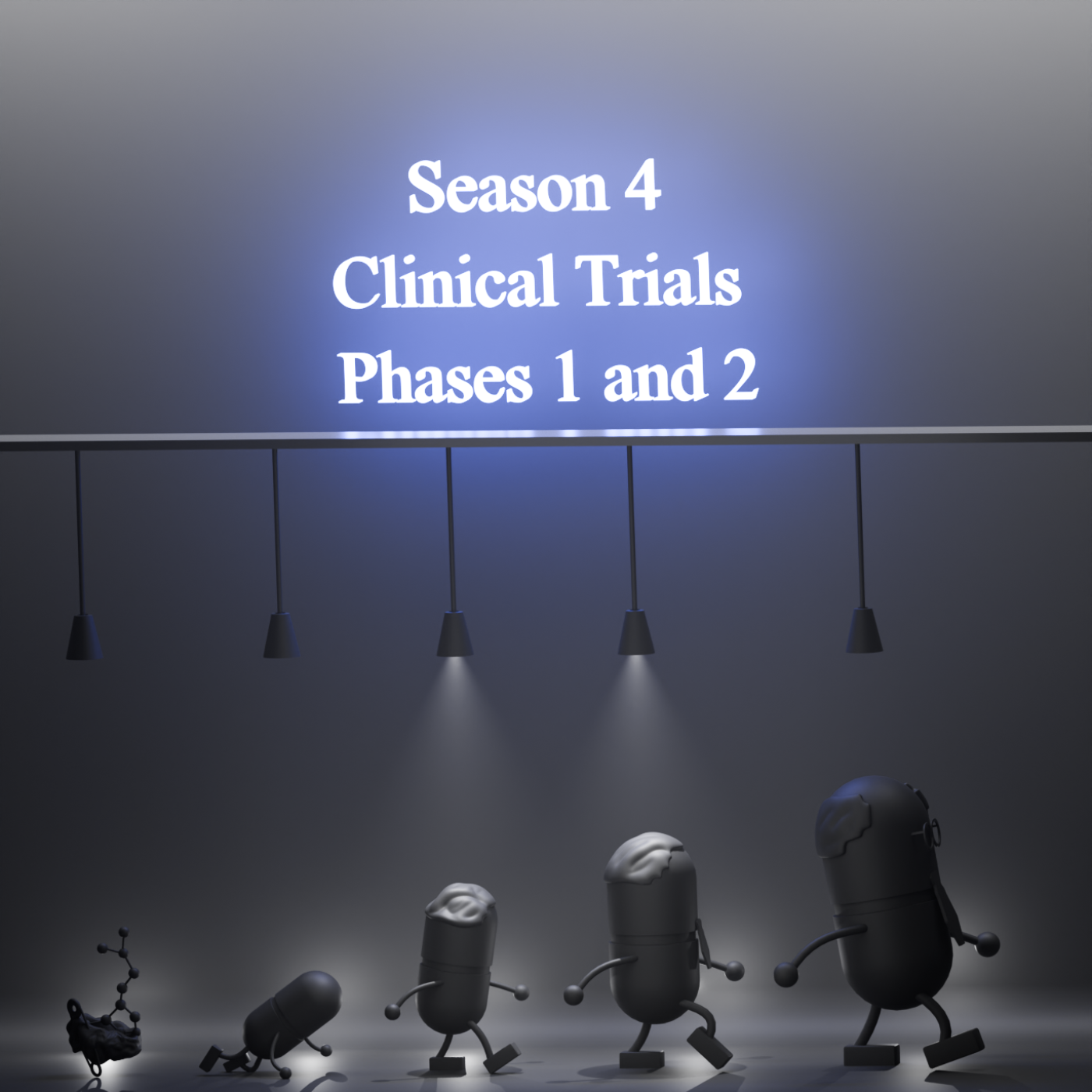
46 – Phase 1: First-in-Human Studies Overview (S4E1)
From Concept to Medicine - A Comprehensive Drug Development Journey
This episode introduces the crucial first stage of clinical trials where a new drug is administered to humans for the very first time. We explore the primary objectives of Phase 1 trials, which are to assess safety, determine safe dosage ranges, and understand how the drug is processed in the human body (pharmacokinetics). The discussion also covers the importance of ethical considerations, particularly informed consent, and the selection of participants, often healthy volunteers. Real-world protocols and case studies are referenced to illustrate how these principles are applied in practice, emphasizing the meticulous planning and monitoring involved in these initial studies. The episode aims to demystify this critical step in drug development, highlighting its importance in laying the foundation for all subsequent research.
Beyond safety, the episode touches on dose escalation, a crucial concept in Phase 1 trials where researchers gradually increase the drug dosage to find the maximum tolerated dose (MTD). We explore how this process helps researchers determine the sweet spot – the highest dose that can be given without causing unacceptable side effects. The dynamic nature of Phase 1 trials is also highlighted, with researchers constantly adapting their protocols based on the incoming data. The episode emphasizes the collaborative nature of these trials, involving clinicians, statisticians, pharmacologists, and ethicists, all working together to ensure the research is conducted safely, ethically, and according to rigorous scientific standards. Finally, the key decision points that determine when a drug can move on to the next stage of testing are discussed.
Available Results
Generated results are saved to the knowledge database for reuse and search.
Extract Knowledge
Pick what you want extracted first. Model, scope, and chapter options appear after a template is selected.
Transcript
All right, let's dive into the world of phase
one clinical trials. That very first time a new
drug is given to humans. Big moment. It's a huge
step in the whole process of taking it from the
lab to potentially becoming a treatment. I'm
sure there are a lot of questions about this
stage. What really happens? Who's involved? And
how do researchers make sure safety is the top
priority? Well, I think what's really interesting
about phase one trials is that they kind of set
the stage for everything that follows in drug
development. Of course, there's always that hope
for some early hints that the drug might actually
work. But the main goal is to get that crucial
safety data. So it's more about is it safe than
does it work? at this point. Exactly. It's all
about understanding how the drug behaves in a
human body, looking at possible side effects,
figuring out safe dosage ranges, and tracking
how it's processed, which is, you know, the whole
field of pharmacokinetics. Pharmacokinetics.
That's one of those words that might need a little
bit of explaining what exactly does that involve.
Okay. Imagine you're tracking a tiny submarine,
like navigating through the human body, all its
twists and turns. That's basically what pharmacokinetics
is. We're mapping the drug's entire journey.
Where does it go? How long does it stay there?
How is it broken down? And how does it finally
leave the body? Understanding this is key to
figuring out the right dose and how often it
should be given in future studies. I love that
analogy. Makes it so much easier to picture what's
going on. Now, I'm really curious about who actually
participates in these trials. Who are these brave
volunteers and what are the ethical considerations
involved? Oh, absolutely. Informed consent is
the most important thing here. Participants really
need to understand all the potential risks and
benefits before they even think about joining.
You know, a lot of times phase one trials involve
healthy volunteers. Especially when the drug
is expected to have, you know, minimal side effects.
That makes sense. But what about trials for drugs
that are designed for really serious conditions?
Like cancer. Are healthy volunteers involved
in those too? Not typically. In those cases,
the participants are usually patients who have
tried all other treatment options and are looking
for something new even with the risks. I mean,
these trials are run with a ton of caution, strict
ethical guidelines, and very rigorous safety
protocols. Speaking of risks, one of the sources
we looked at mentioned how sometimes side effects
aren't fully discovered until a drug is already
on the market. That must make those early safety
checks even more crucial. Oh, absolutely. It
just shows how important it is to keep monitoring,
even after the initial testing is done. And it
also highlights how complex drug development
is. It's not always easy to predict how a drug
will behave in different people over a long period
of time. Yeah, definitely emphasizes the huge
responsibility researchers have to keep patients
safe every step of the way. So how do these Phase
I trials actually work in practice? What does
a typical protocol look like? Well, imagine this.
Researchers are carefully planning and documenting
every single detail, following all these standardized
procedures to make sure everything is consistent
and accurate, like having a detailed blueprint
that guides every single aspect of the trial,
from choosing participants to collecting data.
And remember those main objectives we talked
about, safety, dosage, and getting that early
human data. Each of those has to be addressed
with specific ways of designing the study and
collecting information. So it was a very organized
process, but are there ever times when the plan
has to change, like during the trial? Oh, definitely.
Just like an architect might change their building
plans based on, you know, the land they're building
on, researchers often adjust their protocols
based on the specific drug and the people who
are part of the study. There's this constant
back and forth you know, feedback and adjustments
as the trial goes on, making sure it gives us
as much information as possible without compromising
safety. That makes sense. And speaking of adjustments,
one of the sources talked about dose escalation
as a really important concept in phase one trials.
Can you explain what that is and why it's so
important? Well, think of it like this. It's
kind of like testing the waters before you jump
into the deep end. Researchers start by giving
very low doses of the drug and then gradually
increase them, watching carefully how the participants
react at each level. This helps them figure out
the maximum tolerated dose, you know, the MTD.
That's the highest dose you can give without
causing too many side effects. So it's about
finding that sweet spot, where the dose is effective
but still safe. Exactly. That's one of the reasons
why close monitoring is so important throughout
the entire phase one trial. Researchers are constantly
gathering information, you know, blood tests,
what the patients are reporting, watching out
for any warning signs that might mean they need
to change the protocol. They're like detectives
putting together all the clues to understand
how the drug affects the human body. picking
up where we left off, it's amazing how much importance
is placed on these first inhuman studies. You
know, it's not just about ticking off boxes for
safety. It's about getting those first critical
pieces of information that shape how a drug is
developed from that point on. Yeah, it's like
stepping into the unknown. I mean, before this,
researchers are working with cells, tissues,
maybe animal models. But a phase one trial is
when you really start to see how a drug works
with the complexity of the human body. Right.
It bridges the gap between what we know in theory
and how it actually works in the real world.
And one of the things we were looking at, a podcast
by a pharmaceutical scientist, they made a great
point about how vital these phase one trials
are for understanding the results of all the
research. that comes later. Like imagine you're
building a skyscraper. You have to make sure
that foundation is strong before you even think
about adding more floors. That's a great way
to put it. So let's talk about how these trials
are designed. One of the sources mentioned real
-world protocols. What does that mean for a phase
one trial? Well, it means these trials aren't
just some theoretical exercise. They involve
a lot of careful planning, you know, standardized
procedures and a ton of documentation to make
sure everything is done consistently and accurately.
Remember those core objectives we talked about
safety dosage and getting that initial data from
humans. Each of those has to be addressed with
very specific study designs and methods. Sounds
like a lot of moving parts. It is, but there's
this constant loop of feedback and adjustments
as the trial is going on. Imagine it like a ship
navigating. The navigator's always making course
corrections based on the weather and currents.
Researchers are doing the same thing, adapting
their protocols based on the specific drug and
the people who are actually participating. So
it's about being flexible. but still sticking
to those high standards you mentioned. Absolutely.
And talking about flexibility, remember that
key concept we touched on earlier, dose escalation,
starting with those small doses and slowly increasing.
Right, like dipping your toes in before jumping
in the pool. Exactly. And as researchers are
gathering data on how the drug is being absorbed
and breaking down, Remember our submarine analogy.
They can adjust the dosage as needed, always
making sure they're aware of that maximum tolerated
dose. To minimize any risks to the participants.
It's incredible how much work goes into figuring
out the right dose. It really is. One of the
sources even mentioned a really interesting example
of how just changing the way a drug is given,
like going from an injection to a pill, can have
a big impact on how much of the drug actually
gets into the bloodstream. Wow. So even what
seemed like small changes can make a big difference.
It makes you realize just how much detail goes
into designing these trials. We've been focusing
a lot on side effects and dosage. What other
types of data are collected in phase one? You
know, how do researchers actually track that
submarine, the pharmacokinetics, as it moves
through the body? Oh, they use a whole bunch
of techniques. We're talking blood tests, urine
samples, even using really sophisticated imaging
techniques that can actually visualize where
the drug is going in the body. They're looking
at how quickly it's absorbed, where it travels,
how it's broken down, and how long it takes to
be eliminated. It's like creating a detailed
map of the drug's journey through the human body.
And all of that information helps to fine tune
the dosage and make sure the drug is safe. Exactly.
Remember, the goal is to find that perfect balance
of efficacy and safety. And that pharmacokinetic
data is a big part of achieving that. Okay, so
we've got this detailed plan, careful monitoring,
and all this data being collected. But how do
researchers know when they've learned enough
from a phase one trial to move on to the next
stage of testing? What are the key decision points?
That's where it gets really interesting. It involves
a mix of data analysis, statistical modeling,
and, you know, expert judgment. Researchers are
looking for clear patterns in the data, a good
understanding of the drug's safety profile, and
evidence that they've found a dose range that's
safe and potentially effective. So it's not just
about gathering data. It's about understanding
it and figuring out what it all means. Yeah,
you got it. And one thing that really stood out
to me as we were going through the sources was
the amount of teamwork involved. You have clinicians,
statisticians, pharmacologists, ethicists, all
these experts working together to make sure the
trial is conducted safely, ethically, and with
strong scientific evidence. principles. It's
like a well coordinated orchestra, each instrument
playing its part to create a harmonious sound.
And all with the shared goal of pushing medical
knowledge forward. It's pretty inspiring when
you think about it. As we wrap up part two of
this deep dive, it's clear that phase one trials
are an essential stepping stone on the path to
developing new and potentially life -changing
treatments. They really show human ingenuity,
scientific curiosity, and the bravery of the
people who volunteer to be a part of this process.
Well said. And in part three, we're going to
shift gears and focus on the bigger picture.
We'll look at how these trials fit into the whole
drug development process and what the future
might hold for this critical stage of research.
And we're back for the final part of our deep
dive into phase one trials. We've learned so
much about what happens in these first in human
studies. from safety protocols to figuring out
the right dose and understanding how a drug moves
through the body. But now let's zoom out a little
bit. How do these early trials fit into the whole
big picture of developing new drugs? That's a
really important question. Phase I trials aren't
just these isolated events. They really lay the
foundation for all the clinical research that
comes after. The data we get from these initial
studies about safety, dosage, and how the drug
interacts with the body, it all feeds into every
decision made in the later stages of development.
So it's like phase one is setting the stage for
the entire journey of developing a new drug.
Exactly. You can think of it like a map maker
who's charting a completely new territory. The
information they gather in phase one, it guides
researchers as they navigate that long and sometimes
very difficult path towards getting a new treatment
approved and available to patients. Speaking
of challenges, one of the things we read is that
phase one trials are really important for deciding
if a drug can even move on to those larger scale
trials. What are the things that make or break
a drug's chances at this stage? It comes down
to carefully weighing the risks and the benefits.
Researchers are looking for clear proof that
the drug is safe, that any side effects are manageable,
and there are early signs that it's actually
doing what it's supposed to do in the body. It's
about building a strong argument for why this
drug deserves more investigation. So it's like
a really thorough screening process, getting
rid of the drugs that are either unsafe or just
unlikely to be effective down the road. Exactly.
And that's fruitful for protecting patients from
taking risks. that aren't necessary and making
sure that the resources we have are focused on
the most promising drugs. You see, drug development
is a very long and very expensive process and
not every drug that looks good at the beginning
will make it to the end. Phase one plays a really
big role in making sure we're putting our effort
into the treatments that have the best chance
of success. It's like having these checkpoints
along the way, making sure the drug is moving
in the right direction. But it's not just about
safety and whether it works or not. One of the
things that really stood out to me in our research
was the sheer volume of data that's collected
during these trials It's mind -boggling to think
about all those data points all the pieces of
the puzzle. It's true We're talking about huge
amounts of information everything from the results
of blood tests to what? patients tell us about
their experiences. And it's the research team's
job to sift through all of that data to analyze
it and make sense of it and to try to understand
how the drug is behaving in the human body. It's
like a detective story, isn't it? piecing together
clues to build a case for a drug's potential.
And just like a good detective story, there are
often unexpected turns. Sometimes the data shows
us things we didn't expect, and that means researchers
have to change their approach or even rethink
whether they should continue developing the drug.
So those phase one trials really are the starting
point that influences everything that follows.
Absolutely. What we learn in phase one affects
everything from how later trials are designed
to how the drug is eventually marketed and prescribed,
if it gets that far. It's like a chain reaction
of knowledge, all starting with those first studies
in humans. That's incredible. It really shows
how impactful these early trials are. It does.
And it reminds us that developing new drugs is
a team effort. It involves a whole group of experts.
doctors, statisticians, pharmacologists, ethicists,
all working together to make sure the research
is done safely, ethically, and following all
the rules of science. It really shows what humans
are capable of when they're dedicated to finding
new and better treatments. This has been an amazing
journey exploring the world of phase one trials.
We've uncovered so much about these intricate
processes, the crucial decisions that have to
be made, and the dedication of all the people
who are involved. It's clear that these first
inhuman studies are absolutely essential in shaping
the future of medicine. It's been a pleasure
diving into this topic with you. We hope you
found it as interesting as we did. And to everyone
listening, if this deep dive has sparked your
curiosity, we encourage you to keep learning.
There's a whole world of information out there
and you never know. You might just be inspired
to become a part of this incredible world of
scientific discovery yourself.