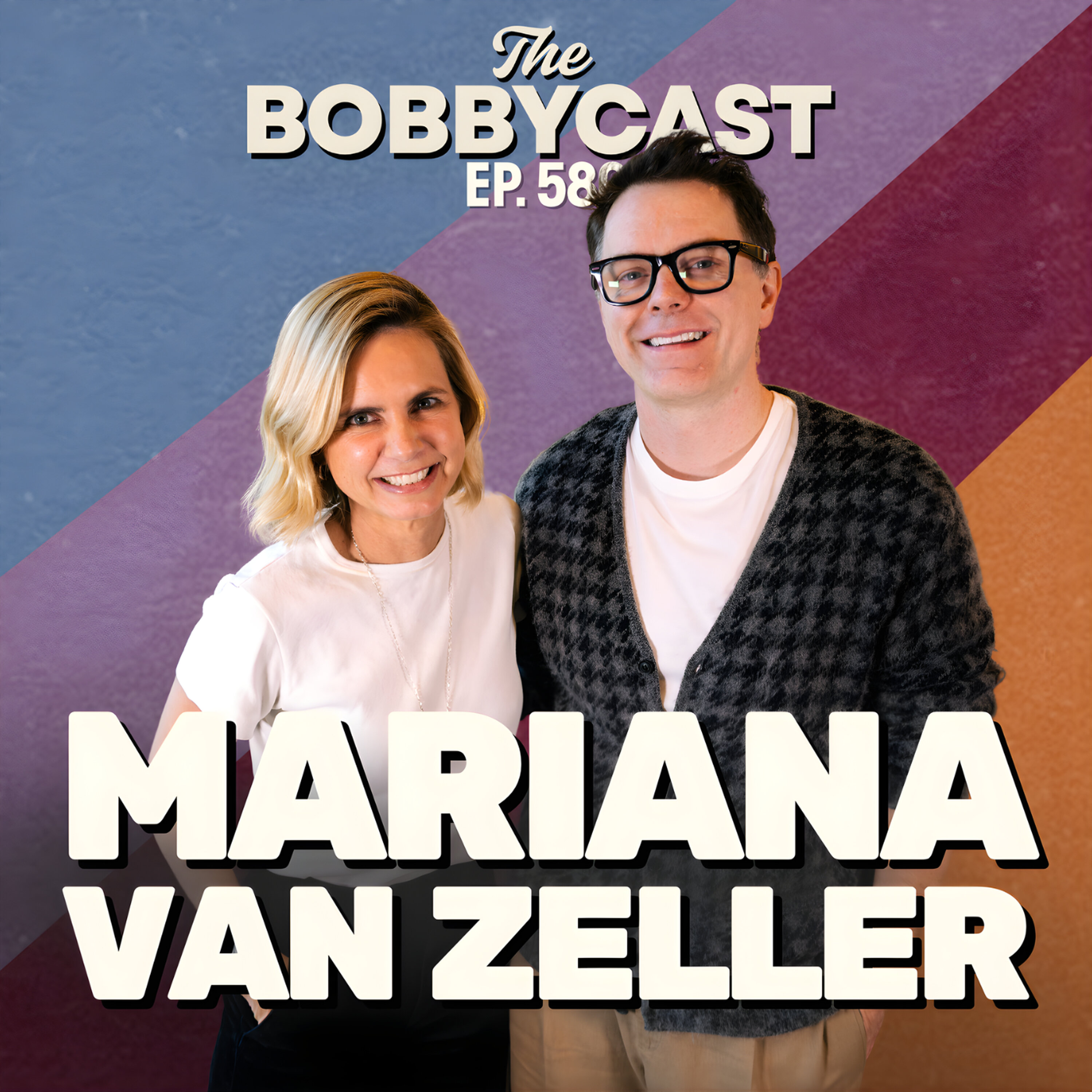
#580 - Mariana van Zeller on Gaining Cartel Trust, Scammers & US Drug Crisis
Investigative journalist Mariana van Zeller joins Bobby to break down what it really takes to gain the trust of cartels operating in and around the U.S. and why no story is ever worth a life. She shares what she’s learned embedding with traffickers, how drugs move through America, and why the crisis isn’t just criminal, it's public health. They also dive into the psychology of scammers, from international fraud rings to headline-making con artists, and debate whether the people behind these crimes see themselves as villains at all. It’s a conversation about power, opportunism, corruption, and the uncomfortable truth about America’s role in fueling it all.
Watch The BobbyCast on Netflix!
Follow on Instagram: @TheBobbyCast
Follow on TikTok: @TheBobbyCast
See omnystudio.com/listener for privacy information.
Available Results
Generated results are saved to the knowledge database for reuse and search.
Extract Knowledge
Pick what you want extracted first. Model, scope, and chapter options appear after a template is selected.
Transcript
00:00:06
Speaker 1: It wasn't safe for us to leave Sinaloa cartel territory, so we actually stayed with them until that night and spent a day filming them while they did cocaine and showed us their cache of guns.

00:00:20
Speaker 2: Hey, everybody, Bobby Bones here. My next guest is really one of the most legit people I've ever met. It's Marianna van Zeller. Just summer accolades. She's an Emmy and a Peabot Award winning investigative journalist. She has gone and done it all. Like we talked about the cartel where she was with the cartel, but she hosted a show called Trafficked on nat GEO and it was everything from cartel to like black market to it's crazy. You should go and watch those if you can, because they're so good. She has a podcast that I feel like as a version of that as well, just a little more long form. It's called The Hidden Third, and she sits down with people. I'm talking smugs, hackers, survivors, whistleblowers, but just about her. She speaks five languages, she rides motorcycles. I am constantly in fear for her life and she is not which we talk about, but She's really one of the coolest people that I know. I think you're gonna love this. Here she is Marianna Vanzeller. I've been super excited to do this one, but I want to say ahead of time, I'm gonna ask questions that seem of probably lesser intelligence. And it's not on purpose, like I'm not asking these questions to be a dumb guy. I think in some of these these worlds you live, and I am a dumb guy, So I'm not being funny.

00:01:40
Speaker 1: I think most people are more ignorant about the worlds that I because you know it is the hidden third, right, It's worlds that people don't usually know much about, but that affects all of us. So there are no dumb questions.

00:01:53
Speaker 2: You don't know yet I haven't got there. So between the podcast and between Trafficked and I was exposed to halfway through your run of Traffic and then I've watched many on because I had a show on that GEO didn't last as long, but you would follow my show sometimes yeah, and so I would go, man, this one's gonna die, Like I would watch it kind of like watching a NASCAR race to see if there are Rex and I'd be like, she's gonna get got this this episode. For sure? You never died. I never died, And did you ever feel like you might in any of these situations, like you genuinely had fear?

00:02:25
Speaker 1: I mean not like that. I don't if I went to do my job thinking that there was an actual chance that I would die, I would be it would be impossible for me to do it, so it wouldn't be that rational. But there were many moments, so in many ways, I always think that I'm going to be able to or else. No story is worth the life, right, So I wouldn't be doing it if I actually thought there was a chance of me or any my team would get harmed. But there are many times during filming where you know, shit hits the fan and then things get really scary.

00:02:53
Speaker 2: Because you're not with the most trustworthy folks that are having to make a lot of tough decisions.

00:03:00
Speaker 1: I am not, but we spend months, sometimes even years, trying to get people to talk to us. So once we're inside that groups, for example the sinal Low cartel, Right, you just don't show up in Sinaloa and knock on a door or show up at the you know where, we know the Fentony Labs are and knock on the door and say, hey, we want to film this. It takes us months, years of connections and trying to build trust and trying to get them to believe us and trust us, and only then can we go inside. And so once that happens, there is a certain level of protection. But what I when I talk about shit hitting the fan is that you can be with the sina Lo cartel and sort of be protected by them. But I've been in many situations where the Marines show up or they're close by, and then sort of full panic ensues and you have to make a quick decision of what do you do. Do you stay here, do you follow them? I'll give you an example. We were doing a story about gun trafficking, how American guns are ending up in Mexico and being used for the violence that's happening down there, and we were with a sceno. We're actually with a bunch of cicarios with gunmen, and they were showing us how they used the American the guns and how they trained. They were training. They were showing us, you know, they were shooting at watermelons and the whole time they have walkie talkies with them always and they can hear the chatter. And even if you ask for sound reasons, can you turn off their walkie talkies? Absolutely not, because they need to know if the enemy is coming, where the Mexican military will show up. The communication has to be on all the time. And so I start hearing that the chatter was getting louder and louder, and at one point one of the guys looks and says, flock, the Marines are coming. And the Marines are sort of the bad guys in the military. That's the ones that they're really afraid and they are known to shoot first and ask questions last.

00:04:42
Speaker 2: The Marines in Mexico, in Mexican, Mexican.

00:04:44
Speaker 1: Mexican Marines. Yes, the Mexican Marines. So sore they start running. We were in the middle of the mountains, but sort of in an open area with no roads. It was just start roads to get there, and they ran to their cars, and then it was us running after them with all our gear, you know, carrying big cameras and tripods and lights and whatnot. And we get there and we're seeing they get into their car and disappear, and we're stuck in the situation.

00:05:13
Speaker 3: What we do.

00:05:13
Speaker 1: Do we get in our car and go after them, and if the Marines start shooting from the helicopters, they're going to think that.

00:05:19
Speaker 2: We are part from the helicopter.

00:05:21
Speaker 1: Yeah, they were coming in helicopters.

00:05:22
Speaker 2: So the threat was from them from a helicopter.

00:05:24
Speaker 1: Yeah, sorry, I forgot to mention that part. And so do we follow them and then they will maybe think if they start shooting at them, they'll certainly start shooting at us too. Or do we stay behind and sort of hide under a tree, which will be really suspicious too, and then they could start shooting at us anyway. So we just thought, Okay, they're probably more equipped and more prepared to know what to do at this point, so we follow them out of there. In the end, we were safe, and we ended up spending the whole It wasn't safe for us to leave Sinaloa cartel territory, so we actually stayed with them until that night and spent a day filming them while they did cocaine and show does their cache of guns. And it was a crazy day.

00:06:06
Speaker 2: And to them, that's like a Tuesday, right.

00:06:08
Speaker 1: That is very much like a Tuesday.

00:06:10
Speaker 2: To us, especially to me, but to you that you're going down because this is an event, this is something that you're documenting that's worth documenting. Yes, but to them it's just a day.

00:06:19
Speaker 1: Yeah, it is just a day. And for us to be able to have the privilege or the opportunity to show that, you know, that's not something that you get access to all the time. And so to be able to be on the ground and see what a day inside the Sinalo Cartel looks like is I think, really powerful and really demonstrative of one of the biggest threats to national security, which is in many ways the production of drugs that comes from groups like the Sinalo Cartel.

00:06:49
Speaker 2: How active or how interested are cartels in Middle Midwest America? Because I think at California and obviously think the big Yeah, but I live in Nashville.

00:07:02
Speaker 1: That's such a good question, see.

00:07:03
Speaker 2: Are they there?

00:07:04
Speaker 1: Great question.

00:07:05
Speaker 2: I feel like that's a dumb question because I don't know.

00:07:07
Speaker 1: It's not a dumb question at all. So we did a story for the last season of Traffic season five called Cartel USA because the more I reported on the cartel, the more I realized that first there's an enormous presence of the cartel here, but also that it's not exactly what you expect. So I started realizing that there was a lot more presence of the cartel in small town America than most people know. We think of cartel, we think of drug distribution, We think la and New York, Chicago, big cities, and through my reporting, I started realizing, wait, this is not exactly the case. And also we think the cartel and we think Mexicans living here, right, But I started realizing that was also not just that the case, that there were actually American citizens working and collaborating and for the cartel and part of the cartel. So we did that story, and yeah, one of the biggest revelations was we spent a lot of time with the cartel in small talent in America. In fact, the episode starts with a case in Georgia in a small town in Georgia was actually sort of in the woods where there was a woman who was killed by a member of a cartel and it started a massive investigation and they realized again that there was a massive presence of the cartel. And then in fact, they prefer small towns because there's less law enforcement, so there's less eyes on them and they're able to sort of do their work distribution and selling the drugs much much easier.

00:08:27
Speaker 2: So are there generic white dudes like me that are in the cartel in America?

00:08:31
Speaker 1: Yes?

00:08:31
Speaker 3: So.

00:08:31
Speaker 1: One of the people we interviewed that was my favorite interview, one of my favorite interviews ever on traffic was a guy that we called the El Gringo because he was a gringo.

00:08:40
Speaker 2: I get called that by all my Mexican friend. Can I live in Texas for a long time? I know that? I was like, yes, that's me, Yes, yes, yeah.

00:08:48
Speaker 1: We thought it was a brilliant name because he doesn't even speak a word of it of Spanish and I don't even think he's been to Mexico. But he had connections with the cartel. He was involved in the drug business, and then they real he was a really good distributor. But he is what was amazing when I asked him, so, I was, how do you distribute your drugs? Because he would get massive amounts of fentanyl, math, cocaine, whatever it was that the cartel had and wanted him to distribute. It's not as if he can ask I want ten kilos of cocaine, ship it to me. It's whatever the cartel decides, it's what he's going to be shipped. And once he has it, he has to figure out how to distribute across you US and to his different buyers all over a lot of them in small town America. And then he decided he realized that the best way to do this was through Delta Airlines. Was actually commercial airlines, particularly Delta, because they have a really good weight fee what luggage. It's called the luggage baggage fee, which you can get like seventy pounds for free or something like that. So so, and that's how he distributes most of his drugs. Isn't it mind blowing?

00:09:50
Speaker 2: How do they not notice what's going through? Do they covered in something that doesn't allow the machines to see through? Are they scientific so scientifically advanced?

00:09:57
Speaker 1: I don't think the machines notice. I do think they're very scientifically not scientifically advanced, but they are very smart. I once filmed a sentinel being wrapped up and hidden inside in a way that was not detectable on the border crossing, and that was mind blowing. How they use tinfoil so it's not detected by the machines, how they use like softener and coffee powder so it's not detected by the dogs. And it was all this way that they can come across and I think they possibly use I didn't actually see them hiding the drugs in the case of Elgringo, but he says what he does is that he uses women. A lot of the times it's women carrying the bags, and a lot of times it's strippers.

00:10:43
Speaker 2: Actually, I had a friend that was an Olympic athlete, and what this reminds me of is with steroids or any performance dancing drugs, I should say, but I think it's easy to say steroids that he would say, if you got caught using, you're as dumb as a rock. Because the users were so far ahead of how they were trying to find the people using that they were months ahead. So if any trace, if anything was found, you just didn't follow easy protocol to follow that the people that would get busted he would be shocked. He would go, either they were so sloppy or that wasn't what it is was a trace of something else that was confused and a bit it sounds like that where they know how they're searching they're ahead of it a bit, so they're able to beat it.

00:11:24
Speaker 1: Yeah, and we are not even talking about corruption, where a lot of times what happens. And this was instrumental in our whole reporting for Cartel USA. I think it was the sort of scariest learning, Even more than the fact that they are Americans operating within the cartel and the fact that they're operating in small town America, was realizing the extent of corruption that exists. You would not have the level of drugs in this country, distribution of drugs in this country, even if they come from Mexico, without an enormous level of corruption, everything from small town police offices and sheriff departments to federal agencies. And this was something that was corroborated not only with cartel people that I spoke to, but also with law enforcement agencies them agents themselves, who said it is known, this is happening.

00:12:10
Speaker 2: Do you feel like people in the cartel see themselves as bad guys or they're just a part of society in Mexico.

00:12:16
Speaker 1: That's another really great question. I don't think. I think they see themselves as opportunists. I think that the majority of the people in Mexico. Not here, but the majority of people in the cartel in Mexico grew up with their family members being part of the cartel. Trust is really important in a system where you don't have a justice department, right, you can't go to court if your partner wrongs you, or if somebody steals drugs or money from you. So trust is essential. So it's very much a family oriented business and it's all about you know, yeah, trust And so you know, if you grew up and your dad is in the cartel, your grandfather is part of the cartel, you don't see yourself as the bad guy. You see yourself this is the business, this is the family business. And we're and what's wrong with America? There's all these people there that.

00:13:03
Speaker 2: Want our drugs or be the bad guy to them.

00:13:05
Speaker 1: Vantage I don't think we're the bad were the dumb guy since we I think we're more the we're the consumers. We're actually the cash cow.

00:13:12
Speaker 3: Right.

00:13:12
Speaker 2: The cash cow to me is like somebody who is pretty dumb and they're willing to spend their money on something.

00:13:16
Speaker 1: Yeah, again and again. When I asked that question, which is a lot of times, I want to know why they do what they do. But most importantly I also want to do ask them the crud questions. Do you feel bad for doing this? Do you realize that there's thousands of Americans that are dying every year from the products that you were shipping north and again and again? The question I get is, I mean not really. They are doing it because they want to. And if it were me doing it, somebody else would ship it, so at least I'm the one making money and providing for my family.

00:13:44
Speaker 2: If it were me and I were down there and you asked me that question, I would go look at Big Pharma, or look at fast food, or look at sugar or look at Yeah. I mean, that would be my answer, because all that seems like that's just part of American culture. We just eat bad and get fat, or we just have a bunch of sugar, or we yeah.

00:14:01
Speaker 1: And even more interesting than that, I think, is the idea that actually the opiate crisis, in particular being a fananel has been the biggest cash cow and here Win before that for the cartel, and it's enormously responsible for only the depths in America, but also the violence and the growth of the cartels in Mexico and other countries in Latin America. But it's a crisis that started in America. It was made in the USA by pharmaceutical companies. So we started it, and we created this sort of enormous consumer market for the cartel to then exploit.

00:14:32
Speaker 2: My last cartel question, do you think we would ever go down and try to fight them for any reason? There's been talk recently of are we going to deploy troops and in Mexico to fight the cartel because now they're making a big deal about you know, in Venezuela, they're bombing the drug boats. There's no phenol those of Venezuela and drug boats like there wasn't and some of those drug boats they weren't even drug boats. They're just the featl in the water with families that fish. And so now the talk has been, well, we might go into Mexico and fight the cartel. Would that ever happen?

00:15:02
Speaker 1: I don't think it's a smart strategy. I think that we're trying to We've been The war on drugs has existed for decades. It hasn't done anything, no dabt. I mean billions and billions of dollars spent and we are losing more people to drugs nowadays than ever I think that we are. This is a public health crisis that we're seeing in the United States. One of the episodes we did also in this last season is about trank dope, which is the fourth wave of the upiate crisis. So it started with prescription pills like oxycotton. It moved to heroin when people couldn't find their prescription pills, as you know, and then it moved to fentanyla. Now we're seeing the fourth wave, which is fentanyl being mixed with a tranquilizer, an animal tranquilizer called xylazine. And what's happening. I'm sure you've seen the videos in places like Kensington and Philadelphia where we filmed that where you see the zombies, right, people that are.

00:15:52
Speaker 2: Y're bent over, yes, walking the streets bent over yet exactly.

00:15:56
Speaker 1: So we spent a lot of time there reporting and filming people and speaking and talking to these folks. And they have massive wounds like it looks like leprosy, like open wounds with it is just the most disturbing thing I've ever seen. And this is caused by tranke dope. And so to answer your question, which was do I think that, oh, so this is a public health crisis, right, it's not. So trying to fight at public health crisis with law enforcement and the military is not a solution. What we have to really understand is what is happening in the United States? Why are there so many people out on the streets living in these conditions. If it was actual leprosy, we would never allow this to happen.

00:16:36
Speaker 4: Right.

00:16:36
Speaker 1: If this was an actual illness that you had and you'd see Americans out on the streets passing out, you would figure out a way to help them. In this case, we're just you know, massive amounts of homeless population exploding. We're just abandoning this, you know, millions of Americans essentially, and not real not figuring out a solution to actually help them, because once you curtail demand, you're going to have an impact on the supply.

00:17:01
Speaker 2: I come from a small town of seven hundred. People in my town and towns around it have dealt with the opioid crisis. It's been a tremendous problem, and it got worse as pills got easier to get and where there is an investment in education, and people would ask me, like, why do people get on drugs just for me being around it? It's like, well, when there are no other options for happiness at all, and something can actually alleviate the pain, and there's no way out you alleviates pain, and when I look at ways to fix it, because I've flirted with the idea of running for office, but my issues are so not sexy. It's if people can't eat and if people aren't educated, you're going to see this pattern continue because at the root of all of it, that's what it is. And it's towns that have no resources. It's folks that have no resources that their last resort is drugs. It's not like people want to go and be an opioid addict.

00:18:01
Speaker 1: I mean nobody wants.

00:18:02
Speaker 2: Nobody raises their hand and says I'll be an opioid addict. And so but this country, for as rich as we are, we don't invest in that, which is the craziest thing to me just as a citizen, as somebody who's come up for being really really poor to now I'm pretty rich and to be able to see it from now as to how I get protected. But people are just left alone, that abandoned. Yes, Yeah, it's really sad, it really.

00:18:29
Speaker 1: Is, and I think you should run for office because I think that is what is wrong with America right now. It is.

00:18:34
Speaker 2: But when I say I want to make sure kids can eat as my number one issue, and so the kids can be educated, and that's very much an evolutionary more than a revolutionary, and there's a massive difference, and it's almost like you have to approach them both at the same time. And you've got a quick fix and band aid things so people can actually feel movement while you're also building the long term infrastructure because if the fundamental setting of that takes forever, much less to growth. So if you can provide people food, you can provide people slight leisure, slight leisure and access to education. You're not going to fix everybody mental health care. But those things aren't sexy, especially in a land of getting elected and getting likes and getting shares, because you're polarizing. That's just not the environment. I haven't found it to be conducive of anyone actually wanting to make a change or the ability given to them unless they're yelling things and also trying to fix things secretly. And that's such a hard mix.

00:19:31
Speaker 1: Yeah, that's what's so sad with the political system right now, and that's why we can't figure out how to actually find solutions instead of yelling at each other. It's really any time I talk about anything, it becomes political. Nowadays, it's very a you know, whatever it is, whether I talk even about addiction, even when I talk when I go on, when I talk about addiction, even on my own podcast, it's immediately what are you talking about? Addicts are just addicts because they want to or you know, it's everything suddenly is polariz polarizing.

00:20:00
Speaker 2: And there's, Yeah, where I have trouble with that is, well, I grew up and my mom had me at sixteen. She got pregnant fifteen, so she was already poor. And you have a kid at sixteen years old and you're already poor. There's really very few avenues out of that. And she ended up dying in her forties from addiction. A lot of meth made right there, like I see it, and there was no She chose to go to rehab many times. She didn't choose to die, but I had the understanding of her choice was to not feel terrible all the time, and her only way to alleviate any of that pain was through drugs.

00:20:42
Speaker 1: Yeah, yeah, and that is one of the ways that people get addicted to drugs. The other is actually just going to the doctor, just getting surgery, as we.

00:20:50
Speaker 2: Know, just because they will prescribe them like crazy. Yeah. There's a book that I reference a lot. It's Gobormaite in the Realms of Ghosts, And I read that and how some people are predisposed to addiction and you kind of don't know unless you hit it. Yeah, like who I've never I've never had drink of alcohol and never tried a drug because I'm so scared of it because I saw it so much. I would love to. I think it'd be awesome. I had flirted with this idea of a show called Bobby Does Drugs and it's the first time that I try everything, like everything from doing a shot and in episode two, I smoke weeds. Episode seven, I do heroin.

00:21:30
Speaker 1: Tell me where's that could happen?

00:21:31
Speaker 2: Right? Tell me that would to be a good show, Such a good show.

00:21:34
Speaker 1: You know, I would do that with you because I have also never tried anything except for weed.

00:21:38
Speaker 2: And you've never seen all the cocaine and thought not, I want to do it, but like a police officer can't be a capital. They get tased and pepper sprayed.

00:21:46
Speaker 1: Never tried it. Wow, And I mean more than being in with a Sema little cartel and seeing production, or in Colombian and Peru and seeing production of cocaine or fandanel. More than that being in social situations with friends and them doing cocaine or ecstasy. I've been that and that. I'm sure you have too many, many many times, but I've never It's more than just It's not so much about being scared. I'm generally knock you're not. I don't like I love to drink alcohol. I have two glasses and that's it. Anything else. When I start feeling like I'm not in control, I don't like it anymore.

00:22:18
Speaker 2: So that's I would love to try a hallucinogenic. I would love to try at all. Don't get me wrong, but I think I would love to like trip on something, except I don't want a bad trip and you can't choose your trip.

00:22:31
Speaker 1: I've heard, Wait, you're not afraid. I'm I'm so afraid of taking a listeners genic and then who knows where it's going to take me? That scares me much armed men with the guns.

00:22:42
Speaker 2: No, not me. I the guns will get me. There's a fear, but I've I think I'm a little more curious. But maybe I am so fearful because I've never done it. I'm a curious person just generally speaking. I at one point I had some issues where I got jumped outside of work. I had my house broken into, I had numerous death threats.

00:23:00
Speaker 1: Oh wow, this was fue.

00:23:02
Speaker 2: Different times through my career. As I started to have more success, my platform got bigger and I left myself extremely exposed. And so I'm just walking to work at four in the morning, and one of the instances, a guy I had just been just watching me through the night trying to figure out when I was coming in, so he, you know, chasing me with a knife. I get jumped outside the building. So I had some bad PTSD to where I would close my eyes and it was always somebody attacking me. And so I went to my doctor and I wasn't sleeping, so I was sick always, and in my job, if I have a sore throat, I've got to talk for five hours in the morning. And so I told him I'm so scared of being addicted to something, so let's with that in mind, let's progress. And I would try all of the and nothing worked. I was going to therapy and I was doing EDMT, I was doing everything possible. I was investing in getting better, and it just wasn't helping. And I was sleeping forty five minutes a night sometimes, or I would find I would go to hotels randomly and just stay so I could get sleep because I felt protected by the walls, right, So I would create barriers. And we got to the point to where he said, you can try a sleeping pill. And it had been seven eight months in the process, and I was getting no sleep. So I tried a sleeping pill. And I don't remember stuff I was doing while I was taking the sleeping pills, So I would what were you taking edu Lar ed U L A R. And so I think it was just one of the versions of like your generic sleeping pill. I could probably look that up, but I remember it was edu Lar, And I was so afraid that I would take it like on a flight or something, and I would next thing, you know, I'd be arrested because I like took a dump in the airline, like in the aisle or something, because I was so scared of what I wasn't what I didn't know I was doing. So I stopped, like I stopped immediately. I had such withdrawal, and I had such crazy withdrawal, and like I could my eyes were open, but it was all black, like it was all to where I just had and I would shave and I went through withdrawal. To me, it felt so crazy. I had never felt closer to my mom because she had tried to get off drugs so many times. And we'll talk about withdrawal, and I didn't go through a tenth one hundred of what she would do, and it was I kind of understood a little bit then, and I'm not grateful for it, but I definitely see the value in that happening to me because it gave me a window into her life and why it was a revolving door and why she could not get clean before she died. I mean, she she was never clean. She would try, but yeah, I'm afraid of what I'll do as a parent by me stop stopping taking the pills.

00:25:40
Speaker 1: So how did you get better? By the way of the fear and a.

00:25:43
Speaker 2: Lot of therapy, full time security, I also a starting to make more money, so I just compensated by like providing those barriers around me, lots of alarms, guns, you know, work for the cartel. Now run and here we go.

00:26:02
Speaker 3: Let's take a quick pause for a message from our sponsor, and we're back on the Bobby Cast.

00:26:16
Speaker 2: Do you think there is innate evil? Uh?

00:26:21
Speaker 1: You know, I I think there is, but I think it's very uh little amount in the world compared to you know, I live surrounded by the people who consider the bad guys right in the work that I do, and very rarely am I not able to see humanity in people. The vast majority of times people, no one is I always say this, No one is born wanting to be a criminal. There are a few people out there that, you know, think that being part of a gang or you know, being a pimp or whatever is cool, and they gravitate to us a lot of times it's actually circumstance. But anyway, the majority of times the people that I sit cross are people just like you and me. They're like mothers and fathers and our neighbors, and they're people who'se you know, goal in life is happiness and to be able to provide for their families and because of circumstance, lack of opportunity, lack of jobs, or the environment they grow up in. If your family is in the cartel or if your you know, hometown heroes are pimps, that's what you're gonna want to be. So that's a lot more what leads people to life of crime than it is somebody being born evil or you know, wanting to be a criminal from the start.

00:27:30
Speaker 2: I feel the same way.

00:27:31
Speaker 1: Yeah, and I see it again and again. I mean, I can tell you individual stories. I'll never forget the kid, sixteen seventeen year old kid that we interviewed in Peru, we had just filmed inside a massive cocaine lab out in the jungle in the Amazon rainforest. Is incredible. It's like an open pit of coca leaves that they are then adding chemicals to to make cocaine paste to then transform into the powder that is shipped mostly here to the United States and Europe. And I was filming a part of We're doing this whole supper, and we're filming the part where the kids there's these like teenagers that take the cocaine from the Amazon rainforest over the mountains to the capitol where then it's distributed. And these are kids with like massive amounts of cocaine on their back, traveling for days and nights on end, camping out in the open, and some of them being killed by rival groups that tried to steal from them. And so this kid had seen several people being killed, some of his friends being killed in front of him. It's backbreaking work. And I asked him, like, why do you do this kind of work? It's horrible. He said, Look, my family is incredibly poor. I want to go to college and it's the only job opportunity offered so that I could save money to go to college. I said, what is it that you want to do when you go to college. I want to become a dentist. Dentist. That's why dentist because all the posters that he sees in his hometown are for dentist offices, and he sees all the people with big white smile smiles, and he said, I want to make people smile like that.

00:28:55
Speaker 2: Wow.

00:28:55
Speaker 1: So I hear these stories again and again. You know, I'm just going to give you a shorter example tweety as camra reinterviewed in Jamaica. And I asked her, and she initially comes across as very glob She's saying, she's telling me the story about how she stole from this very this elderly American woman. She stole everything this woman had, including her wedding ring, basically by promising that she was going to gain she got the lottery ticket and if she paid for this fee and this fee, she was gonna get millions of dollars. This elderly lady, a very gullible lady that ended up giving her all her money, including the wedding ring. And then I asked her, but hey, tweety, I mean, do you feel bad about this? I mean, why did you even start scamming people in the first place? Said, Look, I work in a resort, luxury resort in Montego Bay. I make less money in you know, a week than the family spends in a day here at the resort, or a year then the family spends in a day here at the resort. My grandfather, who I adore, got sick. He needed two thousand dollars surgery. No one in my family could afford it. I could not afford it. He ended up dying for two thousand dollars. So I grew up with the idea everyone in my family says God, God will provide. Well God, she literally said, God ain't done shit for me. God ain't provided, you know, So I'm going to be the one who has to provide for my family. And that's the day she decided to start scamming people.

00:30:15
Speaker 2: You've worked a lot beside scammers. I don't even want to say exposing, but like telling their story or how they do it, or yeah, they're kind of bad guys.

00:30:26
Speaker 1: Some of them are come across as very heartless.

00:30:29
Speaker 2: Right do you think they can be heartless because they don't actually know, they don't see the person in their eyeballs, because you know the.

00:30:35
Speaker 1: Hate you get online. I'm sure you get it.

00:30:37
Speaker 2: Yeah, oh yeah, I trust them again. I think you must have seen you must have seen the comments section of my post.

00:30:41
Speaker 1: Yes, no one would be able to say that face to face, right looking in your eyes and saying this stuff that people tell me, you know, go back to your country, bitch, and what are you doing here? And you know all tho.

00:30:52
Speaker 2: Stuff And they said that to me. What do they say to you?

00:30:58
Speaker 1: What do they say? What's the worst thing? Oh?

00:31:01
Speaker 2: It's all die die stuff.

00:31:02
Speaker 1: Oh wow, why what have you done?

00:31:05
Speaker 4: This?

00:31:05
Speaker 1: Them off so much?

00:31:07
Speaker 2: Just be charming. I think they just it's like you're talking about, they just see somebody so charming and they're like, I work all day and I'm not that charming and he has I think it's just a a And I will tell artists this when they're new, not to divert from what you're saying, but when you start off, you're standing on the ground. The only people that can see you are the people that are standing right by you, because the elevation is the same. But as your platform goes up, well, now you're exposed to more people because you're up high feet now and more people can see you. And just the raw numbers, there's going to be a couple, just generally, a couple crazies in that as you go up more, just do the numbers game. There's going to be seven instead of two. You're up high, there's going to be a thousand and so it's just a numbers game. And my platform has kind of done this a bit. But the more successful I've been, the crazier and the more threatening the messages get, not about anything specifically, but just existing within a platform where you have opinions. Scammers, there's a lot of Since they're not seeing the person, it's easier to take from them, right.

00:32:08
Speaker 1: Yes, yeah, and I think many the idea is that everyone who lives in America is rich, so even if they take away a few thousand dollars from them, they won't notice. So I'm doing this project. I can't talk a lot about it, but I'm doing this project with Nageo where it's about scamming. It's a different different from traffic. And I was on the phone the other day with one of those Indian call centers right where they're trying to convince me that they're stealing my Somebody is stealing my information online, so I have to download this app that will save me. And when I'm downloading the app, they basically get access to my phone and to my accounts and everything. Anyway, I started saying, look, I know you're a scammer. I'm going to tell who I am. My name is Mariana Vanzeler. You can google me. He did, and you realize I was a journalist, and he was like, oh, I love National Graphic. He also said I was very beautiful, which I was very have it. He's very sweet, and he was very and he's very charming, and we started talking. I said, okay, tell me what you Why do you do what you do? And then eventually he said, look, I am only stealing from very rich people. How do you know they're rich? Because I have access to their bank account. I can see it. And so what makes a person rich one thousand dollars in their bank account? Tells me that they're rich one thousand dollars. So there's just a complete They don't realize that. Obviously, there's a huge gap between what's happening in India and the United States, and for them, they don't really see a problem with it.

00:33:36
Speaker 2: Have you ever been scammed? I don't believe so, man, Now I got yeah a couple of times. I'm really good about it, I say, and I think and I but it comes all the time from all directions, right, and they get better and better, and so like, I am so vigilant about not being scammed. And I think that's what got me. Because my friends save me an email. I don't open it. I call them. Do you send me an email? Yep? Okay, I want to get into it. So I'm like into it right, yes. And so once there was this beef jerky that I liked and I bought it from an Instagram ad and it came through and it was it was perfect. Love is the finest beat jerky I've ever had, and I wanted more, but I could the ad didn't pop back up, So I googled the beef jerky, went to the beef jerky site and it's like you can buy, but you have to buy like five bags at once. It's high quality stuff. I like that cocaine down there in Mexico. And so I ordered five bags and you know, you put your name, your dress, blah blah. And so beef jerky never came, and so I get a call because it want order on my Instagram kind of like two days I get a call like two or three days later. I didn't have any beat jerky and that was already kind of weird. And I get a call and it's like, hey, this is Bobby, and I'm like yeah, So they knew my note, they have my phone number, and they knew my name, and they knew my address and they were like, hey, this is your bane. Somebody has tried to spend a bunch of money on this credit card, last number. Da dad had everything, and I'm going and all that's right, and they're like, we want to get on FaceTime or Zoom or whatever one of the video and we needed to look in your bank account and that doesn't happen. But I'd already gotten to this point with him, and I said, no, that's not right, like it's all churning in my head at once, and they're like, no, this is your bank, this is your bank account, your credit card number. We wouldn't know all that if we weren't your bank. So if you'll get on and share with us, and I'm like, I don't think so, SA does it feel comfortable, I'll call you back and hang up. Turns out they had built a beef jerky site that looked exactly like the original beef jerky site, and so I went to it. I googled it. They had paid to move it up. I went to that site. When I put in all the information, it wasn't a real site. They took all the information and they called me with all my information. So I believe it is a great over beef jerky. Over beef jerky.

00:36:00
Speaker 1: That is crazy. That is crazy.

00:36:02
Speaker 2: My love of beef almost got me, So that is crazy. I almost got got on that one.

00:36:08
Speaker 1: But yeah, it's they're getting better and better. So the project that I'm doing with that GEO basically is that I'm saying yes, sir, every single scam that comes my way. And so I've been seeing all these kind of scams, and while doing this project, this actually happened where I have a camera with me and I'm filming myself all the time, and I'm answering phone calls, but immediately I kind of know which ones are scams and what's not, and one of them almost got me. It was it was a call from I have a bank account. I have a Chase bank account, and it was a call from my Chase bank from my my what do you call the the location the Chase has Yes, So it was a woman American accent. A lot of them sometimes don't, but in this case, it was an American accent, and she was so convincing, and she started saying that there was some strange activity and they needed to figure out. So she was asking for all this information for me, and then I called my husband, but I'm recording the whole time on video. I kept it cook grunt rolling and he has no idea what's happening either, And it almost got me. But then when I started asking more questions, they hung up the phone. And then I called Chase and they said, no, it wasn't us. They a lot of times they use they use they're able to tap into our phone numbers and call and it sells on the screen Chase, which is crazy? Is it crazy?

00:37:20
Speaker 2: I have a friend who's done that show, except it's not recorded, and it's not on purpose. She's just been scammed every single time by every single scams she's lived the say a show just accidentally and she has no no like the records of urban scams. She's funded like for scamming organizations. Oh yeah, she gets scammed all the time.

00:37:38
Speaker 1: Why the most sable?

00:37:39
Speaker 2: Yeah, so much, and just believes everything. Sweet, she's very nice. Yeah, but it just clicks everything. There's a link, click it. That's our motto. If there's a link, I'm gonna click it. Yeah. The scammers are are so prevalent in our lives now, it just feels like they're coming in all directions, all the time.

00:37:56
Speaker 1: What I say is that every part of an American American life is now cammabal right. You want to go on a date, you want to open a bank account, you want to enroll for college, you want.

00:38:05
Speaker 2: AI to bye bye beef, jerky trauma, trauma. I was watching your Annadelvi interview and I love uncomfortableness.

00:38:15
Speaker 1: Oh I hate uncomfortableness.

00:38:16
Speaker 2: Like I thrive in it. And some of my stand up is so uncomfortable that it's not funny to anybody else except me, so I enjoy it. That was uncomfortable, so freaking uncomfort Why would she agree to do the interview?

00:38:32
Speaker 1: First of all, I don't think she researched it. She didn't know. I don't know what she thought. Quite frankly, I thought, okay, she sat down. I thought, this is an interview.

00:38:40
Speaker 2: With explain who Anadelvi is.

00:38:41
Speaker 1: Swynadelvey also known as Anna Sorkin. That's her family name. She changed her name to Annadelvi early on. She was a fake hairess. There was a show on Netflix about her called Inventing Anna. She moved to the United States from She's originally from Russia. Her family moved to Germany, then she moved to and eventually ended up in New York, where she basically fooled people into believing that she was a billionaire from Germany, a hairss of this massive fortune. But she went as far as going into banks and meeting with bankers who gave her a shit ton of money believing her story. And she was staying at these five star really how the Howard Hotel and New York very expensive hotel for weeks and weeks on an end without paying a single dollar because they believe she had this massive fortune. And you don't ask clients for money upfront if they're wealthy and powerful. And she would just con people left and right. And so my show is about black markets and where I get a chance to talk to smuggers and traffickers and con artists and fraudsters and whatnot. And so I thought she'd at least research that and knew that what I was interested in knowing about was her history, right, But she sat down. She didn't want to talk about her past. But even when I tried to, okay, so let's talk about your present. What are you up to now, It's like I don't want to jinx it. So at one point in the interview, I tried every single way to get something out more than I don't know out of her I asked her, so, okay, so why did you come on the podcast? And she said, I don't know. You're not paying me was like, exactly or not? So why are you here? I really could not figure it out.

00:40:09
Speaker 2: But I don't favorite. Why do you think that she came?

00:40:12
Speaker 1: I I okay. She told me it was because a friend my producer has they have has a friend in common with her and had been had contacted the friend and said, hey, would Anna Delva ever come on this new podcast? And apparently after a few asks you said yes. But she hadn't researched the podcast. But even if she had, I don't understand what kind of podcasts she would have been comfortable talking, because I just don't think she feels comfortable talking full stop.

00:40:35
Speaker 2: Well, and that's the weird thing. I was on Dancing with the Stars and she did that show and it was weird and there was you guys are on the line? No, no, no, But I have a lot of friends and still work there on a BBC. What do people say? It's difficult obviously and didn't want to do it, but then why do it?

00:40:52
Speaker 1: Yeah?

00:40:52
Speaker 2: Like that was some of my friends who work in what it's called the organization of the ABC Disney BBC wants exactly who they are. They were like, we didn't understand why she did it if she didn't want to do it, because obviously she didn't want to do it by her actions, she was so miserable all the time.

00:41:08
Speaker 1: Yeah, and there's a lot of people out there that are a team Anna, that are obsessed with her and do and follow everything they do. So there's all these comments on my podcast on that episode saying how and they see it as Anna doesn't owe anything to anyone, Right, Anna is just Anna and this is who she are. Is an act? But actually not sure if that's the case. I don't think it is an act. I think that she's just difficult. Maybe. I think she's very, very insecure. I don't think even though she's actually quite smart and funny, but I think she doesn't think she has much to add or she's insecure about, so she doesn't end up saying much. I think, maybe do you.

00:41:44
Speaker 2: Ever just go this is a nice start, like like the office or Smurfs or something, just to cleanse the palette, because it's just so intense all the time. It feels like your job is, and maybe to you it's baseline.

00:41:55
Speaker 1: I think it's baseline. Yeah, I'm not a bachelor watcher of those shows. It's never been my cup of tea. I love documentaries. I love sort of darker subjects. It's what I like. But I drink a lot of wine.

00:42:08
Speaker 4: The Bobby Cast will be right back. This is the Bobby Cast.

00:42:22
Speaker 2: Did you approach it differently once you had a kid?

00:42:25
Speaker 1: No? No again, because I don't think of it as something that would actually risk my life. So I thinking of it as I have to plan ahead. I have to make sure that I'm minimizing the risk and I'll be able to get out of the here unscathed, even though shit happens all the time. But so it didn't really change. What it made me is much more emotional and being able to connect with people much more. You know, when I talk to women, and a lot of times it's women who are victims of sex trafficking and human trafficking and scams. And to be able to talk to these women, a lot of them are mothers, it's much easier for me to connect and understand their pain and their grief. And so I've become much more emotional. Even talking about this makes me emotional. But yeah, it's women usually they also have been the biggest inspiration for me. There is nothing stronger in the world than a mother fighting for their childs, right, And that's what I found again and.

00:43:24
Speaker 2: Again, we were talking before you came in about your podcast, The Hidden Third, and I was referencing the episode with one of the Jeffrey Epstein victims. And that's something that I've been outwardly so surprised that so many heads haven't been rolled chopped off. Can't but like, if we're not protecting kids, like what are we even doing? Right? So and I get met with a you're just being political, and I'm like.

00:43:48
Speaker 1: There's nothing burn them all, Yes, exactly, it.

00:43:51
Speaker 2: Doesn't matter to me. Burn them all. And so you talk about getting emotional, I mean, did you get emotional while doing.

00:43:59
Speaker 1: That interviewing Lisa Phillips? Absolutely, And again a huge inspiration for me, just the bravery of her speaking out and it was interesting, like she's gotten a lot of people. Usually people were victims of abuse. It's really hard for them to accept and to admit it, and there's a lot of shame around it obviously, as you know, and it took her years to be able and it wasn't until the first victim came out, Virginia Giffrey, and she was the first to publicly speak out about what was happening, that she gained the courage to speak out herself. And she was Initially she didn't say she was a victim. She just wanted to have Virginia's back and say, I saw this happening. I know it happened to other people. But it wasn't until years later that she was actually able to say, yeah, it happened to me, and this is exactly what happened. She's incredibly brave and she's one of those people that's out there on Congress, in Congress, in front of Congress, speaking out and talking about how why it's important to release the files.

00:45:00
Speaker 2: Virginia Guffray death is really really suspicious, right.

00:45:04
Speaker 1: It is suspicious? Yes, And it's interesting.

00:45:07
Speaker 2: I shouldn't insert you you thinking that is that death suspicious to you? Because it is to me.

00:45:11
Speaker 1: It is to a lot of people. And when I was researching this, I found yeah, there's a lot of people that this is suspicious. And you know what's interesting too, is like the Epstein death right, when people started talking about how it was suspicious. There's no way, you know, he was killed. He committed suicide, and anyone who would approach it as if he had been killed was seen as a conspiracy theorist. Right. And you fast forward a few years and now I think most people think that, in fact, it wasn't a conspiracy theory, that he was probably killed.

00:45:43
Speaker 2: There's just so much purposefully planted misinformation. An AI video of him in the cell, the added footage where you can go into the metadata and you can see like sloppily. Yeah, that's the craziest part to me, because I'm sure we've been fulled to a million times a million different ways by our government or the powers that be, but to do it so sloppily has been the thing that has blown my mind the most. And just expect that we're just going to take it and move on, yeah, or distract us distracted because there's a lot of distraction happening right now too, to keep us from talking about it.

00:46:18
Speaker 1: Yeah, And it was interesting. I mean the reason why I say it's not political, I mean it's extremely political, but it's a political in a way that it touches everybody, right, it was used as a tool when Trump was campaigning against the Democrats, and now it's being used by the Democrats against the government. But rightfully so. I think these files need to be exposed and we need to know the truth. And according to Lisa, the importance of this is not about individual names. I think what all the victims want more than anything is to reveal how this wasn't just an anomaly, how this was the structure that was in place, how all these people were protecting each other. This was a massive organization group of people that was very very power powerful, very very rich, and we're all taking advantage of these girls, and nobody said anything for freaking decades. It's so scary.

00:47:12
Speaker 2: Everybody should check out the Hidden Third, either audio or YouTube. It's wonderful. It's an extension definitely of what I've known you for anyway, and I like the long formness of it.

00:47:24
Speaker 1: Yeah, me too, Me too. What I say is that Trafficked was sort of the map, and the Hidden Third is sort of the diary, right where I get to hear people's stories in depth, raw difficult conversations, but we also get to share some of my own personal stories. It's really fun.

00:47:38
Speaker 2: Thank you for sitting with you for an hour. This has been amazing.

00:47:41
Speaker 1: It's been awesome. Thank you for having you on.

00:47:43
Speaker 4: Thanks for listening to a Bobby Cast production