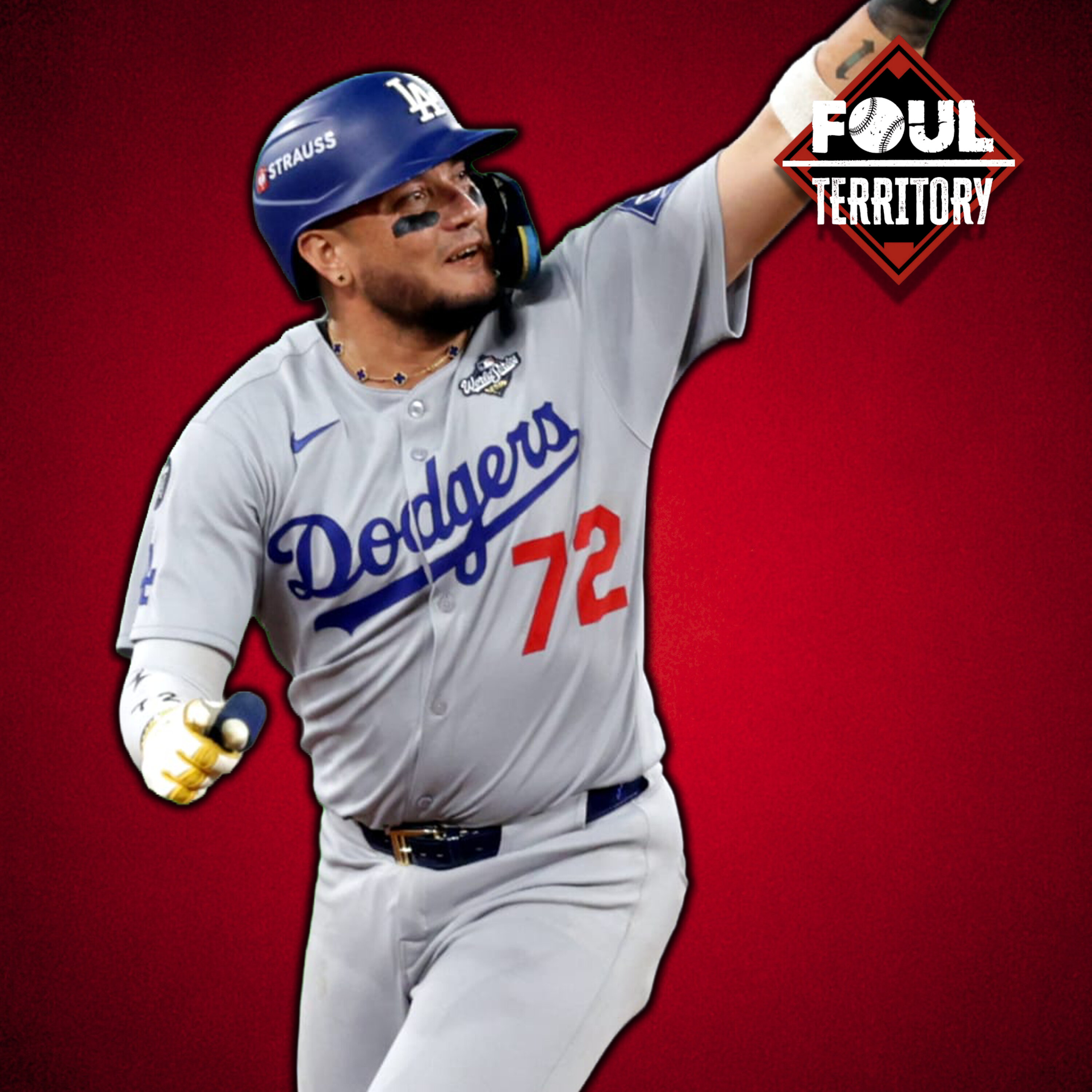
Miguel Rojas joins FT: Real talk WBC insurance callout, Inside his legendary World Series moment
He was the unsung hero of this past World Series. Dodgers infielder Miguel Rojas joins FT to discuss his two game-changing plays: the game-tying home run and throwing out Isiah Kiner-Falefa at home plate in Game 7.
Miggy Ro also shares his very candid thoughts on the insurance issues surrounding the WBC, as well as his favorite story about his former teammate, the late José Fernández.
Hosts: AJ Pierzynski, Erik Kratz, Alanna Rizzo
See omnystudio.com/listener for privacy information.
2026-02-05
31 min
Transcript
Available Results
Generated results are saved to the knowledge database for reuse and search.
No generated results are available for this episode yet.
Extract Knowledge
Pick what you want extracted first. Model, scope, and chapter options appear after a template is selected.
Generated results for public episodes are saved to the knowledge database so they can be reused and searched later.
Transcript
00:00:06
Speaker 1: Wow, what a privilege it is to be joined, Miguil, turn your camera the other way, my friend, let.

00:00:14
Speaker 2: Me see what I can do right here. Okay, we're good.

00:00:20
Speaker 3: Wow, Malthuia, what a house?

00:00:23
Speaker 4: What a casa?

00:00:26
Speaker 2: It's just a man case. It's not the whole house.

00:00:29
Speaker 5: I Bragg doing the Zool meetings here so everybody can see the good stuff.

00:00:34
Speaker 2: But it's not it's not like that on the whole house.

00:00:36
Speaker 1: Miguil Rojas, a multi time World Series champion, of course, trying to do the three peat with the Los Angeles Dodgers, A longtime big league veteran, said that twenty twenty six is going to be his final year and then he'll transition into a role with the Dodgers' front office. Miguel, good to have you on the show. We're going to get to all the Dodgers stuff in a second, but I really wanted to talk to you about the situation with the World Baseball Classic. Obviously, you are Venezuelan. You would love to play for Team Venezuela, but you're not able to because of an age issue. Tell us more about the situation itself and what you're hearing about about this specific rule.

00:01:14
Speaker 5: Yeah, the situation is been uh, nothing but confusing and and it's been kind of a problem for for the players that are being denied to play just because of the an insurance problem. I guess it's something that we didn't have really clear going into this year.

00:01:31
Speaker 2: Knowing what happened in the past.

00:01:33
Speaker 5: We all knew the organizations and and kind of the insurance work kind of together with MLB and the WBC UH commitment or whatever they have to uh to control all the players coming in and that the team submitting the rosters, and definitely we know when there's an injury issue and injury related uh kind of deal.

00:01:57
Speaker 2: Uh. The insurance always worked with that. But now now in my case, I think I've been pretty healthy the last couple of years, other than in twenty twenty four when I have to.

00:02:08
Speaker 5: Take care of and hernia, a sports hernia on my hips. Other than that, I haven't missed games because of an injury. So now I heard just a month from from today that if I'm thirty seven years old, the insurance company that works with US WBC and MLB is not gonna be able to get insure h the players that are thirty seven years and older. So that's something that I didn't know, and that was kind of like thrown out to me when when it was like a month from the from the WC to start, and it was kind of frustrating to know the news at that time and couldn't do anything about it.

00:02:53
Speaker 6: Maggie, did you tell me you retiring at the end of the year, and like they don't to ensure you for multiple years? Like this is it, man, I want to go out play for my country one last time. If I get hurt, then I get hurt. But it's my last year. It's not like you have a five year deal they have to cover. That's literally you know this year, Like you got to get this figured out.

00:03:12
Speaker 5: I mean, you're saying all the things that I was trying to say to them, and and that's one of the things that I got me frustrated because I'm not making I mean, with all due respect, I'm not a thirty thirty million.

00:03:25
Speaker 2: Dollars guide, you know, I'm just making five million dollars.

00:03:27
Speaker 5: And how how hard it is to to insure.

00:03:31
Speaker 2: And protect a guy that is making five million dollars.

00:03:33
Speaker 5: And I understand, I totally understand the Dodgers now signing my waiver because I mean, we all know where the Doyers are on the on the tax cracket, and if something happened to me during the WBC or to any player that is thirty years thirty seven years and older, and the Dollyers say, Okay, I'm gonna sign the waiver for this guy to play without an insurance, They're not gonna get their money back to sign another player in the middle of the year. So I totally understand the doll You're saying, we can let you play without an insurance, and I totally understand that part, but I feel like like you're saying, I'm everybody knows that I'm retiring after this year and I'm not making thirty million dollars or twenty five million dollars for them to kind of like really look into this coverage. But I kind of understand that that's what they're gonna do. But I hope, uh, they're doing the same thing for every country and for everybody, because it's I don't I don't think this this tournament is gonna go anywhere if they're gonna continue to make it harder for players to go.

00:04:37
Speaker 4: Yeah, I mean that that was gonna be my question, do you feel like it's the same for every country? The only reason I say that and I didn't play in the WBC. I played for Team USA when I was thirty nine years old in twenty nineteen, and I wasn't. It was, you know, not big league forty man guys. But there's gonna be a superstar of Venezuelan who wants to play for his country after thirty seven. Thirty seven is not that old. Sorry, it's it's not that old. There's going to be others. So you're gonna deny superstars when they get to that spot. You're gonna deny Aaron Judge the next time he gets to WBC at thirty seven years old. I have a hard time believing that, Maggie.

00:05:17
Speaker 2: Same thing.

00:05:18
Speaker 5: That's that's why I'm so frustrated, because I don't I don't think that's gonna happen with someone else. That that is just me, And I'm not fining these this this fight right now because of myself.

00:05:29
Speaker 2: I'm fighting for everybody else. And you know, as a player, we always fight for the rise of the next ones. And that's why we're here in this moment right now, and we have to kind of like fight this battle just because the next generation is gonna come and they would like to play when they're thirty seven or older. Because I totally feel like if I'm if.

00:05:50
Speaker 5: I'm on the roster for the Dodgers and I can help the Doyers play and win a championship when I'm thirty six thirty seven years old, why I can't really go and help of my country to get the championship on a competition like that. It's my only opportunity to kind of represent my country and put this uniform on, and like I'm making a statement. A few days ago, I didn't really know if I was going to be part of the thirty main roster.

00:06:16
Speaker 2: All I wanted was to make.

00:06:18
Speaker 5: Myself available for the manager and the front office guys from the Venezuelan team to tell the man, I'm available if you guys need me, either in the first round or if someone get hurt, like.

00:06:30
Speaker 2: It happens the last time with Hotel Tube.

00:06:32
Speaker 5: He got hurt and they called me and I was in Arizona, and if they beat the United States, I was playing in the semi finals in Miami. So that's the only reason why I wanted to make myself available because I know I'm in death with the Venezuelan country, especially because I have to step out of the last tournament because of obvious reasons of playing short stuff for the Dodgers, and I was just getting traded Gavin Lots his injury, and they didn't want me to go and play for Venezuela when knowing that I wasn't gonna get.

00:07:04
Speaker 2: An off of bats to get ready for the full season.

00:07:06
Speaker 5: So there's a lot going on to go to this tournament, and I totally understand the guys stepping out because they wanted some time off. They playing the in the like a full war series, like Mookie Bats or Freddie Freeman.

00:07:20
Speaker 2: They need time off.

00:07:21
Speaker 5: They have personal matters like Osera Meres, things like that, and it's really hard to understand how they're gonna continue with this event if they don't let the people who want to go participate.

00:07:36
Speaker 4: Have you looked at alternative or not just you, but have people looked at alternative insurance methods that would enable you and make the Dodgers feel okay with letting you play.

00:07:49
Speaker 5: Yeah, we we had, and the Union is being supportive of the idea of finding an alternative insurance. But the problem was it was so late, and I don't know. I don't want to point fingers to anybody. I don't know if it was a bi organization or everything was led like to the last minute to kind of like.

00:08:13
Speaker 2: Get on top of this issue.

00:08:15
Speaker 5: But we didn't have the form that we have to fill out like two weeks prior to today, so it happens too late.

00:08:24
Speaker 2: I felt like, if that was going.

00:08:26
Speaker 5: To be an issue, they should have let us know in advance, or like maybe last year they say, okay, look, this is going to be a problem if you have a player that is thirty seven years older. You guys are going to have to file this hipA form that they have to sign so we can find them another insurance company to cover them just for the tournament.

00:08:48
Speaker 2: But it was too late and they couldn't find another one, and.

00:08:51
Speaker 5: They just say, you know what, your permission has been denied.

00:08:56
Speaker 3: That sucks. I'm sorry. I'm really sorry, really sorry.

00:09:00
Speaker 6: I hope it works out for you and for everyone that's trying to do this, because it's not just you, Lindor and some of the other guys. I mean, listen to Edwin Diaz can play than anyone should be able to play, because he is the poster child of getting hurt and costing people, you know, a season.

00:09:13
Speaker 3: So I hope it works out.

00:09:15
Speaker 6: I want to go to some a little more fun besides insurance, because we've talked about insurance for three days, okay, and I'm just tired of talking about insurance. And I'm happy you came on to discuss this. But in your career, do you know how many home runs you've hit?

00:09:28
Speaker 2: Closer to I'm close to sixty right.

00:09:30
Speaker 3: Now, yeah, fifty seven?

00:09:33
Speaker 6: Okay, right, but you hit the biggest, not the biggest, bill one of the probably two biggest home runs in Dodgers' postseason history this past year. Do you wake up still and say that was me that hit that home run? Like I actually hit that home run to win US a World Series?

00:09:52
Speaker 2: Guess what AGG just said it?

00:09:54
Speaker 5: I had fifty something home runs in a twelve year career, and now I'm going to remember as a home roun hitter.

00:10:02
Speaker 2: How crazy is that?

00:10:05
Speaker 3: Right?

00:10:05
Speaker 5: So I've been kind of putting my whole life and a whole career on difference and being a different first guy to be able to play short stuff for anything, that I'm on, but definitely having this moment, it's kind of like the answer of all my prayers because I've been wanting a big moment in.

00:10:24
Speaker 2: My whole career.

00:10:25
Speaker 5: I think in my whole career, I have to walk off hits one maybe one basit and one sack fly or something like that. And I always kind of like wanted to come through in a big moment in my career offensively because I definitely believe on myself and every time I step on that play, I feel like I'm the best.

00:10:45
Speaker 2: Hittered out there.

00:10:46
Speaker 5: But I never had that kind of moment, and it kind of I mean, like I said, my preparation kind of meet up with the opportunity right there to play in Game six and Game seven, and you know how it is, you can be on the bench all this time and it takes just one opportunity to change the narrative of everything in your career.

00:11:05
Speaker 2: So that's something that kind of kicking Hernandez.

00:11:08
Speaker 5: Always talk about, and that's why he is huge in the post season, is because it doesn't matter what you do during the regular season or how have you done in the post season, all you need is one moment for people to.

00:11:22
Speaker 2: Remember you for the rest of their life.

00:11:24
Speaker 5: And now I'm just extremely happy and excited that I'm going to be remember as as.

00:11:31
Speaker 2: A home row hitter in the World Series for the rest of my life.

00:11:35
Speaker 4: Home run hitter, Mike Rojas, I love that, But I want you to go into the dugout with us, because everybody's like, oh, after you hit it, how did you feel all that stuff as a guy that came off the bench, as a guy that came in maybe like late for defense. I know that the manager, the hitting coach, the bench coach is kind of like looking like, oh, air Crafts is coming up, like maybe we could pinch hit and get How close were you to not getting that at bat because you guys still had some guys on the bench. There was Lefty, you know, Rod Vett I think was still on the bench.

00:12:10
Speaker 5: Correct, King King was on the bench, had some king was on the bench, was on the bench.

00:12:20
Speaker 3: On the bench.

00:12:20
Speaker 4: How close did you feel like, because you can feel when people are like looking at you like, hey, uh, if something happens, Miggy, like you gotta like we might pinch it for you or was that you're at bat bar?

00:12:30
Speaker 3: None, no matter what happened.

00:12:32
Speaker 2: No, I got surprised when I walked to the to the on deck circle. I didn't. I I thought for sure I was gonna get pinched it.

00:12:40
Speaker 5: I mean, don't get me wrong, I'm never gonna get myself off of of data bag until the dog tuged me in the shoulder or tell me like or or he sent the bench coach to tell me like when I'm.

00:12:52
Speaker 2: Like taking my stuff off.

00:12:54
Speaker 5: But as soon as I got to the dog out, when I put my glove down and Danny Leman, our bench coach, wasn't there, that tells me everything that I needed to know. I knew I was getting that bad because one good thing about Dog and the organization, especially the coaching staff and with the Dodgers, they're they're really great because they're transparent as it is. You know, they're gonna tell you what's your role, what they expected of you, and if they have to put you out and put someone else in, they will do it. And they always send Danny. During the season, I got pinched maybe.

00:13:29
Speaker 2: A hundred times for someone else, and I was totally expecting for them if they want to make a move. Even though I got a good at bad.

00:13:38
Speaker 5: Early in the game against Chercer, and I think my third about was a really quality about as well. So I felt like dog got a feeling that I was getting closer because my advats were getting better, especially after not playing for a long time.

00:13:53
Speaker 2: And I didn't get one a bat in the NLCS.

00:13:56
Speaker 5: Then as soon as I put my glove down and I sent my heart on top of my glove, no one was there.

00:14:03
Speaker 2: I was getting that a bat.

00:14:04
Speaker 5: So my mentality went straight to, Okay, what I need to look for against this guy. I'm gonna look fastible away first first pitch because I got a hit against Chersey with a hanging slider, so I don't think he gonna he's gonna throw me like a hitter. Go slider in the first in the first pitch, so also looking fastile away, and you see the results. I chased the slider down in a way. But then I think that that pitch kind of like locked me in for the rest of it.

00:14:29
Speaker 3: I love it, I love I love how you're building. You're a path.

00:14:32
Speaker 6: Can we show those pictures again for what? And I just want to know when you touched home plate, who was there waiting for you show? Did you look at him and say show, hey, that's how superstars do it in the world. Eat that one, show Hey, because look, look there's a swing right now. Watch when you're round it. First, show Hayes in the background. Now when you there, look show Hayes with his hands up behind you. Then you hit home plate and show Hayes there to get a high five. Was there like right there? Or were you like that's how it's done.

00:15:03
Speaker 3: Show Hey.

00:15:04
Speaker 6: You might make seventy million, but my five million hit that Homer.

00:15:09
Speaker 2: Not kidding, not kidding to you.

00:15:11
Speaker 5: I just I just feel good for show He because the last thing you want right there in that situation, knowing how the game was and how a special show has been for us and everything that he's going through this last couple of years, kind of carrying.

00:15:26
Speaker 2: Us in so many different ways.

00:15:28
Speaker 5: Man, during the regular season this twenty twenty five, pitching and hitting at the same time.

00:15:35
Speaker 2: With that game, a lot of things came to my mind.

00:15:37
Speaker 5: Know, when I'm rounding the bases, I'm thinking about my family, I'm thinking about my wife. I'm thinking about like the possibility of winning the World Series now because.

00:15:45
Speaker 2: We just tied the game.

00:15:46
Speaker 5: But when I got to home play, I see show He and I see a sign of relief. So remember Shohil Tony gave up a three round homer by Bobby Check and he potentially beat the last hour of the World Series. Ok, he is not It's not fair for a guy like that, you know, Sholdani, He's been doing so much for the game of baseball, and I feel like the relief that I see on his face that it doesn't matter.

00:16:09
Speaker 2: What he doing that at bad. We already tie the game, so we're going to find a way to win.

00:16:15
Speaker 5: And I feel like that's that's a kind of like the sensation that I have on show here ever since I got all the videos online and all the pictures that I see, Like when I see he sends up and kind of like the relief that he doesn't have to hit with two outs and down by one and everybody expecting a home run from Show. He he's really hard to get a home run in that situation. And I mean, it happens to me, and I'm so I'm so happy and proud.

00:16:42
Speaker 2: That I could have get showed hair out of the hand and in that game.

00:16:47
Speaker 1: Miguel, I've known you a long time. It's been a pleasure to watch your career and I know you talked so much about how much pride you take in defense, and you had some really good defensive plays obviously in the postseason too. I want to know what was going on in your head with the I K the Isaiah Kiner Philefis situation. I mean, you guys were this close to losing the World Series to a very good Toronto Blue Jays team. Obviously you tied the game. We all know what happened in extra innings, But what take me through the lead that he had and what was going on with you guys defensively on how to on how to handle that?

00:17:17
Speaker 2: Yeah, definitely, I didn't know that it was that close to third base. It's impossible. It's impossible for me to kind.

00:17:23
Speaker 5: Of like be so locked in on the play and like take a look at the third base runner, right, It's impossible to be locked locked in and on the hitter and then making sure that the guy at third base is not getting a good lead. So for me, like the fact that he was that close to the bag, it was a decision that they'd make as an organization, and the coach kind of like went to him and told him, Hey, this is where you have to be and I'm I'm just seeing a player following instructions, right. But to me, I feel like for the guys who play in a and synthetic grass, you guys, how like that ball bounds in that grass is different then in a regular grass. And we we've been kind of struggling in practice to take down balls infield in and the ball wasn't even that far away from me.

00:18:13
Speaker 2: It was a couple of steps, but kind.

00:18:15
Speaker 5: Of like the way that he hit it the chopper like it was like a toss spinner, like rining to the ground, make me kind of go backwards on it because I was gonna get like in in between half and the most important part for me, I need to.

00:18:26
Speaker 2: Glove this ball.

00:18:27
Speaker 5: If I bowl, we're don't we We're losing the word series.

00:18:32
Speaker 2: That's why I kind of like went back to it a little bit. Then I kind of stumbled a little bit, lose my footage, but I was able to kind of plant my feet and make I think that the hardest stroke that I make the whole year, uh to wheel And.

00:18:44
Speaker 5: Then so as soon as I see the replay and how close it was when he left is uh is a clip off the play and put it back down. He was kind of like nerve racking watching that, and I still like dog say a couple a couple of weeks ago, on an interview or something like that, he said, I can't really really watch it because I'm I don't want that play to get overturned, you know, I I want to make sure that that we win the World.

00:19:10
Speaker 2: Series and and another.

00:19:12
Speaker 5: Outcome is going to happen, because you know, like I would have nimers still if I if I put a ball or I don't get that home play, what.

00:19:23
Speaker 4: Would have been which was tougher the end of game six play that you had to bail Kik out for that brutal throw that he made and made you make a long hop, or that play.

00:19:35
Speaker 5: That play for sure in game seven, because it's a it's do or die and you know how it is. You can't really mess this up. This is the one that you practice every single day. You finish your routine. You can take million grand balls, but when you put in your mind, okay, basis loaded nine inning, two outs, winning by one, you always want the last ground ball to mean something to you.

00:19:57
Speaker 2: And that's what we practice every single day.

00:19:59
Speaker 5: And that's a little behind the scenes of what we do every single day with the Dodgers, especially in mookie transition into short stuff. But that's what we do. So we take all our routines and then at the end of the practice we always go okay, bases loaded one Now winning Game size or Game five of the World Series. We got to make this play and then if we boot it, we lose the word series. And that's the situation that you put yourself in into every time you practice in And that's the reason why I feel like that was the hardest play because I have no roule forever if I boot up, if I book the ball, that kick it through me. We got another opportunity with glass on the mound to win the game.

00:20:38
Speaker 2: But definitely that Game seven play, a.

00:20:40
Speaker 5: Home play, would be forever the hardest play that that I have to make.

00:20:46
Speaker 3: You ain't kidding a lot of pressure.

00:20:48
Speaker 6: You made a great throw, a lot of as big of a Dodger fantasy. I always tell people the Blue Jays were literally this far away from winning the World Series, but you made the throw. You made the perfect throws. I love everything you've said today. I want to ask this and you can tell me to screw off. I'm okay with it, but I got to know the answer to this. Every time I've ever talked to you've been unbelievably awesome. Okay, you've been a great interview. I've talked to you when I've done Dodger games for Fox. You've been unbelievable, always saying hello, always a smile on your face. Every guy I look at and I've ever talked to about you say you're like one of the best teammates, you're one of the happy guys, and as somebody that's had things said about me, and then you have. And again you can say you don't want to talk about it.

00:21:32
Speaker 3: I get it, But the.

00:21:33
Speaker 6: Jazz chishm thing man, like, can we put the record straight on this, because I've heard a million things, I've never heard you say something about it, which honestly.

00:21:40
Speaker 3: To me, is a badge of honor for you.

00:21:42
Speaker 6: Because everyone I talk to about you say you're just unbelievable and you don't want to get into it.

00:21:48
Speaker 3: I just I feel like you need a before him.

00:21:50
Speaker 6: And again, if you don't want to talk about it, I get it, but it just drives me crazy because every time people ask me about it, I'm like he seems like an unbelievable dude. I don't know where this came from. If you don't want to talk about it, you want to move on, fine, But I just want to give you an opportunity to clear the air if you want on that.

00:22:06
Speaker 2: No, I and I really appreciate that.

00:22:08
Speaker 5: And as as I mean, the reason why a lot of people talk good about me is because I don't.

00:22:14
Speaker 2: I don't let things that happen in the clubhouse outside of that.

00:22:17
Speaker 5: And I feel like I'd rather take the plane of being the bad guy in the clubhouse then then come in a in an opportunity like this and talk about bad about someone I respect that I'm not gonna be like likable by all the people.

00:22:33
Speaker 2: And you guys were just talking about from about this, right and the situation.

00:22:37
Speaker 7: And uh Craft just make just make a great point of like, depending on the circumstances and the situations that you are in a in a season or in in your life for your career, people gonna have their own perspectives on you.

00:22:54
Speaker 5: And I feel like my best, my best times has been here with the Dodgers. And I mean maybe I was a little bit more susceptible when I was there with the Marlins, and maybe I was, I mean, a different guy there. And the only thing that I will say is I'm just hanging my heart on the comments that more people than just one player said about me, because I'm not gonna be liked by everybody, and I'm not expecting to be the like the likable guy everywhere I go because that's not what I want to be. I want to be myself and I'm just gonna hang my heart on the people that make the comments about me that I'm I know there's more better comments than one negatives coming, and I don't feel like I should be kind of defending myself because then that would make me like, Okay, this guy is trying to defend himself because it is something wrong.

00:23:49
Speaker 2: I just felt like I was being myself man, and I'm not. I'm not gonna I'm not gonna blame anybody for not liking me.

00:23:56
Speaker 1: Positives way outweigh the negatives. Brand around that as well. I want to ask you about the jersey behind your right shoulder, Megal with Jose Fernandez. Obviously, this is a story that transcends not just baseball, but being a Cuban American myself and you know, my mom having to leave Cuba and everything that the Fernandez family went through, and of course the tragedy that befell him when he passed away. What was it like being a teammate of his and just what a what at a superstar in the making, and and why is that Jersey important to you?

00:24:31
Speaker 5: Yeah, just just being around Jose and knowing the abilities that he had and and the year that he was kind of like facing at that time with his.

00:24:41
Speaker 2: Girlfriend or or wife at the time, I don't I don't remember they were married or not pregnant and expecting the first child.

00:24:49
Speaker 5: And I something that I remember about Jose and not many people know, this is the last dinner that we had together as a team.

00:24:58
Speaker 2: So I remember Martin Praul was.

00:24:59
Speaker 5: There, then Marcelo Sooner and kind of like his best friends on the team plus plus Jose, and he was talking about like how he wanted to be better for her, you know, and how he wanted to kind of like ma sure and get better as a human being and over all.

00:25:18
Speaker 2: You know, because he was young and he was playing for the Miami Marlins for the Miami.

00:25:23
Speaker 5: Marlins at the time, and he didn't know where his future was going to be because he was about to be a free agent and he was really excited for the future. And that's something that kind of like really impacts us when when that happened, because first first thing you see from Jose is the talent, right, the kind of the personality, how he put people in the on the seats. Even here in Miami that we don't draw many fans and big crowds, but every time he s pitched, he was like a twenty five percent increase on fans coming to the games, just because of the talent, the atmosphere, the way that he he cared for the game, the joy that he that he brought to the game. And he was the same guy outside of the field, energetic guy, He always want to be around his people, and I think he was about to make his his move to UH to like go to the next level. And that's why it was so hard to see him go that early in his life, and not just because of baseball, it's because what he had behind him.

00:26:27
Speaker 2: He was like his.

00:26:28
Speaker 5: Family was his first child getting born and a totally disaster for the organization definitely, because you're losing not just your age and the face of your franchise. You're losing, I mean, one of your your best persons that you have in the team.

00:26:45
Speaker 2: So it was it was really hard.

00:26:47
Speaker 5: And that's why it means a lot that, uh that I play with him, and I mean I got to wear the number sixteen Fernandez jersey.

00:26:54
Speaker 2: For one game for the wrong reason, definitely, but.

00:26:57
Speaker 5: Uh, that's something that he was gonna is gonna unify that team for the rest of our life.

00:27:04
Speaker 4: That's awesome, that's well said. We have to ask two last questions. On a lighter note, show us your two favorite shoes from the collection, the two that you're like there, this is this is it for me that everybody needs to see. These are the two whether you've worn them or you just like have a cool story with them. Because I've just been oddling those shoes the whole time.

00:27:29
Speaker 2: So yeah, the thing with me with shoes I wear. I wear all my pairs, but I feel.

00:27:34
Speaker 8: Like again showing you, hmm, okay, I'm gonna show you.

00:27:45
Speaker 5: Two pairs that are important to me because it's not it's not just because I mean Michael Jordan, right, so he played for the Chicago Bulls and this is an iconic pair it means a lot because you always want to be a champion and you always want kind of like do what winners do.

00:28:03
Speaker 2: So this pair is really important.

00:28:04
Speaker 5: He's got the Chicago kind of framing and so his signature is right here. And then this this pair calls Trophy Room. So I mean, we all know he won a lot of championships. And then I kind of like have my own pair right here from being a champion, he's a he's a pair of Jordan Force. And then the company that I'm gonna be working on this year, they make this pair for me.

00:28:29
Speaker 2: So that's all we want. We want to be champions. So he got a couple of things.

00:28:35
Speaker 5: That kind of like resembled those back to back champions the last couple of years.

00:28:40
Speaker 4: That's that's so last one. And this is you did an incredible job speaking English. It's a second language. You did it. It's awesome. But this is something that people don't know. Okay, Spanish speakers can never say my name right because you said it during the show. You say my last name, my last name is Kratz. Say my last name Crats. Okay, when you guys talk, when Venezuelans Dominicans not so much Puerto Ricans, but Venezuelan Dominicans when they say it fast, they always say crap. And if I'm on the team, they call me crappy. So you said it during the interview, you said it. I just wanted people to like kind of get in. It's all Dominicans in Venezuelans, and it's one of those.

00:29:25
Speaker 5: Things might be might be clip now, you know, because you guys gotta clip that and say crappy, because that's what I.

00:29:32
Speaker 3: Was to say.

00:29:33
Speaker 2: I was try to say katzi yeah, and he came out, you know.

00:29:37
Speaker 4: And and I would love it if people would clip my Spanish because I know my seventy five Spanish words and I am fluent in my Spanish, my baseball Spanish.

00:29:46
Speaker 2: It's not it's not. It's not easy to be bilingual. So I understand. I understand.

00:29:52
Speaker 8: Miguel.

00:29:53
Speaker 1: Thank you so much, such great answer, such great information and insight. You took so much of your time to be honest and candidate, and we appreciate it. Go get that third World Series championship in a real please. I want nothing more than that for you.

00:30:07
Speaker 8: Good luck you can take.

00:30:07
Speaker 6: He's gonna take his Dodger gear off at some point, like some point in his life, he's gotta take his Dodger gear like you kids, eat, sleep and work out in your Dodgers gear.

00:30:19
Speaker 2: I'm gonna I'm gonna move on. I'm gonna move on at the end.

00:30:23
Speaker 3: Of the year.

00:30:24
Speaker 5: Don't don't worry. I'll be I'll be a retired player. I'll be a retired player. And I can't wait not to work out anymore and get ready for another season.

00:30:33
Speaker 2: That's that's the worst.

00:30:34
Speaker 5: That's the worst part of my year, getting ready for for the full season.

00:30:38
Speaker 2: I'd rather play all the games that you that that you want me to play.

00:30:41
Speaker 5: But working out and doing all this running and all these form things, that's one song. That's one thing that I'm looking forward to do. Just taking all this stuff away and just grab a phone, go start phoning punge, go out my kid and and BP to to my kids.

00:31:00
Speaker 1: That's awesome, Miguel, good luck.

00:31:01
Speaker 2: We'll see you.

00:31:02
Speaker 1: We're gonna come down to camel back here in a week and change, so we'll see you in the clubhouse. Thanks so much, my friend.

00:31:07
Speaker 2: See you guys over there. Thank you
Chapters
No chapters available.