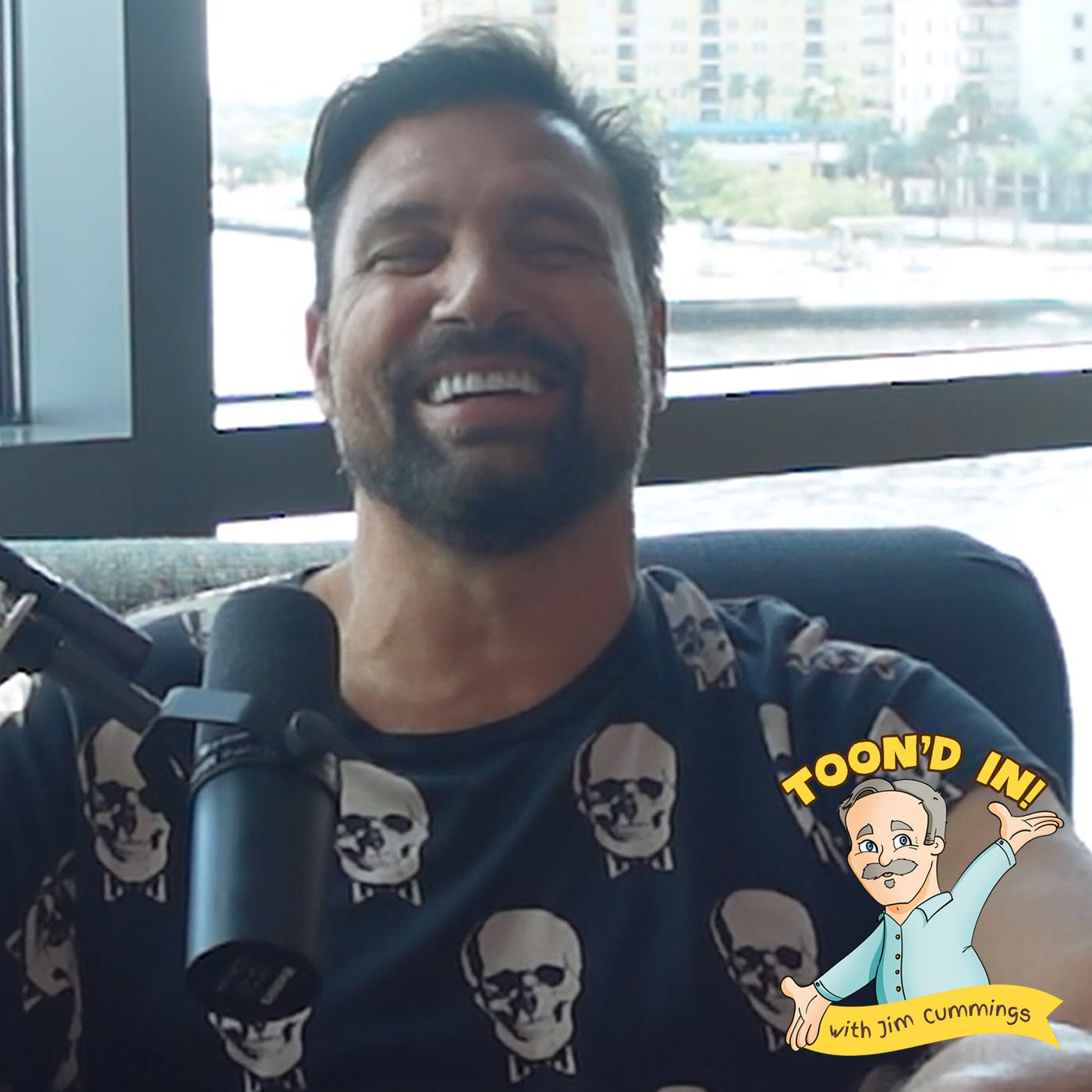
Manu Bennett
Slade Wilson, aka Deathstroke himself Manu Bennett joins Jim this week for a very heartfelt conversation.
Support Jim on Patreon for EXCLUSIVE CONTENT including EARLY & AD-FREE ACCESS, DISNEY AUDIO COMMENTARIES, PRIZE DRAWS and more by joining the Toon'd In! family today at patreon.com/jimcummingspodcast
For more information on Jim's upcoming appearances, visit jimcummingsworld.com
CHECK OUT FOUR FINGER DISCOUNT'S OTHER PODCASTS:
Four Finger Discount (Simpsons) - spreaker.com/show/four-finger-discount-simpsons-podcast
Goin' Down To South Park - spreaker.com/show/goin-down-to-south-park
SpeaKing Of The Hill - spreaker.com/show/speaking-of-the-hill-a-king-of-the-hill-
Talking Seinfeld - spreaker.com/show/talking-seinfeld
Tales Of Futurama - futuramapodcast.com
The One About Friends - spreaker.com/show/the-one-about-friends-podcast
Become a supporter of this podcast: https://www.spreaker.com/podcast/toon-d-in-with-jim-cummings--5863067/support.
Support Jim on Patreon for EXCLUSIVE CONTENT including EARLY & AD-FREE ACCESS, DISNEY AUDIO COMMENTARIES, PRIZE DRAWS and more by joining the Toon'd In! family today at patreon.com/jimcummingspodcast
For more information on Jim's upcoming appearances, visit jimcummingsworld.com
CHECK OUT FOUR FINGER DISCOUNT'S OTHER PODCASTS:
Four Finger Discount (Simpsons) - spreaker.com/show/four-finger-discount-simpsons-podcast
Goin' Down To South Park - spreaker.com/show/goin-down-to-south-park
SpeaKing Of The Hill - spreaker.com/show/speaking-of-the-hill-a-king-of-the-hill-
Talking Seinfeld - spreaker.com/show/talking-seinfeld
Tales Of Futurama - futuramapodcast.com
The One About Friends - spreaker.com/show/the-one-about-friends-podcast
Become a supporter of this podcast: https://www.spreaker.com/podcast/toon-d-in-with-jim-cummings--5863067/support.
2023-11-06
28 min
Transcript
Available Results
Generated results are saved to the knowledge database for reuse and search.
No generated results are available for this episode yet.
Extract Knowledge
Pick what you want extracted first. Model, scope, and chapter options appear after a template is selected.
Generated results for public episodes are saved to the knowledge database so they can be reused and searched later.
Transcript
How you doing out there. It's me Tiggert, I am Duc Wayne Duck.
It's me Bunkers Deep Bobcat. All right, y'all. Did it great?
Your favorite firefly you desire hold the old knock guy. My name is
Jim Cummings and welcome to tuned In. Welcome to tuned In with Jim Cummings.
Today we have Monu Bennett. You know him from Sparta Kiss. You
know him as Slade Wilson aka death Stroke and Arrow. Thank you so much
for joining us. Yeah, my pleasure, brother, my pleasure. Here
we are Tampa Bay, Tampa Bay, Florida. Yes, and there's the
proof. There's the bay in the background. It's so it's shiny right now.
It was writing five minutes ago. Yeah, that's how you know you're
in the bay. We're almost struck by lightning last night. Oh wow,
it's an exciting so keep you on your toes. Wow electrifying. Well it's
great. Thank you very much number one for being here. I appreciate it.
I appreciate it. Please. I mean, you look like a superhero
or a super villain. So it's a it's a beautiful thing, right,
Yeah, you look I mean, you know I'm I'm probably known for playing
quite dramatic characters, you know, which you know from an acting perspectives.
Really, you know, it's a gift, you know, it's a great
It's a gift to get these these characters that you know, they they they
sort of support the main character, you know, Like I first acted as
Crixus and the series Spartacus, and you know, basically you're acting next to
a great legend. You know, you know that name itself, you know,
first first made famous in the film with with Kirk Douglas. You know,
I mean you know you mentioned the word Spartacus and you and you you
have this idea of this fight for freedom, you know. Oh, and
so to play Crixus, who initially is his nemesis, you know, you
have to color all of this, I guess character with this. I remember
my producer walked up to me and he said, man, what are you
doing? You know what do you know the audience hates you. We're getting
letters to to to kill you off, you know. And I said perfect,
I said, you know, this is this is you know what set
that seed was when I was when I was young and in high school.
You know, I mean, we all we all go through life, you
know, knowing or thinking we have enemies, you know, and the enemy
is built out of somebody who sees the world differently than the way we do.
You know, you meet somebody and you try to align yourself to them
in some kind of like you know, common you know, rationale, and
and if it doesn't work the right way, you're like, oh, I
don't really get along with that person, do you know. And so when
I was at high school, you know, there was this one guy who
had like a mullet haircut, right, I don't like him already? Well
oh yeah, you know, you know, so you had a mullet haircut,
and like I wore gel in my head, you know, and had
like a flat top or something trendy, you know. And and uh,
you know my my I had a beautiful mother and my dad was a musician,
and you know, life was pretty easy for me, you know.
I mean, you know, you see these I say, these American high
school stories, and it's the it's the jocket's the you know, it's the
good looking guy, a guy in the middle whatever, and then and then
and then along comes that guy. You know, there's even one on the
Simpsons you know, the guy comes in and he's like and and and there's
this image of this person, this type of person is being kind of like
the bad guy, the bully, the whatever like this. So there was
a guy that was just iconically that that person. And uh and I really
didn't think much of him, you know, and he would he would look
at me and go, what's with the haircut? You know? You know
I did break dancing and he called me like, he called me a rap
sack, he got a rap you know. Anyway, it was just I
mean that that's not as dramatic as it got, but but it got dramatic.
And then any case, I unfortunately end up in a car accident.
One night, I went to my dad's work and my mom came along with
we've just actually been to a play and mom and I went to my dad's
workplace and we got into this vehicle, drove around the corner and we got
hit by a calm. Then my mother was killed, you know, I
was. I was thrown out the window. And you know, they they
people talk about my scar that's on my face, you know, and usually
like somebody today when I was here a signing, you know, walked up
and said, oh, you do have a scar on your face. You
know, she thought it was something that was added for spartacles and in any
case, So so I wake up in the hospital, like you know,
a few days later, I was I was thrown out of the vehicle.
So I was on I was in a coma for like for three But when
I woke up in the hospital, my worst enemy, this guy's mattsis Lee
standing at my bedside, right, you see the scars in my eye was
closed. I'm thinking, like, what am I in? Hell? Yeah,
yeah, just exactly who we expected. Anyway, put his hand on
my shoulder and and you know, I don't remember exactly what we what we
what we spoke about. But then I found out that when he was young
he lost his mother. Oh wow, right, so so we suddenly in
this moment it was like lightning struck and we were talking about Tampa. But
but you know, it was like all of a sudden, he and I
were in the same predicament in life, and fright to that not not the
same at all, you know, And now I understood him, and he
understood me, and and like I was best man at his wedding, We've
we stay in contact with me and but just to get to the story.
So so when I was that was the story because that's not bad right there.
Well, when I was asked to play Crixus, okay, and I
knew that I had to be the nemesis, this Spartacus character, I just
played the relationship that I had at school, this guy really but I played
it in the way that I saw him, you know. I played it
in a way that he was just antagonistic and talking to me in a certain
way that was you know, to me, riled me up and everything like
that. So when my producer said to me, Manu, they hate you,
I just went, it's perfect. Good, It's perfect because I'm going
to break their hearts. Yeah, oh I'm going to I'm going to allow
this story to keep on going like like you know, build the acts to
the audience and then break their hearts. O W you know. And that's
one of the proudest Yeah, it was wonderful. It's the proudest moment in
my acting. You know. It was really just to have gone through that
whole series and I have known how much we you know, some of my
own experience allowed the movement of the audience's emotions, you know, and like,
you know, I get guys that come to me who have been fighting
in Afghanistan, for instance. You know, one guy, one guy came
to me recently in Albuquerque, New Mexico, and he said, like he's
in tears, he said, he said, man, I got to tell
you. You know, like I came back from Afghanistan, and you know,
we had a troop that we called we caught ourselves the Crisis Unit,
and when we went into battle, we would say, I grow, I
can't believe it. You know. I listened to this and I try to
realize how in this real situation where having some sort of effect on them like
that, and he goes, you know, when I'd go to in the
battle, our team would would go with pretending that we were beating the shield,
like when I tapped the shield for Spartacus to begin the rebellion. You
know, they were like, you know, we used to do this with
our guns. We'd tap our guns and say shall we begin? You know,
and I'm blown away, and I was going, dude, listen,
you know you guys the real deal. Yeah, yeah, no kidding.
I go on to set and they give me a sword and shield and like
raw and whatever. But you know, you know, like I sit down
and they bring me a cup of coffee, right, yeah, you're not
going to get that spoiled at all, you know, on the real battlefield.
You know, you guys are the real deal. Right, So I
don't quite know how to relate. But then I have to think to myself
as an artist, you know, what what have I done that has made
this connection? Right? So, you know I didn't explain the full story.
My brother, My brother was killed in the car accident, right wow,
and he but he died and he was in a comra as well,
but he died later and he died in my hands. And you know,
as artists, you know, as artists, we we you know, everybody
brings a different part of themselves to the to the screen. You know,
I guess you call it. There's a camera, right, It's like what
do I do too to put something in that little lens that then reaches people
that then create something worth why? You know? Absolutely, you know,
you know, I mean it can be anything from comedy to drama. You
can be you know, there can be lots of things. It can be
historically, it can be in temporary whatever. But you know, you have
that moment in your career where you've got to do something in a job.
And but as an artist, you know, you have this pallette of colors,
and you know, so so when I did Dug Deep in Spartacus,
you know, I was really you know, sharing myself, you know,
sharing my experiences with the bully, you know, sharing the experience of holding
my brother when he passed, and and and you know, there's there's there's
the only thing that I can say that that that that connects with these incredible
military you know, soldiers that have this bravery and all that sort of stuff,
is that you know, in their in their quietest, most scared personal
moments. You know, maybe it's the hope of Crixus being able to survive
in the arena. You know, maybe it's that scream of pain when you
lose who's somebody you know they because you know, you hit that note right,
and it's a real note. You know, it's the note that they
have when they're in the battlefield and somebody dies, right, you know,
it's there, you know, you know, it's like you know, I
mean, three hundred years ago they were writing about this sort of stuff on
piano. You know, Ragmann and Off Chopin and all these guys are doing
it on piano, right, and you know, these days we try to
bring that essential artistic expression to camera, you know. You know, it's
sort of it sort of began with method acting, you know, being able
to bring the real, the real world into film, you know, rather
than just entertainments, and it's getting you know, it's slowly become more like
that than The Batman. All of a sudden, Batman changed. You know.
Batman wasn't just this kind of like Robin, let's go get the bad
guy, you know, you know, it became what's he thinking about the
Dark Knight? You especially especially the latest one. They really went for tomes
that were about the silence, about the in betweens, you know, so
so all of that stuff, you know. You know, I think I've
been able to procure, you know, within within a couple of really good
characters, like like Grexist death Stroke. Yeah, well death Stroke is I
mean, I'm familiar with him from the comic books. And to bring something
like that to life and make it real to people. It's kind of like
you I knew he was. I knew he was, you know, and
you you bring it to life. Yeah, I'll I'll tell you a couple
of funny stories about the Slade Wilson death stroke. Right. So, Marv
Wolfman was the artist who very the very first iteration of what death stroke looks
like on Teen Titans on the Teen Titans comic book series, and the character
was written by called Marv Wolfman. Yes, so so I did a I
did a convention in Ottawa and I got to meet Marv Wolfman or somebody pointed
him out. They said, oh, you know the character you're playing.
And this is when I've just been cast. So I just started the film
Arrow and they went, that's the guy who drew you for the very first
time. So I went over to him and I said, oh, George
Perez. Sorry, his name was George Perez and I walked over and I
said, Hi, I'm My name's Money Bennett. I'm playing death Stroke on
the New Arrow series. And he turned around. He went, you're playing
death Stroke. You don't look anything like you? Yeah, because a little
look. Look, if you took my hair color and your hair color,
you'd start getting He's meant to be. He's meant to have gray, he's
meant to have more gray, and he's and he's meant to be a bit
older. And he said, you're not old enough and you're the wrong nationality.
Dude, I was, I was just from a comic book, right.
This is the first guy that visualized the characters telling me I don't look
anything like death stroke, right, So I was. I was like,
I was a blast of confidence for you. So I'm completely wrong. Thank
you, Thank you very much. I appreciate that. At the end of
the at the end of the convention, I saw him leaving to get into
a car, and I knew I was staying at the same hotel, so
I went to jump in the car and I basically this, and I sat
right next to me. I said, what do you mean, I don't
look like anything like that? And with anyone into sort of more like,
you know, listen, you know, like he's meant to be an American
soldier, you know, you know, I never saw him as being I
think I had a bit of a suntand going on at that stage, so
I was a bit dark. And he goes, yeah, I just I
just don't really see you as the character. So anyway, I couldn't I
couldn't change his mind. He was. He was setting his said in his
ways. So I just I did. I did a convention about I did
another, can I did another. It's great these conventions. You get to
meet everybody, you know for all different books of life and in any case.
I met Marv Wolfman, who wrote the character, a few months later,
and and somebody said, oh, that's the guy who wrote it.
And I leapt over my table and I ran after him, and I said,
excuse me, because I was still trying to I was still scarred from
what from what George President told me. And I said, Marv Wolfman,
you wrote the character, right, And yeah, yeah, I said,
I'm the guy playing it on TV. And he went, ah, you're
doing a great job. And I was I was like, oh, he
said yeah, yeah, yeah yeah, And I said, George Perez said,
I don't look anything like the character is. No, no, no,
no worry about it. You're doing a fantastic job, you know,
the way that I wrote him, Like he's got so much gray matter.
You know, it's like you can't tell whether he's you know, good or
bad. You know, he does when he does things, he does things
like you know, with a real code, right, like he's just locked
in the way that he believes, you know, and then but you know,
he's always trying to to sort of find, you know, redemption,
you know, beyond that. So so you're you're playing it perfectly, he
said to me, So oh wow, So I was perfect? Is good?
That works? Yeah? I felt good about him and about hearing there
from him. And then about two years later, I met both of them
at New York Comic Con. Oh, and it's when they just announced that
death Stroke was coming into the into the film. I think the Batman film.
They're going to do a film with the guy who was playing Batman was
from good Will Hunting Christ not from Goodwill Hunting Ben Affleck, Ben afflecky oh
that one. Ben Affleck was meant to play Batman and Joe Manngerillo was going
to play death Stroke. And so they got paid a whole lot of money
for the rights to make that film. And when I saw them, Marv
said to me, oh, Man, thanks so much for for whatever think
is. Now they go to the film level and we're getting paid for the
first time, the first time we're getting money for death Stroke. So I
looked at it. So I saw George and I went there you go brother,
and he was like, yeah, yeah, you did look like yeah
like me. Now, I'm not trying to claim anything, you know,
credit or anything like that, but it's just funny how feel how he shut
me down so hard? Yeah, there is good for you. Yeah,
touching on like vulnerability, you know, talking about being vulnerable on camera and
you know, bringing you know, those tragic stories of your past into your
into your art and how like what's your process, Like how comfortable are you
with that to show the world that you know, like you're literally showing like
the most vulnerable parts of yourself for these characters. Right, Well, I
think that's the not outest job, you know. I think it's our responsibility,
you know. I mean, I mean, you know, I'm not
not everybody takes it in that stride, you know, like not everybody should
be expected to either, because you know, I would hope that for anybody,
especially young people, that they wouldn't have to go through any pain or
suffware, you know. But but you know, when when you're bringing sort
of consequence to two characters that have been through that experience, you know,
like the struggles of a I mean people people usually joke with me and they
say what was it like being naked on you know, how could you do
that stuff on Spartacus? You know, like you know you've been it before.
I think I just figured, well, we're all born naked. Brother,
there's a very you know, there's a you have a whole debate about
I'm Polynesian as well, so you know, we used to walk around the
Polynesian islands, you know, on the sun. You know the sound of
waves and you know, no cacophony of traffic, and you know the constraints
of economics and all this stuff. You know, yeah, you know.
So so I have another part of me that thinks in a different way.
But but you know, taking on that responsibility of being a slave, you
know, you've got this. You have to realize that, you know,
we didn't have a choice. You know, there was there was there was
moments of of being a slave. We don't have anything, you know,
and that's accentuated when you're told to take off your clothes so we can show
you to the Roman elite, you know, standing there, you know you
just you know, so, so there's you know, a lot a lot
of you know, I mean, there's so many layers in acting that that
you know, you can choose. Yeah, you know, some things based
upon the moral opinion. Like recently, I actually I can't really go into
that discussion because of the fact that it's not being made yet. But I
was asked to do a project, and there's something that's really made me scared
to do this project. And then I think to myself, like, well,
as an artist, who am I representing only myself? You know how
many times have I sort of done, you know, what I felt thought
was responsible for the character. You know, at what margin do I say,
well, I'm not representing that group because it's not me. Yeah,
yeah, yeah, you know, because acting is acting, right, it
is, and everybody deserves representation. You know. It's one of those one
of those things that's becoming a sticking point in society today, you know,
like like you know, like where are the borderlines in the boundaries of society
in terms of you know, what you represent, whether it be sexuality,
race, whatever, you know, it's a political, political opinionation, whatever.
It's a very interesting time for that. Actually, you know, I
would I would hope that in the future of my acting, which is immediate,
you know that that there's a lot more challenging material that brings to the
forefront these conversations, you know, And that's one of the things that I've
been offered recently where I'm going like, it's not me, but but you
know, is it worth doing just to really sort of represent you know,
yeah, that group, which which which you know I support? You know,
you know, I don't know, but I don't. At the same
time, I'm not opposed or in any way, you know, you know,
it's I understand. You know. Notice how he can't quite tell us
the Yeah, that's there's the rub, isn't it. But yeah, yeah,
I pop up into something unexpected. Yeah, yeah, I've dropped.
The seed of my mind is reeling. I'm going down the list. Let's
see, he's playing a milkman. No, that's not a shoe salesman.
No, that's amazing. Just bouncing off you on the subject of vulnerability,
Jim, what's like, what's one of the most vulnerable moments or characters that
you've had in your career? Well, that is actually an easy one.
That was Princess and the Frog. You know, I do animation, I
do animation voices. I'm Winnie the Pooh and Tigger and dark Winged Duck.
And but I've done my fair share of movies animated, obviously, except for
Christopher Robins. But I've never had to die on camera. But and the
Princess and the Frog. I played the firefly Ray and he was a little
kijun firefly from Downdown to Bayou Down, Louisiana. Yeah, And it turns
out the bad guy, Keith David, he stepped on me. He was
the voodoo voodoo doctor and uh, and he whacked me, and I fell
down to the ground and he stepped on me to kill me. Because and
you heard it crunch, and and you know at that point, uh,
you know, the Prince, Navine and Tiana they came over and found me
and and and I died in their arms. And it was really really hard
to die, you know. Uh. And and you only get to use
your voice, and we only did one take and and uh and and I
could see he was in love with the North Star, thinking that it was
he was nearsighted, he couldn't see very well, and he thought it was
his girlfriend, Evangeline, that he was waiting to meet his whole life.
And so he goes, Evangeline, I'm coming to you, baby, I'm
coming and and then and then he died, and and I thought, oh
god, this is really hard. I was like, yeah yeah, And
I looked up and everybody was crying. So I said, oh, okay,
I got it. Yeah they were crying. Oh wow, that made
them cry. So it tears me up thinking about it. Yeah. Yeah,
I was very proud of it, very proud of that. Well awesome,
Well yeah, can you can you do you want to promote anything or
would you rather stay away from that? We're coming up next. Where can
people see you? Yeah? Yeah, not really not. I think I've
sort of put that in a bit of a nutshell the way that I said,
you know, like like the present scenario, I'd love to be challenged,
you know, I'd love to be challenged, and I love society to
be challenged more in film and television. You know, maybe years ago a
movie called Crash, you know, one Academy Award for Best Script, and
it was like it was just incredibly enlightening. You know, that was back
in the early two thousands, you know, yeah, and I just thought,
wow, you know films like that, you know, yeah, you
know, they've got a great you know, a great medicine to them.
You know, I recently was in Greece and I went to a place called
Peterevros, which is the very first anti theater that was built by the the
Esclepios people. The Sclepios. A sclepios is the two snakes. That's the
symbol of the Lepios. So they're ancient medicine people, but modern day medicine,
medicine. Yeah, youah, the two snakes on the staff. So
so they built the very first antitheater, you know. And then and then
the Romans copied them by building the colosseum that was they built it in the
round. They had different plays there, well exactly. And this is a
very this is a very very interesting, challenging sort of topic, you know,
in that these medicine people built the first anti theater with perfect, perfect
acoustics because they believe that the human communication, the human signal in itself,
it was a form of medicine, right and oh yeah, and so you
know that all of that pretext that we've spoken about in this interview, right,
that's medicine. These guys that come from Afghanistan, you know, any
you know, anybody who comes up and says, oh, you know,
we fell in love with your story with Navy or you know Slade Wilson,
you know, like, oh, you know you were so bad, but
he's so good. We get us because you know, they're not struggling with
somebody in their family or someone they know is going in and out of you
know. I mean, we love, we naturally love as human beings,
and then again we can get to get to hate. But there's there's kind
of like all this kind of like gray matter, and you know, so
so you know, movies like Crash were you know, which which basically,
you know, for people watching that never saw it was about how you can
disseminate Los Angeles into multiple racial groups and that all of it collides at some
point and everybody's really just sort of living for the same kind of ration that
family for you, living for an earning for whatever, for acceptance, whatever,
living with authority as a police officer like what was his name, I
remember, but he played the police officer with authority. And then there were
you know, there was a Matt Dylan, Matt Dylon. Yeah, and
then you had an immigrant family that were constantly trying to you know, like
the Indian guy on South Park or the Simpsons, you know, who's kind
of it's a little comedy and stuff like this. But they're not a joke.
Indian people not a joke. You know, they shouldn't be a joke.
You know, nobody, you know, Irish people, you know.
I mean, it's it's funny to laugh at it, and I'm not I'm
really sort of not into all this PC. You know, you can't mention
anything, but but you know, like like where're coming from, no,
yeah, as as a ball of human potential. Yeah, and you can't
just be sitting around waiting to be offended, you know. But because there's
a little of that politically correct nowadays, and I don't have a head for
it. Actually, it's yeah, a lot of people are okay, yeah,
they're looking for a way to be offended. Okay, well that's it
now Now I'm now, I'm protesting. Now, I'm this, I'm that.
You know, it's like, calm down, and it's going to be
fine. It'll all come out in the wash, you know. And especially
humor. You know, humor is a great equalizer. H you know,
if you're going to you can, if you can you know, that can
be kept open. But you know, yeah, yeah, it's just you
know, I I don't know. I I have this epiphany in Greece that
that that you know, what what we do is is you know, because
you know now the couch at home, is that antitheater you know in your
Dolby Sounds surround system, is that perfect acoustics that they've built for that antitheater
and a Peter Ross and and you know, so whatever we are doing,
you know, it's it's it's definitely tonic for people at home, whether it
makes them laugh, whether it makes them cry, whether it makes them kind
of live all these roller coaster rides of characters played. So so you know,
yeah, yeah, yeah, I don't know. I just looking for
looking for new projects that that that that I have dialogue about where we are
now because we're in a very address time. You know, I agree with
all this everything, you know. So yeah, we've had discussions about this
on this podcast. You know. Yeah, it's fascinating. Yeah, bring
on the challenge, man, Yeah, bring it on, you know yeah
yea yeah, but curious to see where it all ends up. Yeah.
Well, I know you guys have had a long day and I know your
kids. Yeah, I'm the last interview by the way, who was watching
this. We just did three day convention and tamp these guys my kids,
and I was just a better walk out, and you guys came and grabbed
me. You want to do an interview and I was like, oh yeah,
yeah, well thanks for yeah, yeah but giving it the old try
here. Beautiful job. Thank you. Yeah yeah yeah, well I was
something meaningful, you know, absolutely that was absolutely very thank you for being
vulnerable. Appreciate watching. Yeah, I'm still looking up at that northern stuff
going coming to It's like, yeah, fantastic, alright, yeah cool being
Yeah, yeah, thanks guys, all right, yeah, thank you man.
H m hmm
Chapters
No chapters available.