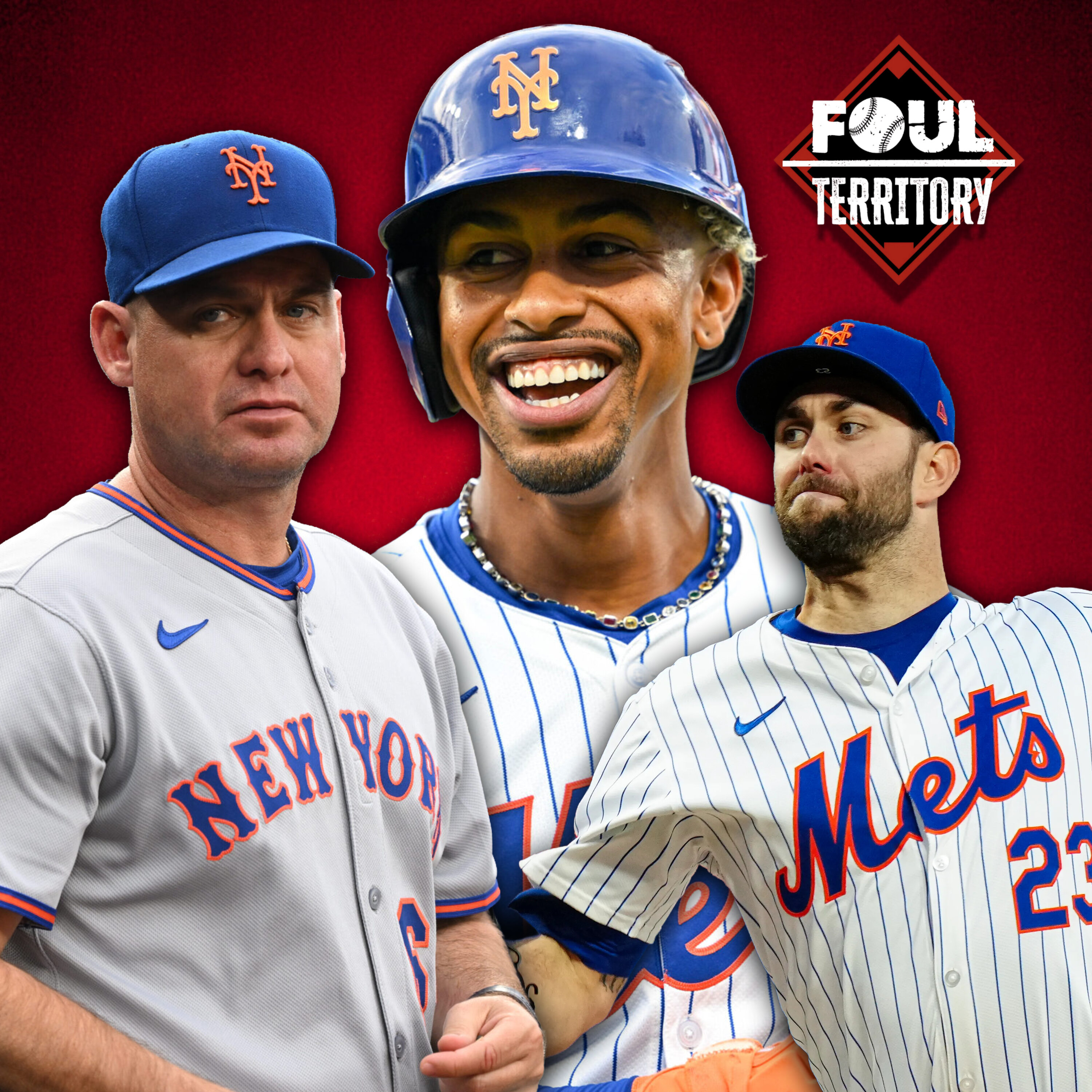
Mets checkup w/Abbey Mastraco
Stick around in this one for a fascinating discussion about the dynamic between media and players. New York Daily News writer Abbey Mastracco joined FT to discuss the state of the Mets. She updated us on the quotes involving David Peterson and Carlos Mendoza, explained why Francisco Lindor needs to get going, and shared what she’s been seeing from starters Nolan McLean and Clay Holmes.
Hosts: Todd Frazier, Erik Kratz, Scott Braun
Use our code TERRITORY10 for 10% off your next SeatGeek order* seatgeek.onelink.me/RrnK/TERRITORY10 Sponsored by SeatGeek. *Restrictions apply. Max $20 discount
See omnystudio.com/listener for privacy information.
Available Results
Generated results are saved to the knowledge database for reuse and search.
Extract Knowledge
Pick what you want extracted first. Model, scope, and chapter options appear after a template is selected.
Transcript
00:00:03
Speaker 1: Abby Mastraco joining us right now, a Mets writer for the New York Daily News. Excited to have her on the show. Abby, thank you for joining us, and we want to first to start with a nice and simple state of the Mets. How does this team look compared to last year? And I would like at least one inclusion of defense in there, since that was a problem for them in their latest loss. But run prevention was brought up ninety times in the offseason, your thoughts.

00:00:27
Speaker 2: Run prevention was the sort of trendy buzz term over the winter. This is a team that is, you know, it's the work in progress. They've got some really.

00:00:37
Speaker 3: Good pieces and they've got some pieces that are still adjusting.

00:00:40
Speaker 2: They're really good up the middle, more solid up the middle of that includes run prevention, pitching, and defense.

00:00:47
Speaker 3: But on the corners they're having some issues.

00:00:49
Speaker 2: You know, they've got a lot of guys adjusting to new positions. Bobachett at third base, first base, it was supposed to be Jorge Polanco, now it's Marc Bianto's. Sometimes the combination of Biento's or Brett Baty, Brett Baty than the outfield. Sometimes the team has been I would say at certain points better than last year, and at certain points they've looked similar. So I think it's I've been saying, you know, since since since fen training started, this is the high risk, high reward team. A lot of things have to go right, but not everything goes right throughout the course of a baseball season. And this is also the Mets, so there's plenty of opportunity for things.

00:01:25
Speaker 3: To go comically wrong. So it's it is a work in progress.

00:01:30
Speaker 4: Talking about that defense specifically, is there any hope that this team finds this solidified lineup, because if you're trying to please everybody, nobody gets better. I mean, obviously we're talking about it today, but last night, the throat of the plate wasn't really the issue that Mark Biento's made just an absolute yard dart to the plate. It was the fact that he chose to go home when there wasn't going to be a play. But how can he be in that experience, Like if a coach hits him a ground ball and they're like, hey throw it home, Mark, Like he doesn't play there enough. Like if this is a team that wants to win a World Series, are they able to address the fact that there's just people out of position that don't have experience in those spots in big games, let alone in playoff games.

00:02:17
Speaker 2: You know, I think what the Mets are sort of hoping is that these early months are when they see the biggest learning curve, and then as we get through sort of the early months where they're adjusting to things, learning new things, trying to figure out certain instincts, that the defense is a little bit more solidified going into June July. Now that's that's risky. But again, that's why I said this is the hybrid ward teams. Would Jorge Polonco have made a better play at first base last night, I don't know, because we've only seen him play two games at first base. He's dealing with the achilles ted the night is. But he's also not a natural first baseman. Mark Biento's has played a lot of first base, but he's not a natural first baseman either. So the Mets have said that they're willing to live with the learning. I just wonder how quickly this learned, you know, how quickly these guys can make these adjustments before the Mets have to start saying, all right, maybe we need to figure out some solutions to solidify this defense all the corners.

00:03:15
Speaker 5: Yeah, I think you hit that perfectly. I mean, you think about the guys that you know, they got rid of a Brandon Nemo who was fantastic, who's thriving over with the Rangers, never even offered pet Alonzo at first base and leaving and letting Edwin go. I mean, we can go on and on about that, but I want to talk about one person in specifically, Carson Bench. Young man coming in, you know, all the hype, a little bit, struggling a little bit, he's got one home run, four hits out of thirty seven at bats.

00:03:41
Speaker 6: What does it look like for him?

00:03:42
Speaker 5: Are they just gonna let him keep pushing through until they think, you know, it's not the right fit, or until he snaps out of this.

00:03:50
Speaker 2: You know, I think that they've got some positional versatility if they want to then bene back to TRIAA to figure it out. The one thing about Carson Bench is that he's not really phased by anything. He's not phased by these struggles, you know, to him, it's sort of one pitch at a time. He's gonna take it. He's gonna take things until he figures them out. You can kind of see the wheels turning in each at bat. He fells off a lot of pitches. He takes some hard pitches, but yeah, there is there are some issues with maybe some pitch selection, you know, maybe thinking a bit too much of the plate sometimes, which is funny talking to him the other day, he said, well, he thinks that the plate.

00:04:25
Speaker 3: He doesn't really think before he talks. He's just sort of.

00:04:28
Speaker 2: A waid bat guy who isn't really intimidated by the big lead.

00:04:32
Speaker 3: So that can be a good thing or that can be a bad thing.

00:04:35
Speaker 2: And with you know, if the Mets are really confident that Brett Bady can handle right field, then they wouldn't they wouldn't hesitate to send Parson Benge to Triple A to maybe get some confidence at the plate. They've also got Tyrone Taylor, who is a very good outfielder at all three outfield positions. So if they need to send Bene down they will. I think at the moment they're okay with letting him figure things out because they think that he's got the right mental makeup to do so. But you know, at some point, if he really is unproductive at the plate. They are going to have to make a move there to try and get him some reps in a lower pressure atmosphere.

00:05:14
Speaker 4: All right, talk about that offense, the offense that currently does not have Wan Soda won the first four games without him in the lineup. Francisco Lindor has been you know, I'm not sure if he's taken the face mask off his face, and you know, he's not enjoying this cold weather, but he played in Cleveland. He's gonna like Wan Soto's gonna come back. He was killing it when when he was there. Francisco Lindor is gonna hit. And this team is still treading water at a decent clip right now. They're not lighting the world on fire. But is this offense exactly what they built for this offseason? The fact that they're like, it's totally fine, we don't know where a lot of these guys are gonna play, but we're gonna hit because we didn't put enough money into our pitching, which is doing ridiculous right now. But we're talking about the offense.

00:06:06
Speaker 2: Yeah, I think this is this is the lineup that they built and when when they're at their best and they play very long, that's what David Stearns wants them to be, and we have seen flashes of that in a couple of games. What's happening right now is that they're sort of all or nothing. They're feast or famine, and a lot of that does go with Lindor. Historically this team has gone the way that Lindor has gone, and Lindor is also a historically slow starter. We've seen this now a couple of years in a row, and he sort of keeps up around May June. Good time for that, but yeah, they could use they could use a bit more production.

00:06:40
Speaker 3: From him right now, especially without Juan Soto.

00:06:43
Speaker 2: But I do think that they this is an offense that's not built around one sort of big hitter or one focal point. That was intentional by David Stearns because he felt like in recent seasons they have been to top heavy, they haven't been as deeper as long as they've wanted to play. I don't think anticipated having the same issues hitting with runners in scoring position that they had last season. I think they anticipated that being something they'd be much stronger at early in the season, especially when you bring in a.

00:07:10
Speaker 3: Guy like Boba Schet. But you know, so be it.

00:07:13
Speaker 2: The entire offense is like I said, they're either overperforming or they're underperforming. There isn't a lot of sort of we haven't found the mean, they have not found their offensive stride yet.

00:07:24
Speaker 3: We've seen what they're capable of.

00:07:26
Speaker 2: Doing when they're at their best, we haven't really seen what they're capable of doing when they're just sort of average.

00:07:32
Speaker 1: Yet with over thirty five million downloads, what is the number one rated ticketing out Todd Father.

00:07:40
Speaker 6: It's simple man, Seat geek.

00:07:41
Speaker 5: As we know, Man, they have a lot of things that helps you out along the way. They have green dots meaning good and red dots meaning bad. And it's on a scale of one to ten, showing you, Scott, how good the seats are. And sometimes you want to sit in the nosebleeds theer's sometimes you want to sit in really good seats and Scott, you know the code.

00:07:57
Speaker 6: Right, yeah? I do.

00:07:58
Speaker 1: And also I know that you always like a good oh, so Seek helps you out all the time with that. They also help you out with the exclusive FT code which is Territory ten for ten percent off your next set of tickets at Sea Geek. That's ten percent off any tickets with promo code t E R R I R Y one zero. Make sure you click the link in the description to download the app and you can have that code automatically added to your account so that you can use it later. There are regular season MLB games going on right now. There are hot tickets across the country, so make sure you go to Sea Geek. They will take care of you.

00:08:34
Speaker 4: Honestly, expectations kill the kill kill. The actual presentation of what happens is Nolan McLain going over is he is he exceeding expectations right now based on the fact that he's still learning pitching. He's still going out there in big league games and like making adjustments on the fly because of as Ron Darling says every game and Keith Hernandez says every game, he's so incredibly athletic. Are we missing it nationally? What Nolan McLean is going to be able to do for this season?

00:09:09
Speaker 3: I think so.

00:09:09
Speaker 2: I think, you know, man, that start in San Francisco was so impressive, the way that he was able to lean on his cutter, that's not a pitch that he throws very often, and just watching some of those pitches, like watching the replays trying to slow them down the break and the spin is just insane. And the fact that he was able to make that adjustment and only his tenth big league start, Nolan McLean is he's my favorite one to watch right now. Honestly, Like I might be biased, I shouldn't be as a beat reporter, but like every start should be appointment viewing for him because of what he's able to do when he gets in trouble. I mean, we've seen two games when he hasn't even been very pitch efficient, he'd gotten into some bad counts, and yet he's been able to get himself in and out of trouble. Sort of deafthly again, I go back to that start in San Francisco. I thought he was pitching pretty well, and then he gets up there and says, I didn't even know that I was throwing a no hitter or a perfect game because I just didn't have my best stuff. But I didn't feel my best out there. He didn't have a good feel for his pitches, and he still managed to accomplish that. You know, last night with another great start for him, he was at one hundred pitches through into the seventh inning, so you know, he can work on more pitch efficiency, and I think as he gets through the season, understands the game plan, understands the hitters a little bit better the big league hitters, he's going.

00:10:30
Speaker 3: To get there.

00:10:31
Speaker 2: But right now what he's doing is it's so much fun to watch. His stuff is just ridiculous. It's ridiculous. It's so nasty.

00:10:41
Speaker 4: Somebody else is pretty nasty right now for the Mets and was above average last year for him was Clay Holmes. Clay Holmes start to this year? Does it make New York exhale a little bit knowing that they think Senga's probably going to get hurt, knowing that Freddy Perolta, Oh no, he's just number one that got brought in. But Clay Holmes is the guy from last year that carried over his success. And can they get more innings out of him and not be the fore and dive that the entire Mets rotation was last year?

00:11:15
Speaker 2: Yeah, last year that was the big problem was starters were ridiculously pitch inefficient and they were not able to go deep into games.

00:11:22
Speaker 3: That's a domino effect. Play.

00:11:24
Speaker 2: Holmes is such a steady performer that it was like sort of lost last year because he did hit a wall after he reached a certain innings point at threshold that he hadn't hit as a reliever in the past.

00:11:36
Speaker 3: Well, okay, he pushed through that. He ended the season really well.

00:11:39
Speaker 2: He now has sort of a base to work off of this season and as long as he kicked the ball on the ground, which he understands.

00:11:47
Speaker 3: There were times last year where he found himself trying.

00:11:49
Speaker 2: To miss bats too many times, and he learned from that, and Play is He's a really intelligent pitcher. He's one of my favorite to talk to, and he just bring such a steady presence in the clubhouse, in the rotation. I think the play is going to have a really quietly good season. I don't think he's going to be getting all the attention at like Nolan McLean. He's not the flashy guy. Todi Singa is probably going to get a few more headlines. But yeah, I think play Holmes is set up for a really big season, even if it kind of goes under the radar.

00:12:25
Speaker 5: I want to talk about what happened the other day with with with Peterson or David Peterson and Carlos Mendoza I've been in those locker rooms. I've been, I've been, I've played with the met I understand how the media works a little bit. Carlos, the manager, was talking about one thing about what he might have needed to work on and execute, and then David came through and said, hey, listen, I actually thought I needed to do better in this kind of pitch and the sinker they were talking about, can you talk about the miscommunication or are we blowing this up a little bit too much?

00:13:01
Speaker 2: I think maybe if it happens a couple more times, if it happens in another start further down the line, then yeah, we're going to see that maybe they're on two different pages.

00:13:10
Speaker 3: But you know, yesterday talking.

00:13:12
Speaker 2: To Mendoza, he had said, well, we looked back at some of PD's things. Ndoza stood by what he said and he said that they were able to sort of get on the same page yesterday after going over his start.

00:13:26
Speaker 3: So I think maybe.

00:13:27
Speaker 2: If it happens again, yeah, then you got to wonder, are these guys on the same page with the pitching group, with you know, with the manager. It is a new pitching coach and there's always going to be some adjustments when you've bought a new staff. So far, the reports on Justin Willard have been really good. Players really like dealing with him. They feel like he relates really well to them, and he is able to break things down in ways that individually everybody is able to sort of digest the information and understand. So, you know, Peterson hit a wall last year, a similar to play homes when he hit a certain inning spreshold.

00:14:02
Speaker 3: Managed to push past it. He learned a lot from that, But you.

00:14:06
Speaker 2: Know, I don't think he anticipated hitting one early in the season or this early in the season.

00:14:11
Speaker 3: Especially. He felt really great coming out of spring training.

00:14:14
Speaker 2: He looked pretty great coming out of spring training, So maybe this is just sort of a couple of bad starts that he's able to work through. And also that was sort of like, you know, heat of the moment postgame. He had just come out of the game when he talked to the media. And I'll be honest, I wasn't actually there that game. I was in California with my nieces watching K pop demon Hunters all and stuck in my.

00:14:39
Speaker 3: Head for the last few days.

00:14:41
Speaker 2: I did go back and watch that game, though, and I talked him and Dove about it. Yesterday, it seems like everybody is okay right now. I am curious to see what happens in the next few starts though, and again if this happened later in the thevinight.

00:14:54
Speaker 4: Abby, you are are representative from the New York media, and we're so glad that you're on the show today because yesterday somebody on our show said, well, you know, sometimes you know people from the New York media, you know, they can like kind of twist some stuff and then they go to this guy and they go to that guy. I won't say who it was that said this, but it was on our show. So can you give us Todd Ta ta Todd, don't interrupt my question? Okay with your with your hand gestures. So can you be our media representative for New York and explain how these stories either a get embellished or B are fair in a city that is notoriously considered tough. Sure.

00:15:43
Speaker 3: So, I've been in New York for almost ten years.

00:15:45
Speaker 2: I came from California, from the Lost Angelets market, which is very different. So I think I've sort of been able to, I don't know, sit back and watch it from a different perspective, and yes, things do get taken taken out the contact, or blown out of proportion at times.

00:16:01
Speaker 3: This is a passionate fan base. This is the passionate media market.

00:16:05
Speaker 4: You know.

00:16:06
Speaker 2: I think the best way that the term I heard when I first moved to New York was that Yankees fans have expectations, Mets fans have hope. So when you see when reporters see things that are maybe blowing up on social media, oftentimes we'll get a call from our editor saying, blow this up even more. The good editors are going to say, hey, is there anything to this? Should we be looking into this more? Is this just fanned backlash? Or you know this was on wsan is you know Joe from Staten Island with Colin and screaming and wfan Is there any merit to this?

00:16:44
Speaker 3: The good editors are going to ask if there's merit to this?

00:16:46
Speaker 2: But I do think that a lot of things get one out of proportion by you know, not necessarily the beat reporters, but some of the reporters who just drop in periodically and then they have to give their takes that what they're paid to do. Or it's the aggregators who will use what we report and put a different headline on it.

00:17:09
Speaker 3: I try to be very fair.

00:17:10
Speaker 6: That's my goal.

00:17:12
Speaker 2: I do think I still have some laid back California in me where I'm not necessarily looking for the sexy headline. I'm just sort of trying to understand all parts of the situation before i make a determination.

00:17:25
Speaker 3: But yeah, this is New York.

00:17:28
Speaker 2: Things are going to be bigger Here's that can be a really intimidating thing.

00:17:33
Speaker 3: For some players. That can be a really annoying thing.

00:17:36
Speaker 2: I think sometimes players know how to cut through that and understand which reporters can be trusted and which reporters they might want to stay away from, or just choose their words more carefully. That's where I think being a Beat writer is a little bit different, because, yeah, I'm on the road with these guys. I'm getting to know them from spring training. I ask about their kids, not just after a game at about their worst performances.

00:18:01
Speaker 3: You know, I'm there from the Beat.

00:18:03
Speaker 2: Reporters are there from day one until I mean all your buntins really so look, it's a lot of fun in New York. But it can also be It can test your media literacy, It tests your sort of BS detector for lack of a better term, but things are bigger here for a reason.

00:18:24
Speaker 3: Things matter here.

00:18:25
Speaker 1: People care, Yeah, they care, right, you want that passion? I mean that drives the sport and the industry in this area. It was great answer and the one thing I also did want to highlight because I didn't think about this as much until now. The sports radio scene, which now turns into also a podcast scene in New York can get very aggressive and competitive. And with that you do sometimes see a sports radio host throw a rumor out there and it is complete bs, but it drives them for the week. They get in fights with each other. You know, all of this, But that's a great That is a great example.

00:19:03
Speaker 6: That's true.

00:19:04
Speaker 1: There's sports radio in almost every city, but it really started in New York in the way that it does. And I think it's even gotten crazier now, Abby because it's so competitive in the space to get through the noise, when it used to just be, oh, sports talk, you go to the radio, Now you can come to our so you can come to a million other shows and podcasts and everything. The way to try and cut through sometimes is someone literally just makes something up and then it becomes a story in New York.

00:19:28
Speaker 6: It happens. I'm telling you, we all know it. That's example this year.

00:19:31
Speaker 5: Sure Abby gets it too. I get people hitting me up and I'm still sleeping at seven in the morning.

00:19:37
Speaker 6: I heard this on the radio and my call to work is this true?

00:19:39
Speaker 5: And I'm like, here we go. Like I might get that two or three times a week, and I'm like, really, dude, stop listening to the dawn radio and stuff. But I think you hit it perfectly. I think the Hope versus I forget what you said, and that's they're in Hope. But the Yankees are like expectations. I forget what you said. That was fun, Yeah, that was fun, and you understand it. You've been here for ten years. You and I both know how they work. You know, there's certain guys and girls that come in. You see them from the corner. I'm like, you're here for a reason. You're trying to get juice like that. It's not that hard to figure out. But for some guys it is hard when they haven't played in this area, definitely, And.

00:20:21
Speaker 2: I think that's where the teams come in and they do media training to say, hey, here's our beat.

00:20:26
Speaker 3: Media.

00:20:27
Speaker 2: You know, these guys are going to be with you all season. Here's the columnist who you guys are going to see often, but not every day. That doesn't take account for, you know, some of the bigger series, like the Subway Theory. There are a lot of media members that I don't know who show up for bigger series sometimes, you know. So it's you really never know what you're going to get in the city, because this is the capital of media. So that's a good and a bad thing because these teams are going to get a lot of attention and the players are going to get a lot of attention, which is great if they want to promote a platform and their charities things like that, But it also can be tough if you come from a small town, you came from a college program that really never had a lot of media, you know, if you came from a team that didn't have a lot of beat writers. There aren't a lot of traveling beat writers anymore. We're sort of dwindling in numbers, not in the New York market, not in the Northeast in general. But it's it's really beneficial to the fans to have people like us around because that's how they learn about these players. That's how they sort of connect with the players and the teams and the coaches. And it's a fun job. It's a tough job, and I think it's tough for the players at times to have to stand up in front of us after some of their worst moments, which again that's why I try to be very fair. But there's a lot of entertainment options you think, Like you said, not just on the radio. I mean, there's entertainment options in terms of streaming services. You know, Baseball is trying to bring in new fans and keep new fans, and the media is one of.

00:21:59
Speaker 3: Those tools that they can use to do that. So it's New York.

00:22:03
Speaker 2: Like I said, it's intense because people care and at the end of the day, that's cheaping us all in business.

00:22:10
Speaker 6: Yeah, that's a great point. On the beat writers too.

00:22:11
Speaker 1: There are some teams that are essentially down to one and it's you know, the beat writer for the league.

00:22:16
Speaker 6: Like there's some.

00:22:17
Speaker 1: Markets that are really kind of seeing a dwindling of coverage out there too, and you're not seeing that of course in New York.

00:22:23
Speaker 6: Abby. This was great.

00:22:24
Speaker 1: Really enjoyed the whole combo, especially the end here. Thank you so much for joining us. First and last name is super easy for fans to check out more of her work on Twitter and then of course articles in the Daily News.

00:22:34
Speaker 6: Thanks Abby, you appreciate it.

00:22:36
Speaker 3: Thanks for having me.

00:22:37
Speaker 6: Guys,