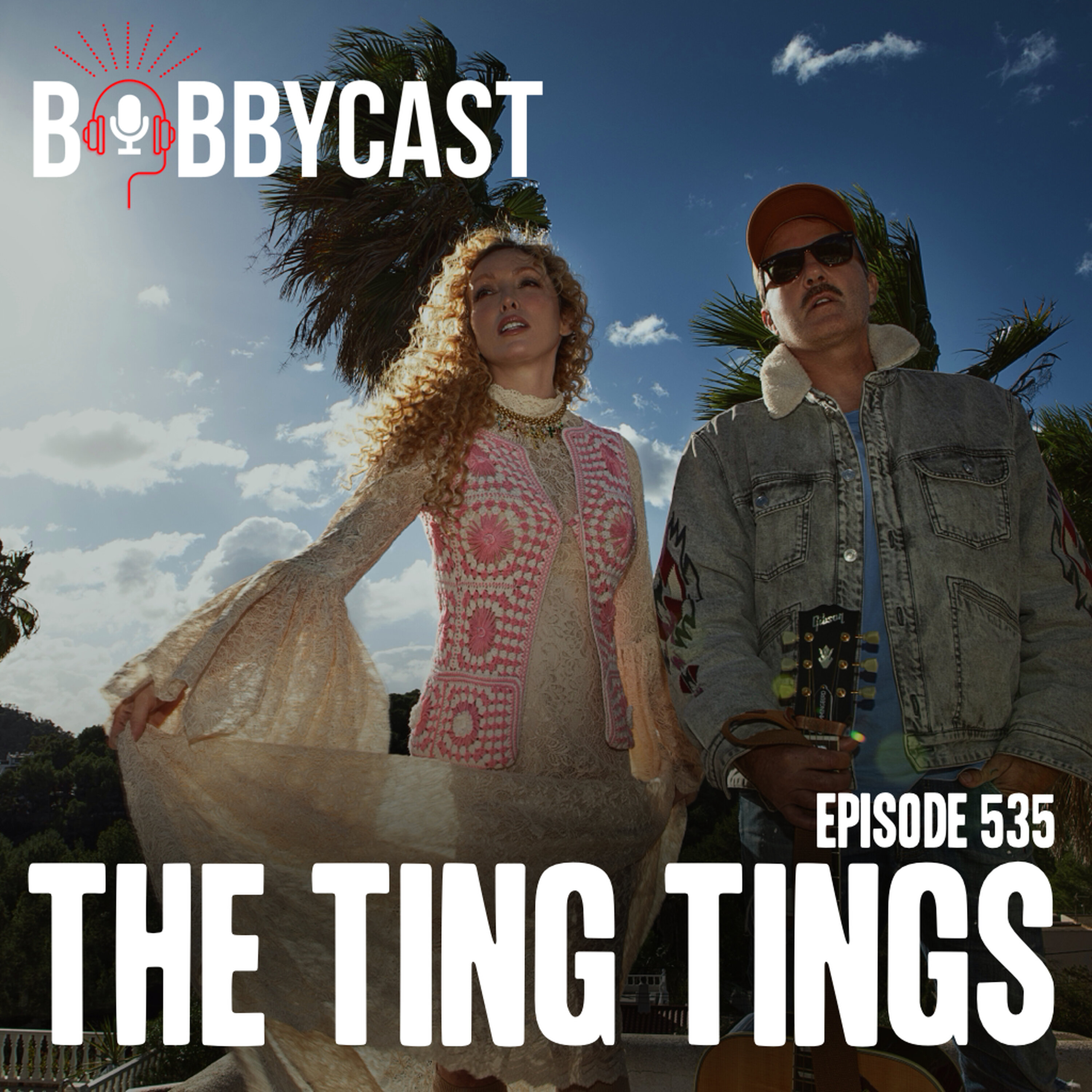
#535 - The Ting Tings on Why They Never Felt the Success of “That’s Not My Name” + How an iPod Commercial Changed Their Life + The Importance of Failure + Bobby Responds to YouTube Comments and Critiques
On this episode of the BobbyCast, Bobby talks with English pop duo The Ting Tings. You may remember their big hits "That's Not My Name" and "Shut Up and Let Me Go" from 2008. The duo talked about these songs and how they were discovered in the US when they played at SXSW in front of a small crowd, but in that crowd was Steve Jobs and he picked their song "Shut Up and Let Me Go" to play on the Apple iPod commercial. They also talked about the importance of failure in their career and how they learned from it. In the second half of this episode, Bobby reads and responds to YouTube comments and critiques left on his channels.
Follow on Instagram: @TheBobbyCast
Follow on TikTok: @TheBobbyCast
Watch this Episode on Youtube
See omnystudio.com/listener for privacy information.
Available Results
Generated results are saved to the knowledge database for reuse and search.
Extract Knowledge
Pick what you want extracted first. Model, scope, and chapter options appear after a template is selected.
Transcript
00:00:07
Speaker 1: Welcome to episode five thirty five. We'll talk with the ting Tings, and then not only that, afterward, I'll talk about the comments, just generally comment talk on YouTube and Instagram and me getting into the comments. It's the whole thing. So the ting Ting's interesting because I remember the ting Tings. I was a massive fan back in the day. They had the song That's not My Name, Doom Doom, That's not my Name Doom Doom. They called me stay sick. Loved that song, and they had this song shut Up and let Me Go all over the back in the day iPod commercials. So they during this interview, they were in Spain. Yeah that feels accurate, right, Yeah. Yeah. They are married, Katie and Jewels. Katie's the lead singer, guitar, plays a bunch of instruments. Jewels plays the drums, plays the bass, plays the lead guitar. They definitely are good compliments to each other in this duo, and most duos have to do that. One that does one the other really has to do the other, and a lot of it. So they got a new album out. It's super cool. It's definitely different than what I was used to and I just came across them on TikTok and I messaged them and I was like, hey, ting Ting's on TikTok, would you like to be on the show? And they were like yeah, I love it, So it's super cool. The band's name, The ting Tings come from a co worker of Katie who's the lead singer. And she was Chinese, the coworker, and she liked how it sounded because it was in Mandarin ting ting can mean listening or bandstand and they were like, that sounds cool, let's do it. And so they formed this band while living in Islington. Mill is that England, I don't know, got to be right because they're British. Right, let's see, I'm positive they're British. They got a great accent regardless, ilingdon MILLI, yeah, yeah, it's in England. And so they started playing in their kitchen. People come the ktchen and watch all right, let's rocket.

00:02:03
Speaker 2: All right right, yeah, yeah of course England. Yeah yeah, here you're here, Yeah, yes, yes, very much. So here they are, Episode five thirty five, The teing Tings. Hey, we have the ting Tings on, which is pretty exciting for me because rarely do I message anybody and just go hey, will you come on?

00:02:19
Speaker 1: And I did, and so I appreciate you guys. Where are you right now? Do you want to say what country you're in?

00:02:24
Speaker 3: Yeah, we're in Spain.

00:02:26
Speaker 4: We're rehearsing for a festival in Portugal in about five days.

00:02:32
Speaker 1: You know what's awesome about Europe and we were there a little bit ago, just in general the trains, Like I'm fascinated with how you guys can get places on a train. Here in the States, we're too dumb to have trains except in the Northeast, and everybody peas in them, like you got that. Like the European travel system is a plus amazing. I told my wife because we went to Paris and went to Austria. I went to a few places last year, and I was like, I want to do an overnight train where you sleep like in a train. Does that just sound like the most basic thing that I'm fantasizing about.

00:03:04
Speaker 4: I'm big fan trains. I'm a really bad flyer. I'm I'm a nervous flyer. So I'm advocate for trains. More trains the.

00:03:12
Speaker 1: Better, I agree. So we're on the same page. More trains the better. All right, let's get to some music here the last I think four out of five TikTok posts that I have put up, and I do these carousels and they do they perform pretty well. But I use you Guys a song Home because I love it so much, and so it's been the song behind a lot of the stuff that I've been posting, and so I know the album is also called Home. I didn't know that was you Guys at first because it's so different from what my expectation was of who the team teams were. So why don't we start there, like, who even are you guys?

00:03:43
Speaker 5: Now? Well, we've been a band for sixteen years, we've been songwriting together for twenty years, so there has.

00:03:53
Speaker 6: Been some evolution within that.

00:03:55
Speaker 5: And I suppose if you only knew us from that's not my name is Shut Up and let Me Go, which came more from a At the time of writing that album, we was living in an artist community in Manchester in the north of England, and we were very inspired by Talking Heads and Blondie and the Smiths and all there weremones and very kind of new wave inspired. But we're a bit of an odd band because we're a duo and we always write and record all our own albums ourselves. Jewels plays like five instruments, so in one way, we have changed a lot over the years because probably because we can. I mean, if you're like a five piece band, you're kind of locked into a sound a lot of the time, even if you did want to change, because you know, you can't control what the bass player is going to play and you can't control what the drummer. But we've always been quite into experimenting, and we call this album Home because we actually feel like we've landed where we don't want to probably experiment as much. We're really happy in this sound now. It's kind of we've grown up into it. It suits our lives. We just love songwriting. At this point, we don't care about anything else.

00:05:00
Speaker 1: To go back into your histories and Jewels, I'll start with you, like when did what was your first instrument and who got you into music? Was your family very musical?

00:05:08
Speaker 3: Not really? My father was.

00:05:11
Speaker 4: My father's Italian came over when he was about seventeen to the UK. I think he had some experience of singing in church as a young little Italian boy, but that's about it. He's actually a really good singer. But nothing like he's never performed. But I got into music early, I guess through my sister's kind of about five years older than me, and she started having a record collection before me, and I stole her records, so, you know, Police early early bands like the Police and Roxy Music and stuff like that was getting me fired up. And my drums was my first instruments and it still is my first. Is my main instrument I play confidently, But as a songwriter, it's very hard to write a song on drums. Well it's not hard, but it's kind of you know, dull. You kind of have to start a song, you have to start playing piano or guitar or something, yeah, pil coynes. So I quickly moved over to the keys and guitars to be able to write, and that's when I really started to I suppose practice more on guitar and piano as one of my drums, but my drums is my favorite instrument, although now I don't play drums as much. In the band that we are now, we're kind of much more of a kind. I mean, we woke up one morning and said we'd written all these songs this new album.

00:06:26
Speaker 3: We wanted to be the Eagles. It's as simple as that.

00:06:28
Speaker 4: We thought, God, imagine back in the day when those guys had a percussion player bass, but there's like ten of them on stage, you know, and we really wanted to go back to that because me and Katie are just a duo. We've been playing with loop pedals and electronics and guitars and punk sounds and stuff for all our lives and we just really wanted to get quality musicians on stage again. We just felt ourselves, we felt like we were missing something. So a lot has changed.

00:06:51
Speaker 3: You're right, Katie.

00:06:52
Speaker 1: Again, this is a very basic question, but for me, and I think for my audience, like, can you give me kind of your origin story music, how you started, what you started first, where you started singing?

00:07:02
Speaker 5: Yeah, So I grew up in the nineties, so it was very much nineties pop. Really. I made a little girl band with my two school friends and we weren't very good. And then, like I said, about nineteen twenty, I moved to this. It was kind of an artist community in Manchester that was an old cotton mill that had like forty artists living and working there and it had like amazing bands. Every week they'd be like you know club nights where they'd be playing the Tiger and talking Heads and all this amazing kind of post punk stuff, which wasn't of that time. It was kind of the second time round it came, really, but that's what was kind of becoming cool in the universities and everything in the local town. And the second I heard that, I had just got obsessed. I got obsessed with Andy warhol ed Sedwick like anything that was like artistic and the totle opposite of where I came from. So yeah, I kind of started off with probably growing up listening to the Spice Girls and then getting obsessed with you know, feminist punk bands. Somewhere in the middle if you hear like my vocals live on that's not my name, it kind of lands somewhere in the middle of that.

00:08:04
Speaker 1: A lot of my friends that have made it at an elite level, like where you guys are, they were in many versions of things that did not work before they either found their sound or what works for them. If it's a solo artist and they weren't a band, or they were in a duo, or like, were there projects that did not work and at the time you thought, well, this sucks. Life's over. But really it was a blessing in disguise because it worked into what it is now.

00:08:30
Speaker 3: Yeah, totally.

00:08:31
Speaker 4: I think that it's easier for us to say, I know, we're very lucky that we've come this far, and we're kind of I guess, in a lovely position to be able to experiment.

00:08:41
Speaker 3: But the truth is, failure is really.

00:08:45
Speaker 4: Important in your I guess, in your journey and people in a modern world, it's getting hard and harder to fail and people, especially with social media, everyone's on you the minute you make a mistake, you say something wrong. But we think that was really important. So all those fouled attempts at the beginning to write songs or to be in bands that connected. That is the most important part. We actually wrote a song I think on our second or third album called Failure because it's going back I mean five or six years, I can't remember, but we were writing about that because we had started to realize the importance of not trying to be something, because it's working trying to be something that is coming from your real deep inside you, and often that fouls because you can't you can't connect all the time. It's impossible for a human being to do something right every time that everybody likes. It's just impossible, and it's important to foul. And so there was many bands, many songs that I was a part of, and I think Cagy as well, that just didn't work. At the time, you kind of pull your hair out, thinking why aren't we giving up or why aren't people are liking us making a call or something. When you get to the point where you do something thing that does connect, you look back and you realize how important those those those I guess those that journey is about making those mistakes and making those errors or or or things not working out.

00:10:11
Speaker 1: Katie, was there a time where you guys were in different projects? Like how did you two come together the first time professionally?

00:10:16
Speaker 6: Yeah, we met.

00:10:18
Speaker 5: We met in London through I can't remember. There's like an old school manager called Laurie j is probably not around.

00:10:26
Speaker 6: Any long.

00:10:29
Speaker 1: Dead or out of one of the job, okay to make it sure.

00:10:35
Speaker 5: Did not, but he was the very elderly guy. Then he kind of thought we should meet each other to work together. So we met there and I moved to London for about a year, and then Jewels moved back down to Manchester, and yeah, we moved into the mill where we obviously started the Things, but we met Jewels was working with another band. I was in my girl band in effect, and we both didn't like what we was doing, so I ended up kind of evolving quite quickly into working together and writing together and yeah, making.

00:11:06
Speaker 1: A band, so the Things would be the consolidated version of The ting Tings.

00:11:13
Speaker 5: Yeah, we almost on this album we called ourselves a different band name because we were going to call ourselves D Martina and Why, which is our songwriting names what we would be down on our publishing because we felt like it was a very different feel to what people would expect from the Tintings, like you were saying, And it was only at the very last minute where we really wanted to keep our independence and we thought, well, we have to use something that people Why would you throw away the ting Tings when people have some recognition, even if it takes a year to remind people in a world now where there's so.

00:11:45
Speaker 6: Much noise online.

00:11:46
Speaker 5: But the process of calling ourselves D Martin and Wright really helped with the songwriting because we could almost feel like we were a different band.

00:11:54
Speaker 1: This is a question that I always love to ask, and if it's the stupidest question, that's okay, I'm stupid. But were you more of a Blur fan or an Oasis fan? I feel like I have to ask every British friend or new artist because they all have a super opinion on this Blur or Oasis back in the day.

00:12:13
Speaker 5: Well, I'm from Manchester, so always Oasis undoubtedly, and actually even now songs win Oasis Oasis.

00:12:21
Speaker 1: Okay, good attitude. My wife is like eleven years younger than I am, and she just got into Oasis because they kind of blew up again on social media and she was like, we should go to the first Manchester show, you the show they did back home. We did not go because I had to work, but I thought it was super cool that they were back together. Do you guys follow other British or English or European bands like I follow bands from like my state of Arkansas. Do you root for them like the local guys?

00:12:49
Speaker 6: Yeah?

00:12:49
Speaker 5: Absolutely, Manchester where we started the ting Tings. Has you know the Smiths come from Manchester. The Stone Roses, Oasis, the Burth like a new Order was amazing come for Manchester for some strange reason because it's raining I think it was.

00:13:04
Speaker 1: Nothing to do. But what about when you guys got together, because what our introduction to you was the ipied commercial whenever shut Up and let me Go happened For most of us, we're just watching on television, and that was the introduction to the teen things. But I'm sure that you guys were playing a long time before that happened. How long were you the teen teams? And then how long until that happened? Did you have any success in Europe before it came across We've.

00:13:31
Speaker 6: Got that south by Southwest.

00:13:32
Speaker 3: Yeah, so we were so we've.

00:13:35
Speaker 4: All been We've always been a very kind of bubble band like independent on our own. We right produce, we built our own studios, we put our own records out.

00:13:43
Speaker 3: We'd always done that from day one.

00:13:44
Speaker 4: In Manchester we put that's not my name out with a coment what the flip side was on forty five J Great DJ exactly, And we owned a little record company called Lejendre Starkey Records back in Manchester. Long story about that, but we've we've always been very proactive about how we make music and how we put music out. Then, So the answer to your questions, were we doing stuff I guess. We became a little bit of a hot band in Manchester at the beginning when we were punking out, creating our own little scene, and then of course we just couldn't eat.

00:14:16
Speaker 3: We had no money.

00:14:17
Speaker 4: Putting like one hundred and forty five's out, you know, seven inch records or whatever in local stores is really a wonderful thing to do, and we missed those days because they are the days that really count, but they don't pay, and we got to pay rent and we, you know, we're trying to get on in life. And eventually we got discovered by being you know, I guess a hot band in Manchester, and then that gave us the license to get out and play bigger shows in the UK and in Europe. And then it was quite weird. Our record, our first record that broke out. We kind of chased it around the world. We never we never saw success. We in the UK started blowing up and we were playing shows, driving around in a little mini. I remember that Kate was in the front seat and she literally had drums on her lap and we were so excited that there was more people coming to see.

00:15:06
Speaker 3: Us than three.

00:15:07
Speaker 4: And then that record started about and just as the record broke in the UK and as it went number one, we left the UK, went around Europe and arrived in the States, did Japan, we did you know, the Far East, We did everything, and then it was kind of like our friends in the UK were saying, like, God, your record is everywhere. It's such a massive record, and we'd missed that because we'd left. And then when we got to States, every UK band, I guarantee you, I don't care who they are, wants to tour the USA. We are inspired massively by USA music, you know, music that comes from the States, from the Beatles, as you know, and it's like, I guess it's like getting on a bus. Touring America is the great rock and roll story and everybody wants to do it. And there we were at south By Southwest, playing three shows a day, breaking out slowly.

00:16:00
Speaker 3: Like we did in the UK.

00:16:01
Speaker 4: Everybody was having a crazy time in the UK and our music send it's blowing up. We were missing all the parties because we were working hard in the States. And we played a show and I can't remember which.

00:16:11
Speaker 6: One it was, and mainly there was like twenty people at it.

00:16:14
Speaker 4: Teeny It was shown south By and Steve Job. Basically Apple picked shar up and let me Go for their iPod. It was actually Steve Job personally from that show. It's classic the ting Tings come ground up. We're not a pop band where we have managers and producers and a hole onto larger people. We just turn up rock, write a song, record it rock. It's really ground earthy, easy breezy type of way of doing stuff. And that's exactly how we broke out really from the States. Of course, being on the iPod advert meant that loads of people heard our music shut up and let me go, and that opened doors to play bigger venues on more venues, and we just went around the States. And as the record started blowing up in the States and people started hearing it on I guess national radio or all those old platforms back in the day before social media media erupted, we got to this point where we're go, oh man, our record's taken off.

00:17:07
Speaker 3: And then we were gone.

00:17:08
Speaker 4: And then we left the States like South America, and we were doing that and people were discovering it. So we never felt like we'd really broke out. We never thought like we'd had a big record, and then three years later, we came back to the UK and we couldn't believe how successful the record had really been. It was on adverts, it was on TV, film, you know, radio could.

00:17:28
Speaker 5: Go pretty much anywhere, still can really and people know like our first album really well.

00:17:33
Speaker 6: And yeah, for us, it's quite bizarre.

00:17:36
Speaker 4: Yeah, and we and we never kind of truly felt comfortable. We're not like great pop stars, if that's the right word. We're much more about writing and studio and creating stuff and putting out and seeing the reaction it gets and then doing some great shows. So I guess it's half that we kind of chased our record around the world and half that were a little bit maybe not so good at kind of red carpets. Yeah, that's amazing.

00:18:00
Speaker 7: Yeah, let's take a quick pause for a message from our sponsor, and we're back on the Bobby Cast.

00:18:16
Speaker 1: So this sound, you say, Eagles, I think the first time that I watched it, even the visuals, it felt and I hope this is a compliment to you, it felt very Fleetwood Mackie, if that's even a term. And so that's why when I looked at the name and I was like, oh, the tea things, I know them I was a fan, you know, back a few years ago. I used to also work in pop radio before I came to Nashville in the States to do this on a much more national level. Did you have to keep on this new record? Did you have to keep from doing the old sound at all? Like? Did you make it to draw a line like We're only going to stay and focus on the sound that we are now and not kind of dabble back in that because we want people to understand that we have modified who we are as artists.

00:18:59
Speaker 8: Yeah.

00:18:59
Speaker 5: Well, the Reding we literally made a mood board of everything that we stuck all our favorite bands and photos up, and I think whilst recording we definitely we didn't feel compelled to write music like our first album because that was like sixteen years ago. Anyway, our album before this one was actually like quite drum and bass inspired, wasn't it, And so we've always been making kind of different music to that first album anyway. But I think the main thing was when we came to perform it.

00:19:23
Speaker 6: We did our first sold out London show this year and we.

00:19:27
Speaker 5: Did two and we were like, you know, how are we going to do it? The audience is going to turn up and then they're going to expect just this high energy, like new wavy thing, which you know we're proud of, but we're in a different place. But what we did we reimagined five of the songs from our first album, might Shock and let Me Go, That's not my Name, Great DJ, and we actually we go out as a nine piece band and it's beautiful. It's like very lots of harmonies, very Crosby Stiel's and Nash and we perform those old songs in our new style. So it's really exciting for the audience because you could we've got our friends to like video it, and you can hear them like gasping when they hear like shut Up and let Me Go performed in a different way because it's still a song that they love, but they're getting it in an interesting way and they've actually grown up with us, like now a lot of the comments are like, oh my god, my favorite band for my teenage years has now grown up and is actually still making music that will kind of connect with me now, which you know is a dream for us because we are creative. We don't just want to go out and play songs that people know from sixteen years ago. We're constantly making records, and you know, we feel like we're creative songwriters.

00:20:30
Speaker 6: So it's the best outcome for us. Really.

00:20:32
Speaker 1: So you did this record analog? I think, I think I read and if so, that means it has to be perfect when you record it, right.

00:20:38
Speaker 3: Yeah.

00:20:39
Speaker 4: So when we made this record, we have changed our lives. We've we've become a family and we have a little girl and that changes everything. We decided we want to be better musicians, so we started picking up more instruments, practicing singing and playing them piano, guitar, drums, et cetera, and harmony and singing. We wanted to do more in that than we did on pre records. We were obviously inspired by all the bands that you've heard us Bleepwood, It's Cosby Steels, all the great bands, Eagles and the way they.

00:21:08
Speaker 3: Put music together.

00:21:09
Speaker 4: And we knew instinctively that if we were going to make a record, we couldn't do it in the way that maybe we'd made some of our last records, which was a little bit more on technology based laptops and loads of electronics and stuff like that. So we have a big studio and we lined all out, old equipment up, got it all repaired, got it all out, and we started playing the instruments acoustics, and we started watching all the films about bands we love, and we just wanted to slow the pace down. We just felt like social media is so fast, and music is made so quick, and it's released, it's over so quick. And although there's benefits in that, and we exploit those benefits, I'm not suggesting for one minute that we're doing anything worse or better than anyone else. We just wanted to feel more, honest. We just wanted to feel more connected with the art form. And in pop music or commercial music, when you release something, it's so bloody fast. You don't even learn your songs. Sometimes you're going on tour and you don't you know what you're singing it. And we wanted to slow that down. We wanted our fans to understand that we were learning our instruments, we were playing better, we were writing better, we were using tape, we were using desks and equipment, we were learning our craft how to use that. And it might sound a bit fuddy duddy, and it might sound a bit old fashioned, but we.

00:22:27
Speaker 3: Had just an amazing year doing it.

00:22:31
Speaker 4: We were like we imagined, you know, years ago, when they used to set up in a studio. You had the band, you had an engineer, you had a producer, you had a technician, and all these people would run cables and microphones and they'd reset thing.

00:22:42
Speaker 3: We did.

00:22:42
Speaker 4: All that we went through that process. Katie would move and might, I'll be drumming. Shit sounds better when the MIC's here. And it was just like a whole new world really of music. And I think a lot of that's got lost, and it's not a bad thing.

00:22:56
Speaker 3: Again. We may in five.

00:22:58
Speaker 4: Years time we might be just walking around the world and laptop making obscure music in fields. I don't know how it's going to turn out, but we just felt like it was time to put back into music that sort of look we'd taken out for so many years.

00:23:10
Speaker 1: I have two questions left for both of you. What's the best concert you've ever been to?

00:23:15
Speaker 5: Can I say, well, there's one that I didn't appreciate at the time, and now I really kicked myself and Jills dragged me to a Steely Dun concert in New York and I was only in my mid twenties and I was bored out my brain and now I'm quite obsessed with Steely Down and I.

00:23:30
Speaker 6: Can't believe I didn't appreciate it. Another one, you do yours, I don't.

00:23:35
Speaker 4: Nick Kiels, Well, there are many, and for the right reasons that the ones we love the most are the big rock bands and soft rock bands and yach rock bands, because it's what we're really into now. But I'll tell you what one comes to mind is Cypruss Hill And I can't remember.

00:23:48
Speaker 3: Where we were.

00:23:49
Speaker 4: It may have been in Germany. We were playing a big show with them, and it was we were side of stage. We'd come off. They were big fans of our band, and we hung out with them side of stage and these guys were partying on the side of the stage and their set. Their show started, and you know, the DJ startarted scratching and stuff and the beat started and one of the guys are out there kind of wrapping up, and one of the guys was talking to us. He was going like, man, I love your stuff, and we're like, dude, your show started, you need to be out there, and they were so on it and so good. He just had a conversation with drinking beer side the stage. Buddy, and when his time was to come on stage, he just turned left us walked on beyond the curtain, just came out and he was dropping and you.

00:24:31
Speaker 3: Were like, it was an amazing show.

00:24:34
Speaker 4: It was just like, I can't I need to be very focused if I'm going on. So there's no way I could be sitting talking to a load of a gang of people side of stage and then when it's my turn, scene just walking started.

00:24:44
Speaker 3: I don't know how he did it. It just freaked me out. It was brilliant.

00:24:46
Speaker 1: That's awesome. Final question. And we talk a lot of music here and if you were to ask me, like who the greatest British it'd be the Beatles'd be Oasis, led Zeppelin. Who do you guys think is the greatest American rock star of all time? We just had this conversation and so I'm only asking you because we put each other onto the test here and we had different answers. But I wonder who you think is the greatest American rock star of all time?

00:25:17
Speaker 3: Right?

00:25:17
Speaker 5: Well, Kirk Cobain and like a Liam Gallagher type thing of like not just a rockstar, like generational inspirational people like young people still would connect with that type of persona of Kirk Cobain as well. Now whereas I feel like our wats have that it's coming round and like yeah, young people still getting into it.

00:25:38
Speaker 4: Yeah, that's a really good point. He's a more modern generation cultural.

00:25:43
Speaker 5: But you guys do us because we're very because we're very English and we're we just are so in awe of how like an Elvis or somebody would just perform and just be so I don't know, just so big in the room. In the UK, you're almost it's kind of rude to be like too full of yourself and too self promoting, and in America the opposite. So it's completely different type of part star, isn't it all like rock Star?

00:26:06
Speaker 3: I'm finding it really hard to.

00:26:09
Speaker 4: Pin down migrated most favorable American I think that that's in the UK conderies, But in America there are so many moments for us that we've been from, you know, from Elvis onwards, like iconic they are so for us over here, it's always different. You know, if you've got a UK artist breaking overruled, you guys see it different to the way we see it because it's cultural here and it's maybe slightly different in the States, you're seeing it in a different entity, and it's the same. First, the American inspirational influence that's happened in the UK for the last of course sixty seventy years has been humongous. It's you know, we're fascinated by over here.

00:26:52
Speaker 3: I know we are.

00:26:53
Speaker 4: There isn't a band that's not inspired by an American outfit at some shape, and I'm finding it very difficult to give one so many of them day.

00:27:03
Speaker 1: Then I'll tell you who we said. I can tell you who we said. I said, Tom Petty. Tom Petty to me is the greatest American rock star because I could listen to his music for twenty hours and it's all dynamic. Eddie, who did you say, do you remember who you picked?

00:27:18
Speaker 3: The Eagles?

00:27:18
Speaker 1: Eddie did pick the Eagles? I picked Tom Petty.

00:27:21
Speaker 4: I would go Eagles. But then that's because we are very influenced by them at the moment. We're so in love with them, and I think that is Suaysia. Tom Petty.

00:27:30
Speaker 3: Wow.

00:27:31
Speaker 4: When I used to listen to his CdSe years ago, and he was a bit born, but when I did, you could see why he was so influential. But Dylan and stuff like that. Again a different Maybe they're not rock as much as focal or whatever, but the impact those artists had were just incredible.

00:27:47
Speaker 3: I mean, you can go I know, fast.

00:27:50
Speaker 4: Forward this, but when I was younger, m I know, maybe they're not like traditional massive, classic rock stars, but that band eight albums in. I got every single record of there. It just goes on from American best. I think it's also because you have the touring circuit, you have such a big country, and people can learn their craft much easier than they can in the UK because once you go out, you're out for months, and I think you just get better. And I think a lot of the American rock stars, if you want our bands, they just have this bigger thing about them and it's something that you can only get by going to the States.

00:28:22
Speaker 1: Yeah, Arim, we're massive Rim fans and so yeah, love Arim.

00:28:27
Speaker 4: Good.

00:28:27
Speaker 1: Guess I didn't think we put them on our top five, and I think just because we weren't thinking, because I think I'm pretty stupid now for not putting Rim in my top five. Hey guys, thank you really thanks for the half hour. I really appreciate it. I love the new music again, I put it on my social media. I was a fan of you guys way back in the day and I love the sound. Now like yourself, I've also matured who knew. Thank you for the time, and I hope you guys rehearse and do give you come to the States and you're down near Nashville, Please hit me up, come to the studio. Would love to see you guys in person.

00:28:55
Speaker 5: Yeah, just been talking to our agent in the States and we're planning on being there like spring summer next year, doing quite a big amount of time.

00:29:04
Speaker 1: So yeah, please please let me know. We'd love to promote it and we'd love to see you guys in person. Big fan. You guys have a great rest of the evening. I know it's evening there, and so thanks for the time and hopefully I'll talk to you soon. Thank you, Bye, guys.

00:29:16
Speaker 8: The Bobby Cast will be right back. This is the Bobby Cast.

00:29:30
Speaker 1: So we've really dedicated a lot of time and effort to the YouTube page, which is Bobby Bone's channel. Now there's the show YouTube page, but I felt like if I were putting Bobby casts up on that it may get a bit lost in the mix. Because we put a lot of clips up on the Bobby Bones Show channel, and that page has three hundred and thirteen thousand followers, probably a little underwhelming even then, I mean most of my socials have more than that. I just think we didn't dedicate enough. I still don't think we have the adequate manpower to dedicate fully to the Bobby Bone Show YouTube. I wish we did, but we don't. It'd be nice if I could hire somebody just to do that, because it's such a big part of the business now, but so far I haven't been able to do that.

00:30:16
Speaker 3: Now.

00:30:17
Speaker 1: I don't get the revenue that's generated from that page. The company does is per my contract with them, and that show based baby. That's how it works, and so if they're not going to pay for somebody to spend more time, invest more time into that page, the page will only do so well. And it does pretty good. Again, it's got three hundred and I think thirteen thousand followers. My goal with that page would be to put someone on specifically now over on Bobby Bones channel, I do have somebody on that page specifically, because that's my page, and so as we've been doing these, I'm gonna get deep into the weeds here. But as we get into these interviews, we have a couple of sets. We had the set that was pretty dark that we kind of move from, and now we have the full background. But that's only temporary, but because we're building another set right now for this channel specifically, I like it a little lighter, and it's a little easier when it's lighter. And the chairs are different because to sit with somebody and talk for an hour. Now, this episode that you just started wasn't an hour. It was thirty minutes. And they were in Spain and I was in the studio. So there's always a little gap, not only in the timing. And sometimes you talk over each other on Zoom, but it's not near as personal. It'd be hard to do an hour on zoom. But when you do an hour here, and I think next week you'll hear the Matt Ramsey Bobby cast and Matt came over for over an hour. Matthew Ramsey is the lead singer of Old Dominion and I like him a lot, and so we sat for an hour. But it is a very intimate thing because we are I'm looking at the two chairs now a foot and a half from each other and then it's just you and them for an hour and you're kind of do a little dance, and you can get a little tired doing it because your focus has to be maintained and you must maintain a tentomness, and you know you want to be on and you want to be listening. I would compare it to a little more intensive a road trip, because you think, well, I shouldn't be tired. All I did was drive, but you've had to maintain focus for the past four or five hours. This is a much more grueling version of that. Now it's not the mill. My step that worked at the mill, not saying it is, but to sit with somebody for an hour and then if it doesn't go, well, that's on me. And my interview style has always been a little odd in that I just don't do straight interviews. I've never done straight interviews. I don't think I would be a good straight interviewer because I feel like I have too much to say. And also, you wouldn't do an hour with somebody if you were just interviewing, And so a lot of times people will go, oh, you're talking about yourself too much, And I think that's fair and I'm going to read a comment in a second, which is where were geting. I think it's fair, but it's what I've always done my entire career. And it's not even talking about myself. It's one talking to give them a break. Two adding some texture of the conversation. And three, you're not watching it or listening to it for the most part, if you haven't heard other stuff that I've done, or you're not somewhat a fan of how I do interviews. I mean, unless you're just a massive fan of that person, you're listening to every one of their interviews, you already know it's going to be more of a conversation where we're both adding elements to it. Interview would be a bit unfair to call it that, but that's always been how I've done shows, and it's always been the critique. It's like, we get this research back sometimes and the company every you know, I think they like to do it every year, but really it's about every two years. The research will come back and you're talking pages and pages, and they have people all over the country that will listen to the show for weeks at a time and give all this feedback and the feedback was always polar, and you had one part of the audience that was like, well, he gets these artists in and he talks about things other than just the artist, and then you get the other side, and I might have written about this in my second book, the other side that's like, you know, it's really the only interviewer that I've heard that feels like a peer to the person they're interviewing. And the reason that is is because I'm just not asking questions and waiting for an answer and just following up like I feel like I'm adding. I feel like it opens them up as well. To have somebody along the ride with you makes the ride a little easier a little more tolerable. And so I'm going to read you a couple comments here now. This one was on the Dirks Bentley interview that we did earlier this week. This is from Laura sixty five ninety eight without an avatar. Sorry, I found this interview to be so boring I couldn't get through it. Disappointing. Bobby talks about himself too much in every interview. Now this is the one with Dirk, so I probably talked a little more and not even about myself, but gave my opinions on things as well, because I have known Dirk's for thirteen years. I mean, Dirk's was in my wedding, so I do think that's a bit different. But I do think she also has a point. Not that it's disappointing, not that it's different than anything else I've ever done, but I think the point is that it's not just a standard interview. And I think at times this wouldn't hurt my feelings, but I would go, man, I wish I could talk to them and explain to them that this is the only way I've ever done it, and to this point it has been quite successful for me, and it feels the most comfortable for me, and it's the easiest way for me to get things out of them that they're not giving another places. Now, what's funny about it? And I pulled this and it's one screenshot. It's two comments right on top of each other. You had that one from no Avatar Laura sixty five ninety eight, which could be a burner. You had David Hill dash eight twelve with the picture suit and tie looking good buddy, and he writes right under it, this is one of the best interviews I've ever done. Phenomenal conversation. Big fan of Dirk Spinley, saw him twice. Loved how you two related. It also shows you that two things can be true. It can be extremely annoying to some and it can be extremely refreshing to others. And I'm not really comment guy. I've tried to do a better job of not just going into the comments, but going into the comments, especially when I post something new, to say something like, oh, thank you, I really hope you liked it, like not to just be And I really don't get triggered that off of my negative comments because I don't get into the comments that often, and the negative comments usually aren't the first ten comments, if I'm being honest. They usually comes sometime in the middle. But I try to get in now and just say thanks or hey, I appreciate that, or you know. I posted this list earlier in the week of near tragedies for country music artists, and it was everything from a car accident that Brandley Gilbert was in when he was like nineteen years old. I think that was number seven. Brentley Gilbert two thousand and four survived a near fatal truck accident at age nineteen. Number six was Hank Williams Junior, nearly killed when he fell five hundred feet down a Montana mountain while climbing. He suffered a multiple skull and facial fractures and had to have reconstructive surgery. Number five Trace Atkins had multiple brushes nineteen eighty nine. A head on collision left him with broken ribs and lungs. Collapsed, collapsed, excuse me. Number four. In nineteen ninety four, his then wife shot him in the chest. The bullet went through both lungs and his heartlining, but he somehow survived. Number three George Jones have a point to this, futures hang with me. George Jones, the apossum nearly died in a one car accident while driving drunk. He was in a coma for two weeks. Had Number two Patsy Klein. She survived a islent car crash that threw her through the windshield two years before the plane crash that did kill her. She carried a scar on her forehead for the rest of her life. And at number one. It's a very famous one, but in a movie Waylon Jennings nineteen fifty nine Waylon Jennings was on the Winter Dance Party tour with Buddy Holly, and he gave a seat to the Big Bopper who was suffering from the flu. The plane went down February third, nineteen fifty nine, killing Buddy Holly, Richie Vallens, and the Big Bopper J. P. Richardson a pivotal event known as the Day the Music Died. And so I put those up and somebody immediately fired back Richie Vallens was the one with the flu. Now I know that is not accurate, because well, I'm a big Buddy Holly fan. Also, there have been many stories about this and the Richievalins movie and just being a music fan. And I fact checked it again before it made the image, and then after they wrote that, I fact checked it again just to make sure I wasn't wrong again, And I'm wrong a lot, by the way, I don't think I'm right most of the time. Maybe most of the time, not all the time. And so I just write on there, Hey, I appreciate you watching and swiping through, but I'm one hundred percent sure that it was the Big Bopper, not Richie Valence. But I appreciate that, but that's the new me, and the new me won't always exist, it won't always live, but that's the new me. Where I do go into the comments a little more because I want to show appreciation for people more so than just getting triggered by the negatives. But I do not go into the comments often. And the reason I've seen those comments on the YouTube, by the way, is because we're trying to build it up. Like I've invested a lot of time and a lot of money into the production, into paying somebody, which is Brandon. He's killing it building a new set, like we're you know, knees deep into that. But it's all right, that's part of the business. It's gonna read some more. This one was a comment on the YouTube on the Jay Wrenshaw Chit interview. Chit is a character on TikTok. He's hilarious. It's been killing online. Every video goes viral, meaning it's millions and millions of views. It's so funny. So we tracked Jay Renshaw down, the guy who does Chit and is one of the two writers of the Sketch of the Skits of the Bits, and we interviewed them and the thing went crazy. The whole video. As of right now, it's been up like three days. It's got over two hundred thousand views, which is crushing on YouTube. I just checked with Mike on the podcast and the podcast is doing pretty good, but not near as well as YouTube, because obviously, if it's social media and you're watching one thing, you're watching a chit video on YouTube, it's going to feed you other chit things. And that's the benefit of basically a for you page. And so in that interview, I say to Jay Chit, you gave everyone proof that anyone can make it because he just did his thing. They just started doing these sketches on TikTok, no massive production, no money. And this is the comment from only Human three quote, you gave everyone proof that anyone can make it. You're saying that about the Groundlings, guy who had his toes dipped in big productions. Curb is not small by any means. And a dude who decided to leave his life behind a travel to la Or to pursue acting without having any experience in acting. Not bashing the guy Chit's hilarious, but to call it zero to hero is a big stretch. Stretch. Excuse me, I will continue to enjoy shit. I use his catchphrases all the time. This could not be more of a wrong comment because yeah, he's in a group, But that would be like me making a video and them going, well, no, no, no, you're on the Bob Bone Show. You had all the benefits in the world first of all, had I not created the Bobby Bone Show. And second of all, I'm not doing anything with the money from the Bobby Bone Show, or the show would own it. And Jay Renshaw is not using the money from the ground Links. It's a group that he auditioned for, got in, climbed up himself, probably acquired skills from being in it. And also when he talked about being on Curb, his part got cut and it was a very small part. So this guy could not be more wrong. But I did comment, Hey, I appreciate your feedback. That's a generic one for me, but I don't get it. Also, it's like, just because you have access to something doesn't mean you're an expert in it, And I think that's most people on the Internet just in general. Now, I don't want to just read bad ones because it's against everything I was just talking about. I'm just giving you an example of somebody thinking they know something when they really don't, when they probably still think they really do. This one's from Patsy Sivak, and I appreciate this one. You just plan and do a good job at interviews. I learned something every time outstanding and then Trent Downs writes, I've been watching this chit interview for over five minutes. There's already been three add breaks. No bueno do better. Well, here's the thing. I don't put the ad breaks in. Like you can choose to monetize your YouTube, which I did click the monetization button, which means you're going to see an ad. I have nothing to do. It's like commercials on the radio show. I have nothing to do with commercials on the radio show. I don't even hear them. Maybe one minute, maybe two minutes an hour do we hear commercials, But we really don't hear them because they're played through a different feed. It's like commercials on the podcast. We have to get paid, and how do we make that money. To get paid, they have to be able to sell commercials based off of our success. And when there's a lack of success, when inevitably there will be a lack of success from us. We have been running an normally long time and it's been an excellent run, but it will end, and it will probably end because we're not performing at a level for them to sell enough spots to pay us and to make money for the company. But we don't dictate any of that. We don't dictate how long commercial breaks are. We don't dictate. We have nothing to do with it except we have to just show up and do compelling content. It's like somebody said something the other day. It's like, you should stick to talking about music. I don't talk about music unless it's on this podcast only. And that was something about the radio show always talking about Crackerberrow and they're like, you just stick to talking about music. The Bobby Bone Show has always been about culture, as in pop culture, a bit of human culture and my life. And at times people are like, will you talk about yourself too much on the show that's named the Bobby Bone Show. But I'm really trying to do a better job of not letting people's access get to me because people with access, and I try to leave the access open for everybody. I don't turn my DMS off. I mean, you pop in May not see it. Probably we'll see it. Don't respond to all of them, but I do like to have it there. But just because you have access doesn't mean that you're an expert. Actually you're not expert at all. I'm an expert at like one and a half things period in life, not ninety four. But that was me talking about the comments. Hey, continue leaving them. The whole point of this was there's the comment situation and then there's me, and the relationship has changed over the years. You can say dms as well, and it's much more positive now. I'm appreciative and a lot of those that are supposed to get out of my skin, eh, I try to let it roll off. I won't always, but mostly I think I will. I'm a little more mature. I appreciate you guys. I think we're gonna wrap this episode right now thanks to the ting tings. Matthew Ramsey coming up next week from Old Dominion. Please I beg now. I don't beg, but I ask if you're on YouTube, go subscribe to the Bobby Bones channel. That would be awesome. I leave a comment. Hey, thanks, and we'll see you next week.

00:45:57
Speaker 8: Thanks for listening to a Bobby cast production,