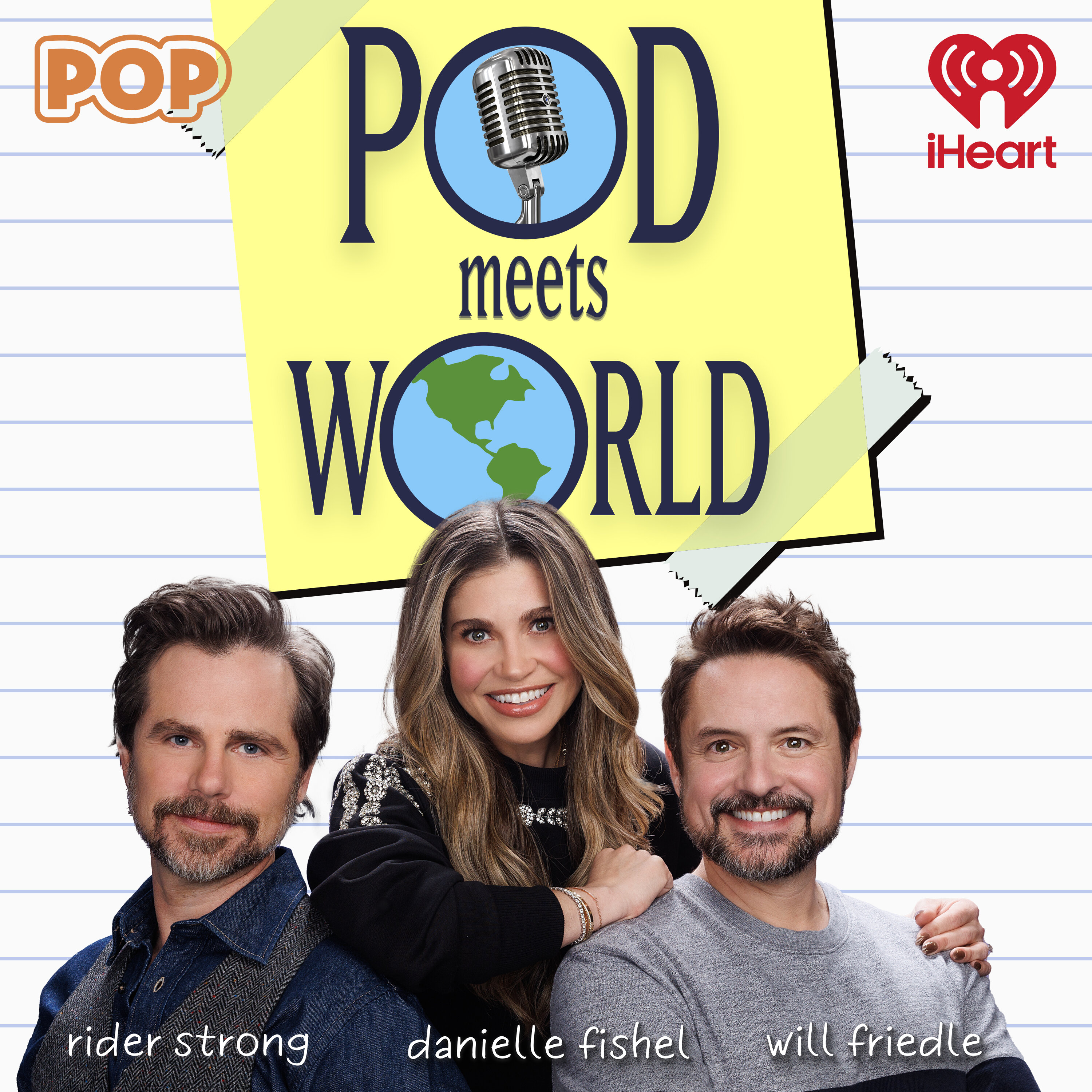
Montell Jordan Meets World
Let’s Get It On Tonite, because we’ve NEVER seen Danielle this excited for an interview! Her favorite '90s R&B superstar Montell Jordan joins the podcast - and then the group chat.
His debut CD may have been Danielle's most prized 14th birthday present, but Montell is also a diehard BMW fan! Hear all about his inspiring story of building a music career, while avoiding the pitfalls of his surroundings with an unexpected detour to law school.
Montell recalls the unbelievable story of his Grammy nomination and what happened when he shared the stage with the legendary Stevie Wonder.
Get ready for a trip down memory lane! This is How We Do it on Pod Meets World!!
See omnystudio.com/listener for privacy information.
Available Results
Generated results are saved to the knowledge database for reuse and search.
Extract Knowledge
Pick what you want extracted first. Model, scope, and chapter options appear after a template is selected.
Transcript
00:00:17
Speaker 1: Will you're shopping on eBay? Tell me when I shop.

00:00:20
Speaker 2: Shopping on eBay, I'm shopping on eBay. Well, I go through spurts with eBay like I don't, and then I'll forget that that eBay is a great place to buy stuff, right, and then I'll find eBay again, and then.

00:00:30
Speaker 1: This is not an ad, by the way, this is literally just talking about shopping.

00:00:33
Speaker 3: This is so dangerous.

00:00:35
Speaker 4: I feel like you are going to have to buy a whole storage unit just for what you want to collect on what I'm being careful.

00:00:42
Speaker 2: So I found it years ago when I decided that I was going to be the person who collected all the original Mash toys, because they made Mash toys. So there's like, you know, playing cards and.

00:00:56
Speaker 5: Exactly what I want them.

00:01:01
Speaker 2: I So when I was about I don't know, eighteen or nineteen seventeen, eighteen nineteen, when I was dating love, yeah, I wanted to find.

00:01:09
Speaker 5: The perfect cologne for me.

00:01:11
Speaker 2: So I was never a cologne guy, and I wanted to find and I found this amazing cologne, Ascotta. It became like my smell and for ten years I wore a Scotta and then one day they went no or in Italian, because I think it's got is Italian. No, but with an Italian accent. We're not making this anymore. And they just stopped. And I've smelled bad ever since, and so for the heck of it. The other day, I was like, I wonder if I go on the.

00:01:38
Speaker 1: eBay, the eBay, right, because you're if.

00:01:40
Speaker 2: There's if there's any there, And I see one small little bottle it's like this big, and I order it and then it sends me down the rabbit hole of there's a bunch of these for sale on eBay.

00:01:54
Speaker 3: And h one is twelve hundred dollars.

00:01:56
Speaker 2: No, they're they're certainly not cheap, but it's they're also it's not ridicted.

00:02:02
Speaker 5: But now I'm starting to chilled up it is. I've got four of them.

00:02:06
Speaker 2: Now for like some of this big, some threat, some are factory sealed, some or not. And so I have found my smell again.

00:02:14
Speaker 5: After so many years.

00:02:15
Speaker 1: Cologne expires. Have you have you smelled it? Does it?

00:02:18
Speaker 2: Do?

00:02:19
Speaker 5: It smells exactly right?

00:02:20
Speaker 1: Okay, that's good.

00:02:21
Speaker 2: Colone doesn't expire, doesn't a fine wine where it just continues to the bouquet continues.

00:02:28
Speaker 1: And I know it does because I have a very my grandmother, My mom's mom died when I was two, and yet somehow I haven't.

00:02:35
Speaker 3: Because she put on expired cologne.

00:02:40
Speaker 1: That's where the.

00:02:43
Speaker 5: Not magic.

00:02:45
Speaker 1: I've been searching eBay for my grandmother.

00:02:48
Speaker 5: My grandmother so much. There's one in Idaho pre owned.

00:02:52
Speaker 1: It's just so expensive, but I think it's worth it. No, I I have a memory of my my grandmother. She wore Chloe Chloe perfume, and she had Chloe cream, like the like scented lotion that went with it. And she used to let me go into her beautiful little vanity and stick my chubby, little two year old finger in her Chloe cream. And I loved it and like the smell can just bring me back to that memory. And so I also purchased some Chloe perfume and when it arrived, I was like this rancid smell. No, Chloe delicious. It also like changes color and so anyway, I mean.

00:03:38
Speaker 2: It looks good, it smells good. I've now I've got like three bottles of it. And Sue asked me, because my birthday's coming up, like what do you want for your birthday? I was like, let's keep let's go, let's keep on this eBay colooney trick. But she doesn't know the eBay, so I might have to buy it for in surprise.

00:03:52
Speaker 3: You guys, know, like old book smell like how the delightful?

00:03:58
Speaker 4: So apparently it's a glue. Over time, as books age, the glue lets out a vanilla smell, so it's actually a vanilla ish flavors from the.

00:04:07
Speaker 6: Dust in dust.

00:04:09
Speaker 3: Yes, yes, oh, but I love it.

00:04:11
Speaker 1: I do too. I have had an eBay account since I don't I think ninety nine. I think eBay started in ninety five. I've had an eBay account since ninety nine. And when I first started, I became obsessed with nineteen twenties tea sets plus Yes, I went, where did this come from?

00:04:30
Speaker 3: What nineteen twenty t set did you swim? Or like this is my thing.

00:04:34
Speaker 2: When you were seventeen, like now that I'm making tea set money. Yeah, I was making the big bugs on boy.

00:04:42
Speaker 5: Yeah no I was.

00:04:43
Speaker 1: You know. My family were very into tea, and I used to drink tea every single day, every single day at four pm, three pm or four pm, I would make English breakfast tea with evaporated milk and sugar and it was like it literally every day without fails, seven days a week. It was my afternoon pick me up. And I got very into like Art Deco style stuff, and I used to host a lot. I used to entertain at the ripe old age of eighteen, and I would want to I would buy like a tea set for twelve. Well, then, like Ryder said, I got to a point where then I started buying like Art Deco lamps on eBay, and I like, I was like, where am I going to put all this stuff? And anyway, Now I just buy shoes and vintage shirts and purses and watches on eBay. Now those are the things I like.

00:05:29
Speaker 4: Okay, just this is stuff A crazy memory that I've not thought about. I started drinking tea on the set of Boybet's World, because I would drink coffee all morning, remember, and I would be so chised out to the.

00:05:41
Speaker 5: Coin of phrase, and.

00:05:44
Speaker 4: Then I would I would have to stop drinking coffee, but I would want more caffeine, and so Dede started bringing me tea while we were shooting, and she couldn't.

00:05:52
Speaker 3: I was just like, I just give me lyptin because I just want the caffeine. And she was like ugh.

00:05:56
Speaker 4: So then it became hard thing. She'd be like, lip you want some lip, Let's go.

00:06:02
Speaker 5: So whatever.

00:06:03
Speaker 3: I'd be like in a scene, I would just have this memory of d D coming on me.

00:06:07
Speaker 6: Yeah, you should go get me lipped in tea.

00:06:11
Speaker 1: Well, I mean, this was not an ad for eBay, but now it's definitely.

00:06:17
Speaker 5: I Scotta though, I got it. It's an ad for a Scotta and vintage tea sets.

00:06:22
Speaker 1: Welcome to Pod Meets World. I'm Danielle Official.

00:06:24
Speaker 3: I'm right or Strong, and I'm Wilfredee.

00:06:38
Speaker 1: Oh my gosh, am I ever excited for this episode today? Guys this you know, we all have our things, we all have our things. This person.

00:06:48
Speaker 5: Did you sleep last night? I was curious. I thought about it. I was like, I wonder if Danielle's even asleep last night?

00:06:53
Speaker 1: I was up later than usual and I was up earlier than usual.

00:06:56
Speaker 3: Way, I was unclear. Have you met him before?

00:06:59
Speaker 1: Never? Never? No, I have never. I have never never met this man before. And I am literally jumping out of my skin today because when we recently posted a picture of me at my fourteenth birthday party, I was smiling ear to ear holding up my newest prize Possession. My most beloved gift of that year, the debut studio album of my favorite R and B singer, in the form of a new technology called a compact disc. A young Danielle would play it front to back, over and over, most likely while calling Andy and telling him about my first period or writing in my diary about how fat I was. It was as much of my childhood as counting crows was to writer or smoking was to will And today we will speak to that musician whose first single, the undeniable timeless bop This Is How We Do It was number one on the Billboard Hot one hundred for seven consecutive weeks, sending his debut album to platinum status, selling over a million copies, and earning him a Grammy nomination. It's worth noting that his second single, Something for the Honeys, is also a jam he'd performed with TLC and Boys to Men, while also writing and producing songs for artists like Cisco, ninety eight Degrees, Christina Milion, and Lomo. He was also seen in the movie The Fighting Temptations alongside Beyonce and Cuba Gooding Junior, and he has a cameo in the nineteen ninety six, The Nutty Professor.

00:08:28
Speaker 6: He's great.

00:08:29
Speaker 1: Some small trivia about that movie, Montel is the only character in the film who is not played by Eddie Murphy. So that's a movie starring Eddie Murphy and Montel John. That is pretty crazy.

00:08:45
Speaker 2: Wait, so does Eddie Murphy also played Jada Pinkett Smith in that movie?

00:08:48
Speaker 5: Because she's in that movie as well. So I think Ednie Murphy plays He knows that she's a lot of interesting. Yeah, So I think Eddie Murphy plays Jada pattas Mo. Yeah.

00:08:57
Speaker 1: Seven albums later, fourteen singles released, and over ten million records sold worldwide. He walked away from the world of R and B in twenty eleven to follow his faith and return to the church, a place where he first learned to play music. Now as a minister at Victory World Church in Atlanta, Georgia. He and his wife, who has been his partner and his manager since his first record deal, are still married and they recently wrote a book about what makes a successful marriage and now they are proud grandparents. You have recently seen him on the Mass Singer He was the panther if you were wondering, and he competed on Special Forces for Fox in twenty twenty three, which I am definitely going to talk to him about. This week, we are very happy to welcome six ' eight he stood it's my favorite nineties singer Montel Jordan.

00:09:49
Speaker 6: Oh my gosh, reunited.

00:09:56
Speaker 1: I mean it feels like that. I just I am so excited that you were here. I know you had seen the picture of me holding your CD like I had just been given the key to the city.

00:10:10
Speaker 6: You were.

00:10:11
Speaker 1: Yes, That's how I felt. And now here we are thirty years later, and I'm just as excited.

00:10:17
Speaker 6: I'm fan guying out right now.

00:10:20
Speaker 7: Oh So, I love you guys, super super excited for what you're doing, and really really glad that a random post on a social media platform could lead to a family reunion life.

00:10:35
Speaker 1: I have to tell you, we were all shocked that you even knew who we were when you followed us when we posted the picture. First of all, I was like, what what do you mean now? Yes, I was so excited, And then to hear that you were excited to come on the pod, I'm just I'm flabbergasted.

00:10:52
Speaker 6: Absolutely.

00:10:53
Speaker 8: I mean a lot of times I think so For me as a musician, I'm always shocked maybe at times to figure out that people actually know your music or are familiar with my music. And so I don't I think you guys should know by now how huge you are for not just a time period, but you literally captured, you know, almost a decade of people's lives that were vested in your characters. And now it's a blessing right that even after a time period has gone, that people who are still kind of vested.

00:11:26
Speaker 6: In your life, in who you are out of character, which is pretty cool.

00:11:31
Speaker 1: Yes, we feel exactly the same way, So yes, I thank you for that.

00:11:35
Speaker 5: By the way, For the record, I don't think I've ever seen Danielle.

00:11:39
Speaker 2: This exciting once or twice maybe in the entire thirty some odd years i've known her.

00:11:46
Speaker 5: This level of excitement. I can say she's literally holding it together.

00:11:50
Speaker 6: I can tell you.

00:11:53
Speaker 1: Well, our listeners know my love for you because when we were asked by fans many many, many episodes ago our favorite ninety song was, I had absolutely no hesitation when I answered, this is how we do it like it was just it came right out. I knew exactly what it was. It's it's truly my favorite ninety song and that's hard, you know, because there were some good stuff that good stuff out there, and yet I knew right away.

00:12:18
Speaker 6: So you know, you made a good, hard choice right there. I am grateful for that.

00:12:26
Speaker 1: So we are going to get to that album later, but let's start with how music entered your life. Okay, so you're from South central LA and your parents were both deacons. So and I know that Montel made no money and life sure was slow, but I have to assume the church was a major entry point for your talent.

00:12:46
Speaker 6: Yeah, for sure. So yeah, my.

00:12:49
Speaker 8: Mom really was the church goer as a kid, and she kind of eventually forced my dad to go. I was brought up in church, and so in the same way that a lot of a lot of professions kind of have like a G League or something like before you get to the NBA or before you get to the NFL, I felt like the the Baptist Church was kind of the G league for the music business. A lot of musicians came from church, a lot of artists I came from church.

00:13:21
Speaker 6: You want to talk about the Aretha Franklin's the Raid, Charles is like the it doesn't matter you go through at Leasting. Yeah, yeah, it.

00:13:29
Speaker 8: Was it was there you go, there you go. It really was kind of like a training ground for the music business.

00:13:38
Speaker 6: Uh.

00:13:39
Speaker 8: And so from that standpoint, that was kind of my my upbringing with having been brought up in church like almost six days out of every single week, and finding a love for music outside of the church and inside of the church, and then trying to figure out how to make those two worlds meet, uh, to eventually find my voice in music. So I don't know if that answers that question. I kind of went off on a little tangent right there. So I'm fifty five. I can do that every now and then.

00:14:10
Speaker 4: So did you start with did you start with singing or was it playing an instrument?

00:14:15
Speaker 8: That's a that is a great question. I actually started with just being a musician. I played the piano. My friend Shep Crawford played the oregon in church, and we were really cool. We were kid musicians. And the beautiful part of how I came to sing, and the tragic part at the same time, is growing up in south central Los Angeles. There was high gang activity in my neighborhood. You know, we're talking the you know, the late seventies, early eighties, and at that time period, a lot of the older young black males that I looked up to, some of them were in carcerat, some of them got addicted to substances. And I kind of got into singing by default because at some point the older guys who I looked up to, they weren't there anymore. You know, just from a statistically, I was not supposed to live to see eighteen years old growing up in south central Los Angeles. That was like a literal statistic that a young black man in south central Los Angeles is not supposed to live past eighteen. So on my eighteenth birthday, we celebrated, like, yeah, he's alive, but you know it's supposed to he's eighteen. So yeah, so that's you know, part of that journey right then. So music for me, Singing for me came out of necessity. I did not want to sing. I was just a musician. I was comfortable with that and the discomfort of not having other people there to actually be male vocalists.

00:15:56
Speaker 6: I had to take that position by default.

00:15:58
Speaker 1: Wow, so as this is how we do it. Told us you are six foot eight inches. Did people just clown on you when you were growing up for not being good at basketball.

00:16:10
Speaker 8: That was the worst, Danielle. It was the worst. I Okay, So here's here's two instances of how bad that that was. When I was in middle school and I was in the ninth grade, I ran in the yearbook, you know, how to have the prettiest best dress. I ran for tallest and I lost to a guy who I was two inches taller than that.

00:16:44
Speaker 1: Okay, so to give it to you.

00:16:47
Speaker 8: In middle school, I was six two and a guy who was six feet I ended up losing to him. So that's the first instance. The second instance is because I grew up musical and I didn't really play basketball by the time I get to high school. I'm now in the tenth grade. I show up to this high school where I am now six ' four and my last name is Jordan, so and this is nineteen, you know, and so naturally, yeah, they are like, oh my god, we got a six foot four Jordan coming to our school.

00:17:28
Speaker 6: And I could not play a lick of basketball. And it was just it was so I.

00:17:33
Speaker 8: Still think I'm traumatized a little bit by that, but I'm going to recover it.

00:17:38
Speaker 6: Though, I'm going to recover it.

00:17:39
Speaker 1: You were like, could I play you the piano. And so then you graduate high school and you end up attending Pepperdine to become a lawyer. Why did you pick Malibu as your next destination.

00:17:58
Speaker 8: I think a part of my journey was h I grew up, you know, like I said, in South central Los Angeles. Things can be really compartmentalized in you know, depending on where you where you grow up. UH And so you know, I grew up in South central, I went to UH. I lived kind of in a black a black neighborhood with black family. I lived, went to a black church, went to a predominantly black school. Like so everything in my life was like just super you know, super urban.

00:18:29
Speaker 6: That was that was my upbringing.

00:18:31
Speaker 1: UH.

00:18:31
Speaker 8: And I remember there was a teacher who's I think a judge now, a guy by the name of Craig Mitchell. Craig Mitchell was an amazing guy in my life. He was one of the guys that pushed us the hardest.

00:18:45
Speaker 6: You know. He would have us.

00:18:46
Speaker 8: Reading you know, two hundred pages, three hundred pages of you know, of you know, one hundred pays of a book a night, and like he was like this the real hard ass regarding you know, academics, but I loved him for it. And I remember him asking me about where I wanted to go to college, and because of my life, I thought, well, I'm naturally going to go to you know, an HBCU. I'm going to go to a historically black college university. I'm going to go to Morehouse. I'm going to go somewhere in the South. And that was just, you know, a different world. The Cosby Show. These were shows in addition to you know what later I would be watching with y'all, but these were the shows that I was growing up on. And so because of that, when I told him, yeah, I'm going to go, you know, I'm going to go to the South and I'm going to go to all black college and he said, why would you do that? And I was like, well, that's what I'm supposed to do. And he said, what has what have people told you your entire life?

00:19:43
Speaker 6: I said, what do you mean?

00:19:44
Speaker 8: He's like, is there something that you have heard repeated to you your entire life? And I said, well, I've always been told that in order for a black man to be successful in the world, he's got to be twice as good at so thing as a as a white person and accurate or no, this is this is what I was told growing up. You got to be twice as good, twice as smart, twice as this, work, twice as hard.

00:20:11
Speaker 9: Uh.

00:20:11
Speaker 8: And so he said to me, if that is, if that's accurate, then why would you go and compete against other black students opposed to competing against other people who you say you need to be twice as good as. So when he told me that I sought out the widest college in America that it was, it was Perdine University. It was like point oh two black people and it was only like forty five minutes from South Central but it's a whole nother, whole other world up.

00:20:48
Speaker 6: The Pacific Coast Highway.

00:20:49
Speaker 8: But but no, I went there and I did well, and I competed well, and I loved well and I was loved well.

00:20:56
Speaker 10: Uh.

00:20:56
Speaker 8: And have nothing but great uh, but but great intimates about my experience as a wave. And let me just throw this in there, because this is pretty cool. I accrued quite a bit of college debt going to Pepperdine's. You can imagine initially I had kind of scholarships and grants and stuff, and then once the financial aid ran out. I ran up a nice little bill out at Pepperdine when I finally got my music business. This is how we do it contract. I had my wife negotiated in my contract, Hey, if we sell a million records out of the box, will you pay off Montel's college loans? And they're not thinking, well, first of all, he's a new artist. He's not going to sell a million records. Sure we will, and so from that first album, this is how we do it. They had to write a ninety thousand dollars.

00:21:48
Speaker 6: Check completely clear my college out of my college debt. So that was pretty cool.

00:21:54
Speaker 1: I love a wife who is willing to bet on her man. Yeah, and got rid of your student loan.

00:22:04
Speaker 6: Da you sure did? She did that. So shout out to missus Jordan.

00:22:09
Speaker 2: When you're at Pepperdine studying the law, what then made you say no.

00:22:15
Speaker 5: This isn't for me. It's time to find something else.

00:22:18
Speaker 6: Yeah.

00:22:18
Speaker 8: I studied communication. I minored in business, and everything that I had my eyes set on was to go to law school because I thought that's what I wanted to do. I love words, I love communication, and I was very very good friends who I'm still friends with. To this day doctor Connie and Bernie James. Bernie James at the time was a black professor who was the president of the law school at Pepperdine, and so I remember spending time with them. I remember sitting and having meals with them, and one day I asked him, I was like, so, Bernie, you know, you're doing fantastic at what you do as a lawyer, as a professor. Is there anything that you maybe regret? Is there something that you wish you had done? And he said that he was a very good jazz musician. I think he played the trumpet, and he always wondered if he didn't go into law, if he could have a do over. He always wanted to try out his jazz musicianship. And so when he said that, I at that time was like, man, well, I kind of got the same thing where I got this music bug. And I noticed a very short window, a very small window that you can actually try and infiltrate the music business. Whereas college, you know, I could go at any time to go ahead and get a degree. And so that was the turning point for me to not pursue law school after graduation and going on to giving my shot at the music biz.

00:23:51
Speaker 1: You know what, one of my favorite parts of that story is. I mean, so far you're in your story, there's been multiple times where you have talked to people and taken their advice and had it. It has shifted the like shifted the course of your life. And I love that because one of my favorite quotes, and I don't even know who said it, but it's learn from the mistakes of others. You can't live long enough to make them all yourself. And like you, truly you had the people you trusted and you spoke to and you listened to them, and it just it helped you decide where to go to college. It helped you decide when you were going to take a chance on music. And I just I love that because I think it's such an important lesson.

00:24:29
Speaker 2: So from that, but I was just gonna say, not only to bring it, but to kind of bring it back to boy Mets world.

00:24:35
Speaker 5: It also shows the power of teachers.

00:24:37
Speaker 2: Yeah, how really good, great features and mentor figures in your life can change the course of your life by just.

00:24:44
Speaker 5: Being there and being important. And everybody needs that. Feenie's back.

00:24:50
Speaker 2: I mean, it's all, but it's true I mean, these are two mentors you've talked about now that have completely changed your life, and it's just, oh, it's amazing.

00:24:57
Speaker 8: Absolutely, And as I think about that, I do think the teachers, the pastors, the people of leadership, of authority, if they're you know, hopefully people have trustworthy people get their lives like that, because you can't just take everyone's word and everyone's advice. But these are people that I really felt like I would follow this person, you know, I would follow this person, I would take this directive. And then even in those instances, I still you know, as a man of faith, I still would have to go back and still ask God, you know, hey, this is what I'm feeling from somebody that I really value and trust that opinion. God, can you confirm if this is something I should do? And then either doors would open or closed, you know in what those pathways? Would be so very very fortunate to have that in my life and have those leaders that have done that.

00:25:51
Speaker 1: How and when is this is how we do it? Born? Like, where does the beat come from? Where does the concept come from? I would like this heavily documented. Please, yes, yes.

00:26:03
Speaker 8: I during my college years out at Pepperdine which was Mui mui blanco. I had to say, I had to seek out. I did not have that what I thought would be my black college experience. And so being out on the West Coast at Pepperdine, I joined a paternity called Kappa Alpha Psai and that that and those fraternities. It's an international fraternity, and it allowed me to go everywhere that I thought I would want to go to at least be and connect. I mean, I don't know if you it's maybe difficult to express, but my amazing Pepperdine experience was it could be very very segregated. It could be very very challenging just because of where we were. It was difficult to find shared experiences with people. After living seventeen years of my life across the tables and across in rooms with people that look like me, and now I'm with people that I want to connect with and they want to connect with me. But it was almost like this is bigger than a language barrier. There's like, you know, a literal learning curve, you know of trying to, you know, figure out how to how to walk alongside of people who don't look like you or don't think like you, and so in that journey I did connect, and so I would go to USC, I go to UCLA, I go up to Berkeley, I go down to San Diego.

00:27:36
Speaker 6: And we called it road tripping back then.

00:27:38
Speaker 8: So we would hear, oh, there's a party going on up at you know, at UC Berkeley, and so we would ride all the way up to UC Berkeley to go to wherever the fraternities and sororities were having parties. Every party that I went to at that time, if a DJ was any good, he would always play a song by a rap artist named slick Rick. Click Rick the Ruler had a song called Children's Story, and I loved slick Rick. I loved that song. I loved his British accent. I love his storytelling ability. Everything about that song was beautiful to me. And the thing that was interesting about that particular song was that a DJ did not play that song at ten o'clock at night or eleven o'clock at night or twelve o'clock at night. If last call for alcohol was at two am and the party was closing at two when the DJ is getting into the heat of his set, it was gonna be one of those one am type of songs in between all of the other big records, because the energy in the room, the adrenaline, the everything that was happening in the room was being dictated by what's happening with the music being played. And every time that song would come on at due dune, Dun Dun Dump, I could literally see the room start bouncing and I could watch people gravitate to the floor. So even back then in college, I would say, if I ever get into the music business, I'm going to sing over that song. If I ever get a chance at the music business, I'm going to sing over that song. And so I took that with me, you know, from nineteen eighty six, eighty seven.

00:29:25
Speaker 6: Eighty eight, eighty nine, ninety nine.

00:29:28
Speaker 8: Just that thought process is, if I ever get a chance in the business, I'm going to sing over that song. And so when I finally did get a record deal opportunity with Russell Simmons at def Jam Records, and I got the record deal, and I went and I bought equipment and I did everything that I needed to do. I started putting together this entire album, and this is how we do. It was not even in the first songs. It was the very last song that I sang and wrote on that first album because because I knew the track, I knew what I wanted to I knew it had to be special and I didn't want to screw it up. And so because I had always said I'm want to sing over that song, it was actually the very last song I recorded on my first album.

00:30:14
Speaker 1: Oh my God.

00:30:15
Speaker 3: So it was years in the making by the time it came out.

00:30:17
Speaker 4: It was actually very layered, and yeah, it had.

00:30:24
Speaker 5: Wait, I have a question. Then, you've talked about slick Rick.

00:30:26
Speaker 2: Who were some of your other musical influences growing up then? Because you were I mean I was talk about not talk about having two completely different ways of growing up. I grew up in a tiny, little white town in Connecticut, but all of my friends listened to NWA slick Rick. I mean, these were in the suburbs for the white kids by this point too, and so it was so strange to see the proliferation of how again the little white kids from Avon, Connecticut were grabbing onto this culture as much as we could because it was so different and so interesting for us. But being in the heart of it, I mean, what were your influences musically as you were growing.

00:31:06
Speaker 6: Up very eclectic, very eclectic for me.

00:31:10
Speaker 8: I listened to Miami Sound Machine Police, Oh Boy, Cindy Lauper, I know her song's word for word. I listened to Phil Collins, and even on my first album, I did the cover. I think it was my first album, I did a cover of Against All Odds. Literally, I've been a fan of I mean, my first concert was Katrina and the Waves and Wham, you know. So on one side, I've got this, you know, real interesting. The radio station in LA was the Mighty sixth ninety, which was kind of this Madonna, you know, super pre MTV kind of musical style. And then on the other hand, of course, I have my Whitney Houston, Luther Vandroz, Freddie Jackson, Line, Ritchie, you know. And then being brought up in old school music, the Eisley Brothers, the Gap Band, like, I've just got this entire.

00:32:19
Speaker 6: Hoot pory of songs.

00:32:22
Speaker 8: Then hip hop comes and it hits, and then I'm not trying to figure out how can I take all of these other pieces of music and then tie hip hop in to bring all of those things together. This is interesting. I did a song with Coolio, who's passed away.

00:32:39
Speaker 6: Now.

00:32:40
Speaker 8: I did a song with Coolio called Payback, and the song Payback I think has thirteen samples in that song, Oh my god, because I at the time sampling was like a really big deal, and my sampling was singing other people's melodies and songs as I was trying to pay to other artists. So I would say, you know, I think in that song the second verse, I can't say everything I said back then, but I said, girl, it feels like payback. I really really hate to say that. I thought you were trifling giving me this show, but you're gonna miss You're gonna miss my love. And when I said that, that was lou Ross. And then I said, oh, golly Waller. She was raising hell a slick red. She was so well unfaithful, which was full force.

00:33:28
Speaker 6: Way back. I was cheating. Don't want to get either. But I ain't going out like that. I ain't going out like that. I ain't. That was the sin look in the.

00:33:40
Speaker 10: Hispanic rap group Cypress Hills. You know, if I apologize for all the lies, oh forgive me, girl, I'm sorry. There's a ride in it wrong with a Love somebody Keith Sweat, So I literally in that verse like I was just like coming with punch line up to punch up the punch line.

00:33:55
Speaker 8: Like it a rapper would do. But I was trying to take rappers disabilities. And then at my pop and hip hop and musical references R and B references in and hip hop helped me pull ittles things together.

00:34:09
Speaker 1: Wow, unbelievable. I know, I'm believable. I mean, I'm going to go off of your unbelievable answer and ask you this question. I have two sons I have. They are three and five, and I think you're the only person in the world who can answer this for me. When do they become big g's. Right now, they are lowercase cheese. I'm just wondering when I can expect capitalization.

00:34:35
Speaker 8: Yeah, I love that.

00:34:41
Speaker 6: That's such a great question. I am.

00:34:45
Speaker 8: I have sons who are thirty five, twenty one, and twenty and the twenty and the twenty one and twenties are still lowercase g's.

00:34:58
Speaker 1: Later than I expected.

00:34:59
Speaker 6: Okay, capitalization has not happened yet. I have a thirty five year.

00:35:03
Speaker 8: Old son and he is he is borderline capital G.

00:35:09
Speaker 6: Okay, uppercase t with me. He's a big G.

00:35:13
Speaker 1: He's a big g Now, Okay, I didn't know if it was like thirteen like a bar mitzvah or something, it's not going to happen.

00:35:20
Speaker 6: That it's not going to happen. Then I want to break your heart on that.

00:35:23
Speaker 1: But I mean, I know, I this is the kind of this is what I was hoping for. It Now I now I know the expectation.

00:35:28
Speaker 6: So Gedam comes a little a little later on.

00:35:32
Speaker 1: Okay, getam.

00:35:45
Speaker 3: Okay, So a couple of a couple of questions ago, you threw out this.

00:35:48
Speaker 4: My wife negotiated my contract for me, and yeah, so I want to hear more about this.

00:35:54
Speaker 6: How so your wife.

00:35:55
Speaker 3: Was managing your career? Did you meet her at Pepperdine? How did this happen?

00:35:59
Speaker 5: What's that?

00:35:59
Speaker 6: How did that?

00:36:01
Speaker 8: I met my wife before I got my record deal. I met her in nineteen ninety one. I had finished college. She was still in college. We met at a fraternity sorority party at a place called the Cockatoo Inn, which was a little club near lax In, La. I saw her. I was inside the club and I saw her walk by. My wife is six feet tall, but I think that night she had on like three inch heels. She had long hair at the time. And literally, I don't know if you remember the television show with Linda Carter, the show Wonder Woman, and they had all the women that were Amazon's on that island and I saw her and I was like, one got away, one of the Amazons. Yeah, and I said, I'm gonna catch me one. And so she came inside my friend who happened to know her from college at Sonoma State. He introduced us, He introduced us, She cared not whether I lived or died. And it was literally like one of the most awkward moments because my friend and her friend connected and said on let's go dance. And they left us there in this club to kind of talk to each other. And so I'm like, hey, so what do you like to do And She's like nothing.

00:37:36
Speaker 1: Please don't talk to me.

00:37:38
Speaker 8: It was really that And so literally, for probably about twenty five to thirty minutes, we sat in this club. People were dancing, they were partying, having a good time. I'm sitting there and she is giving me no rhythm. Is there anything you're interested in?

00:37:53
Speaker 6: Nothing? Really, And I'm like God, and the challenge is you guys.

00:37:56
Speaker 8: I was a popular guy, like I'm so the fraternity thing, I was like, this is my mac daddy vibe.

00:38:02
Speaker 6: I'm giving you here, this is I'm giving and there was nothing. And so.

00:38:12
Speaker 8: I finally was like, are you are you sure you don't want to dance? And she said to me if I dance with you, will you leave me alone?

00:38:22
Speaker 5: Never a good sign.

00:38:24
Speaker 8: And I said, I'm thinking to myself always, so you're saying I got a chance.

00:38:28
Speaker 10: Right.

00:38:31
Speaker 8: So we go out, we dance, and I'm giving it my my everything. I'm full blown running man Motown, Philly, like I'm going in. And at that point I embarrassed her out on the floor to the point and she's like, okay, okay, okay, stop stop, let's let's go talk.

00:38:46
Speaker 6: Let's just let's talk. Now. We talked.

00:38:51
Speaker 8: We exchanged numbers. Somehow I was able to get the number. I broke man rule one forty seven, which is well, waited two days two days. I didn't wait the full three day rule. Okay, But I called her and we set up a double date and she came and saw me, and it was it was wild because she would tell you that she did not even see me the first night that we met, and so it leads me to believe that sometimes it takes the second time to meet somebody for the first time. And so we had one of those instances where she saw me the second time and our friend was like, dang, he fine, I chose the wrong one, and she was like, you showed it. And so we talked, we hung out and became really best friends and we have we have been married now for thirty years.

00:39:46
Speaker 1: Wow, congratulations to each other.

00:39:49
Speaker 6: Yeah, I love it.

00:39:51
Speaker 11: And so how did the management component come about? Management was once we started dating. And remember I just coming out of I'd come out of college. I'm working at a company now, she's still in college. I'm taking this journey where I'm like, Okay, if I'm going to try and do this music thing, let me try and do it now before trying to go to law school.

00:40:13
Speaker 8: So I got a job. I am now working on doing demo tapes and doing talent shows. She is in a singing group that we had at the time, and I'm now producing this group with a bunch of other girls. But we would put them like in talent shows, and then I would enter the talent show as well, and then I would win the talent show.

00:40:34
Speaker 6: And then my wife is like, at some point, why are we.

00:40:39
Speaker 8: In the same boat of doing this and we're going to keep losing to this guy. This doesn't make sense. So rather than try and compete against me, let me just manage him.

00:40:48
Speaker 1: So I'm so smart. She's like, we're putting all of our eggs in the wrong basket.

00:40:53
Speaker 8: Exactly exactly. But she you know, I trust, I trust her. I trusted her, and I trust her, and so at that time, you know, there were once I finally did get a record deal, people that were interested in helping me and signing me to deals. There were other people who were very big name managers and big name lawyers, but I didn't know them and I didn't trust them, and so I took my shot with somebody that I trusted, that I figured could learn the business over somebody who knew the business but I didn't know.

00:41:26
Speaker 6: If I could trust.

00:41:27
Speaker 8: And so that's how she became my manager early on. And that management went through a bunch of different you know stages. What was her and a couple of friends and her and one of my friends.

00:41:37
Speaker 6: And X Y and Z until it finally got down to you know, just the two of us shout out to Bill Withers, just the two of us.

00:41:44
Speaker 1: Yeah, so you mentioned that obviously your wife banked on you when she said part of her your contract was that if you sold a million records, they were going to pay off your student loan debt. You also mentioned a DJ named Paul who lived near you, and you say in the song sell a million records and were making the dash. Who is Paul.

00:42:05
Speaker 6: Yeah, DJ p that's Paul Stewart.

00:42:07
Speaker 8: Paul is a very instrumental part of my career. He was one of the guys who at the time before I got the record deal with def Jam, he was connected to a filmmaker named John Singleton. John Singleton very very famously for Boys in the Hood. He also happened to be my fraternity brother.

00:42:28
Speaker 5: He was your fraternity brother.

00:42:30
Speaker 6: Yeah, he's a capital from USC I think he was.

00:42:33
Speaker 2: Is he still the youngest Academy Award nominee?

00:42:37
Speaker 5: I think I think he's still twenty three. When he did Boys in the Hood something like that, he fought to have the film made. It as an absolutely incredible story.

00:42:47
Speaker 2: It's about how Boys in the Hood came to be a really amazing story.

00:42:51
Speaker 8: It's phenomenal and John was a great, great guy he pledged me when I came into my fraternity had been in like a year or two before me, which was pretty cool, and uh, it wasn't cool because that yeah, pledging of fraternity was Yeah, that's a long story.

00:43:10
Speaker 6: That's for another pod. But but I didn't know John.

00:43:14
Speaker 8: I knew him well, uh, to the point of where he was really into filmmaking. He wanted to go into He had a company called New Deal New Deal Productions, uh, and he was wanting to get into music, and so he was trying to put out New Deal Records at the time. And because I knew him, I was going to try and sign with him. And Paul at the time was John's head of A and R. He was the head of finding musical talent. And then at that time, you know, the music businesses cutthroat, and I think Russell Simmons was trying to get artists out of the West Coast to come and be a part of deftam out on the East coast, and so h somehow Paul made his way outside of John's New Deal Records got him an imprint called Power Move Power Move Productions, which is pimp p and p uh and uh he asked me if I wanted to come and be a part of his record label, of his production company. I told him no, I'm rocking with John. But understanding, like I said, John was very very film driven. He was not musical. And in all that time I spent months and months and months trying to get connected, trying to get put on.

00:44:26
Speaker 6: It just didn't happen.

00:44:27
Speaker 8: And at some point I just reached out to Paul and I was like, hey, if I give you a demo, you know, will you take it to Russell? And Russell heard a ratty demo of mine and I got signed kind of on the spot in New York City. So, but Paul, Paul was that was That's why he was memorialized. That memorialized, but he is immortalized in the song This is how we do it, you know, live the DJ and Paul was his name. He came up to money. This is what he said, you know, Ji, gonna make some cash, sell a million records and we're making the dash And I just said that, but I didn't know, you know, a million going to go.

00:45:00
Speaker 1: He was clairvoyant.

00:45:01
Speaker 9: You were clairvoyant, Yeah, you know, prophetic he I think, Okay, so this is Funny Depjam is celebrating their forty year anniversary this year, and This Is How We Do It is celebrating it's thirty year anniversary in twenty twenty five, and my song this is How We Do It.

00:45:22
Speaker 6: Your song Dade.

00:45:25
Speaker 8: Is actually a certified seven million albums.

00:45:28
Speaker 1: So I known million.

00:45:32
Speaker 2: How I know nothing of the music industry at all. So how how long does it take from getting signed to then recording to then people being able to buy your album?

00:45:43
Speaker 5: How long a process is that?

00:45:45
Speaker 8: Well, the only way I can answer that as I can say, I can say how long was that? Because people don't really buy albums anymore? They don't really exist anymore. And so the fact that an album actually exists to this day, it's more so. You know, I was in the studio last night recording a Christmas song that I think is gonna be phenomenal, and I'm there with this great big SSL board and the musician ship. I had live musicians come in and do X, Y and Z, and none of that exists anymore. It's almost like, if you have a computer and a good set of of software, you can create almost anything just in a you know, in a computer now, and so you could do an album. You know some guys that a rap album. You can have guys send you ten tracks and you wrap over ten tracks and put together an album. You can put it up on disctro Kid later tonight. So the the sweat equity and the authenticity I think that goes into the creation of an album is one of the things that may have been lost in the technology advancements to be able to have, you know, to be able to get music out quicker and more streamlined. But let me say this, I think one of the beautiful parts about musicianship that I loved, the same thing that I got from my church upbringing, the same thing that I got from being in the studio yesterday, is when you're in person. I mean, even as we're using technology and we're laughing and we're connecting, but there's just something different when you're in the room. If I could literally be in the room to hug your face and hug your neck and actually tangibly feel you know, energy and warmth, and those are things that cannot be replicated. They can't be duplicated. And even if somebody watches your followers, they watch this pod and they feel everything that the feels that are coming from these stories. There's still something different about being in the room. And I think that's the element when people say what's different about music from then to music from now?

00:48:00
Speaker 6: The music?

00:48:01
Speaker 8: Then you were in the room and there were things happening in the room. There were stories that happened when I was in the room that, yeah, I could take a laugh track or I could take this track and put the feel of it into a formatted song, but there was just something magical that happened about being in the room.

00:48:24
Speaker 1: Yeah, yeah, I want to know what it was like to be in the room the night of the Grammys when you were nominated for This Is How We Do It? You were up against DiAngelo, Prince, Barry White, and Stevie Wonder, and Stevie Wonder won that evening. But I want to know, what do you remember from that night? It had to have been insane.

00:48:59
Speaker 8: I thought to myself, Stevie, who you know, how intimidating you know to you know, this was one of those things where when you when you hear people say, oh, it's just good to be nominated, this was really it's just good to be nominated, because when you throw on names like Prince and Stevie Wonder around like that was that was huge. So just to be in that company was a very, very, a very big deal.

00:49:36
Speaker 6: I think that.

00:49:38
Speaker 8: That was one of the most memorable nights for me because we had recorded a song to help raise funds for cancer earlier that day and it was like a who's who of everybody was in the room. Curtis Mayfield was still alive at that time, and you know, you had all these artists that came together to record that song. And then later that night after the Grammys were in New York City in Laura, Manhattan at a club called the Soul Cafe. And at the Soul Cafe, I can remember being in there and I looked around the room and Isaac Hayes was in there and Melissa Morgan, like it was a who's who of the music business, Roy Ayers and Wynton Marcellis and just all these amazing people, and they called me up on the stage to sing. So this to me was almost bigger than the nomination because now I'm in this who's who of the music business in this like intimate room and they asked me to come up on the stage to sing, and so I came up and I sang live with the band I had never played with before. I did Bobby Caldwell's song what You Want to Do for Love Against she wondered where up then? And did that song live. And then as I'm finishing the song, I can look at the back of the room and I can see Stevie Wonder walking. He has this guy with him and he's walked looking towards the stage, and all I could think is Montelle, get the hell off the stage.

00:51:04
Speaker 6: Stevie Wonders make coming.

00:51:06
Speaker 8: And as he's coming up the stairs, I'm trying to go down the stairs. His guy says to me. He leans over, he says, Stevie wants you to stay. And so Stevie Wonder comes on stage. He sits down on the piano and he starts giving the ladies in the room a note to sing, a melody to sing, and he gives the guys a melody to sing, and he's got the guys singing, the girls singing. I'm there on stage with Stevie Wonder, and all I could remember is after we left the club that night, we were walking to the car or to the cabin Manhattan, and blocks away you could hear the girls still singing that melody and guys were still singing that melody in the streets of New York City. And so that for me, that Grammy Knight was a night I performed with Stevie Wonder. It was a night I remember thinking to myself, I don't want to die. But if this was the night, then it happened. I'm good, pretty good right here.

00:52:05
Speaker 10: Wow.

00:52:06
Speaker 1: As you mentioned, you and your beautiful wife Kristen have been married for thirty years. You recently released a book called This Is How We Do It, making your marriage a masterpiece. If you had one piece of advice for couples, what do you think it would be?

00:52:25
Speaker 8: One piece of advice for couples? And that's tough because when you write a book, there's a bunch of lot. Yeah, but I think if I had to give one piece of advice, I would say, don't go into marriage with an exit strategy. And I think a lot of people enter marriage and they're always thinking, if this doesn't work, here's what I'll do, or here's where I'll draw the line. If this ever happens, then I'm I'm out. And so no one is ever thinking how do I make this last forever, and how do I make this the best forever possible? And so just that mental shift of not where's the line drawn of where I can be out or what would be the final that the strata breaks the camel's back, or what is the thing that's unimaginable that this ever happened?

00:53:22
Speaker 6: Then I would.

00:53:23
Speaker 8: But from that standpoint, I think that if people thought to themselves, how do I make this last forever? Opposed to what is my what is my out right? I think that and my wife and I've gotten some flat from this statement, but we say a divorce is an option for you.

00:53:41
Speaker 6: You have too many options.

00:53:43
Speaker 8: And I know people will say, well, you know, but you know, that's what if you live with a narcissist or whatever there is abuse, or what if there's this, and and we don't make that statement for you to stay with a narcissist, And we don't make that statement for you to stay in an abusive relationship.

00:53:59
Speaker 6: We don't we don't believe any of that. But we do believe.

00:54:03
Speaker 8: That if there is an option that's placed on the table, it now becomes something that's usable for both parties.

00:54:11
Speaker 6: And so if there's a.

00:54:12
Speaker 8: Way to to make sure that you're looking for eternity opposed to looking at an exit strategy.

00:54:20
Speaker 6: I think that's probably the most important thing.

00:54:23
Speaker 1: I love that so true story and a little secret here. I was asked to do the first season of Special Forces, and I contemplated doing it.

00:54:36
Speaker 6: I am best.

00:54:39
Speaker 5: To you that then I win.

00:54:42
Speaker 1: The first season came out and I saw that you had done it. I had full fomo. I was like, I can't.

00:54:49
Speaker 5: Believe I didn't do it.

00:54:51
Speaker 1: I am normally so quick to say no to reality TV shows, but that one really interested me. I was like, ooh, I like I I like this idea of seeing how truly inner tough you are. Now you got injured very early, but you were my pick to win it.

00:55:09
Speaker 8: All, so I appreciate that I was my pick to win it all too. No, I think what was crazy is for me. I don't like heights, I don't swim like. There were just tons of things that made me want to say no to this, But there were things in ministry and things that would happen in my life that said I have to try and conquer these fears, and so I can remember you know I was there, or I think like the first three days. But on the television show, because you have sixteen people and sixteen different lives and you got an hour to tell a story, you only can get like snippets of bits and pieces of people's story. And so I can remember I knew that I went home fifth out of the sixteen after breaking my hand. I think they had me go home fourth in the telling of the story.

00:56:11
Speaker 1: Got it.

00:56:12
Speaker 8: But man, I can remember after after the first day, I remember thinking to myself, I can win this, like I thought to myself, I did.

00:56:25
Speaker 6: We jumped out of the helicopter backwards into the red sea the first day. Yeah, so I remember thinking to myself, you know what, I can do this. I could, I could probably do this.

00:56:36
Speaker 1: I got over fear of the water, and.

00:56:41
Speaker 8: You know, and so I don't know if you can see it, but let me see it. You can't really tell now, but I steal my hand very very protruded from from breaking my hand because I didn't know how to throw a punch properly. But that was it was kind of devastating being over there and preparing to get over there, and really getting to a point where I thought to myself, you know, it's the same marriage philosophy that I thought to myself, you know, I just said, don't go in with an exit strategy. I initially went in thinking, well, I just don't want to be the first one to go home. I just don't want to be the first one. And then after like two people, but after that first day, I was like, you know what, I could probably do this. And then that's when I broke my hand, like at the end of the second day, and I was like, oh, you gotta be kidding me here. So but I'm still close friends with Nastia.

00:57:35
Speaker 6: And mel By.

00:57:38
Speaker 8: Our girl uh is having a baby now, my soccer girl.

00:57:43
Speaker 6: I came.

00:57:46
Speaker 8: Coo and I'm drawing a blank on her name right now, but it'll come back to me in just a second.

00:57:52
Speaker 1: But you made friendships on that show that have lasted.

00:57:55
Speaker 6: Absolutely.

00:57:56
Speaker 1: That could have been me.

00:57:57
Speaker 2: That could have been me, you got, Yeah, you could have been You could have been friends in real life, not just on the screen.

00:58:02
Speaker 6: You will be on the text stream together. It'll be happening.

00:58:06
Speaker 1: I think you could still add me, just even though I wasn't there.

00:58:11
Speaker 2: Like, hey, guys, Danielle is okay with heights and swimming. She does have a fear of helicopters in the Red Sea, so that would be very difficult.

00:58:22
Speaker 5: Weird, she's got weird phobias.

00:58:24
Speaker 6: Yeah, it's all good.

00:58:26
Speaker 8: But if you if you have heights and water, aren't aren't like something that you're fearful of?

00:58:32
Speaker 6: You know?

00:58:32
Speaker 8: Like I said, if I had been able to stay on the show later, I think, like the fire stuff and the driving stuff, I may have been able to to maybe do some of that. But I think God was saving me because the very next day after I went home, the episode where they dropped the jeeps into the water and you had to stay in the water for thirty seconds and they tap you and then you swim.

00:58:53
Speaker 6: Oh that would have that That may have been it for me right there right, I don't know.

00:58:58
Speaker 1: Oh man, a great.

00:59:00
Speaker 6: Show, good people. Box did a great job with that one.

00:59:03
Speaker 1: Yeah. So you have four children and now you are grandparents. I know you have one son who plays football, a daughter singing with you, two in church. When you look back on your career, now, what is the biggest thing you've learned and what are you most proud of?

00:59:25
Speaker 6: What is the biggest thing I've learned and what am I most proud of?

00:59:29
Speaker 8: Okay, the probably the most valuable thing I have learned is health is wealth. I think health health as well. I think that of all my experiences in life and this journey, I've been on everything that you kind of do with your body, everything that you do, it's keeping it, it's it's it's keeping counts, it's keeping a tally. And so having good health, good mental health, good physical health, arms, knees, heart, lungs, all those different things. You know, when you're young, you think you're maybe a little invincible or whatever. And I think, now I'm fifty five and a fifty five I'm recognizing the value of health more probably than anything else in this life at this point. So that's probably the most valuable thing that I've learned. Of course, as amount of faith I could give, you know, tremendous answers about having faith, you know, at the forefront, but I think health is also very very huge thing. And then the second product question you asked me what am I most proud of? I am And this is maybe maybe a weird thing to be proud of, but all of my kids and my grand kids have an affection for God. And I don't know why that's super important to me, but you know, when I think of my nana, who's now ninety five, one of the greatest things she ever gave to me was my faith where Christian and faith and so me being brought up in a church and it was very religious and stuff like that. But just even as I came up and was able to learn about relationship over religion, I think that that's what makes me the man. I am the friend, I am the husband, I am the father, I am the big papa that I am to my grandkids. And now I'm watching them have their own seeking and their own desire for something greater than themselves and greater than other people, and them finding that in God for themselves, and I think I'm probably most proud of that.

01:02:00
Speaker 1: Well, that's a more eloquent answer than what I'm going to add. But I am also going to add for you that you made a party song that promotes designated driving.

01:02:10
Speaker 8: Yes, I mean, listen, I just got to count for something right now.

01:02:15
Speaker 1: That is not easy. It is a It is an absolute party smash song and completely promotes designated driving. So kudos to you for thirty years having that out there being promoted. And I'm just as Will said, they it's palpable my excitement that you're here. Such an honor to have you. Thank you for spending your very valuable time with us, and.

01:02:38
Speaker 8: You are wonderful. I love y'all. You have no idea. You are a part of my teenage hood years. And I'm just grateful for your platform. I'm grateful for your married I'm grateful for your lives and that you still can bring joy, you know, to people's life into my life. And I'm gonna Hey, don't know if you want to do this, but I know I have a Special Forces text stream, but I would be willing if you guys wanted to and you want to do a pod pod needs World textream, yeah, man, and like you can just you can just randomly see how we text it.

01:03:18
Speaker 6: Let's go, don't.

01:03:22
Speaker 9: Play with my emotions, emotions starting it within minutes of super.

01:03:28
Speaker 6: I'm super confidential.

01:03:30
Speaker 8: We'll keep it amongst our be our thing, and you'll be able to any point in time be like, yeah, I got Montel Jordan on speed dial.

01:03:40
Speaker 6: Just do that. Well, I don't know if that's really how you do it.

01:03:43
Speaker 2: Let me find out ryder and I will spend more time next time talking to you we didn't want to jump in.

01:03:48
Speaker 5: And take this from Danielle. Essentially what happened.

01:03:52
Speaker 1: I'll see Quiet on the text stream for a little bit so you guys can talk to him.

01:03:57
Speaker 8: Y'all are fantastic. Why do you have the coolest name ever? Thanks shout out to your parents for doing that. I got stuck with Montel it works, but a writer Jordan would have been.

01:04:08
Speaker 6: Pretty cool too.

01:04:10
Speaker 8: But no, I'm grateful for you, guys, and thank you for inviting me. I'm grateful to be a part of your childhood. A part of your music is a part of the soundtrack to our lives, and I get to be a part of the soundtrack of your life in the same way you're a part of my television life.

01:04:26
Speaker 6: So just super glad we could connect.

01:04:28
Speaker 1: Thank you so much for sharing stories. So cool, so cool. Thank you Monte guys.

01:04:33
Speaker 6: I see you on the chat.

01:04:34
Speaker 1: Okay, see you in.

01:04:35
Speaker 5: The chat for real.

01:04:37
Speaker 1: I can't believe I am in a text chat with Monte Jordan. I mean, I did not.

01:04:41
Speaker 5: I did not.

01:04:41
Speaker 1: This was not on my bingo card. But boy, oh boy, you're not yet.

01:04:45
Speaker 5: Don't be too you gotta listain.

01:04:47
Speaker 1: I'm counting it, he said, it two days.

01:04:48
Speaker 5: He would never light to me, he would never waiting two days.

01:04:53
Speaker 1: I'm going to break and I'm going to text him right now.

01:05:01
Speaker 5: And told you what the bro code was. No, you're not supposed to just say bro code. You're not supposed to.

01:05:04
Speaker 1: Get into it now, I know.

01:05:07
Speaker 5: So, I mean, yeah, I can't.

01:05:09
Speaker 1: Take it back, can't take it back now.

01:05:11
Speaker 3: Oh wow, what a good guy.

01:05:14
Speaker 2: Can you imagine getting on stage and singing with with I mean.

01:05:20
Speaker 5: With Stevie Water. You're on stage with Stevie Wonder.

01:05:23
Speaker 1: And the night you've been nominated.

01:05:26
Speaker 5: Prince, I mean, man, what a night that would be?

01:05:30
Speaker 6: Geez?

01:05:31
Speaker 1: I mean, you know, there are just some things where it's like you think about his life and and where he went, then his decision to go to Pepperdine and then going to law school and saying but I can do that later. I'm going to take a break right now and focus on music, and then his debut album selling going platinum, and then being nominated for a Grammy all in that first year.

01:05:59
Speaker 5: It's it's great.

01:06:00
Speaker 6: It's crazy.

01:06:00
Speaker 5: It's crazy.

01:06:01
Speaker 1: You can't say that that was not absolutely always meant for him, Like that's just so his that was just so for it's just amazing.

01:06:08
Speaker 2: But it's also the number of mentors he had that were kind of from even from his church, from his schools.

01:06:14
Speaker 5: From it, it just shows.

01:06:15
Speaker 1: He's exactly that is exactly right, that he had to have the discernment to know whether or not they were trustworthy. Because we all have people, we all have probably a million people who like to tell us what to do. It doesn't mean you listen to all of them. I mean, if I listened to everybody, maybe I have I don't know, maybe that's part of the problem. But yeah, it's so crazy. Anyway, that was thanks guys, thanks for thanks for letting me live out.

01:06:40
Speaker 3: That's such a good, cool, so amazing.

01:06:42
Speaker 1: That was so much fun.

01:06:43
Speaker 5: Rider had Lisa lob come on, you had Montel Jordan come on.

01:06:46
Speaker 1: You know we got to get the Husker do wait what is it?

01:06:54
Speaker 5: Whisper whisper body?

01:06:58
Speaker 1: I'm pretty sure screen that.

01:06:59
Speaker 5: No, you said the Hoska Duties, which is a different thing now, but you were.

01:07:02
Speaker 6: Talking about the Whodoo voodoo?

01:07:03
Speaker 5: What was the one you did? Very different?

01:07:12
Speaker 6: Whos do is Bob mold right correct?

01:07:14
Speaker 3: Okay, yeah, which is also sugar correct? Okay, I'm hit.

01:07:19
Speaker 2: Look at your hit well's because I've made you listen to it all the time in my car like you're listening to Sugar.

01:07:25
Speaker 5: You're listening to Sugar. Yeah.

01:07:27
Speaker 1: Well, thank you all for joining us for this episode of Pod Meets World. As always, you can follow us on Instagram pod Meets World Show. You can send us your emails pod meets World Show at gmail dot com, and we have merch.

01:07:39
Speaker 5: This is how we merchant. Thank you.

01:07:42
Speaker 1: Pod meets Worldshow dot com will send us out.

01:07:47
Speaker 5: Actually, Danielle, I think you should send us out today.

01:07:50
Speaker 1: We love you all, pod dismissed. Pod Meets World is an iHeart podcast produced and hosted by Danielle Fischel, Wilfordell and right Or Strong execut to producers Jensen Karp and Amy Sugarman, Executive in charge of production, Danielle Romo, producer and editor, Tara Subachsch producer, Maddie Moore, engineer and Boy Meets World superfan Easton Allen. Our theme song is by Kyle Morton of Typhoon. Follow us on Instagram at podmeets World Show or email us at Podmeets Worldshow at gmail dot com.