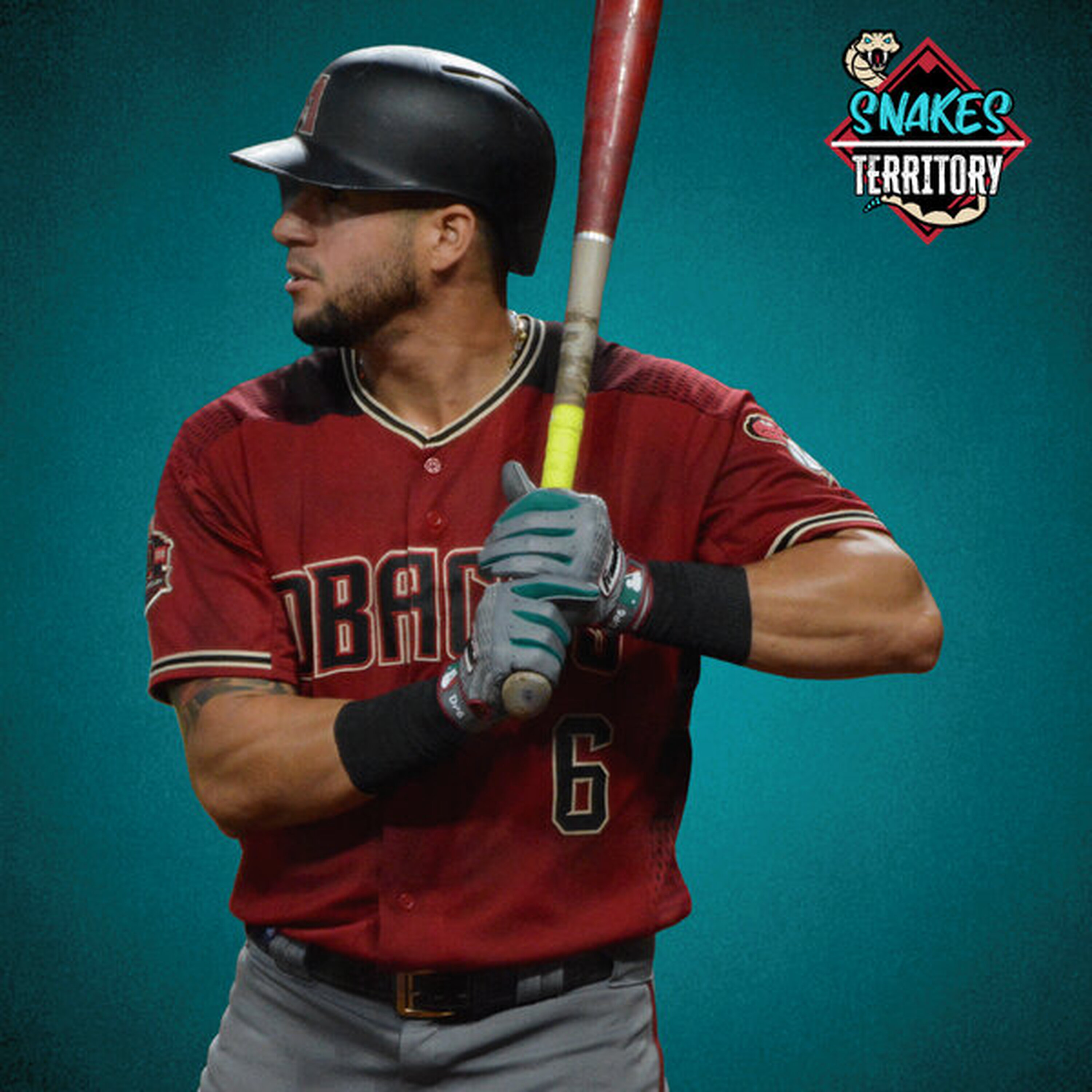
David Peralta on Snakes Territory
Longtime Diamondbacks outfielder David "Freight Train" Peralta joins Snakes Territory to discuss his decision to retire from baseball, how Dave McKay made him a Gold Glover, repping Venezuela in the World Baseball Classic in 2023 and much more.
Subscribe to FT on YouTube please :)
See omnystudio.com/listener for privacy information.
2026-03-09
27 min
Transcript
Available Results
Generated results are saved to the knowledge database for reuse and search.
No generated results are available for this episode yet.
Extract Knowledge
Pick what you want extracted first. Model, scope, and chapter options appear after a template is selected.
Generated results for public episodes are saved to the knowledge database so they can be reused and searched later.
Transcript
00:00:13
Speaker 1: Hello, and welcome to another episode of Snake's Territory, part of the Foul Territory Network. Be sure to like this video on YouTube, subscribe to our channel, maybe leave us a five star review wherever you get your podcast. I am Jesse Friedman, alongside the One, the Only Jack Summers and Jack we have a special guest joining us on today's episode. I imagine, imagine you've spent a fair amount of time the past ten years watching this man play baseball.

00:00:43
Speaker 2: Yeah, I'm really excited for this.

00:00:45
Speaker 3: You know, David Perrault is going to be here, and super excited to talk to him and see what he's got to say about how his life's going and just ask him lots of questions about his history and background and career and all of that.

00:00:58
Speaker 2: So that'd be great.

00:01:01
Speaker 1: It was a lot of fun talking talking with David. We're going to start out with that interview, and then on the back end we'll come back and talk about some d Backs spring training updates. We'll talk the latest on Meryl Kelly his status going into the season, as well as some other standouts in camp. So we'll get to that stick around on the back end of the show. But once again we have a special guest joining us. We're going to start out with that. So, without further ado, here is our conversation with the freight train himself, d Backs outfielder David Peralta. Well, if you've been a fan of the Arizona Diamondbacks for any length of time, chances are you're very familiar with the man who joins us now. It is long time Diamondbacks outfielder David Peralta. David, first of all, thanks for hopping on the show. We really appreciate it. And I also, of course have to say, speaking on behalf of all Diamondbacks fans, congratulations on a on a tremendous, tremendous career.

00:01:58
Speaker 4: Thank you, guys, thank you for having me.

00:02:00
Speaker 2: Thank you, it's awesome.

00:02:03
Speaker 3: And just so I want to say welcome as well. From my standpoint, it's just tremendous to get a chance to talk to you again.

00:02:09
Speaker 4: Thank you. I appreciate it.

00:02:11
Speaker 1: So, David, I imagine this had to be. I know there are there are many positives that come out of this. Right, you get to spend more time with family and whatnot. I'm sure you're looking forward to that, but I imagine this is also difficult for you at the same time, having played this game for so long, Just what are the vibes right now in the Peralta household? How are you feeling about all this?

00:02:34
Speaker 5: Well, the vibees just been crazy and spending like full time with the family with the kids being a normal doubt twenty four to seven, which is great.

00:02:44
Speaker 4: Then, you know, that's what I was looking for.

00:02:46
Speaker 5: The decision to retire, Like you said, it's not easy. It took me like a full year to think about it, to ask around to its teammates who did the same thing, and you know, talk a lot with my wife, and we got a conclusion.

00:03:03
Speaker 4: I told my wife like, hey, you guys sacrifice.

00:03:07
Speaker 5: A lot for me, you know, going whatever and go, you know and everything. Knowing that I was traveling a lot, I wasn't spending a lot of time at home, and now I think it's time for me to dedicate full time for you guys, because you guys.

00:03:20
Speaker 4: The service so and and we made that decision.

00:03:24
Speaker 5: You know, it was it was It wasn't easy because you know, you's I love baseball based with my life, but I love my family too. And my family one of what was the main reason they made the decision to retire. I need to see grow my kids and see them grow because the times goes really fast, so I don't want to miss that time at all.

00:03:48
Speaker 2: How many kids do you have and how old are they now?

00:03:50
Speaker 4: I have three kids.

00:03:51
Speaker 5: I got two daughters and a boy so eight five and a little one.

00:03:58
Speaker 4: The boys is two years old.

00:04:00
Speaker 1: H Do any of them have your Do any of them have your swing? Are you starting to notice any any resemblance yet? On that phone?

00:04:07
Speaker 5: Well, I'm a coach right now from my daughter's team. She started playing this year, Uh, coach pitch softball and she's getting better. You know, she's a lefty. She's a right but she's swing lefty. I told her like, okay, you're gonna swing lefty. My older daughter, she's playing t ball. She love it. She's fire yourself. She's loving it. And well, the little one, he's too little right now, he's two years old. But he's going to be the prospect. Definitely, he's going to be the prospect. I'm going to do everything again, you know, to stay in baseball.

00:04:41
Speaker 2: That's great.

00:04:42
Speaker 3: Do you have any plans you know, aside from coaching and staying home, like to stay in baseball in any other capacity at this point in time.

00:04:52
Speaker 5: Well, right now, I think everything's like it's happened too soon. I'm still like adjusted to be like you know, the Neils every time and everything. Of course, I want to stay in baseball, but I want to dedicate a little bit time to my family. But I don't think I want to do it like full time, like baseball job, like being the coach.

00:05:10
Speaker 4: I like to be.

00:05:11
Speaker 5: More like a mentor for the young kids, especially in mind league, because that really helped me to get to the point and to be success for my career. The mental side, because it's easy, like you have your skill, you're a professional, but if you're not right right here in your brain, like mentally, nothing's I know a lot of friends they have, you know, super skills, like they're superstar, but they couldn't figure it out for some reason.

00:05:40
Speaker 4: And I think it's everything start right here.

00:05:42
Speaker 5: So I want to help this generation to become mature so they can handle the big league and be successful for a long career.

00:05:53
Speaker 1: I thought it was cool, David in your in your announcement announcing or retirement officially, you gave a shout out to a couple of your former coaches, one of them being one that Diamondbacks fans are very familiar with still of course with the team and Dave McKay, you talk about mentors and kind of wanting to do that for other people. Did what we hear so much about Dave McKay, Sir, I'm sure it comes as no surprise to you that everyone who comes to this organization just absolutely loves the guy. But for you personally, like, what what made him just such an outstanding, outstanding coach defensively.

00:06:29
Speaker 5: Well, David McKay, he was my mentor, he was best coach, he was my friend, he was everything. And since the first day I got to the big league he told me, and it was just crazy.

00:06:43
Speaker 4: He was like, David, here in the big league it's more easy to hit than minor league. And I didn't get it. I didn't know what.

00:06:51
Speaker 5: He just told me that, and and I was like, And then days was buying four and everything, and I started realizing that, Yeah, you're right, it's more discipline in the big league.

00:07:01
Speaker 4: That's where you're in the big league. You got to go through minor.

00:07:04
Speaker 5: Leagues to get to be disciplined because the big league is, you know, one hundred percent. You have to do it. You don't have to do everything right, but you have to be very disciplined, too inconsistent to stay in the big league. He teached me how to play the game right. He teached me how to run the base. It's not like I didn't know how to do it. He just told me how to do it, how to look professional, how to good pressure. He made me a gold Glub And I remember that year in twenty nineteen, and that's like, I have to give him all the credit because I'm not going to go out there and say, yeah, I did it.

00:07:34
Speaker 4: No, he did it for me. I thought I was playing right, I was playing good.

00:07:39
Speaker 5: Different and he came one day before the game started and he showed me some numbers and said, David, these numbers.

00:07:46
Speaker 4: They're okay, but I know you better than this. And I'm like and.

00:07:50
Speaker 5: Inside I was like, oh, I was a little not upset about like I'm doing well.

00:07:55
Speaker 4: No, I want you to do this because I know you can be better than that. We went.

00:08:01
Speaker 5: He always said, hey, it's not on any magic drill to get better, and outfields are different.

00:08:06
Speaker 4: But there is one.

00:08:08
Speaker 5: So he made me check every single ball during VP it doesn't matter. If it comes to you, you're gonna react everywhere and that's going to make you be better. And I was like, I trust you, mkay, I'm gonna do it soon now I want to go gloves and not even I didn't even play the full season. I only play one hundred games because I ended all that year having surgery on my shoulder. And I was the best left field on the whole big just because him. He just told me, this is what you gotta do. It's just the trust that he tells you, like the positive all this knowledge that he give it to you. It's just like it's hard, like it's the best. I think it's the best. That's why they always keep him. They're gonna keep him for it. He's seventy five. And the thing is he's seventy to seventy five years old. It's amazing. How can you not admire that guy? And I was like, I wish it could be like when I'm all like you.

00:09:07
Speaker 4: I mean, I shouldn't say that because you don't like when you.

00:09:09
Speaker 5: Call him all he looks like a twenty one years old guy, but I mean he's I really love him. And I texted him before that I announced my retirement. I texted him before that and I say, I just want to let you know that I made the decision. I'm going to retire, and thank you for everything for make me be a better person and make me be who I am right now.

00:09:30
Speaker 2: That's awesome.

00:09:30
Speaker 3: You know, his his sheets are legendary, you know, the papers with the with the marks and the good and the bad marks, the check marks and all that. Like the accountability he demands. What was it like when you know you show up on the wrong end of one of his sheets too.

00:09:47
Speaker 5: Hey, that's the best part because that's that's the challenge that you take. I don't want to be a red mark over there, so I'm going to do my best. So you're thinking like, hey, I have to make a good turn, I have to rum hard and everything. And that's going to make you better, a better player, because he will tell you, Hey, remember it's not just the d BAK who's watching you play. It's another twenty nine teams in the big leagues that's watching you. You don't know where you're gonna be next, so give you one hundred percent effort every day because you don't know where you're gonna be tomorrow and you're gonna and another team that's gonna say that, you know, we want David Peralto because he's a role model. He played the game the right way, and I want this guy for my team. And that's how and that's how it is.

00:10:31
Speaker 4: But hey, I'm.

00:10:32
Speaker 5: Telling you there was the guys that we got traded. And this is a funny story.

00:10:36
Speaker 4: J D.

00:10:37
Speaker 5: Martinez who's coming for Detroit, when he got traded to the d Bags and.

00:10:42
Speaker 4: Kay told him, hey, this is a sheep you gotta follow.

00:10:45
Speaker 5: If you get negative and everything, you're gonna you know, the first week he was like getting a little bit annoying about that. I have from heart all the time and everything.

00:10:54
Speaker 4: And I'm like, man, just trusted and you're gonna become a better player.

00:10:59
Speaker 5: And he did it and he was like hustling. He was like making base singles to the double and stuff like that.

00:11:05
Speaker 4: And he realized like, hey, yeah, maybe a better a better baseball player.

00:11:09
Speaker 5: Even just a simple thing a running chart, that's what you called running chart. Something simple and make.

00:11:15
Speaker 4: You be a better a better player.

00:11:16
Speaker 2: Or something that's awesome. That's a great story.

00:11:21
Speaker 1: Of course, your your defense was a was a big part of your game, David, I know your offense maybe even a bigger part of your game. And in your announcement, you have a shout out to Jose Amado. Yeah, was one of your one of your coaches back in independent ball way back in the day. I know you you credited him for your Silver Slugger that you won back in twenty eighteen. Can you take us through a little bit of your relationship with him. I know he's also a really big part of this journey for you.

00:11:51
Speaker 5: It was the same thing like you know, when I did my transition from from the pitcher to pasista player.

00:11:58
Speaker 4: You know, just want to say him, just pull the ball, all this stuff.

00:12:02
Speaker 5: So I went to play in Wichita Witness that's my second year independent ball, and he was a hitting coach.

00:12:08
Speaker 4: He's from Venezuela.

00:12:09
Speaker 5: Made and he saw the talent that I have and he told me like, hey, I'm going to teach you how to use the whole field because it's now about pulling the ball, pulling the ball and everything. And I'm like, okay, I'm going to follow you. So I trust him. He was like every single day with me, and he made me be a better player because you're landtry guys and a guy who can hit the ball to the other way, they're going to stay in the big lead for a long time. And he was doing every even when I made it to the big league. He was my personal hitting coach. I always work out with him during the off season, and when something was wrong during the season, I was sending a lot of video to him, like, Hey, I'm doing this, what.

00:12:51
Speaker 4: Do you see And he knew me. It's the same thing.

00:12:54
Speaker 5: Twenty eighteen, when I win my silver Slogger and the month of May I.

00:13:01
Speaker 4: Hate one thirty. I was like, oh boy, I can't hear anymore. So I talked to him.

00:13:07
Speaker 5: I'm talking to him and everything, and he said like, Okay, this is what we're gonna do. You gotta trust me. And I'm like, whatever you say, I'm gonna do it. We're gonna start from zero. We're gonna start from zero. Let's start over.

00:13:18
Speaker 4: We're gonna recept and you're gonna do this trial on the cage and just trust it.

00:13:23
Speaker 5: Trust it, and just when you go up there to hit during the game, don't think about anything.

00:13:27
Speaker 4: Just let it happen, okay. And that's who we start.

00:13:31
Speaker 5: How we start and I ended up hitting thirty homers and winning the civil slogan. It's amazing, like how how you can change just with the dob with the talk and change you mentality and the way you see stuff can make you go to the next level.

00:13:52
Speaker 1: I know you spent quite a bit of time with current Diamondbacks manager Tory Lavello as well during your time in the organization. I'm curious what your relationship with Tori was like over those years. And he's still add it. I guess for a reason, right.

00:14:10
Speaker 4: You said it. He's still there for a reason because he's a good man. I really like it. We really have a good relationship.

00:14:15
Speaker 5: And since the day one he got there in twenty seventeen, he was like the communication with the players and everything they trust in, and he really trusted the group that we have over there. And I always talking to him like, Tori, we got you, like it's you know, the brotherhood that we have. Okay, you worry about the game, that we're going to take care of the club house, and that was that trust. And if it's something was going wrong, like we talk your shot all the time, because it's I mean, it's a lot of a lot of responsibility for the manager to be.

00:14:50
Speaker 4: I got to manage the game. I got to do this.

00:14:52
Speaker 5: I got to make the right mode and I need someone to help me out to keep the players and the right track.

00:14:59
Speaker 4: So it was it was cool.

00:15:02
Speaker 5: And in the moment when I got traded, it was a sad moment of course for everyone, and and and you know, he wished me the best and everything, and and I was like, hey, I'm gonna be here for you guys forever you need men. And of course the next year I signed with the Dodgers, and I'm like everything went crazy, and you know how it is the situation, but it's the same love.

00:15:26
Speaker 4: It's the same love, same relationship. And and like you said, he's steal in the d Bacs because he's the best. He's a good man.

00:15:34
Speaker 3: I remember, just your good natured humor joking. You know, hey, you told Mike stop drafting left handed outfielders.

00:15:42
Speaker 4: Yeah, yeah, doing it because the're gonna take it. They're gonna take my job.

00:15:47
Speaker 5: And I'm like, hey man, you have to have fun in baseball because like look, that's that's that's what you're.

00:15:55
Speaker 4: Gonna take with you.

00:15:57
Speaker 5: You know, the game is gonna keep going the game, it's gonna be changing and everything, but what you're gonna take is all this great moments that you spend with you, with your teammates, live bat moments, because you gotta take your bat moments too, Like Hey, the big slam and couldn't do anything for strikeout day. That's gonna happen because you're gonna learn from that. But there's gonna be a lot of good moment That's what you gotta take. You gotta have fun. And I always tell the guys like, hey, and you're your day, and you're today enjoying the big league. You're in the big league. Enjoy your day because you don't know where you're going to be tomorrow. And I always tell them like, hey, yesterday, when I was yesterday, I was playing independent ball. Today I'm in the big league. I don't know what am I gonna be tomorrow. So I'm gonna make sure that today I'm gonna give my one hundred percent.

00:16:48
Speaker 4: I'm gonna have fun.

00:16:49
Speaker 5: I'm going to jump everything, and when they give me the change to play, I'm gonna give everything I got. By the time I go to bed and pull the head on my pill up, I'm gonna be like I did everything, so tomorrow is going to be a new day.

00:17:02
Speaker 4: That was my mom sat every single day and it worked for me, and it worked.

00:17:07
Speaker 5: It worked for me, and that's what I was trying to, like curse all these young kids, because there's a lot of kids they come from Triple A just thinking, oh I got a good, dude, I got a good I gotta do this because they're.

00:17:20
Speaker 4: Gonna send me down. Now this is my phone. You don't know if that's going to be your only change and you're gonna be just.

00:17:25
Speaker 5: Worry about stress. No, enjoy Bigley. It's not easy and it's not for everyone. So if you got the opportunity, just take it and just enjoy and do everything you can. And they said that was my mom set every day.

00:17:39
Speaker 2: I know that.

00:17:40
Speaker 3: The fans, I mean they totally felt that vibe from you, you know, from the from the day you arrived and uh, you know, just the way you played the game with both joy and hustle and and well all.

00:17:53
Speaker 2: Of the mind you know, made your favorite.

00:17:57
Speaker 3: Now you had that nickname, of course, it's a fabulous nickname, the freight Train.

00:18:03
Speaker 2: I'm trying to remember how that came about. Was that from from the broadcast booth.

00:18:07
Speaker 4: Or yeah, Steve Steeper f you, yeah, the one who named it that way.

00:18:13
Speaker 5: It was like, because you know, Chase Field is a huge gap, big Bullpark, and I was hitting a lot of triples, triples, and I was like, I assume every time when I was hitting those ball, oh, hitting the gap, I'm running.

00:18:27
Speaker 4: And he was keep saying he's running like a freight train, like a freight train, and.

00:18:32
Speaker 5: You know, the friends love it, and I was like, I like it, it's working, so why not so and I became the freight tram and everyone and then you gotta do it.

00:18:40
Speaker 4: You got to have some stuff. You know.

00:18:44
Speaker 1: That's awesome if I'm getting the history right, which corrects me if I'm wrong.

00:18:48
Speaker 4: Uh.

00:18:49
Speaker 1: I believe there was a point when you were an independent ball maybe on the verge of signing something with the Diamondbacks. I believe it was Jose Amatto, right, who was maybe looking an opportunity for you to play baseball in Mexico, maybe earn a little bit more money that way. I mean, how close were you to going that route instead of signing with the Diamondbacks, And like, how do you think about that now? In retrospect.

00:19:12
Speaker 5: Oh I got a goose fun with that, you know what, Because he's the one who was like, hey, David, I got you.

00:19:19
Speaker 4: You want to go to Mexico.

00:19:20
Speaker 5: You want to make more money and you know, and I was like, sure, send me you pass board like photos and everything, and for some reason it was meant to be. For some reason, something happened. They got a little bit delayed, and the Diamondback came a day before, like hey, we're going to sign you. The next day, my mother told me like, hey, we gotta know.

00:19:41
Speaker 4: I'm like, hey, I signed with the d Bags. But it was meant to be.

00:19:45
Speaker 5: I was this close to go to Mexico because they were gonna pay me good money, you know, Mexico to pay good money. And I was like, oh, I just want to you know, I want to play too, I want to make money, and yeah, of course Mexico's it's a hard level too. And dating happened for a reason, so that's good. I'm glad that didn't happen. But he was helping me to go with her too. You got it right, You got the story right. Yeah, I'm pretty sure he told you. He told I'm going to buy that.

00:20:13
Speaker 2: Glad.

00:20:13
Speaker 1: I'm glad I got the history right. I'm also I'm also curious, like, as someone who this is something I struggled with personally for many years, I imagine I'm not alone, like I I tend to find my identity at times, and what I do for work, like you know what, however, I feel like I'm performing at my job like that is closely tied to just how I'm doing as a person. And if I didn't have a job that I was that I was doing in the same way, I like wouldn't know what to do with myself anymore. So I'm curious, like, how are you how are you processing that? As someone who baseball has been such a huge, huge part of your life for so long, how are you imagining life without without that in your schedule on a day to day basis.

00:20:58
Speaker 5: I just do that with my kids, with my family. That's what I do with my family. I'm a family guy. I like to spend a lot of time with my family, with friends and everything.

00:21:09
Speaker 4: And now that I don't.

00:21:11
Speaker 5: Have that part of baseball, so so my family get to enjoy all the energy.

00:21:19
Speaker 4: That I have seven you know, my kids. But that's what I do.

00:21:25
Speaker 2: You know.

00:21:26
Speaker 5: I mean as a boat player, you know you know when you start, but you know it's going to be an end of your career at some point, and you want to end your career and the right way. And for me, I knew that that moment was going to come and and you have to prepare yourself mentally, like I said, like I said at the beginning, as mar team proud of one of the best teammates that I ever had.

00:21:50
Speaker 4: He always talked to me, and when I need to talk to someone about that, he always call him. We still stay in touch.

00:21:57
Speaker 5: And because he retired and you have family and everything, he helped me to go through this, like, hey, you got to be prepared for this.

00:22:06
Speaker 4: You got to be prepared.

00:22:07
Speaker 5: It's going to be a new life because now you're going to be with your family twenty four to seven, which is you're not used to. It's nothing wrong, but you got to be willing to do that, you know, because we used to during the season is one week with the family and then another week.

00:22:21
Speaker 4: Were on the road for.

00:22:23
Speaker 5: Six months, seven months, and then that stuff it matters, you know, And I was going, no, I'm ready for that. I think I miss my kids and I want to do it for them, and I have the opportunity to do it, and I can do it.

00:22:38
Speaker 4: So I'm going to do it.

00:22:39
Speaker 5: But it's my family gets to joint all that, all the energy, all the craziness, because I have to let.

00:22:46
Speaker 4: It out somehow.

00:22:48
Speaker 3: So do your kids have a harder time keeping up with your energy or you have a harder.

00:22:52
Speaker 2: Time keeping up with their energy.

00:22:54
Speaker 4: I have a hard time keeping up with the energy. They got all my energy.

00:22:58
Speaker 5: Oh unbelievable, But yep, I had to do and that's what I steem shape. I'm still going working on and everything, so I'll steam shame and I can keep up with them.

00:23:10
Speaker 1: Last last thing for you, data that we'll get you out of here. I imagine there has to be at least a small part of you that is somewhat sad to not experience the ABS system that is coming to baseball. Like if I were you, I'd be thinking so years pass throughout my career, like all of the calls over the years that oh that was a missed call, that was a missed call. You know, this year you'd have had the opportunity to challenge those right. What is your perspective on this new ABS system that it's coming to baseball.

00:23:44
Speaker 5: So I'm I'm an old school guy, and I have experience to do that in twenty four because I play a littlely on Triple A because I was rehaving my surgery, so they have right going on.

00:23:56
Speaker 4: Yeah, I didn't like it. I didn't like it. Like it because.

00:24:03
Speaker 5: I think it's face It's more like it's a human beings a judgment. Like I know, some calls you shoot deserve it. Oh I'm right, I'm wrong, But that's part of the game. Some decisions can screw gains so big, you know, big decision, but it's part of the game.

00:24:23
Speaker 4: I don't know.

00:24:24
Speaker 5: That's my personal opinion. Some people like it, some people know don't like it. But but I'm not a big fan. I mean, if you make me choose between the rob up Umpire or the A B the Challenge, I'd rather do the challenge the one, I'd rather do that one than the other one. But it's just, you know, that's the way it is. You know, Like I said, I'm an old school guy, and and and you know, the catchers their job, Like how now, how are you gonna how are you gonna evaluate catchers?

00:24:56
Speaker 4: Because their choice is to make ball looks like a strike. So how you're going to evaluate them, you know, that's that's a big deal for them too.

00:25:04
Speaker 5: Pictures they have to like, you know, like it. It's a lot of question you know about that. But like I said, I'm glad, well not glad, but like I'm out so so all the stuff like is it not not a big friend of that, but it is what it is.

00:25:22
Speaker 4: Like the games is changing. You have to make an adjustment.

00:25:25
Speaker 3: I just had one last question if I can one more. So, WBC is just about to start. You had very solid performance in twenty three in the WBC, and I wanted to hear about your experience playing in the WBC and how that ranked the excitement of playing for your country, how that ranked amongst your baseball experiences.

00:25:48
Speaker 5: Hey, that that's the best experience of my life in baseball. You know, well you can take it at we like always. The first one is going to be when you made your MLB DEW but representing your country, having your Venezuela, I'm in your chess and just playing just to represent your country.

00:26:07
Speaker 4: What was the best for me? And I never made it to the Hollar Star Game.

00:26:12
Speaker 5: I should have made it in twenty eighteen, but well whatever, but that was my All Star game. That that was my Alli Star game because I was playing against all Superstar my teammates, they were all Superstar and it was unbelievable that bye the energy. It was super loud in Miami. Even my wife it was like, wow, this is crazy. My family they were like, this is crazy and I love it. So I'm going to be rooting for Venezuela of course, and this time they know they're gonna make it and I can't wait to start.

00:26:46
Speaker 4: I'm gonna be watching for sure.

00:26:49
Speaker 2: That's great. Thanks for sharing.

00:26:50
Speaker 3: I just can't imagine what that must have been like. Like you said, in the jam Pack Stadium in Miami atmosphere.

00:26:56
Speaker 4: Here, I'm loud. I'm always loud when I'm playing Accury. You can hear myself. I was like, Okay, this is crazy, this is crazy. Wow it was. It was amazing. Yeah.

00:27:07
Speaker 1: Well, David, thank you so much for taking the time. We really appreciate it. Truly goes without saying. I mean, one of the one of the greatest stories in our sport over the last couple of decades, from independent ball to just an unbelievable career. So thanks again for hopping on and best of luck keeping up with keeping up with the kids at home.

00:27:27
Speaker 4: I thank you guy, I appreciate it. Thank you for having me.

00:27:29
Speaker 2: Us take care

00:27:32
Speaker 1: All right,
Chapters
No chapters available.