Lycophytes, Quillworts & the "Great Dying"
I became fixated on lycophytes because of some of the cool desert-dwelling members of the genus Selaginella, not to mention the utterly weird "clubmosses" that thrive in places as disparate as Northern Wisconsin and the slopes of volcanoes in New Zealand, but in this episode botanist Jeff Benca tells us about his work with relatives of the genus Isoetes ("Quillworts") and how their 250 million year old relatives might have been able to survive the biggest extinction in Earth's history, otherwise known as the Permian Extinction or "The Great Dying".
Jeff's IG : @jeffbenca
FB : Jeff Benca
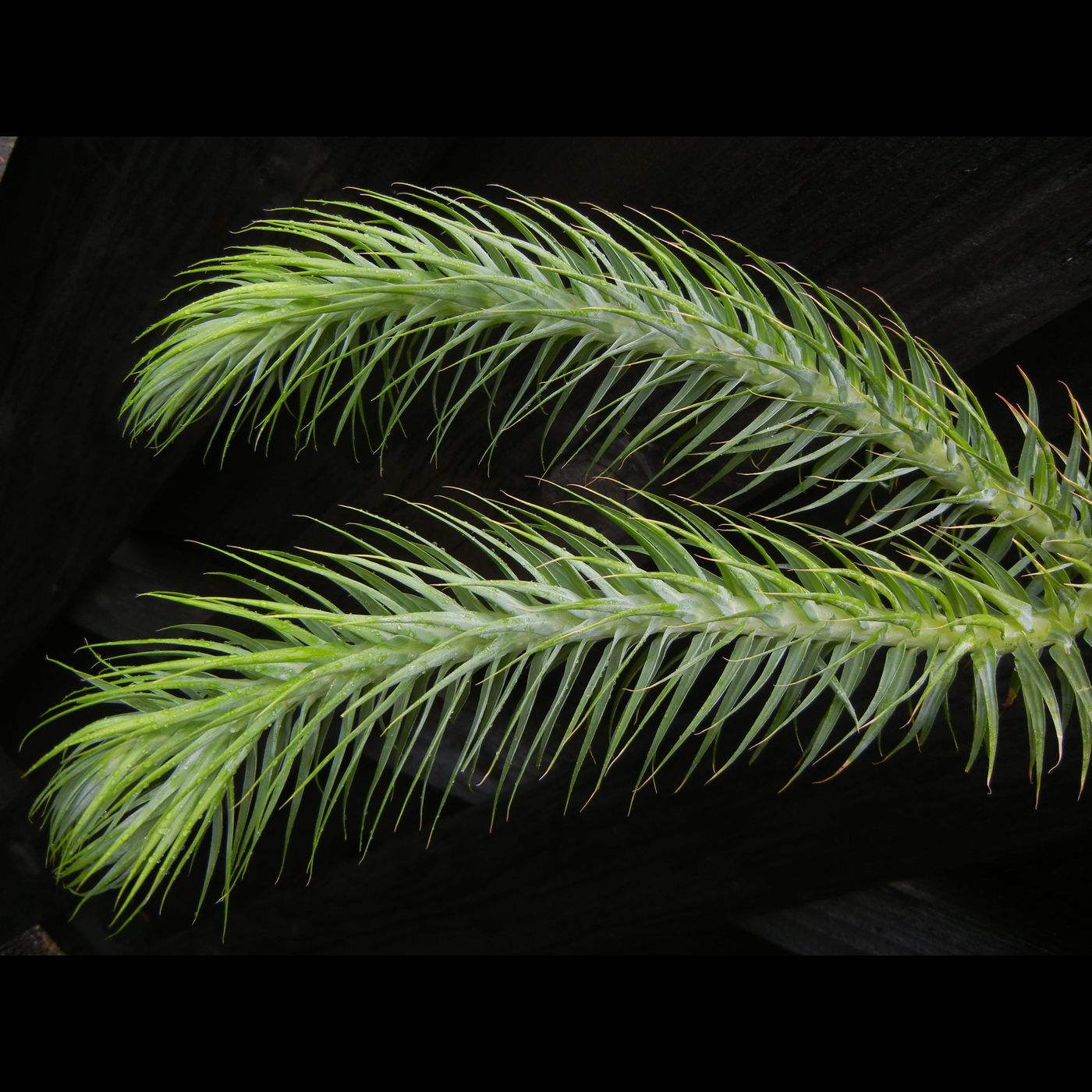
Thumbnail is Phlegmariurus dalhousianus, photo by Jeff Benca. Other species mentioned in this episode is Lycopodium vestidum. Extinct species mentioned here that were thriving during the Permian Extinction Event and are related to Isoetes are Pleuromeia and Annalepis.
Compounds that volcanic dykes and sills interacted with that were locked up in salt deposits and related to UV shield degradation during the Permian Extinction Event were methyl bromide and methyl chloride.
Jeff's IG : @jeffbenca
FB : Jeff Benca
Thumbnail is Phlegmariurus dalhousianus, photo by Jeff Benca. Other species mentioned in this episode is Lycopodium vestidum. Extinct species mentioned here that were thriving during the Permian Extinction Event and are related to Isoetes are Pleuromeia and Annalepis.
Compounds that volcanic dykes and sills interacted with that were locked up in salt deposits and related to UV shield degradation during the Permian Extinction Event were methyl bromide and methyl chloride.
2024-09-16
157 min
Transcript
Available Results
Generated results are saved to the knowledge database for reuse and search.
No generated results are available for this episode yet.
Extract Knowledge
Pick what you want extracted first. Model, scope, and chapter options appear after a template is selected.
Generated results for public episodes are saved to the knowledge database so they can be reused and searched later.
Transcript
<v Speaker 1>All right, welcome to another episode of the Crime PAGs,
<v Speaker 1>but Bodany doesn't podcast. Today, I have a guest who
<v Speaker 1>studies a really weird and cool and obscure lineage of
<v Speaker 1>plants that not many people are familiar with. So Jeff
<v Speaker 1>Benk everybody, Hello, Hello Jeff, how you doing. Let's talk
<v Speaker 1>about lycophytes.
<v Speaker 2>Hi joy, Great to be on the great to be
<v Speaker 2>on the podcast. Thanks for biting me.
<v Speaker 1>Yeah, man, yeah, well you know you're you're a specialist.
<v Speaker 1>And then a really really cool lineage that uh yeah, man,
<v Speaker 1>that I'm that I'm always seeing when I'm out in
<v Speaker 1>the desert, like selaginella, the spike moss is, don't They're
<v Speaker 1>fucking so weird and so cool. They're all you know
<v Speaker 1>whenever you see them. Most of the time in the desert.
<v Speaker 1>They're dry because the desert's dry most of the time.
<v Speaker 1>But then after they get wet, they come back to life.
<v Speaker 1>The quote unquote resurrection plant uh selaganella lepidophla that we
<v Speaker 1>get out here in West Texas. You know, you'll see
<v Speaker 1>huge mats of it, of individual rosette plants coating the
<v Speaker 1>limestone rock, and you know, they're all dry and crispy,
<v Speaker 1>and then they get wet, and I think, what within
<v Speaker 1>like thirty minutes or an hour they come back to
<v Speaker 1>life and just regreen and start photosynthesizing and metabolizing again
<v Speaker 1>or what.
<v Speaker 3>Yeah.
<v Speaker 2>Yeah, pretty much, they kind of go into a bit
<v Speaker 2>of a cryptobiotic state, so they basically just shut down
<v Speaker 2>a lot of their functions and basically preserve their organelles
<v Speaker 2>and their cells when they dry out, so they pretty
<v Speaker 2>much nearly fully desiccate, but they're basically making sure they
<v Speaker 2>preserve their functions their cells so they can reboot when
<v Speaker 2>they're rehydrated. It's absolutely fascinating, and there's tons of research
<v Speaker 2>going into just how this happens sort of on a
<v Speaker 2>cellular to basically a microscopic level, because there's I think
<v Speaker 2>there's a lot of interest in trying to translate these
<v Speaker 2>sorts of traits into agricultural crops, for trying to figure
<v Speaker 2>out how people can produce food in places where it
<v Speaker 2>gets really water is a short edge, right, so there's
<v Speaker 2>quite a hot area for research right now.
<v Speaker 1>I mean, to dry out without dying and just kind
<v Speaker 1>of go dormant and hang in there, you know, like
<v Speaker 1>a lichen wood is insane but it's this is not
<v Speaker 1>the only Well. First off, let's talk about these other
<v Speaker 1>the more xeric adapted, the drought adapted ones. The Silaganella
<v Speaker 1>leptofla is you know, a beautiful rosette, you get Celaganella
<v Speaker 1>gypsy cola down a nuevo laone, which is kind of
<v Speaker 1>specialized to gypsum, has a different leaf shape. But then
<v Speaker 1>you get all these other weird ones, like there's one
<v Speaker 1>in Baja that looks like when you see it and
<v Speaker 1>it's dry, it's in that you know, Baja Chaparral, northern
<v Speaker 1>Baja California, it just looks like someone threw out, like
<v Speaker 1>someone illegally dumped like a dirty, decaying shag carpeting. It's
<v Speaker 1>just all gray and it's just but it coats the ground.
<v Speaker 1>I mean, it's acting like a living mulch. And then
<v Speaker 1>when it gets wet, it comes back to life and
<v Speaker 1>starts photosynthesizing again. You've got Silaganella arizonica, which is another
<v Speaker 1>one that you'll see just draped over rocks, you know,
<v Speaker 1>And a lot of these are really important for the
<v Speaker 1>germination of other plants like cacti and some shrubs, and
<v Speaker 1>you know, they just formed this whole plant community that
<v Speaker 1>it's fucking wild. I remember being in Guanajuato and looking
<v Speaker 1>at Mammalaria Andersoniana, this rare mammalaria, and it was, you know,
<v Speaker 1>so many of them were nestled in beds of Silaganella.
<v Speaker 1>I think it was a sartori but it's just a
<v Speaker 1>fucking cool ise. So you've got that, you've got the
<v Speaker 1>drought tolerant ones, the desiccation tolerant ones, but then you've
<v Speaker 1>got this whole lineage that's evolved for the shady, super
<v Speaker 1>wet jungle rainforest, et cetera.
<v Speaker 2>Right, absolutely, Yeah, So the vast majority of a lot
<v Speaker 2>of these Selaginella as a genus of Lycophytes or in
<v Speaker 2>that group, vast majority of them are in these rainforest
<v Speaker 2>understories throughout the tropics, and they've I mean, they they've
<v Speaker 2>diversified into so many species. I mean, they're one of
<v Speaker 2>the most species rich genera of seed free plants in
<v Speaker 2>the world. You know, if not the uh there's there's
<v Speaker 2>hundreds and hundreds of species of Slagnella's out there, and
<v Speaker 2>they're obscure as heck. I mean, they're really being able
<v Speaker 2>to determine which species you're dealing with for many of
<v Speaker 2>these these shade living lineages really requires you know, almost
<v Speaker 2>a lot of training and a lot of looking under
<v Speaker 2>the microscope for these minute traits on these leaves of
<v Speaker 2>plants that might look very similar over time. So it's
<v Speaker 2>it's it's fascinating, and that sort of evolution of those
<v Speaker 2>sort of xeric dry adapted slaganellas has really occurred many
<v Speaker 2>times over the span of hundreds of millions of years
<v Speaker 2>that these plants have been around. They diverged from many
<v Speaker 2>of these other lycophytes, you know back well, you know,
<v Speaker 2>hell over three hundred and sixty million years ago we're
<v Speaker 2>talking probably you know, very early on in the evolution
<v Speaker 2>of terrestrial ecosystems that you had these what we call
<v Speaker 2>heterosporus or two types of spore groups of these plants
<v Speaker 2>just splitting off from all the others.
<v Speaker 1>Yeah, yeah, let's really quick. Let's let's let's fill people
<v Speaker 1>in on what we're talking These are, So these are lycophytes,
<v Speaker 1>that's a monophyletic clade consisting of the lycopods and the
<v Speaker 1>Selejianella and the isoetes, the the what's the kind of
<v Speaker 1>the quill wars, right, so there's like three main groups here,
<v Speaker 1>and but a lycophyte they reproduced by spores. But they're
<v Speaker 1>not really a ferm, they're not really a moss. They're
<v Speaker 1>their own evolutionary lineage, their own group on the terrestrial
<v Speaker 1>plant family tree. You know, what is it, Lepidodendron common
<v Speaker 1>in museums, you know that have like a Natural History
<v Speaker 1>museum's lepidodendron. The scale bark trees are a common fossil
<v Speaker 1>you'll see there. You know, I'm there's a one for
<v Speaker 1>one in the Field Museum that you know, I want.
<v Speaker 1>I wanted my room when I was a kid to
<v Speaker 1>be done up, and you know, they got like a
<v Speaker 1>whole diorama and shit, it's like the lipidods. I mean,
<v Speaker 1>these were some of the largest their modern relatives is
<v Speaker 1>some of the first large growing terrestrial plants that ever
<v Speaker 1>grace the surface of the Earth.
<v Speaker 2>Yeah.
<v Speaker 1>Yeah.
<v Speaker 2>They were among the first formers of forests. They were
<v Speaker 2>in certainly in the first forests back you know, in
<v Speaker 2>the Devonian period had lycophytes as part of the canopy.
<v Speaker 2>Some of these what we call lycopods. And what's wild
<v Speaker 2>is that there's thought that there's different lineages of these
<v Speaker 2>lycopods that evolved into trees, So most of those tree
<v Speaker 2>like ones back in the Paleozoic era that make up
<v Speaker 2>a huge portion of the world's coal today and altered
<v Speaker 2>the climate when they were growing by sucking up some
<v Speaker 2>CO two out of the atmosphere and de positive it
<v Speaker 2>these equatorial coal swamps. They're now still altering our climate
<v Speaker 2>through their fossilized dead remains into our atmosphere, which is
<v Speaker 2>just absolutely profound that there's like these plant lineages that
<v Speaker 2>do this over and over again in different almost reincarnations
<v Speaker 2>of like this sort of primal primal issue. I mean,
<v Speaker 2>lycopods nearly destroyed the world about three hundred and sixty
<v Speaker 2>million years ago by plunging it into a total possible
<v Speaker 2>snowball Earth that would have been but thankfully that didn't happen.
<v Speaker 2>I mean, there was volcanism still going on.
<v Speaker 1>It was just such a rapid drying and such a rapid,
<v Speaker 1>such a rapid sequestration of CO two. It just it
<v Speaker 1>holds so much CO two so quickly, could you know, yeah,
<v Speaker 1>in terms of geologic time comparatively speaking, that it it
<v Speaker 1>just it was like an anti greenhouse effect. It just
<v Speaker 1>really I mean it was that it was that big
<v Speaker 1>it almost caused an extinction.
<v Speaker 2>Yeah yeah, and then you know today they there, their
<v Speaker 2>remains are coming back and they're destroying the world in
<v Speaker 2>the opposite way now by cooking us. So it's like this,
<v Speaker 2>it's it's this really weird thing. Just solar energy that
<v Speaker 2>has been captured in the Earth is being unleashed again
<v Speaker 2>in a different manifestation. So, like, I think that's sort
<v Speaker 2>of dynamic about this. This bizarre group of plants has
<v Speaker 2>always drawn my just my research toward them is that
<v Speaker 2>there's just they had they've had such a profound impact
<v Speaker 2>on our planet, and yet they're so obscure, and you know,
<v Speaker 2>unless you're like actually walking out in habitats and arid lands,
<v Speaker 2>as you were saying, where you see them and how
<v Speaker 2>prominent they are ecologically and these amazing habitats, they're not
<v Speaker 2>the sort of thing that you think about most of
<v Speaker 2>the time walking through the city or looking you know,
<v Speaker 2>it's not like you're going to see them coming out
<v Speaker 2>of most sidewalks in most places.
<v Speaker 1>Right right, Well, just so people, just so people know
<v Speaker 1>what the thing of in picture when we're talking about them.
<v Speaker 1>So we got three major clades, right, the solaganellas, the Isohetes,
<v Speaker 1>the quill worts, which you know, like here in Texas
<v Speaker 1>enchanted rock, which is just a big, you know, pluton
<v Speaker 1>of granite that's got these ephemeral ponds. There's like an
<v Speaker 1>Isoetes species up there. It's it's the quill worts they
<v Speaker 1>call them. Looks like almost like a tiny onion, right.
<v Speaker 1>And then so you've got the Isoetes, the celaginella, and
<v Speaker 1>then the truelycopods, right, and so what what would be
<v Speaker 1>like a good example of a lycopod, because there's some
<v Speaker 1>that you get in temper regions. I remember being up
<v Speaker 1>in the up in northern Wisconsin and there was like
<v Speaker 1>this cool lycopod occurring in these Thuia oxidant tellus swamps.
<v Speaker 1>So what would be like a good How would you
<v Speaker 1>describe like one of the lycopodiums or like a podiella
<v Speaker 1>to people?
<v Speaker 2>Yeah, so typically I kind of describe them as like
<v Speaker 2>pipe cleaners on acid. They're basically they're almost like a
<v Speaker 2>caterpillar like plant in a way. They look almost more
<v Speaker 2>animal than plant in some manners of how their shapes
<v Speaker 2>are formed. So they basically a lot of people call
<v Speaker 2>them depending on the types. There's a lot of them
<v Speaker 2>are called club mosses and firm mosses, which is one
<v Speaker 2>of those, of course misnomers that it's like they're not
<v Speaker 2>mosses and they're nothing close to them, but they have
<v Speaker 2>basically it's like you took a conifer and you let it,
<v Speaker 2>set it loose on the ground and let it scramble
<v Speaker 2>over the ground and spread in this electric green color.
<v Speaker 2>Many of them at least, and they always branch like
<v Speaker 2>tuning forks. In some way or another, they dichotomize, and
<v Speaker 2>those dichotomies will basically create these at least in these
<v Speaker 2>sorts of lycopods, it'll create these sort of ground running
<v Speaker 2>runners that'll send up oftentimes some form of an aerial
<v Speaker 2>shoot that'll have little spore cones that are super durable.
<v Speaker 2>They're almost like candlesticks. And so yeah, I mean, they
<v Speaker 2>really are these extremely plastic, rambling, scrambling plants that in
<v Speaker 2>many cases will be in bright sunlit environments. Though there
<v Speaker 2>are certainly some like what we call Hoypersia and herpersioids
<v Speaker 2>as a group, these fermases where they branch like true
<v Speaker 2>tuning forks, where they're they're literally they have what we
<v Speaker 2>call equal dichotomies, where every branch branches kind of like
<v Speaker 2>a whisk burn or a wishbone into two equal branches.
<v Speaker 2>And so they'll grow oftentimes in tufts in forest understories
<v Speaker 2>and leafy forest under stories of broadley forests. And then
<v Speaker 2>in the tropics, the vast majority of those species in
<v Speaker 2>that family, like a podiac are many of them are
<v Speaker 2>pendent epiphytes that grow in tropical trees.
<v Speaker 1>They look like these green really like a pipe clean
<v Speaker 1>on acid is really that's a really good way to
<v Speaker 1>put it. You know, you got like a podium anotonym,
<v Speaker 1>which you get up there in Wisconsin and Upper Peninsula Michigan,
<v Speaker 1>even greenland up in the northern latitudes, and then the
<v Speaker 1>Dominican Republic. You know, I remember seeing some there. I
<v Speaker 1>remember seeing a shit ton of New Zealand too. Oh
<v Speaker 1>Lycopodiella is like really weird. And so they look like
<v Speaker 1>this green pipe cleaner. But then when they're getting ready
<v Speaker 1>to sporulate, they make this little yellow strobolists that cone
<v Speaker 1>and then you know, you could tap it and it
<v Speaker 1>actually sends spores out. But so they that's another weird
<v Speaker 1>thing we should talk about with the silaganella's and ice
<v Speaker 1>in the ice oweedies. I guess we'll talk about that later.
<v Speaker 1>But they're heterosporus, which is, you know, people don't know
<v Speaker 1>what that means. It's basically male and female sportes. But
<v Speaker 1>the lycopodiums, though, are homosperous, right, just all the same sports,
<v Speaker 1>just like ferns and mosses.
<v Speaker 2>That's correct. Yeah, okay, so they are homospers.
<v Speaker 1>Yeah, okay, so super super regardless, super diverse group. And
<v Speaker 1>it's it's all over you know, hot, humid, cold, and
<v Speaker 1>high latitude whatever, it's they're everywhere, the lycopodiums.
<v Speaker 2>They are, they are, and yeah, there's there's a wide
<v Speaker 2>range of tolerances as you're saying. I mean they're from
<v Speaker 2>the Arctic to the tropics. I mean, it's really incredible,
<v Speaker 2>and it's almost you know, they almost would They certainly
<v Speaker 2>were in Antarctica before it was glaciated, but they now
<v Speaker 2>get about as far south as you can get in
<v Speaker 2>Tarotl Fuego. I mean, they're often found in the heats
<v Speaker 2>down there and wind swept areas, and they're right on
<v Speaker 2>the edges of glaciers and it's been that way in
<v Speaker 2>the fossil record too. If you go back about you know,
<v Speaker 2>about three hundred sixty million years ago, back to the carboniphoros,
<v Speaker 2>there are lycophytes that seem to be kind of on
<v Speaker 2>the verge of the glacial fields in what used to
<v Speaker 2>be these glaciated poles back then. So they've had they
<v Speaker 2>certainly have this ability, and many of them do tolerate
<v Speaker 2>growing in cooler environments, like I think they're centers of
<v Speaker 2>diversity today are at elevation in the tropics, so in
<v Speaker 2>sort of montane zones, mid elevations of tropical regions of
<v Speaker 2>Central and South America, I think where you get the
<v Speaker 2>most of them. But you know, the highest concentrations in
<v Speaker 2>parts of Southeast Asia and through Africa are going to
<v Speaker 2>be pretty much on mountains, like at mid elevation where
<v Speaker 2>there's a lot of rain.
<v Speaker 1>Yeah, yeah, these are not most of these are. Most
<v Speaker 1>of the Lyca podiums are not desiccation tolerant like solagino.
<v Speaker 2>It is correct. There are certainly some that have quite
<v Speaker 2>a tolerance and a preference for growing in habitats that
<v Speaker 2>get pretty dry in the summer. So many of the
<v Speaker 2>alpine sorts of club mosses, there's a there's a genus
<v Speaker 2>called die Fasiastrum that are basically called the ground cedars,
<v Speaker 2>and they have almost this plastic like, you know, structures
<v Speaker 2>to their their branches. They they really have these these
<v Speaker 2>leaves that are almost fused to the branch and look
<v Speaker 2>like little scales coming off them. They're absolutely gorgeous and
<v Speaker 2>you can see them if you're hiking at elevation, I
<v Speaker 2>mean near where I live here in the Cascades. You
<v Speaker 2>can find them at elevation on ski slopes or you know,
<v Speaker 2>going high up in the alpine sloane. They'll often be
<v Speaker 2>tangled with mats of heats basically any sort of heathers
<v Speaker 2>that live up here, but it'll often be very dry
<v Speaker 2>peat that they'll be growing on in dry clayey substrates
<v Speaker 2>coming out of hill sides, on the sides of trails,
<v Speaker 2>so it's quite a They really like a lot of air,
<v Speaker 2>a lot of air movement. And the wonderful thing about
<v Speaker 2>them too is oftentimes they're they're quite a nice indicator
<v Speaker 2>that you're in a habitat that has either I guess
<v Speaker 2>from a human perspective, is pretty pleasant to be in oftentimes,
<v Speaker 2>I mean, minus some of the steamy sort of swamps
<v Speaker 2>where it'll be really hot and really sticky. Many of
<v Speaker 2>them grow in very breezy, you know, mountainous, well lit,
<v Speaker 2>you know, really beautiful habitats that are nice to be
<v Speaker 2>So that's a plus if you're studying them.
<v Speaker 1>Yeah. Yeah, I saw they phase the ast from scariolsam
<v Speaker 1>in New Zealand on the slope of the side of
<v Speaker 1>a fucking volcano. Like beautiful, beautiful thing was I was sprrelating,
<v Speaker 1>so you can tap it in and all this yellow
<v Speaker 1>these yellow spores would come off. But I mean some
<v Speaker 1>of them really, I mean, no, shit, do look like
<v Speaker 1>cedars like a spinning image for like athuia or a
<v Speaker 1>not a true seedar common name sorry, yeah, athuia, or
<v Speaker 1>a juniper or some like capressioid weird conifer. It's so
<v Speaker 1>you know, it's so bizarre.
<v Speaker 2>It really is. Yeah, it's it's it's really it's it's strange.
<v Speaker 2>The level and the degree of parallel evolution that goes
<v Speaker 2>on in these plants with other plants that are completely
<v Speaker 2>unrelated to them is striking. I mean, they're almost sort
<v Speaker 2>of a a chimera like group of plants. And you know,
<v Speaker 2>and the thing too with them is that they they
<v Speaker 2>change so much depending on where they are, like where
<v Speaker 2>they're growing, i e. They they modify their morphology quite
<v Speaker 2>quite significantly depending on what they're doing. So sometimes let's
<v Speaker 2>say they're runners, like on those diapheziastroms, so you're describing
<v Speaker 2>a lot of times they'll be growing on the surface
<v Speaker 2>of the ground, but then they'll just dive underground and
<v Speaker 2>they'll just start branching like hydras, and then they'll just
<v Speaker 2>pop up.
<v Speaker 3>And while they're.
<v Speaker 2>Underground, basically the leaves change shape to become more oppressed,
<v Speaker 2>and it basically is digging through the ground like a worm.
<v Speaker 2>And then it just like spikes out and re has
<v Speaker 2>this new you know, you know, coupressoid sort of growth
<v Speaker 2>Habit just reinvigorate off of this what would have been
<v Speaker 2>a white stem underground. It's just weird.
<v Speaker 1>Thelycopods too, the gometophyte like the haploid gamatofy one one
<v Speaker 1>copy of the genome. There micorrhizal too, and a lot
<v Speaker 1>of them like they need a fungus.
<v Speaker 2>Yes, many of them really do need a fungus. They'll
<v Speaker 2>be some will be micoheterotrophic, so they'll they'll basically parasitize
<v Speaker 2>fungui in a way themselves, kind of like some of
<v Speaker 2>the airicacious fellas that you'll see in some of the forests,
<v Speaker 2>like let's say in Sippy Northwest, a lot of the
<v Speaker 2>irricascious plants are all yeared into trying to hijack basically
<v Speaker 2>nutrients from micro rhyzal communities.
<v Speaker 1>Like ghost pipe or pine ross. So what's up with that?
<v Speaker 1>How does that? How does that? If so a spore
<v Speaker 1>has to land, I mean, so it's got to have
<v Speaker 1>a rich micro hyzal community in the soil already, which
<v Speaker 1>means it's probably growing in a healthy forest or some
<v Speaker 1>sort of setting where the fungus is already abundant or what.
<v Speaker 1>Pretty much it really depends on I think the different
<v Speaker 1>club moss or the fermas species and what its ecological
<v Speaker 1>preferences are. Many of them do grow, I mean, there's
<v Speaker 1>quite a few of them that will grow and just
<v Speaker 1>basically very stable forest understory environments, like we think of
<v Speaker 1>these sort of hardwood forest understory.
<v Speaker 2>Plants in the Northeast, and those those certainly I think
<v Speaker 2>are undergoing that sort of process you describe where the
<v Speaker 2>there's already a really rich microhizal community there and they're
<v Speaker 2>able to tap into that. But there's many of them
<v Speaker 2>that are really colonizers of disturbed environments that basically they
<v Speaker 2>don't face the same sort of competition. Many of these
<v Speaker 2>are very much stress tolerating plants on one way or another,
<v Speaker 2>and it's it's more it's more difficult for me to
<v Speaker 2>envision what exactly is going on for some of those.
<v Speaker 2>There's there's certainly been some work done recently on them.
<v Speaker 2>I have less familiarity with with what's going on in
<v Speaker 2>many of these, these stress tolerators that will take basically
<v Speaker 2>these erosional you know, like landslides and hillslopes, where the
<v Speaker 2>substrate is is very much it's it's poor in organic material.
<v Speaker 2>But these gametophytes might take you know, years and years
<v Speaker 2>and years, maybe over a decade sometimes to develop subterraneanly underground.
<v Speaker 2>And not only that, many of these will have compartments
<v Speaker 2>within their structure. They're basically places where they can farm
<v Speaker 2>micaridza I can colonize and basically live inside of parts
<v Speaker 2>of the tissue where they have like I think like
<v Speaker 2>these it's really weird. I mean, if you ever get
<v Speaker 2>a chance, definitely look up like an old school picture
<v Speaker 2>or like illustration of a gammunified I mean they look
<v Speaker 2>like these demented carots that are white and I don't know, tumorous,
<v Speaker 2>like they're they're bizarre.
<v Speaker 1>And some of them can live for that long and
<v Speaker 1>they communified stage like years or what.
<v Speaker 2>With Zero's sun. Yeah, they're basically almost I mean they're
<v Speaker 2>basically almost parasitic at that rate for the early stage
<v Speaker 2>of their life. And that then eventually when they do
<v Speaker 2>are able to be you know, form archagonia, and some
<v Speaker 2>be fertilized subterranean, you knowly by these motile sperm that
<v Speaker 2>swim through groundwater and then they can send up this
<v Speaker 2>their first sporofy and then start running over the grounds
<v Speaker 2>once they you know, protrude out the surface of the ground.
<v Speaker 2>It's kind of like kind of like an alien life
<v Speaker 2>form in a way.
<v Speaker 1>Yeah, what is it? But speaking of stressful environments, there
<v Speaker 1>was I remember going to this I forget the name
<v Speaker 1>of it. What was it. Was it Taupo or somewhere.
<v Speaker 1>It was somewhere in New Zealand, and you know, there
<v Speaker 1>were fumaroles everywhere and the ground was smoking, steaming. It
<v Speaker 1>was basically you know the crust is extremely thin right there.
<v Speaker 1>There's this huge body of of lava basically beneath the surface,
<v Speaker 1>and the ground's really toxic in a lot of places
<v Speaker 1>too because of all these gases being emitted. But there
<v Speaker 1>was there were like four different lycopod species at this
<v Speaker 1>site growing up through the trees, some getting six feet tall,
<v Speaker 1>looking like little yellow ropes dangling down. It was so weird, man,
<v Speaker 1>it was so you know, smelled like sulfur. The whole
<v Speaker 1>place smelled like a fart.
<v Speaker 3>You know.
<v Speaker 1>It was really and they were thriving it. They loved it. It
<v Speaker 1>was them and then a couple very acid tolerant members
<v Speaker 1>of Mrtaesi and yeah, I think that I don't even
<v Speaker 1>think there was and some maybe some apacrids, you know,
<v Speaker 1>the airicacious things. Yeah, yeah, but it was just the
<v Speaker 1>often crazy landscape.
<v Speaker 3>Man.
<v Speaker 1>They were thriving. They were like happy as a pig,
<v Speaker 1>and shit.
<v Speaker 2>Yeah, they love it. I mean, there's there's quite a
<v Speaker 2>number of them that, you know, and and many of
<v Speaker 2>them will tolerate just general low nutrient habitats where there's
<v Speaker 2>just not a lot of nitrogen in the soil. There's
<v Speaker 2>maybe not a lot of phosphorous and they'll just you know,
<v Speaker 2>they'll they'll be fine there as long as they have
<v Speaker 2>persistent moisture and they don't fully dry out. A lot
<v Speaker 2>of those those club mosses and infirmosses can do okay.
<v Speaker 2>But yeah, there's definitely some that are like extremophiles on
<v Speaker 2>their own, you know, their own class. I mean, the
<v Speaker 2>ones that grow around humerals. One of the really prominent
<v Speaker 2>ones that you'll see is oftentimes they call them nodding
<v Speaker 2>club moss or it's one of these sort of stag
<v Speaker 2>horning horn like plants, but it'll send up these tree
<v Speaker 2>like shoots off of this arcing, arcing runner or stolen
<v Speaker 2>and they will grow, yeah, as you said, right onto,
<v Speaker 2>and into the edges and the lips of fumoral vents,
<v Speaker 2>and they'll grow in superheated soil. I was, I was
<v Speaker 2>doing fuel work for his National Geographic Project years ago,
<v Speaker 2>and I got to this fumeral vent in Hawaii and
<v Speaker 2>looked down into it and there were what this this
<v Speaker 2>genus of plants pel Inhey, which was formerly called like Podeela,
<v Speaker 2>but it's been split off into its own group, and
<v Speaker 2>they are these like beautiful, beautiful pendant Christmas tree, like, uh,
<v Speaker 2>soorts of shoots coming off of these right, these these
<v Speaker 2>stolens that are king down five six feet hanging into
<v Speaker 2>a fumoral bent that's fully green, not charred green. And
<v Speaker 2>then the entire lawn around them was germinating sporophytes coming
<v Speaker 2>out of imautophytes that were in the superheated clay inside
<v Speaker 2>the lip of the fumeral bent. That just like, what
<v Speaker 2>are you doing? I thought this was cyanobacteria, but nope, nope,
<v Speaker 2>is photosynthetic mutophytes. Do you think it probably needs that?
<v Speaker 1>You probably you think it probably needs those fucked up conditions,
<v Speaker 1>Like do you think you could grow it like in
<v Speaker 1>a lab like and you need that and probably needs
<v Speaker 1>that that extreme condition, that soil temperature.
<v Speaker 2>And it's a really good question. Actually, it turns out
<v Speaker 2>that a lot of these plants, I mean, they'll tolerate
<v Speaker 2>those conditions, but if you just find a lot of
<v Speaker 2>times if you give them pretty mild conditions, so like
<v Speaker 2>those same ones, Yeah, you can just grow them an
<v Speaker 2>augur in a lab under a grow light basically after
<v Speaker 2>you you've played them, and they'll they'll germinate and they'll
<v Speaker 2>grow them. Certain Pacific the auger and beaches.
<v Speaker 3>Fine.
<v Speaker 1>Yeah, so they're tolerant be fine. Yeah, so they're like
<v Speaker 1>they're tolerant, they're not obligate like serpentine endemics. There are
<v Speaker 1>a lot of like limestone and endemics, et cetera. Yeah, Like, okay,
<v Speaker 1>what is that exact? Before we move on from lycopods,
<v Speaker 1>what's your what's your favorite species? Like a couple of
<v Speaker 1>like just the weirdest, the coolest looking whatever.
<v Speaker 2>I think one of one of them that I can
<v Speaker 2>think of offhand is, uh, there's one that grows in
<v Speaker 2>the paramo of.
<v Speaker 3>Down Ecuador, Peru.
<v Speaker 1>I know it's gonna be. I know it's going to be.
<v Speaker 3>It's weird.
<v Speaker 1>Everything there is cool.
<v Speaker 2>There's so many cool paramo ones. But I would say
<v Speaker 2>that one of my my personal favorites is a there's
<v Speaker 2>a like like a podium that is related to basically
<v Speaker 2>the like punk bottom common, very common, widespread species this
<v Speaker 2>this space lineage down there. This species is called I
<v Speaker 2>think it's like I'm invested, if I'm remembering correctly, do
<v Speaker 2>that are vested? But I think it's based on the
<v Speaker 2>root of the end of lico podium and it is
<v Speaker 2>as its name sort of suggests it is silver, is
<v Speaker 2>fully white, reflective metallic silver. And it looks like.
<v Speaker 1>I'm looking at it, what the fuck? What the what
<v Speaker 1>the fuck?
<v Speaker 2>Is that?
<v Speaker 1>Is that just hair?
<v Speaker 2>It's incredible?
<v Speaker 1>Is that just hair? Is it just tricombes or what
<v Speaker 1>is it?
<v Speaker 2>Yeah, So it basically is kind of like they have
<v Speaker 2>I think they have reflected basically, the the epidermis of
<v Speaker 2>the plant probably reflects a lot of it, So they
<v Speaker 2>have It must be how the chloroplasts are arranged or
<v Speaker 2>something like that. But they certainly have really prominent hairtips
<v Speaker 2>that overlap, and those hair tips on the tips of
<v Speaker 2>each owl shaped or these long linear leaves will overlap
<v Speaker 2>in this sort of a dense helss.
<v Speaker 1>It looks like it's made out of aluminum. Some of
<v Speaker 1>these look like they're made out of aluminum. Like they're
<v Speaker 1>like aluminum pipe cleaners, These eight inch long aluminum pipe
<v Speaker 1>cleaners just coming out of this this cliff wall.
<v Speaker 2>The soil they're in incredible, and they're stuff. They're super stuff.
<v Speaker 2>They're kind of they're very very reinforced. They've got probably
<v Speaker 2>a lot of silicon in them, so like they're sometimes
<v Speaker 2>they're hard, like with a pair of prunters are hard
<v Speaker 2>to clip because they're they're kind of bambooi in that way,
<v Speaker 2>because they'll take up silicon from the soil water, and
<v Speaker 2>then they'll deposit their tissues in the form of hytaliths,
<v Speaker 2>and so you know, they have this sort of mineral exo.
<v Speaker 1>So what what is the what? So what is the
<v Speaker 1>because equiscetum will do that too. Some of the equis
<v Speaker 1>which is not related to this. And by the way,
<v Speaker 1>if anyone else look this up, like a podium vestidum
<v Speaker 1>v E S t I d U M from the
<v Speaker 1>Peramo the high elevation equatorial latitudes of Ecuador as things
<v Speaker 1>fucking would what is it? Why would some plants do that,
<v Speaker 1>you know, take up silica? Is it just protection or what?
<v Speaker 2>It's a lot of different reasons that silicon can be
<v Speaker 2>can be taken up by plants, and and different plants
<v Speaker 2>use it for different reasons and are and have different
<v Speaker 2>differing abilities to take up silica. So some some ranges
<v Speaker 2>of plants, like you mentioned, the horsetails are a famous example.
<v Speaker 2>I mean, they really use silica for probably for deterring
<v Speaker 2>herbivores because it's kind of like eating sandpaper. I mean,
<v Speaker 2>it grinds down your teeth. It's not it's not really
<v Speaker 2>a great experience. Yeah, but the other you know, there's
<v Speaker 2>other reasons too. I mean, silica can also help deter
<v Speaker 2>pathogens too. It can be can really help strengthen and
<v Speaker 2>reinforce the cells a little bit if it's there, and
<v Speaker 2>so you'll have defensive you'll have structural use of silica,
<v Speaker 2>and it'll have benefits against warding off disease sometimes like
<v Speaker 2>bumble attack, depending on where they're storing silicon in their
<v Speaker 2>in their cells.
<v Speaker 1>Yeah, you probably out there probably need a whole other
<v Speaker 1>suite of enzymes to break down silica versus just regular carbon,
<v Speaker 1>right right.
<v Speaker 2>So it's so it's interesting because sometimes in large scale horticulture,
<v Speaker 2>crops will be dosed with with silicon dissolve basically silica,
<v Speaker 2>which is really difficult because it binds so easily with
<v Speaker 2>other sorts of elements and and so you have to
<v Speaker 2>you're going to dose a plant with silicon in a pot,
<v Speaker 2>which you can do for some plants. That actually is
<v Speaker 2>a benefit of other plants. Well, don't try it on
<v Speaker 2>like sphagn of moss. That that was a disaster. You
<v Speaker 2>try that other sorts of plants, they'll actually really, they'll
<v Speaker 2>they'll perk up and they'll create a much stronger sort
<v Speaker 2>of structure, so they'll they'll basically strengthen up and stiffen up.
<v Speaker 2>And that sometimes is used when when you're getting ready
<v Speaker 2>to go into winter. For some crops and greenhouses. Silicon
<v Speaker 2>can sometimes have benefits.
<v Speaker 1>But just keep it away from the spagnum. Don't give
<v Speaker 1>don't get silicon spagnum, right the public service announcement.
<v Speaker 2>Yes, yes, keep it away from your bogs, your your
<v Speaker 2>local bog. Keep your silicon away from there. Keep it
<v Speaker 2>to yourself.
<v Speaker 1>This So what do you think this? What was the
<v Speaker 1>adaptive benefit in this species, like a podium bestetum of of.
<v Speaker 2>This silver, well in the silver and the silver itself
<v Speaker 2>is is so is independent of it of silica being
<v Speaker 2>taken up, but that silver reflectance, I mean, the main
<v Speaker 2>thought would be that whether it's adaptive or what we
<v Speaker 2>call xaptive, where something evolved for a reason long long
<v Speaker 2>ago that may not be a parent today anymore, but
<v Speaker 2>has become co opted for something today. Probably the best
<v Speaker 2>reason I can think of would be UV reflectants on
<v Speaker 2>these guys. Yeah right, so very high elevation, yeah, sunlit
<v Speaker 2>sort of as you saw disturbed cliff faces, you know,
<v Speaker 2>embankments of trails and mountain sides.
<v Speaker 1>So is that silver? Is that like a scale or
<v Speaker 1>is it the like a trichome or how what is
<v Speaker 1>it exactly? I can't really see from the photos I'm
<v Speaker 1>looking at.
<v Speaker 2>I should check really quick. I actually grow it, let
<v Speaker 2>me find it. I've got a little bit of this going.
<v Speaker 2>If I were to look at it, I remember correctly.
<v Speaker 1>God, it looks so remarkable now.
<v Speaker 2>Yeah, So most of what's going on is on the plant.
<v Speaker 2>It's it's basically extensions to the margin of the leaf.
<v Speaker 2>So basically the leaf margin extends out almost like a wing,
<v Speaker 2>and is just this sort of paper like translucent sort
<v Speaker 2>of extension.
<v Speaker 1>Yeah. I was going to say, like a papery wing.
<v Speaker 1>Or you're looking at like a physical specimen right now?
<v Speaker 2>Correct? Yeah, looking at it.
<v Speaker 1>You can't get much better than that. That's perfect.
<v Speaker 2>Yeah, yeah, I was just Yeah, it's hard for me
<v Speaker 2>to remember, and on the pictures it's hard to sort
<v Speaker 2>of see what's going on because it's it's such a
<v Speaker 2>fine minute detail.
<v Speaker 1>Are you at your house or at the university now
<v Speaker 1>or what?
<v Speaker 2>Yeah, I'm not my house.
<v Speaker 1>I bet you've got a lot of nice stuff. Man,
<v Speaker 1>Holy shit, it's like going to visit Martin Grantham, and
<v Speaker 1>it's always fun going to the house. He's got something
<v Speaker 1>new going on, some other weird, rare ass species of
<v Speaker 1>plant from god knows where.
<v Speaker 2>Oh yeah, yeah, Martin's place is a treat and I've.
<v Speaker 3>Not gotten to see.
<v Speaker 2>Yeah, the stuff he's gotten northern California, but but down
<v Speaker 2>at least, visiting where he's at over in the Bay
<v Speaker 2>is amazing.
<v Speaker 1>Yeah. God, this thing is, man, this is got that habitat.
<v Speaker 1>I bet there's so much other cool shit grown around
<v Speaker 1>it too. There it is apparently so this is really
<v Speaker 1>wet too, right, really wet but high.
<v Speaker 2>Very wet, but very well. And it kind of depends too.
<v Speaker 2>Sometimes you'll you'll find these sorts of plants that's sort
<v Speaker 2>of the margin or the eco tone of where you
<v Speaker 2>get dry, like really dry, so there'll be a lot
<v Speaker 2>of fog up there. But sometimes they'll be right near,
<v Speaker 2>right at the edge of where you're getting into almost
<v Speaker 2>like this highland desert or grassland.
<v Speaker 1>It look like thick forest. Here it looks like chaperone,
<v Speaker 1>kind of like a low growing plant community.
<v Speaker 2>Yes, exactly. So the at least people I've talked to
<v Speaker 2>and colleagues who have been doing fieldwork down there, you know,
<v Speaker 2>and some of the people I grow them for basically
<v Speaker 2>are like, yeah, this was this was found and originally
<v Speaker 2>collected somewhere where there was actually pretty paradoxically really dry,
<v Speaker 2>but it was you know, cold, and they often had clouds,
<v Speaker 2>and it is very humid, probably cold and humid, which
<v Speaker 2>is a fun combo. And yet these plants can just
<v Speaker 2>hang on if it's just if they're not fully desiccated,
<v Speaker 2>their roots are doing a k many times once they're acclimatized.
<v Speaker 2>I mean, they're they're pretty tough, but it's just they
<v Speaker 2>don't they often sort of need a lot of consistency
<v Speaker 2>in their habitat environmentally.
<v Speaker 1>So okay, so this is so this is uh, we
<v Speaker 1>got this this lycopod. What is one more species in
<v Speaker 1>this group before we move on from it? You want
<v Speaker 1>to recommend?
<v Speaker 2>Yeah, yeah, there's I'm trying to think there's there's certainly
<v Speaker 2>yeah in that group. I mean another one that's that's
<v Speaker 2>really amazing, that grows really huge, uh that I'm working
<v Speaker 2>with currently is uh a flag mary or as Dalhousianus,
<v Speaker 2>which is the possibly one of the most endangered of
<v Speaker 2>those sort of lycopods. It's it's one of it's the
<v Speaker 2>largest at least epiphytic Thupersia type relative, and it's gigantic.
<v Speaker 2>It's yeah, it's these are amazing plants.
<v Speaker 1>Where is this native?
<v Speaker 2>These These range from Australia up through Fiji into parts
<v Speaker 2>of uh basically islands in Southeast Asia, So it's it's
<v Speaker 2>kind of it has a wide distribution going up into
<v Speaker 2>Malaysia to down through be Guinea, Australia, Fiji, but it
<v Speaker 2>is really uncommon across its entire range.
<v Speaker 1>Dell d A l h o U s i e
<v Speaker 1>A n u s if anybody wants to look it up.
<v Speaker 1>Fled mary ers p h l e g m A
<v Speaker 1>r i U r u S. Yeah. That man, it's
<v Speaker 1>like again it's like the silvery, glaucous blue, but it's
<v Speaker 1>like these pendent ropes of giant pipe cleaners dangling down
<v Speaker 1>six feet from a tree canopy.
<v Speaker 2>Yeah, there's there's some monster ones out there. I mean,
<v Speaker 2>I've heard rumors of them being able to get tassels
<v Speaker 2>that will grow like twenty feet long or something like that.
<v Speaker 1>That's crazy.
<v Speaker 2>And there you know, they'll be the stem itself is
<v Speaker 2>about you know, maybe a centimeter in diameter, which when
<v Speaker 2>you have these three almost four centimeter long leaves coming off,
<v Speaker 2>it makes it. It's it's a very robust plant. They're
<v Speaker 2>basically like Aracaria are kana like branches in width in
<v Speaker 2>that way. But it's as you said, striking silver blue.
<v Speaker 2>I mean, I have I have definitely a soft spot
<v Speaker 2>for a lot of like glaucous plants. I collect mansonitos
<v Speaker 2>and things like that at home.
<v Speaker 1>Yeah, just.
<v Speaker 2>They're great. It's a beautiful. Yeah, it's really a nice
<v Speaker 2>but it's also such a cool and neat way to
<v Speaker 2>see how how plants will defend themselves from sun and heat,
<v Speaker 2>you know, which, which figures into some of the research
<v Speaker 2>of work done as well. But yeah, the Housianus is
<v Speaker 2>an amazing plant. It's basically, I believe, diverges from the
<v Speaker 2>other flag mariurus like it's its own group and it's
<v Speaker 2>the last surviving member I think of it's it's lineage.
<v Speaker 2>But it is also greatly imperiled. So they're on the brink.
<v Speaker 2>I mean, they're pretty much, I feel like, on the
<v Speaker 2>brink of extinction in a way because they don't they
<v Speaker 2>don't grow fast and they're extremely difficult to cultivate. So
<v Speaker 2>since there's such a gigantic and beautiful plant, they have
<v Speaker 2>been prized by plant collectors and so they get ripped
<v Speaker 2>out of the wild and usually die when people try
<v Speaker 2>and grow them. So but once you've you've taken it
<v Speaker 2>out of the tree, I mean again, those spores need
<v Speaker 2>to germinate. If it does spread spore, it will need
<v Speaker 2>to land somewhere that's ideal, have the right sort of
<v Speaker 2>micrhysals ambiance, and it'll take ages to get through the
<v Speaker 2>gametophyte stage to generate a parent plant.
<v Speaker 1>So the gomatify of these is really long. It's not
<v Speaker 1>you know, for like anyone listening, doesn't you know, like
<v Speaker 1>your ferns, Well, everything's got to commutify it. But like
<v Speaker 1>on a fern gomatify it looks like a little piece
<v Speaker 1>of lettuce, maybe a centimeter maybe less, and it's not
<v Speaker 1>you know, doesn't last that long before it turns into
<v Speaker 1>a SPORTI fight. But for some of these lycopods, the
<v Speaker 1>gamto fyt that haploid single copy of the genome stage
<v Speaker 1>can last for years, just dependent on micae riise. Not
<v Speaker 1>even photosynthesizing just basically parasitizing fung it and the fact
<v Speaker 1>that they need Michael rise too. I mean that already
<v Speaker 1>should tell you it's gonna need like a healthy plant community.
<v Speaker 1>It's it's not. It's not like a disturbance species something
<v Speaker 1>like this. You know, it's needs intact forests, right, I
<v Speaker 1>mean this is queen I see Queensland through New Guinea
<v Speaker 1>probably up into yeah, so basically Australasia. So what I
<v Speaker 1>mean that that's wild too? So is there Michael riise Like,
<v Speaker 1>it's an epiphyte on the is there Michael riiseo rizle
<v Speaker 1>fungus on some of the plants that it's growing on,
<v Speaker 1>like the tree bark that it's growing on.
<v Speaker 2>What I think? So, so a lot of these will
<v Speaker 2>basically live in what are termed almost like epiphytic like
<v Speaker 2>peat deposits. So they're basically like peat islands up in
<v Speaker 2>the sky.
<v Speaker 3>It is a way to think of it.
<v Speaker 2>And they sort of have I mean that whole group
<v Speaker 2>of these, I mean, all these lycophytes, they came from
<v Speaker 2>the ground at some point or another. They were all
<v Speaker 2>terrestrial at one point or another, and then these epiphytes
<v Speaker 2>diverged from those and were able to find something that
<v Speaker 2>was analogous to the ground, but up up high where
<v Speaker 2>they could beat the competition for light by just becoming
<v Speaker 2>epiphytic and pendent, because again they're slow growing and they're
<v Speaker 2>poor competitors. I mean, for most of the lycophytes tend
<v Speaker 2>to be very poor competitors if there's anything else that
<v Speaker 2>can get an edge or get growing fast. There are exceptions,
<v Speaker 2>though there are some invasive Silaginella is like South African
<v Speaker 2>slagno across Siana, which is often soil the garden centers
<v Speaker 2>is a terrible weed in New Zealand and a number
<v Speaker 2>of other places.
<v Speaker 1>We're going to talk about the seleage, but we're gonna
<v Speaker 1>with the whole rest of the podcasts. I want to
<v Speaker 1>talk about Silegia now and about some of the cool
<v Speaker 1>work you've done with these, especially as it relates to
<v Speaker 1>major extinction events of the past. But just before we
<v Speaker 1>do that, though this man, this the the god, the
<v Speaker 1>habitat that something like this grows in this flag, Mary
<v Speaker 1>ears del housenis like I would just love to I mean,
<v Speaker 1>I imagine it's just like a really hot, humid but
<v Speaker 1>can also dry out a little bit. Forests probably just
<v Speaker 1>really hot. I mean this, this thick white wax on
<v Speaker 1>these lycophyls has got to be it's an adaptation to
<v Speaker 1>heat and sun or what.
<v Speaker 2>Yeah, I think so. For so, I haven't myself been
<v Speaker 2>into the field with them, but at least people have
<v Speaker 2>talked to have seen them. Sometimes they'll be they'll be
<v Speaker 2>at elev too a little bit, so like in Fiji.
<v Speaker 2>They'll grow apparently at mid elevation or up a little bit,
<v Speaker 2>but up in high in tree canopies, so they might
<v Speaker 2>be dealing with a little bit higher elevation and sometimes
<v Speaker 2>not certainly not all of them, I mean, like I
<v Speaker 2>don't I don't think some of the ones like in Queensland.
<v Speaker 2>So person to talk to about this species who really
<v Speaker 2>has done a ton of work on them is Ashley
<v Speaker 2>Field Australia, and he's really rediscovered basically populations that were
<v Speaker 2>thought to be extinct in Australia.
<v Speaker 1>Yeah right, they're copyright ar Field. That the photo I'm
<v Speaker 1>looking at. God, what a remarkable fucking plant though, Jesus.
<v Speaker 2>Yeah, oh man, they're They're incredible. And I ended up
<v Speaker 2>with a bunch of them this summer which was crazy.
<v Speaker 2>I wasn't fully ready to start growing these things, but
<v Speaker 2>I was like, well, I don't have a greenhouse for them.
<v Speaker 2>I guess I'm going to have to figure out how
<v Speaker 2>to grow them under artificial light. And it's been a
<v Speaker 2>bit of a devil, but I mean I haven't lost
<v Speaker 2>them so far, but I'm getting a bunch of new
<v Speaker 2>pups coming out from the bases of them, and yeah,
<v Speaker 2>we'll see knock on wood. I mean, they seem to
<v Speaker 2>be healthy and rooting and growing and you know, trying
<v Speaker 2>to figure out how to grow them with limited sort
<v Speaker 2>of space. But yeah, there's very few people in the
<v Speaker 2>world growing them. I mean, Ashley is certainly one of them.
<v Speaker 2>But they're basically in the US. There was one nursery
<v Speaker 2>growing them for years, and that nursery shut down this
<v Speaker 2>year and so there was a deluge of the specimens
<v Speaker 2>that a person have propagated, and so you know, they
<v Speaker 2>basically were out on the market very briefly, and so
<v Speaker 2>I ended up adopting a bunch from the nursery owner
<v Speaker 2>and we're.
<v Speaker 3>Hopefully, hopefully some of them will be propagated.
<v Speaker 2>A bunch of them made it to Thailand, thankfully, so
<v Speaker 2>there's a hope that in Thailand they'll be able to
<v Speaker 2>be mass cultured and that can alleviate a lot of
<v Speaker 2>the strain on wild populations because if you make it
<v Speaker 2>easier to at least work with an horticulture, it shouldn't
<v Speaker 2>be as much of a problem. Do you know what
<v Speaker 2>would be approaching though.
<v Speaker 1>With these like with like something like this one of
<v Speaker 1>these weird lycopods, since they're homospores, they're basically putting out
<v Speaker 1>bisexual spores, right, spores that it can either produce, uh
<v Speaker 1>you know, sperm in the anthidia or the egg and arcagonia?
<v Speaker 1>Is it if you just have one genetic individual, well,
<v Speaker 1>can you get I mean decent genetic diversity from that?
<v Speaker 1>Like are they self fertile? Can you propagate theoretically? I
<v Speaker 1>know this is really hard, this one this species really hard.
<v Speaker 1>But can you theoretically get new phenotypes, like new genetic
<v Speaker 1>individuals from one or do you need two?
<v Speaker 2>In theory you could get it from one? Yeah, typically
<v Speaker 2>with some of these homosporous lycophytes, you could. You could
<v Speaker 2>take us a yield of spores from one one spore
<v Speaker 2>cone or at least uh borangia and in one of
<v Speaker 2>those Strobel eye and you can get you can get
<v Speaker 2>a lot of gametophytes if if you're doing it right,
<v Speaker 2>I mean, and that's sort of the big key is
<v Speaker 2>a lot of these these flake mariuris and these suprasioids
<v Speaker 2>are just a devil to germinate, and because you need
<v Speaker 2>the michael a lot of times you do, but you
<v Speaker 2>can still do it on augur apparently depending on the type.
<v Speaker 2>But it's it's such a slow process and it also
<v Speaker 2>you get I mean, if I remember correctly his studies
<v Speaker 2>where people were trying to germinate many of these these
<v Speaker 2>homosporous likewides, you get varying success. So there's very low
<v Speaker 2>germination rates on some of these, like epiphytic ones. I mean,
<v Speaker 2>it can be really difficult in the lab. Do you
<v Speaker 2>get the epithetic ones to behave There was one person
<v Speaker 2>by the name of Dean Whittier who really mastered this,
<v Speaker 2>and he was he was germanating paramou pichophytes in his lab.
<v Speaker 2>I mean, he was just it was amazing and agar
<v Speaker 2>I mean, yeah, I think a lot of it is agur,
<v Speaker 2>but like you know, some of it took years, uh yours,
<v Speaker 2>and he would just record the ratio of how many
<v Speaker 2>of the spores he he sewed with Germany, and he
<v Speaker 2>gave really low germination rates sometimes on these things.
<v Speaker 1>So it's just so fucking weird, man. I mean that
<v Speaker 1>for a ammetophyte, for a plant to for a photosynthetic plant,
<v Speaker 1>or a plant that you know eventually produces CHLOROPHYLLM. Cammi photosynthetic,
<v Speaker 1>for it to just live in at commutafyte stage not
<v Speaker 1>photosynthesizing for like five years, that's talking last. That's that's
<v Speaker 1>like alien shit, what the fuck you know?
<v Speaker 2>He is? Yeah, it's almost And again those sorts of
<v Speaker 2>like they basically have some of them can basically have
<v Speaker 2>these compartments where it's like a fungal factory where they
<v Speaker 2>basically are inviting the infection of a microrhysal fungus and
<v Speaker 2>then they'll basically give them space to grow within their tissues.
<v Speaker 2>So it's it's almost kind of like some of the
<v Speaker 2>plants in rhiny Chirt where you're back in Scotland and
<v Speaker 2>billions of years, like hundreds of millions of years ago
<v Speaker 2>in the Devonian, where you had hot spring plants, early
<v Speaker 2>land plants that were colonized by fungi and had basically
<v Speaker 2>layers of fungal like cultures in their tissues before they
<v Speaker 2>had true roots.
<v Speaker 1>I forgot. You're a palaeobotanist too, and you know all
<v Speaker 1>this weird shit that was, you know, extent four hundred
<v Speaker 1>million years ago, fucking weird. Yeah, oh my god, it's
<v Speaker 1>my goodness. Might be a long podcast. Jeff buckle in. Okay, Boddy,
<v Speaker 1>it's all right, okay, that's all right. Well, yeah, that
<v Speaker 1>that's I mean, god, damn, like could tell everybody about
<v Speaker 1>the riny shirt. First off, let's just just fuck it.
<v Speaker 1>It's just going there, tell everybody about the riiny shirt.
<v Speaker 2>What is it? Sure? So the rhine shirt is basically
<v Speaker 2>this fossil deposit that we call Lagerstaton, which is this
<v Speaker 2>this basically fossil assemblage that's a moment locked in time
<v Speaker 2>that's so exceptionally preserved that we basically have a window
<v Speaker 2>into this this ecosystem like exactly like a three D photo.
<v Speaker 2>This is a this was a hot spring system back
<v Speaker 2>in the early Devonian period, and it basically was capturing
<v Speaker 2>through silica, basically preserving everything in three dimensional cellular level
<v Speaker 2>detail throughout this hot spring community. And we're we're talking
<v Speaker 2>about basically these these wetlands that surrounded hot springs that
<v Speaker 2>were periodically inundated by the hot spring like hot waters,
<v Speaker 2>and silica deposited onto the surface of every little plant
<v Speaker 2>and every little animal that get hit with this superheated
<v Speaker 2>silica solution would become basically entombed in silicon.
<v Speaker 1>So what time period was this? This is four hundred
<v Speaker 1>million years ago for thirty.
<v Speaker 2>Or yeah, yeah, so this is like early Devonian period,
<v Speaker 2>So this was the age of fishes.
<v Speaker 1>This is like soon after land plants above relatively speak, yes, right.
<v Speaker 2>Exactly, relatively speaking, this is basically after the first waves
<v Speaker 2>of basically the diversification of land plants had happened. So
<v Speaker 2>we're we're basically looking at these ecosystems where some of
<v Speaker 2>the first the early early what we call vascular or plants,
<v Speaker 2>which is a terrible term because everyone I knows days
<v Speaker 2>moss and liverworts is like they also have water in
<v Speaker 2>nutrient conducting tissues. But the plants that we call tracheophytes
<v Speaker 2>or have these tracheods, these specialized water conducting cells, they
<v Speaker 2>start diverging right this, you know, before this and this
<v Speaker 2>is really our best look into an early ecosystem of
<v Speaker 2>these seed free plants that didn't have roots yet or leaves,
<v Speaker 2>many of them.
<v Speaker 1>Just how different did things look yet? There weren't any
<v Speaker 1>trees yet so far as we know, right, like there
<v Speaker 1>was none of this stuff was very large.
<v Speaker 2>Yes, so this was before shade was invented on land,
<v Speaker 2>so basically really really sun blasted environments. I mean, it
<v Speaker 2>would have been like another planet, and you would have
<v Speaker 2>had substrates that really, for the most part, the organics
<v Speaker 2>weren't built up very solidly yet in the substrates. So
<v Speaker 2>the birth of dirt is sort of a way of
<v Speaker 2>putting it. Sort of was happening at this time in
<v Speaker 2>the first peat deposits were being laid down, and so
<v Speaker 2>a lot of these there was sort of this clone
<v Speaker 2>world where you had this patchwork quilt. If you looked
<v Speaker 2>across these sort of lunar landscapes of basically rock stone
<v Speaker 2>and clay, where you'd have hot green like acid green
<v Speaker 2>sorts of fields of these tuning fork branching dichopotomously branch
<v Speaker 2>a whisk fern like plants among them rhineophytes, a gleophytons.
<v Speaker 2>Another famous one.
<v Speaker 1>What was the atmosphere like back then, like the atmosphere
<v Speaker 1>and the temperature.
<v Speaker 2>Really good question. So up until recently we've thought that okay,
<v Speaker 2>the atmosphere at this time must have had a super
<v Speaker 2>high CO two level, and that the basically the atmosphere
<v Speaker 2>CO two levels would have been really high, and you
<v Speaker 2>would have had really high temperatures, so really hot, steamy,
<v Speaker 2>you know, very very hot, muggy, humid environment from basically
<v Speaker 2>the poles to the equator. So we had a lot
<v Speaker 2>less diversity and the latitudinal gradient of climates back then.
<v Speaker 2>But more recent work that was done in Europe by
<v Speaker 2>a team of researchers looking at basically the stomata on
<v Speaker 2>lycophytes from this time and comparing them across the world
<v Speaker 2>and then looking relative to modern living flag Marierus growing
<v Speaker 2>in greenhouses. They're basically able to calibrate and figure out
<v Speaker 2>what the store model densies on lycophytes and response to
<v Speaker 2>these CO two levels might have been, and it suggests
<v Speaker 2>that the world was actually a lot colder than we
<v Speaker 2>may have initially thought. So there's thought that there were
<v Speaker 2>there might have been glaciated area US actually at this time,
<v Speaker 2>and it may have been a lot more like today
<v Speaker 2>in some ways, certainly probably a lot hotter, but possibly
<v Speaker 2>not quite as steambathy tropical as we initially.
<v Speaker 1>Thought, not as much oxygen probably right for more oxygen
<v Speaker 1>or what.
<v Speaker 2>Back then, I guess relative it probably would have been
<v Speaker 2>maybe less proportion relative to CO two, So the CO
<v Speaker 2>two levels should have been a lot higher, I would
<v Speaker 2>think back then than relative today, but not so astronomically
<v Speaker 2>high that they wouldn't permit glaciation in the mountains at
<v Speaker 2>that time. And it's interesting, I mean that sort of
<v Speaker 2>study that came out. I did a reconstruction for to
<v Speaker 2>accompany the study of basically like trying to reimagine what
<v Speaker 2>these landscapes looked like. And you know, it was basically
<v Speaker 2>now like it's basically the same thing, but with with
<v Speaker 2>glaciated you know, mountains or snow capped mountains too, which
<v Speaker 2>I think is a nice touch, you know, But a
<v Speaker 2>lot of what you would see in a place like
<v Speaker 2>Ranny Churt would be very much just fields of these
<v Speaker 2>plants growing in alongside waterways and watercourses and wetlands, how
<v Speaker 2>big tall, like just mats of really small yeah, maybe
<v Speaker 2>ten inches tall for some of the really large ones.
<v Speaker 2>A lot of them are only a few centimeters tall,
<v Speaker 2>like you might have had things like Cooksonia that were
<v Speaker 2>you know, even earlier and are a little more enigmatic
<v Speaker 2>and a little bit more of a waste spin of
<v Speaker 2>a plant group where they'd be you know, they'd be
<v Speaker 2>like a really large moss almost, but they'd be tiny
<v Speaker 2>little tuning forks with you know, spore bearing you know,
<v Speaker 2>basically sporangia on them, depending on whether they were you know,
<v Speaker 2>actually what we consider to be true tracheophytes and somewhere
<v Speaker 2>what we called paratracheapytes, where they we don't really know
<v Speaker 2>exactly what they were. They might have been me to
<v Speaker 2>fight dominant, and yet we've been interpreting them as sporopytes
<v Speaker 2>for a long time. So there's there's a lot of
<v Speaker 2>really topsy turvy things going on evolutionarily for lack of
<v Speaker 2>a I mean, it's a really scientific way of putting it,
<v Speaker 2>I guess.
<v Speaker 1>But it's like I mean, but it's it's such a
<v Speaker 1>bizarre I mean, it's like nothing that we can imagine today.
<v Speaker 2>You know, it's so hard to make make what's you know,
<v Speaker 2>make make sense of what's going on. Yet they had
<v Speaker 2>that they had only evolved in in lycophytes, so the
<v Speaker 2>forerunner of our modern club mosses we have, we have
<v Speaker 2>the first leaves, however they're not by the time of
<v Speaker 2>rhiny chert leaves had already evolved. I think in there's
<v Speaker 2>a plant called Baragwanathia, which was the earliest mega basically
<v Speaker 2>like a fight that enters the fossil record, and it
<v Speaker 2>may have been something that was on its way to
<v Speaker 2>maybe it was. It was probably a sister group or
<v Speaker 2>an outgroup to what you looked at the family tree
<v Speaker 2>of the modern like fights, it probably is branching off
<v Speaker 2>of them, but it looks darn like some of these
<v Speaker 2>modern big club mosses today. And Bragwanathia was the size
<v Speaker 2>of like a timber bamboo. It was monstrous and I
<v Speaker 2>don't know, you have to like they were big, like
<v Speaker 2>the stem was maybe two three centimeters in diameter, and
<v Speaker 2>then the leaves would be up to you know, like
<v Speaker 2>basically four centimeters like two inches long. At least it's
<v Speaker 2>plain off there. So like the thickness of this thing was,
<v Speaker 2>you know, it's like a mid sized bamboo. And we
<v Speaker 2>don't really know exactly what its habit was. We think
<v Speaker 2>it was basically this prostrate meaning running along the ground
<v Speaker 2>sort of plant. But you know, it's it's a little
<v Speaker 2>hard to make out exactly what's going on because our
<v Speaker 2>fossils are always fragmentary.
<v Speaker 1>Yeah, but it still looked like a green pipe cleaner,
<v Speaker 1>basically just.
<v Speaker 2>A exactly a really really girsy pipe cleaner. But it's
<v Speaker 2>coming on the scene. It was discovered in Australia and
<v Speaker 2>described from the Silarian the late Solarnian period. This full sized,
<v Speaker 2>full fledge leafed potentially rooted like a fight, so involved
<v Speaker 2>roots and beads infinitely of all other plants, and yet
<v Speaker 2>its date seemed to not line up for a lot
<v Speaker 2>of paleobotanists. I mean, there were a lot of people
<v Speaker 2>I think in the Northern Hemisphere were just like, uh
<v Speaker 2>or the Australian's right on this date for this thing.
<v Speaker 2>And as soon as like, yeah this is this is
<v Speaker 2>Blade's Learnian. And so there's been a massive back and
<v Speaker 2>forth and I think the debate is raged too, even
<v Speaker 2>recently about what is the date of these bloody plants.
<v Speaker 1>They pushed have they pushed back the evolution of terrestrial plants?
<v Speaker 1>I know it used to be like four fifty million
<v Speaker 1>years and one of like if I teach the stuff,
<v Speaker 1>that's something I always tell people. I'm like, you got
<v Speaker 1>to have that landmark evolution address real plants four fifty
<v Speaker 1>million years, you know, evolution of just right, just like
<v Speaker 1>what you do with you know, evolutionary carreotic life, great
<v Speaker 1>oxygenation event, et cetera. What is it at now? Is
<v Speaker 1>it four fifty or did it get pushed back to
<v Speaker 1>five hundred or what?
<v Speaker 2>I think there's been a I think there have been
<v Speaker 2>attempts to push it back to about five hundred. There
<v Speaker 2>is more work that's pushing it back I think further.
<v Speaker 2>I might I know some pay bonders. You are currently
<v Speaker 2>working on a work to push back the date and
<v Speaker 2>may have some new evidence. So yeah, there's certainly it'll
<v Speaker 2>be coming up and I guess in the plant news
<v Speaker 2>at some point in the near future dates. But in general,
<v Speaker 2>I mean, one of the principles with the fossil record
<v Speaker 2>is in general is that we obviously have sort of
<v Speaker 2>a fragmented view of the world, and what tends to
<v Speaker 2>happen most often in the case of discoveries in Peey
<v Speaker 2>Bonny is that you usually will find precocious occurrences of
<v Speaker 2>things in terms of time going back in time. So
<v Speaker 2>if there's anything that I'm usually not surprised by, it's like, oh,
<v Speaker 2>we found an earlier version of this, Like Okay, I
<v Speaker 2>expected that, Yeah, because it's we're only we're only seeing
<v Speaker 2>you know, like you have such a low chance of
<v Speaker 2>being fossilized as an organ of a plant that falls
<v Speaker 2>in just the right environment that you have to figure
<v Speaker 2>that for every one little fragment of a plant that
<v Speaker 2>you see, there must be a heck of a lot
<v Speaker 2>of them out there that never got into the fossil record. Yeah.
<v Speaker 1>That drives me nuts. I'm thinking about it.
<v Speaker 2>Does. It's the sort of thing that keeps me up
<v Speaker 2>at night because I'm just like, well, what have we met?
<v Speaker 2>What extent?
<v Speaker 1>Yeah, you're just like, well what the fuck? Like you're
<v Speaker 1>seeing one percent of everything that was there. You're like, God,
<v Speaker 1>what what was it?
<v Speaker 2>Like?
<v Speaker 1>I just want to know what it was like back then?
<v Speaker 1>I want to know what was going on. Yeah, there's
<v Speaker 1>just so much that will never know, you know, Like
<v Speaker 1>I deal with that all the time with desert stuff,
<v Speaker 1>Like a lot of desertsn't produce good fossils. It's just
<v Speaker 1>not the right environment for it.
<v Speaker 2>And these are areas where innovation is key. I mean,
<v Speaker 2>deserts are deserts, uplands are also there, arid lands, those
<v Speaker 2>are key places where you rarely get basically preservation, and
<v Speaker 2>I have to I mean, I could be butchering this
<v Speaker 2>spin a little while since I've been looking back at
<v Speaker 2>Rennie shirt type stuff, but my impression was RENI shirt's
<v Speaker 2>a little bit higher elevation too, is the thought it
<v Speaker 2>represents an ecosystem wasn't like on the coast. It might
<v Speaker 2>have been more at upper elevation than typical, which was
<v Speaker 2>also a really significant part I think of why this
<v Speaker 2>this fossil sewich was so special for understanding the evolution
<v Speaker 2>of plant life at that time. We just don't get
<v Speaker 2>those sorts of what they call the hinterland sorts of
<v Speaker 2>preservation as often and especially Yeah, I was.
<v Speaker 1>Going to say it might have been too. I mean,
<v Speaker 1>a hot spring, you know, it's producing this delicious shirt
<v Speaker 1>material to it probably wasn't you know, it was probably
<v Speaker 1>a kind of an extreme environment. Like you know, we're
<v Speaker 1>not like what was the just regular old environment during
<v Speaker 1>the Devonian? You know, what did it look like back then?
<v Speaker 1>Because we're seeing this specialized environment that was great for
<v Speaker 1>making fossils. It's all this you know, silica rich waters
<v Speaker 1>being pumped out. But what is you know what it
<v Speaker 1>just like the normal you know, something that wasn't an
<v Speaker 1>extremeophile environment. What did that look like back then? You know,
<v Speaker 1>did it get fossilized or has it been you know,
<v Speaker 1>destroyed since then or what you know?
<v Speaker 2>And this is absolutely the sorts of questions that definitely
<v Speaker 2>have have also you know, have have trouble with a
<v Speaker 2>lot of pay bonus about this kind of system. Is
<v Speaker 2>that are we seeing exactly the ro we are? We
<v Speaker 2>are clearly seeing the effects of an ecosystem that has
<v Speaker 2>is dominated by extremophiles. And extreme files are not the
<v Speaker 2>norm usually across much of the planet. They're I mean,
<v Speaker 2>extreme files are usually not your your typical opportunistic weedy plants.
<v Speaker 2>They often they often have the ability to tolerate these
<v Speaker 2>sorts of traits or these these environmental these environmental traits,
<v Speaker 2>but they're they're not usually because they're like, yeah, I
<v Speaker 2>can grow so much faster and everything else, and I'm
<v Speaker 2>I'm able to reproduce so quickly.
<v Speaker 3>If you do, like I have to be able to
<v Speaker 3>hunker down.
<v Speaker 2>And live basically at the equivalent of like a hydrothermal vent.
<v Speaker 2>Like life might be really slow for me because I
<v Speaker 2>can't access everything because you know, things aren't liberated or
<v Speaker 2>or they're liberated in excess, like I can't I can't
<v Speaker 2>take up all the toxins and all the poisonous metals
<v Speaker 2>heavy metal that are in the soil. You know, like
<v Speaker 2>I have to limit what I uptake.
<v Speaker 1>Right.
<v Speaker 2>It's super hot right now, and so celluar processes are
<v Speaker 2>like going haywire. They're really fast, and it's like no, no, no,
<v Speaker 2>I need to you limit my inflow. Right, So it's
<v Speaker 2>a very different strategy. But yeah, Rinie Shirt might not.
<v Speaker 2>It's not necessarily reflective of everywhere on the planet of
<v Speaker 2>course at that time. And we do get a really
<v Speaker 2>wonderful glimpse too with Rhinny Shirt into the evolution of
<v Speaker 2>a lot of terrestrial arthropods, which is really neat.
<v Speaker 1>That's pretty cool. What they look like, I mean, what
<v Speaker 1>a little flee like it's pill bugs or fleas or
<v Speaker 1>like what.
<v Speaker 2>Was Yeah, you have things that kind of look like
<v Speaker 2>that sort of ilk. So you have the first actually
<v Speaker 2>the first reproductive organs of an animal are captured in
<v Speaker 2>the rhiny shirt in three dimensional detail, and that was
<v Speaker 2>of a harvestman a little basically what people will call
<v Speaker 2>daddy long legs. They're not the spiders, but they're part
<v Speaker 2>of the group called opilionaires. They're basically they looked exactly
<v Speaker 2>the same. Cool And there are some fossil deposits I
<v Speaker 2>don't think they might not be in rhiney chirt, or
<v Speaker 2>maybe they are where the first predator I think that
<v Speaker 2>we have evidence of in the fossil record, or house centipedes,
<v Speaker 2>and they look virtually the same as back in the
<v Speaker 2>Solarium's so.
<v Speaker 1>Wild, man, Why does shit just not change? It's so weird, Like,
<v Speaker 1>why does some things just not change? There's no reason to,
<v Speaker 1>you know, it's crazy. Other stuff. Other stuff radiates and
<v Speaker 1>diversifies and you get all these weird forms evolving and
<v Speaker 1>then other stuff. He's like, no, I'm just done good
<v Speaker 1>and I'll just sit like this for five hundred million years,
<v Speaker 1>you know exactly, Witch, Well, my linea is just fine
<v Speaker 1>like this. It's so bizarre, and it's.
<v Speaker 2>It's also crazy with things like that, like the house centipede.
<v Speaker 2>It's kind of in terms of animal like, it's not
<v Speaker 2>the sort of thing I would expect to see super
<v Speaker 2>early on, and like even for the evolution of centipedes
<v Speaker 2>for instance, like house centipedes, they've got compound eyes, they've
<v Speaker 2>got fantastic vision, they got like pragmantis like vision, and
<v Speaker 2>they're they have the most like advanced like respiratory system
<v Speaker 2>of any terrestrial arthropod. They they're far more efficient at
<v Speaker 2>taking an oxygen and it causes them to be able
<v Speaker 2>to move at insanely insane speeds and have insane reflexes.
<v Speaker 2>So it's like this hyper advanced arthropod predator is the
<v Speaker 2>first thing that pops up, like about the epitome of
<v Speaker 2>like advanced like metabolism. It's almost kind of like a
<v Speaker 2>little mammal p Yeah like that. Yeah, Well, at least
<v Speaker 2>the house centipedes are, and that's just this little group
<v Speaker 2>of them. But I mean there's like ones that are
<v Speaker 2>like you'll see in Borneo rainforest that get like half
<v Speaker 2>a foot long, I mean, and they are terrifying looking,
<v Speaker 2>look like something out of like a Tim Burton sort
<v Speaker 2>of like fingers right like those have they can, yeah,
<v Speaker 2>they can the common house speed that people have in
<v Speaker 2>their houses. That scare the bejeezes out of them are
<v Speaker 2>are not are actually totally harmless and won't break skin,
<v Speaker 2>and they're they're quite beneficial to have around. So so
<v Speaker 2>I don't recommend killing them, but if you do see one,
<v Speaker 2>just remember that, Yeah, these things will probably run around
<v Speaker 2>right sure, looking exactly like that. It's it's super cool. Yeah,
<v Speaker 2>So it gives me like a different respect for some
<v Speaker 2>of the things I see. But mites were really commonly
<v Speaker 2>preserved in there. There were you know, there's even brancing
<v Speaker 2>ectid's or the brankie pots. I think it was the
<v Speaker 2>like clam shrimp and the vernal pool brian shrimp. Basically, yeah,
<v Speaker 2>those things.
<v Speaker 1>Sea monkeys like sea monkey, right, yea, like sea monkeys
<v Speaker 1>basically are are in some of these hot spring environments.
<v Speaker 1>That doesn't surprise me because those things can drive. They're
<v Speaker 1>also desiccation teleran through their fucking everywhere.
<v Speaker 2>Man they are, and that actually you know, and that
<v Speaker 2>brings that to bear too. That you know, one of
<v Speaker 2>the one of the things that we think about like
<v Speaker 2>early terrustrial ecosystems, We're like, oh, these are like all
<v Speaker 2>these like swamp plants that only can grow like with
<v Speaker 2>wet feet. Basically and yeah, you have all these animals
<v Speaker 2>and plants that have been mastering getting out of the ocean,
<v Speaker 2>out of lakes, onto land. Really everything for them is
<v Speaker 2>figuring out how to survive in this horrific, horrific planet
<v Speaker 2>that is new to them. They're basically little astronauts trying
<v Speaker 2>to figure out how to live. And you know, plants
<v Speaker 2>were just they had to get cuticle, they had to
<v Speaker 2>develop ways to keep their water in and not release it.
<v Speaker 2>And it's just like every one of these structural innovations
<v Speaker 2>creating spores with a uvy basically reflecting coat of flavonoids
<v Speaker 2>and developing spoor oponents.
<v Speaker 1>Later. Oh yeah, because that's pretty cool. Okay, So let's
<v Speaker 1>bringing it back to the the three clades of lico lycopods.
<v Speaker 1>So moving on from lycopods from like the lycopodiums the
<v Speaker 1>club monsters, and moving on to Selaginella and Isohetes, because
<v Speaker 1>Selaginella and Isohetes are more closely related to each other
<v Speaker 1>than they are to the lycopods, right, they form their
<v Speaker 1>own little clade within the lycopods, Lycophytes, Is that true?
<v Speaker 2>That is true? So they they form their own clade,
<v Speaker 2>which is basically dividing from as you're saying, those homosporas
<v Speaker 2>are one score type to heterosporus having two score types
<v Speaker 2>licophytes and so so Laganella and Isoetes are their own
<v Speaker 2>two independent branches within that group. And it's likely that
<v Speaker 2>those these sorts of plants that we're developing, what they
<v Speaker 2>call heterospree, are two types of spores, which is basically
<v Speaker 2>similar in parallel the evolution of seeds and pollen.
<v Speaker 1>Right, but involved in the pillar. That's what's so fucking
<v Speaker 1>weird about it, man, heterospory and endospory. So the gametophyte
<v Speaker 1>is now inside the spot exactly.
<v Speaker 2>So the gamautifyte stays inside the spore like a little
<v Speaker 2>spaceship and it doesn't like leave, It stays its little capsule,
<v Speaker 2>and just like a seed, it basically forms an embryo
<v Speaker 2>inside and it's it's incredible, I mean, once after fertilization. Yeah.
<v Speaker 2>So these plants probably diverged sometime in the early Devonian,
<v Speaker 2>is what we think. Oh wow, that's far back, huh So,
<v Speaker 2>so at least the predecessor to the heterosporous lycophytes was
<v Speaker 2>probably start already somewhere on the landscape. By then, there
<v Speaker 2>were scale trees, if I remember correctly, there were homosporous
<v Speaker 2>scale trees in the Devonian, in the early Devonian. So
<v Speaker 2>some of the earliest tree lycopods that had developed basically
<v Speaker 2>secondary growth, they appear to be coming out of lineages
<v Speaker 2>of these homosporous groups.
<v Speaker 1>And these were true these, I mean, these were big,
<v Speaker 1>big guys.
<v Speaker 2>They some of them were, I mean they were probably
<v Speaker 2>like you know, some of these might have been I
<v Speaker 2>don't know, like fifteen twenty feet tall, which is good
<v Speaker 2>size for back then.
<v Speaker 1>But we're not adendron yet, not like we're.
<v Speaker 2>Not a lapidodendron size. Yeah, we're not like getting a
<v Speaker 2>six foot diameter trunk yet with one hundred foot long
<v Speaker 2>you know whatever rise off. Like I'm sorry, stig marian
<v Speaker 2>Acbe's coming out in every direction.
<v Speaker 1>That's fucking wild. To think about.
<v Speaker 2>Aguaro on steroids, it's like crazy. Yeah, yeah, they're they're wild.
<v Speaker 2>But yeah, so they diverged sometime early Devonian, and they,
<v Speaker 2>you know, really diversified. By the late Devonian. You start
<v Speaker 2>seeing the predecessors of modern ice ese or quill warts.
<v Speaker 1>It was like four hundred million years ago about.
<v Speaker 2>Yeah, this is probably well yeah, we're getting getting somewhere
<v Speaker 2>in the four hundred million years ago probably ranges when
<v Speaker 2>everything starts diverging. I think from this, this having this
<v Speaker 2>homosporous plan, I'd have to check basically what's been out
<v Speaker 2>there more recent publications, but I think I think by
<v Speaker 2>then you've already got something going on where you've got
<v Speaker 2>the route to heterospery has already been established, and there
<v Speaker 2>are some lineages trending toward that.
<v Speaker 1>Okay, so what was the benefit of this? Why did
<v Speaker 1>it evolve and stick around what was selected for?
<v Speaker 2>It's a really good question. I mean one of the
<v Speaker 2>possibilities too, is I mean you really you start limiting
<v Speaker 2>your ability to basically I think it creates opportunities for
<v Speaker 2>outcrossing in many cases, but it also generates this sort
<v Speaker 2>of this differential parental investment on the different sportes. So
<v Speaker 2>being able to produce sperm is a much less energetic,
<v Speaker 2>costly process or a parent plant at least to bestow
<v Speaker 2>on it. It's going to to fight, you know, offspring
<v Speaker 2>than it is to form an egg or a nova
<v Speaker 2>basically an ovule, And so you basically have this this
<v Speaker 2>difference in allocation that where the ovule is getting a
<v Speaker 2>lot more of that parntal investment in this larger spore
<v Speaker 2>over time, and basically these microspores are getting a lot
<v Speaker 2>less and so I don't you know in terms of
<v Speaker 2>being able to I think ecologically one of the implications
<v Speaker 2>ends up being that, I mean, head osprey really allowed
<v Speaker 2>plants to move further inland and away from the water
<v Speaker 2>and have less dependency on water. These these plants are
<v Speaker 2>sort of in that in a hazy area though, because
<v Speaker 2>their sperm still is flagulated, it still has a tail,
<v Speaker 2>and it's still still swim mobile, so you're still dealing
<v Speaker 2>with this dependency on water, which you know, if you
<v Speaker 2>look at sort of the evolution of plants through the
<v Speaker 2>tree of life and through time, you see this decreasing
<v Speaker 2>dependency on water as a key theme in you as
<v Speaker 2>you look at the divergences of these more and more
<v Speaker 2>terrestrial plants as you grade toward flowering plants. Now that said,
<v Speaker 2>that sort of view of how we teach botany classes
<v Speaker 2>is well, it's teleological. It's basically we basically present I mean,
<v Speaker 2>two people learning about plants that there's a progression through time,
<v Speaker 2>which of course an evolution, there's an aimless wanderer a
<v Speaker 2>lot of times, and that things happen to work and
<v Speaker 2>happen to stick and then lead to some nice things.
<v Speaker 2>But a lot of times it's not deal in that
<v Speaker 2>the plant is not necessarily like, oh, I could be
<v Speaker 2>better at what I do by you know, just you know,
<v Speaker 2>I don't know. Lamark is sort of this the lum
<v Speaker 2>sort of evolutionary view of like, well, the giraffe could
<v Speaker 2>just stretch out its neck more and every generation will
<v Speaker 2>get better at what it does, grabbing bolthornicacias, you know.
<v Speaker 2>But you know, we kind of teach plants in plant
<v Speaker 2>biology classes a lot like that, And it's not to
<v Speaker 2>discredit how we teach, it's just kind of how we
<v Speaker 2>present it. And why I bring that up in particular
<v Speaker 2>is that lycophytes are doing these experiments, basically these evolutionary experiments,
<v Speaker 2>and they're they're converging in these very I mean, I
<v Speaker 2>guess we would call it like in a quote unquote
<v Speaker 2>advanced way. They're developing the basically an analogous way of
<v Speaker 2>reproducing to seed plants, but they're not seed plants. They're
<v Speaker 2>developing ways to grow into trees, but they don't produce
<v Speaker 2>the same kind of wood that seed plants or lignophytes do,
<v Speaker 2>and they've evolved roots independently through independent means of the
<v Speaker 2>other plants too, And so it's almost like with lycophytes,
<v Speaker 2>it's kind of like a Mister Potato, Like everything that
<v Speaker 2>makes it a plant that you see has been evolved
<v Speaker 2>independently of all the other plants.
<v Speaker 1>Yeah, that's how That's the crazy thing. I mean, it's
<v Speaker 1>just they've been around that long that I mean, every
<v Speaker 1>god knows what else came up, Like what are the
<v Speaker 1>mutations came up that the environment is selected for. But
<v Speaker 1>this is what worked, and this is what the environment
<v Speaker 1>kept selecting for, is these traits like the heterospore, the endospory,
<v Speaker 1>the with with with the heterosport, the heterosprey did. So
<v Speaker 1>every every species of Selaginella and Isoetes will produce both
<v Speaker 1>a microspore a male sport, and a megasport a female spor. Right,
<v Speaker 1>they're and they're not dietious in other.
<v Speaker 2>Words, yes, they well, to my to my knowledge, they
<v Speaker 2>all produce megaspores and microspores. So the females the megagametophyte
<v Speaker 2>carrying a female spore. Quote, you know, in a sense,
<v Speaker 2>and then you have the microspore which carries the male gametophyte.
<v Speaker 2>There are times where some of these plants will act
<v Speaker 2>almost a little more like a dioecious plant. Now they
<v Speaker 2>won't be truly dioecious though, so so there are times
<v Speaker 2>like isuwetes, for instance, and some of the work we're
<v Speaker 2>currently doing with ice sweetes, we've been finding that there
<v Speaker 2>and you can see it sometimes in the field, but
<v Speaker 2>sometimes I suetes, which is literally that little basically onion
<v Speaker 2>looking plant or a little rush looking plant that you
<v Speaker 2>know grows the bottom of lakes and invernal pools. It
<v Speaker 2>basically the entire plant has been converted to a cone
<v Speaker 2>to a strobelus. It's reduced to a stroblus on a
<v Speaker 2>little micro block chunk of a former tree. Basically, yeah,
<v Speaker 2>it is is weird.
<v Speaker 1>It's like a spheral arrangement of these leaves, except in
<v Speaker 1>this case the cone bracts are photosynthetic, right yeah.
<v Speaker 2>Yeah, And so what will happen is effectively you can
<v Speaker 2>get plants where they'll alter what type of sporophilm or
<v Speaker 2>spore bearing leaf they'll form. So there will be some
<v Speaker 2>depending on the time of the year that will only
<v Speaker 2>be developing female spores megaspores, and there's other times you
<v Speaker 2>know they'll only be developing microsportes. And then if you know,
<v Speaker 2>you you hit these plants like let's say in a
<v Speaker 2>vernal pool where you have a very anomalous climatic year,
<v Speaker 2>like where you know they got basically a certain condition.
<v Speaker 2>I mean, this is all theoretical. You know, you could
<v Speaker 2>have the plants basically just produce female spores one year,
<v Speaker 2>some of them some others might be stuck in producing
<v Speaker 2>a male spore only, and they could effectively be dioecious
<v Speaker 2>in that way. Yeah, but only temporarily.
<v Speaker 1>But yeah, but they've got the potential to produce both, so.
<v Speaker 2>To do both exactly. So let's you know how they regulate.
<v Speaker 2>That's different.
<v Speaker 1>So let's talk about So with Selaginella, especially because that's
<v Speaker 1>what you study, you you've found some pretty weird and
<v Speaker 1>I think it was selegend that you were studying with
<v Speaker 1>the extinction events right primarily or was it lycopods too.
<v Speaker 2>Or what so? So I've worked, Yeah, I work with
<v Speaker 2>all all sorts of likecopods, so all the different lineages
<v Speaker 2>at different times for different projects, depending but for for
<v Speaker 2>extinction work. I've worked specifically with ice sweeties mostly. Oh wow, okay,
<v Speaker 2>so tell us about that close to its heterosporous because.
<v Speaker 1>This is because this is some really interesting stuff. I mean,
<v Speaker 1>especially you were working with the Permian extinction, the Great
<v Speaker 1>Dying right first and foremost, right like that was the
<v Speaker 1>time period. Tell everybody about this and just tell us
<v Speaker 1>about your work.
<v Speaker 2>Yeah. So, so my work was sort of the Great
<v Speaker 2>Dying has been trying to figure out what happened to
<v Speaker 2>plant communities during yeah, the largest extinction or's history, and
<v Speaker 2>why did certain changes in plant communities around the world
<v Speaker 2>happen in the way that they appear in the fossil record.
<v Speaker 2>And you know, a big part of this is that,
<v Speaker 2>as you know, almost like ninety percent of multicellular life
<v Speaker 2>seems to disappear or blip out of most fossil assemblages
<v Speaker 2>across the planet. We see this tumultuous change in the
<v Speaker 2>plant communities that really, you know, is unusual in so
<v Speaker 2>many ways and it's not just like an like one
<v Speaker 2>of the things we think about with like a mass extinction.
<v Speaker 2>And probably the most famous example now that you know,
<v Speaker 2>has really been worked on is the asteroid impact of
<v Speaker 2>the Cretaceous paleogen R sixty.
<v Speaker 1>Six million years ago. Right, first off, let's let's let's
<v Speaker 1>get our mass extinctions now for anybody who's familiar, So
<v Speaker 1>there have been five, not including the one that we're
<v Speaker 1>causing with all our bullshit, there have been five big ones.
<v Speaker 1>The Permian two hundred and fifty one million years ago
<v Speaker 1>is like the whopper, like shit almost got totally knocked out,
<v Speaker 1>like everything died, everything, Like ninety six percent of life
<v Speaker 1>in the oceans.
<v Speaker 2>What was it?
<v Speaker 1>How much?
<v Speaker 2>What was it?
<v Speaker 1>The percentage of life on life? Yeah, and what?
<v Speaker 2>Yeah, I mean it's yeah, I mean it varies depending
<v Speaker 2>on what groups you're looking at, but I mean, you know,
<v Speaker 2>basically we've said something like, you know, it's it's really
<v Speaker 2>high up there. I mean it's like eighty ninety percent.
<v Speaker 1>Life sucks. Life really.
<v Speaker 2>Sucked, and it sucks for a long time too afterward,
<v Speaker 2>which is partly what has been perplexing. So like with
<v Speaker 2>the the asteroid impact, you know, much more recent extinction
<v Speaker 2>with the with the dinosaurs dying out than the Permian.
<v Speaker 2>So the Permian extinction happens, and actually has been argued
<v Speaker 2>that without the Permian extinction, you might not have had
<v Speaker 2>the age of dinosaurs.
<v Speaker 1>Right, because dinosaurs hadn't even involved yet. It was what
<v Speaker 1>was a synacids or what was what came after the
<v Speaker 1>those weird There are relatives of mammals, but they had
<v Speaker 1>that big fan.
<v Speaker 2>Exactly. There were, yeah, relatives of mammals like demetrid on,
<v Speaker 2>the sale backed fan backed sort of mammal life. Reptiles
<v Speaker 2>we call them, which is a term that I think
<v Speaker 2>a lot of people who study synoposides are take great
<v Speaker 2>offense to. But for you know, for the purpose of this,
<v Speaker 2>I will acknowledge that that's probably it's a it's a
<v Speaker 2>description we use, but I guess it's helpful more for
<v Speaker 2>just context. These are basically a lineage of reptiles that
<v Speaker 2>have developed canines, differentiated teeth like mammals. They have whiskers,
<v Speaker 2>they have fur. Probably many of them were probably warm blooded.
<v Speaker 1>There's a lot ofists who are mad at both of
<v Speaker 1>us right now. You know, the first thing in their
<v Speaker 1>forehead gritting their teeth.
<v Speaker 2>Oh yeah, oh yeah. The aino eruptions going on inside
<v Speaker 2>the heads of many many creative minds right now, I'm sure,
<v Speaker 2>And that's always part of that's always part of what's
<v Speaker 2>fun to be in this field is we always have
<v Speaker 2>have plenty to argue about, and you know, it's cool
<v Speaker 2>stuff to actually argue about. It really makes you think
<v Speaker 2>a lot of Yeah.
<v Speaker 1>I wish people argued about this kind of shit instead
<v Speaker 1>of the dumb shit you see in the comments section.
<v Speaker 1>But anyway, yeah, going on, So, okay, So this is so.
<v Speaker 1>But Permian is two fifty one million years ago KT
<v Speaker 1>or whatever they're calling I know that it's not the
<v Speaker 1>KT and it's not called the KT anymore as sixty
<v Speaker 1>six million years ago, but that with that extinction, the
<v Speaker 1>dinosaur extinction is nothing compared to this one, right, What
<v Speaker 1>caused the Permian extinction? What is thought to have caused it?
<v Speaker 2>A lot probably a lot of things happening at the
<v Speaker 2>wrong time, is what the thought is so one of
<v Speaker 2>I mean, this has been a question we've been trying
<v Speaker 2>to work on for a while, of a least in
<v Speaker 2>the lab I've been and I am currently working with.
<v Speaker 2>And so we think that there is a and I
<v Speaker 2>think when we say we, I mean I think a
<v Speaker 2>lot of pale biologists and geologists have really seen a
<v Speaker 2>clear link in time between the formation of the largest
<v Speaker 2>volcanic Province or Igneus Province in its history of the
<v Speaker 2>Siberian Traps, at least in the history multicellar life and
<v Speaker 2>the disappearing of all these lineages of animals and and
<v Speaker 2>the basically biotic upheavals. So it seems like that the
<v Speaker 2>formation of the Siberian Traps larger I Gas Province is
<v Speaker 2>integrally tied with just the wholesale destruction of many ecosystems
<v Speaker 2>across the planet, both in the marine realm and terrestrially.
<v Speaker 2>And not only that, there's there is a correlation between
<v Speaker 2>a specific phase of volcanic activity of the Siberian Traps
<v Speaker 2>that seems to be connected with the onset of the
<v Speaker 2>real big pulses of extinction that happen so basically initially so,
<v Speaker 2>so the Siberian Traps are basically this igneous province that
<v Speaker 2>that spans the continent of like much of the continent
<v Speaker 2>of Asia through Russia, mostly through Russia in extent.
<v Speaker 1>So this is not a volcano. This is like a
<v Speaker 1>massive right, I mean, this is this is like you
<v Speaker 1>can't even call this a volcano. It's so fucking human.
<v Speaker 2>No, it's like a system of you know, probably a
<v Speaker 2>thousand gazillions of volcanoes that are in it, I mean
<v Speaker 2>over time, and they're all you know, there's eruptions, and
<v Speaker 2>there's massive lava flows going on that are basically forming
<v Speaker 2>and what is this almost like hydrothermal vent system that's
<v Speaker 2>happening on Land. It's a little like if you were
<v Speaker 2>to amplify Greenland's volcanism, like but have a lot more
<v Speaker 2>crazy stuff going on though, I mean, it's really one
<v Speaker 2>of the things that happen the onset of its development.
<v Speaker 2>As far as geologists have seen, it's been that there's
<v Speaker 2>been what's called extrusive volcanism, basically a lot of explosive
<v Speaker 2>volcanism of volcanoes that are you know, erupting at the
<v Speaker 2>surface of the planet. But there gets to be this
<v Speaker 2>point where there appears to be a switchover across much
<v Speaker 2>of this province from extrusive volcanism to intrusive volcanism basically
<v Speaker 2>being shut down above ground, and the lava moves laterally
<v Speaker 2>underground and fans out across Russia and Asia. And as
<v Speaker 2>it does and that lava moves through there, it basically
<v Speaker 2>comes into contact with vast, vast coal deposits across the
<v Speaker 2>area and most latitudely extensive sort of basically dykes and
<v Speaker 2>sil complex anderous history. And then it also contacts these massive,
<v Speaker 2>massive evaporated evapor basically evaporated seaways that were formed like
<v Speaker 2>in the Cambrian in this region. So there were kilometers
<v Speaker 2>thick salt deposits all over rock salt, and this lava
<v Speaker 2>was just moving right through them. And as it came
<v Speaker 2>into contact with salt and coal, it basically was outgassing
<v Speaker 2>these nasty, nasty halogens and volatile into the atmosphere. So
<v Speaker 2>the volcano is unleashing tons and tons of CO two
<v Speaker 2>for a good amount of time. But now that it's
<v Speaker 2>torching these coal deposits on a massive scale, like synchronously
<v Speaker 2>across many parts of this province, you have enormous amounts
<v Speaker 2>of methane and carbon dioxide emissions that are probably driving
<v Speaker 2>the world into this global warming just hell zone.
<v Speaker 1>So a bad problem became exponentially worse. It's just very quickly.
<v Speaker 1>So how are were these volcanoes erupting for I mean
<v Speaker 1>it's like a few thousand years, tens of thousands of years,
<v Speaker 1>millions of years.
<v Speaker 2>Or Yeah, there were probably pulses of this volcanism going on, yeah,
<v Speaker 2>for you know, at least tens of thousands of years
<v Speaker 2>to I mean, it goes basically there's thoughts that the
<v Speaker 2>cyberine trafts themselves may may have even been active, like
<v Speaker 2>from the end of the Permian period into toward the
<v Speaker 2>end of the early Triassic there might have still and
<v Speaker 2>pulses of volcanism going on within this region before it
<v Speaker 2>really quiesced. But I mean this was all sort of this,
<v Speaker 2>I mean, this was happening sort of in this pulse
<v Speaker 2>manner across the province. That there would be these these
<v Speaker 2>periods of probably more quiescent, like you know, less less
<v Speaker 2>eruptive activity.
<v Speaker 1>Right for a little bit, and then start back up again,
<v Speaker 1>and then it.
<v Speaker 2>Would just come back up. But you'd have, you know,
<v Speaker 2>over and over and over again. The cumulative sort of
<v Speaker 2>effect on you know, ravaging the atmosphere with this stuff
<v Speaker 2>would have been horrible. I mean, and the CO two
<v Speaker 2>is just part of it too. It's like, you know,
<v Speaker 2>you have the coal is a really big worry. What
<v Speaker 2>the team that I'm on has been really looking into
<v Speaker 2>is what's going on with the salt and what are
<v Speaker 2>the ramifications of the salt contact metamorphism with the lava,
<v Speaker 2>and that is that when you take rock salt and
<v Speaker 2>you vaporize it and then inject it into the atmosphere.
<v Speaker 2>I forgot to mention too that as these basically silcm
<v Speaker 2>plexes are moving around, you have explosive eruptive pipes that
<v Speaker 2>form these diatream complexes that basically will just explode through
<v Speaker 2>the hardened crust of the lavas that were formed from
<v Speaker 2>the previous forms and then ripped straight into the atmosphere.
<v Speaker 2>So it literally would inject with fire fountains right into
<v Speaker 2>the stratosphere basically ozone depleting voltile.
<v Speaker 1>So this is like the this is like planet Earth
<v Speaker 1>ate some bad sushi and then had like you know,
<v Speaker 1>just violent diarrhea and puking for like fifty thousand years,
<v Speaker 1>probably longer on and off with, but like a period
<v Speaker 1>of fifty thousand years, ten thousand years. That's where it's
<v Speaker 1>really going off, where it's really bad. I mean you
<v Speaker 1>run into the bathroom every thirty seconds. Yeah, just shitty.
<v Speaker 1>This sucks. I mean, this is getting bad. But I
<v Speaker 1>didn't think of it. I mean I knew it was
<v Speaker 1>a I knew about the deck and trash, but I
<v Speaker 1>didn't know about all this other stuff, like the lateral
<v Speaker 1>so like a dike is yeah, like a sill is
<v Speaker 1>like a lateral sill. Rather, it's like a lateral channel
<v Speaker 1>of a volcanic material underground, and that's then melting all
<v Speaker 1>these other previously deposited layers of CO two carbon and
<v Speaker 1>then that produces COEO two and then salt deposits, et cetera.
<v Speaker 1>And what other weird shit was going to? You said, halogen?
<v Speaker 2>What was it? Some? Yeah, so there were just halogens
<v Speaker 2>being unreleased, unleashed by these lavas. So there's been some
<v Speaker 2>really neat studies by geochemists in Siberia looking at the
<v Speaker 2>chemistry of these contact metamorphism areas where you'd have these deep,
<v Speaker 2>deep eruptive pipes that we'd get through basically erupting through
<v Speaker 2>these these salt layers, and you'd have, yeah, you'd have
<v Speaker 2>direct mixing and contact metamorphism between rock, salt and lava,
<v Speaker 2>and so you'd be getting methyl bromine and methyl chlorine
<v Speaker 2>unleased straight into the asphere by some of these things.
<v Speaker 2>And it's really what's really troubling too, is that the
<v Speaker 2>stratosphere is lower, at least it's much easier to get
<v Speaker 2>to in the Arctic and the Antarctic like towards the poles.
<v Speaker 2>That's where basically the tropopause, where our troposphere, where all
<v Speaker 2>of our weather happens. The boundary between the troposphere and
<v Speaker 2>the stratosphere is lowest right at the North pole, in
<v Speaker 2>the South Pole, and so if you position your volcano
<v Speaker 2>right there, which the Cyberne traps most certainly were, you've
<v Speaker 2>got just a perfect, perfect delivery system for injecting this
<v Speaker 2>crap right up into the stratosphere and then circulating it
<v Speaker 2>around the world. So there are there have been studies
<v Speaker 2>that have been suggesting looking at these lavas that you'd
<v Speaker 2>have near total destruction of the ozonelier oh during phases,
<v Speaker 2>especially irene traps. So all that UV just comes pouring in. Now, yeah,
<v Speaker 2>what's destroying the the methyl bromide. Yeah, so the methyl
<v Speaker 2>chloride and the methyl bromide together, would you know either
<v Speaker 2>both of them are fantastic catalysts of ozone destruction. Basically though,
<v Speaker 2>when those the methyl bromine and the methyl chlorine, those
<v Speaker 2>volatile compounds, when they get transported up into the atmosphere,
<v Speaker 2>they can get up there because they're riding together, but
<v Speaker 2>once up there Basically the chlorine and the bromine have
<v Speaker 2>a strong affinity for the oxygen, and so they'll basically
<v Speaker 2>knock an oxygen off of each those three oxygen ozone
<v Speaker 2>of molecules and create two and just three oxygen radicals.
<v Speaker 2>And so it's basically like this nasty, horrible like game
<v Speaker 2>of billiard balls from hell on a on a molectro level,
<v Speaker 2>so us ripping holes in the ozone layer, and particularly
<v Speaker 2>too so so methyl chlorine is pretty effective ripping ozone holes.
<v Speaker 2>You know, in the atmosphere. Ethyl bromide is far more
<v Speaker 2>potent and far more destructive to ozone than chlorine. And
<v Speaker 2>it looks like the lavas were the regions. So the
<v Speaker 2>basically the the the strata that these these sills were
<v Speaker 2>passing through were very rich and bromine. And so it
<v Speaker 2>was really really wrong place at the wrong time.
<v Speaker 1>Probably damn that's fucked. So so but basically Earth lost
<v Speaker 1>the ozone there probably for for periods it was close.
<v Speaker 1>It just just disappeared and then it came back obviously,
<v Speaker 1>I mean, you know, but for a period, I mean
<v Speaker 1>it was really really shitty. So not only is that
<v Speaker 1>there more CO two in the atmosphere, and these massive
<v Speaker 1>volcanic eruptions that last forever. You've also got all this
<v Speaker 1>UV starting to pour in because there's no ozone shield.
<v Speaker 1>There's no UV shield the right.
<v Speaker 2>Right exactly, so we're not we're no longer protected from
<v Speaker 2>a lot of the Sun's radiation on or surface during
<v Speaker 2>phases of this extinction. And so you know, looking at
<v Speaker 2>that geologic record, I mean, the geochemical records, it means
<v Speaker 2>seem pretty persuasive to me at least that you have
<v Speaker 2>this this stress that's pretty otherworldly literally that makes this
<v Speaker 2>very different than a normal you know event. And yet
<v Speaker 2>you really, we really didn't have we didn't have as
<v Speaker 2>much of an understanding of how how ozone weakening would
<v Speaker 2>affect basically plant communities worldwide during this sort of event,
<v Speaker 2>because this is a pre flowering plant time, so the
<v Speaker 2>forests were all dominated by basically seed bearing, seed bearing
<v Speaker 2>sorts of conifers and their relatives and seed ferns, and
<v Speaker 2>so so when I went, I mean, I had originally
<v Speaker 2>read about this sort of work when I was like,
<v Speaker 2>I was almost out of high school when I first
<v Speaker 2>picked up a paper about this, like starting college, and
<v Speaker 2>I was like, whoa, this is this is weird. One
<v Speaker 2>of the things that came up was that right around
<v Speaker 2>and and this sort of before I had as much
<v Speaker 2>of a knowledge of what was going on with the
<v Speaker 2>volcanism and the Siberian traps at this time. The first
<v Speaker 2>thing that got me hooked onto this extinction was that
<v Speaker 2>they're around the world. As things go to hell and
<v Speaker 2>hand basket, you have basically these these spol these spore
<v Speaker 2>spikes of isodes relatives that just start popping up everywhere.
<v Speaker 2>So basically you get these phases where IDEs relatives take
<v Speaker 2>over the world and they take over sometimes in places
<v Speaker 2>for millions of years. And this is weird because i
<v Speaker 2>odes is we know them today and as far as
<v Speaker 2>we've seen the fossil record, are like the epitome of
<v Speaker 2>a stress tolerator. They're there are plants that grows super slowly,
<v Speaker 2>they reproduce, I mean, they don't do anything very quickly.
<v Speaker 2>They're terrible competitors, and they basically thrive on nothing. So
<v Speaker 2>they basically can live and they you know, they're also practicing,
<v Speaker 2>you know, they can they can be a lot more
<v Speaker 2>plastic in their physiology. So like isot aliens, we call
<v Speaker 2>them that sort of the group that is modern icouse
<v Speaker 2>or quillworts are part of this fossil ancient group that
<v Speaker 2>are what we call quormous lycophytes. So they're basically these
<v Speaker 2>lycopods or lycophytes that have quorms, these subterranean, fleshy sort
<v Speaker 2>of storage organs. They're a little bit like a trunk,
<v Speaker 2>basically underground, and that makes them pretty much kind of
<v Speaker 2>a geophyte in a way. They the main plant itself
<v Speaker 2>is actually underground and all we see are the leaves
<v Speaker 2>protruding through through the surface of the soil or muck
<v Speaker 2>that they're growing in. And so they can they can
<v Speaker 2>practice camp photosynthesis just a succulent and so CAM photosynthesis. Yeah,
<v Speaker 2>solycophytes evolved cam photosynthesis as well, independently like a yeah,
<v Speaker 2>like a cactus, and they'll and they do it a
<v Speaker 2>lot of times underwater, which is weird. So they have
<v Speaker 2>aquatic cam photosynthesis that they've they've developed, you know, probably
<v Speaker 2>over time, and it looks it's probable that many of
<v Speaker 2>their extinct relatives did practice camp photosynthesis at times, but
<v Speaker 2>they facultatively can switch depending on whether they're growing underwater
<v Speaker 2>or above water. They can develop CAM or C three
<v Speaker 2>photosynthesis so sometimes there's some isotains that don't even have
<v Speaker 2>stomata in their leaves, so it's it's wild. So like
<v Speaker 2>they're bringing up soil carbon through their roots, taking up
<v Speaker 2>fixing basically root carbon or carbon in the soil, and
<v Speaker 2>then using that as their co two in a way.
<v Speaker 2>So they're they're like the quill work group is truly
<v Speaker 2>alien in so many ways, Like they're just like plants
<v Speaker 2>from another planet.
<v Speaker 1>And they're the only relatives of these things that were
<v Speaker 1>once enormous and super dominant on Earth. That's even weirder too,
<v Speaker 1>It's like, why the fuck, it's super weird. This is
<v Speaker 1>all that made it through all those mass extinctions, just
<v Speaker 1>this little, this little guy, you know, this little thing,
<v Speaker 1>and we have these ones that are taking over the
<v Speaker 1>world during the Permian Crisis or the Permian Triassic extinction.
<v Speaker 1>And and when I first was picking up papers seeing this,
<v Speaker 1>basically the person who I contacted, the person who's writing these,
<v Speaker 1>her name is Cindy Loy, and she's at Smithsonian at
<v Speaker 1>the time, and I was like, hey, so you are
<v Speaker 1>describing that there are these there's these spikes of these
<v Speaker 1>these lycophytes spores, and not only that, but there's spikes
<v Speaker 1>of what look to be malformations in these fossil sports.
<v Speaker 1>So these spores basically are released in unseparated clusters of fours.
<v Speaker 2>They're like they're niotic products. Like it didn't like the
<v Speaker 2>plant either, didn't complete meosis properly. But you find across
<v Speaker 2>the planet like all these like little clusters of four
<v Speaker 2>spores everywhere in these environments where all the seed plants
<v Speaker 2>are pretty much blipping out of existence at least temporarily.
<v Speaker 2>They're not going fully extended. So this extension has already
<v Speaker 2>been going on. I mean, this is already right.
<v Speaker 1>Conditions are already shitty, but these ice of weed, these
<v Speaker 1>relatives are thriving, but they're making all these kind of
<v Speaker 1>half dud spores.
<v Speaker 2>Yeah, at least from what we originally were thinking. So
<v Speaker 2>firston I reached out to you, Cindy. Basically it was like, oh, well,
<v Speaker 2>you know, it's interesting because here's another paper that I
<v Speaker 2>wrote and it was looking at I basically section through
<v Speaker 2>these with colleagues. So she and her colleagues section through
<v Speaker 2>these spores using transmission electron microscopy techniques where they could
<v Speaker 2>see basically just how screwed up were these spores, and
<v Speaker 2>these fossil spores in turns, they morphologically look like they
<v Speaker 2>would have, you know, were they even mature, were the
<v Speaker 2>walls matured, they complete maturity. And so they turned out
<v Speaker 2>that yes, in fact, these spores look like they actually
<v Speaker 2>fully matured. They looked like they were in every other respect,
<v Speaker 2>they look okay. They're just linked together by these velcro
<v Speaker 2>like interlocking, ridiculously complex outer spore wall like filaments. So
<v Speaker 2>they basically a velcrode together and if you tap them apart,
<v Speaker 2>they'll just break apartment normal. And so there's a thought
<v Speaker 2>that maybe this was an adaptation to something weird going
<v Speaker 2>on back then and the UV sort of idea of
<v Speaker 2>plants getting blasted with UV radiation. It might be nice
<v Speaker 2>to have your spores kind of clustered together, especially since
<v Speaker 2>those spores are coated in glass. They're coded in silica.
<v Speaker 2>So i SES puts a silicoal air on its spores,
<v Speaker 2>which is pretty good. Yeah, so there might be adaptive
<v Speaker 2>benefits to this, And so the story started for me
<v Speaker 2>was like, well, how didlycophytes take over the planet during
<v Speaker 2>this time? And as we were saying earlier, you know,
<v Speaker 2>they need specific environments to survive, and you do need,
<v Speaker 2>as you were saying earlier, they need some sort of
<v Speaker 2>a quality of the environment to do, okay, like you
<v Speaker 2>do need for many of them at least today, some
<v Speaker 2>microrizon probably should be around, and you should have some
<v Speaker 2>some healthy intactness of the ecosystem. But here we are
<v Speaker 2>in this absolute just healthscape where these things are popping
<v Speaker 2>up like dandelions everywhere and there's nothing else in most environments.
<v Speaker 2>So I basically went in was like what would allow
<v Speaker 2>these plants to survive and other things to fail? And
<v Speaker 2>for that we're talking about like forest suppression in places
<v Speaker 2>for millions of years. Like there's areas where the forests
<v Speaker 2>may have been suppressed for as long as the span
<v Speaker 2>of between the evolution of Lucy and us, like you know,
<v Speaker 2>hominids and US. No forests in some regions.
<v Speaker 1>Like five million, seven million years, like five million years.
<v Speaker 2>And this is easy.
<v Speaker 1>So you're talking about the foss work. You're looking so
<v Speaker 1>you're looking at micro fossils, and for like five million years,
<v Speaker 1>you're seeing a paucity of species diversity in the fossil record,
<v Speaker 1>like there's just not a lot of stuff, like very
<v Speaker 1>few things around during this great dying event.
<v Speaker 2>Correct and and you and you see similar trends across
<v Speaker 2>the planet. Now you know, like those sorts of environments
<v Speaker 2>may not have been the norm where you know that
<v Speaker 2>the succession would be on halt for that long. I
<v Speaker 2>mean usually I think things would be in the adders
<v Speaker 2>manner of like thousands to tens of thousands of years.
<v Speaker 2>But still that's a heck of a lot of time
<v Speaker 2>to delay succession, Like that's weird. And you know, for
<v Speaker 2>for reference, like the the asteroid impact that is correlate
<v Speaker 2>with the disappearance of non avian dinosaurs, there was a
<v Speaker 2>fer and spike and it was widespread, but it really
<v Speaker 2>wasn't that long, Like it was only probably like you know,
<v Speaker 2>we might be talking decades in terms of when the
<v Speaker 2>ferns were dominant and then how everything was rebooted thereafter.
<v Speaker 2>I mean, the folks I've talked to have studied that
<v Speaker 2>fern spike had been like it's analogus to like if
<v Speaker 2>you just cut down the rainforest and the ferns came up.
<v Speaker 2>It's like they kind of just do what they do.
<v Speaker 1>And again, this is just looking at micro fossils, at
<v Speaker 1>fossil spores entombed in rock, right, Yeah, in that period
<v Speaker 1>of a lot damn So how I didn't know after
<v Speaker 1>the k the extinction it was that so it was
<v Speaker 1>not that long.
<v Speaker 2>It probably wasn't comparatively like and again we're we're using
<v Speaker 2>the Permian triacity extinction as a reference here, so like
<v Speaker 2>we really have a distorted sense like that succession was
<v Speaker 2>crazy and it was I'm sure a lot more delayed
<v Speaker 2>because i mean we're talking about years of darkness after
<v Speaker 2>the asteroid impact. But really the story with that, I
<v Speaker 2>mean is just can you survive in the dark in
<v Speaker 2>a spore bank for a while. The answer is yes,
<v Speaker 2>most things. Yeah, sure, it's nothing for most plants on
<v Speaker 2>the planet to survive a little while. But you know,
<v Speaker 2>if you're talking like tens of thousands of years, I
<v Speaker 2>mean that's where things start falling apart, like in terms
<v Speaker 2>of like ecosystems, like they just the how we know them,
<v Speaker 2>Like things just go out of whack and everything gets
<v Speaker 2>re scrambled and reassembled in a very weird way, and
<v Speaker 2>you get into what's basically like a new steady state,
<v Speaker 2>a new baseline where you have these low diversity, persistent
<v Speaker 2>ecosystems dominated by these like ice eds, relatives, and I think,
<v Speaker 2>you know, it's kind of business as usual for them,
<v Speaker 2>like during those periods, they're just like, well, nothing's wrong.
<v Speaker 2>This is just what we do.
<v Speaker 1>That's so cool though, But it was I mean, again
<v Speaker 1>to re emphasize this was really I mean, the planet
<v Speaker 1>was essentially almost sterilized, like there was just it was
<v Speaker 1>so long that conditions were this lousy for life that
<v Speaker 1>a lot of stuff just started After a while, things
<v Speaker 1>just start dropping off.
<v Speaker 2>Yeah, I mean in some interior parts of Pangaea, the
<v Speaker 2>super continent at this time. Howthough the continents were mainly
<v Speaker 2>globed together during this time, you probably have temperatures like
<v Speaker 2>one hundred and thirty fahrenheit plus on average in some
<v Speaker 2>of these areas cow or what. Yeah, probably from the
<v Speaker 2>build up of the CO two over time. And then
<v Speaker 2>one of the really devastating effects in research I think
<v Speaker 2>that's come out more recently was that really a big
<v Speaker 2>part of the destruction of the environment comes down to
<v Speaker 2>deforestation in some ways, at least on land, and it
<v Speaker 2>certainly had feedback loops with the marine realm, the destruction
<v Speaker 2>of the forests and the delayed recession or delayed succession
<v Speaker 2>of them. So the trees weren't around to take up
<v Speaker 2>that CO two as much. So trees are hanging on,
<v Speaker 2>but they're hanging on in places like you know, probably Israel, Jordan,
<v Speaker 2>places like that where we're kind of dealing with paleotropics
<v Speaker 2>a latitude. It's where you know, you had these plant
<v Speaker 2>plant lineages. They see plant linages surviving the crisis, but
<v Speaker 2>they're not in such huge coverage across the plant they
<v Speaker 2>can bring down the CO two fast enough, and so
<v Speaker 2>you have this absolute runaway greenhouse from hell, and you know,
<v Speaker 2>it just really magnifies. In the Triassic and the early Traassic,
<v Speaker 2>that was a bad time to be around.
<v Speaker 1>Most of the Yeah, I was going to say, well,
<v Speaker 1>first off, and most of them will finished that really quick.
<v Speaker 1>I want to I want to hear that pure yeah
<v Speaker 1>a little bit, most of the Yeah.
<v Speaker 2>So most of like the synapsids, the like mammal like
<v Speaker 2>reptiles that survived the crisis were burrowers. They lived underground
<v Speaker 2>for most of the time and probably were nocturnal for
<v Speaker 2>all we know. You know, things like Lystrosaurus was probably
<v Speaker 2>the most common one. It's an adorable it looks like
<v Speaker 2>a dugone on land with little little cute tusks in
<v Speaker 2>its mouth like a higher ax meets a dugone with
<v Speaker 2>a bit of a tail, not much, but very very
<v Speaker 2>you know, barrel chested, front, front loaded like bulldog like
<v Speaker 2>build and a little carries adorable features. So what was there?
<v Speaker 1>What was going on with the UV at this time?
<v Speaker 2>Though?
<v Speaker 1>Really quick?
<v Speaker 2>I mean is that yeah?
<v Speaker 1>I mean basically the ozone was depleted for a while,
<v Speaker 1>so you just had UV pouring in. I mean, is
<v Speaker 1>that still the case or what we think?
<v Speaker 2>So we think that there probably would have been pulse
<v Speaker 2>destruction of the ozone layer, repeated pulses and cyclical pulses,
<v Speaker 2>so the the ozone layer will repair itself very quickly.
<v Speaker 2>So when when we when we started like pulling the
<v Speaker 2>plug on putting CFC's like chlorofluorocarbons from our refrigerators back
<v Speaker 2>in the eighties with the Montreal protocol, the ozone over Antarctica,
<v Speaker 2>the ozone hole that really forms that was man made
<v Speaker 2>back in the eighties really started he healing pretty quickly,
<v Speaker 2>like we're now currently on track to you know it
<v Speaker 2>healing I think on the level of several decades from now,
<v Speaker 2>so you know, it's on the order of tens of
<v Speaker 2>years to healing from from an input of you know, volatiles.
<v Speaker 2>But the problem is, again, you've got thousands and tastins
<v Speaker 2>of these eruptive pipes that are forming all over the
<v Speaker 2>Ciberne traps at different times randomly. So each one of
<v Speaker 2>these eruptive pipes might have had the capacity to rip
<v Speaker 2>a massive hole zone hole and it just and you're
<v Speaker 2>also basically combining with with global warming, you might have
<v Speaker 2>some exacerbation of some of those holes persisting longer. There's
<v Speaker 2>there's some anecdotal it's not acdotal, but there's actually some
<v Speaker 2>some work that's been suggesting that you know, wildfires and
<v Speaker 2>things like that will prolongozone holes. So you know, there's
<v Speaker 2>there's a concoction of these positive feedback loops that are
<v Speaker 2>probably going on that are making this what should be
<v Speaker 2>a short termed stress possibly persist longer than it should
<v Speaker 2>is I think the.
<v Speaker 1>Thought but isoeatees that these isoetes relatives are doing fine.
<v Speaker 1>What's going on with their sports where their sporm sports
<v Speaker 1>seemingly uh bound together or be formed or whatever.
<v Speaker 2>Yeah, the thought the thought originally was that they were mutated,
<v Speaker 2>and so there was a hypothesis that was proposed called
<v Speaker 2>the mutagenesis hypothesis, where basically the world went to hello
<v Speaker 2>handbasket because of mass mutations going on. That the world
<v Speaker 2>was being like just completely you know, radiated, and mutations
<v Speaker 2>were just you know, running a mock and a lot
<v Speaker 2>of things, and that the the lycophytes were one of
<v Speaker 2>the few things that were surviving and giving us something
<v Speaker 2>in the fossil record to see. Now, you know, the
<v Speaker 2>work I currently am doing is on figuring out what's
<v Speaker 2>going on with those lycophytes. But the work I did
<v Speaker 2>previously during my graduate school years was looking at what
<v Speaker 2>happened to the forests and how did basically the forest
<v Speaker 2>collapses happen and allow for these licopytes to do well.
<v Speaker 2>And what we did find was, I mean, about a
<v Speaker 2>year after the publication that talked about these global abnormalities
<v Speaker 2>and the spores of the lycophytes came out, a year
<v Speaker 2>later a paper came out by another group of researchers saying, hey,
<v Speaker 2>we found seed plant pol that's malformed in China and
<v Speaker 2>Russia right around this time too, and seems really abundant
<v Speaker 2>in these places as these forts are collapsing and lo
<v Speaker 2>and behold over time. You see this trend in a
<v Speaker 2>lot of different parts of the world. Not every part
<v Speaker 2>of the world, but you do see them pretty often
<v Speaker 2>in many different assemblages that you'll see what looks to
<v Speaker 2>be what they were calling mutagenic pollen of disappearing forest trees.
<v Speaker 2>So the trees basically show a spike in these malformations
<v Speaker 2>and then they blip out, which is very, very troubling.
<v Speaker 2>And these are the same types of malformations you see
<v Speaker 2>at Chernobyl in the pines and at Chernobyl same time,
<v Speaker 2>types of deviations in morphology.
<v Speaker 1>So they were getting it was getting weird. They were
<v Speaker 1>making this weird pollen and then they just go extinct.
<v Speaker 1>They just disappear from the fossil record.
<v Speaker 2>Yeah, yeah, and well and when they disappear to the
<v Speaker 2>funny part is, so we have these like these repeated
<v Speaker 2>cycles of deforestation and slow recovery, and what tends to
<v Speaker 2>happen is that the animals blip out really quickly. Like
<v Speaker 2>the big crisis for the marine realm is these pulses
<v Speaker 2>of extinction are huge for the animals and they just
<v Speaker 2>don't come back. But the plants are kind of stuck
<v Speaker 2>in this weird like they're almost like in limbo in
<v Speaker 2>a way. They go through this weird limbo type cycle
<v Speaker 2>like cycle of hell where they keep getting whacked over
<v Speaker 2>and over and over again by something in the environment.
<v Speaker 2>And maybe u V played a part in this, maybe
<v Speaker 2>other things did too. We don't fully know yet. I mean,
<v Speaker 2>it could have been a combination of a lot of factors.
<v Speaker 2>But you know, it seems that the tree the tree
<v Speaker 2>like lineages and woody seed plants are just not doing
<v Speaker 2>well over and over again. And then every time they
<v Speaker 2>get blipped out, the licophytes move in, and they're moving
<v Speaker 2>in from these spore banks that they left behind from
<v Speaker 2>their last insurgencies. So it's this very dynamic ecological seesaw
<v Speaker 2>or teeter totter where you're either it's like conifers versusleopods.
<v Speaker 2>Either your your seed your seed plants are doing well
<v Speaker 2>and your diverse fern and seed plant and horse tale
<v Speaker 2>communities are doing fine, or your locopods are doing well.
<v Speaker 1>It's crazy that you can tell so much about this
<v Speaker 1>ecosystem from so like phenomena long ago, like two hundred
<v Speaker 1>and fifty one million years ago. That's insane, Like before
<v Speaker 1>the dinosaurs of all.
<v Speaker 2>Yeah, Yeah, and it's really comes down to a lot
<v Speaker 2>of the work that the paleopalinologists, people who stay fossilized pollenancepores.
<v Speaker 2>Really that ends up being most of the information we
<v Speaker 2>get comes from the pollen and the spora records, and
<v Speaker 2>basically the places where this got sort of triangulated I
<v Speaker 2>think the most are some deposits like in Greenland. My
<v Speaker 2>colleague Cindy Layer, who I had talked to and eventually
<v Speaker 2>worked in the lab of on these questions, she went
<v Speaker 2>in earlier in her career and looked at basically describing
<v Speaker 2>with colleagues what was going on with plant communities in
<v Speaker 2>pollen and spore assemblages that landed in the ocean, in
<v Speaker 2>the dead zones of the ocean. So as basically the
<v Speaker 2>fossil record of the ocean is capturing these events going on.
<v Speaker 2>The pollen raining down from the nearby coast is raining
<v Speaker 2>down synchronously to see what's going on the plant commune
<v Speaker 2>is the same time the animals are blipping out, And
<v Speaker 2>that was sort of where this you know, you could
<v Speaker 2>get this correlation of what's going on on land with
<v Speaker 2>plants and in the ocean with animals.
<v Speaker 1>Yes, permian permian took out the trilobites, right, that's when
<v Speaker 1>they flip out.
<v Speaker 2>Yeah, yeah, that was an unfortunate casualty. I must say
<v Speaker 2>that would have been a darn cool thing to see.
<v Speaker 1>Still, yeah, I wish, man. Can you imagine if there
<v Speaker 1>was their fucking so every kid knows what the trilobytes are. Man,
<v Speaker 1>it's like the coolest fossils, you know.
<v Speaker 2>Yeah, they would have been probably like, yeah, you'd be
<v Speaker 2>out there, I don't know, snorkeling or something like, damn
<v Speaker 2>the trilobites, yeah, or trilobytes, ah, stupid trilobites. Are there
<v Speaker 2>any macro fossils from these these Isoetes relatives? Like, do
<v Speaker 2>you have any idea what they looked like? If they
<v Speaker 2>were small? And they were probably big because the pollen
<v Speaker 2>seems like it's so abundant, right, But I mean, is
<v Speaker 2>did you have any good like tissues like leaf tissues
<v Speaker 2>or stems or anything? There are? Yeah, And in fact,
<v Speaker 2>there's only like maybe a handful of genera of these
<v Speaker 2>is odes relatives that were preserved and they've been found,
<v Speaker 2>you know, macro fossils of them, the most probably the
<v Speaker 2>most popularized of these, I guess within the extinction community
<v Speaker 2>is called plural Maya and pleur Maa is is basically
<v Speaker 2>another one of these sorts of pipe cleaners on acid
<v Speaker 2>in a way, but it's basically like a little Christmas
<v Speaker 2>tree pipe cleaner. It's a it's a plant that actually
<v Speaker 2>functions a lot like a silver sort in ways. It's
<v Speaker 2>a monocarp, so it basically would form a big anchor
<v Speaker 2>like corm underground that had little lobes, and from that
<v Speaker 2>corm it would grow slowly early on in life, throwing
<v Speaker 2>out these big fleshy basically great white shark tooth shaped
<v Speaker 2>leaves that would just kind of splay on the ground
<v Speaker 2>like a well witched early on, and then over time
<v Speaker 2>is switched from this like big juicy icy wds looking
<v Speaker 2>thing to suddenly would spike up and bolt and form
<v Speaker 2>this one big strobelus at the top of spore cone.
<v Speaker 1>God, yeah, I'm looking at a photo online plural Maya
<v Speaker 1>for anyone Elms to look at up p L e
<v Speaker 1>U R O M e I A. Yeah, it looks
<v Speaker 1>like a silver sword, you're right, like a wine silver sord.
<v Speaker 2>Yeah, And they would have functioned a lot like that.
<v Speaker 2>They're they're simil paris so they basically they'll they'll reproduce
<v Speaker 2>once and then they die. And as far as we know,
<v Speaker 2>and you know, my colleagues Cindy Loy and Evo Downstay
<v Speaker 2>did a super cool paper I think back in twenty
<v Speaker 2>twenty one where they basically looked at these fossils all
<v Speaker 2>over Europe of these you know plurimia from like Sandstone
<v Speaker 2>and places from the crisis, where they could see how
<v Speaker 2>the leaves were arranged on the stems and they were
<v Speaker 2>able to basically figure out that the growth basically that
<v Speaker 2>the growth rate changed across the life cycle this plant.
<v Speaker 2>Looking at the insertion points basically as units of time,
<v Speaker 2>like how distant the leaves were spaced on the stem
<v Speaker 2>became a measure a proxy of how quickly they were growing.
<v Speaker 2>And they were finding that they start out slow, really
<v Speaker 2>growing probably for a while, building up a lot of
<v Speaker 2>mass netcorn, and then they bolted eventually right before basically
<v Speaker 2>spawn and die. Had this like real fast like spike
<v Speaker 2>that's a lot like a flower spike in a nagave maybe,
<v Speaker 2>and then they would set spores and then yeah, they'd
<v Speaker 2>be done.
<v Speaker 1>They're mostly like six foot tall, about six to nine feet.
<v Speaker 2>Yeah, yeah, something like that. You know, some of the
<v Speaker 2>might have been only three feet lot. We're probably small,
<v Speaker 2>but some could have gotten about six feet. Cool.
<v Speaker 1>Oh geez, I love thinking weird.
<v Speaker 2>To walk through a field of these things.
<v Speaker 1>Yeah, what's another genus? What's another genus? You know that
<v Speaker 1>I could look up right now. That was going off.
<v Speaker 2>Yeah. Another another one that was back then was called
<v Speaker 2>Anna Lepis, and it has a N N a l
<v Speaker 2>e pis. And some of them, and some of the
<v Speaker 2>Pleuramaya species may have been leafless even if I remember correctly.
<v Speaker 2>So there's some of these where they're just leafless stalks
<v Speaker 2>almost where they're just photosynthesizing stem. It's very weird, very reduced.
<v Speaker 1>How big was.
<v Speaker 2>I don't think it might not have been quite as
<v Speaker 2>big as plural maya, or it might have been might
<v Speaker 2>have been a few feet tall, some of them small,
<v Speaker 2>maybe two feet some of them.
<v Speaker 1>The Triassic like cops. It's Pleuri Maya and Analepis. Relationships
<v Speaker 1>evolution and origin. God man, that's so cool. That's like
<v Speaker 1>a fucking sci fi novel.
<v Speaker 2>They're all and they're desert plants too, so these are
<v Speaker 2>these are succulentlycopods, so they're living in Xeric doing probably
<v Speaker 2>doing camphotosynthesis. There's research I think that is being done
<v Speaker 2>currently to looking into this that will be coming out soon.
<v Speaker 2>At LISTA saw a presentation on recently. They're it seems
<v Speaker 2>like they're practicing camp photosynthesis. Uh, and they're they're living
<v Speaker 2>in the desert, like just chilling in. I mean, I
<v Speaker 2>don't know if they were tolering one hundred and thirty degrees.
<v Speaker 2>But you know, some of these things might not have
<v Speaker 2>I might have had a colleague who was telling me
<v Speaker 2>I thought that some of them might not even have
<v Speaker 2>had stomata. At times they were right through the tissue
<v Speaker 2>the roots. Oh, right through the roots, possibly harvesting out
<v Speaker 2>of the ground, kind of like modern ice swetes at
<v Speaker 2>the bottom of some lakes or in the Andes. There's
<v Speaker 2>one I sweeties up there and Dick Cola that does
<v Speaker 2>that what used to be called stilites, and it I
<v Speaker 2>think it lacks stomata, but it lives in like water
<v Speaker 2>log soils high up the andies. Yeah, weird things like
<v Speaker 2>we really just know so little about them at the
<v Speaker 2>end of the day, like this, what we do know
<v Speaker 2>about them is weird, bizarre and confusing.
<v Speaker 1>Yeah, but they're but they're opportunistic during this extremely shy
<v Speaker 1>period on Earth.
<v Speaker 2>They're thriving, right exactly, They're thriving. And it's a time
<v Speaker 2>again when like ferns are doing badly. Ferns are Ferns
<v Speaker 2>are not able to take this stuff. Horse tales aren't
<v Speaker 2>doing great. Like there's there's some places where horse tales
<v Speaker 2>are kind of eking it in there with Plurimea as
<v Speaker 2>odd bedfellows, but it's kind of like even those plants
<v Speaker 2>are having a hard time. So it's like, yeah, you
<v Speaker 2>really these things had to be tough as nails for
<v Speaker 2>whatever they were surviving.
<v Speaker 1>But also somewhere in there the ancestor of conifers was
<v Speaker 1>hanging out to I mean, it's like, yeah, I love
<v Speaker 1>this stuff already.
<v Speaker 2>Well already there were the conifers had already been diversifying early.
<v Speaker 2>So there was something like I thought there was something
<v Speaker 2>like twenty or thirty lineages of early early conifer that
<v Speaker 2>it went into the extinction, So started in the Permian.
<v Speaker 2>Going into the extinction, you had something like twenty or
<v Speaker 2>thirty lineages of early conifer groups and I think only
<v Speaker 2>one of them made it through the crisis alive.
<v Speaker 1>What was what was what what lineage was it? Was
<v Speaker 1>it Eric Carrier or Potocarpesi or the ancestor of both
<v Speaker 1>of them are in idea.
<v Speaker 2>I think it was something even even earlier diversion than that.
<v Speaker 2>There was probably I think the what was it the
<v Speaker 2>Walkian So there was a group called Walkian confers. They're
<v Speaker 2>super super beautiful things. They look like Norfolk Island pines reconstructions.
<v Speaker 2>So it's spelled w A L.
<v Speaker 1>C h I A n Wulkian.
<v Speaker 3>Yeah.
<v Speaker 1>Fuck, but these are I mean, these are there's good
<v Speaker 1>macro fossils of these obviously.
<v Speaker 2>Yeah, great macro fossils. These you can find them some
<v Speaker 2>places in the southwestern United States. You can find them.
<v Speaker 2>Oh wow, oh.
<v Speaker 1>Yeah, yeah it does. It looks like it looks like
<v Speaker 1>a Norfolk Island kind of. Yeah.
<v Speaker 2>They're beautiful things and the fossils are, Yeah, the fossils
<v Speaker 2>are just absolutely jaw dropping. They're gorgeous, gorgeous, feathery planated
<v Speaker 2>Norfolk Island pine like branches, bows that would dehiss off
<v Speaker 2>of the plants basically as probably a fire adaptation was
<v Speaker 2>recent research was done in the lab I was in
<v Speaker 2>even and yeah, so like things like I think the walkins,
<v Speaker 2>I think drop out or blip out then, But you know,
<v Speaker 2>you have the extinction of all of these other sort
<v Speaker 2>of oddball early conifer relatives and forerunners too. But interestingly enough,
<v Speaker 2>coming out of the crisis, you already have something that's
<v Speaker 2>in the potocarp lineage that was discovered I think in Jordan,
<v Speaker 2>suggesting that basically potocarp lineage plants may have actually predated
<v Speaker 2>the extinction and made it through. Wow, so already it
<v Speaker 2>was quite a bit of And if that's the case,
<v Speaker 2>you would have thought that the pine, the pines and
<v Speaker 2>their their lineage would have already been around because they
<v Speaker 2>break off his sister group from all the other conifers earliest.
<v Speaker 1>Right, they're more closely related to like need thems and stuff,
<v Speaker 1>aren't they, I think?
<v Speaker 2>So yeah, yeah, need them.
<v Speaker 1>Yeah.
<v Speaker 2>I have to look back at the Nali's biologies. I
<v Speaker 2>always am wondering what where are they placed in conifers.
<v Speaker 2>But it would make yeah, I mean, if that's my
<v Speaker 2>recent stuff, I wouldn't be surprised total caps were that's crazy,
<v Speaker 2>so ancestors of Remus and total Carpus, Yeah, was already
<v Speaker 2>around and somehow made it through.
<v Speaker 1>That really really brutally.
<v Speaker 2>Extinctively did yeah, and and well which ya was? You know,
<v Speaker 2>well witchia and E fedra and those sorts of things.
<v Speaker 2>You know, there were there were fedrin type pollen types.
<v Speaker 2>There was well which well which you like pollen types
<v Speaker 2>around the crisis, those things were already well established. Well
<v Speaker 2>whichia used to be a huge group, right, weren't there
<v Speaker 2>There were like dozens of species and then oh yeah, yeah,
<v Speaker 2>and they they have these if I remember correctly, I
<v Speaker 2>wonder if it was like they had like football pollen
<v Speaker 2>shapes or something like that. But like I remember colleagues
<v Speaker 2>being in lab being like, okay, yep, pollen here. It's like,
<v Speaker 2>oh my gosh, so it's super distinct, yeah, extinct ones.
<v Speaker 2>When you guys are looking at fossil pollen, how do
<v Speaker 2>you I mean, how do you do that? Do you
<v Speaker 2>have to dissolve the rock with something first? Or is
<v Speaker 2>it yeah, you got to use I mean a lot
<v Speaker 2>of people use hydrofluoric acid to break down rocks to
<v Speaker 2>get to this stuff. I mean, it's just it's gnarly.
<v Speaker 2>I myself have not done I personally haven't done fossil
<v Speaker 2>pollen and spore prep myself, But I mean all my
<v Speaker 2>colleagues who do it, it's just like, oh my god. Yeah,
<v Speaker 2>they're suiting up to go down the acid lab to really.
<v Speaker 1>I mean.
<v Speaker 2>It's yeah, it's really scary. I mean there's a buddy
<v Speaker 2>system involved, like it's you know, you've got to work
<v Speaker 2>with HF to break down a lot of these rocks.
<v Speaker 1>Yes, though, it's so, I mean, you're unlocking this time capsule.
<v Speaker 1>So what So the pollen doesn't get eaten, but the
<v Speaker 1>matrix that it's in gets eaten by the acid exactly.
<v Speaker 2>Yeah, the matrix gets eaten by the acid and leaves
<v Speaker 2>behind the pollen, and.
<v Speaker 1>The pollen is like permenalized with silica or something or what.
<v Speaker 2>Yeah, I think in many cases, I'm trying to remember
<v Speaker 2>if it hydrofluoric probably takes out the silica too, probably, know,
<v Speaker 2>because yeah, like hydrofluoric, you have to you have to
<v Speaker 2>store the acid in plastic like nalgene. Basically, you can't
<v Speaker 2>stor it in glass because it'll eat through the glass.
<v Speaker 1>God damn Jesus.
<v Speaker 2>It's nasty stuff. Hydrofluoric is scary, Like a drop of
<v Speaker 2>that stuff and you're like dead, like before you know it.
<v Speaker 2>Like it's horrible. Yeah, yeah, like there will be times
<v Speaker 2>like there's these horror stories about palnology laps where it's
<v Speaker 2>been used and there'd be like some of it got
<v Speaker 2>out of the humut or some of it was dropped
<v Speaker 2>on the floor, and it's like they evacuate the building.
<v Speaker 2>Like it's like Lily Scott Alien, Like it's gonna go
<v Speaker 2>through the floor.
<v Speaker 1>I was gonna say, I thought of the Alien movies.
<v Speaker 2>Man, I'm like, what, Yeah, it's like right from that,
<v Speaker 2>like it'll just keep going. Yeah, I think yeah, I mean,
<v Speaker 2>I know, like for like glassic can certainly go. I
<v Speaker 2>don't know for other structures, like how the chemistry is.
<v Speaker 1>Yeah, that's crazy about But what you're left with is
<v Speaker 1>basically so the matrix dissolves and then you're left with
<v Speaker 1>these little I mean, can you see them with the
<v Speaker 1>naked eye even or what some of them?
<v Speaker 2>Some of them you can, so the the io Italians
<v Speaker 2>or the ice sweeties spores you can on some things
<v Speaker 2>so like modern for instance, modern i sweetz has the
<v Speaker 2>largest spores of any plant in the world.
<v Speaker 1>No huge, Wow.
<v Speaker 2>You just pick them up in your hand. They're like
<v Speaker 2>micro micromant dip and' do you know what?
<v Speaker 1>Yeah, my friend, my friend Matt Berger, got really good
<v Speaker 1>photos of one, like took him under a microscope too.
<v Speaker 1>But even like at the base of the little you know,
<v Speaker 1>then this is like a two inch tall inch tall plant,
<v Speaker 1>at the base of those leaves, you could, you know,
<v Speaker 1>you could already see the spores. It was kind of wild,
<v Speaker 1>like they are really large. I remember that because, yeah,
<v Speaker 1>they're at the base of those like if you imagine onion,
<v Speaker 1>you know, they're like the base of the onion sheath,
<v Speaker 1>the leaf sheaths.
<v Speaker 2>Yeah, exactly, yeah, and you'll see and many times in ice,
<v Speaker 2>these they'll they'll disintegrate, so they'll they'll basically the leaves
<v Speaker 2>might stay on the plant and they might disintegrate over time,
<v Speaker 2>and that's what opens up and a niches the spores.
<v Speaker 2>But the spores will often be buried in the ground
<v Speaker 2>around the parent plant and they can wait there, you know,
<v Speaker 2>and the dormant for quite some time. I mean, megaspores
<v Speaker 2>and icuds have quite a bit of longevity, and so
<v Speaker 2>you know, that may have figured into the extinction for
<v Speaker 2>all we know.
<v Speaker 1>But for but for a spora fight to be created,
<v Speaker 1>you need a male sport, a microsport, and a female sport.
<v Speaker 1>A megasport to land next to each other or what.
<v Speaker 2>Just yeah, a lot of times probably in close vicinity.
<v Speaker 2>But once there's a film of water or water in
<v Speaker 2>the ground, groundwater that they can move through, imagine they
<v Speaker 2>could travel little ways. I mean, these these megaspores, so
<v Speaker 2>that the female gametophyte probably is releasing some sort of
<v Speaker 2>an attractant for the sperm to come to it. And
<v Speaker 2>then in many cases too particularly I mean I'm less
<v Speaker 2>familiar with like solajanelle in terms of the breeding system
<v Speaker 2>with with regards to basically the movement of microsportes. But
<v Speaker 2>I know that in ice ds, in aquatic systems where
<v Speaker 2>they're in the water and they're submerged, the microspores end
<v Speaker 2>up often sticking to the the exterior of the megaspore,
<v Speaker 2>and so they'll just it's almost like this little spaceships
<v Speaker 2>docking on a big like little death start. Yeah.
<v Speaker 1>So once that sperm emerges from the microsport, there's not
<v Speaker 1>too far to sort.
<v Speaker 2>You just go right into the Yeah, right to the archagonia.
<v Speaker 1>Is what does the sperm look like in isowheedies. I
<v Speaker 1>mean it doesn't look like human sperm, like a weird
<v Speaker 1>I should look that up.
<v Speaker 2>It's another thing that looks like it's Averridley Scott movie.
<v Speaker 2>Like it's it's really it's insane. It's got multiple tales.
<v Speaker 1>So kind of like Ginko. It's so funny. So many
<v Speaker 1>people don't know. So many people don't know, and I
<v Speaker 1>can't say I blame them, because how would you know
<v Speaker 1>unless you're looking under a microscope. But I mean, like
<v Speaker 1>game Goes, psychads, ferns, mobile sperm. They're moving sperm. It's
<v Speaker 1>sperm that swims. You normally don't think of plant parts,
<v Speaker 1>you know, with mobility exactly, And that's that's a huge part. Yeah,
<v Speaker 1>that's that's a that is a mind bending sort of
<v Speaker 1>thing to think about.
<v Speaker 2>That. Yeah, they move in real time like animals. I mean,
<v Speaker 2>the sperm moves just like an animal would or an
<v Speaker 2>animal sperm would. It's it's insane, like just oh, yeah,
<v Speaker 2>I think I found one.
<v Speaker 1>I think I found an image. Wait, iso, I think
<v Speaker 1>that's it. What does it look like? Does it look
<v Speaker 1>like some sort of weird.
<v Speaker 2>Yeah, probably yeah, probably something like that. Yeah. I don't
<v Speaker 2>remember how many tails some of these things have, but like,
<v Speaker 2>I mean, years ago, I might have seen something where
<v Speaker 2>they're like, yeah, this has like twenty tails on it.
<v Speaker 1>Jesus, it's like same jeez is, Like what what.
<v Speaker 2>Do you do with all of those different Like how
<v Speaker 2>how do you coordinate that movement at that size and
<v Speaker 2>dealing with like the what like the I don't know
<v Speaker 2>Richardson's number or whatever it is, like basically how you're
<v Speaker 2>dealing with like how water is, how viscous water is
<v Speaker 2>when you're microscopic, how water sticks to things differently at
<v Speaker 2>those sizes. I mean, it's just it's bizarre to me.
<v Speaker 1>God, I'd love to see I can't find a good
<v Speaker 1>picture of quillwarts sperm.
<v Speaker 2>Of like, yeah, this needs to happen. There needs to
<v Speaker 2>be somebody out there who's gotten under the scope and
<v Speaker 2>gotten this. I can't recall seeing like videos of it
<v Speaker 2>anywhere ever. But horsetails are draw equised them spermatozoids of equisitum.
<v Speaker 2>That looks fucking weird. Those things, I mean, those they're crazy.
<v Speaker 2>Later they h they move their God, yeah, there's.
<v Speaker 1>Spores themselves in equism because the spores themselves in equisitam
<v Speaker 1>moved too.
<v Speaker 2>Scores themselves have eas yeah, and they can and they
<v Speaker 2>move themselves. Yeah, I mean, God talk about an underappreciate
<v Speaker 2>a group of plants those are and for how much
<v Speaker 2>they're aligned, Like there's such wonderful things to.
<v Speaker 1>People have beef with them really just because they're weedy.
<v Speaker 2>Yeah, well exactly, Yeah, like you know there and I mean,
<v Speaker 2>and it's it's difficult. It's it's this love hate thing.
<v Speaker 2>Like I I personally right now building up this like
<v Speaker 2>repository of like all of the horse tales of the
<v Speaker 2>world that I can get my hands on right now
<v Speaker 2>and cultivating them so that they're accessible to researchers if
<v Speaker 2>they ever need them. But it's like, I don't know,
<v Speaker 2>it takes I have to really consciously think about everything
<v Speaker 2>I'm doing around those plants in pots, Like I got
<v Speaker 2>to make sure I know where I'm situating them, how
<v Speaker 2>close are they to each other? Are these developing spores?
<v Speaker 2>You know? Like I have to really do make sure
<v Speaker 2>that they're not like setting spore and stuff like that.
<v Speaker 2>So it is it's quite a labor blood.
<v Speaker 1>And this is you're talking about.
<v Speaker 2>These are actually these are horse tales.
<v Speaker 1>I I heard a weird outside, like the fucking guy
<v Speaker 1>was mowing my neighbor was mowing my launch or my
<v Speaker 1>lack of a lawn. I ripped it all up. I
<v Speaker 1>was curious. I love it.
<v Speaker 2>Go ahead, Sorry, oh no, but that I was just thinking,
<v Speaker 2>that's that's the way you could. Yeah, if you, if
<v Speaker 2>you ever really really didn't like lawn and yeah, I
<v Speaker 2>was really gonna get back at people from all the lawns.
<v Speaker 2>It's like, just sprinkle a bunch of horsetail scores out there.
<v Speaker 2>It'll just hate it forever, and then the great pars
<v Speaker 2>it will eat up the mower head.
<v Speaker 1>Hey you are a kid man. I've seen those things
<v Speaker 1>growing in the fucking out of comm of desert like
<v Speaker 1>they were growing in a seat that they were growing
<v Speaker 1>in a really barren, really barren spot. I think it
<v Speaker 1>was equisitam giganteum or one of the other things in
<v Speaker 1>northern Chile. Yeah, and I was there was nothing around,
<v Speaker 1>it was barren, and there was just this fucking horsetail
<v Speaker 1>and like a handful of other species growing in this
<v Speaker 1>little green creek and everything else was just pink and
<v Speaker 1>the sight totally barren.
<v Speaker 2>Wow.
<v Speaker 1>Wow. Yeah, it was nuts.
<v Speaker 2>It was.
<v Speaker 1>I was really surprising.
<v Speaker 2>But it's cool there what is there?
<v Speaker 1>What's there out adaptation? The aquisinums?
<v Speaker 2>Oh yeah, I don't. I don't know too much about it.
<v Speaker 2>I mean, they they seem so I mean many of
<v Speaker 2>them seem so able to deal with drought once they're
<v Speaker 2>rooted deep into the ground. I mean they have such
<v Speaker 2>deep rhizomes too. That part of it probably has to
<v Speaker 2>do with that they're they have some area where they
<v Speaker 2>can pull moisture within that sort of risosphere, would be
<v Speaker 2>my guess. But there's other horsetails out there that that
<v Speaker 2>deal so like the tropical ones, like like giganteum. I
<v Speaker 2>mean you're dealing with a plant that's not seasonal, like
<v Speaker 2>it's not necessarily got seasonality to it. There are other
<v Speaker 2>horsetails that form like bowbills and things that you know,
<v Speaker 2>like some of the northern equisdems that they'll just go
<v Speaker 2>dormant for the winter. And I would imagine that in
<v Speaker 2>the past there were ones that probably could go dormant
<v Speaker 2>during dry seasons.
<v Speaker 1>I mean, like just like isolades. I mean, these are
<v Speaker 1>this is a linear is that once had huge forests
<v Speaker 1>like it was you know, members of this lineage were
<v Speaker 1>once composed huge forests. The calamities then, yeah, so do
<v Speaker 1>they have some way to seal themselves off from the atmosphere,
<v Speaker 1>like if it gets super dry.
<v Speaker 2>You know, I don't remember what their stow model regulation
<v Speaker 2>is like offhand. I mean there's some there's there's certainly
<v Speaker 2>some of these seed tree plants where the stow model
<v Speaker 2>regulations just not quite to snuff when compared to seed
<v Speaker 2>bearing plants where they can really using ebsizic acid, they
<v Speaker 2>can regulate the aperture of their stomata to release and
<v Speaker 2>release water, vapor and take in oxygen, and a lot
<v Speaker 2>of these will oftentimes have passive control their stomada more
<v Speaker 2>or less, and so they're kind of like an open pipe.
<v Speaker 2>I mean, they're bringing water up and it's just evaporating
<v Speaker 2>getting pulled by gravity out their stomata. Yeah, but horsetails
<v Speaker 2>are such such champs that probably just moving water. It's incredible.
<v Speaker 2>And they also inside them they have basically currents. As
<v Speaker 2>I thought, well, it might have been contested since but
<v Speaker 2>I remember seeing a paper a while back that there
<v Speaker 2>was high velocity winds that moved through the inner channels
<v Speaker 2>hollowed out chambers of horsetails. So they have like this
<v Speaker 2>countercurrent exchange thing going on with gases.
<v Speaker 1>I think, oh, yeah, because they're hollows. Yeah, I mean,
<v Speaker 1>there's a reason the way I see it, there's a
<v Speaker 1>reason all these lineages, you know, these old ass lineages
<v Speaker 1>have made it to the present day. You know through however,
<v Speaker 1>many mass extinctions and all the many extinctions and all this.
<v Speaker 1>It's fascinating shit to think about.
<v Speaker 2>And even more.
<v Speaker 1>Fascinating is all the stuff that you know, you've we've
<v Speaker 1>only got a few fossils of there's like you could
<v Speaker 1>get an idea of what it is, but you're not
<v Speaker 1>really sure, you know, and then all the shit that
<v Speaker 1>just never got fossilized. It's just so man, this planet's
<v Speaker 1>just been through some crazy shit.
<v Speaker 2>Like it's been hard. Yeah, it's been a rough it's
<v Speaker 2>been a rough ride for this planet.
<v Speaker 1>So with you and go ahead, Sorry, what are you
<v Speaker 1>going to say? Oh no, I'm yeah with you on
<v Speaker 1>your work with the permean, you know and these plants
<v Speaker 1>that the made it through. I guess where are you
<v Speaker 1>at right now? And what do you yeah, where do
<v Speaker 1>you want to go with that? Like what and what
<v Speaker 1>do you think? Well you'll discover? I mean, so Isoetes,
<v Speaker 1>these Isoeides relatives were thriving. What was Silaganella doing? Was
<v Speaker 1>there Selaginella around yet?
<v Speaker 2>Or what. There were slaganella around at that time too,
<v Speaker 2>and there are some of them that may have been
<v Speaker 2>doing okay, firing all right in some of these ecosystems
<v Speaker 2>alongside pleuri maya on occasion. Uh, those that were around
<v Speaker 2>may have also been desiccation plants, tolerant plants. There might
<v Speaker 2>have been some resurrection ones, I think, uh, and a
<v Speaker 2>lot of the resurrection lineages are thought, I think to
<v Speaker 2>have diverged before Gondwana broke up. So so the a
<v Speaker 2>lot of these ones we see in this that really
<v Speaker 2>have the nexus and their diversification is sent in the
<v Speaker 2>southwestern United States going into central, Central and South America.
<v Speaker 2>Really you know, they have origins that go back to
<v Speaker 2>before the continents were splitting up, and so they've been
<v Speaker 2>doing this for a while. Some of those really you know,
<v Speaker 2>primely adapted ones to the deserts. But in terms of yeah,
<v Speaker 2>basically where the work has gone and where it's going.
<v Speaker 2>When I had originally encountered a lot of these studies
<v Speaker 2>about the fossil record and the extinction, really all we
<v Speaker 2>could do was kind of come up with ideas and
<v Speaker 2>it's really the best we could do. We were just like, well,
<v Speaker 2>we see a new trend in the fossil record, Well,
<v Speaker 2>this is what must have happened, and we see a
<v Speaker 2>correlation in the geologic record. Okay, this is what probably
<v Speaker 2>did it, and this is probably how it happened. But
<v Speaker 2>that's not science. That's that's saying correlation equals causation. It's
<v Speaker 2>not the sign of method. It's not true science. So
<v Speaker 2>like as someone who was trying to go into science,
<v Speaker 2>as like, I don't really want to conduct my research
<v Speaker 2>this way. I would like to instead of drawing trend
<v Speaker 2>lines and comparing over time, I want to actually start
<v Speaker 2>testing these ideas. Because we have so many different hypotheses
<v Speaker 2>ideas for how this happened that we're never going to test,
<v Speaker 2>why don't I pick one? And so I ended up
<v Speaker 2>choosing the ozone weakening hypothesis because it just it made
<v Speaker 2>sense logically from a lot of things that was going
<v Speaker 2>on in the fossil record. And thankfully, many of these
<v Speaker 2>plant lineages that did survive the extinction, or the ones
<v Speaker 2>that did among them were Isueetes made it, you know,
<v Speaker 2>at least the Isooitalians made it and left behind cool works.
<v Speaker 2>So we have a really good analogue for and developmental
<v Speaker 2>group to work with experimentally to pleurma, which is super
<v Speaker 2>fortunate because if if I sweets was extinct, we probably
<v Speaker 2>wouldn't know what to make of those things, Like it
<v Speaker 2>would not make a lot of sense to us, I think.
<v Speaker 1>I mean when you look at them now, I mean
<v Speaker 1>you can't tell, like undoubtedly just when they're morphology like
<v Speaker 1>that these things are related.
<v Speaker 2>This is the same, right, right, But I do I
<v Speaker 2>do wonder, you know, it would be strange. But you know,
<v Speaker 2>if they if we didn't have ices modern modern wants
<v Speaker 2>to compare with, it'd be like, what what was going
<v Speaker 2>on evolutionarily with these things? And why? Why? What are
<v Speaker 2>these things? I mean, I'm sure people would come to
<v Speaker 2>the conclusion they rely like of fights, but you know
<v Speaker 2>it's kind of like, uh, I don't know, so so
<v Speaker 2>you know, there's that side and then the other side
<v Speaker 2>of this. You know, what happened to the forests was
<v Speaker 2>was very much of interest to me, and so I
<v Speaker 2>ended up basically being like, Okay, well we've got modern
<v Speaker 2>conifers that form similar types of pollen and have a
<v Speaker 2>similar life cycle to what was growing then, and we
<v Speaker 2>have the sweeties, and I basically start testing how U
<v Speaker 2>v radiation in extremely high doses, like if you obliterate
<v Speaker 2>the atmosphere, how would small forests placed under those conditions,
<v Speaker 2>you know, respond, And how would basically reproduction be affected.
<v Speaker 2>How would the development of spores and pollen be affected
<v Speaker 2>between lycophytes and you know, these seed plants, and so
<v Speaker 2>you know, I originally I took a look at the
<v Speaker 2>forests and was doing research on basically Mugo pine, just
<v Speaker 2>Pinus mugo, basically the alpine pine from Europe that's really
<v Speaker 2>common in a lot of northern gardens as a horticultural writing.
<v Speaker 2>And then I stuck those under basically atmospheres where or
<v Speaker 2>like into environmental chambers under these lamps that basically simulated
<v Speaker 2>something like you know, if you knocked out the ozone
<v Speaker 2>layer almost and you know, variable of you b and
<v Speaker 2>growing them for just a season under that, We found
<v Speaker 2>that the same types of malformations we've seen the fossil
<v Speaker 2>record are produced in these modern modern pines. And then
<v Speaker 2>what was really weird though, was that while the pollen
<v Speaker 2>is wacky, and we kind of thinking originally that well,
<v Speaker 2>seems like mutated pollen would not be a good thing
<v Speaker 2>for reproduction because your sperm probably wouldn't be swimming and
<v Speaker 2>wouldn't be doing so well. Well if it was a
<v Speaker 2>conifer that was German like pollen it that way. Most
<v Speaker 2>of them are not. They have pollen t nation tubes.
<v Speaker 2>And then we realized that all of the seed cones
<v Speaker 2>were killed on every single tree under every single permian
<v Speaker 2>UV simulation, like even the lowest one. The trees gave
<v Speaker 2>up reproduction entirely. They just sterilized the forests.
<v Speaker 1>So that's why they stopped appearing in the fossil record.
<v Speaker 1>That's why they went out probably, or it could be
<v Speaker 1>it could be one of the yeah, yeah, and that
<v Speaker 1>was yeah, just where do you get the UV lights?
<v Speaker 1>I mean they're just UV lamps that are super.
<v Speaker 2>Strong or what super strong UV lamps? So we got
<v Speaker 2>these Xeon arc lamps from this company in Whales and
<v Speaker 2>had them shipped over and then we had a custom
<v Speaker 2>radiometer that was designed for detecting UVB specific like wavelengths
<v Speaker 2>as well, which was Yeah, it was quite an ordeal
<v Speaker 2>to get those lamps.
<v Speaker 1>What do they make those lamps for? Like, what are
<v Speaker 1>they made for?
<v Speaker 2>A lot of times they use them, so they use
<v Speaker 2>ones that are nastier, so that emit UVC as sterilization
<v Speaker 2>lamps like in chemical like in UH in flow hoods
<v Speaker 2>or no in fume hoods basically, so you could sterilize
<v Speaker 2>your your cultures of like microbes and stuff for extinctions.
<v Speaker 2>So they'll have kill lamps and they'll have other ones
<v Speaker 2>that are not as intents that are you know, using
<v Speaker 2>UVA radiation that are used for are basically like checking
<v Speaker 2>currency and things like that, and you know governmental uses
<v Speaker 2>and like t s A and stuff like that, I guess,
<v Speaker 2>But and then you have these UVB levels that are
<v Speaker 2>reason we had to kind of finagle things like in
<v Speaker 2>terms of get everything custom was that v B had
<v Speaker 2>less of a there's less of a market for it
<v Speaker 2>because it's kind of like, well, it mutates things, but
<v Speaker 2>it's not like fully deadly, so we don't use it
<v Speaker 2>for a kill lamp. But it's pretty deleterious and it
<v Speaker 2>will kill you know, slowly. But yeah, some of these lamps,
<v Speaker 2>like we used to I used to do experiments with
<v Speaker 2>like daphnia, these little relatives of fairy shrimp and UH
<v Speaker 2>and trups with a grad student who was looking at
<v Speaker 2>EUV effects on and sometimes they'd be dead in like
<v Speaker 2>five minutes under one of these lamps. Like it's nasty.
<v Speaker 1>There's the sun, there's the sun. Emit uv C or
<v Speaker 1>just uv A and v B or does UVC get
<v Speaker 1>blocked by the.
<v Speaker 2>Atmosphere, Yeah, you're correct and saying it gets blocked by
<v Speaker 2>the atmosphere. Yeah, so it does get produced by on,
<v Speaker 2>but it's blocked by the fact there's any oxygen in
<v Speaker 2>the atmosphere, and particularly ozone. Usually you won't get UVC
<v Speaker 2>hitting or surfaced, but you know, and and so so yeah,
<v Speaker 2>uv B is gonna be with with an ozone hole.
<v Speaker 2>Usually UVB is the one you're going to worry about.
<v Speaker 2>There might be very minute traces of UVC that can
<v Speaker 2>get through, but it's not I don't think it's it's
<v Speaker 2>usually like you know, cause for absolute panic and warms.
<v Speaker 1>So like you, UVA is like a black light flashlight
<v Speaker 1>you used to look at scorpions. Uv be's a little
<v Speaker 1>bit stronger, shorter wavelength than than uvcs, like the nastier
<v Speaker 1>uv really yeah wavelength compared to.
<v Speaker 2>The really short lavelength stuff. Yeah, exactly, and so yeah
<v Speaker 2>that be that b whay. You know, the wavelengths within
<v Speaker 2>uv B spectrum are enough to get the plants to
<v Speaker 2>basically just give up on reproduction entire and it's it
<v Speaker 2>was so weird because every one of these populations of
<v Speaker 2>trees looked super healthy, like really happy little potted trees
<v Speaker 2>like conifers, and you'd never think they were stuck under
<v Speaker 2>like blasted with v radiation for like half a year. Wow.
<v Speaker 1>So they didn't they didn't display they didn't display any
<v Speaker 1>other like negative phrase from just aborting. Yeah, that was it.
<v Speaker 2>That was the only sign aside from the pollen was
<v Speaker 2>was getting wacky. So they were kicking out a lot
<v Speaker 2>more malformed pollen, like significantly more than they normally would.
<v Speaker 1>Was it the clumping like the isohedes fossils or was
<v Speaker 1>it just weird looking pollen like mutated pollen.
<v Speaker 2>Yeah, it was more often the sort of weird looking poem.
<v Speaker 2>And and you know where basically in pines and a
<v Speaker 2>lot of these conifers that were back you know in
<v Speaker 2>the Permian they had pollen that was called sack eate pollen.
<v Speaker 2>So they basically the pollen two little air bladders on it,
<v Speaker 2>and I mean it really looks like a little Mickey
<v Speaker 2>mouse head in a way like in Silhouette. They're they're
<v Speaker 2>cute little things. But uh, you know, these these weird
<v Speaker 2>little air bladders, the sac guy would sometimes be produced.
<v Speaker 2>You know, there'd be more than two of them, there'd
<v Speaker 2>be like maybe three or four, you know, five, and
<v Speaker 2>sometimes they'd be twisted or enveloping the pollen grains so
<v Speaker 2>it couldn't crack open to Germany, so you had just
<v Speaker 2>and then you'd have misshapen ones or ones where the
<v Speaker 2>sack guy were really small in size or really large.
<v Speaker 2>So it's kind of a whole gamut of variation in form.
<v Speaker 2>And you know, we we subsequently actually went through and
<v Speaker 2>basically after this experiment, we wanted to find out okay,
<v Speaker 2>well we see we proposed at this point that hey,
<v Speaker 2>you know, you could have had the largest mass extinction
<v Speaker 2>Aariy's history happen without anti kill mechanism if this was around,
<v Speaker 2>Because all you'd need to do is basically just screw
<v Speaker 2>up meiosis or you know, of the seeds or the
<v Speaker 2>ovules of the dominant tree lineages across the planet, and
<v Speaker 2>your entire food web collapses really quick. Yeah. Act, it
<v Speaker 2>wouldn't take many forest collapses on that scale to knock
<v Speaker 2>out a lot of the animal lineages. I think and
<v Speaker 2>the plants just keep going through this. So like the plants,
<v Speaker 2>and that was the other thing was really fascinating about
<v Speaker 2>just this experiment, Like we had no idea we would
<v Speaker 2>see something like that. That was a total Like I
<v Speaker 2>remember the day that I started noticing these mummy cones,
<v Speaker 2>like these little shriveled, mummified little cones coming out. Basically,
<v Speaker 2>these little seed cones would emerge and at about three
<v Speaker 2>or so millimeters in diameter, they would just shrivel up
<v Speaker 2>and turn black. And there were some of these cones
<v Speaker 2>and some branches these conifers would ooze out resin over
<v Speaker 2>their cones, healing it like sealing it like it's a
<v Speaker 2>wound and tuning it.
<v Speaker 1>But otherwise growing, Yeah, otherwise looking fine. That's so weird.
<v Speaker 1>So so basically, and you can see how if this
<v Speaker 1>lasted for as long as it did, and the premium,
<v Speaker 1>like you said, lasted pretty long, eventually stuff just stops
<v Speaker 1>reproducing and just starts disappearing from the landscape. Yeah.
<v Speaker 2>Yeah, you halt your succession and you got a point
<v Speaker 2>where you have you know, it really becomes a Children
<v Speaker 2>of Men scenario where you just get you stop reproduction
<v Speaker 2>and suddenly you're facing a real crisis suddenly.
<v Speaker 1>You know, I haven't seen that at Yes, it's.
<v Speaker 2>A great movie, but you know, when I watched it,
<v Speaker 2>I was like so creeped out, and I was like,
<v Speaker 2>oh my god, this is having so many parils what
<v Speaker 2>I've been seeing in the lab. But like with with
<v Speaker 2>a plant level or a plant sort of you know,
<v Speaker 2>emphasis of it, and it's like, you know, it really
<v Speaker 2>is disturbing that you you could I mean we we
<v Speaker 2>sort of proposed at the end of our first paper
<v Speaker 2>on this that you could probably be just taking a
<v Speaker 2>stroll through a in Permian forest and you wouldn't know
<v Speaker 2>anything was wrong, and you might be like, right as
<v Speaker 2>things are getting bad, it's just that the forests are,
<v Speaker 2>you know, they're kind of stuck. Like the older trees
<v Speaker 2>are just keep living, but they wouldn't be reproducing anymore.
<v Speaker 2>And if you kept having this for thousands of years
<v Speaker 2>on replay, I mean even your most like ra calcic
<v Speaker 2>trees are going to get trialed, like they're not going
<v Speaker 2>to be doing well.
<v Speaker 1>Yeah, and then and like you said, like the cascade
<v Speaker 1>of effects then too, because everything that depends on them
<v Speaker 1>is just suddenly there's there's no tree cover anymore, there's
<v Speaker 1>no you know, who knows that the ecological relationships of
<v Speaker 1>those lamps life, but all of a sudden the animals start.
<v Speaker 1>I mean, it's just nuts to think about that. So
<v Speaker 1>why did isoes? Why do these isoez relatives like plurimea
<v Speaker 1>and analypus, why did they what do you what do
<v Speaker 1>you hypothesize? Why did they make it through? Why were
<v Speaker 1>they inaffected?
<v Speaker 2>Well, I mean there's there's a couple ideas. We're in
<v Speaker 2>the midst right now of trying to figure that out
<v Speaker 2>right now with a series of experiens that we've been
<v Speaker 2>doing over the past few years. And I mean it's
<v Speaker 2>really yeah, I think what the culmination of a lot
<v Speaker 2>of work that's been done and a lot of people
<v Speaker 2>thinking about it today prior to I mean, the things
<v Speaker 2>that we're working on in the lab right now behind
<v Speaker 2>the scenes seem to be that there's certainly this stress
<v Speaker 2>tolerating extremophilic ability in these plants. So they're able to
<v Speaker 2>they're able to take whatever.
<v Speaker 3>They're hit with.
<v Speaker 2>In this environment, and they seem to be able to
<v Speaker 2>either they're able to survive it. The sort of hypothesis
<v Speaker 2>that we had proposed at least in our first work
<v Speaker 2>on the forest collapses, is that really all you need
<v Speaker 2>I sweets to probably do in theory would be they'd
<v Speaker 2>be doing better than conifers in trees if they could
<v Speaker 2>actually reproduce under those same conditions that sterilize the tree lineages,
<v Speaker 2>and they you know, and then you know, everything else
<v Speaker 2>kind of doesn't even matter. Almost like they can survived
<v Speaker 2>long enough and they can persist to reproduce, they might
<v Speaker 2>be okay. And so we've been doing experiments to try
<v Speaker 2>and test whether that happens and whether we can we
<v Speaker 2>can get those kind of signals. But you know, it's
<v Speaker 2>it's a it's complicated though. I mean, it's these sorts
<v Speaker 2>of experiments we've been doing. I mean, while the you know,
<v Speaker 2>we're we're really close to i think public trying to
<v Speaker 2>at least submit our first paper into publication about you know,
<v Speaker 2>what happened on the ICBD side of it in terms
<v Speaker 2>of you know, reveals and things. But it seems like
<v Speaker 2>to me that the way we've looked at mass extinctions
<v Speaker 2>for so long seems so shaped by like biblical like culture,
<v Speaker 2>like the way we look at how things die, like
<v Speaker 2>even uniformitarianism, like well, just some of the basic geological
<v Speaker 2>sort of under pittings from early in the development of
<v Speaker 2>field of geology really had to have been influenced by
<v Speaker 2>you know, like just our thought of the church and
<v Speaker 2>how we think things happen and how there's armageddon and extinction.
<v Speaker 2>Biology kind of goes into that area. We we kind
<v Speaker 2>of think of the world goes to hell in a
<v Speaker 2>hand bask and it's kind of judgment day. But you know,
<v Speaker 2>and I almost feel like it's it's great that we
<v Speaker 2>we are working on things, like you know, there's there's
<v Speaker 2>people working on the asteroid impact and we talk about them.
<v Speaker 2>We've we've made that more accessible to the public. But
<v Speaker 2>there's also this double ended sword that you know, like
<v Speaker 2>the popularization of when the asteroid impact was discovered, you know,
<v Speaker 2>as as a potential leading driver and the dinosaur extinction,
<v Speaker 2>it suddenly made the whole view. I think of a
<v Speaker 2>lot of these extinctions as oh, this could be like
<v Speaker 2>this holocaust that happens overnight and everything dies, right, that
<v Speaker 2>sort of idea though, like, well, it does play out
<v Speaker 2>on you know, on ecosystem levels, and we see it
<v Speaker 2>certainly today in places where you have mass mortality of
<v Speaker 2>some things to disease or a freak climate event. At
<v Speaker 2>the other end of the spectrum, it's like you you
<v Speaker 2>pan out and some of these events like the Permian
<v Speaker 2>are happened over millions of years.
<v Speaker 1>Right, It's not as simple. It's not as simple as
<v Speaker 1>overnight end game. Yeah, yeah, the apocalypse. I could see
<v Speaker 1>that it taints the view, you know, Oh, it's got
<v Speaker 1>to be this way. When I was like, no, you
<v Speaker 1>got to zoom out, you got to think of it
<v Speaker 1>a little differently.
<v Speaker 2>You know, it's so true and and yeah, and when
<v Speaker 2>you look at sign of papers that come out to
<v Speaker 2>this date, I think the troubling part for me from
<v Speaker 2>sort of the botanical nerdy perspective is that, well, you know,
<v Speaker 2>when people who are looking at the extinction, they're looking
<v Speaker 2>for the smoking gun. They want to find what was
<v Speaker 2>the bullet that shot life in the face and killed it,
<v Speaker 2>And it's like they're looking for the kill mechanism. And
<v Speaker 2>you know, immediately when we started seeing these sterilized for us,
<v Speaker 2>I was like, we're probably looking at the wrong thing
<v Speaker 2>this whole time, Like this is probably not how this happens.
<v Speaker 2>And you know, part of that was kind of going
<v Speaker 2>back to like just what I was learning in undergraduate
<v Speaker 2>like an introductory biology class. I think it has to
<v Speaker 2>lay it out as straightforward to students than anywhere I
<v Speaker 2>had experienced it elsewhere, like as a scientist, And I
<v Speaker 2>still remember lectures of my biology teachers saying, you know,
<v Speaker 2>like when we talk about evolution, we talk about natural selection,
<v Speaker 2>we're not talking about you know, and we're talking about
<v Speaker 2>like fitness, right. You know a lot of people will
<v Speaker 2>say fitness is that Well, we construed it as like
<v Speaker 2>in our our way that fitness something is strong, like
<v Speaker 2>it's it's fit. But the biological term for fitness is
<v Speaker 2>being able to maintain your reproductive capacity over a long
<v Speaker 2>period of time and having a greater reproductive capacity over
<v Speaker 2>time to pass on genes, to pass on generations and
<v Speaker 2>continue a lineage over time.
<v Speaker 1>Right, And the quality of fitness too is dependent. It's
<v Speaker 1>it's different for every environment. Well, like when I am
<v Speaker 1>telling people about this stuff, what might be what might
<v Speaker 1>convey fitness in a desert environment is going to be
<v Speaker 1>completely antagonistic and maladaptive in a swamp environment. You know,
<v Speaker 1>having hairs on your leaves is beneficial in a desert.
<v Speaker 1>In a swamp, your leaves are going to rot, you know.
<v Speaker 1>So it's it's totally the environment decides what is fit,
<v Speaker 1>you know, and that's that according to the list of
<v Speaker 1>character character traits in that environment, and that's different for
<v Speaker 1>every environment. So it sounds like the permean what was
<v Speaker 1>going on. Mean, yeah, there was a suite of really
<v Speaker 1>fucked up circumstances that were going on, and it was
<v Speaker 1>just that you know, that's selected for only a handful
<v Speaker 1>of things making it through, you know, acting acting like
<v Speaker 1>a filter and deciding what gets to what gets to
<v Speaker 1>continue existing, and what goes extinct. But I definitely think
<v Speaker 1>that the UV thing is pretty cool because a lot
<v Speaker 1>of people don't associate, you know, the loss of the
<v Speaker 1>ozone layer with extinction events. I mean, a lot of
<v Speaker 1>people don't even know what CO two is linked to
<v Speaker 1>a lot of extinction events, you know, a rise in
<v Speaker 1>CO two or a drastic decrease in CO two. But
<v Speaker 1>but yeah, man, the Permian I mean, it's it's yeah,
<v Speaker 1>it's one of those I remember when I first learned
<v Speaker 1>about it, the couple, I must have been twenty or something,
<v Speaker 1>and I was just it was it's it's enigmatic, you know,
<v Speaker 1>it's really mysterious. It's it's a cool thing to think about.
<v Speaker 1>And so this group of plants thriving, it's fucking wild,
<v Speaker 1>you know, like why.
<v Speaker 2>It's really weird. Yeah, and it really was. I mean
<v Speaker 2>for me it was the gate my gateway into this
<v Speaker 2>extinction and studying it was just like, well why, likea
<v Speaker 2>fights and you know, that simple question sort of like
<v Speaker 2>took me down this path of like the entire eco systems.
<v Speaker 2>And yeah, it became so much bigger than that too.
<v Speaker 2>But yeah, I mean it really this is one of
<v Speaker 2>those instances and in the history of life where you know,
<v Speaker 2>knowing an obscure group of plants actually makes a huge
<v Speaker 2>difference in understanding how you know, the entire biosphere almost
<v Speaker 2>came to its knees.
<v Speaker 1>Yeah, I got to ask, did you guys blast iso
<v Speaker 1>etes with UVB with those UVB lamps yet?
<v Speaker 2>Did you have Yeah, we have done it.
<v Speaker 1>I don't want to give away. I don't want to
<v Speaker 1>go I.
<v Speaker 2>Won't give away the results. But we're you know, we
<v Speaker 2>we're in the process of we've got a paper and
<v Speaker 2>prep right now that we're hoping to submit soon. Yeah,
<v Speaker 2>it's going to be weird, but.
<v Speaker 1>Let me know when it comes out, man, because I
<v Speaker 1>want to Yeah, I want to share that. That's really cool.
<v Speaker 1>I'm really curious what you find, so absolutely happy to
<v Speaker 1>do so yeah, man, well thanks for being down to
<v Speaker 1>do this. Uh we just did two and a half hours.
<v Speaker 1>It's awesome. So I appreciate that I could talk to
<v Speaker 1>you for another three man, because I know you're into
<v Speaker 1>conifers and all that shit was what got me in
<v Speaker 1>the bond and the first place, just thinking about these
<v Speaker 1>past time periods and how different they were, and just
<v Speaker 1>how fucking weird things looked. I mean, not even thinking
<v Speaker 1>about the animals that were alive back then, you know,
<v Speaker 1>just those forests just looked so cool, even if you're
<v Speaker 1>looking at like I forget the name of the the
<v Speaker 1>guy who's well known, he's dead, but he's a painter
<v Speaker 1>who was always painting these weird landscapes with dinosaurs in
<v Speaker 1>him and the trees he would always put in the background.
<v Speaker 1>I just remember, like, you know, oh God, look at him,
<v Speaker 1>just being like what the fuck? But all based on
<v Speaker 1>actual fossils, you know, known fossils.
<v Speaker 2>Yeah, yeah they are. It's it's absolutely wild. And actually
<v Speaker 2>today I was us on social media and saw a
<v Speaker 2>picture that just blew my mind of an aracaria I
<v Speaker 2>think somewhere and may have been somewhere in Brazil, but
<v Speaker 2>it had an entire lawn of red cataleia orchids, just
<v Speaker 2>distuning the entire trunk going blood red cataleas on an
<v Speaker 2>our car. And I thought it was such a beautiful
<v Speaker 2>image of how life has changed so much with time,
<v Speaker 2>but in some ways not so much.
<v Speaker 1>So they're still with us, Eric carry Is Man especially. Yeah,
<v Speaker 1>that's like a whole accat I could. I'm a right,
<v Speaker 1>I gotta stand myself because I'll drag this podcast half hour.
<v Speaker 1>All right, Jeff Banker, thanks so much, man, I appreciate it.
<v Speaker 1>And where can people, uh, you know, learn more about
<v Speaker 1>your work. You got a website or just you got
<v Speaker 1>a couple of papers out right?
<v Speaker 2>Yeah, I got it. I got a couple of papers
<v Speaker 2>out yeah. So some of those are on like Google,
<v Speaker 2>scholar research Gate, those sorts of places. And then yeah,
<v Speaker 2>and I often am posting all sorts of weird plants
<v Speaker 2>that I'm growing and backing up and researching on social.
<v Speaker 1>Media, so Instagram or Facebook or what I do it
<v Speaker 1>on both.
<v Speaker 2>So yeah, so just by my name, you know, Jeff
<v Speaker 2>Banker on there, and yeah, there they're there. So if
<v Speaker 2>you like a lot of weird Lika fights and conifers
<v Speaker 2>and strange things, I've always got some strange stuff up there.
<v Speaker 1>Cool many. I'll share your Instagram page in the in
<v Speaker 1>the podcast details. So man, thanks again for coming on.
<v Speaker 1>I appreciate it anytime. Thanks so much, Joe, it's a
<v Speaker 1>lot of fun talking about this. Yeah, you too, Man.
<v Speaker 1>All right, everybody else go find us up by Jeff.
<v Speaker 1>Thanks a lot. I appreciate it. Take care, take care, right,
Chapters
No chapters available.