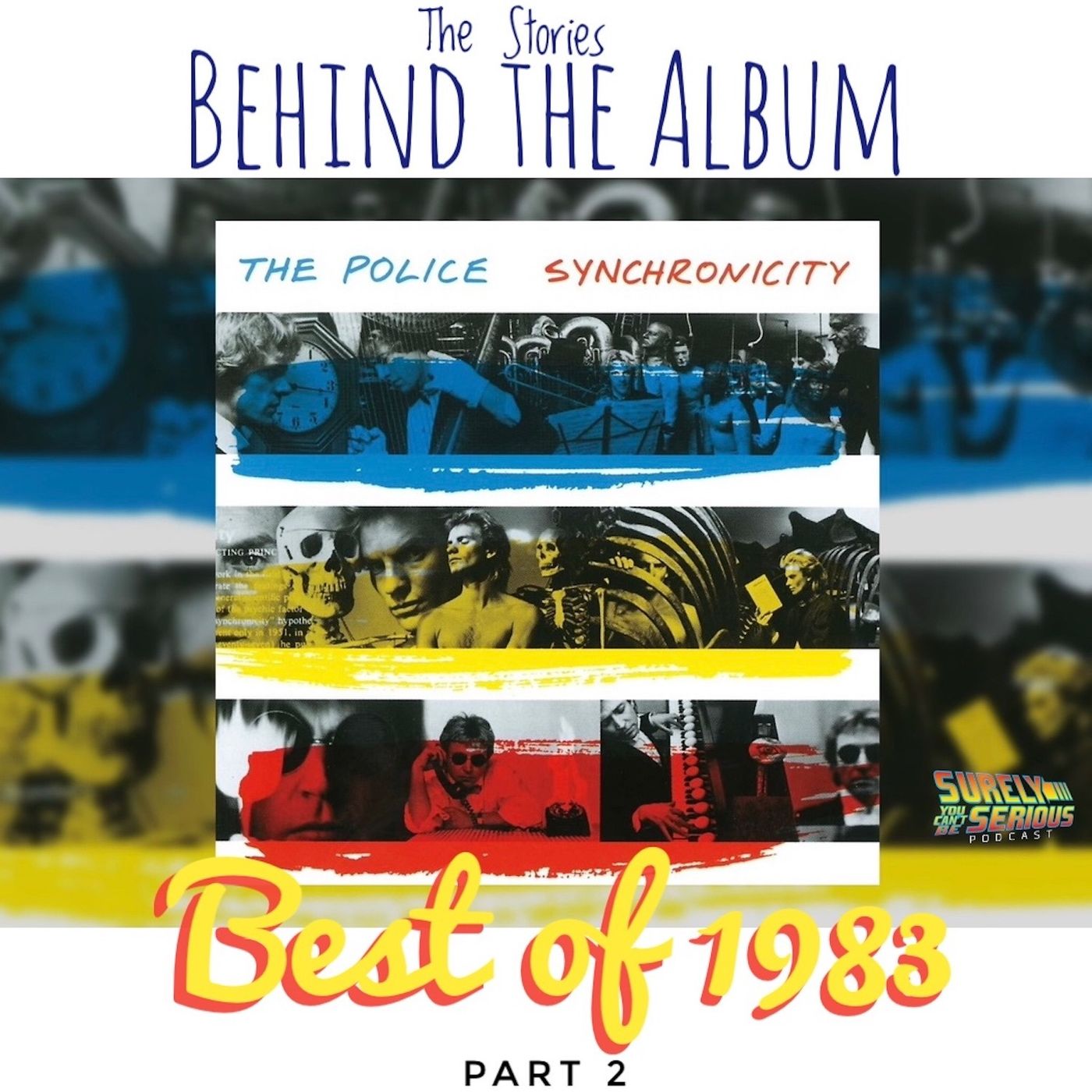
Synchronicity by The Police (1983): Track by Track
In 1983, The Police released Synchronicity and Journey released Frontiers. Join us in this episode as we dive into the history of The Police and then examine their final album, Synchronicity, track by track. Next week we will dive into Frontiers and arrive at our final judgement as to which is the best album of 1983.
2023-01-11
63 min
Transcript
Available Results
Generated results are saved to the knowledge database for reuse and search.
No generated results are available for this episode yet.
Extract Knowledge
Pick what you want extracted first. Model, scope, and chapter options appear after a template is selected.
Generated results for public episodes are saved to the knowledge database so they can be reused and searched later.
Transcript
<v Speaker 1>Hello everybody, and welcome to the Surely You Can't Be
<v Speaker 1>Serious Podcast, discussing and debating the iconic and the forgotten
<v Speaker 1>of eighties and nineties pop culture with your co hosts
<v Speaker 1>James D. Graves and Jason Colliphans.
<v Speaker 2>All right, welcome everybody. We are here for our Synchronicity
<v Speaker 2>Versus Frontiers episode. I'm so excited about this episode. I've
<v Speaker 2>been looking at these bands. Getting back to revisit them
<v Speaker 2>is going to be awesome. Jason, are you Are you
<v Speaker 2>all right? Are you there?
<v Speaker 3>Yeah? I'm sorry. I'm still I'm still trying to figure
<v Speaker 3>out who the biggest a held out of these three
<v Speaker 3>guys is. I can't tell which one it is, or
<v Speaker 3>if it's all three. I'm not sure.
<v Speaker 2>Yeah, I don't know. I don't know the three guys
<v Speaker 2>and the police. It's a struggle because obviously that none
<v Speaker 2>of them could get along. And I've had that same struggle, man,
<v Speaker 2>I really have. I can't tell.
<v Speaker 3>Okay, I go back and forth. I'm gonna be curious
<v Speaker 3>of who.
<v Speaker 2>You lean, right, That'll be a separate decision making part
<v Speaker 2>of this, I guess decide to judge, make the judgment
<v Speaker 2>of who the a hole is.
<v Speaker 3>This is gonna be interesting because you and I have
<v Speaker 3>talked off air, but you and I, we don't really
<v Speaker 3>have a relationship. Prior to the study that we do
<v Speaker 3>for the podcast, we didn't really have a relationship with
<v Speaker 3>either one of these albums.
<v Speaker 2>No, this was my older brother's album for sure, and
<v Speaker 2>he's eight years older than I am. So this album
<v Speaker 2>came out in eighty three, so he would have been
<v Speaker 2>just driving around this time, so he's gonna be jamming
<v Speaker 2>out to this one all the time. I know that
<v Speaker 2>we had the LP. I'm pretty confident that he also
<v Speaker 2>had the tape, and so as a new driver with
<v Speaker 2>a new car and a tape deck in it, I
<v Speaker 2>know that he listened to this a lot. But it's interesting.
<v Speaker 2>You know, we'll get into the songs a little bit later.
<v Speaker 2>But I had to ask him about listen to it.
<v Speaker 2>I was like, did you really ever listen to the
<v Speaker 2>first side? Did you listen to the As was like, yeah,
<v Speaker 2>I listened to it all the time. Like okay, because
<v Speaker 2>going back, I have some struggling with a lot of
<v Speaker 2>the first half of the album.
<v Speaker 3>So okay, see, I'm going to give a shout out
<v Speaker 3>to a good friend of mine named Melissa Mingle. I
<v Speaker 3>was talking to her about this. I said, did you
<v Speaker 3>have Synchronicity? She's like, oh, of course. I said, did
<v Speaker 3>you listen to the entire album?
<v Speaker 2>Just the hits?
<v Speaker 3>She's like, no, I love the whole album. I'm like,
<v Speaker 3>what'd you think of the song Mother? She's like, mother, hmmmm.
<v Speaker 3>She couldn't really place it. She texted me later after
<v Speaker 3>that discussion She's like, I can't believe I missed that show.
<v Speaker 2>So it was a show for sure.
<v Speaker 3>I don't want to. You know, we'll get into what
<v Speaker 3>we think about these songs individually, but before we do. Yes,
<v Speaker 3>this is Synchronicity by the Police versus Frontiers by Journey
<v Speaker 3>to the biggest albums of nineteen eighty three.
<v Speaker 2>Right, both released in nineteen eighty three. One of them,
<v Speaker 2>Synchronicity has the defining song for the Police. Frontiers has
<v Speaker 2>my favorite song from Journey on it. So it'll be
<v Speaker 2>an interesting matchup. Not Journey's biggest hit of all, not
<v Speaker 2>their defining song probably, but certainly one that's right up
<v Speaker 2>there close to the top.
<v Speaker 3>Yeah, it's gonna be fun before we even get started.
<v Speaker 3>I mean, I thoroughly enjoy what we do for our podcast.
<v Speaker 3>But taking a deep dive into two albums that I
<v Speaker 3>didn't really have a relationship with has been a lot
<v Speaker 3>of fun. I'm anxious to get into what we think.
<v Speaker 2>Absolutely yeah, the two albums that were going through I've
<v Speaker 2>probably listened to at least a dozen times each since
<v Speaker 2>we came up with this idea.
<v Speaker 3>It's gonna be fun. I'm excited to do it. Rocks.
<v Speaker 2>So normally I would like tell a story about what
<v Speaker 2>I was doing in nineteen eighty three, But in nineteen
<v Speaker 2>eighty three, I was in second grade, and beyond having
<v Speaker 2>the Michael Jackson experience with the Motown and the Glove,
<v Speaker 2>I don't remember anything else about that year. You have
<v Speaker 2>any recollection of nineteen eighty three what you had.
<v Speaker 3>Going on, Well, I can tell you the biggest thing
<v Speaker 3>that happened in my life in nineteen eighty three was
<v Speaker 3>Return of the Jedi came out.
<v Speaker 2>Oh yeah, that is the first Star Wars movie that
<v Speaker 2>I remember seeing in the theater. I have no recollection
<v Speaker 2>of seeing the other movies for the first time. I've
<v Speaker 2>got no memory of Oh my gosh, Darth Vader is
<v Speaker 2>the Skywalker's dad, Like it was just somehow that's always
<v Speaker 2>been in my memory banks. So it was Sorry for
<v Speaker 2>the spoiler alert for anybody out there. Man, dang, I
<v Speaker 2>was gonna watch that tonight.
<v Speaker 3>You missed forty years too late, and I've been waiting
<v Speaker 3>for forty years to watch that movie.
<v Speaker 2>Oh my gosh.
<v Speaker 3>You missed one of the great movie watching experiences of
<v Speaker 3>all time. Man, I mean it rocked my world. And
<v Speaker 3>then I had to live with it for three years, you.
<v Speaker 2>Know, yeah, like, what what's going to happen? Right?
<v Speaker 3>I know we would talk about it on the playground.
<v Speaker 3>Do you think no way, there's no way possible.
<v Speaker 2>It's not real. He was lying, lying, right, He's a
<v Speaker 2>bad guy, of course he was lying.
<v Speaker 3>So yeah, nineteen eighty three, I mean I remember seeing
<v Speaker 3>Here's here's what I remember about nineteen eighty three. Okay,
<v Speaker 3>he talked, We talked a little bit about Pirate. First
<v Speaker 3>real experience with rock music. Return of the Jedi came
<v Speaker 3>out in eighty three that summer, Octopusy and Never Say
<v Speaker 3>Never Again. He had two James Bond movies in the
<v Speaker 3>theater at the same right, Trading places, right, training places.
<v Speaker 3>That's my memory. See that memory from the year, the
<v Speaker 3>first year of Boobies. Yeah, that's it. Okay, we can
<v Speaker 3>move on now. Congratulations the year d became a man.
<v Speaker 2>So in nineteen eighty three, these two albums were released
<v Speaker 2>Synchronicity by the Police and Frontiers by Journey. Today we're
<v Speaker 2>going to talk about Synchronicity. Next episode, we will be
<v Speaker 2>talking about Frontiers.
<v Speaker 3>As far as my relationship with this album, I knew
<v Speaker 3>everybody knew Every Breath You Take. I mean I was
<v Speaker 3>familiar with King of Pain and some others.
<v Speaker 2>Of course, I say it every musical episode that we have.
<v Speaker 2>I say this, but MTV. If it was not for MTV,
<v Speaker 2>this album may not have been the album that it was.
<v Speaker 2>The fact that Every Breath You Take was maybe their
<v Speaker 2>first song that became what they called a heavy rotation
<v Speaker 2>song definitely seal the deal. Just to talk about the
<v Speaker 2>history of the band, you know, you got three guys
<v Speaker 2>who come from very different backgrounds. A couple of guys
<v Speaker 2>from England, one guy from the States who actually grew
<v Speaker 2>up in the Middle East. He's got a real, really
<v Speaker 2>neat history all to himself. But it is Sting whose given.
<v Speaker 3>Name is Gordon Sumner.
<v Speaker 2>Gordon Sumner School. Does he become the hero that he is?
<v Speaker 2>Does he become the rock god that he is. If
<v Speaker 2>his name is Gordon.
<v Speaker 3>No way Sting is a super cool name. Gordon Sumner
<v Speaker 3>way low on the cool meter.
<v Speaker 2>Yeah, it's the English teacher that you don't want to
<v Speaker 2>go sit in his class. I'll start with Andy Summers. Okay.
<v Speaker 2>So Andy Summers was the oldest member of the band,
<v Speaker 2>and he had had a significant musical career before he
<v Speaker 2>ever started with the Police. He started playing piano when
<v Speaker 2>he was sick. He got his first guitar when he
<v Speaker 2>was eleven. By the time he was sixteen, he was
<v Speaker 2>playing in jazz clubs and pretty quickly he met up
<v Speaker 2>with this guy called Zoot Money, and it was this
<v Speaker 2>kind of jazzy rock, you know, classic fifties style rock
<v Speaker 2>that they were doing in the sixties. But they were playing,
<v Speaker 2>you know, they would share the stage with bands like Pink,
<v Speaker 2>Floyd Cream, Jimmy Hendrix. He was making it big in
<v Speaker 2>the sixties when these other guys were just still kids
<v Speaker 2>in school. Really. He and Zoop Money eventually formed a
<v Speaker 2>separate band. The band that they were in split up,
<v Speaker 2>and he and Zoot Money started doing lots of drugs together,
<v Speaker 2>and so they formed the psychedelic rock band called Tatalian's Chariot,
<v Speaker 2>and so he moved out to the States and they
<v Speaker 2>tried to do their psychedelic rock thing, but eventually that
<v Speaker 2>fell apart, and then he started playing guitar with kind
<v Speaker 2>of the second rendering of the Animals. I'm sure you
<v Speaker 2>know The Animals. They had the House of the Rising
<v Speaker 2>Sign and a whole lot of other hits, right, But
<v Speaker 2>his connection with that band lasted for one album and
<v Speaker 2>then it just kind of all fell apart, and pretty
<v Speaker 2>quickly he found himself unemployed, giving guitar lessons for next
<v Speaker 2>to nothing, and then he got arrested for drug possession
<v Speaker 2>and he thought his life was over. And then he
<v Speaker 2>meets his future wife, Kate, and he's like, wait a minute,
<v Speaker 2>I'm going to change my life around. Everything's gonna be great.
<v Speaker 2>They get married, they go back to London, but by
<v Speaker 2>this time he's nearly thirty. He's twenty nine years old,
<v Speaker 2>and so for being a rock star, that's over the hill.
<v Speaker 3>Right, Yeah, It's like getting in the NBA at thirty five,
<v Speaker 3>you know, right.
<v Speaker 2>And he happens upon this other band and then just
<v Speaker 2>because he happens to be playing the local clubs whenever
<v Speaker 2>Rolling Stones start looking for guitarist. He's on the list
<v Speaker 2>with like Eric Clapton as a possible new guitar player
<v Speaker 2>for the Stones, which is pretty amazing, but of course
<v Speaker 2>he didn't make it. Otherwise we'd be talking about Rolling Stones, right.
<v Speaker 2>And then he gets invited to play as kind of
<v Speaker 2>the lead guitar on this orchestral piece called Tubular Bells
<v Speaker 2>by the Newcastle Orchestra. And there's a couple of other
<v Speaker 2>session musicians there, a bass player by the name of
<v Speaker 2>Sting and a drummer by the name of Stuart Copeland.
<v Speaker 2>Sting's band was called Last Exit. Stuart Copeland's band was
<v Speaker 2>called Curved Air, and they happened to do another thing together,
<v Speaker 2>just a session band for this one off show in Paris.
<v Speaker 2>Again they meet up and at this time Stuart Copeland
<v Speaker 2>has put together a punk band.
<v Speaker 3>Yeah, this is interesting. This is nineteen seventy seven when
<v Speaker 3>punk is going through the roof and Stuart Copeland says
<v Speaker 3>to himself, and these guys are talentless. They don't really
<v Speaker 3>know how to play their instruments. We don't need all
<v Speaker 3>these other people involved. We just need a singer and
<v Speaker 3>a guitar player, you know, a drummer and a bass
<v Speaker 3>player and that's it.
<v Speaker 2>That's all we need, and we don't need to know
<v Speaker 2>how to play, right, everybody was going to the shows
<v Speaker 2>by musicians who screamed and didn't sing and didn't know
<v Speaker 2>but three chords and barely knew how to play those,
<v Speaker 2>and somebody who just hit the drums hard. You know.
<v Speaker 3>Stuart was kind of the head of the band. Initially,
<v Speaker 3>he listened to Last Exit. He contacted Sting, invited us
<v Speaker 3>thing to play with him. They had a different guitar
<v Speaker 3>player who's actually a punk guitar player, Henry Pottovanni.
<v Speaker 2>Right, well, he really wasn't anything. He just knew all
<v Speaker 2>the right people, like he knew all the punk bands.
<v Speaker 2>And so as Sting is on his way over, Stuart
<v Speaker 2>Copeland shows Henry Pottavanni how to play the three chords
<v Speaker 2>that he's going to need to know how to play
<v Speaker 2>to be a punk band, and as it manages to
<v Speaker 2>fool Sting for at least a little bit in order
<v Speaker 2>to get him to agree to sign up to be
<v Speaker 2>in this punk band. And they go out and play
<v Speaker 2>and they're doing awful punk. But people can kind of realize, hey,
<v Speaker 2>these guys actually a couple of them seem to really
<v Speaker 2>know what they're doing, and that guy can actually sing
<v Speaker 2>a little bit.
<v Speaker 3>When they first started, Henry Pottovanni he was rubbish. Stuart
<v Speaker 3>and Sting just pretended to be rubbish, right right.
<v Speaker 2>They would follow bands that new four chords and they
<v Speaker 2>would be a band that new four hundred chords.
<v Speaker 3>They were trying to capitalize on that punk movement, which
<v Speaker 3>is crazy because they don't sound punk at all.
<v Speaker 2>Oh no, no, no, no, I mean the farthest from it. Eventually,
<v Speaker 2>you know they, I don't know what honestly possessed Stuart
<v Speaker 2>to try to get in contact with Andy Summers, the
<v Speaker 2>guitar player, and say, hey, we'd like you to join
<v Speaker 2>the band with us. Obviously they'd had these two sessions.
<v Speaker 2>They saw that he was a talented musician. But but
<v Speaker 2>why do that? I think maybe they were looking for
<v Speaker 2>a future beyond punk. I guess I don't know. But
<v Speaker 2>after just a couple of shows playing together as a foursome,
<v Speaker 2>Andy Summers simply said, I'm not going to play with
<v Speaker 2>this other guitarist. Just it's not going to happen, You're right,
<v Speaker 2>So he was ready to be out of the band.
<v Speaker 2>He's thinking things over. He's on this train and he
<v Speaker 2>gets off the train and at the same time that
<v Speaker 2>he gets off the train, Stuart Copeland gets off another
<v Speaker 2>car on the train and they laugh about the fact
<v Speaker 2>that they've you know, coincidentally met each other, and they
<v Speaker 2>have this intense conversation and then they call up Henry
<v Speaker 2>and say sorry, buddy, no longer in the band.
<v Speaker 3>And he was okay with that.
<v Speaker 2>He has this very French attitude about the whole thing,
<v Speaker 2>is like, who cares, you know, whatever it is, what
<v Speaker 2>it is, you know whatever.
<v Speaker 3>But he never really I'd never really buy it when
<v Speaker 3>people say that, like, yeah, I was originally in Van Halen,
<v Speaker 3>but I got out before they made a bazillion dollars.
<v Speaker 3>But it's okay, no big deal to me.
<v Speaker 2>But he actually he went to become a guitarist for
<v Speaker 2>Wayne Country and the Electric Chairs, who at the time
<v Speaker 2>that had happened, were a better known band than the
<v Speaker 2>Police was. It's funny because the guy who didn't know
<v Speaker 2>how to play anything got to be in the better
<v Speaker 2>band at the time.
<v Speaker 3>Next up on the Countdown a few by Wayne Country
<v Speaker 3>and the Electric Chairs. I think it's interesting in the
<v Speaker 3>early days when they finally get the threesome together. They
<v Speaker 3>start playing clubs around London. Yeah, and there's like six
<v Speaker 3>people in the audience, including the guy's wives and girlfriends.
<v Speaker 3>They were like, they were a nothing band.
<v Speaker 2>Andy's been all over and he's been in the UK,
<v Speaker 2>he's been in the US, and now he's back, you know,
<v Speaker 2>scrounging and he's with this band and going in and
<v Speaker 2>playing these punk clouds and the punk audience, for.
<v Speaker 4>Lack of a better word, are punks, and so they
<v Speaker 4>had there was this trend that started where they would
<v Speaker 4>spit on the musicians, Like I think it started with
<v Speaker 4>just you know, spitting their beer on them, but then
<v Speaker 4>it just turned into spit like they just hawk Loovi's
<v Speaker 4>at the band and and he was just like, you
<v Speaker 4>know what, I was tired of getting spit on.
<v Speaker 2>I did not want to do this anymore.
<v Speaker 3>I don't blame him at all. We talked a little
<v Speaker 3>bit about this in our Neirvana Pearl Jam episode. You
<v Speaker 3>listen to that, go back into the archives and listen
<v Speaker 3>to that. But people acting crazy, punching, people spitting up.
<v Speaker 3>But that's not my scene at all. I don't blame
<v Speaker 3>him one bit for that.
<v Speaker 2>I can handle a mosh pit. If somebody spits on me,
<v Speaker 2>they're going to get a fist in the face. So yeah,
<v Speaker 2>they started doing better music. And then Stuart Copeland comes
<v Speaker 2>in one day and he's bleached his hair blonde, and
<v Speaker 2>they're like, what in the world did you do? And
<v Speaker 2>then within a week Sting and get both done the
<v Speaker 2>same thing, and so weird. It was weird. It was
<v Speaker 2>kind of like the makeup for kiss. It gave them
<v Speaker 2>this identity. You know, they're they're the blonde trio over
<v Speaker 2>here at Bleached Blonde Trio.
<v Speaker 3>And Stuart's brother, who is their manager, says, well, we
<v Speaker 3>got to get you to the States. When they go
<v Speaker 3>over to the States, they play a club in New
<v Speaker 3>York City and it's like craziness, Like New York City
<v Speaker 3>loves them. And they sort of bounced around this little
<v Speaker 3>three week mini tour on the Northeast and they do
<v Speaker 3>really well in the States. Andy Summer's wife was in
<v Speaker 3>labor back in London, getting ready to have his daughter. Yeah,
<v Speaker 3>and he calls her and he says, I can't be there.
<v Speaker 3>He goes, there's a thousand people here, and they had
<v Speaker 3>just been playing in front of six or seven or
<v Speaker 3>ten back in London.
<v Speaker 2>It's so crazy to think about all of these bands
<v Speaker 2>that we talk about started at one place and then
<v Speaker 2>end up being megastars, and it's for a lot of
<v Speaker 2>them a really quick turnaround. And obviously the States tour
<v Speaker 2>did a whole lot for the police. But like before this,
<v Speaker 2>there was a time where Sting didn't have a place
<v Speaker 2>to stay sometimes, and so he spent the night with
<v Speaker 2>Andy and Kate, his wife allt Kate was pregnant, and
<v Speaker 2>Andy says, I can still remember us drifting off to
<v Speaker 2>sleep listening to Sting play this little ditty on his
<v Speaker 2>acoustic guitar that he had just come up with that night,
<v Speaker 2>singing rocksand and who would have known that it turned
<v Speaker 2>out to be the way that it was. You know,
<v Speaker 2>Bob Garcia was the guy who was in charge at
<v Speaker 2>that point. He was listening to this song and his
<v Speaker 2>dog started howling at the sound of the song, right,
<v Speaker 2>And he says, so at that moment, I knew that
<v Speaker 2>it was a hit. As it turns out, he was wrong.
<v Speaker 2>They released that single, it didn't do very well until
<v Speaker 2>they had that United States tour, and then they re
<v Speaker 2>released it the next year and it made them the
<v Speaker 2>name that they are. So after rock Sande had become
<v Speaker 2>the success, they sat down that had the band meeting
<v Speaker 2>that you know that David Lee Roth hated. But these guys,
<v Speaker 2>these guys were all smart, driven guys, and so they
<v Speaker 2>sat down and they said, listen, we are no longer
<v Speaker 2>going to be chasing the moment. We're no longer going
<v Speaker 2>to be pretending to be a punk band or pretending
<v Speaker 2>to be a whatever style of the band is today.
<v Speaker 2>We are going to be the one that makes the moment.
<v Speaker 2>And man, I gotta I say, that's what they did before.
<v Speaker 2>And since I can't think of a single band that
<v Speaker 2>I would say, oh, these guys sound like the Police, No,
<v Speaker 2>they are a unique band all on their own.
<v Speaker 3>Yeah, I'm with you. Thing's voice really sets them apart.
<v Speaker 3>He has one of the most unique voices in the
<v Speaker 3>nineteen eighties for sure. Oh yeah, all right, So man,
<v Speaker 3>you're gonna have to help me with these titles. I
<v Speaker 3>don't even know how to pronounce these.
<v Speaker 2>Okay, Yeah, So we have a lot of very unique
<v Speaker 2>album titles, and forgive us for messing them up. But
<v Speaker 2>Sting was a very well read guy who wasn't afraid
<v Speaker 2>of being pretty esoteric in his lyrics and his album titles.
<v Speaker 2>So their first album was outlandis de.
<v Speaker 3>More and that's the one that had rock sande.
<v Speaker 2>Right, and then they had Regatta do Blanc.
<v Speaker 3>Okay, you may remember that for like Message in a Bottle,
<v Speaker 3>Walking on the Moon.
<v Speaker 2>Next two albums, You've got Zenyata Mandada, which I mentioned
<v Speaker 2>long ago, came out on my birthday in nineteen eighty.
<v Speaker 3>That's right, don't stand so close to me. Do Do
<v Speaker 3>Do Do Da Da da right right right.
<v Speaker 2>And then in nineteen eighty one you had Ghost in
<v Speaker 2>the Machine.
<v Speaker 3>Okay, so Ghost of the Machines. Really, when I kind
<v Speaker 3>of pick them up, that's spirits in the material world.
<v Speaker 3>And the big hit on that one was every little
<v Speaker 3>thing she does is magic.
<v Speaker 2>So Ghost in the Machine was a book by Arthur Koestler,
<v Speaker 2>who also wrote The Roots of Coincidence, which is about synchronicity,
<v Speaker 2>a psychologists philosopher who wrote a couple of books that
<v Speaker 2>inspired Sting enough to name his albums. So they do
<v Speaker 2>their US tour and then they do a world tour,
<v Speaker 2>and by world tour, I mean literally world tour. They're
<v Speaker 2>going to Egypt, they're going to India, they're going to
<v Speaker 2>places that no other bands are going to, and so
<v Speaker 2>they're gone for months on end, and Andy's got this,
<v Speaker 2>you know, new baby daughter at home and wife at home,
<v Speaker 2>and after the tour, you know, you would expect, hey,
<v Speaker 2>go home and see my wife and kid. But he
<v Speaker 2>decides to spend another three weeks in Bali with Stuart,
<v Speaker 2>and as it happens, John Belushi is staying at Bali
<v Speaker 2>at the same time, and they immediately hit it off.
<v Speaker 2>They're like, oh, hey, this guy's hilarious, and he's like, yeah,
<v Speaker 2>I'm hilarious.
<v Speaker 3>I have not heard this story.
<v Speaker 2>Yeah, and then they find this restaurant in Bali that
<v Speaker 2>serves omelets with mushrooms. Magic mushroom.
<v Speaker 3>Oh my gosh, that's a very John Belushi thing to
<v Speaker 3>order off the menu, right.
<v Speaker 2>Absolutely, yeah, I'm pretty sure he must have been the
<v Speaker 2>guy that introduced him to this place. So, so, needless
<v Speaker 2>to say, things weren't going very well. By the time
<v Speaker 2>Andy got back home after doing the US tour, doing
<v Speaker 2>the World's Tour. It's safe to say that the relationship
<v Speaker 2>among the band members was getting pretty strict. I'd like
<v Speaker 2>to avatas for a new fine.
<v Speaker 3>Yeah, they had this sort of brotherly like relationship. They
<v Speaker 3>couldn't ever compromise, right, Right, So there's three very strong willed,
<v Speaker 3>very capable musicians, and every single thing has to be perfect,
<v Speaker 3>but it has to be that guy's version of perfect. Well, no,
<v Speaker 3>it's my version of perfect.
<v Speaker 2>Right.
<v Speaker 3>It would come to blow us, They would come to
<v Speaker 3>I mean fisticuffs.
<v Speaker 2>Right, And you know, we talked about trying to figure
<v Speaker 2>out who the a whole was at the beginning of this.
<v Speaker 2>Right from what I can gather, Stuart was very aggressive
<v Speaker 2>and Sting was passive aggressive, and Andy was kind of the
<v Speaker 2>mediator between the two of them, but he had his
<v Speaker 2>own you know, he'd stick his heels in frequently as well. So, yeah,
<v Speaker 2>you've got guys who are all very talented, very intelligent,
<v Speaker 2>who are all driven, who all have their own idea
<v Speaker 2>about the way things go. And I mean you pointed
<v Speaker 2>out to me like Stuart's got to be thinking, you know,
<v Speaker 2>what's with Sting writing all the songs? This is my band.
<v Speaker 2>I formed this band. And then Andy's got to be
<v Speaker 2>thinking what is with these guys. I'm the guy who has,
<v Speaker 2>you know, another decade worth of experience over them. I'm
<v Speaker 2>the guy that's played with other bands, I'm the guy who's,
<v Speaker 2>you know, the probably the best musician in the band.
<v Speaker 2>And then of course Sting is thinking, I'm the guy
<v Speaker 2>who writes all of the hits.
<v Speaker 3>Everybody had a reason to dig their heels in and
<v Speaker 3>claim leadership role in the band.
<v Speaker 2>Right, and so it kind of became a thing. Like
<v Speaker 2>there's a great interview with Martha Quinn after one of
<v Speaker 2>their shows and they keep bickering back and forth, and
<v Speaker 2>she's trying to ask questions and she's finally like, so
<v Speaker 2>do you guys mind just answering to some of my
<v Speaker 2>questions at the moment?
<v Speaker 3>Questions Thomas, Okay, I'll.
<v Speaker 2>Tell you what. Should we film me whipping Sting? How
<v Speaker 2>about it you and see me be singing? Then Sting
<v Speaker 2>throws his drink in Stuart's face and they take off
<v Speaker 2>like Sting thing's running and Stuart's ready to whoop some a.
<v Speaker 3>It really was legit to drink in the face. I'm
<v Speaker 3>getting out of here. Stuart's knocking over the table. Martha
<v Speaker 3>Quinn is just like, what is going on right here?
<v Speaker 2>Yeah, She's like, okay, I guess we're done. She was
<v Speaker 2>not happy.
<v Speaker 3>So, yeah, they had a tough relationship these guys were
<v Speaker 3>like brothers and a lot of times they couldn't stand
<v Speaker 3>each other.
<v Speaker 2>So they get together for their fifth album, right and
<v Speaker 2>without hesitation, they are at the very top of the game.
<v Speaker 2>They are regarded as the best band in the world
<v Speaker 2>at this moment. That they get together for their fifth album,
<v Speaker 2>and in recording the album, they go to the most
<v Speaker 2>beautiful place in the Caribbean that you could go to.
<v Speaker 2>I mean, it's just how perfect could it be? But
<v Speaker 2>what happens?
<v Speaker 3>So, yeah, I heard Stuart Copeland talking about this. So
<v Speaker 3>they're at Montserrat. This is island in the Caribbean. This
<v Speaker 3>is the same place that they record A Ghost in
<v Speaker 3>the Machine. Same producer, Hugh patrim He said every day
<v Speaker 3>they'd wake up in their little bungalows and they'd see
<v Speaker 3>the water and they'd see the beach and it'd be beautiful.
<v Speaker 3>And he said, you'd just be whistling this happy tune
<v Speaker 3>on your way at the studio, and then by the
<v Speaker 3>time you got to the studio, this black cloud came
<v Speaker 3>over and you want to kill everybody while you're there.
<v Speaker 3>I don't know if you know this or not. Stem
<v Speaker 3>wrote a lot of the songs for this album, in
<v Speaker 3>Jamaica at GoldenEye, where Ian Fleming wrote most of the
<v Speaker 3>James Bond novels.
<v Speaker 2>Yes, he wrote, he sat down and wrote at Ian
<v Speaker 2>Fleming's desk, wrote Every Breath You Take.
<v Speaker 3>Take was written at the same desk that The Spy
<v Speaker 3>Who Loved Me was written.
<v Speaker 2>That's crazy.
<v Speaker 3>How about that is crazy?
<v Speaker 2>So they end up being in separate rooms, and Pagem said, well,
<v Speaker 2>we wanted to put them in the place that gave
<v Speaker 2>them the best sound for each of their instruments, and
<v Speaker 2>also so that they wouldn't kill each other.
<v Speaker 3>And also for social reasons.
<v Speaker 2>It's for social reasons, social distancing. There's some social distancing
<v Speaker 2>going on back in nineteen eighty three. So they had
<v Speaker 2>they had Stuart Copeland in the living room, they had
<v Speaker 2>Sting in the recording booth, and Andy Summers that was
<v Speaker 2>the only one that was actually inside the studio itself.
<v Speaker 2>It's crazy.
<v Speaker 3>They gathered in December of nineteen eighty two to record
<v Speaker 3>this album which would be released June one, nineteen eighty three.
<v Speaker 2>And as you mentioned, Sting came with almost all of
<v Speaker 2>his songs already demoed.
<v Speaker 3>Out to talk about that, because that is a big deal.
<v Speaker 3>Sting shows up with like ten songs, perfectly produced, ready
<v Speaker 3>to go, like, hey, guys, check this out. It's completely done.
<v Speaker 3>I don't need your help on any of this. And
<v Speaker 3>it's right every breath you take, and it's King of
<v Speaker 3>Pain and it's synchronicity too. I can see where these
<v Speaker 3>guys would be like, that song is really good, but
<v Speaker 3>that's not me. And and Stuart made the comment He's like,
<v Speaker 3>it was a great song, I just needed to make
<v Speaker 3>my mark on it, and Sting wouldn't let me, and
<v Speaker 3>that became World War three. I mean, I can see
<v Speaker 3>where that would be irritating, right.
<v Speaker 2>Oh sure, yeah, I mean, okay, I'll go ahead and
<v Speaker 2>get I'll disclosed. I'll disclose my judgment. I watched Stuart
<v Speaker 2>Copeland's documentary. I watched Andy Summers documentary. I didn't watch
<v Speaker 2>the Sting documentary, but I'm pretty familiar with Sting. When
<v Speaker 2>I started, I had in my head that Andy Summers
<v Speaker 2>was probably the jerk. After doing the research that I have,
<v Speaker 2>I got to say, Andy Summers is probably the guy
<v Speaker 2>that was maybe the little bit of the dork, but
<v Speaker 2>the guy that tried to make peace between the other
<v Speaker 2>two guys most of the time. I think Sting tried
<v Speaker 2>to be polite but firm about what he wanted, and
<v Speaker 2>rightly so, because he's the guy that's writing all of
<v Speaker 2>their hit songs. And I think Stuart Copeland was being
<v Speaker 2>a potty little brat. That's my I'm calling Stuart Copeland
<v Speaker 2>the ahole. Sorry, Stuart, if you happen to be listening
<v Speaker 2>in I haven't met you. It's not appropriate for me
<v Speaker 2>to say these things about you. But I'm just going
<v Speaker 2>by what I've seen.
<v Speaker 3>I can't argue with that assessment, although I think all
<v Speaker 3>three of them had their turn as Captain ahole right
<v Speaker 3>right when you've got I mean, if you're playing a
<v Speaker 3>flag football game in the backyard and Joe Montana shows
<v Speaker 3>up and you're the quarterback, yeah, you've got to move
<v Speaker 3>over for Joe of Montana right right hand.
<v Speaker 2>Joe Montana the ball, and if he happens to pass
<v Speaker 2>it to you, feel lucky that you've got to get
<v Speaker 2>the ball passed to you by Joe Montana in your
<v Speaker 2>own yard.
<v Speaker 3>Yeah, And that was hard for guys like Stuart Copland,
<v Speaker 3>who is a super talented drummer, but he's just not
<v Speaker 3>a great singer, great great songwriter and that's not right.
<v Speaker 2>Knock on him is just not He's not a pop songwriter.
<v Speaker 2>I mean Sting had a pop song sensibility that he
<v Speaker 2>didn't have and that Andy Summers kind of had. But
<v Speaker 2>I mean he went on. He went on to score movies.
<v Speaker 2>So did Andy Summers. He scored some movies as well.
<v Speaker 2>They both are extremely talented musicians, just they don't have
<v Speaker 2>that special little thing that draws people into the music, right,
<v Speaker 2>They don't have the hook. Do you ready to start
<v Speaker 2>start talking about synchronicity.
<v Speaker 3>Let's let's jump in song by song, track by track,
<v Speaker 3>let's break it down. I want to know what you think.
<v Speaker 2>Okay, So the album itself is called synchronicity. It's based
<v Speaker 2>in a concept where you have two seemingly unrelated events
<v Speaker 2>which somehow are meaningful to each other.
<v Speaker 3>Can you explain that anymore than.
<v Speaker 2>Well, okay, yes, I will explain it more when we
<v Speaker 2>talk about synchronicity too here in just a little bit.
<v Speaker 3>Okay, Yeah, I think I think I know where you're
<v Speaker 3>going with this.
<v Speaker 2>Cool. As I mentioned before, it's based on this book
<v Speaker 2>called The Roots of Coincidence, which it says, hey, science,
<v Speaker 2>you should be paying attention to things that are unexplained,
<v Speaker 2>like paranormal phenomenon, supernatural type of things. These things don't
<v Speaker 2>happen very often, but they happen, and it's something you
<v Speaker 2>need to be aware of. And a lot of people
<v Speaker 2>wrote it off, but obviously it had a strong impact
<v Speaker 2>on Sting because you've got two different songs named for
<v Speaker 2>the concept on the album. The album itself nominated for
<v Speaker 2>five Grammys one to three. Yeah, musically it does this amazing.
<v Speaker 2>Like I said, you will not find a band. I mean,
<v Speaker 2>if you do, tell me about it. I'd love to
<v Speaker 2>hear a band that I go, oh wow. These guys
<v Speaker 2>are as good as the Police. Now. They did something
<v Speaker 2>where they merged genres of music that nobody had ever
<v Speaker 2>put together before, and they didn't. And you know, like
<v Speaker 2>they're kind of known for this reggae sound, but this
<v Speaker 2>album they kind of left the reggae behind. I mean,
<v Speaker 2>it's you get an inkling there, but most of the
<v Speaker 2>reggae on their first four Yeah, this is much different.
<v Speaker 2>And I can't say jazzy, I can't say world music.
<v Speaker 2>It's just it's a mix of stuff that's amazing. And
<v Speaker 2>they did all that and also achieved that sonic sound
<v Speaker 2>that we talked about with Thriller and with Hysteria, where
<v Speaker 2>the music is crisp and you feel each of the instruments.
<v Speaker 2>It's not muted and foggy like is the word that
<v Speaker 2>I always think of. It's more produced. We've talked about
<v Speaker 2>the producers before, and this one's definitely more produced and
<v Speaker 2>has more synthesizers in it, but it's still obviously with
<v Speaker 2>these guys being the musicians that they are, there's nothing
<v Speaker 2>fake about the production on this album.
<v Speaker 3>This album knocked Thriller out of the number one spot
<v Speaker 3>for a little while, Yeah kept it out for eight weeks,
<v Speaker 3>and then Thriller reclaimed it spot. But still right albums
<v Speaker 3>than Thriller in nineteen eighty three, that's pretty dag.
<v Speaker 2>I'm good right, as we said before. Produced by Hugh
<v Speaker 2>Pagem who he is the guy that came up with
<v Speaker 2>the gated reverb drum sound that we all know from
<v Speaker 2>in the Air Tonight by Phil Collins. Oh wow, nice,
<v Speaker 2>So not bad. I mean, I mean, if you're going
<v Speaker 2>to have a guy produce your album, that guy probably
<v Speaker 2>be a good one. But obviously he produced stuff for Genesis,
<v Speaker 2>produced stuff for Sting and several other big bands. But
<v Speaker 2>he almost walked out, Like it got to the point
<v Speaker 2>that they were fighting so much that he just he
<v Speaker 2>about said I'm done.
<v Speaker 3>He made the call. I mean, he said, I need
<v Speaker 3>to get out of here, and they're like, no, give
<v Speaker 3>us more time. All right, So let's dive in. Are
<v Speaker 3>you ready?
<v Speaker 2>Okay? So this concept of synchronicity comes out in this
<v Speaker 2>first song, which is almost like a description of the
<v Speaker 2>concept and the lyrics, and I'll just think, I'll say
<v Speaker 2>it a connecting principle linked to the invisible, almost imperceptible,
<v Speaker 2>something inexpressible, science, unsusceptible, logic, so inflexible, casually connectable, nothing
<v Speaker 2>is invincible. So it's it is two things that happen
<v Speaker 2>that seem to be completely unrelated to each other, but
<v Speaker 2>somehow are symbolically connected.
<v Speaker 3>Yeah, this song is high intensity. It's kind of a
<v Speaker 3>good rocker, rapid synthesizers at the beginning for the time
<v Speaker 3>and place in nineteen eighty three, this perfectly fits that
<v Speaker 3>time and era.
<v Speaker 2>You know what, I'm going to go ahead, I'll be
<v Speaker 2>completely honest with our listeners. When I sat down and
<v Speaker 2>started listening to this album, I listened to the first
<v Speaker 2>four songs and I called you up, and I said, Okay,
<v Speaker 2>I don't think I can defend this album. But honestly,
<v Speaker 2>the first songs in the album are an acquired taste, right.
<v Speaker 2>I mean, if you like stinky cheese, if you like
<v Speaker 2>homebrew beer or fine wines, that's something that you probably
<v Speaker 2>didn't enjoy the very first taste that you had of it.
<v Speaker 2>But it's something that after you did it for a
<v Speaker 2>little while, you're like, oh, I'm catching the nuances and
<v Speaker 2>the subtleties and all the wonderfulness about this. So yeah,
<v Speaker 2>So after listening to it now a dozen more times,
<v Speaker 2>I could say Synchronosity one is good and I enjoy
<v Speaker 2>actually all of the songs almost on this first side.
<v Speaker 3>I enjoyed Synchronicity one too. This was the top of
<v Speaker 3>their set list for the Synchronousity tour.
<v Speaker 2>Sure yeah, and it's a great one to get the
<v Speaker 2>audience hyped up. Like you said, it's got that exciting
<v Speaker 2>upbeat tempo.
<v Speaker 3>Okay, we both like Synchronousity.
<v Speaker 2>Yes. So the next song is called walking in Your Footsteps,
<v Speaker 2>and this one is again, this is one that I
<v Speaker 2>listened to and I think, eh, and then I listened
<v Speaker 2>to it a few more times. I'm like, Okay, this
<v Speaker 2>is good, this is all right, and it's it's almost
<v Speaker 2>like a kid song. Have you looked at the lyrics
<v Speaker 2>at this.
<v Speaker 3>Yeah, it's talking about dinosaurs and mister Bronosaurus, and you
<v Speaker 3>could see a bit like here's what I think about
<v Speaker 3>this song. Okay, it's funny that you say that, because
<v Speaker 3>this song sounds like what they would play in the
<v Speaker 3>Little People Carrier at Disney World or Animal Planet when
<v Speaker 3>you're writing the Safari Ride or something like that, you
<v Speaker 3>know what I mean.
<v Speaker 2>Well, yeah, so it is very is very much a
<v Speaker 2>kid's song. But then it goes on to talk about
<v Speaker 2>the Adam bombs larger meaning of mankind bringing about its
<v Speaker 2>own extinction, you know, just like the dinosaurs were the
<v Speaker 2>rulers of the world at one point and they're gone,
<v Speaker 2>so it looks like our fate is the same. So
<v Speaker 2>I like it. It's it's kid lyrics with a big,
<v Speaker 2>heavy meaning. How sting is that?
<v Speaker 3>I think you nailed it. I think you nailed it.
<v Speaker 3>I think it's a good song. It's kind of singable.
<v Speaker 3>It sounds a little bit international, maybe a little African,
<v Speaker 3>definitely belongs at Epcot or an Animal Planet, but it's
<v Speaker 3>good it's good.
<v Speaker 2>I like it all right. So our next song is
<v Speaker 2>the OMG song.
<v Speaker 3>Oh my God. For this song, oh my God, it's
<v Speaker 3>it's jazzy, there's there's a lot of horns, and this
<v Speaker 3>song actually dates back to Sting's days with his band
<v Speaker 3>Last Exit. It sounds like it belongs to a cough
<v Speaker 3>To me, I don't know, it's not really my style.
<v Speaker 3>I didn't really care for What do you think about
<v Speaker 3>this one?
<v Speaker 2>Yeah? This is again another one that I can listen
<v Speaker 2>to eat more easily now after having heard it a
<v Speaker 2>few times. But it took me. It took me a
<v Speaker 2>few times before I even caught that the last lyrics
<v Speaker 2>are a throwback? Do you know this? No? So the
<v Speaker 2>lyrics of this song have to do with somebody who's
<v Speaker 2>kind of struggling with God and their distance from God,
<v Speaker 2>which I mean, I don't know anybody who hasn't struggled
<v Speaker 2>with that issue as well. This one's maybe a little
<v Speaker 2>bit more bitter as it's going through this struggle. Then
<v Speaker 2>the end of the song, the last lyrics are you
<v Speaker 2>know the song? No, every little thing she does is magic?
<v Speaker 2>Oh my gosh, are you serious? That's cool? Yes? Yeah,
<v Speaker 2>So he throws back to his own song in this one,
<v Speaker 2>but instead of being about a girl, it's now about God.
<v Speaker 2>So it's heavy. It's I mean, it's it's heavy religious struggle,
<v Speaker 2>spirituality struggle that stings dealing with apparently. But yeah, I'm
<v Speaker 2>kind of with you. It's it's okay, it's okay at
<v Speaker 2>this point, but it's not certainly not a favorite on
<v Speaker 2>the album.
<v Speaker 3>All right, this is one I've been wanting to discuss
<v Speaker 3>with you. Okay. The next song is called mother d
<v Speaker 3>Your thoughts.
<v Speaker 2>Okay, that is enough of that. I tried so many
<v Speaker 2>times to listen to this.
<v Speaker 3>I'm just like, oh, it's so freaking weird, man.
<v Speaker 2>Oh my gosh, it is it is. It's not just weird,
<v Speaker 2>it's not good. I'm just saying it is flat out bad.
<v Speaker 2>And if you got folks, if you guys, if you're
<v Speaker 2>somebody out there who loves this song, let us know
<v Speaker 2>and let us know about the song. But this is
<v Speaker 2>instead of Carl Jung, we're talking about Sigmund Freud here,
<v Speaker 2>talking about all his girlfriends turning into his mother and
<v Speaker 2>his mother is always calling him. This one was written
<v Speaker 2>by Andy Summers, and he's he said he was considered
<v Speaker 2>to be the golden child of the family by his mom,
<v Speaker 2>and she put a lot of pressure on him. And
<v Speaker 2>when he made it big with the police, she was
<v Speaker 2>constantly calling him and living through him vicariously. And this
<v Speaker 2>was a song about that. And so maybe it's maybe
<v Speaker 2>it's appropriate that the Freudian song be shouted out.
<v Speaker 3>It's terrible this song. Okay, this is what I think.
<v Speaker 3>This is a song that would be effective. You remember
<v Speaker 3>at the very end of Silence of the Lambs when
<v Speaker 3>Clarius is walking around looking for buffalo Bill in the
<v Speaker 3>dark and all moss were flying around. That the type
<v Speaker 3>of song in the background that would be extra scary. Yeah.
<v Speaker 2>Yeah, it's not a pleasant song to listen. It just
<v Speaker 2>makes you uncomfortable in all respects. And was it you
<v Speaker 2>that told me that Sting's not singing on this?
<v Speaker 3>Sting said, no frigging way, I'm singing that stupid song.
<v Speaker 2>You know what, though he was on the song he
<v Speaker 2>played the obo.
<v Speaker 3>Yeah, not enough to save it.
<v Speaker 2>Oh no, no, no, no, this one. I'm sorry. I'm
<v Speaker 2>sorry for the for the mother fans out there, but
<v Speaker 2>this is unless you're talking Danzig, this is not a
<v Speaker 2>song I want to listen to.
<v Speaker 3>Hey, here's the other thing. And I don't want to
<v Speaker 3>be cruel here to Andy Summers, who's a super gifted musician, right,
<v Speaker 3>but they each brought songs to the table. Hey guys,
<v Speaker 3>this song, this is the one I want. Okay, Hey,
<v Speaker 3>I've got these three or four. This was the best
<v Speaker 3>he could come up with.
<v Speaker 2>I mean terrible.
<v Speaker 3>Well, it's a nightmare.
<v Speaker 2>It is a nightmare. And just to be fair to
<v Speaker 2>Andy Summers, like he's not always wrong in what he
<v Speaker 2>thinks is good. Like there was another song that he
<v Speaker 2>wrote call Behind the Camel that Sting hated, refused to
<v Speaker 2>sing on it and there's no words to it. And
<v Speaker 2>he won the Grammy for Best Instrumental Song that year
<v Speaker 2>for this behind the Camel song. So he who knows
<v Speaker 2>from good taste? You know, sometimes people think something's terrible
<v Speaker 2>and it turns out to be good, And sometimes people
<v Speaker 2>think something's good and it turns out to be Mother.
<v Speaker 3>That's right, That's right, Okay, So that was Andy Summers
<v Speaker 3>only offering for this.
<v Speaker 2>Well, yeah, he co wrote, I mean, you know, he
<v Speaker 2>co wrote with Sting on another one. But but yes,
<v Speaker 2>Mother was his baby. What a weird thing to say?
<v Speaker 3>All right, all right, I did read that. I read
<v Speaker 3>some stuff on the internet that there are a lot
<v Speaker 3>of people out there that feel like this song keeps
<v Speaker 3>this album from being considered a masterpiece.
<v Speaker 2>Yeah, that's this is this is still a masterpiece. That's not. Yeah. Anyway,
<v Speaker 2>so moving on, we've that's Andy Summers. Andy got one song,
<v Speaker 2>Stuart gets one song, and the next song is Missus Grandinko,
<v Speaker 2>which is Stuart Copeland's contribution with the album. What do
<v Speaker 2>you think?
<v Speaker 3>I mean, it's okay, Yeah, it's okay.
<v Speaker 2>Yeah, I actually like it. I enjoy the sound. The
<v Speaker 2>lyrics didn't really mean much to me until I started
<v Speaker 2>doing a little bit of digging. Do you know the
<v Speaker 2>story behind this? No?
<v Speaker 3>I don't.
<v Speaker 2>Okay, this is fascinating. So so Andy Summers wrote a
<v Speaker 2>song about his mother, Stuart Copeland writes a song about
<v Speaker 2>his father. But his father is a founding member of
<v Speaker 2>the CIA, like legitimately, yeah, like yeah, in nineteen forty seven,
<v Speaker 2>he is one of the founding members of the CIA,
<v Speaker 2>and he was like he was big time. He was
<v Speaker 2>involved in the overthrow of Syria, he was involved in
<v Speaker 2>the Iranian coupd a'ta and he was big time. I mean,
<v Speaker 2>he's written multiple books and just listen to this. You know,
<v Speaker 2>some of the things this guy has said, I kind
<v Speaker 2>of want to read his books. Here's a quote. My
<v Speaker 2>complaint has been that the CIA isn't overthrowing enough anti
<v Speaker 2>American governments, assassinating enough anti American leaders. But I guess
<v Speaker 2>I'm getting old. I can see, like maybe why this
<v Speaker 2>guy's kid and Sting didn't get along real well, you know.
<v Speaker 3>I didn't see eye politically, right.
<v Speaker 2>Yeah, So this song, this song is about this policy
<v Speaker 2>meeting of these government officials, and I think is a
<v Speaker 2>throwback to Stuart Copeland's dad and his days in the CIA.
<v Speaker 3>Nice. That is a cool start. I've never heard that before.
<v Speaker 3>I do know that Sting could barely bring himself to
<v Speaker 3>do the vocals on this song. Yeah, he agreed to
<v Speaker 3>do two days. That's it. Yeah, I'm only seeing the
<v Speaker 3>stupid song two times and they I guess they got it.
<v Speaker 2>So him and Donimici, you got one.
<v Speaker 3>Chance on this, DONAMICI throwback to the Trading Places episode,
<v Speaker 3>all right, before we move on to the next song.
<v Speaker 3>For the record, so far, we've had Synchronosity one, walking
<v Speaker 3>in Your Footsteps, Oh My God Mother, and Miss Gradenko.
<v Speaker 3>Yes not stellar so far.
<v Speaker 2>Okay, if these were the only songs on the album, yeah,
<v Speaker 2>You've got You've got a hard album to argue is
<v Speaker 2>a masterpiece, but giving what follows, yeah, I'm not gonna.
<v Speaker 3>Have Okay, buckle your seat belts because here we go.
<v Speaker 2>All right. Synchronicity two.
<v Speaker 3>This song is amazing.
<v Speaker 2>Oh it's so good. It is so good in all respects.
<v Speaker 2>The music is on point and the lyrics so. Synchronicity
<v Speaker 2>one describes the concept of synchronicity, and then Synchronicity two
<v Speaker 2>gives you an example of synchronicity. It is the story
<v Speaker 2>of a man in daily anguish.
<v Speaker 3>Of being my whole life that's half to yeah, yes, ah.
<v Speaker 2>Yes, yeah, that's great. So he's in this daily anguish
<v Speaker 2>of being his mother screaming at the wall. His wife
<v Speaker 2>is complaining about boredom and fresh but all her suicides
<v Speaker 2>are fake, and every meeting he has at work is
<v Speaker 2>a kick in the crotch.
<v Speaker 3>I love that line. Not just the kick in the crutch,
<v Speaker 3>a humiliating kick.
<v Speaker 2>In the crutch. So and then meanwhile, the other story. Meanwhile,
<v Speaker 2>a monster in Lochness moves towards the surface of the deep.
<v Speaker 2>This is the example These are parallel events that are
<v Speaker 2>seemingly completely unrelated but are symbolically connected because the man's
<v Speaker 2>paranoia and psychosis ebbs closer and closer to the edge
<v Speaker 2>in the same way that the monster moves closer and
<v Speaker 2>closer to the surface of the water. It's outstanding, amazing, incredible.
<v Speaker 2>I don't know. I don't know what else to say
<v Speaker 2>about this. I love it.
<v Speaker 3>I wasn't a fan of it before it, but like,
<v Speaker 3>this is a song that I'm adding to my regular
<v Speaker 3>playlist and we'll listen to and rock out when it
<v Speaker 3>comes on.
<v Speaker 2>This is Yeah, this is one that will give me
<v Speaker 2>legs if I'm on my run for sure.
<v Speaker 3>Have you have you seen the video of this?
<v Speaker 2>Yeah? The video is the band playing on piles of
<v Speaker 2>like broken instruments, kind of a dystopian looking thing, and
<v Speaker 2>then when they throw the chorus, it's like these shots
<v Speaker 2>of NeSSI.
<v Speaker 3>It's an interesting video. It's very eighties. It made me
<v Speaker 3>think of like a cheap version of the Stacks from
<v Speaker 3>Ready Player one, right, it's nice, yeah, apocalyptic stacks of junk.
<v Speaker 2>And why since you said it, a shout out to
<v Speaker 2>all our Gunter fans out there, we love you.
<v Speaker 3>Oh yeah, definitely our r p O guys. But love
<v Speaker 3>the song, Love the song. Time to push the stop button,
<v Speaker 3>flip it over here, we go side to basut.
<v Speaker 5>Wow.
<v Speaker 2>When a song is played as much as this song
<v Speaker 2>is played, and you've heard it as much as you've
<v Speaker 2>heard it, and when it comes on the radio, you
<v Speaker 2>still turn up the volume, that's a pretty freaking amazing song.
<v Speaker 3>It's an amazing song. It's an amazing song. And you're right,
<v Speaker 3>for those of you who are so familiar with the song,
<v Speaker 3>you can't truly appreciate it. Everybody, take a deep breath,
<v Speaker 3>take a step back, take a fresh look at this song,
<v Speaker 3>because it's amazing. It really is. In May of twenty nineteen,
<v Speaker 3>BMI recognized this song as the most played song in
<v Speaker 3>radio history at fifteen million radio plays, and it overtook
<v Speaker 3>You've Lost that Love, Oh my God?
<v Speaker 2>Hop gun ahead, Yeah, we'll see where it falls. You
<v Speaker 2>either already heard it in top gun or you're gunning
<v Speaker 2>here pretty soon. We don't know. So this is their
<v Speaker 2>signature song, right, I mean, one Grammy for Song of
<v Speaker 2>the Year. It has, as you mentioned, been played on
<v Speaker 2>the radio more than any other song, and from what
<v Speaker 2>I understand, it's estimated to be about a quarter to
<v Speaker 2>a third of Sting's musical income. And for a guy
<v Speaker 2>who's put out as many hits as he has, that's
<v Speaker 2>saying something.
<v Speaker 3>It's incredible. In two thousand and three, obviously that's a
<v Speaker 3>long time ago, But in two thousand and three, Sting
<v Speaker 3>was still making two thousand dollars a day on the
<v Speaker 3>royalties of this song.
<v Speaker 2>Oh my gosh, that's insane. That is insane.
<v Speaker 3>That is a sweet gig right there, collect royalty checks.
<v Speaker 2>This is the one. This is the one that was
<v Speaker 2>written at Ian Fleming's writing desk. Sting had separated from
<v Speaker 2>his wife, Francis Tomty and started dating their neighbor and
<v Speaker 2>her best friend, Trudy Styler, who he eventually married, And
<v Speaker 2>he woke up in the middle of the night with
<v Speaker 2>the lyrics in his head every breath you take, every
<v Speaker 2>move you make, went sat at the piano, put that
<v Speaker 2>tune to it, wrote it in half an hour, wrote
<v Speaker 2>it in half an hour, and twenty years later, was
<v Speaker 2>still making two thousand dollars a day.
<v Speaker 3>It's incredible, it's incredible. I heard him comment on the
<v Speaker 3>tone of this song. Yeah, he said, it's sinister, but
<v Speaker 3>seductively dressed.
<v Speaker 2>So it's weird. You know, a lot of people thought
<v Speaker 2>that this was like a happy, peppy, upbeat song, and
<v Speaker 2>he was just kind of floored by this idea because
<v Speaker 2>to him, this was this kind of stalker esque.
<v Speaker 3>Right, people played it at their weddings and stuff.
<v Speaker 2>That's weird. Yeah, that's strange. Just never ever has it
<v Speaker 2>seemed to me to be an upbeat song. It has
<v Speaker 2>always been this kind of notion of I'm standing in
<v Speaker 2>the bushes and I'm observing everything that you do.
<v Speaker 3>You know what's interesting about this song. In Sting's first
<v Speaker 3>solo album, he has a song called if you Love
<v Speaker 3>Somebody Set Them Free. Yeah, it was written in response
<v Speaker 3>to this song. Because so many people played this song
<v Speaker 3>at their wedding that he was like, I gotta make
<v Speaker 3>this right. I got to give him an actual love.
<v Speaker 2>Song, right Yeah. Yeah, people would tell him I played
<v Speaker 2>that at my wedding. He said, well, good luck.
<v Speaker 3>Yeah, that is awesome listening to Sting. He said, as
<v Speaker 3>soon as he wrote it, he knew it was the
<v Speaker 3>best thing that the Police would ever make.
<v Speaker 2>So despite the fact that Stuart Copeland is still making
<v Speaker 2>lots of money off of this album, he still hates
<v Speaker 2>the arrangement of this song.
<v Speaker 3>I know, that's so crazy.
<v Speaker 2>This was the one that they came to actual physical
<v Speaker 2>blows in the studio. This was the one that Pagean
<v Speaker 2>was like, I am out of here. I can't handle
<v Speaker 2>these guys anymore. By the way, little note right in
<v Speaker 2>the middle of the song, little piano key, one key,
<v Speaker 2>right in the middle of the song. That was Hugh
<v Speaker 2>Pageant's contribution to this song.
<v Speaker 3>And that's maybe my favorite part of the whole song.
<v Speaker 2>Just subtle and beautiful in its simplicity. It's it's incredible.
<v Speaker 3>Is this the high Hat story because we got to
<v Speaker 3>high have story.
<v Speaker 2>Yeah, So obviously, you know, they put this song together
<v Speaker 2>and as we've mentioned, Sting had the arrangement, like he
<v Speaker 2>had the demoed out, he knew how he wanted it,
<v Speaker 2>and they put the song and he basically said, I'm
<v Speaker 2>not gonna I'm not gonna do this anyway other than
<v Speaker 2>the way that I want to do it. That's it.
<v Speaker 2>You know. The drums are going to be this and
<v Speaker 2>the guitar is going to be this, and that is it.
<v Speaker 2>And so they recorded it and the next day, when
<v Speaker 2>the rest of the guys weren't in the studio, Stuart
<v Speaker 2>Copeland came in to Hugh Pageant and said, hey, I
<v Speaker 2>think we need to put a high hat in here.
<v Speaker 2>And of course Hugh is just the guy who just
<v Speaker 2>wants people to get along, so it's like okay, and
<v Speaker 2>he puts the high pad in. And then the next
<v Speaker 2>day Sting comes in and he's like, all right, let's
<v Speaker 2>listen to every breath you take and he's like, what
<v Speaker 2>is that effing hi hat doing in the song take
<v Speaker 2>it out? Love that? Wow? So and then the video,
<v Speaker 2>I mean, everybody has got to know the video. This
<v Speaker 2>was the one that MTV wouldn't stop playing, and these
<v Speaker 2>guys were the they were the Darling Stars for MTV
<v Speaker 2>for that summer, and this video was on all the time,
<v Speaker 2>and I watched it every time it came on. I
<v Speaker 2>never got tired of seeing that ashtray in black and white.
<v Speaker 3>Yeah, it's it's very noir.
<v Speaker 2>Yeah, it's actually based on a nineteen forty four film
<v Speaker 2>called Jam in the Blues. And I think that's why
<v Speaker 2>in the song Sting is playing the stand up bass,
<v Speaker 2>and him playing that just gave them this sort of
<v Speaker 2>air of sophistication that nobody else on MTV. I mean,
<v Speaker 2>just think about think about the music videos that were
<v Speaker 2>out on MTV at this time. You got def Leppard
<v Speaker 2>blowing up foully guitars and setting trees on fire. And
<v Speaker 2>here's this video where they're just standing in like very
<v Speaker 2>contrasted black and white with his blue tint and it's
<v Speaker 2>all very jazzy.
<v Speaker 3>That's right. Nobody playing chess with a wizard in this video.
<v Speaker 2>I forgot about that.
<v Speaker 3>Throw back to our Pyromania episode. Yah was the first
<v Speaker 3>single released released May twentieth, nineteen eighty three.
<v Speaker 2>Next song, King of Pain a little Black.
<v Speaker 3>Spottom side.
<v Speaker 2>This is the same, yes.
<v Speaker 3>All right. This is the second single released August of
<v Speaker 3>nineteen eighty three.
<v Speaker 2>This one is also about Sting's separation from stuff. This
<v Speaker 2>whole second side is really kind of you know, people
<v Speaker 2>and misery write some pretty good songs, and Sting obviously
<v Speaker 2>this wasn't just an insignificant thing to him. The fact
<v Speaker 2>that he had left his wife was incredibly painful to him.
<v Speaker 2>It's obviously big news in the UK and the rest
<v Speaker 2>of the world, and so he goes to the Caribbean
<v Speaker 2>to escape and happens. I don't know, I don't know
<v Speaker 2>how you see this with the sun, but apparently actually
<v Speaker 2>sees a little black spot on the sun and points
<v Speaker 2>it out to Trudy Styler and he's like, there's a
<v Speaker 2>little black spot on the sun today, and then he says,
<v Speaker 2>that's my soul up there, just kind of symbolized his
<v Speaker 2>pain and is it's sad. Yeah, it's a painful song,
<v Speaker 2>but again, unbelievably good.
<v Speaker 3>Yeah, it's it's fantastic. Starts out pretty simple with just
<v Speaker 3>those piano chords. Yeah, and it hooks me right off
<v Speaker 3>the bat. I mean, this reached number one on the
<v Speaker 3>Mainstream Rock chart and number three on the Hot one hundred.
<v Speaker 2>I kind of don't want to I want to talk
<v Speaker 2>about King of Pain more because I just want to
<v Speaker 2>be able to listen to it longer.
<v Speaker 3>I don't want to. Really so good, we should just
<v Speaker 3>get out of the way play it.
<v Speaker 2>Yeah, I mean yeah, I mean just that, just that
<v Speaker 2>first line, there's a little black spot on the sun today,
<v Speaker 2>it's the same old thing as yesterday. Is so poetic
<v Speaker 2>and beautiful, and I just it's it's amazing.
<v Speaker 3>Yeah, I love it too. Is this where we throw
<v Speaker 3>in our weird L reference? Weird L has a song
<v Speaker 3>parody and King of Pain. It's called King of Swede.
<v Speaker 5>We love all that's weird, Yeah, wed This is actually
<v Speaker 5>wed ELL's third appearance on the Shirley Can't Be Serious
<v Speaker 5>podcast Probably Yeah that yes, spells like Nirvana Ravana and
<v Speaker 5>King of Swaye and eating there we go.
<v Speaker 2>Okay. Next song on the album is Wrapped around Your Finger. Well,
<v Speaker 2>I'm gonna go on a limb here and say, I
<v Speaker 2>think this is also about his breakup with his wife.
<v Speaker 3>He's going through a rough patch right here.
<v Speaker 2>This one. I mean, he's got he's got a lot
<v Speaker 2>of stuff going on here. He's got Greek mythology, he's
<v Speaker 2>got faust, he's got Sorcerer's apprentice and and it's this.
<v Speaker 2>This is kind of the vengeful, like the kind of
<v Speaker 2>the browbeaten husband. I think turn on this because this
<v Speaker 2>is a spiteful song, like it's about turning the tables
<v Speaker 2>on someone who has been overbearing on you. And it's
<v Speaker 2>got a really kind of dark beginning, but then the
<v Speaker 2>end is triumphant, you know, it's like the tables have turned.
<v Speaker 3>The video for me caught my eye as a young kid.
<v Speaker 2>This is the candle video for anybody who doesn't Remember
<v Speaker 2>this is the I mean, if I say Sting and Candles,
<v Speaker 2>you know what video I'm talking about.
<v Speaker 3>It's really a cool video trick that they do. They
<v Speaker 3>played the music sped up and they would dance and
<v Speaker 3>sing to the sped up version. So when they slowed
<v Speaker 3>the music down, we as the audience watching this video,
<v Speaker 3>it plays normal to us, but everything they're moving is
<v Speaker 3>very slow motion and deliberate and mysterious looking. Super cool video.
<v Speaker 2>Yeah, I'm gonna go through the labyrinth. This is another.
<v Speaker 2>This is one that Miss Piggy did the Muppets take Manhattan.
<v Speaker 2>Just throw that out there. Miss Piggy did a montage
<v Speaker 2>that was very much wrapped around your Finger Candles. I'll
<v Speaker 2>just you know.
<v Speaker 3>For those who don't know the Surely you can't be
<v Speaker 3>serious podcasts, loves Weird Al and the Muppets, we really do.
<v Speaker 3>Wrapped Around Your Finger was the fourth single released, another
<v Speaker 3>mega hit great song love It.
<v Speaker 2>And then the next song that we have is called
<v Speaker 2>Tea and This Era. This song is inspired by a
<v Speaker 2>story in a book by Paul Bowels called The Sheltering Sky.
<v Speaker 2>These are the sisters who have they make an arrangement
<v Speaker 2>with the prints that they're going to have tea with
<v Speaker 2>him in the sahara and they wait for him and
<v Speaker 2>wait for him, and he never shows up, but then
<v Speaker 2>it's too late for them and they're burned up in
<v Speaker 2>the desert.
<v Speaker 3>Right And Sting really loves this song. He's kind of
<v Speaker 3>proud of this one. Yeah, I'm not a big fan
<v Speaker 3>of it.
<v Speaker 2>What'd you think? I still like it now? This one's
<v Speaker 2>a great Yeah, this one belongs on the B side
<v Speaker 2>with all of the other fantastic songs. In my opinion,
<v Speaker 2>it's the music is subtle and beautiful. What Andy Summers
<v Speaker 2>does on this one is a really unique, a unique
<v Speaker 2>sound to him, Like I don't know that, I don't
<v Speaker 2>know that I've heard any other guitarist doing this, so
<v Speaker 2>I had to kind of look it up to see
<v Speaker 2>what he was doing. But he's got this technique where
<v Speaker 2>the notes that you're hearing from the guitar are like
<v Speaker 2>a delayed effect without hearing the actual notes that are played.
<v Speaker 2>And I don't know a better way to say that,
<v Speaker 2>but it's just it's very airy, kind of sparkly sounding
<v Speaker 2>guitar that doesn't sound exactly like a guitar because it's
<v Speaker 2>kind of an effect with out the actual original note
<v Speaker 2>of the guitar playings pretty neat Okay.
<v Speaker 3>I found this quote. Sting said that despite his affection
<v Speaker 3>for the song, he's claimed that the track was played
<v Speaker 3>too fast. Yeah, he said in nineteen ninety three. I've
<v Speaker 3>always loved the song. There's so much space in it.
<v Speaker 3>But I think we played it too fast on the
<v Speaker 3>album and live. It's just a song. I wasn't in
<v Speaker 3>love with it so well.
<v Speaker 2>Yeah, but I mean, thinking about the song, would you
<v Speaker 2>say it's too fast? No?
<v Speaker 3>I would not, right.
<v Speaker 2>Sorry, I don't get right on this what Sting? I
<v Speaker 2>don't one should not be his low down no. And
<v Speaker 2>then the final note. Some people, Hey, if you got
<v Speaker 2>the LP on this one, that was the end of
<v Speaker 2>the album for you tee in the sahara and you're like, oh,
<v Speaker 2>I guess we're done. But if you got the tape
<v Speaker 2>or if you got CD, you got the final track,
<v Speaker 2>which is Murdered by Numbers. What's that You've decided on
<v Speaker 2>a cull first to make a stort of you.
<v Speaker 3>There's a movie starring Sandra Bullock called Murder by Numbers,
<v Speaker 3>but it's actually shown in the movie Copycat. They actually
<v Speaker 3>the police. It's like how they're gonna catch the killer
<v Speaker 3>and they post the lyrics on the wall to analyze them.
<v Speaker 2>I have not seen either one of those movies, is copycat,
<v Speaker 2>the one that had what's.
<v Speaker 3>That singer's name, Harry Connick Jr.
<v Speaker 2>Yeah, was he in that one.
<v Speaker 3>Yeah, he's the he's the killer. He's the bad guy.
<v Speaker 2>Okay, and so it's like he leaves the lyrics as
<v Speaker 2>a clue or something like that.
<v Speaker 3>Well, he's like the Hannibal lecter. He's like the guy
<v Speaker 3>in jail who's helping her find that the other one.
<v Speaker 2>Oh wow, it does sound a whole lot like Silence
<v Speaker 2>of the Lambs.
<v Speaker 3>Yeah, it's been a while, so my my details are
<v Speaker 3>a little hazy, but okay, anyway, what do you think
<v Speaker 3>of the song?
<v Speaker 2>I'll watch these two movies later on. Sounds good, So
<v Speaker 2>I love the song. I think it is fantastic and
<v Speaker 2>it is so jazzy, So what are your thoughts.
<v Speaker 3>It's jazzy. I mean it's a little finger snapping at
<v Speaker 3>the coffee shop, little jazzy number.
<v Speaker 2>I'd love it. I absolutely love it. So you know
<v Speaker 2>that we've got all the stories of their animosity and
<v Speaker 2>their hate for each other while they're on this island.
<v Speaker 2>But this is one where like they're all hanging out
<v Speaker 2>and having dinner together, and you know, of course Andy
<v Speaker 2>just has his guitar in his hand because he walks
<v Speaker 2>around with the car all day long, right, and he
<v Speaker 2>starts playing this little jazzy little chord progression, you know,
<v Speaker 2>some groovy little jazz chords, and stings like, oh hey,
<v Speaker 2>I like that. And so then Sting records, you know,
<v Speaker 2>your little hand recorder records him, leaves, and while Andy
<v Speaker 2>and Stewart are having dessert, Sting takes a walk up
<v Speaker 2>the volcano on the island there and writes the song.
<v Speaker 2>They come back and then record. They all set up,
<v Speaker 2>went to the recording spots, recorded in one take. That's amazing.
<v Speaker 3>It's crazy, you know, it's good to I mean, it's sketchy.
<v Speaker 2>But I mean, if you know the history of the
<v Speaker 2>band here, right, so this is something that we didn't
<v Speaker 2>go into. But the Police, I mean, this is their
<v Speaker 2>best album by most standards. This is their pinnacle. And
<v Speaker 2>after this album they were done. They I mean they
<v Speaker 2>they didn't have any swan song, they didn't announce a breakup.
<v Speaker 2>It was just this weird evaporation. It's like a disintegration. Yeah,
<v Speaker 2>it's crazy, and so then you know, then you get
<v Speaker 2>all of the stories of the fights and the animosity
<v Speaker 2>and the power struggles, and as it turns out, for
<v Speaker 2>the last song on the last album that they ever do,
<v Speaker 2>it's this beautiful coming together where it's it's magical in
<v Speaker 2>that it happens in this kind of weird way. There's
<v Speaker 2>this beautiful walk involved, and then they get together and
<v Speaker 2>it is perfectly done as a team, as a group.
<v Speaker 3>It's awesome, nice, nice, Okay, Well, before we wrap up,
<v Speaker 3>for me, I think it's interesting just to break down
<v Speaker 3>the layout of the album. The first side it's just
<v Speaker 3>kind of okay and then a little bit of terrible
<v Speaker 3>mixed in until you hit synchronicity too, and then then
<v Speaker 3>the album just takes off, man, and it's so good
<v Speaker 3>from that point forward. I'm always curious about the song selection,
<v Speaker 3>how they choose what's first and third and fifth, and
<v Speaker 3>I mean they think about these decisions, you know, I mean.
<v Speaker 2>They do, but from what I've heard on this one,
<v Speaker 2>they were having to flip a coin to figure out
<v Speaker 2>what was going to go on, what wasn't, and what
<v Speaker 2>order they were going to go in.
<v Speaker 3>Yeah, and apparently Sting lost the flip on whether Mother
<v Speaker 3>and should be burned and not.
<v Speaker 2>Out there is there is one ugly ugly there's a
<v Speaker 2>little black spot on this brayishining sound of an album.
<v Speaker 2>But now that I still think, and we'll go into
<v Speaker 2>more detail on our next episode, But I still think
<v Speaker 2>Synchronicity one is fantastic. It belongs in this album, and
<v Speaker 2>I think that obviously side to Synchronicity two on is
<v Speaker 2>too beautiful to compare to anything else. But we'll see
<v Speaker 2>you know, because Frontiers is also an incredible album, So
<v Speaker 2>next week join us for that.
<v Speaker 3>All right, We'll see you back here next week when
<v Speaker 3>we break down Frontiers by Journey.
<v Speaker 2>And as always, thank you so much for listening to us.
<v Speaker 2>Your comments on Facebook and on Twitter means so much
<v Speaker 2>to us. You're listening to us means so much to us.
<v Speaker 2>We're overwhelmed by your support. Please if you haven't followed
<v Speaker 2>us on Facebook yet, please do that. You can find
<v Speaker 2>us at Shirley Podcast on Facebook.
<v Speaker 3>Shirley Podcast on Twitter, Tell your friends about us, share
<v Speaker 3>a podcast with your friends, or else you'll get a
<v Speaker 3>humiliating kick in the crutch from neither being.
<v Speaker 2>A don't forget to like and subscribe. Give us a
<v Speaker 2>five star rating, honest or dishonest, with no cared. It's
<v Speaker 2>been fun, man, it's been fun. I'll see you next week, Jason.
<v Speaker 2>All music images and movie clips are used for the
<v Speaker 2>purposes of commentary and education in conjunction with the fair
<v Speaker 2>Use agreement under the US copyright law.
Chapters
No chapters available.