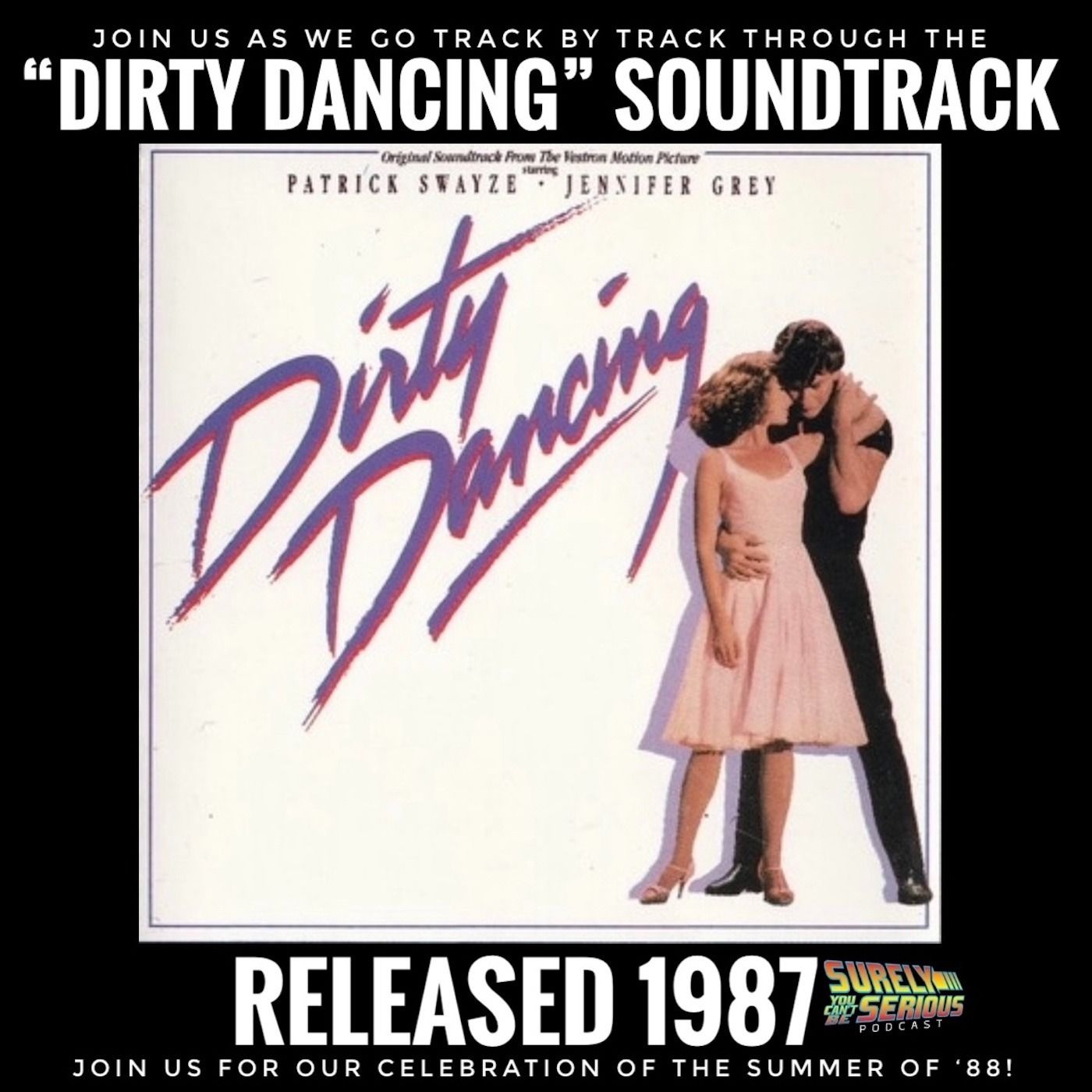
Dirty Dancing Soundtrack (1987): Track by Track!
As part of our celebration of the summer of 1988, we can't leave out the "Dirty Dancing" Soundtrack, which was one of the top overall selling for that summer! With a mixture of all time classics from the 50s and 60s, and some new instant 80s classics (along with a few cheaper songs) this group of songs from a small budget movie became a major album for that year. So, prepare to have the time of your life with us as we go track by track through this great soundtrack!
2023-07-07
75 min
Transcript
Available Results
Generated results are saved to the knowledge database for reuse and search.
No generated results are available for this episode yet.
Extract Knowledge
Pick what you want extracted first. Model, scope, and chapter options appear after a template is selected.
Generated results for public episodes are saved to the knowledge database so they can be reused and searched later.
Transcript
<v Speaker 1>Hello everybody, and welcome back to the Shirley You Can't
<v Speaker 1>Be Serious Podcasts. Ladies and gentlemen, have we got a
<v Speaker 1>show for you today. We will be talking about two murders,
<v Speaker 1>a rape, glass coffins, and stolen shoes. And that's all
<v Speaker 1>in the first two songs.
<v Speaker 2>You think he's kidding, he is not kidding. It's incredible
<v Speaker 2>the stories involved in this album. Yes, it really is.
<v Speaker 1>It's I mean, it's something special that we get to
<v Speaker 1>do when we go into an album that is by
<v Speaker 1>quote unquote various artists, because we were exploring all kinds
<v Speaker 1>of stories. But this is this is one for the ages.
<v Speaker 1>I'm excited to get into it. Here we go with
<v Speaker 1>the Shirley You Can't Be Serious Podcasts.
<v Speaker 2>We hope that you'll join us and have the time
<v Speaker 2>of your life. Just be our baby, be our little bit. Okay.
<v Speaker 2>D Before we get into a track by track, some
<v Speaker 2>people might feel like the Dirty Dancing soundtrack, Why are
<v Speaker 2>you covering the Dirty Dancing soundtrack? That's not really kind
<v Speaker 2>of in our sweet spot. But listen, this is a
<v Speaker 2>top five selling album of the nineteen eighties. It is
<v Speaker 2>one of the best selling albums of all time. It
<v Speaker 2>was released in the eighties. It has multiple hits from
<v Speaker 2>the eighties, including the best song of the year. I
<v Speaker 2>mean it's it's definitely our wheelhouse. It's just that you
<v Speaker 2>might not realize it's our wheelhouse. That's true.
<v Speaker 1>So you pick up the Dirty Dancing soundtrack and you're
<v Speaker 1>going to think, well, okay, this is going to be
<v Speaker 1>all songs from the late fifties early sixties, because that's
<v Speaker 1>the time period of the movie. But in fact, especially
<v Speaker 1>when you got the first part of the album, it's
<v Speaker 1>mostly brand new songs.
<v Speaker 2>Yeah it is. Here's the thing that blew me away? Okay,
<v Speaker 2>So I knew this was a big thing. I heard
<v Speaker 2>it on the radio every time I turned it on.
<v Speaker 2>I mean, Dirty Dancing was a force in eighty seven
<v Speaker 2>and eighty eight. Yeah, undeniable. Yeah right, but this is
<v Speaker 2>the thing that blew me away. Okay. Here's the top
<v Speaker 2>five selling albums of the decade. Yes, number one thriller
<v Speaker 2>No Surprise There, Yeah right, which we have done track
<v Speaker 2>by track, Yes episode one. Yes number two is Back in.
<v Speaker 1>Black, which we've done track by track.
<v Speaker 2>Yes, No Surprise There, No surprise, go back to that episode. Great.
<v Speaker 2>Episode number three was bad by Michael Jackson, which we
<v Speaker 2>covered track by track. Yeah, number four is Dirty Dancing.
<v Speaker 2>Here we are, we're checking this one off the box, clicking.
<v Speaker 1>This box today. We've got several others on this list,
<v Speaker 1>and number five was Appetite for Destruction Gang. We matched
<v Speaker 1>up one versus three, two versus five. And the funny
<v Speaker 1>thing is that the Dirty Dancing Soundtrack is the number
<v Speaker 1>four selling album of the nineteen eighties. Saturday Night Fever
<v Speaker 1>is the number four selling album of the nineteen seventies.
<v Speaker 1>See that's important. If you are just tuning into us
<v Speaker 1>for the first time. Welcome aboard Shirley fan anew. We
<v Speaker 1>have in the last two episodes covered Dirty Dancing the
<v Speaker 1>movie versus Saturday Night Fever the movie, and now we
<v Speaker 1>are covering Dirty Dancing the soundtrack versus Saturday Night Fever
<v Speaker 1>the soundtrack.
<v Speaker 2>And at the end, I think we'll probably rank them
<v Speaker 2>all one to three, four. Yeah. Absolutely.
<v Speaker 1>When we said which of these albums that we're going
<v Speaker 1>to cover first, I said to you, well, let's do
<v Speaker 1>Dirty Dancing first because it's got the older songs, and
<v Speaker 1>then we move into the seventies. And that kind of
<v Speaker 1>makes sense that way. But as it turns out, It's
<v Speaker 1>kind of a back and forth, worth ping pong thing
<v Speaker 1>because you've got songs from the fifties and sixties, and
<v Speaker 1>you've got songs from the eighties, and then when we
<v Speaker 1>cover Saturday Night Fever, we're gonna have songs from the seventies.
<v Speaker 1>So we're covering four decades of music all in two
<v Speaker 1>podcasts episodes.
<v Speaker 2>Literally, when we do this matchup, this will be the
<v Speaker 2>first time we venture into the fifties, the first time
<v Speaker 2>we venture into the sixties. Next week we're going to
<v Speaker 2>venture into the seventies for the first time. Yeah, So anyway,
<v Speaker 2>it's gonna be fun. This album was so successful that
<v Speaker 2>they literally created a sequel album that was released in
<v Speaker 2>March of nineteen eighty eight with a very.
<v Speaker 1>Creative title More Dirty Dancing This is Okay. The original
<v Speaker 1>Dirty Dancing soundtrack was number one for eighteen weeks. On
<v Speaker 1>May seventh, nineteen eighty eight, Dirty Dancing Soundtrack was number one.
<v Speaker 1>More Dirty Dancing was number three. It's crazy, best selling album.
<v Speaker 2>That is crazy. People were nuts for this music, and
<v Speaker 2>it doesn't make any sense. We're talking about nineteen eighty seven.
<v Speaker 2>What were the albums and the bands that we were
<v Speaker 2>listening to in nineteen eighty seven, it dislodged Bruce Springstein
<v Speaker 2>from the number one spot. YEP, George Michael knocked it
<v Speaker 2>out a couple of times. But we're talking about Appti
<v Speaker 2>for destruction. We're talking about hysteria, We're talking about kick.
<v Speaker 1>We're talking about girls, Girls, Girls. We're talking about White Snake,
<v Speaker 1>White Snake. Big albums, big albums that are hard rock albums.
<v Speaker 1>And what we have is a soundtrack from a low
<v Speaker 1>budget movie starring two people who were largely unknown at
<v Speaker 1>the time, topping the charts and becoming one of the
<v Speaker 1>best selling albums in.
<v Speaker 2>History, thirty two million albums sold. Do you know that
<v Speaker 2>this is the all time greatest selling album in Germany
<v Speaker 2>all time? This is the thriller of Germany.
<v Speaker 1>So the popularity of this album actually caught the producers
<v Speaker 1>by surprise. The album had one million copies on back
<v Speaker 1>order before a single had even been released. What Yeah
<v Speaker 1>eighteen weeks at number one on the Billboard two hundred
<v Speaker 1>album Sales charts and went platinum eleven times.
<v Speaker 2>One Thing I Want You to Put a p in? Okay.
<v Speaker 2>The album was released July eighteenth, nineteen eighty seven. Yeah.
<v Speaker 2>The movie was released August twenty first, nineteen eighty seven.
<v Speaker 2>Uh huh so almost, well a little over a month later. Yeah,
<v Speaker 2>put a pin in that because one of the singles
<v Speaker 2>was dangling out there for a month, unhelped by the movie. Wow, okay, Yeah,
<v Speaker 2>put a pin in that. Yeah.
<v Speaker 1>And it's interesting when you think about Mike Footloose in
<v Speaker 1>comparison to that, where they released the soundtrack before the
<v Speaker 1>soundtrack was already a huge success by the time the
<v Speaker 1>movie had come out. This is an entirely different scenario.
<v Speaker 1>So we talked earlier about how important the soundtrack was
<v Speaker 1>in all of the movie. We talked about how Eleanor Bergstein,
<v Speaker 1>the writer of the movie, went to her old forty five's,
<v Speaker 1>her old finyls and made herself a mixtape. And this
<v Speaker 1>was the way that she pitched the movie to people.
<v Speaker 1>She would give them a copy of this mixtape, give
<v Speaker 1>the producer a copy of the mixtape, and say here's
<v Speaker 1>my idea for the movie. And she was rejected and
<v Speaker 1>rejected and rejected. But then years would go by and
<v Speaker 1>the producers would call her back up and say, hey,
<v Speaker 1>I've worn out that Ebe's dirty dancing tape you gave me.
<v Speaker 1>Could you give me another copy.
<v Speaker 2>You realize you said no no on the movie. Loved
<v Speaker 2>the soundtrack.
<v Speaker 1>So this soundtrack, this tape that she had, she used
<v Speaker 1>it as her guiding light as she wrote the script.
<v Speaker 1>The soundtrack came first, then she wrote the script.
<v Speaker 2>Are we ready? Yeah, let's jump in. All right, let's
<v Speaker 2>dive in.
<v Speaker 1>Before we get going on the music, let me just
<v Speaker 1>say this. We talked in our last episode about how
<v Speaker 1>it was so difficult to get the rights to this music,
<v Speaker 1>and I brought up the fact that they got rid
<v Speaker 1>of one guy and brought in another guy. The guy
<v Speaker 1>they brought in was a guy named Jimmy Iiner. That
<v Speaker 1>name's gonna come up a few times as we're talking today.
<v Speaker 1>I just want to say Einer and his brother Don
<v Speaker 1>Heiner founded the publishing house cam Usa in the seventies.
<v Speaker 1>Don Heiner is a name you may have heard of before.
<v Speaker 1>He wanted to become the president of Columbia Records and
<v Speaker 1>the president of Sony Music. So not too shabby, right,
<v Speaker 1>But at this time in the eighties, Jimmy Ironer was
<v Speaker 1>really he was a record producer. He had been in
<v Speaker 1>a band, of course on his own, but he was
<v Speaker 1>kind of a guy who was able to do both things.
<v Speaker 1>He was able to handle business side things and also
<v Speaker 1>a very proficient producer. And he's been responsible for some
<v Speaker 1>of the remixing of some of these songs. But he's
<v Speaker 1>the guy that I said last episode he went and
<v Speaker 1>kissed Phil Spector's big toe. Yes, yes, in order to
<v Speaker 1>get the rights to some of these songs. And had
<v Speaker 1>he not done that, we would not have the movie
<v Speaker 1>that we had, and we would not have this soundtrack.
<v Speaker 2>It's gonna be amazing. Yeah, it's fascinating stuff. Okay, we ready, yeah,
<v Speaker 2>all right. Diving into our first song on the album, ye,
<v Speaker 2>be my Baby. I feel like we're forgetting something. No,
<v Speaker 2>never mind, let's just keep on going. Be my Baby,
<v Speaker 2>Be my Baby. Let's hear it.
<v Speaker 1>Okay, here this first drum beat, it's unmistakable, it's huge.
<v Speaker 2>It was an accident. Okay.
<v Speaker 1>So the guy who did the drum beat on this
<v Speaker 1>one is Hal Blaine and he was a member of
<v Speaker 1>the Wrecking Crew. The Wrecking Crew was Phil Spector's studio
<v Speaker 1>band that became Brian Wilson's studio band for Pet Sounds,
<v Speaker 1>which is regarded as one of the best albums of
<v Speaker 1>all time. They were the most proficient musicians. It included
<v Speaker 1>Glenn Campbell, which we talked about back in our Toto episode,
<v Speaker 1>and Hal Blaine was the drummer and he said that
<v Speaker 1>famous drum intro was an accident. I was supposed to
<v Speaker 1>play the snare on the second beat as well as
<v Speaker 1>the fourth, but I dropped the stick. Being a faker,
<v Speaker 1>I left the mistake in and it became ba ba boom,
<v Speaker 1>and so everyone wanted that beat.
<v Speaker 2>That's amazing story. Drop my stick and faked it. I
<v Speaker 2>asked our buddy James Buckley. I'm like, hey, you're the drummer.
<v Speaker 2>I'm not the drummer. Does this have a name? He goes, no,
<v Speaker 2>but it's like the most famous phrase in drum history.
<v Speaker 1>Yeah, there's no real name for it. It's just the
<v Speaker 1>accident that happened and everybody loved right.
<v Speaker 2>So that phrase has been used by Billy Joel, by
<v Speaker 2>Taylor Swift, by meat Loaf, by the Carpenters, by Amy Winehouse.
<v Speaker 2>And I even sent him the first song on Poisons
<v Speaker 2>Look with the Cat Drag Da album. I said, this
<v Speaker 2>is it too right? And he's like, yep, yep, that's it.
<v Speaker 2>That's awesome.
<v Speaker 1>So this song was performed by the Ronettes. Yes, and
<v Speaker 1>we mentioned Phil Spector earlier, and man, is there a
<v Speaker 1>host of stories here.
<v Speaker 2>Oh my gosh, we could spend a week here. Yeah.
<v Speaker 1>So the Ronettes started with for Ronica Bennett, who became
<v Speaker 1>Ronnie Spector. Yes, three females who were black and sang
<v Speaker 1>harmony together were the end thing at this time, right,
<v Speaker 1>And so here was their plan. She had her, her
<v Speaker 1>sister and their cousin all dress in the same dress,
<v Speaker 1>wear their hair the same and go stand in a
<v Speaker 1>line outside of a famous club. And as they're standing
<v Speaker 1>in line, sure enough, their plan works and some guy
<v Speaker 1>opens the door and he's like, hey, you're late, get
<v Speaker 1>in here. And they got in by mistake. Somebody thought
<v Speaker 1>they were the band. They were not the band.
<v Speaker 2>Oh wow.
<v Speaker 1>They got out there. They had practiced singing before and
<v Speaker 1>they did a whole lot of fun dancing for everybody
<v Speaker 1>in the crowd. And it was that that led to
<v Speaker 1>them becoming the Rownets.
<v Speaker 2>That is an incredible story. Yeah, those of you who
<v Speaker 2>don't remember, this was used during the opening scene of
<v Speaker 2>Dirty Dancing. It's that sort of cepia toned slow motion
<v Speaker 2>introduction of the Dirty Dancing to this song.
<v Speaker 1>Yeah, the preview so that you're not so shocked when
<v Speaker 1>you see.
<v Speaker 2>It later on.
<v Speaker 1>In the movie of the Dirty Beat, there was a
<v Speaker 1>clear distinction. There was clean teene, which is what Baby
<v Speaker 1>listened to before the night in the basement, and then
<v Speaker 1>the dirty dancing, which was her rhythm.
<v Speaker 2>We talked about how that scene had to be her
<v Speaker 2>going into oz. They didn't have enough money to film
<v Speaker 2>an opening scene for dirty Dancing, so they had to
<v Speaker 2>kind of create something out of the footage that they had,
<v Speaker 2>So they came up with that Cepia tone dirty dancing scene,
<v Speaker 2>the intro to dirty Dancing, like we talked about. But
<v Speaker 2>emil Ardlino, Eleanor Bergstein and Linda Gottlieb watched that scene
<v Speaker 2>and we're trying to figure out the perfect song to
<v Speaker 2>play over that scene. They played four hundred songs. Oh
<v Speaker 2>my gosh. When they finally hit be My Baby, all
<v Speaker 2>three in Unison were like, this is it.
<v Speaker 1>It wasn't until we started studying this that I realized
<v Speaker 1>how big a song this was. I just I mean,
<v Speaker 1>it was just in that group of cool do woppie
<v Speaker 1>kind of sixty songs that I knew. I didn't realize
<v Speaker 1>what kind of Megaton Bomb.
<v Speaker 2>This thing was right. The song was so perfect that
<v Speaker 2>they had to go battle for it. Linda Gottlief said
<v Speaker 2>they paid seventy five thousand dollars for the use of
<v Speaker 2>that song. Yeah, it was played for thirty seconds. And
<v Speaker 2>when you think, oh, seventy five thousands not that much,
<v Speaker 2>well it is when your budget's four point five million dollars, Yeah,
<v Speaker 2>for the entire movie, right, for a thirty seconds worth
<v Speaker 2>of song, Right, and you've also got eleven other songs
<v Speaker 2>that you're trying to get exactly, And actually it was
<v Speaker 2>more like twenty other songs that you're trying to get,
<v Speaker 2>that's right. I talked to my dad about this song,
<v Speaker 2>and I played two songs for him. Be My Baby
<v Speaker 2>was released August of nineteen sixty three, and it reached
<v Speaker 2>number two on the charts. And I'm like, what song
<v Speaker 2>is better than Be My Baby? Right? Yeah? You know
<v Speaker 2>you know I like you this right? I love it.
<v Speaker 2>I love it? What is it? So? I played for
<v Speaker 2>him the song sugar Shack by Jimmy Gilmer and the Fireballs. Yeah,
<v Speaker 2>and to me, it's kind of a it's kind of
<v Speaker 2>a goofy song. Anyway, I played it for him I'm like,
<v Speaker 2>which are these two songs? Is the bigger song? And
<v Speaker 2>he's like, be my baby? And now he knew both. Right.
<v Speaker 2>It's just interesting though, for whatever reason that at that
<v Speaker 2>moment in time, sugar Shack was the hot song.
<v Speaker 1>It's the difference between hot now and hot forever?
<v Speaker 2>Right?
<v Speaker 1>You ready to talk about Ronnie Spector and Phil Spector,
<v Speaker 1>Phil Spector and the madness that ensued. Yes, okay, So
<v Speaker 1>Ronnie Spector is part of the ron Ets. Was heard
<v Speaker 1>by Phil Spector and he thought, this is this is
<v Speaker 1>the band I want to hang my hat on. And
<v Speaker 1>this really, this song is where he truly built his
<v Speaker 1>wall of sound style of producing. He and the Wrecking
<v Speaker 1>crew spent hours and hours and hours playing the song
<v Speaker 1>before they ever hit the record button. So he was
<v Speaker 1>an absolute perfectionist. As we know, he was also completely mental.
<v Speaker 2>Right, convicted murderer Phil Spector, Right, he wasn't convicted at
<v Speaker 2>this time as well before all of that.
<v Speaker 1>But but yes, that's a story that we definitely need
<v Speaker 1>to talk about. So he's got this music and he's
<v Speaker 1>also he's the one who wrote this song. I mean
<v Speaker 1>him and a couple of other guys. But you think
<v Speaker 1>about the words of this song, it's kind of almost
<v Speaker 1>foreshadowing as to what his life's going to be like
<v Speaker 1>with Ronnie. Of this, I'm going to infantilize you as
<v Speaker 1>well as completely dedicate my life to you. And so anyway,
<v Speaker 1>he's he's got this music. He finally a forty fifth take,
<v Speaker 1>they finally record the one that they're going to use,
<v Speaker 1>and then they bring Ronnie in to record the vocals,
<v Speaker 1>and she spent three days practicing the vocals, all of
<v Speaker 1>which she spent in the bathroom of the gold Star
<v Speaker 1>Recording studio. She's like, they're supposed to have this amazing
<v Speaker 1>sound in gold Star Wars studios. Well, I can tell
<v Speaker 1>you the bathroom sounds even better because of the echo.
<v Speaker 2>Wow.
<v Speaker 1>It was because of that echo that I had all
<v Speaker 1>my oo oohs and uh wah wahs and all of
<v Speaker 1>those things that came from me practicing in there.
<v Speaker 2>She said.
<v Speaker 1>When I went in there and laid down the vocal track,
<v Speaker 1>everybody in the band was like telling me how wonderful
<v Speaker 1>I was and I was going to be the next
<v Speaker 1>Billy Holiday. Wow, fantastic. So obviously this gets them noticed
<v Speaker 1>and on the charts. They go out to London and
<v Speaker 1>start touring. You know who Their opening band was, The
<v Speaker 1>Rolling Stones.
<v Speaker 2>Wow.
<v Speaker 1>The Rolling Stones were opening for the Ronet.
<v Speaker 2>Wow.
<v Speaker 1>While they were out there, they met the Beatles. This
<v Speaker 1>was before Beatlemania, This was before nineteen sixty f and
<v Speaker 1>everybody went crazy. And she'll say, Beatlemania is what killed
<v Speaker 1>that doop sound?
<v Speaker 2>Okay? You know, like.
<v Speaker 1>Everybody was about the British invasion and nobody cared about
<v Speaker 1>groups snapping their fingers anymore. Sure, but at the time
<v Speaker 1>she made friends with them. They weren't super famous, and
<v Speaker 1>so they're touring England. They're a band in England, so
<v Speaker 1>they become friends. She even went on a few dinner
<v Speaker 1>dates with John Lennon when the Beatles eventually came to
<v Speaker 1>the States.
<v Speaker 2>Interesting.
<v Speaker 1>Yes, And it was at that point that Phil Spector
<v Speaker 1>said to her, because they got offered to tour with
<v Speaker 1>the Beatles. The Ronettes were going to tour with the Beatles,
<v Speaker 1>and he said, you can go on tour with them,
<v Speaker 1>or you can marry me, but you can't do both.
<v Speaker 1>And so she thought, well, he's a producer and I
<v Speaker 1>love him, and this is a way to get every
<v Speaker 1>song I want recorded.
<v Speaker 2>So I'm going to go with Option B. Terrible move.
<v Speaker 1>You could say that, Yes, you could say that.
<v Speaker 2>We could literally spend a week podcasting about this.
<v Speaker 1>So tell me what you know about the marriage of
<v Speaker 1>Ronnie Spector and Phil Spector.
<v Speaker 2>Ronnie Spector wrote a b about her life with Phil Spector.
<v Speaker 2>I haven't read the book, and I don't know a
<v Speaker 2>whole lot, but I do know that he was very abusive,
<v Speaker 2>very controlling of her, would not let her leave the house.
<v Speaker 2>How did he keep her from leaving me? He stole
<v Speaker 2>her shoes. He stole her shoes. He figured, if I
<v Speaker 2>have every one of her shoes, she can't leave. This
<v Speaker 2>dude was obviously nuts from the outset nuts. Now he
<v Speaker 2>gets a lot of credit for the Wall of Sound
<v Speaker 2>and all this other stuff he produced, the ules, He
<v Speaker 2>did all these wonderful musical things. He was also a psycho, manipulative,
<v Speaker 2>abusive husband.
<v Speaker 1>There is a strong overlap between psychotic and genius, and
<v Speaker 1>this guy was walking the line on that one.
<v Speaker 2>He bought a coffin with a glass cover and told
<v Speaker 2>her if she ever leaked him, he would kill her
<v Speaker 2>and put her in it and let everybody look at
<v Speaker 2>her dead.
<v Speaker 1>They tried to have children, Okay, couldn't have any children,
<v Speaker 1>so they decided to adopt. He treated their son nearly
<v Speaker 1>as badly as he treated her, kept him in his room,
<v Speaker 1>locked up without a bathroom.
<v Speaker 2>Pretty bad.
<v Speaker 1>Then a few years later he adopts twins without asking her,
<v Speaker 1>without her consent, without her knowledge, he goes and adopts twins.
<v Speaker 1>What it's crazy.
<v Speaker 2>It is really really crazy.
<v Speaker 1>And I mean she literally has to escape by running
<v Speaker 1>away and her mother has to protect her from this
<v Speaker 1>crazy man.
<v Speaker 2>Okay, I mean, we could spend a lot of time here,
<v Speaker 2>but here's the thing that blew me away. Okay, so
<v Speaker 2>set Ronnie Spector aside for just a second, and I
<v Speaker 2>know we don't really want to get into this, but
<v Speaker 2>one of my eighties guilty pleasure movies is a John
<v Speaker 2>Landis movie that has Steve Gutenberg, Rosanna arkent Our, Cindeo Hall,
<v Speaker 2>Andrew Dice Clay. He's got all these bit parts in.
<v Speaker 2>It's called Amazon. Women on the Moon, Okay, and it's funny.
<v Speaker 2>It's just a lot of fun. There's a scene in
<v Speaker 2>the movie where they actually go and visit the moon
<v Speaker 2>and there's a woman there. Her name's Lana Clarkson. She's
<v Speaker 2>actually the woman that Phil Spector killed and late I
<v Speaker 2>went to jail for Selana Clarkson was a struggling actress.
<v Speaker 2>She had been in some sort of sword and sorcery movies.
<v Speaker 2>She had been in Amazon Women the Moon. She had
<v Speaker 2>been on Three's company, and she was working as a waitress.
<v Speaker 2>She wasn't giving him the time of day, but the
<v Speaker 2>management said, hey, that's Phil Spector. Go take good care
<v Speaker 2>of him and got to treat him like gold. And
<v Speaker 2>he said, hey, you want to take a ride in
<v Speaker 2>my limo, and she's like okay, I guess, took her
<v Speaker 2>back to his house, propositioned her. She refused, and he
<v Speaker 2>blew her head off. He said she kissed the barrel
<v Speaker 2>and the gun went off. Jerry didn't buy that. No,
<v Speaker 2>they did not.
<v Speaker 1>Man, I kind of want to know more about Phil Spector,
<v Speaker 1>but since this is not a true crime podcast, right,
<v Speaker 1>we're gonna move on. I'm gonna circle it back over
<v Speaker 1>to the song because I'm going to police hopefully blow
<v Speaker 1>your mind speak a piece of information.
<v Speaker 2>Okay, read, let's go. Yes, So they are recording be
<v Speaker 2>My Baby.
<v Speaker 1>Phil Spector has a friend of his over and his
<v Speaker 1>girlfriend and they're waiting for the backup singers to show up,
<v Speaker 1>backups fingers supposed to be darlinge love. She doesn't show up. Okay,
<v Speaker 1>maybe she's scared a phill. I don't know what it is.
<v Speaker 1>But she didn't show up. And so Phil is not
<v Speaker 1>the guy who likes to be kept waiting, and so
<v Speaker 1>he's like, hey, man, I heard your girl can sing?
<v Speaker 2>Can she sing?
<v Speaker 1>And he's like, well, yeah, she can sing. And the
<v Speaker 1>girl tries to explain what her level of expertise is
<v Speaker 1>and Phil says, I don't care. Just go in there.
<v Speaker 2>I just need some noise. The guy the sonny bono. Sure,
<v Speaker 2>let's go. Where are you going to get that information
<v Speaker 2>other than the Shirley podcast? Thank you, ladies and gentlemen.
<v Speaker 2>That is fantastic. We'll be here all man, wait to go.
<v Speaker 2>You blow my mind, Man, you blow my mind. I
<v Speaker 2>got something for you. Okay. Do you know the song
<v Speaker 2>that plays while David and Maddie consummate their relationship on Moonlighting?
<v Speaker 2>Could it be Be My Baby? It is Be my Baby.
<v Speaker 1>We like to throw it back to Moonlighting whenever we can.
<v Speaker 2>We love Moonlight. We got to talk about Moonlighting with
<v Speaker 2>Let's talk just briefly about the song take Me Home
<v Speaker 2>Tonight Okay, Eddie Money, Yeah, so I can remember. I don't.
<v Speaker 2>I don't like that song. I never have. It was
<v Speaker 2>annoying to me.
<v Speaker 1>It was on all the time and annoyed me crazy.
<v Speaker 2>And my Little Baby that it kept I was like, ah,
<v Speaker 2>this is so annoying. I had no idea that, just
<v Speaker 2>like Ronnie says, meant it was Ronnie and that being
<v Speaker 2>my Little Baby was from the sixties. Song had a
<v Speaker 2>direct reference to that song about fifty times in that
<v Speaker 2>song take Me Home Tonight, and that's her singing, and
<v Speaker 2>she's in the video she's doing that. She looked pretty good.
<v Speaker 2>She looked great. Yeah, she looked fantastic in eighty six. Yeah.
<v Speaker 1>I saw an interview with her on Letterman in eighty three,
<v Speaker 1>and you could tell that she was probably self medicating
<v Speaker 1>in order to get past the life that she had
<v Speaker 1>experienced with Phil Spector.
<v Speaker 2>Well, so at.
<v Speaker 1>One point she's complimenting Paul and she says, I love
<v Speaker 1>him so much. He's like the Woody Allen of Rotten
<v Speaker 1>and Roll.
<v Speaker 2>It's litterally cute. Okay, we got to talk Brian Wilson
<v Speaker 2>for just a second. Oh yeah, I don't want to
<v Speaker 2>derail the whole podcast. My Baby. But we have to
<v Speaker 2>talk about Brian Wilson.
<v Speaker 1>So without this song, we might not have had pet Sounds.
<v Speaker 2>It's insane, right, Yeah. So Brian Wilson was driving his
<v Speaker 2>car one day with his girlfriend and he's driving down
<v Speaker 2>the road mine in his own business, and on the
<v Speaker 2>radio comes be my Baby.
<v Speaker 3>Yep.
<v Speaker 2>He literally is thunderstruck. He has to pull the car
<v Speaker 2>over and it's like psychologically jacked his brain, right, he
<v Speaker 2>has to pull it over and like analyze the song,
<v Speaker 2>like what's going on here? Because this is blowing my mind.
<v Speaker 2>The vocals, the guitars, the Wallace sound, all that is
<v Speaker 2>just blowing him away, and it literally affected him for
<v Speaker 2>decades afterwards.
<v Speaker 1>It is an amazing So let's just say that we
<v Speaker 1>didn't really even talk about the music and the song itself,
<v Speaker 1>but it is an amazing song if you listen to
<v Speaker 1>the strings that are behind it. I mean, the engineer
<v Speaker 1>said he wept as he was mixing the strings in
<v Speaker 1>with the rest of the song, and it is truly amazing.
<v Speaker 1>But I think it may have hit Brian Wilson harder
<v Speaker 1>than it hit any other human being in the world.
<v Speaker 1>He would obsess over the song like a Islamic convert
<v Speaker 1>obsesses over the Koran. It's one of the things that
<v Speaker 1>I read he was mesmerized by. He would be like,
<v Speaker 1>listen to this. It sounds like the beating of a
<v Speaker 1>branch in the wind and a baby's rattle and the
<v Speaker 1>call of the mockingbird. I mean just it was affecting
<v Speaker 1>him in a significant and severe way, but in a
<v Speaker 1>real and practical way. He went, Okay, who are the
<v Speaker 1>musicians on this album? I gotta meet Phil Spector. I
<v Speaker 1>got to talk to him, and I got to find
<v Speaker 1>out who's playing this music. And it's because of that
<v Speaker 1>that we get the Wrecking Crew and their contribution to
<v Speaker 1>music history in pet sounds.
<v Speaker 2>Don't Worry Baby is a sequel that he wrote for
<v Speaker 2>the Rawnetts to make a sequel to be my Baby.
<v Speaker 2>Let's listen to Don't Worry Baby. Roopquirre awesome classic.
<v Speaker 1>Yeah, And I can totally hear the Roett singing that
<v Speaker 1>as a sequel, but they said.
<v Speaker 2>No, So the Beach Boys took it and made it
<v Speaker 2>an instant classic for them. Absolutely. I thought it was interesting.
<v Speaker 2>The DJ who played the song when he got thunderstrucked
<v Speaker 2>in his car, Wink Martindale. Okay, he's the game show
<v Speaker 2>host from like Tic Tac Doe and Oh my Wenk Martindale,
<v Speaker 2>Oh my gosh. Wow. So his daughter Carne Wilson, Yeah,
<v Speaker 2>from Wilson Phillips. Yes, she said that during her childhood
<v Speaker 2>she awoke every single morning to boom boom boom fam. Wow.
<v Speaker 2>He compared it to Einstein's theory of relativity. Could spend
<v Speaker 2>all day here, we probably knew more.
<v Speaker 1>I think the fact that Brian Wilson had some psychological
<v Speaker 1>issues and Phil Spector had some psychological issues meant that
<v Speaker 1>there was a meeting of the unstable minds on this one.
<v Speaker 2>Hey, you know what one thing I got to bring
<v Speaker 2>up before we move on. When Phil Spector was in jail,
<v Speaker 2>he still had control of this song and he would
<v Speaker 2>not allow Ronnie Spector to play it at her concerts.
<v Speaker 2>Talk about freaking man.
<v Speaker 1>Yeah, and both of them passed away last.
<v Speaker 2>Year, right, I believe that's right.
<v Speaker 1>Yeah.
<v Speaker 2>Dick Clark called it the record of a century when
<v Speaker 2>he introduced him Wow on American Bandstand, and now they
<v Speaker 2>use it in Seaoleis commercials.
<v Speaker 1>That's the best segue I've ever heard. What's our next song?
<v Speaker 2>Next song? On the album, song number three is She's
<v Speaker 2>like the wind, She's not the wind too much.
<v Speaker 4>He rides to night.
<v Speaker 5>Next time me.
<v Speaker 2>D This song is by Patrick Swayze.
<v Speaker 1>Patrick sways born in Houston, Texas, second child of Patsy Swayzee,
<v Speaker 1>a dancer, choreographer, dance instructor, and like the dance person
<v Speaker 1>in Texas.
<v Speaker 2>That's right.
<v Speaker 1>His dad was an engineer and draftsman, but while he
<v Speaker 1>was in school he developed skills in ice skating, ballet dancing,
<v Speaker 1>classical ballet. Acted in the school plays. Was a football
<v Speaker 1>player hoping for a scholarship until he injured his knee
<v Speaker 1>and wasn't able to play anymore, which.
<v Speaker 2>Is why he had no dancing on his acting resume.
<v Speaker 1>That and he wanted to be known as an actor,
<v Speaker 1>not a dancer, but he did keep dancing. He also
<v Speaker 1>did martial arts, which came into play later on for Roadhouse.
<v Speaker 1>Yes it did, few other beautiful movies that he meet,
<v Speaker 1>Yes it did, he said. He used it to channel
<v Speaker 1>his self deprecating rage.
<v Speaker 2>Okay, all right.
<v Speaker 1>So he met in nineteen seventy a lady named Lee's
<v Speaker 1>meeting okay. She was a student in his mom's dance
<v Speaker 1>classes and seventy two, he went to New York City
<v Speaker 1>to complete his formal dance training at the Parkness Ballet
<v Speaker 1>and Jeoffrey Ballet Schools, and then in nineteen seventy five
<v Speaker 1>he married Lisa.
<v Speaker 2>Yeah, they stayed married until his death. Yeah. He said
<v Speaker 2>that she was the inspiration for this song. Oh that's sweet. Yeah,
<v Speaker 2>that's sweet. Here's the interesting thing about why this song
<v Speaker 2>got on this album. Okay, they would desperate for songs.
<v Speaker 2>They were trying.
<v Speaker 1>They had a lot of songs that they wanted, but
<v Speaker 1>they needed originals because the ones that were already popular
<v Speaker 1>were too expensive and too hard to get.
<v Speaker 2>So Patrick's standing there and he's like, hey, guess what,
<v Speaker 2>I've got a song.
<v Speaker 6>Yeah.
<v Speaker 2>So it turns out he wrote a song for the
<v Speaker 2>movie Grandview USA. He wrote it for the character that
<v Speaker 2>Jamie Lee Curtis played in that movie. Yeah. Well, they
<v Speaker 2>didn't accept it, right, So he tried to get it
<v Speaker 2>put in on the Young Blood soundtrack in nineteen eighty six.
<v Speaker 1>So he'd been turned down twice at this point when
<v Speaker 1>they are filming Dirty Dancing.
<v Speaker 2>So they're like, well, yeah, we'll bring it in dude,
<v Speaker 2>let me, let's hear it.
<v Speaker 1>You know, Lisa got Leeb listens and says, I love it.
<v Speaker 1>Let's put her down.
<v Speaker 2>I have anything. She's not weird, it's cheap, it's available.
<v Speaker 2>He's standing right here. It sounds good. Let's do it.
<v Speaker 2>It reached number three on the Hot one hundred Deep.
<v Speaker 2>You want to hear the two better songs?
<v Speaker 3>Sure?
<v Speaker 2>Yes, yeah, okay. The only reason I bring it up
<v Speaker 2>is because they're fairly notable songs. All right, all right? Yeah,
<v Speaker 2>so this reached number three on February twenty seventh, nineteen
<v Speaker 2>eighty eight. The Dirty Dancing soundtrack is still extremely hot
<v Speaker 2>at this time. Okay. The songs that were number one
<v Speaker 2>and number two. Number one was Father Figure by George Michael, Yeah, okay.
<v Speaker 2>Number two was What Have I Done to Deserve This?
<v Speaker 2>By The Pet Shop Boys? Okay, yeah, And then the
<v Speaker 2>next week She's Like the Wind stayed at number three
<v Speaker 2>and got leap frogged Bye, Never Gonna Give You Up
<v Speaker 2>by Rick Astley.
<v Speaker 1>Well he got Rick Roll, he did get rig Roll.
<v Speaker 2>That's tragic. All right. Do we got to talk about
<v Speaker 2>the music video for She's Like the Wind Really quick? Okay,
<v Speaker 2>nothing fancy, lots of clips from the movie. Patrick Swayze
<v Speaker 2>all over the place. Yeah, do you know who the
<v Speaker 2>director of the She's Like a Wind video is?
<v Speaker 1>I did not look that one up, Sir.
<v Speaker 2>David freaking Fincher, Get the heck out of town. David
<v Speaker 2>Fincher is the director Oh my Gosh, seven, Fight Club,
<v Speaker 2>Panic Room, Gone Girl, Zodiac, the Social Network. Oh my gosh,
<v Speaker 2>David fincher' is one of the best directors in Hollywood
<v Speaker 2>right now. Wow, And he's cutting his teeth on a
<v Speaker 2>Patrick Swayze love song. That's fantastic. What do you think
<v Speaker 2>of this one?
<v Speaker 1>I love this song. It's beautiful, right, He's beautiful. And
<v Speaker 1>I was, you know, amazed when I first learned that
<v Speaker 1>it was him that was singing. I was just like, oh,
<v Speaker 1>this doesn't sound like him to me. Now, once I
<v Speaker 1>know that he's singing, I'm like, Okay, I can hear
<v Speaker 1>his voice in it, but he's got a very distinct
<v Speaker 1>singing style compared to what he sounds like speaking.
<v Speaker 2>Yeah, this reach number one on the Adult Contemporary chart,
<v Speaker 2>and because it's Patrick swayzey, it's literally one of the
<v Speaker 2>most high profile one hit wonders of all time.
<v Speaker 1>Yeah, it's a beautiful song, and I'm glad that he
<v Speaker 1>finally found somebody who said, yes, let's put it in
<v Speaker 1>our movie.
<v Speaker 2>Yeah, me too. Yeah, all right. Next song on the
<v Speaker 2>album is a song called Hungry Eyes. Okay, so the
<v Speaker 2>music on this is awesome. I gotta tell you.
<v Speaker 1>I didn't dive into the intricacies of the music on
<v Speaker 1>these songs. I just like listening to them. I'm not
<v Speaker 1>rushing out to learn how to play the guitar solo
<v Speaker 1>on this particular song. It's just these are kind of
<v Speaker 1>adult contemporary style of music, and for me, I just
<v Speaker 1>want to listen to it and I enjoy it.
<v Speaker 2>It is adult contemporary, but it's fun. Yeah. And I
<v Speaker 2>used to slow dance to it when I was a
<v Speaker 2>kid in the eighties.
<v Speaker 6>Two.
<v Speaker 2>Yeah, I bet this is on the Makeout List of
<v Speaker 2>eighty eight. Absolutely.
<v Speaker 1>This song was written by Frankie Privett and John D.
<v Speaker 2>Nicola. Yes, they also wrote another song on this album,
<v Speaker 2>which we'll cover in a little while.
<v Speaker 1>Sure, and it was sung by Eric Carmon. I got
<v Speaker 1>to issue a formal apology, Okay. When we covered Footloose,
<v Speaker 1>I talked about Eric Carmon, and I talked about the
<v Speaker 1>fact that he had written this song. He did not
<v Speaker 1>write this song. Right, he only performed it.
<v Speaker 2>Okay.
<v Speaker 1>He happened to be one of the guys that Jimmy Einer,
<v Speaker 1>who I talked about earlier, produced, and so he got
<v Speaker 1>a call from Jimmy that said, hey, I got a song.
<v Speaker 1>I'd like you to come sing it.
<v Speaker 2>Yeah, this is a remake. Frankie Privett released this song
<v Speaker 2>and was a mild hit in nineteen eighty four. It's
<v Speaker 2>off their album making the point. Okay, so this is
<v Speaker 2>an actual remake. Okay. You know we've talked a few
<v Speaker 2>times before where a song is released and it just
<v Speaker 2>doesn't quite hit, but people think, you know, this is
<v Speaker 2>a good song. We need to give this another life. Yeah,
<v Speaker 2>so they asked Eric Carmen to sing it, and they
<v Speaker 2>re recorded it, reput it out there, and it made
<v Speaker 2>it to number four on the Hot one hundred.
<v Speaker 1>Now Eric Carmon, just tell you this. I didn't get
<v Speaker 1>into his history last time we talked about Footloose, Right,
<v Speaker 1>he was the one that said I fing love it
<v Speaker 1>on the lyrics for the most para Paradise, But anyway,
<v Speaker 1>he loved music from an early age. Was classically trained
<v Speaker 1>on the piano, picked up the guitar and taught himself
<v Speaker 1>how to play and was a member of a group
<v Speaker 1>called the Raspberries for a while. Huh, and they had
<v Speaker 1>some mild success, and then he went solo. And when
<v Speaker 1>he was solo, he had a huge single called All
<v Speaker 1>by Myself.
<v Speaker 2>I remember the song when I was young.
<v Speaker 1>Oh yeah, you can't mistake this, Yes, you can't mistake this,
<v Speaker 1>and I love there's a comedy bit on this of
<v Speaker 1>when does all by Myself go from being something good
<v Speaker 1>to something bad? You know, when the little kid does something,
<v Speaker 1>they're like, look, daddy did it all by myself too?
<v Speaker 1>Oh by, here's something I did not know though. Okay,
<v Speaker 1>he based this song on Rochmaninov's Piano Concerto number two.
<v Speaker 1>I had no idea. I just thought this was a
<v Speaker 1>cool pop song. It is based on a classical concerto.
<v Speaker 2>Okay, I gotta ask you. Have you watched the music
<v Speaker 2>video to this lately? No, you're missing out. I have
<v Speaker 2>to say.
<v Speaker 1>I can probably imagine because Eric Carmon appeared on stage
<v Speaker 1>during the Dirty Dancing Live tour that occurred shortly after
<v Speaker 1>the movie was such a big success, and he was
<v Speaker 1>in a black muscle T shirt without much muscles, but
<v Speaker 1>lots of chest hairt a sequiny shoulder, padded jacket. Yeah,
<v Speaker 1>and the big hair that every girl that you knew
<v Speaker 1>in the eighth grade had.
<v Speaker 2>Interesting. Yeah, well special. I gotta tell you you're really
<v Speaker 2>missing out if you don't go back and watch the
<v Speaker 2>music videos on this because it's part of the package. Right, Yeah,
<v Speaker 2>so I watched the music video. Yeah. So you have
<v Speaker 2>Eric Carmon and he's watching like a projector version of
<v Speaker 2>Dirty Dancing on the wall. So you've got little clips
<v Speaker 2>of the movie in the background or whatever. Right, smoking
<v Speaker 2>hot model, Okay, that he's got hungry eyes for They
<v Speaker 2>got hungry eyes for each other, all right, okay, but
<v Speaker 2>this is where the video goes off the rails for me. Okay, okay,
<v Speaker 2>So they keep staring at each other and nothing's really happening,
<v Speaker 2>and little clips of dirty Dancing, and then the sax
<v Speaker 2>solo comes, and who plays the sax solo? The smoking
<v Speaker 2>Hot Model, right, And then at the very end, like
<v Speaker 2>they've been making eyes at each other the whole time,
<v Speaker 2>she's with a guy that is like a grip for
<v Speaker 2>the music video. He's like a graying, short, balding guy
<v Speaker 2>who's just like standing there. So she plans one on
<v Speaker 2>him and I'm like, who is this guy? I mean,
<v Speaker 2>it just looks like she grabs somebody off the street.
<v Speaker 2>And then when her face like emerges from the kiss,
<v Speaker 2>it's a different girl. Beavis and butt Head would have
<v Speaker 2>a field day with this video. The original girl left
<v Speaker 2>in the middle of the video to go play back
<v Speaker 2>up for Robert paulin, Yeah, exactly, what exactly? That's fantastic.
<v Speaker 2>Now I'll have to go check that way. That is awesome.
<v Speaker 1>So in the movie, this is one of the most
<v Speaker 1>memorable scenes, right this is the scene that we talked
<v Speaker 1>about where you have Johnny and Baby dancing and standing
<v Speaker 1>behind Baby guiding her is Penny, and you have this
<v Speaker 1>look of longing from Penny as she looks down as
<v Speaker 1>Johnny is starting to fall in love with Baby, who
<v Speaker 1>you know was already in love with count.
<v Speaker 2>It's some dancing montage.
<v Speaker 1>They almost said we can't put this scene in yet
<v Speaker 1>because it's too early. It's given it's tipping her hand,
<v Speaker 1>But I mean, who didn't know that that was what
<v Speaker 1>was going to happen?
<v Speaker 2>Of course, right, of course, great song, great song, love it.
<v Speaker 2>This song reached number four February thirteenth of eighty eight,
<v Speaker 2>So makeout song of eighty eight on Valentine's Day. Yep,
<v Speaker 2>the same week that She's like to win hit number
<v Speaker 2>ten is rocketing up to chart. Okay, all right, moving on,
<v Speaker 2>all right, d So the next song on the album
<v Speaker 2>is a song called Stay.
<v Speaker 1>Okay, we can't talk too long on this song because
<v Speaker 1>it's only a minute in one thirty six. The song
<v Speaker 1>was written by Maurice Williams. Yes, this performed by Maurice
<v Speaker 1>Williams and the Zodiacs. Right, he was fifteen, nineteen fifty three.
<v Speaker 1>He's fifteen. He's in the car with the girl and
<v Speaker 1>he's trying to get her to not go home. He fails,
<v Speaker 1>but he was like, man, it seemed like a good
<v Speaker 1>tagline for a song, just stay. And he said, like
<v Speaker 1>a flood, the words just came to me. So I
<v Speaker 1>wrote the song when he was fifteen. He's with a girl. Yep,
<v Speaker 1>he's trying to keep her from going home. In the lyrics,
<v Speaker 1>he's like, your daddy won't mind. Right, So he develops
<v Speaker 1>a couple of bands. They get out of high school.
<v Speaker 1>They start touring around, not having a whole lot of
<v Speaker 1>success at that time. They're called the Royal Charms. But
<v Speaker 1>then as they're touring, their station wagon breaks down in Bluefield,
<v Speaker 1>West Virginia, if you'd like to know which not too
<v Speaker 1>far away they would be recording Dirty Dancing. Twenty something
<v Speaker 1>years later, they come across a British built Ford car
<v Speaker 1>known as the Zodiac, and that is where they got
<v Speaker 1>their name. Maurice Williams and the Zodiac.
<v Speaker 2>Oh cool. Now.
<v Speaker 1>They had a song called Little Darling, which you've probably
<v Speaker 1>heard before but not by then got covered by another
<v Speaker 1>Canadian group called the Diamonds, and then they weren't really
<v Speaker 1>super excited about stay. But this ten year old girl
<v Speaker 1>here's the song and says that song is incredible, and
<v Speaker 1>it's her causes them to go, you know what, we
<v Speaker 1>should go ahead and put that on the demo tape
<v Speaker 1>that we send out, and that's how the song came famous.
<v Speaker 2>The ten year old girl loved it. Yeah.
<v Speaker 1>They recorded it in nineteen fifty nine in a Quanta Hut, which,
<v Speaker 1>by the way, but Shirley can't be serious podcast studio
<v Speaker 1>is also inside a Quantza hut. It's a great place
<v Speaker 1>to record.
<v Speaker 2>We're Fancy, We're Fancy. This is the shortest number one
<v Speaker 2>song in Billboard history. In history.
<v Speaker 1>It's so short that it was made a part of
<v Speaker 1>another longer song by Jackson Brown later on.
<v Speaker 2>Yeah, Jackson Brown played it at the end of all
<v Speaker 2>of his concerts. I thought that was kind of a
<v Speaker 2>cool The Four Seasons have covered this YEP. I listened
<v Speaker 2>to Cindy Lapper's version last night. It's good good, It's
<v Speaker 2>a good song. YEP.
<v Speaker 1>I like the song, but it's been over for like
<v Speaker 1>three four minutes ago, so probably time to move on
<v Speaker 1>to our next song.
<v Speaker 2>Last song on side one.
<v Speaker 1>Yes, this is obviously not a sixty song, right, this
<v Speaker 1>is a modern song.
<v Speaker 2>Yeah, And it was released as a single. I didn't
<v Speaker 2>know that, really, I did not know that either.
<v Speaker 1>This was one of the ones that was one of
<v Speaker 1>the four that were released as a single, because I
<v Speaker 1>remember I was like, I know that I've heard the
<v Speaker 1>song on the radio before, but because it was released
<v Speaker 1>as a single. Now it's by a lady named Mary Clayton.
<v Speaker 1>She spells her name m E r R Y. Do
<v Speaker 1>you know what she's born on?
<v Speaker 2>Christmas Day? Merry Christmas, Mary freaking Christmas.
<v Speaker 3>Yep.
<v Speaker 1>If only she had been in Dumb and Dumber, we
<v Speaker 1>would have come full circle. Very this song is about
<v Speaker 1>deciding to have sex for the first time. Yeah, it's
<v Speaker 1>like driving around.
<v Speaker 2>I don't think I know. Yes, yes, we are going
<v Speaker 2>to do it. Got her to stay. Do you know
<v Speaker 2>who the person who is originally going to sing the song,
<v Speaker 2>Mary Wells Okay, okay. Now you may remember her from
<v Speaker 2>the song My Guy, Yeah, my guy. Yeah. She was
<v Speaker 2>hired to record the song, but when she came to
<v Speaker 2>the studio to cut it, she had a horrible cold
<v Speaker 2>and then she just said, forget this crap, I'm out
<v Speaker 2>of here and just left. So the producer's like sitting
<v Speaker 2>there ready to record. He's got nobody record it. Well,
<v Speaker 2>one of the backup singers is Mary Clayton okay, and
<v Speaker 2>he's like, oh god, now I'm gonna have to explain this,
<v Speaker 2>and he's like Mary Wells, Mary Clayton close enough they
<v Speaker 2>won't even notice Hi, this is Mary. Yeah. So because
<v Speaker 2>their names were the same, he didn't have to do
<v Speaker 2>any explaining and he just said, Mary Clayton, would you
<v Speaker 2>like to sing this song? She's like yes, yes, Okay,
<v Speaker 2>that's awesome. Now wait a minute, I got I got
<v Speaker 2>to play this for you. Because when I saw the
<v Speaker 2>name Mary Clayton, I knew exactly who it was, and
<v Speaker 2>you're saying you don't know who this is. Yeah, okay,
<v Speaker 2>let me play this song for you. We talked about
<v Speaker 2>it on our Good Fellow's episode, Yes we did. So
<v Speaker 2>this is Give Me Shelter by the Stones. What do
<v Speaker 2>you got? Okay? So Mary Clayton in the sixties when
<v Speaker 2>Gimme Shelter was being recorded, yep, got a call in
<v Speaker 2>the middle of the night. Her producer's like, hey, these
<v Speaker 2>guys are in from England. They're the Rolling something or others.
<v Speaker 2>We're not really sure who they are.
<v Speaker 1>They're supposed to be opening up for the Ronettes exactly exactly.
<v Speaker 2>So they're recording the song and they want a woman
<v Speaker 2>to sing this part, and so she's laying in bed
<v Speaker 2>like crap, she's pregnant, like major pregnant yea. And her
<v Speaker 2>husband's like, you need to get down there and sing that.
<v Speaker 2>She's like, I'm not going. He's like, guess you are.
<v Speaker 2>She's like fine. So she's stomping around. She says she
<v Speaker 2>was really mad. She gets down there, they introduced themselves.
<v Speaker 2>She's like, okay, hi, Mick, you know Keith, you know
<v Speaker 2>who are you guys? Like, oh, the Rolling stones okay, great,
<v Speaker 2>and Mick had written this part in the song that
<v Speaker 2>he really wanted to be sung by a female, and
<v Speaker 2>the words were rape and murder. It's just a shot away.
<v Speaker 2>So she sings it with a lot of personality and
<v Speaker 2>mixed like, yeah, that's perfect. Could you do it one
<v Speaker 2>more time? And she's kind of pissed because it's the
<v Speaker 2>three o'clock in the morning, right, So she says, yeah,
<v Speaker 2>I'll do it, and in her head she's like, I'm
<v Speaker 2>gonna sing this next version and I'm gonna blow them
<v Speaker 2>out of this room. And that's where you get this
<v Speaker 2>part right here. It's unmistakable. She is singing so hard,
<v Speaker 2>her voice is cracking and breaking, and it's so passionate.
<v Speaker 1>So we get this incredible piece of this incredible song.
<v Speaker 1>But it has a tragic ending.
<v Speaker 2>Yeah it does. The next day she has a miscarriage.
<v Speaker 2>It's terrible. I thought that was urban legend. I heard
<v Speaker 2>her say that right from her very mouth. Yeah, that
<v Speaker 2>the stress and strenuous nature of this song she believes
<v Speaker 2>cause that miscarriage. Yeah.
<v Speaker 1>She's been a backup singer for literally dozens and dozens
<v Speaker 1>of amazing acts. She sang with Clyde King. She sang
<v Speaker 1>with Lenyard Skinnyard sweet Home Alabama. That's her, you're listening
<v Speaker 1>to you sing in the background. She co starred with
<v Speaker 1>Ali Sheety and Made to Order, Oh my gosh, he's seriously.
<v Speaker 2>Yeah and a little bit.
<v Speaker 1>Same year, she was a major character in the final
<v Speaker 1>season of Cagney and Lacy. Oh and you Ready Yep.
<v Speaker 1>In nineteen eighty nine, she recorded a cover version of
<v Speaker 1>the song Almost Paradise with Eric Carmon.
<v Speaker 2>WHOA, that's a deep cut right there. Good job, I
<v Speaker 2>had no idea about that, Okay.
<v Speaker 1>So one final tragedy though. Twenty fourteen, she was in
<v Speaker 1>a car crash in Los Angeles, California, and both of
<v Speaker 1>her legs had to be amputated.
<v Speaker 2>Tragic. When she woke up, the doctor was checking on
<v Speaker 2>her mental state and he said, I just want you
<v Speaker 2>to know I had to take your legs. She said,
<v Speaker 2>can I still sing? And he said yeah, and she
<v Speaker 2>said that I'm okay.
<v Speaker 1>That's fantastic, that's that's amazing. Well a great, yeah, that's
<v Speaker 1>a great one.
<v Speaker 2>All right. It's stop on your tape player, kick it out,
<v Speaker 2>flip it over side to dirty Dances sound turn.
<v Speaker 1>This This song is one that I recognized, But it's
<v Speaker 1>not the group that I was expecting.
<v Speaker 2>It's not the singer that I was expecting. Right, I looked.
<v Speaker 1>I can't figure out where the song is in them.
<v Speaker 2>I don't remember. Yeah, I don't remember. I'm not really sure.
<v Speaker 1>And obviously there was something where they had to get
<v Speaker 1>a different group to sing the song because this is
<v Speaker 1>not the sixties.
<v Speaker 2>Version of the song.
<v Speaker 1>But so on the album, we're gonna talk about it, Okay,
<v Speaker 1>let's go all right. So this song was originally recorded
<v Speaker 1>by a female singer named Leslie Gore. She recorded it
<v Speaker 1>when she was only seventeen years old, but she had
<v Speaker 1>already had two mega hits before that tell Me. At sixteen,
<v Speaker 1>she had had It's My Party, which was a number
<v Speaker 1>one hit in nineteen sixty three, Yes, followed up by
<v Speaker 1>another top forty hit called Judy's Turn to Cry, and
<v Speaker 1>then she comes out with you Don't Own Me as
<v Speaker 1>her third big hit. All by the time that she's
<v Speaker 1>turned seventeen.
<v Speaker 2>That's incredible.
<v Speaker 1>This song is like women's power song before you had
<v Speaker 1>this real big feminist movement that occurred, expresses like emancipation
<v Speaker 1>and says, hey, you don't own me. I get to
<v Speaker 1>do what I want to do, and you don't tell me,
<v Speaker 1>and you don't put me in a place I wonder.
<v Speaker 2>Phil Spector wrote this song I don't know. I think
<v Speaker 2>somebody came up to her and says, nobody puts baby
<v Speaker 2>in the corner. She said, you're right now. This song
<v Speaker 2>reached number two February first, nineteen sixty four. Yeah, the
<v Speaker 2>number one song that could not overcome I Want to
<v Speaker 2>Hold Your Hand by the Beatles. There you go.
<v Speaker 1>So this song was covered by a group called the
<v Speaker 1>Blow Monkeys. I'm not familiar with these guys. They are
<v Speaker 1>a UK band and they've had a few hits.
<v Speaker 2>I remember one song that they had in the eighties
<v Speaker 2>that was pretty big. Yeah, in eighty six called Digging
<v Speaker 2>Your Scene.
<v Speaker 1>Yeah, that was on their second album, Animal Magic, which
<v Speaker 1>got to number twenty one on the UK Album's chart.
<v Speaker 1>It got attention because it was talking about the backlash
<v Speaker 1>against gay people, with AIDS being a pandemic at the time. Okay,
<v Speaker 1>So January of eighty seven, before Dirty Dancing comes out,
<v Speaker 1>they released their third album called She Was Only a
<v Speaker 1>Grocer's Daughter, which is a reference to the Prime Minister
<v Speaker 1>Margaret Thatcher.
<v Speaker 2>At the time okay. It got to.
<v Speaker 1>Number twenty in the UK, and then it got to
<v Speaker 1>number five in the UK and number twenty eight in Italy.
<v Speaker 1>Wasn't released in the United States and so it didn't
<v Speaker 1>chart there, but it was featured in a movie, Police
<v Speaker 1>Academy four Citizens on Patrol.
<v Speaker 2>Oh, I love the Police Academy movies. That's fantastic. Yeah, Hey,
<v Speaker 2>I'll tell you who did cover this? Yeah? Jone Jet
<v Speaker 2>released a cover of this song as her first solo
<v Speaker 2>single in nineteen seventy nine, which is kind of cool
<v Speaker 2>in itself. But the B side of that single, uh
<v Speaker 2>huh was an early version of I Love rock and Roll? Nice?
<v Speaker 2>How about that? That's awesome. Hey, I'll tell you where
<v Speaker 2>I know this song from. And this is gonna be weird.
<v Speaker 2>Maybe it's just me. Yeah, But the NFL released a
<v Speaker 2>commercial a couple of years ago dedicated to their line
<v Speaker 2>of clothing, and Alyssa Milano sang the song why the video.
<v Speaker 1>Wowo Alyssa Milana, Yes of who's the boss fan? Okay,
<v Speaker 1>we've done with this one. Yep, all right, I'm in
<v Speaker 1>the moon for some country. You got any country on
<v Speaker 1>this album?
<v Speaker 2>Well, let's see if we can oblige you here. This
<v Speaker 2>song is unmistakable.
<v Speaker 1>I don't know that I've heard very many songs sound
<v Speaker 1>anywhere near the song, but it is one that.
<v Speaker 2>People just know. You just know. Hey Baby. Yeah.
<v Speaker 1>This song is by Bruce Channel Okay. He originally was
<v Speaker 1>a performer for a radio program called Louisiana Hayride. Then
<v Speaker 1>he joined up with a harmonica player, yes, which you
<v Speaker 1>can hear in this song. His name is Delbert McClinton
<v Speaker 1>and they were doing country music together and Bruce wrote
<v Speaker 1>the song Hey Baby with Margaret Cobb in nineteen fifty nine,
<v Speaker 1>performed the song for two years before they recorded it.
<v Speaker 1>Recorded it in Fort Worth with producer Bill Smith, and
<v Speaker 1>the song went to number one in the US in
<v Speaker 1>March nineteen sixty two, held that position for three weeks.
<v Speaker 1>Now this country singer gets to go tour Europe. Yeah,
<v Speaker 1>and he was assisted at one of the gigs by
<v Speaker 1>the Beatles Oh Wow, who were unknown at the time.
<v Speaker 1>John Lennon, who had heard Hey Baby, actually had it
<v Speaker 1>on his own jew box, was amazed by mcclinton's harmonica playing,
<v Speaker 1>and legend is that Lennon got taught how to play
<v Speaker 1>the harmonica or at least how to Play It Better
<v Speaker 1>by McClinton, And if you listen to the song love
<v Speaker 1>Me do, you.
<v Speaker 2>Can hear those skills play that for you real quick, dude,
<v Speaker 2>you blow my mind. There you go. That's fantastic. So
<v Speaker 2>this is the first number one hit on the Hot
<v Speaker 2>one hundred with an exclamation point in the title fantastic.
<v Speaker 2>There you go, love it. And this was used in
<v Speaker 2>the movie when they were on top of the log
<v Speaker 2>and they're working on their dancing in ballads. Yes, yeah,
<v Speaker 2>so there you go. Okay, we're done with that one. Yep.
<v Speaker 2>All right, moving on to the next song called Overload
<v Speaker 2>by Alfie Zapacosta.
<v Speaker 1>This, okay, this was not on my playlist in nineteen
<v Speaker 1>eighty seven, eighty eight, or any year thereafter. Okay, you
<v Speaker 1>mentioned the singer's name is Zapacosta.
<v Speaker 2>Yep.
<v Speaker 1>I don't know anything else that he has done except
<v Speaker 1>for the radio commercial jingle for Pizza Nova.
<v Speaker 2>Are you serious? That's it?
<v Speaker 1>That's all I got, Wow, recorded in the same year
<v Speaker 1>that he recorded this.
<v Speaker 2>Okay, Well here's what I got. I got one thing
<v Speaker 2>on this neat it to me? Yeah, all right. So
<v Speaker 2>obviously they had a budget for this album and once
<v Speaker 2>they got done paining Phil Spector, there wasn't a lot
<v Speaker 2>left over, right, so they needed some songs. So Jimmy
<v Speaker 2>Iiner had to look around and be creative, right right,
<v Speaker 2>So he found this Canadian singer guitarist named Alfie's Apacosta.
<v Speaker 2>He agreed to write and cut Overload for two thousand
<v Speaker 2>dollars on way. Okay, there you go, two thousand bucks
<v Speaker 2>for this one. Yeah, I doubt he got anything on
<v Speaker 2>the back end either. How would you like to get
<v Speaker 2>two grand and no royalties from an album that sold
<v Speaker 2>thirty two million?
<v Speaker 6>Companies?
<v Speaker 1>Who would not like that very much? Feel a little
<v Speaker 1>bit like Vincent Price and Thriller exactly? He did get
<v Speaker 1>twice as much as Vincent got.
<v Speaker 2>There, that's true. Okay, we done with this one.
<v Speaker 1>Let's be done with this one. I'd be fast forward
<v Speaker 1>and clear this one already.
<v Speaker 2>All right. The next song is a song called Love
<v Speaker 2>is Strange? Hey, Jason, how do you call? Please do
<v Speaker 2>not say that?
<v Speaker 1>Okay, tell me who the song is? Block Mickey and Sylvia.
<v Speaker 1>Mickey and Sylvia. So Mickey is Mickey Baker born in Louisville, Kentucky.
<v Speaker 1>His mother was black and his father, who he never
<v Speaker 1>met was probably white, okay, thirty six. At the age
<v Speaker 1>of eleven, he was put into an orphanage. Ran Away
<v Speaker 1>had to be retrieved by the staff from Saint Louis,
<v Speaker 1>New York City, Chicago, and Pittsburgh. This is this guy
<v Speaker 1>has got some legs on, so he can move at
<v Speaker 1>eleven or twelve or whatever he is. Eventually the orphanage
<v Speaker 1>quit looking for him. At the age of sixteen, he stayed.
<v Speaker 2>In New York City.
<v Speaker 1>He worked as a dishwasher and a laborer, but when
<v Speaker 1>he was hanging out in the pool halls, he realized
<v Speaker 1>he could become a full time pool shark. That lasted
<v Speaker 1>for a little while until he decided to change his life,
<v Speaker 1>went back to dishwashing and was determined to become a
<v Speaker 1>jazz musician. And he was going to play the trumpet.
<v Speaker 1>And then he went to the store with fourteen dollars
<v Speaker 1>and they said, well, you don't have enough. Would you
<v Speaker 1>like a guitar? Oh, my gosh, And that's how he
<v Speaker 1>became a guitar player. By nineteen forty nine, Yeah, he
<v Speaker 1>had his own combo, had a few paying jobs, decided
<v Speaker 1>to go out to California, but they were not receptive
<v Speaker 1>to progressive jazz music in California at that time, So
<v Speaker 1>he got stranded in California. Then he saw a show
<v Speaker 1>by a blues guitarist named pee Wee Creighton. And he
<v Speaker 1>saw that pee Wee Creighton was driving a nice car,
<v Speaker 1>and he's like, hey, can you actually make money playing
<v Speaker 1>this simple blues stuff? And he's like, oh yeah, he said,
<v Speaker 1>So I started bending strings. I was starving to death,
<v Speaker 1>and blues was just the financial thing for me, right then,
<v Speaker 1>So starts playing the blues. By the mid nineteen fifties,
<v Speaker 1>he's a music instructor and he has a student in
<v Speaker 1>his class named Sylvia When you.
<v Speaker 2>Jesus and That's fantastic.
<v Speaker 1>He gets inspired by the musical duo of Les Paul
<v Speaker 1>and Mary Ford and says, we should make a duo together,
<v Speaker 1>and that is how the group Mickey and Sylvia form. Okay,
<v Speaker 1>so they start doing tours together. They end up sharing
<v Speaker 1>a bill with Bo Diddley. They hear Bo Diddley play
<v Speaker 1>the song called Love Is Strange and they say, hey,
<v Speaker 1>can we record that? He says, sure, go for it.
<v Speaker 1>Single was released in November fifty six. It became their
<v Speaker 1>biggest hit topped the US R and B charts and
<v Speaker 1>was number eleven on the US Pop charts in fifty seven.
<v Speaker 1>They recorded a second version of it, You know this one.
<v Speaker 2>No.
<v Speaker 1>They recorded a second version of it in nineteen sixty two,
<v Speaker 1>and it featured a drummer on his first paid session
<v Speaker 1>gig Okay. The drummer's name was Bernard Pretty Party, who
<v Speaker 1>later went on to develop the Pretty Shuffle, which we
<v Speaker 1>talked about as the inspiration for the drumbeat of the
<v Speaker 1>Toto song Rosanna.
<v Speaker 2>It comes full circle show that is blowing my mind.
<v Speaker 2>That is fantastic.
<v Speaker 1>They eventually broke up, but Sylvia had some success afterwards.
<v Speaker 2>So Sylvia had a song in nineteen seventy three that
<v Speaker 2>reached number three. Okay, it's called pillow Talk. So I
<v Speaker 2>listened to pillow Talk. She simulates an orgasm in this song.
<v Speaker 2>In the seventies, early seventies. Oh yeah, here's the other
<v Speaker 2>thing more important than that, uh huh. She creates sugar
<v Speaker 2>Hill Records, which you may have heard of because they
<v Speaker 2>put together the Sugarhill Gang, who had the breakthrough hip
<v Speaker 2>hop song rappers Delight Again.
<v Speaker 7>You don't stop the record to the rhythm, Go back
<v Speaker 7>and check out our Beastie Boys versus running in and
<v Speaker 7>see episodes with Mister Deaf Dave David Wright.
<v Speaker 1>I remember having sugar Hill Records when I was a kid.
<v Speaker 1>I remember having rappers to light off the sugar Hill label.
<v Speaker 2>When I saw that, I nearly fell out of my chair. Yeah.
<v Speaker 1>Her her maiden name was Vanderpool, but she married a
<v Speaker 1>guy named Joe Robinson and so she was Sylvia Robinson
<v Speaker 1>and he and she formed sugar Hill Records together in
<v Speaker 1>seventy nine.
<v Speaker 2>That's fantastic. So I got just a couple of things
<v Speaker 2>for you here. Okay. So it's the from the famous
<v Speaker 2>scene in the movie where Patrick Swayze and Jennifer Gray
<v Speaker 2>are actually like lip syncing the words to each other. Yes,
<v Speaker 2>how you call your boy? I think it's still doesn't Dancer,
<v Speaker 2>And they're crawling around on the floor and it's super sexy,
<v Speaker 2>little air guitar going on. Yes. So eleanor Birsty watched it.
<v Speaker 2>She's like, Wow, this is fantastic. This has to stay
<v Speaker 2>in the movie. The problem is we don't have the
<v Speaker 2>budget for this song. Worse than that, they can't just
<v Speaker 2>pluck it out like plug and play with something else
<v Speaker 2>because they lip sing too. Yeah, it's the best part
<v Speaker 2>of the scene. And so everybody's watching it going, well, crap,
<v Speaker 2>what are we gonna do? And so luckily they managed
<v Speaker 2>to get the music authorized, but they were really nervous
<v Speaker 2>for a little bit that they were gonna have to
<v Speaker 2>cut this scene for financial reasons. Awesome. You know what
<v Speaker 2>other movie this? Uh, this song appears in tell Me
<v Speaker 2>I'm Not Kidding Deep Throat. In fact, it caused a
<v Speaker 2>second resurgence of this song.
<v Speaker 1>The fact that it was in Deep Throat. Yeah, well,
<v Speaker 1>I mean it was a very popular movie. There you go,
<v Speaker 1>keep cut.
<v Speaker 2>How about that something? Okay, okay, onto the next song.
<v Speaker 2>This next song is called where are You Tonight? Where
<v Speaker 2>where are You?
<v Speaker 6>Oh?
<v Speaker 2>That's he haw, I'm sorry wrong song?
<v Speaker 5>I want.
<v Speaker 2>Where all right?
<v Speaker 1>This is a new song, another eighties hit because it's
<v Speaker 1>a new song. This is by Charles Thomas Johnson, who
<v Speaker 1>was one of the founding members of the Doobie Brothers.
<v Speaker 2>Yeah, that blew me away. Those guys are the Doobie Brothers.
<v Speaker 1>Yeah, he went on and had his own solo career afterwards,
<v Speaker 1>and that includes him getting a call from jimmy Er saying, hey,
<v Speaker 1>we need another song for this album.
<v Speaker 2>Yeah, what Jimmy Ier called him. He said he had
<v Speaker 2>to go to a remote studio in Louisiana mm hmm.
<v Speaker 2>And he said it was just a paper mill town.
<v Speaker 2>It smelled bad, and he's like, well, who cares, that's
<v Speaker 2>fine whatever. So he cut this song. When he turned
<v Speaker 2>it in, had never seen a movie, didn't know anything
<v Speaker 2>about it. Mm hmm, and then found out later, of
<v Speaker 2>course the soundtrack was this massive sensation. Yeah. He said
<v Speaker 2>he got a new BMW out of the deal. Nice.
<v Speaker 2>So it's the Field.
<v Speaker 1>Though it's an eighty song, it has a feel very
<v Speaker 1>much like the older songs that are on this album.
<v Speaker 1>I agree, it's got a doopy, fingersnapping R and B
<v Speaker 1>feel too sure. Yeah, moving on now, We're moving on
<v Speaker 1>to a song that actually was an R and B song,
<v Speaker 1>maybe the R and B song, This do wop song
<v Speaker 1>of all doop songs.
<v Speaker 2>This song is called in the Still of the Night.
<v Speaker 2>I was waiting for it.
<v Speaker 1>I was waiting for I'm like, if you don't play
<v Speaker 1>White Snake right now, I'm going to not forgive you.
<v Speaker 2>I couldn't. I knew it. I knew it was coming,
<v Speaker 2>and I'm glad you did it. Hey, I'm glad it
<v Speaker 2>didn't disappoint, but we are covering that song later this summer.
<v Speaker 1>It's another hit from nineteen eighty seven and it's the
<v Speaker 1>third Still of the Night. There was a Still of
<v Speaker 1>the Night by Cole Porter as well. Changed the spelling
<v Speaker 1>of night on this one so that those two songs
<v Speaker 1>didn't get completed. This song is by the Five Satins.
<v Speaker 1>They formed in New Haven, Connecticut in nineteen fifty four.
<v Speaker 1>Started off with Fred Paris and had Lewis people, Stanley Dorch,
<v Speaker 1>Ed Martin, Jimmy Freeman and Nat Moseley. They didn't have
<v Speaker 1>a whole lot of success, A little bit, not a
<v Speaker 1>whole lot. This song was written by Fred Paris and
<v Speaker 1>they recorded it in the Saint Bernadette Catholic School basement
<v Speaker 1>in New Haven, Connecticut, February nineteen fifty six, just.
<v Speaker 2>After church one day. Can I use the basement? Sure?
<v Speaker 2>Go ahead. This song is one of the only songs
<v Speaker 2>to be released and charted three times as its original form. Yeah.
<v Speaker 1>It also has been released and charted by Boys to Men.
<v Speaker 2>That's how I know it from the nineties version of
<v Speaker 2>the Boys to Men.
<v Speaker 1>I knew the song. I knew the song and the
<v Speaker 1>Still of the Night. Well before this, I actually kind
<v Speaker 1>of listened to fifties music, even before Dirty Dancing and
<v Speaker 1>made it cool again. Okay, so I was familiar with it,
<v Speaker 1>but I did not know about the Debbie Gibson.
<v Speaker 2>Yeah, Dabbie Gibson, that's cool. They didn't realize that how
<v Speaker 2>good this song was.
<v Speaker 1>It was released originally as the B side to another
<v Speaker 1>single Yeah. It was on a single called the Jones
<v Speaker 1>Girl Wow, and it ended up charting at number three
<v Speaker 1>on the R and B chart and number twenty.
<v Speaker 2>Five on the pop chart. Wow. Okay.
<v Speaker 1>In a case of painfully bad timing, the group's lead
<v Speaker 1>singer was drafted into the Army right after the success
<v Speaker 1>of In the Still of the Night, so they had
<v Speaker 1>to reorganize again, but eventually he came back.
<v Speaker 2>I wrote this hit song and now I'm in the army. Yeah.
<v Speaker 2>I did read that Fred Paris wrote this about a
<v Speaker 2>former girlfriend. She moved away. He tried to contact her, couldn't,
<v Speaker 2>So it's likely that there's a woman out there who
<v Speaker 2>doesn't even realize that this song is written about her. Wow.
<v Speaker 1>Iconic song, the doo wop song of all duop songs.
<v Speaker 1>You're Ready to move on.
<v Speaker 2>Okay, wait a minute, do we forget anything.
<v Speaker 1>We've talked about eleven songs, but there's twelve songs on
<v Speaker 1>the album.
<v Speaker 2>What happened? I guess it's time to kick in the
<v Speaker 2>finale and have the time of our life.
<v Speaker 4>No time like this, people guess us he's such.
<v Speaker 6>And Okay, we knew that we skipped it.
<v Speaker 2>Everybody, we knew we skipped it. But how do you
<v Speaker 2>not put this song at the end. This belongs at
<v Speaker 2>the end. Is the finale. It is the finale. You
<v Speaker 2>have to close with this one or else people will
<v Speaker 2>be stampeding for the doors on our podcast. So once again,
<v Speaker 2>this is a song that is written by Frankie Privett
<v Speaker 2>and John Dinaicole. So here's how this happens.
<v Speaker 1>Jimmy Iner, who knows Frankie Privett YEP, calls him up
<v Speaker 1>and says, I got a movie.
<v Speaker 2>I need you to.
<v Speaker 1>Write a song for it. And he's like, what's the
<v Speaker 1>name of the movie, Dirty Dancing. He's like, oh my gosh,
<v Speaker 1>Jimmy's doing porn movies again. He's like, no, no, no, no,
<v Speaker 1>And in five minutes he tells him the plot of
<v Speaker 1>the movie.
<v Speaker 2>Right, yes, girl, boy love.
<v Speaker 1>Dancing, all of that good stuff sixties.
<v Speaker 2>Right.
<v Speaker 1>He says, I need this as the finale song. Right,
<v Speaker 1>this is gonna be our finale song. I think it
<v Speaker 1>could change your life. Frankie Prives like, okay, he goes,
<v Speaker 1>there's just one problem. Frankie Prive is like okay. He goes,
<v Speaker 1>it has to be seven minutes long. And he said,
<v Speaker 1>what goes, well, the finale is seven minutes long, So
<v Speaker 1>the song has to be seven minutes long. He's like, okay,
<v Speaker 1>all right, I'll give it a try. I'll see what
<v Speaker 1>he can do. Right, And so he comes up with
<v Speaker 1>the music for it. He's got this kind of idea
<v Speaker 1>of what.
<v Speaker 2>It should be.
<v Speaker 1>He records that. He's listening to it in his car.
<v Speaker 1>He calls Jimmy Ironer and said plays the track for him.
<v Speaker 1>He's like, how does this sound? He goes, that's great,
<v Speaker 1>develop that into a full song. So he's listening to
<v Speaker 1>it in his car. He's on the Garden State Parkway exit. Okay,
<v Speaker 1>and he's he's got this this. Jimmy Ironer said, this
<v Speaker 1>song could change your life. And the only word that
<v Speaker 1>he can think of is the end word, which is.
<v Speaker 2>Life, life, life. And then he comes up with it.
<v Speaker 5>I had the time of my life and the rest
<v Speaker 5>is history.
<v Speaker 2>That's fantastic. That's a great story. Yeah, I heard that
<v Speaker 2>when Jimmy Ironer called him that. He said, number one,
<v Speaker 2>it's got to be seven minutes long.
<v Speaker 6>Yeah.
<v Speaker 2>Also, it's got to start slow, finish fast, and have
<v Speaker 2>a Mama beat.
<v Speaker 6>Oh.
<v Speaker 2>By the way, it's got to be a hit because
<v Speaker 2>you know, it's the most important song on the entire movie. Right.
<v Speaker 1>The version that they listened to when they were filming
<v Speaker 1>the movie was the version that Prankie Privet recorded.
<v Speaker 2>It's his voice the demo right right.
<v Speaker 1>When you see Patrick Squaysey lip syncing the words, he's
<v Speaker 1>lip syncing to Frankie Privet, not to Bill Medley.
<v Speaker 2>That's incredible. So Okay, when Jimmy Ironer is going around
<v Speaker 2>trying to find people to record the vocals for this song,
<v Speaker 2>knowing that it's the most important song, that it's the finale,
<v Speaker 2>that you've got to knock it out of the park,
<v Speaker 2>he goes to Donna Summer and Lionel Ritchie. You know
<v Speaker 2>what they say, No, no, not interested, who's this movie?
<v Speaker 2>I mean, what are we talking about here? Right now?
<v Speaker 1>It's important to note. They weren't sure that this was
<v Speaker 1>going to be the song. Initially, they listened to multiple
<v Speaker 1>tapes of multiple songs trying to figure out what the
<v Speaker 1>best song for the finale was, right, and it's ken
<v Speaker 1>you were to the choreographer who's listening to the song
<v Speaker 1>with Miranda Richardson trying to find the perfect song, and
<v Speaker 1>they go after tape after tape after tape and they
<v Speaker 1>can't figure it out. And they get to the very
<v Speaker 1>last tape and he says, and I hear it. Is
<v Speaker 1>it just because we're on the very last tape that
<v Speaker 1>I think that this has to be the right song?
<v Speaker 2>Right? And she's like, no, this is it, this is
<v Speaker 2>this is the one that it has to be. Oh,
<v Speaker 2>that's better. They also asked Daryl.
<v Speaker 1>Hall and Kim Carnes, Okay, now, interestingly, Daryl Hall had
<v Speaker 1>covered The Righteous Brothers.
<v Speaker 2>That's exactly right. Interesting, Okay, go ahead. So they said
<v Speaker 2>no as well, because Dirty Dancing, we don't know the producer,
<v Speaker 2>we don't know the director, we don't know the lead actors, right,
<v Speaker 2>Patrick Swayze, who's that, right, Jennifer Gray never heard of her? Right?
<v Speaker 2>And so they went to Bill Medley and they're like, hey, Bill,
<v Speaker 2>you're the voice of the sixties. He actually was coming
<v Speaker 2>off a very popular moment in time because top Gun
<v Speaker 2>had sort of reintroduced him to pop culture yep, from
<v Speaker 2>You've Lost That Love and feeling right all right. So
<v Speaker 2>they went to him and he's like, no, my wife's
<v Speaker 2>getting ready to have a baby. I taught promised her
<v Speaker 2>I'd be there for the birth. I don't have time
<v Speaker 2>for this. I'm not doing it, okay. So then they
<v Speaker 2>went to Jennifer warrens Now she had done up where
<v Speaker 2>I belong and right Time of the Night from the seventies. Yeah, okay.
<v Speaker 1>She's got a real strong voice, very strong.
<v Speaker 2>But she she's like, you know, when I looked at it,
<v Speaker 2>there was three riders on the song. To me, that's
<v Speaker 2>a giant red flag. She's like, I almost just said
<v Speaker 2>no way, but she said she started warming to the
<v Speaker 2>idea as long as Bill Medley was seeing with her,
<v Speaker 2>And so Jimmy kept calling him saying did you have
<v Speaker 2>the baby yet? Did she have the baby yet? Did
<v Speaker 2>she have the baby yet? He's like, you have to
<v Speaker 2>do this. You're the voice of the sixties. You have
<v Speaker 2>got to do this. And when they finally changed the
<v Speaker 2>recording venue from New York to La, where Medley lived,
<v Speaker 2>Baby was born. We're coming to La. You gotta do this.
<v Speaker 2>Jennifer says she'll do it if you do it. He
<v Speaker 2>finally caved. So this is the bit the Blue Meat Way. Yeah,
<v Speaker 2>and I never knew this. I've heard this song a
<v Speaker 2>thousand times in my life. Okay. Bill Medley and Jennifer
<v Speaker 2>Warrens are supposed to be the older versions of Johnny
<v Speaker 2>Castle and Baby singing to each other. That's great about
<v Speaker 2>the events in the movie.
<v Speaker 1>Yeah, So little history on Bill Medley. Okay, we all
<v Speaker 1>know him from The Righteous Brothers, right yep. But the
<v Speaker 1>Righteous Brothers didn't have a whole lot of success initially, Okay,
<v Speaker 1>he had been in a couple of other groups. He
<v Speaker 1>ended up forming The Righteous Brothers with Bobby Hatfield by
<v Speaker 1>mid sixties hadn't had a whole lot of success. But
<v Speaker 1>in nineteen sixty four they appeared in a show with
<v Speaker 1>some other groups at the Cow Palace in San Francisco.
<v Speaker 1>The Cow Palace, The Cow Palace. Okay, there was a
<v Speaker 1>conductor for the band for the entire show who is
<v Speaker 1>impressed by them and said, I would like to record
<v Speaker 1>you on my own record label. You know who the
<v Speaker 1>conductor was, David Page is dead, Phil Spector, Phil Spector.
<v Speaker 1>So in sixty five with Phil Spector they have their
<v Speaker 1>first number one hit with You've Lost That Love and Feeling,
<v Speaker 1>which was produced by Phil Spector, and then later on
<v Speaker 1>they had another major hit with Unchained Melody, which then
<v Speaker 1>showed up later in Ghosts the eighties with Ghosts and
<v Speaker 1>Patrick Swayzy.
<v Speaker 2>Yes. Wow, I didn't even think about that, having a
<v Speaker 2>Patrick Swayzey connection. Yeah.
<v Speaker 1>I mentioned at the outset we're going to talk about
<v Speaker 1>two murders, and so far we've only talked about one.
<v Speaker 2>Okay, you ready. Yes.
<v Speaker 1>Bill Medley met his first wife, Karen O'Grady in church.
<v Speaker 1>They started dating in nineteen sixty three and they were
<v Speaker 1>married at the beginning of his music career. They had
<v Speaker 1>a son named Darren in nineteen sixty five, but ultimately
<v Speaker 1>they got divorced when he was about five. Okay, fast
<v Speaker 1>forward to nineteen seventy six. His first wife, Karen had remarried.
<v Speaker 1>At that point, her name was Karen Class. She was
<v Speaker 1>raped and murdered by a stranger, and in seventy six,
<v Speaker 1>because of this, Medley stopped performing music to take care
<v Speaker 1>of their ten year old son, Darren. The murder had
<v Speaker 1>not been solved, and Medley employed a private investigator to
<v Speaker 1>try to track down the killer. On January twenty seventh,
<v Speaker 1>twenty seventeen, the Los Angeles County Sheriff's Department announced that
<v Speaker 1>investigators used a controversial DNA testing method to solve the
<v Speaker 1>murder that was at this point thirty years old. Forty
<v Speaker 1>years old. Set, we're talking seventy six to twenty seventeen,
<v Speaker 1>forty one years later.
<v Speaker 2>Whoa.
<v Speaker 1>They said that the case was solved through the use
<v Speaker 1>of familial DNA, which identified the killer named Kenneth Troyer,
<v Speaker 1>a sex offender and fugitive killed by the police in
<v Speaker 1>nineteen eighty two.
<v Speaker 2>Oh my gosh, dude, that's incredible. I don't know where
<v Speaker 2>you came up with that. That's great now, Yeah, a
<v Speaker 2>little lighter note, okay.
<v Speaker 1>Jennifer warrens. Yes, she had smiled success as a solo artist, right,
<v Speaker 1>uh huh. She seems to do pretty well when she
<v Speaker 1>does duets. In sixty eight, after a few years in
<v Speaker 1>musical theater and clubs, she joined the cast of a
<v Speaker 1>television show called The Smothers. Brother's Comedy Hour.
<v Speaker 2>Ha ha. We've talked about that.
<v Speaker 1>Yes, in our Toto episode, which would later be hosted
<v Speaker 1>by Glenn Campbell Marity Page. Yes, it's all first full circle.
<v Speaker 1>But this is the tidbit that I love. Nineteen eighty five,
<v Speaker 1>she recorded a duet.
<v Speaker 2>She's great with.
<v Speaker 1>These duets in the eighties. Huh with bj Thomas. Okay,
<v Speaker 1>the song is as long as We've Got each Other.
<v Speaker 1>Do you recognize the title? Yeah, okay, let me play
<v Speaker 1>it for you.
<v Speaker 2>It's Bailey Ties, It's family freaking Ties. It's growing Pains.
<v Speaker 2>It's growing pains. It's growing pains. There you go. Oh,
<v Speaker 2>that's awesome. Way to go. She had a lot of
<v Speaker 2>success with eighties duets.
<v Speaker 1>We've got the growing pains theme, we've got already dancing
<v Speaker 1>and the best song off of the album. And we
<v Speaker 1>have Joe Cocker from Officer and a Gentleman and lift
<v Speaker 1>us Up where we belong.
<v Speaker 2>Man. Those are a big time huge. Those are a
<v Speaker 2>big time huge. Speaking of duets, I mentioned that the
<v Speaker 2>album came out a month before the movie. Okay, yep,
<v Speaker 2>and they dropped the song I've Had the Time of
<v Speaker 2>my Life a week or so before the scheduled released
<v Speaker 2>of the movie. Well, the movie was delayed by about
<v Speaker 2>a month, and so Time of My Life is out
<v Speaker 2>there just kind of hanging unboosted by the movie, right,
<v Speaker 2>and it's kind of floundering. It's not really doing anything
<v Speaker 2>like it hit the charts. But then it's starting to
<v Speaker 2>drop and nothing really happening, and kind of landed with
<v Speaker 2>a dud, right, which blows me away until a month
<v Speaker 2>later when the movie came out. Bill Bedley said he
<v Speaker 2>was actually at the release party of the movie and
<v Speaker 2>they were already already talking about this second single to
<v Speaker 2>drop and he's like, I haven't even given this a
<v Speaker 2>chance yet, guys, yeah, okay, But so it almost fell
<v Speaker 2>off the charts. So once the movie was released, though,
<v Speaker 2>the song of course took off. And he had just
<v Speaker 2>done a duet with Gladys Knight for the movie Cobra. Yeah,
<v Speaker 2>and that song was called Loving Unborrowed Times Game.
<v Speaker 3>In the scene, I mean, and so he's on the
<v Speaker 3>road with the White's brothers and the DJ said, hey, man,
<v Speaker 3>they're playing the hell out of your song right now,
<v Speaker 3>and he's like, which one.
<v Speaker 2>What are you talking about? And the guy said, the
<v Speaker 2>song with that girl, right and he's like, the song
<v Speaker 2>with that girl. Are you talking about Gladys Knight? He said,
<v Speaker 2>I don't know, man, And so he said. By the
<v Speaker 2>time they got off the road, about two weeks later,
<v Speaker 2>they were the number one song all over the blow.
<v Speaker 2>He had no idea what was happening while he's unchore.
<v Speaker 2>It's fantastic.
<v Speaker 1>So with this song, they not only hit number one
<v Speaker 1>on the Billboard Hot one hundred, they spent four weeks
<v Speaker 1>at number one on the Adult Contemporary chart.
<v Speaker 2>Yep.
<v Speaker 1>They win the Oscar for Best Original Song. That's the
<v Speaker 1>third one, by the way, for Jennifer Warrens. They win
<v Speaker 1>the Golden Globe same category. Yep, and they win the Grammy.
<v Speaker 1>Listen to this when they re released the movie for
<v Speaker 1>television audiences in January of nineteen ninety one.
<v Speaker 2>Yeah, the song charted again. It's a great song. It's
<v Speaker 2>a great song.
<v Speaker 8>And no, and like I said before, if you don't
<v Speaker 8>get a little bit misty when he does the lift,
<v Speaker 8>there's something wrong with you.
<v Speaker 2>You need to examine your heart. Yeah.
<v Speaker 1>Yeah, so sorry, we tricked you everybody. We took the
<v Speaker 1>first song and we put it last. But how do
<v Speaker 1>you not have that song as the finale and you
<v Speaker 1>got to Yeah.
<v Speaker 2>By the way, this is still showing up in the
<v Speaker 2>movie Crazy Stupid Love with Ryan Gosling and Emma Stone. Yeah,
<v Speaker 2>they do the lyft to the song. Yes. And then
<v Speaker 2>in twenty eighteen, during the Super Bowl, the NFL ran
<v Speaker 2>a spot where Eli Manning and Odell Beckham Junior do
<v Speaker 2>the lift.
<v Speaker 1>Let's do it, Let's do it.
<v Speaker 2>Okay, I'm ready, I'm gonna catch you. Come on one. Two. Yes. Oh,
<v Speaker 2>I knew we could do it. What a final song.
<v Speaker 2>It's so important to the movie, and it really is
<v Speaker 2>the heart of the movie. It's a joyful song. I
<v Speaker 2>feel like dancing, I feel like doing the lift. It
<v Speaker 2>makes me feel great.
<v Speaker 1>Everybody, if you've listened to us this long, don't forget
<v Speaker 1>to hit that follow button, don't forget to hit that
<v Speaker 1>subscribe button. If you can write a review for us
<v Speaker 1>that says, nobody puts baby in the corner or time
<v Speaker 1>of my life. Yes, well, I mean that's pretty easy
<v Speaker 1>to put in review, So easy peasy, put time in
<v Speaker 1>my life, or if you are feeling like a challenge,
<v Speaker 1>nobody puts baby in the corner. Put that in a
<v Speaker 1>five star review and you'll be entered into a contest
<v Speaker 1>to win one of our awesome metal cups custom engrave
<v Speaker 1>with your name and the Surely you Can't be serious logo.
<v Speaker 1>Be sure and check out our Patreon page if you
<v Speaker 1>feel like giving a little money to the podcast. We
<v Speaker 1>spend hours of time to do this and we want
<v Speaker 1>to bring it to you for free, but if you're
<v Speaker 1>feeling generous, we'd love the donation as well.
<v Speaker 2>Come back next week as we go track my track
<v Speaker 2>through one of the biggest albums of the seventies, the
<v Speaker 2>soundtrack to Saturday Night Fever. We're Gonna be Beijian all
<v Speaker 2>over the place. D D dot A fuck dude. Thanks guys,
Chapters
No chapters available.