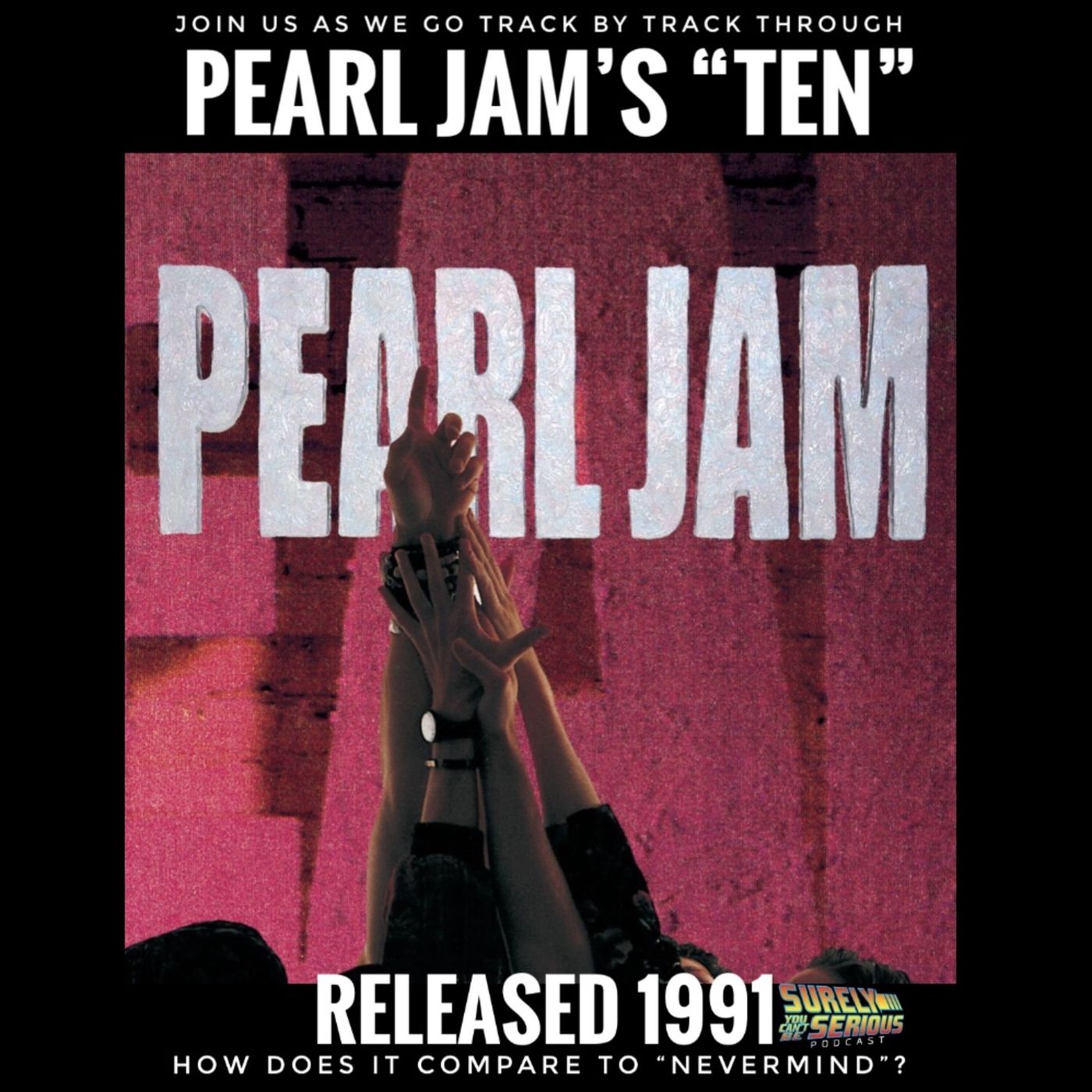
Pearl Jam's "TEN" (1991): Track by Track!
Alternative Rock, Seattle Sound, or Grunge... Whatever you call it, in 1991, Nirvana and Pearl Jam changed the face of music. Join us in this episode as we cover the history of Pearl Jam and each track on the album, Ten, which we think is Hard Rock. Prove us wrong! Please subscribe and leave a review!
Please Support these albums:
Nevermind (Excl. Ltd. Ed. Vinyl): https://amzn.to/2Yx5vMB
Ten (Spec. Ed. Double Vinyl): https://amzn.to/2zggpLV
Please Support these albums:
Nevermind (Excl. Ltd. Ed. Vinyl): https://amzn.to/2Yx5vMB
Ten (Spec. Ed. Double Vinyl): https://amzn.to/2zggpLV
2020-05-12
65 min
Transcript
Available Results
Generated results are saved to the knowledge database for reuse and search.
No generated results are available for this episode yet.
Extract Knowledge
Pick what you want extracted first. Model, scope, and chapter options appear after a template is selected.
Generated results for public episodes are saved to the knowledge database so they can be reused and searched later.
Transcript
<v Speaker 1>Hello everybody, and welcome to the Surely Can't Be Serious podcast,
<v Speaker 1>discussing and debating the iconic and the forgotten of eighties
<v Speaker 1>and nineties pop culture with your co hosts James D.
<v Speaker 1>Graves and Jason Colbin.
<v Speaker 2>Welcome everybody. We are here for part two of the
<v Speaker 2>Nevermind and ten Comparison. I am here with my buddy Jason.
<v Speaker 3>What's up, Hey doo man.
<v Speaker 2>I'm doing awesome wearing my flannel shirt, my knee length shorts,
<v Speaker 2>and my combat boots.
<v Speaker 3>I'm about to do a stage dive right now, right
<v Speaker 3>into the middle of this podcast.
<v Speaker 2>You know you talked when we did def Leppard about
<v Speaker 2>been waiting thirty five years to do this. This is
<v Speaker 2>one of those ones that I'd love to talk to
<v Speaker 2>anybody about anytime. It's been neat to do the deep
<v Speaker 2>dive into this and learn all this stuff. This was
<v Speaker 2>one of those albums growing up. I might have listened
<v Speaker 2>to this album from beginning to end more than any
<v Speaker 2>other album that I've ever listened to.
<v Speaker 3>That's cool, I'm excited to get into. That was hysteria
<v Speaker 3>for me. If I had a clicker every time I
<v Speaker 3>listened to it, that would be the highest one for me,
<v Speaker 3>that and Thriller probably so.
<v Speaker 2>In our research, I read that this was ranked like
<v Speaker 2>number two hundred and seven out of best albums by
<v Speaker 2>Rolling Stone or something, which I just thought to myself,
<v Speaker 2>I could probably listen to two hundred and six albums
<v Speaker 2>and go nope, nope.
<v Speaker 3>Nope, Wow, this is number one for you. Huh.
<v Speaker 2>It's really really good. I mean, there, you know you've
<v Speaker 2>got You've got some Pink Floyd albums that are fantastic
<v Speaker 2>from beginning to end out there, and just a very
<v Speaker 2>few others, but this is one that I just I
<v Speaker 2>love every single second of every single song on this Alum.
<v Speaker 3>Okay, well that's cool, because this is gonna be interesting
<v Speaker 3>because for me, three weeks ago, I am a Pearl
<v Speaker 3>Jam Greatest Hits kind of guy. I was not familiar
<v Speaker 3>with most of these songs.
<v Speaker 2>For full disclosure, I was not one of those guys
<v Speaker 2>who became a Pearl Jam devotee after listening to this album.
<v Speaker 2>I love the album. I like a lot of the
<v Speaker 2>songs on a lot of the other albums, which I
<v Speaker 2>think a lot of people will say, now this is
<v Speaker 2>the true Pearl Jam, but it just wasn't as much
<v Speaker 2>my taste as ten was, Ten was their best by
<v Speaker 2>far album, and it's obviously their biggest selling album and
<v Speaker 2>the one that brought them into the public eye. But
<v Speaker 2>it may not be their favorite album, it may not
<v Speaker 2>be their fan base's favorite album, but it's definitely my
<v Speaker 2>favorite album.
<v Speaker 3>I got a quick story about my experience with ten. Okay,
<v Speaker 3>spreen break of ninety three. I go on a road
<v Speaker 3>trip with two of my roommates from college, Eric mctoyer
<v Speaker 3>Doug Huggin, both friends of the show. So we drove
<v Speaker 3>to Boston from Oklahoma City, Oklahoma Holy Cow, which is
<v Speaker 3>a freaking long way for my roommates. Crappy car right,
<v Speaker 3>So all the way up and all the way back
<v Speaker 3>we're listening to ten. Well, on the way back, we
<v Speaker 3>hit the Storm of the Century, crashed, the car, got
<v Speaker 3>snowed in for three days, we missed school, we were
<v Speaker 3>trapped in Knoxville, Tennessee. But the whole way we're listening
<v Speaker 3>to ten and I finally I remember one time, I'm like,
<v Speaker 3>can we please listened to bon Jovi? Now that's where
<v Speaker 3>I It was my first real experience with ten. So Doug, Eric,
<v Speaker 3>thank you for that.
<v Speaker 2>Well, I would like to give you a hard time,
<v Speaker 2>I would, But honestly, I was not an early adopter
<v Speaker 2>on these guys either. I wasn't just as in love
<v Speaker 2>with them as a lot of my friends were at
<v Speaker 2>the time. It took me a little while, But honestly,
<v Speaker 2>at that time, I had just become introduced to some
<v Speaker 2>of the classic rock, Like I had just started really
<v Speaker 2>listening to led Zeppelin, Leonard Skinner and some of those
<v Speaker 2>guys from the seventies, and I wasn't listening to anything new.
<v Speaker 2>I was just like, I don't care about new music.
<v Speaker 2>Nothing's good anymore, because I didn't realize, hey, these guys
<v Speaker 2>are putting out stuff that's not like you know, Motley
<v Speaker 2>Crue and bon Jovi. Not that I disliked bon Jovi,
<v Speaker 2>but it was a time that I was turning my
<v Speaker 2>nose up at new music, especially new music that was
<v Speaker 2>like a whole new genre of music. But then once
<v Speaker 2>I gave Ten a chance, and once I started really
<v Speaker 2>listening to it and learning it, I was like, this
<v Speaker 2>is more similar to seventies rock than anything since the seventies.
<v Speaker 2>I was just like, this isn't new these I mean,
<v Speaker 2>my McCready is playing blue scale lead on this, this
<v Speaker 2>isn't something weird and fanciful. This is like a throwback
<v Speaker 2>to what was going on in the seventies and it's good.
<v Speaker 3>Well, great, Well, let's get into it, man. I can't
<v Speaker 3>wait to talk about it with you. Pearl Jam is
<v Speaker 3>born out of the shattered pieces of other bands. It's
<v Speaker 3>like they went to a garage sale of bands and
<v Speaker 3>pieced them together, mostly from a band called Mother Lovebone,
<v Speaker 3>which I had heard of but wasn't really familiar with
<v Speaker 3>their music.
<v Speaker 2>There is such a storied history. There's so many things
<v Speaker 2>going on. You've got the bands Malfunction, Green River, Shadow,
<v Speaker 2>and Bad Radio that are really the precursors to this band.
<v Speaker 2>Malfunction was a band that was led by Andrew Wood
<v Speaker 2>Oh Jeff, and it broke up. Green River was a
<v Speaker 2>band that Jeff Amett and Stone Gossard were members of
<v Speaker 2>along with Mark Arm Steve Turner. Now, Jeff and Stone
<v Speaker 2>had disagreements with Steve about the sound that they should
<v Speaker 2>be going for. Steve thought that they were too much
<v Speaker 2>into the hard rock scene and so he split, and
<v Speaker 2>then Mark disagreed about whether they should be trying to
<v Speaker 2>get on a big label or whether they should stay independent.
<v Speaker 2>Mark Arms said he would rather do an independent label.
<v Speaker 2>Jeff and Stone they wanted to be big. They wanted
<v Speaker 2>to be big stars and go with a major record label.
<v Speaker 2>So that resulted in the end of Green River.
<v Speaker 4>Now.
<v Speaker 2>Mark arm and Steve Turner got together after that and
<v Speaker 2>form a group mud Honey, which is one of Subpop
<v Speaker 2>which we talked about last episode, one of their biggest bands.
<v Speaker 2>And then Jeff Aiment and Stone Gossard got together with
<v Speaker 2>Andrew Wood and they formed Mother Love Bone and they
<v Speaker 2>did really well. They had an EP come out called
<v Speaker 2>Shine and then it did pretty well, and then they
<v Speaker 2>signed with PolyGram and they put together an album called Apple.
<v Speaker 2>And if you've heard any of Mother Lovebone's songs, it
<v Speaker 2>was probably off of that album Apple.
<v Speaker 3>Yeah, I was telling you I listened to that today.
<v Speaker 3>I was not familiar with Mother Lovebone. A Mother Lovebone
<v Speaker 3>is a whole lot closer to the hair metal band
<v Speaker 3>stuff that was going on at the time. I was
<v Speaker 3>actually very surprised. It sounded a lot to me like
<v Speaker 3>a combination of La Guns, Slaughter and Faster pussy Cat.
<v Speaker 2>Yeah. Andy Wood, he was very much into the wanting
<v Speaker 2>to be a big rock star, big scene yea. Even
<v Speaker 2>when they were playing small clubs. He would he would
<v Speaker 2>treat it like it was an arena show.
<v Speaker 3>Yeah, hey, you in the back, this one's for you.
<v Speaker 3>And it looks back there there's a guy like one
<v Speaker 3>guy in the back holding a beer, like for me.
<v Speaker 4>They did say that.
<v Speaker 3>I mean, Andy Wood's personality was kind of out front
<v Speaker 3>of Mother Love Bone.
<v Speaker 2>So yeah. Andy Wood was also the roommate of Chris Cornell,
<v Speaker 2>who was the lead singer for Soundgard.
<v Speaker 3>It's a very interesting story how they're all intermingled and intermixed,
<v Speaker 3>but it's it's a very camaraderie type of thing going
<v Speaker 3>on in Seattle. It's not combative, it's more friendly.
<v Speaker 2>That was something that the guy from the Ramones noted
<v Speaker 2>when he was talking to Chris Cornell. He was like,
<v Speaker 2>you guys support each other here, and that's something incredible
<v Speaker 2>because where we come from, we would do anything to
<v Speaker 2>sabotage any other competing band. So Mother Lovebone does their
<v Speaker 2>full length LP and.
<v Speaker 3>Then Andy Wood passes away like four weeks before the
<v Speaker 3>release of Apple.
<v Speaker 2>Apple was supposed to come out, I believe in April
<v Speaker 2>of nineteen ninety and in March of nineteen ninety he
<v Speaker 2>overdosed on Heroin, and it was obviously not only devastating
<v Speaker 2>to the band because they are no longer a band,
<v Speaker 2>but devastating because they lost a dear friend who was
<v Speaker 2>someone who was exciting and full of life, just had
<v Speaker 2>a demon.
<v Speaker 3>Can you imagine you're right on the precipice of all
<v Speaker 3>your dreams coming true and then one of your best
<v Speaker 3>friends he dies and your dream dies.
<v Speaker 2>Yeah. I mean they talk about coming into the hospital,
<v Speaker 2>you know, just seeing him there on live support, and
<v Speaker 2>it just be a memory that they can never escape.
<v Speaker 2>It just was overwhelming. I can't imagine. I mean, there's
<v Speaker 2>a bunch of young guys, you know, in their twenties.
<v Speaker 2>To see somebody that young lose somebody that young just
<v Speaker 2>too much. So what happens is that Stone Gossard he
<v Speaker 2>deals with the pain by going off and writing more music,
<v Speaker 2>deeper and kind of heavier music that he's writing Jeff Amott,
<v Speaker 2>Quitch playing all Together. He deals with it in a
<v Speaker 2>different way than that. And then Chris Cornell starts writing
<v Speaker 2>songs about the loss of his roommate and dear friend,
<v Speaker 2>and so Gossard is this guitarist who's writing these songs
<v Speaker 2>and he remembers his buddy named Mike McCready. They had
<v Speaker 2>known each other when they were young. Mike McCready had
<v Speaker 2>played guitar long before Stone Gossard had even played guitar,
<v Speaker 2>but they had kind of, you know, enjoyed sending each
<v Speaker 2>other rock pictures. And then he remembers, hey, Mike had
<v Speaker 2>a band. But what happened with Mike's band is they
<v Speaker 2>became pretty big. They got pretty proud of themselves. They
<v Speaker 2>thought we're going to go down to LA and become big.
<v Speaker 2>And they went down to LA and basically got told
<v Speaker 2>you're not good enough to be down here, and that
<v Speaker 2>kind of devastated them. So like eighteen months after getting
<v Speaker 2>to LA, they go back to Seattle. In about six
<v Speaker 2>months after that, they're done. They're no longer a band,
<v Speaker 2>and he also quits playing guitar, cuts his hair, goes
<v Speaker 2>back to college. I mean, he's given up the dream.
<v Speaker 2>And then he has a buddy who's like, hey, man,
<v Speaker 2>why don't you come to a concert with me. I
<v Speaker 2>think you're giving up on something that you're really good at,
<v Speaker 2>but let's go to a Stevie Rayvon concert. So he
<v Speaker 2>goes to the Stevie Rayvon concert and Stevie Ravan starts
<v Speaker 2>the song Couldn't Stand the Weather, and as he starts
<v Speaker 2>the song, these clouds roll in and it starts to
<v Speaker 2>storm on top of the audience. And then as soon
<v Speaker 2>as the song is over, the storm stops in the
<v Speaker 2>clouds part and michaemccreedy said, it was like a religious experience.
<v Speaker 2>I knew I needed to pick the guitar back up,
<v Speaker 2>great man, And so he goes. He starts playing with
<v Speaker 2>another band called Love Chili. Gossard sees him there, calls
<v Speaker 2>him up, says, hey, let's play some songs together, and
<v Speaker 2>it's actually McCready that's like, hey man, you've got some
<v Speaker 2>good stuff. We need to have a bass player. You
<v Speaker 2>need to call Jeff. And I believe his response.
<v Speaker 3>Was f Jeff, Yeah, that's right.
<v Speaker 2>It was because you know, they just they didn't get along,
<v Speaker 2>to say, exceptionally well back then, even when they were
<v Speaker 2>another love Bone together. But he swallowed his pride and
<v Speaker 2>he called them up and they got Matt Cameron, who
<v Speaker 2>was the drummer for Sound Garden, and they put together
<v Speaker 2>a demo tape and it was five songs and basically
<v Speaker 2>the point of the demo tape was to find a
<v Speaker 2>drummer and to find a lead singer.
<v Speaker 3>This is a really cool story. So they send this
<v Speaker 3>tape to their buddy Jack Irons, who had formerly been
<v Speaker 3>in Red Hot Chili Peppers. Right, and they said, Hey,
<v Speaker 3>we need a drummer, we need a vocalist. Are you
<v Speaker 3>interested in maybe drumming for us? And if so, great,
<v Speaker 3>If not, do you know any vocalists for us?
<v Speaker 2>Right?
<v Speaker 3>And he had a basketball buddy down in San Diego
<v Speaker 3>that he went around with who had been in a
<v Speaker 3>couple of bands or whatever, this guy named Eddie Bedder.
<v Speaker 3>Maybe've heard of.
<v Speaker 2>Him, No, you hadn't back then.
<v Speaker 3>What are the odds that guys in Seattle make a
<v Speaker 3>demo tape send it to a guy who not only
<v Speaker 3>listens to it, but hands it over to one of
<v Speaker 3>the great rock vocalists.
<v Speaker 2>Of all time. It's amazing. I mean, he's he's working
<v Speaker 2>like security in a petroleum factory. I mean, it's just
<v Speaker 2>it's crazy. It is crazy. Eddie Vedder goes out surfing
<v Speaker 2>one night. He's got these tunes in his head and
<v Speaker 2>he kind of comes up with the lyrics as he's surfing.
<v Speaker 2>He basically comes back in sits down on the beach,
<v Speaker 2>and with sand still on his feet, writes the lyrics
<v Speaker 2>to what will become Once, what will become alive, and
<v Speaker 2>what will become Footsteps, which he calls the Mama Son
<v Speaker 2>Trilogy because it's kind of got this mini opera type
<v Speaker 2>of feel where you have the mom and a son
<v Speaker 2>who have this weird, incestuous relationship which then leads the
<v Speaker 2>son to become crazy and become a serial killer, and
<v Speaker 2>then like Footsteps, is the final act of the trilogy
<v Speaker 2>that you know, he's in prison and awaiting.
<v Speaker 3>Execution, so he records his lyrics on top of the demo,
<v Speaker 3>sends it back to these guys. They listen to it.
<v Speaker 2>So I'm going to throw this in there because I
<v Speaker 2>don't think you're going to all of our listeners listen up.
<v Speaker 2>I don't think anybody else is going to give you
<v Speaker 2>this piece of information that I'm about to lay down
<v Speaker 2>to you. So if you look at the tape that
<v Speaker 2>he sent back, I used to do this when I
<v Speaker 2>was recording things, and you know, living by myself, I
<v Speaker 2>had no money either, and buying tapes to record on
<v Speaker 2>can be expensive. So what you can do is you
<v Speaker 2>can take a tape that's a commercially made tape and
<v Speaker 2>if you just stick little pieces of paper in the
<v Speaker 2>top holes, you can record on it again. And so
<v Speaker 2>that's what you would do. And so I looked at
<v Speaker 2>this tape and I was like, holy crap, this is
<v Speaker 2>an actual tape of somebodies that he has taken and
<v Speaker 2>recorded on. Eddie Vedder recorded on this tape and then
<v Speaker 2>he used white out to wipe out everything except for
<v Speaker 2>one song title. One song title was a friend in California.
<v Speaker 2>You have no idea who that the recognized. I'm wondering
<v Speaker 2>if anybody who's listening right now has any idea what
<v Speaker 2>who sang a friend from California? Handwritten above that it
<v Speaker 2>says to Jeff and Stone. Then down at the bottom
<v Speaker 2>he also uses white out to wipe out all of
<v Speaker 2>the letters of the bottom part, and it's just the
<v Speaker 2>letters that spell out Eddie. So I looked at this
<v Speaker 2>and I was like, I've got to figure out what
<v Speaker 2>his tape is. It was Merle Haggard Greatest Hits of
<v Speaker 2>the eighties. That was the tape that he decided to record.
<v Speaker 3>Over my gosh, Yeah, that is incredible. That's kind of
<v Speaker 3>go on your Triviune card this week.
<v Speaker 2>Cards for sure.
<v Speaker 3>That's amazing. That's amazing. Yeah, that's awesome. And he wrote
<v Speaker 3>his telephone number on there as well. I saw that
<v Speaker 3>when they showed it to him. I actually watched a
<v Speaker 3>video where the guy, the interviewer, he handed that tape
<v Speaker 3>to Eddie Vedder and he's like, oh, check it out,
<v Speaker 3>it's my telephone number. So when he sends it back
<v Speaker 3>to Stone, they listen to it and they're like, not
<v Speaker 3>only can he sing, but he can write lyrics. Yeah,
<v Speaker 3>I mean he's like a poet, right, Yeah. So he
<v Speaker 3>impressed him enough for them to fly him up to
<v Speaker 3>Seattle to audition YEP.
<v Speaker 2>And as he's going up, he writes the lyrics to
<v Speaker 2>two more songs. It was a five song deal. Writes
<v Speaker 2>the lyrics to two more songs. So he's got all
<v Speaker 2>of them written. And he arrives up there and they're
<v Speaker 2>in the middle of starting to do this Temple of
<v Speaker 2>the Dog thing with Chris Cornell. Mike McCready comes in
<v Speaker 2>and I'm just going to say this right now. Mike
<v Speaker 2>McCready is maybe one of the most underappreciated guitarists that
<v Speaker 2>I can think of. He is a rock god who
<v Speaker 2>deserves more credit than he gets. He deserves to be
<v Speaker 2>up there with Hendrix and Stevie ray Vaughn and Eddie
<v Speaker 2>Van Halen. I mean, he is phenomenal. And so Chris Cornell,
<v Speaker 2>you know, the grunge scene in the alternative scene was
<v Speaker 2>all against you know, doing these big, long guitar solos.
<v Speaker 2>You know, we talked about Nirvana. You don't the guitar
<v Speaker 2>solo is just a melody of the words, you know.
<v Speaker 2>But Chris Cornell was just kind of like, f all
<v Speaker 2>of you guys, I'm going to put a five minute
<v Speaker 2>guitar solo on the first song on this album. What
<v Speaker 2>do you think about that? And so he said he
<v Speaker 2>almost had to yell at Mike McCready because he was like,
<v Speaker 2>you play guitar so freaking good. You're the one guy
<v Speaker 2>who I want to play a five minute guitar solo
<v Speaker 2>on my first eleven minute long song. It's solid. I mean,
<v Speaker 2>it's not. You can see his progression as time goes on.
<v Speaker 2>You know, it's not his best work, but man, it's
<v Speaker 2>still really good.
<v Speaker 1>You know.
<v Speaker 3>Chris Cornell was in a position to really help out
<v Speaker 3>the band too, when he was doing this Temple of
<v Speaker 3>the Dog thing and they're doing Hunger Strike. They were like,
<v Speaker 3>you know, hey, we've got a new singer, and he's like, well,
<v Speaker 3>we'll bring him on board, man, let's get him going
<v Speaker 3>and he can sing with me and we can go.
<v Speaker 3>And so that was actually the first time that Eddie
<v Speaker 3>Vedder ever heard himself on an actual wreck.
<v Speaker 2>Chris Cornell was basically like, I kind of have this
<v Speaker 2>idea for how I want the other vocal part to
<v Speaker 2>go in this, and he said and then suddenly Eddie
<v Speaker 2>just started singing it, and it was as if he
<v Speaker 2>already knew what I had had planned, like he had
<v Speaker 2>just knew it. And Hunger Strike is, you know, the
<v Speaker 2>one the major duet that they do on that one now,
<v Speaker 2>but I love that song so good. So, you know,
<v Speaker 2>Eddie Vetterer arrives, they're they're introducing people, but when they
<v Speaker 2>first when he first arrives, he's like, I don't want
<v Speaker 2>to do anything. I want to go straight to the rehearsal.
<v Speaker 2>I don't want to see the town, I want to
<v Speaker 2>do any touristy stuff. I want to go and I
<v Speaker 2>want to start playing right away. And for the next
<v Speaker 2>five days they rehearse, and on day number six they
<v Speaker 2>do their first show.
<v Speaker 3>I think it's awesome. I believe his term was I'm
<v Speaker 3>not here to frunt.
<v Speaker 2>If you listen to the songs, especially alive from that
<v Speaker 2>demo tape that he had sent back, I mean, there's
<v Speaker 2>not a whole lot different honestly, from the way that
<v Speaker 2>he originally did the lyrics and the way they originally
<v Speaker 2>played it to what the song is on the final
<v Speaker 2>ten album.
<v Speaker 3>We talked about their name, I'm ready tribute to the name.
<v Speaker 2>Well, okay, so we know that they started playing sessions,
<v Speaker 2>they started playing shows right off the bat. They started
<v Speaker 2>opening for Alison Chains. But the name under Allison Chains
<v Speaker 2>was not.
<v Speaker 3>Pearl Jam That's right. It wasn't. It was Mookie Blaylock.
<v Speaker 3>So if you're a basketball fan, especially a nineties basketball fan,
<v Speaker 3>then you know who this guy is. Yeah, if you
<v Speaker 3>were born and raised in Oklahoma, like I was, right,
<v Speaker 3>you recognize this guy from college because he played at
<v Speaker 3>Miama Mater, the University of Oklahoma. He truly is one
<v Speaker 3>of the great defensive players of all time led Leagan
<v Speaker 3>Steel's that type of thing, and in college, man, he'd
<v Speaker 3>press it all the way up the court. And these
<v Speaker 3>guys were big basketball fans. And they were big fans
<v Speaker 3>of Mookie Blaylock, who at the time I know he
<v Speaker 3>played for the Atlanta Hawks.
<v Speaker 2>New Jersey Nets was who he was playing for at
<v Speaker 2>the time if they adopted his name.
<v Speaker 3>So anyway, the original name for the band Mookie Blaylock.
<v Speaker 2>They got together. They started rehearsing in the fall of
<v Speaker 2>nineteen ninety. Eddie moves up in like November, they start
<v Speaker 2>doing all of the shows and by March they start
<v Speaker 2>doing their demo recordings at the London Bridge Studio there
<v Speaker 2>in Seattle. They signed with a major record label. And
<v Speaker 2>guess what, you can't be Mookie Blaylock.
<v Speaker 3>Any First of all, Mookie Blaylock doesn't know who five
<v Speaker 3>scrubs from Seattle are at right.
<v Speaker 2>Yeah, is a security guard. The other guy's working at
<v Speaker 2>a coffee shop, and another guy used to work at
<v Speaker 2>a pizza place. Oh, here's an interesting bit of trivia
<v Speaker 2>as well. The guy that worked with the pizza place
<v Speaker 2>was Mike McCready. He worked at pizza place with the
<v Speaker 2>guy named Pete Druge, who has a song that you
<v Speaker 2>may or may not recognize. If you don't love me,
<v Speaker 2>I'll kill myself And it's from the movie.
<v Speaker 3>That's from Dubbin Dumber.
<v Speaker 2>Yes, yes, yeah, Mike McCready and the guy who sang
<v Speaker 2>that song used to work in the same pizza shop together.
<v Speaker 3>Oh man, that is incredible. What a great nugget that is.
<v Speaker 3>I am a huge Dubbin Dumber fan, which we're going
<v Speaker 3>to cover one of these days. So anyway, the record
<v Speaker 3>company says, Okay, you guys can't be Mookie Blay like,
<v Speaker 3>you got to pick something else, right, So they do
<v Speaker 3>eventually form the name Pearl Jam right, right. And so
<v Speaker 3>the way they came up with this, I thought this
<v Speaker 3>was at least interesting, although a little anti climactic. They
<v Speaker 3>kind of liked the name Pearl. It was Eddie Vedder's
<v Speaker 3>great grandmother's name, and Jeff just kind of thought, Okay,
<v Speaker 3>that's kind of a cool word. Yeah, And then they
<v Speaker 3>went to a Neil Young concert where he would just
<v Speaker 3>play these extra long, extended versions of these songs.
<v Speaker 2>Pearl Jam right, j Yeah, It's it's not as exciting
<v Speaker 2>as what you would hope it would be. And so
<v Speaker 2>what Eddie Vedder did right after they became famous was
<v Speaker 2>to lie about where it came from.
<v Speaker 3>I heard this story too, Yeah, is.
<v Speaker 2>He's like, no, I had a great grandmother named Pearl
<v Speaker 2>and she was married to a Native American and she
<v Speaker 2>used to make this payote Lace jam and they would
<v Speaker 2>get you high and stuff. But yeah, later on he's like, no,
<v Speaker 2>that was BS.
<v Speaker 4>That was a lie.
<v Speaker 3>Yeah, all right, So then they become Pearl Jam. Their
<v Speaker 3>first album is going to be called ten.
<v Speaker 2>Which is eleven songs.
<v Speaker 3>Why it's called ten because that's Mookie Blaylec's number.
<v Speaker 2>Oh, how was a set up?
<v Speaker 3>By the way, I totally said you, thank you, thank
<v Speaker 3>you for me right there. Appreciate that.
<v Speaker 2>We've talked before with Van Halen and with def Leppard
<v Speaker 2>about MTV being in, you know, the right place at
<v Speaker 2>the right time for these bands. What interestingly happens for
<v Speaker 2>this one is that independent record label that I talked
<v Speaker 2>about last episode called sub Pop. There's a neat little
<v Speaker 2>thing that Subpop does. The first interesting thing they figure
<v Speaker 2>out is if if they don't make as many records,
<v Speaker 2>they created a demand because people were like, oh, you
<v Speaker 2>can't get these because they only made you know whatever,
<v Speaker 2>five hundred of them or whatever. So they do that
<v Speaker 2>little trick to increase the value of their records. And
<v Speaker 2>then the other trick that they learned is they realized
<v Speaker 2>that all music movements started with a regional base. You know,
<v Speaker 2>you look at Motown and its base was Detroit. So
<v Speaker 2>they thought, okay, well we're going to make Seattle. We're
<v Speaker 2>going to make that region our regional base for this
<v Speaker 2>big music movement. And they're a large part of why
<v Speaker 2>grunge and why alternative music from Seattle became as big
<v Speaker 2>as it did because they had this crazy idea that
<v Speaker 2>they engaged in in March of nineteen eighty nine. And
<v Speaker 2>these are like a small time don't know what they're doing,
<v Speaker 2>just trying to get their feed under them guys. But
<v Speaker 2>they said, let's get the most important reporter from Melody
<v Speaker 2>Maker over in Europe to come over here. Will fly
<v Speaker 2>them over, will act like we're big time. We'll show
<v Speaker 2>them the Seattle scene and the Seattle sound and hopefully
<v Speaker 2>he'll write a good article about it. Well that's exactly
<v Speaker 2>what happens, and that is exactly what he does, and
<v Speaker 2>all of a sudden, everyone becomes obsessed with the Seattle sound.
<v Speaker 2>And that was the impetus behind people latching on it.
<v Speaker 2>You know, as with all things, it takes a little
<v Speaker 2>wall for these things to happen. But the fascination with
<v Speaker 2>Seattle and kind of the grunge sound and the grunge
<v Speaker 2>look became a thing largely because of subpop and then
<v Speaker 2>I mean, quite frankly, Pearl Jam enjoyed the success on
<v Speaker 2>ten that it did part because of the Seattle sound
<v Speaker 2>trick and then also because of Nirvana.
<v Speaker 3>For people who enjoy pop culture like you and I do. Yeah,
<v Speaker 3>it's fascinating to see when the lit match and the
<v Speaker 3>gasoline meet.
<v Speaker 2>And what's interesting with this one is how quickly the
<v Speaker 2>word grunge became a dirty word to all of these guys.
<v Speaker 2>Like every rebellion against the establishment begins with someone saying, hey,
<v Speaker 2>you know, we don't want to we don't want to
<v Speaker 2>do what the man is wanting us to do. We're
<v Speaker 2>going to do our own thing. Then it starts to
<v Speaker 2>gain traction, people join in, it becomes like a movement,
<v Speaker 2>and then the establishment sees it and it's like, oh, hey,
<v Speaker 2>we can market this and we can pay its band
<v Speaker 2>leaders and we'll we'll make it our own, and then
<v Speaker 2>the movement becomes the new establishment. And that's what happened
<v Speaker 2>with rock and roll in the early eighties. What happened
<v Speaker 2>with heavy metal in the mid to late eighties, and
<v Speaker 2>that's what happens now with the grunge music and the
<v Speaker 2>Seattle scene is it's the rebellion against heavy metal, and
<v Speaker 2>then it turns into the new heavy metal, where you know,
<v Speaker 2>then Versace is selling grunge style in magazines and stuff,
<v Speaker 2>and so it quickly became the establishment. Okay, right, So
<v Speaker 2>just a few musical influences. Eddie likes The Who and
<v Speaker 2>Michael Jackson and The Jackson Five, Mike McCready likes funk
<v Speaker 2>Adelic and def Leppard, and Van Halen right Stone likes Rap.
<v Speaker 2>All of them were into Ice Cube at the time
<v Speaker 2>that they that he was becoming the Kirk Cobain said
<v Speaker 2>some kind of negative things about them when they first
<v Speaker 2>came out, like He's like, they're just hard rock, They're
<v Speaker 2>just another hard rock band wearing our clothes, that they're
<v Speaker 2>not really a true alternative, a true grunge band, and
<v Speaker 2>it kind of was upsetting to Eddie, and Eddie gave
<v Speaker 2>him a call and Kirk Cobain kind of changed his
<v Speaker 2>tune a little bit and said, I'm not going to
<v Speaker 2>say anything bad about him. I don't like their music
<v Speaker 2>and I never have, But I like Eddie Vetter. He's
<v Speaker 2>a nice guy, and so I'm not going to say
<v Speaker 2>ugly stuff about them anymore.
<v Speaker 3>I do think that's interesting. I don't think Kurt Cobain
<v Speaker 3>is wrong. I mean, I think that Pearl Jam is
<v Speaker 3>a hard rock band with grunge elements, and I think
<v Speaker 3>that Nirvana is kind of a punk band with pop
<v Speaker 3>and grunge elements. And they're from the same area, so
<v Speaker 3>they're are similarities, but they're from there. They formed different trees, you.
<v Speaker 2>Know, sure. And I mean if you if you listen
<v Speaker 2>to any of the bands out of Seattle, they all
<v Speaker 2>have kind of a different sound. It is not as
<v Speaker 2>though they're all playing the same type of music.
<v Speaker 3>Well, I did hear Cameron Crow say that one of
<v Speaker 3>the reasons why they had formed this kind of Seattle
<v Speaker 3>sound was that because of the weather, they had a
<v Speaker 3>lot of time to play. Because they're indoors, they had
<v Speaker 3>a lot of time to play, and they had a
<v Speaker 3>lot of time to listen to music. And so because
<v Speaker 3>of the just the weather situation, that's just kind of
<v Speaker 3>what it lends itself to.
<v Speaker 2>Well, certainly the sound of the music is is different.
<v Speaker 2>I mean, the sound of the music of Nirvana and
<v Speaker 2>the sound of the music of Pearl Jam is very distinct.
<v Speaker 2>You would not confuse them. But just like Metallica brought
<v Speaker 2>brains to heavy metal, Pearl Jam brought relevance and depth
<v Speaker 2>and you know, meaning to hard rock which had been
<v Speaker 2>missing for a while. You know, they were doing hard rock,
<v Speaker 2>but the lyrics were about the loneliness and the confusion
<v Speaker 2>of youth, and I think that's why they are appropriately
<v Speaker 2>in with this group of new sound, the revolution that
<v Speaker 2>was occurring. We didn't talk about the drummers, honestly, it's
<v Speaker 2>kind of confusing.
<v Speaker 3>It is confusing.
<v Speaker 2>They went through like three different drummers, but basically Dave
<v Speaker 2>Krusen was the one who was on the album ten
<v Speaker 2>and he's the one that played for them. He eventually
<v Speaker 2>went into rehab almost right after the album was finished,
<v Speaker 2>and so he was replaced by Matt Chamberlain, who had
<v Speaker 2>been the drummer for Edie Burkel and the New Bohemians,
<v Speaker 2>and then he got an opportunity to be on Saturday
<v Speaker 2>Night Live with Saturday Night Live Band, so like, sorry, guys,
<v Speaker 2>I'm not going to keep drumming for you, and that
<v Speaker 2>he recommended David Brusies to be the drummer, and he
<v Speaker 2>was this guy out of Texas and it's really interesting.
<v Speaker 2>And I'll jump ahead a little bit, but in one
<v Speaker 2>of the videos, Mike Chamberlain is the one playing the drums,
<v Speaker 2>and Davi of Bruzies is one of the guys out
<v Speaker 2>in the crowd because he's just arrive from Austin, tex
<v Speaker 2>The album actually starts off with the sounds of a
<v Speaker 2>hidden track. The hidden track is called Master Slave, and
<v Speaker 2>so if you listen to the beginning of the album
<v Speaker 2>and the end of the album, it's the same tune,
<v Speaker 2>but it's just a real brief, you know, kind of
<v Speaker 2>taste of Master and Slave, and then we open with Once.
<v Speaker 3>The hidden track on ten Yeah is not nearly as
<v Speaker 3>offensive as the hidden track on the Nirvana album.
<v Speaker 2>The hidden track on Tin is good, and.
<v Speaker 3>It's just kind of like it's like a cracker. It's
<v Speaker 3>like there's not really much substances. It's just kind of
<v Speaker 3>little drums and that's it. It's not a nail being
<v Speaker 3>d into your brain.
<v Speaker 2>It's a cool sound. It's kind of gets you in
<v Speaker 2>a mood and it's definitely not something that when the
<v Speaker 2>guy comes in to mix the CD and nobody else
<v Speaker 2>is there. He thinks this is a mistake, This shouldn't
<v Speaker 2>be in here.
<v Speaker 3>This is cur crap, this is garbage. We need to
<v Speaker 3>throw it away right.
<v Speaker 2>Once. The first song on the album was originally called
<v Speaker 2>a Jitian Crave, and that was just what Stone Gossard
<v Speaker 2>had called it whenever he sent the demo tape. But
<v Speaker 2>it is part of that Mama Son mini opera that
<v Speaker 2>that Eddie Vedder had written.
<v Speaker 3>This song was on the demo tape, the Stone Gossard
<v Speaker 3>demos ninety one, right right, and that Eddie Vedder got
<v Speaker 3>ahold of okay yes.
<v Speaker 2>And so when they did the single release for Live,
<v Speaker 2>this song was on the B side for that one,
<v Speaker 2>you know, and Alive, as I said before, was also
<v Speaker 2>part of that Mama Son mini opera. But this one
<v Speaker 2>is the one that is the story of the descent
<v Speaker 2>into madness where he ultimately becomes a serial killer, you know,
<v Speaker 2>backseat lever on the side of the road, got a
<v Speaker 2>bomb in my temple and it's going to explode. They
<v Speaker 2>did this one, as with many of them, on their
<v Speaker 2>performance in October twenty second of ninety that very I
<v Speaker 2>don't remember. It's their first or second performance, but.
<v Speaker 3>Right right off the bat they're performing this. This is
<v Speaker 3>kind of a hard rocker song. This is I mean,
<v Speaker 3>it's a pound your fist. The crowd is kind of
<v Speaker 3>dropping their head and let's go right.
<v Speaker 2>Yeah, it's angry, It's angry.
<v Speaker 3>This song received some radio play that I was familiar
<v Speaker 3>with this song when let me start this.
<v Speaker 2>The next one we have is even Flow.
<v Speaker 3>The Man.
<v Speaker 2>What a freaking great song. This is.
<v Speaker 3>The core.
<v Speaker 2>I'm afraid that I'm just gonna gush over every single
<v Speaker 2>one of these. Pull it back just a.
<v Speaker 3>Little bit, a right, That's the way I felt when
<v Speaker 3>he did Hysteria.
<v Speaker 2>So yeah, right, So this one is the picture of
<v Speaker 2>a homeless man, and I mean that's evident from the lyrics.
<v Speaker 2>You know that even Flow is this guy with problems,
<v Speaker 2>mental problems probably, and thoughts that he has to drive
<v Speaker 2>away and chase away, and an insane look whenever he smiles.
<v Speaker 2>And it turns out he's based on an actual guy,
<v Speaker 2>a Vietnam vet that Eddie Vedder met, whose name was
<v Speaker 2>also Eddie, who ended up passing away.
<v Speaker 3>The cool thing to me. In two thousand and eight,
<v Speaker 3>Eddie Vedder said this song was written underneath the Space Needle.
<v Speaker 2>Yeah.
<v Speaker 3>I mean there's three things I know about Seattle. I
<v Speaker 3>know the Seahawks, I know the Mariners, and I know
<v Speaker 3>you know Fraser and the Space Needle. That's it, right,
<v Speaker 3>I guess that's four things. But this song took forever
<v Speaker 3>to get it right.
<v Speaker 2>Yeah.
<v Speaker 3>They played it like fifty sixty seventy times and some
<v Speaker 3>members of the band are still dissatisfied to this day.
<v Speaker 2>He did a couple of different versions of it ultimately,
<v Speaker 2>and one of them they recorded with the drummer David Bruisy,
<v Speaker 2>and that's the one that appears on the Singles soundtrack.
<v Speaker 2>So a couple of nights ago I watched Singles. It's
<v Speaker 2>fascinating because Cameron Crowe had heard about the death of
<v Speaker 2>Andy Wood. He had this kind of storyline idea and
<v Speaker 2>decided to go up to Seattle and hang with these bands,
<v Speaker 2>and he ends up casting. I mean, you've got Alison
<v Speaker 2>Chains performing on stage. You've got Chris Cornell standing next
<v Speaker 2>to Matt Dillon as he's cranking up the volume on
<v Speaker 2>his girlfriend's speakers that he's just installed, and then all
<v Speaker 2>the windows blow out and Chris Cornell is just watching
<v Speaker 2>it just kind of nod in his head, like yeah.
<v Speaker 2>And then Matt Dillon is the lead singer for this
<v Speaker 2>band called Citizen Dick whose major song has touched me
<v Speaker 2>on Dick, but his band is Eddie Vedder. Stone Gossard,
<v Speaker 2>you have am. I mean it's the Yes, there's a
<v Speaker 2>couple of different scenes that they're in. But it's fascinating
<v Speaker 2>because they are making this movie at the same time
<v Speaker 2>that these guys are putting this album together. Like none
<v Speaker 2>of them are famous. Chris Cornell is Seattle famous and
<v Speaker 2>Alison Chains is Seattle famous. But the guys that they
<v Speaker 2>got to play, the members of Matt Dylan's band, they
<v Speaker 2>were no ones at the time.
<v Speaker 1>Other than that he was able backed by Stone and
<v Speaker 1>Jeff Drummerady Better.
<v Speaker 3>I mean, that's good.
<v Speaker 2>That's a good meat.
<v Speaker 4>A compliment for us, is a compliment for you.
<v Speaker 3>Even Flow is the second single released. It was released
<v Speaker 3>April sixth, nineteen ninety two. Yeah, so this is released
<v Speaker 3>in ninety two and it's the fifth most played song
<v Speaker 3>on the radio. You're in the twenty tens. Yeah, in
<v Speaker 3>twenty tens.
<v Speaker 2>Because every single one of these songs have staying power.
<v Speaker 2>This one just to talk musically, Stone Gossard us an
<v Speaker 2>open D tuning, and then Mike McCready says, yeah, I
<v Speaker 2>just kind of ripped off Stevie ray Vaughan.
<v Speaker 3>This sounds very different than anything rock that I had
<v Speaker 3>been hearing at the time. But the vocalizations kind of
<v Speaker 3>staccato is it's different. It's very different. Yeah, but I
<v Speaker 3>mean super great. I mean this is a song that
<v Speaker 3>I was a late adopter to but ultimately came to love.
<v Speaker 2>Did you have a little bit of trouble learning to
<v Speaker 2>speak any better?
<v Speaker 3>Oh? I still don't know what the heck he's saying.
<v Speaker 2>I mean, the worst, the worst and most famous of
<v Speaker 2>the unintelligible l Better lyrics. It comes from Yellow Leadbetter.
<v Speaker 2>To this day, I don't I don't know that I
<v Speaker 2>know what one single line of that song is as
<v Speaker 2>good as it is. But Kim Thale, the guy who's
<v Speaker 2>the guitar player for Sound Garden, I mean, you get
<v Speaker 2>to think about what the song is about, right, It's
<v Speaker 2>about It's about homelessness. And you know this guy with
<v Speaker 2>a concrete pillow, and he when he went and heard
<v Speaker 2>them live, he thought it was called Evening Flow. It
<v Speaker 2>was like, you know, like how everyone's like in the
<v Speaker 2>evening it's just kind of a flow.
<v Speaker 3>And like a good time. That's awesome.
<v Speaker 2>So the video on this one, they had recorded this
<v Speaker 2>video where the guy came in and he recorded all
<v Speaker 2>these zoo scenes of animals and the band was kind
<v Speaker 2>of air playing their instruments on the edge of this cliff.
<v Speaker 2>But once they got the footage, they're like, well, this
<v Speaker 2>was a colossal waste of time and money. And so
<v Speaker 2>what happened was they still had the video, but it
<v Speaker 2>was done by this guy named Josh Taft who was
<v Speaker 2>just filming as a friend. He's a friend of Stone Gossarts.
<v Speaker 2>He had directed Alive and later on directed Oceans, but
<v Speaker 2>he was there just filming this footage. But on the
<v Speaker 2>full length video of this, which you didn't typically see
<v Speaker 2>on MTV, Eddie Vetterer starts the video by going, this
<v Speaker 2>is not a TV studio, Josh urn these lights out.
<v Speaker 2>It's an effing rock concert.
<v Speaker 3>I watched this video today and I'm like, this can't
<v Speaker 3>be the official video. He's yelling at people.
<v Speaker 2>Yeah, your head aversion to videos at all. Really, it's
<v Speaker 2>interesting on the album you don't hear the end piece
<v Speaker 2>on this. They released this in the UK first, but
<v Speaker 2>it says, I died. I died and you just stood there.
<v Speaker 2>I died and you watched I died and you walked
<v Speaker 2>by and said, no, I'm dead. I was like, wow,
<v Speaker 2>how did I never hear that before?
<v Speaker 5>Once?
<v Speaker 2>Because it's not on the album, but it is in
<v Speaker 2>the video.
<v Speaker 3>So third track on the album is called Alive.
<v Speaker 2>I'm glad you're head banging right now? Is it really appropriate?
<v Speaker 3>Oh?
<v Speaker 1>Man?
<v Speaker 3>This song is so good man. This was their first single,
<v Speaker 3>released July seventh, ninety one.
<v Speaker 4>It is so good.
<v Speaker 2>Yeah, And I knew that you would love this song
<v Speaker 2>because this song has the most mass appeal. This is
<v Speaker 2>the most radio friendly one of the bunch for sure.
<v Speaker 2>All Right, So this song starts off with son. She says,
<v Speaker 2>have I got a little story for you. What you
<v Speaker 2>thought was your daddy was nothing, But while you were
<v Speaker 2>sitting home alone at age thirteen, your real daddy was dying.
<v Speaker 2>So this is an actual event that occurred in Eddie
<v Speaker 2>Vedder's life. He okay, he had a conversation with his
<v Speaker 2>mom where he finds out that the man that he
<v Speaker 2>thought was his dad his entire life, is not his dad.
<v Speaker 2>And you know this. Of course, they didn't get along
<v Speaker 2>particularly well, so this is a big realization for him.
<v Speaker 2>And then he finds out that his real dad. Not
<v Speaker 2>only did he not know that it was his real dad,
<v Speaker 2>but he knew the guy like he was just like
<v Speaker 2>somebody he thought was a family friend. And then he
<v Speaker 2>finds out not only hey, this guy was my dad,
<v Speaker 2>but he died a few years ago, so he has
<v Speaker 2>never had that opportunity to bond with him, and his
<v Speaker 2>mom kind of treats it like it's no big deal,
<v Speaker 2>which is, you know, the underlying emotion behind this whole
<v Speaker 2>song is pretty intense.
<v Speaker 5>Man.
<v Speaker 3>That's a sad story. So this song was originally recorded
<v Speaker 3>January in nineteen ninety one as a part of a
<v Speaker 3>demo session, yeah, which during the recording of ten, they
<v Speaker 3>couldn't recreate the intensity of that original demo, so they
<v Speaker 3>went back and took that demo and kind of corrected
<v Speaker 3>it and improved it, and that's what you got.
<v Speaker 2>This one was one that Stone Gossard had actually written
<v Speaker 2>while he was still with Mother Lovebone and apparently Andy
<v Speaker 2>Wood saying some sort of lyrics to it. It was
<v Speaker 2>when they sent out the demo tape. This was the
<v Speaker 2>one that he called Dollar Short and Mike McCready. When
<v Speaker 2>they play this one live, we'll go into the Black
<v Speaker 2>Sabbath Warpigs solo at the end of this one.
<v Speaker 3>Speaking of that solo, yeah, Mike McCready said that he
<v Speaker 3>based this on Ace Freely's solo in the Kiss.
<v Speaker 2>Song She Yes, which he said was based on the
<v Speaker 2>Doors song five to one. I stole it from Kiss,
<v Speaker 2>but they stole it from the Doors. This is the video,
<v Speaker 2>by the way, that you have the live footage on
<v Speaker 2>where you see Chamberlain drumming and David Bruzi's in the audience.
<v Speaker 3>It's a neat little nugget right there. Okay, So song
<v Speaker 3>number four on the album, the song is called why Go.
<v Speaker 2>Again? I love it. It kicks butt. Now. This is
<v Speaker 2>one that it didn't get as much radio play as
<v Speaker 2>some of the other songs on it. So what did
<v Speaker 2>you think about it when you heard it first?
<v Speaker 3>Well, I'd like it. It's kind of a head bobber. It's
<v Speaker 3>a definitely probably one of those songs that you hear
<v Speaker 3>in concert and everybody's like, yeah, freaking awesome. But when
<v Speaker 3>I listened to the album, I would say this is
<v Speaker 3>definitely the lower third of the album.
<v Speaker 2>Honestly, I put all of these songs almost at a
<v Speaker 2>tie for perfect, but this one is I just like
<v Speaker 2>the imagery that he does with this one. I mean,
<v Speaker 2>the song begins with she scratches a letter into a
<v Speaker 2>wall made of stone. Maybe someday another child won't feel
<v Speaker 2>as alone. And it's about this girl who's you know,
<v Speaker 2>struggling in this mental facility of some kind you can
<v Speaker 2>tell from the lyrics of the song. And then, as
<v Speaker 2>it turns out, this was actually some real girl that
<v Speaker 2>Eddie Vedder had read about, like thirteen years old. Her
<v Speaker 2>parents catch her smoking pot and send her to a
<v Speaker 2>hospital over smoking pot, and she refuses to say that
<v Speaker 2>she's got anything wrong with her, so ends up staying
<v Speaker 2>two years in the hospital because the doctors you know,
<v Speaker 2>want to argue that she's crazy. And in the liner note,
<v Speaker 2>he dedicates the song to a girl named Heather. So
<v Speaker 2>if anybody's got more information on who Heather is out there,
<v Speaker 2>sorry about your situation. Thank you for inspiring an awesome song.
<v Speaker 3>Now, then this is a song that I'm very familiar
<v Speaker 3>with that I want to get into. This song is
<v Speaker 3>called Black.
<v Speaker 2>Let's just soak an this for a minute.
<v Speaker 3>Let's just pause and appreciate the beauty.
<v Speaker 4>Of this song. Jeez an please word bird.
<v Speaker 2>Boo, Pass her.
<v Speaker 3>Body even Black was voted the ninth best ballad of
<v Speaker 3>all time by the readers of burling Stone. You know
<v Speaker 3>this song, even though I'm familiar with it from the radio.
<v Speaker 3>It wasn't released as a single.
<v Speaker 2>Yeah, the record label urged the band to release this
<v Speaker 2>song as a single, but they refused it. They said, no,
<v Speaker 2>we will not release this as a single. And Eddie
<v Speaker 2>Vedder went so far as to call radio stations to go, hey,
<v Speaker 2>did the record label send you a single of this?
<v Speaker 2>Because I told them not to. They better not be
<v Speaker 2>doing that. But the record label didn't. The radio stations
<v Speaker 2>just chose to play it anyway because they appreciated how
<v Speaker 2>awesome it was. But Eddie Vedder said, some songs just
<v Speaker 2>aren't meant to be between hit number two and hit
<v Speaker 2>number three. It was too emotional, It was too meaningful
<v Speaker 2>to him to put it in that category.
<v Speaker 3>You know, we can talk all day about what Pearl
<v Speaker 3>Jam has done in regards to their fame and their popularity,
<v Speaker 3>but refusing to send their best songs to be played
<v Speaker 3>on the radio, It's so interesting to me that they
<v Speaker 3>shun that type of I mean, bon Jovi whores out
<v Speaker 3>their albums like I mean, you know.
<v Speaker 2>They had the same type of experience that Nirvana had,
<v Speaker 2>which was they have almost a literal overnight success, and
<v Speaker 2>theirs was a little bit longer than Nirvana's was. But
<v Speaker 2>Nirvana had been together for quite a while, had released
<v Speaker 2>another album before never Mind became the big overnight success
<v Speaker 2>that it was. These guys had literally gotten to I mean,
<v Speaker 2>they had gotten together in the fall of nineteen ninety
<v Speaker 2>and by nineteen ninety two, this thing is exploding and
<v Speaker 2>they're playing Lollapalooza with these giant arenas and Eddie Vedder
<v Speaker 2>like Kurt Cobain was just like, I don't want to
<v Speaker 2>be here instantaneously. I wanted to go through years of
<v Speaker 2>roughing it and playing small clubs and doing these things.
<v Speaker 2>I didn't want the overnight success. This is one that
<v Speaker 2>This is about as close to a love song as
<v Speaker 2>they get on this album, and it really hits home
<v Speaker 2>for me, and I think it does for so many people.
<v Speaker 2>It's about the heartbreak of losing a love. Lyrics, like
<v Speaker 2>many of his lyrics are kind of vague and paint
<v Speaker 2>a picture, but don't give you vivid details, but he said,
<v Speaker 2>you can't really have a true love unless it was
<v Speaker 2>a love unrequited, And I was like, wow, too beautiful.
<v Speaker 3>You know when we talked about radio stations not receiving
<v Speaker 3>this as a single, but they were playing it anyway.
<v Speaker 3>It reached all the way to number three on the
<v Speaker 3>Hot Rocks chart.
<v Speaker 2>Yeah, it's amazing.
<v Speaker 3>It's really good. I like at the very end that
<v Speaker 3>little to me, that's where the song really comes together.
<v Speaker 3>After Black, we now go into what I think is
<v Speaker 3>the best song on the entire album.
<v Speaker 2>Jeremy, So you sent me a video today by this
<v Speaker 2>guy named Rick Beto, which I hadn't seen before, that
<v Speaker 2>is called what makes this Song Great? Episode five Pearl
<v Speaker 2>Jam And they look at he looks at Jeremy, And
<v Speaker 2>my response to you was, this is so musically over
<v Speaker 2>my head that I can't possibly begin to even relay
<v Speaker 2>what's going but I can just tell you, as someone
<v Speaker 2>who does have some musical experience, Holy crap. I didn't
<v Speaker 2>realize all of the intricacies that they had going on
<v Speaker 2>on this and to be such a world famous hit
<v Speaker 2>and to do all of the strange things that they're
<v Speaker 2>doing on this one, I'm just like, holy smokes it's awesome.
<v Speaker 3>Again, I'm not a musician. I understood even less of
<v Speaker 3>this than you did. But he does talk about the
<v Speaker 3>unusual octave jumps that they make throughout this song. Yeah,
<v Speaker 3>so I wrote down a couple of example. So he's
<v Speaker 3>talking about the pools of maroon below, and then he
<v Speaker 3>jumps up to daddy, you know that huge jump, and
<v Speaker 3>he does it several times throughout the song. So it's
<v Speaker 3>just an incredibly complex he said, it's similar to something
<v Speaker 3>like a jazz musician would do.
<v Speaker 2>It's fantastic musically. And then of course the subject matter
<v Speaker 2>of the song is so strong. I mean, this is
<v Speaker 2>about the actual suicide of a boy in Texas named
<v Speaker 2>Jeremy Dell, who, at sixteen years old, was sent to
<v Speaker 2>go get an admission slip and came back with a
<v Speaker 2>gun and said, I didn't get the admission slip, but
<v Speaker 2>I got what I meant to, and then killed himself
<v Speaker 2>in front of his English class.
<v Speaker 3>Shot himself on January eighth, nineteen ninety one, which would
<v Speaker 3>make him probably very close to yours or my age.
<v Speaker 2>So yeah, who that hurts my heart. Eddie Vedder had
<v Speaker 2>read about this Jeremy Dell in the Dallas Morning News.
<v Speaker 2>And it actually reminded Hymn of someone that he knew
<v Speaker 2>in school who one year brought a gun to school
<v Speaker 2>and didn't you himself, but shot a fish tank. Yeah,
<v Speaker 2>and so Edie Eddie said, And I had been in
<v Speaker 2>a fight with his kid the year before. You know,
<v Speaker 2>can you just imagine like seeing the guy that you
<v Speaker 2>were like, yeah, kick his butt, and then in the
<v Speaker 2>next year you're like, oh, holy crap, he brought a
<v Speaker 2>gun to school. He shot the fish tank.
<v Speaker 3>On a lighter note. My good friend and friend of
<v Speaker 3>the show, Tristan Martin told me when I told him
<v Speaker 3>we were doing Pearl Jam he said, one of the
<v Speaker 3>things I know about Pearl Jam ten is that they're
<v Speaker 3>a twenty nine oohs. Jeremy, he said, nim My brother
<v Speaker 3>would sit and listen to this song and count the ooze.
<v Speaker 3>So justin thank you for that little bit of nugget
<v Speaker 3>right there.
<v Speaker 2>I mean nine oohs. So this one, this is the
<v Speaker 2>one one of the professional, professionally done videos. It was
<v Speaker 2>done by Mark Pellington, who also did the rooster video
<v Speaker 2>for Alison Chains and who directed the movie Arlington Road.
<v Speaker 2>He said he did three of Eddie singing, and then
<v Speaker 2>almost the rest of the video was just him, his
<v Speaker 2>own creation. The band said, we don't really want to
<v Speaker 2>be in the video, so you get like little brief
<v Speaker 2>flashes of the band, You get Eddie sitting on a
<v Speaker 2>stool singing, and then mostly it is the creation of
<v Speaker 2>Mark Pellington.
<v Speaker 3>This song is the best song on the album in
<v Speaker 3>my opinion, and one of the best songs of the nineties.
<v Speaker 2>So on Jeremy. The B side of Jeremy was a
<v Speaker 2>song called Footsteps, which most people don't know but it is.
<v Speaker 2>It's a very different sounding it doesn't sound like the
<v Speaker 2>other songs on this album think about but it was
<v Speaker 2>the third part of that Mama Son trilogy and you've
<v Speaker 2>got the incestuous relationship, which then leads to the serial killer.
<v Speaker 2>Well Footsteps is he's in prison awaiting execution? Oh no,
<v Speaker 2>all right.
<v Speaker 3>Next song after Jeremy is a song called Oceans the.
<v Speaker 4>Kers.
<v Speaker 3>We'll say this is the fourth single, released December seventh,
<v Speaker 3>nineteen ninety two.
<v Speaker 5>And we're yes, this is about a surfboard. No, I'm
<v Speaker 5>just kidding that.
<v Speaker 2>He joked in MTV Unplugged about it being about a surfboard,
<v Speaker 2>but it was. And then he said, no, I'm just kidding.
<v Speaker 2>It's about a girl named Beth who I hopefully will
<v Speaker 2>see you tomorrow, And you know got to think that
<v Speaker 2>that's probably the lady he ended up marrying later on,
<v Speaker 2>named Beth Leibling This.
<v Speaker 3>You think of these guys as being so serious about
<v Speaker 3>their music, they're always very serious seeming, But the story
<v Speaker 3>behind this song actually made me laugh out loud. So
<v Speaker 3>they're recording and you go play pay the parking meter
<v Speaker 3>for me. Yeah, so somebody says they were recording, doing
<v Speaker 3>some work in the recording studio. Hey, Eddie, here's some change.
<v Speaker 3>We run out to the meter and plug this in
<v Speaker 3>my car. I'm about to I'm about to flip over
<v Speaker 3>and get a ticket. So Eddie goes outside to plug
<v Speaker 3>some coin into the meter and locks himself out of
<v Speaker 3>the studio while it's raining and cold.
<v Speaker 2>Yeah, and he's for it, and he's not.
<v Speaker 3>He doesn't have anything to so he's freezing his butt
<v Speaker 3>off in the wet rain, and so he just sits
<v Speaker 3>down and writes the lyrics to the song.
<v Speaker 2>Yeah, it just happen to have a pen and a
<v Speaker 2>piece of paper, and they're still playing like they're still
<v Speaker 2>playing on the inside. You know, they can't hear him,
<v Speaker 2>but he can hear it now, so he's like, Okay,
<v Speaker 2>I can hear the bass here. I guess Fitt might
<v Speaker 2>as well write a song to this, And so you've
<v Speaker 2>got this really kind of sweet, short song. This is
<v Speaker 2>the shortest lyrics that you're going to see on any
<v Speaker 2>of the song. But he sits there and listens to
<v Speaker 2>the bass and writing lyrics, and then when the bass
<v Speaker 2>stops playing, he's like oh and starts pounding on the
<v Speaker 2>door and then they here's the bass playing again.
<v Speaker 3>That's funny. So this song, it is interesting to me
<v Speaker 3>because this song is I would I would describe it
<v Speaker 3>as epic, emotional and grand. Yeah, but it's very short.
<v Speaker 3>This is a song that could go on for eight
<v Speaker 3>or nine or ten minutes, and I would listen to it.
<v Speaker 3>It's like, was it not even three minutes? I mean
<v Speaker 3>it's real short. Yeah, kind of interesting. The video was
<v Speaker 3>shot in Hawaii and inspired by his love of surfing.
<v Speaker 2>Yeah, this is the This is one. If you look
<v Speaker 2>at the liner notes, you'll see that the guy who
<v Speaker 2>ended up mixing the album for him. By the way
<v Speaker 2>they spent they didn't spend as much money on this one,
<v Speaker 2>as they did when they did Apple for Mother Lovebone,
<v Speaker 2>but they spent way more money on the mixing side
<v Speaker 2>of things than on the recording side of things. So
<v Speaker 2>they mixed the album at a place called Ridge Farm
<v Speaker 2>Studios in Dorking, and they're recording and they're about as
<v Speaker 2>far away from any kind of musical equipment supply places
<v Speaker 2>you're going to be. And so Tim Palmer, the guy
<v Speaker 2>who's doing the mixing for them, they couldn't get to
<v Speaker 2>like percussion that the mixer thought they needed, and so
<v Speaker 2>he ended up using a pepper grinder, kind of like
<v Speaker 2>a Morocca or something, and then he used he takes
<v Speaker 2>some drum sticks and beats on a fire extinguisher, and
<v Speaker 2>so that's what you get on the little the little
<v Speaker 2>pings and the clicks that happen in this particular song
<v Speaker 2>is some random percussion whatever it is. And more credit
<v Speaker 2>and liner notes for pepper mill and fire extinguisher. This
<v Speaker 2>one also is one in the open D tuning and
<v Speaker 2>this one is Stone Gossard's favorite track off of ten
<v Speaker 2>and also Jeff Ament's favorite track off of ten.
<v Speaker 3>It's an amazing song. I love it, Okay, moving on
<v Speaker 3>song after Oceans This song is called Porch. This is
<v Speaker 3>a song that for me and my family, you got
<v Speaker 3>to be quick on the skip because that F word
<v Speaker 3>is like one and a half seconds into it. And
<v Speaker 3>for my family, this will get my cape confiscated, So
<v Speaker 3>you'll be super fast on the skipper on this one.
<v Speaker 2>Yeah, this is one. I just love it. It's just
<v Speaker 2>so angry, and you know one that you're going to
<v Speaker 2>go into the mosh pit on it is Yeah, this
<v Speaker 2>is the other one. This is number five that he
<v Speaker 2>wrote on the way to Seattle to meet them for
<v Speaker 2>the first time. And the lyrics on this one, you
<v Speaker 2>know the other ones are they they have a beautiful
<v Speaker 2>poetry to them and that you can tell what they're about,
<v Speaker 2>but it's not like it's in your face. You get
<v Speaker 2>an impressionist painting kind of thing on these other songs.
<v Speaker 2>With Porch, it's way open to interpretation as to what
<v Speaker 2>he's talking about. But it's got this fantastic instrumental break,
<v Speaker 2>like it's completely different hits the E minor. Here it goes.
<v Speaker 2>So while this solo going, it's a nice long solo,
<v Speaker 2>and of course for their live shows that extend it
<v Speaker 2>even further. And if you've ever seen any Pearl Jam live.
<v Speaker 2>You know that Eddie Vedder is going to get bored
<v Speaker 2>and go start climbing stuff, and so this is the song.
<v Speaker 2>He's like, all right, nice long guitar solo in this song,
<v Speaker 2>Let's go climb up on the rafters. Swing, And you know,
<v Speaker 2>the guys talk about how they're watching him do this,
<v Speaker 2>and they're like, I was frightened to death every single time.
<v Speaker 2>We're just watching and just waiting for him to Yeah, okay, there,
<v Speaker 2>our lead singer just died. He just fell to his
<v Speaker 2>death in front of us. It was crazy, scary to
<v Speaker 2>see him do this stuff. But man, he was living.
<v Speaker 4>Line all right.
<v Speaker 3>After Porch, we get a song called Garden.
<v Speaker 2>Yeah, this one again. I love it. I didn't know
<v Speaker 2>until recently what it was about. I just enjoyed the song,
<v Speaker 2>had my own interpretation on it. But apparently they came
<v Speaker 2>up with this one when they heard about the invasion
<v Speaker 2>of Kuwait. There's no mystery about how they feel about Bush,
<v Speaker 2>both senior and junior, and so they when they heard
<v Speaker 2>about this, they were so frustrated. And the Garden of
<v Speaker 2>Stone is a cemetery and I will walk with my
<v Speaker 2>hands bound. It's kind of this idea of being forced
<v Speaker 2>into war. But it's still just again, a beautiful song.
<v Speaker 2>What did you think? This is not again, not one
<v Speaker 2>of the ones that's mainstream awareness. So what did you
<v Speaker 2>think when you heard this one?
<v Speaker 3>I would call this song dark and beautiful. I mean
<v Speaker 3>the whole album to me has a hint of sadness
<v Speaker 3>to it. I would say, you know, Nirvana's Nevermind is
<v Speaker 3>more about being angry and rebellious. This record is more
<v Speaker 3>emotional and sad.
<v Speaker 2>Yeah, brooding. Brooding is the word that I used you
<v Speaker 2>There obviously lyrics about deeper things from both bands, But
<v Speaker 2>whereas Kurt Cobain is more a scream at authority, this
<v Speaker 2>is more of a brooding anger that you get from
<v Speaker 2>Eddie Vedder.
<v Speaker 3>I do like how there's two guitars. When you listen
<v Speaker 3>to it on headphones, you get one guitar on the left,
<v Speaker 3>one guitar on the right, and they make that beautiful
<v Speaker 3>fullness that's really satisfying. Definitely, love it, beautiful song, Love it.
<v Speaker 4>All right.
<v Speaker 3>So after Garden we have a song called deep Again.
<v Speaker 2>I can't do anything but gush about all of these songs,
<v Speaker 2>but this one is another one that's very much open
<v Speaker 2>to interpretation. There's not a you know, I've seen a
<v Speaker 2>whole bunch of different ideas about what this song is about,
<v Speaker 2>and I don't agree with any of them, and I
<v Speaker 2>don't know that the band has said anything about it.
<v Speaker 2>But I mean you get hints of you know, you
<v Speaker 2>get a man on a window ledge about to jump
<v Speaker 2>out maybe or maybe it's drug use, or maybe it's murder,
<v Speaker 2>or maybe it's rape, and it's all this kind of
<v Speaker 2>multi meaning.
<v Speaker 3>Well, No, this was probably my least favorite song on
<v Speaker 3>the entire album.
<v Speaker 2>What bothers you about it?
<v Speaker 3>It doesn't bother me. It just doesn't grab me like
<v Speaker 3>the others do to me. It didn't have the beauty
<v Speaker 3>of Oceans or Garden, and it didn't have that same
<v Speaker 3>hook that even Flow and Alive have And Jeremy's on
<v Speaker 3>its own level for me, but it's in the lower third.
<v Speaker 3>It's still good, but it just didn't grab me.
<v Speaker 2>Yeah, this one. I think I've said something about the
<v Speaker 2>end of Jaws before, like, if if you've made it
<v Speaker 2>this far in the movie, you're totally going to buy
<v Speaker 2>in on an exploding oxygen tank, right for Deep, I've
<v Speaker 2>bought in so hard on all nine songs leading up
<v Speaker 2>to this one that I was just like, it just
<v Speaker 2>fell right into the groove and I just love it
<v Speaker 2>each and every time I hear it.
<v Speaker 3>So all right, So the last song on the album
<v Speaker 3>is a fantastic song. Amazing that to me, it's similar
<v Speaker 3>to something in the way at the end of never Mind.
<v Speaker 3>I don't know why they kind of hold this gem
<v Speaker 3>to the very last track, but Release is awesome. It's beautiful,
<v Speaker 3>it's sing along you're at the concert that the light's
<v Speaker 3>going up.
<v Speaker 2>This is a song that they kind of came up
<v Speaker 2>with in the studio. It was you know, they would
<v Speaker 2>be jamming on the song and it had this deep
<v Speaker 2>and beautiful feel. And then Eddie just goes up to
<v Speaker 2>the microphone and just starts singing like it hasn't he
<v Speaker 2>hasn't written anything down. He just starts singing what's on
<v Speaker 2>his heart and and it's about his dad. I mean,
<v Speaker 2>it's about oh, dear dad, do you see me now?
<v Speaker 2>And his idea that he's got to release the pain
<v Speaker 2>that he's dealing with. And you know, he talks about
<v Speaker 2>how he's he's singing this and it's it's deeply meaningful
<v Speaker 2>to him. And then he's looking around and he realizes,
<v Speaker 2>my gosh, the other band members are totally feeling this
<v Speaker 2>because of what they went through with Andy Wood, that
<v Speaker 2>they've got they've still got this deep emotional scar that
<v Speaker 2>they have to overcome, that they have to let go
<v Speaker 2>and ultimately move on with life. So for anybody, for
<v Speaker 2>anybody who's lost something, who's lost somebody really close to them,
<v Speaker 2>this song can be a very emotional song to listen to.
<v Speaker 3>Nice, thank you for that. D So that wraps it up.
<v Speaker 3>I mean, that's ten.
<v Speaker 2>So they released ten and it wasn't like the overnight
<v Speaker 2>success that never mind was. It took a little while
<v Speaker 2>to gain its traction. But by August of ninety two,
<v Speaker 2>they had reached number two on the Billboard two hundred.
<v Speaker 2>But you know who they could not unseat.
<v Speaker 3>Billy Rayciris World.
<v Speaker 2>What were you thinking, Oh my god.
<v Speaker 3>Billy ray Cyrus's album Some Gave All was number one
<v Speaker 3>for seventeen weeks in the nineties.
<v Speaker 2>Everyone who's listening right now should just punch themselves right
<v Speaker 2>in the face one time for allowing that to happen.
<v Speaker 3>All right, were ready to put these on the scales? Yeah,
<v Speaker 3>why don't you lead off? I know you have kind
<v Speaker 3>of a stronger relationship with this album in particular.
<v Speaker 2>Okay, so putting these two on the scales it is
<v Speaker 2>difficult for me to do. I thought when we started
<v Speaker 2>this process it was going to be super easy for
<v Speaker 2>me to do, because, as I've said before, ten is
<v Speaker 2>one of my favorite albums of all time, maybe my
<v Speaker 2>favorite album of all time. There is nothing wrong with
<v Speaker 2>it from beginning to end, including that fantastic hidden track
<v Speaker 2>that begins and ends the album. But then when I
<v Speaker 2>listened to never Mind, I was impressed. I was just like, Wow,
<v Speaker 2>this is a lot better than I I just never
<v Speaker 2>gave it that chance, you know, I had kind of
<v Speaker 2>I told you I had written off these guys, and
<v Speaker 2>to me, Nirvana was still kind of written off. I
<v Speaker 2>had this fantastic, you know, romance experience with smells like
<v Speaker 2>teen Spirit oddly enough, but it was it wasn't a
<v Speaker 2>band that I was fully invested in, and they were
<v Speaker 2>just the kind of were weird and loud and not
<v Speaker 2>particularly strong musicians from my way of thinking back then,
<v Speaker 2>but now listening to him now twenty five years later,
<v Speaker 2>dang it good. That was really really good, and there's
<v Speaker 2>a rawness to their sound that's enticing to me. I mean,
<v Speaker 2>you know from our past musical talks that I prefer
<v Speaker 2>the less produced sound, and if you look at these
<v Speaker 2>two albums, there's no question Nirvana sounds less produced. I mean,
<v Speaker 2>we talked about the fact that Butch Vig did a
<v Speaker 2>whole lot of producing, but he did it in such
<v Speaker 2>a way like that it was still very natural sounding.
<v Speaker 1>You know.
<v Speaker 2>It's like the best makeup is the one that looks natural, right, Well,
<v Speaker 2>that's what he did with that album. But I can't
<v Speaker 2>I mean, as good as never Mind is and as
<v Speaker 2>much as I was impressed with it, I cannot escape
<v Speaker 2>the fact that ten is flawless from beginning to end.
<v Speaker 2>It still has staying power. It is more produced, and
<v Speaker 2>the band has said as much. You know, they're like,
<v Speaker 2>I really wish we didn't have as much reverb on
<v Speaker 2>that album, and we would have done things differently as
<v Speaker 2>bands in that age tend to do. But the fact
<v Speaker 2>is it is freaking amazing music by amazing musicians. Nirvana.
<v Speaker 2>Their music was rough and almost deliberately so, which was
<v Speaker 2>kind of the punk style, and with them you got
<v Speaker 2>to jump. They jumped away from what was mainstream music
<v Speaker 2>at the time. With Pearl Jam. It was more of
<v Speaker 2>a stepping stone. It was like, we're fine with the
<v Speaker 2>idea of hard rock, We're fine with screaming guitar solos,
<v Speaker 2>but we're going to put in lyrics that are still
<v Speaker 2>deep and about the loneliness and despondence of youth, and
<v Speaker 2>we're going to write about things like suicide and incest
<v Speaker 2>and mental health facilities and still make it a melodic,
<v Speaker 2>engaging song. And so as much as I do like
<v Speaker 2>Nevermind more now than I did, then, it still doesn't
<v Speaker 2>match up to ten for me. Ten is still the
<v Speaker 2>best in my opinion.
<v Speaker 3>What you thought, nice, Nice, Okay, So I'm coming in
<v Speaker 3>very similar to what you're describing. I had never listened
<v Speaker 3>to Nevermind from beginning to end, and I liked it
<v Speaker 3>a whole lot more than I thought I would. The
<v Speaker 3>peaks are super high peaks, Okay, come as you are.
<v Speaker 3>Unbelievable song, teen Spirit, unbelievable song right in Bloom, maybe
<v Speaker 3>my favorite song on that entire album. And those are
<v Speaker 3>so good. But then you have, in my opinion, you
<v Speaker 3>have junk songs like stay Away and Territorial Pissings. To me,
<v Speaker 3>there's there's some junk songs but there are some absolute
<v Speaker 3>grand slams on that on that album and as I
<v Speaker 3>whole you know, Drain You and Polly on a Plane.
<v Speaker 3>I mean, those songs I appreciate and love more. I
<v Speaker 3>do think my personality it's better with the guys from
<v Speaker 3>Pearl Jam. If I wanted to hang out with somebody,
<v Speaker 3>I'm definitely with them. If I want to go to
<v Speaker 3>a concert, I'm with them. Who has more staining power?
<v Speaker 3>I mean, these guys are in their fifties now and
<v Speaker 3>they can sing these songs and they don't age at all,
<v Speaker 3>you know, I mean it's fantastic. So when I put
<v Speaker 3>them on the scales, it's similar to our bad Thriller argument.
<v Speaker 3>You know, we have these great, great songs and you
<v Speaker 3>have some throwaway tracks. This is solid all the way through.
<v Speaker 3>So for me, I'm going to go my voter is
<v Speaker 3>for ten.
<v Speaker 2>Also, all right, it sounds like ten is the winner here.
<v Speaker 2>But to all of those Nirvana fans out there who
<v Speaker 2>thought that Pearl Jam might have been sellouts, especially at
<v Speaker 2>the ten album, we still like Nirvana.
<v Speaker 3>We really do way more than I thought I would.
<v Speaker 2>Yeah, again, this has been a wonderful experience to go
<v Speaker 2>back and revisit this, much like with def Leppard, and
<v Speaker 2>much like with Van Halen, was like, dang, I did
<v Speaker 2>not realize how good some of this stuff was. And
<v Speaker 2>so please know that we truly love Nirvana, we just
<v Speaker 2>love Don a little bit more.
<v Speaker 3>Yeah, thanks for doing this with me, man. I'm having
<v Speaker 3>a such a great time. Let's hear from you, guys.
<v Speaker 3>If you think we're crazy, hit us up on Twitter,
<v Speaker 3>Facebook at Shirley Podcast on Facebook at Shirley Podcast on Twitter,
<v Speaker 3>or send us an email.
<v Speaker 2>Yeah, send us an email to Shirleypodcast at gmail dot com.
<v Speaker 3>All right, what do we have coming up? Do we
<v Speaker 3>know what we're doing next?
<v Speaker 2>I believe next up is Bull Durham versus Major League,
<v Speaker 2>So for that one it will be. I can assure
<v Speaker 2>you another close call. We're gonna both be gushing over
<v Speaker 2>both of these movies. They're both fantastically awesome and at
<v Speaker 2>this still, at this moment in time, I cannot tell
<v Speaker 2>you which one I can pick.
<v Speaker 3>Us the best sounds great. D Thank you. We will
<v Speaker 3>see you next time on the Shirley You Can't Be
<v Speaker 3>Serious Podcast. This isn't a TV show, Josh, It's a
<v Speaker 3>rock show.
<v Speaker 2>Turn the lights off. All music images and movie clips
<v Speaker 2>are used for the purposes of commentary and education in
<v Speaker 2>conjunction with the fair Use agreement under the U S
<v Speaker 2>Copyright Law.
Chapters
No chapters available.