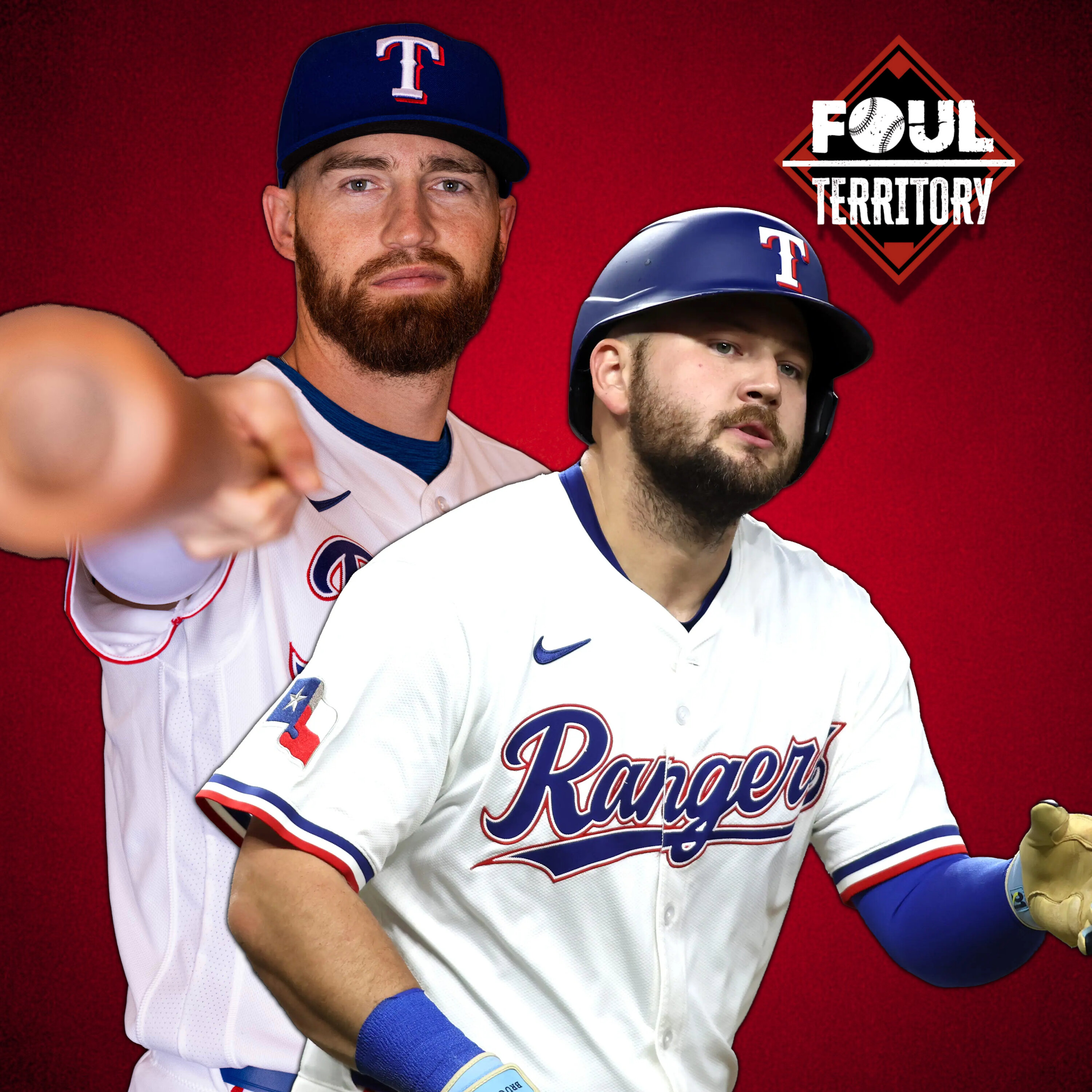
Brandon Nimmo and Jake Burger join FT live @Texas Rangers camp
After being traded from the Mets, Brandon Nimmo discusses adjusting to a new team, building a relationship with manager Skip Schumaker, batting leadoff, starting the season in Philadelphia, and his role as a mentor for younger players.
(27:23) Jake Burger discusses his experience at camp, incorporating Pilates into his routine with his wife, working with manager Skip Schumaker, and the mission of his foundation to support those in need.
Hosts: AJ Pierzynski, Whit Merrifield, Tricia Whitaker
FT is Live Monday-Friday from 1-3pm ET on YouTube
See omnystudio.com/listener for privacy information.
Available Results
Generated results are saved to the knowledge database for reuse and search.
Extract Knowledge
Pick what you want extracted first. Model, scope, and chapter options appear after a template is selected.
Transcript
00:00:03
Speaker 1: All right, we're back here Rangers camp with one of the newest Rangers, Brandon Nima. Is that still strange for you to hear that you're not a New York met anymore?

00:00:12
Speaker 2: Definitely, But I mean enjoying the heck out of it.

00:00:18
Speaker 1: Uh.

00:00:19
Speaker 3: It was, you know, definitely a big surprise in the off season, but just became abundantly clear that I was really really wanted here by the Rangers. And you know, I mean you you can resonate with this. As a player. You want to you want to be where you're wanted, You want to be where you're appreciated, and uh, you know, the Rangers made it abundantly clear. And uh so now, uh, I'm a Texas Ranger and excited about it. Decided to get get the season going and get to know all the guys in the clubhouse. But yeah, definitely it's it's weird, but I'm settling in nicely. The guys have been nothing but amazing to me and really just helping me to settle in here.

00:01:02
Speaker 1: One of the big things I always say is the first time he changed teams is the hardest. Yeah, your Mets traff pick came up through the system. You were met So your family all has mets gear, they all have that, but what did they do with it all? What did I do with it all?

00:01:15
Speaker 3: That is actually my wife is still trying to figure that out by like all the clothes that are in New York. She is still trying to figure that out. And it's so funny how that is one of the things that you're like, Okay, what do we do with this now?

00:01:30
Speaker 4: Right?

00:01:30
Speaker 1: I had Mitch Garver on yesterday right late, signing for the marriage. Yeah, well he has seventy seven, but his numbers eighteen. Oh my god, so his wife has all but dad's eighteen. Stuff from the marriage. Well, you know they've made deep runs in the playoffs onefs. Yeah, every wife has a new jacket. And I knew this and that out game right yep. So now he's like, well when I make when I if I make the team, I know I got to go get eighteen back so my wife doesn't have to change her wardrope.

00:01:53
Speaker 3: I know, my wife was so upset with me when I when I changed to twenty four. I said, I said, you know what, it's going to be a new chapter. We're just gonna start, you know, the slate just brand new. I'm I'm gonna change the numbers. We're gonna go back to my high school number. Uh, twenty four wasn't available with the Mets, and so I'm gonna go I'm gonna go with it with the Rangers. And she was like, but what am I gonna do with all those clothes that I have number nine on? And she she's still well, she's like still to this to this day. She's like, she's like, I.

00:02:22
Speaker 2: Gotta go up there, and now what am I gonna do? What am I gonna do with this money?

00:02:26
Speaker 1: But I know it's like it's okay, it out perfected that it's gonna be great.

00:02:34
Speaker 2: Yeah, yeah, exactly. We gotta get it, get a.

00:02:37
Speaker 3: Whole new wardrobe for But it is funny the little things that you have to do when you switch teams, uh, that you didn't really think about, you know, and you're like, oh, yeah, okay, I guess we do. We gotta get a whole new wardrobe. We gotta get you know. But it's all good stuff. It's all good stuff. Like you said, I mean, first time doing it, so so you know, there's a lot of newness that goes along with it. But they've been nothing but accommodating with everything that we've been doing. And so now I think being on the other end of it, uh, you know, is a is a sigh of relief. You know, you're kind of you've got a lot of irons in the fire at that point. Once you know, once we made that that switch, it it wasn't an easy one as far as logistically. We we lived in Saint Luci. You know, the training was right across the field, like right across the highway, and you know, we kind of just waited for people to come down to us. So then finding the rental here, still in the house in New York, getting the new one in Texas, you know, there was a lot of a lot of things, a lot of moving parts going on. But now being on the other end of it, very very very happy to be here and then I'm settling in nicely and yeah, I get to experience Arizona spring now.

00:03:47
Speaker 2: Nim went Marrorfield here.

00:03:49
Speaker 5: Happy for you as you're in Texas now. But about a different kind of transition going from New York to Texas. And that's the that's what's gonna be going from play and grass every day to plan on turf every day. Have you thought about that, thought about what that's gonna be like and kind of started setting that sort of prep work because it it's a big difference. Yeah, you're so right with it's a small difference that people overlook, but we are we're actively trying to uh find solutions for that. We've talked about switching to turfs uh completely. We've talked about shaving the cleats uh down on the metals, uh, you know, even just a quarter maybe half to be able to get a little bit better traction on the turf, but not too much where you're you know, rolling an ankle or something like that. Still want the traction in in you know, the box.

00:04:43
Speaker 2: Uh.

00:04:44
Speaker 3: And so you got to think about that as well. And so we're also thinking about time off the field, you know, trying to limit that as much as possible so that it's not so hard on the joints and on just to wear and tear of seven months running that marathon.

00:04:59
Speaker 2: We've definitely talked about it.

00:05:01
Speaker 3: I'm talking with the players as well, and active conversations with the training staff. Uh. But we are, we are trying to come up with solutions. It is, unfortunately going to be a little bit of trial and air for us, just because my body's probably gonna respond differently than someone else's. But there's one hundred percent a lot of talk going on about that, and it's a subtle difference, but a big one in the game. And so we are throwing around a lot of ideas.

00:05:28
Speaker 1: Here, hold up trition before you go, what you're wearing this year?

00:05:32
Speaker 3: Yeah, I mean I got I got the Yeah, yeah, yeah, I wore these last year.

00:05:36
Speaker 1: Are you the first one?

00:05:37
Speaker 2: No?

00:05:37
Speaker 3: No, I got I think Bregman morel last year. And then uh, so I had the Planner fashion. I don't know if you have.

00:05:46
Speaker 1: It right now. It hurt you.

00:05:47
Speaker 2: It's terrible, terrible.

00:05:50
Speaker 3: Oh yeah, exactly twenty twenty four playoffs. I got it, and uh and you know, so we made the switch to to find some new cleats after that, and uh went to Marucci to get fitted for the bat and I came out with some cleats, and uh, I've had it since and.

00:06:10
Speaker 2: It's they've been great. They they were great for me last year.

00:06:13
Speaker 3: So I made the switch last year and we had a lot of success with it, staying on the field and and not having the foot problems.

00:06:20
Speaker 2: And so I've I've switched to that.

00:06:23
Speaker 3: Yeah, we're we're definitely we're talking about, like I said, like possibly shaving down the cleats a little bit, having having a little bit of a give there. But there's a lot of there's a lot of things have been thrown around. Fortunately, you know, I've got an experience like slow like three game four game spurts on it, and I know it makes a difference. But uh, we're gonna take some of that experience and try and hone down on on what's best for for us.

00:06:48
Speaker 2: But uh, I am.

00:06:50
Speaker 3: I am looking forward to to playing indoors in April and May.

00:06:56
Speaker 4: Hey, Brandon Weker here, I wanted to ask him about that lean up off spot. Skip Schumacher said on Tuesday that you'll likely hit lead off. And we know that the Rangers kind of cycled through multiple leadoff options in twenty twenty five. But the leadoff role, it seems that that's where you've been, you know, the most effective and you thrive in it.

00:07:16
Speaker 2: How do you feel about it? Yeah?

00:07:18
Speaker 3: Yeah, I mean early on in my career, I was, you know, an on base guy and that's that was my job and was able to do that pretty well, very comfortable there. I've hit there a lot in my career, even in the minor leagues, and so I am very comfortable there. You know, there's there's two things that hitting and leadoff does. Is, you know, one guarantees you and at bat. You know, in the first inning you're gonna lead off, You're going to see you know, try and try and maybe see some pitches or whatever the team plan is that day, You're going to go go try and execute that right from the beginning. Then the other thing that leadoff does is it guarantees you're at bats throughout the season and so more at bats, more opportunities to do well. And so for me after that point after the first inning, like it doesn't really matter now now it's whatever situation you come up in, but just setting the tone for that first at bat, being able to give a little bit of a report to the guys behind you, that's the big thing about leadoff. And then past that, it's gonna come down to what our team approach is that day, and uh, you know, we'll see how that all works out, and I'm sure we'll come up with different approaches, but uh, you know, the leadoff spot guarantees you, you know, you're gonna get a lot of at bats throughout the season, and you're gonna be hitting in that first inning and and seeing the guy first off. So so for me, I'll go into it with that approach that I've kind of had in the past. But it's gonna it's gonna come down to how we are approaching it as the team as well.

00:08:51
Speaker 1: Okay, leadoff guy, you open in Philly? Are they gonna boo you in Philly?

00:08:57
Speaker 2: There's there's a there's a pretty good chance.

00:08:59
Speaker 1: Okay, and then keeping it I don't know, and you go deep.

00:09:05
Speaker 2: Yeah, yeah, yeah.

00:09:07
Speaker 3: Philly and I are extremely familiar and uh, you know we've had we've had good times and uh, you know, it's uh, it's been a heck of a relationship. We've had some really big games there. It's been a lot of fun. That atmosphere is always a blast.

00:09:24
Speaker 4: Uh.

00:09:24
Speaker 3: They always let you let you know, you know what they're there, and uh, I appreciate that. They're very loyal and very passionate. They haven't hit me yet.

00:09:34
Speaker 2: They've missed me a couple of times, but uh, but no, they haven't hit me with anything yet.

00:09:42
Speaker 1: Uh.

00:09:43
Speaker 2: But no, it's been uh, it's been fun.

00:09:45
Speaker 3: For sure. It's been a fun atmosphere. And uh, I wouldn't I wouldn't be surprised, but you know, who knows. I'm not on the Mets anymore, and so I'm not I'm not that like you know, uh, that that rival. Uh And so I don't know. I don't know what the reception will be like there. Uh, you and I will, we'll find out each other. But uh, you know, all I know is it's a fun place to play in and I've done Opening Day there before, uh, and it's it's a blast.

00:10:11
Speaker 2: I've played playoff games there before. Uh, it's a blast.

00:10:15
Speaker 3: The energy will be high, and uh, it's gonna it's gonna be a lot of fun. But it is gonna be a familiar place for me very very first game. So that is nice. But uh, they have great, great pitching staff.

00:10:27
Speaker 1: And decide if you're gonna swing at the first pitch when you're walking into the plate.

00:10:31
Speaker 2: Yeah, I mean, we'll we'll, we'll probably decide that.

00:10:33
Speaker 1: You're not just talking about that game, but I'm talking about every game, every game, every game leadoff, When did you decide if you were swinging at the first pitch as the pitch is being delivered. You go up there and say, I'm swinging at this pitch no matter where it is.

00:10:46
Speaker 5: Well, I saw who was pitching, and I said, if it's the Grom, I don't want to I don't want to take three strikes.

00:10:51
Speaker 1: Or if it's.

00:10:52
Speaker 5: Somebody that I was familiar with, I know what this fastball looks like coming in, and yeah, I'm gonna get I'm gonna get a first pitch fasketball here.

00:10:59
Speaker 2: I'm I'm going for it, right.

00:11:02
Speaker 3: I think I think the biggest decision maker for me is, like he said, like that familiarity and that and if you if you kind of have an idea of what you're what you're gonna get, but you're still looking in an area. I My mine is never like hey, I'm swinging regardless, like I'm still looking in an area and and if it shows up there here, you.

00:11:21
Speaker 2: Know, here we go. But uh, I will usually decide that.

00:11:25
Speaker 3: When I'm going through tape, and I'll decide it usually like uh, two three hours before the game.

00:11:32
Speaker 5: Okay, Yeah, you're more disciplined than me. I want to ask you about something. I want to I think I think it was yesterday I saw it because you you have the patented walk sprint the first base, which I love. I think it's I think it's super cool. I saw your teammate Corey Seger do with that yesterday.

00:11:50
Speaker 2: Was that a bet? That? Did he lose a bet? To you? What happened there?

00:11:53
Speaker 1: Uh?

00:11:54
Speaker 2: No, that was complete surprise to me. I'm not I'm not.

00:11:57
Speaker 3: I'm not sure if he did that for me or what. But uh, I I appreciated the heck out of it. And uh, you know, biggest thing for me is I mean, I I try to play the game with respect.

00:12:10
Speaker 2: I tried to play it hard. My dad, I know you still do it.

00:12:14
Speaker 3: You're still doing it, still doing it, try and go out there every day and do and do that. But it's you know, for me with Corey and then you you you be you, you know, and uh and I appreciate him feeling make me feel welcome. And uh they've been they've like I said, they've been nothing but like open arms and and made me feel very welcome here. But you know, anything anything that I can do to try and and uh rub off on on these guys, you know, I I'll do and and I think it's awesome. But that was my way of playing the game hard. I I always feel really good when I went in at bat and I walk and I, you know, it's kind of my way of getting to first base quickly, getting onto the next thing, get the signs, and let's let's move on. I was never that kind of guy that just like kind of took off the equipment there and you know, just walked to first base. It just wasn't my personality. And I got to be who I you know, who I was, and and so I don't expect other guys just because now I'm on the team just sprint the first base, not at all. But you know, I've even I've even had to learn to tone it down a little bit, you know. Uh, like you said, as we're getting a little bit older, you gotta you gotta learn play a game smarter, not harder, and uh, tone it down a little bit, biggest things of being on the field. But still respect the game. Still still play the game hard. And I love the Corey threw that out there.

00:13:40
Speaker 4: We love that, Brandon. I have another question for you. It doesn't have to do with baseball, but it is a very patriotic question. We heard the two guys were watching Team USA in the clubhouse today, which it took about a couple of hours.

00:13:52
Speaker 1: Was late, by the way, he was late late.

00:13:55
Speaker 2: He was late.

00:13:56
Speaker 1: He missed like the first three periods and he showed up for overtimes. And I just want to get that out there.

00:14:00
Speaker 2: I was ready. I was ready.

00:14:02
Speaker 3: I knew, I knew when I we we knew that it was going to go to overtime.

00:14:05
Speaker 2: I was ready. I was ready for for when it mattered. But what was your question? I'm so sorry, I know.

00:14:11
Speaker 4: It was just that what was the reaction in the clubhouse when you saw that goal going? Because I mean, we we've heard a lot of different takes from it. We saw George Springer was taking BP and a U A team USA hockey jersey.

00:14:23
Speaker 2: Oh heck yeah, yeah right, I love that. I love that. I you know, we we were ecstatic.

00:14:29
Speaker 3: There was obviously a few uh Canadian guys in there that were a little a little upset about it, but uh, we at the clubhouse, Uh just we all roared when when that goal went in, and uh we were high five in each other and us a chance started.

00:14:46
Speaker 2: Uh so you know, we have such a blast.

00:14:49
Speaker 3: Uh it's competitive, right, Like we were all very proud to be Americans and to be uh you know, born in this country or come to this country and like trying to enjoy the freedoms that this country gives us. And so we're all really proud to be Americans. And when we see you know, the US coming out on top there really I mean, you know, as underdogs there, I think it just ignites in us that competitive spirit and that patriotic spirit that we all loved.

00:15:20
Speaker 1: You had to choose the right TV though, you guys don't understand. There's like eight tvsh and they were all in different times.

00:15:27
Speaker 2: Yes they were.

00:15:27
Speaker 1: The one was ahead of and whichever one you were watching, yes, like, well the one you guys were all watching was like twenty seconds ahead of all the rest, yes, so you could tell. And then there was one no one could see.

00:15:38
Speaker 3: So if you heard a cheer, exactly something was happening, you're exactly right, Yeah, there was. It's not streaming, so like they're all like a couple of seconds off. So you had to pick the one that was that was the earliest that we were all watching that one, and it was I mean, it was a blast, what an amazing game, and uh, you know, but we're just We're so glad to.

00:15:57
Speaker 1: Get sure the picture of Hughes half with the American flag.

00:16:01
Speaker 3: Oh, they haven't seen it, but I did see when they afterwards were showing he's the one that got the stick, right, Oh yes, I mean that's so that's so American right there, I got.

00:16:14
Speaker 1: Mouth, he's got the flag. Yes, he's missing like three team just just a grinder. I I love it.

00:16:21
Speaker 3: So, you know, obviously we were we were paying attention, super competitive guys in that clubhouse, and so we were all pulling for the US uh to uh to get it there at the end and three on three hockey's crazy.

00:16:34
Speaker 2: I mean I haven't I haven't really seen that. So uh that was that was nuts.

00:16:39
Speaker 3: A lot of action there at the end, and uh yeah we were we were all going going nuts when that goal went in.

00:16:46
Speaker 5: So nim But so obviously you're coming in to play outfield, be a leadoff man. But now as you're getting older, you've got a little more responsibility, uh that that you're gonna have to have and uh talk about your your roles as kind of a leader in that clubhouse now, especially with the guy like like Langford and Carter, like what do what do you what do you see yourself? How do you see yourself mentoring them and and take on a m under your wing and showing them the ropes.

00:17:10
Speaker 2: Yeah, no, it's a great question.

00:17:11
Speaker 3: I I had mentors myself, Jay Bruce, Curtis Granderson, even David Wright, and you know, they just showed me kind of how how to conduct myself both on and off the field, how to try and find the one percent and the edges that you can win that you can you can find a little bit extra that gives you the edge in this game. This game, you know, is a marathon.

00:17:38
Speaker 2: Uh.

00:17:39
Speaker 3: And I tried to play the game really hard when you know, like in the beginning it was layout for everything, put your body on the line each and every day. And it was actually Jay Bruce that came up to me, was like, hey man, I love the way that you play the game, but I need you out there for you know, one hundred and fifty one hundred and sixty games. And in order to do that, I know, I need you to play smarter, not harder. And that really struck me, you know, as a as a younger guy, that I needed to kind of re evaluate that so that I could be available more often and do good things more often. And I think it's my turn to try and import some of these things, some of the wisdom that I that I learned along the way to you know, Carter Uh, to Langford and to all all the young guys that that are here. And also, you know, just coming from other organizations, you guys do things slightly different and you find, Okay, well this really worked for me here, but then this is kind of how we do things here, and and you try that out and you see how it works. And so I think bringing these different thoughts to the clubhouse and being able to communicate and talk about it is how you lead best. You show you lead by example. I'm really big on that. You know, first and foremost, it doesn't always look the same, but as long as the intent is there, you know, we want guys to be using their brain. You know, this can be the biggest separator in this game is the wisdom, the knowledge you know, knowing the game of baseball, that baseball IQ. We have everyone that's extremely talented here in the big leagues and you're just trying to find that little bit of an edge that will will give you the the ability to win the game. I mean a lot of times it's it's wonder or lost on one or two pitches. So for me, my job is to try and mentor those guys and have them really start using, you know, the mind in order to be the separator and just some of the things that I've learned along the way, pass it on to them and let them try it out and if it works, great, If it doesn't, that's all right too, but just giving them a few different ways to look at things, to think things through. And I was so fortunate to have great mentors in my career that has allowed me to get to this position, and I want the same for them. And the more that they're on the field, the more that they are able to use their mind and let their talent really shine, because we all know they're extremely talented, the better it's going to be for the Texas Rangers. And so that's my goal and that's my responsibility on this team.

00:20:14
Speaker 4: Brandon, I wanted to ask you before I get to a fun question.

00:20:17
Speaker 2: I wanted to.

00:20:18
Speaker 4: Ask you about Skip Schumacher. We talked to him earlier and just maybe his goals for the team, and after watching what Boach did last year for the Rangers, and obviously watching Boats throughout his entire career. What has been your impression of Skip and the jobb he's doing, because that's not always easy coming into a team and taking over for especially a Hall of Fame caliber manager like Boach right.

00:20:41
Speaker 3: No, obviously, like you said, very difficult, very difficult position to fill coming in after a Hall of Fame manager. You know, I think that first things first, I love the way that Skip managed and like just presented himself when I was across the line from him when he was with the Marlins, I thought he made his team better. I thought he made his team one that was very formidable and feared and everybody knew that they were gonna have a fight on their hands when they played them. And I think he brings that same uh, you know, intent to the Rangers.

00:21:18
Speaker 1: Now.

00:21:19
Speaker 3: He understands this game is very difficult. He played it, and he played it at the highest level, and he brings some of the knowledge from playing the game to the managerial spot, but also knowing that this is what I should expect from you each and every day, and uh and and him being a very good communicator in that as well. And that's what I've noticed in the beginning. I think really good managers are very good communicators. Uh, they know, you know, how how hard this game is and what to expect from their players and what the players should expect from their manager. And once you nail that down, you know, I think you let the relationship build on itself. And it's not gonna look the same from each player to each player. His his and my relationship with him is going to look different than Corey's. Cory's relationship with him is going to look different than why it's uh, you know, but I think him being in contact with us and being a great communicator, which is already shown, is going to lead to success for him.

00:22:19
Speaker 1: All Right. Your favorite manager that you've played for, because you've had I've had a few is Terry Collins. Collins you have Mickey call and Carlos Beltron.

00:22:29
Speaker 2: For a few months, but I did get to spend some time around him.

00:22:35
Speaker 1: Yeah, and then you had and a lot like seven or eight years.

00:22:41
Speaker 6: I know.

00:22:41
Speaker 3: People, you know, it's funny because you mentioned like, uh, you know, you've been on one team, but like, I've had a lot of turnover in that one team.

00:22:49
Speaker 1: And uh, and so I have learned how to how to deal with new people and how to how to filter and and foster those relationships.

00:22:58
Speaker 2: You know, I obviously you're putting me on this there with.

00:23:00
Speaker 1: Trying to pick a favorite man this question. There's only one answer. Yeah, okay, Skip, I mean you get the manager you're played for now, exact the lineup.

00:23:09
Speaker 2: I love it. I love it. Skip Skipp is amazing.

00:23:12
Speaker 3: Like I said, I have so much respect for him being across from him with the Marlins and I our relationship is has started off so well. And again I said, he's communicated so well with me, and I think it's been it's been great. But I've learned so much from all the different managers that I've had, and honestly, I wouldn't be in this position if I didn't have that exact road, you know that that I've had, and I've learned so much from the different manager and I think it's it's allowed me to know that there's not one way to do things right. Like I've seen different types of managers and different uh you know methods produce great results. And I've also seen you know, people that when I thought like, oh, well, we're doing all the right things, it not produced the results that we were looking for. And so I think as I go here, I'm still trying to figure out, you know, what's best and what's not and what will work in this situation. I think it depends a lot about your clubhouse and who you have in there and kind of what's the best way to motivate and what's the best way to lift people up, because I mean, aj, you know how much failure we have in this game. You have to be able to lift people up. But you know, I I I definitely don't have a favorite manager. And I'm looking forward to, uh, my relationship with Skip and we are gonna, uh, We're gonna attack this thing full on head you know, headlong into it and try and give it.

00:24:32
Speaker 2: Our best effort.

00:24:33
Speaker 3: But I love the vibe that I'm getting off of him right away, and I'm really excited to get into the trenches with him. And I think that grindiness and and that's kind of the player that he was, and that's how I started off my career as well, and I still try and play with that with that chip on my shoulder, and I think I see that right away from Chip or from Skip, and I'm just like, yeah, we're we're very similar personalities and we're gonna we're gonna get along great. So I'm I'm really looking forward to it.

00:25:02
Speaker 4: Brandon. I have one more question for you and then we're gonna let you go.

00:25:05
Speaker 2: But this one is one, and it's a hard hitting one.

00:25:08
Speaker 4: It's a hard hitting one.

00:25:10
Speaker 2: I'm ready, I'm prepared.

00:25:12
Speaker 4: You're in Texas now, right. We heard that before baseball you wanted to be a professional bull rider, mostly because of your dad and being in rodeos. So obviously I would imagine with your contract, bull riding is somewhat out of the equation right now for fun and.

00:25:29
Speaker 3: Games, but really completely are you gonna go at least yeah, are you going to go.

00:25:35
Speaker 4: At least watch some rodeos while you're in Texas?

00:25:39
Speaker 2: Yeah? I love rodeo.

00:25:41
Speaker 3: I grew up in Shy and Wyoming obviously, like you know, and so world's largest outdoor rodeo there once a year in July, and just absolutely absolutely love rodeos.

00:25:54
Speaker 2: I'm all about it.

00:25:54
Speaker 3: My family grew up in it, and uh, I couldn't couldn't be more excited to experience more rodeos. I don't think I'm gonna be able to hop on a bull but we will. We'll save that for for after after baseball. Well we'll do some like live stream of it or something like that, perview exactly.

00:26:15
Speaker 2: But uh no, I I love it. I love Rodeo.

00:26:18
Speaker 3: I have so much respect for it, and I am excited to see some more Rodeos after baseball.

00:26:25
Speaker 2: You heard it here.

00:26:26
Speaker 4: First, Brandon's gonna join us on Foul Territory. We're gonna do a live stream of him riding a bull.

00:26:31
Speaker 2: I can't wait. It's gonna be a blast.

00:26:33
Speaker 3: It'll probably end up just like my uh when I was eight years old and had to do it and bucked off, stepped on, and I'm like, man, I don't know if this was for me.

00:26:47
Speaker 1: Hold, were you in the All Star Game in Texas to know I was not? They had a bull you could ride? Did they really in like the clubhouse?

00:26:54
Speaker 2: Oh my god?

00:26:55
Speaker 1: I got to go on and it was a mechanical Oh man, you got to do what I was terrible.

00:26:59
Speaker 2: I can imagine.

00:27:00
Speaker 1: Yeah, I mean, you.

00:27:01
Speaker 2: Don't realize how hard it is until you try it. But anyways, yeah, definitely I apologize.

00:27:06
Speaker 4: Yeah, Brandon, thank you so much for the time.

00:27:09
Speaker 1: For the inside.

00:27:10
Speaker 2: It truly was a joy.

00:27:11
Speaker 4: We wish you well this season. Don't get on a bowl because we want to watch you all season long.

00:27:15
Speaker 2: In that leadoffs, I appreciate it. Thank you so much.

00:27:18
Speaker 3: Thanks for having me on, and yep we're looking forward to it as well. Thanks for having me on.

00:27:22
Speaker 1: Guys here, but Jake Berger, ex White Sock, great x white Sock, first base, first rounder and first did you play first for the White Soks? Okay, so I got that right too. Now you're a Texas Ranger, you've been here for a few years. What's chambeling like so far?

00:27:36
Speaker 6: It's good.

00:27:36
Speaker 7: You know, I'm really excited for this year. Skip obviously coming in and played for him in Miami and we're really fired up for it. Obviously made some good additions, traded for Mackenzie Gore, had fits against him when I was playing in the NL East. But you know, it seems seems like we're rolling in the thick of it.

00:27:52
Speaker 1: Now. Did you lobby for Skip to come here once? Boats said I'm out.

00:27:57
Speaker 7: Not necessarily because he was already in kind of our front office role.

00:28:00
Speaker 1: For seen Berg. What do you think about Skip coming over?

00:28:03
Speaker 7: I mean, I think the world of him, and uh, he's a manager. I'd run through a brick wall four, So I'm really fired up for it.

00:28:12
Speaker 1: Sorry, what what have they said to you? Because first of all, you're a fantastic shape. So did you lose some weight this offseason? Did you say man.

00:28:20
Speaker 6: Knocked out some plates?

00:28:21
Speaker 1: Did you really like I was loudy when Rowdy was here last year, did he tell you to do pilates?

00:28:25
Speaker 4: No?

00:28:26
Speaker 6: No, I heard that like indirectly that he was a big plates guy.

00:28:30
Speaker 1: Yeah.

00:28:30
Speaker 7: And my but my wife's been harping on me about it for like five years now, and then obviously last year a weak quad wrist, it's like, all right, let's like add something that's gonna kind of protect some soft tissue stuff. So kind of did it religiously three three times a week and felt really good.

00:28:48
Speaker 5: So yeah, Berg, speaking about your let's let's talk about your wife for a second, because there's been a question that I've had for a long time. I've never got a chance to talk to you about. So there was a I guess a couple of years ago you were going through a little something in your wife. She was your hitting coach. She gave you a little tip. Where does that come from? And does she she got some baseball softball background, or she just know you well enough to know when you're going when you're kind of going bad.

00:29:13
Speaker 7: I think I think she knows, uh, just kind of when I'm going bad. I remember specifically we were in Oakland at the Coliseum and I was kind of going through it the month of June, and you know, I kind of got to that that last resort where I'm like, all right, baby, like you know me better than anything, like let's take a look at it. And you know, she, uh, she saw something with kind of my hip load, and she kind of corrected it. And the next day I think I hit like a home run at like one hundred and twelve.

00:29:42
Speaker 2: Like just absolute mammo.

00:29:44
Speaker 7: So she hasn't really given me much advice since she's she's probably just gonna leave on a high note.

00:29:49
Speaker 1: But you know, I think it doesn't matter. She got that one exactly.

00:29:52
Speaker 2: He got that one exactly.

00:29:55
Speaker 4: Also, she got Patti's thing right, Jake, Like, I mean three times a week pilate. Have you seen any of those viral videos of guys trying to do their girlfriend or their wife's workout at pilates and then finding out it's immensely harder than they ever would have imagined. Was that your experience?

00:30:13
Speaker 6: Oh yeah, yeah.

00:30:14
Speaker 7: When I first like got into it, she she's actually like a certified trainer, like in plates, and so I was doing it with her, and I'm like, I can't do this anymore because she was perfecting my form do a tea, which is a good thing, but I'm like, this is way harder than you think it is for me. And so, you know, we we kind of started doing classes together and you know, it's it's way harder than you think. But I mean, my obliques, my soft tissue, everything feels unbelievable, and you know, I think everybody should at least give it a try.

00:30:47
Speaker 1: So, when you guys do pilates, does she only instruct you or do you guys go to do you go to class together?

00:30:53
Speaker 6: Yeah, we got to class with a different instructor.

00:30:55
Speaker 1: Yeah. And then the real question is, well, so she's on a reformer next to you, does she correct you while she's doing her work out with another teacher?

00:31:02
Speaker 7: No, she doesn't do that. She's she's pretty good about that. She just knows that. Like she's way advanced compared to me. So, like, you know, I still got the training wheels on a little bit, and she's like doing some stuff that I can't even dream of doing.

00:31:14
Speaker 6: And I don't think even if I don't want to do that, I know if I do it for like ten years, I don't. I still don't think I could do it.

00:31:19
Speaker 1: But then if you took her to do like bench press and yeah, girls, you'd be like, what's wrong with you?

00:31:23
Speaker 6: Yeah?

00:31:23
Speaker 2: I've actually asked her.

00:31:24
Speaker 7: I'm like, I've never seen you run full speed, like I want to see you like sprint, and she has refused to so far. But eventually I think, you know, I'll crack her and maybe maybe see if I can give her like get a hard ninety out there.

00:31:38
Speaker 5: As you as you combat father time with pilates? Is there talk about your swing wise as you get older. Is there something you're working on with your swing to you know father time is gonna beat all of us. Is there something specifically you've been working on. Is it just trying to get more stay more mobile? You're happy with where your swing's at? What do you working on this winner?

00:32:01
Speaker 7: Yeah, I'm happy with where it's at now. You know, I felt like last year kind of was trying to do too much and adding a lot of tension throughout my swing. And so I'm just trying to get back to being who I am and just being athletic, you know, and kind of being myself. I'm not gonna be a guy that's gonna have a ten percent walk, right, you know, I'm gonna swing the bat and being convicted to myself. And then there's some mechanical adjustments that I made with my setup that you know, kind of freeze up my swing a little bit more. I felt like my hands were kind of creeping up too high and weren't able to kind of recover when I when I was moving on the ball and cutting off my swing a lot. And so I was looking at kind of my numbers last year and like overall, like the the metrics are pretty much the same. It's just I wasn't getting the ball in the air to left as much, so, you know, I was trying to free myself up out front.

00:32:53
Speaker 4: Jake, perhaps some similarity are not similarity, but some comfort with Skip Schumacher. Right, you were with him in Miami. You said at the beginning of the show you'd run through a brick wall for him.

00:33:04
Speaker 6: Tell me why.

00:33:06
Speaker 7: Yeah, he's he's awesome. You know, he's unbelievable communicator. And I know it's a cliche thing to say, but you know, I think he's one of those guys that I truly respect in this game and just everything I've learned from him in Miami when I first came over and then even to now, you know, he's he's always been there both on the field and off the field, and he does that for everybody. And so I'm just excited to get to camp and I'm excited for these this good group of guys to get around him and see his managerial style and you know, he's he's got our backs no matter what.

00:33:39
Speaker 1: When you talk about Skip and you played for him in Miami and then he was let go, like unceremoniously, what what do you think happened to Miami? I know you weren't there that year before he came over here last year to kind of fill a front office role, But what do you think happened to Miami? Because he was good? I mean, I know they switched front offices, but Skip was good and you guys made the playoffs in twenty three in Rolling and then all of a sudden, you're like, oh, Skip can't get an extension and he's gone.

00:34:04
Speaker 7: Yeah, you know, I think that's just the name of the game. You know, when you have a new front office come in, you kind of have different of opinions, and you know, I think that's just what happened there. Obviously that that twenty four year didn't go the way we planned. We traded a rise in May and then kind of traded a lot of guys at the deadline too and lost a hundred games. So you know, obviously that's that's not where you want to be and obviously a differen thing of opinions, and that just it is what it is.

00:34:34
Speaker 5: I've always I've always thought a good manager is a good therapist. Like, can you give me some specifics on skip and what what specifically you think makes him such a good manager.

00:34:43
Speaker 7: Yeah, you know, I think there's two probably stories that that I can share, and one is in twenty twenty four, my April was terrible and he was just kind of with me every step of the way, saying, it's a long season, Hey, you're gonna you're gonna get back to who you are, and he kind of gave me that leash to fire off in the second half that year, and then you know, the more personable one is Uh. He's the first person that I told about the diagnosis with Penelope and down syndrome, and him and his opinion and his respect I think made me bring that conversation to him first just to kind of navigate those waters. And then also he played with Albert Pooles who has a daughter with downsent room as well, and so he kind of saw it from from the player's perspective as well, and so just I value his opinion, and I know a lot of other guys in this in this league do as well.

00:35:35
Speaker 4: You value his opinion, Jake, But he's coming in taken over for obviously a legendary manager and Bruce, what kind of challenge has come with that? And how capable do you think he is of meeting that challenge? You speak so highly of.

00:35:51
Speaker 1: Him, Yeah, I think, Uh.

00:35:54
Speaker 7: I think Boach is incredible and I'm so grateful to have played under him and learned from him and just all of his wisdom throughout this game. And you know, I think it's he's different than Boach in a sense of has more energy and you know, I think he'll sprint and get an umpire's face every now and then do.

00:36:15
Speaker 1: That anymore, by the way, about anything.

00:36:18
Speaker 7: But you know, I think that the good managers are always made up of the same mold. And I think SKIP obviously played for Tony Larusa and then kind of was shaped up by Tony LaRussa. And you know, I think I played for Tony, I played for Coach, I played for Skip. So you know, a full managerial chain there that I that I played for. And I think they're all made up of the same mold. And that's uh, the their competitors first, and they care about each one of their players, and you know, it's it's us versus them every single night. There's there's no any other bs out there. It's, uh, we're going out there to to win every single pitch.

00:36:54
Speaker 1: You mentioned your daughter and and the challenges that she's had. What kind of challenges does that present to you as a baseball player that's gone so much and your wife and then you can have a big foundation. Do you guys still have the Burger foundation that? Do you want to you want to talk about that first?

00:37:08
Speaker 2: Well?

00:37:08
Speaker 7: Yeah, yeah, I mean none of it happens without Ashland and my wife. She's our rock and she's a saint, and you know, she's the one driving Penelope to her therapy sessions and her doctor's appointments and uh, just lets me play baseball. And you know, I'm very grateful for that. And we started the Burger Family Foundation because of Penelope and the community that poured their love into us when we got the diagnosis originally, and we wanted to give that love back, and we're really kind of excited where it's going. We had an awesome softball game in Nashville with a lot of big leaguers and country music artists.

00:37:42
Speaker 1: Whit and I didn't get invited.

00:37:43
Speaker 2: What's up with that?

00:37:44
Speaker 4: What?

00:37:45
Speaker 7: I don't know, we would have got an invite before you But why is that?

00:37:51
Speaker 6: But no, it was. It was awesome interviews over come on you want me to get to gram Yeah, yeah, sure no, but so that that was awesome.

00:38:06
Speaker 7: And then you know, I think our goal is to start this ranch where we're going to employ adult with down syndrome on it and kind of have a farm to the table.

00:38:14
Speaker 6: Store and restaurant.

00:38:15
Speaker 7: And we're already kind of in the pre steps there. But first and foremost, it's like, hey, let's give the funds directly back to these people, and so we're paying for therapies for for parents that can't afford it, and then at the same time, we're also helping local businesses employ adults with Down syndrome. So it's just been super cool to just see that that love kind of shared both ways.

00:38:35
Speaker 1: How do we get people involved.

00:38:37
Speaker 6: Burger Family Foundation dot org.

00:38:39
Speaker 7: It is the easiest way, there's some I think the easiest way is there's some really cool merch that that my wife kind of came up with the designs. There's cool camo line. There's she's a very neutral color type girl. So there's uh some really cool like neutral color hoodies and T shirts and stuff. And you know, our our thing is Down syndrome is cool, and we're trying to make a cool and not scary for parents when they get that initial diagnosis. We want them to feel loved and a part of a community. That's the coolest community on earth.

00:39:09
Speaker 1: Bird.

00:39:09
Speaker 5: I got the three of us sitting here watching what just happened at different times. I mean it was electric from three different places. What was it like in the locker room watching the US take down Canada in overtime?

00:39:23
Speaker 6: Oh?

00:39:23
Speaker 2: That was sick.

00:39:24
Speaker 7: We uh we started our meeting a little a little earlier so we could all watch it in the clubhouse, and cal Quan Trail's in there and he's actually, you know, he's pitching for a team Canada and the WBC, and you know we and then Tigues are pitching coaches Canadian as well, so you know, they were getting some shots fired at them. But you know, I grew up playing hockey in Saint Louis and I love the sport. And that's probably the only time that some of those guys will watch a hockey game.

00:39:51
Speaker 6: But let me tell you ot and a gold medal game, there's nothing better.

00:39:55
Speaker 5: Was that the quickest bat meeting of all time?

00:39:58
Speaker 6: Oh my god?

00:39:59
Speaker 1: I mean we were through it.

00:40:02
Speaker 7: Nemo's like, hey, everybody, like we should we should donate like ten percent more than you're going to because they got us in and out.

00:40:09
Speaker 6: And you know, we got to watch and watch the game.

00:40:13
Speaker 1: That's great. By the way, the guy who scored the winning goal was the guy who got hit in the face and lost his use it. So someone said that they should take the gold metal make it into the tooth, and everywhere he goes he's like, oh the tooth I got gold tooth is a gold medal. All right, before we let you go. You're Catholic, correct, I'm Catholic. You know who the biggest white Sox fan in the world is, right, Yeah?

00:40:33
Speaker 6: Pope Leo?

00:40:34
Speaker 1: Yeah, So do I need do I need to in order to get invited to your softball game? Do I need to set up an audience with the Pope for you? And then maybe I could get invited before with.

00:40:45
Speaker 7: I think so I was, I was really helping for an invite to the Vatican when he got elected.

00:40:51
Speaker 1: But working on it. Yeah, No, I'm working on for myself. But like, like I invite to your softball game, your invite hasn't come yet.

00:40:58
Speaker 7: Yeah, you have to buy extension and invite me to the Vatican and then we'll see what we can do.

00:41:03
Speaker 1: About because it's probably gonna be in the summer though, so you might be bad. No, I mean you call in? Can you call skip? Like Skip? I got a chance to meet the Pope and I take a couple of days off.

00:41:12
Speaker 7: And that is it is electric. I think it's probably one of the better excuses you.

00:41:15
Speaker 1: Can It's about the best you can do, right.

00:41:17
Speaker 6: I don't think it's gonna fly.

00:41:20
Speaker 1: Can you imagine, Can you imagine you call Skip Skip By the way, I got invited to meet the Pope, and uh, I'm gonna need the weekend off. And then God forbid the Rangers missed the playoffs for like one game. They'd be like Burger, you couldn't even get help from the playoffs, man.

00:41:39
Speaker 2: Vegas for three days. You can go to the Vatican for three days.

00:41:44
Speaker 1: All right, Well, Jake, thank you very much for joining us. All the best with your Burger Family Foundation, and hopefully we'll get to play in the softball game for sure.

00:41:52
Speaker 2: Now we'll see what we can do with an invite. You know, it'll be fine.