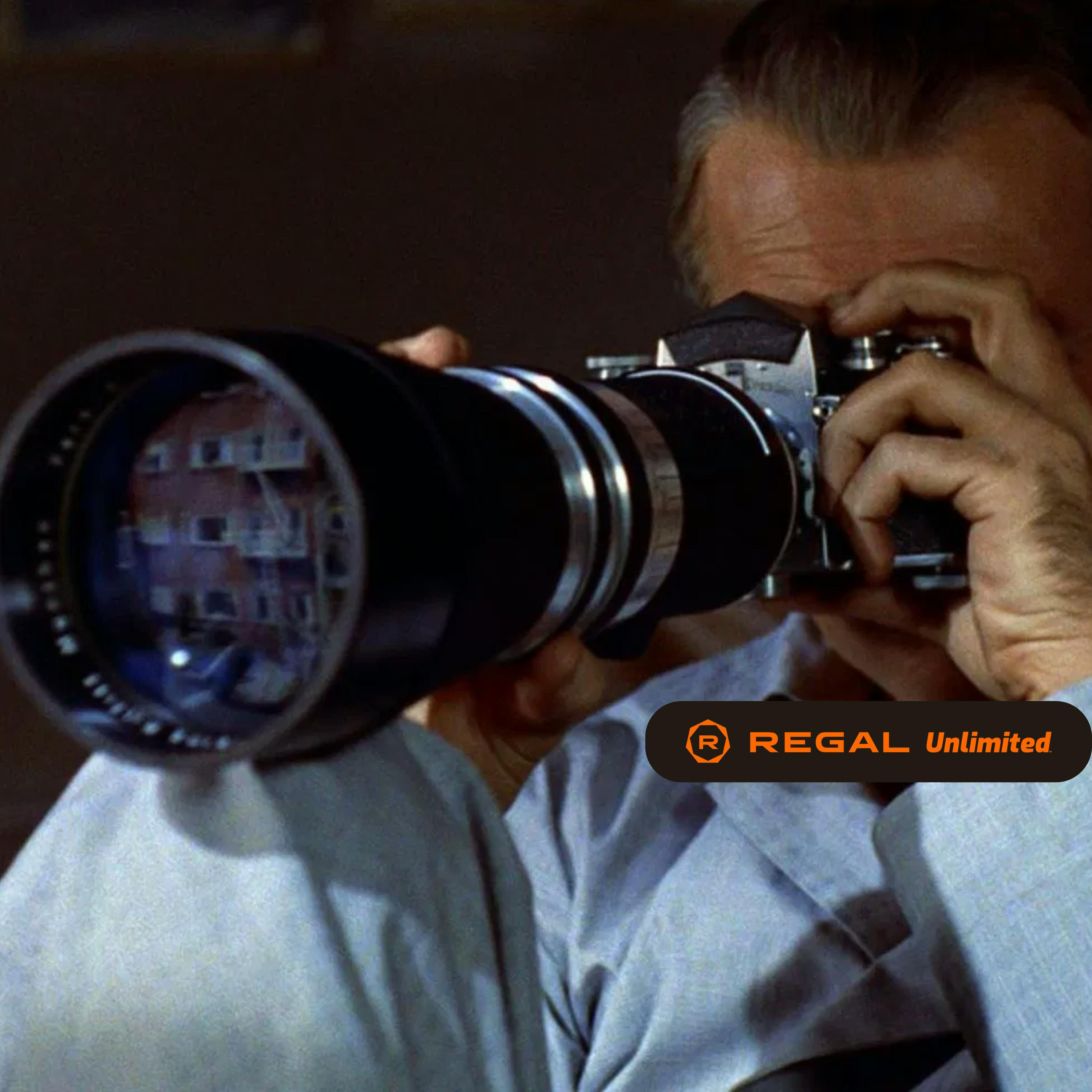
5 Years / 5 Movies, Spinal Tap II, The History of Sound, RIP Robert Redford
A Top 5 worthy of Rob Gordon and crew. You get five movies, but they must be from a consecutive five-year period. Plus, Adam reviews SPINAL TAP II: THE END CONTINUES, Josh recommends THE HISTORY OF SOUND, and Michael Phillips comes aboard to talk about the late Robert Redford and report on this year’s Venice Film Festival.
This episode is presented by Regal Unlimited, the all-you-can-watch movie subscription pass that pays for itself in just two visits.
(Timecodes and chapter starts may not be precise with ads.)
Intro (00:00:00-00:04:13)
5 Years / 5 Movies (00:04:15-00:57:28)
Filmspotting Family (00:57:29-01:01:15)
Spinal Tap II / The History of Sound (01:01:16-01:16:34)
Notes (01:16:35-01:20:32)
Massacre Theatre (01:20:33-01:27:29)
Robert Redford / Venice Film Festival (01:27:30-01:54:33)
Credits / New Releases (01:54:34-01:58:28)
Links:
-Vulture’s Movies Fantasy League (“Filmspotters”)
https://moviegame.vulture.com/
-Steven Soderbergh’s B&W cut of “Raiders of the Lost Ark”
https://extension765.com/blogs/soderblog/raiders
-Filmspotting Poll: 1960s Musicals
Feedback:
-Email us at feedback@filmspotting.net.
-Ask Us Anything and we might answer your question in bonus content.
Support:
-Join the Filmspotting Family for bonus episodes and archive access.
http://filmspottingfamily.com
-T-shirts and more available at the Filmspotting Shop.
https://www.filmspotting.net/shop
Follow:
https://www.instagram.com/filmspotting
https://letterboxd.com/filmspotting
https://facebook.com/filmspotting
https://twitter.com/filmspotting
https://letterboxd.com/larsenonfilm
https://www.instagram.com/larsenonfilm
https://bsky.app/profile/larsenonfilm.bsky.social
Learn more about your ad choices. Visit megaphone.fm/adchoices
See omnystudio.com/listener for privacy information.
Available Results
Generated results are saved to the knowledge database for reuse and search.
Extract Knowledge
Pick what you want extracted first. Model, scope, and chapter options appear after a template is selected.
Transcript
00:00:03
Speaker 1: What kind of a show you guys putting on here today? You're not interested in arm Now, well, look we're going to do this thing.

00:00:09
Speaker 2: We're going to have a conversation.

00:00:13
Speaker 3: From Chicago. This is Film Spotting celebrating our twentieth year.

00:00:17
Speaker 4: I'm Josh Larson and I'm Adam Kempinar.

00:00:19
Speaker 2: Hi Laura.

00:00:21
Speaker 5: Top five dream Jobs.

00:00:22
Speaker 4: Hey, that's Private number.

00:00:23
Speaker 6: One journalist for Rolling Stone Magazine nineteen seventy six to nineteen seventy nine. Get to meet the Clash Chrissy Hines, Sex Pistols, David Byrne get tons of Free Records, number two this.

00:00:35
Speaker 3: Week a top five worthy of Rob Gordon and the staff at Championship Vinyl. We're calling it five Years, five Movies.

00:00:43
Speaker 7: We pick five films the catch they have to come from a single five year period, plus reviews of Spinal Tap two, The End Continues and the history of Sound That and more ahead on Film Spotting.

00:00:55
Speaker 3: Coo coo, We.

00:01:02
Speaker 7: Welcome to Film Spotting. Did we need a Spinal Tap sequel?

00:01:06
Speaker 3: Josh?

00:01:06
Speaker 7: Do amps really go to eleven? All I know is that if on the eighth day God made spinal Tap, then on the ninth day he must have made spinal Tap two and it was kind of good.

00:01:19
Speaker 3: Sure. I mean, if anything can be great, spinal Tap two can be good.

00:01:23
Speaker 2: Yeah.

00:01:24
Speaker 7: This week, as the show's resident Derek Smalls, I will have some thoughts on Spinal Tap two.

00:01:30
Speaker 4: The continues.

00:01:31
Speaker 3: I'm a bass player, Yeah, yeah, I get it. I'm still the drummer who refuses to combust. At this point, you.

00:01:38
Speaker 7: Cut up with the History of Sound, which, despite the name, is not one of your grad seminars, but a new film starring two of our favorite young actors, Paul Meskell and Josh O'Connor. You might get to that class though, who knows.

00:01:51
Speaker 3: We'll see.

00:01:53
Speaker 7: Also, the fall film festival season is upon us. Michael Phillips is here with a report on the Venice Film Festival. He'll also join us to help remember Robert Redford, who died earlier this week. The movie legend was eighty nine. A quick note that Film Spotting is now available as a video podcast.

00:02:15
Speaker 3: This is true.

00:02:15
Speaker 7: We have We've taken the plunge. You know, you've seen a few clips maybe here and there social media. We put the Weapons review out as a video review. I think Revenge of the Sith too, But as of the Goodfellas episode ten thirty one, and now with this one, it's official. If you're a Spotify user, you can toggle between video and audio. You can also watch the full shows on YouTube. Moving forward, Josh, ready or not.

00:02:45
Speaker 3: What I love about this is it's just in time for me to not have a nice dedicated home studio space like yourself, but to be in my lovely bedroom behind you, temporary flat in Scotland. I've invested since the Good Fellow show. I hope you're appreciating this, Adam and the viewers can now in a fern, I thought, you know, I'm not going to splurge and sit between two ferns. One fern. That's good enough. That'll be good enough for We'll see. We'll see what happens when I get back to the States. Maybe we'll we'll spruce things up a little bit more.

00:03:19
Speaker 7: Yeah, And it was good timing the video edition debuting with our Pantheon Project review of Goodfellas. We had a lot of clips. It turned out to splice into that conversation and add context to the scenes and the themes and ideas we.

00:03:37
Speaker 4: Were talking about.

00:03:38
Speaker 3: And that's the reason to watch these It's not to see our faces clearly, anyone who's logged on for that has realized it. But yeah, Sam, Producer Sam has been putting in a ton of work of not just dropping like a clip or two like he had the show covered and helpfully that would help our what we're saying. You know, these are instructive clips, is what they are, the way Sam's placing them and what they're referring to in our conversation, So I really think they are adding things. So listeners out there, if you haven't yet, check out the video version.

00:04:10
Speaker 7: Yeah again Spotify or YouTube dot com slash film spotting. But first, five years, five movies. This was the brainchild of producer Sam. We were just singing his praises. Yeah, now we'll knock him down a peg. I'm gonna read his original instructions. We got into this a little bit last week. Even if these instructions are not the least bit helpful or illustrative of how we approached it. The two part assignment. First, you select a five year period, and then you choose five movies from that five year period. These are the movies you get Madness incinerator rules activated, so all other movies are gone and not to belabor this point that I got into last week and Sam's explanation. But how this began in Discord really was very different than the task we're engaging it. It occurred to me and I had to check this with Sam just to make sure I wasn't missing anything, and it turns out I wasn't. It really was more of a fun parlor game, Josh. It was about just sort of picking or being assigned a five year period. So I might say to you, hey, Josh, ninety four to ninety eight, and then you'd respond with your five movies, and I might have a very different five movies, and another user might have another five movies. Wouldn't that be fun? And then we'll pick another five year period. What we're doing is more like select your five Desert Island movies because they're the only five movies left. The five movies you can't live without, the movies you would watch forever, forsaking all other movies. But the catches they have to come from the same five year period.

00:05:52
Speaker 3: Yeah, so double down on the difficulty essentially, right, is what we have to do, YEA for our pain and listeners and viewers enjoyment.

00:06:00
Speaker 7: Apparently, uh huh, so how did you ultimately approach it? And you can go ahead and lead right into I guess telling us what period you landed on, and then your first choice, whatever order you ultimately want to go in.

00:06:15
Speaker 3: Okay, Yeah, I was a bit overwhelmed by this project until I realized, Adam, that it's an exercise that really does mirror one we've done at least twice on the show. If you think about our top ten lists of all Time. Yes, and we've done that to coincide with the Citan sound lists twenty twelve, twenty twenty two. So those forced me talk about difficulty to comb through all of film history and select ten. Right, this is forcing something similar, as we've said, albeit with a stricter window. So the obvious place for me to start was to look at that twenty twenty two list that I put together for the best of all Time. I figured, Hey, if at least two of these titles happened to be within a five year period, then bing, I've got my starting point. Take that, Sam, it will not be as painful as you may have thought. Reader. Upon checking that list, I had two and hardcore listeners might already know where I'm going there, So I grabbed those two titles and worked out from there. Based on the dates of those two films, I had to choose between a handful of periods, basically some point between nineteen fifty one and nineteen fifty eight. You know what, not really a problem either. Over the years for those all time lists, movies from the nineteen fifties have been in the mix almost every time, either in my top ten or floating around it eleven through twenty or somewhere around there, sometimes shifting in and out. So sure enough, three other titles fell into place pretty quickly, ones that have been circling my top ten of all time over the years. So now, to make this a little more fun, I did peruse. I went through the lists of all the films released over that fifties time period. I thought, you know, maybe I'll make a quirky pic, or there's an idiosyncratic one. But Sam had to invoke the incinerator rule, and once he did that, it was it was really hard not to go with my personal favorites from a mood of the cannon, you know. Okay, So that left me with this range nineteen fifty one to nineteen fifty five, and I did go chronologically from the oldest title to the most recent. Should I just jump in and then you can get to your rationale? Yeah?

00:08:34
Speaker 4: I think so.

00:08:35
Speaker 3: Okay, let's do it so again chronological order from this timeframe fifty one to fifty five. I'm starting at nineteen fifty two with Akiu from Akira Kurrasawa. My Summer of Kurrasawa is going to continue into the fall. I talked about how Debbie and I took that May trip to Japan to prepare. I introduced her to Yojimbo. When we got home, watched Throwne of Blood for the first time. I watched High and Low and prep for Highest to Lowest, of course, and then for our August bonus show for film Spotting Family members, we discussed Krisawa's Stray Dog. If you want to listen to that, join the Familyfilmspottingfamily dot com. I have not revisited Ikuru, however, since twenty fifteen, but that was the viewing that was my first time seeing it. I was late to Akira. That was the viewing that puts this fifty two film in the mix for me for best films of all time. Ikiu was also on my list of the Top five Movies for Graduates that we did back in twenty twenty two, So this one really connected with me. It's set in post war Japan and it stars Takashi Shimura, who we just saw as the veteran police detective in Stray Dog. Here he plays Watanabe, this widower, a thirty year bureaucrat. He learns hees stomach cancer and then comes to the realization that he's he's done nothing but just push meaningless papers his whole life. Watsonnabe is absolutely wondrous here. He embodies this delicate balance the movie has. There's mournfulness, there's sentimentality, but there's a surprisingly not a humor in this film too, and he's crucial to a lot of that. And for that list I talked about the top five movies for Graduates list, I did mention and I think we may have even played this clip, but I think we should play it again. His handling of the Gondola song. This is a romantic Japanese ballad. Watsonnabe sings it the first time we hear early on in this nightclub where he's trying to sing away his sadness but fails at it. Then Later, towards the end of the film, we see him singing it while alone on a swing at the playground that he helped build in his final months, and to my ear, at least this time he adds just a quiet note of contentment. I think a Kuru might be the shining exemplar of the sort of poetic humanism that you can find. I think at all of Kurisawa's work, this might be the pinnacle of that. So really happy it fell within this little window that I chose for this exercise.

00:11:29
Speaker 7: I don't want to say that you're predictable, and there's certainly no fault in being predictable, but you were predictable, and that's because whenever madness incinerator rules have been invoked, you have fallen back on that. You've always gone Well is one of the films on my site and soundless or has it been in the conversation, And if it's in consideration for my greatest films of all time, of course I'm going to default to that. So after our last show, I was thinking about that, and I think I was procrastinating Josh coming up with my own list, and you can ask Sam. I went to our site and Soundless, and I'm not going to name the films, but I saw that there were two of your top ten that were within two years of each other. And I saw that there was a third choice that was within the same window. But it was going to be just just outside of the five year span, and I thought it was going to make it too difficult to make it work. But I thought, Okay, I don't know exactly what the period's going to be, but it is going to include those two years.

00:12:30
Speaker 3: I'm certain of it.

00:12:30
Speaker 7: And I said it to Sam. I said, I said, that's Josh's window. And he said, he said, you might be right, and sure enough, easy, sure enough, there it is. So yeah, this flummeo's me for a while. And I thought there were two approaches I could take. One I could come up with some kind of unifying principle or approach like you did, or two I could come up with And I think this is the approach Sam ultimately took. He he thought of one or two movies first and then thought, could I work around those so like an anchor or too and work off of it? And the anchor approach is really good in theory. If you've got the movie but how do you come up now, forget five movies, how do you come up with the movie? But one did flash into my brain that I worked backward from and worked forward from, and in doing that, actually unifying principle did kind of emerge. And I'll be honest, I didn't. I didn't want to interrogate it too much further, because you know, I needed to get something down on paper here. But I did my due diligence before I committed. I went to our website. I looked at all of our year by year lists, and we haven't done every year, but we've done.

00:13:42
Speaker 4: We've done quite a few.

00:13:44
Speaker 7: And I took all of my number one movies and some of my number two's, just to see if there was any strong competition. I also went to my worksheet when we did this was a while back, but we did our top five movie years, where I had written down like the top five or ten best movies from all of these different years. And I looked for years that were close to each other. And here's a bunch that I came up with and strongly considered. For example, I had nineteen fifty seven and nineteen fifty nine both in my top five all Time Movie years, and fifty five Josh was another contender. So gosh, if I've got fifty five and fifty seven and fifty nine, well maybe maybe that's a span I should consider. Obviously, if you talk to most cinephiles most of the years in the nineteen seventies about any five year gap, you should probably consider. Eighty nine was in my top five, and eighty eight was another one I considered also to steal your approach, the only movies that worked for me from my sight and sound top ten. I did have two movies from the year nineteen eighty six. One was from eighty nine, so I could have gone that route, but I'll just go ahead and tell you right now I didn't go that route, and that's because one of those movies for eighty six is Grave of the Fireflies, and as much as I genuinely love Grave of the Fireflies, it's not a movie I want to rewatch again and again on my desert island.

00:15:21
Speaker 3: Yeah makes sense, that's fair, Okay.

00:15:23
Speaker 7: Ninety nine was in my top five all time movie years, and ninety five was another good option, so I thought about that. At the time, I had two thousand and seven as my number one movie year, and a lot of people feel that way, So I thought, well, what are the four years on the other side, on each side of two thousand and seven. There was a lot to consider, and after doing all of that, in the end, I stuck to my list. And here's what I like about it.

00:15:50
Speaker 4: It's mine.

00:15:51
Speaker 7: There is nobody else in the world who is going to come up with a list this nutty. All my honorable mentions are great lists, but they are lists that reasonably another Cinophile might choose, not my top five. What's the unifying theme If I really do only have five movies left? They have to be movies I think are great. But they also have to be movies I love to watch over.

00:16:23
Speaker 4: And over again.

00:16:24
Speaker 7: They have to be comfort movies, I think, Josh, they have to be nostalgic movies. They have to be movies that originally made me fall in love with movies. Like my liberal arts education. It's not well rounded, it's not remotely cite and sound worthy. Canon be damned, But you know what, for me, that wasn't the assignment. So look at it this way. At least here we're doing our audience as service. Our listeners will know who the real Cinophile is between the two of us, and we'll ironically ironically. The anchor movie is one I didn't see until I was a film student, so I couldn't have been nostalgic about it. No, it wasn't part of the curriculum, and the year well, I was barely watching cartoons at this point. My five year period is nineteen seventy nine to nineteen eighty three.

00:17:29
Speaker 3: Man, and you're just swaddling yourself in that nostalgia blanket, aren't you.

00:17:35
Speaker 7: You betcha my first film chronologically, and I did end up with a film from each year. It was tough, but I did impress it. Yeah, yeah, thank you. From nineteen seventy nine, my first movie is All That Jazz.

00:17:53
Speaker 4: James Kimberling.

00:17:54
Speaker 7: If you're out there, he's the guy who said you have to watch All That Jazz. Talked about it constantly as we got to know each other. That first year, my lone year as an MFA student in film school, we rented it from Facets. We watched it in his little apartment in Lakeview as film students one Friday night, and it was over for me.

00:18:19
Speaker 4: Josh.

00:18:19
Speaker 7: The Fossey hook was in me. I had heard of it. Of course, I think I resisted it because at the time I didn't care at all about Broadway musical, so why would I care about a movie about Broadway musicals. I had no concept that it was about mortality, my favorite subject then still my favorite subject. I had no concept that it was about filmmaking in addition to being about the stage. I had no concept it was about sex and love and about the things you'll say and do to get sex and to feel loved. And it was about coming to terms with being a great artist while being a mostly terrible person, while also feeling like you might not even be that great of an artist. And that makes me think of the memorable bit in the movie where Joe Gideon, Bob Fosse's alter ego in the movie played by Roy Scheider, is talking to Jessica Lang's angel, who's named Angelique in the film, and he says, nothing I ever do is good enough, not beautiful enough, it's not funny enough, it's not deep enough, it's not anything enough. And I've read the biography and it would make sense that him making an honest movie about himself and having an honest portrayal of himself, that this would be true, and by all accounts it really was true. This is really how foss he was. No matter how much praise he got, no matter how many awards he won, all the accolades, he felt that way, it was never anything enough. And Gideon says, now, when I see a rose, that's perfect. I mean, that's perfect. I want to look up at God and say, how the hell the you do that? And why the hell can't I do that? And she says, no, that's probably one of your better con lines. So you know, he calls himself out for it, and Gideon says, yeah, it is, but that doesn't mean I don't mean it to be on.

00:20:13
Speaker 3: The wire is life? The rest is waiting.

00:20:17
Speaker 5: That's very theatrical.

00:20:19
Speaker 3: Joe, Yeah, I know.

00:20:21
Speaker 1: Did you make it up? I wish I had.

00:20:25
Speaker 3: Do you like it?

00:20:26
Speaker 2: Well, it's all right.

00:20:30
Speaker 7: It's showtime, folks, as far as I'm concerned, Josh, it just always has to be showtime. It's going to be showtime, folks, for as long as I'm making decisions about what movies get to stick around. So seventy nine and all that jazz is my first choice.

00:20:49
Speaker 3: Something of a relief, because you know, all that jazz not the cheeriest of movies. But when you said seventy nine, I thought you were going to go apocalypse now, I thought not a comfortable movie at all.

00:21:00
Speaker 7: To take you to that next but not on my list.

00:21:03
Speaker 3: You're okay, all right, So we're moving for me from you know, at number five Akuru to the the ultra, the ultra snooty, the ultra cinephile. Pick here, gentlemen prefer blondes.

00:21:24
Speaker 1: Weird?

00:21:25
Speaker 8: Just two little Girls from Lil.

00:21:28
Speaker 3: Ron Come on nineteen fifty three, a movie musical with Marilyn Monroe with Jane Russell, just letting them loose on a cruise ship. Yes, this works, It works even better than that premise because everyone here is firing on all cylinders. They play a pair of show girls who they basically know that the world is going to judge them for their bodies based on their bodies, so they figure out, we might as well exploit that fact. So you have Monroe's laurl I. She's after money, Russell's door, she's after sex. And if they find love along the way, well, you know even better. That's a bonus. This thing is smart, This is hilarious. It is Exhibit A for me, as pointing to a Marilyn Monroe's comic chops that she should be thought of as a comic actor first, and she does get of course, the iconic number diamonds are a girl's best friend. But for sheer fun. I don't know if you can do any better than Russell with a crowd of men in the Beefcake Extravaganza. Anyone here for love?

00:22:33
Speaker 5: I can't play tennis, my go some manis. I just can't do the Australian crawl, and I'm no better at volleyball. Ain't there anyone here for love? Sweet love?

00:22:46
Speaker 2: All right?

00:22:46
Speaker 3: So the tourists among us, you know, the real cinophiles are probably gritting their teeth that I haven't yet mentioned. This is directed by Howard Hawks, So there you go, and yes, I do quite like that. This pick also gives me a chance to included one of the all time filmmakers. So you're talking, you know, the man behind his girl Friday, behind Rio Bravo and gentlemen prefer blondes, which I'm thrilled to have on my list. Talk about or repeat viewer, this, This is it.

00:23:15
Speaker 7: For what it's worth. I don't think of gentlemen prefer Blondes as ultra snooty. Though you're right, Howard Hawks is the tour theorists tour for sure, and unlike all that jazz, Gentlemen Prefer Blondes was on my film school curriculum. It was on the syllabus, though that was on my film studies syllabus, not my film production syllabus. My next pick though, Josh decidedly not ultra snooty, and look, I could have stuck with nineteen seventy nine here. I would have been happy to stick with nineteen seventy nine for my next choice and said, yeah, Francis Ford Coppola Apocalypse, Now, I could take that on my desert Island. We did a Sacred Cow discussion of that just last August. We gushed about that film. But I've got another Pantheon film from nineteen eighty one we haven't revisited yet. And I know that you may think you know where I'm going, and it's probably where I should be going, because we will at some point discuss this movie. But it's not where I'm going, okay, because I've searched my feelings and I know it to be true. It must be part of this list, The Empire Strikes Back.

00:24:40
Speaker 3: That's where I thought you were going.

00:24:41
Speaker 7: Okay, I thought maybe you were thinking I did say it was an ultra snooty if I was, if I was forming a more respectable list, I would of course have gone Raging Bull, a movie I also love from nineteen eighty. But no, I'm going Empire. I've talked multiple times on the show about my first truly memorable movie experience being Star Wars A New Hope at the drive in would have been five to six years old, or it would have been Yeah, I would have been five or six years old. It would have been maybe five to six years after after it came out, or let me do that math again, it would have been I think it would have been about seven years after it came out. Certainly by the time I saw The Empire Strikes Back. However, I saw it first, and I don't actually remember how I saw it, whether it was back at that same drive in or in a theater or at home. But I'll say this, surely I was too young to be cynical about sequels. I'm sure I would have thought, well, it's Star Wars, of course it's going to be amazing. It's going to be the greatest thing I've ever seen since the first Star Wars.

00:25:49
Speaker 4: And it was.

00:25:51
Speaker 7: It was so amazing and so vividly imprinted on my brain. I remember and Man, last night researching this list. I had never done this before last night, So the warm feeling of nostalgia I got last night was so wonderful. I remember I had the story of the Empire Strikes Back on vinyl. I found the exact cover. Oh yeah, the exact cover that I had. There were different covers. It told the abridge story of episode five with narration and sound from the film. And I would sit in my room with my record player and I would play it and I would I would stare at the cover and look at the different images of the movie, and I had the whole movie playing inside my head. Han looking for Luke on the ton Tan cutting it open.

00:26:45
Speaker 4: The smell.

00:26:46
Speaker 7: I smelled it in my bedroom, Josh, I know, I smelled it, putting Luke inside it to keep it warm. The entire at at attack on Hath, all of it. Empire Strikes Back gives us Luke and Yoda. It gives us Luke in Vader the Rematch, the twist will be wanting.

00:27:08
Speaker 2: Never told you what happened with your father. He told me enough, he told me you kill me.

00:27:17
Speaker 3: No, I am the father.

00:27:23
Speaker 7: Our first experience, certainly as kids as moviegoers for us, with a memorable and still maybe the most memorable plot twist ever, I Love You, I know, still one of the greatest bits of dialogue of exchanges in movie history. I don't know which one predates the other, the picture of me dressed as Superman or the one of me dressed as Han Solo. And when I say dressed as Han Solo, I mean wearing a maroon sweatshirt that either my mom or my uncle had taken down ten Town to a shop and had the letters the words pressed onto the sweatshirt that said Han Solo. Wow, I'd wear aw it said Han Solo, and that's how And I think I did at this point have his gun, so I'd wear the sweatshirt that said Han Solo and I'd run around shooting the gun. So he was either Han Solo was either my first or my first non cape wearing movie hero. And all of that is enough for me, apparently to shun both Apocalypse Now and Raging Ball and put Empire as the second film on my list.

00:28:36
Speaker 3: I hope while you were listening to that vinyl you were also sitting on your bed with the Star Wars bed sheets on it. Did you have that?

00:28:45
Speaker 7: Absolutely? Had I had Superman bed sheets at one point, and I had The Empire Strikes Back.

00:28:52
Speaker 3: Yeah, and you know it because they were the They were like the blue from the Blue, right, I think, yes, the light Blue. What a time time, Oh man, Let's go to a time from before we were born, Adam, way back to the fifties, back to the fifties. For me, I probably could have found a way, as you did, to make this list without including not only the best film of all time but my favorite film of all time. I'm able to merge these two here. I could have put together some complex algorithm, you know, working around it, or maybe maybe choose a different Hitchcock to get that Hitchcock itch that came from a richer five year period. Why bother with any of that when I could just put Rear Window on this list.

00:29:37
Speaker 4: A Julie.

00:29:39
Speaker 2: Hurts a little is a football.

00:29:47
Speaker 9: And you love that.

00:29:49
Speaker 3: I'm not too active.

00:29:52
Speaker 1: Anything else bothering you?

00:29:55
Speaker 3: Mm hm, oh you I'm not complicating things. Rear Window nineteen fifty four. Yes, I like it even more than Vertigo from nineteen fifty eight. In fact, we just did a rear window versus Vertigo episode to celebrate both films and kind of force ourselves to pick. I think, am I remembering right your weird rear window guy as well? Adam?

00:30:16
Speaker 7: I think we did both land there, at least to my surprise.

00:30:19
Speaker 3: I know, I know, so yeah, that was so recent episode nine to fifty four. I'm not going to belabor the rear window pick here, but I do want to share this choice bit of a homespun philosophy that comes from Thelma Ritter, who plays the nurse to James Stewart's bedridden photographer.

00:30:38
Speaker 8: Oh dear, we become a race of peeping Tom's. What people ought to do was get outside their own house looking for change. Yes, sir, how's that for a bit of homespun philosophy.

00:30:51
Speaker 1: Readers Digest, April nineteen thirty.

00:30:53
Speaker 3: Nine Best movie of all time? But you know, for chronological reasons, I've got it number three here on my list.

00:30:59
Speaker 7: Okay, yeah, certainly that was one of those two movies I mentioned that I had to feel was going to be one of your anchor picks from that sit and sound list, There's going to be one very handsome recurring face on my Desert Island because another Pantheon film starring Harrison Ford is making my cut from nineteen eighty one, Raiders of the Lost Arc. I'm not going to bring this up with Michael Phillips later in the show. I know he is a little he's a little tired, a little beleaguered about how we always bring up and listeners always bring up how he doesn't appreciate Raiders of.

00:31:43
Speaker 4: The Lost Arc.

00:31:44
Speaker 7: But do you remember it was a while ago? Now, do you remember hearing about the black and white cut or did you ever watch any of it that Soderberg put on.

00:31:55
Speaker 4: His right side.

00:31:56
Speaker 7: I've never watched it, so I had never watched I remember hearing about it, and maybe I watched a clip or two of it at the time, because I remember Indie Wire did an article about David Erlick wrote about it, and that's how I think it got brought to my attention, But I'd never really gotten deep into it until last night. It is crazy, fascinating and it does almost make me think that if Michael watched it, he would have to come around on the film. And it's not just because he loves everything old timey. But Soderbergh's gambit pays off, he says, and I'm doing some alighting here from his website, But the reason behind it is this understanding story, character, and performance are crucial to directing well. But I operate under the theory a movie should work with the sound off, and under that theory, staging becomes paramount. So I want you to watch this movie and think only about staging. How the shots are built and laid out, what the rules of movement are, what the cutting patterns are. Oh, and I've removed all sound and color from the film, apart from a score designed to aid you in your quest to just study the visual staging aspect. Wait, how could you do this? Well, I'm not saying I'm like allowed to do this. I'm just saying this is what I do when I try to learn about staging. And this filmmaker forgot more about staging by the time he made his first feature than I know to this day. So Black and White Raiders is effectively a silent movie. And here I'm selling this to Michael. If he listens or watches, guess what it's a pip. Not only do you not lose any of the wonder, it's actually heightened in some instances because of the starkness of the shadows. Douglas Slocum, the cinematographer, shot other films in black and white and knows what he's doing in color or black and white, and it really comes through here. But it forces your eye to note just what Soderbergh says, the staging, and how so Bielberg moves the camera, often in relatively subtle ways, but still so effectively. And that Indie Wire article that David Erlik wrote about it, he lists a few different scenes that caught his eye, but without going into too much detail. And one that Josh I just think is incredible that I rewound about seventeen times last night. Watch the scene and we'll link to this in the show notes. Watch this scene in black and white. Maybe it was one that always caught your eye. It never did for me. I always, you know, took it for granted. There were bigger sequences that I always paid way more attention to. When when Indiana Jones is dressed up like a Nazi and then he's walking with them in the arc and they have Karen Allen, and then he gets away from them and he steals the rocket launcher and he goes up to the ridge and they're walking down below. We get this bird's eye shot of the Nazis walking with the arc and they're walking kind of slowly left to right.

00:35:08
Speaker 3: On screen.

00:35:09
Speaker 7: Spielberg has the camera maybe on a crane, but it's just kind of moving. It's up on the ridge and it's just kind of moving left to right, flowing kind of with them as they're moving left to right. And then as it moves across the screen, it brings Indie into the frame, and as it brings him into the frame, he kind of rolls his upper body from left to right to get the rocket launcher into position. So three different things happening at three different portions of the frame, and it becomes this beautiful little dance, complete synchronicity between the camera, actor and prop and ultiple actors down below, all moving, all filling the frame. And you watch it and you think, one, that couldn't be staged any other way, and two, absolutely no one else would think to stage it that way, which of course is completely contradictory. And that's the magic of it. I would be content to dwell on that mystery and the others thematically at the heart of Raiders of the Lost Ark forever. So it's on my list.

00:36:32
Speaker 3: Yeah. The effortlessness that Spielberg brings to moments like that are maybe his true genius. You know, there's the iconic scenes, which of course are, but when you really take a close lens on every single scene in some of his triumphs, you realize that he's doing that everywhere. He's doing that all the time and making it look like it was you know, it just fell into place like that. So, yeah, Raiders full of those moments.

00:36:59
Speaker 1: All right?

00:37:00
Speaker 3: Number two? Yeah, we're at number two. I'm going with nineteen fifty five film or debt. This is from Karl Theodore Dreyer. I know you love this film. Adam at the center of this spiritual drama as this figure who he could be a lunatic, he could be a hairtic, he could be a prophet, he could be he could maybe even be the embodiment of Jesus Christ, as he himself claims. This is Johannes played by Preben lerdorf Raie. He belongs to this extended family of Danish farmers, and they're all going through their own experiences of belief and unbelief throughout this film. They pretty much treat him as mentally ill. However, Dryer's camera, though, interestingly, even though this is a film that's very suspicious and skeptical of religion overall organized religion, for sure, Dryer's camera grants Johanns this certain sense of spiritual authority. And this is maybe never more true than what I think is the movie's definitive shot, where we see Johannes hurly these pronouncements from atop this grassy bluff, and he's got this heavenly background behind him, these floating clouds, and we're looking at him from above this low camera angle. Of course, there's also the movie's climax, which I am not going to spoil, even though this is a seventy year old movie, I'll just say it also complicates things quite a bit. It leaves us to sit in the in the staggering, mysterious, transcendent wake of this miracle. So yeah, I figured you'd be happy I have this on the list after I didn't get to it till twenty eighteen. Another late watch for me, But man, it lived up to its reputation at that point and then some. So currently it's in that mix for you know, eleven to twenty best films of all time. For this list, I've got at number.

00:38:48
Speaker 7: Two one of my letterboxed four favorites, and it has been for a while. I said, I had to strongly consider a five year period from the nineteen fifties and or to was a major reason why. And if you're pinning me down, I of course believe that it is a more significant film, a more major film, a more indispensable cinematic achievement than my number two pick or my next choice. But on my list for this assignment, I had to have nineteen eighty Two's some people out there who've been listening to the show for a while can probably say it in unison with me. The world, according to Garp, speaking of mystery, there was so little. There was so little I understood about the behavior of the characters John Irving created in the world. According to Garp, and I am speaking about the characters that were adapted to the screen in the movie. I didn't read the book until I was in high school. Forty years though, I'm still grappling with their behavior. We must have had HBO in our house installed around eighty three because Garp was on all the time and I watched it all the time. There is going to be another occasion later in the year where I'm going to have to talk about this movie, and my love for it has already been well documented over the years. So I'm going to do what I usually do, and sometimes you do, Josh, in these situations, I'll just turn to the book of Roger Ebert gave it three stars out of four, though his review is decidedly mixed to actually negative, and it turns out he hated the book. He says to the movie left me entertained but unmoved, something has to be wrong, Eber says, with a film that can take material as intractable as Garp and make it palatable. Later in the review, he gets at the core issue for many of the adaptation, and it's speaks to what I was saying here again, I'm doing some alighting.

00:41:04
Speaker 4: The novel.

00:41:04
Speaker 7: The World according to Garp was I think a tragic comic counterpoint between the collapse of middle class family values and the rise of random violence in our society. The bizarre behavior of the people in the novel, particularly Garp's mother and the members of the Ellen Jamesians, is a cross between activism and insanity, and there is the clear suggestion that without such behavior to hold them together, all of these people would be unable to cope at all and would sign themselves into the nearest institution. As a vision of modern American life, Garp is bleak, but it has something to say. The movie, however, seems to believe that the book's characters and events are somehow real, or to put it another way, that the point of the book is to describe these colorful characters and their unlikely behavior. I also chose that paragraph just in case anyone was wondering if the world according to gart might still be relevant right now, and especially with Robin Williams playing guard, what was very dark material naturally does become softer and more.

00:42:03
Speaker 4: I suppose Jovial.

00:42:04
Speaker 10: Doesn't stop time that right, Poteno fall stop writing the seven children running next straight up woman oh mane right right? We are similized people and similie people.

00:42:23
Speaker 3: A bay rude you nio chef.

00:42:26
Speaker 7: And maybe that act of description of the colorful characters that that Ebert's describing is a bit inevitable when you take a very textured novel like Garp and translated to the screen where it it's gonna have to follow cause and effect kind of chain of events. But as I've said before, this movie had a profound influence on me. I don't think I'd be sitting here doing this show with you right now without a reverence for the creative process that the movie. This movie sparked in me at a really young age, at a too young of an age to be watching this movie. But again, I'm so grateful for that. And one question I would get to wrestle with on my desert island is is it actually a good movie? And I know this comes up all the time whenever we revisit, and I say we all of us. Whenever we go back and look at something we loved when we were kids, we always wonder is it nostalgia or is it really good? And a lot of times I think we probably confirm our own bias to some extent and we find that no objectively we like it, it still holds up it's good. Who knows if that's true. Who knows if we still can objectively view it that way, But I certainly try Josh. When we do that with those films, I really try to view it as much as I can through my current eyes. With GARP, I think, I think the fact is nobody else thinks. Nobody else that I know it Certainly no critic that I know thinks it's a classic or loves it as much as I do.

00:44:02
Speaker 4: And I'm fine with that.

00:44:03
Speaker 7: But it is the one movie that I can't one hundred percent trust myself on. I really do wonder if it's it's actually a good movie or what I think it is a great movie, or you know, is it really just my my nostalgic attachment to it and being aware of the influence it did have on me. That's something I would I would get to think about. With it being one of the five final films left, I would need it with me.

00:44:34
Speaker 3: And I will need to paddle over to your island, because still I made time for all that jazz. After many years of hearing you talk about the show, I still need to see the world according to Garb. So okay, so yeah, make some space for me and I'll catch up with it there. Maybe we're down to number one. Another familiar title. This is the other one that you know made me pick this epoch. It's in my top ten of all time. It's Pother Puncholi fifty five. Another one I'm not going to belabor because we gave it ample attention during our Statugit Ray marathon. As I said, it's on my current top ten films of all time lists. Talked about it when we did that show, and maybe two or three episodes ago. We actually included the audio of my chat about the movie with Slate Stana Stevens that was from Film Spotting Fest last March. We screened Pother Punchali and had a great conversation with Dana afterwards there. So if after all of that, if you are like me with Garp, after all of my praising of Pother Punchali, and you still haven't seen Satyja Ray's Humble Family Saga. It's it's set in rural Bengal in the nineteen twenties. Please please, please please please track it down. You will thank me for it. So yeah, I just I looked at my list at him, and I realized it was maybe a cheap code so that I didn't go crazy trying to put this together. Sure, but then I saw I saw I've got two Holly Entertainments, I've got two international landmarks from very different parts of the world, and I've got an anguished Crisis of Faith art movie from Denmark. So I'm gonna be I'm gonna be a happy boy. Sam trying to make me miserable, now, he really, he really doesn't mean that. But yeah, I think if those were the only five films that I had for the rest of my life, I would I'd be pretty content.

00:46:22
Speaker 7: There's not a lot of just raw entertainment there, but you'd get some good voyeurism in Rear Window.

00:46:28
Speaker 3: Who Rear Window is immensely entertaining.

00:46:31
Speaker 7: I'm acknowledging that. I'm acknowledging Rear Window. Rear Window is going to have to do a lot of heavy lifting though for pather Banjolli and Ordit and Nikaroo's that's all.

00:46:42
Speaker 3: That's what Marilyn Monroe and Jane Russell are for.

00:46:44
Speaker 4: That's right, You've got You've got them as well.

00:46:46
Speaker 3: And you know what I think.

00:46:48
Speaker 7: I think, let's say their broad shoulders can bear it.

00:46:51
Speaker 3: Josh pretty confident of that.

00:46:54
Speaker 4: Okay.

00:46:55
Speaker 7: My final choice takes us up to the final year of my period, nineteen eighty three. And it's maybe not shocking, of course, certainly from this period, that I have two appearances by Harrison Ford on my list. I definitely could have never imagined that I'd look at my list and have two appearances by Philip Kaufman, but I do because Philip Kaufman wrote or was one of the writers on Raiders of the Lost Arc, and Philip Kaufman wrote and directed My Final Choice, which is The Right Stuff, one of my all time favorite epic American films. And why I think it works so well to culminate my list, Josh, is that I've got two very idealized fantasy heroes for me to strive to be like Han Solo Indiana Jones. I've got two very flawed, very flawed, closer to real heroes to strive to be like in a lot of ways, Ts Garb and Joe Gideon, who is of course representing a real person in Bob Fosse. So why not combine those in the Right Stuff with flawed real Mercury seven astronauts. And I thought there was another occasion where we actually got to talk about this movie. Maybe you can remember what it was, because I feel like you just caught up with it recently, Isn't that correct?

00:48:44
Speaker 3: I think it might have been maybe for one of our Movie Years list we were.

00:48:49
Speaker 7: Doing but eighty three Top five films of eighty three for sure, But that was twenty eighteen, and I thought there was another occasion for us to talk about this movie. But looking looking at my notes, Josh, it really is a case where it feels like it was it was meant for this list, it was meant to be talked about in relation to these other five films because I've talked about heroes, and this is a film that is exploring these myths and these myths about heroes and about masculinity and how heroes can be and sometimes how they even want to be exploited. But it also I've talked about mystery a few times, and this is a film as a kid, and even watching it now, but certainly as a kid, it was always mysterious to me.

00:49:45
Speaker 4: And I loved that mystery.

00:49:46
Speaker 7: I loved I loved trying to grasp on to, you know, what was driving someone like Chuck Yeger chasing the demon? What did that really mean and why the mythic poetry of that and the way the movie does undercut the heroism of some of the characters in different ways, and some of the decisions that they make, some of the enigmatic decisions that characters like Sam Shepherd's Chuck Yeger make. That always struck me that I couldn't grasp on to the characters and everything they did the way I could with most other movies I saw at that age, and again even even now, And here's the other thing that honestly I didn't fully even register until right now, as we're talking about these films and putting it in relation to the other movies on my list, I realized to what extent all these films have in common what is ultimately one of my favorite topics to explore, which is this idea of ambition and striving for or greatness, striving for achievement, the rewards of that, but also the consequences of that. You take a character like Bob Fosse, like Joe Gideon and all that Jazz, who's always trying to create something beautiful and never feeling like he fully achieves it, and the physical and mental demands and toil of that that ultimately, you know, costs him his life, as we see by the end of the film. Even a movie like The Empire Strikes Back. What ultimately is chasing you know, the dark side of the force?

00:51:39
Speaker 5: Right?

00:51:40
Speaker 7: What is that all about in terms of accepting who you are and chasing more power or not? What does it mean to be a Jedi? That complication the unchecked power of something like The Arc. And a character like Indiana Jones is who seems although he wants something like the Arc and there's an element of ambition there, he really does seem pretty content to want to study it and he's more interested in the pursuit of it from an academic standpoint, unlike the Nazis, who of course want to exploit it for power. Garp the creative ambition that he is always hoping to exploit aspects of his life, his personal life, to try to turn that into a great piece of literature, trying to trying to write or try to become the great American novelist, and then the right stuff, having the right stuff. That phrase itself encapsulates this notion of ambition doing something that no one's ever done before, breaking the sound barrier, going into space. That notion of ambition is something that I look for and am always drawn to in art and it's in cinema, but it's in other pieces of fiction and nonfiction as well, So I guess for me in the end, we already knew it was a personal list. It turns out it truly is a very personal list. And these are all films that I love and could watch again and again, So it feels appropriate. It feels appropriately. It issyncratic, and I'm gonna stick with nineteen seventy nine to eighty three, Josh, as my five years for five movies. Okay, we would love to hear your five year period and your five films. You can email us feedback at filmspotting dot net. Josh, I'm assuming, or maybe I shouldn't assume, because this was torture enough, But do you have any other five year periods you want to mention? Any other films?

00:53:53
Speaker 3: You know, as you were setting this up, it sounded like you thought about other periods. I went the other way, and I thought about other films from this period, So I have some of those I can run through pretty quickly. You're mostly cannon picks like Umberto d Earrings of Madame Dhu, another film spotting marathon movie, Sancho the Bailiff a Mizogucci film we just watched recently, Adam seven, Samurai More Caurosawa, The Night of the Hunter. Here's a few idiosyncratic ones from the period though that I was a little tempted to put in Godzilla and this one, this is my maybe Garp Creature from the Black Lagoon nineteen fifty four. I don't know if anyone else would even consider it for something like this, but when I saw it was in my fifty one to fifty five time period, it gave me pause, but I held back.

00:54:43
Speaker 7: Yeah, I think I already mentioned the ones from my period that really gave me pause, and those were Apocalypse Now from seventy nine, Raging Bull from eighty. I didn't think about The Shining from eighty but not really because I didn't really give it a chance over Empire or Raging Bowl. I know a lot of people, most people would go with a movie like e t another Spielberg pick for eighty two, and not The World according to Garp, but that was my choice. I'll give a few honorable mentions here, and I'll start chronologically from the fifties. My five movies and my five year period probably would have been fifty five through fifty nine, and well, let me be sure about this one. Remind me again, Pather Panchali fifty four or fifty five? Okay, so I am right, So Pather Panchali Ordit, Knights of Kabiria. Here's why fifty five or fifty seven has to be in consideration. Rio, bravo, and you also can get in there. I don't care if I've got two thirds of the Aapu trilogy. I'll take Pather Ponchai and World of Apu, which is on my site and sound list. So fifty five to fifty nine. How about this from ninety four to ninety eight, pulp fiction before Sunrise Fargo, out of Sight.

00:56:08
Speaker 4: That's four. And here's the thing.

00:56:12
Speaker 7: You can also choose for a fifth film or interchangeably Chunking Express, Lone Star, which I love, and The Sweet Hair after So you know, take your pick. Nineteen eighty nine to ninety three, do the right thing. Goodfellas, Dazed and Confused now here pick two Malcolm X's Reservoir Dogs, Unforgiven, Glengarry Glenn Ross. I'm pretty content with that. My last one twenty ten to twenty fourteen. Here again, little idiosyncrasy twenty ten, Never Let Me Go twenty eleven, The Tree of Life twenty twelve, The Master twenty thirteen, Inside Lewin Davis twenty fourteen, Boyhood's that's my last honor.

00:57:00
Speaker 4: We'll mention, Josh.

00:57:01
Speaker 3: Yeah, I think if I had gone, you know, I'm pulling up as you mentioned when we did that top five movie years list while back twenty seventeen. So I pulled that up, and if I had gone the year route, as you know you had suggested, again, puts me right at the fifties. My two of my picks were fifty two and fifty nine, But then I had nineteen sixty seven, I had nineteen seventy four, getting a little closer to your list, and then I jumped ahead, which I know you've mentioned nineteen ninety nine, that that great movie year, so I could have I could have put a tent poll in at one of those years easily and worked out from that as well.

00:57:39
Speaker 7: You can find our lists and more top fives at filmspotting dot net slash list.

00:57:45
Speaker 3: Listening is the number one thing you can do to support an independently produced show like ours. Here a couple more things you can do. Take a minute to give us a rating or review on Apple podcast You can also do this on Spotify. If you're a new listener, go ahead and do it with those freshtots. If you've been listening for twenty years, go ahead and.

00:58:02
Speaker 1: Do that as well.

00:58:03
Speaker 3: Every new review does help us reach new listeners. We do want to also mention the Film Spotting Family. You can support us by joining the film Spotting Family at filmspottingfamily dot com. Special thanks to advisory board member that's the tip top level Advisory board member Mitch Willis in Denver, Colorado. Mitch's letterbox handle if you want to follow him, there is just Mitch Willis.

00:58:29
Speaker 7: Mitch writes, it was my senior year of college at Colorado State January twenty fourteen. A buddy and I did a double feature of The Cones Inside Lewin Davis and Alexander Pains Nebraska at the Old Lyrics Cinema Cafe in Fort Collins, Colorado.

00:58:42
Speaker 4: Buzzing.

00:58:42
Speaker 7: After the brilliance of those two films, I wanted to learn everything I possibly could about them. I just started listening to podcasts, so after a quick movie search in Apple podcasts, Film Spotting was the first hit from the first do do Do Do Do Do Do Do Do? What kind of a show are you guys putting on here today? And the Wayne's old reference at the top of the Nebraska episode I knew I had struck gold. Now a decade yikes later. Film spotting has been a cornerstone in my journey with film. Adam, Josh, Sam and Michael are my most trusted voices in film. Thank you for the wisdom, community and the confidence boost from my own acting abilities. Anytime I listened to Massacre Theater, I believe it.

00:59:21
Speaker 3: Mitch, Yeah, and I shall verify if you do want to follow Mitch on letterboxed, which I just did today, So I should have known this. I'm looking at it again. It's actually Mitch Wills. It is so I at the end, I lls there you go. Yes, let's get his name right. Thank you for the correction, Josh. A favorite review or segment of Mitch Wills the Philip Seymour Hoffman Tribute Top five scenes after he tragically passed Letterbox top four. Another pother Ponchali reference, Great Cleo from five to seven, Great Children of Men, Great Inside Lewin Davis, Great Letterbox Top four bad favorite move he revisited recently Alien a random filmmaker. Mitch loves John Waters, a movie he credits with becoming a cinophile Ten Things I Hate about You. There's a story that from Mitch maybe so you're.

01:00:13
Speaker 7: Right, I kind of breeze past that. A book about movies or movie making, The Devil Finds Work by James baldo Our. Thanks to Mitch for joining the family, for advising us and all those years of listening. In addition to keeping us doing what we're doing. Your sport comes with perks. You get to listen early in ed Free. You get our weekly newsletter. You get exclusive opportunities like being part of the film Spotting Family Discord. I don't know if I've seen Mitch's name in there or not, but I could be mistaken if not. Would love to have you in the discord, Mitch. You also get our monthly bonus shows. Coming up in just about a week will be Trivia Spotting, always a fun with quiz master Thomas Todd. Looking forward to that. Josh, you're getting out of it because I don't know. I guess you have a six hour difference in time zones.

01:00:57
Speaker 3: Fine, yeah, and you know, maybe I have an exam or a paper do the next day something like whatever.

01:01:02
Speaker 7: Whatever, I'm not using class as an excuse.

01:01:05
Speaker 3: Well, ask your students about that.

01:01:08
Speaker 7: Okay, October Bonus will be a draft with a family member. We got to get that form out soon to the family. They get a chance to choose a draft topic. We pick a random family member and we do a draft. It'll be fun. We do all sorts of fun things like that with our family members and you get those kinds of benefits. You can learn more at Filmspottingfamily dot com.

01:01:32
Speaker 1: A lot has happened since the last time I saw you, Crypto, Have you been playing music at all?

01:01:38
Speaker 2: A time?

01:01:38
Speaker 1: Music at a pub?

01:01:43
Speaker 3: Nigel Toughnel, David Saint Hubbins and Derek Small's return and Spinal Tap two The End Continues, which came to theaters last weekend, came to some IMAX screens, which are maybe the eleven of movie screens. Rob Ryan are also back as rock documentarian Marty de Bergie and as director of the film So Adam. It's been forty years since the original Spinal Tap. Has it been almost that long since you've seen a film directed by Rob Reiner? I mean, I think rumor has it you've seen the Story of Us from nineteen ninety nine with Bruce Willison Michelle Pfeiffer. I have vague smaries of that myself.

01:02:21
Speaker 7: I saw the Story of Us. I was working at a movie theater at the time and it played, and I saw it and I quite disliked it.

01:02:30
Speaker 3: Yeah, I think it was. I was mid on, it pretty mid on. It couldn't find that star rating from my regional news review.

01:02:37
Speaker 7: But the last Rob Reiner film that I've seen, I'm looking at his IMDb and it looks like he's made ten films between two thousand and three and twenty twenty three. Maybe I saw the Albert Brooks documentary Defending My Life, and I think I liked it. I just I honestly can't remember, because I think another Albert Brooks or I fought another Albert Brooks.

01:02:56
Speaker 4: Documentary came out.

01:02:58
Speaker 7: But I did see the bucket List in two thousand. Can't say I enjoyed that either.

01:03:02
Speaker 2: Rob Reiner.

01:03:03
Speaker 3: Okay, you enjoyed Spinal Tap two.

01:03:05
Speaker 10: You know what?

01:03:06
Speaker 4: Yeah?

01:03:07
Speaker 7: Redemption redemption with Spinal Tap two. You know, we sometimes get questions about and I know critics in general, do does the mood you're in affect your rating or your thoughts about a movie, the environment, the people you see with the crowd, the theater.

01:03:24
Speaker 3: Does any of it matters. Let's count the ways. I'm not saying it did, but let's count the ways. I was primed for Spinal Tap two.

01:03:32
Speaker 7: When we did our eight for eighty four series, I did name Spinal Tap the best film of that year, somehow, even above Amadaeus and Stop Making Sense. And I worship those two films. But I also worshiped Spinal Tap. Of course, if you got me on a different day, I could rearrange that order. But I love all three of those films. And let's talk about who I watched Spinal Tap two with.

01:03:59
Speaker 3: To my right.

01:04:02
Speaker 7: Was Chad, who has been one of my best friends since I met him in grade school in fourth grade, and he is the lead singer in the band I play Basin since we formed it in seventh grade and we still play once or twice a year. To my left was Jason, who has been one of my best friends since high school and he's the singer in my college band, who has played a few times since we got out of college, but actually never as the five piece band. We haven't reunited as a five piece band. Since we graduated, it's always just been like a four piece, but someone has always had to miss it, and there's only been a few times anyway. So these two bands are both actually reuniting next summer. The grade school band, the grade school, junior high and high school band, they all played together, or we were all together through that time. They're playing at our all class high school reunion next summer, and the college band is playing at our year redacted college reunion just.

01:05:24
Speaker 3: A few weeks.

01:05:26
Speaker 7: Yeah, a few weeks before it, I think. So you know, I've got I've got bands reuniting on the brain already. And the theater. We had the entire theater to ourselves.

01:05:42
Speaker 3: Okay, it was a Sunday night, and the three of us got to sit wherever we wanted and do whatever we wanted and and just you know, but you shoulder, I hope of course we didn't.

01:05:54
Speaker 1: Okay, all right, of.

01:05:56
Speaker 4: Course we did.

01:05:57
Speaker 1: You know.

01:05:57
Speaker 7: I mean, we're we're close, right, So I mean, I'm not gonna we don't need separate rose or anything here, Josh. So all of that said, looking at the movie now, this reunion could have all been cringe worthy but Spinal Tap was never exactly about dignity, was it. Still there are sufficient laughs and a wistful, honest reckoning with aging that's more in line with my beloved Trip franchise.

01:06:25
Speaker 4: That surprised me.

01:06:27
Speaker 7: Actually it's stupidly sincere or sincerely stupid, take your pick. I'm not sure which one. These guys Harry Sheer, Christopher Guest, Michael McKean. It's like, it's not like they need the money or the attention. They know what they're doing. The tap legacy matters to these guys, But what is the tap legacy? Spinal Tap has always been predicated on puncturing all pretension anyway, so they get to have it both ways, and they do. No, of course it's not the original Spinal You will never be able to recreate the magic of the original Spinal Tap. No, not everything works here. One of the things that doesn't work, and it's not a terrible aspect of the film, it doesn't doesn't ruin the film.

01:07:14
Speaker 4: Obviously.

01:07:14
Speaker 7: I think the film mostly works, but there is too much Rob Reiner. I think there was just enough Rob Reiner as Marty de Bergie in the original movie, he becomes almost the fourth member of Spinal Tap here he might. Actually he has a bigger role in this movie than Harry Shearer does. He's more on camera and talks more than Harry Shearer does, and that's not to the movie's benefit. I do think Josh, at least early on in the film, you would struggle with spinal tap, and I'd have to spinal tap too, and I'd have to compare it to the first film to see if this was this was also an issue. I mean, I know the movie by heart, and yet I can't remember if this was something they also did in the original. There are a lot of puns. There are a lot of puns in this movie, and and I'll give you one. I was thinking about you the entire time. Why was I thinking about you while watching Spinal Tap?

01:08:09
Speaker 4: Two?

01:08:10
Speaker 7: Well, when we meet Derek Small's pre reunion, he is working at a glue museum. He's the curator of a glue museum.

01:08:21
Speaker 4: And either either just just before.

01:08:23
Speaker 7: That meeting him there at his shop, or or after he's performing at a like a symphony that he's that he's written and and it's called hell to Pay, Hell t o U p ee, I mean Hell to Pay.

01:08:48
Speaker 3: It is a title and.

01:08:51
Speaker 7: Forgiving, and you know what, Josh, it it made me laugh. Hell to Pay he's singing hell to Pay and here again we're theater.

01:09:00
Speaker 3: Did it go three for three or one for three two for three?

01:09:03
Speaker 7: I think it went three for three? Okay if we all laughed at Hell to Pay enough. And there's this moment then when he's in the Glue Museum talking to Marty de Bergie and you kind of have to know it's even coming, but he's talking about this ancient type of glue and he's holding it up and he's talking about how it's so rare and it's so adhesive, like there's no other there's no other adhesive that's as strong as this.

01:09:29
Speaker 4: And of course the next thing.

01:09:31
Speaker 7: He does is stick it to his nose, and he's talking to Rob Reiner then as he's got this stuck to his nose and it's it's this bit of physical comedy that you know he's so good at, and that made me laugh too. So not every one of the puns, maybe the non title puns, Josh, aren't as effective as Hell to Pay, but Hell to Pay worked, the glue bit worked, and there are enough funny moments that work like a lot of sequels, it does try to overcompensate with allusions to the original. It doesn't push it too far, though only some footage. It pushes it a little too far with some star cameos, though in its defense, one of the cameos actually provides one of the funnier sequences in the movie. And I'm not gonna say which one, but I'm hoping anyone listening who has seen the movie knows which of the cameos I'm thinking of, because it's really good and it was three for three and the other main cameo in the film, that's not the one I'm thinking of. Okay, that's not funny at all, but yeah, it's final Tap two.

01:10:43
Speaker 4: I thought it was. Okay, I did. It's funny enough.

01:10:46
Speaker 7: It's funny enough to see and again, the earnestness of it is something you know, it doesn't fully deliver on its concept. And what I mean by that, Josh, is it takes that aging part in the mortality part and where it made me think of The Trip too, even as you know how over the course of those movies those characters almost switch places a little bit where you see, like Cougan, you know, is the the woman iSER and everything. And then in the in the next movie, we actually see like Rob Bryden gets the chance to have a little fling and and Cougan's more of the lonely one. In the original's final tap famously right, it's it's David Saint Hubbans. It's McKean who's got his wife Janine, and he's he's too caught up with her and not paying enough attention to the band, and and that causes a little bit of a falling out. And then in this one you've got Nigel who's got the woman in his life and is settled down and is mature and and it's causing a bit of a rift. And so I thought that dynamic was actually pretty interesting. And it doesn't just it doesn't just go for all the same jokes that the that the first movie went for so well, I can recommend it.

01:11:51
Speaker 3: I mean, I'll take your recommendation. It's it's hard to imagine it would have failed in that scenario with going with friends like that. Yeah, yeah, I'm glad you guys had a good time.

01:12:03
Speaker 7: Spinal Tap two is currently playing in wide release. Josh, you saw another music related new release. I'm hoping to get to this one this weekend, The History of Sound. It's directed by Oliver Hermanus, who made the twenty twenty two Ikaru remake Living with Bill nine. The History of Sound is set in nineteen seventeen Boston and stars Paul Meskell and Josh O'Connor as music students who bond over a shared love of folk music. It's based on a twenty twenty four novel by writer Ben Shattock, who must be good because he's a graduate of the famed Iowa Writers Workshop. Shaddock also wrote the screenplay Let's play a clip and then we'll get your thoughts. And this scene, Mescal's Lionel has just introduced himself to O'Connor's David after hearing him sing a folk song in a noisy bond.

01:12:49
Speaker 1: I didn't think people are ound here new songs like that.

01:12:51
Speaker 3: They don't.

01:12:52
Speaker 2: This is a hobby in the summers, collecting tunes, ballad songs rounds me of home. What else do you want.

01:13:04
Speaker 1: More than you?

01:13:05
Speaker 6: Likely?

01:13:06
Speaker 1: Pretty, Sarah? Of course, fair winner.

01:13:10
Speaker 2: One went east, the other one west of a.

01:13:16
Speaker 4: Silver dagger.

01:13:22
Speaker 1: No, I don't think so?

01:13:24
Speaker 3: Wow? Should I?

01:13:26
Speaker 1: That was such a pretty song?

01:13:29
Speaker 2: Oh?

01:13:29
Speaker 3: Come on, let's hear it. So that clip is setting up in a good part of actually a potential music moment of the year for me. It's a very powerful scene. It's it's deeply romantic because this blossoms into a tragic romance that ends somewhere pretty devastating. This is a movie I had a strange experience with it because it's very muted, it's very somber, and it took me a while to get on its wavelength. But then it does build quietly. All that time, it's putting in the work and building to bring about this fairly devastating finale that you know uses music very effectively to meditate on impermanence and permanence of love, impermanence of life. And you know, I'll get it out of the way because every review is going to mention Broke Back Mountain. I think that's to this movie's credit becomes it comes close to reaching those points. If it doesn't quite have that, I'm still working my way through this. If it doesn't quite have what I felt Agley brought, which was an immediacy an urgency in Brokeback Mountain. Maybe that's just because of this period setting you know, they meet in nineteen seventeen. I think it might have to do with the visual aesthetic as well. Talented and photographer here Alexander Dinan and the director Hermanus working together, they render This is one of those movies that has a respectively handsome gene to it, but a somber machine. It can feel a bit precious. Maybe that was part of it, but it only held me back a bit because by the end of the film, Yeah, it really punches you in the gut. And as far as the performers, these are, you know, maybe the two most exciting young actors for me at least right now, and they're both very good. I do think Mescal his role this character is playing Lionel, is a quieter type, but he's muted in a way that the movie is as well. O'Connor really rouses the material. O'Connor brings it, and that's the part. David here is a more of an imp. You understand, that's a mask for other things going on in his life, but he has a little bit of the livelier part. Man is O'Connor so good. I mean, this guy the I think this guy's got like thirteen thousand smiles in his back pocket, and some of them are doing more than three things at once. I'll probably end up talking about this later in the year when it comes to this performance or that music moment, how he employs it. In that meeting with Lionel. There's also a moment where Lionel asks him he ends up getting drafted into World War One and asks him about his experience and the way he says something like, I'm trying to call in my notes here the dialogue. He says something about it made World War two made everything dimmer. Yet while he's saying that, O'Connor is still smiling, but it's not the smile he's been using elsewhere. It's like a slightly different variation that just lets you know the depth of the suffering, even though that's all he's going to give you is the word dimmer and a little off kilter smile. So yeah, O'Connor stands out. Mescal is good. They both sing. They both sing these folk songs and in many cases acapella, and they're incredible. So keep an eye out for this one. I don't know why, I have a feeling it might get lost in the shuffle as these Awards type films are going to start showering upon us, and it might be one that falls by the wayside, but I would say don't let it. Check out The History of Sound.

01:17:29
Speaker 7: The History of Sound is out now in only limited release. If you see it and have any thoughts, we would love to hear them. You can email us feedback of filmspotting dot net.

01:17:42
Speaker 3: Quick reminder about our sister podcast, The Next Picture Show, looking at Cinema's Present via It's Past. They are up to part two of their King's Ransom pairing, so they're talking about Spike Lee's Highest to Lowest. I can't wait to hear that one. Thoroughly enjoyed their discussion previously of Akira Kurosawa's High and Low from nineteen sixty three. Tasha Robinson had some good background about the Ed McBain book I believe that it is based on and she and Genevieve and Scott had a great discussion about High and Low and this week I'll catch up with their talk about Highest to Lowest. New episodes of the Next Picture Show drop every Tuesday and you can get them wherever you get your podcasts.

01:18:26
Speaker 7: Another quick plug for The Vulture Movies Fantasy League sign ups are open now through next Thursday. As we are taping this and about to release this episode, that's Thursday September twenty fifth. I think we had our date wrong last week. Pretty sure we said the twenty fourth. It's Thursday September twenty fifth. And make sure to enter Film Spotters in the league name when you sign up. In that way, you'll get to compete within our own Film Spotters League with other Film Spotting listeners and some other Film Spotting family member. But then you'll also still be competing against all the other Movie Fantasy League competitors, all be playing producer.

01:19:09
Speaker 4: Sam will be playing.

01:19:10
Speaker 7: Yes, he did finish tenth last year in the podcasters division. We get to be in our own, separate little creators league. Josh, how about that?

01:19:18
Speaker 3: Impressive two questions for you? Yeah? Can I wager on how you do?

01:19:22
Speaker 10: And?

01:19:23
Speaker 3: Should I wager on how you do?

01:19:25
Speaker 4: Yeah? You should?

01:19:26
Speaker 7: You should wager on how I do. I'll finish like four thousandth Okay, okay, but I don't know how you can.

01:19:33
Speaker 4: Wager on that?

01:19:35
Speaker 3: Going in confident? I see.

01:19:38
Speaker 7: No, I think I'll do terribly Next week here on Film Spotting, we will go on a big, bold, beautiful journey, the new one from one of our favorites here on film Spotting, Coga Nada, the director of Columbus and after Yang. It stars Margo Robbie and Colin Ferrell. It will open in wide release this weekend. Josh, have you successfully skipped the trailer because I have not. It played before, it played before something I saw the other day.

01:20:11
Speaker 3: Of course, I've successfully skipped the trailer and also have successfully wide released thankfully includes the UK. Adam, I'm very excited to make my first foray to the not quite the local cinema. I've got to take a bus and possibly a second bus to the neighboring town to get to the cinema, but I do have my tickets. We already have our tickets booked. And yeah, one of the most anticipated of the year for both of us. I know, a big, bold, beautiful journey. So can't wait to check out this new theater and check out Coconaut's latest film.

01:20:43
Speaker 7: We will also have results from the current deeply flawed film Spotting poll. It asks you to choose one and only one sixties musical. If the poster for not the trailer, Josh but for us, those of us who have seen the trailer, and if you've seen the p you know it indicates that maybe Koganata has a clear pick in this poll question because there seems to be a fair amount of Jacques dimese umbrellas of sure boor influence.

01:21:13
Speaker 3: Yes, I have seen that poster.

01:21:15
Speaker 7: Yeah, a big, bold, beautiful journey. You can vote in that poll. Oh so you don't you don't skip? You don't you don't close your eyes every time you walk by the poster.

01:21:24
Speaker 3: I mean it's a little rough if you're on any form of social media to avoid posters. I gotta say so, Yeah, I could see that.

01:21:32
Speaker 7: You can vote in that poll and leave a comment at film spotting dot net. For a current show schedule, visit film spotting dot net slash episodes.

01:21:41
Speaker 3: It is time now for Massacre theater, where we perform a scene and you get a chance to win a film Spotted prize. Last week we masacred this scene.

01:21:50
Speaker 10: Suppose I offer you equal shares in what everything to the last grain and.

01:21:56
Speaker 2: The people in the village?

01:21:58
Speaker 9: What about that? I leave it to you.

01:22:03
Speaker 3: And men of our profession worry about things like that. May even be sacrilegious.

01:22:11
Speaker 1: If God didn't want them shit, he would not have made them sheep.

01:22:16
Speaker 2: What do you say? Right on?

01:22:24
Speaker 3: You hear that's what they're all. Oh, hear what he said right on.

01:22:32
Speaker 1: To me.

01:22:34
Speaker 3: That was Eli Wallach, Yule Brunner, Steve McQueen and five others in nineteen sixties The Magnificent Seven, written by William Roberts, Walter Bernstein and Walter Newman, based on the screenplay for a characters. I was the seven Samurai. That massacre was part of our highest to Lowest show a couple of weeks back. And there's always a tie in. So why that scene from The Magnificent Seven?

01:22:58
Speaker 7: We weren't really trying to trick anyone. And this time Tom robertson from Burwood, Victoria, Australia, says, this installment of massacre theater was the Magnificent Seven from sixty without him playing the role of Eli Wallack's bandit leader Calvera. I don't know why playing was in quotes and Jonson Tom josh in the roles of I think all of the seven heroes. Why this scene, Well, the first connection for me is to Akira Kurrosawa, highest to Lois which you reviewed on The show is seen as a remake of Kurrosawa's nineteen sixty three High and Low, and The Magnificent Seven is a remake of Kurrosawa's nineteen fifty four to seven Samurai the Second Connection. Denzel Washington, star of Highest to Lois, also starred in the remake of The Magnificent Seven in twenty sixteen. Let's not review your performances. Because Adam was never going to match the charisma of Eli Wallack and Josh. Some actors chew on the scenery. Josh gorged himself.

01:23:54
Speaker 3: Well, thank you, sir, I'll take that as a compliment. We also heard from Sean He's in Murphrey Spurrow, Tennessee, still trying to figure out the tie in that led Josh to read his parts as performed by Pazuzu from The Exorcist spillover from the Weapons spoiler talk about possession. I don't know, man, That's all I got, but another fine massacre. I wish I could say that was intentional, Sean.

01:24:20
Speaker 4: Was it okay?

01:24:22
Speaker 7: The film spotting hat not so brimming? You had a pretty good chance if you correctly identified the original Magnificent Seven as our Massacre. Reach into the hat, pick out this week's winner. Oh Man video, it's a video edition. They're going to see that.

01:24:37
Speaker 4: There's not a hat. I didn't think about this.

01:24:40
Speaker 3: It could be off camp here here, Oh, oh.

01:24:42
Speaker 4: Gosh, why didn't I think of that? Right on camera?

01:24:46
Speaker 3: Ben Carr in East Hollywood by way of Rogers Park, congratulating.

01:24:50
Speaker 7: Congratulations, Yeah, congratulations Ben. Email feedback at film spotting dot net to claim your very own Film Spotting t shirt, tote bag, or a you're not already a Film Spotting Family member, you can get a trial membership to the Film Spotting Family.

01:25:06
Speaker 1: With the symbol.

01:25:10
Speaker 3: Would they would?

01:25:11
Speaker 2: The simple would they was the same dat Why do you say that?

01:25:16
Speaker 1: Why do you say tour?

01:25:17
Speaker 2: Will? You said? Say it?

01:25:18
Speaker 3: Like I said.

01:25:20
Speaker 7: We move on now to this week's edition of Massacre Theater. You're not going to be able to throw your voice this time, Josh, and play like seventeen different characters.

01:25:29
Speaker 3: Hmmm, No, I'm going are you okay with this? I'm going to be laser focused.

01:25:33
Speaker 4: Oh, it's going to be intense.

01:25:34
Speaker 3: I also have a well it's my only option with this actor.

01:25:38
Speaker 4: That's my point.

01:25:39
Speaker 3: I have a bit of stage direction. I think for authenticity and it works that this is, you know, an early one of our early video shows. This will be appreciated by the video audience for authenticity. I think we should put our hands over our mouths with my maid to mimic the sound yeah of what's happening?

01:26:00
Speaker 7: Do you think people will think that we're serial killers?

01:26:05
Speaker 3: That's the nice stalker or something. A possibility, but I wasn't planning that.

01:26:11
Speaker 4: But you know what we can.

01:26:13
Speaker 7: I like the authenticity. I like I like where you're going.

01:26:17
Speaker 3: Nothing else.

01:26:18
Speaker 7: Here's here's what I'll say. The scene is definitely going to suffer from the lack of sad music playing behind us.

01:26:28
Speaker 4: We could use that.

01:26:30
Speaker 7: And we're also going to change the names because names are mentioned multiple times and that would just make it really, really really obvious. So we've changed the names. But sometimes when we change the names, we give you clues that said, are we ready, Yes, let's just do it.

01:26:47
Speaker 4: I don't I don't know.

01:26:48
Speaker 3: I don't know. I was going to go. I was going first, but you're going to you're going to go.

01:26:54
Speaker 4: Well, because you know, I'm thinking more like you know, this is like this.

01:26:57
Speaker 3: Is like Baine, This is like Baine. I think we've cross. Okay, okay, no nose two to your nose.

01:27:04
Speaker 4: Nose two okay, p here we go.

01:27:08
Speaker 3: You give me the action. Action.

01:27:11
Speaker 4: Where the hell is this guy?

01:27:14
Speaker 3: He's on our nose. Damn it, we're out of ammal smoking deer Andrew close.

01:27:19
Speaker 4: Ah, that was close. We're on a flairs cool shit, he's already honest.

01:27:25
Speaker 1: Oh, this is not good.

01:27:27
Speaker 4: We took another head.

01:27:28
Speaker 5: No, no, no.

01:27:29
Speaker 9: This episode is brought to you by Peloton break through the busiest time of year With the brand new Peloton Cross Training Treadplus powered by Peloton Iq. With real time guidance and endless ways to move, you can personalize your workouts and train with confidence, helping you reach your goals in less time. Let yourself run, lift, sculpt, push and go. Explore the new Peloton Cross Training tread Plus at one Peloton dot com.

01:27:56
Speaker 4: We can't take much more of this.

01:27:58
Speaker 3: We cannot run this gong. We gotta jumped what we need altitude. Pull the ejection handles the second. I'll tell you cool, root Andrew, there's no other way Dedumptdept. Earned and No, you take your hand away from you.

01:28:17
Speaker 5: No.

01:28:17
Speaker 7: I thought it'd be funnier if we did the end scene still covering our mouths.

01:28:22
Speaker 3: But it's true. You do sometimes stay in character for hours after.

01:28:27
Speaker 4: I don't know.

01:28:30
Speaker 7: My voice cracked a couple times, and I don't think that's true to the character.

01:28:35
Speaker 3: I don't recall that happened.

01:28:37
Speaker 4: It is an in the scene.

01:28:41
Speaker 3: You were under heavy pressure. It's I was.

01:28:43
Speaker 7: I was under duress like the characters in this scene. If you if you know what film we just massacred, email the movie's title and your name and location to feedback at film spotting dot net. The deadline is Monday, September twenty ninth. We'll select the winner randomly from all the wrecked entries and announce it in a couple of weeks.

01:29:03
Speaker 2: I didn't know you were the Sundance Kid when I said you were cheating.

01:29:11
Speaker 11: By drawing you you kill me. There's that possibility. Oh, you'd be killing yourself. So why don't you just invite us to stick around?

01:29:24
Speaker 2: You can do it. I'm easy, Come on, come on, I just stick around. Thanks. We gotta get going.

01:29:46
Speaker 3: Hey kid, Hey kid, how good are you?

01:29:56
Speaker 7: We wanted to acknowledge the passing of the Sundance Kid himself, Robert Redford. Of course, actor, director, a key figure in the independent film movement as co founder of what became the Sundance Film Festival eighty nine years old, with credits going back to the nineteen sixties. The early nineteen sixties, he was only nominated for one acting Oscar he never did win. That was nineteen seventy four The Sting. He was an Oscar winner in nineteen eighty one as director for Ordinary People that also won Best Picture, Yes over Raging Bull.

01:30:35
Speaker 4: He was nominated again.

01:30:36
Speaker 7: For director and his producer for Best Picture in ninety four for Quiz Show. We are very excited to have Michael Phillips back on Film Spotting and we're going to talk Venice Film Festival. But before that, this bit of sad news I'd.

01:30:50
Speaker 3: Love to hear.

01:30:51
Speaker 7: When you think about Robert Redford, what do you think of Redford as director? Redford is actor?

01:30:55
Speaker 1: Is there a particular role fortune Sundance really just cemented that that kind of new Hollywood slash, old Hollywood smash, that was butch casting a Sundance kid, and it, uh, you know, maybe it was Redford's destiny to never quite get the respect and maybe never to work with quite the same degree of talent, and I would say versatility that Paul Newman did in his career, but Redford, when you look at as you say, he went back to back when any any you know, blonde haired, good looking, waspy character who could could put a couple of sentences together could get a career started on Broadway, as he did with Barefoot in the Park, and to take that and do with it what he did, which is right away as when he when he got when he got popular enough to have influence, to start working with directors like Michael Ritchie and Downhill Racer, to just not just seek out the next big hit but plenty of them, but to really find his comfortable groove and stick to it and just sort of become the excellent screen company that he was. The Other thing I'd like to say, just in pasting and honestly, is that I'm glad the Quiz Show came up in the intro, and I'd actually forgotten that it was well regarded by the you know, in the nomination process anyway, with the Oscars that year. I think that's infinitely his best directed film. I love Quiz Show, and I think it's it brought out a different side I mean that script is very snappy and kind of propulsive, and it's obviously the opposite in every impulse from ordinary people, which to me is a film I admire and never see a second time. And Quiz Show I've gone back to over and over, not just because it's easier or quote fun in terms of its technique, but because I just think it. It just brought out a different side of that of that of Redford as a director. And the other thing, the other major story with him, honestly is the guy started the Sundance Film Festival and then hung around long enough to kind of frankly throw up his hands in frustration about what had become by the time he was stepping away from it a few years ago, in that it was all about the deal making, all about finding the hits, and it was the opposite in his view of how they started, which is just find some a handful of talented people and give him a shot because they would otherwise not get it without something like that in the mix back and you know how many decades ago now, I mean, and now it just became an industry machine, which he kind of resented.

01:33:36
Speaker 3: I'm with you, Michael on Quiz Show you know, I have very fond memories of that movie, haven't revisited it quite as often as as it sounds like you have. Probably the most recent Redford performance I watched is Catching Up with the Sting for the first time, and you know, he's just he's so just pleasantly charm in there. Just this is easily agreeable screen presence, Like it just seems made to be up on the screen. And I think, you know, the nice thing about his directorial career is it gives you, as much as you may appreciate those performances, and many of them I have, the directorial career gives you a chance to see something else that was going on behind that face. You know, the stories he was interested in the way he was going to present them, and a lot of those movies he did as a director, you know, quiz Show. I agree, maybe being up there at the top, but you think about something like a river runs through it, or I'm you know, appreciate similarly similar level ordinary people. You know, these are these are movies that I think have a professionalism and a hollywoodchine to them that somewhat matches his screen persona, but also have an intelligence and a curiosity to them as well. I'm curious. I can't wait myself to really think about Redford as a whole. In the inevitable top five list, We'll be doing Adam at some point to remember his career, and we'll have to talk about, you know, how we balance the directorial efforts with the screen performances. But yeah, he's someone I've kind of always taken for granted as just always been there since the quote unquote beginning of that you know, New Hollywood, as you say, Michael, and so to really sit down see some things I haven't seen, and think about who he was, what he meant in total, I'll be eager to do.

01:35:32
Speaker 7: I guess I'm the only person out there who actually genuinely loves ordinary people. Fine, fine, I'll be on Cross Look and it's.

01:35:42
Speaker 4: Better than good.

01:35:43
Speaker 1: But in the spirit of the movie, I don't want to talk about it.

01:35:46
Speaker 4: Thank you.

01:35:47
Speaker 7: Repress that, Michael, like a good suburban midwesterner, which you are, which we all are. I was just about to start singing the praises of some of those perhaps or appreciated Redford performances, but you said it, and I had mentioned it earlier, and somehow forgot we are going to do a Redford top five, So you know what, I'm gonna zip it like you, Michael, and I'm going to save. I'm going to save it for that inevitable top five list. And I do have I do have some Redford blind spots that I need to remedy. Maybe one of them I'll mention the meme I've never seen Jeremiah Johnson, Michael, do you have a pick?

01:36:29
Speaker 2: You don't.

01:36:30
Speaker 7: You don't know what I have seen and haven't seen. But is there maybe a Redford film that you imagine is one that's that's under seen, that that maybe people should seek out. Well, you got one of the obvious ones.

01:36:42
Speaker 1: Let me correct you one thing I do just knowing you a little bit, Adam, I know the tu I know the troubles you've seen. Okay, so I for sure I know all those. But of course Redford, uh, you know, big big bunch of dozens and dozens of films. I've a performance I really like and a film I haven't seen it in a long time, and did like a lot at that at that sort of height of the conspiracy political thriller era is Three Days of the Condor, and that you know, that for me, I mean, I you don't want to pull one against another, but you mentioned Jeremiah Johnson just sort of that to me, that's sort of a pretentious revenge western, uh with It's fun to watch Will gear in this in in the kind of a juicy supporting role. But but it's condor that I think is worth going back to, and that that gets at exactly the kind of largely nonverbal mystique that Redford had. And it's not just a matter of showing up and modeling for the camera. He was better than that, and and a lot of folks who started out like him didn't have to become as effective an actor as he did. And I think honestly, when he started directing other folks, you know, directing his features, I think he got to be a more intuitive and more relaxed actor. He was never like a tense, obviously fraud stage screen presence.

01:38:07
Speaker 3: He wasn't.

01:38:07
Speaker 1: But but I think he got I think he got better, which is exactly what you want from any you know. It's wonderful to be able to say that about anybody who had a long career like that. And he put his money where his mouth was too, in terms of what he believed in and what he believed in terms of film.

01:38:25
Speaker 7: Three Days of the Condor and Jeremiah Johnson two of seven films that Redford was in directed by Sidney Pollock. And I've seen two of seven films Redford was in directed by Sidney Pollack. They happened to be Three Days of the Condor and the way we were so some blind spots to fill in. We'll get to those as we do our top five maybe scenes performances we'll have to decide, and we'll get to that on the film spotting schedule. We'll make sure we let you know so you can get to your Robert Redford blind spots as well. Okay, Michael, we want to have you on because well we just wanted to have you on and we were due, of course, but also you were recently at the Venice Film Festival, and I think besides getting to some of the big films that you saw and maybe some of the big news that came out of that festival, we just love to hear you talk about how that fest might be different from other festivals, because, based on what I've heard from you, it is a festival unlike a lot of the others.

01:39:30
Speaker 4: Yeah, you quite appreciate.

01:39:32
Speaker 1: I love it, and I go there, not like I've ever attended any other film festival in that the reason I had the invitation to go the first time was not to cover it for the Tribune. This was long after the Tribune had stopped paying for me to go anywhere. But there's a small sidebar panel that's been going for about ten twelve years now called the Bi and Al a Cop College Cinema, which is a development program for first and second time filmmakers. So they have a screenplay competition and they picked four winners out of hundreds of submissions, and they give those four filmmakers two hundred thousand euros about about two hundred and fifty thousand dollars American US dollars, and they make their movie on this, you know, what could be considered a micro budget. And they're from all over the world. And these four then show the finished product, the finished films, at the following year's festival. And every year we are some of us are fortunate enough to be invited on this panel of critics, three or four from the US and a couple others from Europe. Stephanie's The Hark from Time magazine has been there from the beginning. Glenn Kenny, who writes for Rogiebert dot com and all, you know, he wrote an excellent book on Goodfellows and very good and all kinds of Chris Wagner, who's now the new pop culture writer at the Boston Club. A good group. And we just simply do a panel. No award, no no contest, but just a discussion with the filmmakers about you know, well, here's what we think, here's what we saw. We'd like to hear this, and just I just asked questions. It's a wonderful chance to kind of just actually have it. It's a public event. It's a wonderful chance to just talk about what they went through to get the thing written and then get the thing made in there, you know, typically their their home country, and this could be everywhere from you know, any number of countries, from Africa, all over Europe, and occasionally a US film films like this, This is not a burial, this is a resurrection came out of this program. There's a very good American film called The Fits about ten years old, came out of the well fantastic, right, I mean, you know, and that was, I believe the year before I started going over there. Anyway, that's my reason for going there. And then I have you know, I don't know if you know this, but I you know, left the Tribune last month, but nil that I would write a tad about, you know, some of what I saw in Venice, you know, in amongst the other obligations I had at the festival. But I tell you the reason why I think it's worth talking about Venice just as a public film festival. I think it could be of the ones I've been to, and that's a fraction of them. But you know, Toronto is a big public film festival. That's the big one in North America. People who who civilians who are really into film tend to like Toronto because it's not too expensive to get to. It's getting more expensive to find lodging there, but it's you know, it's you can see a heck of a lot of movies in a week or ten days. You have to kind of really jostle for tickets on the online ticketing now. But you know, a lot of the film festivals out there are public festivals in theory and a little trickier in practice. Venice, though from what I can tell, is just this wonderful mixture of world class you know, it's one of the big three European festivals along with can and Berlin. And yet the public component is huge. And if you're if you're willing to do the you know, the kind of the online ticketing scrum, just like you went Forlala Pelooza here in Chicago, uh, and just trying to book your schedule quickly, you go and if you can, if you can get the travel taking care of you, you can find like a cheap flight about a year early to get there. It's the greatest place I've ever seen for a lot of movies. You're you're not in Venice. You know you've been to Venice, Adam recently.

01:43:43
Speaker 4: I had recently, Yeah, yeah, And you you.

01:43:45
Speaker 1: Were just telling me off off Mike that you didn't know, like, where the hell is the film fesal Yew?

01:43:49
Speaker 4: Where where would it be?

01:43:50
Speaker 1: Not in Venice, man, it's too crono over there. It's on the Lido, the Lido, which is the biggest island in the in the Venetian Canal. It's the h It's seven miles long and about a half mile wide. You know, it's been a summer destination, a middle class summer destination, you know, for generations now. And it was you know, this festival is the oldest international film festival in the world. Nineteen thirty two, Mussolini and his cronies thought, let's let's go, let's do it wonderful start. The opening night film in thirty two was Doctor jekylnmeister Hyde, you know, a huge Hollywood component right for the beginning, and then I'll give you thirty seconds of history. By nineteen thirty eight, the winners of the Internet, of that of the Venice Festival tended to be all from Italy or Germany, and it was a lot of a lot of overturned decisions, and the fascism was just running rampant.

01:44:47
Speaker 4: You don't say yeah, and so that spurred into.

01:44:51
Speaker 1: Existence the cam Film Festival on the other side, and that lasted in nineteen thirty nine exactly one screening punch Back a Notre Dame before they shut it down because World War two was officially on. And then everything started up again obviously in forty six after the World War Two. But Venice has been really strong. It's it's it's really if you really care about the Oscar Derby to the degree. You know, people like to kind of dope out Oscar winners coming out of festivals. It's it's turned out something like more than double the Oscar winners than can has in the last few years. Not necessarily best picture, but just you know, for winners all over the place, and I just find that it's one. It's one of the most pleasurable filmgoing experiences I've ever seen on a big scale, because the Leado is quiet. You go there, you can rent the bike, your bike around. They have very good, nicely concentrated screening venues. It's the opposite of Sundance, which feels like it's only one more year in Park City Sundance, but it always felt to me like it was like seventeen miles of confusion, and and the Lido is so small and kind of like there, it's long, but it's narrow.

01:46:07
Speaker 3: You know.

01:46:07
Speaker 1: All the half a dozen venues are more are all in a very easy spot. The gelato is fantastic. I would go back simply for the gelato.

01:46:14
Speaker 4: At him fair enough.

01:46:16
Speaker 7: And I think the next film spotting meetup needs to be on the lead up.

01:46:20
Speaker 4: Let's make it happen.

01:46:21
Speaker 3: You've sched that.

01:46:23
Speaker 4: So let's let's talk movies.

01:46:25
Speaker 7: I mean, everyone was talking about and excited to see the Del Toro, right, Frankenstein, you saw it the Del Toro.

01:46:34
Speaker 1: I did, I I look, I miss more than I saw. I saw about a dozen fifteen films in the time I had there. I did see, Frankenstan and it's it's it's good. I think it's del Toro's best film certainly since, certainly since the Shape of Water about eight years ago. And it's it's not new style or a new direction for him, but it's it's got the kind of of swagger that you always get from del Toro, no matter how much money he's spending. And yet even on a bigger budget than maybe he's ever had, I'm not sure. No, I mean Pacific Rim cost War. But it's it's lavish. It's just lavish enough so that every one of his unbelievably talented designers could go to town, you know, and you know, the performances very strong, you know, always slightly threatened to be eaten alive by the visual elements. But I have to say, just like for different reasons, just like Robert Egger's doing Nosfaratu. You know, before I saw it, I thought, do I want to revisit this particular mythology again? And then that film turned out to be, in my view, you know, good enough to like, okay, good you made a case for same with del Toro and Frankenstein. He's been wanting to do this for a long time and he it's a real it was a very solid effort. I mean, that's the least you can say about him. Can I talk about more? You can? I mean, there's more I mean, I mean than the other ones. I mean the one, uh you know.

01:48:04
Speaker 4: The winner one one, that one at all, the one and one of the line.

01:48:08
Speaker 1: Yeah, yeah, yeah. This was Jim Jarmish's father, mother, sister brother, which was a surprise to some people.

01:48:15
Speaker 2: Uh.

01:48:15
Speaker 1: This sort of enters into a somewhat neurotic, uh conflict of interest for me that I never reviewed A Jarmish because.

01:48:23
Speaker 4: Uh, do you want to explain, Michael, Yes, For several years back.

01:48:27
Speaker 1: In the from the late eighties of the mid nineties, I was I was with his sister, the art and architecture critic and Jarmish. We were together for about seven years, and I was ready about theater then Uh, but it's always seemed a little like obvious to me that you, look, this is the one professional conflict of interest. I should just stick with the whole way and uh and so I have, but uh, but it uh. You know, the film got a very good the Jarmish I'm got a very good reception. At the same time, a lot of the same critics who liked it a lot in print, were online. We're surprised that the top price didn't go to maybe a more I don't know what the word is, substantial or the quote important unquote film than this, you know, modest three part anthology series of three different stories, although I have to say it's worth saying for me just to see how droll and sly and actor Tom Waits can be. He's very funny in the first of the three stories in that one. But the film that really got the the most pressed because of this this issue with you know, Gaza right now and of conflict, and there were protests of all kinds on the Leado actually during the festival. But this Palestinian film I'd missed the Voice of heend Rizab, which is about the Israeli killing a five year old girl in Gaza based on a true story that one second prize and a lot of people were surprised that didn't win first. I haven't seen it. I look forward to it. Of the ones I saw that I could solidly recommend, at least the Del Toro film Frankenstein, Laura Poitras's documentary cover up. She has never made a bad film yet. This portrait of investigative journalist Seymour Hirsh is just sharp as ever. And boy do we need a film right now showing the value of solid investigative journalism. Even and although it's an interesting enough it's a brave enough film to paint him as a flawed and you know, having having some periods of his career where it wasn't so stringent, you know, where he sort of got you know, he got his hat hand into him because he was factually off. But it's a it's a really good and to see him there, it was just it's just it's just made your heart, you know, glad to see a guy that dogged and that devoted to you know, what's important in journalism and very rare. Right now they're getting the props he deserved. But that was great. I thought that Benny Safty film that A twenty four is putting on in a couple of weeks of the Smashing Machine is pretty interesting too. That's for him, this first kind of somewhat conventional biopic. This is Dwayne Johnson's certainly certainly the best showcase he's had to do something different than from everything else he's done, and that that film has got a lot of a lot of weird little corkscrews in it that you wouldn't expect to see in any sports biopick. It's not a film that really gives you the usual triumph of the human spirit or the rise and fall and rise again. But I'm still wrestling with it, frankly. But I'd like, I'd love to talk to Safty about some of the some of the decisions he made, and just you know, he's a filmmaker I've always I've always liked and just I mean to see somebody who started out with those really really nervy abrasive you know, port street street life portraits and and and peculiar uh really Vinegary uh sort of collaborations with his brother, It's interesting to see him go off in his own direction now. But yeah, that's that's three right there. You know, I certainly saw more than that, but I you know, let's start with that. And okay, yeah, I I really but there's something about the location and and if you got any ambition any of to kind of uh see Europe, uh see the Lido in Venice before it all you know, gets sunk by climate change. But actually just see a true world class festival in this kind of stunning location, not like amazing scenery, but just to be able to kind of walk home or bike home back to your B and B at night and hear crickets and hear music here, and you know, it's it's the It's not like Can was, which was just a zoo gorgeous in many ways, a fantastic but a head spinner. But I've just I think it's I think it's uh, it just knows what it's doing. It's grown but and it's but it has not turned into a marketplace like Can is very much about.

01:53:12
Speaker 6: Uh.

01:53:13
Speaker 1: And in fact, what the Sundance Film Festival to Redford's to its founders to Stain also turned into Venice. Wouldn't mind a little more action like that, I think. But I love the space and oh one last thing. Can I just say one last thing?

01:53:29
Speaker 4: Floor is yours?

01:53:30
Speaker 1: I mean, I'm just yacking floor.

01:53:33
Speaker 3: Of yours, all right.

01:53:34
Speaker 1: First year I go, twenty sixteen, I get. I get. The explanation is like, okay, you get off the plane great over in the usual airport and Venice, and then you just walk to the dock. Okay, and there's and then and the taxis there again. The taxis it's a water taxi. Oh okay, Oh it's a it's a really cool speedboat. Interesting. Uh oh, there's a it's wood the wood paneled speedboaby. And the first year I went, it was sunset, you know, four five o'clock in the afternoon, jet lagged and you know that hour around Venice. You know, it was like this is work, you know, it's just like total And then you show up and there's and there's one great old hotel, only one where historically that the very first films were shown there in nineteen thirty two, the Excelsior Hotel. And that's where you dock if you're in any way connected with the festival. And I couldn't be more attentionally connected. But there was you know, oh great, and then you hop off onto the red carpeted dock and then and it's just it makes you feel a little, a little fancy, you know. And I've never really my egles never recovered.

01:54:51
Speaker 7: Yeah, you're like land de Law with Monica Vitt right there, all right, the.

01:54:58
Speaker 1: Toast of well, I'm certainly the toast of seen Wisconsin.

01:55:02
Speaker 4: Okay, you've sold us on the magic of the Venice film.

01:55:07
Speaker 7: Josh, come back from Scotland and we'll find room in the film spotting coffers for us all to go to Vassat.

01:55:15
Speaker 4: We can dream, we can dream.

01:55:16
Speaker 1: I thinking.

01:55:17
Speaker 3: I'm thinking when school's over, a pit stop on the way home more likely.

01:55:20
Speaker 7: So, yeah, I don't know why there, I don't know why I said that when there's no way I can get away from class. Can they move the Venice Film Festival, Michael?

01:55:29
Speaker 3: The dates?

01:55:30
Speaker 4: Can they just change?

01:55:31
Speaker 1: Well? I think they already. I think Iowa City is already a sister city, isn't it?

01:55:35
Speaker 4: Yeah, isn't it?

01:55:36
Speaker 3: Let's go there?

01:55:37
Speaker 1: You go, Actually, Adam, I'll come and teach your class because I've heard some complaints, and you go over to the festival.

01:55:46
Speaker 4: You know what, that is quite a sacrifice.

01:55:47
Speaker 7: Actually, I am looking forward to Michael Phillips coming back to Iowa City here in a few weeks to enlighten my class, and we'll have a nice meal and we'll do a little will.

01:55:58
Speaker 3: Be off to a film festival that's odd somewhere.

01:56:01
Speaker 7: We'll do a little soft shoot thing that we do at the Refocused Film Festival at Film Scene, and we'll have a good time. So Michael, to look forward to that, and I look forward to your next appearance here on film Spotting.

01:56:13
Speaker 1: Thank you so much, Thanks mich you guys. Yeah, good to see you guys.

01:56:16
Speaker 3: Bye, thank you, thank you. That is our show. If you'd like to connect with us on social media, you can find Adam and the show on Instagram, Facebook, letterbox, and YouTube at film Spotting, I'm at each of those places. As Larsen on film we are independently produced and listeners support it. You can support the show by joining the film Spotting Family at film spottingfamily dot com. You can listen early and ad free. You'll also get a weekly newsletter, monthly bonus episodes, and access to the entire show archive. For show t shirts or other merch go to film spotting dot net slash.

01:56:51
Speaker 7: Shop in the film Spotting archive, you can find a little bit of discussion about Spinal Tap episode seven seventy. We did our eight from eighty four series. We united that with Stop Making Sense and Purple Rain, a triumvirate of music movies for.

01:57:08
Speaker 1: He all years.

01:57:08
Speaker 3: That was fun.

01:57:09
Speaker 4: Yeah.

01:57:10
Speaker 7: We also have a couple of Robert Redford conversations. The Discovery, a movie that I don't think many people remember, episode six twenty nine. I think Charlie McDowell his second feature after the One I Love and All the Presidents Men Come on. That was part of our seven from seventy six series, episode eight twelve. In limited release, you can see the Josh Larson recommended The History of Sound. Also megadoc behind the scenes documentary about the making of Francis Ford Coppola's Megalopolis Okay, directed by Mike Figus, who made Leaving Las Vegas. Also reef Install, a documentary about the German filmmaker who collaborated with the Nazis, Robert Daniels. Josh says, it's flat out jaw drop thing, Okay. I'm in in wide release. It's the thirtieth anniversary Imax re release of Apollo thirteen. Also him is that is that what we're supposed to call it? Or is it him?

01:58:14
Speaker 3: I'm not the person ask I mean, you.

01:58:17
Speaker 7: Talk about the film spotting pronunciation guide. It's only three letters. You'd think we could get this one right. But this mystifies me. I've been wrong at every turn about what this movie is. And now I read the plot.

01:58:30
Speaker 3: I don't know.

01:58:31
Speaker 7: Maybe Sam is making this up or he actually did copy it. I feel like I'm learning something new yet again. A young football player has a chance to train with a former star quarterback at his private compound, only to realize that he's in a movie produced by Jordan Peel's Monkey Pra Productions. I think it's not really a meta movie. That's Sam having some Sam speech.

01:58:50
Speaker 1: This is a trailer.

01:58:51
Speaker 3: This is a trailer I've seen about three hundred times. And oh, okay, and so I don't. I don't think it is a meta movie.

01:58:58
Speaker 4: It's not a movie within a movie thing going on here.

01:59:00
Speaker 3: I don't think. So okay.

01:59:02
Speaker 2: Thanks.

01:59:03
Speaker 7: Coconauta is a big, bold, beautiful journey also out wide, and we will talk about that film next week and have our sixties Musical Poll results. We'll see if we get up to any other movie business with some other new or recent releases.

01:59:20
Speaker 3: Film Spotting is produced by Golden Joe Desso and Sam Van Hogren. Without Sam Golden Joe, this show wouldn't go. Our production assistant is Sophie Kempinar. Special thanks also to everyone at wb easy Chicago. More information is available at WBEAZ dot org for films Spotty and I'm Josh Larson and.

01:59:38
Speaker 4: I'm Adam Kempinar. Thanks for listening.

01:59:40
Speaker 2: This conversation can serve no purpose anymore. The burn.

02:00:01
Speaker 4: Film Spotting is listeners supported.

02:00:03
Speaker 3: Join the film Spotting Family at film spottingfamily dot com and get access to ad free episodes, monthly bonus shows, our weekly newsletter, and, for the first time, all in one place, the entire film Spotting archive going back to two thousand and five. That's a Film Spotting Family dot com

02:00:21
Speaker 2: Panicbly