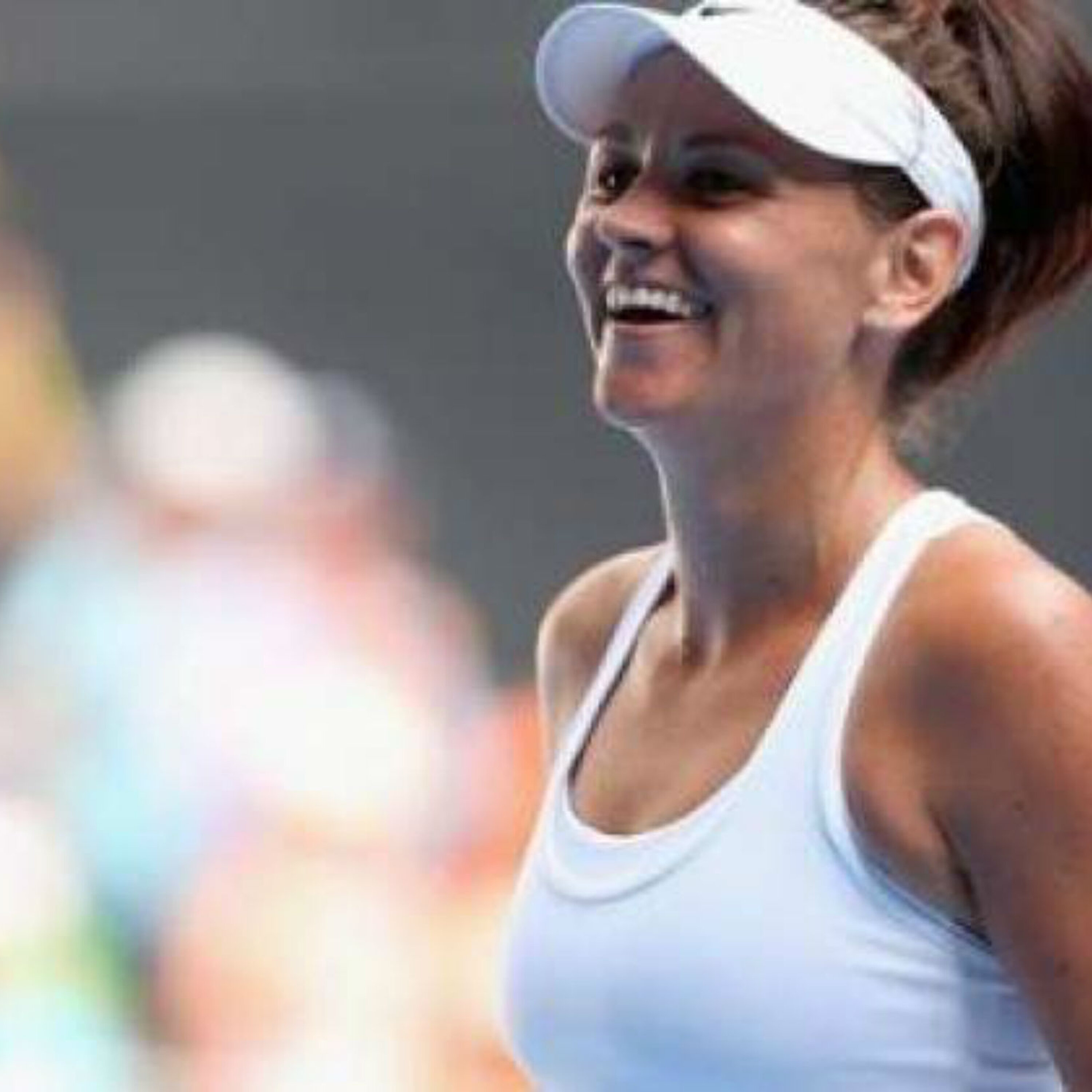
Casey Dellacqua
The beloved Australian player (and worst golfer Rennae has ever seen) joins the pod to talk about retiring on the top of the doubles game, going to beauty school and the match she'd take back.
Hosted on Acast. See acast.com/privacy for more information.
See omnystudio.com/listener for privacy information.
2018-08-24
45 min
Transcript
Available Results
Generated results are saved to the knowledge database for reuse and search.
No generated results are available for this episode yet.
Extract Knowledge
Pick what you want extracted first. Model, scope, and chapter options appear after a template is selected.
Generated results for public episodes are saved to the knowledge database so they can be reused and searched later.
Transcript
00:00:00
Speaker 1: Do you where's my eyebrows? Or pluck them?

00:00:02
Speaker 2: Yeah? I could do a lot with You're stuck with you.

00:00:16
Speaker 1: Hello, Renee, Hello Caitlin. How are you? Where are you? I am very good.

00:00:21
Speaker 3: I am in New Haven, Connecticut? Or does the locals like to say Haven?

00:00:25
Speaker 1: Really? Well, that's what I hear. That's weird.

00:00:29
Speaker 4: So you're there obviously commentating as the illustrious commentator you are in addition to being a racket magazine podcasters, but you have also become a coach since the last time we did this podcast.

00:00:41
Speaker 3: Well, I've been a coach before and doing a little bit of coaching now with Carolina Plishkover.

00:00:48
Speaker 1: I worked with Carolina a.

00:00:48
Speaker 3: Little bit at the end of last year in Singapore where she called me up desperate, needing some help, and she thought, well, desperate means Renee stopped. So anyway, she came to me and asked me if I would work with her. And then this year she's obviously, you know, not having the results that she feels that she should be and wanted a little bit of a change and asked me if i'd come back on board for a little while and we'll see how it goes.

00:01:13
Speaker 1: But Obviously, I'm very busy with my TV work.

00:01:16
Speaker 3: With ESPN, so I have to be a little bit smart about how I handle it all.

00:01:20
Speaker 1: But I just really enjoy Carolina a lot.

00:01:23
Speaker 3: She's a great kid and she should be doing better than she is, and hopefully that'll translate in some wins in the next few months.

00:01:31
Speaker 4: Well, I can't think of anybody more capable of juggling all those bars than you.

00:01:34
Speaker 1: I'm going to leave that one alone, Caitlin.

00:01:39
Speaker 4: Insiders might know how the irony of that statement. Despite your incredibly busy schedule, you found time this week in New Heaven to record an episode with someone awesome, super super cool, a fellow.

00:01:52
Speaker 1: ARSI, yes, my old mates. She's not old. I'm much older than she is, which she will explain in the podcast.

00:02:00
Speaker 3: But my old mate, Casey de Laco, who is truly You know, when you do the votes of who's the favorite one of the favorite players on tour, I think Casey would without question, be no question in the top five to ten players of how people feel about her. She's just one of those players you love to be around. She's always in a good mood. She's had a tremendously great career, she's recently retired, but she's also had some childs and tribulations throughout her career, and you know, life has changed for her dramatically. And I mean she's been in controversies with Margaret Cord and she's had to deal with that, and.

00:02:34
Speaker 1: She's got a family now. She traveled with.

00:02:36
Speaker 3: I mean, the stories along, they're wonderful, They're funny. She's funny, and I think some people will appreciate some of the like just interesting fun stories and behind the scenes stuff that she can set on the table for us.

00:02:48
Speaker 4: One of my favorite things about what we get to do when we talk to these great players is really unpack what's.

00:02:54
Speaker 2: Going on in their minds.

00:02:55
Speaker 4: And it's more often than not it's everyday stuff that we I'll deal with. In Casey's case, she's got two young children. Obviously that creates birth happiness at home, but also stress in the travel and requirements of a pro tennis career, but also her taking time off and sort of reassessing whether or not she really wanted to be playing tennis. Is I think something everyone can relate to, even those of us who have never made money at it.

00:03:19
Speaker 1: Right, No, totally.

00:03:21
Speaker 3: I mean the amount of times I hear pro players say, oh, that's it, I'm done, I'm retiring, I can't do this anymore, YadA, YadA, YadA. I mean, I would say in a span of you know, a decade, a decade and a half anyway of players playing pro tennis, that they probably out of the word I'm retiring about five to eight times in a career. So you know, it's managing their emotional ups and downs of playing on tour, because it really is a difficult life because you really are everybody.

00:03:48
Speaker 1: Loses every week.

00:03:49
Speaker 3: You're a loser every week except one person, and there's very rarely people like Serena or Roger Feder or Rafael Nadal that win every single week, and they have to deal with their own pressures of really expectation of winning every week, whereas other players have to deal with the losses and when they lose, and dealing with those ups and downs and being away from loved ones and being in hotel rooms and having to sometimes doing your own laundry when you're growing up. And I mean, yeah, so we'll get into a little bit of that with Casey Well.

00:04:16
Speaker 4: I loved how wide ranging the interview was. Obviously it was great to hear somebody who at one point even went to beauty school.

00:04:23
Speaker 1: So I know our.

00:04:24
Speaker 4: Listeners are really gonna like this. You know, they're going to have to deal with the fact that there's two Australian accents combating for airtime and it couldn't be belonging to one of what sounds like one of the nicest people to play the game. So thanks for getting an episode in while you've been up in New Haven.

00:04:40
Speaker 3: Hey anytime, and if I can grab a NAUSI to have a chat to any time of the day, I will do it.

00:04:45
Speaker 1: And Casey is definitely.

00:04:47
Speaker 3: One of my favorites, so I hope everybody enjoys her and this episode because she's a delight.

00:05:00
Speaker 1: Here. We are in New Haven, Connecticut, and.

00:05:05
Speaker 3: So a week before the US Open and I've managed to corral one of my best.

00:05:08
Speaker 1: Friends in the whole entire.

00:05:09
Speaker 3: World, a person I love more than anybody ever, and that is Casey de Laqua now retired, Casey Delaqua and retired.

00:05:18
Speaker 1: For Is it official?

00:05:20
Speaker 2: Oh yeah, I'm done. Yeah, I'm retired. Done.

00:05:24
Speaker 3: I needed to check on that before you made that, you know, major announcement on our podcast.

00:05:29
Speaker 1: But welcome to the Racket magazine.

00:05:31
Speaker 2: Thanks for having me, you believe me.

00:05:34
Speaker 1: I'm very happy to have you here.

00:05:35
Speaker 3: And I'm sure there's a million people out there, hopefully millions. There'll be, you know, a couple of people, one hundred Aussies that would love to hear your take on things everything tennis and life and motherhood and injuries and all sorts of stuff.

00:05:51
Speaker 1: So all right, okay, so.

00:05:52
Speaker 3: You're officially retired, and and I guess the question is why, because you're having such a good year last year and you've made a lot of money and you've done really well.

00:06:02
Speaker 1: So why.

00:06:03
Speaker 2: Yeah, family, my partner Amanda, and our two children. That was why. Everyone. I get that question a lot ash And I made Singapore last year. I was back to top ten in the world, great results, made a Grand Stamp final, like you said, financially was going well. But I think you just when you know, you know, And for me, it just felt like the right time I had been. I had been dealing with so much prior to last year, so I think it was a build up of I guess a lot of things, but I just knew in my heart that I wanted to be at home with my family and I wanted to be home with my two kids more often. So yeah, basically came down to me wanting to be more of a mum than a tennis player, I guess.

00:06:45
Speaker 3: And you and I have talked, you would also like to have kids of your own, just to add to the many duties that you have to do as a mum, So that was also part of the reason why you stopped to try and have children on your own. So on that subject, do you think that we had six moms in the main draw of Wimbledon this year?

00:07:05
Speaker 2: Yeah?

00:07:06
Speaker 1: Wow, it's probably the most. Probably it's never happened before.

00:07:09
Speaker 3: We had obviously one or two with Kim and Lindsay Davenport and various players, and Ivon Gulign Cooley is the.

00:07:15
Speaker 1: Only mum to have find Wimbledon.

00:07:17
Speaker 3: Yeah, do you think that that's going to happen more? And what do you think about players? And I've had conversations with some players about, you know, even extracting their own eggs that are younger, because now players are playing into their thirties and having healthy children. Obviously as you get older it becomes a little bit more difficult. So what do you think about that? And what do you think the WTA goes with this.

00:07:40
Speaker 2: Yeah, it's a really interesting topic, isn't it. And I think it's one that's definitely come to head because of players having children and then obviously having higher, more profile players like Serena and Vicker having children. It brings it to more attention. I guess. I think we're seeing a lot of players peaking at probably closer to thirty. We're seeing them play their better tennis even post thirty, So I think the whole fertility issue is certainly something that's I guess more relevant at this point in time. But I really feel like it's great. I think it's really great for the sport to see these women giving birth, coming back having results showing you showing I guess everyone that you know you can still come back and be a great athlete, be a mum. It's a lot to take on, but it's possible, and I think the two are starting to realize that in terms of maternity, I guess rules with special rankings, maternity lead et cetera, et cetera, tournaments are catering for a lot more. But yeah, it's definitely a subject that's been a lot more in the media and prelevant because of all these women having children and doing really well postgiving birth, which is amazing.

00:08:49
Speaker 1: Yeah, you know I had spoken about Earl.

00:08:51
Speaker 3: How you think it's just phenomenal what Serena did by making so soon after having giving birth, being in a final at Wimbledon. And yes, we all expect as been a bit superhuman about what she's done with her career.

00:09:03
Speaker 1: But that's pretty amazing.

00:09:05
Speaker 2: Oh, it's phenomenal for me, Like I've seen my partner obviously go through two pregnancies give birth and what your body goes through is phenomenal to give birth to a child. But then it's not only that, it's what comes after giving birth. You know, you've got this cute little baby that you have to care for. You're up in all hours in the day, night caring for this child. Plus on the back of your mind you want to become big, get back to being an athlete. And for me, Serena, I always had so much respect for her anyway, but what she's actually done in the last twelve months is phenomenal. The fact she went as straight and open at seven weeks pregnant is phenomenal for me. The fact she made a Winmwooden final less than twelve months after giving birth. She is She's superhuman for me and definitely an inspiration for the whole tour and women out there for sure.

00:09:54
Speaker 1: And you had your struggles through your career with injuries. You had major surgeries.

00:09:59
Speaker 2: To shoulder yep, foot yep, and.

00:10:02
Speaker 1: Then you had the concussion, which we'll get into and a little bit.

00:10:06
Speaker 3: How difficult was it and how many times did you actually utter the words that's it, I'm done, I'm retiring, And how hard was it to come back from the surgeries and did it change your perspective?

00:10:18
Speaker 2: Yeah, my first surgery, the shoulder surgery, was I felt like it was. I was always pretty positive. I never felt like after that. I never really muttered those words because with the shoulder, I had a bit of a plan. I knew it was going to be out for a good nine months. I did my rehab, but I always had that intention of coming back. But during that time I met my partner Amanda. Life was really good. I was living in Sydney, I went to beauty school.

00:10:42
Speaker 1: You went to beauty school. So how many times did you get people to say, can you wax me? Casey? Can you do my eyebrows.

00:10:48
Speaker 2: I know. So I became a qualified beautician, which is quite funny. I really enjoyed it. It was really great distraction and I met a lot of great girls and it was just something so different. But I had to keep busy. I was doing my rehab, but I always had in my head, now I'm going to become I'm going to get back to tennis. The foot was difficult because that came not long after the shoulder, but kind of got through that as well. The concussion was obviously the hardest, and there was many times during that period where I was like, oh, I don't know if I can get back to the level or you know that I was out prior to my concussion. But yeah, I had a few big injuries, a few, you know, difficult moments throughout my career. But they do make you more resilient. They do make you appreciate it more and they make you want it more, which I certainly think helped me in moments throughout my career. So yeah, it's everyone has their own I guess journey and tribulations and that happened along the way, and they were a few of mine.

00:11:41
Speaker 1: You came back.

00:11:42
Speaker 3: There was one year that I remember where you had some phenomenal results in Australia and you had victories over people like Patti Schneider, who was a top twenty player at the time, and you know at times top ten great player and Emily Morejmo who was top ten and at that time, I believe yea explain how it was and how great it was for you, and how stressful it is to play in Australia. Yeah, and all the glaring lights on you, because Australias don't really care about tennis too much of the year until it genuinly rolls around.

00:12:09
Speaker 1: The only thing they care about that in cricket.

00:12:12
Speaker 3: Yeah, how great was it to have those moments in Australia? And are those are the fondest memories on the tennis court? And what are the fondest memories for you on the tennis court?

00:12:20
Speaker 2: Yeah, being in Australian Playing in Australia for me was always one of the best experiences. I think for a lot of Australian players, they can actually struggle in those moments because yeah, like you said, no one cares about tennis, and then in January it's like all eyes on you and you have to perform. So it can it can be really stressful and everyone wants a piece of U, and it's it's hard work. But I always kind of thrived on it for some reason.

00:12:42
Speaker 1: I yeah, because it's not your nature.

00:12:44
Speaker 2: No, it's not. It comes sometimes shy away. But I really felt like the Australian public for me, they love someone that just has a go. They love someone that gets out there and just competes. And back in two thousand and eight, when I had that really good run, like you said, I was twenty one twenty two, I was pretty raw. No one really knew me. I was just swearing my target clothes and clothes sound so fancy, and I, yeah, I just I don't even kind of I look back now and I'm like, I don't even know that person that kind of Casey was. I just kind of came out of nowhere. My Naan was in the crowd. But that moment was really special and it was a breakthrough moment for me in terms of my career, the belief in myself and all float on from there. But then I had another good run in twenty fourteen, made another fourth round there, and yeah, I just really felt like the Austraian public, they want you to do well, so I kind of use that to my advantage and knew that they were cheering for you. They're not there to, you know, not support you. So I just tried to use that energy. And I always had great memories, great success in Australia, and I will always cherish those memories.

00:13:44
Speaker 3: You talk about how difficult it was to believe because I know you really well, and the biggest issue for you was really self belief. Yeah, and trusting how talented you were and you put in the hard work and believing in yourself.

00:13:59
Speaker 1: How wise.

00:14:00
Speaker 3: How many think players on tour you think struggle with that exact thing.

00:14:05
Speaker 1: They know how good they are. Did you know how good you were?

00:14:09
Speaker 2: No? Not really. I just had a lot of people telling me, like, you're so talented, you're lefty, you know, you strike the ball amazing, But I never kind of believed it.

00:14:19
Speaker 1: So how do you find that? How do you find that belief?

00:14:23
Speaker 3: And does that come from a combination of hard work and actually talking literally faking it until you're making it?

00:14:29
Speaker 2: Yeah?

00:14:30
Speaker 1: And how many players do you think actually go through that?

00:14:32
Speaker 2: Yeah? Well, I don't think I would have been the only one and I'm not the only one that would have felt or experienced that. There are probably a lot of girls out here that are naturally quite confident in exhiberate that confidence on the court, But for me it was it was always very awkward. I found it hard to give a fist pump or show emotion because it just wasn't natural for me. I wish it came in a little bit more natural. But I think, like you said, I think the hard work that you put in and the fake it till you make it. They like mentally telling yourself that you can beat these players and you're good enough definitely change my mindset and then having some results, but that comes from the hard work that you put in as well. So but yeah, I think they'd be a number of plays, and that's I think. While you see sometimes on the women's tour a bit of fluctuating form, you know, players get a little bit down, they stop, they lose a bit of belief in their game, their performance, and you see it a little bit, you know, girls dropping in and out of top hundred defending points. You don't see that so happens so much on the guys too. I don't think where you know, girls get really worked up about defending points or having to perform, and yeah, so.

00:15:33
Speaker 3: There are tad more emotionals what you're saying, Yeah, kind of a little bit more difficult for them at times.

00:15:38
Speaker 1: To deal with. Yeah, I think so we were there times in.

00:15:41
Speaker 3: Your life where the retirement question came and did you have I mean you and I had. There's at least two times where I remember you saying the words that's its stubbs, the yeah, I'm retiring, I'm done.

00:15:54
Speaker 1: I can't take it anymore. Yeah.

00:15:56
Speaker 2: Yeah, from the time that I was, I know, that was when I was probably about from a team until about twenty one, and I really struggled through those years. I really battled through. I'd been through the strain ite to sport, been through the Federation, but then it was kind of about my.

00:16:10
Speaker 1: Own You're thrown into the world alone.

00:16:11
Speaker 2: Yeah you are. And I was playing obviously on the IF circuit, and then you're scraping for money. It was tough those years because you're I was. I was like sleeping, you know, sharing three in a room to save money, doing my own laundry, doing your own laundry. I was really grinding it at the lower level, and I just thought, I'm not cut out for this, stubbsy, I can't do it. I think I just want to be at home with my family. And you're going through obviously all those things as well, your friends at home, they're having good time, and you're thinking about life. You know, it's just a hard life's tennis. It's a really and a lot of people probably don't appreciate what you sacrifice, what you have to give up, what you put into the sport, the amount you have to travel, especially is in Australia, and we don't nip home when I.

00:16:55
Speaker 3: Was first, you don't You definitely don't nip home to Perth, no even further.

00:17:00
Speaker 1: And people are always like, oh, Australia yourself far. I'm like, ah, yeah, it's not that bad. But Perth is.

00:17:06
Speaker 2: Really yeah, Perth's like on the other side of the world. Yes, it's a long way away everywhere. Yeah, And so there'd be times that I remember, like I couldn't afford to fly home either. So you leave after the train open and then we come to us open and you were still away and it's like nine months down the track and you haven't even gone home, and you wonder why you're like in a not a good headspace and stuff. But it's a really tough sport. But those years make you more resilient too as well, So I do appreciate and I look back and I've got some really funny memories of that time too because it was so difficult. But yeah, the oh, I just remember like using I'd go to the I was sharing a room in Japan with a couple of other players at like twenty five thousand at the time, and I would get towers from the bathroom and a robe to make a nice little bed on the floor to get as comfy as I could. So that like because we would share and the other two girls would sleep head to toe in the bed and it's just what you did because you couldn't afford at a hotel. The players, well, Sophie Ferguson at the time, and there was another Australian girl who who was it at the time, But yeah, Sophie and I actually did a lot. I was good friends with so Ferguson and we used to share a lot and just three in a room. Yeah, had to one on the floor and we'd rotate, and you're just what you did, Like because many.

00:18:20
Speaker 1: Times did you steal bread rolls from the morning breakfast.

00:18:23
Speaker 2: Always for lunch, Always you'd make a nice ham and cheese sandwich or take it to the courts and you take the fruit. You'd actually have a lot for breakfast if it was included in the hotel. I don't know. You just flew the cheapest flight. You'd fly like six flights to get to a place because it was cheaper.

00:18:39
Speaker 1: What was the longest light you ever took?

00:18:40
Speaker 2: Oh? Well, from Perth, I would do like Perth, Adelaide, Adelaide, Sydney, Sydney, La La, somewhere in America else to get to Miami. That's like the longest I think route you can go.

00:18:51
Speaker 1: I think I might beat you.

00:18:52
Speaker 3: I went Puerto Rico one time, so I was in San Juan. I went San Juan, Miami, Yeah, Miami, La, or.

00:19:00
Speaker 1: I might have even gone stopped somewhere on the way to La.

00:19:02
Speaker 2: Then I went LA to Tokyo to get back to Australia to go back to So you went around the world.

00:19:07
Speaker 1: So I literally went around the Worlah.

00:19:08
Speaker 2: But you probably got to cheap around the world ticket and that's just what you did. Yeah, So it was just it was like a non negotiable. You didn't even think about flying direct, like it was not even option. You rock up plenty of times my rackets didn't show up and I just used someone else's or you know, that stuff happened. But yeah, you definitely like at the end of my career, I was obviously higher ranked and you got per deems and I was like, that was a lie.

00:19:32
Speaker 1: Happy days. Yeah, yeah, making hundreds of thousands of dollars.

00:19:35
Speaker 3: Yeah, how hard was it to walk away from making the money you were making because you were making upwards of six seven hundred thousand dollars a year doing well in doubles alone.

00:19:44
Speaker 2: Yeah, how hard was that to walk away.

00:19:46
Speaker 1: From considering You've got this family and.

00:19:48
Speaker 2: Yeah, I mean it's tough, but I guess you always get to a point in life where for me, well, this is how I feel. It was never it's not about the money. I've had a great career and I've been able to give my family a great start in life in terms of you know, having a house, a roof over a head and all that stuff that's really important. And a pool. We're putting in a pool, which is great. So those little things I'm really proud of that I've been able to do for my family. But at the end of the day, the money, yeah, it's great, keeps going up and up. You would be a bit spewing from back when you used to be playing. It keeps going up and up.

00:20:23
Speaker 1: But I wish I'd stuck around a couple more. Yes, but I can't complain.

00:20:26
Speaker 2: No, But do you know what it's Yeah, it's not always about the money. And it was about being at home with my family and that's priceless for me. So that's is important.

00:20:35
Speaker 3: Okay, So, speaking of motherhood, you decide to you and your partner have kids. You now have two kids, Yeah, Blake and Andy, little boy and little girl, who are absolutely adorable.

00:20:45
Speaker 2: Yeah.

00:20:45
Speaker 1: Anybody follows you on Instagram, they know how difficult was it to travel away from them. And I guess, now, what's your thought for us about having more kids?

00:20:58
Speaker 2: And yeah? Yeah, So when I met Amanda, we always knew that we wanted a family, I guess, and that was part of what we wanted. And we had Blake in twenty thirteen, and my career actually even turned more of a head when Blake was born. I actually started to do really well, and I think people were like, oh, the Blake's going to make it hard for Case in that. But you know what, it made me be in a really good space in life. I was really content. I was really happy, and for me, that always translated on the court. When Blake was born, we traveled with him a lot. He came on the road. Logistically it was hard. We'd get to like Rome, for example, we think we'd book a beautiful room and we'd got this shoe box room and I was like, yeah, we've got like a little baby, and we wanted just some warm milk for his bottle, and like trying to relay to the stuff you just want some more milks different, yeah, Or like we'd be like wanting to do some washing and a little Nona would walk out and we'd be like, no, we want a.

00:21:50
Speaker 1: Washing machine, James Dela likewise, how do.

00:21:53
Speaker 2: You I didn't know. I get that all the time. But yeah, no, life's good. When our second child came along, and it does logistically it gets more difficult, but I was already I was out with my concussion at that time and life was changing a little bit anyway, But you know, kid, there's more kids in the in the in the plan, but you know, eventually we'll get there. And I've always been big on family, family life, that's what life's about. So yeah, we're really happy. And I love being at home. I love being a mum. I love playing board games with my kids. I love seeing them.

00:22:23
Speaker 1: It's so rewarding for a stroll.

00:22:25
Speaker 2: Yes, I love going for walks with them, and yeah, they love having me home a lot more too, So we're all happy.

00:22:37
Speaker 3: Speaking of happiness, there were periods of time in your career where, in particular, you went through this concussion thing a couple of years ago. So you're playing a match in Beijing with Yaroslava Shreda. Yep, you're an old doubles partner and you've made the WT finals. You knew you were in for the first time. Yeah, that was a pretty special moment for you.

00:22:57
Speaker 1: And you're playing a match. It's close to the end to the match, correct, yep, correct, the chances point, yeah, match point.

00:23:03
Speaker 2: Yeah, it was a match point yep for you. Yeap.

00:23:07
Speaker 1: Oh bloody hell it was.

00:23:08
Speaker 2: And we were down like six one five, love like we were out here and we somehow got.

00:23:14
Speaker 1: There and you made it back from match point and you end up falling.

00:23:16
Speaker 3: Backwards, Yeah, and absolutely plunking your head very hard on the tennis cord.

00:23:22
Speaker 2: Yes.

00:23:24
Speaker 3: Go through the period of time from that moment and through to about March of the following year.

00:23:32
Speaker 2: Yeah, so it was Yeah, like you said, I was on court. Life was great. We had made Champs, we were well and truly qualified, and we were playing Beijing and you know, just getting some extra matches together. I loved playing with Slava. She was awesome to play with. And yeah, I obviously had that moment where I smashed my head on that on the concrete court, which if anyone knows a concrete court is it's.

00:23:56
Speaker 1: Going to win the head too.

00:23:57
Speaker 2: Oh yeah, head to head battle, Yes, pretty much. Yes, it's it's hard. And I have no recollection from that moment on till I got to maybe like the hospital. I remember kind of waking up and my partner happened to be the Amanda at the time, and the WTA trainer Kate, and yeah, I was just in all sorts. I'd walked off the court. I was apparently vomiting and had, you know, signs of concussion, which is what happens.

00:24:22
Speaker 1: And unusual for a tennis player.

00:24:24
Speaker 2: Yes, and something that the WTA stuff would never really like. It's very rare for a player to have a concussion, especially on court, so and my knowledge of concussion was very limited. I just assumed I'd leave Beijing and then after two weeks I'd get home, have a little bit of rest, and I'd be fine. I could just have a bit of rest, and championships are on the way, so I'd be able to do that. So but yeah, then after that it just became a real battle for me. It became difficult. I went home, I had to pull out of the championships unfortunately. It's terrible, which was really upsetting, upsetting for Lava, upsetting for me.

00:25:01
Speaker 1: I followed money too.

00:25:02
Speaker 2: It was a lot of money. We were one of the best teams in the world that year, so it was really hard. I continued to really struggle. I was having a lot of issues. It termed like my physical symptoms were subsiding. I had like my headaches were slowly going, which was they were constant for months. I was sensitive to, like couldn't use my phone, was just really switched off from the world for a while. Then I started to have a few like more mental I guess struggles. Certainly anxiety, Yeah, anxiety set in and not I'd never experienced much anxiety before where I couldn't get out of the house, Like I'm very bubbly, I'm very social, like I like to be chatty and stuff. And then I couldn't make Yeah, I do, and that's something I've never struggled with. But I couldn't. I couldn't take my son to the park, couldn't go out and get grosses. The little things were really difficult for me. So I did pull out of the Austrain Open that year. People didn't really know what was kind of going on. I think a lot of people. I felt like people didn't really understand because they were like, had to be a concussion player, yeah, not play like surely you're a case. Yeah. Everyone that was close to me knew what I was going through. I did try and come back in March. You were with me. I called you to help me on the road, but I was still struggling. I thought I was ready, but I wasn't.

00:26:20
Speaker 1: Yeah.

00:26:20
Speaker 3: I remember going out on the court. You were playing with Sam Stozo and Indian Wells are so great for doubles and they love the support. The doubles there and the court was absolutely packed, and you had just an absolute shocker of a first round playing Hingus and Mirrors the first round, who I believe were a numb.

00:26:35
Speaker 1: One team in the lay at the time.

00:26:37
Speaker 3: So you know, you've been thrust out on a massive court with huge amounts of crowd and you're playing, you know, one of the best teams, and you expect a lot from yourself as well as a doubles player and Sam Stozer who you were playing with. And so I remember going out and after the first set, and I walked out into the court and I looked at Sam and I was very constructive with my assessment of what.

00:26:56
Speaker 1: You needed to do.

00:26:57
Speaker 3: And then I looked at Sam, and then I looked at you, and you looked at me, and you had tears in your eyes and you were petrified.

00:27:03
Speaker 1: Yeah, and you were so overwhelmed with the moment.

00:27:06
Speaker 3: And normally you'd be just like, yeah, whatever stuffs a year where you'd be fine, but you were like, I.

00:27:12
Speaker 1: Don't want to be here. You were so petrified.

00:27:15
Speaker 3: About playing and the anxiety of people looking at you and not playing well. And I remember looking I think I may have said to you Casey, you've got some of the best returns in the world.

00:27:26
Speaker 1: Just let it go. Yeah, you know, kind of thing something along those lines.

00:27:29
Speaker 3: But I remember that period of time. You went to Miami. We went to San Antonio actually.

00:27:34
Speaker 1: And you played singles.

00:27:34
Speaker 2: Yeah, it was disaster and.

00:27:36
Speaker 3: You played singles and you lost to Peronkova. And it wasn't a bad match. You in a lot of people's eyes got thrashed.

00:27:42
Speaker 2: It was like one in one or something.

00:27:43
Speaker 1: The match wasn't that dad.

00:27:45
Speaker 3: Yeah, But you came off the court and you and I sat together and you sobbed uncontrollably, and you said, I can't take this. And it was not that you couldn't take being on tennis squad. It was overwhelmingly tough for you with the anxiety still.

00:28:00
Speaker 1: And the eyes on you. And I want to tell this because I know it's hard for you.

00:28:03
Speaker 2: Yeah, but you know, we went You went.

00:28:05
Speaker 3: To Miami and you had you won a good first round doubles against Burtons and your last night yeah yeah, and you came off the court and you were in We went into the room. You were with melt Amazolo, who's the traveling train fitness of physio from Australia and I walked into the room and you were lying on the ground and you were bawling your eyes out.

00:28:24
Speaker 2: Yeah, and we had won and he's a good match, and you.

00:28:28
Speaker 1: Were literally almost hyper ventilating.

00:28:30
Speaker 2: Yeah.

00:28:30
Speaker 3: And I think that's when I thought, Wow, this is more than any.

00:28:35
Speaker 1: Of us know what to do for you.

00:28:37
Speaker 2: Yeah. Yeah, yeah. And it probably was a good realization for me too, because I kept convincing myself that I was okay. I kept convincing myself your tennis is good enough, that other stuff will be fine, You'll get there. Yeah. And then even we won a match and it was like still too much and it was overwhelming, And to be honest, if I look back now, I probably still just hadn't recovered from my concussion, but it had been such a long period that I was just like I felt a bit weak, Like you've got to be back, You've got to get back and play like you're a good player. Get back. What are you doing?

00:29:06
Speaker 3: And it was just look back on it, though you had the worst freaking draws, probably wasn't the best sons to come back and play, But anyway, I think you played the top seed in three tournaments in a row almost joke.

00:29:19
Speaker 1: Yeah, that didn't help.

00:29:20
Speaker 3: At least you could have maybe got a bit of a shitty drawer one a couple of easy matches.

00:29:24
Speaker 1: Maybe you would have thought felt a little bit more comfortable. Yeah, but it was because there was all this pressure on you immediately, and so you made a big decision.

00:29:31
Speaker 2: Yeah, from that moment after Miami, I took to Charleston. After Charlston, sorry, yeah, I took special ranking and you walked away, But yeah, I stopped, I walked away. I never said that I was going to retire, but I knew that I was going to be out for an extended period of time. To get myself right. I went back to Sydney and I worked with the psychologist weekly for a long time, just to get me back to being casey, like just the casey that could get up and go for walks with me kids and have fun. And then in April, not long after Charleston, the birth our daughter came along, Andy, and that was a really great time. Now I look back, we were just in that newborn bubble of love where you got a little baby and distracted me from a lot of the other stuff that was happening. So yeah, so basically for the rest of that whole year, I stopped, I didn't hit, I didn't play any tennis, I didn't think about tennis. I always watched a little bit. And then yeah, come November was when, yeah, Ash and I started hitting a little bit more together and we had a great year and so be it.

00:30:36
Speaker 1: So basically, you and Ash got each other back out of retirement. You got her back from playing cricket, thank blood God.

00:30:41
Speaker 3: And because she dealt with her own anxiety issues, you know, as far as not wanting you know, having a lot of the notoriety of being so young and so good. She's so good, and you know she had a hard time being away from her family as well.

00:30:54
Speaker 2: Yeah, and you.

00:30:55
Speaker 3: Two supported each other through a period of time that you know you can look back on and be really proud of.

00:31:00
Speaker 2: Yeah. Absolutely.

00:31:01
Speaker 1: She made how many Grand Slam finals together?

00:31:02
Speaker 2: Well, we made five, we made oh sorry, four, we made three back when, back in twenty thirteen, and then we made French Open final last year. So yeah, we reconnected and like you said, I think just timing in life was perfect for us. She will, you know, more than anyone as well. You can't put her price on the value of having good friends out on tour and for Ash and I. Yeah, she was great for me, and I feel like I was great for her even though we're years apart, just like you and me, I guess, but we get along great and we had a really great year last year. We made Singapore. I finally got to go to Singapore. We were both back to top ten in the world in doubles, and I just felt like it was a really good way for me to go out as well, like having a great year coming back from the concussion. Everything that I'd been through proved to myself that I could get I could do it. I got back to top ten and I was really proud that I could finish on my own terms and in a really positive way.

00:31:55
Speaker 1: Yeah, I think I believe we've got a little bit smashed. That night in Singapore, Yeah, we did.

00:31:59
Speaker 2: We certainly sell it braided. We did. We had a lot of drinks and it was fun. It was a lot of it was good.

00:32:04
Speaker 3: It was the old what's the dance with the sprinklers? Sprinkler doubt, so I still have that on do We did. We actually had Carolina plishkover up on that night and I remember going we walked to the bathroom together and we both had to go to the toilet at the same time. And Carolina looked at me and she goes, oh, they're so fun. I love I love the all the Aussies were Aussies like that.

00:32:25
Speaker 2: We had time exactly and we know how to have a good time. All right.

00:32:28
Speaker 3: So, speaking of Amanda and your family and coming out and you know the controversy of the Margaret Court situation, you were sort of thrust into that conversation unwillingly. You didn't go out and seek this spotlight.

00:32:40
Speaker 1: You're not somebody who usually tweets out shit, no.

00:32:44
Speaker 3: Pretty quiet. You have a good time and you find and you're outspoken. Yeah yeah, but you're not one that seeks it. But you were thrust into that because Margaret sort of put you into the spotlight about you having a family and it not being right.

00:32:54
Speaker 1: And you're both from Perth.

00:32:56
Speaker 3: Yeah, she's somebody that you've I'm sure looked up to throughout your career, one of the greatest players of all time. How difficult was that period of time and how important it was it for you to stand up and also get the support of a lot of your Aussie.

00:33:07
Speaker 2: Friends yeah, it was. It was something that I put a lot of thought into actually, because yeah, there had been moments back when Blake was born where there was Margaret had written an article about my family which wasn't nice, but I left it alone and kind of didn't really think too much about it because it wasn't something that I felt was worthy to respond to. But yeah, then the marriage equality started happening in Australia and yeah, she was being outspoken, so I just felt like it was the right time for me to speak up and to you know, just be really proud of my family and who I am and my relationship. And I think sometimes you don't realize what a role model you are until you then kind of speak up and you realize, like I always, I had amazing support throughout that whole time, not only from my friends on tour, like everyone's been amazing, but from everyone the general public back in Australia were fantastic and obviously marriage equality got passed, and yeah, it was a it was a really good outcome.

00:34:06
Speaker 1: Yeah, did you win an award at the end?

00:34:09
Speaker 2: I did? I actually want one Sports Personality of the Year for the lgbt I community, which was really rewarding. I felt quite proud that. I mean, I just like you said, I didn't seek the spotlight. I just felt like it was a really important time to speak up because I feel like there are old times in life where I don't say much, but when there's I do behind close. But when I feel like there's a there's the right time. And that was definitely the right time to speak up. And I'm really glad I did. And yeah, so it was nice to be I guess.

00:34:38
Speaker 1: Recognized, recognized for.

00:34:42
Speaker 2: No just for being me, And that was the thing, Like I was like, Wow, I won an award for just being Casey. That's pretty cool. Like I've just been who I am and it's nice to be rewarded for that.

00:34:53
Speaker 1: Yeah, you should be right for that, case you deserve an award for that.

00:34:56
Speaker 2: Every day.

00:34:58
Speaker 1: Go back to tennis.

00:34:59
Speaker 3: Can you one of the some of the one or some of the funniest times matches moments on court?

00:35:06
Speaker 2: Yes, I've got plenty, there's plenty. You probably tell the story better than I do, though, probably one of the funniest ones was when I was playing with you, So you can tell it in Madrid, Yes, in Madrid. Well, so basically I'll tell the beginning of it and you can tell the end of it. But I was coming back from another injury and I still had a good special ranking. But Stubbsy's ranking was good. But you were about to on the vergees contemplating the timement. Yeah, and I just called you and said, can you play with me? We'll get into these times.

00:35:35
Speaker 3: Your exact words were, Stubbsy, can you help me try and get my ranking back?

00:35:39
Speaker 2: So basically, can I use an abusie just get me back and then I'll flip you. Yeah, I'll w for a younger version, like a twenty year younger version called ash Bardi pretty much. But yeah, so we started and we did really well. We did great, and then I was on my way. But yeah, the one of the funniest stories was probably the first tournament back that we played together. Was in Madrid, and do you tell it?

00:35:59
Speaker 1: You tell the first match it was we were playing, but.

00:36:02
Speaker 2: You tell it funny.

00:36:04
Speaker 3: And somebody had a ball on top of the net and they had the whole court and they decided to try and.

00:36:08
Speaker 1: Tag you, and then you flicked it back and you got it back. I don't know how you close your eyes and then they hit it again at you, rather than again.

00:36:15
Speaker 3: Trying to hit it away, and they went right at you again and you flicked it up in the air over their head and you hit a volley winner and I laughed so hard because I was so.

00:36:25
Speaker 1: Just embarrassed for that person. And then I just said, haha, fuck you. I just sort of said it out loud.

00:36:31
Speaker 2: And it was very impulsive, but it was so funny, oh, because it was just so appropriate. I know they were really trying to achieve me and like go at me. Yeah, and I'm just a bit weird with my reflexes somehow, I just put my racket.

00:36:43
Speaker 1: It's like a frying pan sometimes.

00:36:45
Speaker 2: But I'm like, you always had my back, and in that moment it was very funny. Oh yeah. And it was so impulsive because yeah, it was unexpected but great.

00:36:53
Speaker 1: Yeah, that one.

00:36:53
Speaker 3: And then you had one about three weeks later at the French Open against again unnamed opponents.

00:37:01
Speaker 1: They know who they are.

00:37:03
Speaker 3: And I was trying to keep you together because you were losing your.

00:37:06
Speaker 1: Shit the whole. Yeah.

00:37:07
Speaker 2: I was pretty fired up that match, and which it's usually the opposite. Yeah, I'm usually trying to bring you down, but I was very fired up.

00:37:13
Speaker 1: Yeah, and then I just lost my shit.

00:37:14
Speaker 3: Yeah second the last game, to the point where it was just hysterical.

00:37:18
Speaker 1: But yeah, we've had we had some fun.

00:37:20
Speaker 2: Moments and most of a lot of my best times on tour from fed Cup and you would know as well, like those times at fed Cut when we've had great for me, like they were great weeks Olympics for example, even the weeks I loved being on tour, but the weeks that I had with my teammates or my Aussie friends, you can't replace them, and they are the memories that stick out in my mind as being some of the greatest memories on tour. We will always look back and have some good laughs. We'll always have girls' weekends. We'll organize with that.

00:37:46
Speaker 3: Although you're trying to get a girl's weekend together, I don't know if I can make you no disappointed.

00:37:50
Speaker 2: With you you spend too much time in America. But the Ossie ones that live in Australia, we're going to get together. And I don't know if many girls would do that on tour, but we're very fortunate to have a group of girls that really enjoy each other's company and we have great stories, great memories, and that's something that old Cherry should take with me for the rest of my life. As those friends.

00:38:10
Speaker 3: If there was one match that you could take back, I like talking about that.

00:38:14
Speaker 1: Yeah, I mean, what would it be. I've never asked you this question.

00:38:19
Speaker 2: No, I don't think you have, and I haven't really put much thought into it. There's a few, but you can only have one. Yeah. Well, I actually played Flavia Panetta at a fourth round at a US Open, and I felt like it was a really I mean, she's an amazing player, obviously winning the US Open, but this was prior to that. But I just felt like it was a really good opportunity for me to kind of break through into like a quarter final of a Slam, and I was playing really good tennis. I'd struggled through my first couple of rounds as well, but found some great form and I feel like I probably let myself down a little bit, not believing potentially like it was almost good enough to make the fourth round, but at some point like I was better than that, but I never kind of through that. Even I made two fourth rounds at the SHOWN Open as well in singles, and we'd kind of get to that point and then I would almost feel like, but sometimes that's not good enough. And I think that's what I learned a little bit in some matches that you should be disappointed when you come off and you've you know, lost matches that are winnable, not because someone's ranked higher, you have. I had opportunities, I guess in that match to take, which I didn't. So when I look back, it's, yeah, those matches you kind of wish I just had that moment again.

00:39:28
Speaker 1: And what's the match that you will remember the most in your career?

00:39:33
Speaker 2: Yeah, probably the Emily maresmo one for me back into that. Yeah, Yeah, in my nan it was two thousand and eight, the roof was closed on Rod Laver Arena. It was packed fifteen thousand people, and I just will never forget the adrenaline of the people supporting me.

00:39:48
Speaker 1: And do you miss that?

00:39:50
Speaker 4: Is that?

00:39:51
Speaker 1: One thing you miss is that?

00:39:52
Speaker 3: Because I always say that sports or tennis or whatever, professional sports is like it's.

00:39:58
Speaker 1: Like legal drug taking. Yeah, it's like that, It's like legal addiction.

00:40:02
Speaker 3: Yeah, it's hard to let go of that adrenaline and that feeling of accomplishment.

00:40:08
Speaker 1: Yes, do you miss that at all? You know, I did. If you had one thing you.

00:40:11
Speaker 2: Missed, yeah, it's actually probably that. To be honest, I missed the competition, and I miss the competing. I don't miss the training, and I don't miss the other stuff that comes along. But that moment that you're on court and you're actually competing against your opponent and you come off and you've had a great win, that exhilarating adrenaline, whether it even be at a smaller tournament or bigger tournament. I do miss that, which is probably why I need to pick up a new sport or something like that away from tennis. But yeah, I missed probably that the most, and my friends obviously. But yeah, other than that, I don't miss too much. To be honest with you, what are you up to now? So at the moment, I'm transitioning to try and figure out what I want to do. I mean, that's a second.

00:40:52
Speaker 1: You have a certificate as a beautician.

00:40:54
Speaker 2: I do, so you you didn't want to use that? I didn't know.

00:40:59
Speaker 1: No, I don't want to do it.

00:41:00
Speaker 2: One No, I don't feel like doing mannies and petties all day. But I definitely am trying to work out what I.

00:41:05
Speaker 1: Want to do. It works my eyebrows or pluck them.

00:41:07
Speaker 2: Yeah, I could do a lot with your stuck with you. No, you're looking good for your age. But yeah, No, I don't exactly know what I want to do, but I'm trying a lot of different things. I'm doing some work within our federation at Australia. I'll do some TV work of January. I'm just gonna, I guess, do a few things and see what I like, see what I'm good at.

00:41:30
Speaker 1: I know what you're not good at. What's that could be the one of the worst golfers I've ever seen?

00:41:36
Speaker 2: Yes, anyone seeing me post videos of myself like golf. But I'm having a go. I'm try and get out them. Amanda brought me some lessons for Mother's Day that I want to take advantage of. So I'm going to improve. That's one thing I do want to get better at golf. Yeah, golf, because I'm pretty bad.

00:41:49
Speaker 1: A bit less stressful on the body than tennis.

00:41:51
Speaker 2: Yes, yeah, and you can have a beer after the ninth pole and.

00:41:54
Speaker 1: Something to look forward to after the ninth hole.

00:41:57
Speaker 2: Yeah, what about on the way? Yeah, that's more your style.

00:42:01
Speaker 3: Oh, you don't have to tell anybody about that, but anyway, it's it was always such a pleasure to be around you on tour. I miss you on the tour, that's for sure, because you do have a camaraderie with certain people on tour. And it's not necessarily because you're an aussy. It's just you're always that person in the locker room and there's so can I see actually who your your idols were, Like, if there's one player that you looked up to the most that you could have emulated.

00:42:35
Speaker 2: Well, I guess as a player when I was like coming up, I would always tend to look to the lefties a little bit. So yeah, like I would always see like there wasn't many around there. Seems like there's a lot more lefties now, but you know back years ago, there was very few. So I look at like a Patti Schneeder even she used a heavy forehand. I's trying to do that a little bit and say those players. But when you talk about having role models or friends, I would always and this is not just to pump up your tires, but I would look up to more the Aussie girls like you are, Leisha Molly, those girls that for me that I felt like I could go to and I hope that continues through the next generation of Australian players where they feel That's what I always tried to do with the younger girls and pass on what I guess you guys taught me was so that the Assie girls on tour felt like they could have someone they could talk to. If they wanted to practice, they could ask me. And I've always been very conscious of how difficult it can be in the struggle, so I've tried to do that with our younger girls. But yeah, I would always look like I would find comfort in knowing that I had my Aussie friends on tour, particularly you and Alisha. I think was always very comforting on tour because it's hard. It's a hard sport, so yeah, that was always they were probably yeah things that I always a still here. Don't talk about me in the past today, but anyway, okay, so case, thanks for joining me, and I know you on the road a little bit doing the Tennis Australia sort of stuff from player relations things and you're trying to figure out the next step, which is always a little difficult, ye, but I know that you'll find a way and I love you to death and what you.

00:44:15
Speaker 1: Get is truly what you see with you.

00:44:17
Speaker 3: And so for everybody out there that's going to listen to this podcast, Casey truly is who you think she is.

00:44:24
Speaker 1: So thanks for joining.

00:44:25
Speaker 2: Me, no worries, Thanks so much for having me. It was great, chat, was.

00:44:29
Speaker 1: Glad you didn't tell too many of my darks.

00:44:32
Speaker 2: Was all good. Thanks so much, all right, love you, Thanks bye.

00:44:36
Speaker 4: And that's it for this episode of the Racket Magazine podcast.

00:44:39
Speaker 2: Thanks for listening.

00:44:40
Speaker 1: Our host is Renee Stubbs.

00:44:42
Speaker 4: Our co host and producer is me Keaitland Thompson. Music by internationally renowned DJ Stretch Armstrong. Thanks to Tim Rogerry Taylor Doltlin and the team at Aircast. Find us at racketmag dot com, slash podcast, and subscribe to us at any of your favorite pod catchers.

00:45:00
Speaker 2: Yeah
Chapters
No chapters available.