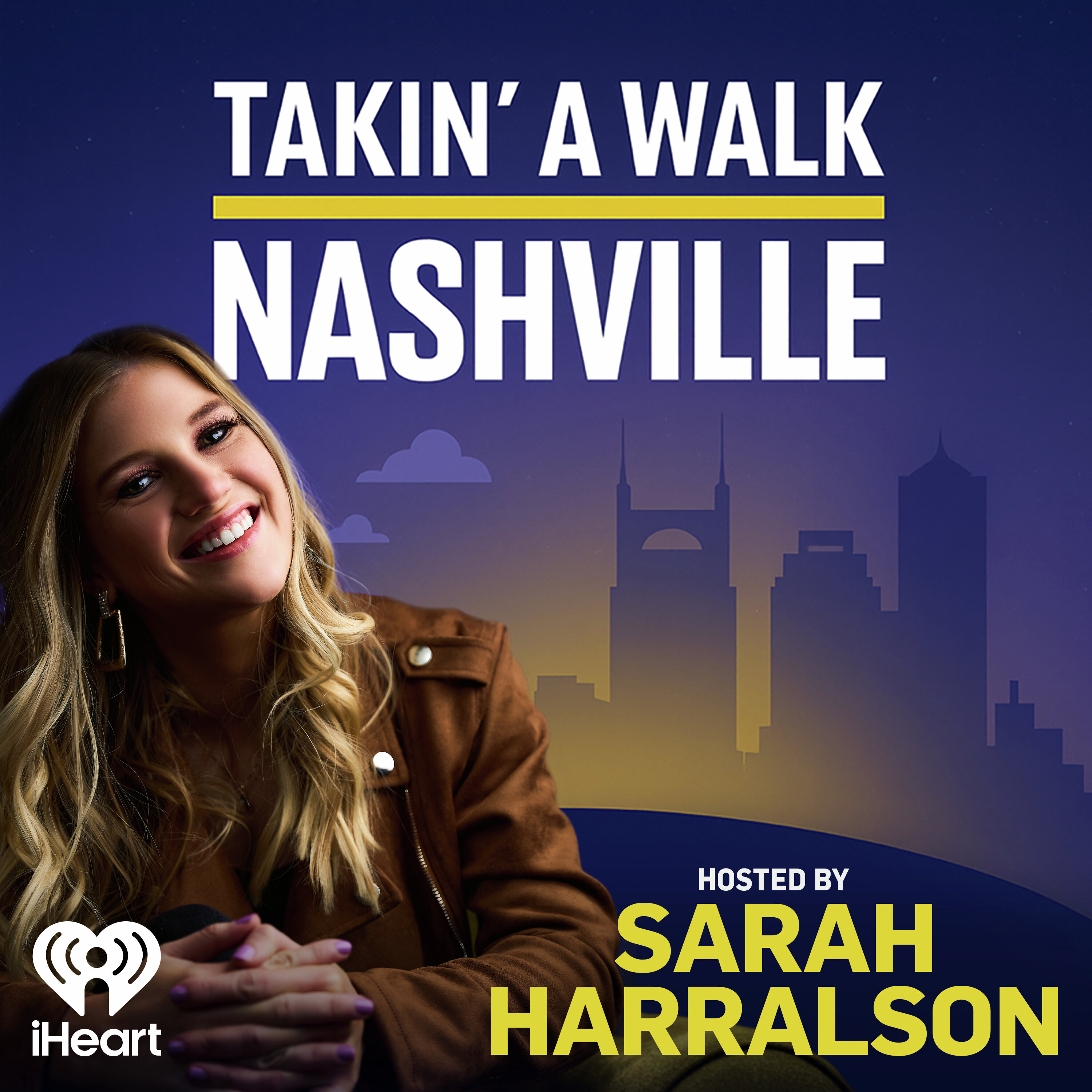
Exploring Nashville's Music Scene: Geoffrey Himes on Willie Nelson, Country Music and Storytelling in Songwriting
What if the story behind your favorite song could unlock the secrets of Nashville's vibrant music scene? Join host Sarah Harralson on this episode of Takin’ A Walk Nashville as she dives deep into the heart of Music City with acclaimed music critic and author Geoffrey Himes. Known for his extensive work on the legendary Willie Nelson, Himes shares his journey from a young Beatles fan to a prominent voice in music journalism, revealing how his passion for music transformed into a career that celebrates the rich tapestry of Nashville music history.
In this captivating conversation, Himes discusses his latest book, Willie Nelson, All the Albums, where he meticulously analyzes Nelson's vast catalog, providing insightful grades for each album while focusing on the profound significance of the music itself, rather than the artist's personal life. As a seasoned writer for various publications, including the Nashville Scene, Himes offers unique music industry insights Nashville that reflect the evolution of the Nashville music sceneover the decades.
Listeners will be treated to Himes' reflections on the in-law country music movement and its lasting impact on modern country music, showcasing how the genre has transformed and adapted over time. He emphasizes the vital role of storytelling in songwriting, drawing parallels between the timeless narratives of artists like Willie Nelson and the contemporary musicians who continue to be influenced by his legacy.
As the episode unfolds, Himes shares his favorite spots in Nashville, providing a glimpse into the city's vibrant culture and the hidden gems that music lovers should explore. He also promotes his own podcast, Hard Rain and Pink Cadillacs, inviting listeners to continue their journey through the rich landscape of Nashville songwriters and music genres from Nashville.
If you're passionate about celebrating Nashville music and want to hear firsthand stories from music industry leaders Nashville, this episode of Takin’ A Walk Nashville is a must-listen. Tune in for an engaging exploration of Nashville music history, music city storytelling, and inspiring Nashville songwriter interviews that will leave you with a deeper appreciation for the artistry that defines Music City.
See omnystudio.com/listener for privacy information.
Available Results
Generated results are saved to the knowledge database for reuse and search.
Extract Knowledge
Pick what you want extracted first. Model, scope, and chapter options appear after a template is selected.
Transcript
00:00:00
Speaker 1: M Taking a Walk Nashville.

00:00:02
Speaker 2: Hi, this is Sarah Harrelson, and you are listening to Taking a Walk Nashville today. On Taking a Walk Nashville, I have with me Jeffrey Hymes. He's an American music critic who has written for publications including, but not limited to, The Washington Post, Rolling Stone, Past, the Nashville Scene, and has even written liner notes for albums. He has won the Dems Taylor Award from the American Society of Composers, Authors and Publishers four times, and he's here today to talk about his latest book, Willie Nelson All the Albums.

00:00:44
Speaker 1: Welcome to Taking a Walk Nashville with your hosts, singer songwriter Sarah Harrelson.

00:00:51
Speaker 2: Jeffrey, thank you so much for being on Taking a Walk Nashville today, and you are joining us from Maryland today. Correct, correct, well, thank you for being here. Can you just tell our listeners on Taking a Walk Nashville what initially sparked your love for music and initiated a career in music journalism.

00:01:13
Speaker 3: Sure so, I'm old enough that the first record I ever bought with my own money is I Want to Hold Your Hand by the Beatles sixty three I've been in love with music ever since, and I loved talking to people about it and found if I could write about it in print, then I would talk to a lot of people about it. So, and you know, I've always you know, I started with the Beatles, but I curiousity led me in all different directions. People ask me what kind of music I cover. I always tell them everything from Dolly Parton to Ornette Coleman.

00:01:51
Speaker 2: So I love it. Did you ever play music growing up?

00:01:56
Speaker 3: I played piano, still not very well, but I do write songs. Japan was a way of doing that. Well.

00:02:05
Speaker 2: I can definitely tell your music and book lover, based on all of the CDs and books behind you. But besides writing for publications, you have written and published many books. And your latest book, Willie Nelson All the Albums. It analyzes all of Willie Nelson's massive catalog and in this book you give each of his albums a grade. So what inspired you to write a book about Willie Nelson's career.

00:02:36
Speaker 3: Well, I've written a lot about him over my years as a journalist. I've interviewed him several times into a lot of his shows, and you know, when by publisher asked me if I'd be interested in writing this book about Willie Nelson. I said, well, yes, because I've already written so much about him that I'm not starting from scratch. He's one of my favorite artists. He's so fascinating the blend of music that he uses, and there's been a lot of books about his life. Willie has written at at least three autobiographies. Joan nick Toski wrote a really good biography of him. But what I wanted to do was something different. I wanted to tell the story of his life through his recordings because I always felt like, you know, why are we interested in artists. It's not, you know, because they got divorced or had a drinking problem. You know, lots of people have got divorced and have a drinking problem, but only a few people make really amazing music at the level of a Willie Nelson, and so I wanted to focus on that, on the music he made. And as I said in the introduction, the stories about Willie are always, you know, becoming more and more elaborate as people tell them and retell them. But the music that's on those records it's the same today as it was in Night he's sixty two when he made his first album. So let's go look at these records, these recordings and listen to them and figure out what that tells us about him as an artist and as a purse.

00:04:14
Speaker 2: And he has so much catalog to sort through. So did it take you a long time to go really in depth with all of his albums and grade them and write about your take on his catalog.

00:04:28
Speaker 3: Well, yeah, I went back and listened to all of them. When I took on this assignment, I looked at what I had on my shelves. It turned out I already owned one hundred and twenty of them out of one hundred and fifty two that I wrote about. So I was well along the way. And you listen to him again, you realize that some of the assumptions perhaps were not corrected. You know, your first suppressions are not always correct, you know. And you see some of the records are a lots better than you thought they were. Other records not as good as if you thought they were. That's the sort of perspective. Hopefully, I'm bringing it to the book.

00:05:08
Speaker 2: And people can purchase this book anywhere they get their books online. And it was released last month we talked about how you are based in Maryland, but as a music journalist, did you travel frequently and did you spend a lot of time in Nashville as a music journalist.

00:05:30
Speaker 3: I have. I never lived in Nashville, but I have visited many times. I wrote for the Nashville Scene for several years. I sort of ran their country music critics poll that was very successful, run for twenty years. My previous book to the Willie Nelson book, was published by the Country Music Hall of Fame, and it's called In Law Country How Emmy, Lou Harris, Roseanne Cash and their circle fashioned a new kind of country music. And it's about all the people Roseanne, Emmy, Lou, Rodney Crowll, Guy Clark, Ricky Skaggs who all worked together. They wrote songs for each other, they played on each other's albums, saying on each other's albums, married each other, divorced each other, and it's a very height unit that always fascinated me. Similar to the Outlaws which came just before them, but different because they were sort of instead of writing about you know, loners on the road again, they were writing about marriage and the sort of new kind of marriage that comes with the baby boomer generation, where men and women are more equal relationship to each other and all the sort of the pluses and minuses that the challenges that presents, and the rewards it offers.

00:06:54
Speaker 2: Yeah, and you describe this as an unnamed movement that helped shape modern country music. Would you describe this as, you know, it's a little bit different from outlaw country, but we're writing about more storytelling, so it was a little bit of a shift into Americano music.

00:07:11
Speaker 3: Would you say, yeah, I think that the subject matter is different because they're writing not about the independent loaner, but more about the people trying to make a marriage work and try to keep the family together. And you know, obviously people in both camps admired each other quite a bit. Billy recorded a lot of these songs that are in Law Country, and they recorded Billy's songs, so that there was a you know, there was definitely a relationship. But I always thought this this movement needed a name to be recognized it for what it was, and that's why I sort of invented that name of in law Country.

00:07:51
Speaker 2: Yeah. Yeah, I love the name of it. Can people find this book in the Country Music Hall of fame, like.

00:07:58
Speaker 3: In the shop, in the gift shop on Amazon or anywhere else that you buy books online.

00:08:04
Speaker 2: Very cool. As you mentioned, you spent a lot of time writing for the Nashville scene, even though maybe you weren't living here. Did you still see how Nashville evolved through the years writing for the Nashville scene and how it has grown?

00:08:22
Speaker 3: Of course, of course, you know when I first came to Nashville in the late seventies, Broadway was skid row, you know, all over down there were sort of like, you know, the Winos and the the you know, stragglers. And to watch how that has transformed itself into like Disneyland today, there's been quite a thing to watch. And I also think that to watch how Willie and Emmy Lou and all the people around them sort of transformed country music industry, expanding the possibility what you can do in country music and sort of changing the rules. And even though they didn't last forever, I think their influence is still being felt today and people like Chris Stapleton or Jason Isbel or Marco Price or Lean walmacleys people are in the same spirit. So that it's not the most popular music and country today or in Nashville, but it's definitely a major part of it.

00:09:28
Speaker 2: Absolutely. And besides writing publications and books, you are involved in other media platforms and outlets, such as your latest podcast, Hard Rain and Pink Cadillacs, which is co hosted with TV and film director Mark Finkelperl. Is some stock the best place to listen to this podcast series or where can they find your podcast?

00:09:53
Speaker 3: Yeah, that's where we decided to use as our base. It's both the podcast and also a blog that I do music reviews and essays every once a week give an issue. So there's been a way for me to keep my hand in contemporary music as I'm writing these books about.

00:10:14
Speaker 2: Musical history, and I'm sure it's beyond country, probably covers all genres on your podcast.

00:10:23
Speaker 3: Yes, that's fair. We just you know, we just had a podcast with Daryl Scott, who's in Nashville resident and important figure, and James McMurtry from Texas and Kevin Gordon, who's from Nashville. So since a lot of songwriters live in Nashville, and since you know, one of my main interest is in songwriting, whether it's Willie or Rodney Crowler, whoever is that's what we're emphasizing in my podcast.

00:10:54
Speaker 2: Do you have a favorite Willie Nelson album?

00:10:57
Speaker 3: Yeah? So, you know, at the end of the book book, I list all one hundred and fifty two albums that I discussed in the book and ranked them from number one to number one hundred and fifty two, and the top one was Phases and Stages, which he made an Atlantic and seventy three. I think, you know, I love that album. I think one of the those underrated albums he did was Tougher than Leather, which was the nineteen eighty two Raptors heart Attack. I think Yesterday's Wine, which is one of his final RCAA albums. It's really good spirit. There's a lot of good ones, they're not all good. To figure out which is which, you have to buy the book.

00:11:39
Speaker 2: So yeah, absolutely, yeah, everyone can buy the new Willie Nelson a book online. Can you talk a little bit about the music footprint you have left in Baltimore and the nonprofit you have started called The Roots Cafe.

00:11:57
Speaker 3: Yeah. The Roots Cafe is a live music series that I started back in nineteen ninety one that does sort of Americana acts. Recently, it was sort of a dance kind of concert series and then more singer songwriters. Now, you know, it's just a way to support that end of the creative scene here at town.

00:12:25
Speaker 2: Very cool. And although you're based in Maryland, you know you've spent quite a bit of time in Nashville. And I always like to ask my guest this question. Do you have a favorite place you have taken a walk in Nashville or maybe even a favorite memory from Nashville.

00:12:46
Speaker 3: Yeah, I mean I like Radner Lake, I like Richland Creek over White Bridge Road. Yeah, And like there was a time when I was seeing a lot of guy Clark and there's a his basement room where he did his songwriting and his guitar making is now in the Country Music Hall of Fame, and I could tell you it's just the same as it was when I was down there talking to the guy.

00:13:16
Speaker 2: So very cool. Well, thank you so much, Jeffrey for being on taking a walk Nashville Today. Listeners can purchase your latest book, Willie Nelson, all the albums wherever they get their books, along with your past published books like in Law Country. You can get that one right in the Country Music Hall of Fame. And we look forward to your next project, and thank you for taking a virtual walk with me here in Nashville today, Jeffrey.

00:13:46
Speaker 3: Thank you for having me.

00:13:49
Speaker 1: Thanks for listening to Taking a Walk Nashville with singer songwriter Sarah Harrelson, and check out our other podcasts, Music, Save Me, Comedy Save Me, and Taking a Walk. Available on the iHeartRadio app, Apple Podcasts, or wherever you get your podcasts.