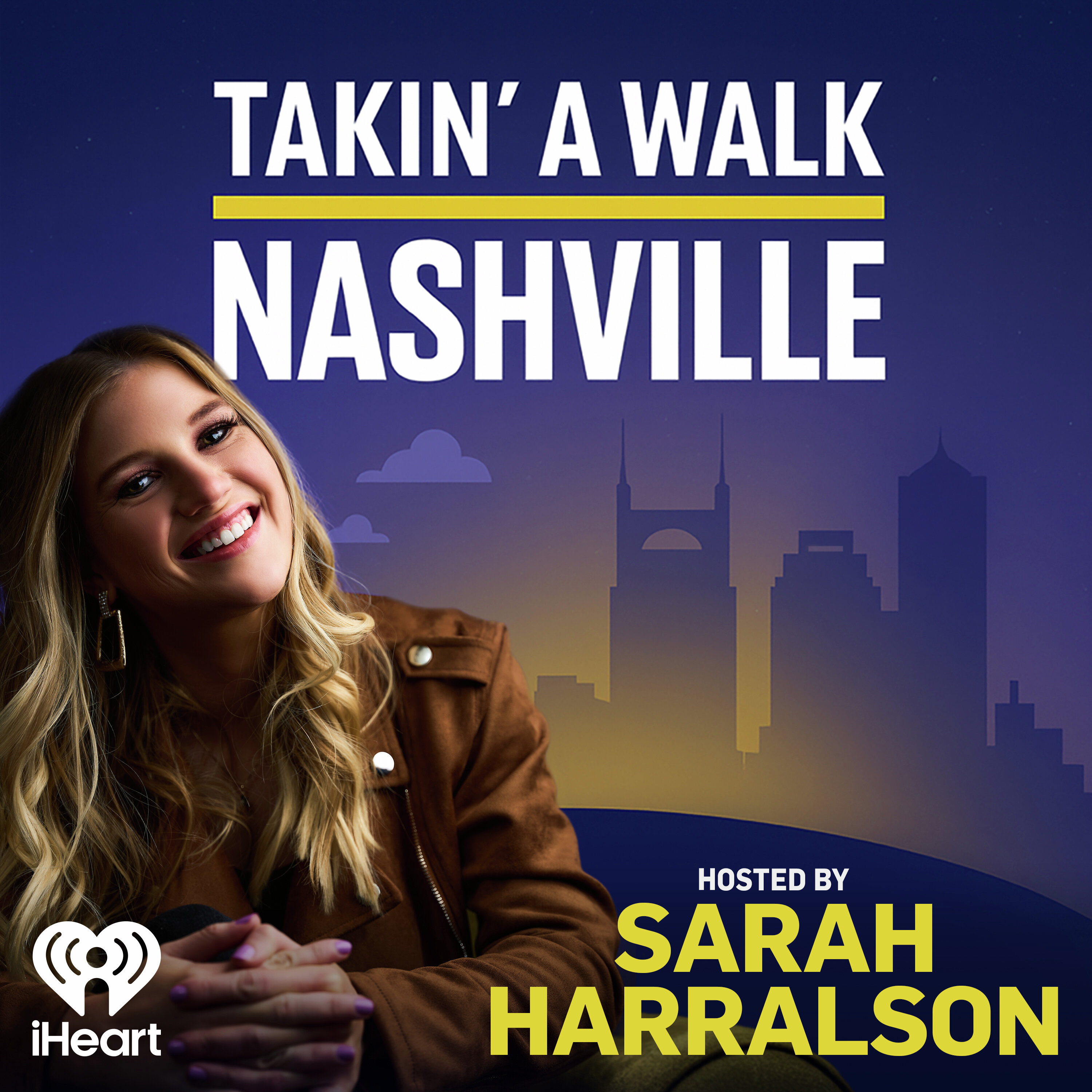
Exploring Nashville’s Music Scene: Americana Singer- Songwriter Jaimee Harris on Her Journey, Sobriety, and the Power of Songwriting
Have you ever wondered how a small-town girl from Texas transforms her life into a vibrant career in the heart of Nashville? In this episode of "Takin’ A Walk Nashville," host Sarah Harralson invites the incredibly talented Jaimee Harris, a folk Americana singer-songwriter, to share her inspiring journey. From her roots near Waco to the bustling music scene of Music City, Jamie’s story is a testament to resilience and creativity in the face of challenges.
As they stroll through Nashville's picturesque parks, Sarah and Jaimee Harris dive deep into her artistic evolution, exploring the themes of family, addiction, and personal growth found in her latest album, "Boomerang Town. " How does one navigate the complexities of sobriety and faith while pursuing a passion for songwriting? Jamie opens up about her Southern Baptist upbringing and how it has shaped her songwriting perspective, emphasizing the importance of empathy in music. This episode is not just a conversation; it’s a celebration of Nashville’s music legacy and the powerful narratives that emerge from it.
Jaimee Harris also shares thrilling insights into her upcoming tour dates with partner Mary Gauthier, highlighting the joys of performing together and the unique connection they share on stage. What makes their collaboration so special? Tune in to hear Jamie recount pivotal moments in her career, including a transformative experience at Austin City Limits that reignited her passion for songwriting. It’s these experiences that have positioned her as an emerging artist in the Nashville music scene, making waves among music industry leaders in Nashville.
As the episode unfolds, Jamie discusses her new music projects and the creative energy inspired by Nashville’s changing seasons. How does running through the city’s parks influence her songwriting? The beauty of nature and the vibrant atmosphere of Nashville serve as a backdrop for her artistic expression, reminding us all of the magic that can be found in our surroundings.
If you’re passionate about Nashville songwriters, music city storytelling, or the evolution of music genres from Nashville, this episode of "Takin’ A Walk Nashville" is a must-listen. Join us as we celebrate the incredible women in Nashville music and explore the insights that make this city a haven for creativity. Don’t miss out on Jamie Harris’s captivating journey and the lessons she has learned along the way!
See omnystudio.com/listener for privacy information.
Available Results
Generated results are saved to the knowledge database for reuse and search.
Extract Knowledge
Pick what you want extracted first. Model, scope, and chapter options appear after a template is selected.
Transcript
00:00:00
Speaker 1: M Taking a Walk nash Hi, everyone, this is Sarah Harrelson, your host of Taking a Walk Nashville. I want to thank everyone who has been tuning into the podcast and I hope everyone's new year is going great. Please leave us a review or rating if you are enjoying the show. Here with me today is Jamie Harris. She is a Texas born Folk Americana singer songwriter that grew up in a small town outside of Waco.

00:00:33
Speaker 2: She has released.

00:00:34
Speaker 1: Three albums, has been a background studio vocalist for Mini Artist, and has written songs for artists such as Ray Wiley, Hubbard, Sam Williams. And her partner Mary Gosha join me in our conversation as we discuss her thriving career here in Nashville.

00:01:00
Speaker 3: Welcome to Taking a Walk Nashville with your hosts singer songwriter Sarah Harrelson.

00:01:05
Speaker 1: Hi, Jamie, thank you so much for being on Taking a Walk Nashville today. You have a ton of tour dates coming up this year with your partner Mary Goshe. Are you excited for your upcoming shows?

00:01:17
Speaker 4: I love being on the road.

00:01:19
Speaker 5: I'm really built for it, Like I was kind of a wild animal and there's something about the container of the road. You know, you wake up in a different place every day, and there's like I love that. It still excites me because I grew up in a small town outside of Waco, and now Wac is I was just there for the holidays. It's a completely different place than where I grew up. There's a lot to do, a lot going on, but I kind of grew up there going like I can't wait to see the world, and now I can't believe that my job allows me to do that almost every day of the year.

00:01:49
Speaker 4: So I'm built for it. I love it. I'm ready to get back out there.

00:01:53
Speaker 2: Yeah.

00:01:53
Speaker 1: Well, it's got to be so special being able to explore different cities with your partner, because a lot of musicians, you know, they hit the road, they leave their family back at home. So it's just has to be so wonderful sharing the stage with your partner almost every day.

00:02:10
Speaker 4: It's incredible.

00:02:11
Speaker 5: If you had told me, like eight years ago that I would end up with a musician, I would.

00:02:16
Speaker 4: Have told you no way.

00:02:17
Speaker 5: Songwriter was like, absolutely not, There's no way that I'm going to end up with a songwriter.

00:02:21
Speaker 4: And it turns out it's the best thing.

00:02:23
Speaker 1: So wow, that's amazing. Yeah, you can find all of your upcoming tour dates on your website. I want to talk about your latest album, Boomerang Town. This derives from nostalgia you felt during the pandemic and explores family, addiction, and just ties that bind us together. Would you say you learned more about yourself and your own connection to faith when you were writing this album.

00:02:51
Speaker 4: Yeah, it's interesting. It's been my experience.

00:02:53
Speaker 5: That the songs are always ahead of me, so like it it's a mysterious thing, but the song always seemed to be ahead of me, and I think kind of where I was was a lot of this record. This record took me a long time to write. I think the seeds for this record were planted in twenty sixteen, twenty seventeen, and there was a lot swirling around. And part of it was that I got sober in twenty fourteen, and I had grown up and was very into this kind of Southern Baptist world. That was my whole community, it was my whole social life. Like that's where I really learned how to build a great set list, to create intense emotion. I mean, there was so much that I learned in that universe and I'm grateful for but eventually that wasn't working for me, and when I got into twelve step recovery, I had to find something that was bigger than myself to surrender to in order to help me get sober. And so I think I did like lean on some of the things that I learned in that community that I came from initially, And there was a lot going on in twenty sixteen twenty seventeen where there was kind of this discussion about like the Christians did this, they did, and I started to feel really conflicted about that, like my mom doesn't think that way, my mom doesn't vote that way, she doesn't believe that way. And so I felt a responsibility to kind of articulate my experience with rediscovering my faith, but without.

00:04:22
Speaker 4: I don't know how to discribe. This is why I'm a better songwriter than anything. The song speak better than I can.

00:04:27
Speaker 5: But I felt like a responsibility to kind of not defend, but to explain the world that I came from and how that what it's like to look through that lens, and also what it's like to maybe shake some of that off and come back to it as in a more independent thinking adult.

00:04:51
Speaker 1: Well, I'm sure so many other people can relate to that going through the same thing, because there's other people who maybe feel a little bit different. And especially in you know, small town in Texas southern Baptist community, they don't always embrace you or embrace who you are. So did you feel struggles with that when you were especially when you were writing these songs.

00:05:15
Speaker 4: I mean, it's funny. I mean I felt so I was so a part of that community. I mean I really it was my entire world.

00:05:24
Speaker 5: And then when I started drinking, I mean, I was like a really well behaved kid because it was cool, like to fit in where I grew up. It was cool to go to church like five days a week. It was cool to go to retreats and come back wearing the matching T shirt and all of that, and so like I embraced that. And then it wasn't until I started, like, you know, drinking really heavily, and people were really using social media like instead of reaching out to me, like commenting on things, and I went, wait a minute, that's weird that this feels performative. And so I started to feel like really hurt by that like, wait, why wouldn't these people reach out to me directly instead of you know, so, I don't know. I mean, I just felt like I've learned so much from Mary and particularly her work with the veterans, the power of telling a story from behind the eyes of one narrator, Like I'm sure she's mentioned it about a lot. That's like you can't talk about the war because it's too big, but you can tell the story from behind the eyes of one narrator. And so I've learned a lot by listening to her every night, watching her teach. We teach songwriting together quite a bit, and so it was like that song boomerang down the title track, I try to write that song from the perspective of so many different people. I started with myself. I tried it from the perspective of a waitress that worked at a diner. And then it turns out the best way to tell that story, which was really the story of where I grew up, which is so personal to me, was from behind the eyes of the seventeen year old boy. And that's what I love about songwriting. This, like the mysterious nature of that, Like what perspective is going to get me the closest to generating empathy, which is really what I'm up to as a songwriter.

00:07:08
Speaker 2: Yeah.

00:07:08
Speaker 1: Yeah, I think that's wonderful and a great point that songs can be written in so many different perspectives. And you note that your father was responsible for your musical education, taking you to Austin City Limits where you had a life changing moment seeing Emmy Lou Harris, Patty Griffin, and Buddy and Julie Miller performing all at once on stage together. Was this what kind of led you from moving from Texas to Nashville.

00:07:36
Speaker 4: It's funny.

00:07:37
Speaker 5: I hadn't thought about that that all of those people that I so associate with that Texas moment, except for Patty, live in Nashville. No, but that's I mean, I wasn't even thinking ahead of that. Actually, because of that situation. My dream was to move to Austin, where Austin City Limits was, you know, where a lot of the songwriters being from Texas that I respected, had spent a lot of.

00:07:57
Speaker 4: Time in or made their home. That was really my dream.

00:08:01
Speaker 5: The Nashville moved for me didn't come later until I realized I needed to get closer to the business in order to move forward as a songwriter. But what that did that show that made me become a songwriter? Like I loved Demilou Harris from the time I was five. I heard her voice and I went, whatever that is, I want to do that. But it wasn't until I saw Patty that I said, wait, what are these songs like? And how the sound of like the combination of Buddy Miller's very unique, like kind of rock and roll guitar married with that folk sensibility that like I don't know if we were using the term Americana yet or if we were still in the alt country no depression phase, but that screw the light bulb then for me, I went, that's exactly what I'm drawn to, and I want to try to write music like that.

00:08:50
Speaker 4: And a week later I wrote my first song.

00:08:52
Speaker 5: Wow.

00:08:53
Speaker 1: And did you shortly move to Nashville or what made you want to make the transition to Nashville?

00:09:00
Speaker 4: That's funny.

00:09:00
Speaker 5: So I love living in Austin and I am such a Texan that I really that's in my blood stream.

00:09:05
Speaker 4: I really miss it a lot.

00:09:06
Speaker 5: I still find a lot of creative energy and Texas.

00:09:10
Speaker 4: But I had this.

00:09:13
Speaker 5: Job where I worked for a doctor who looks like d Sneyder. He was an amazing boss. He loves music and he really didn't like to work. So I only had to physically be in the office Tuesday through Wednesday from ten to six, which was like with an hour and a half lunch. It was the most chill job day job for a musician because it gave me the weekends. And I had started to something had started.

00:09:36
Speaker 4: To change in Austin.

00:09:37
Speaker 5: I realized people that I didn't know were coming to my gigs, like there was a new energy. And I was like, oh, I'm collecting. People are coming not because they know me, but because they're connecting to the music. I was the only person that worked in my office, and so I knew there's going to be something that's going to give me the signal that I need to train somebody and get out of here. And I think it was in twenty might have been twenty seventeen twenty sixteen. This a wonderful artist named Kevin Russell. He was in a band called The Gourds and now he's in a band called Shiny Ribs, which is such a fun band. I has like two background singers. It's just a big party. It's such a fun band, and I love Kevin. One of the background singers in that band had left, and he asked me if I could join the band, and I said, I can't, like I've got this job. But that was the signal to me that I needed to train somebody and leave. And Austin had gotten really expensive. It was a very expensive place to live still is, and I thought to myself, there's no way I'm going to be able to afford to live here my first year as a full time musician. And then I started looking at the map. I'd really considered Tulsa. I knew I kind of had to get out of Texas just so I could drive around in my little Honda to play gigs and like, you know, do the thing where I'm building my audience. But then I realized, well, you know, Nashville's in the center of the country, and the business is here, and it would really benefit me to learn the business because I was starting to meet some people in the industry, and I thought, I see the benefit of being physically closer. So I'd put in the notice at my job. I'd put in the notice with my landlord, and then in the middle of that Mary and I collided and became a couple, and so then it made the decision to move to Nashville, like the easiest decision in the world.

00:11:21
Speaker 1: Yeah, and I like that you bring up how you know Nashville is very central and a lot of people move here because within an eight hour radius you can hit so many cities and play gigs and tour.

00:11:33
Speaker 4: Yeah.

00:11:33
Speaker 5: I mean, and even the airport is such a hub you can. I mean I would probably be too tired and not cool enough to do it, but you could technically fly to London and play a show the same day.

00:11:43
Speaker 4: I mean it's insane.

00:11:44
Speaker 2: Yeah, yeah, absolutely.

00:11:46
Speaker 1: Some of your songs like how Could You Be Gone? They evoke themes of grief and addiction. And you wrote this song with your partner Mary. How did you meet Marion? Did you both instantly click with your backgrounds and your style?

00:12:03
Speaker 4: It's funny.

00:12:04
Speaker 5: We met at a songwriting workshop at Eliza Gilkisson's house in Taos, New Mexico, and I had just lost my mentor, a singer songwriter named Jimmy.

00:12:14
Speaker 4: Lefaith, who died of a.

00:12:16
Speaker 5: Rare form of cancer, a rare form of sarcoma. I recently learned the same sarcoma that Kate McGarrigle died of, so rufus and Martha's mother. Yeah, and I was just really in a deep period of grief when I showed up at that workshop, and apparently Mary gave a songwriting prompt and I came back in ninety minutes with a song that she said kind of like made her go wait uh oh.

00:12:47
Speaker 4: But for me, it wasn't immediate.

00:12:49
Speaker 5: I was just there, you know, having a good time as a student, you know, enjoying being around three of my heroes, you know, Gretchen Peters, Eliza Gilkisson and Mary, and it's fun those I was struggling with the record I was making at the time. I was facing a lot. It was my first album. I've been playing music since I was twelve, but I never made a record. So I was dealing with the world of that and how do I navigate this and how do I find my voice as a woman in this situation?

00:13:17
Speaker 4: And here I have these, like this.

00:13:19
Speaker 5: Coven of incredible female songwriters that knew that my mentor had died, and they kind of swept in and said, hey, we're going to help you with this.

00:13:27
Speaker 4: Call us if you need us, We're going to check on you.

00:13:29
Speaker 5: And so Mary was calling to check in on me, and it was few and far between, but you know, we connected and mostly we just talked about what was going on with my record, and then I remember it was Towns van Zant's birthday at the Cactus Cafe. We were doing a tribute to Towns on March seventh, and it's thrown by my friend who is a genius songwriter named Butch Hancock. But Butch is like, not really a list guy. He's like he lives in another universe. So the way it works is you sign up and you have no idea when you're going to play. So I'm standing at the bar with my friend Graham and he sees He's like, hey, Mary Goshe is calling you, and I said, yeah, I know, I'll call her back, and he's like, I think you should probably answer When Mary Gosche's I said okay, and so I stepped out and I talked to her and we were just talking about business stuff, and then I said, hey, I'm so sorry. I'm loving this conversation, but I'm in the middle of this thing that's kind of chaotic, and I got to go back in there, so can I call you back? And she said, oh, yeah, I'm on the road for three weeks, but you can call me after I get back. And I said, okay, hung up the phone, and it felt like an arrow got shot in my gut by Cupid, and I went, I don't want to wait three weeks to talk to her, like, oh, oh, no, I'm in love with Mary Goshe, Like I can't in love with Mary Gosche.

00:14:42
Speaker 4: That's insane.

00:14:42
Speaker 5: And so I came back and my friend Graham was like he could see by my face like what happened? I said, oh oh, And it took another couple of months for us to get together. It was really slow. So basically from the time that we met, it was almost a year from the time we met to the time we got together.

00:15:00
Speaker 2: Yeah.

00:15:00
Speaker 1: Yeah, Now you're writing songs together and performing together as to be so special. What was it like working on the Christmas single Light of the Stable with Jared Tyler and Amy Helm.

00:15:13
Speaker 4: Oh that was so fun.

00:15:14
Speaker 5: So my friend Jared Tyler, a wonderful singer songwriter who lives in Tulsa, Oklahoma.

00:15:19
Speaker 4: I just went to hang out with him in July.

00:15:21
Speaker 5: I was rolling through town and playing a gig, and I just love spending time with him, and he's one of my favorite people just to sit around and play songs with, which I think is something that as I've made music my job, that I don't do as often. That's another reason why I love going down to Turnlingua for New Year's Eve hanging out at Jimmy Dale Gilmour's house because it's just a bunch of musicians and the guitargets passed around and it feels like kind of when I started playing music just for the fun of playing music, and Jared and I have that kind of relationship. We just sit around and play songs and he's one of the only people that can match my like nearly psychotic fandom of Emmy Luwer.

00:16:00
Speaker 4: So we're just jamming.

00:16:02
Speaker 5: I said, hey, we're talking about this Christmas song because that's the song that I heard that made me want to sing, and I later found out it's like Neil Young. I think Linda Ronstadt and Dolly Pardon are the background vocals on that record, so it's like four icons of American music all in one song. And I guess sort of Canadian for Neil, but you know, so we just started sitting around playing it, and he has a little studio in his house. He said, hey, what if we just recorded this? And I said sure, and so we just spent the afternoon in July recording this Christmas song and he sent it back to me and I said, oh, I just spent a lot of time with Amy Helm of course, lee Von's daughter who helps run the barn in Woodstock, and she is just a blast and her voice is like otherworldly, and I love her percussion as well. So after Jared and I put that together, I said, hey, Amy, I think we're actually going to do something with this song. Will you sing on it? And she said yeah, and she said can I play on it too?

00:16:55
Speaker 4: Absolutely? So that's how that whole thing came together.

00:16:58
Speaker 5: And it's funny because I had kind of forgotten because I really remember the hanging out with Jared thing, but I forgot that I flew it to Amy and so I was listening to it a couple months ago. I guess right before we entered the holiday season. I went, I didn't sing that. That part is way too cool, and I went, oh yeah, Amy.

00:17:17
Speaker 2: Yeah, it's such a beautiful version of that song.

00:17:20
Speaker 5: Thank you it's like kind of intimidating. I almost felt weird, like we were. Mary and I got to work on this thing called Kamo, which is a floating music festival on a cruise ship, and Emmy Lou Harris was on that cruise and they pump in, you know, different songs of the artists, like if You're eating, if You're hanging outside in between shows on the big speaker, and they kept playing even though it was February, my version of that song, and I was.

00:17:45
Speaker 4: Like, I don't want her to hear it. That's nervist, you.

00:17:48
Speaker 2: Know, that's funny.

00:17:50
Speaker 1: Yeah, it's got to be so much fun collaborating with different artists on different songs.

00:17:56
Speaker 2: And you know, you have a.

00:17:58
Speaker 1: Busy schedule on the road this year, but are you.

00:18:00
Speaker 2: Working on any new music this year?

00:18:03
Speaker 4: I am.

00:18:03
Speaker 5: I just made a record in Oklahoma. We made it at a farmhouse owned by Steve Ripley, who I was unaware of, but he was in a band called the Tractors that was beloved.

00:18:13
Speaker 4: He played with Bob Dylan.

00:18:15
Speaker 5: It was totally a hole in my musical knowledge that I'm happy to have filled. And he died of cancer a few years ago, but his wife, Charlene runs this which is beautiful because she brings in her dog and you get to pet the dog, she makes collects eggs from the chickens, and she makes you breakfast in the morning.

00:18:33
Speaker 4: It was just a great experience and me.

00:18:35
Speaker 5: And my friends, including John Fulbright, another great singer songwriter. It was basically John and his band were the band for this record, and we all lived in the farmhouse together for a week while we made it, so it was kind of like folk summer camp. And so we're working on mixing that record right now and it's it'll come out this year twenty twenty six.

00:18:56
Speaker 2: Nice. Yeah, we are looking forward to that.

00:19:00
Speaker 4: Amy.

00:19:00
Speaker 1: My last question for you, I always ask my guests this we're on taking a walk Nashville. Do you have a favorite place you like to take a walk here in Nashville.

00:19:08
Speaker 5: I love Percy Warner Park. That Red Trail is like, no matter how many times I do, it is so hard.

00:19:14
Speaker 2: Yeah, that was Mary's answer.

00:19:17
Speaker 5: Well, I like being from Texas, like I have very little experience with seasons, and so in the pandemic, we go out there like every day and walk because we could get outside right And I was blown away by watching the seasons change. First of all, I've never been in one place long enough to really see seasons, you know, But I mean every day the forest is miraculously different. Like you'd walk by a spot and there's all these mushrooms that weren't there at the day before.

00:19:43
Speaker 4: I loved that. It's a really beautiful experience, very meditative out there. But I've just become a runner.

00:19:49
Speaker 5: I'm training for my first marathon right now, and so a lot of times I'll just run in a cab park because it's like a loop and at some point you go, well, I have to finish the loop because I have to get.

00:19:59
Speaker 4: Back home, like I can't stop myself.

00:20:01
Speaker 5: So I'm enjoying running out there, and and I'm enjoying running and walking. I've always enjoyed walking, but this running thing is really cool because I'm covering so much more ground than I ever have before.

00:20:14
Speaker 4: And that's a.

00:20:14
Speaker 5: New way that I'm experiencing this town that I live in. I had no idea there's a greenway right by where we live. It'll take us like right by this cafe.

00:20:23
Speaker 4: That I love.

00:20:24
Speaker 5: I'm like, wow, I'm so it's always changing, But for running, it's like I'm just getting to see so much of the city and everywhere that we're visiting.

00:20:32
Speaker 4: But Percy Warner is still the absolute best for a walk.

00:20:36
Speaker 2: Yeah.

00:20:36
Speaker 1: Well, even if you're training for a marathon, just running that Red Trail gets you in so much shape.

00:20:43
Speaker 2: It gets you ready for the hills.

00:20:45
Speaker 4: I try.

00:20:45
Speaker 5: You know, that's so funny you say that. I tried that because I was feeling like really beastly, like I got this and I was like, what was No, I'm not at this level.

00:20:55
Speaker 2: Yeah.

00:20:56
Speaker 1: It definitely stops you in your track. So are you doing a rock and roll marathon?

00:21:00
Speaker 4: Your nash Austin Marathon? Actually?

00:21:03
Speaker 5: Okay, Jemuary fifteenth, and my brother is going to run it with me. I mean, he'll probably be way ahead of me. He's a lot faster than me, but we're going to do it together.

00:21:12
Speaker 2: Nice. Yeah, that'll be special.

00:21:14
Speaker 1: You'll Yeah, training on the hills in Nashville will definitely get you.

00:21:18
Speaker 2: Prepared for that.

00:21:19
Speaker 1: Thank you for being on Taking a Walk Nashville today.

00:21:22
Speaker 3: Thanks for having me, Thanks for listening to Taking a Walk Nashville with Sarah Harrelson. Please check out our other shows produced by Buzznight Media Productions. Comedy save Me and Music. Save Me hosted by Lynn Hoffman and Take It a Walk hosted by Yours Truly Buzznight. All shows are available on Apple Podcasts, Spotify, and are part of the iHeart podcast network