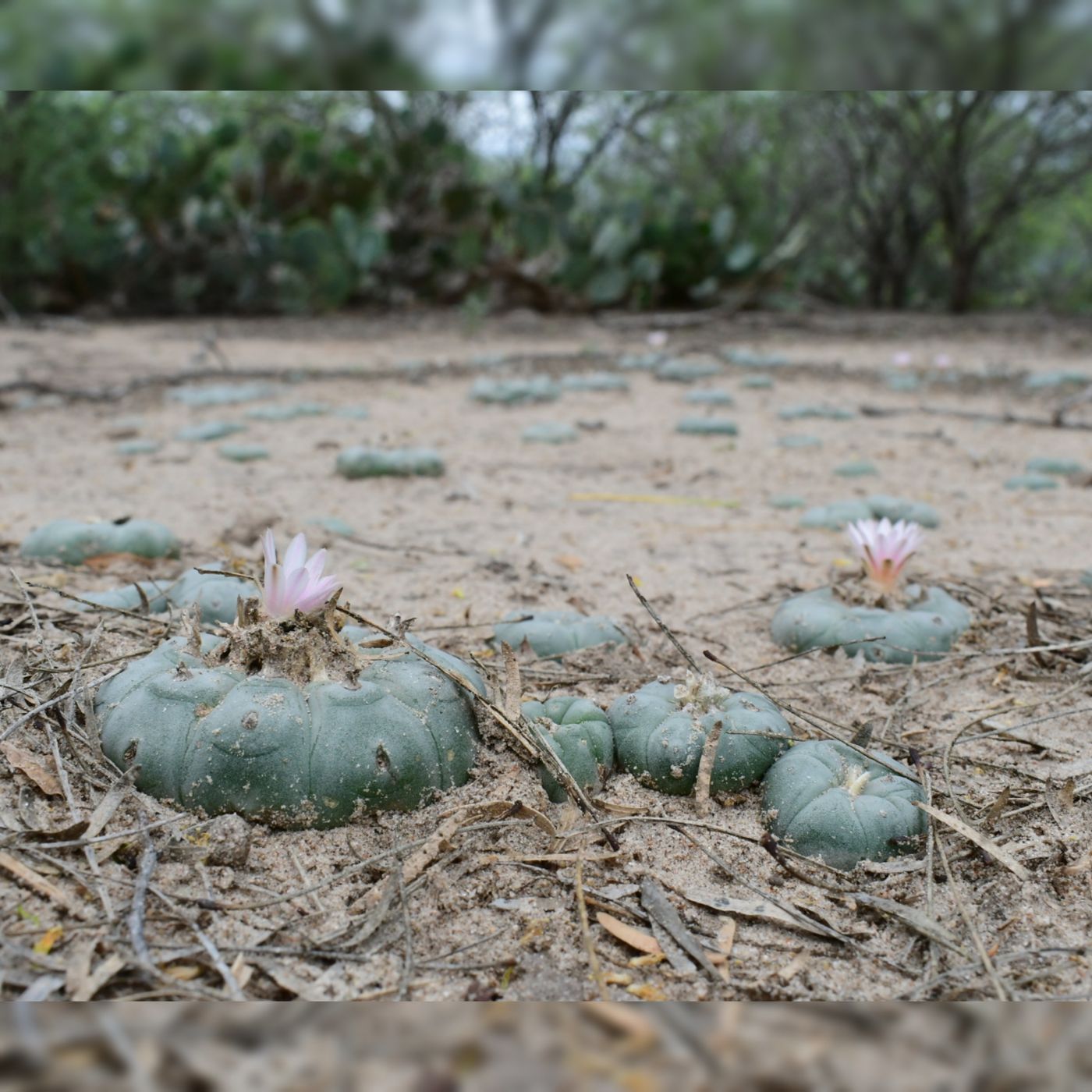
How Ancient Glaciers Affect Peyote - a Conversation with Keeper Trout from Cactus Conservation Institute
Keeper Trout is one of the founding members of Cactus Conservation Institute and a research scientist who - along with Dr. Martin Terry - has studied a number of the cactus species in South Texas for 3 decades in an understudied and underappreciated habitat known as Tamaulipan Thornscrub.
In this episode we talk about a broad range of subjects from the history of laws regarding Native American use of Peyote, the impact that melting glaciers in New Mexico may have had on the soils of South Texas, how the history of religion has dictated plant-based religions for centuries, and how fungal and bacterial organisms in the soil and in the plant itself might enable various cactus species to tolerate extreme conditions such as freezes and extreme heat spells.
In this episode we talk about a broad range of subjects from the history of laws regarding Native American use of Peyote, the impact that melting glaciers in New Mexico may have had on the soils of South Texas, how the history of religion has dictated plant-based religions for centuries, and how fungal and bacterial organisms in the soil and in the plant itself might enable various cactus species to tolerate extreme conditions such as freezes and extreme heat spells.
2023-08-24
147 min
Transcript
Available Results
Generated results are saved to the knowledge database for reuse and search.
No generated results are available for this episode yet.
Extract Knowledge
Pick what you want extracted first. Model, scope, and chapter options appear after a template is selected.
Generated results for public episodes are saved to the knowledge database so they can be reused and searched later.
Transcript
Hey, welcome to the Crime Pays Bonnie Doesn't Podcast. I got another another
podcast episode about peyote. You could tell him a little fix sated. I
just I love the habitat. I love the habitat in South Texas so much,
and if if this one species is what it takes to get people interested
in the larger habitat and region as a whole, from the geology to the
other plant species that grow there, to the really cool factors affecting the soil
there, like glaciers in New Mexico. Who would have guessed? Then?
So be it so anyway to see that this really is like the Sixers.
It's probably like the sixth or seventh podcast. But it's not just about this
one plant species. It's about a wide variety of relevant topics and some irrelevant
topics like the geology bit that we go into like an hour and forty minutes
in to this conversation. Anyway, This interview is with Keeper Trust, who
is one of the founding members along with doctor Martin Terry of the Cactus Conservation
Institute, which is doing a lot of great work and has done a lot
of great work and research around again, not just payote, but the habitat
in South Texas, as well as other notable and rare plants like astrophytem isterious,
etc. So this is a good conversation. It goes on for two
hours and twenty minutes. We had a lot to talk about, and yeah,
I was I'm really I'm really pleased with how this came out. So
I hope you are too, and I hope it's not too boring for you.
It is two hours and twenty minutes long, which is asking a lot
of people in this age where we all have two or three minute attention spans
and most oftentimes it's barely surpassing fifteen seconds. But this is a very important
issue, and I just want more people to appreciate the habitat in South Texas,
and you know, hopefully someone sets up some sort of research station or
conservation an organization that's dedicated to protecting these plants as well as educating the public
about the habitat down there, because with rising temperatures, plants that are already
adapted. With globally rising temperatures, plants that are already adapted to such extreme
conditions as you get in South Texas. I mean, it's it's again it's
this is not don't think of it like a desert, right. Deserts are
cooler annually, you know, cumulatively in terms of speaking of cumulative heat throughout
a year than the habitat in South Texas because they cool off at night,
they don't have humidity in the air to retain that heat once the sun goes
away, whereas South Texas is not like that. South Texas as hot as
hell throughout the year. I mean, fucking Christmas, it will be eighty
five degrees and then you'll get it maybe a couple of days where it you
know, a couple of days in January February where temperatures cool down to maybe
thirty two degrees maybe thirty degrees fahrenheit for a few hours in the early morning.
But aside from that, it is generally always hot. So yeah,
I mean the plants, I don't know some of these plants on how they
do it. The fucking legumes, especially like blackbrush. How does blackbrush grow
in an area where there's sometimes no soil and temperatures are one hundred and five
degrees for you know, months out of the year, and you can have
you know, months where it doesn't rain at all, and it's just incredibly
hot and it doesn't really cool off at night because the error is human.
You're close enough to the gulf that the error is still pretty humid. So
anyway, enjoy this two hour and twenty minute podcast with Keeper Trout from Cactus
Conservation Institute. And if you want to write me an email, it's cramp
pays. A body doesn't at gmail dot com. Might take me a while
to respond. I may not be able to respond. Don't take it personally.
I'm just super busy and normally I'm getting emails on my phone and I
don't really I kind of hate typing with my thumbs. So anyway, that's
the intro. I'll keep it short and joy this podcast. Go fuck up
Bay. Well, I'm gonna show you what it's like, or I'm not
gonna show you a bot. You spection chick chick. You know, on
the outside, they're soft, they've got a nice shot liberal part. So
they started tagging each other and Quash come out. You know, I've seen
a couple of night things in the room. The fourth you're a bunch of
hippies twelve each others to come to chill or try to get night chide and
stoffers down thirty night for eighties. They're about to go day, but they're
not page. Okay, it sounds great. Okay, here we go,
Welcome to the crime page. But Boden, it doesn't podcast. This is
like the eighth goddamn uh. This is probably the eighth podcast I've done about
peyote. But you know, I can't help it. It's like watching a
friend on its death. But it's like watching a plant slowly go extinct.
So anyway, today we're here with keeper trout Keeper you there, I'm here
up here with jelly. Okay, let me see, let me see if
I can adjust this, turn this level up. Okay, that should be
better. So anyway, yeah, So I just wanted to check in with
you and uh and and I know you've worked with this species as well as
astrophytum for quite a while, and you have a fondness you lived in Texas
for a while, and you have a fondness for the habitat down here,
the peyote gardens, the thorn scrub, and so I guess I just wanted
to have a little conversation about about the many issues facing this this underappreciated and
understudied landscape as well as uh some of these very important plants down here.
I lived in Texas for twenty seven years, so I had opportunity to see
a serious decline in both the frequency of the plants and also the health of
the population. You know, mainly, you know, what's what's accessible for
the distributors to harvest from. It's so small it has to be revisited repetitively,
right And there's this idea that, you know, if larger ranchers that
don't allow harvesting would just open up their properties, that's going to solve the
problem. Or there's a parallel idea that if more Mexican payote could be imported,
then that would solve the problem. But of course neither one of those
actually has addressing the problem, which is there's a lot more people consuming payote
than there is habitat to be producing that payote, at least in the long
term. But right now there's plenty of payote. You know, a lot
of people think it's endangered, but it actually is nowhere close to being endangered.
Or millions of buttons couldn't be consumed every year. I mean, you
know, if you have a truly endangered plant. It's not going to produce
enough of a harvest to permit that consumption. Yeah, I mean I would
say I would certainly say it's endangered, not you know, equally, there's
yeah, right, there's it's it's it's a threat of being extirpated, which
of course is being locally wiped out from you know, uh specific locations.
But but yeah, I mean there's there's tons in cultivation, there's tons in
well not tons, but there's a lot in the wild still. But the
issue is, you know, we've got issues like climate change. And then
I think more importantly what what in what affects uh peyote more is the habitat
loss. Just huge swaths of habitat being cleared in bulldozed on a scale that's
really ramped up in the last five to ten years. And and that's that's
what alarms me. You know, well, that's actually the biggest danger,
whether it's in Mexico or the US is land conversion to other US you know,
in the US, whether it's you know, clearing the land for a
solar farm or for building the wall, or whether it's clearing you know,
clearing the land for wrenching this is still continuing to destroy theeot HAB attack.
You know, I heard a case uh in Saint Luis Poto c in Mexico
from a friend to live down there. This is this is this is like,
this is something so fucking dark and cynical. It seems like it should
be in a Simpsons episode. But they're clearing They just cleared like a few
hundred acres of desert to build a golf course slash winery sight just just I
mean, this is stuff that I would hate even if it wasn't destroying things
that I loved. Like just this fucking death cult. This this phrase a
cult of just materialistic garbage. This go nowhere. You know if maybe fine,
maybe some people like that, but I feel, you know, especially
in Mexico, which is can be such a classist and materialist place, like
you know, at least among the wealthy there. Uh, it's just so
gross. It just sucks, you know. I mean, and of course
you get the same thing here. I mean in in South Texas, there's
you know, the whole parcels being cleared. So these these wealthy individuals can
quote try their hand at ranching. They can have like a little hunting lodge
they go to on the weekends. You know, they clear everything, replace
it with some lawn that they now they need. The mode that people just
like having a big mode swath in front of them McMansion. Now, it's
just it's so depressing. And it's just that, you know, knowing this
landscape somewhat intimately, having crawled around on it, got and ticks and it
gotting cut up. You know, spent time with all these plants species,
spent time trying to get to know all these plants species, you know,
go you know, fingering through the pages of Keim King's book The Plants of
South Texas and then going out and trying to find each of those species and
habitat. To see this happening to it is just obscene. Man, It's
so it's so you know, it's like just salt in the wound. Yeah,
it's true. It truly is, you know, especially when you consider
these are arid lands. So if you're trying to put in something like this
sull of course that's going to have considerable water demand for maintenance things like maybe
not a good fit for you know, a desert environment. Okay, so
let's talk about your your time with Payote and I think, you know,
I guess I don't even really want to talk. We could talk a little
bit about the psychoactivity, but I think that's the least interesting thing about it.
I mean, as with any plan, I mean, what really interests
me is ecology and evolution. But but I guess you you know, your
interest with with lavafra and with astrophytam and all these other plants that grow there,
it started. I mean, would you say it started because of your
interest in Payote and what's your experience with, you know, using payote or
et cetera. It definitely started with my interest in Payote, even though my
interest now is limited to botany and ecology. Many years ago, you know,
I was consumer of Payote and found great benefit from it up until visiting
the Payote garden in person and seeing the devastation of it. You know,
this is in very early nineties, and it so horrified me that I promised
the Payote I'd never consume it again, you know, not because I had
any disrespect for it, just the opposite. But ever since then, I've
been working for trying to figure out, you know, what I can do
to contribute towards its long term survival, be that promotion of cultivation and proposing
that idea to its consumers, which was a very long and up the road,
or trying to preserve habitat habitat and you know, get more people interested
in that, right, I mean that was, you know, and that
was when I met a lawyer named Blake Edward or Blake William. And then
a few years later I met a botanist named Martin Terry. And then following
year Martin and Blake met each other independently of me. And when is this
is like eighties or early nineties. No, this was this was you know,
well I met Martin, I met Blake in uh gosh, I mean
through the mail, through conversation I met him. I believe it was nineteen
ninety four. This is old school, so there's no this is like was
AOL even around yet, No, I doubt it. You know, I
was just barely becoming computer literate. You guys were pen tails. But sorry,
go ahead, go ahead, yeah we have no, we're definitely this
is all snail mail. Old school. That's when you actually, you know,
you couldn't just send someone a shitty comment in a DM, because you
know, you had to actually type that ship out if you were going to
do it, I was, I didn't and take it to the post office,
right, God, what a fuck? But oh that was I'm sorry,
I'm just expressing, you know, I was like that time. But
I'm still just wow. What that must have been so nice if only they
had any idea, was come anyway? Go ahead? If it was it
was you know, And I met Blake because I had this company I'd created
sort of as a joke, called we where our what our guarantee was was
every species we sold is guaranteed to be aggressive and invasive in the right context.
Obviously I didn't have a lot of customers, but that was how I
met Blake was through that, and then he was very interested in becoming a
Payote distributor, not because he wanted to harvest payote, but because he wanted
to be able to legally acquire land and protect it. You know. Once
he looked into that, he realized that, you know, Payoti distributors don't
have the right to cultivate. So that sort of got dropped out of to
the waist side. No one's got the right to cultivate technically, right,
unless you have a d for research. This is where it gets This is
where it gets weird. Generally, the Native American Church has the right to
cultivate. You know. This is in the Amendment to the American Indian Religious
Freedom Restoration Act, you know, the ninety three amendment, and it specifically
does that. And if you go to the Controlled Substance Act you'll also see
there's provisions for cultivation to occur. Where the challenge came about was that Texas
law on the state level and the Health and Safety Code forbid cultivation. It
forbids possession of the steed as a scheduled item, which makes it difficult to
cultivate. But at the same time, you know this is you know,
the DPS had turned over oversight to the d EA, and d EA is
is in fact allowing IPCDI Indigenous Payote Conservation Initiative to engage in cultivation in jim
Hogg County, Texas. Right. So DPS, for anyone listening, is
Department of Public Safety, which is a Texas thing, right right, And
they used to be in charge of administering the Payot laws and keeping track of
all registration and failed, right because because the amount of sorry to interrupt you
again, really quick. I just want it before I forget, and feel
free to interject over me at any time. That's what makes a conversation fun.
But but but yeah, so feel free to crate me. But there
used to be you know, Peyo Tero's who are licensed, of course,
used to have to used to keep track of how many buttons they would harvest,
and they you know, in terms of quantity. That's not even required
anymore, is it. I mean, the last twenty years I've heard of
we don't actually know, you know, this was one of the challenge.
This was there is public record that were accessible over what distributors were active and
license, how much they harvested, and what the total of their annual sales
was the last time that this information attempted at least as far as I'm aware
of, last time this information attempted to be obtained from DA I know two
instances in the last year. One was by a Mexican journalist, and what
they gave him was a list of the distribute and total number of distributors that
existed, and then they gave him a list of the total number of controlled
substant registration that had been issued and didn't answer his question at all which was
how many paoti but you know how many distributors are active, and you know
how many button were reported harvested. Another person, who is the actual academician,
a professor, had requested the same information and you know, as far
as a number of buttons that were harvested in sold and what he got back
was a reply saying, Wow, this is an unusual request. We're going
to have to engage in some research to determine an answer to your question.
And of course he hasn't gotten any answer yet. So for something that record
keeping, that definitely suggests record keeping may not be occurring anymore. Yeah,
it doesn't seem it seems like this is just low priority for DA anyway.
I mean a friend of mine managed because I think, I don't you know,
I think, well, one, it's a psychedelic too. It's been
in maybe it's you know, part of it that has been in the news
lately, and there's just they you know, psychedelics have kind of been debunked
as a dangerous substance for most people, you know, at least in lawn
forcement. You know, whose job it is to monitor these things. I
imagine most DA are concerned with, you know, high level narcotics like meth
and fenton ille and heroin, things that are actually ruining communities. I think
even the cops know. It's kind of ridiculous, you know. And this
ship is already legal to a certain subject of the population. Anyway, unless
someone's you know, trafficking and a lot of it, why would we bother
fucking with them? You know, I mean, I that's what I presume,
because you know, my friend manages the greenhouse at Seuel Ross. She's
in charge of Martin Terry's you know, da payotes now, which the school
wants to get rid of, but they're willing to work with Martin. And
you know, I don't know. It was it was so sad. Those
plants are being tortured in a cage for years just because the person in charge
of the greenhouse kept the hail blinders, you know, the hail protector covers
on the greenhouse, and so it was so dark. My friend went in
there. I was helping her. We put pulled the hail detector, the
hail protectors off, and the pay he's got more light and they're still in
the cage. It's caged peyote. But they looked ten times healthier than they
did a year ago before she took over. So anyway, that aside,
it just seems like the DA doesn't really isn't too concerned with this stuff.
I would agree with that, although when you get you know, start talking
about other cactus, they seem to have a lot more interest, you know.
Like there was an arrest a couple of years ago, I believe it's
still processing its way through the court where they charged somebody in Arizona with possession
of nine pounds of mescaling, you know, and this is based on carrier
weight because he had or had ordered dried cactus flesh from Peru, and so
he had gotten these bags of you know, keelas of dried cactus flesh,
and so they he was charged for possession of pure mescaling, even though even
though it's clearly clearly powdered cactus flesh. I didn't even hear about that.
And that's that presumably, of course, it's just tried a series, is
Yeah, it is. And when was this do you know? I mean,
where is the case? I think it was two years ago. I
can I can get you the information the information about it and camp Verde,
Arizona. I think maybe twenty twenty one. That's crazy again, I can
get you. And then there is a more recent issue where somebody in Oregon
and this this is almost schizoid as far as you know, going back to
what you were saying on priorities, there's a somebody who believe he's like a
mustache therapist who does the psychedelic session work. Oh, I don't like where
this is going. I don't know. And he had basically ordered cactus,
you know, dried treka serious flesh out of Peru and it had been seized
by customs. Then DA showed up and basically searched his place. Bounty was
in possession of mushroom mushrooms, didn't They just found they found all this stuff,
you know, the poppers, the you know, the knockoff viagra,
all the psialists, you know, bootleg psyalin. So I'm just kidding,
but either way, so they rated his spot and found all this other stuff.
And do you know what happened with that or what? Well? Yeah,
yeah, they basically they told him that his activities we were protected under
the law because it's his application. But they also told him he needed to
stop ordering cactus from Peru and they kept the cactus and they kept his mushrooms.
That's not that they didn't charge him. Wait, so he had his
application. Oh for he had an a application. There's no application. This
is just somebody who was found ordering dried cactus blushed through the mail. Oh
so I don't understand. Because he had a couple of salt crystals and candles
and stuff, and he had a business where he's rubbing people down, they
let him go or what it Well, because he was openly doing psychedelic session
work with it, and also because he lives I believe it's also because he
lives in Oregon. Yeah, okay, so they showed up. It's this
weird We're in this weird zone where nobody really knows how the laws apply and
what's of concern and what's not of concern. Right, But anyway, let's
let's go back to this. So sorry, I'm just I'm just amazing.
That's way more interesting. No, it is, it is, but this
is we had to talk about this, and also I got an opportunity to
throw a couple of ridiculous ass jokes in there, which anyway, but the
sorry, just massage therapy and it's like I'm Sorry, it's just such a
it's such a cliche, but but that is sie way it sounds like the
day. It does sound like the DA is exercising a little bit of common
sense with this shit, which is well, is it common sense or is
it damage control? You know? One thing I noticed was that after the
FED had lost their cases you know around Ayahuaska in particular, they had lost
their cases with you know, the the dbay and Santo Daima's both then James
Mooney and Oak Labla, who had experienced a success at the Utah state level,
state Supreme court level. And ever since then, I've noticed DA has
really been picking and choosing its battles carefully because I suspect they just don't want
to, you know, create precedent, right, they don't want and plus
it just looks bad to continuously lose when you're prosecuting, when you're when you're
prosecuting, you know, things that anyone with half a brain up their ass
nos are generally harmless substances, like a lot of psychedelicy Sentinel, especially what's
up compared to Fentanyla especially Yeah, I mean, yeah, I mean there's
you know, I just fucking Netflix movie just came out called Paint Killers about
the opioid crisis, and you know, was showing what if. That's a
kind of an interesting series too. I don't normally watch a lot of shit
on Netflix, but it's about, you know, these doctors and the pharmaceutical
companies basically heavy pedaling of opiates in the early two thousands, and it's fucking
sickening, you know. And so it's compared to that like a couple of
people sitting in a TP taking payote or even some you know, some white
quote un white shaman rubbing people down and slapping them around with mescaline powder,
Like fuck, you know what is that? That's generally harmless? You know,
so but I just yeah, well, yeah, it's wacky, but
it's generally harmless. Not to mention that mescalin has a has a like four
times a higher a lethal dose fifty than caffeine, which when I found that
out, I was like, what the fuck? Why is this even illegal?
Like this is and I want to talk about that too, because I
I was obsessed with payote for a year before I ever didn't and the first
time I ever did any a friend from the Native American church gave me some
powder and I took it and I went and walked around at night, and
I had a really pleasant time, and I had some nice dreams. That
period in between, you know, when you're trying to go to sleep,
before you fall asleep, but when you're not quite awake, like I had,
that was where a lot of cool things happened, but they were subtle.
You know, it was a subtle experience for me. I didn't blast
off. I took a little bit and whatever, and then I got invited
to a ceremony. And that was the ceremony was like seventy percent of the
quote unquote magic of taking the plant like that was sitting for fifteen hours.
I mean, that ship is work. You can't go to the bathroom if
that's permission to leave the tep to go to the bathroom. The singing and
drumming is wonderful and intense, and the fire there's a people stoke in the
fire, and there's people saying prayers and just there's a feeling of community in
general, you know, wanting a collective good for all. I'm sure every
CREMONI is different. That was my experience, and then I've done it a
couple of times since then, like you know, hanging out with an n
AC friend talking drinking tea, and it's always subtle and it's there in the
background, but I think I'm kind of done with it. I don't really
for me, it's not again the fact that psychoactive is the least interesting thing
about it. And it's honestly, it's kind of a turnoff when I find
people that are like, oh, I'm into plants, and then it turns
out there just into the psychoactive ones. It's like, well, you're not
really into plants, into the plants that can benefit you. In reality,
all plants benefit us. They form the foundation of the fucking biosphere of the
planet we live on. And that's kind of what you know, And I
think that is my hope of what eventually comes from connecting with a plant in
any way. Because it's psychoactive or medicinal, you start to get gain an
appreciation for the rest. But that aside, you know, I think that
the thing I wanted to ask too is like your experiences with peyote, what
was the final because you had told me a story before about the final you
know, the last time when you had this realization you came down to the
peyote Garden, South Texas. You looked around and that's when you had the
realization, you know, things are not looking good for this species, at
least in Texas. Can you tell me more about that. It was parcel
after parcel, and they had visited seven properties that morning, and I was
finding nothing except just empty spaces under the shrubbery. And then the very last
place that I went, I did find a few plants, but they were
so heavily impacted. You know, it was primarily small plants, you know,
repetitively harvested, very low population density. You know, it was just
it was a horrifying experience, you know, staying just how few plants were
there, you know, considering how peyote used to be, which was you
know, almost carpeting the land in plate and you know, large large cluster.
You know, a lot of people don't realize how large these plants can
actually get if they're left alone. You know. But of course they tend
to be targeted for harvesting first, because it's the real you know, it's
sort of the low hanging fruit. If a person is wanting to pick a
bunch of buttons, well, here's a plant that's got you know, twenty
thirty fifty buttons on it, which is, you know, sort of horrifying
in itself. If you think about speed production and the fact that the largest
and oldest plant, which are the ones that tend to get harvested preferentially,
are by virtue of being there, the best seed producer because they've proved,
you know, they've proven their durability and their adaptation to that environment just by
the fact they've been able to get so old. Can you imagine what that
must have been like? Man, I mean, I think about that.
I've only been the one property, and it was by someone who had no
interest in peyote at all. I mean they kind of they were like curious
about it. Oh it's cool, Yeah, it's there. It was he
had a property, it's been his family for a few decades. He was
a hunter. And I saw a plant that had to have all been the
same plant. It was three feet wide by a foot and a half tall,
butted up against the miskey. I've never seen anything like that anywhere else.
I've seen when we were saving, when we were rescuing plants at the
wall to go plant them on this property where this guy's caring for a bunch
of them, and unfortunately, I mean, that guy who's caring for him
is still my friend, but I don't I don't really trust him long term
with I don't trust his intentions. I think it's, you know, half
the time he loves the plant, he loves the garden. The other time
he's bitching about money. He wants money, he's fixated on money. He
doesn't want to, you know, give seeds to other native groups. You
know, there's an element that like selfishness and proprietariness that bums me out.
And so now I'm like, I don't really I still love the guy,
but I don't know if I trust him anymore. I don't think the plants
are necessarily saved with it anyway. Regardless. I've when we were saving plants
to other uh you know, we were digging up plants right in front of
the bulldozers for the wall that you know they were they had been cut before,
but their cut stem was like two inches below the soil service. I
mean, this thing was probably cut fifty to one hundred years ago. I've
never seen anything, any plant comparable to what I saw at that property in
northern Star County that was owned by that hunter, you know, and hopefully
presumably that plant is still there. I mean, the guy's a gun nut.
He patrols his land. It's all fenced, no one can get in,
so you know, hopefully none of the Poe terrors have gotten in there
and cut it because you know, they trespassed. They don't care. I
mean, people in Texas are generally afraid of trespassing. They most people don't
do it, which kind of surprised me because it's like you know, out
wests, whatever it's, you can't tell what's BLM land or privately owned that
someone will just tell you get off your their land if you're trespassing whatever it's,
you know, plausible deniability. But a lot of PAO terrors obviously get
shot. Yeah, you get shot. You get shot in Texas legally,
legally you can get shot. Right. There's that too, there were after
the fact. There's that too. There's that little bit of Texas law that
says you could legally shoot someone if they're anyway. But but a lot of
Paotero's it's Star County still trespass and we'll openly admit it, you know,
and they go harvest plants. But this one, this one, the challenge,
this one plant I saw was just massive. Man, I couldn't That's
what I'm like. Can you imagine what it must have been like two or
three hundred years ago when they were just exactly exactly it was like carpet it
uns some property. You know, there's you know, early accounts of some
ranchers who are describing not being able to step anywhere on their property without crushing
a peyote, or people describing that walking across their land was like walking across
mattress booth. That's crazy, it is. And some of that old growth
still exist, but it really only exist where people have kept out the distributors
and their employees, you know, and it's it's a it's a tricky balancing
act because if those people had not been doing all of that trespassing, Native
American Church would not have been getting the medicine that they had and what they
you know, those pretty much short falls of the medicine every year because of
the demand versus the supply, and a lot of the courses being brought in
from Mexico. You know, that may not be visible to the degree that
it really should be. So people are importing plants from Mexico, I mean
for oh yeah, and it's and so a lot of it's going through the
distributors. You know, once it's in drawing bens of the distributors, nobody
can tell where it comes from. Jesus Christ, they are they smuggling?
Is it? Well, let's let's sorry. Okay, there's the short answer
is that's been going on a long time. I've been aware of it since
the nineties because of friends and Native American Church in Central Texas. You know,
sax of peyote have been coming out of Mexico and reaching Native American church
for a long time. But here's here's the challenge. We don't know what
the harvests are now, but like in two thousand and fifteen, there was
close to seven hundred thousand button harvested. In two thousand and sixteen, there
was over eight hundred thousand harvested. Prior to that, the numbers were anywhere
from you know, Rundom one point two million to two point three million at
a peak. Now that's a lot of buttons. But there is a a
survey done of a Native American church membership and consumption and it was done by
Walker, Walker and Graves and released in two thousan fifteen. It's a confidential
document that has not been released to the public, so we don't actually know
all of the information in it. But Maurizio Guzman did get a copy of
it and published some data from it a few years ago, and what they
found was that Native American Church has six hundred and fifty thousand members, So
if you think about that, that's the harvest is like less than two buttons
per person per year. And they in the people they interviewed to find out
more detailed data. They found that of the people interviewed, sixty seven percent
of them participated in at least three payote ceremonies every month, twenty five almost
twenty five percent participated in four to seven ceremonies a month. Now, we
don't know how representative this is of the larger six hundred and fifty thousand,
but very clearly harvest of less than a million buttons a year don't add up
to the consumption that is very clearly ongoing. So there is a crisis involved
in terms of the supply. Now. A few years ago, Border Patrol
and Customs met with Native American church to explain to them that there are legal
avenues for them getting payote across the border. Nobody really knows what those are,
because you would think that, you know, there's three layers of Mexican
law that protected and then there's spie you know, the spidies, the convention
that you know, bought forbids cactus from being moved between countries. But when
Bob Boyle mailed himself payote from Mexico and was arrested for it, he was
vindicated in court because he was even though he was white, you know,
he was living on the reservation and was a Native American church member of good
standing, and so you know. So it's it's a very legally murky and
complex picture that much of the much of the picture isn't visible, so we
don't we don't really have the means of assessing it. All we know is
that there's a great deal more consumption than there is a harvest that are being
accounted for. The amount of plants that I've seen destroyed in the last eight
months alone, I mean personally, seen, witnessed and know of is mind
boggling. I mean, like at the Wall project, we were seeing we
were seeing plants just smushed in the tread of a bulldozer. I couldn't believe
that I was. I mean, it would just criminal. Should it should
be criminals should be illegal, but it should be it should in fact be.
But the question I would have is why, since there is this knowing
crisis, and it's been ongoing for decades, why isn't Native American Church being
given access to not just those crowns, but those plants. You know,
groups like you know, the IPCI are actively engaged in cultivation, and one
of the things that are most important is getting material for cultivation. So how
is it that it's not a simple matter for people quite literally one county over
from IPCI to be saying, hey, we're doing this land clearing. You
know, do you have you know, people available to come and relocate these
plants? Because it is occurring because it's Texas, and no one gives a
shit, and probably, yeah, anyone, anyone who'd be in the position
to make that call is probably more worried about, Well, if I if
I get people here, you know, taking these plants, maybe they're going
to find something that you know, is rare and endangered and could stop the
wall project. I mean Ken Paxton, that sleezy bag of fact that he
is, you know, the former attorney general. I guess he still is.
He hasn't been impeached yet. But you know the thing with that wall
project specifically is there was a sleepiest prostrata that endangered milkweed on that land too,
And the minute it got federally listed two weeks later, he had bulldozers
there, you know, moving quick before anything could be done, before any
whistleblowers could raise any issues to to you know, get started on that project
and start clearing land. And they cleared a three mile wide or a three
mile long by two hundred and twenty foot wide Swathstens backed. One of the
one of the challenges is, you know, people would rather destroy something than
risk having their ability to develop land restricted. But there's one other notable fact
that comes in with this. As much of this idea as a red herring.
You know, you may have information I don't have and can correct me
on this, but you know, I'm aware of animals, you know,
bird, invertebrates, fish, all types of rare and endangered species disrupting construction,
But I'm not actually aware of plants being given enough respect at any level
of being threatened where they stop major construction projects Texas now plants. God just
put them all here for us, you know, I mean, right right,
that seems to be the idea. I mean, it's as as dark
as it is to say that. There's a lot of toxic ideation around what
is involved with protection. Something I was just recently made aware of is USDA
seems to have no concern about what's happening with root plowing and bulldozing of peyote
because they're under the assumption that one, it only occurs in places of soil
that have no prioritization for clearing or root plowing. End stuff about that.
Yeah, they think it only occurs on it only occurs on on bedrock,
which it does in Kohola in West Texas, but of course in South Texas
that occurs and the agricultural development Stone Hill. And they also have this idea
that because it co occurs without star cactus, therefore the protection of star cactus
is going to protect payote. And while you know that's a reasonable thought,
there's also some additional facts that have to be considered in that, one of
which is that star cactus grows within it's it's something like five by ten miles
in South Texas. Yeah, it's a really small area. I think fifty
six square miles is the known habitat left in Texas for star cactus. And
the other thing is that a lot of star cactus occurs in saline soil where
payote does not occur, or it only occurs, you know, sporadically,
So most of most of the star cactus population don't have payote, and the
vast majority of the payote populations don't have star cactus. So the idea that
somehow this protection is actually meaningfully applied to payote, especially when you consider like
you know, Zapata or Jim Hogg County, both of which have you know,
payote star cactus. You know, it's it's it's really concerning that these
are the ideas held by policy makers around root plowing in Store County. Yeah,
I mean I wouldn't. I wouldn't trust any government entity in Texas to
give a shit about any of the plants they're regardless. I mean, I
just it's you know, even you know, Texas Parks and Wildlife, I
mean, they do so little, no offense to them, but they do
so little regarding protection of any of these plants. I just I don't know.
I kind of I can't take it seriously. You know, it's it's
basically in Texas, all the conservation is up to nonprofits or private individuals.
The government, any in any state entity isn't going to do shit. But
I do want to talk about just moving back over to the cultivation issue really
quick. Do you know regarding what I pc I is doing. I've been
to their their property before and and toured it. It's there's some beautiful buildings
there. They've of course provide a spot for uh natives to come and use,
use medicine, have ceremony. You know, they've got guesthouses and stuff.
But they wouldn't let us into their nursery to look and see what they're
doing. But I was kind of confused with you know, they didn't they
didn't have I never saw. I saw a few plants they had it,
you know, in their garden, but I didn't see that we're in the
ground. But I didn't see any large plots. I didn't see the habitat
with you know, I didn't see any habitat that was rich in Peyote.
I didn't see I really hope they're doing something, but I'm confused. I
don't know if they are. I don't they you know, they showed us
a germination chamber they had. They're like, we germinate the seeds underground,
and I'm like, well, where's the light it in? They're like,
well, they need to be underground. And I was like, well,
wait, how do you That doesn't make any sense, you guys using lights?
I mean, what do you mean? It was just really it kind
of threw me off. I was I don't know what they're satisfy security.
You know, there's security demands imposed by d right for sure. Yeah,
they got to have cameras. That's what you were encountering there, totally.
They got to have cameras. They are. My understanding is that they are
growing thing in the My only information is what I've been told by Miriam.
But you know, my understanding is that they are growing payote from seed.
They also imported I believe it was around ten thousand plants from tim Berg,
who's a grower up in Canada. Yeah, that's great. His plants were,
you know, from a wide variety of European seeds or mainly cores,
which means they came from many different geographical localities than my understanding as those have
been planted in the ground. Oh Dad, that's great, that's great.
Yeah, I'm just hoping they just can't share anything because if it's you know,
they don't want they don't want to get a bunch of Yahoo's trying to
poach or anything. But I did. I brought them, you know,
three or four star kak this seedlings to plant, and you know, I
assume they probably just planted those out too. But that, you know,
I think the thing that kind of drives me nuts is that's what I don't
see people. I mean, I see one organization based out of Arizona growing
from seed to any large scale. But you know, they're in Arizona and
they're trying to you know, repatriate them in the ground in Arizona where they're
not native because you know, Arizona law is kind of allow us for it.
Texas is to is to iffy on the law. And also, I
mean, you know the habitat where the county Star County, where the main
county where or one of the main counties where peote grows is also has a
lot of poaching. The Payotaro's can be real active there. It's you know,
they need someone to live on site. No one really wants to move
down there, which I understand, and so I'm just kind of I'm just
kind of wondering, why is there not an organization that's just growing a ton
of plants from seed putting them in the ground. It just seems like something
if you had experienced horticulturalists or conservationists and people that genuinely have spent time with
these plants and love the shit out of them, if you had them to
get you could maybe do something like that. You could, you know,
even because you can, you can. You know, I've seen with other
cacti too. You can grow a seedling at two months old, you graft
it, it gets to the size of a golf ball in less than a
year. Then you graph that to something else. Soon you've got and once
you graft it, it starts producing pups, which can all be rooted.
These offsets, which can all be rooted. I mean you can exponentially create
more of them and then root them and put them in the ground and create
basically an endless source of supply for the Native Americans as well as just having
a really wonderful garden that also is part of the habitat there. I mean,
you know, the pollinators let you run into some collisions with something that
doesn't affect most other plants, Namely, you're talking about something that is some
people's religion and the basis for their religion, and so it's packaged in a
lot of religious ideology that's not homogeneous. You know, there's many different groups
of people that use peyote, and some especially you know, younger people,
embrace the ideas of cultivation and repopulation, whereas there's other people who believe that
cultivation shows a lack of faith and payote and its ability to take care of
itself. You know, there's people who are very very vocally opposed to cultivation
completely. And you know, sometimes the idea that's being voiced is that they
need to buy land that they can be harvesting from this idea that therefore it
would be protected, you know, but it's you know, it's a complex
picture. You know, you're talking about a minimum of eight years in between
harvests if you're actually wanting it to be sustainable. You know, this is
sometimes not sane because when you cut a plant it's really likely that you'll have
three or even five crowns come back instead of the one that you cut off.
But if you look at the total amount of time that it takes for
the weight of that new growth to equal the weight of the mass of the
original crown, you're talking about eight or more years. And so this is
a phenomenon that shows up not just a Payote, but with gin sing or
fish that when you overharvest, you have this initial proliferation in numbers of smaller
size individuals and then you enter into a steady decline out of that, and
that's what Payote is experiencing right now. But this is you know, IPCI
is really unique because they're the first organization to openly and aggressively try to promote
cultivation. But even there they have to tread carefully because of all of the
blowback from Native American church members that are slamming them for a cultivation because they
believe cultivation is wrong. Where does that I've heard I've heard that before?
Really quickly that just the inter ject for a minute, that that quote,
you know, peyote will take care of itself, the medicine will take care
of itself. That that is not my experience with any plant in the anthropos
Where does that come from? Comes from? It comes from. You know.
An underappreciated element of Native American church is the majority of the membership or
fundamentalist christian You know, this is a relic coming out of you know,
the reservation picture that was controlled by fundamentalist group. You know, pretty much
each church got their own, you know, their own set of Native Americans
to convert to Christianity back in the eight late eighteen hundreds and so what we
you know, so this was the framework that the Peyote religion they lost them
was under this structure, you know, where people are literally on the reservation.
And initially if they weren't doing it as a forgiveness for sounding systemical,
but if they had not been doing this and presenting it as a Christian activity,
I suspect that we really wouldn't be seeing, you know, the Payote
faith in the United States to the degree that we are today. Yeah,
there was, it would have been attack. Yeah, it would have been
an act along with everything else. But because of this tolerant toleration or acceptance
of Christianity as part of the religion, it has respect from other Christians,
you know, and this is this is also true if you look at the
two Ayahuasca churches who got respect in this country. You know. So it's
like I said, you know, it's a little cynical of the take.
It's really that christ Christianity is what enabled these to get respect. But yeah,
but it does in fact appear to be real, yeah, for anyone
else. But this is one of the problems that's inherent with not just Christianity,
but with crisis cults is belief in supernatural solutions the very real world problem.
That's a good Yeah, that's you make a point. What do you
call it a crisis cult? Huh? A crisis cult? Yeah, that's
what's you know, the correct term for these organizations that come up come up
in response to huge cultural disaster. And in this case, you know,
loss of peyote would be a cultural disaster. And what occurred to you know,
Native Americans in this country with the advent of white people who wanted to
quote help them, also proved to be a disaster. Yeah. Yeah,
that was actually needed protection from their protect their self appointed protectors. There's a
book called Peyote Religion History for anyone listening. It's by what is it omer
start start, and it covers a lot of that that, you know,
especially the stuff going on in the late nineteenth early twentieth century regarding you know,
there were a couple just people that there were a couple of whiteies that
really just had a heart on for for peyote, for putting it down,
and they kept trying to persecute and you know that's when this it really There
was a lot of core cases back then, am I right? I mean
where it was being No, they've never they've never stopped whenever there's been opportunity.
M hmm. I mean, even if you look at the most recent
one involving Smith, that case wasn't even about Payote. You know a lot
of people don't grasp that, you know, Scalia Justice Scalia decided to turn
it into being about Payote. The whole thing was about unemployment, state state
unemployment benefits. Let's talk about that for people that may not know, because
that's a really interesting case and it made me hate Scaliah more than I already
do. I hope to visit him one day and take a dump where he
rests. Anyway, that is side that might be inappropriate to say in a
podcast, but it's true. It's how I feel. Let's talk about that
case, and that was early nineties. Yeah, it's well, I think
the arrest was maybe late eighty, but it all went through an early ninety.
Basically, the case was, you know, Alfred Smith had been inspired
for refusing to not use payote as you know, while he was working as
a drug abuse countler. Now the problems that are sort of underappreciated is he
took another person in forgetting his first name. His last name was black to
this and this person was not a Native American church member, but he was
a co worker of Smith, and when he was interviewed, his comment was,
well, I thought it was important for me to attend this because you
know, I work in a drug abuse and so I needed to. I
felt I needed to understand what drug abuse was about, which of course really
didn't help the picture and perception at all. But Smith didn't sue for getting
his job back or wrongful wrongful termination. He sued for being denied unemployment benefit
and so it was very much, you know, a slam dunk against him,
and Scoliah saw this. But Scaliah also saw that there was an opportunity
to use this to destroy the compelling interest test by making it about Payote.
And this was how the case gout turned into being about Payote and Native American
Church's ability or right to use Payote even though it was a schedule a Schedule
one drug. Yeah, there's a good article in The Atlantic called Elegy for
a Hero Religious freedom. Al Smith's stand against the power of the state eventually
led to new laws protecting an ancient Indian faith. Okay, there we go.
All right, Okay. You know, it's easy to say things in
hindsight as how something should have been or could have been, and it's largely
pointless. But despite that, in this case it's noteworthy. You know,
had had Smith sued not for being deprived unemployment benefits but for wrongful termination,
he would have won. Pursuing first state, you know, for being deprived
state unemployment benefits. It was a sure loss. Yeah, you know,
there's another really good paper on this particular subject of that case entitled hall Hallucinations
of Neutrality by the Supreme Court by tep Curt and that can be found online
for free. What's the name of it again, Hallucinations of Neutrality by the
Supreme Court? All right, it's by tep Kurt t e p k e
R is his last name. So, so what going on to this great
assessment? What happened to this case though? So what ended up? Tell
everyone would ended up going on with it? How did it proceed? Well?
He ended up losing. And what that meant was that the Supreme or
the Native American Church apparent currently lost its right to use payote if state,
you know, decided it shouldn't have the right to use payote. You know,
what it did was it affirmed a state right to make decisions in the
thereby negating you know, federal you know, the federal protection that in a
Native American church had you know, enjoyed around payote. So this was kind
of a big deal. This was kind of bad, No, it was.
It was a huge deal. I mean, it was an absolutely huge
deal, you know. But that was where Congress got involved with you know,
you know, they had already been involved with trying to restore religious rights
to multiple indigenous groups, not simply you know, mainland Native Americans, but
Hawaiian Native American you know, because they had also been subject to serious abuse
over time, abuse and neglect vote. And so Daniel in you the Hawaiian
Senator was responsible for sort of pushing this representative story, was responsible for pushing
this through and as a result, Native American church members and actually I shouldn't
put it that way. The it was any member of an entity who is
recognized as being eligible for federal benefit by virtue of being a member of one
of these native organizations. That could be tribal, it could be pueblo,
it could be group based. But if they were recognized as being eligible for
benefits they as a tribal member, then they had the right to continue to
use payote. Now that the challenge with us, in my mind is this
cuts out or at least omit, say, the original Peyote people in South
Texas who largely just get lumped in with a Hispanic population because there was no
treaty, and so the people in South Texas who knows have historically used payote
were not included with the people who are given the right to use payote,
which is really sad, you know, sadly dark. Yeah, that's crazy,
you know, but but the people end similarly, you know that people
aren't members of a tribe, a tribe or a group that got federal recognition
they have no right, no guaranteed right to use payote as far as protection,
and so it's a really you know, so it's it's progress, but
it's also to a limited amount of progress. And what's fascinating to me was
Congress's response in you know, making this protection. What had actually happened and
why Native American church had lost this protection was because of loss of the compelling
interest test, where the federal government had to demonstrate it had a compelling interest
in suppressing other people's rights. Congress didn't make any attempt to restore the compelling
interest test, so would have protected that would have protected Native American payote users
just the same. So I'm confused. So this, this this early nineties
decision was ninety two basically took away. It ruled that prohibiting Native Americans from
using peyote and their religious rituals does not violate their constitutional right, well right,
because it was the state. It recognized the state's ability to regulate themselves,
and respected state interests over federal interests, and you know, and that's
that's how things are really supposed to work, is that the states are supposed
to be left alone except for instances where the federal the federal government has an
interest that can override the state interests, and you know, then we can
sort of come back to this compelling interest test that is no more. You
know, it used to be the federal government had to demonstrate that they had
need for depriving people of rights. And what happened after the Smith case,
I believe that was like ninety remove that compelling interest tests, and so this
was actually the source of the problem. And today this is still the reality.
People will talk about Smith being overturned, but the Smith case still stands,
and it's still cited as president It's still exactly as intact as it ever
was. It's just there's been this congressional exception for Native Americans to that or
payote user, so they didn't. So that doesn't actually overturn the Smith case.
It only negate the element within it that was affecting Native American Payuti User.
Okay, And what was it? What was the congressional act that overturned
it then? So Smith it was, and it was an amendment to the
American Indian Religious Freedom Restoration Act, which had been created in the nineteen eighties,
and you know, partially overturned, partially modified, but this was added
as an amendment to it, and it covered, you know, quite a
few different things, but most important for our discussion here is it recognized the
legal right for people who were members of the group that would be recognized for
receiving federal benefit, had the right to use payote, to transport payote,
and to cultivate payote. Right, Okay, this is the ninety four amendment,
Right, I see that nine went in the lawn. Ninety four fucking
Scaliah. What what? What? What? What was upscal? What do
you think was upscale? Is asked, why why did he make this about
payote? Do do you have any indication? I'm just curious for myself.
It was to in in destroying the compelling interest test. Basically, it gave
the government more tools of control over non Christian religion. Yeah, because prior
to that, the government actually had to demonstrate it had a reason for wanting
to suppress this, and afterwards, afterwards federal law became, you know,
sort of trumped everything. Yeah, so it was really it was a religious
thing. It was they wanted it was. It was. It was entirely
for because if if you look at this undercurrent, you know that's ongoing and
this includes you know what DA is doing around peyote. What there's great concern
that psychedelic religions will spread outside of their indigenous context, and this fite against
non Christians psychedelic religions has been going on a really long time. You know,
it doesn't it does didn't begin with the drug war, und it was
underlying the creation of the drug war over a century ago. It was this
religious idea of banning all intoxicants, you know, the you know, the
the Temperance movement was not just going after cocaine and morphine or opium, cocaine
and payote, you know, it was going after everything alcohol, chocolate,
you know, caffeine and all forms cocoa, you know, all yo paon,
all of those were you know, seriously, yopon was being mentioned,
I like sromatory. Yeah, that's nuts, no, I know. But
so the whole thing was about banning all all intoxican because it was considered wrong
to get intoxicated. So it's a form. It's a form of religious supremacy.
I guess. It's this sphere and we still see it today. I
mean, we want this one cult to be the law of the land.
No offense to anybody who was a Christian. Of course, there's some really
wonderful elements to it. It's like there's some really wonderful elements Islam and et
cetera, any of the big three religions. But but that's kind of what
it is. I mean, there's this, there's been this ongoing obsession in
America that you know, this is a Christian nation and it needs to remain
that anything that threatens that needs to be suppressed or is evil and bad,
well exactly, and this is you know, this is the foundation of a
lot of abuses that we see. And this was, you know, the
foundation driving Scalia. Similarly, a lot of the Supreme Court justices are driven
by implementation of Christian ideology and whatever ways they can't because there are some constraints
on what they can and can't do. It just seems nuts to me,
because because the Native American Church is an inherently Christian organization, there are p
payotes, songs you know, entitled Jesus my Father isn't what actually isn't.
But there's a lot of you know, there's a lot of Christians stuff,
and I mean a great, great number of Native American Church members and Native
American church chapters are Christian, you know, fundamentalist Christian, but some of
them aren't. Some of them aren't even Christian. It's like, you know,
the Comanches, for example, still use traditional ceremonies. You know,
they still they still have their own God. There's some I mean, there's
so many Peyotes songs about Jesus though. I mean, that's the thing for
sure. It makes me, it makes me wonder. I mean, why
was Scalia. I mean, he obviously didn't do his homework and realize that
a lot of the people in the NAC are themselves Christian. Why would he?
It's just it's it's bizarre. Syncretism is not trusted by much of mainstream
Christianity. And you know, and the embracement of what used to be pagan
tradition are not trusted by mainstream Christianity. Nor is direct experience. You know
this, you know, the idea of having vision, for example, is
something that's inherently distrusted by much of Christianity. Right, all right, well,
and again we come back to one, you know, the matter of
control. You know, if individuals can have their own visions, who's to
say that those aren't equally important to the visions that are recorded in their religious
tech right, and that gives the dominant culture less power to enforce their own
narrative that they want rights exactly. And this is why you know, things
went down historically the way they did, you know, both early on in
the Christian Church and then especially amplified during the Charlemagne's era, where you know,
he was aggressively destroying and killing people who are involved with like you know,
you know, like for example, Old Saxon. You know, we're
quite probably mushroom users, not simply alcohol users. What century are we talking
here? This is this is medieval Europe, left tenth century. Oh wow,
okay, so we're going back aways well right, but you know,
Charlemagne aggressively rooted out all of these religions in Europe and to the extent that
today, like with the Old Saxon, if you try to find out anything
about them, you really can't find much. But you can find and I
swear in historical textbooks you can find comments like the reason that we know so
little about the Old Continental Saxons is they were such vile and disgusting people that
their their descendants were too embarrassed to leave record about them. Yeah, right,
And the reality was the reason we know so little about them was Charlemagne
was bent on their destruction, murdered over ten thousand of their male leadership after
baptizing them by beheading, and then forbade them to gather in groups of more
than two in public, forbade the teachings of their religion, the speaking of
their language, and relocated a third of their population to France among the Franks
who are their enemies, and replaced them by Frank's family in Saxony. This
is why we don't know anything about the old Saxons. Was it was cultural
genocide. Right, It sounds like the stuff that it sounds like the stuff
that the death cult later brought to the to the quote unquote New World was
going on in Europe for a while, you know, No, it was
it was the you know, the these you know. And again not to
offend christian but the reason Christianity is the is a major world religion. Is
it spread at the point of a sword, like the rule Charlemagne laid down.
If you knew somebody hadn't been baptized and you didn't report that person,
you yourself would be tortured horribly. This guy sounds like a real charmer.
He sounds like a real you know. Oh yeah, it doesn't have any
childhood trauma, nothing to work through with the shrink. But do you know
what his reward was for having done for having done this in Europe? He
was made Pope Jesus Christ. No, seriously, So this stuff goes I
mean, all this does. It does, And that's what this is what
is a confounding factor for its resolution as people are seeing it often from this
modern era where it's been repackaged as a health and safety issue. And the
health and safety packaging really started occurring when the courts were objecting these attempts at
religious suppressions around payote Us in the nineteen twenties. Was when this sort of
pivoted. Yeah, and you know, and it wasn't because it became clearer
that, no, you don't get a suppressed payote Use because it's a different
religion. You know, I had no idea that we would end up talking
about this kind of stuff. And it's it's honestly, it's pretty cool.
It's like this, you know, this this I had no idea that because
it goes back to this yeah, the Eurocentric Christianity. And there's of course
been a lot of good. Of course it comes from all these religions,
but just saying this particular facet, the stuff that went forth and really forced
itself on people all over the globe and had, you know, disastrous consequences
for entire cultures. I mean, how many cultures have been snuffed out by
this mentality all over the world, more than we'll ever know. It's yeah,
and it goes back. I mean Charlemagne was doing this stuff in the
tenth century. He said, well, yeah, and then but you know,
he wasn't the first, you know, to be suppressing earth based religion.
You know, there is a destruction of you know, Eleusian cult.
Yeah, so there's we have. So this this sort of lust for control
over people's religious and spiritual lives has been going on for a long time.
Yeah, it's not limited to Christianity. Of course. I got to correct
the timeline here. He died Charlemagne, look at the beard on this guy.
Holy shit, died January twenty eight, eight fourteen a d. So
Okay, so I'm so ninth century, but it was I mean a long
fucking time of I mean regardless. It's yeah, this was early on,
this was going on. So you look at a whole oh got a whole
landscape and culture that's had it's it's past steeped in this. I mean,
this was this was going on back in eight fourteen. You know, it's
not hard to see how we got to where we are today and how we
got the you know, five one hundred years of colonialism and genocide and fucking
oh god. I mean, I don't mean to be dark and you know
and laugh at it, but I just it's just again, it's this kind
of thing that's like, oh my god, you know, it is it
really is. It goes back aways. You know, there's a lot.
It's mind boggling, you know. The and then you think about the death
cult we're in now too. I mean, you think about this mentality we're
in now too, where it's just you know, just keep taking and taking,
the civilizational mentality where you keep taking and taking, and all the signs
are there that you're you're starting to knock the pieces out of the junga tower
that you're standing on, and you just keep doing it. But the problem
is we come back to this same problem of christis cult mentality. I've actually
been told by a Christian, and again I'm not saying this to knock Christianity,
but I've been told by Christians that who it's wrong to be concerned about
the environment, that really what everybody should be doing is trying to convert as
many people as possible to Christianity to save their soul while we still have a
chance, because we're in the end time and as soon as Jesus comes back,
all he has to do is snap his fingers and all of the oil
is replenished, and all of the environment is cleaned up, and we have
clean air and we have clean water again. And so we really should accelerate
the appearance of the end times to see this day when Jesus can come back
and fix everything for us. You know, I always say, I'm when
you start looking at humans as animals, things start to make sense, you
know, and in a way, it's like, oh, it's it makes
you less not less pessimistic, but I guess angry or upset. You're like,
yeah, we're just kind of lost in the woods. We're just primates
that are barely into consciousness and we're still but there's no but that is not
something i'd see in an animal like that kind of reasoning that's not that's like
a glitch in the wiring. I don't see animals. I can't imagine anything.
I mean, when it's just your own disastrous consequences, the cliff that
you're heading for is just so in your face and you just completely continue to
reason your way out of it with this goofy bullshit. I don't that.
That doesn't make sense to me that I don't see any any evolutionary adaptation to
that. I don't see where that would come from, you know, evolutionarily,
I don't see what would be adaptive. It's it's just kind of nuts.
Well, it's because if that dead manifest in some other animal species,
they wouldn't be here, because right, that's like that. There you go,
perfect perfect example of selective pressures. You know, if you come up
with a something that's if there's a trait in your species that's just so fucking
nuts and malad that active, it doesn't make it through the filter of evolution.
It doesn't go on much longer. And I hate to be like that
because I think we just have so much potential and I'm so hopeful in a
lot of ways. But but Jesus Christ, I mean it really I've always
said, man, I kind of do think it comes down to elements of
religion, and I think that might be what finally seals our fate. You
know. Well unfortunately, you know, it's especially when you're talking about monotheism,
you know, because mono theism tends to be really jealously possessed as over
potential convert right. Yeah, And it's it's you know, it's a it's
just a it's a toxic picture. You know, when people decide that everybody
who believes is they don't, everybody who believes differently has no right to exist,
right, needs to be exterminated. Right. And there's yeah, there's
I mean there's a number of religions. I can think it's two big ones
that you know, that's a large tenant for a good portion of their ideology,
a good portion of their population. I just you know, it just
seems like if you were going to have a religion, you would base it
on things that are around you that you can see, like the biosphere,
rather than what later becomes such obvious man made myths and bullshit stories about you
know, arcs and in all this. I mean, I can see looking
at those and interpreting them as metaphor, as many good stories can be.
But the literate to be a literalist about some of these things that are just
so obviously made up by people is what confounds me. But that's the problem
when things become a religion, right, you know, religions aren't open to
being questioned. Yeah, you know it takes though, you know, because
what ends up happening is if questions are raised. For example, when Martin
Luther was questioning abuses in the Catholic Church, the result was he got excommunicated
and then over time totally different religion, Lutheranism came out of that. Yeah.
Yeah, but unfortunately, that's how religions tend to be modified, is
by being splintered and turned into different religion. There isn't an avenue for correcting
the abuses and keeping the religion intact. Well, I guess to bring it
back around to peyote i and other thank you other cacti. Yeah, I
mean this, No, that was good. I really like, you know,
conversations like that. I just don't want to bore any listeners too much.
But I'm not boring. But plants points are way more interesting, right,
yeah, I think So what do you think I mean is the future?
Because we're seeing the demand is going to be there yearly no matter what,
and you know, annual demand of harvests and buttons. At what point
do you think, I mean, do you think like the NAC will realize
I mean, the NAC seems to realize we have a problem already. They're
seeing the smaller buttons being harvested, They're seeing all the destruction and habitat.
So you've got this demand. There's a hole in the in the bathtub and
there's not enough water coming in. I guess at what point, you know,
at what point do we see someone do something like a peyote farm or
some sort of you know, conservation project where all the data is tracked and
they allow a little bit to be cut for nacuse. But it's all managed
really well, Like you know, they pay attention to the return intervals when
you can harvest again, and I'm sure you could probably shorten that eight year
return interval if you had an actual garden and a farm where plants are being
watered. They were just out there, you know, you know, on
someone's ranch property, somewhere being neglected and subjected to all the climatic swings,
especially the ones we're in now. I mean a lot of star cactus has
died in the last two years because of the excessive heat and the drought.
Do you think at any point that will happen? Well? The problem.
The problem is is, let's say you can do that. Let's say that
you can create a picture where you have this large scale planting of well watered
payote that thriving and growing quickly and is vibrantly healthy. Is it going to
be suitable for medicine? You know, there's this. One of the reasons
that cultivation is dismissed is because cultivated plants they're commonly found to be much weaker
than wild plant. And there's good reasons for this. It's not necessary,
but I think it was nineteen eighty three, Oh god, what was the
first name? Igliani Siniscalco in Italy did this controlled study looking at plants that
were on their own root and kept well irrigated, plants that were grafted and
payote plants that were cultivated but had been drought stressed for six months. And
what he found was that in the drought stressed plant, which of course is
what you find in the wild of South texts. Those plants are getting drought
stressed for you know, six to ten months out of every year, not
just occasionally some years, it's almost the entire year of drought stress. With
six months of drought stress, Siniscalco reported that he had a twenty three fold
increase and his mescaline content. If you took a plant and just dehydrated it,
the increase would only go to ten would only go ten fold. So
very clearly, drought stressed and high heat is a positive factor for potency.
And when plants are harvested too young, you know, the words you'll hear
from Native American church members is that they're weak and watered down. So despite
the fact that some people will say alkaloids have no connection to spiritual activity or
use, reality suggests something different, you know that, and suggests that's a
political of viewpoint around the drugge So it's so this is this is one of
the challenges of cultivation is you don't just have the requirement of creating something that
has enough numbers. You have to create something that's a suitable quality for acceptance
as a spiritual sacrament. Right you'd have to stress it out. I mean,
and that makes sense that plants are Any plant is going to biosynthesize more
of its secondary metabolites. You know, in this case, the payot's got
one like fifty two alkaloids that are detected, probably more, it's going to
produce more of those when it's when it needs to, when it's under stressed
conditions, just the same way that you know, there can be a measured
increase in leafy plants when they're being munched on by a caterpillar. I mean
soon after you see you know, the levels of secondary metabolites, and you
know the chemicals they produced to prevent micro or bivory shoot up once they once
they're able to detect that they're being chewed on, you know, well,
yeah, and almost and almost all potes in the wild are chewed on right
by something. It might be a bird, it might be a rabbit taking
a bite, it might be snails. But it's really rare to see a
plant that's totally intact without a bite being taken out of it by something.
Yeah, or scars or something for sure. Yeah, yeah, but I
think you really have the plant will beat you know, this is one thing
that was really fascinating in our regrowth study, which you know, we were
taking not just measurements but photos of the same plants year after year after year.
And what you'd find is you'd come back, you know, one year
and the crowns that we might have the same number of crowns, but they'd
be different crowns. You know that some of the crowns have been eaten off
and replaced. So there's this very dynamic picture of predation and regrowth that merit
study in itself. You know, it's rather like you know, with a
star cactus. The amount of predation on star cactus is astronomical in terms of
the numbers of them that are consumed by rodent. Yeah, grows like a
wheat, but it grows like a weed, you know, it germinates readily
and it grows well, and so it's able to survive despite that predation,
right, especially since they're sink into the ground. I mean, that's the
big difference of course between astrophytum and peyote is peetie has got that big stocky
root that underground stem in astrophytum doesn't. But but astrophytum can basically sink so
far into the ground it's barely visible. I mean there's only thirty percent of
the top of its its stem visible from the still service. And it's also
often under highly toxic plants like arrea, right, right, So it's so
it's it's well, it's well sheltered and protected most of the time. Yeah,
but it's This is one of the challenges though for a farm of payote,
is you know, acceptance by the user, because some of it might
be a matter of what we're talking about in terms of quality, but there's
also this idea that you know, I've heard it voice and maybe maybe i'll
get this quote exact, maybe I won't, but it is that payote that
has been touched by the hand of man is not payote, right, It's
not acceptable, So it'll be unacceptable for use. But I think that I
think people would be probably quick to dismiss that concern once they're not getting anymore
because the peyoteros don't agree, don't have any more to harvest. No,
totally agreed, you know that's but is it going to take that to force
that realization? Right? And will it be too late late thing? Yeah?
Well, exactly, you know, because this is the problem with beliefs
that are born of a religious basis, as they are not open to reevaluation
M. And so this is part of the confounding factors around peyote and payote
conservation is the consumers of payote have to be interested and supportive of any solution.
So any solution that does not satisfy their concerns is pretty much prone to
failure unless it's done. Is you know, like some private project where somebody's
putting up a big expense around a piece of land, which isn't really preservation.
You know, it's preservation, but in the sense of the zoo rather
than you know, preservation of the you know, ecologically viable and surviving population.
Right, I want to talk about I want to talk about your work
with Cactus Conservation Institute, which is, you know, you've you've written a
few papers with doctor Martin Terry, who's also a friend of mine, and
I wanted to know, you know, what was what is Cactus Conservation Institute?
How did you guys get started on that? There's a number of other
people involved, and what does it do? I mean, because that seems
more that What I like about CCI is that it's not just focused around this
one planet. That's focused around many other species that grow there. There's a
lot of focus on conservation and ecology. Uh, you know there's a number
of of the papers. Yeah, what is that? What? How did
you guys start doing this? Well, I mean, pote is just one
of one of a many plants better in those ecosystems, and you know,
all in it, they all lived together, and so all of it's interesting.
Now. How we got started was, you know what I've alluded to
earlier with you know, Blake, Blake and I meeting, and then Martin
and I meeting, and then Martin and Blake meeting, and then us realizing
we all knew each other, and that was when we started talking about,
well what can we do? And what we came up with was that you
know, I'm sort of information junkie and that you know, I absorb lots
of information and have a propensity for uncovering information. And Martin is a botanist,
Blake was a lawyer, and we all had interest in the survivor with
peyote. We decided to create a BIBO one C three called the Cactus Conservation
Institute, and it was recognized by the IRS in two thousand and four,
and our purpose was for you know, primarily public education, but also trying
to you know, promote cultivation. You know, however and wherever we could.
And you know, that was a very much a difficult road because of
the factors I've been describing. But you know, it's always been the case
that especially younger and ac people are open to the ideas of cultivation, and
so it's it has moved in a really positive way where you know, there's
actually Native American Church members engaged in cultivation. Now there's also other Native American
church members engaged in habitat restoration or with plans for it, and so,
yeah, the future is presently looking promising, but it remains to be seen
what the details are. Just really quick, hold that thought one second.
I'm looking at your website right now, and yeah, it's this beautiful photo.
It's it's Cactus Conservation dot org for anyone wants to check it out.
You've got all these different resources, different links of blog, et cetera.
But the photo you guys have is just I wish I could show that the
people, to show people how beautiful this habitat can be. It's a picture
of lucaphyllum in the foreground and then just looking out over this endless expanse of
very verdant green. You know, I think a lot of people think peyote
grows in the desert. They don't really understand what tom a leap and thorne
scrub is or what you know also called the blush lands. I mean,
this is a when it's when it rains, when they get decent rain,
it is really green. And it's actually green a lot of the year anyway,
even if it's dry. I mean a lot of those overstory shrubs are
legumes, you know, spiny legumes there. I had a friend who lives
in Saint Louis, Potos Cea and you know, works with the plants down
there, and it's of course desert, it's very barren. But when he
came to South Texas, he was just blown away. He said, I
can't believe how different it is from what I'm used to. No, for
sure, that's a you know, we've had our main page question like,
you know, why are you showing this You're supposed to be about cactus,
And the reality is that that image you know on our on our home page
is a shot looking across the peyote gardens. Oh good, that's what they're
talking about, is this dense tomal leap and s thorn scrub. And the
peyote is protected by that, not simply from the sun, but from many
other things, you know, because it's you know, pretty much every almost
every plant around it has born, yeah, or or around the toxic chemistry,
like Karwinskia, you know exactly. That's one of my favorite plants I've
seen. I've just seen this. I've seen this landscape so many times,
and I just I mean, just looking at this photograph you guys have.
It's of a pink sun setting against the purple sky over it is this background
of tom oliep and thorn scrub, and I just fuck. It's such a
privilege to be in that that habitat, and it just kills me. I
don't understand why more people, I think, you know a lot of people
that are local don't see it, just because the culture doesn't really allow for
it. The culture down there, of course, can be very materialistic and
money driven, not to mention very poor too at times. Though there is
a lot of recent phrase I activity moving west from McCallen, moving from Hidalgo
County to start county again, that McMansion thing. But I think a lot
of people just elsewhere in the country don't know. I mean, South Texas
is just off the map for people, and it is just so fucking gorgeous
here, and it is such a crime that there's not more of this land
being preserved because it's such a special place, for sure. You know.
That's I saw a book on Texas geology the other day and it was talking
about all the different regions of Texas and all the different things of interest,
and you would think South Texas didn't even exist. Yeah, I mean,
it's just it's just really disturbing because it's it's a biodiversity hot spot. You
know, there's more species, for example, of cat that exists in Texas
than anywhere else in North America. Truly. Yeah, Jagarandi's also lots there
would used to be jaguars in Stark County. Of course, there's pumas.
I mean, it's but I've had that same thing happened where. You know,
I'm looking at a book on Texas and there's nothing, you know,
weather in Texas, nothing about South Texas, you know, or No,
it's it's it's totally neglected and it's and this is fascinating, especially because as
a land, it's always been neglected, not by the people who lived there,
but you know, when it will belong to Spain and Mexico. It
was neglected. When it became part of the United States, it was neglected.
I mean, at one point it actually declared itself its own country,
you know, republic of the Rio grand and Santa Anna came over and basically
butchered, brought his army across the Rio Grant and butchered everybody who is involved
and put an end to that. You know. But it's been this very
neglected place for unknown reasons, because, like you say, it's it's immensely
beautiful, you know, and it's just rich beyond belief. If you're looking
at you know, the diversity of life that's there, and it's just mind
boggling, you know, what you can find if you just slow down and
spend some time. And that's one of my favorite places. Yeah, and
that's what drives me. That's I think. You know, there's a couple
of wildlife tracks people can visit. There's there used to be Santa Margarita Ranch
that got hacked up. You know, there's still places to go, but
there's not very many. And not to mention, Texas is all private land
anyway for the most part. You know, so access to some of the
access to see some of these places is is really hard for some people.
That's why I mean, that's when I was making videos down there. That's
really why I was part of the reason I was doing it too. It's
like a lot of people may not, you know, see this habitat otherwise
if I wasn't filming. But but but that aside, So cactus conservation Institude,
you started that basically around lafafra and astrophyight, I'm in around the habitat
as well. And what what did you guys end up doing? What did
it end up coming of it, et cetera. Our first, our first
part, you know, one of the things that we set out to do,
and you know this was Martin. Martin's idea was that there's a paucity
of data and good research concerning Payote. And you know, there's been papers
written on Payote, but like if you look at Anderson's work on the biogeography
of Payote, he essentially out of all the different Payote populations that are known.
He chose ten of them that he visited and wrote this paper on,
and only one of them was in when South Texas, and that was in
Webb County near Miranda City, you know, which is very different topography than
you know in Jim Hoggan then again in Star County, and so that gave
some wrong minded ideas because you know, that's where you know, Anderson was
describing the habitat as being low limestone hills, which of course you don't have
in Jim Hogg County. In Star County, you know, a very different
country down there, and so that I think gave a lot of erroneous ideas,
but it also didn't have anything that was really helpful, especially if there
was like policymakers who wanted to know things about payoty harvesting, you know,
like what like one of the things that we noticed real early on that was
concerning to us was what is the mortality rate following licensed harvests? So we
set we started out trying to get the distributors to let us accompany them as
they harvested, and then we had plans of you know, like tagging where
they had harvested and then coming back and seeing how many plants lived and how
many plants died, and we could get absolutely no one interested in allowing us
to do this, you know, And so we found a property where we
were allowed to harvest some plants and to avoid you know, the accusation that
we were just a bunch of white scientists and therefore influencings, you know,
the survival rate of the plants that got harvested, we had a Native American
roadman do the harvest thing, you know, for his own his own purposes,
and we tagged you using a metal nail in the ground with a metal
tag. We tagged fifty plants where he had harvested them, and then we
tagged another fifty plants that hadn't been touched. And then we started going back
every year to look at, you know, how many plants had lived,
how many plants had died, and what was the incidence of regrowth and the
rate of regrowth. During this we also looked at alkaloid content in the regrowth
and found that, unsurprisingly, the alkaloid content and regrowth buttons was way lower
than the content and unharvested crown. We were, you guys, using to
look at alkaloid contectu lgms or what HPLC. Okay, I mean that was
that's what was available at still Ross at that time. Yeah, that's I
had no idea. Man. That's cool though, I mean I've I've only
read a few of your guys's papers. I know Martin's written a ton as
well, just on his own. But do you I'm really curious to not
to get to sidetracked, but I'm because I want to hear the results of
this. But uh well, let's hear the results for us then ask my
question later, keep going. Sorry, well, no, and what our
what our point of interest were was, you know, one, how this
impact plans, but also you know the long term picture, you know,
which is trying to establish what's involved with sustainable harvesting, because if you don't
know how many years it takes for a plant to regrow the equivalent of what
you removed, then you don't have anything to base sustainable harvesting practices. Not
And we got poached after our eight year and so we don't we don't know
a definitive value, but we know it's at least eight year because that's how
long we managed to go without getting to what do you think it was just
a Potero I mean just because oh for sure, for sure. I mean
there's there's nobody else that's going out there and harvesting, harvesting. You know,
some people will say that there's a bunch of hippies going down to South
Texas. Yeah right, and payote. But yeah, right, let's let's
see, let's see if if that happens, Let's see what number of crowns
are involved. Now, I know, I know people who I know of
a couple of Potero's and people that that. I mean, yeah, we'll
actively poach and and sell plants in South Texas. And yeah they're not They're
certainly not fucking hippies. So I wish they were, you know, I
wish they hasn't all valves. But but there's also this, uh, you
know, underappreciated fact, there's a lot of payote using organism. There's not
you know, there's not simply Native American Church, you know, and of
the Native American Church, there's at least two hundred fifty Native American Church chapters
that can be found interacting with the Texas Department of Safety as buying payote,
showing up in their payote record in a two hundred and fifty organization, and
if you actually do a larger search and include other payote using organization, you
come up with more than six hundred of them. I found records of six
hundred and twenty seven in a search of the historical and corporate registration record.
So we're talking about a lot of people, you know, drawing from this
very limited resource, right, drawn from a small well, and only a
tiny fraction of it leaves any record. Yeah, po chan coaching leaves no
record unless those plants end up on the drawing racks of one of the license
distributors. Oh god, I've heard of I've heard of so many, you
know. I've heard of Peyotero's abandoning bags of plants before just on the side
of the road for whatever reason. I've heard of Peyotero's you know, then
not being able to sell in time or stall I don't know, and just
plants rotting, I mean just But that's the problem when you have sacks as
being a distribution meme. Say somebody's buying a sack of a thousand payote button,
right, and for example, if they don't show up in time,
how are the buttons in the bottom of that bag and affair being crushed by
all of these other live plants. You know, this is this is a
huge issue where people will get home and they'll know they're having to spread out
their plants because they're turning a red and rotting on them. Yeah, and
so it's you know, it's it's there's a lot of layers of complexity towards
making it a sustainable picture without that type of loss. Okay, lastly,
one thing I want to ask you about, or not lastly, but we're
getting there. Don't worry. I won't take up too much more of your
time. One thing I want to ask you about is is the population genetics
of you know, the two I would assume there's two major clades, two
major groups of of LOFAFORA that have been adapted to much different conditions. You
know, as I had talked about before, the South Texas habitat is so
much different from the West Texas and Mexico populations, well, some of the
Mexico populas, some of the Mexico right, because yeah, there's northern northern
Timeilipis is probably more online with South Texas, but you know, it's in
South Texas. It's richer soils, not much bedrock at the surface, and
of course an over story of Mesquite. It's also more humid, and I
would say cumulatively a lot hotter because the humidity, of course means nighttime temperatures
don't drop as much, so there's more heat consistent throughout the year. Whereas
you know, West Texas and small population of West Texas and the Cohuila and
Western you know, the Sierra Madre populations of you know, and also San
Luis, Potocia, et cetera, are much drier and more barren. It's
you know, really rocky soil, not much not much. Yeah, so
it's totally different. Has there been any any good studies on the differences,
you know, analyzing DNA looking at various gene sequences in gene regions to determine
differences. There's preliminary work that Martin had done when he was still at ANM,
and we had a sample problem that ended up preventing that work from being
able to be finished. There's very clearly there's very clearly differences between them.
You know. One of the most fascinating ones is that in South Texas especially
and some of the Mexican populations, they're self fertile, where an individual plant
can pollinate itself and produce some sea not as many as if it was outcross
but when you're in parts of Mexico, they're obligate outcrosser, where they absolutely
require another pollination from another plant in order to set any sea. Yeah,
and that's for the majority of cacti too. I think like seven cacti at
least are obligate outcrossers. But what Martin was finding was that you say,
say, in the South Texas population, not only are they self fertile,
but they're almost clones of each other. They're so close together genetically, whereas
in the payotes that are obligate outcrosss, there is much more genetic diversity from
plant to plant. And you can see this because there's much more diversity in
the forms that you see growing next to each other. And so what you
know, it's it's it's easy to assume and probably accurate to astome that that's
the ancestral but those are the ancestral population, the ones with more genetic diversity,
and the ones with less genetic diversity are newer, you know, which,
of course you know makes does make sense, right, But for anyone
listening, when we say newer, I mean we mean in terms of the
geologic times more recently, right right, definitely thousands of you know, thousands
of years minimum, yea. So it's this, it's something that needs a
lot more work, you know, Like if you look at Bohada's Bohada and
co Workers of paper and the special Lofa edition of Cactusiti that came out in
two thousand and five, it's a little hard to find English copies of it.
But even if you can only find Czechoslovakian language copy, it's still really
worthwhile to take a look at this because it's very clear that the populations in
Mexico need much more work. Now. Most of the known species of Lafofra
are not mescaline container, you know, and the delineations between them aren't really
nice at the e present. Like you know, Edward Anderson was convinced that
Lofa Fritchi was will It was just Williams, even though you know, the
analysis of it both genetically and also chemically show it's much closer to diffuse them.
You know. Anderson also recognized Caressi as Williams. And since you know,
Anderson gets respected a lot. It's added to noy to the picture,
and both of those plants they are much closer to diffuse them and been rich
and given idea of how this sort of idea that if somebody's an expert,
we should defer to their opinion takes sway was some Japanese researchers were looking at
you know, genetic genetic marker. I think it was in a forensics paper
because the illegality of Williams, but they were looking at a genetics paper and
they basically announced that they had determined that not all william Z's had mescaline in
them, you know, because they had these specimens that had a different genetic
profile and a different chemo profile. But what it's fascinating about it was every
one of them had been obtained from horticulture in Japan as Fritchie. But they
went to Anderson, who said Fritchie he was just a william Z and relabeled
all of them as william Z Jesus. So that generation person really needs to
it needs to be approaching everything published carefully because you know of these ideas around
taxonomy, and you know, we like to think taxonomy is a science,
but taxonomy is more of a social game than it and it's much more political
than scientific in terms of what's recognized and what's not recognized. And this is
even true with you know, the molecular work that's curing, because what's considered
significant and what's not considered sificant very much impacts the outcome. Right. Yeah,
I'm hoping there's a project right now, my friend Alan Rockefeller is working
on. It's i mean it's him and a bunch of other people. Uh,
that's that's a you know, tending to you know, do full genome
sequencing on on all the known and theogenic plants. And so I'm hoping they
I'm hoping they end up. Someone ends up. I'm hoping someone ends up,
you know, doing a full genome sequence on loll on all the species
well, right, and also looking at this for all of the major population
of loafera, even just the major populations of Williams. You know, there's
there's going to be at least fifty sample steps that are needed. Oh yeah,
it's because it's a huge it's a huge area that it covers, I
mean from San Louis, Potoc to South Texas to West Texas. Uh,
and then I'm just I'm so curious to you know what gene regions show major
differences between you know, just the South Texas and the West Texas population.
Yeah, me too, because there's very distinct differences that are suggested in the
plants, like, for example, you know, the shape of the plants
and the shape of the flowers tends to be more oval when you're talking about
the West Texas plant and similarly, the root systems tend to be more branching.
You know, is that capable of declaring them separate subspecies? Right?
You know, the work hasn't been done, and it makes I mean,
it makes sense too when you think about, you know, how how could
tens of thousands of years of evolving and vastly different environments not affect not select
for you know, their form today or even just their their genre. For
sure, if you ponder the differences in climate, you know, West Texas,
those plants are lucky to get an inch of rain a year. They're
also going to be exposed to brutal temperatures during the summer and brutal temperatures during
the winter. Man. Yeah, some years ago, we saw a lot
of death occur in the lafopra population. We saw a lot of plants recover
from it too, but it didn't get above ten degrees for three days.
Yeah, that's crazy, that's correct. You if you took plants from South
Texas and exposed them to that, they'd all be dead. Of course,
you know the ones that are living out in West Texas. Any plant that
couldn't handle those temperatures died a long time ago, right, yeah. Element
natural selection, Oh yeah, that's that's you know, natural selection one line,
and you think about how many times it's happened over however, many thousands
of years. But the question also comes up, how much of that is
actually genetic involving the plant itself, and how much of that is due to
the presence of ENDO fights. You know, since you know, great cold
tolerances, especially acquisition of cold tolerances, commonly involves the presence of end to
fight, right, which means basically bacteria for anybody listening factor in fungus.
Fungus you know, because many of these, you know, there's eat shock
protein that causes the actual tissue damage, and they have the capacity of preventing
that tissue damage from occurring. Now, peyoteal like hunker down in winter and
expel a bunch of water out and get how its staff get thicker to help
it survive winter. But like if you're in South Texas, you don't get
that benefit because winter, you know, commonly comes with rain. You know,
We've been out in Jimhag County and like March and found that you know
it that had you know, like in the upper teen right before we got
there, and when we got out that morning, you know, there is
actually ice on the peyote plant because it had like a mild frost since had
been freezing and raining. And so what I wonder is, yes, the
plants in West Texts are clearly more cold hardy, but are they as tolerant
of rain and cold as the ones in South Texas? Right? You know,
because nature is going to select for you know, because what we see
are the survivors. You know, we don't have record of all the all
the you know, would be plants that were out there that didn't survive.
Right. And I always tell people, I always say, it's the same
you know as a human being going in and growing one hundred tomato seedlings.
Uh, you know, just human selection growing a hund tomato seedlings, selecting
the two or three that do best at you know, really cold or really
hot temperature, throwing out the rest, then breeding those two or three individuals
that seem to have, you know, genes that allow for you know,
excess heat or cold tolerance, and then so on. And so that's those
that's kind of what these you know, extreme weather events can do well,
right, and they and they affect ALKALOI, you know, like we're talking
about before with you know, heat and drought condition and so all of these
factors are important, including rain and THENTO cultivation. I want to talk about
about the how the lofa for a population in South Texas is self fertile.
Do you think that indicates some sort of genetic bottleneck event at some point?
I mean that this was a trade that was selected for by some event that
happened in the ancient past. I suspect that. I suspect that, you
know, I don't have proof of it. But there's usually a reason,
you know, why, why these things show up. You know, like
with some lizards are parthenogenic in some population where there's absolutely no males that exist,
it's entirely females. And for that to arise. There would have had
to have been some environmental catastrophe that led to a population that only had female
It's really curious stuff to think about because that's such a notable factor. And
that's something I've heard a lot of people mentioned too, is, yeah,
that the you know, the all the South Texas plants tend to be self
fertile and all the you know, the other populations aren't. They're obligated outcrossers,
like astrophytum. Yeah, there has to have been some type of selective
pressure to you know, eliminate all of the plants that we're obligate outcrossers.
And of course, over time, you know, if you're an obligate outcross
and you have no pollen source, you're going to die or you're not going
to reproduce. And once you know, once you as an individual plant dies,
you wouldn't have left any seedlings behind, so and so, you know,
so that's going to develop itself over time. But you know, the
question is when and how did those plants get there? You know, I
mean we know that during the period after the last glaciation, when the glacier
when the glaciers in New Mexico were melting. The Rio Ground was fifty to
one hundred miles wide, and all of South Texas is flooded for you know,
at least decades, possibly as much as the couple of century. Well,
the valley would be fifty two hundred miles wide. I mean, it'd
be obviously a changing course. Well, right, because any anything that was
above you know, probably one hundred feet in elevation might have been underwater,
but the peaks of things would have been fine. Yeah, you know,
like around like around u Rio Grand City for example, it would have been
island. So there that's the that's that's interesting too. So there's this theory
that and in judging by some of those big gravel beds in South Texas too,
it's it certainly does seem to merit a lot of attention. Uh.
There's a theory that is the glaciers in New Mexico, which are the headwaters
of the Rio Grand and other tributaries, is they melted it caused this you
know, torrential flood something similar to what you to what's you know, seems
to have occurred in you know, Idaho and Montana and eastern Oregon. Well,
except there isn't evidence of a megaflood event as occurred up there, right,
So not a megaflood, but obviously there was a lot more water coming
into that water ship for sure. For sure, there is a period of
a couple of centuries where you know, when these were melting, there is
massive flooding everywhere everywhere that there was a river system that was feeding into you
know, but there wasn't people around making a record of this at the time.
You know, we have we have limited pieces of information around it.
We know the ice was there, we know the water had to go someplace.
We see evidence suggesting that that's where it traveled. Like you know,
if you get up around the head, you know, the where the Pacos
interspects with the Rio Grand Oh god, yeah, that's a beautiful look at
you look at the land up there, it's hard to not think you're on
the bottom of the ocean. Well. Also, those canyons, those canyons
are like the Picos River canyon is so deep and so I mean it's it's
carved. I mean it looks almost like a you know, it's almost U
shaped. I mean you could tell that in the river that's there. Now,
there's no way obviously that river did it. I mean the Pecos River
now, not to mention it's damned, of course, but that aside,
it's still it's a trickle at times compared to you know, something like the
Colorado. And so you think, plus if you get even to take that
farther into South Texas and say you go over like around Freer or Ubaldi,
very clearly that limestone was under water for a really long period of time at
much higher level than it is right now. You know, you actually see
this all over in the limestone country around Texas, indications of long periods of
submersion, you know, and it's you know, it's easy to understand why
you know, it doesn't get more attention because you know, all of Texas
has been flooded, seen deposit and then eroded, you know, in series,
over and over, probably for the whole history of Texas. And so
it makes it a real mess when you're looking at you know, alluvial deposits
that have been rearranged by subsequent flood and this whole thing keeps happening in a
cycle. You're looking at a bit of a mess. Yeah, but we
do you know, we do know, you know, some elements about this
regardless, because you know, very clearly glaciation happened and very clearly it's gone.
Well another thing too, I mean, and I'm always mentioning this,
but the gravel beds, Like some of the gravel beds, you'll see astrophy
them growing in. I've been to these lomas, these little hills that have
you know, basketball sized boulders of of you know, like basalt. There's
no basalt in South Texas. There's no naturally occurring volcanic activity that at any
point in the recent and I say recent past, meaning like the entire tertiary
the past sixty five million years, that's ever caused basalt, you know,
ever erupted basalt into the service in South Texas. These these you know,
large rocks, basketball sized rocks were carried from from far away. Obviously they
were sourced from far away. And they're also tumbled, they're rounded. There's
evidence they spent a lot of time in the water, which means large volume
water flow. Especially yeah, right, especially think yeah, and think of
think of a river that would require the energy to move a rock that's the
size of a basketball. And not to mention the rock that the type of
rock that this basketball sized cobble is is made out of only occurs farther west
where there actually is volcanic activity in West Texas. It's such a curious thing
to think about. Man. Yeah, but you'll find that you'll find that
sort of tracking along the Rio Grand. My understanding is that there's an area
of south in Mexico where you find similar things where the water would have washed
south before heading back north end of the Rio Grand, because it makes them
pretty sharp. Ben Yeah, and so if you have passed a certain level
of water release, the banks aren't going to contain it, and in some
areas that can actually travel for a good way. I mean, it's one
of these. The problem I think, and maybe this is a cynical take
on it, is that we're talking about events that occurred in Texas, but
we're talking about events that occurred in Texas based on events that glaciation and melting
events that did not occur in Texas that actually occurred in southern Colorado and New
Mexico. And so it's so lots of times states are interested in things that
impact the state. So the idea that a bunch of of water came out
of New Mexico and did massive erosion in Texas that ended up in South Texas
doesn't seem to be of as much interest. Does. One might want to
think it's crazy, it's it's crazy. I had never really considered until you
know, you and I started talking about it, and I read some papers
on it that those glaciers in New Mexico quite likely really impacted what happened down
in Star and Hidalgo Counties, you know, a few hundred thousand miles away,
a few hundred two thousand miles away. I mean that was you know,
when people think of the Rio brand, is this river that you could
easily swim across. It's you know, in some places it's only forty to
thirty feet, maybe not that, but whatever, it's a small river generally
speaking. There's areas where, of course it's very broad whatever. There's areas
where it's really narrow. But then you realize, God, if you have
a glacier melting and the headwaters, holy shit, that changes everything. That's
a you know, exponentially larger volume of water moving through there. Not to
mention, you know, rivers will stay a certain course for a decade or
two. They get a big flood, they overflow their banks they shift course,
you know, and it's doing that, just winding back and forth over
you know, how are many hundreds, if not thousands of years dictating such
a broad area, I mean a really broad area, the entire River valley,
you know, in depositing all this alluvium, these rich soils. The
soil down there, of course, in South Texas is much much different from
the soil in West Texas. There almost isn't any soil in areas of West
Texas, you know, And so South Texas is that spongey, rich stuff
that stays wet for a while after a rain. It's dry and powdery when
it's or it's powdery when it's dry, and it's spongy and muddy as hell
when it's wet. You get stuck in it. Much different substrate to be
growing, and well, yeah, it's you know, you get these calichi
layers that are essentially formed as rain in that arid area take dissolved limestone materials
in the soil and carries them into the ground to the point of maximum penetration.
And what ends up at that area of maximum penetration is a layer of
what they call kalichi, which is a kaloidal form of limestone that you know,
really hard when it's dry, but it's just like treacherous when it's wet.
It's like cement when it's dry. Yeah, yeah, it's just it's
it's real easy to get stuck yet a saturated yeah, even if you got
the four wheel drive. That's happened to me before. I mean, I
got stuck for like twenty minutes in a four wheel drive truck and this this
mud and I only got out because I was able to like gently rock the
thing back and forth just by timing, you know, when I would hit
the gas pedal and I finally, that's white people often have winches vehicle.
I gotta get me those. I only seen a guy with the winch once
in the last few years, and that was a tweaker trying to pull a
massive load of garbage off the train tracks where he had just dumped it because
we had to get a locomotive through there. So anyway, that wasn't that
was an Oakland needless to say, all right, Well, so there's you've
got all these these really cool and distant geologic events affecting the soil that the
you know, plants are now growing in South Texas and affecting the deposits of
cobbles and gravel beds that are there. Now I couldn't find It's it's remarkable
how little geological information there is in South Texas. There's a guy named Wang
Gonzalez, doctor Wang Gonzalez out of UTRGV, who's written a bunch of interesting
papers, especially about an unconformity there. There's you know, a big layer
of volcanic ash. Yeah, it's dark, hinny, but there's aside from
that, there's not much info out there. No, it's actually one of
it's a very neglected area. And part of it, I think is because
seedimentology is just not as sexy atopic as vulcanism or other areas of geology.
You know, I'm really fascinated by it because it's so immensely complex, like
some you know, if you're looking at soil maps of South Texas, especially
many times they're too the actual reality on the surface is too complex to show
up in soil maps, and so you get these generic, these but migracious
you know, like especially if you're walking around areas that have astrophytam and payote
boat. You know, the soil can visibly change dramatically just you know,
a few yards away. It's actually stripping jim Hog County too. You'll go
from areas where it's gravel looking like you know, a stream bed in West
Texas, to almost a clay that has you know a little broken bit of
limes, of coral reefs, you know, you know, Cretaceous era coral
reefs, and and it's all like just within a few feet of each other.
Oh yeah. And then there's sandstone deposits too. I mean there's sandy
areas that are just and some of us banded sandstone that's been river or river
tumbled in these concretions. It's really fascinating, an amazing area. And then
there's other areas where the gravel that you'll find will be completely encrusted with limestone
that's crystallized back onto it out of while it's been buried. I mean it's
yeah, you know, whether it's botany or geology, I don't think I
would ever run out of new things to be fascinated by. In South Tech.
Oh god, yeah, that's the thing. I remember being on a
parcel where we found astrophied on there's all solar panels here now it all got
destroyed, but there was huge logs both of Cyprus and palm petrified you know,
from the Eocene presumably maybe the Aliga scene, so roughly fifty to thirty
million years old sometime in that window being washed out of these hillsides, and
then two miles south there's it was obviously a marine environment, and there's basketball
sized bivalve shells, you know, muscle shells washing out of these these sandy
bluffs above the Rio Grand. It's nuts, man, it's totally and then
there's of course all the salt and the soil too, which again that you
like you mentioned the astrophytum loves it will. Astrophytum again is often found growing
sympatric growing next to you know, Varilla texana, which is a succulent member
of the sunflower family. And anytime you see that varilla growing, which is
also known as saladio, you know, the soil is going to be salty
as hell because it's it can it can tolerate, and I'll compete other plants
that can't. Yeah, there's often like a lad an astroplex, yeah,
co occurring with it for the exact same reasons as being hellaphyt Yeah, yeah,
god, it's yeah, it's cool to meet someone that loves it,
the habitat down there is as much as I do, because I it's so
hard to you know, find people that that one know about it and to
really see it for what it's worth, how great it is. But going
back and it is, it's like, it's amazing, what joke. Every
time I've ever gone out in the field, I've encountered plants I've never seen
before. Yeah, oh yeah, I anticipated it will go on forever.
Yeah, because you know, maybe maybe the last time, you know,
this happens to me too, maybe the last time I was there, those
plants were there, but they were in a drought stage, they were dormant.
You know. This happened with a species of malvasi billy turnera, and
I was there the same spot at this parcel where there's astrophied. I'm just
doing a survey and the astrophied them and they had just gotten rain and the
billy turnaro was flowering. This really cool like really you know, really pubescent
species of mallow. You know, remember the con family, five yellow petals,
really beautiful, really cool. Well obviously very very highly adapted to this
intense and extreme environment. That's you know, the leaves are covered in tricombs
and they kind of fold in. They can you know, it's a perennial,
but it can. It can adapt to these these really dry seasons as
well, you know, due to the intense leaf hair and the folding of
the leaves. So you know, I was like, I've never seen that
before. I'd been around it, I've seen it, i'n't recognize the leaves
from seeing it before, but I've never seen it in flower. I mean,
it just just learned a new plant, you know, in a spot
that I go to regularly. Yeah, And I think that's something you have
to anticipate is going to continue in South Texas. For the very reasons you're
describing. They don't flower every year, they don't thrive every year. You
can go back to the same place and not find the plants that you're familiar
with there and find totally new thing for one reason. RIGHTEVERA It's like there's
when we first started going to the research site where we were doing our regross
study, we'd find up to a believe around either six between six and eight
cactus species that we've never seen their sin period not at all, not a
specimen Jesus. And you know it's it's largely due to again predation. You
know, when it's drought conditions, the rabbits that are there and pack rat
will literally eat everything it finds at all. Yeah, there's done a lot
of damage from feral pigs though too, you know, digging up Mammillaria hyderie
and and and they're they're really destructive, even if they don't eat things,
like they don't seem to eat the peote at our study site, but they
definitely uprooted, some of them digging for something else in the soil under them.
Yeah. Yeah, same thing with the Mammillaria hyder I've seen huge.
God. I have a photo of twenty from twenty fourteen of this place called
it used to be called Chihuahua Woods. They changed the name Nature Conservancy dumped
it. They don't own anymore. But I was there in twenty fourteen and
there were just these massive clumps I mean two or three feet wide of Mammillaria
hiderai. There was no peyote or astrophy them there, but I mean,
Christ, it didn't there didn't need to be because there was there was such
good stuff, so it was so rich otherwise, you know, like a
kind of serious possegurai, a kind of serious pentolophus, and just massive clumps.
And I went back a couple of years ago and they're all gone and
it's just grusonia that's left. Because the grusonia is too mean, it's too
spiny for the pigs to really mess with. Well yeah, and it's got
special spine, right yeah, the barbed ones that make it especially obnoxious.
And I stepped on one barefoot once, I fucking dumbass. I had one
in my garden just this like, oh this is you know, just there's
a specimen piece of a habitat, you know, because those little cladods you
just bring home and they're a little bits of stem and it's you know,
they route readily. And I've got a couple of pieces of choya like that
too that I don't I should probably just get rid of. But and I
remember going outside to get the mail once and it had been knocked off somehow
or blown off by the wind, and I stepped on it and I had
to pull this thing out of my foot. That was just it was hilarious.
It was the most pain I've been in from a plant in my life,
it was essentially especially brutal. But anyway, moving back to cactus conservation
and then we can we can finish up. But so with CCI, I
guess where are you guys at now and what are you what are you doing?
What are the plans for the future. Well, we're still interested engaging
in feel work. You know, there's we're discussing what our next project is
going to be right now, and it's probably going to be something involving seedling
studies. You know, something I'm fascinated by personally is seedling recruitment and whether
or not it's possible to sit feedling recruitment by making small changes in the microtopography
of the plant. You know, Like there's work that's been downe and believe
it was in South Africa where they were looking at arid zone and they found
that give there's leaf litter that is applied to areas that have no leaf litter,
that there's a significantly higher rate of seedling recruitment and plant certain seedling survival
than when it's just bare ground, which of course is sort of logical,
but these are these are the type of things that could greatly enhance say,
repopulation effort where there's you know this, you know, very wise insane thought
that if you transplant out a small plant rather than just broadcasting speeds, you
have a higher survival rate. You know, it's sort of a no brainer.
But once you put those plants out, though, long term success is
going to depend on the incidents of seedling, of successful seedling recruitment, namely
how many of the seeds that do they drop that go on to become new
plants. And so having a mind for just doing things like you know,
being sure there's leap littering place, maybe changing the topography in a little bit,
in the same way that in parts of Australia though, instice lines in
the ground to encourage the smarse brainfall to penetrate the ground captured rather than running
off. These you know, these small modifications could actually help with the success
of repopulation. But it's something that you know, hasn't been empirically studied yet,
and so these are this is one of the ideas that we're discussing doing,
you know, putting out some test plot and just looking at, you
know, the rates of success or failure. God, that'd be such a
great thing. To study too. I mean at the at the sanctuary where
I was helping this guy for a while before I became too jaded about it.
You know, he had natural recruitment on his property. And you know,
the leaf litter aspect is so huge too, because you know, most
of especially in South Texas, these most of the loafs, most of the
payotes are growing beneath miskeat or blackbrush, which of course dropped their leaves in
the winter, not to mention in really drought conditions and really dry conditions.
And so everywhere I've seen them, the plants doing really well. There's an
abundance of organic material on the ground protecting them, you know, acting it's
kind of like a mulch. And so I mentioned this to the guy who
was in charge, and he's yeah, I'm like, what about the the
miskeats above and drop leaves. He said yeah, but I blow it up
off with a leaf blower. And I said, why do you do that.
You should leave it. It's you'll get more recruitment. And he said,
well, because I don't want them, you know, I don't want
the misk eat seeds to german a And I was like, you just have
you got a garden, you gotta weed it. I mean, it's just
the way it is. I mean, there's you know, it's just kind
of the way it goes. It's it's been like that since you know,
the time immemorial. But there was an area, because he gets such a
large amount of plants there where you know, they would produce seeds. He
wouldn't get the fruits, and the seeds would just get washed into the ground
and sit there. And then it's generally flat, but it's got a slight
slope to it, and so the seeds would wash down, and what would
stop them, you know, they'd wash down this gentle slope, I mean,
barely detectable, and what would stop them is that all this other there
was kind of like this mini micro dam formed there where all the other twigs
and leaves had formed as well, all this other organic material and and this
that would stop the seeds. And so that's where you know, just like
if you spray water on the ground and it pulls up and it kind of
you could see where it, you know, like on an otherwise flat area
where the waters formed like a water line, where it's it kind of slopes
one way and it brings all this material and it leaves it there and you
can see on the on the ground after it's dried up where it was.
And so that was what there was, all this material, you know,
downslope maybe a hundred yards from the main garden. And and that's where there
was a lot of natural recruitment of the payote where because that's where the seeds
that ended up. They otherwise they would have just kept running and ran right
off his property, but instead they were stopped by this leaf mulsh this this
leaf litter, and you had, you know, like there were like eighty
little buttons just growing there that just germinated naturally. Leaves and leaves, twigs
and rocks, yep, are the most are the most important elements, you
know, when it's more open, rocks are the primary lodging point. Yeah,
but of course you know things like you know sticks, you know,
twig twig, and then some shelter from leaves. Because one thing you've probably
also noticed is of all that leaf debris that fall, either you have tiny
leaves from microfallaceous plant or you have leaves that twist and curl like the Gucknadia
or the lucophyllums where they're easily disturbed by rain, and they don't provide like
a blank like if they were under they oak leaves, they would get smothered
because those leaves would form a mat top of the payotes exactly whereas the plants
they grow under don't, right, because the leaves are small and yeah,
and and exactly when they dry, they twist and they curl and then they
degrade easily too. There's no large leaved plants out there really. Plus the
plants have this sort of spiky tufts of hair that actually provides some three dimensionality
to prevent those leaves from totally burying the plants and assisting in wind and water
being able to help unbury the plants. I mean, it's a it's you
know, it's a really well adapted plant for those environments. Plus what you
were talking about, where the plants get cut, they will shrink way down
into their substerranean stem for the recovery period. But what's really fascinated me about,
you know, the underground offshoots. They seem to be green when they
start, not when they reach the surface of the soil, but when they
start coming out of the underground stems. There's already healthy chloroplastic presence. And
this is something I've been really fascinatated by in recent years with other capti too.
Is this migration of chloroplasts. What do you think that's about? Because
yeah, I mean, you would presume it would be white. If it's
not getting any light, that would be you know, a paler color exactly.
That's exactly what I would assume. But that's not what we found,
you know, like consistently, and so it's it's a point of puzzlement,
you know, because in the absence of light, you wouldn't be expecting there
to be a bunch of healthy chloroplasts forming. But when you see these little
new crowns coming up out of the stem, you know, like an inch
and a half two inches underground the grain. There's so much left to be
studied with this plant and with the habitat especially, I mean the fungi and
the bacteria in the soil alone, not to mention you know a lot of
these soils have cryptogamic crusts and likings. I just we need a peyote research
station, really, I mean, we need a thorn scrub research station.
That's natural research organization with you know, PhD, botanists, chemists, and
a proper facility, right right, just get everyone down doing what we can.
But we're just a few people. A research station opened to you know,
like they got in the Cherikawa's just the research station where you know,
anyone who wants to study from any different field can come down and just hang
out for a few weeks and and and study the habitat. You know,
but you got to produce something. You got to write a paper, you
gotta have, you gotta get you gotta gather some data. God, that'd
be great, man, because this is just such an understand tragically understudied region.
Well, right, and you've got a really nice university there in El
Paso that would be perfectly situated for supporting that. Yeah. Well a Passo
is still like nine hours from from Star County. But uh, I know
that's the biggest challenge is it's not near anything what most people think of as
being anything, which is maybe it's it's salvation, you know, being tucked
away in this spot that you know you only go there because you're going to
Yeah, right, it's not I mean it's a but wow, it's the
cut now it is, Yeah, it is the cut. South Texas is
the definition of the cut. So well, anyway, man, thanks a
lot. Thanks, I really appreciate you being down to do this, and
you know, have a two hour and twenty minute conversation about not just peyote
but the incredible habitatic grows in and the geology and all that stuff. So
I'd be happy to talk all day on these topics. Yeah, so let's
let's stalk, let's talk more. We will come up with maybe come up
with a focused list of points of points of interest. Yeah, but I
look forward to talking more Joey, certainly the podcast or outside of the podect
certainly. And yeah, please anytime you want to come come down to South
Texas, let me know. You know, I could put you up and
I'll do that. You'll probably see us all down there before before too much
longer. We're, like I say, we're presently trying to plan out what
our next fuel project is. Yeah, that would be great man. All
right, Well, thanks a lot. Keep her chart, appreciate it,
have a good one. But
Chapters
No chapters available.