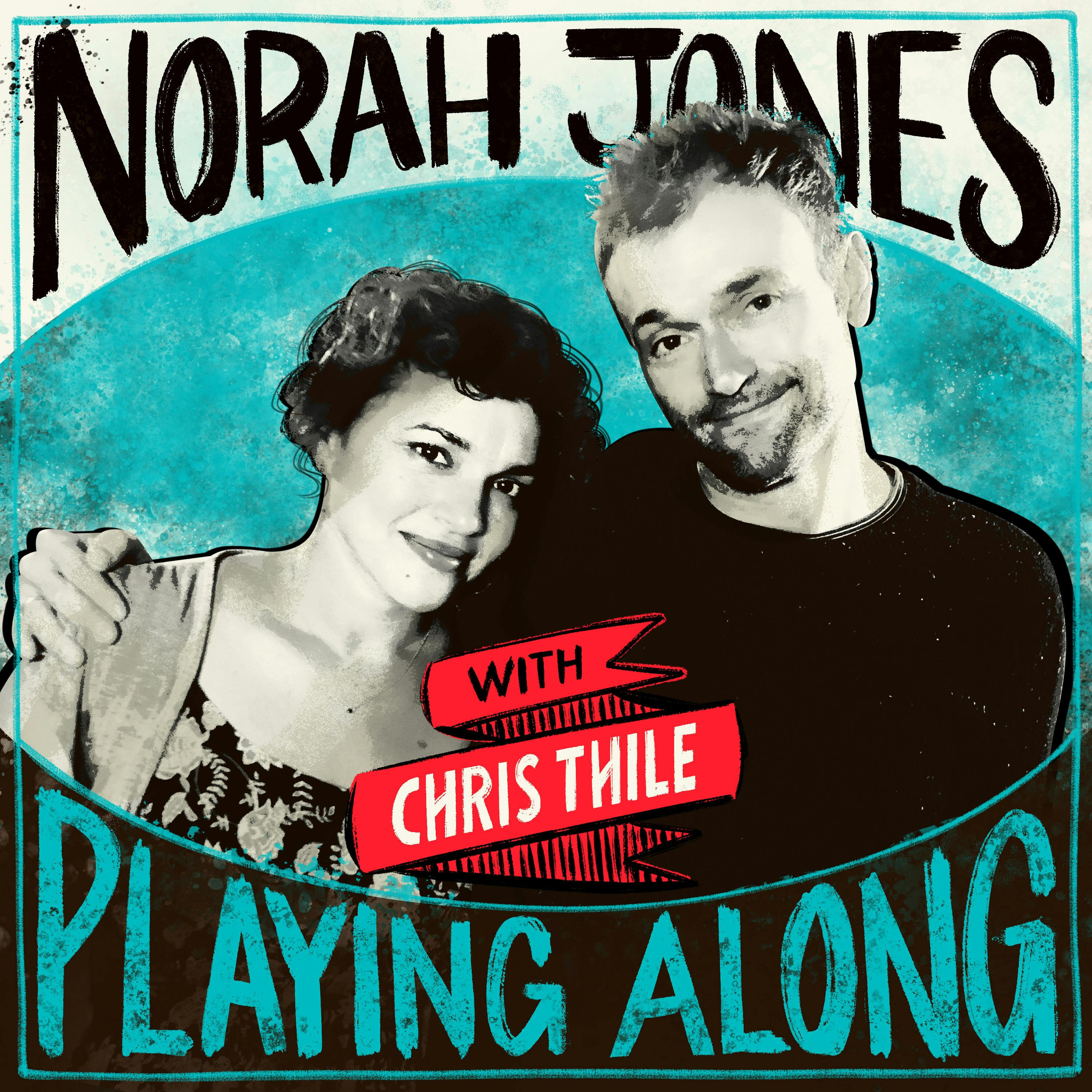
Chris Thile
Chris Thile was born to play music! He began playing the mandolin at 5 years old and by 8 was in the popular bluegrass band, Nickel Creek. He went on to start the band Punch Brothers and to take the reins of Prairie Home Companion and reinvent it as his own ‘Live from Here with Chris Thile’. The conversation dives into what it was like growing up in church, making room for healthy debates, and the life-changing experience of having Alison Krauss as your producer. This episode is a wild card when it comes to music, as Chris suggests that he and Norah not only dig into his catalog, but also play some killer songs by Radiohead and Judee Sill. Recorded on 10/26/2021
Learn more about your ad choices. Visit megaphone.fm/adchoices
See omnystudio.com/listener for privacy information.
Available Results
Generated results are saved to the knowledge database for reuse and search.
Extract Knowledge
Pick what you want extracted first. Model, scope, and chapter options appear after a template is selected.
Transcript
00:00:00
Speaker 1: Hey, I'm Norah Jones and today I'm playing along with Chris Thiely.

00:00:04
Speaker 2: I'm just playing alone with I'm just playing alone with.

00:00:20
Speaker 1: Hey, Welcome to the show. I'm Norah and with me as always is Oda. Hello, Sarah, Oda am today's show, we have Chris Thely.

00:00:29
Speaker 3: He is I think he's a genius. I was gonna say he's a bit of a whiz. He is amazing.

00:00:36
Speaker 1: He's an old friend and brilliant mandolin player, musician.

00:00:41
Speaker 4: And he's been playing music since he was just a wee wee child.

00:00:45
Speaker 3: Yeah. Five.

00:00:47
Speaker 5: Yeah.

00:00:47
Speaker 1: He came on the scene a long time ago with his band Nickel Creek, which sort of took the bluegrass scene by storm. But and he's had this incredible solo career. He took over for Garrison Keeler's Prayer Companion. They renamed it Live from Here, and it was a brilliant takeover of a show and he really found his own way with it. He has played with every brilliant musician I can think of.

00:01:11
Speaker 4: Yeah, I feel like he's known as just one of the great greatest bluegrass players out there.

00:01:16
Speaker 3: But he's also so versatile. He can play, he can do so much more. Yeah, so much more. I don't like genreing people. Really. I mean, I'm just gonna say it.

00:01:28
Speaker 4: He's a genre buster.

00:01:29
Speaker 3: It's not genre.

00:01:30
Speaker 1: Him, sorry, but I feel like he really floats through everything.

00:01:36
Speaker 4: He definitely does. He's a mold breaker. Yeah, he's incredible. And he's also, like what.

00:01:42
Speaker 3: A nice guy?

00:01:44
Speaker 4: Yeah, and a smooth speaker. I feel like he's just very well spoken. Yeah, he told some great stories.

00:01:52
Speaker 1: We had so much fun talking and I could have just talked to him for hours and played music with him. The fun thing about this show today is all these shows are different. Everyone has their own level of suggested songs from me, and then they throw songs back at me and suggest other songs. I usually try to stick to their catalog, but Chris suggested all these random covers that we do. So this is a kind of a fun one where we're just sort of jumping into songs together for the first time and wild cards. Yeah, and also we do some songs from his catalog as well though, And so we're going to drop in on the Chris Theely episode. I hope you enjoy it. We're gonna start this episode with a song from his solo album called Lay songs. This is a Hazel Dickens song. Please enjoy Chris Thiely.

00:02:56
Speaker 6: I feel shodos ah upon me.

00:03:03
Speaker 3: And the juice back and to me.

00:03:12
Speaker 6: Before gold de sisters and brothers.

00:03:19
Speaker 3: Won't she come and sing for me?

00:03:28
Speaker 7: Sing we sang together in that plain little church with the bench.

00:03:39
Speaker 8: She all one?

00:03:43
Speaker 5: How did to my heart?

00:03:47
Speaker 6: How precious the moments we stood shake in hands.

00:03:54
Speaker 5: And sing in a song that birding is heavy? My way has gone, baby, I must travelorld that is long, and.

00:04:34
Speaker 9: What one sold hard? My dear brother, did you call and sing me on song?

00:04:49
Speaker 7: Say those same sweet said together in that.

00:04:57
Speaker 10: Plain little church where at the bend she's all boy.

00:05:05
Speaker 11: Helping to my.

00:05:09
Speaker 6: Heart? Bursious the moments we stood shaking hands and sing in a song.

00:05:58
Speaker 12: My home beyond that dark river, yours sweet faces, no more I will see.

00:06:14
Speaker 5: Unto winy weather. There's no more sad parting.

00:06:22
Speaker 13: Wants you come and sing for me? Sing those hymns we.

00:06:36
Speaker 14: Sad together in that plain little church with the benches all one. How dear to my heart, how precious the moment we stood and.

00:07:03
Speaker 5: Same song?

00:07:10
Speaker 1: I love that song? That was so fun We didn't even try it first. It's so funny. I'm like, I'm so excited to sing with you and to do this. But as soon as it was so naked, you know, in the beginning, and as soon as time for me to come in, I was like.

00:07:28
Speaker 3: I don't know how to say.

00:07:29
Speaker 15: There's actually there's a weird amount of space when it's just mandolin and voice.

00:07:34
Speaker 3: Yeah, I love it.

00:07:35
Speaker 15: A lot of space so that any choice you make feels like a big choice.

00:07:40
Speaker 3: Yeah. I love how naked it is.

00:07:42
Speaker 1: And this album is this song is from the album you made in a church, right.

00:07:47
Speaker 15: Yeah, in Hudson during during the pandemia the great what have you persists.

00:07:54
Speaker 1: So upstate you were in this church, yeah, with an engineer.

00:07:58
Speaker 15: Yeah, just just just the engineer and me and we would you know, we would test and and then go into the go into this church and and play that that kind of thing.

00:08:12
Speaker 3: I was.

00:08:13
Speaker 15: I was, uh, you know, staying up late thinking about all this kind of stuff, especially during the early stages of all of this, you know, kind of deprived of my my church, which is playing shows, and you know, playing music with me like what we just did that feels feels really spiritual to me. Yeah, ual, And and again like an opportunity to kind of sort of hold your heart out and and say here's some stuff I'm feeling, and how do you how are you feeling? How do we feel about it together? Not getting to do that for the first time since I started making music, you know, it was crazy. It was felt crazy. And but I'm assuming for you too.

00:09:00
Speaker 3: Yeah.

00:09:01
Speaker 1: Yeah, but as you know, with young kids, it was it was a nice distraction, even though it was not easy having them, it was it was it wasn't just sitting there without anyone, you know.

00:09:13
Speaker 5: Right right.

00:09:14
Speaker 15: Yeah, And I feel like call and I probably got to forge something that we might not have naturally gotten to forge otherwise, like my life the way.

00:09:24
Speaker 3: It normally is.

00:09:25
Speaker 1: Yeah, because you're gone a lot, gone a lot. But they were a good age. I think our kids to be home with us, you know, as good as you can be.

00:09:33
Speaker 3: I don't know totally.

00:09:34
Speaker 1: It was hard for everyone, but I feel like that was that's a nice age to.

00:09:38
Speaker 3: Have that experience with him. Probably. So back to the church.

00:09:43
Speaker 1: Back to the church, I'm pretty fascinated by people who grew up in church also, and there's many different types of that. And so in your church growing up the fire home and Brimstone. Yes, yes, So did you play in church? Was there a lot of music in the church.

00:10:04
Speaker 15: Yeah, yeah, there was, and and ours though that that church was very much the Christian contemporary thing. It was basically pop music with with Jesus lyrics.

00:10:18
Speaker 1: Okay, so not not not what you came to do.

00:10:22
Speaker 15: No, not what not not what we just did or or and also not the thing that really lights me up like these old you know when you when when I was going to that Episcopal church at the top of nob Hill in San Francisco, Like the music is good, really really good, like some of the best that human beings have ever made. You know, you you you sing Corrals the box.

00:10:45
Speaker 1: Set, you know that's so beautiful.

00:10:47
Speaker 15: Yeah, with a with an incredible organ and a beautiful choir and and then everyone singing along and you know, you've got the hymnal.

00:10:54
Speaker 3: That has the parts.

00:10:55
Speaker 1: Yea, the hymnals with all the parts that used to fascinate me as.

00:10:59
Speaker 3: Some people grabbing.

00:11:00
Speaker 15: And actually the first church when my parents so my parents were actually not religious at all and then converted when I was eight.

00:11:08
Speaker 1: Wow, so you didn't grow up until you were eight in church?

00:11:11
Speaker 3: Yeah, and then it went.

00:11:12
Speaker 15: Intense, and then they went, Yeah, so they were you know the yeah, hell have no fury like the like they're recently converted.

00:11:21
Speaker 3: That's pretty intense.

00:11:22
Speaker 15: Yeah, they were to go from zero to one hundred, zero to one hundred, and so they Yeah, they kind of just kept graduating to more and more intense versions of Christianity. Wow, until and I think it actually played a part in us leaving southern California and moving to a Murray, Kentucky. I think that getting into sort of the heart of the Bible Belt was part of I mean, they also anticipated that I would move to Nashville when I left the home. They didn't want the family nucleus.

00:11:53
Speaker 1: To oh, so they moved there later when you were already I was fourteen, You were.

00:11:57
Speaker 3: Already okay, wait, you were already to then, right, playing shows during the summer, usually with Nickel Creek. Yeah, exactly.

00:12:05
Speaker 15: Nickel Creek started when I was eight, okay, actually the same time conversion.

00:12:09
Speaker 3: Okay, but this is so confusing to me.

00:12:11
Speaker 1: Wait a second, So you converted to church, you started, but when did you start playing mandolin? I was five, Okay, so that that really had nothing to do with church.

00:12:20
Speaker 3: No, for you Okay, I know.

00:12:22
Speaker 15: Yeah, the the that was just this pizza place in southern California called that Pizza place had live blue grass every Saturday night.

00:12:29
Speaker 3: How random? So random?

00:12:32
Speaker 15: And although bluegrass and pizza places that that's like pizza places having a blue grass night is kind of a thing.

00:12:40
Speaker 3: It is. I guess it's more Irish bar.

00:12:47
Speaker 15: Did you ever go to the uh the village had that great bluegrass night forever the bagging in.

00:12:53
Speaker 3: Yeah, presided over by sheriff Uncle Bob. I never went, but I heard about it.

00:12:57
Speaker 15: Oh my god, it was so good. I wonder if you still doing it. I haven't, I haven't been for a long time. But that was a great bluegrass night, not at a pizza place. Sadly, maybe the only thing preventing it from.

00:13:12
Speaker 1: So you started playing mandolin, from going to the bluegrass at the pizza place.

00:13:16
Speaker 15: Yeah, and then and yeah, and then mom and dad got I think they just got really scared about having kids and not having answers about things. They were raised more or less without organized religion.

00:13:34
Speaker 3: I feel like.

00:13:35
Speaker 1: That's rare for the past generations.

00:13:38
Speaker 3: Yeah, yeah, I think there was so On dad's side, there was. His dad was.

00:13:44
Speaker 15: A total atheist. And then his mom was sort of new a new ager, like an early new Ager, and she was a metaphysical therapist, and yeah, she was amazing everywhere. I wish everyone could meet my grand Barbara makes you rest in peace. But then on my mom's side, I think just kind of not really atheists, but just sort of not practicing anything, and then got into a little new agey ness later on her dad's side.

00:14:15
Speaker 1: Wow.

00:14:16
Speaker 15: And so I think they had us and got really really scared. I think they felt that they had been as I mean, we all are messed up by our parents in various ways, and also you know, kind of saved from the world by our parents in various ways. Like there, it's just a it's a cocktail all the time, I feel like, of positive and negative impact. But I think they just got so scared that they didn't have any kind of answers, and fundamentalist Christianity provided a bunch of answers like you could do this, here's what you do, and here's what you don't do, and as long as you do those things, everything's gonna be fine.

00:14:51
Speaker 1: I would have never thought of that as being a recent a turn to religion, but totally is It makes a lot of sense.

00:14:58
Speaker 15: I certainly, having you know, a kid myself now can see the appeal in a way that I maybe went through a long period of my mid twenties and thirties not really seeing the appeeling.

00:15:12
Speaker 3: Trying without it. Yeah, I know what you mean.

00:15:13
Speaker 1: I feel like the sense of community, like in socialization, is something I would enjoy now having kids, whereas in my late twenties and thirties, I just wanted to go and have blinders on and just anonymously and yeah, now I have to meet everybody in the congregation, you know.

00:15:31
Speaker 3: Yeah. And for me, I was more.

00:15:34
Speaker 15: Self absorbed to not really looking for a disavowal of self, you know, looking more for the affirmation of self at that time.

00:15:45
Speaker 3: You know, for worse and for worse. It's all a journey.

00:15:49
Speaker 1: It's just a journey. It's all good.

00:15:51
Speaker 3: And here we are, Here we are.

00:15:53
Speaker 1: Wait, so when did you start touring with Nickel Creek.

00:15:56
Speaker 3: Then we started, well, we started really touring.

00:16:01
Speaker 15: When I was eighteen, but we were like summer festival warriors.

00:16:07
Speaker 1: Yeah, for like throughout high school.

00:16:10
Speaker 15: Yeah, yeah, lots of lots of summer festivals and things. And dad Dad played bass, with Nickel Creek. Then okay, so Sean and Sarah, but brother and sister.

00:16:17
Speaker 3: That's amazing.

00:16:18
Speaker 15: And then it was my me and my dad and that must have been fun. Oh, it was, It was great.

00:16:24
Speaker 3: It was great.

00:16:25
Speaker 15: And also I think actually that dynamic prevented me from from ever really rebelling from the fundamentals Christianity.

00:16:33
Speaker 3: That and by the way, now mom and.

00:16:35
Speaker 15: Dad are super moderate on all that stuff, and like actually very very they're they're good lefties.

00:16:45
Speaker 3: They're like the most liberal people in all of Kentucky, I think.

00:16:48
Speaker 1: And they're still in Kentucky.

00:16:49
Speaker 15: They're still in Kentucky church now, they still go to church, but now it's a very different vibe.

00:16:55
Speaker 1: They go to a different church than they moved to Kentucky.

00:16:58
Speaker 8: Yeah.

00:16:58
Speaker 15: Yeah, well the that the hell Fire and Brimstone Church was in Kentucky, but then they moved.

00:17:04
Speaker 3: They they I think so much credit to them.

00:17:09
Speaker 15: They kept their ears open the whole time, like even as fascinating that.

00:17:14
Speaker 3: They are amazing, they're amazing people.

00:17:16
Speaker 1: Do you talk about religion with them now? About like where you guys, you talk about the past? Yeah, every where they took you and everything.

00:17:24
Speaker 15: And there was there was this there was this period I feel like in my mid twenties, as my middle brother and I kind of went off into the world and would come back for holidays, you know, with sort of news news from the wide wide world. And I remember coming back home, I had I had my barber across the street from my apartment in the East Village at will from Whistle who is gay and has a kid with his with his husband, and I remember were sitting there in the barber chair like hearing this, hearing him talk about his little boy and his husband and and just bouncing that against everything that I had been raised with, going like there's nothing.

00:18:13
Speaker 3: Why is this a problem?

00:18:15
Speaker 15: Yeah, Like this seems he loves this kid that hurt, and he loves his husband, and he and his husband seem like great parents.

00:18:23
Speaker 3: Like he's showing me the pictures.

00:18:24
Speaker 15: It's all just like all the family units I was raised there at Like it's the same.

00:18:30
Speaker 3: So why why does my religion condemn this man to hell?

00:18:35
Speaker 1: The wheels were like really turning.

00:18:38
Speaker 15: Yeah, they were really just sitting there talking to people about their their lives. And that's the friction. That kind of friction is what I feel like I'm missing in my in my current life like that everyone, So that that friction like with me sort of teetering on the you know, still carrying some fundamentalist Christian baggage with me, but kind of teetering on the edge. I was in all of these conversations with people who felt different ways about things than I at least had felt, and that kind of friction.

00:19:16
Speaker 3: Helped me grow so much.

00:19:18
Speaker 15: And like, could I take that kind of friction now, you know, like with people who don't feel the same way about about various things, but I might be able to learn from well.

00:19:30
Speaker 1: But I think that's part of why things are so bad right now with the polarization, is that people can't just have conversations like that right now because whatever it is in the air and the media and the social media, there's just so much anger or they're not having those kinds of healthy debates. They're just getting angry, right And.

00:19:53
Speaker 15: Do we just feel like anything that's not an agreement or that's not actively agreeing with you a threat?

00:20:00
Speaker 1: Is that what we I think that's how people are acting. And I don't think I think that if everybody could take a step back and have those kinds of a healthy debate maybe we'd be in a better place, you know, globally, right, oh.

00:20:15
Speaker 3: God, nasally.

00:20:15
Speaker 8: I don't know.

00:20:23
Speaker 1: When you guys hit like really big, How old were you? Well, you know, I really not really big. But when you guys were huge, No, but I mean when you when it started getting really.

00:20:37
Speaker 3: Big, like got big, Yeah, bigger, bigger at least. Yeah, that was we I was like.

00:20:45
Speaker 15: Nineteen twenty, I think is when is when that first record that we made for for Sugar Hell, which I mean they thought was going to do like a bluegrassy thing, like seven thousand copies would have been the contract was sort of old for selling seven thousand copies, and then the record company could make sure that they made enough money to pay for it from selling you the record to sell at festivals. Yes, that was a significant part of the potential income for a bluegrass record label. Yeah, and then and then, I don't know, Alison agreeing to produce was a big deal.

00:21:20
Speaker 3: Alison Kraus.

00:21:21
Speaker 15: Alison Krause, And oh, she's incredible and such a great producer.

00:21:27
Speaker 3: That she's made so many records, so.

00:21:30
Speaker 15: Many records, and she has such she has such a perspective, she has such a sound in her head that she's always chasing for whatever she's part of.

00:21:39
Speaker 3: She knows what she wants.

00:21:40
Speaker 15: She knows what she wants, she really she deeply does, and and anything that's not that is like nails on a trackboard to her, which was really helpful, I think for us as kind of headstrong, you know, cocky musicians who have been fairly coddled by the bluegrass community up to that point. And I had a really strong I've always had a sound in my head too, so to run up against someone like Alison, who's the sound that she heard in her head was maybe a little louder than I heard at.

00:22:12
Speaker 3: That point in my life, you know, was amazing.

00:22:17
Speaker 15: And that was another source of those conversations, kind of mind expanding conversations, which is talking to Alison about the world music first and foremost, but then also just about being alive. But I think then the old Brother where Art Thao thing happened and we were we rode that way that if you had one record, if you had one blue mass record, you had O Brother where Art Thou and you're like.

00:22:40
Speaker 3: Man of constant sorrow. And if you had two you had that and something of Alison's. And if you had three.

00:22:47
Speaker 1: Then you all said nicol Creek's amazing.

00:22:49
Speaker 15: Because we were young, and I think sugar Hill they like re. They redid the cover of the record so that we looked a little bit more fashionable.

00:22:58
Speaker 1: I was looking at the cover recently and when I was trying to, you know, figure out what songs we were doing, and you look quite dashing your teenagers. The frost tip was that like a slight justin Timberlake frost tip situation. Holy, they were, Yeah, it was gorgeous.

00:23:17
Speaker 3: It looked amazing. Everyone in Nashville had frosted tips. Really, yeah, oh my god, yeah.

00:23:22
Speaker 15: Because I mean I think it was Nashville would have always been. It felt like we were one step behind living in Nashals like being one step by So the in sync would have been those would have been Yeah, that's fashionable.

00:23:34
Speaker 3: Yeah, that's what that's what you do. Let's do always judging, Oh my god.

00:23:45
Speaker 1: Always judging. Okay, So I haven't thought about this song since I wrote it.

00:23:53
Speaker 3: Did you write it for the movies?

00:23:56
Speaker 15: Yeah?

00:23:56
Speaker 1: I got a new manager, John Silva, and he's like, well, you ever want to get into soundtrack stuff? And I was like, well, I've never thought about it. Well, Jed Appatow's got this movie and he's looking to like do stuff with people. So I started corresponding with Jed Appatoo about writing some stuff for the movie. And he was explaining the movie this is forty. Meanwhile, I'm like thirty at the time, no kids, no husband, I was recently single, I think even, and he's like, yeah, marit it's about like, you know, being in your forties and being married with kids and just like and then he just wrote me like stream of consciousness emails of lyric ideas and it was like always Judging. It was something like that. And so I wrote this song from that from his email. And you played on it together.

00:24:48
Speaker 15: That's that's right, we got we. I in essence played on it with you, but not actually with you.

00:24:53
Speaker 3: And John Brian produced it. John Brian produced it. The great mad scientist of music out there.

00:24:57
Speaker 1: And you know who else is on it is Lindsay bucking He's the one doing this, He's doing Always Judges. He's on the and I've never met I mean, I grew up obsessed with Fleetwood Mac, but I've never met Lindsay Buckingham in my life.

00:25:11
Speaker 3: I've never crossed cross on the five.

00:25:14
Speaker 1: He's like fingerpicking on it and singing on it. I feel like nobody ever heard the song. But it wasn't even actually in the movie in the end, it was just on the soundtrack.

00:25:23
Speaker 3: So, oh my gosh, so here it.

00:25:25
Speaker 16: Is always jretching, always judging, never loving, always dredging.

00:26:44
Speaker 17: Always dredging, never looking.

00:26:46
Speaker 16: Woe's wedding bed is swimming?

00:26:48
Speaker 18: Ball ways judge the one you love to her she lay now she's.

00:27:01
Speaker 5: Good, never loving, always judging.

00:27:05
Speaker 2: You don't pretend that it's you're blood.

00:27:14
Speaker 13: Thing you not die, never hugging, always judging.

00:27:21
Speaker 2: When you say you don't need me, I do.

00:27:31
Speaker 3: BALLI blood is when the cat is spinning, you say.

00:27:41
Speaker 15: That it's.

00:27:45
Speaker 5: Brow fay you now for dry.

00:27:54
Speaker 17: As juching, always judging, never loving, always judging, love's judging, never fucking.

00:28:00
Speaker 5: Who is winning at the same.

00:28:17
Speaker 8: Chilling?

00:28:34
Speaker 16: Who's your check? Always judging, always judging, Neva laughing, always judging, always judging, Neva hugging, always spinning, mad is spending.

00:29:23
Speaker 3: Crap? I bet you who is my head is spinning?

00:29:26
Speaker 19: Who is winning?

00:29:29
Speaker 3: There we go? That was so fun. Oh my god.

00:29:33
Speaker 1: I never thought I would ever play that song anyo, did I nor did I that was fun.

00:29:39
Speaker 3: Oh my gosh.

00:29:40
Speaker 1: And now we're in our forties and married with kids.

00:29:42
Speaker 3: And now it really rings. It resonates, I get it. It resonates, good guess.

00:30:00
Speaker 1: So so, okay, Live from Here, Holy crap. I mean I grew up listening to Prairie Home Companion.

00:30:08
Speaker 3: Did you you too? Yes? Oh? Absolutely, it was.

00:30:10
Speaker 1: I mean I think a lot of any NPR kid did pretty much. He was a huge part of my life. My mom is a lifelong m PR radio on. I think it's come from a lot of just the two of us. Lose like company, you know, and so Prayer Own Companion. We would listen to it, and then we would listen to the rerun every weekend.

00:30:30
Speaker 3: You know, the boat Like a lot of times.

00:30:34
Speaker 15: What would happen is we'd get half of it during a drive on Saturday and then the other half on Sunday, like intentionally, Okay, what half did we not get?

00:30:41
Speaker 3: Then we're going to listen to that. Yeah.

00:30:42
Speaker 1: I have so many memories of people on it. So you took over the show and then and then they changed the name to Live from Here, and which I think is a great name for it. Thank you, because you moved around. You did this, You hosted the show from different places. You took it on the road basically, Yeah.

00:31:01
Speaker 15: And Garrison did. Garrison would always he would tour it too. But of course it was very much centered in and Saint Paul and I got I remember driving in. I was in southern California, and I remember hearing you do an episode.

00:31:20
Speaker 3: I forget what record.

00:31:21
Speaker 15: You were touring behind, but you He had you on a sketch where you were a call waiting.

00:31:25
Speaker 1: Yes, that's right, sketch.

00:31:27
Speaker 15: It was good, and you were you were like a Yeah, you were the voice of call waiting.

00:31:33
Speaker 3: That was fun, singing, singing, you're on hold, You're on.

00:31:36
Speaker 1: Hold, You're on I hadn't thought about that since then. My brain doesn't remember things anymore.

00:31:42
Speaker 3: That's crazy. I forgot about driving.

00:31:43
Speaker 15: I mean, but I feel like when you're when you're driving, that was what that show.

00:31:49
Speaker 3: That was the most magical.

00:31:51
Speaker 15: It's like if you're you're just you're going from point A to point B and that show is on. It was just it was so transportive and talk about commune a church like experience.

00:32:01
Speaker 3: I feel like that show was church like.

00:32:04
Speaker 1: Yeah, and he talked about religion without being religious or pitchy about it, you could still listen to life.

00:32:11
Speaker 3: Yeah, it was the human aspect of religion.

00:32:14
Speaker 15: It was beautiful and I feel like all the various routines, like it's going to start with this song and eventually you're going to get a guy noir sketch and eventually, yeah, you're going to get the like Wobgone story.

00:32:25
Speaker 1: Oh yeah, it's like we'll get you.

00:32:27
Speaker 15: And Rich Rich Dwarski and the Guys All Star Shoe Band like doing that. The crazy sort of jaloppy sound of that band was always so infectious. So yeah, when he he asked me to do it, which came out of the clear blue sph.

00:32:41
Speaker 1: I didn't realize it came from him. He asked you to take over.

00:32:44
Speaker 3: Yeah, yeah, I wanted to retire.

00:32:46
Speaker 15: Yeah, he was like, I think, I think I'm bringing it in for landing and was wondering if you'd be interested in hosting.

00:32:52
Speaker 3: It, which I mean I hadn't been groomed for it. Yeah.

00:32:54
Speaker 15: I'd even felt like at times that I would do something on the show when I would be on a fair frequently, but okay.

00:33:01
Speaker 1: Like the perfect guess.

00:33:02
Speaker 15: I loved you know, I loved sitting in with people and and he would sometimes give me a I remember he gave me a slot one time for a for a song, and I did. I did a solo version of the White Stripe song that Leaves in the Dirty Ground, which had some yodling and and it got it got a big reaction.

00:33:20
Speaker 3: Was at town hall.

00:33:21
Speaker 15: It got a big reaction, and afterwards he was like, don't do that again.

00:33:29
Speaker 3: I couldn't tell if he was joking or oh, you couldn't.

00:33:31
Speaker 15: I couldn't tell. I don't think he was joking though. I think it was like that that. I think maybe that broke the spell of the show for him. Crazy, you know that it was like that wasn't in the spirit of things wow, Which was a big lesson to learn, like to not the show has a vibe and just any any anything that you're doing has a vibe and you can actually so don't always go for the jugular, yeah, you know, don't always like.

00:33:58
Speaker 1: Don't force something into a the wrong Sorry I had to say, I don't know, but like, yeah, yeah.

00:34:06
Speaker 3: Don't force the wrong thing. Yeah, sometimes like this seem wrong to me. No, you know, I did, I think it was. I think it was a.

00:34:14
Speaker 15: Good I think it was a nice moment, but I also think his reaction to it was a really amazing lesson to learn about the like the power of radically strong taste that like if he's he's presiding over this world and you know he's he's he's micro creating, he's like he's he has this world and the world has rules, like the world there's gravity, and there's oxygen and there's you know what I mean. Yeah, And so I always thought about that moment when I when I when he asked me to take it, to take the show of like how how can I? Obviously I can't continue facilitating same world. I have to, like you have to make your I have to make a new world for it. But also I have to like transition it slowly. So then all of us who who count on that world weekend, week out, we still have some of the stuff. So it was it was interesting. It was a really amazing learning experience, that whole show. And then it got COVID canceled.

00:35:22
Speaker 3: I know, so how long did you do it with the year where he was kind.

00:35:26
Speaker 1: Of was he still involved when he passed it on? Yes, so he still helped, like.

00:35:31
Speaker 15: He helped, Yeah, he helped with the first especially the first season. He and I were in pretty close touch about about it. I don't think he was listening though. I don't think he would ever listen to the show Interesting. He never listened to it when he did it either. Okay, he would never listen to Interesting that he.

00:35:48
Speaker 1: Wouldn't listen after he handed it over. Probably it would have been too hard for him to not try to, Like.

00:35:53
Speaker 15: That's what he said. He said, there's no way. That's just not going to be helpful for either of us.

00:35:58
Speaker 3: Yeah, me listening is that's really funny.

00:36:01
Speaker 15: But I I but he was so generous with with you know, help kind of anytime I had a question about any aspect of it or you know, wondering about this seems.

00:36:13
Speaker 3: Like a you know, you don't need to do that thing. I would do that. Here's why I would do it. You don't need to do that. Yeah, those kind of conversation the news from like oh god, yeah that wasn't Yeah, that was never going to happen.

00:36:25
Speaker 15: But but like, you know, the sketches, we started doing different stuff with the sketches, and then and and the whole thing became. He really encouraged me to make it far more music.

00:36:35
Speaker 3: That's great, but that's perfect, which it was.

00:36:38
Speaker 15: I mean he was always kind of threatening to make it more music oriented himself, like that's what he loved to do.

00:36:43
Speaker 1: Well, I mean he's saying on it, but it wasn't ever. I liked his voice. Actually it sounds like home. Yeah, it was like sounds like I mean his singing voice as well as a speaking voice. But you just have so many more options with what you know and what you can do and how you can adapt to other musicians.

00:37:03
Speaker 15: His one condition, it was like you, I want you to host the show on one condition, which is that you keep singing.

00:37:11
Speaker 3: Duets on the show.

00:37:13
Speaker 1: But that's that's like the best part of it. That's and that's like your bread and butter. When I asked you about what songs you wanted to do for this, you kept throwing out songs that neither of us have ever done.

00:37:23
Speaker 3: And that's what I'm.

00:37:25
Speaker 1: It's so exciting, you know, it's so fun to like interact with people that way. I saw you do a thing with tank from a tank in the Bengas. Oh god, she whoa well, she's insanely amazing poetry.

00:37:39
Speaker 3: Yeah, her poetry is beautiful.

00:37:41
Speaker 15: Oh my god, I mean, I love them. I knew about the music, but I didn't know about her poets.

00:37:44
Speaker 1: I know me neither till later, but her brain just goes so many different places.

00:37:47
Speaker 15: I didn't know about her poetry until, like Thomas Bartlett played me her doing poetry to you play.

00:37:53
Speaker 1: Yeah, we were improvising and it was fun. She that was fun when we did the recordings with Thomas. Yeah, Thomas loved her. Oh god, she's amazing.

00:38:03
Speaker 3: She's amazing. Yeah.

00:38:05
Speaker 1: But did you feel like were there any limitations on who could be on the show musically or was it pretty open? Did it gear more towards acoustic.

00:38:14
Speaker 15: Early early on, I was really careful about trying to kind of lead basically just trying to drop breadcrumbs the whole way so that people could follow. I feel like that's really important as as a host of something that's different than than being an artist. I feel like as an artist, part of our job is to just surprise people, you know, to kind of.

00:38:41
Speaker 1: I don't know if they think that, though, I think that's more fun for us. Sometimes they like it, and sometimes they're like, I don't know if I like that.

00:38:49
Speaker 15: Right, you know, But I also feel like, well, I mean that is that's the great balancing act that we're all playing. But but I ultimately, you know how they they say you have to be true to your audience of one. It's true, right, you know, And if if I crave, I crave being sort of uncomfortable in the art, like I want I want, I want to be challenged by a by a piece of art. And what I realized as the host of that show is that that instinct was only gonna serve me to a certain extent, and that I needed to I needed to make sure that people felt safe so that they could enjoy when they were challenged. And if I if I it was basically the opposite of being true to your audience of one. Although although I found within myself someone well and I thought of my relationship with the show and how it was a source of comfort and like a like a true north or like calibrating my week. You know, It's like here's Garrison and here's that song that the you know here that will piano from Downey Avenue. It's like it's not that I'm a massive fan of that song, but that song put me in.

00:40:05
Speaker 3: A spot, you know.

00:40:06
Speaker 1: Yeah, I would, it becomes a nostalgic, it's a touchstone for people.

00:40:11
Speaker 15: And so then when I would hear, I was trying to imagine, what are the things that I can do to put people in a place where they'll where they'll relish those tense moments of being challenged by a piece of music or by an aesthetic that they're not familiar with. So if they're kind of familiar with a routsy sort of Americana aesthetic, then you know, the show absolutely was. In the first season of me hosting was very grounded in that and with occasional little adventures. But by the last season, you know, Got All the Way to Common was on show, and I mean, god, Tank Tank, just like did.

00:40:56
Speaker 3: She have a whole band on the show? Yes, they're incredible.

00:40:58
Speaker 15: Oh my god, And it was was amazing. They were on when we had the show in Durham.

00:41:03
Speaker 3: North Carolina, not New Orleans.

00:41:07
Speaker 15: No, I wish that New Orleans show was made. That was we did the Preservation Hall Jazz Band, so fun and sylvan Es was on that same show, so it was like the Press Hall Jazz Band was like very much in the wheelhouse for our audience. And then Silvan ESSO was going to be adventurous for them, you know, yeah, kind of E dmy It's like laptop and and Amlia, you know, amazing and and so that that was something I was always trying to keep in mind.

00:41:35
Speaker 3: So if I was going to do, stretch them in one spot, have.

00:41:38
Speaker 1: A something familiar.

00:41:40
Speaker 15: Yeah, so here's we're gonna have an adventure over here and we're gonna have like we're gonna have a spa over.

00:41:46
Speaker 1: Here, part party spa over here exactly. Well, you picked a song for us to try, which I'm excited about and is different for me, and I feel like it's going to be a challenge.

00:42:00
Speaker 3: And even though it's a simple song, which which are you talking about?

00:42:04
Speaker 1: I'm talking about the radio Have you done it before?

00:42:08
Speaker 3: Okay? No? I actually, oh god, talking about the radio show.

00:42:12
Speaker 15: Though I did a I played it, not sag it behind a piece of poetry.

00:42:19
Speaker 1: Once the music part, because it's so haunting.

00:42:24
Speaker 15: I feel like that world, the whole idea of creating a world, I feel like they're so they're so.

00:42:31
Speaker 3: Good at that.

00:42:32
Speaker 1: I remember that when I was listening. I mean I remember this from when it came out. I knew the song, but when I was listening to it for this. I thought, oh, yeah, it's it's got a lot of weird chords.

00:42:41
Speaker 3: What are those weird chords?

00:42:42
Speaker 1: And then I'm like, oh, it literally has two notes that repeat and it's but it creates weird chords, but not really, but it's the illusion of it's so beautiful and it's so visual, right, and it's circular, and it's yeah that he takes it and then yeah, and that's.

00:43:03
Speaker 3: All he's doing.

00:43:04
Speaker 15: And then at the very end he brings this Yeah, but that's it. Those are that's that's the material. And he spins quite a web with with very few notes.

00:43:16
Speaker 3: I know, shall we try it? You're gonna sing it right? Sure?

00:43:22
Speaker 5: Yeah, yeah.

00:43:42
Speaker 17: When Ama the pearly gates, this will be my verty when Memphis Pleas is just beneath and he's reaching up to God.

00:44:20
Speaker 14: This is one for the God all days and I have it all here in red.

00:44:30
Speaker 5: Blue green and red bloom green. You are my center where I spin away.

00:44:49
Speaker 9: Out of control on vidy tape boom videtage bomb B.

00:45:00
Speaker 7: Saying no.

00:45:34
Speaker 20: Psis my one, saying goodbye, Kazack.

00:45:44
Speaker 8: Can do.

00:45:47
Speaker 5: Face two face talking.

00:45:51
Speaker 17: To you before no matter what, and now.

00:46:00
Speaker 5: You shouldn't be a fake.

00:46:03
Speaker 6: Because I know two A day has spent the most perfect.

00:46:11
Speaker 3: Day at ever. Sime woh song. That song is crazy.

00:47:03
Speaker 1: When you told when you texted me like I think I hear a rhythmic thing I can do?

00:47:06
Speaker 3: I was like, yeah, I know you do, and boy you did.

00:47:10
Speaker 15: That's one of the craziest moments of sound, Like yeah, that when they start messing with that in that track, the kind of like washing machine, yeah thing, what even is?

00:47:22
Speaker 3: What are they doing?

00:47:24
Speaker 1: But it's weird, but it's rhythmic. It makes sense within.

00:47:32
Speaker 3: I loved that.

00:47:34
Speaker 15: I was trying to get on that kind of at that pulse.

00:47:39
Speaker 3: I always hear in my head.

00:47:41
Speaker 15: Do you know Matt Chamberlain, the great Oh yeah, great La based drummer. I mean I used to be Seattle based, I guess, but now he's in l A. I always have.

00:47:50
Speaker 3: Like a w W Chamberlain, like what, yeah, what would Matt play? And he's got that? Yeah, I love that.

00:48:03
Speaker 15: Oh yeah, I didn't get the rhythm of the right.

00:48:11
Speaker 21: Oh oh, and then there's them.

00:48:32
Speaker 3: Oh yeah, it just kind of falls off. Oh god, yeah, did you hear he did?

00:48:39
Speaker 15: He did a I always have to I always hesitant to suggest that we do a Radiohead song together because I just always it's like a covering tick of mine.

00:48:49
Speaker 3: Oh yeah, just I always.

00:48:52
Speaker 15: That's one of the things I think about their world building that is so appealing to me is if they feel like video games to me, like where you can just but kind of open ended video games where you've got a character and you just get to walk around in these songs And.

00:49:07
Speaker 1: What a way to describe it, look under That's kind of incredible.

00:49:12
Speaker 15: So I feel like when I when I've read that song, it feels like that to me, where I'm just like I'm in a video game and I get to I get to like look under a rock and see what's there.

00:49:21
Speaker 1: You get to choose your own world within their world.

00:49:24
Speaker 15: Yeah, they don't spell things out all the way almost ever.

00:49:29
Speaker 3: They always leave.

00:49:31
Speaker 15: I feel like they always smear some stuff so that you can finish it.

00:49:36
Speaker 1: Yeah, Like that's a crazy way to think of it.

00:49:40
Speaker 3: And like they're not that there's this feels unfinished to me, but just that.

00:49:44
Speaker 1: There's nothing unfinished about it, but it's it's it's like an abstract painting where you can kind of fill in.

00:49:50
Speaker 15: The cracks, Yes, where your participation is actually necessary. It's not just desired, it's like necessary to finish the art.

00:49:59
Speaker 3: Every but he will hear it differently.

00:50:01
Speaker 15: Yeah, and I feel like that's and I think he does that lyrically as well.

00:50:06
Speaker 1: Oh these lyrics are deep, right, they're really heavy.

00:50:09
Speaker 3: Oh my god, I'm so into it. They're beautiful.

00:50:12
Speaker 1: Also, Mephistopheles must be a Greek Yeah, Gospheles.

00:50:20
Speaker 3: Isn't that one name for the devil?

00:50:21
Speaker 1: Well, you know, all I could think about was mister Mustopheles from Cats, So I don't I don't know. I guess that shows what I learned growing up.

00:50:33
Speaker 15: But also also the scanchion that he's sound. That you found a way to sing Mephistopheles. Yes, it's dual natural.

00:50:41
Speaker 1: Well that's why I didn't want to sing it because I was like, how am I going to sing Mephistopheles? Because I want Chris to say it? But the lyrics are beautiful. You did it well just beneath. Yeah, it's a killer song. Oh my god, have you ever met any of them?

00:51:01
Speaker 15: I met the drummer, Oh cool, yes, Phil, he's the sweetest dude. I met him at at an award show in London. He was at the same table that I was sitting at. Yeah, and uh, that's fun.

00:51:19
Speaker 3: Oh and I got to I mean I ged him so hard, him so hard. Yeah. What is that is?

00:51:25
Speaker 15: When you you go up to someone that that who's work you love and I love your work? Yeah?

00:51:31
Speaker 3: But what does it come from the word germ?

00:51:33
Speaker 1: I don't know, you get your germs on him?

00:51:35
Speaker 3: Maybe so I don't know. I knew what you meant, but I just didn't know where it came from. I don't you know what. I don't even know where I heard that the first time? Am I making a word?

00:51:44
Speaker 8: No?

00:51:45
Speaker 15: No, I'm sure it's a thing I just to someone and it was and I did it and he was very gracious. I was talking about specific grooves. Do you remember that one time when you're I was very I was very Chris Farley about it.

00:52:03
Speaker 3: Oh, I love that. I remember that one song where you play this awesome that.

00:52:08
Speaker 1: The Chris Farley's guess is the best thing in the world ever with Paul McCartney.

00:52:16
Speaker 3: Is it true? What was it that that the Love You Magazine to the Love You Take? Is that true? Is that true? Is that true? Can we do two more? Would that be too much to do it.

00:52:46
Speaker 1: Okay, oh wait, we've got yeah, we gotta do that wet about them. I want to do the Tom Paxton song because it's so special. And so you have a new Punch Brother Brothers record where you did the whole record, the whole Tony Ice record.

00:53:00
Speaker 3: Yes, yes, Tony Rice. Who tell me about him?

00:53:04
Speaker 15: So Tony, it's so it's so interesting the I mean, what, like, what a legend he is in the bluegrass community and kind of a relative unknown outside of it, although there's there's certainly, you know, pockets of musicians who who you know, are very influenced by him outside of the bluegrass community, but in you know, within the bluegrass community.

00:53:28
Speaker 3: He's he's on Mount Rush, you know, and was one of the first people to.

00:53:36
Speaker 15: You know, the first thing people think of when they think about Tony Rice, if they think about Tony Rice, is is his guitar playing. He really changed the game in terms of flat pick guitar and and non bluegrass flat pick acoustic guitar players would almost certainly have studied up on what Tony did with with an acoustic guitar and a flat pick.

00:53:57
Speaker 1: I'm sorry, Oh I'm done. What is the flat pick.

00:53:59
Speaker 15: So a flat pick as opposed to like playing guitar with your fingers. So fingerpicks just picks that mold to your fingers, you know, like like like what a banjo player uses or you know certain guitar players, whereas a flat pick is just an actual it's a flat pick. But he's playing and you're going back and forth. So I flat picked the mandolin as opposed to like fingerpicking.

00:54:24
Speaker 3: Yeah, where you can do all at once. It's kind of yes, yes, okay, So he was a flat He.

00:54:29
Speaker 15: Was a flat picker and kind of yeah, a total master of the flat pick guitar and solo. He he he was one of the early players to really make guitar a soloing instrument in a bluegrass band. Previous to him, it was it was not the rhythm, the support, Yeah, predominantly support. And I wish Chris Elders from Punch Brothers were here to give you the real, the real straight Yeah that's right and now, but it's so him and this guy Clarence White and Doc Watson was another another earlier, but people think about that part of his Doc Watson, but he he was also a tremendous singer. Uh, and song curator is I. I feel like one of the things that goes a little under heralded about him is his ability to find a song's best best self, like find the best songs and then find that song's best self. Yeah, just that that whatever he would cover, to my ear, became the definitive version of that of that song. And he would get in there and and fundamentally change these things. So he wasn't just here's my thing, here's me doing this song. It was like here's here's this song, and they.

00:55:55
Speaker 3: Became the best ever. Here's yeah, here's.

00:55:59
Speaker 15: Just he would bounce himself or he would Yeah, he would bounce his ears off of these songs and they would be forever changed. So listening to Church Street Blues, that's what the record is called Church Reet Blues. That that's been lasting. Yeah, the Tony Rice record and Punch Brothers decided to cover the whole record. There was like a in the pandemic. We wanted to do something together.

00:56:19
Speaker 1: So you take it together. Okay, so you just decided to cover this whole record, to be creative and.

00:56:24
Speaker 15: Cover the whole record and then try and emulate rather than again do the thing that Tony Rice would have never done, which is like, okay, well yeah, we'll just do a band version of Church Street Blues.

00:56:35
Speaker 1: It's completely different from the Tony right.

00:56:36
Speaker 15: We would we we wanted to, you know, be like Tony, like, let's let's bounce ourselves off of his record and see what happens, see what results, like.

00:56:47
Speaker 3: Our our inner ears.

00:56:48
Speaker 15: We've been listening, all five of us have been listening to this record since we were little.

00:56:52
Speaker 3: It's made such an impact on the musicians that we are. Did you guys know Tony? Yeah him.

00:56:58
Speaker 15: I knew him really pretty pretty well. Critter new Critter new him the best.

00:57:02
Speaker 3: Probably.

00:57:02
Speaker 15: He actually apprenticed himself to Tony for spent spent I think a week or two at Tony's place. But I would run into him at these festivals that we were talking about, and he he really he was. He was always a fairly he was a private fellow, kind of kind of reclusive, but really generous with with musicians that that he thought were promising. And he kind of took me under his wing.

00:57:26
Speaker 1: Helay, he really loved to play and.

00:57:32
Speaker 15: He yeah, so he would he would have me sit in with him sometimes and you were you were just bulletproof, when you're like foundations of the Earth, kind of the feeling like you could build, you could build a city.

00:57:42
Speaker 3: On top of his rhythm guitar playing you know.

00:57:46
Speaker 15: So, so yeah, so this this, well, whatever we're about to do, I guess it's sort of basically.

00:57:54
Speaker 3: Exactly bounced off of.

00:57:55
Speaker 15: The Punch Brothers reimagining of Tony's reimagining of Tom Paxton's lasting on my mind.

00:58:25
Speaker 6: It's a lesson too late for learning.

00:58:32
Speaker 5: Made of sand, made of sand, in the way of a night.

00:58:42
Speaker 3: My soul is turning.

00:58:46
Speaker 5: In your hands, in your hand.

00:59:01
Speaker 6: You've got reasons a plany.

00:59:05
Speaker 3: For going.

00:59:08
Speaker 10: This sign no, this sigh, no.

00:59:15
Speaker 6: For the weeds have been staidly going. Please don't go, Please don't go?

00:59:30
Speaker 5: Are you going in no way?

00:59:33
Speaker 22: With no word of farewell? Will there be not a chase left behind?

00:59:44
Speaker 23: I could have loved you better. I didn't mean to be unkind. You know that was the last thing on my mind.

01:00:10
Speaker 6: As we walk along, My thoughts a tumbling.

01:00:17
Speaker 3: Round and round.

01:00:20
Speaker 5: Round down round.

01:00:25
Speaker 6: Underneath our feet, subways rumbling underground, under ground.

01:00:40
Speaker 7: Are we gone with away?

01:00:43
Speaker 3: With no word of farawell?

01:00:47
Speaker 22: Will there be not a chase left behind? I?

01:00:55
Speaker 5: Could have loved you better.

01:00:58
Speaker 3: I didn't mean to be unkind.

01:01:02
Speaker 6: You knew that was the last thing on my mind. As I lie in my bed in the morning.

01:01:42
Speaker 10: Without you, without you, every song in my head dies apport it without you, without you, without you, without you, with that you, I love it.

01:02:34
Speaker 3: That was all. I love it. That was in seven.

01:02:40
Speaker 1: I have a hard time with seven, but I also love it.

01:02:43
Speaker 15: It's it's it's weird to me that at this point five feels almost like a three or four level of naturalness to me, like there's something you.

01:02:54
Speaker 3: Do a lot of it. I do a lot of five. Seven is funny, it's got.

01:03:00
Speaker 1: It's got a rhythm.

01:03:01
Speaker 3: Though, Oh, I feel like I love this so hard.

01:03:04
Speaker 15: When you when you just I think, come to terms with not not like letting it go as a normal thing.

01:03:11
Speaker 1: Well, when you're not counting and it falls in naturally, it's yes, I wasn't counting, but I still had a hard time falling him. But I still maintain that you should play with my sister and Nushka.

01:03:23
Speaker 3: We need to do something together because she.

01:03:26
Speaker 1: I mean, she plays in seven a lot's star player. But also I just feel like you guys would have a nice meeting of the musical time signatures.

01:03:36
Speaker 3: I would love. But also, yeah, just melody play. Yeah, you guys.

01:03:40
Speaker 1: Would play well together. I think also mandolin and sitar makes.

01:03:44
Speaker 3: A lot of sense, right, I never played with.

01:03:46
Speaker 1: A star player both a high timber, but I think would gel and I think you would both.

01:03:51
Speaker 3: You know, make it gel.

01:03:52
Speaker 15: I think the the plucked aspect of it makes it, yeah, makes it like a kind.

01:03:57
Speaker 3: Of a natural. But do you bend notes? You barely don't. I don't know, because you go out of tune. Exactly.

01:04:04
Speaker 15: Mandolin tension, mandeline string tension is so high that the force that requires to actually get a bend.

01:04:10
Speaker 1: Yeah, and then you're out. It stayed stayed well, So she'll take care of the Bendy's.

01:04:19
Speaker 3: I told you to put the Bendy's in there.

01:04:21
Speaker 15: I think you guys should play it against one of my favorite TENACIOUSD moments.

01:04:25
Speaker 3: Oh the Bendy's. But he says, he says. I think he is arguing with Kyle.

01:04:33
Speaker 15: Kyle. Yes, he's exactly should have done a song, my god, which one is your favorite?

01:04:40
Speaker 3: I just know, finish your story?

01:04:42
Speaker 5: What does he do?

01:04:43
Speaker 15: Oh no, no, it's just I think they're writing a song quote unquote together, but basically KG is doing it and then and then Jack takes credit for it because he told him to put the Bendy's.

01:04:53
Speaker 3: I told you to put the bend You to put the Bendy's in there.

01:04:55
Speaker 1: I played greatest. I played tribute for my kids the other day because we just watched School of Rock, which holds up by the way I saw it to I almost got emotional, probably because I haven't been to a live show since the pandemic, but when they did the live show, the Battle of the Bands and the audience, I got emotional.

01:05:13
Speaker 3: It's a good movie. It's a great movie. Oh my god. I hadn't seen it since it came out.

01:05:19
Speaker 1: I was obsessed with Jack Black during that whole era of tenaciousity.

01:05:24
Speaker 3: I mean, it was the best. He is amazing.

01:05:27
Speaker 1: He's so good in that movie. He's so earnest. He reminds me of like when Will Ferrell and Elf. The earnestness of the character. It's just it's just so earnest, and he's just got the funniest It's just so funny.

01:05:40
Speaker 3: That's why it works, right.

01:05:42
Speaker 15: Yeah, he believes it's a large part of him that actually just wants this to be real and like a thing I've never met. I've never I met him very briefly backstage at Largo once Nicol Creek did like a little thing at this is early on and Sean I think I left to go do something, but Sean was still there and Jack Jack was back there and he's like, man.

01:06:05
Speaker 3: Good show, good show.

01:06:06
Speaker 15: I until you're working on your arms, your harms, And Sean was like, all right, sorry, come again.

01:06:13
Speaker 3: Your harms. Man harmony vocals. That's so funny. He's amazing.

01:06:18
Speaker 1: Just anyway, that dude, Jack Black, Please, if you're listening, let's start a band.

01:06:24
Speaker 3: He should do the podcast.

01:06:26
Speaker 1: That would be fun. That would be my dream come true. You're all my dream come true. Every guest is a dream come true. Ah, thank you for doing this. Can we do our last song? Which he's another one. You suggested that you've never played this song. No, I have never played this song.

01:06:43
Speaker 3: Just yeah, long time listener, first time call her.

01:06:45
Speaker 1: Yeah, I feel like I have heard the song. When you suggested it, I played it. I was like, oh, I think I know that song, but I didn't really know it.

01:06:54
Speaker 15: It Also, even even what I was pretty sure I have it has that era about it as a song that has always existed somehow. Like sometimes sometimes people it's almost like when you when you're writing a song, you're kind of excavating songs.

01:07:09
Speaker 3: It's not necessarily like you're you don't. I don't know if you ever feel that way sometimes.

01:07:15
Speaker 15: I guess that's the way I like to feel, is when I feel like I found something as opposed to.

01:07:19
Speaker 3: Like I wrote it. You know, that's the best song.

01:07:22
Speaker 15: But this, yeah, this, this feels to me like one of those songs. It was in the earth and Judy Still found it.

01:07:30
Speaker 1: I didn't know much about Judy Still, and so I was googling, and it just I almost don't want to say too much before we play the song.

01:07:37
Speaker 3: Yeah, let's just.

01:07:39
Speaker 15: I might start crying, right, Yeah, play the song and she she's a pretty magical person.

01:07:47
Speaker 1: Yeah, her story is very intense. Judy Still, it's j U d ee. Yeah, in case anyone listening has not.

01:07:56
Speaker 3: Heard her, and then Still like windowsill.

01:07:58
Speaker 1: Yeah, so do you want to sing this? Do you want me to sing? What are we doing?

01:08:04
Speaker 3: Let's try with you, Unison. It's double check, right, it's double check.

01:08:09
Speaker 1: Her Her vocals always sound kind of like weird and digital because she's doubled all of her volts.

01:08:15
Speaker 15: Yeah, even sometimes I wonder if she tripled them. Yeah, sometimes it gets it's really interesting.

01:08:21
Speaker 1: I don't know if we can. Can we pull that?

01:08:23
Speaker 3: That would be hard right without?

01:08:24
Speaker 15: I mean we could, Why don't we get to that point? I'm like, so, I would love to hear you sing.

01:08:31
Speaker 3: It if you're a practicing it. In case, I would love to hear you sing it. And then I'll but I'll get in there. I'll get in there.

01:08:48
Speaker 1: Love rising from the maids.

01:08:56
Speaker 5: Promise made.

01:09:00
Speaker 8: This sound.

01:09:01
Speaker 24: Only this, only wrath touching me, Lie awain sound, sweet communion of the kids.

01:09:23
Speaker 5: Side, safety through the grave.

01:09:32
Speaker 24: Enter reached me with a ray, silently swooping down, just to show me.

01:09:52
Speaker 1: How to give my heart away toward.

01:10:00
Speaker 25: So Crystal cry while I'm sleeping and call my name. And when he came down, saying die Eastern, then a new song was so.

01:10:22
Speaker 3: Until some word we breathe.

01:10:29
Speaker 19: One and still.

01:10:34
Speaker 11: Wispoke sos bursting in the sky, here the sun.

01:10:48
Speaker 1: Novasting cry.

01:10:52
Speaker 24: Shammy memory, Come and hold me.

01:11:03
Speaker 19: While you show me how to fly.

01:11:12
Speaker 26: Sound sifting through the glade. Entering reached me with a ray.

01:11:27
Speaker 24: Silently swooping down, just to show.

01:11:35
Speaker 19: Me how to give my heart away, my.

01:11:48
Speaker 3: Lea sparkling holes, con feel.

01:11:51
Speaker 24: My dreams to sending on the fiery beams.

01:11:56
Speaker 5: I've seen them coming down.

01:11:59
Speaker 1: Quick, lad, where Abby is?

01:12:04
Speaker 3: La solus gently and say gone on, my pal yourt.

01:12:17
Speaker 19: Way and still lie the whistler, lie.

01:12:28
Speaker 24: Rising from the mast, promise me.

01:12:37
Speaker 8: This and only this.

01:12:41
Speaker 27: Holy breath touching me.

01:12:47
Speaker 8: Lie Quin.

01:12:50
Speaker 19: Song, Sweet Communion of lookis.

01:13:11
Speaker 3: And that was our episode with Chris Deely. Oh wow, Sweet Communion of a Kiss. It's a song just about a kiss. Oh my god, that song slays me. Hell So that was a fun episode. That was great. I love playing music with him so much.

01:13:31
Speaker 19: He's amazing.

01:13:34
Speaker 1: Yeah, hopefully we can do it again. Thank you so much Chris for being on the show. Thanks for listening everyone. I'm trying to talk really slow because the last song was so mellow, and I'm.

01:13:46
Speaker 3: Trying to not scare you with my voice.

01:13:48
Speaker 4: Enjoy the rest of your day, have a wonderful day or night.

01:13:53
Speaker 3: We love you.

01:13:55
Speaker 27: Thanks for tuning in. Our show was produced by me and Sarah Oda. It was recorded by Matt Marinelli and mixed by James Landry. Additional engineering by Greg Tobler, artwork by Eliza Fry, and photography by Shervin linez

01:14:18
Speaker 3: All Right Yo Sea