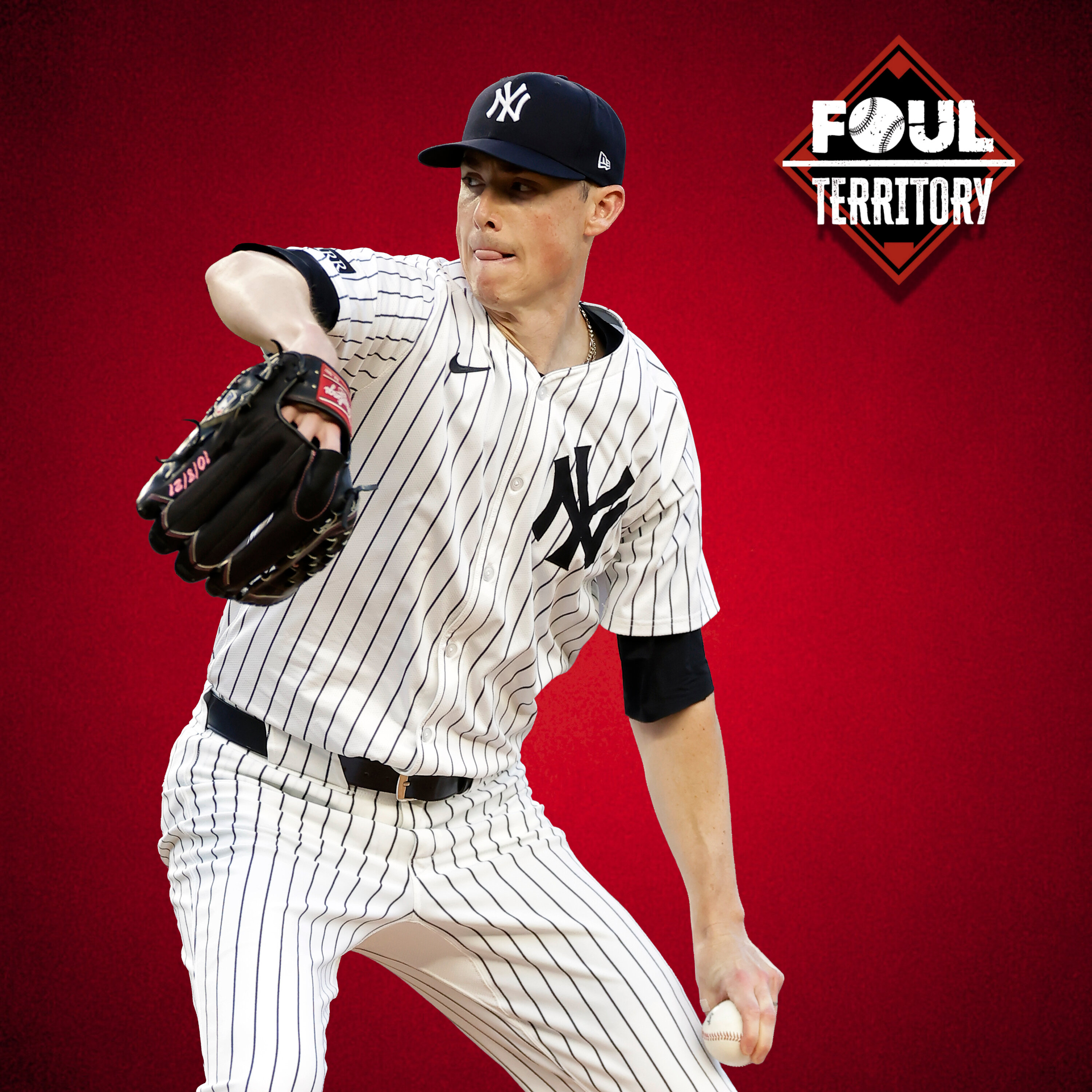
Blue Jays unfairly in a little trouble for marketing in Japan? Ryan Yarbrough on signing back w/Yankees
The Blue Jays got on MLB's radar after some promotion in Japan with their logos. Should teams be able to fight for a market that has been so dominated by the Dodgers in the past few years?
(9:30) Then it's Yankees pitcher Ryan Yarbrough joining us and talking about his quick free agency process, why he signed back with the Yankees and how they helped him. He also got into his offseason goals as a pitcher with so much versatility, playing in a big market and more.
Hosts: Kevin Pillar, Erik Kratz, Scott Braun
Holiday shopping flow continues at FoulTerritoryShop.com
See omnystudio.com/listener for privacy information.
Available Results
Generated results are saved to the knowledge database for reuse and search.
Extract Knowledge
Pick what you want extracted first. Model, scope, and chapter options appear after a template is selected.
Transcript
00:00:03
Speaker 1: Hot corner time. Teams are trying to get some more attention in Japan because one club has almost all of the attention in Japan right now. They happen to have the best player on the planet and one of the best all time on their team. That's the Dodgers. This story has to do with the Blue Jays marketing. So Evan Drelik put out a report that said a Japanese boxing ring festooned with Toronto Blue Jays logos broke MLB's marketing rules. Basically, according to this article, the Blue Jays had some logos across the mat for a world title boxing match, and they did not have permission from MLB. You have to have permission from MLB to put any kind of signage abroad. Okay, And the Blue Jays said that they were aware of the sponsorship in advance of the logo being used, and that it was not a paid sponsorship. So that sounds like maybe that was a difference in their mind and there's internal discussion right now. I read this one actually kind of twice just make sure I wasn't missing anything. KPI understand that teams need to get permission and be on the same page with MLB so that it's not just a marketing fest all across the world, and that they want everything to be in lockstep. But at the same time, although Kratz is laughing at me because yes, the marketing fest would be good, this part stood out to me later on in the article. Sometimes MLBN teams will effectively pool their branding rights together. The Dodgers, for example, started a fan club in Japan, and Rob Manford commented on that in the spring. He said, you're going to see some fan club events in Japan that are different than anything that we've done, and those are a joint effort between MLB and the Dodgers because both MLB and Dodgers' rights are involved. So I get all of that, and I'm wondering if some other teams are feeling like they're not getting their fair share of attention in a place that is just full of talent that is coming over to the major leagues and succeeding.

00:01:55
Speaker 2: Sounds like the mafia. I mean, if you want to advertise, just line the pockets at MLB. I mean, it's that simple, and obviously the Dodgers have figured that out. But I mean, what was the price the Dodgers had or the Blue Jays had to play it was a slap on the wrist, So good for them going out, and you know it was money well spent or what they said, they weren't receiving anything back from it, So good for them trying to go out and bend the rules a little bit. And if the discipline is a slap on the wrist, good for them.

00:02:27
Speaker 3: Yeah.

00:02:28
Speaker 4: I mean, the whole marketing scheme of fifty five to sixty five year old white men in this game of baseball stinks, like they can't figure out they can't figure out exactly how to telecast a.

00:02:43
Speaker 3: Regional game nationally.

00:02:44
Speaker 4: They restrict rights for highlights to places like Foul Territory who are trying to grow the game. It's like it's restriction after restriction after restriction and fell in the NBA. They're not perfect, but they're not restricting, especially not restricting players. They're not restricting teams. Like if Major League Baseball wants to ride the code tails of say the New York Yankees and buy a said podcast of a big Yankees fan and put money into that, I feel like that's kind of hurtful to the other teams, Like what about a Reds podcast, like say Riverfront Territory. But what now they want to hop on the tails of the Dodgers too, Like, don't don't take the easy marketing. There's another international team that came within two outs of the World Series that wants to promote their brand, which ultimately promotes Major League Baseball's brand. To me, let it go, maybe maybe get your get your rules right, but let it go. We're growing it. Like, I want to know how many Blue Jay fans are now over in Japan because they just watched a seven game series that was epic strike while the Iron's hot. Let everybody because a rising tide raises all ships. So let these teams advertise and market in different ways. It's twenty twenty five.

00:04:13
Speaker 1: They want control, though, I mean, I agree with you, it's one I would say if they want to approve the messaging because they don't want a team to put something out there that's like inappropriate or crosses the line. Okay, I'm with you on that. But to tell teams like everything has to go through them, I mean that sounds a little helicopter parent ish to me. But I see where the fight is right now. I mean KP. You've seen this go on for the last several years. The Blue Jays, I give them credit, have at least made a bid a fight for Roki Sazaki, a pretty strong one, and before that, show Hey Otani. They didn't get those players, and we actually saw the Blue Jays face those players in the World Series, so it very directly impacts, of course their business and also their results on the field.

00:05:02
Speaker 3: How can you.

00:05:02
Speaker 1: Get your team more popular in a country right now that is just drooling Dodgers. I was there a year ago. It's Dodgers everything everywhere and show Hey everything everywhere.

00:05:15
Speaker 2: Yeah, Grassy's point. I mean they played the Dodgers in the World Series in seven games. How many more Japanese fans did the Toronto Blue Jays receive? How many potential Japanese free agents were watching those games in Japan because they wanted to watch their fellow countrymen and show Hey and Roke, Roki and Yamamoto. But they end up going, Wow, the Blue Jays. That looks like a great city to play for, a great fan base, an unbelievable organization. So how much did the Blue Jays playing the Dodgers in the World Series with the Japanese players, they have really kind of maybe change the duration of you know, their ability to go out and sign these guys. I mean because like you mentioned, they had been in the sweepstakes for all these guys over the last couple of years. So good for them going out and doing what they did. And you know, more importantly, like Kratzy was talking about too, why is it such a big deal when teams or places like foul Territory or if it's your independent guide Home who wants to create a podcast and they want to use MLB footage to just try to grow the game. Isn't that what Major League Baseball should be wanting from people, continue to grow this game, reach a younger audience. However, you know they see it fit. I just hate that even as a player, I don't even control or former player, I don't even control access to my own highlights. I can't go out and create a Kevin Plar podcast or website and safely be able to use my own footage. So it's kind of crazy what Major League Baseball does in terms of, you know, how much they're helicopter parenting, controlling you know, every single person when it comes to the game of baseball.

00:06:55
Speaker 4: And the marketing part of it. Like Major League Baseball is losing the grassroots part of baseball. They've gotten rid of an entire level of minor league entire two levels of minor league baseball, and from what I hear, they're gonna get rid of at least one more so small town America, small town podcasts are losing the access to the game. And I wanted to comment on the fact that I talked to somebody who was in the meetings with Shohey and Rokie. He said, you know what, I don't know if we ever had a chance, but I do know that we put together a really really good package in the sense of like what you saw their spring training, what they've done in Toronto and everything like that, and they're very proud of that, and you go, okay, whatever, you like, you're you're proud of the team that you work for. But then you see Shane Bieber sign back a very team friendly deal after being there for two months plus the playoffs. Now you go, okay, well, this team, this team's done some ancillary things. They've done some things that maybe some other teams aren't doing that can help draw people to Toronto because KP knows the only people to get drawn to Toronto when we played were the dudes that were getting extra cash. Well, the Blue Jays have cash. They have a monopolistic communications company that owns their team. Essentially it's a publicly traded team and there so they have cash in the country of Canada and they're willing to do what it takes to get these guys over here. So kudos to them, and they could be the Beast of the East for a while if they continue to spend like this when other teams may not quite spend the same in the American League East.

00:08:43
Speaker 1: In conclusion, a Blue Jay's logo on a boxing ring sounds like something that, if it's illegal right now in the league, should be made legal. That is good marketing and promotion for Major League Baseball and for particular teams. One clarification here, KP know no punishment at all actually announced right now. There could be one. I don't think it's going to be a big one. This sounds like a rule that doesn't really get much of a penalty, but we'll see. Yeah, exactly, I think KP basically said what will result, which is probably a light little slap, maybe even a warning because you know, apparently this might have been done for the first time in this particular situation. But anyway, if you have thoughts on this and you're catching it after the Factor you're watching live, let us know what you think. Hey, we've got Ryan Yarborough joining us right now, and I see what is going to be a very big smile as we talk about what he just went through over the last week or so. Yard signed with the Yankees two and a half million dollars for next season on one year contract. That stuff's all out there in public.

00:09:46
Speaker 3: That's why I'm saying it. Ryan.

00:09:47
Speaker 1: Great to have you on, dude. Congratulations And I think the easy question to ask here first is how different this offseason experience is for you versus last year. If you can remind people about spring training and hopping teams and having a great year, yeah, I know.

00:10:02
Speaker 3: I appreciate it. Thanks for having me on, guys.

00:10:04
Speaker 5: And you know, anytime you can get it done in early November compared to a week in the spring training I think is always a good thing. So especially being able to kind of get ready, get the family situated, know where we're going, get all the living, all the logistics, taken care of. That's pretty great. Yeah, So I'm very excited and especially get back to New York. It's very exciting and.

00:10:31
Speaker 3: Ready to go.

00:10:33
Speaker 2: Yeah, Hey, Ryan, what's up man, Good to see you again. Always a nightmare at bat for me. I don't know what it was. The way you pitched me, your arm angle and typically I hit lefties good, but you always ate my lunch.

00:10:46
Speaker 3: My question to you is.

00:10:48
Speaker 2: Given everything you went through the year before, was there some conversations with the Yankees, kind of towards the end of the year, maybe end of the postseason that you would be interested in coming back, and maybe some eagerness to kind of want to get something early, just because I know how difficult it could be with you know, a wife and kids and family and trying to get settled. Was there any conversations with the Yankees? Yeah, before the end of the year.

00:11:10
Speaker 3: Yeahkvin, No, it's definitely tough at bat for me as well.

00:11:16
Speaker 5: You know, you're always pretty aggressive, heatter, so I tried not to feed right into what you wanted.

00:11:20
Speaker 3: So I definitely tried to steer clear of you in that way. But there wasn't really much conversations.

00:11:27
Speaker 5: You know, we were kind of more focused on the playoffs and kind of the end of the season that way, and then the off season they just kind of they call it pretty early, and they were just kind of pretty aggressive with it, wanting to get it done. I think you're always curious because I feel like you can add a lot of value to a team and kind of see where you fit in hope to be back. But after dealing with free agency last year and how long it took, I didn't really have any expectations with it, so it was just kind of just waiting to kind of see how the market and everything developed. So the fact that they kind of wanted to jump on it early and get it.

00:12:02
Speaker 3: Done, I was.

00:12:03
Speaker 5: I was very excited to that, and like I said, we enjoyed it there in New York last year, so we're glad to be back.

00:12:08
Speaker 3: KP.

00:12:09
Speaker 4: I want to give you picture speak. Basically, he was saying he wasn't going to throw you a strike because you were going to swing at it anyway. So that's what he was saying nicely, and he said.

00:12:21
Speaker 2: I know what that means. I know what he meant, and thank you for saying it nicely, because yeah, I read picture code. I know what he was saying, and he could have just said, hey, you were going to swing and everything, and I wasn't going to throw anything in his own but he did it nicely, So thank you for that.

00:12:38
Speaker 4: Yeah, definitely he always wanted to throw the bag.

00:12:45
Speaker 5: No, I wouldn't say that that aggressive, but I know he was definitely looking for the fastbar early.

00:12:49
Speaker 4: So he thought your name was Calvin Polar Kelvin p Lar. But anyway, swinging anything but yards whenever whenever somebody goes to free agency, the whole, the whole like conversation. I always ask guys like who else called? I mean, did you did you call the Red Sox and Orioles? Because I feel like you need to knock off every American League East team and I was hoping this offseason would have been the time that you knocked that off. Did anybody else call? I don't know if you feel comfortable saying who else called if you want to, but like, did anybody else call?

00:13:24
Speaker 3: Because it was that early?

00:13:26
Speaker 5: I think, Uh, I mean, obviously, who's the only person who's on the American League.

00:13:30
Speaker 3: He's so far as it just Steve Pierce, you know, I think is he the only guy?

00:13:33
Speaker 2: You know?

00:13:34
Speaker 3: The whole gauntlet, But.

00:13:36
Speaker 5: I mean there was other teams that were interested in. Like I said, it was so early in the off seasons. I think that they were fielding like a lot of the interests and were in like thing. But obviously a lot of teams had were other priorities like you like al he normally goes throughout the whole offseason normal. It's like there's a certain guys who kind of set the market for everybody else. So I think with teams being interested in their work, other teams involved, I think it was more of the Yankees just being so aggressive and you know, being that perfect storm of we enjoyed it there. We live here in Tampa, so like the fact that we can use the whole complex whole off season, and I'm sure, like you guys know, any chance you can get an extra six weeks at home for spring training, you're gonna take.

00:14:18
Speaker 3: It any day.

00:14:20
Speaker 5: So it was just a perfect storm of we really enjoyed it there. We knew what they were about, and I feel like they got me better last year. They know who I am and how I can help the team. So like I said, I think it was just a perfect fit and we're definitely just excited to kind of be back, and like I said, definitely, now being able to use the complex all off season is just going to be great.

00:14:43
Speaker 2: Yeah. I got two questions for you. I'm kind of just looking at the teams you played for, New York Dodgers, Toronto, Tampa, Kansas City. I'd say all pretty good resumes of helping pitchers become the best version of themselves. Can you kind of talk about maybe the individual teams or one of the teams that really kind of stands out in terms of your development? And then I kind of want to just touch on your short time with the Blue Jays. Being a Blue Jay guy, did you feel like when you were there that you felt they had the potential to do what they ended up doing this year.

00:15:16
Speaker 5: Yeah, one hundred percent. I feel like every team like they have so many different perspectives. I feel like that's some of the biggest thing is for me, You're able to get so many different insights from different people. Obviously, I played for Tampa for five years and the biggest thing I feel like that they preach is just simplicity and just really trying to simplify things, and especially as when you're a young guy just getting into the league. Anytime you can simplify because there's so many things that are going on, the better you're going to be from just going out there and knowing you have to do one or two little singer things and be successful that way, and just really really emphasize those things. And then between Kansas City was honestly just a short stint. Enjoyed it there, but it was, like I said, getting a different respective. Okay, maybe this pitch that I was told wasn't that great. Hey, it's better than you think it is. Use it a little more. And then I was able to start and kind of do that there. And then being traded to La it was a matter of just being able to kind of fill any role they had. You know, they have so much depth in so many arms. Just when I got traded over there in twenty three, they were kind of banged up just because their starters were a little banged.

00:16:22
Speaker 3: Up and their bullpen had been used a ton.

00:16:24
Speaker 5: So I basically came in there and through like once every fifth day and gave.

00:16:27
Speaker 3: The bullpen a blow. So anytime you can do that.

00:16:29
Speaker 5: In August September was great to kind of give those guys and keep them fresh into the playoffs.

00:16:36
Speaker 3: Didn't go the way we wanted to.

00:16:37
Speaker 5: That year, but I know, just being able to kind of limit those guys and not having to throw so much that time of year is great. And then, like I said, Toronto, Toronto, I enjoyed it. You know, it was a really short stint, but you know, it's a really cool experience.

00:16:49
Speaker 3: Being able to be there and.

00:16:51
Speaker 5: Get to know that, get to know the team and the fan base and the coaching staff was great. And I think the big thing with the Yankees is they're just they have a couple of different guys that give so many different looks where maybe one guy is more pitch designed, other guy with mechanical, another guy with scouting reports. So they kind of really cover their bases that way. But the big thing for me was their their pitch design and you know, the slight changes to your grips and things like that could really just add extra depth or extra movement and just was really beneficial, especially for me for my change up specifically helped to help tremendously. So I enjoyed that, but you know, it was it was a little weird. I'll say, back to Toronto, where I got traded over there in twenty four and at that point, like they ended up trading all, like a lot of their pieces off because they knew they weren't going to make the playoffs.

00:17:38
Speaker 3: So it was.

00:17:40
Speaker 5: I thought from they had a great clubhouse, good chemistry. It was just you knew, like they knew they weren't going to be in at that point, so it was just a matter of getting the young guys some reps and things like that.

00:17:49
Speaker 3: So and then in.

00:17:50
Speaker 5: Spring training, I thought they had a really good team, because that's why I ended up spending spring with this year being back there, and I think they knew that they have had a really good team and some good potential. It was just a matter of kind of just getting into the season and getting underway.

00:18:05
Speaker 4: How are you talking about what the Yankees kind of taught you or the things that you're gleaning from your time with the Yankees and you're going back. What are your goals for this season? In the sense I mean obviously everybody says stay healthy, contribute to the team. You started eight games, you pitched in nineteen and you finished four. How do you make your goals? But also, as every baseball player does, this is the time of year where you're like, I gotta get better at this. I gotta get stronger at this to be able to make it through. Like how do you set your goals? Because you could go and make twenty five starts or you could go and make six starts and finish twenty five games.

00:18:47
Speaker 5: Yeah, I think that's where the versatility really comes in, and I think that's what they really valued and we're really excited to bring me back. One is because kind of what I've done my whole career is you've done a little bit of everything.

00:19:00
Speaker 3: I know it.

00:19:00
Speaker 5: Like it's easy to say, like you said, like everyone wants to be healthy. I think that is a big priority for me this year, just because I missed two months within oblique, so I.

00:19:10
Speaker 3: Know that's everyone's priority. But like I'm really trying to.

00:19:12
Speaker 5: Find ways and make sure that doesn't become a problem again by adding some new things to my workouts or on the recovery side. And I think that's where being here with the complex and getting with their hands on me all off season and getting you prepared that way is really beneficial.

00:19:29
Speaker 3: And then, like I said, with a lot of the.

00:19:31
Speaker 5: Pitch design stuff, it helps kind of hitting the ground running going into the year, but it's really tough. I know they're all probably I'm going to be built up to like cover a lot of innings just like I can throughout. And then obviously we have some injuries early on, so I think there's some good chance like good starts early and then we'll just kind of see how it unfolds. It's just a matter of kind of I don't want to say making it broad because like you say, you want to have really specific goals, But like I said, with my different roles, I can kind of do a little bit of everything. So it's not trying to pigeonhole myself one way when I know they're going to ask a lot of different things out of me throughout the year.

00:20:10
Speaker 4: All right, real quick one on and then I got to ask my big question, but the quick one. You're at the complex. You said you're going into complex every day.

00:20:17
Speaker 3: Yeah, we're going in.

00:20:19
Speaker 4: Are you going to the minor league side? Are you going to Steinbrenner.

00:20:24
Speaker 5: Right now, it's all at Hines on the minor league side right now. They haven't fully transition yet, but I know they'll at some point go over there. And when obviously I think more guys come down probably after the new year, things like that, but this was my first week. I'll be kind of coming in and out like I have at a place that I work out with separately, But right now all.

00:20:43
Speaker 3: The throwing has been there, and then we'll just kind.

00:20:46
Speaker 5: Of it'll be pretty fluid to see how everything will transition and be able to use it as much as possible, because it definitely is an added bonus being able to use it.

00:20:55
Speaker 4: I was just going to ask you are all the raised things out of Steinbrenner. Have they completely limine it? Or do you still drive down dal Maybury and see a raised slash Yankees?

00:21:05
Speaker 3: They got rid of that.

00:21:06
Speaker 5: I think that got taken down as soon as possible, even when we kind of came home right after the season ended up. They took all the banners and stuff down pretty quickly, So I think there's some semblance of getting everything like set back up inside the way they wanted to, But as far as all the raised banners and stuff, that's definitely not there anymore.

00:21:29
Speaker 2: He as someone who kind of was a utility type of outfielder, could start, could come off the bench. Do you ever see someone like you who is so versatile that can close games, start games, you know, pitch bulk innings. Do you ever see someone like yourself becoming more valuable in terms of like what you receive in free agency and hopefully you're the guy who kind of hopefully set that market in the future, Like it's invaluable to have a guy like you on a roster who on short notice could be like, hey, leak skills not making it start. I need you to go down the bullpen and start and give us five innings.

00:22:05
Speaker 3: Yeah, I think we'll see.

00:22:07
Speaker 5: I think the biggest thing that I've kind of taken away is most teams don't necessarily understand the full value of it until you're with them in the organization, and then I think it just is like, man, like you bring so many things to the table. I think from the outside looking in, it's just more of like, yeah, he can do some things here and there, But when you're really into the organizations, like, man, he can cover so many different things and is willing to do it and just really help the team out in so many roles, like you said, So every team that I've been a part of, once i'm there, especially for the last couple of years, like Man, you're The value you bring is just is tremendous. So I think that's been the biggest thing is the teams get to see it more once I'm finally with them. So hopefully that continues and like gets more across because I know some guys they say it's like, man, I don't understand how you do it, And I feel like when you're kind of forced to do a bunch of different roles early on, and especially in Tampa where you're just happy.

00:23:04
Speaker 3: To be a big leaguer and contribute.

00:23:06
Speaker 5: Really just how makes it easier down the road being able to do Yeah, whatever you guys need, I'm here for it all right.

00:23:12
Speaker 4: Some was made about Sonny Gray, and I kind of I argued against it about him not being a big market pitcher. You have pitched in what I would consider two big markets. Toronto you know can be a big market, but you've also pitched in two small markets. Have you seen or can you explain why people continually say, oh, this guy's not a big market guy or this guy is you know, and where you can run into that kind of stuff because you've seen both sides of it.

00:23:45
Speaker 5: Yeah, I think we're maybe if you just let too many of the outside the voices and everything you hear from the media, because obviously there's way more coverage and there's if you let that dictate you too much, I feel like you're it could maybe like weigh on guys and they put too much pressure on themselves that way. I feel like for me personally, like it's like I'm gonna be my toughest critic, right. I feel like we're all as players are going to be the hardest on ourselves.

00:24:17
Speaker 3: So I already know exactly when I'm like what I need to do.

00:24:20
Speaker 5: If I have a bad day, I'll be the first person to tell you that I had a bad day. So if I know what I can capable, if I'm going to be the hardest person myself, I'm not gonna let anything else influence it. And at the end of the day, like it's you got to make your pitches and you got to do your job regardless of the situation. So I kind of like kept it simple that way and not try to let too many things like influence you and you just kind of go out there and compete and get the job done.

00:24:47
Speaker 1: Hey, this is the way to finish this conversation.

00:24:50
Speaker 3: KP.

00:24:50
Speaker 1: I know it's difficult, but do you want to read out the stats? So Ran, when we talk to you, we also chat behind the scenes to be like who wants to ask the next question? Stuff like that. There also a side bar conversation going on.

00:25:04
Speaker 2: Oh, three for nineteen, Yeah, I knew it was a tough at bat.

00:25:08
Speaker 3: It was.

00:25:09
Speaker 2: It's one of those at bats where it's not like, it's not the overpowering stuff, and you're like, Okay, eventually I'm going to figure him out. And he just kept figuring out ways, whether it was the change of off the cutter up and in, you know it was. It wasn't a bat where you're like, oh my god, I'm scared to death, but you're you're striking out or you're jogging down the first baseline again because you just rolled one over or got jammed. I knew it was bad. That's why I mentioned it when I asked the first question. I didn't know it was three for nineteen bad. But we have a pretty good photographic memory of you know, tough pictures we faced, and you got to be up there with some of my worst numbers. You know.

00:25:45
Speaker 5: He just definitely have had some good, good days against the Blue Jays from all the years with Tampa and this.

00:25:52
Speaker 3: Last year with New York.

00:25:53
Speaker 5: So I just enjoyed, Like you said, it's not going to be anything crazy where you're just like man, but like, I really enjoyed the cat and mouse of it, the game inside the game where you're just reading swings and like able to see, Okay, what is he what do you think he's looking for?

00:26:09
Speaker 3: Okay, what do we do against him? Last at bat?

00:26:10
Speaker 5: So I just love those little nuances in the game that like just keep your brain everything engaged.

00:26:15
Speaker 3: So I really enjoy all that stuff.

00:26:18
Speaker 2: Now I want to follow up on that real quick because I had a conversation with Blake Snell during the playoffs, and he calls his own pitches because he truly believes like he's he's smart enough to read the swings. Are you a guy that calls his own pitches because you feel like you can read swings and kind of read hitters, or are you allowing the catcher to call the signs and obviously you're gonna shake to what you feel comfortable with.

00:26:40
Speaker 3: Yeah, I mean I have I've used the pitch calm in the past.

00:26:43
Speaker 5: I haven't used it the last year or two, it was more of I think just early on, and if I do use it in the future, it's more of man, the pitch clock is kind of getting there and getting going, and I think that can be like the time saving aspect of like, hey, like we can still ping pom me, you can still call pitches, but like I'm on a shake, I'm just going to tell you exactly what I want to go to next, compared to like four pitches on both sides of the plate. That can add up to timeframe and then you're kind of rushing to the plate. But I do enjoy the the back and forth with the catchers, and even if I'm shaking off or I'm the guy who really likes to explain, I'll come in like, hey, this is what I was thinking here and this is why. So it's not like I just didn't want to throw this on want or to throw this. There's always a rhyme or a reason why I'm trying to do something, so I always try to get that, and it's been normally throughout the game. If like you are maybe not on the same page as the first inning or two, if you keep doing it and adding it up as Cratzy will tell you like you're be on the same page, and the more you throw it together throughout the season, you're gonna have a generalized idea of it. But I definitely understand what Smells talking about with the conviction of like I just want to do it, I'm going to do it at my pace and let's just get going.

00:27:53
Speaker 1: Ryan, great insight man. Always always appreciate the conversation. And I have a great Thanksgiving with the fam.

00:28:00
Speaker 5: Awesome thanks guys, Happy Thanksgiving, and yeah, I appreciate have you on