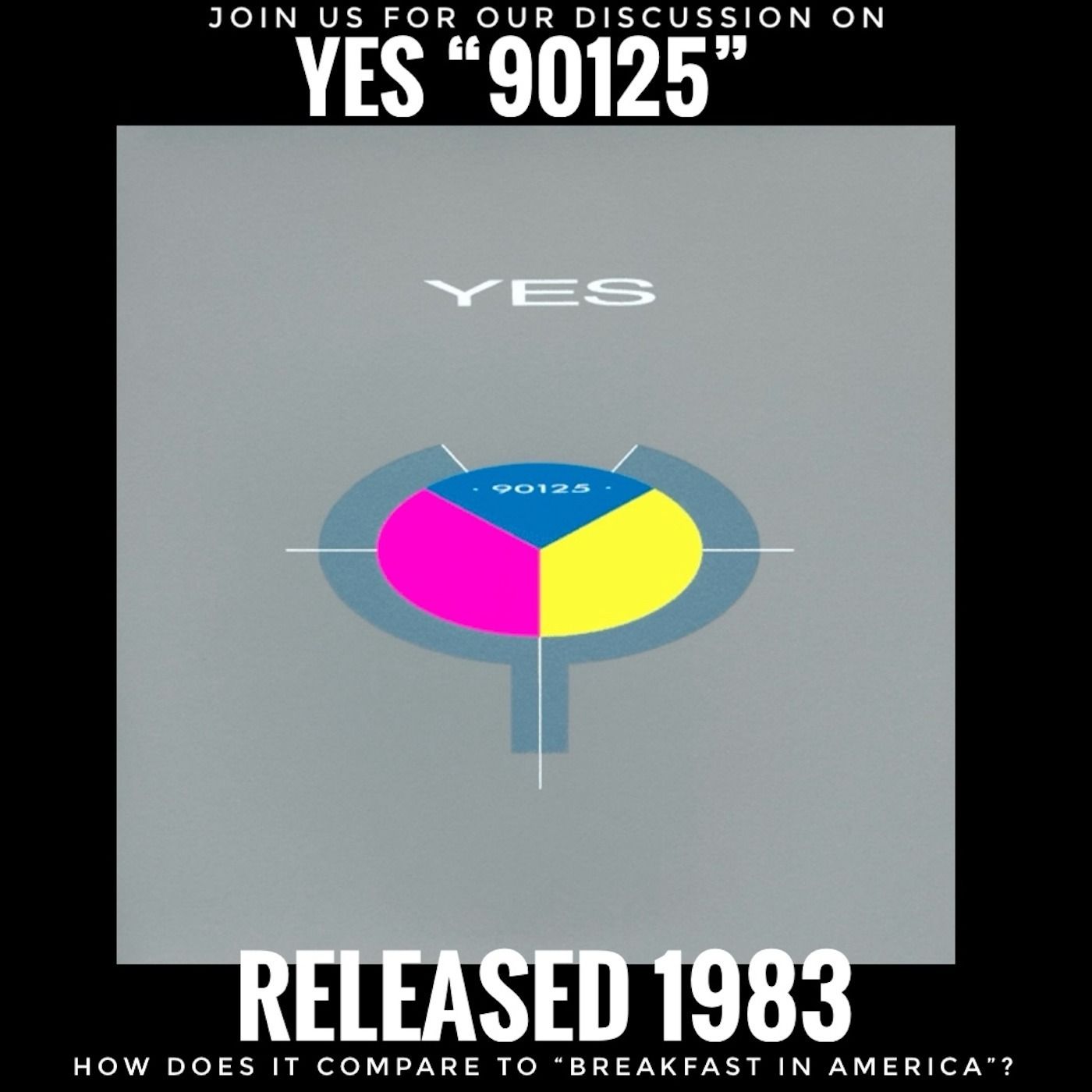
Yes "90125" (1983): Track by Track!
Join Jason and Dee of the Surely You Can't Be Serious Podcast as we dive into the groundbreaking 1983 album 90125 by Yes! In this episode, we take a deep dive into each track, exploring the stories behind the songs and what made this album a defining moment in the band’s history.We’ll unravel the complex tale of Yes: the breakup after the turbulent 1980 tour, the addition of Trevor Rabin’s creative spark, and the reformation that brought the band back stronger than ever. Along the way, we’ll also take a brief detour to discuss the formation of the supergroup Asia, born from Yes’s leftover parts, and spotlight Trevor Horn’s fascinating influence as both a member and producer.Whether you’re a die-hard Yes fan or new to their music, this episode promises to deliver insight, nostalgia, and plenty of appreciation for one of progressive rock’s most iconic albums!
2024-12-30
63 min
Transcript
Available Results
Generated results are saved to the knowledge database for reuse and search.
No generated results are available for this episode yet.
Extract Knowledge
Pick what you want extracted first. Model, scope, and chapter options appear after a template is selected.
Generated results for public episodes are saved to the knowledge database so they can be reused and searched later.
Transcript
<v Speaker 1>Ao, this is Sammy J. From Chicago and you're listening
<v Speaker 1>to Shirley you Can't Be Serious podcast, And it's like
<v Speaker 1>something to think about, right, Like what if my name
<v Speaker 1>was Shirley right, and I'm like, yo, I am serious,
<v Speaker 1>and you can feel comfortable with calling me Shirley because
<v Speaker 1>that's my name and you know, always remember, right, like
<v Speaker 1>life is all about when your Internet goes down, it's
<v Speaker 1>not how many dimes it goes down, but how many
<v Speaker 1>times you get back up? Come on, you know, listen up.
<v Speaker 2>You're better than this.
<v Speaker 1>HEO.
<v Speaker 2>Hello, everybody, Welcome back to the Shirley you Can't Be
<v Speaker 2>Serious Podcast. D We are at the end of season five.
<v Speaker 2>Can you believe? I mean, we've made it five years
<v Speaker 2>and this is completed our fifth year.
<v Speaker 3>I can feel no sense of measure, no illusions as
<v Speaker 3>we take refuge in young man's pleasure, breaking down the
<v Speaker 3>dreams that we make. That's what this podcast is about,
<v Speaker 3>ladies and gentlemen, breaking down the young man's dreams when
<v Speaker 3>we were young in the eighties, young in the nineties.
<v Speaker 3>If you were young in the seventies, you may not
<v Speaker 3>be as big a fan of this episode because you
<v Speaker 3>may love a yes, that's not the yes we're talking
<v Speaker 3>about today.
<v Speaker 2>That's true.
<v Speaker 3>By the way, we are here today to talk about
<v Speaker 3>yes ninety nine oh one two five, which is interesting
<v Speaker 3>because if you listen to the intro music for Beverly
<v Speaker 3>Hills nine oh two one oh, yes, it's very similar
<v Speaker 3>to Owner of a Lonely Heart. Oh really, take a
<v Speaker 3>listen to it right here, haven't that I don't know.
<v Speaker 3>I'm just saying, you know, somebody was like nine o
<v Speaker 3>two one oh what about nine oh one two five?
<v Speaker 2>Hey, I'll tell you this before we get into what
<v Speaker 2>that actually means. I was with our good friend Doug Gray.
<v Speaker 2>We were taking some kids ice skating the other nine.
<v Speaker 2>He was sitting shotgun and we were talking and he's like,
<v Speaker 2>is that like a zip code? Like what I mean
<v Speaker 2>because it's close to nine oh two one oh? Right, yeah,
<v Speaker 2>so nine oh one two five would make a lot
<v Speaker 2>of sense.
<v Speaker 4>Yeah, that may be somebody's zip code.
<v Speaker 2>So we looked it up. Uh huh, do you know
<v Speaker 2>what zip code that is? No?
<v Speaker 4>What zip code is it?
<v Speaker 2>It's non existent? Just not a zip code? Too bad? Right?
<v Speaker 4>Right?
<v Speaker 3>That had been like, yes, so we will in this episode,
<v Speaker 3>we will tell you the secret of what nine oh
<v Speaker 3>one two five means?
<v Speaker 2>And we will tell you.
<v Speaker 3>The secret of this band and how they fell apart
<v Speaker 3>and then re configured themselves into what we got in
<v Speaker 3>nineteen eighty three. This, I'll tell you, this is a
<v Speaker 3>fascinating history. And I will also tell you when you
<v Speaker 3>asked me, You're like, hey, do you know what nin
<v Speaker 3>to five means? And I said, I think it's how
<v Speaker 3>many members they've had in this band. I mean, g Andi,
<v Speaker 3>this band is still around. There are no original members left, right,
<v Speaker 3>There's some members from the seventies there and from nineteen
<v Speaker 3>eighty there, but that's it. Like, none of the guys
<v Speaker 3>that we're going to talk about today are still in
<v Speaker 3>the band.
<v Speaker 2>I will say this typically the band history, that's kind
<v Speaker 2>of your area of expertise. That's where you like to
<v Speaker 2>concentrate and follow rabbit trails and stuff like that. Yeah,
<v Speaker 2>this may be the most interesting formation of Yes and
<v Speaker 2>how it's related to several other bands and the breaking
<v Speaker 2>up of Yes and the coming back together of Yes.
<v Speaker 2>I was blown away, and I dare say that really
<v Speaker 2>no other band has gone through this exact same process.
<v Speaker 3>Well, I mean, we're here today to talk about their
<v Speaker 3>eleventh studio album right eleventh. I don't know that we've
<v Speaker 3>ever talked about a band's eleventh album. I mean, we've
<v Speaker 3>talked about Aerosmith and Ozzie was Born and many bands
<v Speaker 3>that have many albums. I don't think we've ever hit
<v Speaker 3>the double digits before. And it was almost forty years
<v Speaker 3>It was forty one years ago.
<v Speaker 2>That's forty one years ago. Spandmed in nineteen sixty eight.
<v Speaker 2>My dad was a teenager when this band.
<v Speaker 3>Was formed, right, And as I said, they went through
<v Speaker 3>so many changes of members in this band. I could
<v Speaker 3>not possibly in an hour long episode give you everything.
<v Speaker 3>So what's interesting is what we've got here that we're
<v Speaker 3>going to talk about today is really yes, part three,
<v Speaker 3>but it was almost led Zeppelin Part two, right, Yeah,
<v Speaker 3>So we'll get to that story in just a bit.
<v Speaker 3>Before we get into all of that, I just want
<v Speaker 3>to say, Merry Christmas, everybody. Merry Christmas.
<v Speaker 2>Christmas was a few days ago, even though even though
<v Speaker 2>for us Christmas is in the future, for people listening
<v Speaker 2>to this, it's in the past. Happy New Year, everybody knew.
<v Speaker 4>That's what I meant to say.
<v Speaker 3>What I really mean is I'm very grateful and thank
<v Speaker 3>you for the gift that is our listenership, our fandom.
<v Speaker 3>I appreciate you, appreciate you guys so much. You've made
<v Speaker 3>it amazing five years. I hope we have ten times
<v Speaker 3>as many coming up, and we'll be talking about our
<v Speaker 3>eleventh studio album in forty wins.
<v Speaker 2>Right right, all right, well, let's dive into yes nine, one, one, two, five.
<v Speaker 3>Let's see we have this new album from this kind
<v Speaker 3>of newly reconglomerated band. Can we open up with a banger?
<v Speaker 2>Let's save the best for first, What do you say?
<v Speaker 2>I mean, really, let's start off with one of the
<v Speaker 2>biggest songs of nineteen eighty four. I think it was
<v Speaker 2>like eleventh overall for that year. We're talking about one
<v Speaker 2>of the best years for music.
<v Speaker 3>In history, right, maybe the best, arguably the best year
<v Speaker 3>in history, and this one topped the charts for several weeks.
<v Speaker 3>Here we go number one, owner of a lonely heart.
<v Speaker 3>First three seconds of the song, and we got so
<v Speaker 3>much to talk about already.
<v Speaker 2>It's incredible, right, one of the first songs to include
<v Speaker 2>a bunch of samples.
<v Speaker 3>Yeah, other than some select rap groups, Yeah, nobody was
<v Speaker 3>doing this in nineteen eighty three.
<v Speaker 2>In the rock world, and really they pop in this song.
<v Speaker 2>It's almost impossible. You can't ignore them. It's like no, no, no,
<v Speaker 2>really cool. This song was released October twenty fourth, nineteen
<v Speaker 2>eighty three. This song reached all the way to number
<v Speaker 2>one in nineteen eighty four.
<v Speaker 4>Yep, do you want to hear the top five?
<v Speaker 2>I was expecting you. I hate to lead with that,
<v Speaker 2>but I know you're four right now. Okay, So this
<v Speaker 2>reached number one January twenty first, nineteen eighty four. Your
<v Speaker 2>top five not as strong as I was hoping. Four
<v Speaker 2>in January of eighty four. Number five, Break My Stride
<v Speaker 2>by Matthew Wilder. Yes, I know that, number four, Talking
<v Speaker 2>in Your Sleep the Romantics.
<v Speaker 3>Yes, we covered that one in our top five of
<v Speaker 3>nineteen eighty four. Be sure and go check out that one.
<v Speaker 3>We did talk about this song too.
<v Speaker 2>Yes, spoiler alert, Yes we did.
<v Speaker 3>Didn't know that we were going to cover this album
<v Speaker 3>for sure, and so yeah, so it made it onto
<v Speaker 3>that chart. Number three Karma Chameleon, Yeah, pretty big, unescapable.
<v Speaker 4>Yep.
<v Speaker 2>Number two, say say say, Paul McCartney, Michael Jackson.
<v Speaker 4>It's your favorite one.
<v Speaker 3>This is where Michael Jackson wins an arm wrestling. It
<v Speaker 3>was oddly flirting with his sister.
<v Speaker 4>I don't know.
<v Speaker 2>That was before his major fallout with Paul McCartney over
<v Speaker 2>the Beatles catalog issue and of course number one owner
<v Speaker 2>of a Lonely Heart.
<v Speaker 3>Can we talk about the guitar. This guitar sound that,
<v Speaker 3>I mean, it grabs a hold of your brain and
<v Speaker 3>squeezes it.
<v Speaker 2>It does.
<v Speaker 3>I mean, it's so good, it's so powerful. I don't
<v Speaker 3>know what the magic is that they did. I mean,
<v Speaker 3>this is a studio guitar that they there's no question
<v Speaker 3>that they were doing some magic in the studio here
<v Speaker 3>to make this sound as loud and crunchy as it does.
<v Speaker 3>But chef's kiss that they did their job.
<v Speaker 2>You've got the great crunchy guitar riff at the beginning.
<v Speaker 2>You've got a little arpeggio guitar, yes that's right, right,
<v Speaker 2>You've got the samples, yep, you've got the samples sound effects.
<v Speaker 2>You've got the bass that's basically mimicking the boom boom
<v Speaker 2>boom boom boom, and then just all this fun stuff
<v Speaker 2>and then the vocals are off the chart. And this
<v Speaker 2>song was composed on the toilet completely and finished on
<v Speaker 2>the toilet.
<v Speaker 4>Finished, well, not quite finished.
<v Speaker 3>There's an interesting story about pieces that were missing of
<v Speaker 3>this song, that's true, and the reunification of the band. Yes,
<v Speaker 3>that comes along with this, but we'll get into that
<v Speaker 3>story here in a little bit.
<v Speaker 4>Did you get to go watch this video?
<v Speaker 2>Yeah? I did. I think it's one of the worst
<v Speaker 2>videos of nineteen eighty four. What did I seriously think that?
<v Speaker 2>Because it started and then it stopped. So the one
<v Speaker 2>I watched, it's like the band and then John Anderson says,
<v Speaker 2>wait a minute, and the song comes to a grinding halt,
<v Speaker 2>and John Anderson's like, can we do this any other way?
<v Speaker 2>The song restarts, and then it's like people turning it
<v Speaker 2>into animals.
<v Speaker 3>I remember, like the mainstream video that you would see
<v Speaker 3>on MTV where they didn't show the full I mean
<v Speaker 3>I remember seeing the full version where they threw that
<v Speaker 3>weird stop start thing and change into birds and other
<v Speaker 3>animals and stuff like that snags and lizard right, which again,
<v Speaker 3>I mean, it kind of makes me think of the
<v Speaker 3>Pink Floyd Learning to Fly video where he's like, you know,
<v Speaker 3>takes the running jump and turn into the bird, right. Sure, Well,
<v Speaker 3>the directors of the video are Audrey Powell and Storm Thurgerson,
<v Speaker 3>who did a bunch of the Pink Floyd artwork. And
<v Speaker 3>so I'm guessing this was a director decision, not a
<v Speaker 3>band decision.
<v Speaker 2>Sure, we won't.
<v Speaker 4>Blame it on the band.
<v Speaker 2>For guys who has started in nineteen sixty eight, music
<v Speaker 2>videos was kind of uncharted territory. Sure, you got to
<v Speaker 2>do this to keep up because MTV is a huge
<v Speaker 2>new thing and these.
<v Speaker 3>Guys are like, what are we doing here? So what
<v Speaker 3>you're trying to tell me is that the video was
<v Speaker 3>killing the radio star. Oh my gosh, that's so good.
<v Speaker 3>You're going to bring it in by the way.
<v Speaker 2>Okay, we're going to get into that, yeah, okay, but
<v Speaker 2>I do want to say this before we go any further. Yeah,
<v Speaker 2>this song was kicked out of number one by a
<v Speaker 2>song that we've talked about.
<v Speaker 4>Okay, really.
<v Speaker 2>Relax by Frankie Goes to Hollywood.
<v Speaker 4>That was one of our Patreon episode. Loved that episode.
<v Speaker 2>You remember who was the producer of that song? Don't
<v Speaker 2>remember Trevor Horn.
<v Speaker 4>Oh that's right. Oh yeah, he's the one that made
<v Speaker 4>that song so good.
<v Speaker 2>That's it?
<v Speaker 4>Oh my heed it?
<v Speaker 2>And said, guys, can I bamp this up for you.
<v Speaker 3>Yes, yeah, they were just kind of a weird. There's
<v Speaker 3>not any politically correct way for me to say what
<v Speaker 3>I'm thinking right now, but yes, they were kind of.
<v Speaker 2>An alternate club type of band, lifestyle clubs band. And
<v Speaker 2>Trevor Horn.
<v Speaker 3>Said, this actually has got a bit of a hook.
<v Speaker 3>If you do some right production on this, we can
<v Speaker 3>make this a.
<v Speaker 2>Hit, is it okay?
<v Speaker 4>Right?
<v Speaker 2>Yeah? Is it okay? If I make this a number
<v Speaker 2>one smash around the world, right, we'll sell lots of
<v Speaker 2>T shirts. So Relax and Owner of a Lonely Heart
<v Speaker 2>are sort of third cousins. Yeah, Okay, In just a minute,
<v Speaker 2>we're going to talk about another song that I think
<v Speaker 2>is very strongly related to this. Yeah, but let's kick
<v Speaker 2>that down the road. Okay, now you mentioned it. Trevor
<v Speaker 2>Rabin wrote this song on the toilet. Well, Trevor Rabin,
<v Speaker 2>who's this guy he's done in? Yes?
<v Speaker 3>Yeah, so Trevor Rabin had started off he was this
<v Speaker 3>South African guy. He was in a band in South Africa,
<v Speaker 3>got pretty famous in a band called Rabbit Ever Rampant Rabbit. Okay, No, no,
<v Speaker 3>I don't think that was well, maybe I don't know
<v Speaker 3>who knows. Maybe I don't know how Rabbit came up
<v Speaker 3>with his name, but I will tell you that this
<v Speaker 3>that the Volkswagen Rabbit was about to come out in
<v Speaker 3>the US, and they were like, Hey, we like this band.
<v Speaker 3>We want this band to come to the US and
<v Speaker 3>be like composing the music for our promotions of this
<v Speaker 3>new Rabbit car. Yes, and they were like, we're in.
<v Speaker 3>The only problem was in nineteen eighty whatever it was,
<v Speaker 3>they couldn't get a visa to the US.
<v Speaker 4>And guess why apartheid?
<v Speaker 2>You got it? Yes, that is right. That's the same
<v Speaker 2>reason why Kruegrans are illegal in the United States.
<v Speaker 3>Yes, So Trevor Rabin was frustrated. After that left the band.
<v Speaker 3>He went to the UK. I guess UK didn't have
<v Speaker 3>a problem with apartheid.
<v Speaker 4>I don't know.
<v Speaker 3>He moved to London, he started a record company up there,
<v Speaker 3>got some funding from a milling company in South Africa, Okay,
<v Speaker 3>and so he starts producing. He produces Thin Lizzy, he
<v Speaker 3>produces Manford man Tever Raven. Yes, Trevor Rabin is producing
<v Speaker 3>these records and of course playing on these albums as well,
<v Speaker 3>because he is a brilliant musician. He's not only a guitarist.
<v Speaker 3>He plays keyboards and other stuff, just you know, an
<v Speaker 3>incredible composer. And so Geffen Records comes in and they're like, hey, Trevor,
<v Speaker 3>do you have any demos?
<v Speaker 2>And he's like, yes, I do, and he.
<v Speaker 3>Plays them what would ultimately become yes, nine oh one
<v Speaker 3>two five.
<v Speaker 2>Yeah. So there actually is an early version of this
<v Speaker 2>song available. It's a compilation of demos and it's called
<v Speaker 2>nine oh one two four. So I do want to
<v Speaker 2>tell you this quick story. You know, we talk about
<v Speaker 2>Trevor Rabin. They really didn't know what to do with him.
<v Speaker 2>He's kind of like Brian Adams. He's a talented singer
<v Speaker 2>songwriter right working on songs. He can sing, he can
<v Speaker 2>play guitar. Am I going to be in a band?
<v Speaker 2>Am I gonna be buy my?
<v Speaker 4>You know?
<v Speaker 2>Geffen signed him to this development deal and then they
<v Speaker 2>started kind of trying to push him around to figure
<v Speaker 2>out where he would fit. But he took these songs
<v Speaker 2>to Arista and Clive Davis, who we've talked about before
<v Speaker 2>many times, said no, I don't like these songs. They're
<v Speaker 2>too strange. That's on Noval only Heart yeah and changes
<v Speaker 2>and some yeah, some.
<v Speaker 4>Of these others talk about. Yeah, most of the songs
<v Speaker 4>on the album.
<v Speaker 2>Yeah, so this is what he said. Clive Davis says
<v Speaker 2>to him, these songs are too weird. I don't like him.
<v Speaker 2>I want you to write stuff that sounds more like foreigner. Yes,
<v Speaker 2>that's right, and Trevor Ravens liked, thank you very much.
<v Speaker 4>I'm not going to do that.
<v Speaker 2>Have a nice day, see you later, kiss my butt
<v Speaker 2>Clive Davis. Right. So, ultimately, these songs caught the ear
<v Speaker 2>of an an our guy named Ron Fair yep. Ron Fair,
<v Speaker 2>who I think you've got a history on, basically said, look,
<v Speaker 2>I love this song. I want it to be a hit,
<v Speaker 2>and I will make sure this song is a hit.
<v Speaker 4>Yeah.
<v Speaker 3>He was with RCA Records and he just basically said,
<v Speaker 3>let me play with it, let me edit it. But
<v Speaker 3>as you can easily tell by looking at the album,
<v Speaker 3>this is not an RCA record album. So something else happened.
<v Speaker 3>But you'll have to wait and see what happened there
<v Speaker 3>in just a bit.
<v Speaker 2>Okay, I don't feel like we've told people enough how
<v Speaker 2>terrible this music video is, especially in relation to how
<v Speaker 2>great the song is. Yeah, it's there's a lot of
<v Speaker 2>potential that got missed, I think on this one, but
<v Speaker 2>it was still on all the time. It was on
<v Speaker 2>all the time because it was a time and history.
<v Speaker 3>Where there were a lot more videos to play. But
<v Speaker 3>MTV was instead of just setting the standard that these
<v Speaker 3>are the songs you're going to listen to, they also
<v Speaker 3>followed the top forty and this was a song people
<v Speaker 3>were listening to and they're like, well, we got to
<v Speaker 3>play this video even if it's terrible.
<v Speaker 2>Even if it's terrible and it's full of old, ugly
<v Speaker 2>English guys, right.
<v Speaker 3>Just gank that guy out, carry him out like I'm
<v Speaker 3>mad man. I hate to move on too fast from
<v Speaker 3>this song, such a good song.
<v Speaker 2>I do want to emphasize there's one part in the
<v Speaker 2>song that just every time my hair blows my socks off,
<v Speaker 2>let me play the part in the song that really
<v Speaker 2>blows my socks off, right, So they really lean on
<v Speaker 2>that part of the heart.
<v Speaker 3>That sound That voice is John Anderson, Yes, and John
<v Speaker 3>Anderson is one of the og Yes guys and was
<v Speaker 3>not a part of this project at all until he
<v Speaker 3>was until he was and he gets credit a writing
<v Speaker 3>credit on the song, even though Tever Rayburn basically completed
<v Speaker 3>the whole thing on the toilet, on the toilet, because
<v Speaker 3>he had the chorus, and he had kind of the
<v Speaker 3>scat of the of the lyrics, but didn't really have it.
<v Speaker 3>But that very first line, that move yourself, Yeah, that
<v Speaker 3>is John Anderson's contribution. He came in and added some
<v Speaker 3>more lyrics in the verses other places, and that opening
<v Speaker 3>line and that solo, that long scream lonely heart. Yeah,
<v Speaker 3>you just pointed out it's it helps make this song
<v Speaker 3>what it is. I mean, maybe he didn't.
<v Speaker 4>Write it, but he made it something special.
<v Speaker 2>It's a banger, and when it hits that, it levels up.
<v Speaker 4>Yeah.
<v Speaker 2>Just and there's so many breakdowns and movements, and this
<v Speaker 2>is not your standard.
<v Speaker 4>Rock and roll song.
<v Speaker 2>This is just awesomeness all over coming at you from
<v Speaker 2>all directions. Yep, all right, we're gonna move on to
<v Speaker 2>the song.
<v Speaker 4>We got to move on. We'll never get through the
<v Speaker 4>album if we don't move on.
<v Speaker 2>All right, well hold on? Oh wait, the next song
<v Speaker 2>on the album is called hold On.
<v Speaker 3>As a guy who plays music and a guy who
<v Speaker 3>plays guitar, I can tell you that many, many, many
<v Speaker 3>many guitar players start off by learning to play the blues.
<v Speaker 4>If they want to learn to play rock and roll music, right, right.
<v Speaker 3>That's just that's like stage one, right, if you want
<v Speaker 3>to be able to play the lead guitar, you're probably
<v Speaker 3>gonna learn how to play the blues first. It's not
<v Speaker 3>basic necessarily, but it is kind of stage one, good
<v Speaker 3>starting point. This is what happens when a progressive rock
<v Speaker 3>band takes a blue song and says, okay, let's.
<v Speaker 2>See what we can do with the blues. Well, all
<v Speaker 2>one up? Yeah, yeah, I think this is what happens
<v Speaker 2>when a progressive rock band takes two blues songs and
<v Speaker 2>merges them together.
<v Speaker 4>Yeah, that's right.
<v Speaker 3>You've got a combination of two songs, one called hold
<v Speaker 3>On and the other one called moving.
<v Speaker 2>In, right, both written by Trevor Raven. He brought them
<v Speaker 2>to the band and Trevor Rabin had written both of
<v Speaker 2>these songs, and they're like, you know what, like this part,
<v Speaker 2>like that part, I think we should merge this into
<v Speaker 2>one song. And you can kind of hear it at
<v Speaker 2>the beginning. It's got one beat and then it hits
<v Speaker 2>that chorus and it kind of changes right there.
<v Speaker 3>It's great, Oh yeah, this is a fantastic song. And
<v Speaker 3>you say, you know he brought it to the band. Yes,
<v Speaker 3>we've got to kind of know who that is, right,
<v Speaker 3>who's the band? Okay, let's talk about this. Yeah, on
<v Speaker 3>the base, we've got Chris Squire, founding member of the band. Yes,
<v Speaker 3>we have Alan White drummer, Okay, member of the band.
<v Speaker 3>Yes on keyboards, Tony Kay had been a member of
<v Speaker 3>the band, Yes, and then he wasn't Yeah. Yes, and
<v Speaker 3>you've got Trevor Rabin. Who's the guy who's got this
<v Speaker 3>demo that they're turning into an album. I just want
<v Speaker 3>you to know, d I've got this diagram that shows
<v Speaker 3>who is in the band, Okay, what band they were in,
<v Speaker 3>what band they went to? Because I couldn't keep it straight.
<v Speaker 3>But it's so incredibly fascinating.
<v Speaker 4>It is complex stuff.
<v Speaker 3>And the thing is is that these guys, most of
<v Speaker 3>them were successful in multiple different bands.
<v Speaker 2>That's right.
<v Speaker 4>Yeah.
<v Speaker 3>When Trevor Rabin has this kind of disappointing news from
<v Speaker 3>you know, from Clive Davis of hey, can you sound
<v Speaker 3>more like Foreigner, it's like, okay, now I'm depressed.
<v Speaker 4>Right.
<v Speaker 3>He then had this little glimmer of hope that Ron
<v Speaker 3>Fair was going to do something with owner of a
<v Speaker 3>Lonely Heart, but then that didn't materialize, so he's kind
<v Speaker 3>of had two false starts here, and then he gets
<v Speaker 3>a call from Phil Carson and Richard Steinberg of Atlantic Records.
<v Speaker 3>He gets a call from Phil Carson because Phil Carson
<v Speaker 3>had just been introduced to.
<v Speaker 4>Him by Mut Lang.
<v Speaker 2>I did not come across a Mutt Lane connection.
<v Speaker 4>Yeah.
<v Speaker 3>So Mutt Lang had worked with Trevor Rabin. Before Trevor
<v Speaker 3>Rabin it was I mean, it's a fantastic musician. So
<v Speaker 3>he'd done a lot of studio session work and so
<v Speaker 3>Mutt Lang is like, hey, Phil Carson from Atlantic Records,
<v Speaker 3>you really should talk to Trevor Rabin. And so Phil
<v Speaker 3>Carson listens to the demos and he's like, Okay, I
<v Speaker 3>have two bands for.
<v Speaker 2>You to be in.
<v Speaker 3>And he's like, I can do one band unless you
<v Speaker 3>know some sort of magic trick that I don't know right,
<v Speaker 3>And he's like, oh, well, get you just got to
<v Speaker 3>pick right. And so band number one Cozy Powell what Yeah,
<v Speaker 3>James Buckley's Ears just worked up too, who was a
<v Speaker 3>friend of Trevor Ravens, Jack Bruce Keith Emerson from Emerson
<v Speaker 3>Lake and Palm, who's also a friend of Trevor Rabins.
<v Speaker 2>Well, we'll talk more about them here in a second.
<v Speaker 3>And then these other two guys named Chris Squire and
<v Speaker 3>Alan White is who he met first, and he immediately hit.
<v Speaker 4>It off with them.
<v Speaker 2>And it wasn't that they made fantastic music on their
<v Speaker 2>first meeting. Yeah, he just liked them.
<v Speaker 4>They just got along.
<v Speaker 2>Well, hey, that's why I hang out with you.
<v Speaker 3>Yeah, exactly right, that's right. You want to work with
<v Speaker 3>somebody who you like. And I mean, I guess he
<v Speaker 3>already knew Cozy and already knew Keith, and so it
<v Speaker 3>was like, okay, yeah, I know those guys, they're fine,
<v Speaker 3>but he wanted this band that Chris Squire and Alan
<v Speaker 3>White were trying to put together. They do one rehearsal
<v Speaker 3>and then they say, you know what, we think you need.
<v Speaker 2>A co singer.
<v Speaker 3>We'd like to bring in Trevor Horn. And so Trevor
<v Speaker 3>Horn comes in and sings with them, and then Trevor
<v Speaker 3>Rabin is like, I am not going to be in
<v Speaker 3>a band with Trevor Horn is just not that good. Okay, Wow,
<v Speaker 3>it's just not gonna work. And so they said, well
<v Speaker 3>how about he produces. He says that sounds great, Trevor
<v Speaker 3>Horn can produce the album. I do not want to
<v Speaker 3>sing with him. And so the record company is like, listen,
<v Speaker 3>we like Chris's voice. I mean, Chris has got an
<v Speaker 3>integral part of the harmonies you're hearing on this sure,
<v Speaker 3>and we like Trevor's voice, but they're not like reaching
<v Speaker 3>out and grabbing us. And so as it happens, Chris
<v Speaker 3>happens to be at a party and who should be
<v Speaker 3>there but John Anderson, and John Anderson comes over and says, hey,
<v Speaker 3>I hear you making some really good music right now,
<v Speaker 3>and Chris says, you should really hear it. And so
<v Speaker 3>they go to John's house, but they don't go inside
<v Speaker 3>because Chris's wife and John's wife hate each other.
<v Speaker 2>Oh wow, that was.
<v Speaker 4>A part of their old history.
<v Speaker 3>Was not only did they eventually not get along with
<v Speaker 3>their wives, hated each other. So they're sitting outside his
<v Speaker 3>house in a car with a tape deck. He pushes
<v Speaker 3>in Trevor Raven's demo and John Anderson listens and.
<v Speaker 2>Says, I would love to help you out with this
<v Speaker 2>if you want me to.
<v Speaker 4>He's like, come on over.
<v Speaker 3>So he just came in really to kind of add vocals.
<v Speaker 3>That was it just add them right, and then he
<v Speaker 3>became the lead singer.
<v Speaker 2>Okay, can I back you up because I've got something
<v Speaker 2>interesting to add. Okay, So here's the interesting thing to me.
<v Speaker 2>Between the ninth album of Yes, called Tormado, which.
<v Speaker 3>Is I think a terrible name. Wait wait, Tormado Tormado
<v Speaker 3>like the combination of tornado and tomato.
<v Speaker 2>Yes, yes, okay, all right, and their tenth album, Drama,
<v Speaker 2>John Anderson quits. John Anderson is the lead singer. He's
<v Speaker 2>the sound of the band, he's the signature of the band.
<v Speaker 2>So he leaves. Okay. Then you add these two guys,
<v Speaker 2>Trevor Horn and Jeffrey Downs, who you and I know
<v Speaker 2>better as the Buggles.
<v Speaker 3>Yes, they lost Hans Zimmer somewhere along the way. What
<v Speaker 3>Hans zimmern Zimmer got lost?
<v Speaker 4>And they're like where Hans go?
<v Speaker 3>Oh wait, there's yes, let's see if they need people,
<v Speaker 3>And as it turned out, they did.
<v Speaker 2>So Trevor Horn and Jeffrey Downs step into Yes. Trevor
<v Speaker 2>Horn takes over lead vocals. Now stay with me on this.
<v Speaker 2>He imitates John Anderson's.
<v Speaker 4>Voice, can't.
<v Speaker 3>I mean if just think about the guy who's singing
<v Speaker 3>video killed the radio sar and the guy who's singing
<v Speaker 3>leave it right, and you're gonna go there's no way
<v Speaker 3>that guy sounds that like that other guy.
<v Speaker 4>Right.
<v Speaker 2>I'm gonna look at my diagram here. So after the
<v Speaker 2>tenth album Drama, Yes, Sa, that's it. We can't stand
<v Speaker 2>each other. We're breaking up. Okay. Imagine a piece of
<v Speaker 2>glass shattering. So Chris Squire and Alan White are looking
<v Speaker 2>for a band. Okay, well, I thought we've got to
<v Speaker 2>keep going. We're only on song number two. We got
<v Speaker 2>to move on to song number three. Here, hold that thought,
<v Speaker 2>because this is a heck of a story. Song number
<v Speaker 2>three is it can happen? Ge' down? Okay. This is
<v Speaker 2>the third single released in June of nineteen eighty four,
<v Speaker 2>reaches number five on the mainstream rock charts, number fifty
<v Speaker 2>one on the Hot one hundred. Written in nineteen eighty one,
<v Speaker 2>when Chris Squire, John Anderson, and Trevan Raven had created
<v Speaker 2>this band called Cinema.
<v Speaker 3>Yeah, well before they got to Cinema Yep, Chris Squire
<v Speaker 3>and Alan White are still looking for a band.
<v Speaker 4>The Yes has broken up.
<v Speaker 3>They're looking for a band, and I love the intro
<v Speaker 3>to this because this is a sitar playing. Right, You've
<v Speaker 3>got that East Indian style of music going, and it's
<v Speaker 3>idea like this. The Beatles had.
<v Speaker 2>Brought it over, Thank you, George Harrison.
<v Speaker 3>Right, Robbie Shankar showed everybody how cool the sitar could be. Right,
<v Speaker 3>And one of the bands that had an incredibly great
<v Speaker 3>song with a sitar called Kashmir was a band that
<v Speaker 3>you know, led Zeppelin.
<v Speaker 2>That's right.
<v Speaker 3>And so while Chris Squire and Alan White were looking
<v Speaker 3>for a band, they just again, I love these party
<v Speaker 3>meetings because they seem to be scattered throughout the storyline.
<v Speaker 3>Who should they happen to meet?
<v Speaker 2>But Jimmy Page and Jimmy Page is like, oh, I
<v Speaker 2>loved Yes.
<v Speaker 3>We obviously loved led Zeppelin, right, I mean they're brothers
<v Speaker 3>like they Yes and led Zeppelin both started in sixty
<v Speaker 3>nine rolling Stone when those two albums came out, rolling
<v Speaker 3>Stone said, these two bands are the bands most likely
<v Speaker 3>to succeed.
<v Speaker 2>Oh wow, and.
<v Speaker 4>They're not too far off.
<v Speaker 3>I mean, we're kind of doing this in memento order
<v Speaker 3>here where we're righting our way back history. So we'll
<v Speaker 3>talk about the Yes of the nineteen seventies.
<v Speaker 4>In a bit.
<v Speaker 3>But obviously Zeppelin has broken up, John Bonham has died,
<v Speaker 3>and Jimmy Page is looking for a band, and Chris
<v Speaker 3>and Alan are looking for a band, and so of
<v Speaker 3>course they get together, right, And so then they've got
<v Speaker 3>to think of a name. And we've got the ex
<v Speaker 3>members of Yes and the ex member of Led Zeppelin.
<v Speaker 2>So you have X Yes Zeppelin, X y ze It's brilliant.
<v Speaker 2>It's so freaking brilliant. It's too bad that this did
<v Speaker 2>not really ever take off, right.
<v Speaker 3>Well, they I mean, they did a whole bunch of
<v Speaker 3>demo songs right, their ambition, their ideas, We're going to
<v Speaker 3>make an album.
<v Speaker 4>This is going to happen.
<v Speaker 3>And they've got every right, having just had successful careers,
<v Speaker 3>to think it's going to happen, right, And so they
<v Speaker 3>demo up several songs, and apparently there are bootleg copies
<v Speaker 3>of these demos out there, like we could go track
<v Speaker 3>them down if they surely wanted to.
<v Speaker 2>I believe one of those songs is called Run with
<v Speaker 2>the Fox. Yes it is Hey Christmas, Happy Holidays? Really? Yes?
<v Speaker 4>Okay, yep, it is a song for Christmas.
<v Speaker 3>And so they had obviously Jimmy Page plays guitar, You've
<v Speaker 3>got Chris Squire playing bass, You've got Alan White playing drums.
<v Speaker 4>What are we missing here?
<v Speaker 3>Lead singer, lead singer, Yeah, geez, I don't our lead singer.
<v Speaker 3>Kind of we had a falling out with him. Jimmy,
<v Speaker 3>do you know anybody I could call Robert Plan if
<v Speaker 3>you like? Sure, that'd be great, if I think that's
<v Speaker 3>a good idea, I mean, And so he calls Robert
<v Speaker 3>Plan up, and Robert Plant listens to the music of
<v Speaker 3>the former members of Yes and Jimmy Page, and of
<v Speaker 3>course he is absolutely one against it. Yeah, he's like
<v Speaker 3>too complex, don't like it, don't like it. And he's
<v Speaker 3>still kind of bummed out about John Bonham dying. And
<v Speaker 3>so basically that killed X y Z before it ever
<v Speaker 3>got started.
<v Speaker 2>It did give us, However, the Honey Drippers, You're gonna
<v Speaker 2>have to give me more information on that, sir. The
<v Speaker 2>Honey Drippers were a little band, had a couple of
<v Speaker 2>hit songs. Basically, it's Robert Plant and a couple of
<v Speaker 2>his buddies who just want to put out songs that
<v Speaker 2>honor his favorite music. So he came out with a hit,
<v Speaker 2>a remake of the song See of Love.
<v Speaker 4>I remember that one very well. I just thought that
<v Speaker 4>was Robert plant By himself. I didn't know that the
<v Speaker 4>group was called the Honey.
<v Speaker 2>The Honey Drivers. Yeah, that song was a hit, and
<v Speaker 2>that fell in my lap right as you were saying that.
<v Speaker 2>But there's fascinating other stories with other bands, with other
<v Speaker 2>hit songs that we got to get to. Sure, But
<v Speaker 2>before we move on, I want to hit just a
<v Speaker 2>couple of things on It can happen. During the guitar solo,
<v Speaker 2>you hear lines from the movie the importance of being
<v Speaker 2>earnest by Oscar wild Yes, is that anything to you?
<v Speaker 3>I know who Oscar wild is, and I'm familiar with
<v Speaker 3>the importance of being earnest. It's kind of a staple
<v Speaker 3>for a drama major. Yes, I thought it might. Yes, yeah,
<v Speaker 3>I have no relation to this at all, but it's
<v Speaker 3>just interesting. I'll tell you Oscar Wilde was convicted of buggery.
<v Speaker 3>Whenever he would.
<v Speaker 4>Huggery.
<v Speaker 3>I believe he might have died in jail from some
<v Speaker 3>sort of disease he got from buggery or something. But anyway,
<v Speaker 3>a well regarded and renowned playwright.
<v Speaker 2>Yes, yes, I did watch the video on this. I
<v Speaker 2>will tell you that the highlight for me was the
<v Speaker 2>guys in a circle with the camera panned up looking
<v Speaker 2>at them, and they all have cheap colored sunglasses on.
<v Speaker 2>All I can think is that these guys need help
<v Speaker 2>with the videos.
<v Speaker 3>It's interesting because we can we kind of have to
<v Speaker 3>look at what was going on with them at the time,
<v Speaker 3>because just because they had had success in the past
<v Speaker 3>doesn't mean they've got all kinds of money to spend now,
<v Speaker 3>or that the record company is ready to spend all
<v Speaker 3>kinds of monere on them.
<v Speaker 2>But I'll come to that story in a little bit too.
<v Speaker 2>Chris Squire wrote this one on the piano. Chris Quire
<v Speaker 2>says this song it was a message of hope, just
<v Speaker 2>a way through the world looking for a good route.
<v Speaker 2>Love it. Next song on the album is called Changes.
<v Speaker 4>So this one starts off and it sounds like a xylophone.
<v Speaker 2>Sounds like a xylophone to me.
<v Speaker 3>I just looked up personnel. I cannot find anybody playing
<v Speaker 3>the xylophone. So I don't know if that falls if
<v Speaker 3>it falls under percussion and Alan White was doing.
<v Speaker 4>It right, or if they did it on synthesizer. I'm
<v Speaker 4>not sure. Okay, I got nobody playing xylophone.
<v Speaker 1>On them.
<v Speaker 2>I've got something for you, and you gotta think I'm crazy.
<v Speaker 4>Okay.
<v Speaker 2>The song starts off so distinctly with that xylophone, and
<v Speaker 2>then you hit a guitar note, and then it transitions
<v Speaker 2>into a different song.
<v Speaker 3>Yeah, it turns into a Tangerine Dream kind of electronic masterpiece.
<v Speaker 2>Yeah, I've got two songs that I think were influenced
<v Speaker 2>by this song. I'm gonna play it for you real
<v Speaker 2>quick and see what you think.
<v Speaker 4>Yeah, I love it.
<v Speaker 2>Tell me if I'm crazy gaining part of this song
<v Speaker 2>I think influenced this song.
<v Speaker 4>You're not it's it is the same rhythmic. I hope
<v Speaker 4>definit Dave's listening.
<v Speaker 2>Dave, are you listening? Go back and listen to our
<v Speaker 2>Beastie Boys episode.
<v Speaker 4>Yeah, heck you.
<v Speaker 2>And then it transitions into a different song that I.
<v Speaker 3>Think could be this one. That one came out before.
<v Speaker 3>So maybe that song was influenced by the Police. Sure,
<v Speaker 3>I mean very easily.
<v Speaker 4>Could have been. So this one was not one that
<v Speaker 4>he had on the demo either.
<v Speaker 3>This is one he wrote while he was depressed after
<v Speaker 3>being told by Clive Davis, you need.
<v Speaker 2>To sound more like foreign I'm not kidding.
<v Speaker 3>That's exactly how Okay, gosh, I get to write a
<v Speaker 3>song here to express my blues. It's this song that
<v Speaker 3>that we get from Trevor raven from this.
<v Speaker 2>So Trevor Ravens the guy who stepped in and wrote
<v Speaker 2>unwholdly hard and kind of got this Yes project off
<v Speaker 2>the ground. Did you know that he has written several
<v Speaker 2>movie scores, you mean, like National Treasure, Yes, Like National Treasure,
<v Speaker 2>con Air and Armageddon, Yes, and Black Trash. Well, to
<v Speaker 2>catch you with that last one, Black Trash. Black Trash,
<v Speaker 2>that was his first one. He wrote it in nineteen
<v Speaker 2>seventy six when he still lived in South Africa. And
<v Speaker 2>Black Trash.
<v Speaker 3>Yeah, it might sound like a black exploitation thing, but
<v Speaker 3>it's it's not. It kind of sounds like a buddy
<v Speaker 3>cop movie. It's it's a black journalist and a white cop.
<v Speaker 3>I believe that are teaming up to try to, you know,
<v Speaker 3>solve some sort of crime that's going on. Interesting he did,
<v Speaker 3>he composed that, he and he's had dozens.
<v Speaker 2>Okay, let's just run through this list real quick, because
<v Speaker 2>you've said you've said some Armageddon bad Boys to Coach Carter,
<v Speaker 2>con Air, Deep Blue Sea, Enemy of the State, get
<v Speaker 2>Smart Gone in sixty. I am number four National Treasure,
<v Speaker 2>remember the Titans, rock Star and Snakes on a Plane.
<v Speaker 4>Snake's on a Plane.
<v Speaker 3>Spoiler alert. I don't think there are any Skippers on
<v Speaker 3>this entire album. Hm, you're gonna go ahead and disagree
<v Speaker 3>with me on that. I'm going to disagree with you.
<v Speaker 2>Well.
<v Speaker 4>I can't wait to see which one you pick.
<v Speaker 3>But Yes, So, like I said, I feel like we're
<v Speaker 3>kind of going in reverse on this history here. But
<v Speaker 3>to jump back forward, XYZ doesn't work out, right, they
<v Speaker 3>get together with Trevor Rabin, like I said, and they're
<v Speaker 3>putting this music together based on his demos, and he's
<v Speaker 3>going to be the singer. And they've decided, Hey, we're
<v Speaker 3>gonna call this band Cinema.
<v Speaker 4>Right.
<v Speaker 3>It just happens to be a coincidence that three of
<v Speaker 3>the four band members at this point are former members.
<v Speaker 2>Of Yes Okay? Now, who are those three?
<v Speaker 3>Those three are Tony Kay, Chris Squire, and Alan White. Now,
<v Speaker 3>Tony Kay came from a previous He was a Yes
<v Speaker 3>member from long ago. He was sacked back in nineteen
<v Speaker 3>seventy one. That's right, Yeah, he was still friends with
<v Speaker 3>Chris and Alan. They I don't think we're in the
<v Speaker 3>decision making process for that sacking. But you know why
<v Speaker 3>he got sacked. No, he refused to play the synthesizer.
<v Speaker 3>He's like, I will play the organ and i will
<v Speaker 3>play the piano, but I'm not going to play these
<v Speaker 3>new synthesizers.
<v Speaker 4>I don't like them.
<v Speaker 3>Well, if you're familiar with Yes's music from the seventies,
<v Speaker 3>you're going to have to need some synthesizers, my friend.
<v Speaker 2>Right before you go there eighty version of Yes. Trevor Horn,
<v Speaker 2>who had been the lead vocalist. He goes on to
<v Speaker 2>become a major record producer.
<v Speaker 4>Yes.
<v Speaker 2>I even saw something that said Trevor Horn invented the eighties.
<v Speaker 3>He definitely had a heavy hand in the sound of
<v Speaker 3>especially the new wave side of the eighties. For sure,
<v Speaker 3>the British new wave sound was heavily influenced by mister
<v Speaker 3>Trevor Horn.
<v Speaker 2>I came across an album of Trevor Horns that he's
<v Speaker 2>done recently where he reimagines a bunch of songs from
<v Speaker 2>the eighties. Okay, one of which is Owner of a
<v Speaker 2>Lonely Heart, which is a symphony version of it. Awesome, right,
<v Speaker 2>So he goes on to become a record producer. But
<v Speaker 2>two of the guys from that nineteen eighty version of Yes,
<v Speaker 2>Steve Howe and Jeffrey Downs, they go on to form
<v Speaker 2>a band with John Wetton on bass and Carle Palmer,
<v Speaker 2>and they create the supergroup Asia.
<v Speaker 4>Right huge, I mean yeah, like these guys, they don't
<v Speaker 4>seem to fail.
<v Speaker 2>It's incredible. Now, I will I told you before we
<v Speaker 2>started this. I'm like Heat of the Moment is one
<v Speaker 2>of Asia's biggest, probably their signature song. Yeah, and you
<v Speaker 2>play that big guitar sound at the beginning of Heat
<v Speaker 2>of the Moment. It sounds a lot like a lonely heart.
<v Speaker 4>It does.
<v Speaker 3>It's not that it's the same melody per se, but
<v Speaker 3>maybe that same chord is the first chord. And that
<v Speaker 3>guitar sound, that crunch that sound guitar, big crunchy guitar
<v Speaker 3>right at the beginning. It's very similar. It's also very
<v Speaker 3>similar to the sound of the guitar for the theme
<v Speaker 3>for MTV.
<v Speaker 2>Interesting.
<v Speaker 3>So at the point that Chris Squire has got John
<v Speaker 3>Anderson in the car and is playing the tape for
<v Speaker 3>him so that their wives don't know that they're hanging
<v Speaker 3>out again together, they've spent all of their money. We
<v Speaker 3>mentioned that Phil Carson from Atlantic Records was the guy
<v Speaker 3>who had kind of gotten them going. Well, Phil is
<v Speaker 3>the guy who's footing the bill for all of this,
<v Speaker 3>and he's spent three hundred thousand pounds and they're not done,
<v Speaker 3>but they're close. And they go back to a guy
<v Speaker 3>named Ahmet Urchin, who is a founder of Atlantic Records
<v Speaker 3>and who thirteen years earlier had signed the band for
<v Speaker 3>the first time called Yes. So he hears this new
<v Speaker 3>version John Anderson and Tony Kay and Chris Kuiir and
<v Speaker 3>Alan White and this new guy who's obviously very.
<v Speaker 2>Good, and he's like, this seems like the new Yes
<v Speaker 2>to me? Did you to?
<v Speaker 3>And they're like, we really want to separate ourselves from that,
<v Speaker 3>or some of them. Trevor Raven is like, I don't
<v Speaker 3>really want to be the new Yes, and he's like,
<v Speaker 3>I really think you should be. But they came out
<v Speaker 3>with a promo on MTV as Cinema, right, and all
<v Speaker 3>of a sudden their phones start ringing and they're like, hey,
<v Speaker 3>you can't call yourself Cinema because we're a band that
<v Speaker 3>is already called Cinema. And so at that point, what
<v Speaker 3>do you do the band name you wanted is gone.
<v Speaker 3>They're pushing this new band name on you, and you're thinking,
<v Speaker 3>are we going to be like.
<v Speaker 4>The new Coke?
<v Speaker 2>Yeah?
<v Speaker 3>Right, they literally they they they've got the new name
<v Speaker 3>and the album they almost called the New Yes Album. Yeah,
<v Speaker 3>I'm glad they didn't go with that, although I still
<v Speaker 3>think that Nino one two five is a terrible title.
<v Speaker 3>Now you mentioned Nino two one four earlier. The way
<v Speaker 3>that they get this number, this random number that's not
<v Speaker 3>a ZIP code, is it's apparently just the catalog number
<v Speaker 3>for their record label.
<v Speaker 1>Yeah.
<v Speaker 3>Like like when they don't know the name of the album,
<v Speaker 3>they'll go, hey, hand me album nine oh one two four.
<v Speaker 3>And the information that I got was that was what
<v Speaker 3>this album was called. First they first called it nine
<v Speaker 3>oh one two four, but somehow there was, like I
<v Speaker 3>don't know, the different regions of the world, there was
<v Speaker 3>already a nine oh one two four, and so they
<v Speaker 3>were like, well, let's just call it nine oh one
<v Speaker 3>two five.
<v Speaker 2>Then that's interesting. So the band Cinema that never really
<v Speaker 2>formed with Chris Squire and Alan Whye and Trevor Raven,
<v Speaker 2>those guys, one of the remnants of that Project is
<v Speaker 2>an instrumental song on the album. Next song on the album,
<v Speaker 2>and it's called Cinema. This is the song on the
<v Speaker 2>album that I really don't have any use for.
<v Speaker 4>This is a song on the album that won the Grammy.
<v Speaker 2>I know, I know, it's okay. I've disagreed with the
<v Speaker 2>Grammys before.
<v Speaker 3>Oh my gosh, No, this is a great song. You
<v Speaker 3>just you want to have people singing. You don't want
<v Speaker 3>to get stuck in the middle of a singing album
<v Speaker 3>with a no singing song.
<v Speaker 2>That's right, that's right. Use this no singing song. I
<v Speaker 2>am glad it's not twenty minutes long like their old stuff.
<v Speaker 2>Oh yeah, right right. They had a double album d
<v Speaker 2>where there was one song per side both albums double.
<v Speaker 3>Album, double album, four songs. Yes, I got no No,
<v Speaker 3>keep that not interested? You were you were in stark
<v Speaker 3>disagreement from the yes of the seventies fans. Yes, so
<v Speaker 3>this actually came from one of those twenty minute long songs.
<v Speaker 3>It was just the intro to that song. I don't
<v Speaker 3>know how long this song is was our time two minutes,
<v Speaker 3>So this, this two minutes was the instrumental before. I
<v Speaker 3>guess maybe more instruments because that was the nature of
<v Speaker 3>the band, but maybe the two minutes before John Anderson
<v Speaker 3>started singing. But yes, I don't think we had room
<v Speaker 3>in nineteen eighty three for any twenty minute prog rock songs,
<v Speaker 3>but we got room for a two minute prog rock
<v Speaker 3>intro which the Grammy's loved it.
<v Speaker 2>Man A nineteen eighty five got the Grammy for the
<v Speaker 2>Best Rock Instrumental. This is one of two Grammy nominations
<v Speaker 2>that they received.
<v Speaker 4>Yeah.
<v Speaker 2>The other was Chris Squier's version of Amazing Grace off
<v Speaker 2>of the nine oh one two Live Oh Okay, which
<v Speaker 2>was directed by Steven Soderberg.
<v Speaker 4>Oh yeah, I did see that. Yeah, mister Steven Soderberg.
<v Speaker 2>Ho about that? Very nice. When this song is played live,
<v Speaker 2>it's usually followed by a hit like Leave It or
<v Speaker 2>Owner of a Lonely Heart, Thank Goodness. Yeah. Oh.
<v Speaker 3>By the way, So I was doing last minute research
<v Speaker 3>at a bar before I came over for a year. Yes,
<v Speaker 3>and one of my buddies at the bar, Ron is
<v Speaker 3>sitting next to me and he asked me what I'm doing,
<v Speaker 3>and I'm like, I'm researching and I know one two five,
<v Speaker 3>and he's like, I don't know what that is? And
<v Speaker 3>I said Owner of Lonely Heart. He goes, oh, Frank
<v Speaker 3>Zappa covered that song, and I was like, what now, Ron,
<v Speaker 3>anytime I mentioned any band, he will bring up Frank Zappa.
<v Speaker 3>It is unavoidable. Really, it will either bring up Frank
<v Speaker 3>Zappa or he will bring up Buckethead.
<v Speaker 4>But they he loves those bands. But I had to
<v Speaker 4>hear it. I had to go.
<v Speaker 3>Okay, Frank Zappa has covered Owner of a Lonely Heart.
<v Speaker 3>Apparently it's like a mashup or something. It's bamboozled by
<v Speaker 3>love slash Owner of a Lonely Heart.
<v Speaker 4>We'll listen to that one here.
<v Speaker 2>Now.
<v Speaker 3>If you remember, we talked about Frank Zappa whenever we
<v Speaker 3>covered Toto four.
<v Speaker 2>He humiliated Steve Luca.
<v Speaker 3>He did poor seventeen year old Steve Luca thir Lik
<v Speaker 3>left Frank Zeppa's audition with his tail between his legs.
<v Speaker 2>That's it. That's it. Hit stop on your tape player,
<v Speaker 2>kick it out, flip it over for side to wait.
<v Speaker 2>This is the song I've been waiting the whole episode four.
<v Speaker 2>I don't blame you. It's freaking awesome. This song is
<v Speaker 2>called leave It.
<v Speaker 1>I can feel.
<v Speaker 2>The dreams.
<v Speaker 3>Real the year is nineteen ninety six. I am working
<v Speaker 3>as a waiter in a restaurant called the Varsity Sports Girl.
<v Speaker 3>We had a new thing, it was called a PA
<v Speaker 3>where it played music across the whole restaurant that was
<v Speaker 3>programmed from the satellite. And one day, as I'm working,
<v Speaker 3>I heard a song that I probably hadn't heard in
<v Speaker 3>at least ten years. Yeah, and this came on and
<v Speaker 3>I heard it with the speakers that were so powerful
<v Speaker 3>that the hair on the back of my neck stood up,
<v Speaker 3>and I was like, I forgot how freaking good this
<v Speaker 3>song was.
<v Speaker 2>I mean the ping ponging vocals on this and the
<v Speaker 2>melody and that kind of intro vocal thing that happens.
<v Speaker 3>Building harm it's in I you remember last episode. I
<v Speaker 3>told you I had texted my brother and I was like, hey,
<v Speaker 3>do you do like a breakfast in America? And he
<v Speaker 3>sent me question mark right, and I said Supertramp nineteen
<v Speaker 3>seventy nine. And a full day goes by and he's like, ah, yeah,
<v Speaker 3>I know a lot of these songs. I just didn't
<v Speaker 3>know that I know them, Like I don't know the
<v Speaker 3>names of the songs, but I seem to know all
<v Speaker 3>the words. So that was his supertramp response. YEA so
<v Speaker 3>week ago I texted him, I said, actually, I'll go
<v Speaker 3>a few texts up. He said, did you watch the
<v Speaker 3>yacht Rock documentary yet? I said not yet, but I
<v Speaker 3>will so good. I said, did you own yes, nine
<v Speaker 3>oh one two five, And his response was, that's the
<v Speaker 3>dumbest question I've ever heard. I would pay one hundred
<v Speaker 3>dollars for anything with the song leave it. Plus, it
<v Speaker 3>was instant street cred to me to say I was
<v Speaker 3>listening to nine oh one two five on my Pioneer
<v Speaker 3>pk R seven, a w instant give it up for's brother.
<v Speaker 3>So yeah, actually went down and saw him and we
<v Speaker 3>watched yacht Rock together.
<v Speaker 2>Oh it's great.
<v Speaker 4>Oh it's fantastic documentary.
<v Speaker 2>Love it.
<v Speaker 3>So the harmonies on this song, love it. This actually
<v Speaker 3>finally gets me to the beginning of the history of
<v Speaker 3>this band. Okay, okay, So in nineteen sixty seven, Chris Squire,
<v Speaker 3>the bass player, and a guy named Peter Banks, a guitarist,
<v Speaker 3>were in a band called the Sin s y N.
<v Speaker 3>They left that band and joined a band called Mabel
<v Speaker 3>Greer's Toy Shop that was a psychedelic rock band. A
<v Speaker 3>club owner introduces Chris Squire to his bartender named John Anderson.
<v Speaker 2>That was it.
<v Speaker 3>John was a bartender who I guess sang at the bar,
<v Speaker 3>and the club owner was like, you need to go
<v Speaker 3>meet with these guys because Mabel Greers Toy Shop was
<v Speaker 3>not making particularly great basics. They're not that great, all right,
<v Speaker 3>but these guys I can tell they've got talent.
<v Speaker 4>You need to meet with them.
<v Speaker 3>So when John Anderson and Chris Squire first started talking
<v Speaker 3>to each other, they found that they both love the
<v Speaker 3>harmonies of Simon and Garfunk call really Yes, very good.
<v Speaker 3>So then they brought in Bill Bruford on drums and
<v Speaker 3>Tony Kay on keyboards. Tony Kay is one of those
<v Speaker 3>original guys, and they decided, you know what, Mabel Greers
<v Speaker 3>Toy Shop is going to become yes.
<v Speaker 2>Better name.
<v Speaker 3>Well except that when somebody says, what you're doing over there,
<v Speaker 3>I'm looking at Yes, you're looking at what? Right?
<v Speaker 4>Yeah?
<v Speaker 3>If I said I'm looking at Van Halen, you know
<v Speaker 3>what I'm talking about. If I said I'm looking at Genesis,
<v Speaker 3>you probably are thinking I'm either reading the Bible or
<v Speaker 3>listening to Phil Collins. But yes, nobody gets it. There
<v Speaker 3>are other options were Life and World, which really I
<v Speaker 3>don't see those as better either, Like it's again it's
<v Speaker 3>too vague. Yes is not a great band name in
<v Speaker 3>my opinion.
<v Speaker 2>Yeah, I was thinking that the version that added Trevor Raven,
<v Speaker 2>where Trevor was like, I don't really want to be
<v Speaker 2>called Yes. Maybe they could have been called No.
<v Speaker 3>So they played cover songs, covering the Beatles, Fifth Dimention
<v Speaker 3>and Traffic, And then how many times.
<v Speaker 4>Does this happen?
<v Speaker 3>There's a big show where Sly where some band in
<v Speaker 3>this case it was Sly in the family Stone failed
<v Speaker 3>to show up. Wow, And these guys were ready waiting
<v Speaker 3>on the bench, ready to go, and they got the call.
<v Speaker 3>When they played that night, they were so good that
<v Speaker 3>the host of the show says, I want to manage
<v Speaker 3>you guys. The guy named Roy Flynn says, I'm going
<v Speaker 3>to be your manager. He gets them a gig performing
<v Speaker 3>with Cream at Cream's farewell concert. That gets them more success.
<v Speaker 3>Then they see this band called King Crimson. Now we
<v Speaker 3>talked about crog Rock in our last episode and who
<v Speaker 3>the players are, and King Crimson is one of those.
<v Speaker 3>But they saw those guys and they're like, we have
<v Speaker 3>got to up our game. We've got to become better,
<v Speaker 3>and so they improve, and that's when they get signed
<v Speaker 3>by mister Ahmet Ertjin of Atlantic Records, who would then
<v Speaker 3>help them finish this album thirteen years later, and in
<v Speaker 3>nineteen sixty nine they come out with the album Yes,
<v Speaker 3>and then Rolling Stone says they're going to be the
<v Speaker 3>most successful band of the seventies.
<v Speaker 4>They tour with Iron.
<v Speaker 3>Butterfly, that band, and I Got a Davida and I
<v Speaker 3>Got a Davida Baby. They bought Iron Butterfly's PA system
<v Speaker 3>so that they could sound better, okay, and then Tony
<v Speaker 3>Kay and Steve Howe are fighting because Tony Kay doesn't
<v Speaker 3>want to play the synthesizers, and he gets booted from
<v Speaker 3>the band. And by nineteen seventy eight seventy nine they
<v Speaker 3>are at the absolute height of their commercial success. They
<v Speaker 3>played Madison Square Garden and they have one million dollars
<v Speaker 3>in nineteen seventy nine money, one million dollars in box
<v Speaker 3>office receipts. But John Anderson, Chris Squire, and Alan White
<v Speaker 3>were disagreeing about which.
<v Speaker 4>Way the band should go.
<v Speaker 2>Their wives too, Yes, Squire and White what they wanted
<v Speaker 2>to be heavy rock.
<v Speaker 3>They want to be hard rock. And Anderson wanted to
<v Speaker 3>be light and more fantastical, more proggy. Yeah right yeah,
<v Speaker 3>And so that ultimately ends because they're doing their sessions
<v Speaker 3>and then I'm not kidding, Alan White is roller skating
<v Speaker 3>and a.
<v Speaker 4>Roller disco and breaks his foot.
<v Speaker 3>Oh the drummer needs his foot, he does, and so
<v Speaker 3>they have to take a break from the sessions. And
<v Speaker 3>so the rift and the break from the break, and
<v Speaker 3>also some financial disputes results in John Anderson saying.
<v Speaker 4>See you later. I'm out here.
<v Speaker 2>Guys, He's going to leave it. Thank you for bringing it.
<v Speaker 2>But it was nicely done. Thank you, thank you. I
<v Speaker 2>do have a couple of nuggets for you on this
<v Speaker 2>song leave it. Yeah, okay, I talked to you the
<v Speaker 2>other day. The music video looks like it was done
<v Speaker 2>on an Apple two E in nineteen eighty three.
<v Speaker 4>I got my Macintosh computer right yep?
<v Speaker 2>Okay, So all it is is just the guys in
<v Speaker 2>tuxedos and using the latest technology to like fold their
<v Speaker 2>picture and make them rotate their heads pop off and
<v Speaker 2>do circles switch bodies.
<v Speaker 4>It's weird.
<v Speaker 2>It literally is. It's somebody playing on a computer. It
<v Speaker 2>has not aged. Well, so here's the deal. I've been
<v Speaker 2>giving these guys a hard time because they're video stink,
<v Speaker 2>but the songs are great. This video was done by
<v Speaker 2>Godly and Cream. Does that name ring a bell? Yes?
<v Speaker 4>Yes, But I am trying to remember who they were
<v Speaker 4>connected to.
<v Speaker 2>These guys were in a rock band. I'll play that
<v Speaker 2>for you here in a second. But they directed music
<v Speaker 2>videos like Every Breath You Take, Girls on Film Rocket
<v Speaker 2>by Herbie Hancock. They did Everybody Have Fun To by
<v Speaker 2>Wang Chung. I mean, these guys are MTV staples. They
<v Speaker 2>came out of a rock band called ten CC in
<v Speaker 2>the seventies, so don't forget it.
<v Speaker 4>So I recognize that.
<v Speaker 3>I don't know if I remembered it from back then,
<v Speaker 3>but this is a part of the Guardians of the
<v Speaker 3>Galaxy soundtrack, so I remember it from that movie.
<v Speaker 2>So that song is called I'm Not in Love, Yeah,
<v Speaker 2>one of the great songs of the seventies. Godly and
<v Speaker 2>Cream came out of that band started directing music videos,
<v Speaker 2>including Leave It.
<v Speaker 3>Was it on the Synchronicity album that we talked about
<v Speaker 3>them talking about them directing the Every Breath You Take.
<v Speaker 2>Probably okay, probably go.
<v Speaker 4>Back and check that one out.
<v Speaker 2>That's season one, right, They also had another big hit
<v Speaker 2>in nineteen eighty five, I'm Gonna play for you real quick. Okay,
<v Speaker 2>play the game. That's a big hit called by god
<v Speaker 2>Lean Cream that I do not recognize making music videos
<v Speaker 2>and making hit songs, yeah, there.
<v Speaker 3>You go, apparently making bad music videos, although heck no,
<v Speaker 3>I mean if they did the if they did the
<v Speaker 3>every Breath You Take video, that was awesome.
<v Speaker 2>There you go. This song was the second single, and
<v Speaker 2>I love the one down, one to Go. This song
<v Speaker 2>hits number twenty four on the Hot one hundred. The
<v Speaker 2>top three that week were Hello by Lionel Richie, which
<v Speaker 2>we've covered, Footloose at number two, and Against All Odds,
<v Speaker 2>which we talked about in our Best of eighty four.
<v Speaker 2>Let's move on to the next song. Okay, So the
<v Speaker 2>next song on the album is called our Song.
<v Speaker 3>So as a little bit of ironies, as we come
<v Speaker 3>into this song, we're having a little bit of issue
<v Speaker 3>with the fan versus the heater in our studio today,
<v Speaker 3>Yeah we are. And we went from being a little
<v Speaker 3>chile too, like now I'm.
<v Speaker 2>Like starting to listen a little bit over here, as
<v Speaker 2>it turns out that relates to this song.
<v Speaker 3>That's right, Yeah, The first line of this song was
<v Speaker 3>Toledo was just another pit stop along the Good King's Highway.
<v Speaker 3>This is a reference to a Toledo show that they
<v Speaker 3>had done six years earlier, very memorable, nineteen seventy seven.
<v Speaker 3>They were inside an arena that got up to one
<v Speaker 3>hundred and twenty six degrees fahrenheit outshood. I would have
<v Speaker 3>been laying on the floor plumb, passed out from that
<v Speaker 3>heat six.
<v Speaker 2>You know where they play this song a lot? Death Valley,
<v Speaker 2>possibly Toledo, Ohio plays this song a lot. Yeah, due
<v Speaker 2>to that little nod there.
<v Speaker 3>There are several Kings Highways, none of them are near Toledo.
<v Speaker 2>There you go. This was the b side to Owner
<v Speaker 2>of a Lonely Heart ah, and it also reached number
<v Speaker 2>thirty two on the mainstream rock charts. This is a
<v Speaker 2>you know, this is a song. Yeah, it's it's not
<v Speaker 2>a skipper, but it's not one of my favorites either,
<v Speaker 2>that's true. Yeah, moving on, moving on to the next
<v Speaker 2>song on the album called City of Love, No No
<v Speaker 2>Regrets at all, Justice not as well take over.
<v Speaker 4>So this really, this song really drives in jingles.
<v Speaker 2>Okay, that's a line in the song.
<v Speaker 4>Okay, I don't know it because it's not a song
<v Speaker 4>that people really know.
<v Speaker 2>I'm not in love with this song either.
<v Speaker 3>It's this is probably the lowest of the songs on
<v Speaker 3>the album for me as well, the little bit you
<v Speaker 3>get a little bit of a sample at the beginning
<v Speaker 3>of it that I'm not sure, but it really sounds
<v Speaker 3>like something from a Beatles song to me. It's just
<v Speaker 3>where it's just saying city of Love, City of Love,
<v Speaker 3>City of Love.
<v Speaker 2>I will tell you this. Chris Squire got involved in
<v Speaker 2>rock music because he discovered the Beatles at age sixteen.
<v Speaker 2>Before that, he was involved in his church choir. All right,
<v Speaker 2>last song on the album, before we leave it is
<v Speaker 2>a song called Hearts. So we didn't really talk about
<v Speaker 2>this much before. I kind of have touched on it.
<v Speaker 3>But this is an entirely different sound for the band, yes,
<v Speaker 3>than they were during the seventies. Sure, as we mentioned
<v Speaker 3>they had ten full albums in that time, well, nine
<v Speaker 3>full albums with John Anderson and the last one Drama
<v Speaker 3>with Trevor Horn and Jeff Downs. But they were full
<v Speaker 3>prog rock back then. Their progressive rock through and through right.
<v Speaker 3>This album is much more pop. But this song is
<v Speaker 3>really a throwback to what I think the people who
<v Speaker 3>love them from the seventies would probably grab onto. There
<v Speaker 3>are a lot of people who didn't. They felt the
<v Speaker 3>same way about this that the people felt when Sammy
<v Speaker 3>Hagar joined in Haleen or when they came out in
<v Speaker 3>nineteen eighty four, and they're like, why is any playing
<v Speaker 3>the keyboards? But this one is a throwback to the
<v Speaker 3>way that they were back in the seventies. We got
<v Speaker 3>a nice, long, eight minute long song. I mean it's
<v Speaker 3>not twenty but if you're on a pop album in
<v Speaker 3>nineteen eighty four, it's a long song.
<v Speaker 2>Yeah, so about eight minutes long. It's got a kind
<v Speaker 2>of an oriental feel to it. Yeah, you and I
<v Speaker 2>both agreed. We really liked the chorus of this song.
<v Speaker 2>It's got a good hooky chorus. I guess when they
<v Speaker 2>play this song live that John Anderson will speak as
<v Speaker 2>an introduction to the song speak verse two, which is
<v Speaker 2>many moons, cascade, one river, the light from side to
<v Speaker 2>side as we cross in close proximity, like rivers, our
<v Speaker 2>hearts in twine. Most like I'm listening to Scott's stap.
<v Speaker 2>Just play the song. Don't give us this poetry cramp
<v Speaker 2>oh yeah, so, but I like it. It's good. It's
<v Speaker 2>a good into this album, kind of a grand feel
<v Speaker 2>to close it out, very epic. Yes, so I guess
<v Speaker 2>that means we are time for final judgment.
<v Speaker 3>Okay, we are comparing this album, yes, nine oh one
<v Speaker 3>two five to Super Tramp Breakfast in America. If you
<v Speaker 3>haven't heard that episode, go back and listen to that
<v Speaker 3>one just before this one. Super Tramp came out nineteen
<v Speaker 3>seventy nine, exactly forty five years ago now, and this
<v Speaker 3>one came out in nineteen eighty four, exactly forty years ago.
<v Speaker 3>That's right, And I'm gonna let you go first, mister Calvin.
<v Speaker 2>So this this was really hard for me. These were
<v Speaker 2>two albums that I wasn't super familiar with. I knew
<v Speaker 2>the hits. I will tell you this, Both bands and
<v Speaker 2>both albums have kind of risen with me after breaking
<v Speaker 2>down the songs, breaking down the album, but I have
<v Speaker 2>to be honest, so when I look at the hits,
<v Speaker 2>it's kind of a push. I think that owner of
<v Speaker 2>a lonely heart and leave it changes hold on. I
<v Speaker 2>love them so much. And then you look at Super
<v Speaker 2>Tramp and you have Goodbye stranger. You have the logical song,
<v Speaker 2>you have take the Long Way Home. Those are so
<v Speaker 2>good as well. So it's the in between songs. I'm
<v Speaker 2>not a progressive rock guy. I'm more of a pop
<v Speaker 2>harmony's kind of guy, kind of softer stuff sometimes. So
<v Speaker 2>if I'm honest, the album that I grab as I'm
<v Speaker 2>leaving for a road trip, it's Breakfast at America. That's
<v Speaker 2>the one I'm grabbing. Wow, I mean I have come
<v Speaker 2>to love nine oh one, two five.
<v Speaker 4>I don't know.
<v Speaker 2>I just I like those the little synth piano keys
<v Speaker 2>a little bit more.
<v Speaker 3>Okay, So let me just ask this because when we
<v Speaker 3>started this, because I kind of suggested both of these albums,
<v Speaker 3>Yeah yeah, and you really didn't know who Super Tramp was.
<v Speaker 3>I just didn't know who they were, right, Yeah yeah,
<v Speaker 3>you like everybody else, you knew the words of the songs.
<v Speaker 3>You just didn't know what the name of the song
<v Speaker 3>was or the name of the band. So you didn't
<v Speaker 3>know those things, and now you're picking it as number one.
<v Speaker 3>Yeah I am okay, I love it.
<v Speaker 2>I love that.
<v Speaker 4>Okay, that's fantastic.
<v Speaker 2>You've moved the needle for me. I love that.
<v Speaker 4>That makes me so happy.
<v Speaker 3>So I very much like you, I'm looking at the
<v Speaker 3>hits and I'm looking at the not hits, and I'm
<v Speaker 3>trying to gauge those together. But I'll kind of flip
<v Speaker 3>the script on what you said here, because to me,
<v Speaker 3>the non hits on these albums are kind of the
<v Speaker 3>same for me, like it's just like, yeah, I can
<v Speaker 3>dig this song, this is a groove. I don't have
<v Speaker 3>really any skippers on any of the albums. There's songs
<v Speaker 3>that are less good, right, sure. And so then what
<v Speaker 3>I did was I went back and I looked at
<v Speaker 3>the hits, and I said, oh, okay, of these songs,
<v Speaker 3>these hit songs, which ones were the bigger ones for me?
<v Speaker 2>Right?
<v Speaker 3>And although I absolutely love Supertramp songs, I didn't know
<v Speaker 3>who they were. I couldn't have told you a song
<v Speaker 3>that they had done five years ago until I started
<v Speaker 3>exploring their work and I listened to their all.
<v Speaker 4>And I'm like, oh, yeah, I do know these songs.
<v Speaker 3>So they are those songs that were good enough to
<v Speaker 3>catch my ear and make me think of the words,
<v Speaker 3>but not good enough to have me go out and
<v Speaker 3>buy the album. On the other hand, in nineteen ninety six,
<v Speaker 3>when I was working as a waiter in a restaurant
<v Speaker 3>and leave It came on. It brought me right back
<v Speaker 3>to nineteen eighty four, eighty five when my brother was
<v Speaker 3>playing it in his blue Mazda as we drove to
<v Speaker 3>school in the morning, you know, And as soon as
<v Speaker 3>I could buy songs on my phone, I was like,
<v Speaker 3>I gotta buy leave It. I have to, Yeah, And
<v Speaker 3>so to me, it was of the big hits. Which
<v Speaker 3>were the bigger hits, or at least the bigger hits.
<v Speaker 4>In my heart?
<v Speaker 2>And it's got to be nine O one two five awesome, awesome. Well,
<v Speaker 2>we want to hear from you, guys. How do we do?
<v Speaker 2>Which one did you pick? Super Tramp Breakfast in America? Yes,
<v Speaker 2>nine oh one two five? Which was the better album?
<v Speaker 2>To you, guys, it has been an incredible season number five.
<v Speaker 2>We may have another episode or two, or maybe we won't.
<v Speaker 2>We will just surprise you with a little happy New
<v Speaker 2>Year celebration. Yeah, and then get ready for season six D.
<v Speaker 2>We've got some great stuff coming up.
<v Speaker 3>We're rolling into the year nineteen eighty five, the year
<v Speaker 3>of Back to the Future and teen Wolf and Phil
<v Speaker 3>Collins and Peter Gabriel. It's gonna be an incredible year,
<v Speaker 3>an anniversary year forty years ago. Plus some good movies
<v Speaker 3>come out in ninety five, some incredible movies came out
<v Speaker 3>in seventy five. There's no telling what we might cover,
<v Speaker 3>So guys, thanks so much for joining us full years now.
<v Speaker 4>We look forward to seeing you next season.
<v Speaker 2>Thanks guys,
Chapters
No chapters available.