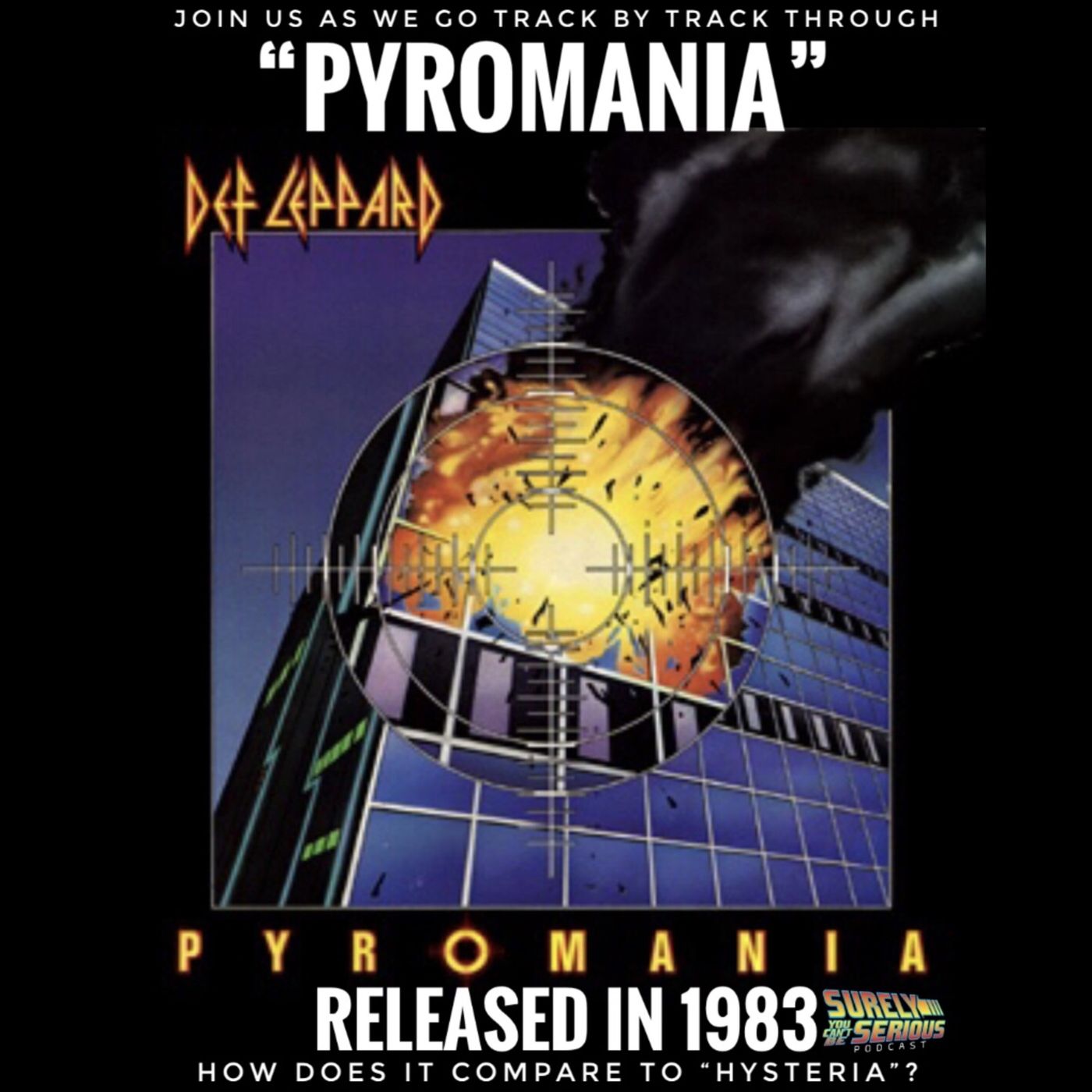
Def Leppard's "Pyromania" (1983): Track by Track
This week we discuss one of the greatest rock bands of all time, Def Leppard and debate which of their most popular albums, Pyromania and Hysteria are the best. So, step inside, walk this way because its better to burn out than to fade away!
Please support these albums:
Pyromania: https://amzn.to/2xp87Ar
Hysteria: https://amzn.to/2QGXhN9
Union Jack Shirt: https://amzn.to/2QE6ntS
Please support these albums:
Pyromania: https://amzn.to/2xp87Ar
Hysteria: https://amzn.to/2QGXhN9
Union Jack Shirt: https://amzn.to/2QE6ntS
2020-03-24
49 min
Transcript
Available Results
Generated results are saved to the knowledge database for reuse and search.
No generated results are available for this episode yet.
Extract Knowledge
Pick what you want extracted first. Model, scope, and chapter options appear after a template is selected.
Generated results for public episodes are saved to the knowledge database so they can be reused and searched later.
Transcript
<v Speaker 1>Hello everybody, and welcome to the Surely Can't Be Serious podcast,
<v Speaker 1>discussing and debating the iconic and the forgotten of eighties
<v Speaker 1>and nineties pop culture with.
<v Speaker 2>Your co hosts James D. Graves and Jason Colvin. All right,
<v Speaker 2>welcome back everybody.
<v Speaker 3>We are Jason and d from the Shirley You Can't
<v Speaker 3>Be Serious Podcasts coming to you live from Sheffield, England.
<v Speaker 3>I am in my Union Jack sleeveless shirt and Jason
<v Speaker 3>is in his Union Jack shorts with no shirt at all.
<v Speaker 3>We are here to go toe to toe and rock
<v Speaker 3>and roll with def Leppard and the comparison of the
<v Speaker 3>Pyromania album and Hysteria.
<v Speaker 4>I'm so excited to do this. This is I've had
<v Speaker 4>a love affair with these two albums for almost forty
<v Speaker 4>years now and frankly, there's only one way we can
<v Speaker 4>start this podcast. Yeah, even out and gool. We're going
<v Speaker 4>to talk about the history a little bit of def Leppard,
<v Speaker 4>the tragedy and the blessings that they had, and then
<v Speaker 4>we're going to go through these two hugely impactful albums
<v Speaker 4>of the nineteen eighties.
<v Speaker 3>I'm super excited.
<v Speaker 4>That would mean maybe the most defining sound of the
<v Speaker 4>nineteen eighties.
<v Speaker 3>Absolutely like there are a handful of bands that defined
<v Speaker 3>what rock and roll sounded like in the nineteen eighties,
<v Speaker 3>and this is one of those, one of those.
<v Speaker 4>Bands, without a doubt, without a doubt. So step inside,
<v Speaker 4>walk this.
<v Speaker 3>Way, you and me, babe.
<v Speaker 4>Let's start with just kind of a pre story, how
<v Speaker 4>DEFL was formed and how it kind of came about
<v Speaker 4>and win and all that stuff.
<v Speaker 3>Sure, there's a whole big I mean, there's a big
<v Speaker 3>story that leads up to Pyromania. And it starts with
<v Speaker 3>Joe Elliott as a young teenage boy with dreams of
<v Speaker 3>becoming a rock star, and he decides he wants to
<v Speaker 3>have a band. He wants the band to be called
<v Speaker 3>Deaf Leopard spelled properly, and he makes posters and learns
<v Speaker 3>how to play the guitar and has these dreams. And
<v Speaker 3>then one day he misses his bus and he happens
<v Speaker 3>to meet this guy named Pete Willis, and Pete Willis
<v Speaker 3>starts talking to him and they realize, hey, we both
<v Speaker 3>like music. Pete Willis had a band.
<v Speaker 4>Called Atomic Mass, right, he had been in that band
<v Speaker 4>with Rick Savage and Tony Kinning.
<v Speaker 3>And so they invite Joe Elliott to come and try
<v Speaker 3>out for the band. Joe wants to play guitar with him.
<v Speaker 3>When they first put Atomic Mass together, Rick Savage played
<v Speaker 3>the guitar, Pete Willis played the guitar, and Tony Kinning
<v Speaker 3>played the drums. Rick Savage said, well, I don't play
<v Speaker 3>guitar as good as you, so I guess I'll play
<v Speaker 3>the bass because we have to have a bass. We
<v Speaker 3>can't have two guitar bass. And so he started playing
<v Speaker 3>the bass and brought Joe Elliott in. They said, well,
<v Speaker 3>why don't you sing and let's see what you got.
<v Speaker 3>His audition was Stairway to Heaven. Okay, So as he
<v Speaker 3>sang Stairway to Heaven when it goes up at the end,
<v Speaker 3>Joe stayed low and they were all like, well that
<v Speaker 3>was great, except he didn't go up.
<v Speaker 4>What's the deal? And so he didn't really fancy himself
<v Speaker 4>a singer initially, but he would soon learn right.
<v Speaker 3>So they weren't in love with his voice, but they
<v Speaker 3>thought he had a good voice. They were in love
<v Speaker 3>with his dream and his passion for becoming a huge success,
<v Speaker 3>and that's really what got him the job as the
<v Speaker 3>lead singer in the.
<v Speaker 4>Band, and really what drives Steph Leppert today. I mean,
<v Speaker 4>he's the engine that makes it go. And he doesn't
<v Speaker 4>have a terrific voice. I mean, he's got a good
<v Speaker 4>rock voice, and I think Mutt Lane kind of got
<v Speaker 4>the most out of it.
<v Speaker 3>So, Jason, tell me, do you remember the first time
<v Speaker 3>you heard these guys.
<v Speaker 4>Yes, I have a very clear memory of when I
<v Speaker 4>heard these guys for the first time. It was after
<v Speaker 4>High and Dry, So in nineteen eighty three, I'm bebopping
<v Speaker 4>in my fifth grade class, mister Hoover's class. If you've
<v Speaker 4>listened to our episodes before, I was mister Thriller.
<v Speaker 3>Mister Thriller.
<v Speaker 4>I loved Michael Jackson. I love Thriller. And I had
<v Speaker 4>this guy that came to my school and he's like,
<v Speaker 4>Thriller's great, But have you heard these guys? And I
<v Speaker 4>saw the album cover, I'm like, I mean, it's a
<v Speaker 4>cool album cover, but I think I'm gonna stick with
<v Speaker 4>Michael Jackson. He's like, no, no, no, no, no, you got to
<v Speaker 4>listen to this song.
<v Speaker 3>At least.
<v Speaker 4>I'm like, all right, I'll listen. I mean, I'm seriously
<v Speaker 4>Michael Jackson and he's like, no, Well, you got to
<v Speaker 4>listen to this song. So he plays Photograph and I'm like,
<v Speaker 4>that sounds amazing. That song's amazing. And that's how I
<v Speaker 4>got hooked in was Photograph.
<v Speaker 3>So your introduction to the band was Pyromania back in
<v Speaker 3>the early eighties. Yes, my introduction to the band. And
<v Speaker 3>I say introduction, I'd heard them, you know, I had MTV,
<v Speaker 3>so I had heard bits and songs, but it was
<v Speaker 3>never an investment for me. I never bought an album.
<v Speaker 3>But in eighth grade, I went to my first high
<v Speaker 3>school dance. And if you guys went to high school
<v Speaker 3>dances when you were a kid, you can imagine the
<v Speaker 3>fear and the nervousness and whether you should dance and
<v Speaker 3>whether you should not dance, and slowly you get your
<v Speaker 3>courage up. And that was what was happening that night.
<v Speaker 3>And I had these girls coming up and talking to me,
<v Speaker 3>and I was like, this is awesome. And then you know,
<v Speaker 3>they convinced me to come out and dance, and we're
<v Speaker 3>dancing in a big circle and that's getting to the
<v Speaker 3>end of the night. And then the DJ says, and
<v Speaker 3>now the song that you've all been waiting for, and
<v Speaker 3>they crank up pour some sugar on me and the
<v Speaker 3>entire gymnasium rough.
<v Speaker 4>You wouldn't be babe.
<v Speaker 3>And people are going crazy. So my my first wow,
<v Speaker 3>hey this is a band I need to be listening
<v Speaker 3>to was Hysteria. Was pour some Sugar on.
<v Speaker 4>I think that that was probably a lot of people's
<v Speaker 4>introduction because I mean, the summer of nineteen eighty eight,
<v Speaker 4>poor some sugarman own the airwaves, yeah, and dominated that.
<v Speaker 4>I remember dial MTV. You could call and request your
<v Speaker 4>favorite video. It was like number one for like three months.
<v Speaker 3>So when we started to do this, what I said
<v Speaker 3>to myself is, I've never never had the album Pyromania.
<v Speaker 3>I know some of the song cluff of it, but
<v Speaker 3>I'm going to treat it like I'm that kid from
<v Speaker 3>long ago. I imagined myself, my young self, if I
<v Speaker 3>had been a teenager listened to this type of music
<v Speaker 3>in the early eighties, get the album bring it Home.
<v Speaker 3>I'm going to put my headphones on, I'm going to
<v Speaker 3>crank it up. And I gotta say I was blown away.
<v Speaker 3>I was like, holy crap, this is really really good.
<v Speaker 3>Even now, what is it nearly forty years later? Yeah, yeah,
<v Speaker 3>it's still amazing. I was floored.
<v Speaker 4>It's a pop metal masterpiece.
<v Speaker 3>Yeah.
<v Speaker 4>So in January nineteen seventy eight, Steve Clark he joined
<v Speaker 4>the band. Yeah, he played Freebird for him and they
<v Speaker 4>were like, well, this guy's really good.
<v Speaker 3>Right, played it from beginning to end. And if you
<v Speaker 3>don't know Freebird, Freebird is Lynyrd Skynyrd's signature song. That is,
<v Speaker 3>depending on which version, nine to ten minutes long. And
<v Speaker 3>so you can imagine a you know, young, long haired,
<v Speaker 3>skinny kid rocking out on one of the most well
<v Speaker 3>known guitar solos for a solid ten minutes and they
<v Speaker 3>were hooked.
<v Speaker 4>I don't play guitar, but in guitar hero. Yeah, that
<v Speaker 4>was the hardest.
<v Speaker 3>Song on that Well, yes, that's I think I'd say
<v Speaker 3>that's an accurate reflection of how how difficult it is.
<v Speaker 3>But they not only were amazed by his guitar playing,
<v Speaker 3>but he had the right look. He came in with
<v Speaker 3>no shirt, just a jeans jacket on, had long blonde
<v Speaker 3>hair slung his guitar hung it way too low so
<v Speaker 3>that he had to pick it up and move it,
<v Speaker 3>and there was just a motion in a dance to
<v Speaker 3>his playing. And then of course he had that amazing
<v Speaker 3>ability So there you go. They've got their second guitarist,
<v Speaker 3>they've got their bass player, they've got their singer, and
<v Speaker 3>they've got their drummer for a while.
<v Speaker 4>Except the drummer decides that hanging out with his girlfriend
<v Speaker 4>is more important than being in the defining metal band
<v Speaker 4>of the eighties.
<v Speaker 3>He and Rick Stone, I'm sure, commencer, Yeah, Rick Stone,
<v Speaker 3>yeah yeah.
<v Speaker 4>If you don't know who Rick Stone is, go back
<v Speaker 4>and listen to Van Halen episode one. Right, But here's
<v Speaker 4>a funny story. So there's a young kid in the
<v Speaker 4>area named Rick Allen, Richard Allen.
<v Speaker 3>He's fifteen years old, fifteen. He'd started playing drums when
<v Speaker 3>he was nine or ten years old, so he was
<v Speaker 3>a decent drummer, and even at fifteen, had said the
<v Speaker 3>drummers around here suck and the bands suck. And then
<v Speaker 3>after Tony left the band, def Leppard put out a
<v Speaker 3>one ad and it said Leopard loses skins.
<v Speaker 4>And Rick Allen said, hey, look at this, Mom, will
<v Speaker 4>you call the band for me?
<v Speaker 3>And hey, mom, hey mom, will you will you call
<v Speaker 3>these guys?
<v Speaker 4>I'd like to play drums.
<v Speaker 3>But he's good, he's fantastic.
<v Speaker 4>And he's right place, right time. Jumps on the opportunity
<v Speaker 4>and he becomes their jar.
<v Speaker 3>Right, and then just what a few short years later
<v Speaker 3>they're opening for Ozzy Osbourne and Billy Squire. I mean,
<v Speaker 3>can you imagine a young kid being involved with that
<v Speaker 3>kind of star power.
<v Speaker 4>At his age? Yeah, it's incredible. Yeah, I have a
<v Speaker 4>fifteen year old home. I barely let him feed the dog.
<v Speaker 4>So they rehearse and they rehearse, and they rehearse and
<v Speaker 4>they rehearse.
<v Speaker 3>Sheffield, England, where they all come from, is an old
<v Speaker 3>steel town. It's steel factories everywhere. If you live in
<v Speaker 3>the town, you're pretty well going to be working in
<v Speaker 3>a factory somewhere, that's right. And they ended up rehearsing
<v Speaker 3>in an old spoon factory and we're there for nine
<v Speaker 3>months or something like that, And finally.
<v Speaker 4>Steve Clark went to Joe Elliott and said, Joe, listen,
<v Speaker 4>if we don't play a gig, I'm quitting, right, I'll
<v Speaker 4>go find somebody else.
<v Speaker 3>Right. He's like, we're polishing and polishing and polishing, and
<v Speaker 3>I can be in here ten years and we're still
<v Speaker 3>polishing the same songs. So it's interesting because you get
<v Speaker 3>the impression from the band that they want to be
<v Speaker 3>perfect before they go out into the world. They've obviously
<v Speaker 3>got this drive that they don't want to put out
<v Speaker 3>a bad product. But it's interesting that he's the one
<v Speaker 3>that says this to them, because he's ultimately the one
<v Speaker 3>that ends up dealing with the biggest stage fright once
<v Speaker 3>they get really big.
<v Speaker 4>It is interesting. Yeah, So Joe Elliott borrows two hundred
<v Speaker 4>and fifty bucks from his dad and they create an EP.
<v Speaker 3>Yeah, it's They ended up selling twenty four thousand records,
<v Speaker 3>which I mean, if you just think about a group
<v Speaker 3>of teenage kids spent a two hundred and fifty bucks
<v Speaker 3>to press out an album and they sell twenty four
<v Speaker 3>thousand of them. I mean, if I could sell twenty
<v Speaker 3>four thousand songs, I'd be like in Evan. And they
<v Speaker 3>get an album that's a pretty significant hit.
<v Speaker 4>And that leads to their next album, which their debut
<v Speaker 4>album technically is called On Through the Night.
<v Speaker 3>Right. This is the first professionally produced album. Yes, this
<v Speaker 3>is the one where they've signed with the record label
<v Speaker 3>and the record label is producing their album.
<v Speaker 4>This is released in March of nineteen eighty has a
<v Speaker 4>song Hello America, which is kind of famous gave kind
<v Speaker 4>of a bad taste for the locals in England.
<v Speaker 3>They didn't like it. It's yeah, it's kind of sad.
<v Speaker 3>You know, Sheffield didn't really own this band until they
<v Speaker 3>were a really big success. They had a lot of
<v Speaker 3>bad press that they received, which is unfortunate, but they
<v Speaker 3>had aspirations to get out of the town anyway, so
<v Speaker 3>it worked out right well.
<v Speaker 4>This album On Through the Night caught the attention of
<v Speaker 4>this guy.
<v Speaker 3>Named Robert John mutt Lang Mutt Lang or if you
<v Speaker 3>are from Sheffield, Langa.
<v Speaker 4>And this guy is when he calls them. Yeah, he's
<v Speaker 4>a celebrity. I mean he had produce is Highwaight to
<v Speaker 4>Hell Yeah and Back in Black.
<v Speaker 3>Yeah, which I mean, holy smokes, right, I mean, come on,
<v Speaker 3>but if you look at his library of work, you've
<v Speaker 3>got ACDC and def Leppard, but you've also got Shanaia
<v Speaker 3>Twain who ended up marrying Taylor Swift, Brian Adams. I mean,
<v Speaker 3>there's a whole slew of genres that he deals with
<v Speaker 3>and he is, without question, one of the biggest keys
<v Speaker 3>to their success.
<v Speaker 4>Absolutely, if I took you and I said, all right,
<v Speaker 4>grab acdc's entire catalog, pick their best album, it's going
<v Speaker 4>to be produced by mut Lane. Yes, if I say,
<v Speaker 4>take the entire cars catalog, Yeah, pick their best album,
<v Speaker 4>Heartbeat City, yes, Mutlane.
<v Speaker 3>Okay.
<v Speaker 4>So when they get in the studio with Mutt Lane,
<v Speaker 4>they produce an album called High and Dry. So it's
<v Speaker 4>their first commercial effort. I mean it does pretty well,
<v Speaker 4>sells two or fifty thousand copies.
<v Speaker 3>Again, I mean it got into the top twenty albums
<v Speaker 3>in the UK and Top fifty in the US I believe.
<v Speaker 3>But the way of music back then, even after all
<v Speaker 3>that success, the band wasn't making enough money to have
<v Speaker 3>being a band as their only job.
<v Speaker 4>I mean, Joe Elliott talks very publicly about having a
<v Speaker 4>top fifty album in the United States and having to
<v Speaker 4>work at a construction site.
<v Speaker 3>Right, Yeah, we don't have any money left. You're going
<v Speaker 3>to have to go do some real work.
<v Speaker 4>So that's crazy. So High and Dry is released July eleventh,
<v Speaker 4>nineteen eighty one.
<v Speaker 3>Just before the inception of MTV and then another key,
<v Speaker 3>another key.
<v Speaker 4>It's huge in their in their career. Yeah, they're spot
<v Speaker 4>on ready when MTV hits.
<v Speaker 3>Right, So Joe Elliott is working construction jobs after having
<v Speaker 3>this big album. But as it turns out they recorded
<v Speaker 3>a video for one of the songs off of High
<v Speaker 3>and Dry called bringing On the Heartbreak. I cannot imagine
<v Speaker 3>a guy who's singing like that, band playing like that,
<v Speaker 3>who's now working construction because they don't have enough money.
<v Speaker 3>It's crazy. But the video that they had fell right
<v Speaker 3>in where it needed to because MTV had.
<v Speaker 4>They needed videos.
<v Speaker 3>They said it over and over. They had about two
<v Speaker 3>hundred and fifty videos when they're on their first year,
<v Speaker 3>and so that Bringing On the Heartbreak made it into
<v Speaker 3>the rotation and they played it and played it, and
<v Speaker 3>everybody at that time had started to watch MTV and
<v Speaker 3>people started to go, who is this def Leopard band?
<v Speaker 4>That's right? Timing is everything?
<v Speaker 3>Yeah.
<v Speaker 4>Now they're going back in the studio to record their
<v Speaker 4>third album, Pyromedia.
<v Speaker 3>Right, and they kind of entered a really specialized deal here.
<v Speaker 3>Mutt Lang had produced that first album and it was
<v Speaker 3>all a regular style of production. He was meticulous about things.
<v Speaker 3>But you can still on high end I hear the
<v Speaker 3>edginess that they had at that time, and they had
<v Speaker 3>been placed in this category called the new wave of
<v Speaker 3>British heavy metal. But listening to even their early stuff,
<v Speaker 3>I wouldn't describe it as heavy metal. I don't think
<v Speaker 3>they ever saw themselves as a heavy metal band.
<v Speaker 4>And I've heard Joe Eliot say that we have a
<v Speaker 4>lot more in common with Duran Durant right than we
<v Speaker 4>do Quiet Riot or ACDC or whatever.
<v Speaker 3>He really admired the band Queen, and he really admired
<v Speaker 3>David Bowie and the Hoople Mota Hoopl, thank you, Mata
<v Speaker 3>Hoopl and Queen. He loved Queen and that was kind
<v Speaker 3>of the sound that they were going for, kind of
<v Speaker 3>an ACDC meets Queen kind of sound. Never really again
<v Speaker 3>what I would describe.
<v Speaker 4>As metal, all right. So as the recording Pyromania, they
<v Speaker 4>start to have these personal problems within the band, right
<v Speaker 4>that ultimately they've got to deal with.
<v Speaker 3>So they entered this deal with Mutt Lang where he
<v Speaker 3>basically had complete control over the sound. The first album
<v Speaker 3>that they recorded they had done in thirty days. The
<v Speaker 3>second album that they had recorded, they had done in
<v Speaker 3>twelve weeks. They had been recording on Pyromania. At the
<v Speaker 3>five month mark, five months of recording, they had not
<v Speaker 3>committed one single song to tape. It's incredible, right, Mutt
<v Speaker 3>Lang had a definite vision about what he wanted to happen,
<v Speaker 3>and the mixing board became an instrument for the band.
<v Speaker 3>This is what Mutt Lang did for def Leppard, and
<v Speaker 3>he was the ultimate perfectionist, which for the band meant
<v Speaker 3>agonizing hell. And at some point they said to Steve Clark, hey,
<v Speaker 3>you need to go dry out, buddy. So Steve went away,
<v Speaker 3>which left only Pete Willis to do the guitar parts
<v Speaker 3>for a time. Well, Pete also was a drinker and
<v Speaker 3>didn't handle his liquor as well as Steve Clark did,
<v Speaker 3>and one day came into the studio after a night
<v Speaker 3>of heavy drinking and was still under the influence and
<v Speaker 3>could not could play, couldn't play with a flip.
<v Speaker 4>I've heard Joylia talk about how in the early days,
<v Speaker 4>Pete Willis, after a little bit too much of the drink,
<v Speaker 4>would readily go into the ring with Mike Tyson. He
<v Speaker 4>was that type of sort of angry drunk Steve Clark
<v Speaker 4>drink twice as much. What was half the a hole
<v Speaker 4>that Pete Willis was, apparently, And so when he couldn't
<v Speaker 4>play and they're trying to impress this guy.
<v Speaker 3>They had said they had told him over and over
<v Speaker 3>and over, Hey, you can't do this. You know, we'll
<v Speaker 3>let you drink during our stage shows, but you cannot
<v Speaker 3>come into the recording studio drunk. When he does this,
<v Speaker 3>and they you got to think about how long they've
<v Speaker 3>been working their tailoff, long days, killing it. Frustration tears.
<v Speaker 3>And then Mutt Lang comes to Joe Elliott with this
<v Speaker 3>sad attempt at a guitar solo by Pete Willis, and
<v Speaker 3>he says, listen to this, and then he just starts laughing,
<v Speaker 3>laughing to tears. Mutt Lang is laughing to tears at this,
<v Speaker 3>and Joe Elliott isn't laughing at all. He just has
<v Speaker 3>to say, we can't do this. We can't take the
<v Speaker 3>chance that Mutt Lang is going to walk out on
<v Speaker 3>us after all of this work. We can't take the
<v Speaker 3>chance that Pete Willis is going to destroy this album
<v Speaker 3>because of his alcoholism. We have to let him go.
<v Speaker 4>Said he didn't want Mutlange to think they were a
<v Speaker 4>bunch of losers. They only had one loser, right, so
<v Speaker 4>they gave him the old get out. Yeah, but phil
<v Speaker 4>Colin they hire the same day.
<v Speaker 3>Yeah, Joe Elliott made a call. Phil Colin had been
<v Speaker 3>playing he'd played for several bands, but at the time
<v Speaker 3>that this occurred, he was playing for a glam rock
<v Speaker 3>band called Girl and they called Phil and he came
<v Speaker 3>over and they said, hey, you know, we've already got
<v Speaker 3>the bulk of these songs done. We just need some
<v Speaker 3>guitar solos. Why don't you go listen to this one
<v Speaker 3>for an hour or two and you know, make up
<v Speaker 3>a guitar solo and let's see how it goes. And
<v Speaker 3>he came back in thirty minutes and executed a perfect
<v Speaker 3>guitar solo. And those are the words of Mutt Lang.
<v Speaker 3>And if Mutt Lang says it's a perfect guitar solo,
<v Speaker 3>you can rest assured it is a perfect guitar solo.
<v Speaker 3>By the time we get to the point that Pete
<v Speaker 3>Willis gets fired, Rick Allen hadn't been playing the drum
<v Speaker 3>for months because m Lang said, I don't want to
<v Speaker 3>use a drummer, I want to use a drum machine.
<v Speaker 3>That's insane. I mean, in nineteen eighties two to say
<v Speaker 3>I want to use a drum machine for a rock
<v Speaker 3>album was crazy. So they would take samples of particular
<v Speaker 3>drum sounds to find the perfect pitch, and then of
<v Speaker 3>course the timing was mechanical, it was precise, it was
<v Speaker 3>uninfluenced by human error. So Rick Allen hasn't played in
<v Speaker 3>several months. They get rid of Pete Willis, they bring
<v Speaker 3>in Phil Colin. They finally say, okay, Rick, come back in.
<v Speaker 3>We're going to record some of your drums.
<v Speaker 4>Now.
<v Speaker 3>He's like okay, and so he plays for a few minutes.
<v Speaker 3>They're like, okay, hold on, okay, yeah, just hold on, man, Okay,
<v Speaker 3>just listening, still listening, Yeah, just a minute more, Rick,
<v Speaker 3>hold on, And finally he just says, hey, guys, you know,
<v Speaker 3>why don't you have me listen to it and maybe
<v Speaker 3>I can give you my opinion on it. And Mutt
<v Speaker 3>Lang says Rick, when I want your opinion, I'll ask
<v Speaker 3>for it, at which point Rick lost his mind and
<v Speaker 3>took an entire set of drumsticks and chunked it at
<v Speaker 3>the recording studio window. Yes, yeah, he was not happy.
<v Speaker 3>Rick Allen got a little bit of a temper. I
<v Speaker 3>think he does. Yeah, yeah, yeah, I won't say any
<v Speaker 3>more about that, but I could. I mean, I could
<v Speaker 3>see myself losing it in that scenario as well. Yes,
<v Speaker 3>I haven't played for months, you bring me back in
<v Speaker 3>then I'm sitting here waiting on you to do something
<v Speaker 3>that I'm the expert at, and when I offer my help,
<v Speaker 3>you say, essentially, why don't you go outside and play
<v Speaker 3>hide and go screw yourselfing.
<v Speaker 4>Go screeze?
<v Speaker 3>All right?
<v Speaker 4>So Pyramania is released January twentieth, nineteen eighty three. So
<v Speaker 4>the opening track of Pyramania is a song called Rock
<v Speaker 4>Rock Till You Drop.
<v Speaker 3>To Me.
<v Speaker 4>This is a great entry song, kickoff song, kind of
<v Speaker 4>like lay your Hands on.
<v Speaker 3>Me for a bunch of his new jersey.
<v Speaker 4>Yeah, it's it's the song they played the beginning of
<v Speaker 4>the concert that's like, all right, everybody, let's go high energy,
<v Speaker 4>get fire, army.
<v Speaker 3>Well, you know, when I first started looking at these guys,
<v Speaker 3>I had heard some people say that back then, when
<v Speaker 3>they're first becoming famous, that they were just an ac
<v Speaker 3>DC knockoff fan, to which I thought, these guys don't
<v Speaker 3>sound anything like ACDC to me. Yeah, but that first
<v Speaker 3>song is definitely very ac DC esque in my opinion.
<v Speaker 4>So it is a little screechy like ACDC. Right, he's
<v Speaker 4>really leaning on his voice right there. So it's a
<v Speaker 4>great kickoff song to the album one all right, After
<v Speaker 4>Rock rocks. Here you drop, you get the first single,
<v Speaker 4>Photograph down Photograph Picture right.
<v Speaker 3>So that song that before listening to this album, like
<v Speaker 3>really for the first time, that I was definitely familiar with.
<v Speaker 4>Oh yeah, this is a song kind of about Marilyn
<v Speaker 4>Monroe if you ever watched the video.
<v Speaker 3>Well, let's just say that all of the songs on
<v Speaker 3>both of these albums are about sex, guns, and rock
<v Speaker 3>and roll, and the band's life is about sex, drugs,
<v Speaker 3>and rock and roll. So it's it's more sex, more drugs,
<v Speaker 3>more guns.
<v Speaker 4>Honestly, I think that's being generous because there's a lot
<v Speaker 4>of songs that are about nothing. They're literally about nothing.
<v Speaker 3>They were not looking to write deep and meaningful songs.
<v Speaker 3>What they wanted. Their goal was to write songs that
<v Speaker 3>were accessible to the general public. So they're not going
<v Speaker 3>to be quoting some j R. Or Tolkien novel in
<v Speaker 3>one of their songs like led Zeppelin. They're not going
<v Speaker 3>to be telling a story about the Bronx like Billy Joel.
<v Speaker 3>This is just what words fit with the melody that
<v Speaker 3>we have and will people be able to sing along
<v Speaker 3>with the song?
<v Speaker 4>So Photograph is very radio friendly. This is a song
<v Speaker 4>that I could listen to with my parents that first
<v Speaker 4>little I don't know, I don't know what you would call.
<v Speaker 4>What do you think about this? D you need to
<v Speaker 4>come in on this. This is their first little chirp
<v Speaker 4>at the beginning of this.
<v Speaker 3>Song, So I can't say for sure what that is.
<v Speaker 3>It almost sounds like the guitar being plugged into the amp.
<v Speaker 3>It has that kind of click on where the electricity
<v Speaker 3>hits and it's ging. But no, what I know about
<v Speaker 3>this album, it probably was something that was specifically designed
<v Speaker 3>by Mutt Lag. Yeah, I think you're right about it.
<v Speaker 3>And it sounded like it may even have been a
<v Speaker 3>backwards recording. I'm not entirely sure. I'm speculating completely on that.
<v Speaker 4>So this is the video. A lot of this is
<v Speaker 4>We're going to talk about the song, but the video
<v Speaker 4>is kind of wrapped up with it. This is the
<v Speaker 4>video Joe Elliott. They were still a little bit poor.
<v Speaker 4>This album hadn't broken yet. He was walking by a
<v Speaker 4>store window and he saw the Union Jack T shirt
<v Speaker 4>say it was six ninety nine, so he bod it
<v Speaker 4>was sleeveless Ward in this video. Yeah, and that has
<v Speaker 4>become like the Frankenstrat for Eddie van Halen.
<v Speaker 3>In America, everybody started buying the Union Jack's sleeveless T
<v Speaker 3>shirts in homage to def Leppard. So in eighty three
<v Speaker 3>and eighty four, this was number one on the US
<v Speaker 3>album Rock Tracks by Billboard. It was number twelve on
<v Speaker 3>the US Billboard Hot one hundred. It was number sixty
<v Speaker 3>eight on the UK Singles Chart and number thirty two
<v Speaker 3>on Canada fifty Singles.
<v Speaker 4>Photograph was a huge song and still a staple when
<v Speaker 4>they play it live. Pete Willis's guitars are still on Photograph,
<v Speaker 4>although Phil Collin actually plays the guitar Solough. It's kind
<v Speaker 4>of interesting this guy who is fired and the guy
<v Speaker 4>who replaced him both play on the same song.
<v Speaker 3>Right, and just as a credit to the band. Even
<v Speaker 3>though Pete Willis was, you know, fired midway through the
<v Speaker 3>production of this album, they still listed him on the album.
<v Speaker 3>He still got still gets royalties from the album. So
<v Speaker 3>I think that's the stand up thing to do, the
<v Speaker 3>right thing to do for him.
<v Speaker 4>Yeah for sure. Okay, before we move on from Photograph,
<v Speaker 4>I just want to say, as much as I love
<v Speaker 4>both of these albums, Photograph might be the best song
<v Speaker 4>on either album.
<v Speaker 3>Okay, I wouldn't agree with that statement. I mean, that's
<v Speaker 3>an obviously perspective statement. I like Photograph, all right, but
<v Speaker 3>there are even songs on this album just from listening
<v Speaker 3>to it for this podcast that I'm going to say
<v Speaker 3>I like better than Photograph.
<v Speaker 4>Wow. Okay, cool, let's get into it.
<v Speaker 3>Okay, all right.
<v Speaker 4>Next track, it's called Stage Cracks.
<v Speaker 3>Bill Prede is good. I really enjoyed listening to it.
<v Speaker 3>It wasn't one I think I had ever heard before,
<v Speaker 3>but it's got that kind of pumping guitar and then
<v Speaker 3>it when you go into the chorus of the song,
<v Speaker 3>get that the pop feeling. You know that it's not
<v Speaker 3>certainly it's still rock and roll, but it is more
<v Speaker 3>melodic and less hard hitting than your typical rock and
<v Speaker 3>roll song is going to be. At the time.
<v Speaker 4>You get a little bit of this age live feel.
<v Speaker 4>At the beginning of the show, even though it was
<v Speaker 4>recording studio.
<v Speaker 3>You get Joe Elliott hitting those high pitches that he
<v Speaker 3>was afraid to hit during his audition. He's letting them down.
<v Speaker 3>He really is still a good song.
<v Speaker 4>Not a skipper, but not one of the stronger tracks
<v Speaker 4>in the A Somewhere Distance. The track number four too
<v Speaker 4>late for love.
<v Speaker 3>Love It, Love It. When I was listening to this
<v Speaker 3>one front to back, when this song came on and
<v Speaker 3>they hit that chorus just a little bit into the
<v Speaker 3>song where they're all harmonizing together, answer, I was like,
<v Speaker 3>holy crap, this is good and this is what kind
<v Speaker 3>of defines def Leppard for me. Is this the harmonizing
<v Speaker 3>chorus that they do. It's spot on a million And
<v Speaker 3>obviously I've realized later on this because Lang has built
<v Speaker 3>it brick by brick, and I'm sure he had each
<v Speaker 3>guy singing about one hundred thousand times before he found
<v Speaker 3>the perfect one and then he stacked all those perfects
<v Speaker 3>together and it's it's breathtaking.
<v Speaker 4>This really is a great song. Yeah, it is a
<v Speaker 4>great song. It's so good.
<v Speaker 3>Yes.
<v Speaker 4>This was their fourth release. This was their fourth single.
<v Speaker 4>Yeah made it up to number nine on the mainstream
<v Speaker 4>rock charts.
<v Speaker 3>I can say that this one and Rock of Ages
<v Speaker 3>are neck and neck for me for being best song
<v Speaker 3>on the album.
<v Speaker 4>It's hard to argue with this song. I mean, it's
<v Speaker 4>it's so good. I would say that it builds in
<v Speaker 4>strength all the way through the guitar solo.
<v Speaker 3>Okay, so that introduction with the wind creates this atmosphere,
<v Speaker 3>and then you have this fantastic combination of just a
<v Speaker 3>guitar and Joe Elliott singing, and it's so good and
<v Speaker 3>it brings you in just before that awesome chorus. And
<v Speaker 3>I can remember listening to various songs as I grew
<v Speaker 3>up where they had little whispers that happened behind the scenes.
<v Speaker 3>You know that when you're listening in the rate on
<v Speaker 3>the radio. You don't hear it, but you get headphones
<v Speaker 3>locked in and there's there's this little part. I think
<v Speaker 3>it's in Babe, I'm Gonna leave you, but there's this little.
<v Speaker 4>Whisper of the lyric right before the lyric.
<v Speaker 3>And every time I heard it, it'd be like, what
<v Speaker 3>the crowd was that? Yeah, oh gosh, that's on my headphones. Okay,
<v Speaker 3>but you were saying that you listen to this.
<v Speaker 4>There's a I mean, you have to listen so carefully.
<v Speaker 4>But anytime I'm listening to this, especially when I've got
<v Speaker 4>turned up in my car, yeah, there's a little bitty
<v Speaker 4>baby that happens right before the second chorus. And it said,
<v Speaker 4>I keep there are lots of times I'll be in
<v Speaker 4>the car. I'm like, did my phone just ring this video.
<v Speaker 4>I read that Joe Elliott they filmed this after hanging
<v Speaker 4>out with meat Loaf and Nelton John having champagne. Nice
<v Speaker 4>kind of the benefits of being a rockstar.
<v Speaker 3>I think I recorded a video after having pain with
<v Speaker 3>meet Loaf and Elton John wants.
<v Speaker 4>Oh, so the nice Well we both love two Leyfelow. Yeah,
<v Speaker 4>definitely one of the strangest tracks in the album for sure.
<v Speaker 4>All Right, So the next one after that, Diehard the Hunter.
<v Speaker 3>So Diehard the Hunter is very Pink Floyd to me
<v Speaker 3>when I hear it, you know, the you've got and
<v Speaker 3>it's it's very pre one by Metallica. Yeah, you know,
<v Speaker 3>because you've got the helicopter sounds and the sounds of
<v Speaker 3>war going on, you know, on the wall you've got
<v Speaker 3>helicopter and that one as well. And even but even
<v Speaker 3>the guitar as it comes in, you've got an acoustic
<v Speaker 3>I believe, I'm not sure. I believe it's a twelve
<v Speaker 3>string guitar playing and the melody that's played is very
<v Speaker 3>reminiscent of Pink Floyd. And you've get the gunshots, You've
<v Speaker 3>got this idea of war, and then you hear these
<v Speaker 3>kind of like laser shots, which you're like, well, is
<v Speaker 3>this helicopter or spaceship? What am I hearing here? But
<v Speaker 3>it's another solid track.
<v Speaker 4>Very very good. In fact, what you're describing, the exact
<v Speaker 4>thing that you're describing could describe God's of War on hysteria.
<v Speaker 4>You have sound effects. Now, Gods of War took it
<v Speaker 4>to the next level where you got Ronald Reagan talking
<v Speaker 4>to Margaret Thatcher and some other stuff. We'll talk about
<v Speaker 4>that one here in a little bit, but it's very similar.
<v Speaker 3>Right, I can say for sure, and I've even heard
<v Speaker 3>the band members say it. We're picking things that we
<v Speaker 3>like from other bands and we're taking those and making
<v Speaker 3>them our own.
<v Speaker 4>Oh for sure.
<v Speaker 3>I mean, if Edi van Halen can do it, anybody
<v Speaker 3>can do it, right. But I think that they've definitely
<v Speaker 3>taken some stuff. Pink Floyd, for example, made it their own,
<v Speaker 3>and I think that possibly Metallica took some of this
<v Speaker 3>one and made it some of their own well.
<v Speaker 4>As we have discussed, and we'll discuss further, the album
<v Speaker 4>Pyromania set in motion pop metal for the rest of
<v Speaker 4>the eighties into the nineties. I would argue that this
<v Speaker 4>is one of the most influential. This gave us hair metal.
<v Speaker 3>It really did. Yeah, it really brought a different type
<v Speaker 3>of rock in And you know, we talked about the
<v Speaker 3>fact that rock was disappearing, it was dying. So luckily
<v Speaker 3>we have in America, we have Van Halen. In Britain,
<v Speaker 3>we have def Leppard, who's coming to America where we
<v Speaker 3>also have MTV. It's perfect little pieces coming together. And
<v Speaker 3>to throw back to our original episode again, you have
<v Speaker 3>record producers that are an integral part of the sound
<v Speaker 3>of the band. You know, we talked about thriller than
<v Speaker 3>looking for the sonic sound. There's no question that Mutt
<v Speaker 3>Lang was trying to do the same thing for rock music.
<v Speaker 3>And what a perfect time to do it. When MTV
<v Speaker 3>is like, we want rock, we're tied at disco. We
<v Speaker 3>don't want to hear punk. We want some rock music
<v Speaker 3>and we want some cute boys and videos to go
<v Speaker 3>along with it. Enter def Leppard.
<v Speaker 4>You just say cute boys.
<v Speaker 3>And cute boys and videos. All right, everybody listen, I've
<v Speaker 3>got five kids. I am secure and saying there was
<v Speaker 3>a draw that this band had that not many others.
<v Speaker 3>That we're playing hard rock music hat and that's that's documentable,
<v Speaker 3>sixty percent of the audience in any given Death Leoppard
<v Speaker 3>concert is going to be women, and frequently hot women.
<v Speaker 4>That's right, and that was something new for rock music.
<v Speaker 4>While we're talking about.
<v Speaker 3>It as far as hard rock goes, Yeah, the predominant
<v Speaker 3>audience for hard rock at that time is going to
<v Speaker 3>be pimply faced guys with dark hair and torn up shirts.
<v Speaker 3>Right enter Death Leopard and suddenly the girls are like, Oh,
<v Speaker 3>I think I like hard rock too.
<v Speaker 4>It was such a great time for rock and roll
<v Speaker 4>there really.
<v Speaker 3>Was, yeah, especially for the guy.
<v Speaker 4>All Right, everybody hit stop on your tape player, kick
<v Speaker 4>it out, flip it over side to.
<v Speaker 3>Side too, or flip over the LP if you will.
<v Speaker 4>That's flip the LP there. All right. So now we're
<v Speaker 4>on to the third single released, which is called Foolin'
<v Speaker 4>love It. Let's listen to it, the stuttering song.
<v Speaker 3>Yeah, the foolin is a hook. Okay. So this is,
<v Speaker 3>as Jason would describe it, a summer drive in, top down,
<v Speaker 3>windows down, radio turned up. This song comes on the radio.
<v Speaker 3>You are cranking this thing up and letting the wind
<v Speaker 3>blow in your hair, absolutely and you're singing along folen
<v Speaker 3>So as cool as this song is, and I mean you,
<v Speaker 3>this is such as you would describe it a radio
<v Speaker 3>friendly song. This is a song that you're gonna latch onto.
<v Speaker 3>It doesn't matter whether you're into rock and roll or
<v Speaker 3>disco or punk. You hear this and you're like, this
<v Speaker 3>is a good freaking song. And then the miid the
<v Speaker 3>video and I don't know, this is like the perfect
<v Speaker 3>example of the nonsense videos that we would see on
<v Speaker 3>MTV from time to time. Somebody, some at some point said,
<v Speaker 3>why don't we start the video with a girl in
<v Speaker 3>a mask playing the harp who's on fire?
<v Speaker 4>What a great idea. What I love it?
<v Speaker 1>I love it.
<v Speaker 4>Tell me what.
<v Speaker 3>Let's chain Joe Elliott down like he's Frankenstein and we'll
<v Speaker 3>angle him backwards so we're getting a full view of
<v Speaker 3>his crotch as the camera.
<v Speaker 4>Comes in, and his massive white pants.
<v Speaker 3>Yeah, his pants that are way too high. He's got
<v Speaker 3>mom jeans on her. And then just in the middle,
<v Speaker 3>we're going to have this really creepy lady look at
<v Speaker 3>the moon as if it is a crystal ball. That
<v Speaker 3>sounds fantastic. We are willing to spend our money on
<v Speaker 3>that video. Yeah, for sure.
<v Speaker 4>The videos at this time were a little bit strange.
<v Speaker 4>I mean even photograph. You have all those girls that
<v Speaker 4>are in the cages. You know, Oh my gosh, Joe
<v Speaker 4>does that giant split jump and right into the camera.
<v Speaker 4>But it was cool at the time, and we ate
<v Speaker 4>it up and I don't know, and reached number nine
<v Speaker 4>on the mainstream Rock chart and number twenty eight on
<v Speaker 4>the Hot one. So it was a It was a
<v Speaker 4>big hit from Yeah and rightly so next is Waving
<v Speaker 4>Lapping Glow.
<v Speaker 3>All Rock of Ages. Yeah, again, brilliant, brilliant photograph and
<v Speaker 3>Rock of Ages brought this album into the public eye
<v Speaker 3>for sure. And just to you know, a little history
<v Speaker 3>on this song. You know, we talked about they had
<v Speaker 3>no songs written when they started recording Pyromania, and they
<v Speaker 3>had this one they had all melodied out, but still
<v Speaker 3>didn't have the chorus to it. They were just like
<v Speaker 3>da da du, I mean, that was it. They just had.
<v Speaker 3>They were just scatting whatever they did. They're in Mutlang's
<v Speaker 3>recording studio one day they come in the day before
<v Speaker 3>another band has been in there, and maybe they were
<v Speaker 3>recording some hymns, because there happens to be a hymnal
<v Speaker 3>and it's propped open to the song Rock of Ages,
<v Speaker 3>the hymn Rock of Ages, the Rock of Ages, the
<v Speaker 3>one you sing in church. Yes, And so Joe Elliott
<v Speaker 3>sees this book lying there and just sings it.
<v Speaker 4>Lane says, that's it. That's it, that's what we've been
<v Speaker 4>looking for.
<v Speaker 3>My golly, that was right. I mean, what a perfect chorus.
<v Speaker 4>Oh, it's so good. I don't know if you know
<v Speaker 4>this or not. I mean, we can talk about this later.
<v Speaker 4>But it is better to burn out than fade away?
<v Speaker 3>Oh my gosh, how many people.
<v Speaker 4>Have said that really Highlander? Right, that scene in Highlander
<v Speaker 4>when he's like, ra better than burnout than to fade away?
<v Speaker 3>Right, And I'm pretty sure that he got it from
<v Speaker 3>Neil Young as opposed to def Leppard. But you know whatever,
<v Speaker 3>And okay, Pearl Jam does it too. You know, hey,
<v Speaker 3>it's it is timeless.
<v Speaker 4>Okay. So Rock of Ages did really well. It reached
<v Speaker 4>number sixteen on the Hot one hundred and number one
<v Speaker 4>on the Top Rocks chart.
<v Speaker 3>Okay. So Phil Collen is a phenomenal guitar player, there's
<v Speaker 3>just no question about. He is technically proficient, really good.
<v Speaker 3>But def Leppard doesn't have a lot of those timeless
<v Speaker 3>guitar solos. It really doesn't have any except for the
<v Speaker 3>song Rock of Ages has a really great and it's
<v Speaker 3>not long, but it's very memorable little guitar solo by
<v Speaker 3>Phil Collin in there. But he's brilliant. He does what
<v Speaker 3>needs to be done. I mean, all of the rock
<v Speaker 3>music that was coming out had these big solos in it,
<v Speaker 3>and everybody was trying to be Eddie van Halen or
<v Speaker 3>you know, trying to recreate the Leonard Skinner and Field.
<v Speaker 3>But this is the one song that you can go, oh, yeah,
<v Speaker 3>I know that, I know that guitar solo. That's a
<v Speaker 3>deaf lever guitar solo.
<v Speaker 4>One of the things that we need to talk about.
<v Speaker 4>We really haven't covered this, the very very famous intro
<v Speaker 4>the unto gleban glopin Glowman. Right, what does that mean?
<v Speaker 3>Yeah, it doesn't mean anything.
<v Speaker 4>It doesn't mean anything, right, And so in the studio
<v Speaker 4>there would you know, Mutt Lane would just beat him
<v Speaker 4>to death and there's this grind.
<v Speaker 3>But occasionally he would do some levity. Yes, he'd break
<v Speaker 3>it up and be funny from time to time.
<v Speaker 4>That's how he would sort of crack him up before
<v Speaker 4>the song started.
<v Speaker 3>Instead of saying one, two, three, four, he said un leader.
<v Speaker 4>Glob and globin and the rest is the rest is history.
<v Speaker 4>I mean it's rock music, you know.
<v Speaker 3>Yeah, absolutely so we can't let this one go without
<v Speaker 3>talking about the video once again, early eighties videos. Before
<v Speaker 3>he even starts singing, you've got monks, You've got an owl,
<v Speaker 3>You've got a woman playing chess with a wizard. You
<v Speaker 3>have a tree on fire, and you have Phil Cullens butt.
<v Speaker 3>And let's not forget the smashing goblet and the giant
<v Speaker 3>lightsaber that somehow turns into an electric guitar.
<v Speaker 4>Joe Elliott is swinging a nine foot lightsaber.
<v Speaker 3>I wonder if there's some sort of analogy that they're
<v Speaker 3>trying to do euphemism, maybe.
<v Speaker 4>Very phallic sword in this Oh. I love this song
<v Speaker 4>from the minute I heard it for the first time
<v Speaker 4>off Pyramania. I love the burning sound effects and the
<v Speaker 4>idea of setting fire to stuff that was really cool.
<v Speaker 4>All right, we're done with Rock of Ages.
<v Speaker 3>I think we're done with Rock of Ages. That leaves
<v Speaker 3>just a couple of songs left on the album.
<v Speaker 4>And they're not bad songs, No, I think they're all good.
<v Speaker 4>I think Coming under Fire is the next one. It
<v Speaker 4>gets radio play now. It wasn't released as a single,
<v Speaker 4>but I've heard it on radio a lot. The chorus
<v Speaker 4>is really good. Yeah, that's a good song.
<v Speaker 3>Solid, it's absolutely solid. Just not one of their biggest hits.
<v Speaker 4>Okay, so Coming under Fire not a big hit, but
<v Speaker 4>a good song. Next one, next to last track is
<v Speaker 4>Action not Work.
<v Speaker 3>I wonder what that song about.
<v Speaker 4>If you listen to the words, it's about making a movie.
<v Speaker 3>Right, except it's what kind of movie are we talking
<v Speaker 3>about here? Action? Yeah? I actually need any dialogue.
<v Speaker 4>You be the hero. I'll be the star.
<v Speaker 3>Again. I go back to all of this is sex,
<v Speaker 3>guns and rock and roll. Baby.
<v Speaker 4>Let me tell you a quick story about this song.
<v Speaker 4>Actually not worse.
<v Speaker 3>Okay.
<v Speaker 4>I'm gonna give a quick shout out to my good
<v Speaker 4>buddy Scott Foster.
<v Speaker 3>Okay, hey Scott, he.
<v Speaker 4>Stayed up late with me. I had a project in
<v Speaker 4>college where we had to make a short film about
<v Speaker 4>anything we wanted. It was basically a get to know
<v Speaker 4>your camera, get to know the editing equipment, and so
<v Speaker 4>I went around town filming my girlfriend, my friends, the
<v Speaker 4>football stadium, ducks, what cars, whatever I could find, and
<v Speaker 4>I pieced it together to this song, and it basically
<v Speaker 4>the song. You know, it's about making a movie. So
<v Speaker 4>I made a movie to a song about making a movie,
<v Speaker 4>and we stayed up all night, and I think it's
<v Speaker 4>it turned out. Okay. I got an a on the project,
<v Speaker 4>got a Yeah, that's all right, that's awesome, that's good.
<v Speaker 3>Yeah. The euphemism here is about as subtle as Pearl
<v Speaker 3>Necklace by Zeezy Top.
<v Speaker 4>In Black and Blue by Dan Haley. Yeah, yeah, okay,
<v Speaker 4>Well I like the song. I listened to it when
<v Speaker 4>it comes on, I turn it upright.
<v Speaker 3>And then we round out finish up the album with
<v Speaker 3>Billy's got a Gun Again. It's a solid song. It's
<v Speaker 3>not good. Yeah, a guy coming home from war guns again.
<v Speaker 3>It's a bit long for my taste. This was nearly
<v Speaker 3>six minutes long, and I think they could probably tidy
<v Speaker 3>that up a bit. But that's probably my my sole
<v Speaker 3>criticism of the songs on this album.
<v Speaker 4>Yeah, it's on the lower end of the album. I think, yeah,
<v Speaker 4>it's good, it's solid, but it's not a not one
<v Speaker 4>I'm gonna crank upright right.
<v Speaker 3>So, after months and months of recording, they finally piece
<v Speaker 3>it all together brick by brick under Mutt Lang's onerous
<v Speaker 3>tutelage and what comes out is a fantastic album, and
<v Speaker 3>it proceeds to do exceptionally well.
<v Speaker 4>Six million copies in the US and sold one hundred
<v Speaker 4>thousand copies every week from its release through nineteen eighty three.
<v Speaker 3>So this album as a whole is so good. It
<v Speaker 3>was only topped by Thriller, the best selling album of
<v Speaker 3>all time. This Pyromania album spent six months in the
<v Speaker 3>number two position while Thriller retained its title. It's truly,
<v Speaker 3>it's an amazing thing.
<v Speaker 4>Number two when Thriller is dominating the charts is no
<v Speaker 4>laughing matter.
<v Speaker 3>No, I mean, just short of Thriller, this is the
<v Speaker 3>number one album of the early to mid eighties.
<v Speaker 4>This album ramps up pop metal for the rest of
<v Speaker 4>the decade.
<v Speaker 3>I mean, you talk about a band that defines the
<v Speaker 3>sound of rock music in the eighties. Right. We've talked
<v Speaker 3>about Van Halen and how influential they were. This band
<v Speaker 3>is in that same category. They are as much an
<v Speaker 3>influence on all of the other bands. And when I
<v Speaker 3>say influence, I mean other bands are coming along and
<v Speaker 3>stealing their stuff. You listen to Rat and you go, oh, hey,
<v Speaker 3>there's an American version of def Leppard, except they only
<v Speaker 3>have one good song instead of a whole album.
<v Speaker 4>Work right, Hey listen. I don't really know, but nineteen
<v Speaker 4>eighty four came out after Pyromania. I mean maybe Eddie
<v Speaker 4>saw their success and thought, hey, I could do that.
<v Speaker 3>Yeah. Well, I mean we know that that album was
<v Speaker 3>more produced, I mean rock albums until this album came out,
<v Speaker 3>where bands getting together and playing some songs and just
<v Speaker 3>another side note while they're recording this album, and Joe
<v Speaker 3>Elliott broke down several times, lost his voice severely for
<v Speaker 3>a time in this one, which would in tears say
<v Speaker 3>to Mutt Lang, I can't do it again. He goes,
<v Speaker 3>it's not good enough. Yet you have to do it again,
<v Speaker 3>he said, I can't do it any better. He says,
<v Speaker 3>you have to. So Joe Elliott leaves the studio, walks
<v Speaker 3>to the next door studio where who happens to be
<v Speaker 3>recording right, and David Coverdale, who has perfect pitch, comes
<v Speaker 3>in records a song in one take, four minutes. Poor
<v Speaker 3>Joe Elliott has been reduced to tears because he's been
<v Speaker 3>spending months trying to get the perfect sound for this
<v Speaker 3>task Master, and David Coverdale comes in and probably smoked
<v Speaker 3>a cigarette before it started singing. Right, it's all worth
<v Speaker 3>the Joe wasn't It was all worth it?
<v Speaker 4>And I do think that. I mean, David Coverdale has
<v Speaker 4>a better, stronger rock voice, but I think Mutt Lange
<v Speaker 4>gets the most out of joy life.
<v Speaker 3>Oh absolutely, yeah.
<v Speaker 4>So and I could listen to Joe sing all day long. Yeah,
<v Speaker 4>all right, So that takes care of pyramaning.
<v Speaker 3>Right. The album becomes a huge success. They ultimately sell
<v Speaker 3>ten million copies of the album. They're writing high, they're
<v Speaker 3>doing well, and their videos are doing well. They're getting
<v Speaker 3>lots of play on MTV, and they say, okay, let's
<v Speaker 3>now get together. We're going to make another album, and
<v Speaker 3>of course they enlist Muttlang to help them out again.
<v Speaker 4>All right. So this is where it gets really interesting.
<v Speaker 3>So the band is at the peak of a success,
<v Speaker 3>it says we got to do another album, and then
<v Speaker 3>Mutt Lang can't do it.
<v Speaker 4>Anymore, and then some real tragedy.
<v Speaker 3>Real tragedy. Yeah, it's really questionable how this album truly
<v Speaker 3>got made. But you're gonna have to wait to find
<v Speaker 3>out about those stories on our next episode, where we'll
<v Speaker 3>talk about Hysteria.
<v Speaker 4>True Hysteria.
<v Speaker 3>Yeah, true hysteria. That's that's solid. It's interesting that both
<v Speaker 3>of these, both of these albums have a psychological component
<v Speaker 3>to the title, because having to go with this band
<v Speaker 3>went through I could I could see being a little
<v Speaker 3>bit off.
<v Speaker 4>I can't wait to get into the next when we
<v Speaker 4>talk about Hysteria, one of the defining albums in the
<v Speaker 4>nineteen eighties. Yeah, it's gonna be incredible. Hope you come
<v Speaker 4>back and join us next week.
<v Speaker 3>Come back and join us next week. As is not
<v Speaker 3>a choice. You are hereby ordered by us to come
<v Speaker 3>back and listen in as we talk about Hysteria and
<v Speaker 3>then give you our final judgment on which of these
<v Speaker 3>two albums is the best def flippard album.
<v Speaker 4>Thing.
<v Speaker 3>All music images and movie clips are used for the
<v Speaker 3>purposes of commentary and education in conjunction with the Fair
<v Speaker 3>Use agreement under the US copyright law.
Chapters
No chapters available.