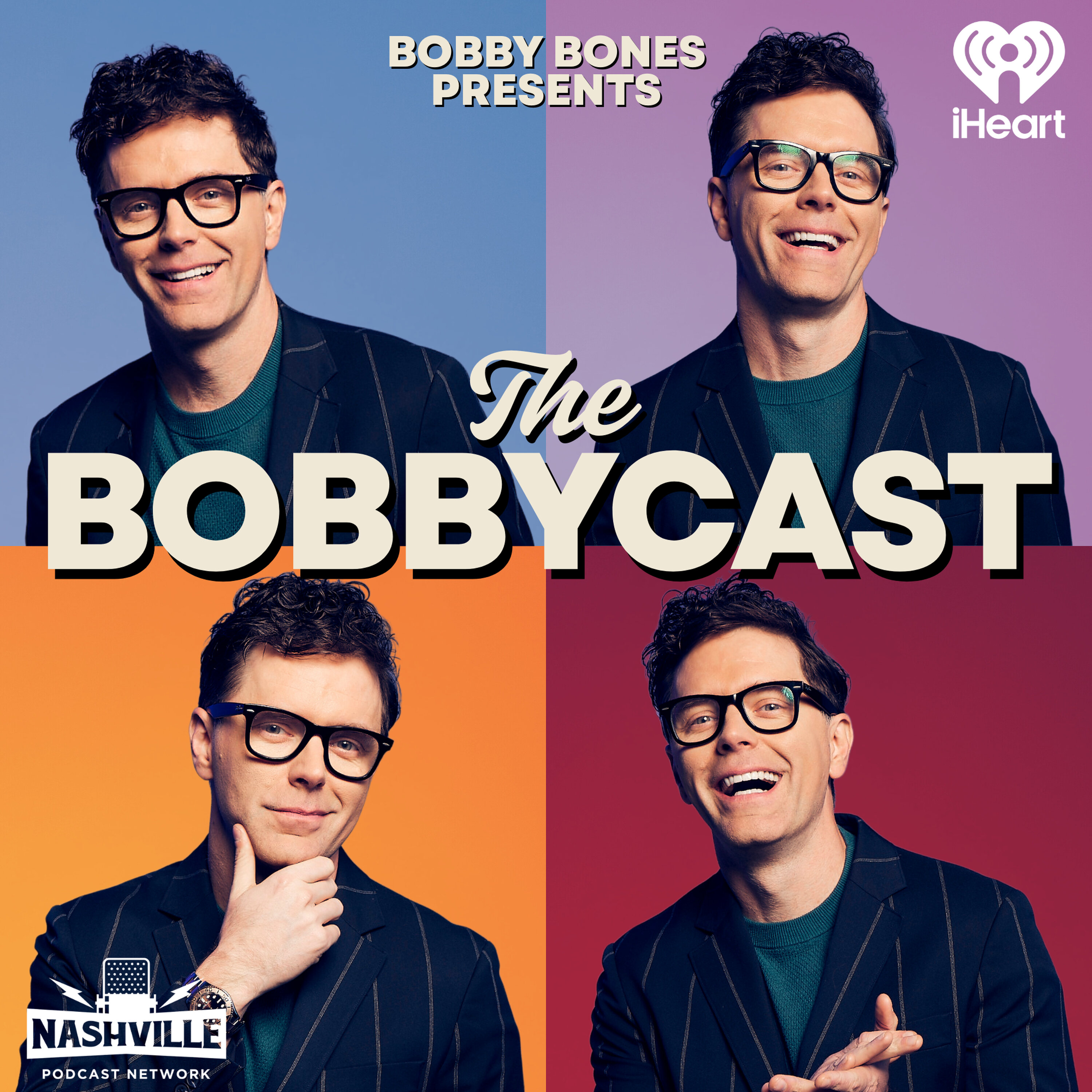
#452- Bobby & Eddie On Most Covered Country Songs + Alice Randall on 'My Black Country'
On this episode of The Bobbycast, Bobby Bones and Eddie do music talk about the most covered country songs. Then, we hear from Alice Randall about her new book and career. Alice details the importance of writing her book, My Black Country: A Journey Through Country Music's Black Past, Present, and Future. She also talks about Charley Pride's influence on country music and starting her career as the only female black songwriter in Nashville. She also shares the time she met Roseanne Cash and wrote a song for Johnny Cash and more!
Book info on S&S.com here: MY BLACK COUNTRY: A Journey Through Country Music’s Black Past, Present, and Future (Black Privilege Publishing; on sale 4/9/24; ISBN 9781668018408; Hardcover $28),
Album info on Alice's press page here!
Follow on Instagram: @TheBobbyCast
Follow on TikTok: @TheBobbyCast
Watch this Episode on Youtube
See omnystudio.com/listener for privacy information.
Available Results
Generated results are saved to the knowledge database for reuse and search.
Extract Knowledge
Pick what you want extracted first. Model, scope, and chapter options appear after a template is selected.
Transcript
00:00:06
Speaker 1: The country has never shied away from the actual reality, how hard it is to make a living, how hard it is to keep the love going.

00:00:15
Speaker 2: Hey guys, welcome to episode four fifty two. Coming up, we'll talk to Alice Randall. She wrote My Black Country, a journey through country music's black past, present, and future, and also a really good songwriter and has written hits, massive hits, So we'll talk to her. Also, she's a professor.

00:00:33
Speaker 3: Yeah, after this, I want to go to her class. Yeah, me too, the cooking class, Yeah, me too. I just want to eat though at that cooking class.

00:00:39
Speaker 2: So that's coming up again, Vanderbilt professor, award winning songwriter, novelist, and author, Alice Randall. And again i'll encourage you to check out My Black Country. There's also a musical companion to that as well. Shall we tease what or like spoil what? She wrote at least one of the big songs.

00:00:54
Speaker 4: Yeah, it's a big one.

00:00:56
Speaker 3: X's and O's Trishy Eetterwood.

00:00:57
Speaker 1: She used to nama his and have been sending boos.

00:01:02
Speaker 3: Who in nexu zanos that goes I think that's it. Yeah, yeah, And we're gonna start with this.

00:01:07
Speaker 2: Stacker looked into the twenty five most covered country songs of all time.

00:01:11
Speaker 3: And so Eddie and I talked about this a bit.

00:01:14
Speaker 2: The number one song has been covered like almost five hundred times, and you'll find out what that song is. We discussed each of these songs, their significance and country music history. Some of these we discovered for the very first time ever because they are so old. But this is a very historic Bobby Cast. How do you feel about that? It's good I should teach a class.

00:01:31
Speaker 3: Yeah, we can keep some of the really really old ones in there because the.

00:01:35
Speaker 2: The law, yeah, like the law that keeps us from putting music in doesn't affect these songs because they're so old and it's so old, like public domain even yeah, like I'm a little teapot or these really old country songs.

00:01:47
Speaker 3: I think it falls under that. Okay, here you go.

00:01:50
Speaker 2: Appreciate you guys being here, Episode four fifty two on the Bobby Cast. It's Bobby and Eddie talk music.

00:01:56
Speaker 3: Hey man, hey man, you want to talk music, Let's talk about something. Might as well talk music.

00:02:00
Speaker 2: From stacker dot com, these are the top twenty five most covered country songs. Oh and just data search it see how many versions See if you can sing it to me, okay, and if we can't, we just kind of screwed because we can't really play the podcast or a clip on the podcast. But number twenty five it has one hundred and sixty two covers, originally recorded by Hank Williams and his Drifting Cowboys, Clyde Grubb and his Tennessee Valley Boys.

00:02:28
Speaker 3: I saw the light. I saw the light.

00:02:31
Speaker 5: I was that's Brooks and Done and then Luke Combs when he did brand New Man Brooks Reboot Brooks and Done.

00:02:38
Speaker 3: So what is I saw the light? We can't play anything, Mike, No, just a piece of it? Can't Can I play it for my phone?

00:02:45
Speaker 5: Noh, we need reference to this.

00:02:48
Speaker 3: It starts, I wondered, so aimless, life filled with sin. I wouldn't let my dear savior in. That's not gonna do anything, no nothing. What if I listened to it in my ear? You can do that, then sing it. We're not going to jail, Mike, Hey, Mike it over yourself.

00:03:04
Speaker 5: Well, we're going to jail. It's gonna be YouTube, not mean. I'm just a guess man.

00:03:07
Speaker 3: I saw the light. There you go. It's a fiddle. You're good, all right, it's good, dude, I saw the light, Okay, got it.

00:03:21
Speaker 5: They must have covered that a long time ago too, because they don't do that one anymore.

00:03:24
Speaker 3: All right, Moving on.

00:03:25
Speaker 2: Number twenty four, all right, right, all right, Crazy Arms one hundred and seventy covers.

00:03:30
Speaker 5: I on Earth, He's got to be old again, crazy arm crazy, I'm crazy for your arm.

00:03:40
Speaker 3: There's some fiddley. This is old man, old fiddle. It sucks. We can't play a clip word documentary show.

00:03:47
Speaker 1: I know.

00:03:50
Speaker 3: We're not gonna know this. Who's singing that one? Ray Price? Oh wow? That one? All right?

00:03:54
Speaker 2: Number twenty three, This one's easy. We'll know this one. One hundred and eighty eight covers of it. Stand by your.

00:04:00
Speaker 3: Man, stand by ol Man one hundred and why not? Yeah?

00:04:07
Speaker 2: Is she the og? And then recovered he wrote it, Wow, that's cool. Number twenty two, one hundred and eighty nine covers Joline.

00:04:15
Speaker 3: Joline Joline Joline Jolie.

00:04:20
Speaker 2: Wrote it by herself. Number twenty one, one hundred and ninety one covers. I can't help but if I'm still in love with you. Original record about Hank Williams and is Drifting Cowboys, written by Hank Williams.

00:04:31
Speaker 3: No Blue Moon a Kentucky. I know Bloe Moon, I've heard of that, but I don't think I can sing that one. Can you play it in my ear? Bloomon of Kentucky? Old school, dude, old school? Okay?

00:04:41
Speaker 2: Number nineteen you'll know, original recorded by Patsy Klein. I fall to pieces, Wow, I.

00:04:49
Speaker 3: Fall dude pieces. Do you know? Do you know her story? Patsy Cline? Yeah? In what way? Do you know? She died? Yeah? Okay, plank crash yeah, here near?

00:05:00
Speaker 5: I mean yeah, there was this like this, this show on I think Max maybe that's like a movie, like a movie that they made about her life, and I watched it. Man, she had a rough life, Yeah, rough life. Husband was a bad dude.

00:05:11
Speaker 3: Anyway. Else had a rough life? Was me and Bobby McGee. Oh yeah, Danis Joplin rough live And she didn't even get to have success alive. Neither did Patsy really, she was just coming up.

00:05:23
Speaker 2: Number eighteen is possibly my favorite song ever. That's all I want to say.

00:05:27
Speaker 3: Blue Eyes Crying, well, wass gonna.

00:05:28
Speaker 2: Give you hints, but yeah, it's two hundred and ten covers. God will Willie was crying in the ring written by Fred Rose, not Willie not Willie wow So who was the original singer of that.

00:05:41
Speaker 3: Roy Acuff Really?

00:05:45
Speaker 2: Number seventeen, two hundred and thirteen covers Karne Karna relates to nineteen twenty eight by blues artist Charlie McCoy and Bochapman. I don't know that I'll know that one anyway, I'm hearing in my ears Number sixteen recorded by Johnny Cash. In the Tennessee Too, written by Johnny Cash, two hundred and sixteen covers, I walked the line.

00:06:09
Speaker 3: Uh, I walked the line. Yeah, I know.

00:06:14
Speaker 5: Well, yeah, that's gotta be amazing to have so many covers of your song two hundred and twenty four covers, Number fifteen and I know this when you know this one too?

00:06:22
Speaker 3: Hey good Looking, Hank Williams.

00:06:23
Speaker 5: Singor Hey good looking, what you got cooking?

00:06:28
Speaker 3: How a boy cooking something up for me?

00:06:32
Speaker 2: And then the cheese like the National Cheese Federation took it and changed it to.

00:06:37
Speaker 3: Hey, good looking, what you got cooking? How'd you like cooking something up with cheese? Really? They ran it. Yeah, I don't remember that. I was singing a song with my wife through the day.

00:06:48
Speaker 2: I was like I love eggs from my head down to my legs.

00:06:53
Speaker 3: And she was like, that's not a real song.

00:06:54
Speaker 2: I was like, yes from the egg commission from back in the day commercials because she was incredible edaway egg.

00:06:59
Speaker 3: I was like, no, is that real? Yeah? Oh you guys are remember you know know a song I do? I love eggs. I do like singing old jingles though.

00:07:05
Speaker 2: Yeah, from my head down to my legs. Cold Cold Heart two hundred and thirty eight covers Cold Cold Heart.

00:07:13
Speaker 3: That's not my Q what about Hank Williams. This Hank Williams song has just been covered by everybody in country. My cold Cold Hort we'll tell Can you play that in my ear? Yeap, I don't know it, my cold cold Hall. Maybe he does that? That sounds it sounds like that would be next.

00:07:28
Speaker 2: Number thirteen, two hundred and fifty five covers I Will Always Love You, Dolly Parton, I've written by yourself, Dolly Parton.

00:07:34
Speaker 3: I'll let you sing that one. No do real low smart Yeah. Number twelve, Hank Williams, You're cheating heart.

00:07:42
Speaker 1: You're cheating old har.

00:07:46
Speaker 2: It's like the twist, like Cheby Checker. He did the twist. But they need to twist again. Oh yeah, same song, but just want to make a little money.

00:07:53
Speaker 3: That's funny. Let's twist again like we did last summer.

00:07:57
Speaker 2: John Henry three hundred and ten covers one of the most popular folk songs in American history.

00:08:02
Speaker 3: Sean Henry, recorded nineteen twenty four. This could be public domain if we have the old version of it. Let's see who's this by? What do you got through?

00:08:20
Speaker 2: Sounds like I was playing the CELLPHONEZ that was for sure, hundred.

00:08:23
Speaker 4: Sounds public domain to me.

00:08:25
Speaker 2: Fidland, John Carson, and covered three hundred and ten times by who.

00:08:29
Speaker 3: I think all the other folk artists around them Airbay in Town.

00:08:36
Speaker 2: Love's Ring of Fire Love is originally recorded by Anita Carter, written by June Carter and Merle Kilgore. Oh wow, but that is Ring of Fire. So songs that Johnny Cash.

00:08:49
Speaker 3: Saying huge. He made it made it huge, a little different, but that same song. Uh. Number nine, three hundred twenty five covers of it. Take Me Home, Country Road, Yes, take take you road.

00:09:02
Speaker 2: We should know all the rest of these, right, have any of the place. Number eight I'm so lonesome Hank Williams again, I'm so lonesome.

00:09:07
Speaker 5: I can cry, I'm so lonesome, my good cry.

00:09:13
Speaker 3: Riders in the Sky, Riders in the Sky. That's the doors.

00:09:19
Speaker 2: And I don't know that I know this one yet, but that's the doors you play at Mike. So that version is Johnny Cash right.

00:09:27
Speaker 3: M m Goho Riders. It sounds like a small movie.

00:09:33
Speaker 2: Nine hundred Miles Away from Home, covered three hundred and fifty one times, but it's fiddling John Carson again, so recorded with the suit can Frame long Ly Sure Number five three hundred and seventy two covers written by Willie Nelson. Original recorded about Patsy c Line crazy, I'm crazy for feeling so lonely. Help me make it through the night, written by Chris Christopherson. Four hundred and three covers recorded by Chris Christopherson and Percy Sledge.

00:10:13
Speaker 3: Wow, don't know that one? I bet we do? You play it my ear? I mean kind of? It may help me make it through the not but I don't know. I don't know that one.

00:10:26
Speaker 2: It's crazy that it's number four and we don't really like no, No, it number three is here's the hints. It's been covered four hundred and thirty six times. That it's a lot. It was written by Jack Rawlins and Steve Nelson. That Won't Help You, originally recorded by Gene Autry and the Cass County Boys.

00:10:42
Speaker 5: Ruto off the Red Nose randew No, but You're close. Oh, what's the one that click click click up on the house top.

00:10:48
Speaker 3: Frosty the Snowman. Dang it? Yeah, yeah, yeah, you would.

00:10:52
Speaker 5: That's crazy If that was their original, they must have made so much money off of that.

00:10:57
Speaker 2: Number two covered four hundred and thirty nine times, the original version of nineteen thirty nine by the Pine Ridge Boys.

00:11:04
Speaker 3: You for sure know this song pine Ridge Boys. Yeah.

00:11:09
Speaker 2: I would try to give you a hints or to do something, but it's just too easy. Number two most covered song of all time.

00:11:16
Speaker 3: You are My Sunshine. Oh wo my oldest sunshine. That's crazy. That's a country song. I mean, that's got to be an old yu song too, nineteen thirty nine. Yeah, do you have the original? You are my sun Shot? That's cool? Only some shot, Oh my only only son. Time you make me have me on Sky's are great. You'll never know how much oild of you. Please don't take my song shine always some of those harmonies, that's awesome. I just picked one of the one of those jugs too, three xes on it. Yeah, that's awesome and.

00:11:56
Speaker 2: The number one most covered country song of all time, written by Pea week King and Red Stewart the Special Record in nineteen forty seven.

00:12:09
Speaker 3: I wonder if the song isn't could you give me the artist or is that too? I can give you a bunch of them.

00:12:16
Speaker 2: Originally recorded by Cowboy copas Pee Wee King and his Golden West Cowboy so it's really old, right, And then artists like Otashred and Eli Fitzgerald, Patsy Kline, Elvis Presley all did a standard of it.

00:12:26
Speaker 3: Okay, suck the version? Oh no way you get this? You ain't nothing but a hond on no Tennessee waltz?

00:12:35
Speaker 2: What on earth can you play some of that Tennessee waltz? I don't the most covered song of all time, and I don't know that song.

00:12:44
Speaker 5: I thought I knew a lot about music until now. A lot of music I don't know.

00:12:48
Speaker 2: Of a lot of Hank Williams senior. Yeah, and also some guy recording himself with a fiddle.

00:12:54
Speaker 3: And uh, what what was his name? Henry what Winkler? One bo Henry.

00:13:00
Speaker 2: Yeah, well that's another episode of Eddie and Boby talking about music.

00:13:02
Speaker 3: Wow. I learned a lot there. Hey, thanks for talking about music with me. Man anytime, dude.

00:13:06
Speaker 6: Let's take a quick pause for a message from our sponsor, and we're back on the Bobby Cast.

00:13:20
Speaker 2: First, thank you for coming over. This is cool for me because when somebody that I adore adore somebody and says, hey, you should really talk to them, I'm like, all right, let's go. And then I started actually researching about you. So Charlotte and the Gods are my best friends, like so we're so close to it, and I my company may here, may not, like we switch out and and take care of each other like internal like lang, like we grew up the same way. So he called and he said, hey, told me you writing this book. And the book that I read was the because I've written a couple of books to Alice, this was the like the publicity book. So all the chapters are like zero zero zero zero, So I forget the places.

00:14:01
Speaker 3: And like go back.

00:14:02
Speaker 2: But you have such a wonderful story yourself, and I'd like to start with just talking about a couple of personal things, a couple things that I had pulled from the book that I was like, I got to talk about this because I'm interested in this that even if there weren't microphones, I would ask you about. So I was part of the Charli Pride documentary because it was a massive Charlie Pride fan. My grandma was My grandma grew up and she was country music. So it was pushed on to me. But you had the chance to Actually I never get to meet him.

00:14:31
Speaker 1: I got to meet him from nineteen eighty three, from the beginning of when I came down here, and I got to spend some really sweet time with him at the very end of his life. Yeah, you said that you were in that Charlie Pride.

00:14:42
Speaker 3: I was.

00:14:43
Speaker 1: Yeah, and so was I and it was really funny. And for your listeners, who don't mean I've been in country music forty one years where we are today. I remember when George and Tammy lived here in Franklin, wrote and I would come back and drive past their house. But so I was in the Charlie Pride documentary in my role being a professor at Vanderbilt teaching about country music, and so I was in the second VIP section, not the good one. But I was really there.

00:15:08
Speaker 3: Not good VIP.

00:15:10
Speaker 1: There's levels of VIP. You're always in the top one, so you didn't know about the other one. But so I was lucky to be there and so thrilled to actually just be And Tanne Tucker, I remember she was in the first one, as she deserved to be, And there was a seat by me, and Charlie Pride walks in and he comes and sits at his own documentary in the second VIP section to sit beside me, And of all the honors I have received, I almost cheer up to this moment. He died, not I think within a year of that that he sat there, and when I came on, he's pointing to me. And when I arrived in Nashville in.

00:15:47
Speaker 3: Eighty eighty three, that what herote about.

00:15:49
Speaker 1: He had already been at the top of the charts twenty nine times, twenty nine times. He was about to go up with his last time to the number one spot. And I remember being askcap dinner of black tie and walking across the room to see him. He has no idea who I am, and he stood up. I teasily say maybe he just had to go to the bathroom. I don't. Maybe because I was one of the only black ladies in the room, maybe because he just had that good hod trading. He stood up and we had to encounter each other from eighty three to the end of his life, and it meant so much to me. He got a Lifetime Achievement award and I was getting my hair DoD and Garth. I got a phone call from Garth Brooks's manager, Bob Doyle, and it was Charlie Pride is getting this big award and Garth wants you to be on the stage with him and talk to him about Charlie Pride. And that was when COVID was still going on. I have the breast cancer things, so I was really afraid of going out. That's how much Charlie Pride meant to me. That I got on my mask and got on that stage and took it off and we just had Garth that I had an amazing conversation about Charlie Pride because his voice he carves layers of mean. He didn't write, and I'm a songwriter. I don't sing, but I've been hearing about Charlie Pritt. I was born in Detroit in nineteen fifty nine. I remember when he came out as black in Detroit City, his audience didn't know that. It was talked about so much that even as a little girl in black Detroit, I heard that gossip right then at his voice on the radio. It was just so utterly universal, kissing Angel, good morning lot. I mean, so there was just so much in every time, every song.

00:17:31
Speaker 2: What do you think aside from how good he sounded it? And I want to give my incorrect, probably opinion and correct me one hundred times. And if i'm if you feel differently about it, because again I'm coming from it in my perspective as a white dude that grew up in a segregated black and white town. M hm, So my perspective isn't always going to be correct, Like I'm not coming from the center of it. I'm coming from near the outside of the edge. And so but I also know that so if I say something you're like, you know, I don't feel like that's actually a like, let me know, why do you feel. Charlie Pride was extremely valuable to country music in general, but he literally was.

00:18:13
Speaker 1: A brilliant singer. The way he bit notes very similar to George Jones. He got that bit how he ben did it. But all that truth, the passion, you know. But he was important to country music for so many different reasons. But remember his audience fell in love with him. They didn't even know he was black, so they didn't fall in love with him because he was blacky. He had that juke blox voice. He had that I call it that Friday night, Saturday night, Sunday morning paradox. Like he had all the sin in him and all the sacred. And when you got all the sin and all the sacred in it, you got a great country song. He was raggedy and right. But to me, part of the genius of Charlie Pride that I hadn't thought of back when in nineteen eighty three eighty four is when he stood on the stage. He stood like an athlete.

00:18:59
Speaker 3: He was such an athlete, like he was a professional athlete.

00:19:01
Speaker 1: He was a baseball player. He had been in the Negro leagues, he even had some time in the bigs, And he was an athlete. He reminded some people of what cash is Clay. He stood on the stage as a man and not as a performer. He was delivering the reality of a grown man's life, and I think people got it. Men, women, people got it. They were attracted to the power, the power in his stance. He was so charismatic. I mean, the man had a twinkle in his eye to the end. And that last time I was sitting beside my husband and husband I'm now divorced, and at the end of the documentary I could tell something was he needed to get to the bathroom and we were on this stair stadium type seating and I asked him, do you need David to help you get there? Absolutely yes, and he he accepted the help. David walked him out. Was proud to be his walking stick. But even with walking, he still had his swagger. He's so still gorgeous. He still had it.

00:20:06
Speaker 2: The reason that they had asked me to be a part of the Charlie Pride documentary. Again, there's a lot of country music from when country music and gospel really were crossing over, and so that's what I listened to a lot as a kid because my grandmother adopted me for a long time, so her music was my music. You know, everything from you know, Andy Griffith's gospel records to Ray Charles modern sounds, the country music like all of that area. But Charlie pride to me was I loved his songs. But I also am a massive sports fan, so I know I knew he had like a double life where he was such an athlete. But his story of all of his music being sent out places and never having a picture on it because he did not want to be judged or have someone not give him equal treatment because he was a black man, and the fact that they had to keep that up for a long time, Like that's what I talked about, and how there must have been such a range of emotions internally inside of him. One to understand like this, Okay, if the record level was going to do this, this may be lead to success, but too I would imagine you probably want to be who you are at the same time. And from my understanding, like that was always something that plagued him a bit.

00:21:24
Speaker 1: Well I said that phrase he went incognigro. People did not know he was black. But I also think he was very strategic man. He was a businessman aside from being a musician. One of the things he was a role model to me about. I've got to tell you in a moment, he's in my first family of Black Country is He came in about real estate. He came and invested in publishing. He came in and supported other writers. He was a man among men, And I don't always like that because I say about country small towns are smaller for girls, all girls. That that was business men were running this town when Charlie Pride came to town and he found a space in that business life. But he had that visionary sense that he was both an artist and a business person. He understood it's a music business. If you want control of your fate, you've got to get control of some part of the business.

00:22:12
Speaker 2: Where do you think that came from his acumen? Like what part of his life do you think that really developed?

00:22:19
Speaker 3: Being probably very.

00:22:20
Speaker 1: Poor and hard, coming up really hard, and having nobody trying to help him. I mean, one of the stories I don't know if it's true or not that I wasn't able to document, but supposedly when he was in the negro leagues at one time somebody traded him for a bus. Like being treated like an object and knowing you weren't. But what I love is that brilliance that that he It's like he was so successful in one area that he was able to translate it into another. Sure, and this so Americans stand. So you know, to me, I call it country as corn bed Charlie Pride, because you know, people want to talk about it. Most people didn't even realize. It's just on the radio with somebody who said they then they fell in love with Charlie Pride. They didn't even know he was black. Like that, he quote unquote sounds white to a lot of people. And that's one of the things when I talk about my book My Black Country, I talk about a first family of Black country, and the two the MoMA and pop of that is Defour Bailey and Lil Harden. But one of the things about Lil Harden that's so interesting is she played on this song called Blue Yodel Number nine. Everybody knows that song. It was the first million seller. It sounds like what people think a hill billy, old hill billy record should sound like. But the reality is two black people played on it, Lil Harden and Louis Armstrong and Jimmy Rodgers. People think they know what black people sound like, but they don't. Always they didn't know Charlie Pride is a stone black man.

00:23:47
Speaker 2: We were talking about the book before you came in, and I was talking about how you were talking. You had mentioned the First Family, and I think you said Ray Charles was like the kid genius, the child genius something Will d Ford's brilliant child. Yeah, like he was the kid genius. What'd you love about Ray Charles?

00:24:04
Speaker 1: Oh? I love the way he plays a piano. You talk about the gospel piano. My aunt had lost a baby in a house fire before I was born, and she basically had descended into a bottle. And when I was born, she came out of that. But what really really helped her She used to cha cha around the living room with me to Ray Charles the first year I was born. It was just for a thrill. That became one of the theme songs of my life. But when modern Sounds in Country and Western dropped that song, Bye Bye Love, it was an entire grammar of love for her. One of those songs is was written by Felice and Buddolo O'Bryant and pleeere one of the greatest women songwriters country ever knew. But she's also a great rock songwriter. Bye Bye Love. Ray Charles had the most extraordinary song since but when he plays his piano, it takes you to church. And what I'll say in the book, I talk about but that piano that came from Arizona Dreams a blind woman who played in the Kojik church out in Los Angeles, the way Jerry Lee Lewis pounded his piano, the way Ray Charles pounded his piano. Even Aretha Owes a lot to a black woman called it Arizona.

00:25:21
Speaker 3: My Black country. The book in general, the entire project.

00:25:24
Speaker 2: Is this something that you set out, I'm going to write this specific book or was it a different like collections of stories that you've had over an amount of time. Because I've done both kinds of books. I've just set out and wrote, I want to write this book, and then I've also had a bunch of stuff that I've accumulated and went, oh, this makes sense together.

00:25:41
Speaker 3: Where did this book come from?

00:25:43
Speaker 1: But you're a real writer because it's a little bit of both of those things. That's that process.

00:25:47
Speaker 3: You know.

00:25:47
Speaker 1: When I first came here forty one years ago out of Harvard, of all strange things, where I was listening to country while I was typing papers, I knew I wanted to talk about people like Defour Bailey and Lil Hardened. Black people have been a race from the history of country and the banjo, because I sincerely love country music and I love it as a profound American art forum that has been, in my opinion, co created by black and white people. And like you, you know, I was born in Detroit, Michigan, when it was a really segregated city. My black Detroit was Detroit was a majority white city, but my world was completely black. The wasn't just a popsicle truck that went down the road. It was a watermelon truck in the summer. It was might as well be in Detroit, Alabama. But those people, my aunt, my grandmother, my mother, they all listened to countries. So I have known that black people listened to country because if you were in Louisiana, Alabama, Mississippi back in the forties, there was no black radio to listen to. You can go to a juke joint, but if you listen, we're on radio right now. Black people, including Ray Charles, listen to country on the radio. That's why I'm honored to be on this show, because this is the show. Radio is what introduced Ray Charles to Defot Bailey. That's where he first heard Defot.

00:27:08
Speaker 2: When I do my stand up shows, I talk a bit about the history of country music, and I tell the story about how generationally, we'll say generationally every decade, every fifteen years or so, in country music, the same argument of well, that ain't country happens. Regardless, it's cyclical, it happen. And anybody that I've talked to, from Kenny Rodgers to Garth to they all will have the same story of when they came to talent and since they were a bit different, they were told that's not country. And so but what I rooted in and usually now I'm from a rural town in Arkansas, So I say this about other rural, semi uneducated white dudes who go, well, that ain't country, they have no idea that really, what real country is is the combination of Europeans with a fiddle and the slave ships with string banjo. Like that's if you want to say what exactly is country, it's those black artists and it's those Europeans, and that's what got the music to the hills to even start to be created. Like to me, that's what the original country music is.

00:28:18
Speaker 1: Absolutely and I would just add this.

00:28:20
Speaker 3: One thing, please tell me I love it.

00:28:23
Speaker 1: So it's a Celtic, English, Irish, Scottish ballot forms plus the Black influences, plus Evangelical Christianity. You need that, that the Black Church, and that belief in God in heaven because if not, if you don't have that, you may have a blues song. You may have a country blues and if you don't have the black influences, you may have a folk song. And all of those are real. But I think you're so right, and it's important to know when we're arguing about what is country, we're really arguing about what is America, because country claims itself and is in some real ways America's music.

00:28:58
Speaker 3: And I like normal, peace, normal.

00:29:00
Speaker 2: There's no such things normal, but like common, hardworking people's anthems. And that feels like that's where it started, because you're looking at immigrants, and you're looking at people that are forced to come here, and it gets no more hard working than people who are either forced to find a new life or have to move from their old life because it's so hard.

00:29:23
Speaker 1: Absolutely, life is hard. Is one of the rules of country music. I look this not to get into the wild. But sixteen carriages to me when I heard that song, I hear the relationship to sixteen tons, and I assure you that song, which is a country stone country classic, But I would go up in Detroit. These men, black and white working on the assembly lines, they knew everything about sixteen times. They weren't digging coal in a West Virginia coal mine or Alabama, but they were working assembly line that same way. Merle Haggard, hungry eyes. This resonates across lives when people are living hard lives. Johnny Cash, I shot a man just to watch him die. All kinds of mothers have felt that same pain. Country is hard music for hard people, which is one of the things I love about it. And my four Country rules are what makes us on country. Life is hard, God is real, the road, liquor, and family are significant compensations, and the past is better than the present.

00:30:27
Speaker 3: The third one is kind of funny.

00:30:28
Speaker 1: The road, liquor and family are significant compensations for the fact life is hard and blues there's no significant And is it true? I read somewhere and sometimes you read things aren't true that one of your first interviews was Darius Rucker.

00:30:42
Speaker 3: It was my very first ever Well, I read that.

00:30:44
Speaker 1: And one of the things I tried to that song of his from Hooting the Blowfish, let Her Cry. That's a country song, but I was saying, because it has a prayer in it, his mama, it is God in it. That changes everything.

00:30:58
Speaker 7: Oh Mama, please hell? I mean yes, yeah. And this woman is about to go use YEP drugs, but he is asking God, He's begging his godden mama. There is nothing more stone country than asking your mama and God to help you get through something.

00:31:12
Speaker 2: And I think a lot of that too, because he's South Carolina, right, a lot of it. And I think, again, you're you're the expert. So but I feel like regionally, even for me growing up before streaming music hit, you could really only get what was around music wise, so the influence was whatever's in the store or unless you signed up for one of those eight pennies for twenty ced deals and then you get like a Chili Pepper CD. But it was all country music all the time. So if you lived in South Carolina, if you live like Darius, if you live in Arkansas like myself Georgia, if you so, regardless of what music you liked all that regional influence was built in. So when HOODI comes down and they're a rock band, there's so much country influence because Darius is from Charleston, South.

00:32:00
Speaker 1: Carolina, absolutely, and what's going on in those southern college scenes, they cross pollinating through the sports teams, through the SEC. There is so much of that rooted countriness in that.

00:32:13
Speaker 2: What was the goal when you started writing the book? What did you want to when someone finished it? What did you want them to have?

00:32:20
Speaker 1: I wanted them to have an understanding of how black, white, and indigenous people came in together and built this thing we call country and that we love, and that it already has been baked into it these cross collaborations, and it's the cross collaborations that actually make it amazing. I also wanted to go back and celebrate. I think life is hard and God is real, and those are some real, centered think truths that we all be better off holding onto, in my opinion right now. And I didn't answer your question when you asked me five years ago. I had died, got diagnosed with cancer, and that's I thought, I've got to do this book. I've got to tell this truth of what I've been researching for forty some years, and how this, how this hard This music helped me get through that moment and helped me get through hard moments before that. I love country music because country music has helped me get through so much over the years. And so many other.

00:33:20
Speaker 2: People can ask where you started, not page one of the book, but where you started with the book, because it's always a fundamental jump off point, something that's very important to your foundation. Where did you start this book from in your heart, in your head, I'll.

00:33:37
Speaker 1: Cry over it. Daddy don't go in that var that I wrote my first country song in a motown cherry tree. And I also knew as I got older in Harvard, the other kids didn't have didn't write songs like Daddy, don't go in that bar because my daddy was an alcoholic. He was actually a great father too, and he would jump into bar get a drink. I don't even know what was on the other side of the door. And one day I said, Daddy, don't go in that v just reading the sign, and he took me in with him, and it's like that Guy Clark song. He taught me how to drive when he was too drunk. To. But I later, maybe a year after that, I was sitting up in a little cherry tree in Detroit looking out the highway, and I started turning that into a song. I was singing to the birds, Daddy, don't go in that var Please don't leave me alone in the car. And you talked about that early gospel. When I came to town, there's a man called Archie Jordan had written a huge song called What a Difference She Made in My Life. It was one of those gospel songs that was a country song. He touched that one and said, that's the hit. I said, that happened to me. He said, I know. I said, how can you know? He said, you can't invent something like that. So all my biggest songs x's and o's that happened to me. So I started with Daddy, don't go in that var And you know I became friends with in my life now Bobby Braddock, he wrote DI V O RC and he stopped loving her today. I heard that in the back of my mind. That's what kept that song alive. I was making the same kind of wordplay, letter play that Bobby did because I learned it from country.

00:35:13
Speaker 2: How long did you hold on to that song because obviously you're singing it, you have it, You hold it until it actually came to where you were having somebody listen to it and record it.

00:35:24
Speaker 1: Because that one I didn't. I couldn't let it go. Okay, that one, it was so everything for me and my father and him taking me inside. I could never collaborate on that song. Another song I brought here about a reckless Night, about a girl and the girl and a boy make love and the green grass. They meet in the choir, make love in the green glass. He's still in the choir, and she shunned with her baby outside the choir. That was the first song I had recorded. That was the first when I brought here that I could collaborate with with Mark Sanders and Bobby Braddock. He listened to the chorus of that. He said, you never get to get two lines as good as your first two, so just use those the ones you have twice. So that but by then on that I was turning bar was just too much my life. I could never turn it into art. But when I wrote the art of this memoir, I knew it's the cornerstone.

00:36:16
Speaker 3: Yeah, So I'm just thinking about your career.

00:36:20
Speaker 2: Were there other black songwriters here at all that you would see regularly?

00:36:29
Speaker 1: No, there was not. As far as I knew at the time, there had never been another black woman writer. You know, Oblee Clinton. It depends on how you look at it. There weren't here. Phil Withers, I believe, is a country songwriter, Grandma's Hands, railroad man. I knew he existed. I knew Lionel Ritchie existed. I was not seeing these people anyway regularly, and as far as I knew, I never saw any other black women. D four Bailey had died the year before I go. I knew he had written songs. Charlie Pridde is amazing, But one of the few things Charlie Pride did not do was write a lot of songs. George Jones is not known for writing songs, but he did. Roseanne Cash was actually a huge influence. I could tear up about her.

00:37:16
Speaker 2: Charlotte made me a picture of him and her together a few days ago, and he said, do you know Roseanne Cash? And I said, I know, I'm from Arkansas. I said, I know over her, but I don't know Roseanne Cash. And so were you were you there with him.

00:37:26
Speaker 1: I brought her that that was my book launch, got it and I have known you gave me no context.

00:37:32
Speaker 3: He just sent a picture of him and Roseen Cash. It was like, do you know her? I was like, I know over, but.

00:37:35
Speaker 1: What is Roseanne? That's really so much about that.

00:37:38
Speaker 3: Uh.

00:37:39
Speaker 1: I've known Roseanne since the first year I came here. I was listening to her when I was at Harvard. She had her first album out in about seventy eight, and I was in college seventy seven to eighty one. I came here. One of the first things I got to do was work on a series of Johnny Cash videos and get to meet him. But I cross strung with past with Roseanne, and particularly we were doing some environmental activism she was getting started with and she had a video production company early on, and that video company actually gave me the chance to write what became a Reba McIntyre Video of the Year. But my closest thing with Roseanne her daughter, Chelsea, considers me one of her top mentors and I am, and she produced my podcast. I've loved Chelsea through, but Roseanne and I've known each other the whole way through. And so she had eleven number ones as a woman writer, I teasally said her seven Year Ach was one of the songs that helped me leave my husband, my first one. So I have been following Roseanne's path, and she's also a memoirist, and she has been watching me across a distance. I actually did more work with Rodney along the way, but Roseanne and I have truly come together and done in these later years some important things together, and both of us are great admirers of the other's daughter and Chelsea. I love Chelsea, she loves Caroline, and when she's up in New York. When I was launching this book, I asked her if she would come and be in conversation with me, and she said yes. And that's one of the most important yeses any woman ever gave me in country. The other one was Trisha Yearwood as a whole nother story. But Roseanne and I will this her story to tell more. But she now knows that her mama was black, part black, and she didn't know that growing up, and so that's been an interesting, small a conversation that we've had. So I will, she reasily say, if you want to depend on how you look at it with her eleven number ones. She was the first, but she didn't know she was a black woman, and the audience didn't see her that way. And I'm not trying to say anything about her identity sure here, but I just am so proud that Roseanne and Cash would come out because she was a songwriter that was ahead of me when I was here, and as a woman writer meant so much to me.

00:40:00
Speaker 2: Such a big deal, especially to kids, because it's like kids need to see that things can't exist and they are part of that existence. But who what was your representation in country music that you saw, because again, it feels like you're the only black woman in town, writing in rooms or writing with folks.

00:40:17
Speaker 1: That's how I've been at that. My Black Family, my mythic Black Family, D four it Lil Harden.

00:40:24
Speaker 3: I knew that liter you got to go to history for representation.

00:40:26
Speaker 1: I had to go to history. I had Emily Dickinson. I have that Mobiindi song that starts out hope as a thing with feathers that poaches on the soul that is now Alison Russell has covered. That's Emily Dickinson. I had to remember when nobody believed in Emily Dickinson. She died with I think only having had six poems published. We now know Emily Dickinson is one of perhaps the greatest American poet, the greatest American woman poet. I had to believe maybe I was going to die without getting a song recorded. Now I did get my first one recorded two years after getting here, and it's interesting to me that Bobby Braddock and Bob Bigdill, these are the two in my time, those are two of the greatest songwriters here Roseanne. Both of them supported me in different ways. Bobby and I would actually write a big song together. Bob McDill, who wrote good old boys like me, Amanda. He took me seriously, but I did not have anyone who looked like me in the room. I was the unexpected body. I don't know if I could tell this or should tell it. You know one of my favorite writers. I'm not going to call his name, but really a person I came here thinking this is one of the great country poets. He met me, shook hands, stood back four feet from me, and said, I'm not going to say exactly what he said. I've been at this too long. If I have to compete with in were girls from Harvard Cutts, and I stepped right towards him and I said, I am, and you do. But I never spoke to that man again. That was one of the worst things anyone has ever said to me in my life.

00:41:54
Speaker 2: Do you feel like that was a common feeling amongst the older male white writer in town, or even the younger male They just didn't say it.

00:42:04
Speaker 1: I can't judge me. Steve Girl said he thought it was so wild. He wanted to help me be a big writer. Certainly Bob McDill and Bob B. Braddock sat there and helped me. I think I think a lot of people thought. I think a lot of people use that word a lot of places, and I think a lot of people thought it was just impossible. But on the other hand, of all strange things, Merle Haggard loved the way I talked about his songs. I remember getting to dance with him one of those October weeks at a Sony party on the and talk about Hungry Eyes and what his poetry meant to me and him. He had a song about an interracial love relationship or I always get the title way back. You know that people are more complex than they seem there's an old joke, and I don't know, I'm gonna tell it. It's they said, you know, I came up from Harvard. They say, up North people love black people in general and hate them and particular, and down South they hate black people in general and love them in particular. What was wild is under the surface, there's a lot of love and country for anybody who really loves country and knows it. And what people understood about me is I knew my country music, and they began to think if I thought it was blacker than they thought it was, maybe it was. Does that make sense? I knew so many songs I knew Lefty Frizel.

00:43:28
Speaker 2: Did you feel like you had to prove yourself constantly, because that's what I hear That's what I hear you saying, is that you knew a lot and sometimes maybe people didn't think you wouldn't know a lot since you weren't white and from the South.

00:43:38
Speaker 1: Oh. I felt like if I was willing to try to prevent yeah, I was doubted, and that the whole Harvard thing didn't help either. Frankly that but you know, on the other hand, one of the reasons I loved but I did love about country music. There was more. There's more genius here than there was at Harvard, and I'd be fair and that Ray Charles, because being educated is not the same as being intelligent. And one of the things I love about country, I don't recall a change of any size. I love he stopped loving her to dead. It's going to be horrible for a moment, but good dynamic stasis. In almost all of Western literature, we love it when the hero changes grows, But in real life people often die without changing. And a country song will scare you about that. That song of Bobby Breddicks. They hung a wreath upon his door. Soon they'll carry him away. He stopped loving her today. That song inspires you to do something.

00:44:45
Speaker 3: Because you don't because you don't want to be that.

00:44:47
Speaker 1: You don't want to be that, you don't want to just be stuck there. Country talks about the hard truths of hard loves. I was teasing say, rock and roll is about chasing women, chasing men. Country is about finding some love when you're twenty five years in it, like Conway in that with your hair all up and curlers and that faded something down. I just love to lay you down. There's nothing in punk rock hard in that, or Roseanne saying take the baby, grab the babies, and the clothes on your back right now, Hardy wait in the truck. The Dixie Chicks when they're talking about the viral with some Black Eyed Peas. There's some hard things going on in people's lives, and I am totally anti violence, but there is Country has never shied away from the actual reality of how hard it is to make a living, how hard it is to keep the love going. But I love That's one of the things I love about this new song, Texas Hold Them. It's about keeping the love going way into the thing. The Country has always been.

00:45:55
Speaker 4: About that the Bobby cast will be right back. This is the Bobby Cast.

00:46:10
Speaker 2: Was this just happened to be timed that Beyonce put her record out and then the book was there because the timing's perfect.

00:46:19
Speaker 1: I think it's a God thing. I think there is some proof that God loves. There is God to get It is totally Uh, there was no there was no plan to it, that was any part of my plan.

00:46:29
Speaker 3: Sure, it has been.

00:46:31
Speaker 1: As I said, my whole thing started five years ago when I thought I might only have you know, if I only had a live amount of time to live what I want to do. I started writing country songs and getting the recorded thirty nine years ago. So this album of songs that are re recording of songs that have been recorded, it's been in the making thirty nine years. It's a literal god thing of the universe coming together that then it also shows that there's a common cause. A lot of people all over the world love country music. And one of the things I have experienced this as I love that Dolly Parton, who's one of my favorite songwriters of all time, and Willie Nelson, who's one of my favorite songwriters of all time, are on this album. But Anne Linda Martel because it's like a great, big family reunion and the whole family's invited. And I feel a little tearfully about that of being on your show right now, because the Bobby Bone Show is the biggest radio show in country. And when I was a young bride, I was Marrie in eighty five, my first husband Black, we got sent off to the he was a foreign service officer to Manila in time for a revolution. And I used to have friends in Nashville white friends Mark Sanders, who would tape the country down I'm little cassettes and send it to me in Manila because it's the only way I could hear it. And I would play it on a cassette player in the Philippines even during your revolution and wait to hear those songs and wait to see what it jumped up on the chart, what haddn't And now people are doing that with yours thirty year countdown. It's that same spirit. It's part of a family reunion. Everybody loving this music all over the world.

00:48:17
Speaker 2: So I have three final questions for you, Hope, I'm not keeping you too long, Okay, Bill to be here. Three final questions for you. What do you think has been successful by country music from its creation to now? What's the common theme that has been successful and has maintained even though everybody complains about it changing all the time. Do you still believe it has the four principles or whatever you like? What's the common thread in successful country music that has happened since day one to now?

00:48:42
Speaker 1: It gives people those three compensations that they need for the fact life life is hard, because it gives you with the even when people are talking about the bro company. Some countries, sometimes all you need to do is shake your booty. Sometimes you just need the distraction from how hard it is that it has. It recognizes life is hard, and it's giving people either the wisdom or the distraction to make it through another day.

00:49:10
Speaker 2: Where do you think country music has lost? It's the exact opposite question, but the same. Where do you think it's lost its realness or it's you know, from its uh, from its from its beginning that you kind of wish it would go back to, and it might because it happens to cycles.

00:49:28
Speaker 3: What do you wish would happen?

00:49:32
Speaker 1: I don't think it should be chasing trying to be the coolest rock thing. I think it is grown folks music for grown people. That and some grown people are six years old because their life is so hard. And so when it moves away from wisdom completely doesn't have any God or faith in it, It is going the wrong direction. It is trying to be something it will never be because part of country music is it's wise, it's wise and it's.

00:49:59
Speaker 2: True perspective is what I feel about is a lot of country music, right, Yeah, you don't, you don't give perspective how easy things happening.

00:50:05
Speaker 1: No, that's why that song, the hardy song Wait in the track is so important, because that is about having a series of bad choices to make and making the best bad choice.

00:50:16
Speaker 2: Final question about the book especially, I have a lot of friends that they don't really read. They act like they read, but they like to read just a little bit so they can act like they So if I were to be like, hey, I want you to read this book, and they're gonna lie to me and say they're gonna read it, but they're really just going to read one chapter of the book. Now, I know it's it's it's a terribly hard question, but I know they're not gonna read the whole book.

00:50:38
Speaker 3: I'm be honest with you.

00:50:39
Speaker 1: Well, one they can listen to the audiobook.

00:50:41
Speaker 3: And you're not gonna do that. I'm ya, what's gonna happen right now? They're gonna go, They're gonna go, I'm gonna read it.

00:50:45
Speaker 2: But what can I What can I serve them that they're going to finish reading this section of the book and they're going to go, oh dang, I felt that, and it's actually going to inspire.

00:50:55
Speaker 3: Them to read more, Like I need you to hit them with something.

00:50:58
Speaker 1: I think it's chapter eight. That's the one where you're going across country and you're hearing about the black cowboys and had some wild sex and some deep business stuff in it.

00:51:07
Speaker 3: It's got everything.

00:51:08
Speaker 2: Okay, that might be it, because what my friends do. They lie about reading books to me, They lie, did you read this? They're like, yeah, they read like people.

00:51:14
Speaker 1: That's one of the grown up things that that's part of the reality.

00:51:17
Speaker 2: Baby all to write a country song, I can't read, or baby allied about reading? Thank you, No, this is this has been amazing for me. Do you do you teach in classrooms still?

00:51:32
Speaker 1: Yes, I am a professor.

00:51:33
Speaker 3: I know you're a professor. Yeah, and I do. I told everybody what you did before you came in.

00:51:37
Speaker 1: Okay, well, I'll be teaching two things. I'll teach black country. In the fall. I teach about two of the most fun things in the South, southern and soul food and country music.

00:51:46
Speaker 3: I when you teach sulfo, do people cook it?

00:51:49
Speaker 1: Do you do they cook? They read cookbooks. We also read theory, but yes, they actually have to cook and serve the food. So in the so, I do think I teach about two of the most important things that Southerners are most proud of and where American culture is that it's greatest, our great food and our great meats.

00:52:04
Speaker 2: Man, I wish I could eat because again, I went to probably one out of four weeks I went, so my town railroad tracks segregated. They had white quarters and black quarters. Still today, No, it's still what's crazy, it's twenty twenty four, still segregated, and about one out of four because I went to the Baptist church, but I would go over to Black church. And the thing about Black church was it may started a but you might all go home till two pm.

00:52:27
Speaker 3: Like it was all day, all day and all night. But you also got fed, which at white church that didn't hardly ever happen. A Black churches got fed well fed. Yeah, And it was like at the time, I guess my metabolism worked pretty well. I stayed skinny.

00:52:40
Speaker 2: I have a feeling if I went and was well fed at the same Black church today, i'd put on about forty pounds.

00:52:46
Speaker 1: Well, I'm still eating all that great food and I carry it.

00:52:49
Speaker 3: I love it.

00:52:50
Speaker 1: But I'm enjoying every moment of the great music and great food.

00:52:53
Speaker 3: I am not. I love I love the book.

00:52:57
Speaker 2: I'm going to try to What I'm going to try to do is make my friends that I know like to lie about reading read little passages of it that hopefully inspire them to read other little passages of it.

00:53:07
Speaker 1: Well, I'm honored that you read it.

00:53:08
Speaker 2: Yeah, I know, I read it as the version that's not even full, you know, when the pa they're not as much.

00:53:15
Speaker 3: I brought one for you, a gift that would.

00:53:18
Speaker 1: Be I brought this one. And I love that you and charlottage and are friends. One of the things I love about country songs are Poncho and Lefty, the friendship songs I and Paul. I love the great friendship songs to country, and I think I've written some of them too.

00:53:30
Speaker 3: I love that that's my guy.

00:53:32
Speaker 2: Like if he needed a kidney and he would take one from the white Devil what she calls all white people, I would give him one of my white Devil kidneys.

00:53:39
Speaker 3: I would because I love them. I mean, that's that's my guy, and he's.

00:53:42
Speaker 2: Been my main number one in all media, and we're each other's confidant in a lot of ways, and we share. You know, when people talk about their money. When you grow up like we did, we don't who do we talk about that with.

00:53:52
Speaker 3: We didn't know how to have it. We don't know who to talk to about it. And that's what we like. We trade that information because we trust each other. There's so much.

00:54:00
Speaker 1: Well, i'm his old auntie now, and so since you both are brother you're like some kind of soul twin brothers. I will give you some space if you ever want any over here.

00:54:09
Speaker 3: But he does call all white people the white devil. And I'm like, you know, not all of us. He's like, nah, it's the white devil.

00:54:16
Speaker 1: Well, you know, be like, not all, not all.

00:54:20
Speaker 3: You know.

00:54:20
Speaker 1: I'm going to tell you a little This end country thing is that when my father was when I was going up, my father used to say to me, if I ever dated a white boy, the only question would be who would he shoot first, me or the boy. And then one day I had to tell him I was dating someone that was white, and my father looked at me and he said, I can't help but love who you love. He turned on that don he was because he loved body country music. That's what country family it does. The hard thing.

00:54:51
Speaker 3: Well, thank you again, Alice. This has been amazing for me.

00:54:55
Speaker 2: And you know, we talked about a lot of you accolades, the songs you wrote before you got here, and I want to encourage everybody my Black country lie and say you read it all, but just start a chapter eight and then move from there. That'd be the way to get most of my people.

00:55:07
Speaker 1: I love that.

00:55:07
Speaker 3: Thank you, Thank you. Please keep up the good work. It is so needed and instrumental.

00:55:11
Speaker 2: And sometimes history can get away from us because we either try to cover it up or make new versions of it, or even forget because people behind us covered it up or made new versions of it. So I really appreciate the effort and the passion that you have for this, and thank you for coming

00:55:25
Speaker 4: Over, Thanks for listening to a Bobby Cast production.